Bryophytes as Strong Aluminum Accumulators in Acidic Soils: Cell-Wall Binding and Physiological Tolerance Mechanisms

 , , ,
, , ,  and
and 
Abstract

1. Introduction
2. Results
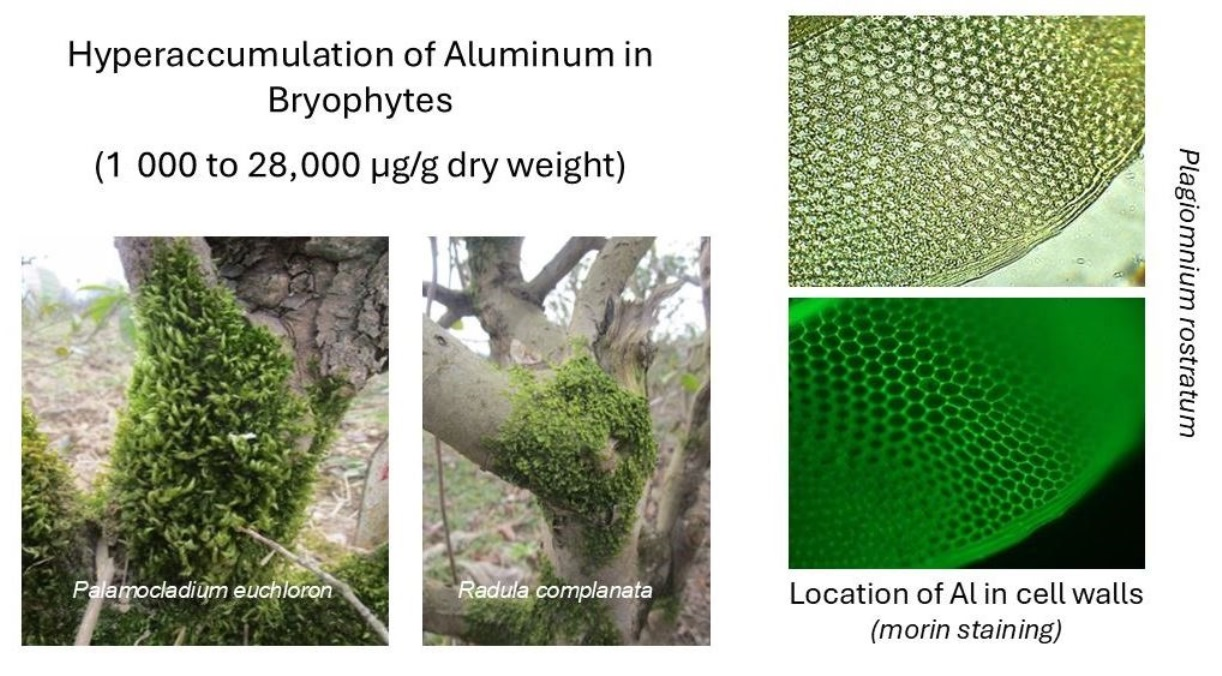
2.1. Accumulation of Al in Collected Bryophyte Specimens
2.2. Accumulation of Al in Other Non-Seed Plants Collected
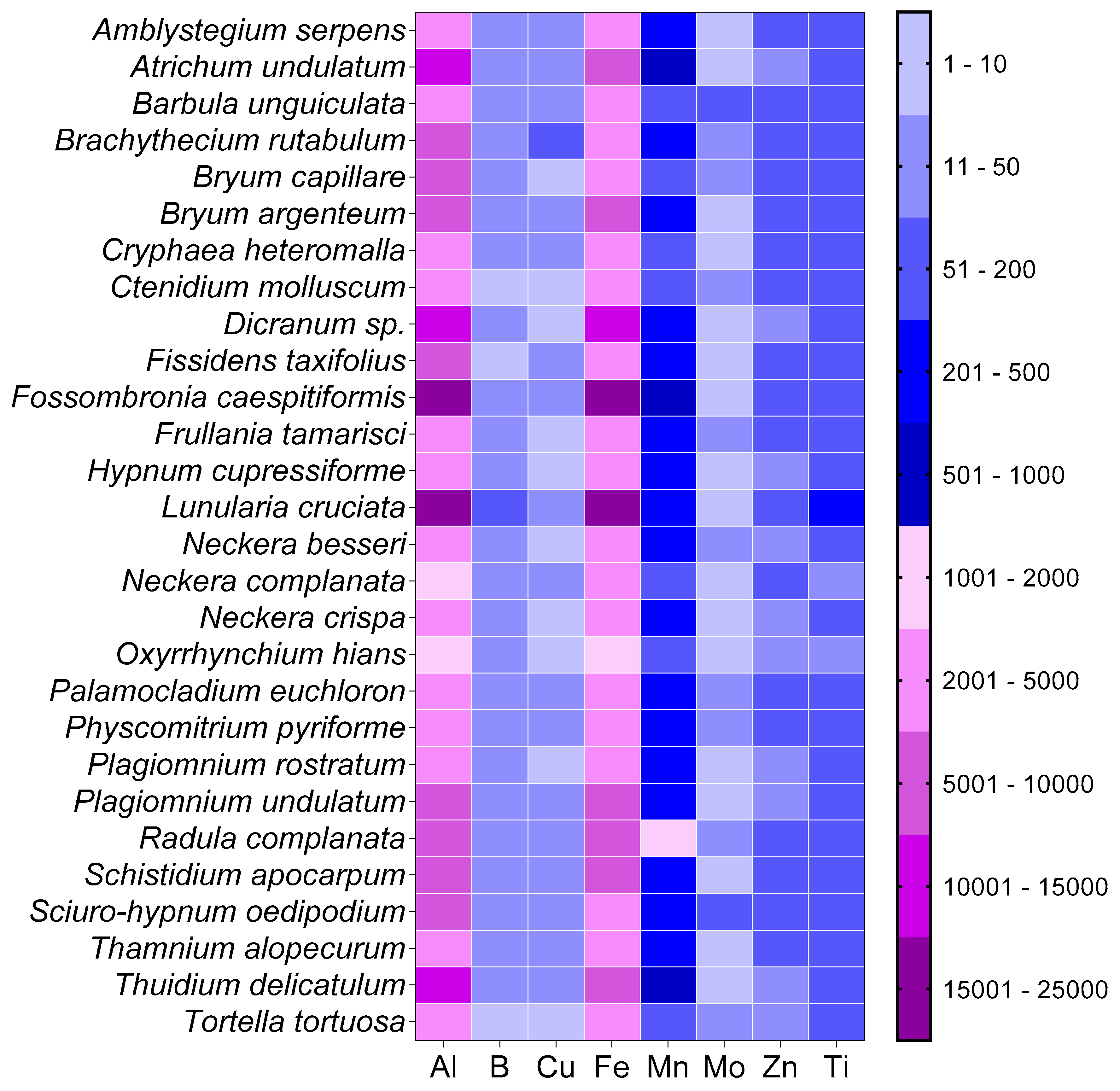
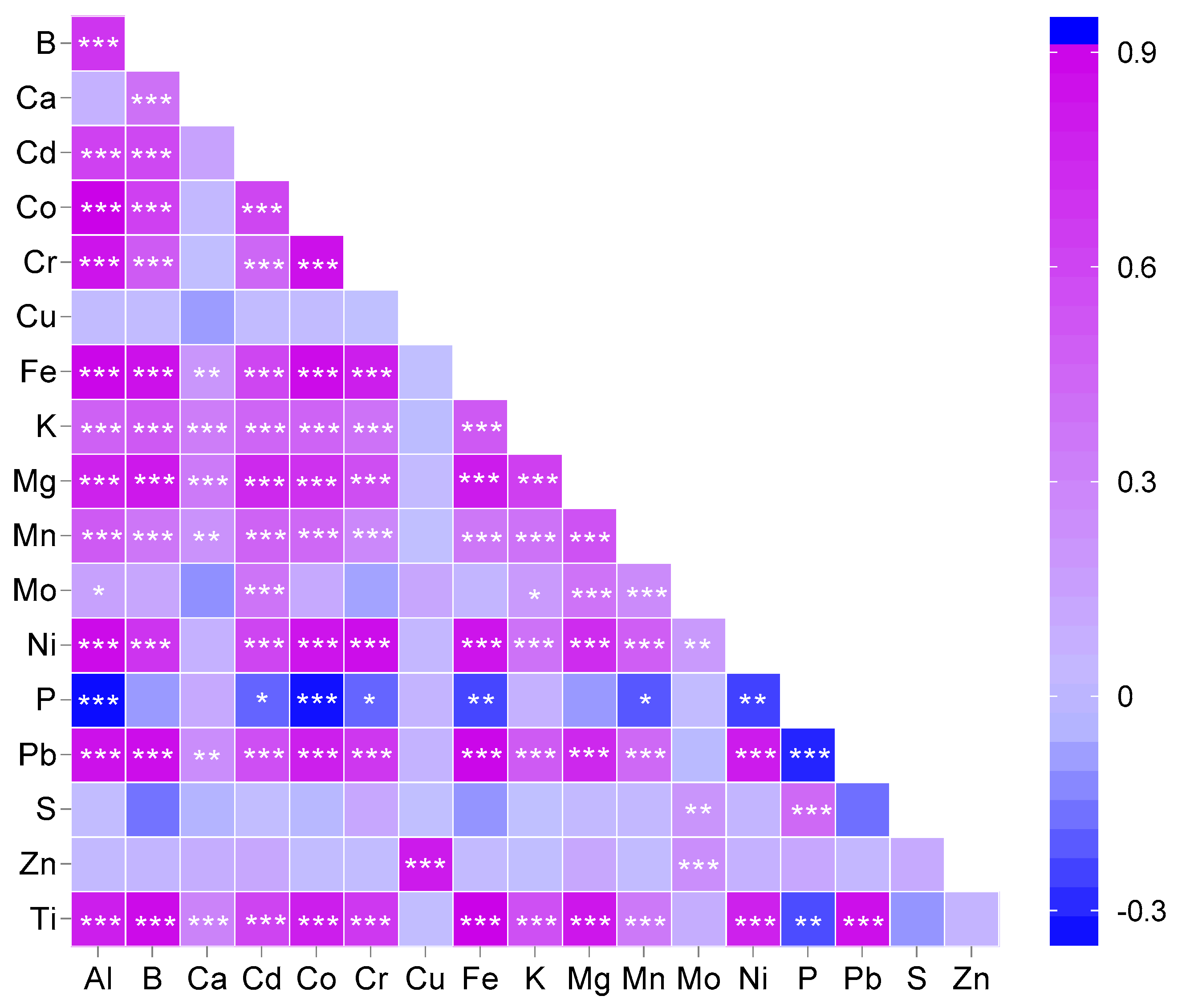
2.3. Accumulation of Other Elements in Collected Bryophyte Specimens and Its Correlation with Al
2.4. Aluminum Concentration, Photosynthetic Pigments, Osmolytes, and Callose in the Leafy Shoots of Field-Collected, Laboratory-Acclimated Bryophyte Species
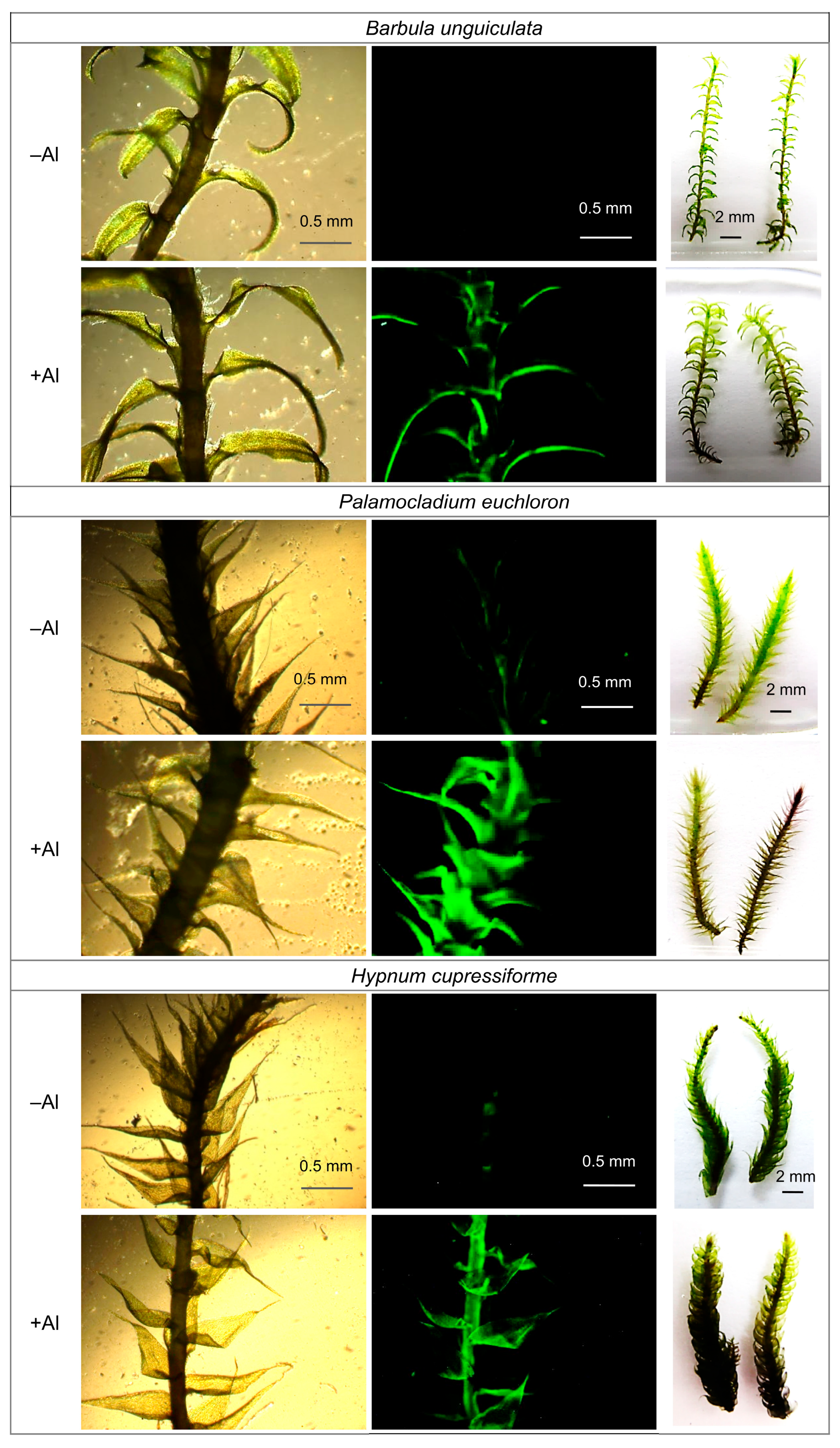
2.5. Accumulation and Localization of Al in Field-Collected, Laboratory-Acclimated Bryophyte Species
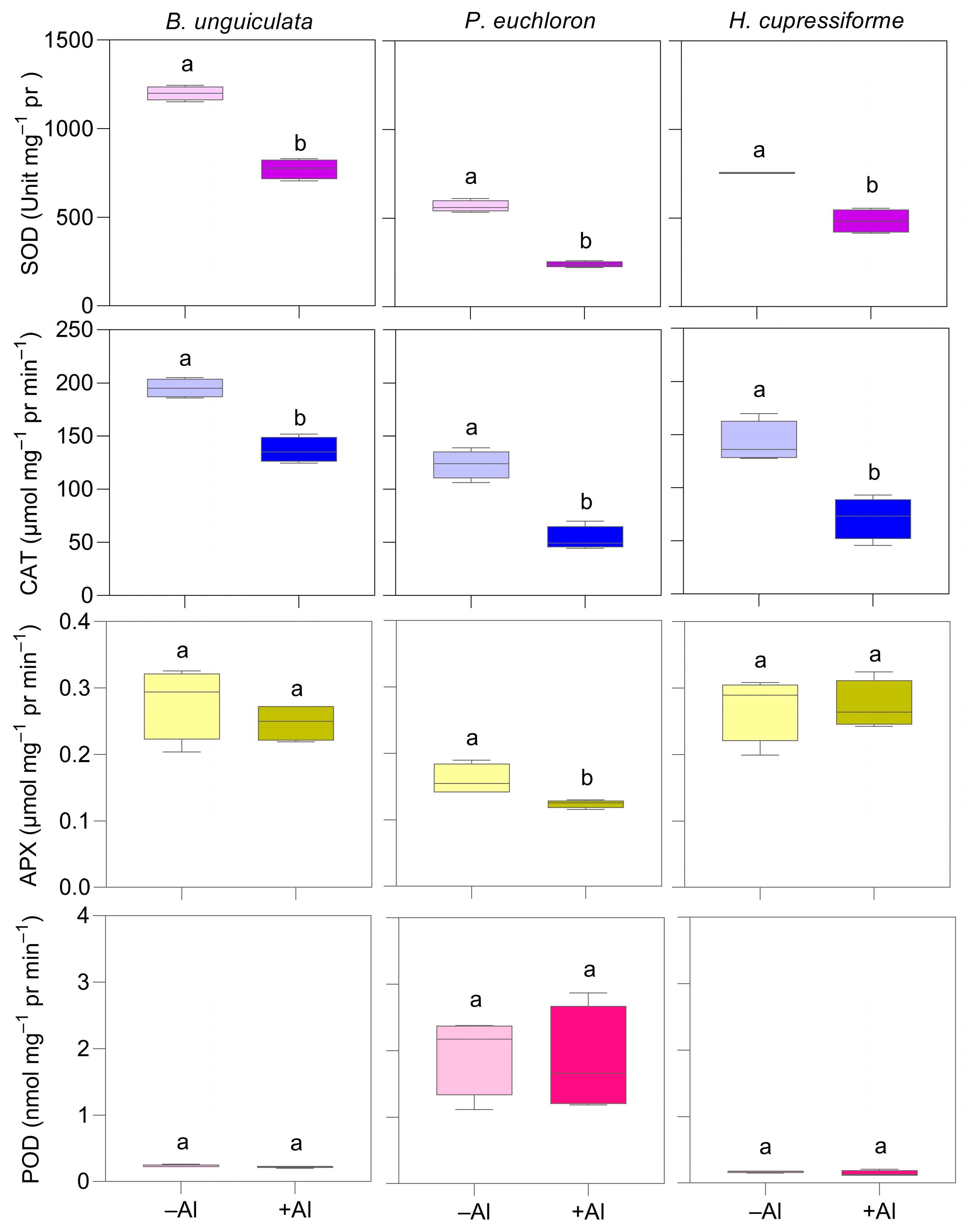
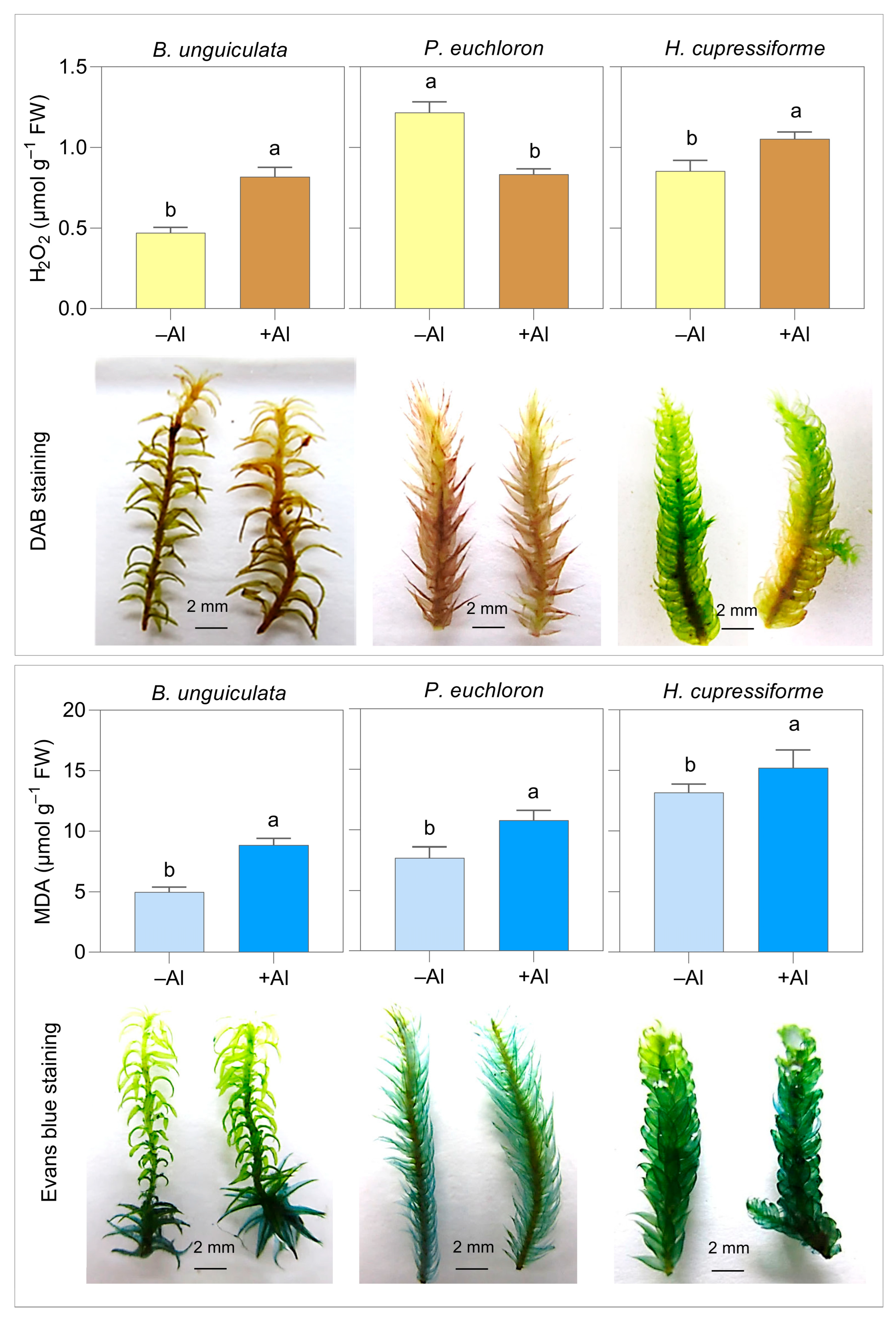
2.6. Antioxidant Defense Responses of Al-Treated Mosses
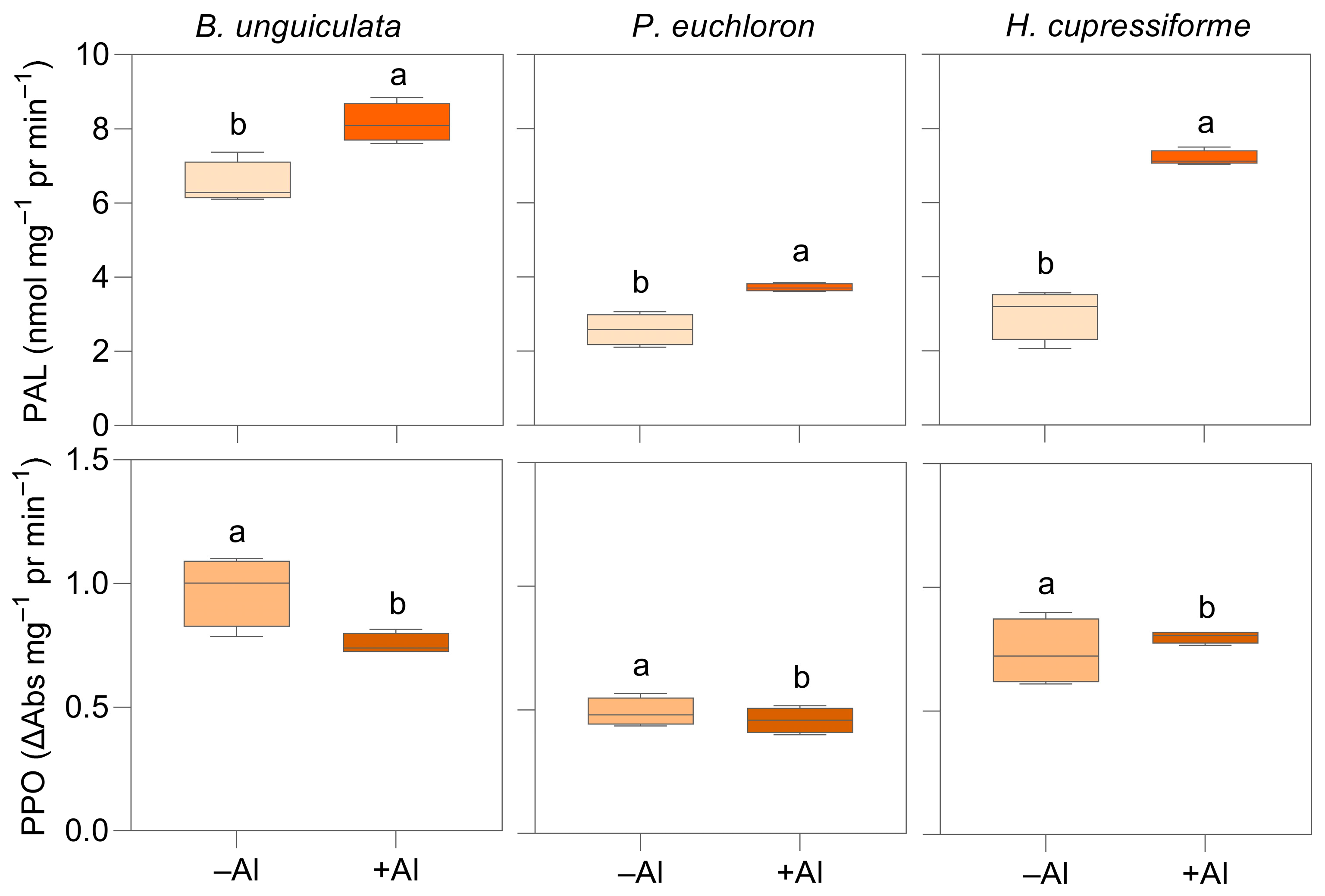
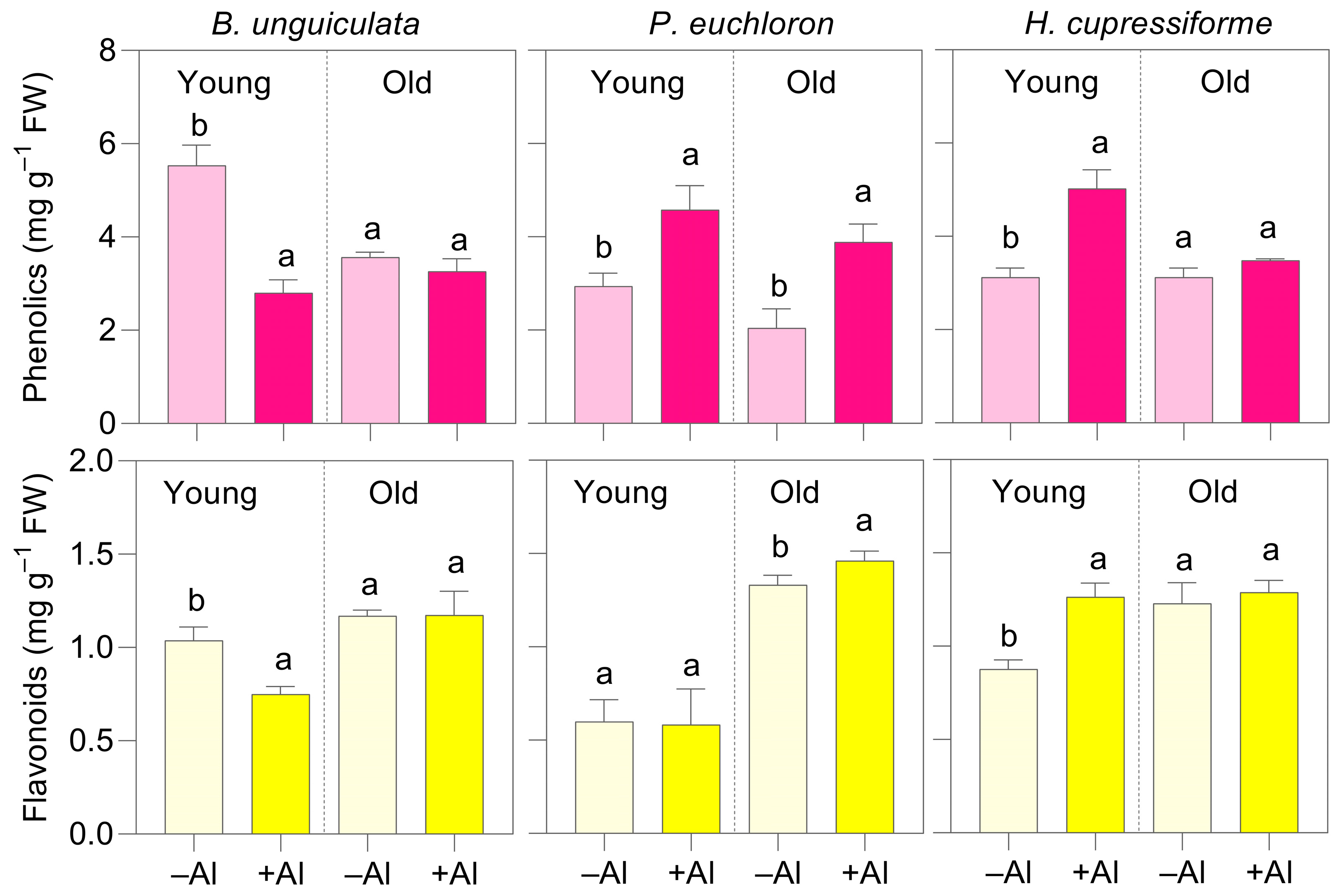
2.7. Activity of Phenolic-Metabolizing Enzymes and Concentrations of Al-Chelating Compounds in Al-Treated Mosses
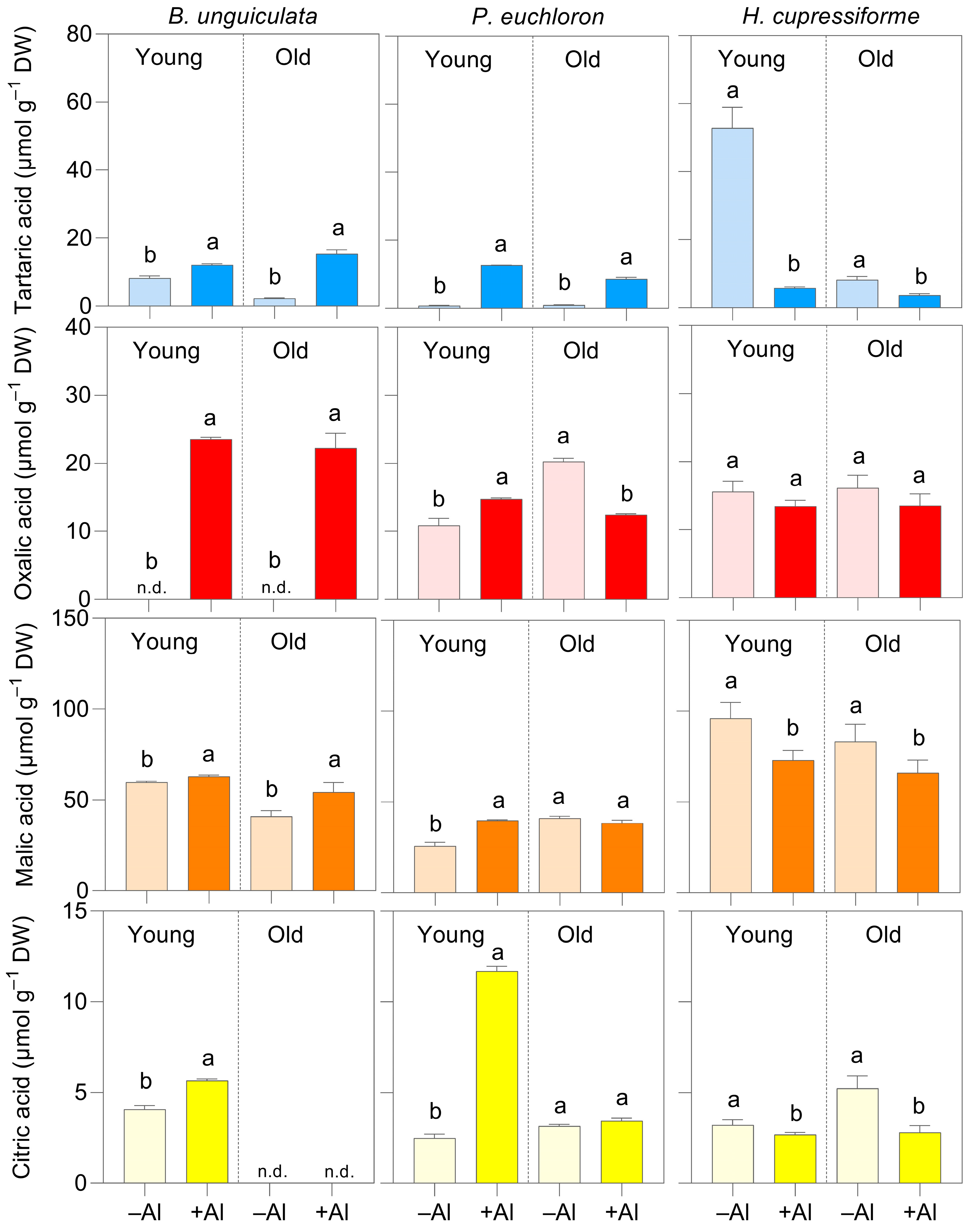
2.8. C2 Metabolism Intermediates and Formic Acid in Al-Treated Mosses
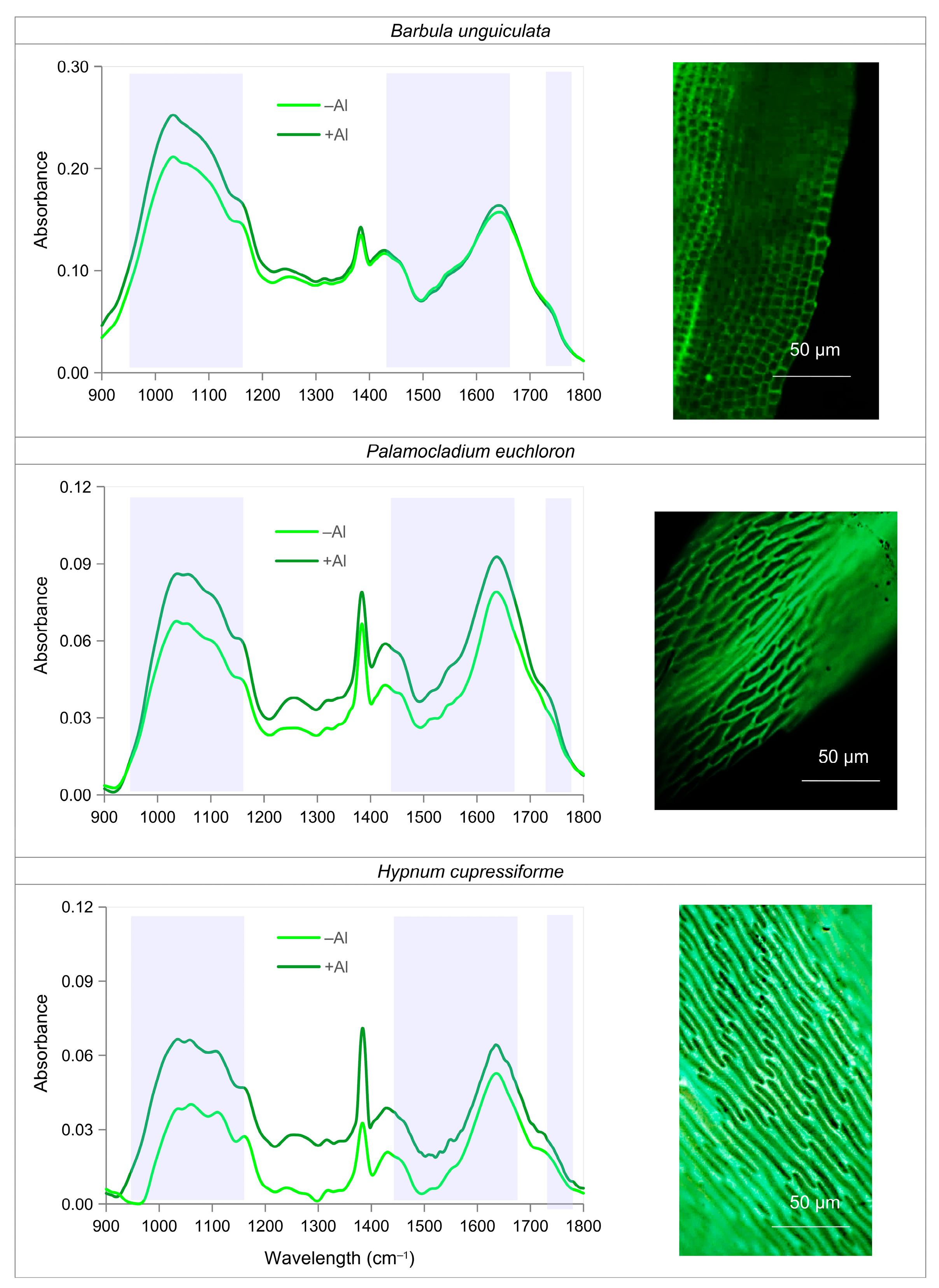
2.9. FTIR Analysis and Cell-Wall Characteristics in Al-Treated Mosses
3. Discussion
3.1. Widespread and Substantial Al Accumulation in Bryophytes
3.2. Acidic Soil Chemistry Drives Coordinated Metal Accumulation in Bryophytes
3.3. Oxidative Stress and Osmotic Adjustment Responses to Al Exposure in Bryophytes
3.4. Phenolic Compounds Indicate Metabolic Adjustments and Detoxification Responses
3.5. Carboxylates in Species-Specific Metabolic Adjustment and Al Detoxification
3.6. Callose Deposition and Its Limited Role in Al Tolerance
3.7. Evidence for Al Immobilization and Cell-Wall-Based Al Tolerance
3.8. Interspecific Differences in Al Accumulation and the Expression of Al Detoxification Mechanisms
3.9. Ecological Implications of Al Accumulation
4. Materials and Methods
4.1. Study Area, Collection of Specimens, and Identification
4.2. Elemental Analyses of Collected Specimens
4.3. Culture of Bryophytes Under Growth Chamber Conditions
4.4. Quantification of Al, Pigments, Carbohydrates, and Proline in Laboratory-Cultivated Mosses
4.5. Histochemical Analyses of Laboratory-Cultivated Mosses
4.6. Activity of Antioxidant Enzymes and Concentration of Oxidant Metabolites
4.7. Activity of Phenolic-Metabolizing Enzymes and Concentration of Phenolic Compounds
4.8. Analysis of Carboxylic Acids
4.9. FTIR Analysis
4.10. Statistical Analyses
5. Conclusions
Supplementary Materials
Author Contributions
Funding
Data Availability Statement
Acknowledgments
Conflicts of Interest
References
- Kochian, L.V.; Piñeros, M.A.; Liu, J.; Magalhaes, J.V. Plant adaptation to acid soils: The molecular basis for crop aluminum resistance. Annu. Rev. Plant Biol. 2015, 66, 571–598. [Google Scholar] [CrossRef] [PubMed]
- Shaaban, M. Acidic soils. In Planet Earth: Scientific Proposals to Solve Urgent Issues; Núñez-Delgado, A., Ed.; Springer: Cham, Switzerland, 2024; pp. 293–306. [Google Scholar]
- Poschenrieder, C.; Gunsé, B.; Corrales, I.; Barceló, J. A glance into aluminum toxicity and resistance in plants. Sci. Total Environ. 2008, 400, 356–368. [Google Scholar] [CrossRef] [PubMed]
- Jansen, S.; Watanabe, T.; Dessein, S.; Smets, E.; Robbrecht, E. A comparative study of metal levels in leaves of some Al-accumulating Rubiaceae. Ann. Bot. 2003, 91, 657–663. [Google Scholar] [CrossRef] [PubMed][Green Version]
- Jansen, S.; Broadley, M.R.; Robbrecht, E.; Smets, E. Aluminum hyperaccumulation in angiosperms: A review of its phylogenetic significance. Bot. Rev. 2002, 68, 235–269. [Google Scholar] [CrossRef]
- Jansen, S.; Watanabe, T.; Smets, E. Aluminium accumulation in leaves of 127 species in Melastomataceae, with comments on the order Myrtales. Ann. Bot. 2002, 90, 53–64. [Google Scholar] [CrossRef] [PubMed]
- Hajiboland, R.; Moradi, A.; Kahneh, E.; Poschenrieder, C.; Nazari, F.; Pavlovic, J.; Tolrà, R.; Salehi-Lisar, S.Y.; Nikolic, M. Weed species from tea gardens as a source of novel aluminum hyperaccumulators. Plants 2023, 12, 2129. [Google Scholar] [CrossRef] [PubMed]
- Poschenrieder, C.; Tolrà, R.; Hajiboland, R.; Arroyave, C.; Barceló, J. Mechanisms of hyper-resistance and hyper-tolerance to aluminum in plants. In Aluminum Stress Adaptation in Plants; Panda, S., Baluška, F., Eds.; Springer: Cham, Switzerland, 2015; pp. 81–98. [Google Scholar]
- Bahuguna, Y.M.; Gairola, S.U.; Semwal, D.P.; Uniyal, P.L.; Bhatt, A.B. Bryophytes and ecosystem. In Biodiversity of Lower Plants; Gupta, R.K., Kumar, M., Eds.; IK International Publishing House: Delhi, India, 2013; pp. 279–296. [Google Scholar]
- Soudzilovskaia, N.A.; Cornelissen, J.H.; During, H.J.; Van Logtestijn, R.S.; Lang, S.I.; Aerts, R. Similar cation exchange capacities among bryophyte species refute a presumed mechanism of peatland acidification. Ecology 2010, 91, 2716–2726. [Google Scholar] [CrossRef] [PubMed]
- Basile, A.; Sorbo, S.; Pisani, T.; Paoli, L.; Munzi, S.; Loppi, S. Bioacumulation and ultrastructural effects of Cd, Cu, Pb and Zn in the moss Scorpiurum circinatum (Brid.) Fleisch. & Loeske. Environ. Pollut. 2012, 166, 208–211. [Google Scholar] [CrossRef] [PubMed]
- Grodzińska, K.; Szarek-Łukaszewska, G. Response of mosses to the heavy metal deposition in Poland—An overview. Environ. Pollut. 2001, 114, 443–451. [Google Scholar] [CrossRef] [PubMed]
- Barukial, J.; Hazarika, P. Bryophytes as an accumulator of toxic elements from the environment: Recent advances. In Bioactive Compounds in Bryophytes and Pteridophytes; Murthy, H.N., Ed.; Springer: Cham, Switzerland, 2023; pp. 165–182. [Google Scholar]
- Vázquez, M.D.; López, J.; Carballeira, A. Uptake of heavy metals to the extracellular and intracellular compartments in three species of aquatic bryophyte. Ecotoxicol. Environ. Saf. 1999, 44, 12–24. [Google Scholar] [CrossRef] [PubMed]
- Hajiboland, R.; Panda, C.K.; Lastochkina, O.; Gavassi, M.A.; Habermann, G.; Pereira, J.F. Aluminum toxicity in plants: Present and future. J. Plant Growth Regul. 2023, 42, 3967–3999. [Google Scholar]
- Akhani, H.; Kürschner, H. An annotated and updated checklist of Iranian bryoflora. Cryptogam. Bryol. 2004, 25, 315–347. [Google Scholar]
- Akhani, H.; Djamali, M.; Ghorbanalizadeh, A.; Ramezani, E. Plant biodiversity of Hyrcanian relict forests, N Iran: An overview of the flora, vegetation, palaeoecology and conservation. Pak. J. Bot. 2010, 42, 231–258. [Google Scholar]
- Ghorbanalizadeh, A.; Akhani, H. Plant diversity of Hyrcanian relict forests: An annotated checklist, chorology and threat categories of endemic and near endemic vascular plant species. Plant Divers. 2022, 44, 39–69. [Google Scholar] [CrossRef] [PubMed]
- Thakur, M.; Bhardwaj, S.; Kumar, V.; Rodrigo-Comino, J. Lichens as effective bioindicators for monitoring environmental changes: A comprehensive review. Total Environ. Adv. 2024, 9, 200085. [Google Scholar] [CrossRef]
- Arias, M.; Pérez-Novo, C.; López, E.; Soto, B. Competitive adsorption and desorption of copper and zinc in acid soils. Geoderma 2006, 133, 151–159. [Google Scholar] [CrossRef]
- Senthurpandian, V.K.; Venkatesan, S.; Jayaganesh, S. Calcium and magnesium releasing capacity of Alfisols under tea in south India. Geoderma 2009, 152, 239–242. [Google Scholar] [CrossRef]
- Zhao, J.; Li, C.; Lu, C.; Deng, L.; Liu, G.; Fan, M. Acidic condition accelerates cation release from purple rock in Southwestern China. Sci. Rep. 2022, 12, 11412. [Google Scholar] [CrossRef] [PubMed]
- Kochian, L.V.; Hoekenga, O.A.; Pineros, M.A. How do crop plants tolerate acid soils? Mechanisms of aluminum tolerance and phosphorous efficiency. Annu. Rev. Plant Biol. 2004, 55, 459–493. [Google Scholar] [CrossRef] [PubMed]
- Hamlin, R.L. Molybdenum. In Handbook of Plant Nutrition; Barker, A.V., Pilbeam, D.J., Eds.; Taylor Francis Group: Boca Raton, FL, USA, 2007; pp. 375–394. [Google Scholar]
- Ranjan, A.; Sinha, R.; Sharma, T.R.; Pattanayak, A.; Singh, A.K. Alleviating aluminum toxicity in plants: Implications of reactive oxygen species signaling and crosstalk with other signaling pathways. Physiol. Plant. 2021, 173, 1765–1784. [Google Scholar] [CrossRef] [PubMed]
- Sánchez-Thomas, R.; Hernández-Garnica, M.; Granados-Rivas, J.C.; Saavedra, E.; Peñalosa-Castro, I.; Rodríguez-Enríquez, S.; Moreno-Sánchez, R. Intertwining of cellular osmotic stress handling mechanisms and heavy metal accumulation. Mol. Biotechnol. 2025, 67, 4386–4402. [Google Scholar] [PubMed]
- Couée, I.; Sulmon, C.; Gouesbet, G.; El Amrani, A. Involvement of soluble sugars in reactive oxygen species balance and responses to oxidative stress in plants. J. Exp. Bot. 2006, 57, 449–459. [Google Scholar] [CrossRef] [PubMed]
- Ghosh, U.K.; Islam, M.N.; Siddiqui, M.N.; Cao, X.; Khan, M.A. Proline, a multifaceted signalling molecule in plant responses to abiotic stress: Understanding the physiological mechanisms. Plant Biol. 2022, 24, 227–239. [Google Scholar] [PubMed]
- Hu, R.; Xiao, L.; Bao, F.; Li, X.; He, Y. Dehydration-responsive features of Atrichum undulatum. J. Plant Res. 2016, 129, 945–954. [Google Scholar] [CrossRef] [PubMed]
- Ghosh, T.K.; Tompa, N.H.; Rahman, M.M.; Mohi-Ud-Din, M.; Al-Meraj, S.Z.; Biswas, M.S.; Mostofa, M.G. Acclimation of liverwort Marchantia polymorpha to physiological drought reveals important roles of antioxidant enzymes, proline and abscisic acid in land plant adaptation to osmotic stress. Peer J. 2021, 9, e12419. [Google Scholar] [CrossRef] [PubMed]
- De Sousa, A.; AbdElgawad, H.; Fidalgo, F.; Teixeira, J.; Matos, M.; Hamed, B.A.; Selim, S.; Hozzein, W.N.; Beemster, G.T.; Asard, H. Al exposure increases proline levels by different pathways in an Al-sensitive and an Al-tolerant rye genotype. Sci. Rep. 2020, 10, 16401. [Google Scholar] [CrossRef] [PubMed]
- Lin, D.; Li, Q.; Suleiman, M.; An, M.; Zhu, Y. Microbiome and metabolomics analysis of different bryophytes under cadmium stress. BMC Plant Biol. 2026, 26, 808. [Google Scholar] [CrossRef] [PubMed]
- Ma, J.F.; Ryan, P.R.; Delhaize, E. Aluminium tolerance in plants and the complexing role of organic acids. Trends Plant Sci. 2001, 6, 273–278. [Google Scholar] [CrossRef] [PubMed]
- Zhang, L.; Liu, R.; Gung, B.W.; Tindall, S.; Gonzalez, J.M.; Halvorson, J.J.; Hagerman, A.E. Polyphenol–aluminum complex formation: Implications for aluminum tolerance in plants. J. Agric. Food Chem. 2016, 64, 3025–3033. [Google Scholar] [CrossRef] [PubMed]
- Kulshrestha, S.; Jibran, R.; Van Klink, J.W.; Zhou, Y.; Brummell, D.A.; Albert, N.W.; Schwinn, K.E.; Chagné, D.; Landi, M.; Bowman, J.L.; et al. Stress, senescence, and specialized metabolites in bryophytes. J. Exp. Bot. 2022, 73, 4396–4411. [Google Scholar] [CrossRef] [PubMed]
- Michalak, A. Phenolic compounds and their antioxidant activity in plants growing under heavy metal stress. Pol. J. Environ. Stud. 2006, 15, 523–530. [Google Scholar]
- Fini, A.; Brunetti, C.; Di Ferdinando, M.; Ferrini, F.; Tattini, M. Stress-induced flavonoid biosynthesis and the antioxidant machinery of plants. Plant Signal. Behav. 2011, 6, 709–711. [Google Scholar] [CrossRef] [PubMed]
- Burbidge, C.A.; Ford, C.M.; Melino, V.J.; Wong, D.C.J.; Jia, Y.; Jenkins, C.L.D.; Soole, K.L.; Castellarin, S.D.; Darriet, P.; Rienth, M.; et al. Biosynthesis and cellular functions of tartaric acid in grapevines. Front. Plant Sci. 2021, 12, 643024. [Google Scholar] [CrossRef] [PubMed]
- Yang, J.L.; Fan, W.; Zheng, S.J. Mechanisms and regulation of aluminum-induced secretion of organic acid anions from plant roots. J. Zhejiang Univ. Sci. B 2019, 20, 513–527. [Google Scholar] [CrossRef] [PubMed]
- Agnello, A.C.; Huguenot, D.; Van Hullebusch, E.D.; Esposito, G. Enhanced phytoremediation: A review of low molecular weight organic acids and surfactants used as amendments. Crit. Rev. Environ. Sci. Technol. 2014, 44, 2531–2576. [Google Scholar] [CrossRef]
- Pannequin, A.; Muselli, A.; Marcourt, L.; Ferreira-Queiroz, E.; Quiros-Guerrero, L.M.; Asakawa, Y.; Dounoue-Kubo, M.; Wolfender, J.L. Comprehensive comparative metabolome study of a large collection of Corsican bryophytes. Front. Plant Sci. 2025, 15, 1470307. [Google Scholar] [CrossRef] [PubMed]
- Zhu, Y.; Lin, D.; Li, Q.; An, M.; Lv, J. Metabolomic analysis of the responses of bryophyte Tortella tortuosa (Hedw.) Limpr. to cadmium (Cd) stress. Int. J. Mol. Sci. 2025, 26, 2856. [Google Scholar] [CrossRef] [PubMed]
- Murthy, H.N.; Yadav, G.G.; Bhat, M.A. Bioactive compounds of pteridophytes. In Bioactive Compounds in Bryophytes and Pteridophytes; Murthy, H.N., Ed.; Springer: Cham, Switzerland, 2023; pp. 185–282. [Google Scholar]
- Wang, H.; Chen, R.F.; Iwashita, T.; Shen, R.F.; Ma, J.F. Physiological characterization of aluminum tolerance and accumulation in tartary and wild buckwheat. New Phytol. 2015, 205, 273–279. [Google Scholar] [PubMed]
- Ma, J.F.; Hiradate, S.; Nomoto, K.; Iwashita, T.; Matsumoto, H. Internal detoxification mechanism of Al in hydrangea (identification of Al form in the leaves). Plant Physiol. 1997, 113, 1033–1039. [Google Scholar] [CrossRef] [PubMed]
- Morita, A.; Fujii, Y.; Yokota, H. Effect of aluminium on exudation of organic acid anions in tea plants. In Plant Nutrition: Food Security and Sustainability of Agro-Ecosystems Through Basic and Applied Research; Horst, W.J., Schenk, M.K., Bürkert, A., Claassen, N., Flessa, H., Frommer, W.B., Goldbach, H., Olfs, H.W., Römheld, V., Sattelmacher, B., et al., Eds.; Springer: Dordrecht, The Netherlands, 2001; pp. 508–509. [Google Scholar]
- Dumont, S.; Rivoal, J. Consequences of oxidative stress on plant glycolytic and respiratory metabolism. Front. Plant Sci. 2019, 10, 166. [Google Scholar] [CrossRef] [PubMed]
- Cummings, A.J.; Olsen, M. Mechanism of action of stinging nettles. Wilderness Environ. Med. 2011, 22, 136–139. [Google Scholar] [CrossRef] [PubMed]
- Kesselmeier, J.; Wilske, B.; Muth, S.; Bode, K.; Wolf, A. Exchange of oxygenated volatile organic compounds between boreal lichens and the atmosphere. In Biogenic VOC Emissions and Photochemistry in the Boreal Regions of Europe, CEC Air Pollution Research Report; Laurila, T., Lindfors, V., Eds.; Official Publication of the European Commission: Luxembourg, 1999; pp. 57–71. [Google Scholar]
- Dellero, Y.; Jossier, M.; Schmitz, J.; Maurino, V.G.; Hodges, M. Photorespiratory glycolate–glyoxylate metabolism. J. Exp. Bot. 2016, 67, 3041–3052. [Google Scholar] [CrossRef] [PubMed]
- Piršelová, B.; Matušíková, I. Callose: The plant cell wall polysaccharide with multiple biological functions. Acta Physiol. Plant. 2013, 35, 635–644. [Google Scholar]
- Sivaguru, M.; Fujiwara, T.; Samaj, J.; Baluška, F.; Yang, Z.; Osawa, H.; Maeda, T.; Mori, T.; Volkmann, D.; Matsumoto, H. Aluminum-induced 1→3-β-d-glucan inhibits cell-to-cell trafficking of molecules through plasmodesmata. A new mechanism of aluminum toxicity in plants. Plant Physiol. 2000, 124, 991–1006. [Google Scholar] [PubMed]
- Krzesłowska, M. The cell wall in plant cell response to trace metals: Polysaccharide remodeling and its role in defense strategy. Acta Physiol. Plant. 2011, 33, 35–51. [Google Scholar]
- Kong, L.; Wang, F.; Si, J.; Feng, B.; Zhang, B.; Li, S.; Wang, Z. Increasing in ROS levels and callose deposition in peduncle vascular bundles of wheat (Triticum aestivum L.) grown under nitrogen deficiency. J. Plant Interact. 2013, 8, 109–116. [Google Scholar] [CrossRef]
- Nazari, F.; Hajiboland, R. Manganese toxicity tolerance in Lamium album and Mentha aquatica, two Lamiaceae species adapted to acidic soils. J. Plant Growth Regul. 2026, 45, 1442–1461. [Google Scholar]
- Doncheva, S.; Amenos, M.; Poschenrieder, C.; Barcelo, J. Root cell patterning: A primary target for aluminium toxicity in maize. J. Exp. Bot. 2005, 56, 1213–1220. [Google Scholar] [CrossRef] [PubMed]
- Yamamoto, Y. Aluminum toxicity in plant cells: Mechanisms of cell death and inhibition of cell elongation. Soil Sci. Plant Nutr. 2019, 665, 41–55. [Google Scholar]
- Yang, J.L.; Zhu, X.F.; Zheng, C.; Zhang, Y.J.; Zheng, S.J. Genotypic differences in Al resistance and the role of cell-wall pectin in Al exclusion from the root apex in Fagopyrum tataricum. Ann. Bot. 2011, 107, 371–378. [Google Scholar] [PubMed]
- Krzesłowska, M.; Lenartowska, M.; Mellerowicz, E.J.; Samardakiewicz, S.; Woźny, A. Pectinous cell wall thickenings formation—A response of moss protonemata cells to lead. Environ. Exp. Bot. 2009, 65, 119–131. [Google Scholar] [CrossRef]
- Petschinger, K.; Adlassnig, W.; Sabovljevic, M.S.; Lang, I. Lamina cell shape and cell wall thickness are useful indicators for metal tolerance—An example in bryophytes. Plants 2021, 10, 274. [Google Scholar] [CrossRef] [PubMed]
- Bojórquez-Quintal, E.; Escalante-Magaña, C.; Echevarría-Machado, I.; Martínez-Estévez, M. Aluminum, a friend or foe of higher plants in acid soils. Front. Plant Sci. 2017, 8, 1767. [Google Scholar] [CrossRef] [PubMed]
- Djamali, M.; Akhani, H.; Khoshravesh, R.; Andrieu-Ponel, V.; Ponel, P.; Brewer, S. Application of the global bioclimatic classification to Iran: Implications for understanding the modern vegetation and biogeography. Ecol. Mediterr. 2011, 37, 91–114. [Google Scholar] [CrossRef]
- Rechinger, K.H. (Ed.) Flora Iranica; Naturhistorisches Museum Wien: Wien, Austria, 1963–2010. [Google Scholar]
- Smith, A.J.E. The Moss Flora of Britain and Ireland; Cambridge University Press: London, UK, 2004. [Google Scholar]
- Kürschner, H.; Frey, W. Liverworts, Mosses and Hornworts of Southwest Asia (Marchantiophyta, Bryophyta, Anthocerotophyta); Nova Hedwigia (Supplement 139); J. Cramer: Stuttgart, Germany, 2011. [Google Scholar]
- Cook, L.L.; McGonigle, T.P.; Inouye, R.S. Titanium as an indicator of residual soil on arid-land plants. J. Environ. Qual. 2009, 38, 188–199. [Google Scholar] [CrossRef] [PubMed]
- Hajiboland, R.; Nazari, F.; Mohammadzadeh, P.; Kahneh, E.; Shafagh, Z.; Nezhadasad, B.; Moradi, A. Effect of aluminum on growth and herbicide resistance in Commelina communis and Tradescantia fluminensis, two invasive weed species in tea gardens. Biol. Invasions 2024, 26, 2329–2349. [Google Scholar] [CrossRef]
- Arroyave, C.; Tolrà, R.; Thuy, T.; Barceló, J.; Poschenrieder, C. Differential aluminum resistance in Brachiaria species. Environ. Exp. Bot. 2013, 89, 11–18. [Google Scholar] [CrossRef]
- Hajiboland, R.; Poschenrieder, C. Localization and compartmentation of Al in the leaves and roots of tea plants. Phyton 2015, 84, 86–100. [Google Scholar] [CrossRef]
- Sheng, H.; Zeng, J.; Liu, Y.; Wang, X.; Wang, Y.; Kang, H.; Fan, X.; Sha, L.; Zhang, H.; Zhou, Y. Sulfur mediated alleviation of Mn toxicity in polish wheat relates to regulating Mn allocation and improving antioxidant system. Front. Plant Sci. 2016, 7, 1382. [Google Scholar] [CrossRef] [PubMed]
- Lichtenthaler, H.K.; Wellburn, A.R. Determination of total carotenoids and chlorophylls a and b of leaf in different solvents. Biochem. Soc. Trans. 1983, 11, 591–592. [Google Scholar] [CrossRef]
- Maness, N. Extraction and analysis of soluble carbohydrates. In Plant Stress Tolerance. Methods in Molecular Biology; Sunkar, R., Ed.; Humana Press: Totowa, NJ, USA, 2010; Volume 639, pp. 341–370. [Google Scholar]
- Bates, L.S.; Waldren, R.P.; Teare, I.D. Rapid determination of free proline for water-stress studies. Plant Soil 1973, 39, 205–207. [Google Scholar] [CrossRef]
- Junglee, S.; Urban, L.; Sallanon, H.; Lopez-Lauri, F. Optimized assay for hydrogen peroxide determination in plant tissue using potassium iodide. Am. J. Anal. Chem. 2014, 5, 730. [Google Scholar] [CrossRef]
- Hodges, D.M.; DeLong, J.M.; Forney, C.F.; Prange, R.K. Improving the thiobarbituric acid-reactive-substances assay for estimating lipid peroxidation in plant tissues containing anthocyanin and other interfering compounds. Planta 1999, 207, 604–611. [Google Scholar] [CrossRef]
- Jun, S.Y.; Sattler, S.A.; Cortez, G.S.; Vermerris, W.; Sattler, S.E.; Kang, C. Biochemical and structural analysis of substrate specificity of a phenylalanine ammonia-lyase. Plant Physiol. 2018, 176, 1452–1468. [Google Scholar] [PubMed]
- Aydemir, T. Partial purification and characterization of polyphenol oxidase from artichoke (Cynara scolymus L.) heads. Food Chem. 2004, 87, 59–67. [Google Scholar] [CrossRef]
- Blainski, A.; Lopes, G.C.; De Mello, J.C. Application and analysis of the folin ciocalteu method for the determination of the total phenolic content from Limonium brasiliense L. Molecules 2013, 18, 6852–6865. [Google Scholar] [CrossRef] [PubMed]
- Dahech, I.; Farah, W.; Trigui, M.; Hssouna, A.B.; Belghith, H.; Belghith, K.S.; Abdallah, F.B. Antioxidant and antimicrobial activities of Lycium shawii fruits extract. Int. J. Biol. Macromol. 2013, 60, 328–333. [Google Scholar] [CrossRef] [PubMed]
- Hajiboland, R.; Sadeghzadeh, N.; Bosnic, D.; Bosnic, P.; Tolrà, R.; Poschenrieder, C.; Nikolic, M. Selenium activates components of iron acquisition machinery in oilseed rape roots. Plant Soil 2020, 452, 569–586. [Google Scholar] [CrossRef]
- Mc Cann, M.C.; Hammouri, M.; Wilson, R.; Belton, P.; Roberts, K. Fourier transform infrared microspectroscopy is a new way to look at plant cell walls. Plant Physiol. 1992, 100, 1940–1947. [Google Scholar] [CrossRef] [PubMed]
- Mouille, G.; Robin, S.; Lecomte, M.; Pagant, S.; Höfte, H. Classification and identification of Arabidopsis cell wall mutants using Fourier-Transform InfraRed (FT-IR) microspectroscopy. Plant J. 2003, 35, 393–404. [Google Scholar] [CrossRef] [PubMed]




| Species | Al (µg g−1 DW) |
|---|---|
| Bryophytes | |
| Amblystegium serpens (Hedw.) Schimp. | 1039–7000 |
| Atrichum undulatum (Hedw.) P. Beauv. | 7545–13,950 |
| Barbula unguiculata Hedw. | 1990–3139 |
| Brachythecium rutabulum (Hedw.) Schimp. | 1039–20,720 |
| Bryum capillare Hedw. | 5432–6979 |
| Bryum argenteum Hedw. | 5200–5695 |
| Cryphaea heteromalla (Hedw.) D. Mohr | 2170–3223 |
| Ctenidium molluscum (Hedw.) Mitt. | 2336–6376 |
| Dicranum sp. | 3009–24,034 |
| Fissidens taxifolius Hedw. | 6389–8956 |
| Fossombronia caespitiformis De Not. ex Rabenh. | 11,844–28,422 |
| Frullania tamarisci (L.) Dumort. | 3268–3593 |
| Hypnum cupressiforme Hedw. | 2978–3499 |
| Lunularia cruciata (L.) Lindb. | 4718–26,112 |
| Neckera besseri Lobarz. | 2415–3420 |
| Neckera complanata (Hedw.) Huebener | 1330–2091 |
| Neckera crispa Hedw. | 1114–5149 |
| Oxyrrhynchium hians (Hedw.) Loeske | 1720–2079 |
| Palamocladium euchloron (Bruch ex Müll. Hal.) Wijk & Margad. | 1297–6549 |
| Physcomitrium pyriforme (Hedw.) Brid. | 2780–4156 |
| Plagiomnium rostratum (Schard.) T. J. Kop | 1364–7452 |
| Plagiomnium undulatum (Hedw.) T. J. Kop. | 4939–7795 |
| Radula complanata (L.) Dumort. | 4678–12,353 |
| Schistidium apocarpum (Hedw.) Bruch & Schimp | 5802–6093 |
| Sciuro-hypnum oedipodium (Mitt.) Ignatov & Huttunen | 1301–15,620 |
| Thamnium alopecurum (Hedw.) Schimp. | 1876–13,420 |
| Thuidium delicatulum (Hedw.) Schimp. | 9871–11,310 |
| Tortella tortuosa (Hedw.) Limpr. | 1990–3139 |
| Pteridophytes | |
| Asplenium adiantum-nigrum L. | 174–1091 |
| Asplenium scolopendrium L. | 131–521 |
| Dryopteris raddeana (Fomin) Fomin | 233–936 |
| Equisetum telmateia Ehrh. | 489–1345 |
| Polypodium vulgare L. | 97–367 |
| Pteris cretica L. | 138–813 |
| Lichens | |
| Flavoparmelia caperata (L.) Hale | 2758–3541 |
| Lepraria leuckertiana (Zedda) L. Saag | 2816–9154 |
| Punctelia subrudecta (Nyl.) Krog | 1063–2138 |
| Xanthoria parietina (L.) Th. Fr. | 4228–4885 |
| Al | Chl a | Chl b | Carotenoids | |
| Barbula unguiculata | ||||
| –Al | 304 ± 88 b | 0.84 ± 0.02 a | 0.23 ± 0.02 a | 57.6 ± 5.58 a |
| +Al | 1129 ± 100 a | 0.59 ± 0.01 b | 0.08 ± 0.02 b | 6.4 ± 0.71 b |
| Palamocladium euchloron | ||||
| –Al | 195 ± 33 b | 0.81 ± 0.05 a | 0.25 ± 0.01 a | 58.2 ± 3.54 a |
| +Al | 1929 ± 260 a | 0.48 ± 0.01 b | 0.26 ± 0.01 a | 5.2 ± 1.64 b |
| Hypnum cupressiforme | ||||
| –Al | 340 ± 71 b | 0.75 ± 0.03 a | 0.29 ± 0.01 a | 37.9 ± 8.25 a |
| +Al | 1676 ± 252 a | 0.70 ± 0.03 a | 0.17 ± 0.01 b | 3.5 ± 1.26 b |
| Soluble sugars | Starch | Proline | Callose | |
| Barbula unguiculata | ||||
| –Al | 33.9 ± 1.44 b | 0.24 ± 0.01 a | 25.5 ± 4.65 a | 32.1 ± 4.9 a |
| +Al | 48.2 ± 3.21 a | 0.21 ± 0.03 a | 11.8 ± 0.57 b | 28.1 ± 1.9 a |
| Palamocladium euchloron | ||||
| –Al | 39.9 ± 1.37 b | 0.55 ± 0.04 a | 10.8 ± 2.40 a | 31.7 ± 4.6 a |
| +Al | 56.5 ± 8.00 a | 0.40 ± 0.05 b | 5.44 ± 0.91 b | 25.4 ± 1.5 b |
| Hypnum cupressiforme | ||||
| –Al | 15.6 ± 3.06 b | 0.26 ± 0.05 b | 5.93 ± 0.43 a | 27.6 ± 3.5 a |
| +Al | 30.5 ± 2.31 a | 0.40 ± 0.03 a | 5.36 ± 0.99 a | 25.9 ± 1.0 a |
Disclaimer/Publisher’s Note: The statements, opinions and data contained in all publications are solely those of the individual author(s) and contributor(s) and not of MDPI and/or the editor(s). MDPI and/or the editor(s) disclaim responsibility for any injury to people or property resulting from any ideas, methods, instructions or products referred to in the content. |
© 2026 by the authors. Licensee MDPI, Basel, Switzerland. This article is an open access article distributed under the terms and conditions of the Creative Commons Attribution (CC BY) license.
Share and Cite
Hajiboland, R.; Moradi, A.; Majmoueh-Koub, H.; Tolrà, R.; Paravinja, A.; Stanojevic, M.; Nikolic, M.; Poschenrieder, C. Bryophytes as Strong Aluminum Accumulators in Acidic Soils: Cell-Wall Binding and Physiological Tolerance Mechanisms. Plants 2026, 15, 1877. https://doi.org/10.3390/plants15121877
Hajiboland R, Moradi A, Majmoueh-Koub H, Tolrà R, Paravinja A, Stanojevic M, Nikolic M, Poschenrieder C. Bryophytes as Strong Aluminum Accumulators in Acidic Soils: Cell-Wall Binding and Physiological Tolerance Mechanisms. Plants. 2026; 15(12):1877. https://doi.org/10.3390/plants15121877
Chicago/Turabian StyleHajiboland, Roghieh, Aiuob Moradi, Hedieh Majmoueh-Koub, Roser Tolrà, Ana Paravinja, Milos Stanojevic, Miroslav Nikolic, and Charlotte Poschenrieder. 2026. "Bryophytes as Strong Aluminum Accumulators in Acidic Soils: Cell-Wall Binding and Physiological Tolerance Mechanisms" Plants 15, no. 12: 1877. https://doi.org/10.3390/plants15121877
APA StyleHajiboland, R., Moradi, A., Majmoueh-Koub, H., Tolrà, R., Paravinja, A., Stanojevic, M., Nikolic, M., & Poschenrieder, C. (2026). Bryophytes as Strong Aluminum Accumulators in Acidic Soils: Cell-Wall Binding and Physiological Tolerance Mechanisms. Plants, 15(12), 1877. https://doi.org/10.3390/plants15121877