Article

Biocontrol Potential of Native Entomopathogenic Bacteria Against Palpita persimilis in Peruvian Olive Agroecosystems

by
Angela Verónica Choque Miranda
1,*,
César Julio Cáceda Quiroz
1,
Milena Carpio Mamani
1,
Gisela July Maraza Choque
1,
Niccol Milagros Paredes Jahuira
1,
Jorge González Aguilera
2 and
Hebert Hernán Soto Gonzales
3
1
Bioremediation Laboratory, Science Faculty, Universidad Nacional Jorge Basadre Grohmann, Av. Miraflores S/N, University City, Tacna 23003, Peru
2
Department of Agronomy, Cassilândia Campus, State University of Mato Grosso do Sul (UEMS), Cassilândia 79543-113, Brazil
3
Laboratorio de Biología Molecular y Biotecnología, Escuela Profesional de Ingeniería Ambiental, Universidad Nacional de Moquegua, Ilo 18601, Peru
*
Author to whom correspondence should be addressed.
Plants 2026, 15(12), 1786; https://doi.org/10.3390/plants15121786 (registering DOI)
Submission received: 7 March 2026 / Revised: 29 May 2026 / Accepted: 30 May 2026 / Published: 10 June 2026

Abstract

Olive, Olea europaea L. (Oleaceae), cultivation is affected by significant yield losses caused by Palpita persimilis Munroe (Lepidoptera: Crambidae), a defoliating pest in South America. Its control currently relies on synthetic pesticides, which have adverse environmental effects. This study investigated native entomopathogenic bacteria isolated from the rhizosphere of olive trees in Tacna, Peru. A total of 36 bacterial isolates were obtained, of which six strains showing more than 70% larval mortality were selected for further evaluation. Morphological and molecular analyses suggested a tentative affiliation of the isolates with bacterial groups related to the genera Lysinibacillus, Paenibacillus, Priestia, and Bacillus. Bioassays demonstrated that larval mortality depended on the bacterial concentration and exposure time. Strains such as Peribacillus sp. UNM achieved 100% larval mortality after 96 h at a concentration of 1 × 10⁹ CFU mL−1. Analysis using a generalized linear model (GLM) with a binomial distribution confirmed that bacterial strain, concentration, and exposure time significantly influenced larval mortality, indicating that mortality responses varied according to bacterial concentration and exposure time. These findings provide preliminary laboratory evidence of entomopathogenic activity associated with native bacterial isolates against P. persimilis and support future investigations aimed at evaluating these isolates under field conditions in olive agroecosystems.

1. Introduction

Olive, Olea europaea L. (Oleaceae), cultivation is an agricultural activity of major economic importance and is primarily concentrated in the Mediterranean region [1]. Currently, more than 11.1 million hectares are cultivated worldwide, with the largest proportion in Europe (64.4%), followed by Africa (16.9%), Asia (15.7%), and the Americas (2.7%) [2]. Although Spain and Italy have led global production, the expansion of olive cultivation into non-traditional regions has been driven by the sustained increase in global demand for olive oil and table olives over the past two decades, promoting its establishment in Southern Hemisphere countries such as Argentina, Chile, and Peru [3]. In South America, the harvested area reaches 182,818 ha, with a total production of 678,606.7 t reported in 2024 [2]. In Peru, approximately 28,300 ha is cultivated, with a production of 229,698.3 t, representing approximately 15% of total South American production [4]. The Tacna region is the main olive-producing area in the country, with a production of 176,423 tons across 19,695 ha in 2022 [5].
Olive cultivation faces multiple phytosanitary challenges, which are being exacerbated by climate change, increasing the incidence, severity, and geographic distribution of agricultural pests [6,7]. In the Mediterranean region, Bactrocera oleae and Prays oleae are the predominant pests. In contrast, in South America, the main pests include olive scale (Saissetia oleae), moths of the genus Palpita spp., and the mite (Oxycenus maxwelli) [6,7]. In the Tacna region, olive groves are particularly affected by the olive shoot worm Palpita persimilis Munroe (Lepidoptera: Crambidae), the flower looper (Cyclophora serrulata), the bark beetle (Phloeotribus scarabaeoides), and the mobile scale (Orthezia olivicola) [8].
The genus Palpita Hübner comprises moth species with tropical and temperate distributions, many of which are associated with plants of the family Oleaceae [9]. In particular, species within this genus can cause severe defoliation, affecting up to 90% of the foliar area and reducing crop yield by approximately 30%, especially during critical stages of fruit development [10]. These species are considered major pests of olive and jasmine crops in the Mediterranean Basin and Asia [11,12,13,14]. Other economically relevant species include Palpita nigropunctalis, as well as Palpita forficifera and P. persimilis, which cause fruit damage in mature trees and floral and foliar deformation in young trees [6,15,16]. Their control is particularly challenging due to the cryptic feeding behavior of larvae, which feed within silk shelters, leading to severe defoliation, reduced photosynthetic area, loss of vegetative vigor, shoot deformation, and direct yield losses [14,17].
The intensive use of synthetic pesticides has generated significant ecological and economic impacts [18,19], highlighting the urgent need to implement agroecological strategies and integrated pest management (IPM) approaches to mitigate these effects [20,21]. In this context, microbial biocontrol has emerged as a sustainable alternative with increasing scientific and commercial interest because of its ability to reduce reliance on chemical inputs [22,23,24], while providing an effective approach to suppress pest populations and limit crop damage [25,26].
Entomopathogenic bacteria (EPB) and their toxins are among the most successful microbial insecticides commercially available [27]. These organisms exert their effects through the production of insecticidal secondary metabolites or enzymes that disrupt essential physiological processes [28,29]. They also damage the midgut epithelium of insects, facilitating bacterial invasion into the hemocoel, followed by systemic infection and septicemia, ultimately leading to host death [30,31]. Among EPB, Bacillus thuringiensis (Bt) is the most widely used and effective species against pests of the orders Lepidoptera, Coleoptera, and Diptera [32]. Bt has demonstrated efficacy against Spodoptera frugiperda, Musca domestica, Helicoverpa armigera, Spodoptera cosmioides, and Spodoptera eridania [33,34,35,36]. However, its effectiveness against species of the genus Palpita, including P. persimilis, has rarely been documented and has shown variable outcomes depending on the species and experimental conditions [12]. Additionally, the emergence of resistance to Bt in lepidopteran populations underscores the need to identify new sources of EPB with insecticidal properties [37,38,39].
Other EPB, such as Paenibacillus popilliae, Brevibacillus laterosporus, and Serratia entomophila, are commercially available for the control of coleopteran and lepidopteran pests, although they represent only a small fraction of the global EPB market [40]. Overall, bacterial biopesticides dominate the biopesticide sector, accounting for approximately 74% of the global market, followed by fungal (10%), viral (5%), and nonmicrobial alternatives (11%) [29,41].
Nevertheless, despite their relevance within the biopesticide sector, entomopathogenic bacteria represent only 1.9% of the global pesticide market, although they account for approximately 66% of registered microbial products, highlighting a discrepancy between scientific development and large-scale implementation [40,42]. While native entomopathogenic strains have been reported from olive leaves in northwestern Egypt [12], the rhizosphere remains an underexplored reservoir of bacteria with entomopathogenic activity, particularly in olive agroecosystems in South America and Peru. This lack of experimental evidence represents a critical knowledge gap that limits the development of targeted and locally adapted biocontrol strategies.
Furthermore, there is limited understanding of the specific susceptibility of P. persimilis to different genera of EPB, as well as the variability in larval responses under controlled conditions. Although previous studies have evaluated EPB in olive systems in Mediterranean regions, extrapolation of these findings to South American agroecosystems is constrained by climatic, edaphic, and ecological differences. The objective of this study was to evaluate the entomopathogenic activity of native bacteria isolated from the olive rhizosphere in southern Peru against larvae of P. persimilis through bioassays conducted under controlled conditions.

2. Results

2.1. Isolation of Entomopathogenic Bacteria from Native Soils

A total of 36 bacterial strains were isolated from rhizospheric soil samples collected from olive cultivation systems (Table 1). Approximately 80% of the isolates corresponded to Gram-positive bacilli, whereas the remaining 20% included Gram-negative bacilli and Gram-positive cocci.
From the preliminary screening, 15 isolates exhibiting more than 50% larval mortality were selected, of which six were further evaluated at three concentrations. These six isolates (2M-5, 3M-19, 4M-1, 4M-14, 4M-26, and 6M-18) were subjected to subsequent bioassays, achieving larval mortality rates exceeding 70%.
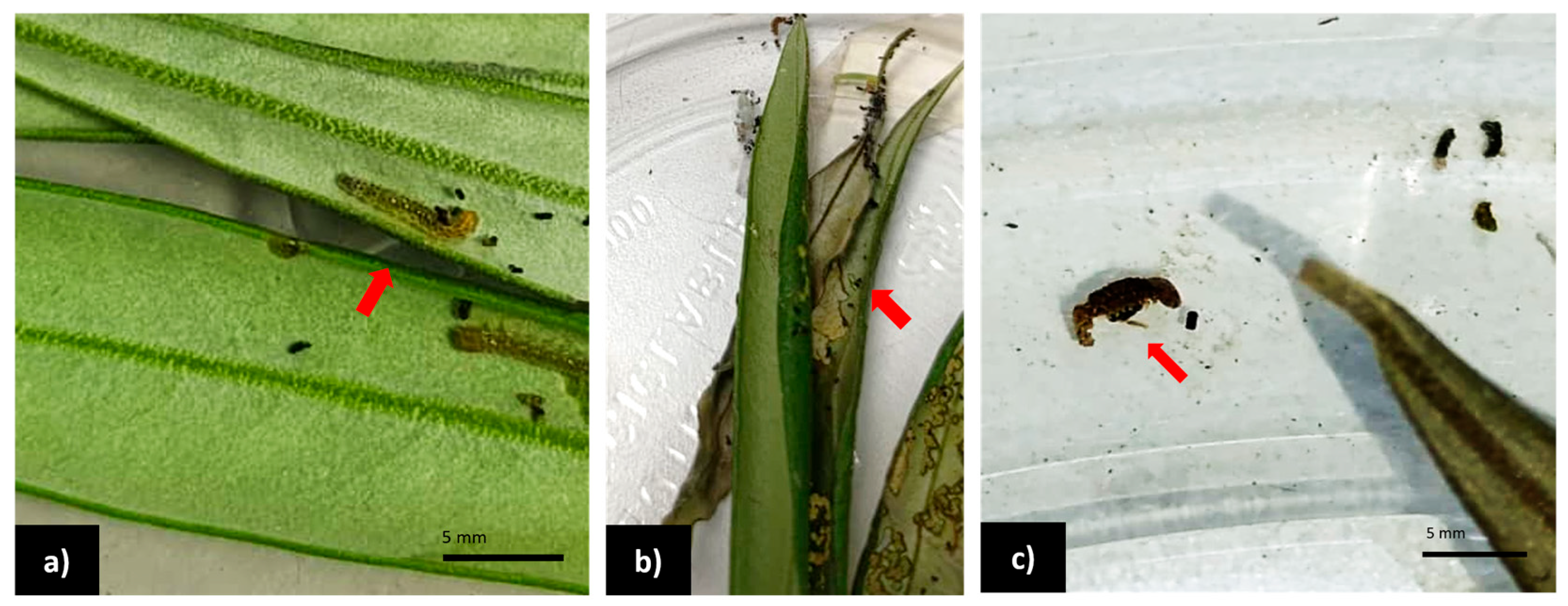
These results indicate considerable variability in entomopathogenic efficacy among the isolates. Pathogenicity assays demonstrated larvicidal activity of Lysinibacillus sp. ACM against larvae of P. persimilis (Figure 1). Healthy larvae (Figure 1a) exhibited uniform coloration and active feeding behavior on untreated olive leaves. In contrast, larvae exposed to bacterial isolates (Figure 1a) showed damage to leaf tissue and altered feeding patterns. High mortality was subsequently observed (Figure 1c), characterized by immobility and morphological changes such as body curvature and tissue darkening. These observations support the entomopathogenic activity of the evaluated isolates.

2.2. Morphological and Microscopic Characterization of Bacteria Isolated from Native Soils

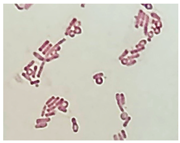
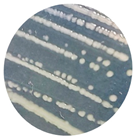
The six bacterial isolates were selected based on their entomopathogenic activity. Macroscopic and microscopic observations revealed notable morphological variation among the isolates (Table 2). All strains formed large colonies (2–4 mm) with cream to beige pigmentation, dry texture, irregular margins, and an opaque appearance. Endospore formation was observed in all isolates, a characteristic commonly reported in bacterial groups related to Priestia and Lysinibacillus.

2.3. Molecular Identification

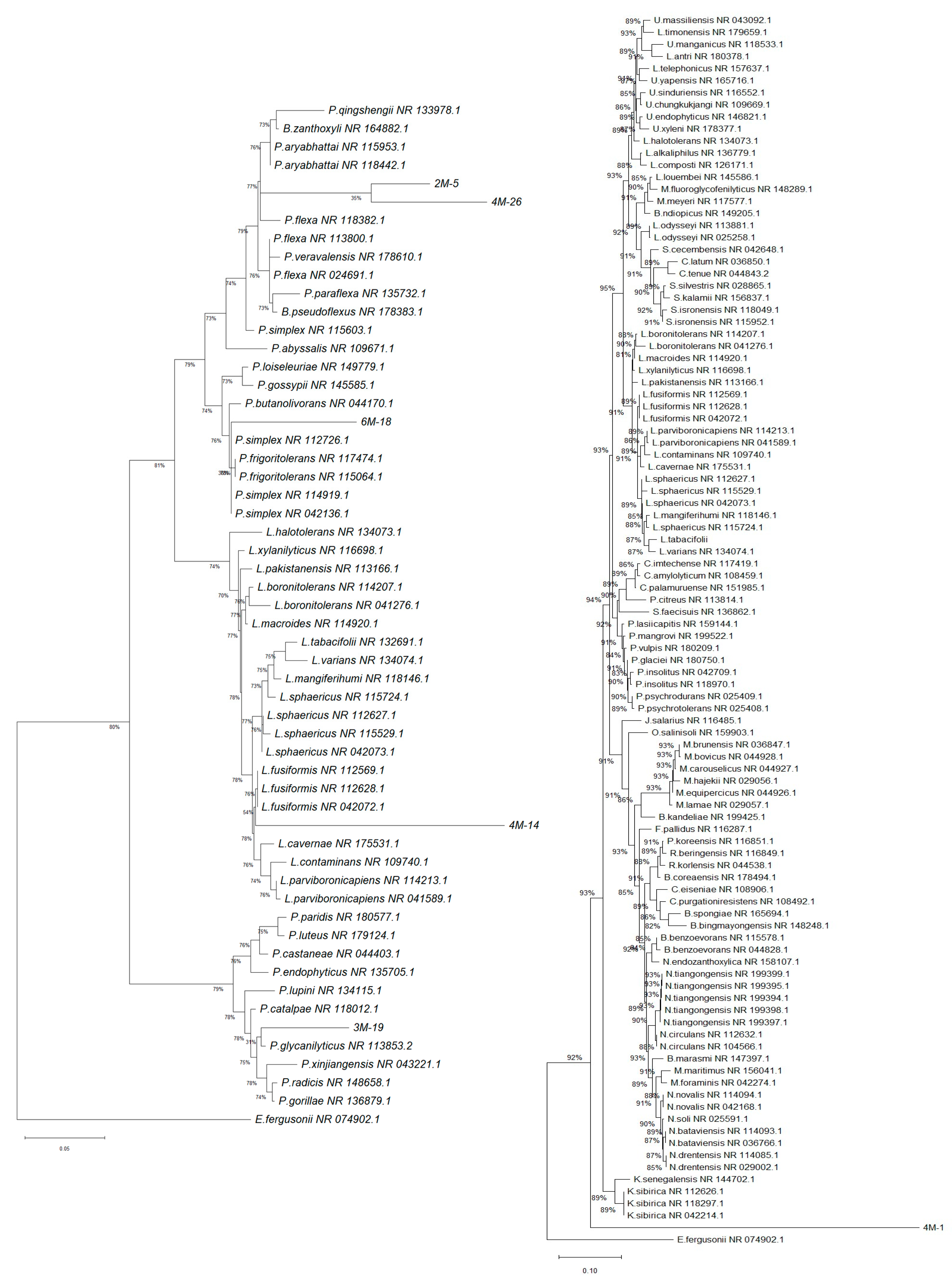
The tentative taxonomic assignment of native bacterial strains with entomopathogenic activity was based on BLAST (https://blast.ncbi.nlm.nih.gov/Blast.cgi, accessed on 1 February 2026) analysis of partial 16S rRNA gene sequences (~600 bp) obtained from strains 2M-5, 3M-19, 4M-1, 4M-14, 4M-26, and 6M-18. Although BLAST results showed relatively low sequence identity and query coverage (<95%) compared with reference sequences available in GenBank, the closest matches suggested affinity with bacterial groups related to Priestia, Lysinibacillus, Paenibacillus, and Peribacillus. Phylogenetic analyses revealed broad clustering patterns, suggesting tentative placement of strains 2M-5 and 4M-26 within Priestia, strain 3M-19 within Paenibacillus, strains 4M-1 and 4M-14 within Lysinibacillus, and strain 6M-18 within Peribacillus (Table 3).
However, the low sequence identity and query coverage values observed for several isolates, particularly strains 4M-1 and 2M-5, substantially limit the robustness of taxonomic inference. Therefore, the phylogenetic relationships observed in this study should be interpreted cautiously and considered exploratory rather than definitive evidence of taxonomic placement.
Owing to the limited resolution provided by partial 16S rRNA gene sequences, the taxonomic identity of these strains is considered putative. Therefore, complementary approaches, including whole-genome sequencing, are currently being undertaken to achieve more robust and definitive classification.
The phylogenetic analysis was performed using the Maximum Likelihood (ML) method under the Tamura–Nei substitution model, implemented in MEGA version 12.0.15. Two phylogenetic trees were constructed based on 16S rRNA gene sequences: a general tree including 56 sequences comprising native strains and type strains retrieved from GenBank, and a second tree specific to strain 4M-1, which included 102 representative sequences to further explore its phylogenetic relationships.
In both analyses, Escherichia fergusonii was used as an outgroup to root the trees. The robustness of the inferred groupings was evaluated using bootstrap analysis with 1000 replicates, and the corresponding values are shown at each node.
The phylogenetic analyses revealed broad clustering patterns of native strains 2M-5, 3M-19, 4M-1, 4M-14, 4M-26, and 6M-18 within the Bacillus sensu lato clade, showing affiliations with phylogenetic groups related to the genera Priestia, Paenibacillus, Peribacillus, Bacillus and Lysinibacillus (Figure 2). However, owing to the limited resolution of partial 16S rRNA sequences, whole-genome sequencing would be necessary to further explore the phylogenetic relationships of these isolates.

2.4. Laboratory-Scale Entomopathogenic Activity Assay

During the pathogenicity bioassays, no mortality was observed in the negative control throughout the experimental period (24, 48, 72, and 96 h), indicating that the experimental conditions did not induce significant larval mortality in the absence of bacterial exposure.
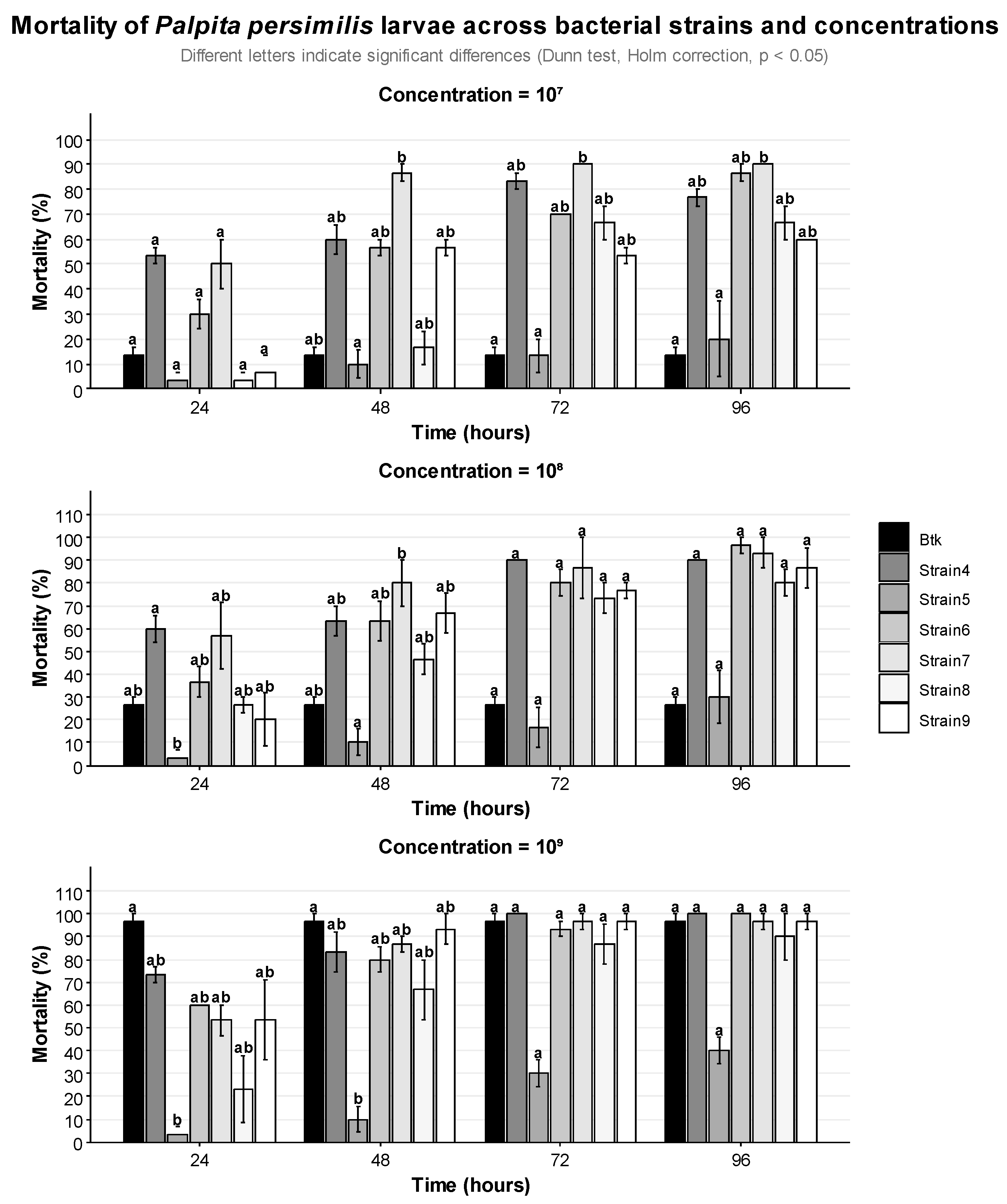
Mortality values (Table 4), together with the responses observed in Figure 3, indicated a progressive increase with inoculum concentration and exposure time, revealing concentration-dependent mortality responses. Entomopathogenic responses varied among strains in both magnitude and temporal progression. At the highest concentration (1 × 10⁹ CFU mL−1), Peribacillus sp. UNM and Paenibacillus sp. GCM reached 100 ± 0% mortality at 96 h, followed by Lysinibacillus sp. YLP and Priestia sp. JBG, which achieved 96.67 ± 3.33% mortality at the same time point.
At lower concentrations (1 × 10⁷ CFU mL−1) and during the initial 24 h of exposure, Peribacillus sp. UNM (60 ± 5.77%) and Lysinibacillus sp. YLP (50 ± 10%) exhibited the highest mortality rates. From 48 h onward, most strains exceeded 50% mortality as exposure time and inoculum concentration increased. These findings highlight substantial inter-strain variability and suggest that entomopathogenic efficacy was influenced by both concentration and exposure time.
The data in Figure 3 reveal significant differences among bacterial strains at exposure times earlier than 96 h and at concentrations below 1 × 10⁹ CFU mL−1 (p < 0.05), indicating variability in larval mortality among treatments under specific experimental conditions. In contrast, no significant differences among strains were detected at 96 h under the highest bacterial concentration (Kruskal–Wallis: χ2 = 11.859, df = 6, p = 0.065). In general, greater variability among strains was observed during the initial stages of exposure, whereas mortality responses became more homogeneous at later exposure times and higher bacterial concentrations. Several strains reached mortality values above 80% after 72–96 h of exposure, particularly at intermediate and high bacterial concentrations.
The generalized linear model (GLM) with a binomial distribution and logit link function showed a substantial improvement in model fit, reducing deviance from 1098.64 (null deviance) to 254.26 (residual deviance; df = 207; AIC = 684.50), enabling simultaneous evaluation of the effects of bacterial concentration (log10), exposure time, and strain on larval mortality of P. persimilis.
Likelihood ratio tests (Type II) indicated that bacterial concentration (χ2 = 92.85, df = 1, p < 0.001), exposure time (χ2 = 325.55, df = 1, p < 0.001), and strain identity (χ2 = 527.53, df = 5, p < 0.001) significantly affected larval mortality. Additionally, the interaction effect between concentration and time was significant (χ2 = 3.85, df = 1, p = 0.049), indicating that the effect of concentration varied according to exposure time (Table 5).
The logarithmic increase in inoculum concentration was associated with a significant increase in larval mortality (β = 0.36 ± 0.16, OR = 1.44, p = 0.021). In contrast, exposure time did not have a significant independent effect (p = 0.854). However, the interaction between concentration and time was marginally significant (β = 0.005, p = 0.051), indicating that mortality responses varied according to exposure duration under different bacterial concentrations.
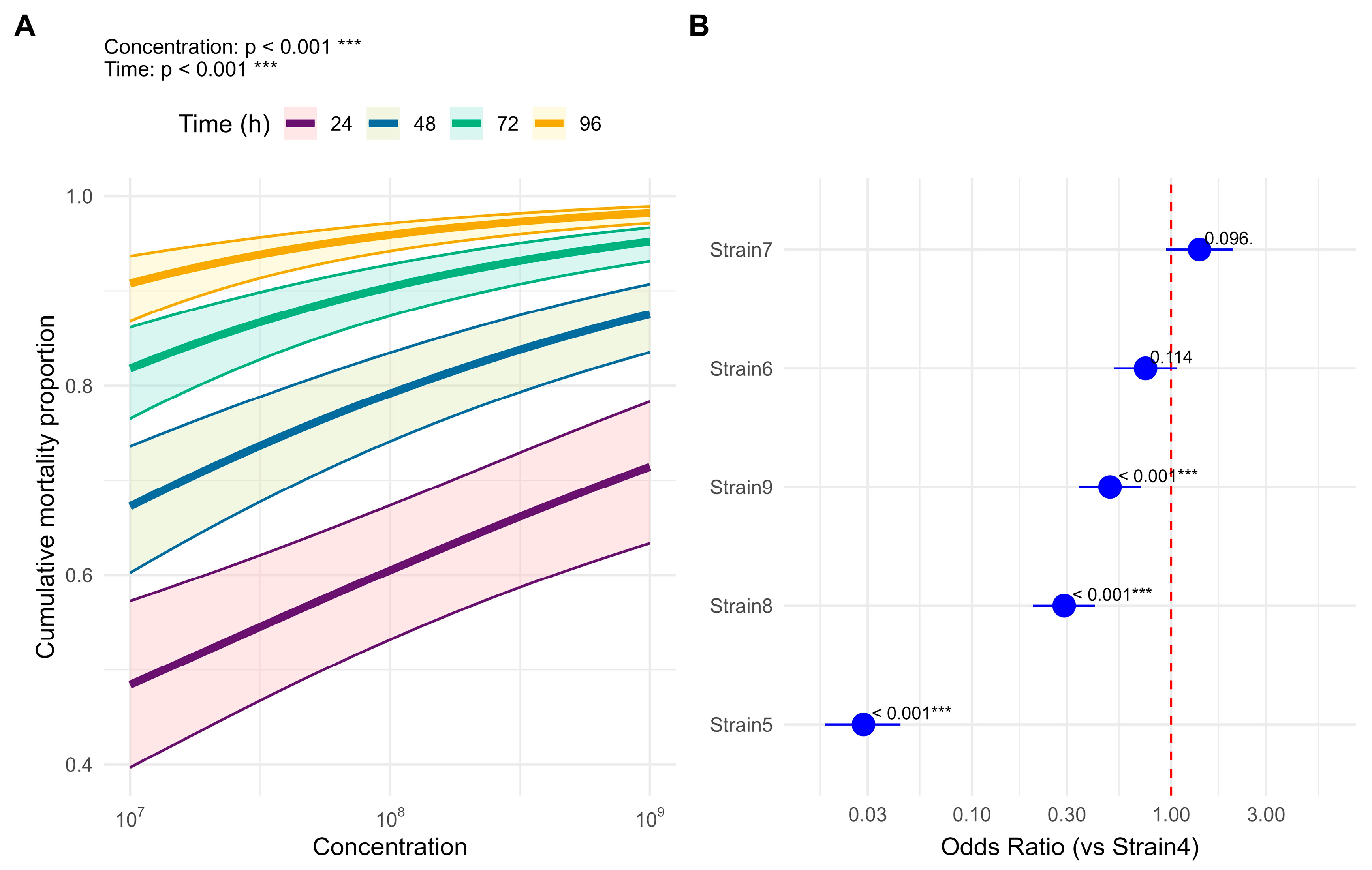
Regarding bacterial strains (taking Strain4 as the reference), significant differences were observed among treatments. In particular, Strain5 showed a marked reduction in efficacy (OR = 0.03, p < 0.001), followed by Strain8 (OR = 0.29, p < 0.001) and Strain9 (OR = 0.49, p < 0.001), indicating lower larvicidal capacity compared to the reference strain. In contrast, Strain6 (p = 0.114) and Strain7 (p = 0.096) did not show statistically significant differences (Table 6).
Larval mortality was influenced by the bacterial strain, inoculum concentration, and exposure time, with higher mortality responses observed at intermediate and high concentrations after prolonged exposure periods. Collectively, the generalized linear model (GLM) results demonstrated that the entomopathogenic response was determined by the combined effects of these experimental factors.
The predictive model incorporated the effects of concentration (logConc), time (Time), strain (Strain), and the logConc × Time interaction. The variation in larval mortality of P. persimilis as a function of bacterial strain, inoculum concentration, and exposure time is shown in Figure 4. Overall, a progressive increase in mortality was observed with increasing time and bacterial concentration.
In Figure 4A, larval mortality curves predicted by the binomial GLM revealed a consistent pattern of increasing mortality as a function of both inoculum concentration and exposure time. The probability of mortality increased progressively with increasing bacterial concentration, which is consistent with the positive and statistically significant effect of concentration identified in the model (p = 0.021). Although exposure time did not have a significant independent effect, the temporal trajectories were consistent with the marginally significant interaction between concentration and time (p = 0.051).
In Figure 4B, the adjusted odds ratios estimated by the GLM are presented for each bacterial strain relative to Strain4. Consistent with the model estimates, Strain5, Strain8, and Strain9 exhibited significantly lower larvicidal efficacy, whereas Strain6 and Strain7 did not differ significantly from the reference strain. These findings indicate that differences among bacterial strains contributed substantially to the variability observed in entomopathogenic efficacy among treatments.
Collectively, the GLM predictions (Figure 4A) and adjusted effect estimates (Figure 4B) indicate that larval mortality was primarily associated with bacterial concentration, while differences among bacterial strains and exposure time also influenced the entomopathogenic response.

3. Discussion

The evidence presented here indicates the presence of entomopathogenic bacteria (EPB) in the rhizospheric soils of O. europaea in southern Peru, putatively affiliated with bacterial clades belonging to the families Bacillaceae, Planococcaceae, and Paenibacillaceae. The predominance of Gram-positive bacilli may be attributed to their ability to form endospores, which confer enhanced resistance to adverse environmental conditions, as well as to their widespread distribution in soil and rhizospheric environments. Within this group, members of the family Bacillaceae were particularly prominent, representing dominant and naturally occurring components of the soil microbiome.
The exploration of native EPB in agroecosystems is relevant because it enables the identification of microorganisms adapted to local environmental conditions that could be evaluated in future biological control studies [43,44,45]. In addition, these soil-associated bacteria exhibit biocidal activity through multiple mechanisms, including the production of toxins, hydrolytic enzymes, bacteriocins, siderophores, antibiotics, extracellular enzymes, and endospore formation [30,46,47,48,49]. These mechanisms can lead to insect death either through septicemia [50] or via bacterial proliferation in the insect midgut following ingestion [51].
The strains evaluated in this study originated from a poorly explored arid agroecosystem. Most previous studies involving these bacterial genera (Table 7) have focused on other lepidopteran species, such as Spodoptera, Plutella, and Helicoverpa, whereas experimental evidence involving P. persimilis remains limited and has primarily been generated in Mediterranean regions and North Africa, including Egypt. In South America, available information is largely restricted to occurrence reports and observational records rather than experimental studies evaluating larval mortality associated with entomopathogenic bacteria [52,53]. Therefore, the present findings may be particularly relevant given the limited global information currently available on entomopathogenic mortality assays against P. persimilis.
The GLM analyses indicated that larval mortality was influenced by the combined effects of bacterial concentration, exposure time, and differences among bacterial strains under the evaluated laboratory conditions. In particular, the interaction between concentration and exposure time suggests that mortality responses vary according to both bacterial concentration and exposure duration. The higher mortality responses observed at intermediate and high bacterial concentrations after prolonged exposure periods indicate that the entomopathogenic response was progressive rather than immediate, with mortality increasing over longer exposure periods and at higher bacterial concentrations. Similar concentration- and exposure-dependent response patterns have previously been reported for entomopathogenic bacteria associated with the genera Bacillus, Lysinibacillus, and Paenibacillus in other lepidopteran species [69].
Differences detected among bacterial strains suggest variability in entomopathogenic responses among native isolates under similar experimental conditions. Such variability may reflect physiological differences among bacterial strains, although the mechanisms potentially associated with larval mortality were not evaluated in the present study. In agreement with the multivariable trends identified by the GLM, the exploratory analyses based on the Kruskal–Wallis test also revealed variability in larval mortality responses among bacterial strains under specific concentrations and exposure conditions. Collectively, these findings provide preliminary laboratory evidence for future investigations involving native bacterial isolates in the management of P. persimilis.
Among the evaluated isolates, Peribacillus sp. UNM (Strain4) demonstrated rapid activity, achieving 60% mortality at the lowest concentration (1 × 10⁷ CFU mL−1) within 24 h and 100% mortality at 96 h at the highest concentration (1 × 10⁹ CFU mL−1) against P. persimilis. These values are equal to or exceed those in previous reports for species of the genus Peribacillus, such as P. simplex, which achieved only 33% mortality in G. mellonella [55], and P. frigoritolerans, which showed variable mortality (74–89%) in larvae of H. longipennis and A. dimidiata [70]. Additionally, 45% mortality has been reported in Agriotes lineatus larvae after 10 days of exposure [71]. Although studies on lepidopterans are limited, this genus is widely recognized for its role in pesticide degradation and phytopathogen biocontrol [72,73].
Similarly, Priestia sp. JBG (Strain9) achieved high mortality (93.33%) at a concentration of 1 × 10⁹ CFU mL−1 within 48 h. These results are consistent with those reported for Priestia megaterium (formerly B. megaterium), whose mortality has reached 100% in P. citrella larvae after 144 h of exposure [58]. This genus has been associated not only with entomopathogenic activity but also with important agrobiotechnological functions, including polymer degradation [74], pesticide detoxification [64], industrial enzyme production [75], and plant growth promotion [76]. Furthermore, recent studies have demonstrated the environmental stability of insecticidal proteins, such as Vip3Ag4 expressed in P. megaterium, through microencapsulation strategies, highlighting their potential for use in biocontrol applications [59].
In the case of Lysinibacillus sp., Abreo et al. [67] reported that L. xylanilyticus induced 66% mortality in first-instar larvae of A. sphaleropa fed on diets treated with spore suspensions after 168 h of exposure. In contrast, in the present study, Lysinibacillus sp. YLP (Strain7) achieved 86.67% mortality against P. persimilis at a concentration of 1 × 10⁷ CFU mL−1 after 48 h of treatment, indicating that the activity was relatively high under the evaluated laboratory conditions. The entomopathogenic activity previously reported for bacteria associated with this genus has been related to the production of bioactive compounds and other virulence-associated factors capable of affecting physiological processes in insects [60,77,78,79]. However, these mechanisms were not evaluated in the present study and therefore should be interpreted cautiously within the context of the existing literature.
Although Lysinibacillus sphaericus has long been associated primarily with mosquito control [80], reports of its activity against lepidopteran species remain limited.
Paenibacillus sp. GCM (Strain6) also exhibited strong performance, achieving mortality rates above 90% after 72 h at a concentration of 1 × 10⁹ CFU mL−1, exceeding previously reported values for Paenibacillus elgii HOA73, which induced 73% larval mortality in P. xylostella after 120 h [65]. These findings may be linked to the presence of genes encoding Cry proteins in P. popilliae [36] and Paenibacillus sp. Kb-26 [66]. Additionally, genetic modification of P. polymyxa with the Cry1C gene has been shown to significantly increase its efficacy against lepidopteran pests [81]. Moreover, Paenibacillus is recognized for its dual function as an insecticidal agent and plant growth promoter [82]. However, specific evidence for P. persimilis remains limited, emphasizing the relevance of the present findings.
Molecular identification based on partial 16S rRNA gene sequences (~600 bp) allowed tentative assignment of the isolates to the families Bacillaceae, Planococcaceae, and Paenibacillaceae, and to the genera Priestia, Lysinibacillus, Paenibacillus, and Peribacillus. However, identity values less than 95% for several strains limit definitive taxonomic classification at the genus or species level [83,84]. Accordingly, conservative terminology has been used throughout the manuscript. Despite these limitations, the molecular phylogeny suggests that these isolates appear to be affiliated with bacterial groups previously reported as entomopathogenic species, highlighting the need for further taxonomic and functional characterization.
In all assays, the treated larvae exhibited consistent phenotypic changes, including lethargy, cessation of feeding, loss of turgor, progressive darkening, and death. These symptoms are consistent with bacterial infection processes previously described in lepidopterans exposed to entomopathogenic bacteria. Similar manifestations have been reported for various genera, including Bacillus, Pseudomonas, Lysinibacillus, Serratia, Chromobacterium, Xenorhabdus, and Photorhabdus [32,51,85,86,87,88], with members of the Bacillaceae family being the most extensively studied [30].
The relevance of these findings lies in the need to identify alternatives to the conventional use of B. thuringiensis, particularly in light of reports of resistance in some insect populations. Globally, several Gram-positive bacteria of the order Bacillales, including Bacillus, Lysinibacillus, and Paenibacillus, have demonstrated significant potential in biological pest control [27]. Moreover, the ability of many of these bacteria to form endospores represents a key advantage for persistence and viability under adverse environmental conditions [89].
Although the evaluated isolates induced significant larval mortality under controlled laboratory conditions, their applicability beyond controlled laboratory conditions remains uncertain. Additional studies are needed to assess their ecological performance, environmental stability, and effects on nontarget organisms under field conditions [76,90,91].
In this study, the evaluated native bacterial strains induced significant larval mortality under laboratory conditions, with concentration- and exposure-dependent mortality patterns. These findings provide preliminary evidence of entomopathogenic activity associated with bacterial exposure and suggest that some native isolates should be considered for future investigations.
However, the present results should be interpreted cautiously, as the efficacy of these isolates under field conditions remains to be confirmed. In addition, the mechanisms potentially associated with larval mortality were not investigated in this study, highlighting the need for further research to characterize the entomopathogenic activity of these isolates.
Overall, this study contributes to the understanding of native entomopathogenic bacteria associated with olive agroecosystems and provides baseline information for future investigations related to the management of P. persimilis.

4. Materials and Methods

4.1. Study Area and Sampling for the Detection of Entomopathogenic Bacteria

Soil samples were collected from olive plantations located in the district of La Yarada–Los Palos, province and department of Tacna, Peru, a representative arid agroecosystem dedicated to olive cultivation.
Sampling was conducted using a targeted design with spatial replication. Five independent sampling points were selected within the study area and considered independent experimental units. At each site, a composite soil sample of approximately 100 g was obtained from five subsamples collected at a depths of 10–20 cm, following a zigzag sampling pattern to capture spatial soil heterogeneity and ensure sample representativeness, in accordance with standardized environmental sampling guidelines [92].
The samples were placed in sterile polypropylene bags, properly labeled, and transported under refrigerated conditions (4 °C) to the Microbiology Laboratory of the Faculty of Sciences, Universidad Nacional Jorge Basadre Grohmann, where they were processed within 24 h after collection [93,94].

4.2. Isolation of Native Entomopathogenic Bacteria

For each soil sample, 10 g of soil was homogenized in 90 mL of sterile peptone water to obtain the initial inoculum suspension. Two independent serial dilution series were prepared up to 10−5. In the first dilution series, aliquots from the two final dilutions were surface-inoculated onto tryptic soy agar (TSA) and nutrient agar (NA) plates for the isolation of culturable heterotrophic bacteria.
In the second dilution series, the suspensions were subjected to heat treatment in a water bath at approximately 70–80 °C for 15 min to promote the selective isolation of endospore-forming bacteria. Subsequently, 100 μL aliquots were spread onto nutrient agar (NA) supplemented with fluconazole to inhibit fungal growth. All plates were incubated at 28–30 °C for 72 h [95,96].

4.3. Morphological and Microscopic Characterization of the Isolates

After incubation, individual bacterial colonies exhibiting distinct morphological characteristics were selected during the preliminary screening and purified by successive streaking on tryptic soy agar (TSA) plates to obtain axenic cultures. Macroscopic characterization of the purified isolates was performed based on colony morphology, including pigmentation, shape, texture, margin characteristics, elevation, and opacity. Subsequently, microscopic characterization was carried out by Gram staining.
Each purified isolate was subsequently inoculated into TSA slant vials, assigned a unique identification code, and stored at 5 °C for short-term preservation. Finally, all strains were cryopreserved in 30% glycerol solution and stored at −80 °C for long-term preservation [97].

4.4. Determination of Laboratory-Scale Entomopathogenic Activity of Native Bacteria

4.4.1. Larval Collection

Larvae of P. persimilis used in the bioassays were collected at the second instar stage (L2) from olive plantations between 04:00 and 09:00 h to minimize thermal stress and preserve viability. Larvae were transported to the laboratory in transparent plastic containers covered with tulle fabric secured with an elastic band to allow ventilation and prevent escape. Precise larval instar determination was performed in the Entomology Laboratory, given the limited information available on P. persimilis. The larvae were subsequently transferred to the Microbiology Laboratory of the Faculty of Sciences, Universidad Nacional Jorge Basadre Grohmann, for use in bioassays [55,93].

4.4.2. Inoculum Preparation

The isolated strains were reactivated in Luria–Bertani (LB) broth and incubated at 30 °C for 20 h. Subsequently, the cultures were streaked onto nutrient agar (NA) plates and incubated at 30 °C for an additional 20 h. Thereafter, three loopfuls of bacterial biomass were inoculated into nutrient broth and incubated at 30 °C for 24 h at 150 rpm to promote bacterial propagation and inoculum production.
Following incubation, the cultures were centrifuged at 8000 rpm for 15 min to remove the culture medium. The resulting pellets were washed three times with sterile phosphate-buffered saline (PBS; pH 7.0). Subsequently, the bacterial cells were resuspended in sterile distilled water, and the bacterial suspension used in the bioassays was adjusted by measuring optical density at 600 nm (OD600) to obtain an approximate concentration of 1 × 10⁹ CFU mL−1, following the methodology described by Eski et al. [98], with modifications.

4.4.3. Pathogenicity Assay

For the pathogenicity bioassays, bacterial suspensions of the selected isolates were prepared. An initial exploratory screening assay was conducted using a concentration of 1 × 10⁹ CFU mL−1 to identify isolates exhibiting larvicidal activity. Subsequently, bioassays were performed using bacterial concentrations of 1 × 10⁷, 1 × 10⁸, and 1 × 10⁹ CFU mL−1, with three independent replicates per treatment. The bacterial suspensions were transferred into sterile 20 mL fine mist spray bottles for application for uniform application [99].
The diet consisted of fresh olive leaves collected from the field and superficially disinfected with 2% sodium hypochlorite for 2 min, followed by three rinses with sterile distilled water and drying with sterile absorbent paper [43]. Subsequently, the disinfected leaves were placed in suitable plastic containers following the methodology described by Eski et al. [98] with modifications.
Six previously disinfected olive leaves were placed in each container, and 2 mL of the bacterial suspension was uniformly sprayed onto both leaf surfaces [99,100]. The treated leaves were air-dried for approximately 1 h to promote adsorption of the bacterial inoculum onto the leaf surface. To maintain leaf moisture during the assay, a sterile moistened cotton plug was placed on the petiole of each leaf [58].
A commercial formulation of B. thuringiensis var. kurstaki (BIOSPORE 6.4% WP, wettable powder formulation, imported by FARMAGRO S.A., Lima, Peru) was used as the positive control, whereas the negative control consisted of olive leaves treated exclusively with sterile distilled water. Both controls were included in the preliminary and subsequent bioassays under the same experimental conditions.
Finally, ten second-instar (L2) larvae were transferred into each plastic container, which was covered with tulle fabric (15 × 17 cm) and secured with an elastic band to prevent larval escape while allowing ventilation, following the methodology described by Ninfa et al. [101]. For the preliminary screening assay, each isolate was evaluated using 10 second-instar (L2) larvae. Subsequently, the bioassays were conducted using three independent replicates per treatment (strain × concentration), with 10 larvae per replicate (n = 30 larvae per treatment combination). Larval mortality was recorded after 24, 48, 72, and 96 h of exposure.

4.5. Molecular Identification

Bacterial DNA extraction was performed exclusively from the isolates that exhibited the highest entomopathogenic activity. Prior to extraction, pure isolates were reactivated on LB agar and incubated at 35 °C for 24 h. Subsequently, genomic DNA was extracted from each isolate using the innuPREP Bacterial DNA Kit (Analytik Jena GmbH, Jena, Germany).
Amplification was performed by polymerase chain reaction (PCR) using the universal primers 27F (5′ AGA-GTTT-GATCMTGGCTCAG 3′) and 1492R (5′ TACGGYTACCTTGTTACGACTT 3′) [102,103,104]. PCRs were carried out in a final volume of 25 µL using Platinum Hot Start PCR Master Mix 2X (Invitrogen, Carlsbad, CA, USA), containing Platinum Taq DNA polymerase (Invitrogen, Carlsbad, CA, USA). The thermal cycling conditions included initial denaturation at 96 °C for 4 min, followed by 30 cycles of 94 °C for 30 s, 55 °C for 30 s, and 72 °C for 1 min, with a final extension of 10 min at 72 °C [104].
PCR products were subsequently quantified using a Qubit 4 fluorometer (Thermo Fisher, Waltham, MA, USA) and visualized by electrophoresis on 1% agarose gels. Amplicons showing visible bands were sent to Macrogen (Seoul, Republic of Korea) for sequencing.

4.6. Data Analysis

Larval mortality was recorded as the number of dead larvae relative to the total number of individuals exposed in each experimental replicate. Each treatment (strain × concentration) consisted of three independent replicates, with 10 larvae per replicate (n = 30 larvae per treatment combination), and mortality was evaluated after 24, 48, 72, and 96 h of exposure. The response variable consisted of proportions derived from binomial counts (dead/alive larvae); therefore, inferential analyses were based on models appropriate for binomial data.
The main inferential analysis was conducted using generalized linear models (GLMs) with a binomial distribution and logit link function, considering bacterial strain, inoculum concentration, and exposure time as explanatory variables. This approach allowed the simultaneous evaluation of multiple experimental factors affecting larval mortality, while accounting for the proportional and discrete nature of the response variable. Model selection was performed by comparing nested models with and without interaction terms using likelihood ratio tests. The final model was selected on the basis of statistical significance and biological interpretability.
Model fit was assessed by examining residual deviance and the dispersion parameter. Since no overdispersion was detected, the binomial model specification was retained. The GLM results are expressed as coefficients (β), standard errors (SEs), odds ratios (ORs), 95% confidence intervals (95% CIs), and significance values (p < 0.05).
Complementary exploratory comparisons among treatments were performed using nonparametric Kruskal–Wallis tests, followed by Dunn’s post hoc test with the Holm correction for multiple comparisons.
All the statistical analyses were performed in R (version 4.3.0).

Author Contributions

Conceptualization, A.V.C.M., C.J.C.Q., M.C.M., G.J.M.C. and N.M.P.J.; methodology, A.V.C.M., C.J.C.Q. and M.C.M.; software, M.C.M., G.J.M.C. and N.M.P.J.; validation A.V.C.M., C.J.C.Q. and M.C.M.; formal analysis, A.V.C.M., C.J.C.Q., M.C.M., G.J.M.C. and N.M.P.J.; investigation, A.V.C.M., C.J.C.Q., M.C.M., G.J.M.C. and N.M.P.J.; resources, A.V.C.M., C.J.C.Q.; data curation, A.V.C.M., C.J.C.Q. and M.C.M.; writing—original draft preparation, A.V.C.M., C.J.C.Q., M.C.M., G.J.M.C. and N.M.P.J.; writing—review and editing, A.V.C.M., C.J.C.Q., M.C.M., J.G.A. and H.H.S.G.; visualization, A.V.C.M., C.J.C.Q. and M.C.M.; supervision, A.V.C.M., C.J.C.Q.; project administration, A.V.C.M.; funding acquisition, A.V.C.M., C.J.C.Q., M.C.M. All authors have read and agreed to the published version of the manuscript.

Funding

This research was funded by the Universidad Nacional Jorge Basadre Grohmann through the “Fondos del Canon, Sobrecanon y Regalías Mineras” as sanctioned by Rectoral Resolution No. 13626-2024-UNJBG.

Data Availability Statement

The data are available in this article.

Conflicts of Interest

The authors declare no conflicts of interest.

References

  1. Mairech, H.; López-Bernal, Á.; Moriondo, M.; Dibari, C.; Regni, L.; Proietti, P.; Villalobos, F.J.; Testi, L. Sustainability of olive growing in the Mediterranean area under future climate scenarios: Exploring the effects of intensification and deficit irrigation. Eur. J. Agron. 2021, 129, 126319. [Google Scholar] [CrossRef]
  2. FAO Pesticides Use and Trade 1990–2023. Available online: https://openknowledge.fao.org/handle/20.500.14283/cd5968en (accessed on 12 May 2025).
  3. Torres, M.; Pierantozzi, P.; Searles, P.; Rousseaux, M.C.; García-Inza, G.; Miserere, A.; Bodoira, R.; Contreras, C.; Maestri, D. Olive Cultivation in the Southern Hemisphere: Flowering, Water Requirements and oil Quality Responses to New Crop Environments. Front. Plant Sci. 2017, 8, 294457. [Google Scholar] [CrossRef]
  4. Ministerio de Desarrollo Agrario y Riego. Catálogo de Olivo del Banco del Germoplasma del INIA; Ministerio de Desarrollo Agrario y Riego: Lima, Peru, 2024.
  5. Dirección Regional de Agricultura Tacna (DRAT). Valor Bruto de la Producción Agropecuaria Según Principales Productos. Año 2022. Gobierno Regional de Tacna, Perú. Available online: https://cms.agritacna.gob.pe/uploads/statistics/agricola/2022/e4fab05f-6c3e-4bc6-b30d-d41c93e9b6c8.pdf (accessed on 30 December 2025).
  6. Burla, J.P.; Castiglioni, E.; Navia, D.; Aldabe, J. First Record of Palpita persimilis (Lepidoptera, Crambidae) and Oxycenus maxwelli (Acari, Eriophyidae) in South-eastern Uruguay. Agrociencia 2019, 23, 87–93. [Google Scholar] [CrossRef]
  7. Ricalde, M.P.; Garcia, F.R.M. Insetos e ácaros associados à cultura da oliveira na América do Sul. Rev. Ciênc. Ambient. 2013, 7, 61–72. [Google Scholar]
  8. Casanova, D.P. Guía Técnica del Cultivo de Olivo en la Región Tacna; Instituto Nacional de Innovación Agraria: Lima, Peru, 2022.
  9. Petrović, E.; Godena, S.; Raspudić, E. Review of the impact of ecological factors on the occurrence and development of olive (Olea europaea L.) pests. Glas. Zašt. Bilja 2024, 47, 16–30. [Google Scholar] [CrossRef]
  10. Ghoneim, K. The olive leaf moth Palpita unionalis (Hübner) (Lepidoptera: Pyralidae) as a serious pest in the world: A Review. Int. J. Res. Stud. Zool. 2015, 1, 1–20. [Google Scholar]
  11. El Fakhouri, K.; Ramdani, C.; Aasfar, A.; Boulamtat, R.; Sijilmassi, B.; El Bouhssini, M.; Kadmiri, I.M. Isolation, identification and pathogenicity of local entomopathogenic bacteria as biological control agents against the wild cochineal Dactylopius opuntiae (Cockerell) on cactus pear in Morocco. Sci. Rep. 2023, 13, 21647. [Google Scholar] [CrossRef]
  12. Kobisi, A.A.; Imam, A.I.; Mansour, A.N. Biocontrol efficacy of native protease-producing bacterial isolates against the olive leaf moth, Palpita unionalis (Hübner) (Lepidoptera: Pyralidae). Egypt. J. Biol. Pest Control 2024, 34, 20. [Google Scholar] [CrossRef]
  13. Shehata, W.A.; Abou-Elkhair, S.S.; Youssef, A.A.; Nasr, F.N. Biological studies on the olive leaf moth, Palpita unionalis Hübner (Lepid., Pyralidae), and the olive moth, Prays oleae Bernard (Lepid., Yponomeutidae). J. Pest Sci. 2003, 76, 155–158. [Google Scholar] [CrossRef]
  14. Tahar-Chaouche, S.; Bengouga, K.; Fadlaoui, H. The first detection of the olive leaf moth Palpita vitrealis (Rossi) (Lepidoptera: Pyralidae) as a serious pest in Biskra Province (Algeria). EPPO Bull. 2019, 49, 593–596. [Google Scholar] [CrossRef]
  15. Hayden, J.E.; Buss, L.J. Olive shootworm, Palpita persimilis Munroe (Insecta: Lepidoptera: Crambidae): EENY556, 5/2013. EDIS 2013, 1–6. [Google Scholar] [CrossRef]
  16. Scheunemann, T.; Correa, L.M.S.; Krüger, A.P.; Bernardi, D.; Querino, R.B.; Carvalho, L.C.B.; Fernandes, D.R.R.; Shimbori, E.M.; Nava, D.E. Population dynamics of Palpita forficifera Munroe, 1959 (Lepidoptera: Crambidae) and associated parasitoids in olive orchards. Braz. J. Biol. 2024, 84, e286201. [Google Scholar] [CrossRef]
  17. Hagstrum, D.W.; Subramanyam, B. Immature Insects: Ecological Roles of Mobility. Am. Entomol. 2010, 56, 230–241. [Google Scholar] [CrossRef]
  18. Liu, L.; Zheng, X.; Wei, X.; Kai, Z.; Xu, Y. Excessive application of chemical fertilizer and organophosphorus pesticides induced total phosphorus loss from planting causing surface water eutrophication. Sci. Rep. 2021, 11, 23015. [Google Scholar] [CrossRef]
  19. Rani, M.; Kaushik, P.; Bhayana, S.; Kapoor, S. Impact of organic farming on soil health and nutritional quality of crops. J. Saudi Soc. Agric. Sci. 2023, 22, 560–569. [Google Scholar] [CrossRef]
  20. Bonaterra, A.; Badosa, E.; Daranas, N.; Francés, J.; Roselló, G.; Montesinos, E. Bacteria as Biological Control Agents of Plant Diseases. Microorganisms 2022, 10, 1759. [Google Scholar] [CrossRef]
  21. Muñoz-Bautista, J.M.; Bernal-Mercado, A.T.; Martínez-Cruz, O.; Burgos-Hernández, A.; López-Zavala, A.A.; Ruiz-Cruz, S.; Ornelas-Paz, J.D.J.; Borboa-Flores, J.; Ramos-Enríquez, J.R.; Del-Toro-Sánchez, C.L. Environmental and Health Impacts of Pesticides and Nanotechnology as an Alternative in Agriculture. Agronomy 2025, 15, 1878. [Google Scholar] [CrossRef]
  22. Koul, O. Biopesticides: Commercial opportunities and challenges. In Development and Commercialization of Biopesticides: Costs and Benefits; Koul, O., Ed.; Academic Press: Cambridge, MA, USA, 2023; pp. 1–23. [Google Scholar]
  23. Kumar, S.; Nikunj, C.; Rathore, A.; Nigam, R.; Shivam; Arvind, M.; Nilesh, R.; Yuvarani, R. Role of Biocontrol Agents in Suppressing Plant Pathogen: A Compressive Analysis. J. Sci. Res. Rep. 2024, 30, 1004–1015. [Google Scholar] [CrossRef]
  24. Torres-Rodriguez, J.A.; Reyes-Pérez, J.J.; Quiñones-Aguilar, E.E.; Hernandez-Montiel, L.G. Actinomycete Potential as Biocontrol Agent of Phytopathogenic Fungi: Mechanisms, Source, and Applications. Plants 2022, 11, 3201. [Google Scholar] [CrossRef] [PubMed]
  25. Irsad; Shahid, M.; Haq, E.; Mohamed, A.; Rizvi, P.Q.; Kolanthasamy, E. Entomopathogen-based biopesticides: Insights into unraveling their potential in insect pest management. Front. Microbiol. 2023, 14, 1208237. [Google Scholar] [CrossRef]
  26. Kalha, C.S.; Singh, P.P.; Kang, S.S.; Hunjan, M.S.; Gupta, V.; Sharma, R. Entomopathogenic viruses and bacteria for insect-pest control. In Integrated Pest Management; Elsevier: Amsterdam, The Netherlands, 2014; pp. 225–244. [Google Scholar]
  27. Ruiu, L. Insect Pathogenic Bacteria. In Integrated Pest Management. Insects 2015, 6, 352–367. [Google Scholar] [CrossRef]
  28. Khachatourians, G.G. Insecticides, Microbial. In Reference Module in Life Sciences; Elsevier: Amsterdam, The Netherlands, 2019; p. B9780128096338130663. [Google Scholar]
  29. Verma, M.L.; Kumar, A.; Chintagunta, A.D.; Samudrala, P.J.K.; Bardin, M.; Lichtfouse, E. Microbial Production of Biopesticides for Sustainable Agriculture. Sustainability 2024, 16, 7496. [Google Scholar] [CrossRef]
  30. Glare, T.R.; Jurat-Fuentes, J.-L.; O’Callaghan, M. Basic and Applied Research: Entomopathogenic Bacteria. In Microbial Control of Insect and Mite Pests; Elsevier: Amsterdam, The Netherlands, 2017; pp. 47–67. [Google Scholar]
  31. Pigott, C.R.; Ellar, D.J. Role of Receptors in Bacillus thuringiensis Crystal Toxin Activity. Microbiol. Mol. Biol. Rev. 2007, 71, 255–281. [Google Scholar] [CrossRef]
  32. Devi, S.; Saini, H.S.; Kaur, S. Insecticidal and growth inhibitory activity of gut microbes isolated from adults of Spodoptera Litura (Fab.). BMC Microbiol. 2022, 22, 71. [Google Scholar] [CrossRef] [PubMed]
  33. Nascimento, T.A.; De Carvalho, K.S.; Martins, D.C.; De Oliveira, C.R.; De Carvalho Queiroz, M.M.; Valicente, F.H. Bacillus thuringiensis strains to control Noctuidae pests. J. Appl. Entomol. 2024, 148, 371–381. [Google Scholar] [CrossRef]
  34. Salehi, F.; Gharekhani, G.; Shirazi, J. Integrating the life table and consumption rate for evaluating the parasitism capacity of Habrobracon hebetor (Hymenoptera: Braconidae) on Helicoverpa armigera (Lepidoptera: Noctuidae). Biologia 2025, 80, 241–259. [Google Scholar] [CrossRef]
  35. Yang, T.; Wu, Z.; Li, L.; Jiang, M.; Fang, X.; Huang, W.; Zhou, Y. Identification and analysis of toxins in novel Bacillus thuringiensis Strain Bt S3076-1 against Spodoptera frugiperda and Helicoverpa armigera (Lep.: Noctuidae). Arch. Microbiol. 2023, 205, 168. [Google Scholar] [CrossRef]
  36. Zhang, J.; Hodgman, T.C.; Krieger, L.; Schnetter, W.; Schairer, H.U. Cloning and analysis of the first cry gene from Bacillus popilliae. J. Bacteriol. 1997, 179, 4336–4341. [Google Scholar] [CrossRef] [PubMed]
  37. Naik, V.C.; Kumbhare, S.; Kranthi, S.; Satija, U.; Kranthi, K.R. Field-evolved resistance of pink bollworm, Pectinophora gossypiella (Saunders) (Lepidoptera: Gelechiidae), to transgenic Bacillus thuringiensis (Bt) cotton expressing crystal 1Ac (Cry1Ac) and Cry2Ab in India. Pest Manag. Sci. 2018, 74, 2544–2554. [Google Scholar] [CrossRef] [PubMed]
  38. Yang, F.; Williams, J.; Porter, P.; Huang, F.; Kerns, D.L. F2 screen for resistance to Bacillus thuringiensis Vip3Aa51 protein in field populations of Spodoptera frugiperda (Lepidoptera: Noctuidae) from Texas, USA. Crop Prot. 2019, 126, 104915. [Google Scholar] [CrossRef]
  39. Yang, F.; Head, G.P.; Price, P.A.; Santiago González, J.C.; Kerns, D.L. Inheritance of Bacillus thuringiensis Cry2Ab2 protein resistance in Helicoverpa zea (Lepidoptera: Noctuidae). Pest Manag. Sci. 2020, 76, 3676–3684. [Google Scholar] [CrossRef]
  40. Smagghe, F.; Spooner-Hart, R.; Chen, Z.-H.; Donovan-Mak, M. Biological control of arthropod pests in protected cropping by employing entomopathogens: Efficiency, production and safety. Biol. Control 2023, 186, 1–19. [Google Scholar] [CrossRef]
  41. Mishra, J.; Dutta, V.; Arora, N.K. Biopesticides in India: Technology and sustainability linkages. 3 Biotech 2020, 10, 210. [Google Scholar] [CrossRef]
  42. Lacey, L.A.; Grzywacz, D.; Shapiro-Ilan, D.I.; Frutos, R.; Brownbridge, M.; Goettel, M.S. Insect pathogens as biological control agents: Back to the future. J. Invertebr. Pathol. 2015, 132, 1–41. [Google Scholar] [CrossRef]
  43. Hafsa, M.; Benfekih, L.A. New insights on entomopathogenic bacteria isolated from soil of citrus crops to combat the polyphagus aphid Pest Hyalopterus pruni (Geoffroy 1762) (Hemiptera, Aphididae). Egypt. J. Biol. Pest Control 2024, 34, 51. [Google Scholar] [CrossRef]
  44. Sharma, L.; Bohra, N.; Rajput, V.D.; Quiroz-Figueroa, F.R.; Singh, R.K.; Marques, G. Advances in Entomopathogen Isolation: A Case of Bacteria and Fungi. Microorganisms 2020, 9, 16. [Google Scholar] [CrossRef]
  45. Toledo-Hernández, E.; Torres-Quíntero, M.C.; Mancilla-Dorantes, I.; Sotelo-Leyva, C.; Delgado-Núñez, E.J.; Hernández-Velázquez, V.M.; Dunstand-Guzmán, E.; Salinas-Sánchez, D.O.; Peña-Chora, G. Entomopathogenic Bacteria Species and Toxins Targeting Aphids (Hemiptera: Aphididae): A Review. Plants 2025, 14, 943. [Google Scholar] [CrossRef]
  46. Calcagnile, M.; Giuliano, A.; Tredici, M.S.; Gualandris, D.; Rotondo, D.; Calisi, A.; Leo, C.; Martelli, M.; Rocchi, A.; Klint, K.E.; et al. Per- and polyfluoroalkyl substances (PFAS) as environmental drivers of antimicrobial resistance: Insights from genome sequences of Klebsiella grimontii and Citrobacter braakii isolated from contaminated soil. Environ. Sci. Adv. 2025, 4, 1444–1476. [Google Scholar] [CrossRef]
  47. McSpadden Gardener, B.B. Ecology of Bacillus and Paenibacillus spp. in Agricultural Systems. Phytopathology 2004, 94, 1252–1258. [Google Scholar] [CrossRef]
  48. Sindhu, S.S.; Sehrawat, A.; Sharma, R.; Khandelwal, A. Biological control of insect pests for sustainable agriculture. In Advances in Soil Microbiology: Recent Trends and Future Prospects; Adhya, T.K., Mishra, B.B., Annapurna, K., Verma, D.K., Kumar, U., Eds.; Microorganisms for Sustainability; Springer: Singapore, 2017; Volume 4, pp. 189–218. [Google Scholar]
  49. Toledo-Hernández, E.; Peña-Chora, G.; Mancilla-Dorantes, I.; Torres-Rojas, F.I.; Romero-Ramírez, Y.; Palemón-Alberto, F.; Ortega-Acosta, S.Á.; Delgado-Núñez, E.J.; Salinas-Sánchez, D.O.; Tagle-Emigdio, L.J.; et al. A review of Biological Control One Decade After the Sorghum Aphid (Melanaphis sorghi) Outbreak. Plants 2024, 13, 2873. [Google Scholar] [CrossRef] [PubMed]
  50. Zhang, X.; Hu, C.; Wu, L.; Chen, W. Transgenerational Sublethal Effects of Chlorantraniliprole and Emamectin Benzoate on the Development and Reproduction of Spodoptera frugiperda. Insects 2023, 14, 537. [Google Scholar] [CrossRef]
  51. Subkrasae, C.; Ardpairin, J.; Dumidae, A.; Janthu, P.; Muangpat, P.; Polseela, R.; Tandhavanant, S.; Thanwisai, A.; Vitta, A. Larvicidal activity of Photorhabdus and Xenorhabdus bacteria isolated from insect parasitic nematodes against Aedes Aegypti and Aedes Albopictus. Acta Trop. 2022, 235, 106668. [Google Scholar] [CrossRef]
  52. Gomez, H. La verdadera identidad del “Gusano del brote del olivo” en el Perú (Lepidoptera, Pyralidae). Rev. Peru. Entomol. 1999, 41, 19–22. [Google Scholar]
  53. Munroe, E. New species and a new subspecies of Palpita (Lepidoptera: Pyralidae). Can. Entomol. 1959, 91, 641–650. [Google Scholar] [CrossRef]
  54. Abo-Bakr, A.; Fahmy, E.M.; Badawy, F.; Abd El-latif, A.O.; Moussa, S. Isolation and characterization of the local entomopathogenic bacterium, Bacillus thuringiensis isolates from different Egyptian soils. Egypt. J. Biol. Pest Control 2020, 30, 54. [Google Scholar] [CrossRef]
  55. Güney Aydin, E.; Sezen, K. The isolation and characterization of bacteria isolated from Capnodis tenebrionis L. and their biological control potential against some insect pests. Türkiye Biyolojik Mücadele Derg. 2024, 14, 85–104. [Google Scholar] [CrossRef]
  56. Blibech, I.; Ksantini, M.; Chaieb, I.; Jlassi, B.; Rhouma, A.; Jaoua, S.; Aifa, S. Isolation of entomopathogenic Bacillus from a biodynamic olive farm and their pathogenicity to Lepidopteran and Coleopteran insect pests. Crop Prot. 2012, 31, 72–77. [Google Scholar] [CrossRef]
  57. Gharsallah, H.; Ksentini, I.; Abdelhedi, N.; Naayma, S.; Hadj Taieb, K.; Sahnoun, M.; Triki, M.A.; Ksantini, M.; Leclerque, A. Screening of bacterial isolates related to olive orchard pests in Tunisia using 16S ribosomal RNA and evaluation of their biotechnological potential. J. Appl. Microbiol. 2019, 126, 489–502. [Google Scholar] [CrossRef] [PubMed]
  58. Atwa, S.S.A.; Abd El-Fattah, R.M.; Ghanim, N.M.; Bayoumy, M.H. Efficiency of Local Entomopathogenic Bacterial Isolates Against the Citrus Leafminer, Phyllocnistis citrella. J. Plant Prot. Pathol. 2024, 15, 321–327. [Google Scholar] [CrossRef]
  59. Palma, L.; Ruiz De Escudero, I.; Mañeru-Oria, F.; Berry, C.; Caballero, P. UV Protection and insecticidal activity of microencapsulated Vip3Ag4 protein in Bacillus megaterium. Toxicon 2024, 247, 107807. [Google Scholar] [CrossRef] [PubMed]
  60. Nishiwaki, H.; Nakashima, K.; Ishida, C.; Kawamura, T.; Matsuda, K. Cloning, functional characterization, and mode of action of a novel insecticidal pore-forming toxin, sphaericolysin, produced by Bacillus sphaericus. Appl. Environ. Microbiol. 2007, 73, 3404–3411. [Google Scholar] [CrossRef]
  61. Gotoh, T.; Koyama, M.; Hagino, Y.; Doke, K. Effect of leaf toughness and temperature on development in the lilac pyralid, Palpita nigropunctalis (Bremer) (Lepidoptera: Crambidae). J. Asia-Pac. Entomol. 2011, 14, 173–178. [Google Scholar] [CrossRef]
  62. Sauka, D.H.; Peralta, C.; Pérez, M.P.; Onco, M.I.; Fiodor, A.; Caballero, J.; Caballero, P.; Berry, C.; Del Valle, E.E.; Palma, L. Bacillus toyonensis biovar thuringiensis: A novel entomopathogen with insecticidal activity against Lepidopteran and Coleopteran pests. Biol. Control 2022, 167, 104838. [Google Scholar] [CrossRef]
  63. Handa, V.L.; Patel, B.N.; Kothari, R.K.; Vyas, B.R.M. Biological-control of fungi and pink bollworm (Lepidoptera: Gelechiidae) by bacteria isolated from the caterpillars carcasses. Biocatal. Agric. Biotechnol. 2025, 69, 103777. [Google Scholar] [CrossRef]
  64. Subba, P.; Nandi, S.; Bhattacharya, M. Pesticide-utilizing bacterial strains—Priestia flexa and Bacillus safensis isolated from the gut of tea looper, Biston suppressaria (Lepidoptera: Geometridae): A major pest of tea plant. Microbe 2025, 8, 100547. [Google Scholar] [CrossRef]
  65. Neung, S.; Nguyen, X.H.; Naing, K.W.; Lee, Y.S.; Kim, K.Y. Insecticidal potential of Paenibacillus elgii HOA73 and its combination with organic sulfur pesticide on diamondback moth, Plutella xylostella. J. Korean Soc. Appl. Biol. Chem. 2014, 57, 181–186. [Google Scholar] [CrossRef]
  66. Gorashi, N.E.; Tripathi, M.; Kalia, V.; Gujar, G.T. Identification and characterization of the sudanese Bacillus thuringiensis and related bacterial strains for their efficacy against Helicoverpa armigera and Tribolium castaneum. Indian J. Exp. Biol. 2014, 52, 637–649. [Google Scholar]
  67. Abreo, E.; Valle, D.; Mujica, V.; Altier, N. Pathogenicity and virulence factors of Lysinibacillus xylanilyticus and Bacillus spp. towards Argyrotaenia sphaleropa larvae (Lepidoptera). J. Appl. Entomol. 2018, 142, 882–892. [Google Scholar] [CrossRef]
  68. Yamakawa, E.; Oliveira-Junior, F.D.D.; Scudeler, E.L.; Conte, H.; Daquila, B.V.; Nanya, S. Biocontrol potential of Bacillus thuringiensis subsp. aizawai GC-91 (Bacillales: Bacillaceae) against Spodoptera eridania (Stoll, 1782) (Lepidoptera: Noctuidae). J. Nat. Pestic. Res. 2026, 15, 100179. [Google Scholar] [CrossRef]
  69. Hrithik, M.T.H.; Park, Y.; Park, H.; Kim, Y. Integrated Biological Control Using a Mixture of Two Entomopathogenic Bacteria, Bacillus thuringiensis and Xenorhabdus hominickii, Against Spodoptera exigua and Other Congeners. Insects 2022, 13, 860. [Google Scholar] [CrossRef]
  70. Selvakumar, G.; Sushil, S.N.; Stanley, J.; Mohan, M.; Deol, A.; Rai, D.; Ramkewal; Bhatt, J.C.; Gupta, H.S. Brevibacterium frigoritolerans a novel entomopathogen of Anomala dimidiata and Holotrichia longipennis (Scarabaeidae: Coleoptera). Biocontrol Sci. Technol. 2011, 21, 821–827. [Google Scholar] [CrossRef]
  71. Buntić, A.; Dervišević Milenković, M.; Pavlović, J.; Buzurović, U.; Maksimović, J.; Jovković, M.; Knežević, M. Unlocking the Potential of Bacillus Strains for a Two-Front Attack on Wireworms and Fungal Pathogens in Oat. Insects 2025, 17, 28. [Google Scholar] [CrossRef]
  72. Jariyal, M.; Gupta, V.K.; Mandal, K.; Jindal, V. Brevibacterium frigoritolerans as a novel organism for the bioremediation of phorate. Bull. Environ. Contam. Toxicol. 2015, 95, 680–686. [Google Scholar] [CrossRef]
  73. Manetsberger, J.; Gómez, N.C.; Benomar, N.; Christie, G.; Abriouel, H. Phenotypic and Genomic Insights Into Bacillus spp. and Peribacillus spp. of Spanish Olive Groves with Biotechnological Potential. Environ. Microbiol. Rep. 2024, 16, e70053. [Google Scholar] [CrossRef]
  74. Akash, K.; Parthasarathi, R.; Elango, R.; Bragadeeswaran, S. Characterization of Priestia megaterium S1, a polymer degrading gut microbe isolated from the gut of Tenebrio molitor larvae fed on Styrofoam. Arch. Microbiol. 2024, 206, 48. [Google Scholar] [CrossRef]
  75. Zheng, X.; Zhao, L.; Wu, F.; Zhou, H.; Shi, F. Screening and Identification of Protease-producing Microorganisms in the Gut of Gryllotalpa orientalis (Orthoptera: Gryllotalpidae). Insects 2024, 15, 629. [Google Scholar] [CrossRef]
  76. Nowak, B.; Chlebek, D.; Hupert-Kocurek, K. Priestia megaterium KW16: A Novel Plant Growth-Promoting and Biocontrol Agent Against Rhizoctonia solani in Oilseed Rape (Brassica napus L.)—Functional and Genomic Insights. Agriculture 2025, 15, 1435. [Google Scholar] [CrossRef]
  77. Berry, C. The bacterium, Lysinibacillus sphaericus, as an insect pathogen. J. Invertebr. Pathol. 2012, 109, 1–10. [Google Scholar] [CrossRef]
  78. Oliveira, C.D.; Tadei, W.P.; Abdalla, F.C. Occurrence of Apocrine Secretion in the Larval Gut Epithelial Cells of Aedes aegypti L., Anopheles albitarsis Lynch-Arribálzaga and Culex quinquefasciatus say (Diptera: Culicidae): A defense Strategy Against Infection by Bacillus sphaericus Neide? Neotrop. Entomol. 2009, 38, 624–631. [Google Scholar] [CrossRef]
  79. Singh, G.J.P.; Gill, S.S. An electron microscope study of the toxic action of Bacillus sphaericus in Culex quinquefasciatus larvae. J. Invertebr. Pathol. 1988, 52, 237–247. [Google Scholar] [CrossRef]
  80. Kellen, W.R.; Clark, T.B.; Lindegren, J.E.; Ho, B.C.; Rogoff, M.H.; Singer, S. Bacillus sphaericus Neide as a pathogen of mosquitoes. J. Invertebr. Pathol. 1965, 7, 442–448. [Google Scholar] [CrossRef]
  81. Ibrahim-Hussien, A.; El-Ghaffar, N.I.A.; El-Sayed Hatem, A.; Aldebis, H.K.; Vargas-Osuna, E. Actividad insecticida y fijadora de nitrógeno de la bacteria transformada Paenibacillus polymyxa que expresa Cry1C. Rev. Colomb. Entomol. 2011, 37, 192–197. [Google Scholar] [CrossRef]
  82. Grady, E.N.; MacDonald, J.; Liu, L.; Richman, A.; Yuan, Z.-C. Current knowledge and perspectives of Paenibacillus: A review. Microb. Cell Factories 2016, 15, 203. [Google Scholar] [CrossRef] [PubMed]
  83. Stackebrandt, E.; Ebers, J. Taxonomic Parameters Revisited: Tarnished Gold Standards. Available online: https://cir.nii.ac.jp/crid/1370004237604350085 (accessed on 30 April 2026).
  84. Yarza, P.; Yilmaz, P.; Pruesse, E.; Glöckner, F.O.; Ludwig, W.; Schleifer, K.-H.; Whitman, W.B.; Euzéby, J.; Amann, R.; Rosselló-Móra, R. Uniting the classification of cultured and uncultured bacteria and archaea using 16S rRNA gene sequences. Nat. Rev. Microbiol. 2014, 12, 635–645. [Google Scholar] [CrossRef]
  85. Chin, K.L.; H’ng, P.S.; Lee, C.L.; Wong, W.Z.; Go, W.Z.; Khoo, P.S.; Luqman, A.C.; Ashaari, Z. Application strategies by selective medium treated with entomopathogenic bacteria Serratia marcescens and Pseudomonas aeruginosa as potential biocontrol against Coptotermes curvignathus. R. Soc. Open Sci. 2021, 8, 201311. [Google Scholar] [CrossRef] [PubMed]
  86. Fahim, S.; Hussein, W.; Awad, H. Impact of Endophytic Produced Lipopeptides and Whitefly, (Bemisia tabaci) Honeydew Kairomone Bacteria on Limitation of the Insect and Its Associated Virus in Tomato. Egypt. Acad. J. Biol. Sci. Entomol. 2022, 15, 113–125. [Google Scholar] [CrossRef]
  87. Loulou, A.; Mastore, M.; Caramella, S.; Bhat, A.H.; Brivio, M.F.; Machado, R.A.R.; Kallel, S. Entomopathogenic potential of bacteria associated with soil-borne nematodes and insect immune responses to their infection. PLoS ONE 2023, 18, e0280675. [Google Scholar] [CrossRef]
  88. Spescha, A.; Weibel, J.; Wyser, L.; Brunner, M.; Hess Hermida, M.; Moix, A.; Scheibler, F.; Guyer, A.; Campos-Herrera, R.; Grabenweger, G.; et al. Combining entomopathogenic Pseudomonas bacteria, nematodes and fungi for biological control of a below-ground insect pest. Agric. Ecosyst. Environ. 2023, 348, 108414. [Google Scholar] [CrossRef]
  89. De Maagd, R.A.; Bravo, A.; Berry, C.; Crickmore, N.; Schnepf, H.E. Structure, diversity, and evolution of protein toxins from spore-forming entomopathogenic bacteria. Annu. Rev. Genet. 2003, 37, 409–433. [Google Scholar] [CrossRef]
  90. Azeem, M.; Javed, S.; Zahoor, A.F. Bacillus Species as Potential Plant Growth Promoting Rhizobacteria for Drought Stress Resilience. Russ. J. Plant Physiol. 2023, 70, 59. [Google Scholar] [CrossRef]
  91. Etesami, H.; Jeong, B.R.; Glick, B.R. Biocontrol of Plant Diseases by Bacillus Spp. Physiol. Mol. Plant Pathol. 2023, 126, 102048. [Google Scholar] [CrossRef]
  92. MINAM. Guía Para el Muestreo de Suelos, 1st ed.; Biblioteca Nacional del Perú N° 2014-15792; Ministerio del Ambiente del Perú: Lima, Peru, 2014.
  93. Oliva-Cruz, M.; Altamirano-Tantalean, M.A.; Chuquizuta-Torres, R.; Oliva-Cruz, C.; Maicelo-Quintana, J.L.; Leiva-Espinoza, S.T.; Culqui, L.; Mendez-Fasabi, L.D.; Rojas Ventura, H.M.; Corazon-Guivin, M.A.; et al. Isolation and Characterization of Native Isolates of Metarhizium sp. as a Biocontrol Agent of Hypothenemus hampei in Rodríguez de Mendoza Province—Peru. Agronomy 2024, 14, 1341. [Google Scholar] [CrossRef]
  94. Bruck, D.J. Natural Occurrence of Entomopathogens in Pacific Northwest Nursery Soils and Their Virulence to the Black Vine Weevil, Otiorhynchus sulcatus (F.) (Coleoptera: Curculionidae). Environ. Entomol. 2004, 33, 1335–1343. [Google Scholar] [CrossRef]
  95. Hellany, H.; Assaf, J.C.; Barada, S.; El-Badan, D.; Hajj, R.E.; Abou Najem, S.; Abou Fayad, A.G.; Khalil, M.I. Isolation and Characterization of Bacillus subtilis BSP1 from Soil: Antimicrobial Activity and Optimization of Fermentation Conditions. Processes 2024, 12, 1621. [Google Scholar] [CrossRef]
  96. Dewi, N.K.D.; Hidayati, E.; Sarkono, S.; Sunarwidhi Prasedya, E.; Fajar Suryadi, B. Isolation of Entomopathogenic Lysinibacillus sphaericus from Sewage at Some Housing Complex in Mataram City and Evaluation of Its Toxicity Against Aedes aegypti Larvae in Laboratory. Biotropika J. Trop. Biol. 2022, 10, 55–61. [Google Scholar] [CrossRef]
  97. Perry, S.F. Freeze-drying and cryopreservation of bacteria. Mol. Biotechnol. 1998, 9, 59–64. [Google Scholar] [CrossRef]
  98. Eski, A.; Demir, İ.; Güllü, M.; Demirbağ, Z. Biodiversity and pathogenicity of bacteria associated with the gut microbiota of beet armyworm, Spodoptera exigua Hübner (Lepidoptera: Noctuidae). Microb. Pathog. 2018, 121, 350–358. [Google Scholar] [CrossRef]
  99. Ajuna, H.B.; Kim, I.; Han, Y.S.; Maung, C.E.H.; Kim, K.Y. Aphicidal activity of Bacillus thuringiensis strain AH-2 against cotton aphid (Aphis gossypii). Entomol. Res. 2021, 51, 151–160. [Google Scholar] [CrossRef]
  100. Mahar, A.N.; Munir, M.; Elawad, S.; Gowen, S.R.; Hague, N.G.M. Microbial control of diamondback moth, Plutella xylostella L. (Lepidoptera: Yponomeutidae) using bacteria (Xenorhabdus nematophila) and its metabolites from the entomopathogenic nematode Steinernema carpocapsae. J. Zhejiang Univ.-Sci. A 2004, 5, 1183–1190. [Google Scholar] [CrossRef]
  101. Rosas-García, N.M.; Alba-Moreno, I.M.; Villegas-Mendoza, J.M.; Mireles-Martínez, M. Biological Activity of Metarhizium anisopliae Strains and Essential Oils Alone and in Combination against Diaphorina citri. Southwest. Entomol. 2018, 43, 617–624. [Google Scholar] [CrossRef]
  102. Sernaque Aguilar, Y.A.; Cornejo La Torre, M.; Pierre Regard, J.; Mialhe Matonnier, E.L. Caracterización molecular de bacterias cultivables y no cultivables procedentes de pozas de lixiviación con cianuro. Rev. Peru. Biol. 2019, 26, 275–282. [Google Scholar] [CrossRef]
  103. Raiyani, N.M.; Georrge, J.J.; Herma, T.H.; Singh, S.P. Designing and Evaluation of Metagenomics 16S rRNA Gene Primers. In Proceedings of the National Conference on Innovations in Biological Sciences (NCIBS) 2020; Social Science Research Network: Rochester, NY, USA, 2020; pp. 239–252. ISBN 978-93-5407-322-9. [Google Scholar]
  104. Dos Santos, H.R.M.; Argolo, C.S.; Argôlo-Filho, R.C.; Loguercio, L.L. A 16S rDNA PCR-based theoretical to actual delta approach on culturable mock communities revealed severe losses of diversity information. BMC Microbiol. 2019, 19, 74. [Google Scholar] [CrossRef] [PubMed]
Figure 1. Effects associated with exposure to Lysinibacillus sp. ACM on P. persimilis under laboratory conditions. (a) Healthy third-instar larva (L2), (b) visible leaf tissue damage with the presence of frass and cuticular remnants, and (c) dead larva after exposure to the experimental bacterial treatment via spray application.
Plants 15 01786 g001
Figure 2. Phylogenetic tree based on partial 16S rRNA gene sequences of the 6 bacterial strains selected for the entomopathogenic bioassays (MEGA v. 12.0.15).
Plants 15 01786 g002
Figure 3. Larval mortality of P. persimilis exposed to different bacterial strains at varying concentrations. Each treatment (strain × concentration) consisted of three independent replicates, with 10 larvae per replicate (n = 30 larvae per treatment). Mortality was assessed at 24, 48, 72, and 96 h post-exposure. Bars represent the mean ± standard error of three replicates. Different letters above the bars indicate significant differences among strains at each exposure time, according to Dunn’s post hoc test with Holm correction (p < 0.05).
Plants 15 01786 g003
Figure 4. Predicted larval mortality of P. persimilis using a binomial generalized linear model (GLM) as a function of concentration, exposure time, and bacterial strain. In (A), lines represent the predicted probabilities of mortality. In (B), points denote odds ratios (ORs) and horizontal bars indicate 95% confidence intervals. An OR = 1 indicates no relative effect. Asterisks indicate levels of statistical significance: *** p < 0.001.
Plants 15 01786 g004
Table 1. Preliminary assays of the entomopathogenic activity of native bacterial isolates, expressed as percentage mortality at 96 h.
IDLarvaeIDLarvae
AliveDead%
Mortality
AliveDead%
Mortality
2M-282204M-26010100
2M-428805M-42880
2M-546605M-61000
2M-910005M-107330
2M-1682205M-116440
2M-2382205M-121000
3M-555505M-131000
3M-1946605M-146440
3M-2219905M-162880
4M-10101005M-188220
4M-537705M-208220
4M-1282205M-229110
4M-1391106M-57330
4M-1446606M-75550
4M-2182206M-96440
4M-2382206M-103770
4M-2464406M-164660
4M-2582206M-182880
Positive control010100Negative control1000
Table 2. Morphological characterization of native bacterial strains with entomopathogenic potential.
IDStrainSpeciesMicroscopic CharacteristicsMacroscopic Characteristics
3M-19Strain6Paenibacillus sp. GCMPlants 15 01786 i001Rod-shaped, Gram-positive bacteria.Plants 15 01786 i002Texture: smooth
Consistency: mucoid
Appearance: shiny
Elevation: convex
Shape: fusiform
Margin: entire
Color: cream
Transparency: opaque
4M-14Strain7Lysinibacillus sp. YLPPlants 15 01786 i003Palisade arrangement with large terminal spores; Gram-positive; cell size > 1 µm.Plants 15 01786 i004Texture: smooth
Consistency: mucoid
Appearance: shiny
Elevation: flat
Shape: circular
Margin: entire
Color: cream
Transparency: opaque
2M-5Strain5Priestia sp. CCQPlants 15 01786 i005Gram-positive bacteria with endospores; cell size > 1 µm.Plants 15 01786 i006Texture: smooth
Consistency: soft
Appearance: dull
Elevation: raised
Shape: irregular
Margin: undulate
Color: cream
Transparency: opaque
4M-26Strain9Priestia sp. JBGPlants 15 01786 i007Diplobacilli with endospores; Gram-positive; cell size > 1 µm.Plants 15 01786 i008Texture: rough
Consistency: soft
Appearance: dull
Elevation: crateriform
Shape: circular
Margin: entire
Color: cream
Transparency: opaque
6M-18Strain4Peribacillus sp. UNMPlants 15 01786 i009Long rod-shaped bacteria with endospores; Gram-positive; cell size > 1 µm.Plants 15 01786 i010Texture: smooth
Consistency: soft
Appearance: dull
Elevation: flat
Shape: irregular
Margin: undulate
Color: cream
Transparency: opaque
4M-1Strain8Lysinibacillus sp. ACMPlants 15 01786 i011Palisade arrangement with large terminal endospores; Gram-positive; cell size > 1 µm.Plants 15 01786 i012Texture: smooth
Consistency: mucoid
Appearance: shiny
Elevation: raised
Shape: irregular
Margin: undulate
Color: cream
Transparency: opaque
Table 3. Molecular identification of native bacterial strains with entomopathogenic potential.
IDClosest Match (NCBI)Query Cover (%)Identify (%)Accession
2M-5Priestia sp.99%83.69%NR_164882.1
99%83.69%NR115953.1
3M-19Paenibacillus sp.92%92.73%NR_113853.2
92%92.73%NR_118012.1
92%92.57%NR_024759.1
4M-1Lysinibacillus sp.68%84.30%NR_112569.1
68%84.30%NR_112628.1
68%84.30%NR_042072.1
4M-14Lysinibacillus sp.86%87.38%NR_112569.1
86%87.38%NR_112628.1
86%87.38%NR_042072.1
4M-26Priestia sp.96%80.39%NR_116873.1
96%80.39%NR_117473.1
96%80.39%NR_112636.1
6M-18Peribacillus sp.65%90.1%NR_117474.1
65%90.1%NR_114919.1
65%90.1%NR_112726.1
Table 4. Mean larval mortality (±standard error) of P. persimilis exposed to six native strains at different concentrations (107, 108 and 109 UFC mL−1) evaluated at 24, 48, 72, and 96 h.
StrainConcentrationMean ± Standard Error
Mortality
24 h48 h72 h96 h
Lysinibacillus sp. ACM
Strain8
1 × 10⁷ CFU mL−1 3.33 ± 3.3316.67 ± 6.6766.67 ± 6.6766.67 ± 6.67
1 × 10⁸ CFU mL−1 26.67 ± 3.3346.67 ± 6.6773.33 ± 6.6780 ± 5.77
1 × 10⁹ CFU mL−123.33 ± 14.5366.67 ± 13.3386.67 ± 8.8290 ± 10
Peribacillus sp. UNM
Strain4
1 × 10⁷ CFU mL−1 60 ± 5.7760 ± 5.7776.67 ± 3.3386.67 ± 3.33
1 × 10⁸ CFU mL−1 60 ± 5.7760 ± 5.7776.67 ± 3.3386.67 ± 3.33
1 × 10⁹ CFU mL−166.67 ± 8.8283.33 ± 8.8286.67 ± 6.67100 ± 0
Priestia sp. CCQ
Strain5
1 × 10⁷ CFU mL−1 3.33 ± 3.3310 ± 5.7713.33 ± 6.6720 ± 15.28
1 × 10⁸ CFU mL−1 3.33 ± 3.3310 ± 5.7716.67 ± 8.8230 ± 11.55
1 × 10⁹ CFU mL−13.33 ± 3.3310 ± 5.7730 ± 5.7740 ± 5.77
Paenibacillus sp. GCM
Strain6
1 × 10⁷ CFU mL−1 30 ± 5.7756.67 ± 3.3370 ± 086.67 ± 3.33
1 × 10⁸ CFU mL−1 36.67 ± 6.6763.33 ± 8.8280 ± 5.7796.67 ± 3.33
1 × 10⁹ CFU mL−160 ± 080 ± 5.7793.33 ± 3.33100 ± 0
Lysinibacillus sp. YLP
Strain7
1 × 10⁷ CFU mL−1 50 ± 1086.67 ± 3.3390 ± 090 ± 0
1 × 10⁸ CFU mL−1 56.67 ± 14.5380 ± 1086.67 ± 13.3393.33 ± 6.67
1 × 10⁹ CFU mL−153.33 ± 6.6786.67 ± 3.3396.67 ±3.3396.67 ± 3.33
Priestia sp. JBG
Strain9
1 × 10⁷ CFU mL−1 6.67 ± 6.6756.67 ± 3.3353.33 ± 3.3360 ± 0
1 × 10⁸ CFU mL−1 20 ± 11.5566.67 ± 8.8276.67 ± 3.3386.67 ± 8.82
1 × 10⁹ CFU mL−153.33 ± 17.6493.33 ± 6.6796.67 ± 3.3396.67 ± 3.33
Table 5. Type II likelihood ratio tests were derived from the generalized linear model (GLM) with a binomial distribution and logit link function.
Factorχ2 (LR)dfp-Value
log10 (Concentration)92.851<0.001
Time325.551<0.001
Strain527.535<0.001
log10 (Concentration) × Time3.8510.049
Table 6. Binomial GLM with logit function applied to P. persimilis larval mortality as a function of concentration, time, and strain.
Termβ ± SEOR (95% CI)p-Value
Intercept−3.73 ± 1.270.003
log10 (Concentration)0.36 ± 0.161.44 (1.06–1.96)0.021
Time−0.004 ± 0.021.00 (0.96–1.04)0.854
Strain5−3.56 ± 0.220.03 (0.02–0.04)<0.001
Strain6−0.29 ± 0.190.74 (0.52–1.07)0.114
Strain70.33 ± 0.201.39 (0.94–2.05)0.096
Strain8−1.24 ± 0.180.29 (0.20–0.41)<0.001
Strain9−0.71 ± 0.180.49 (0.34–0.71)<0.001
log10 (Concentration) × Time0.005 ± 0.0031.01 (1.00–1.01)0.051
Table 7. Bibliographic background on the entomopathogenic activity of Priestia, Lysinibacillus, Paenibacillus, Bacillus, and Peribacillus against P. persimilis and other lepidopteran species.
CountrySampleEntomopathogenic BacteriaLepidopteran SpeciesStudy ObjectiveReference
EgyptSoilBacillus amyloliquefaciens, Pseudomonas putida, and Bacillus subtilisPalpita unionalis74% larval mortality[12]
EgyptSoilB. thuringiensisSpodoptera littoralis96.7% mortality within 3 days at 4 μg/g of crystal protein[54]
TurkeyDead insectsBacillus simplexGalleria mellonella33% larval mortality every 24 h[55]
TunisiaSoil rhizosphericPaenibacillus polymyxaP. unionalisUp to 30.6% mortality over 7 days[56]
TunisiaGutLysinibacillus sp.Ephestia kuehniella56.7% mortality over 7 days[57]
EgyptGutPriestia megateriumPhyllocnistis citrella100% mortality within 6 days[58]
SpainCotton leavesP. megateriumS. littoralisLC50 of encapsulated Vip3Ag4 protein under UV exposure: 479.0 ng/cm2 after 7 days[59]
JapanAnt foregutBacillus sphaericus A3-2Spodoptera litura500 ng of sphaericolysin[60]
JapanPlantsPalpita nigropunctalisLaboratory rearing on leaves[61]
ArgentinaSoilBacillus toyonensis biovar thuringiensisCydia pomonella54.2 ± 17.7% mortality after 5 days with 5 μg/mL spore–crystal suspension[62]
IndiaLepidopteran larval cadaversLysinibacillus fusiformis FCC12Spodoptera spp. and Pectinophora gossypiella90% mortality[63]
IndiaGutPriestia flexa and Bacillus safensisBiston suppressariaPesticide resistance[64]
KoreaSoilPaenibacillus elgii HOA73Plutella xylostella73% larval mortality after 5 days of incubation[65]
SudanSoilPaenibacillus sp.H. armigera86.66% larval mortality after 15 days of incubation[66]
UruguayINIA bacterial collectionLysinibacillus xylanilyticusArgyrotaenia sphaleropa66% mortality on day 7 after exposure to 75 μL spore suspension[67]
BrazilCommercial productB. thuringiensis subsp. aizawai GC-91S. eridania100% mortality at 1.25, 2.50, and 5 g/L after 7 days[68]
AlgeriaPalpita vitrealisFirst record[14]
United StatesP. persimilisOccurrence report[15]
UruguayP. persimilisFirst record[6]
PeruP. persimilisOccurrence report[52]
Several South American countriesP. persimilisFirst record[53]
Disclaimer/Publisher’s Note: The statements, opinions and data contained in all publications are solely those of the individual author(s) and contributor(s) and not of MDPI and/or the editor(s). MDPI and/or the editor(s) disclaim responsibility for any injury to people or property resulting from any ideas, methods, instructions or products referred to in the content.