Evaluation of the Therapeutic Potential and Safety Profile of Six Salvia Species Native to Türkiye


Abstract
1. Introduction
2. Results
2.1. Extract Yields
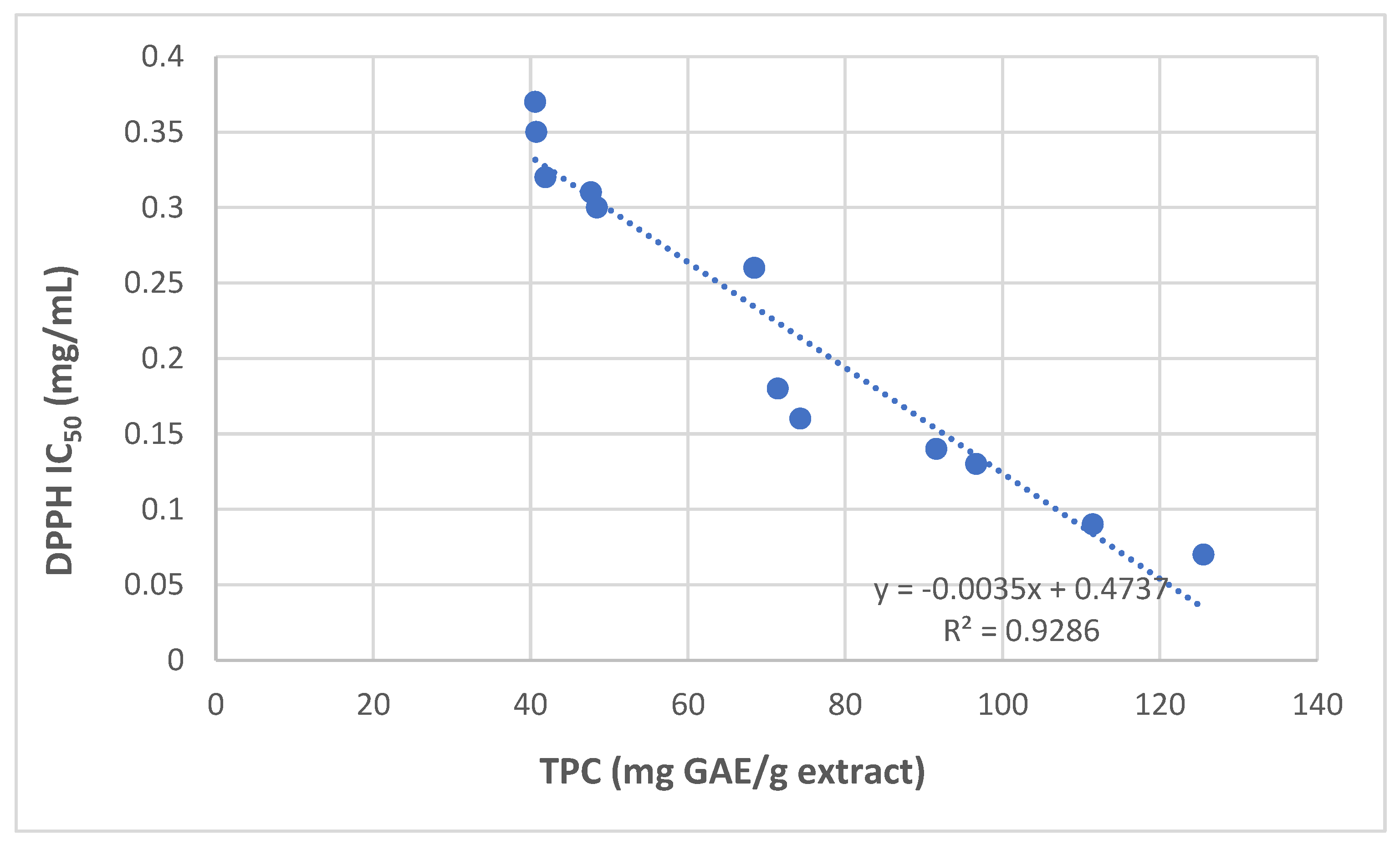
2.2. Total Phenolic Content and Antioxidant Activity
2.3. Antimicrobial Activity
2.4. Cytotoxicity Activity
2.5. Phytochemical Profiling
3. Discussion
4. Materials and Methods
4.1. Plant Material and Extraction
4.2. Assessment of Total Phenolic Content and Antioxidant
4.2.1. Determination of Total Phenolic Content (TPC)
4.2.2. DPPH Radical Scavenging Activity
4.3. Assessment of Antimicrobial Activity
4.3.1. Microbial Strains and Media
4.3.2. Broth Microdilution Method
4.4. Assessment of Cytotoxicity by MTT Assay
4.4.1. Cell Culture Conditions
4.4.2. MTT Viability Assay
4.5. Phytochemical Profiling via LC-HRMS Analysis
4.6. Statistical Analysis
5. Conclusions
Supplementary Materials
Author Contributions
Funding
Data Availability Statement
Acknowledgments
Conflicts of Interest
Abbreviations
| ABTS | 2,2′-azino-bis (3-ethylbenzothiazoline-6-sulfonic acid) |
| ATCC | American Type Culture Collection |
| DPPH | 2,2-diphenyl-1-picrylhydrazyl |
| CLSI | Clinical and Laboratory Standards Institute |
| DMSO | Dimethyl Sulfoxide |
| E | Ethanol |
| M | Methanol |
| mM | Millimolar |
| IC50 | Half-maximal Inhibitory Concentration |
| MIC | Minimum Inhibitory Concentration |
| TPC | Total Phenol Content |
| SD | S. dorystaechas |
| sd | Standard Deviation |
| ST | S. tomentosa |
| SA | S. argentea |
| SE | S. aethiopis |
| SS | S. sclerae |
| I | Infusion |
References
- WFO: World Flora Online. Available online: https://www.worldfloraonline.org/ (accessed on 6 October 2025).
- Celep, F.; Dirmenci, T. Systematic and biogeographic overview of Lamiaceae in Turkey. Nat. Volatiles Essent. Oils 2017, 4, 14–27. [Google Scholar]
- Nieto, G. Biological activities of three essential oils of the Lamiaceae family. Medicines 2017, 4, 63. [Google Scholar] [CrossRef]
- Koyuncu, O.; Yaylaci, O.; Öztürk, D.; Erkara, I.P.; Savaroglu, F.; Akcoskun, O.; Ardic, M. Risk categories and ethnobotanical features of the Lamiaceae taxa growing naturally in Osmaneli (Bilecik/Turkey) and environs. Biol. Divers. Conserv. 2010, 3, 31–45. [Google Scholar]
- Selvi, S.; Polat, R.; Çakılcıoğlu, U.; Celep, F.; Dirmenci, T.; Ertuğ, F. An ethnobotanical review on medicinal plants of the Lamiaceae family in Turkey. Turk. J. Bot. 2022, 46, 283–332. [Google Scholar] [CrossRef]
- Ertuğ, F.; Tümen, G.; Çelik, A.; Dirmenci, T. Buldan (Denizli) Ethnobotanical Field Practice 2003. TUBA-KED 2004, 2, 187–218. [Google Scholar] [CrossRef][Green Version]
- Ministry of Health of Turkey. Turkish Pharmacopoeia (Türk Farmakopesi); Ministry of Health of Turkey: Ankara, Türkiye, 2018.
- BHMA. British Herbal Pharmacopoeia (BHP); BHMA Publishers: Surrey, UK, 2009. [Google Scholar]
- European Directorate for the Quality of Medicines & HealthCare. European Pharmacopoeia (EP), 8th ed.; European Directorate for the Quality of Medicines & HealthCare: Strasbourg, France, 2013. [Google Scholar]
- World Health Organization (WHO). WHO Monographs on Selected Medicinal Plants; WHO: Geneva, Switzerland, 1999. [Google Scholar]
- European Medicines Agency (EMA). Medicines for Use Outside of the EU. Available online: https://www.ema.europa.eu/en/human-regulatory-overview/marketing-authorisation/medicines-use-outside-european-union (accessed on 22 April 2026).
- European Scientific Cooperative on Phytotherapy (ESCOP). ESCOP Monographs, 2nd ed.; Thieme: Stuttgart, Germany, 2009. [Google Scholar]
- Davis, P.H. Flora of Turkey and the East Aegean Islands; Edinburgh University Press: Edinburgh, UK, 1982; Volume 7. [Google Scholar]
- Baytop, T. Therapy with Plants in Turkey (Past and Present), 2nd ed.; Nobel Medical Publications: Istanbul, Türkiye, 1999; pp. 324–330. [Google Scholar]
- Karagözler, A.A.; Erdağ, B.; Emek, Y.Ç.; Uygun, D.A. Antioxidant activity and proline content of leaf extracts from Dorystoechas hastata. Food Chem. 2008, 111, 400–407. [Google Scholar] [CrossRef] [PubMed]
- Lu, Y.; Foo, L.Y. Polyphenolics of Salvia—A review. Phytochemistry 2002, 59, 117–140. [Google Scholar] [CrossRef]
- Ozupek, B.; Pekacar, S.; Saltan, N.; Yıldız, G.; Gulcan, Z.; Orhan, D.D.; Kose, Y.B. Assessment of the Enzyme Inhibitory Activities of Salvia dorystaechas and Its Phytochemical Analysis by RP-HPLC. Pharm. Chem. J. 2025, 58, 1734–1741. [Google Scholar] [CrossRef]
- Ben Farhat, M.; Landoulsi, A.; Chaouch-Hamada, R.; Sotomayor, J.A.; Jordán, M.J. Characterization and quantification of phenolic compounds and antioxidant properties of Salvia species growing in different habitats. Ind. Crops Prod. 2013, 49, 904–914. [Google Scholar] [CrossRef]
- Tohma, H.; Köksal, E.; Kılıç, Ö.; Alan, Y.; Yılmaz, M.A.; Gülçin, İ.; Bursal, E.; Alwasel, S.H. RP-HPLC/MS/MS Analysis of the Phenolic Compounds, Antioxidant and Antimicrobial Activities of Salvia L. Species. Antioxidants 2016, 5, 38. [Google Scholar] [CrossRef]
- Mocan, A.; Babotă, M.; Pop, A.; Fizeșan, I.; Diuzheva, A.; Locatelli, M.; Carradori, S.; Campestre, C.; Menghini, L.; Sisea, C.R.; et al. Chemical Constituents and Biologic Activities of Sage Species: A Comparison between Salvia officinalis L., S. glutinosa L., and S. transsylvanica (Schur ex Griseb. & Schenk) Schur. Antioxidants 2020, 9, 480. [Google Scholar] [CrossRef]
- Tasheva, K.; Sulikovska, I.; Georgieva, A.; Djeliova, V.; Lozanova, V.; Vasileva, A.; Ivanov, I.; Denev, P.; Lazarova, M.; Vassileva, V.; et al. Phytochemical Profile, Antioxidant Capacity and Anticancer Potential of Water Extracts from In Vitro Cultivated Salvia aethiopis. Molecules 2025, 30, 1427. [Google Scholar] [CrossRef]
- Dilgen, M.N.; Aydın, B.; Vural, N.; Koç, M. Analysis of phytochemical profiles of different extracts of Salvia (S. sclarea, S. huberi, S. fruticosa and S. aethiopis) by HPLC-PDA, evaluation of their antioxidant capacity and antimicrobial activity. Chem. Biodivers. 2025, 22, e03218. [Google Scholar] [CrossRef] [PubMed]
- Kaya, M.M.; Tutun, H. Optimization of microwave-assisted extraction to maximize phenolic content and antioxidant capacity of Salvia tomentosa using response surface methodology. Medit. Vet. J. 2025, 10, 560–568. [Google Scholar] [CrossRef]
- TÜBİVES: Turkish Plants Data Service. Available online: http://www.tubives.net/ (accessed on 10 February 2026).
- Altindag, E.; Ozturk, M. Ethnomedicinal studies on the plant resources of East Anatolia, Turkey. Procedia Soc. Behav. Sci. 2011, 19, 756–777. [Google Scholar] [CrossRef]
- Benabdesslem, Y.; Hachem, K.; Kahloula, K.; Slimani, M. Ethnobotanical Survey, Preliminary Physico-Chemical and Phytochemical Screening of Salvia argentea (L.) Used by Herbalists of the Saïda Province in Algeria. Plants 2017, 6, 59. [Google Scholar] [CrossRef] [PubMed]
- Benabdesslem, Y.; Hachem, K.; Kahloula, K.; Slimani, M. An ethnopharmacological study of Salvia argentea used by the local people of Saida in northwestern Algeria. South Asian J. Exp. Biol. 2018, 8, 149–153. [Google Scholar] [CrossRef]
- Poyraz, İ.E.; Çiftçi Akalin, G.; Öztürk, N. Phenolic contents, in vitro antioxidant and cytotoxicity activities of Salvia aethiopis L. and S. ceratophylla L. Rec. Nat. Prod. 2017, 11, 345–355. [Google Scholar]
- Kostić, M.; Miladinović, B.; Milutinović, M.; Branković, S.; Živanović, S.; Zlatković, B.; Kitić, D. Rosmarinic and caffeic acid content and antioxidant potential of the Salvia aethiopis L. extracts. Acta Med. Median 2017, 56, 121–128. [Google Scholar] [CrossRef]
- Özcan, M.M.; Chalchat, J.C.; Figueredo, G.; Bagci, Y.; Dural, H.; Savran, A.; Al-Juhaimi, F.Y. Chemical composition of the essential oil of the flowers and leaves of Çalba tea (Dorystoechas hastata Boiss & Helder. ex Bentham). J. Essent. Oil Bear. Plants 2016, 19, 782–785. [Google Scholar] [CrossRef]
- Bulut, G.E.; Tuzlacı, E. Folk medicinal plants of Bayramiç (Çanakkale-Turkey). J. Fac. Pharm. Istanb. Univ. 2011, 40, 87–99. [Google Scholar]
- Fakir, H.; Korkmaz, M.; Icel, B. Medicinal plants traditionally used for pain alleviation in Antalya Province, Turkey. Stud. Ethno-Med. 2016, 10, 314–324. [Google Scholar] [CrossRef]
- Karaköse, M.; Akbulut, S.; Özkan, Z.C. Ethnobotanical study of medicinal plants in Torul District, Turkey. Bangladesh J. Plant Taxon. 2019, 26, 29–37. [Google Scholar] [CrossRef]
- Polat, R.; Satıl, F. An ethnobotanical survey of medicinal plants in Edremit Gulf (Balıkesir-Turkey). J. Ethnopharmacol. 2012, 139, 626–641. [Google Scholar] [CrossRef] [PubMed]
- Tuzlacı, E.; Erol, M.K. Turkish folk medicinal plants, Part II: Eğirdir (Isparta). Fitoterapia 1999, 70, 593–610. [Google Scholar] [CrossRef]
- Saraç, D.U.; Özkan, Z.C.; Akbulut, S. Ethnobotanic features of Rize/Turkey province. Biol. Divers. Conserv. 2013, 6, 57–66. [Google Scholar]
- Nicolescu, A.; Babotă, M.; Ilea, M.; Dias, M.I.; Calhelha, R.C.; Gavrilaș, L.; Rocchetti, G.; Crișan, G.; Mocan, A.; Barros, L.; et al. Potential therapeutic applications of infusions and hydroalcoholic extracts of Romanian glutinous sage (Salvia glutinosa L.). Front. Pharmacol. 2022, 13, 975800. [Google Scholar] [CrossRef]
- Idolo, M.; Motti, R.; Mazzoleni, S. Ethnobotanical and phytomedicinal knowledge in a long-history protected area, the Abruzzo, Lazio and Molise National Park (Italian Apennines). J. Ethnopharmacol. 2010, 127, 379–395. [Google Scholar] [CrossRef]
- Todaro, G.J.; Green, H. Quantitative studies of the growth of mouse embryo cells in culture and their development into established lines. J. Cell Biol. 1963, 17, 299–313. [Google Scholar] [CrossRef]
- Criollo-Mendoza, M.S.; Ramos-Payán, R.; Contreras-Angulo, L.A.; Gutiérrez-Grijalva, E.P.; León-Félix, J.; Villicaña, C.; Angulo-Escalante, M.A.; Heredia, J.B. Cytotoxic Activity of Polyphenol Extracts from Three Oregano Species. Molecules 2022, 27, 5240. [Google Scholar] [CrossRef]
- Gonzalez-Pastor, R.; Carrera-Pacheco, S.E.; Zúñiga-Miranda, J.; Rodríguez-Pólit, C.; Mayorga-Ramos, A.; Guamán, L.P.; Barba-Ostria, C. Current Landscape of Methods to Evaluate Antimicrobial Activity of Natural Extracts. Molecules 2023, 28, 1068. [Google Scholar] [CrossRef]
- Zouine, N.; El Ghachtouli, N.; El Abed, S.; Koraichi, S.I. A comprehensive review on medicinal plant extracts as antibacterial agents: Factors, mechanism insights and future prospects. Sci. Afr. 2024, 26, e02395. [Google Scholar] [CrossRef]
- Reviana, R.; Usman, A.N.; Raya, I.; Aliyah; Dirpan, A.; Arsyad, A.; Fendi, F. Analysis of antioxidant activity on cocktail honey products as female pre-conception supplements. Gac. Sanit. 2021, 35, S202–S205. [Google Scholar] [CrossRef] [PubMed]
- Belete, B.B.; Ozkan, J.; Kalaiselvan, P.; Willcox, M. Clinical Potential of Essential Oils: Cytotoxicity, Selectivity Index, and Efficacy for Combating Gram-Positive ESKAPE Pathogens. Molecules 2025, 30, 3873. [Google Scholar] [CrossRef] [PubMed]
- Mervić, M.; Bival Štefan, M.; Kindl, M.; Blažeković, B.; Marijan, M.; Vladimir-Knežević, S. Comparative Antioxidant, Anti-Acetylcholinesterase and Anti-α-Glucosidase Activities of Mediterranean Salvia Species. Plants 2022, 11, 625. [Google Scholar] [CrossRef] [PubMed]
- Hanganu, D.; Olah, N.K.; Pop, C.E.; Vlase, L.; Oniga, I.; Ciocarlan, N.; Matei, A.; Pușcaș, C.; Silaghi-Dumitrescu, R.; Benedec, D. Evaluation of polyphenolic profile and antioxidant activity for some Salvia species. Farmacia 2019, 67, 801–805. [Google Scholar] [CrossRef]
- Caylak, E. Determination of Antioxidant and Anti-Inflammatory Properties of Salvia aethiopis/sclarea and Synthesized Silver Nanoparticles. Ann. Med. Res. 2024, 31, 169–176. [Google Scholar] [CrossRef]
- İskender, N.; Çoban, N. Antimicrobial Activity and Bioactive Compound Profile of Extracts from Tanacetum Parthenium and Salvia Glutinosa Naturally Growing in Artvin Province, Türkiye. C. R. Acad. Bulg. Sci. 2025, 78, 1285–1294. [Google Scholar] [CrossRef]
- Sultana, B.; Anwar, F.; Ashraf, M. Effect of extraction solvent/technique on the antioxidant activity of selected medicinal plant extracts. Molecules 2009, 14, 2167–2180. [Google Scholar] [CrossRef]
- Alhamedi, A.; Demiroz Akbulut, T.; Baykan, S.; Gümüştaş, B.; Sanci, E.; Alsakini, K.A.M.H.; Nalbantsoy, A.; Buhur, A.; Yavasoğlu, A.; Karabay Yavasoğlu, N.Ü. Salvia argentea L. extract inhibits the production of NO, and pro-inflammatory cytokines (IL-1β, IL-6, and TNF-α), alleviates the inflammatory response of LPS-induced macrophages cells, and reduces the CRP level on carrageenan-induced paw edema. Inflammopharmacology 2025, 33, 6753–6770. [Google Scholar] [CrossRef]
- Balkir, S.; Hazman, Ö.; Aksoy, L.; Yılmaz, M.A.; Cakir, O.; Erol, İ. Phytochemical Profile, Antioxidant and Antimicrobial Potency of Aerial Parts of Salvia Tomentosa Miller. Acta Chim. Slov. 2023, 26, 218–225. [Google Scholar] [CrossRef]
- Dinçer, C.; Tontul, İ.; Çam, İ.B.; Özdemir, K.S.; Topuz, A.; Nadeem, H.Ş.; Ay, S.T.; Göktürk, R.S. Phenolic composition and antioxidant activity of Salvia tomentosa Miller: Effects of cultivation, harvesting year, and storage. Turk. J. Agric. For. 2013, 37, 561–567. [Google Scholar] [CrossRef]
- Zhang, T.; Qiu, Y.; Luo, Q.; Zhao, L.; Yan, X.; Ding, Q.; Jiang, H.; Yang, H. The mechanism by which luteolin disrupts the cytoplasmic membrane of methicillin-resistant Staphylococcus aureus. J. Phys. Chem. B 2018, 122, 1427–1438. [Google Scholar] [CrossRef]
- Ivanov, M.; Kostić, M.; Stojković, D.; Soković, M. Rosmarinic acid–modes of antimicrobial and antibiofilm activities of a common plant polyphenol. S. Afr. J. Bot. 2022, 146, 521–527. [Google Scholar] [CrossRef]
- Ojeda-Sana, A.M.; Repetto, V.; Moreno, S. Carnosic acid is an efflux pumps modulator by dissipation of the membrane potential in Enterococcus faecalis and Staphylococcus aureus. World J. Microbiol. Biotechnol. 2013, 29, 137–144. [Google Scholar] [CrossRef] [PubMed]
- Piątczak, E.; Kolniak-Ostek, J.; Gonciarz, W.; Lisiecki, P.; Kalinowska-Lis, U.; Szemraj, M.; Chmiela, M.; Zielińska, S. The Effect of Salvia tomentosa Miller Extracts, Rich in Rosmarinic, Salvianolic and Lithospermic Acids, on Bacteria Causing Opportunistic Infections. Molecules 2024, 29, 590. [Google Scholar] [CrossRef]
- Afzal, T.; Proćków, J.; Łyczko, J. Bioactive chemical composition and pharmacological insights into Salvia species. Front. Mol. Biosci. 2025, 12, 1678109. [Google Scholar] [CrossRef]
- Yazıcı-Tütüniş, S.; Alim-Toraman, G.Ö.; Dincel, E.D.; Tufan, S.; Akalın, E.; Tan, E.; Ulusoy-Güzeldemirci, N.; Gören, A.C.; Miski, M.; Topçu, G.; et al. In silico and in vitro antibacterial evaluation of eight Anatolian Salvia species with chemical profiling by LC-HRMS. Sci. Rep. 2025, 15, 31404. [Google Scholar] [CrossRef]
- Jan, S.; Khaliq, T.; Sultan, P.; Hassan, Q.P.; Gupta, S.; Ahmed, Z. Salvia sclarea: A comprehensive review of its pharmacology, phytochemistry, ethnobotany and traditional uses. Curr. Plant Biol. 2026, 47, 100604. [Google Scholar] [CrossRef]
- Jassbi, A.R.; Zare, S.; Firuzi, O.; Xiao, J. Bioactive phytochemicals from shoots and roots of Salvia species. Phytochem. Rev. 2016, 15, 829–867. [Google Scholar] [CrossRef]
- Tavan, M.; Azizi, A.; Sarikhani, H.; Mirjalili, M.H.; Rigano, M.M. Phenolics diversity among wild populations of Salvia multicaulis: As a precious source for antimicrobial and antioxidant applications. Nat. Prod. Res. 2022, 36, 1332–1336. [Google Scholar] [CrossRef]
- Kaplan, O.; Saltan, N.; Köse, A.; Köse, Y.B.; Çelebier, M. A Plant Metabolomic Approach to Identify the Difference of the Seeds and Flowers Extracts of Carthamus tinctorius L. Mass Spectrom. Lett. 2023, 14, 42–47. [Google Scholar]
- Singleton, V.L.; Orthofer, R.; Lamuela-Raventos, R.M. Analysis of total phenols and other oxidation substrates and antioxidants by means of folin-ciocalteu reagent. In Methods in Enzymology; Academic Press: Cambridge, MA, USA, 1999; Volume 299, pp. 152–178. [Google Scholar] [CrossRef]
- Kumarasamy, Y.; Byres, M.; Cox, P.J.; Jaspars, M.; Nahar, L.; Sarker, S.D. Screening seeds of some Scottish plants for free radical scavenging activity. Phytother. Res. 2007, 21, 615–621. [Google Scholar] [CrossRef]
- CLSI (M7-A7, 2006); Methods for Dilution Antimicrobial Susceptibility Tests for Bacteria That Grow Aerobically. CLSI: Wayne, PA, USA, 2006.
- CLSI (M27-A2, 2002); Reference Method for Broth Dilution Antifungal Susceptibility Testing of Yeasts. CLSI: Wayne, PA, USA, 2002.
- Riss, T.L.; Moravec, R.A.; Niles, A.L.; Duellman, S.; Benink, H.A.; Worzella, T.J.; Minor, L. Cell Viability Assays. In Assay Guidance Manual; Markossian, S., Grossman, A., Baskir, H., Eds.; Eli Lilly & Company: Indianapolis, IN, USA; the National Center for Advancing Translational Sciences: Bethesda, MD, USA, 2004. [Google Scholar]
- Baysal, M.; Atlı-Eklioğlu, Ö. Comparison of the toxicity of pure compounds and commercial formulations of imidacloprid and acetamiprid on HT-29 cells: Single and mixture exposure. Food Chem. Toxicol. 2021, 155, 112430. [Google Scholar] [CrossRef]


| Species | Local Name | Part Used/Preparation | Traditional Uses | References |
|---|---|---|---|---|
| S. sclarea L. | Misk adaçayı, Ayıkulağı, Tüylü adaçayı, Paskulak | Aerial parts, leaves, flowers, powder, infusion, essential oil | Alleviation of symptoms in cold, cough, influenza, bronchitis, and asthma; sedative effects for gastric spasms, constipation. | [4,13,24,25] |
| S. argentea L. | Gümüş şalba, Boz şalba | Aerial parts, leaves, rhizomes, whole plant, powder, decoction, infusion | Respiratory, digestive, and hemostatic agent. | [4,26,27] |
| S. aethiopis L. | Habeş adaçayı, Yünlü adaçayı | Aerial parts, leaves, inflorescences, roots, infusion | Colds, flu, asthma, gastric spasms, stimulant, carminative, antiflatulent, reconstituent. | [4,13,24,28,29] |
| S. dorystaechas B.T.Drew | Dağ Çayı, Çalba çayı, Devren kekiği | Fresh/dried leaves, infusion | Treatment of colds and upper respiratory tract infections. | [24,30] |
| S. tomentosa Mill. | Şalba | Aerial parts, leaves, infusion | Gastrointestinal disorders, abdominal pain, colds, flu, and pharyngitis. | [4,31,32,33,34,35] |
| S. glutinosa L. | Oklu şalba, Yapışkan adaçayı | Aerial parts, leaves, flowers, infusion, decoction | Headaches, gastroenteritis, abdominal pain, throat infections, mouth sores, cough, sweating, burns, and wounds. | [36,37,38] |
| Extracts | Yield (%) (w/w) | TPC (mg GAE/g Extract) 1 | DPPH IC50 (mg/mL) 2 |
|---|---|---|---|
| SD-I | 14.71 | 111.50 ± 0.51 b | 0.09 ± 0.011 a |
| ST-I | 13.89 | 91.60 ± 0.66 c | 0.14 ± 0.024 b |
| SA-I | 12.64 | 40.75 ± 0.83 f | 0.35 ± 0.032 e,f |
| SG-I | 12.03 | 47.70 ± 0.96 e | 0.31 ± 0.037 e |
| SE-I | 11.93 | 74.30 ± 0.58 d | 0.16 ± 0.021 b |
| SS-I | 10.67 | 40.60 ± 0.95 f | 0.37 ± 0.016 g |
| SD-E | 3.62 | 125.55 ± 0.88 a | 0.07 ± 0.019 a |
| ST-E | 3.44 | 96.65 ± 0.70 c | 0.13 ± 0.026 b |
| SG-E | 3.25 | 68.45 ± 0.81 d | 0.26 ± 0.053 d |
| SA-E | 3.21 | 41.90 ± 0.30 f | 0.32 ± 0.028 e |
| SE-E | 3.19 | 71.45 ± 0.20 d | 0.18 ± 0.041 c |
| SS-E | 2.97 | 48.45 ± 0.73 e | 0.30 ± 0.034 e |
| Gallic Acid | - | - | 0.003 ± 0.0001 * |
| E. coli ATCC 8739 | S. aureus ATCC 6538 | C. tropicalis ATCC 750 | C. albicans ATCC 90028 | C.krusei ATCC 14243 | |
|---|---|---|---|---|---|
| SD-I | 1250 | 1250 | 625 | 5000 | 5000 |
| SA-I | >2500 | >2500 | 5000 | >5000 | >5000 |
| ST-I | >2500 | 1250 | 5000 | >5000 | >5000 |
| SS-I | >2500 | >2500 | 5000 | >5000 | >5000 |
| SE-I | >2500 | >2500 | 5000 | >5000 | >5000 |
| SG-I | >2500 | >2500 | 2500 | >5000 | >5000 |
| SG-E | 2500 | 625 | 625 | 1250 | 1250 |
| SD-E | 2500 | >2500 | 5000 | 625 | 625 |
| SA-E | 1250 | 1250 | 625 | 1250 | 1250 |
| ST-E | 1250 | 1250 | 625 | 1250 | 1250 |
| SS-E | 625 | 1250 | 625 | 2500 | 2500 |
| SE-E | 2500 | 2500 | 1250 | 2500 | 2500 |
| Ciprofloxacin | 0.25> | 0.125 | - | - | - |
| Fluconazole | - | - | 2 | 64 | 64 |
| Extracts | IC50 Values (µg/mL) | MIC Range (µg/mL) | SImin | SImax |
|---|---|---|---|---|
| SD-I | 173.82 ± 25.09 | 625–5000 | 0.03 | 0.28 |
| SD-E | 110.06 ± 0.31 | 625–5000 | 0.02 | 0.18 |
| ST-I | 408.02 ± 4.63 | 1250– >5000 | 0.08 | 0.33 |
| ST-E | 562.37 ± 49.50 | 625–1250 | 0.45 | 0.90 |
| Compound | Class | Formula | Rt (min) | MW | Exp. (m/z) MS(+) | Exp. (m/z) MS(−) | Detected in Extracts |
|---|---|---|---|---|---|---|---|
| Luteolin | Flavonoid | C15H10O6 | 1.23 | 286.24 | 287.06 | 285.04 | SG-I, SD-E, SA-I, SA-E, ST-I, ST-E, SS-I, SS-E, SE-I, SE-E |
| Luteolin-7-O-glucuronide | Flavonoid | C21H18O12 | 1.10 | 462.37 | 463.09 | - | SG-I, SD-I, SD-E, SA-I, SA-E, ST-I, ST-E, SS-I, SS-E, SE-I |
| Rosmarinic acid | Phenolic Acid | C18H16O8 | 1.27 | 360.31 | - | 359.08 | SG-I, SG-E |
| Rosmanol | Polyphenol | C20H26O5 | 2.72 | 346.42 | 347.19 | 345.17 | SD-I, SD-E |
| Apigenin | Flavonoid | C15H10O5 | 1.41 | 270.24 | 271.06 | 269.05 | SA-I, SA-E, ST-I, ST-E, SS-I, SS-E, SE-I |
| Acacetin | Flavonoid | C16H12O5 | 2.64 | 284.25 | 285.08 | 283.06 | SA-E, SS-I, SS-E, SE-E |
| Cynaroside (Luteolin-7-O-glucoside) | Flavonoid | C21H20O11 | 1.09 | 448.38 | 449.11 | 447.09 | ST-I, ST-E |
| Carnosol | Terpenoid | C20H26O4 | 2.72 | 330.4 | 331.19 | 329.18 | SG-E, SD-E, SA-E, ST-I, ST-E, SS-I, SS-E |
| Carnosic acid | Terpenoid | C20H28O4 | 3.51 | 332.4 | 333.20 | - | SD-E, ST-I, ST-E |
Disclaimer/Publisher’s Note: The statements, opinions and data contained in all publications are solely those of the individual author(s) and contributor(s) and not of MDPI and/or the editor(s). MDPI and/or the editor(s) disclaim responsibility for any injury to people or property resulting from any ideas, methods, instructions or products referred to in the content. |
© 2026 by the authors. Licensee MDPI, Basel, Switzerland. This article is an open access article distributed under the terms and conditions of the Creative Commons Attribution (CC BY) license.
Share and Cite
Saltan, N.; Tunç, F.; Baysal, M.; Göger, G.; Levent, S. Evaluation of the Therapeutic Potential and Safety Profile of Six Salvia Species Native to Türkiye. Plants 2026, 15, 1718. https://doi.org/10.3390/plants15111718
Saltan N, Tunç F, Baysal M, Göger G, Levent S. Evaluation of the Therapeutic Potential and Safety Profile of Six Salvia Species Native to Türkiye. Plants. 2026; 15(11):1718. https://doi.org/10.3390/plants15111718
Chicago/Turabian StyleSaltan, Nagehan, Fatmanur Tunç, Merve Baysal, Gamze Göger, and Serkan Levent. 2026. "Evaluation of the Therapeutic Potential and Safety Profile of Six Salvia Species Native to Türkiye" Plants 15, no. 11: 1718. https://doi.org/10.3390/plants15111718
APA StyleSaltan, N., Tunç, F., Baysal, M., Göger, G., & Levent, S. (2026). Evaluation of the Therapeutic Potential and Safety Profile of Six Salvia Species Native to Türkiye. Plants, 15(11), 1718. https://doi.org/10.3390/plants15111718