Transcriptome Profiling of Leaves and Roots from Rooibos (Aspalathus linearis) Using Oxford Nanopore Sequencing

Abstract
1. Introduction
2. Materials and Methods
2.1. Plant Material
2.2. Total RNA Extraction
2.3. cDNA Sequencing
2.4. Data Processing
2.5. Transcript Assembly
2.6. Protein Prediction and Annotation
2.7. Orthology Analyses
2.8. Differential Expression Analyses
2.9. Over-Representation Analyses
3. Results
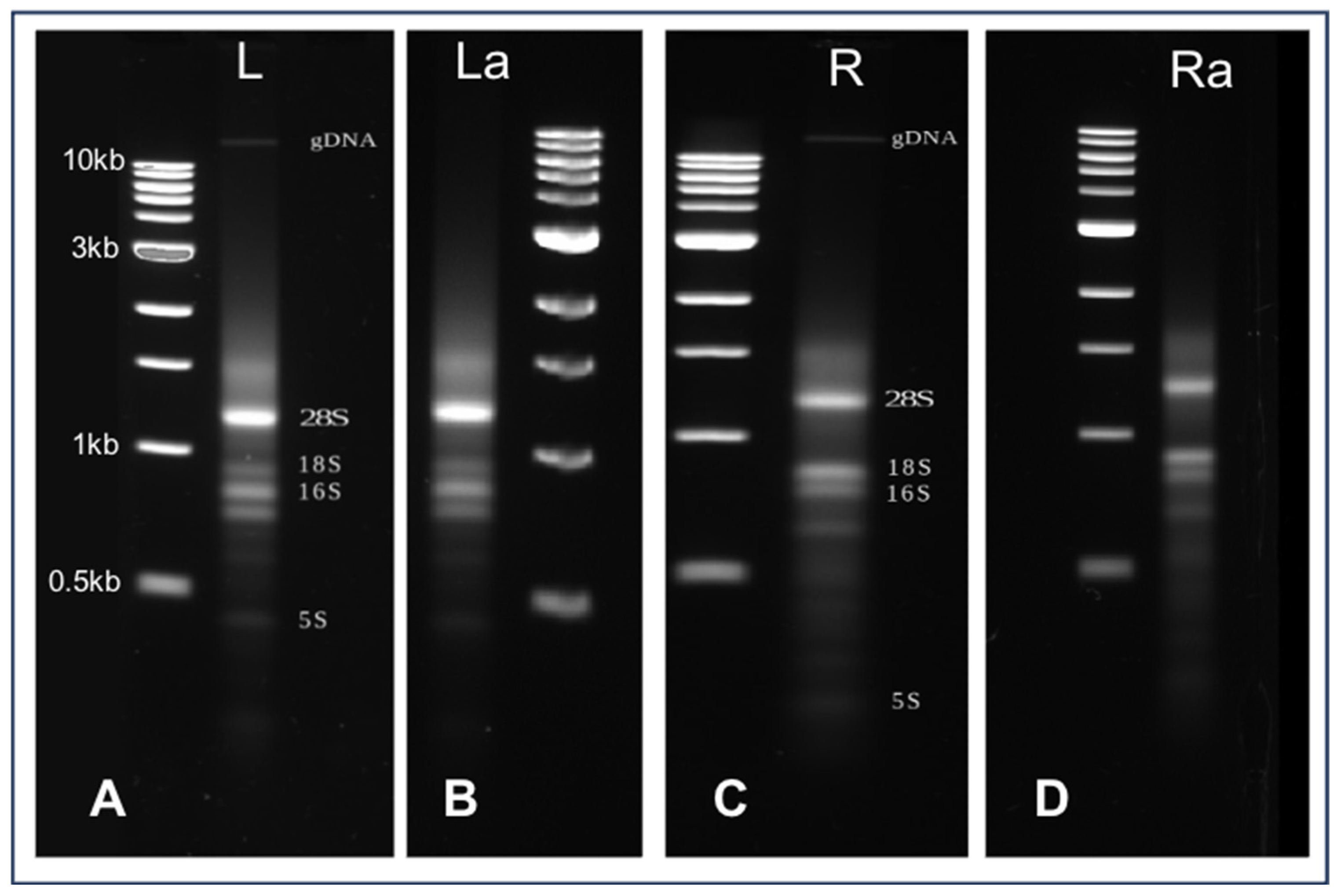
3.1. RNA Extraction, Library Construction and Sequencing
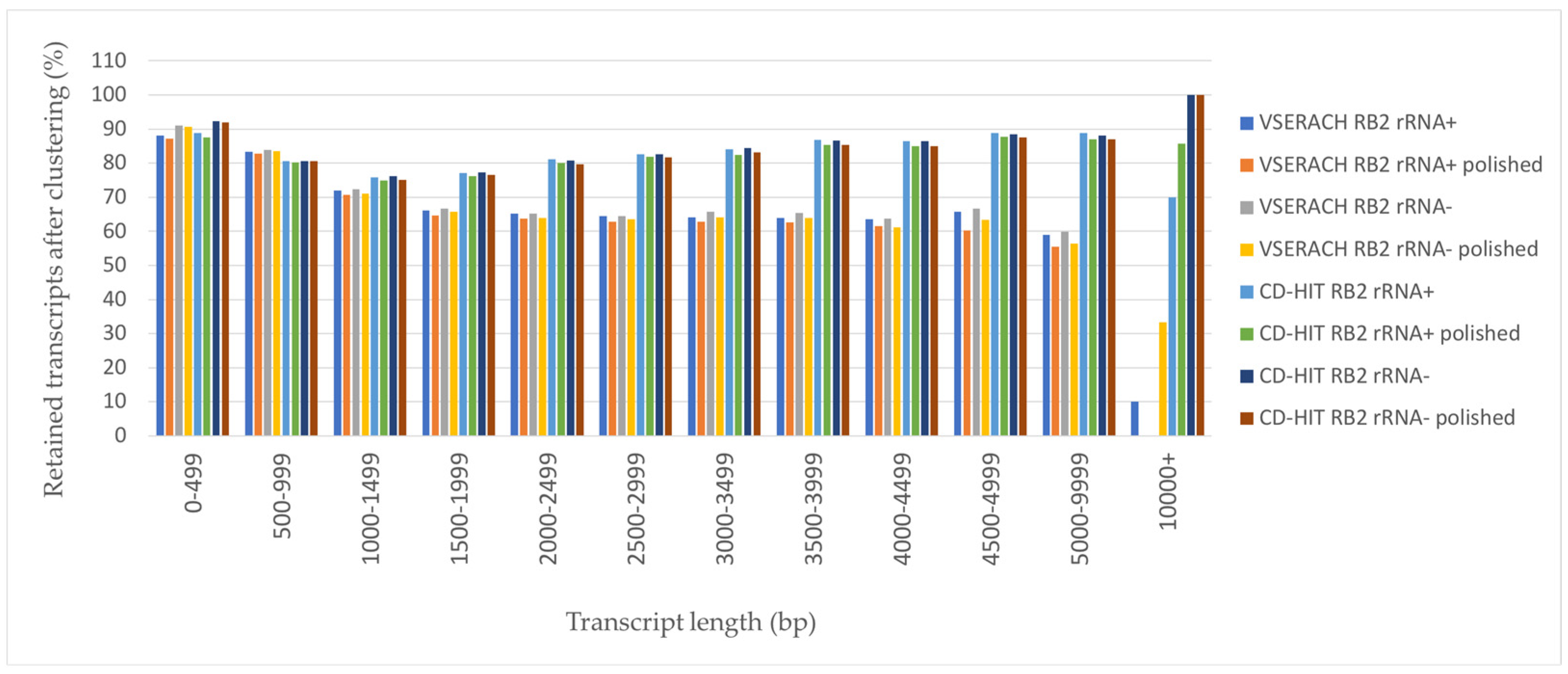
3.2. Transcriptome Assembly
3.3. Transcriptome Annotation
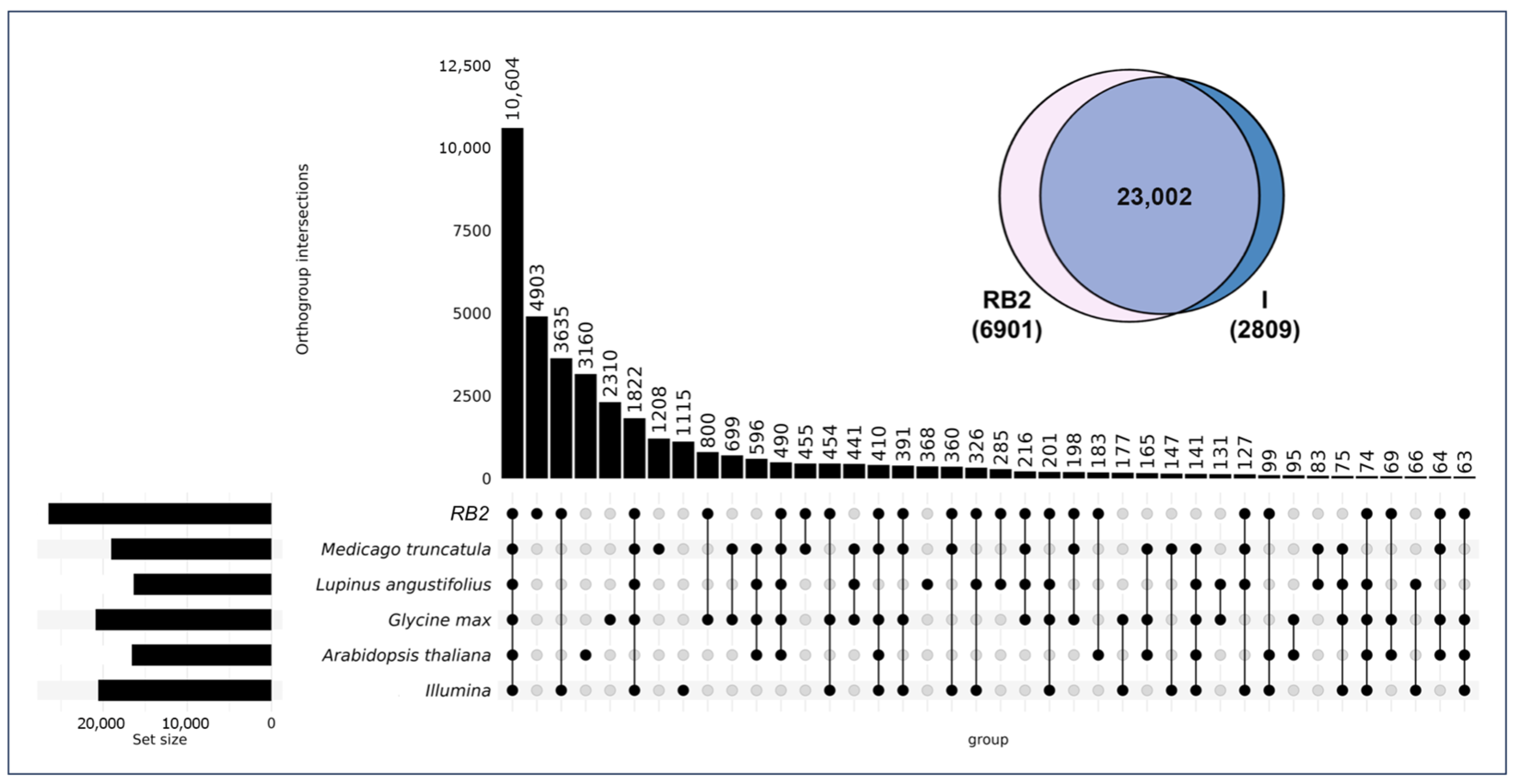
3.4. Orthology Analysis
3.5. Differential Expression Analysis
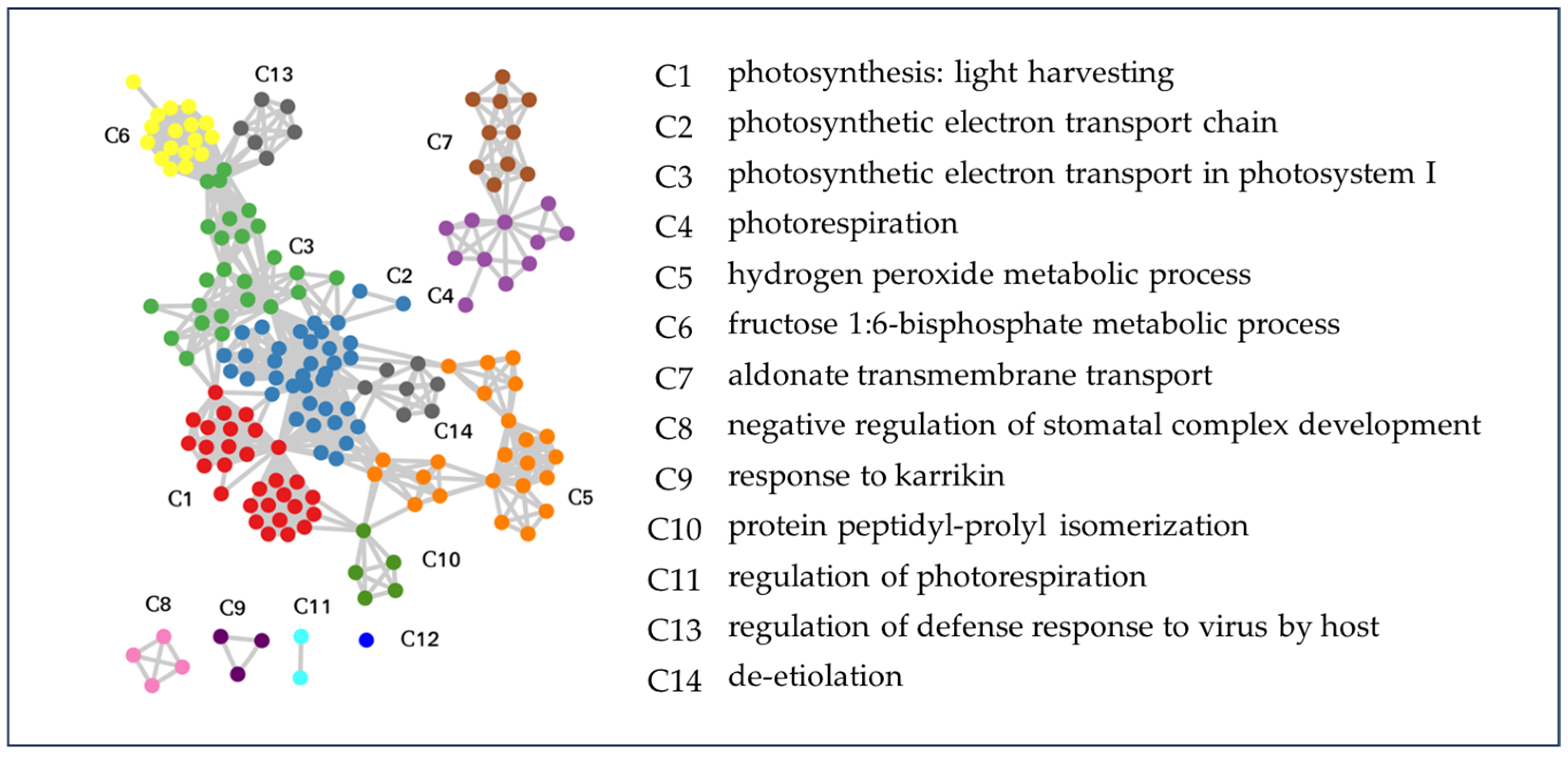
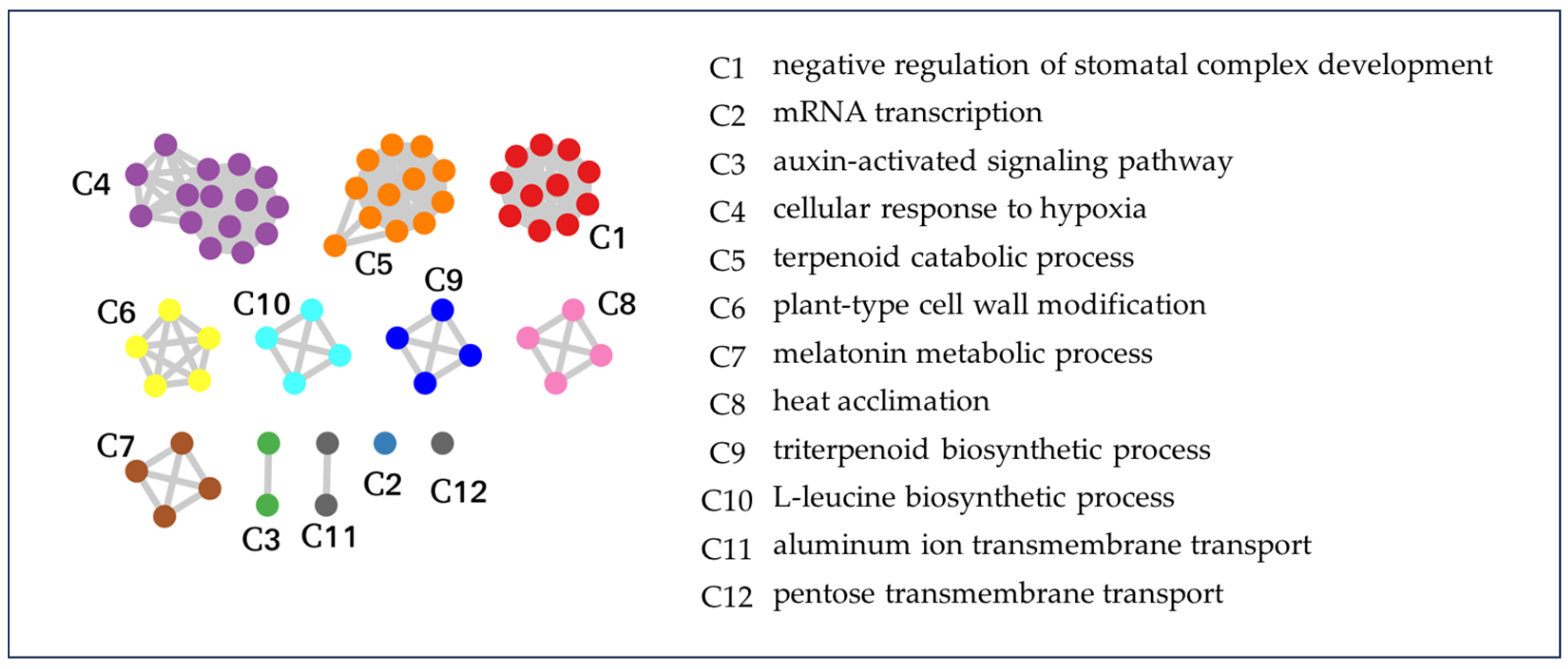
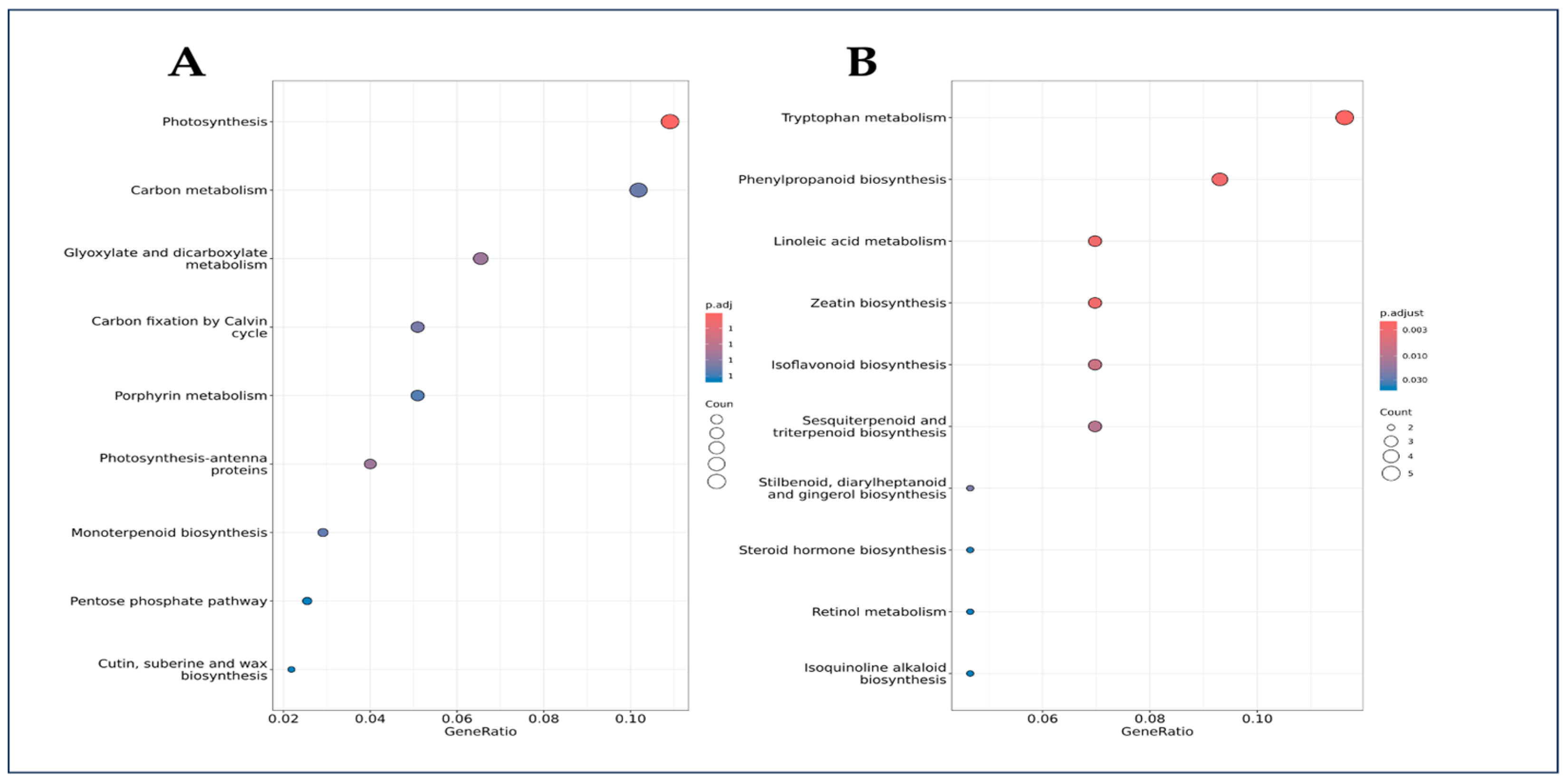
3.6. Functional Enrichment Analyses
4. Discussion
4.1. MinION Sequencing and Data Processing
4.2. Transcriptome Assembly
4.3. Functional Annotations
4.4. Orthology Analyses
4.5. Analysis of Differentially Expressed Transcripts and Pathway Enrichment Analyses
4.6. Future Studies
Author Contributions
Funding
Data Availability Statement
Acknowledgments
Conflicts of Interest
References
- Kumar, R.; Das, S.P.; Choudhury, B.U.; Kumar, A.; Prakash, N.R.; Verma, R.; Chakraborti, M.; Devi, A.G.; Bhattacharjee, B.; Das, R.; et al. Advances in genomic tools for plant breeding: Harnessing DNA molecular markers, genomic selection, and genome editing. Biol. Res. 2024, 57, 80. [Google Scholar] [CrossRef] [Scilit]
- Nigam, D.; Devkar, V.; Dhiman, P.; Shakoor, S.; Liu, D.; Patil, G.B.; Jiao, Y. Emerging frontiers in sorghum genetic engineering. Plant J. 2025, 121, e17244. [Google Scholar] [CrossRef] [Scilit]
- Ceasar, S.A. Biotechnological Improvement of Nutri-Cereal Finger Millet: Current Status and Future Prospects. Crops 2025, 5, 87. [Google Scholar] [CrossRef] [Scilit]
- Kim, D.K.; Ochar, K.; Iwar, K.; Ha, B.K.; Kim, S.H. Cowpea (Vigna unguiculata L.) production, genetic resources and strategic breeding priorities for sustainable food security: A review. Front. Plant Sci. 2025, 16, 1562142. [Google Scholar] [CrossRef] [Scilit] [PubMed]
- Njaci, I.; Waweru, B.; Kamal, N.; Muktar, M.S.; Fisher, D.; Gundlach, H.; Muli, C.; Muthui, L.; Maranga, M.; Kiambi, D.; et al. Chromosome-level genome assembly and population genomic resource to accelerate orphan crop lablab breeding. Nat. Commun. 2023, 14, 1915. [Google Scholar] [CrossRef] [Scilit]
- Sánchez-del Pino, I.; Vrijdaghs, A.; Jiménez-Rojas, M.I.; Araujo-León, J.A.; Aguilar-Hernández, V.; Xingú-López, A.; Peraza-Sánchez, S.R. The current state of our knowledge of the domestication and evolution of the grain amaranths: A critical standpoint. Ann. Bot. 2025, 137, 609–630. [Google Scholar] [CrossRef] [Scilit]
- Huang, D.; Li, Z. Sweet Potato Genomics: Key Genes for Nutrient Composition and Yield. Mol. Plant Breed. 2025, 16, 133–145. [Google Scholar] [CrossRef] [Scilit]
- Abah, S.P.; Okpani, M.J.; Okwuonu, I.U.; Egesi, C.N. Genomics-Assisted Cassava Breeding: A Comprehensive Review of Advances, Tools, and Future Prospects. Crop. Breed. Genet. Genom. 2026, 8, e260002. [Google Scholar]
- Chen, J.; Zhang, Y.; Li, Y.; Liu, Y.; Li, Q.; Lv, Z.; Georgiev, M.I.; Liao, P. The Last Decade of Medicinal Plant Genomics: Advances and Challenges. Engineering, 2025; in press. [CrossRef] [Scilit]
- Xie, C.; Che, Y.; Zhou, Y.; Wu, J.; Shen, J. Multi-omics research strategies in traditional Chinese medicine: A review. Medicine 2025, 104, e45479. [Google Scholar] [CrossRef] [Scilit]
- Joubert, E.D.B.D.; de Beer, D. Rooibos (Aspalathus linearis) beyond the farm gate: From herbal tea to potential phytopharmaceutical. S. Afr. J. Bot. 2011, 77, 869–886. [Google Scholar] [CrossRef] [Scilit]
- Kraaij, T.; Visser, V.; Pretorius, G.C. The distribution and status of rooibos (Aspalathus linearis) and its ecotypes in the wild. S. Afr. J. Sci. 2025, 121, 11–12. [Google Scholar]
- Van Heerden, F.R.; van Wyk, B.-E.; Viljoen, A.M.; Steenkamp, P.A. Phenolic variation in wild populations of Aspalathus linearis (rooibos tea). Biochem. Syst. Ecol. 2003, 31, 885–895. [Google Scholar] [CrossRef] [Scilit]
- Malgas, R.R.; Potts, A.J.; Oettlé, N.M.; Koelle, B.; Todd, S.W.; Verboom, G.A.; Hoffman, M.T. Distribution, quantitative morphological variation and preliminary molecular analysis of different growth forms of wild rooibos (Aspalathus linearis) in the northern Cederberg and on the Bokkeveld Plateau. S. Afr. J. Bot. 2010, 76, 72–81. [Google Scholar] [CrossRef] [Scilit]
- Van Wyk, B.-E.; Gorelik, B. The History Ethnobotany of Cape Herbal Teas. S. Afr. J. Bot. 2017, 110, 18–38. [Google Scholar] [CrossRef] [Scilit]
- Johnson, R.; Beer, D.; Dludla, P.V.; Ferreira, D.; Muller, C.J.F.; Joubert, E. Aspalathin from Rooibos (Aspalathus linearis): A Bioactive C-glucosyl Dihydrochalcone with Potential to Target the Metabolic Syndrome. Planta Medica 2018, 84, 568–583. [Google Scholar] [CrossRef] [Scilit] [PubMed]
- Smith, C.; Swart, A. Aspalathus linearis (Rooibos)—A functional food targeting cardiovascular disease. Food Funct. 2018, 9, 5041–5058. [Google Scholar] [CrossRef] [Scilit]
- Chaudhary, S.K.; Sandasi, M.; Makolo, F.; van Heerden, F.R.; Viljoen, A.M. Aspalathin: A rare dietary dihydrochalcone from Aspalathus linearis (rooibos tea). Phytochem. Rev. 2021, 20, 1161–1192. [Google Scholar] [CrossRef] [Scilit]
- Muller, C.J.F.; Joubert, E.; Pheiffer, C.; Ghoor, S.; Sanderson, M.; Chellan, N.; Fey, S.J.; Louw, J. Z-2-(β-d-glucopyranosyloxy)-3-phenylpropenoic acid, an α-hydroxy acid from rooibos (Aspalathus linearis) with hypoglycemic activity. Mol. Nutr. Food Res. 2013, 57, 2216–2222. [Google Scholar] [CrossRef] [Scilit]
- Himpe, E.; Cunha, D.A.; Song, I.; Bugliani, M.; Marchetti, P.; Cnop, M.; Bouwens, L. Phenylpropenoic Acid Glucoside from Rooibos Protects Pancreatic Beta Cells against Cell Death Induced by Acute Injury. PLoS ONE 2016, 11, e0157604. [Google Scholar] [CrossRef] [Scilit] [PubMed]
- Dludla, P.V.; Johnson, R.; Mazibuko-Mbeje, S.E.; Muller, C.J.F.; Louw, J.; Joubert, E.; Orlando, P.; Silvestri, S.; Chellan, N.; Nkambule, B.B.; et al. Fer-mented rooibos extract attenuates hyperglycemia-induced myocardial oxidative damage by improving mitochondrial energetics and intracellular antioxidant capacity. S. Afr. J. Bot. 2020, 131, 143–150. [Google Scholar] [CrossRef] [Scilit]
- Joubert, E.; Schultz, H. Production and quality aspects of rooibos tea and related products. A review. J. Appl. Bot. Food Qual. 2006, 80, 138–144. [Google Scholar]
- Lötter, D.; le Maitre, D. Modelling the distribution of Aspalathus linearis (Rooibos tea): Implications of climate change for livelihoods dependent on both cultivation and harvesting from the wild. Ecol. Evol. 2014, 4, 1209–1221. [Google Scholar] [CrossRef] [Scilit]
- Mgwatyu, Y.; Stander, A.A.; Ferreira, S.; Williams, W.; Hesse, U. Rooibos (Aspalathus linearis) Genome Size Estimation Using Flow Cytometry and K-Mer Analyses. Plants 2020, 9, 270. [Google Scholar] [CrossRef] [Scilit]
- Mgwatyu, Y.; Cornelissen, S.; van Heusden, P.; Stander, A.; Ranketse, M.; Hesse, U. Establishing MinION Sequencing and Genome Assembly Procedures for the Analysis of the Rooibos (Aspalathus linearis) Genome. Plants 2022, 11, 2156. [Google Scholar] [CrossRef] [Scilit] [PubMed]
- Stander, E.A.; Williams, W.; Mgwatyu, Y.; Heusden, P.V.; Rautenbach, F.; Marnewick, J.; Roes-Hill, M.L.; Hesse, U. Transcriptomics of the Rooibos (Aspalathus linearis) Species Complex. Biotech 2020, 9, 19. [Google Scholar] [CrossRef] [Scilit]
- Martin, M. Cutadapt removes adapter sequences from high-throughput sequencing reads. EMBnet. J. 2011, 17, 10–12. [Google Scholar] [CrossRef] [Scilit]
- De Coster, W.; D’Hert, S.; Schultz, D.T.; Cruts, M.; Van Broeckhoven, C. NanoPack: Visualizing and processing long-read sequencing data. Bioinformatics 2018, 34, 2666–2669. [Google Scholar] [CrossRef] [Scilit]
- Kopylova, E.; Noé, L.; Touzet, H. SortMeRNA: Fast and accurate filtering of ribosomal RNAs in metatranscriptomic data. Bioinformatics 2012, 28, 3211–3217. [Google Scholar] [CrossRef] [Scilit]
- Li, H. Minimap2: Pairwise alignment for nucleotide sequences. Bioinformatics 2018, 34, 3094–3100. [Google Scholar] [CrossRef] [Scilit]
- Westram, R.; Bader, K.; Pruesse, E.; Kumar, Y.; Meier, H.; Glöckner, F.O.; Ludwig, W. ARB: A software environment for sequence data. In Handbook of Molecular Microbial Ecology I: Metagenomics and Complementary Approaches; de Bruijn, F.J., Ed.; John Wiley & Sons, Inc.: Hoboken, NJ, USA, 2011; pp. 399–406. [Google Scholar]
- De La Rubia, I.; Srivastava, A.; Xue, W.; Indi, J.; Carbonell-Sala, S.; Lagarde, J.; Albà, M.; Eyras, E.; Biology, G. RATTLE: Reference-free reconstruction and quantification of transcriptomes from Nanopore sequencing. Genome Biol. 2022, 23, 153. [Google Scholar] [CrossRef] [Scilit]
- Nip, K.M.; Hafezqorani, S.; Gagalova, K.K.; Chiu, R.; Yang, C.; Warren, R.L.; Birol, I. Reference-free assembly of long-read transcriptome sequencing data with RNA-Bloom2. Nat. Commun. 2023, 14, 2940. [Google Scholar] [CrossRef] [Scilit]
- Rognes, T.; Flouri, T.; Nichols, B.; Quince, C.; Mahé, F. VSEARCH: A versatile open source tool for metagenomics. PeerJ 2016, 4, e2584. [Google Scholar] [CrossRef] [Scilit]
- Li, W.; Godzik, A. Cd-hit: A fast program for clustering and comparing large sets of protein or nucleotide sequences. Bioinformatics 2006, 22, 1658–1659. [Google Scholar] [CrossRef] [Scilit]
- Bushmanova, E.; Antipov, D.; Lapidus, A.; Suvorov, V.; Prjibelski, A. rnaQUAST: A quality assessment tool for de novo transcriptome assemblies. Bioinformatics 2016, 32, 2210–2212. [Google Scholar] [CrossRef] [Scilit] [PubMed]
- Simão, F.A.; Waterhouse, R.M.; Ioannidis, P.; Kriventseva, E.V.; Zdobnov, E.M. BUSCO: Assessing genome assembly and annotation completeness with single-copy orthologs. Bioinformatics 2015, 31, 3210–3212. [Google Scholar] [CrossRef] [Scilit] [PubMed]
- Haas, B.J. Available online: https://github.com/TransDecoder/TransDecoder (accessed on 4 May 2026).
- Cantalapiedra, C.P.; Hernández-Plaza, A.; Letunic, I.; Bork, P.; Huerta-Cepas, J. eggNOG-mapper v2: Functional Annotation, Orthology Assignments, and Domain Prediction at the Metagenomic Scale. Mol. Biol. Evol. 2021, 38, 5825–5829. [Google Scholar] [CrossRef] [Scilit]
- Emms, D.M.; Kelly, S. OrthoFinder: Phylogenetic orthology inference for comparative genomics. Genome Biol. 2019, 20, 238. [Google Scholar] [CrossRef] [Scilit]
- Robinson, M.D.; McCarthy, D.J.; Smyth, G.K. edgeR: A Bioconductor package for differential expression analysis of digital gene expression data. Bioinformatics 2010, 26, 139–140. [Google Scholar] [CrossRef] [Scilit] [PubMed]
- Love, M.I.; Huber, W.; Anders, S. Moderated estimation of fold change and dispersion for RNA-seq data with DESeq2. Genome Biol. 2014, 15, 550. [Google Scholar] [CrossRef] [Scilit]
- Gleeson, J.; Leger, A.; Prawer, Y.D.J.; Lane, T.A.; Harrison, P.J.; Haerty, W.; Clark, M.B. Accurate expression quantification from nanopore direct RNA sequencing with NanoCount. Nucleic Acids Res. 2022, 50, e19. [Google Scholar] [CrossRef] [Scilit]
- Wu, T.; Hu, E.; Xu, S.; Chen, M.; Guo, P.; Dai, Z.; Feng, T.; Zhou, L.; Tang, W.; Zhan, L.; et al. clusterProfiler 4.0: A universal enrichment tool for interpreting omics data. Innovation 2021, 2, 100141. [Google Scholar] [CrossRef] [Scilit] [PubMed]
- Wang, G.; Oh, D.H.; Dassanayake, M. GOMCL: A toolkit to cluster, evaluate, and extract non-redundant associations of Gene Ontology-based functions. BMC Bioinform. 2020, 21, 139. [Google Scholar] [CrossRef] [Scilit] [PubMed]
- Landis, J.B.; Kurti, A.; Lawhorn, A.J.; Litt, A.; McCarthy, E.W. Differential gene expression with an emphasis on floral organ size differences in natural and synthetic polyploids of Nicotiana tabacum (Solanaceae). Genes 2020, 11, 1097. [Google Scholar] [CrossRef] [Scilit]
- Wright, D.J.; Hall, N.A.L.; Irish, N.; Man, A.L.; Glynn, W.; Mould, A.; Angeles, A.D.L.; Angiolini, E.; Swarbreck, D.; Gharbi, K.; et al. Long read sequencing reveals novel isoforms and insights into splicing regulation during cell state changes. BMC Genom. 2022, 23, 42. [Google Scholar] [CrossRef] [Scilit]
- Li, R.; Liu, Y.; Yin, C.; Sun, K.; Zhang, P. Occurrence of tomato leaf curl New Delhi virus in tomato (Lycopersicon esculentum) in China. Plant Dis. 2023, 107, 1639. [Google Scholar] [CrossRef] [Scilit]
- Kovaka, S.; Zimin, A.V.; Pertea, G.M.; Razaghi, R.; Salzberg, S.L.; Pertea, M. Transcriptome assembly from long-read RNA-seq alignments with StringTie2. Genome Biol. 2019, 20, 278. [Google Scholar] [CrossRef] [Scilit]
- Prjibelski, A.D.; Mikheenko, A.; Joglekar, A.; Smetanin, A.; Jarroux, J.; Lapidus, A.L.; Tilgner, H.U. Accurate isoform discovery with IsoQuant using long reads. Nat. Biotechnol. 2023, 41, 915–918. [Google Scholar] [CrossRef] [Scilit]
- Chen, Y.; Sim, A.; Wan, Y.K.; Yeo, K.; Lee, J.J.X.; Ling, M.H.; Love, M.I.; Göke, J. Contextaware transcript quantification from long-read RNA-seq data with Bambu. Nat. Methods 2023, 20, 1187–1195. [Google Scholar] [CrossRef] [Scilit]
- Volden, R.; Schimke, K.D.; Byrne, A.; Dubocanin, D.; Adams, M.; Vollmers, C. Identifying and quantifying isoforms from accurate full-length transcriptome sequencing reads with Mandalorion. Genome Biol. 2023, 24, 167. [Google Scholar] [CrossRef] [Scilit] [PubMed]
- Tang, A.D.; Felton, C.; Hrabeta-Robinson, E.; Volden, R.; Vollmers, C.; Brooks, A.N. Detecting haplotype-specific transcript variation in long reads with FLAIR2. Genome Biol. 2024, 25, 173. [Google Scholar] [CrossRef] [Scilit]
- Carbonell-Sala, S.; Perteghella, T.; Lagarde, J.; Nishiyori, H.; Palumbo, E.; Arnan, C.; Takahashi, H.; Carninci, P.; Uszczynska-Ratajczak, B.; Guigó, R. CapTrap-seq: A platform-agnostic and quantitative approach for high-fidelity full-length RNA sequencing. Nat. Commun. 2024, 15, 5278. [Google Scholar] [CrossRef] [Scilit]
- Tanaka, Y.; Sunamura, N.; Kajitani, R.; Ikeguchi, M.; Kunimoto, R. Long-read RNA sequencing unveils a novel cryptic exon in MNAT1 along with its full-length transcript structure in TDP-43 proteinopathy. Commun. Biol. 2025, 8, 1056. [Google Scholar] [CrossRef] [Scilit]
- Petri, A.J.; Sahlin, K. isONform: Reference-free transcriptome reconstruction from Oxford Nanopore data. Bioinformatics 2023, 39, i222–i231. [Google Scholar] [CrossRef] [Scilit]
- Yan, F.; Baldoni, P.L.; Lancaster, J.; Ritchie, M.E.; Lewsey, M.G.; Gouil, Q.; Davidson, N.M. A comprehensive evaluation of long-read de novo transcriptome assembly. Genome Biol. 2026, 27, 102. [Google Scholar] [CrossRef] [Scilit]
- Pardo-Palacios, F.J.; Wang, D.; Reese, F.; Diekhans, M.; Carbonell-Sala, S.; Williams, B.; Loveland, J.E.; De María, M.; Adams, M.S.; Balderrama-Gutierrez, G.; et al. Systematic assessment of long-read RNA-seq methods for transcript identification and quantification. Nat. Methods 2024, 21, 1349–1363. [Google Scholar] [CrossRef] [Scilit]
- Raghavan, V.; Kraft, L.; Mesny, F.; Rigerte, L. A simple guide to de novo transcriptome assembly and annotation. Brief. Bioinform. 2022, 23, bbab563. [Google Scholar] [CrossRef] [Scilit]
- Tzec-Interián, J.A.; González-Padilla, D.; Góngora-Castillo, E.B. Bioinformatics perspectives on transcriptomics: A comprehensive review of bulk and single-cell RNA sequencing analyses. Quant. Biol. 2025, 13, e78. [Google Scholar] [CrossRef] [Scilit]
- Dwiyanti, M.S.; Rahmawati, D.; Gunawan Puteri, M.D.P.T.; Panapitiya, D.; Nion, Y.A.; Wijaya, E.; Santoso, F. Organ-Specific Long-Read Transcriptome Assembly Stenochlaena palustris and Annotation of Anthocyanin Biosynthesis Genes. bioRxiv 2025. [Google Scholar] [CrossRef] [Scilit]
- Koh, Y.S.; Zhu, F.; Hwang, Y.; Yoo, M.J. Transcriptomic and Metabolomic Insights into Benzylisoquinoline Alkaloid Biosynthesis in Goldthread (Coptis trifolia). Int. J. Mol. Sci. 2025, 26, 9704. [Google Scholar] [CrossRef] [Scilit]
- Trung, T.D.; Hoang, N.; Hang, N.T.T.; Huyen, P.T.; My, T.N.; Hoa, N.T.L. Comparative Transcriptome profiling of Momordica cochinchinensis (Lour.) Spreng. Aril using Oxford Nanopore and Illumina sequencing technologies. J. Med. Mater. 2026, 31, 154–160. [Google Scholar]
- Alam, M.N.U.; Román-Palacios, C.; Copetti, D.; Wing, R.A. Universal orthologs infer deep phylogenies and improve genome quality assessments. BMC Biol. 2025, 23, 224. [Google Scholar] [CrossRef] [Scilit]
- Cherukupalli, N.; Divate, M.; Mittapelli, S.; Khareedu, V.; Vudem, D. De novo Assembly of Leaf Transcriptome in the Medicinal Plant Andrographis paniculata. Front. Plant Sci. 2016, 7, 1203. [Google Scholar] [CrossRef] [Scilit]
- Zhang, C.; Ren, H.; Yao, X.; Wang, K.; Chang, J. Full-length transcriptome analysis of pecan (Carya illinoinensis) kernels. G3 2021, 11, jkab182. [Google Scholar] [CrossRef] [Scilit]
- Zhang, Y.; Yang, X.; Van de Peer, Y.; Chen, J.; Marchal, K.; Shi, T. Evolution of isoform-level gene expression patterns across tissues during lotus species divergence. Plant J. 2022, 112, 830–846. [Google Scholar] [CrossRef] [Scilit]
- Zhang, R.; Kuo, R.; Coulter, M.; Calixto, C.P.; Entizne, J.C.; Guo, W.; Marquez, Y.; Milne, L.; Riegler, S.; Matsui, A.; et al. A high-resolution single-molecule sequencing-based Arabidopsis transcriptome using novel methods of Iso-seq analysis. Genome Biol. 2022, 23, 149. [Google Scholar] [CrossRef] [Scilit]
- Conesa, A.; Madrigal, P.; Tarazona, S.; Gomez-Cabrero, D.; Cervera, A.; McPherson, A.; Szcześniak, M.W.; Gaffney, D.J.; Elo, L.L.; Zhang, X.; et al. A survey of best practices for RNA-seq data analysis. Genome Biol. 2016, 17, 13. [Google Scholar] [CrossRef] [Scilit]
- Dong, X.; Du, M.R.; Gouil, Q.; Tian, L.; Jabbari, J.S.; Bowden, R.; Baldoni, P.L.; Chen, Y.; Smyth, G.K.; Amarasinghe, S.L.; et al. Benchmarking long-read RNA-sequencing analysis tools using in silico mixtures. Nat. Methods 2023, 20, 1810–1821. [Google Scholar] [CrossRef] [Scilit]
- Zhang, R.; Wang, D.; Zhao, J.; Chen, Q.; Han, Y.; Liu, Y.; Zhang, Y.; Liu, C.; Hou, W.; Yu, Y.; et al. Benchmarking RNA-seq with the Quartet Reference Materials to establish Best Practices for Accurate Alternative Splicing Detection. Res. Sq. 2025, preprint. [Google Scholar] [CrossRef] [Scilit]
- Li, Y.; Ge, X.; Peng, F.; Li, W.; Li, J.J. Exaggerated false positives by popular differential expression methods when analyzing human population samples. Genome Biol. 2022, 23, 79. [Google Scholar] [CrossRef] [Scilit]
- Singh, V.; Kirtipal, N.; Song, B.; Lee, S. Normalization of RNA-Seq data using adaptive trimmed mean with multi-reference. Brief. Bioinform. 2024, 25, bbae241. [Google Scholar] [CrossRef] [Scilit]
- Kalantari-Dehaghi, M.; Ghohabi-Esfahani, N.; Emadi-Baygi, M. From bulk RNA sequencing to spatial transcriptomics: A comparative review of differential gene expression analysis methods. Hum. Genom. 2025, 20, 9. [Google Scholar] [CrossRef] [Scilit]
- Luo, P.; Di, D. Precise Regulation of the TAA1/TAR-YUCCA Auxin Biosynthesis Pathway in Plants. Int. J. Mol. Sci. 2023, 24, 8514. [Google Scholar] [CrossRef] [Scilit]
- Liang, C.; Li, A.; Yu, H.; Li, W.; Liang, C.; Guo, S.; Zhang, R.; Chu, C. Melatonin Regulates Root Architecture by Modulating Auxin Response in Rice. Front. Plant Sci. 2017, 8, 134. [Google Scholar] [CrossRef] [Scilit] [PubMed]
- Pezzi, P.H.; Gonçalves, L.T.; Deprá, M.; Freitas, L.B. Evolution and diversification of the O-methyltransferase (OMT) gene family in Solanaceae. Genet. Mol. Biol. 2023, 46, e20230121. [Google Scholar] [CrossRef] [Scilit] [PubMed]
- Bi, Z.; He, T.; Liang, Y.; Zhou, C.; Yu, Y.; Leng, L. Genome-wide survey and expression analysis of the OMT gene family in Stephania japonica. PeerJ 2025, 13, e18600. [Google Scholar] [CrossRef] [Scilit]
- Cui, M.; Lu, A.; Li, J.; Liu, J.; Fang, Y.; Pei, T.; Zhong, X.; Wei, Y.; Kong, Y.; Qiu, W.; et al. Two types of O-methyltransferases are involved in biosynthesis of anticancer methoxylated 4′-deoxyflavones in Scutellaria baicalensis Georgi. Plant Biotechnol. J. 2021, 20, 129–142. [Google Scholar] [CrossRef] [Scilit] [PubMed]
- Chen, Y.; Davidson, N.M.; Wan, Y.K.; Yao, F.; Su, Y.; Gamaarachchi, H.; Sim, A.; Patel, H.; Low, H.M.; Hendra, C.; et al. A systematic benchmark of Nanopore long-read RNA sequencing for transcript-level analysis in human cell lines. Nat. Methods 2025, 22, 801–812. [Google Scholar] [CrossRef] [Scilit]



| Raw | RNA (ng/µL) | Reads Sequenced | Basecalled Raw Reads (min QS 7) | Basecalled Raw Reads % (min QS 7) | Basecalled Data Size (Gb) | Mean Read Length | Median Read Length | Median Quality Score |
|---|---|---|---|---|---|---|---|---|
| L109 | 31.2 | 18,311,191 | 11,963,845 | 65.3 | 9.8 | 817.2 | 534 | 10.9 |
| R109 | 41.2 | 7,719,243 | 5,995,604 | 77.7 | 5.1 | 843.1 | 512 | 11.3 |
| L111 | 37.3 | 21,825,329 | 15,789,537 | 72.3 | 19.1 | 1207.4 | 1041 | 11.5 |
| R111 | 35.7 | 25,583,014 | 19,832,193 | 77.5 | 17.6 | 887.1 | 749 | 11.7 |
| Q-Processing | # Reads After Pychopper | Median Read Length After Pychopper | # Reads After Cutadapt | Median Read Length After Cutadapt | # Reads After NanoFilt (>200 b) | Reads After NanoFilt (% of Basecalled) | Median Read Length After NanoFilt | Median Quality Score After NanoFilt |
| L109 | 9,394,759 | 288 | 9,394,759 | 269 | 5,387,391 | 45.0 | 488 | 12.8 |
| R109 | 4,511,855 | 201 | 4,511,855 | 182 | 2,190,249 | 36.5 | 400 | 13.4 |
| L111 | 14,767,712 | 796 | 14,767,712 | 755 | 13,851,569 | 87.7 | 777 | 12.9 |
| R111 | 18,774,932 | 529 | 18,774,932 | 493 | 16,199,757 | 81.7 | 550 | 13.6 |
| rRNA Filtering | # Reads After SmRNA (Default) | % Reads After SmRNA (Default) | # Reads After SmRNA (1 × 10⁻¹⁰, (Magnoliophyta) | % Reads After SmRNA (1 × 10⁻¹⁰, (Magnoliophyta) | # Reads After MM2 (Magnoliophyta) | % Reads After MM2 (Magnoliophyta) | # Reads After SmRNA & MM2 (Magnoliophyta) | % Reads After SmRNA & MM2 (Magnoliophyta) |
| L109 | 4,284,929 | 79.5 | 4,557,585 | 84.6 | 4,586,847 | 85.1 | 4,509,777 | 83.7 |
| R109 | 1,405,539 | 64.2 | 1,478,080 | 67.5 | 1,480,983 | 67.6 | 1,460,915 | 66.7 |
| L111 | 11,170,863 | 80.6 | 12,779,170 | 92.3 | 12,842,968 | 92.7 | 12,354,839 | 89.2 |
| R111 | 11,706,932 | 72.3 | 15,389,492 | 95.0 | 15,405,172 | 95.1 | 12,739,324 | 78.6 |
| Unclustered | VSEARCH | CD-HIT | ||||||||||||
|---|---|---|---|---|---|---|---|---|---|---|---|---|---|---|
| rRNA+ | rRNA− | rRNA+ | rRNA− | rRNA+ | rRNA− | rRNA+ | rRNA− | |||||||
| RATTLE | RATTLE | RB2 | RB2 p * | RB2 | RB2 p * | RB2 | RB2 p * | RB2 | RB2 p * | RB2 | RB2 p * | RB2 | RB2 p * | |
| # Contigs | 57,270 | 58,497 | 226,681 | 226,073 | 212,443 | 211,225 | 168,100 | 165,233 | 158,887 | 156,126 | 181,973 | 179,573 | 171,419 | 169,122 |
| Mean read length | 1846 | 1842 | 1422 | 1418 | 1442 | 1439 | 1331 | 1321 | 1347 | 1339 | 1420 | 1414 | 1435 | 1429 |
| Median read length | 1640 | 1637 | 1245 | 1241 | 1266 | 1263 | 1133 | 1125 | 1146 | 1138 | 1231 | 1223 | 1245 | 1241 |
| Max read length | 10,356 | 9901 | 13,987 | 12,408 | 11,632 | 11,054 | 12,468 | 9708 | 11,244 | 9869 | 13,987 | 12,408 | 11,632 | 11,054 |
| BUSCOs: | ||||||||||||||
| Complete | 78.5 | 78.7 | 87.9 | 90.1 | 87.7 | 89.9 | 85.4 | 87.8 | 85.6 | 87.7 | 86.8 | 89.3 | 86.8 | 89.2 |
| -Single-copy | 62.3 | 63.2 | 26.1 | 24.6 | 26.5 | 25.4 | 39.6 | 39.6 | 39.8 | 39.5 | 34.9 | 33.7 | 35.3 | 34.6 |
| -Duplicated | 16.2 | 15.5 | 61.8 | 65.5 | 61.2 | 64.5 | 45.8 | 48.2 | 45.8 | 48.2 | 51.9 | 55.6 | 51.5 | 54.6 |
| Fragmented | 5.6 | 5.5 | 2.3 | 1.3 | 2 | 1.4 | 2.8 | 2.1 | 2.6 | 1.9 | 2.7 | 1.6 | 2.4 | 1.6 |
| Missing | 15.9 | 15.8 | 9.8 | 8.5 | 10.2 | 8.7 | 11.8 | 10.1 | 11.9 | 10.4 | 10.5 | 9.1 | 10.8 | 9.1 |
| Computer resources: | ||||||||||||||
| Wall time (HH:MM:SS) | 58:50:00 | 47:14:00 | 09:30:00 | 09:51:00 | 07:39:00 | 08:23:00 | 00:00:12 | 00:00:27 | 00:00:30 | 00:00:46 | 183:33:00 | 166:52:00 | 243:01:00 | 243:07:00 |
| Total CPU time | 1793 h | 1658 h | 338 h | 365 h | 256 h | 299 h | 24 s | 11 s | 52 s | 28 s | 183 h | 167 h | 239 h | 239 h |
| # CPU cores | 56 | 56 | 56 | 56 | 56 | 56 | 1 | 1 | 1 | 1 | 1 | 1 | 1 | 1 |
| RB2 | |
|---|---|
| Number of transcripts | 169,122 |
| Number of transcripts annotated using KAAS | 15,616 |
| Number of candidate proteins | 95,054 |
| Number of proteins annotated using Swissprot (blastp) | 87,340 |
| Number of proteins annotated with EggNOG: | 89,492 |
| 51,950 |
| 54,885 |
| 82,794 |
| KAAS (Transcript Dataset) | EggNOG-Mapper (Protein Dataset) | |
|---|---|---|
| Sequences with at least one K-number | 15,616 | 51,950 |
| Total K-numbers | 15,616 | 57,103 |
| Unique K-numbers | 4872 | 4194 |
| Total KEGG modules (plant-specific) | 208 | 199 |
| Complete KEGG modules (plant-specific) | 125 | 119 |
| Incomplete KEGG modules (plant-specific) | 83 | 80 |
| Parental pathway modules and total number of submodules (plant-specific) | Annotated submodules compl./incompl./total | Annotated submodules compl./incompl./total |
| Carbohydrate metabolism (30) | 17/11/28 | 17/9/26 |
| Energy metabolism (32) | 14/2/16 | 14/3/17 |
| Lipid metabolism (20) | 14/4/18 | 12/6/18 |
| Nucleotide metabolism (11) | 7/4/11 | 7/4/11 |
| Amino acid metabolism (59) | 27/18/45 | 26/17/43 |
| Glycan metabolism (44) | 15/19/34 | 13/15/28 |
| Metabolism of cofactors and vitamins (36) | 17/18/35 | 13/21/34 |
| Biosynthesis of terpenoids and polyketides (13) | 10/2/12 | 12/0/12 |
| Biosynthesis of other secondary metabolites (8) | 2/4/6 | 4/4/8 |
| Xenobiotics degradation (1) | 0/0/0 | 0/0/0 |
| Signature modules (4) | 2/1/3 | 1/1/2 |
| Proteins | Proteins in OGs (%) | RB2 | I | LA | MT | GM | AT | |
|---|---|---|---|---|---|---|---|---|
| RB2 | 95,054 | 95 | 26,496 | 18,684 | 14,354 | 15,297 | 15,926 | 12,228 |
| I | 56,500 | 88 | 18,684 | 20,585 | 13,560 | 14,286 | 14,522 | 11,601 |
| LA | 33,083 | 94 | 14,354 | 13,560 | 16,363 | 14,735 | 14,908 | 12,096 |
| MT | 44,450 | 86 | 15,297 | 14,286 | 14,735 | 19,035 | 16,393 | 12,699 |
| GM | 88,412 | 90 | 15,926 | 14,522 | 14,908 | 16,393 | 20,896 | 12,855 |
| AT | 48,321 | 93 | 12,228 | 11,601 | 12,096 | 12,699 | 12,855 | 16,593 |
| # of Transcripts Hit | # of Reads Mapped | % Reads Mapped | |
|---|---|---|---|
| L109 | 135,305 | 3,684,428 | 99 |
| R109 | 115,853 | 1,144,162 | 99 |
| L111 | 143,272 | 11,864,639 | 99 |
| R111 | 142,272 | 11,302,076 | 99 |
| EgdeR | DESeq2 | Shared | ||||
|---|---|---|---|---|---|---|
| Leaves | Roots | Leaves | Roots | Leaves | Roots | |
| Significantly overexpressed | 2537 | 261 | 2875 | 253 | 2453 | 224 |
| Annotated by KAAS: | 340 | 8 | 408 | 7 | 330 | 7 |
| Annotated by EggNOG-Mapper: | 2096 | 186 | 2360 | 180 | 2034 | 161 |
| -With K-numbers | 1278 | 70 | 1448 | 67 | 1243 | 62 |
| -With GO terms | 1388 | 106 | 1586 | 104 | 1344 | 94 |
| Pfam Domains in Leaf Dataset | Protein Counts | Pfam Domains in Root Dataset | Protein Counts |
|---|---|---|---|
| Chloroa_b-bind | 125 | Dimerisation, Methyltransf_2 | 12 |
| RbcS, RuBisCO_small | 34 | DUF640 | 8 |
| FBPase | 30 | Inhibitor_I9, PA, Peptidase_S8 | 8 |
| Lipase_GDSL | 29 | p450 | 8 |
| FMN_dh | 28 | EamA | 7 |
| Thi4 | 26 | Bet_v_1 | 6 |
| Terpene_synth, Terpene_synth_C | 24 | BURP | 6 |
| UDPGT | 24 | peroxidase | 5 |
| Pro_CA | 23 | DUF296 | 4 |
| p450 | 21 | Tryp_alpha_amyl | 4 |
Disclaimer/Publisher’s Note: The statements, opinions and data contained in all publications are solely those of the individual author(s) and contributor(s) and not of MDPI and/or the editor(s). MDPI and/or the editor(s) disclaim responsibility for any injury to people or property resulting from any ideas, methods, instructions or products referred to in the content. |
© 2026 by the authors. Licensee MDPI, Basel, Switzerland. This article is an open access article distributed under the terms and conditions of the Creative Commons Attribution (CC BY) license.
Share and Cite
Beckett, T.; Hesse, U. Transcriptome Profiling of Leaves and Roots from Rooibos (Aspalathus linearis) Using Oxford Nanopore Sequencing. Plants 2026, 15, 1679. https://doi.org/10.3390/plants15111679
Beckett T, Hesse U. Transcriptome Profiling of Leaves and Roots from Rooibos (Aspalathus linearis) Using Oxford Nanopore Sequencing. Plants. 2026; 15(11):1679. https://doi.org/10.3390/plants15111679
Chicago/Turabian StyleBeckett, Tanweer, and Uljana Hesse. 2026. "Transcriptome Profiling of Leaves and Roots from Rooibos (Aspalathus linearis) Using Oxford Nanopore Sequencing" Plants 15, no. 11: 1679. https://doi.org/10.3390/plants15111679
APA StyleBeckett, T., & Hesse, U. (2026). Transcriptome Profiling of Leaves and Roots from Rooibos (Aspalathus linearis) Using Oxford Nanopore Sequencing. Plants, 15(11), 1679. https://doi.org/10.3390/plants15111679