Bioprospecting of the Phylum Bacteroidota for Sustainable Agriculture

 , , and
Abstract
1. Introduction
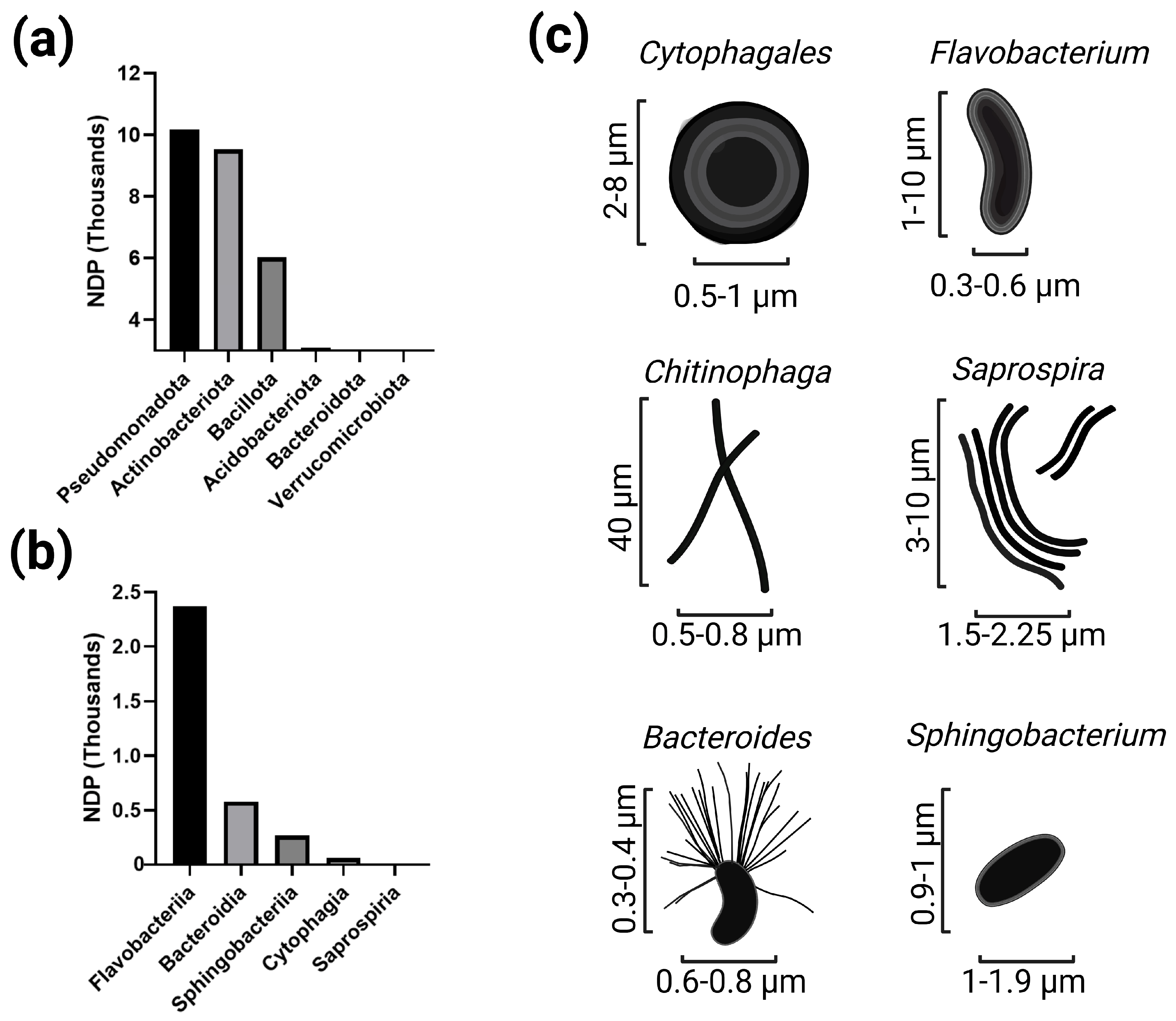
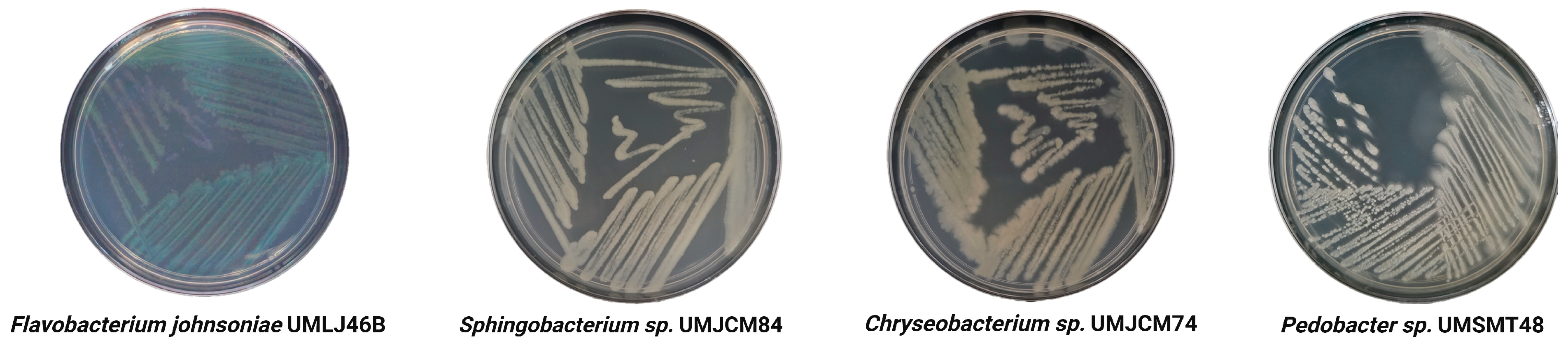
2. Taxonomy and Diversity
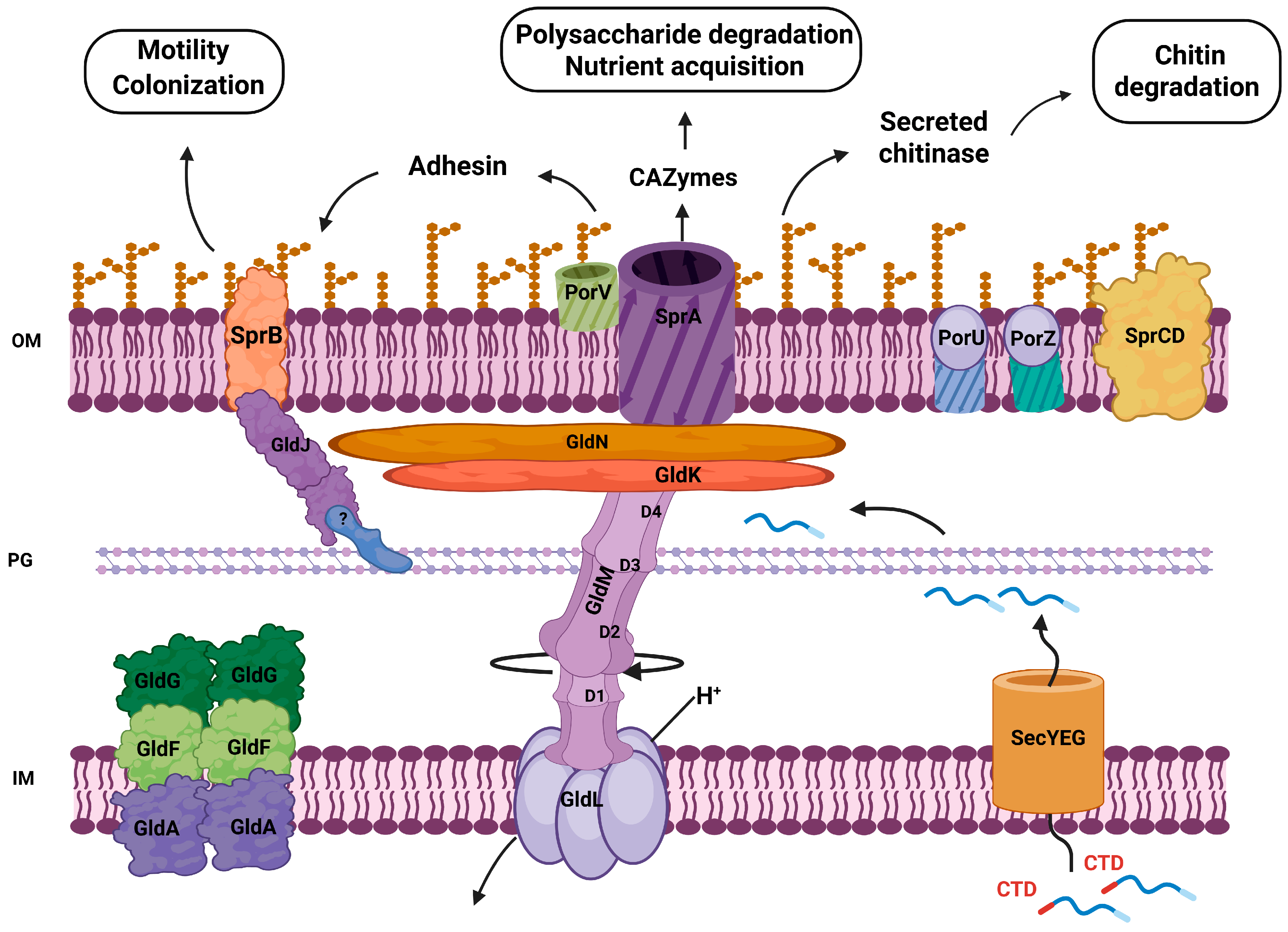
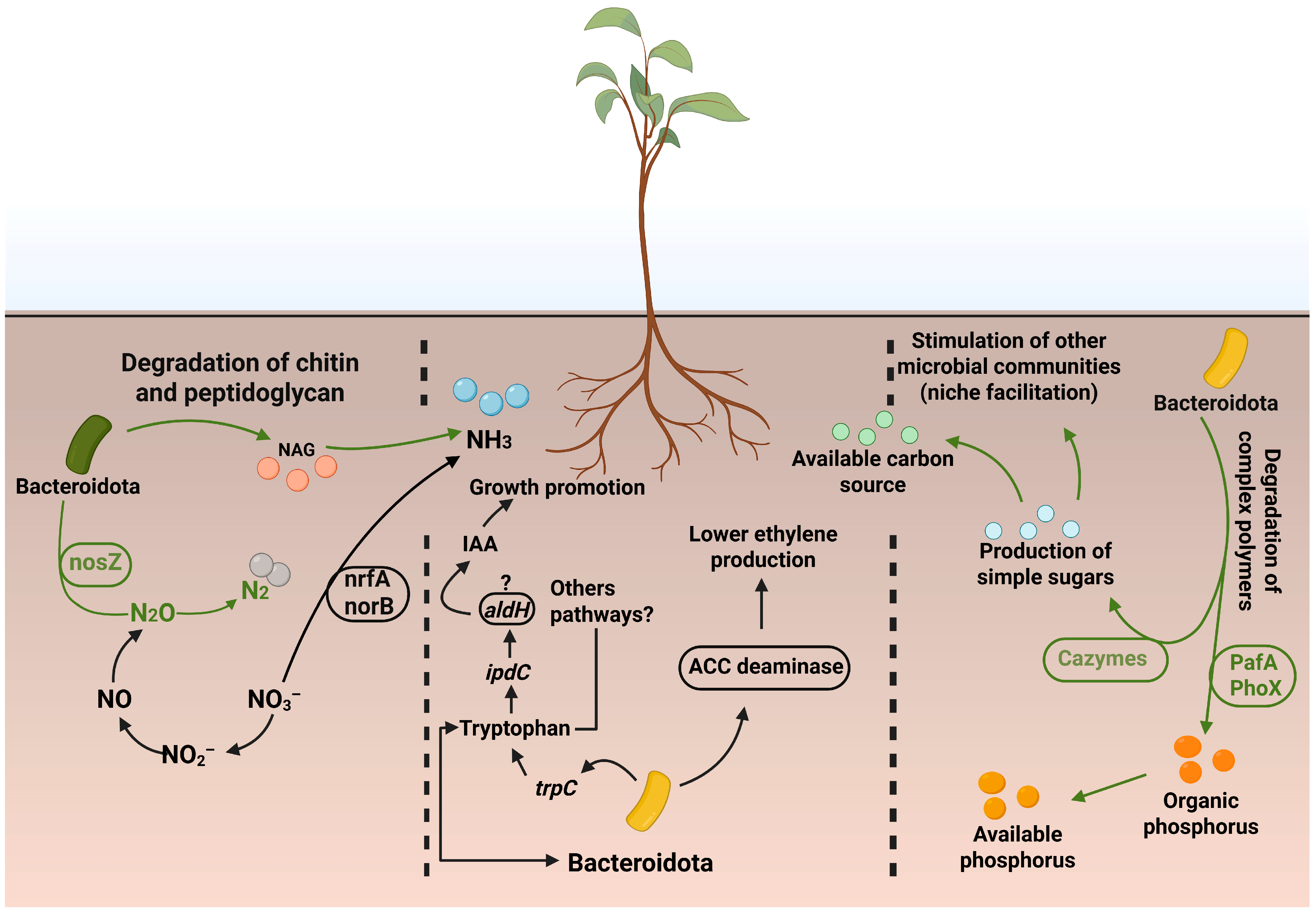
3. Functional Traits
3.1. Carbon Cycling
3.2. Bacteroidota Also Contribute to Nitrogen Transformations
3.3. Phosphorus Cycling
4. Plant–Bacteroidota Interactions
4.1. Nutrient Availability Increase to Plants
4.2. Rhizosphere Colonization
4.3. Phytohormone Modulation
4.4. Bacteroidota Role in Plant Resistance to Biotic and Abiotic Stress
4.4.1. Abiotic Stress Tolerance
4.4.2. Biotic Stress Protection
5. Future Prospects and Conclusions
- Expanding genomic resources for Bacteroidota to better characterize their functional diversity and ecological adaptations.
- Optimizing cultivation strategies, including novel media formulations and in situ cultivation devices, to improve isolation success rates.
- Integrating multi-omics approaches to identify genes, metabolites, and pathways involved in plant–microbe interactions.
- Evaluating field performance of Bacteroidota-based inoculants across diverse soils, climates, and cropping systems.
- Exploring biotechnological applications, including bioremediation of pollutants and enhancement of soil fertility through nutrient recycling.
Author Contributions
Funding
Data Availability Statement
Acknowledgments
Conflicts of Interest
References
- Crist, E.; Mora, C.; Engelman, R. The interaction of human population, food production, and biodiversity protection. Science 2017, 356, 260–264. [Google Scholar] [CrossRef] [PubMed]
- Elouafi, I. Why biodiversity matters in agriculture and food systems. Science 2024, 386, eads8197. [Google Scholar] [CrossRef]
- Kerr, R.B.; Madsen, S.; Stüber, M.; Liebert, J.; Enloe, S.; Borghino, N.; Parros, P.; Mutyambai, D.M.; Prudhon, M.; Wezel, A. Can agroecology improve food security and nutrition? A review. Glob. Food Secur. 2021, 29, 100540. [Google Scholar] [CrossRef]
- Ávila-Oviedo, J.L.; Chávez-Avilés, M.N. Ecological versatility and biocontrol mechanisms of Trichoderma spp.: Toward sustainable agriculture. Discov. Appl. Sci. 2026, 8, 230. [Google Scholar] [CrossRef]
- Nadeem, S.M.; Ahmad, M.; Zahir, Z.A.; Javaid, A.; Ashraf, M. The role of mycorrhizae and plant growth promoting rhizobacteria (PGPR) in improving crop productivity under stressful environments. Biotechnol. Adv. 2014, 32, 429–448. [Google Scholar] [CrossRef]
- Fu, S.F.; Sun, P.F.; Lu, H.Y.; Wei, J.Y.; Xiao, H.S.; Fang, W.T.; Cheng, B.Y.; Chou, J.Y. Plant growth-promoting traits of yeasts isolated from the phyllosphere and rhizosphere of Drosera spatulata Lab. Fungal Biol. 2016, 120, 433–448. [Google Scholar] [CrossRef]
- Nimsi, K.A.; Manjusha, K.; Kathiresan, K.; Arya, H. Plant growth-promoting yeasts (PGPY), the latest entrant for use in sustainable agriculture: A review. J. Appl. Microbiol. 2023, 134, lxac088. [Google Scholar] [CrossRef] [PubMed]
- Weidner, S.; Latz, E.; Agaras, B.; Valverde, C.; Jousset, A. Protozoa stimulate the plant beneficial activity of rhizospheric pseudomonads. Plant Soil 2017, 410, 509–515. [Google Scholar] [CrossRef]
- Chandarana, K.A.; Amaresan, N. Predation pressure regulates plant growth promoting (PGP) attributes of bacterial species. J. Appl. Microbiol. 2023, 134, lxad083. [Google Scholar] [CrossRef]
- Alzate Zuluaga, M.Y.; Fattorini, R.; Cesco, S.; Pii, Y. Plant-microbe interactions in the rhizosphere for smarter and more sustainable crop fertilization: The case of PGPR-based biofertilizers. Front. Microbiol. 2024, 15, 1440978. [Google Scholar] [CrossRef]
- Le, S.; Li, L.; Lv, M.; Wang, R.; Wang, L.; Yu, S.; Gao, Z.; Li, X. PGPR: Key to enhancing crop productivity and achieving sustainable agriculture. Curr. Microbiol. 2024, 81, 377. [Google Scholar] [CrossRef]
- del Carmen Orozco-Mosqueda, M.; Flores, A.; Rojas-Sánchez, B.; Urtis-Flores, C.; Morales-Cedeño, L.; Valencia-Marin, M.; Chávez-Avila, S.; Rojas-Solis, D.; Santoyo, G. Plant growth-promoting bacteria as bioinoculants: Attributes and challenges for sustainable crop improvement. Agronomy 2021, 11, 1167. [Google Scholar] [CrossRef]
- Zheng, B.; Xiao, Z.; Liu, J.; Zhu, Y.; Shuai, K.; Chen, X.; Liu, Y.; Hu, R.; Peng, G.; Li, J.; et al. Vertical differences in carbon metabolic diversity and dominant flora of soil bacterial communities in farmlands. Sci. Rep. 2024, 14, 9445. [Google Scholar] [CrossRef]
- Wang, Y.; Bing, H.; Moorhead, D.L.; Hou, E.; Wu, Y.; Wang, J.; Duan, C.; Cui, Q.; Zhang, Z.; Zhu, H.; et al. Bacterial community structure modulates soil phosphorus turnover at early stages of primary succession. Glob. Biogeochem. Cycles 2024, 38, e2024GB008174. [Google Scholar] [CrossRef]
- Krause, H.-M.; Mueller, R.C.; Lori, M.; Mayer, J.; Mäder, P.; Hartmann, M. Organic cropping systems alter metabolic potential and carbon, nitrogen and phosphorus cycling capacity of soil microbial communities. Soil Biol. Biochem. 2025, 203, 109737. [Google Scholar] [CrossRef]
- Bai, B.; Liu, W.; Qiu, X.; Zhang, J.; Zhang, J.; Bai, Y. The root microbiome: Community assembly and its contributions to plant fitness. J. Integr. Plant Biol. 2022, 64, 230–243. [Google Scholar] [CrossRef] [PubMed]
- Wang, Y.; Peng, S.; Hua, Q.; Qiu, C.; Wu, P.; Liu, X.; Lin, X. The long-term effects of using phosphate-solubilizing bacteria and photosynthetic bacteria as biofertilizers on peanut yield and soil bacteria community. Front. Microbiol. 2021, 12, 693535. [Google Scholar] [CrossRef]
- Rayas-González, J.; Hernández Abreu, E.; Valencia-Cantero, E.; López-Bucio, J. Microbial resources for improved crop productivity. In The Handbook of Microbial Bioresources; Gupta, V., Sharma, G., Tuohy, M., Gaur, R., Eds.; CABI: Wallingford, UK, 2016; pp. 1–13. [Google Scholar] [CrossRef]
- Hernández-Calderón, E.; Aviles-Garcia, M.E.; Castulo-Rubio, D.Y.; Macías-Rodríguez, L.; Ramírez, V.M.; Santoyo, G.; López-Bucio, J.; Valencia-Cantero, E. Volatile compounds from beneficial or pathogenic bacteria differentially regulate root exudation, transcription of iron transporters, and defense signaling pathways in Sorghum bicolor. Plant Mol. Biol. 2018, 96, 291–304. [Google Scholar] [CrossRef]
- Das, P.P.; Singh, K.R.; Nagpure, G.; Mansoori, A.; Singh, R.P.; Ghazi, I.A.; Kumar, A.; Singh, J. Plant–soil–microbes: A tripartite interaction for nutrient acquisition and better plant growth for sustainable agricultural practices. Environ. Res. 2022, 214, 113821. [Google Scholar] [CrossRef]
- Hernández-León, R.; Rojas-Solís, D.; Contreras-Pérez, M.; Orozco-Mosqueda, M.d.C.; Macías-Rodríguez, L.I.; Reyes-de la Cruz, H.; Valencia-Cantero, E.; Santoyo, G. Characterization of the antifungal and plant growth-promoting effects of diffusible and volatile organic compounds produced by Pseudomonas fluorescens strains. Biol. Control 2015, 81, 83–92. [Google Scholar] [CrossRef]
- Ávila-Oviedo, J.L.; Méndez-Inocencio, C.; Rodríguez-Torres, M.D.; Angoa-Pérez, M.V.; Chávez-Avilés, M.N.; Martínez-Mendoza, E.K.; Oregel-Zamudio, E.; Villar-Luna, E. Antagonistic effects and volatile organic compound profiles of rhizobacteria in the biocontrol of Phytophthora capsici. Plants 2024, 13, 3224. [Google Scholar] [CrossRef]
- Orozco-Mosqueda, M.d.C.; Glick, B.R.; Santoyo, G. ACC deaminase in plant growth-promoting bacteria (PGPB): An efficient mechanism to counter salt stress in crops. Microbiol. Res. 2020, 235, 126439. [Google Scholar] [CrossRef]
- Castro, C.; Massonnet, M.; Her, N.; DiSalvo, B.; Jablonska, B.; Jeske, D.R.; Cantu, D.; Roper, M.C. Priming grapevine with lipopolysaccharide confers systemic resistance to Pierce’s disease and identifies a peroxidase linked to defense priming. New Phytol. 2023, 239, 1–18. [Google Scholar] [CrossRef]
- Wu, G.; Liu, Y.; Xu, Y.; Zhang, G.; Shen, Q.-R.; Zhang, R. Exploring elicitors of the beneficial rhizobacterium Bacillus amyloliquefaciens SQR9 to induce plant systemic resistance and their interactions with plant signaling pathways. Mol. Plant-Microbe Interact. 2018, 31, 560–567. [Google Scholar] [CrossRef] [PubMed]
- Santoyo, G.; Moreno-Hagelsieb, G.; Orozco-Mosqueda, M.d.C.; Glick, B.R. Plant growth-promoting bacterial endophytes. Microbiol. Res. 2016, 183, 92–99. [Google Scholar] [CrossRef] [PubMed]
- Biget, M.; Mony, C.; Wang, T.; Ling, N.; Miteul, A.; Jambon, O.; Causse-Védrines, R.; Michon-Coudouel, S.; Hervé, M.; Chable, V.; et al. Intra- and inter-annual changes in root endospheric microbial communities of grapevine are mainly deterministic. Plant Soil 2024, 494, 217–233. [Google Scholar] [CrossRef]
- Fitzpatrick, C.R.; Copeland, J.; Wang, P.W.; Guttman, D.S.; Kotanen, P.M.; Johnson, M.T. Assembly and ecological function of the root microbiome across angiosperm plant species. Proc. Natl. Acad. Sci. USA 2018, 115, E1157–E1165. [Google Scholar] [CrossRef] [PubMed]
- Trivedi, P.; Leach, J.E.; Tringe, S.G.; Sa, T.; Singh, B.K. Plant–microbiome interactions: From community assembly to plant health. Nat. Rev. Microbiol. 2020, 18, 607–621. [Google Scholar] [CrossRef]
- Roca-Couso, R.; Flores-Félix, J.D.; Deb, S.; Giagnoni, L.; Tondello, A.; Stevanato, P.; Squartini, A.; García-Fraile, P.; Rivas, R. Metataxonomic analysis of endophytic bacteria of blackberry (Rubus ulmifolius Schott) across tissues and environmental conditions. Sci. Rep. 2024, 14, 13388. [Google Scholar] [CrossRef]
- Abdelrahman, M.; Jogaiah, S.; Abdelmoteleb, M.; Fokar, M.; Nguyen, H.T.; Tran, L.S.P. Deciphering crop-specific rhizobacteriome assembly in cotton, sorghum, and soybean under hot semi-arid field conditions in Texas. Environ. Microbiome 2025, 20, 105. [Google Scholar] [CrossRef]
- Kaur, S.; Kalia, A.; Sharma, S. Bioformulation of Azotobacter and Streptomyces for improved growth and yield of wheat (Triticum aestivum L.): A field study. J. Plant Growth Regul. 2024, 43, 2555–2571. [Google Scholar] [CrossRef]
- Fourneau, E.; Pannier, M.; Riah, W.; Personeni, E.; Morvan-Bertrand, A.; Bodilis, J.; Pawlak, B. A “love match” score to compare root exudate attraction and feeding of the plant growth-promoting rhizobacteria Bacillus subtilis, Pseudomonas fluorescens, and Azospirillum brasilense. Front. Microbiol. 2024, 15, 1473099. [Google Scholar] [CrossRef] [PubMed]
- Biswas, D.; Chakraborty, A.K.; Srivastava, V.; Mandal, A. Plant growth promoting rhizobacteria (PGPR): Reports on their colonization, beneficial activities, and use as bioinoculant. Adv. Agric. 2024, 2024, 8173024. [Google Scholar] [CrossRef]
- Khoso, M.A.; Wagan, S.; Alam, I.; Hussain, A.; Ali, Q.; Saha, S.; Poudel, T.R.; Manghwar, H.; Liu, F. Impact of plant growth-promoting rhizobacteria (PGPR) on plant nutrition and root characteristics: Current perspective. Plant Stress 2024, 11, 100341. [Google Scholar] [CrossRef]
- Dhiman, V.K.; Rana, N.; Dhiman, V.K.; Sharma, A.; Pandey, H.; Singh, D.; Puri, P.; Yadav, N.; Kaur, N.; Rustagi, S.; et al. Plant growth promoting rhizobacteria as biostimulants for plant and soil health: Current research and future challenges. J. Appl. Biol. Biotechnol. 2025, 13, 21–33. [Google Scholar] [CrossRef]
- Cornell, C.; Kokkoris, V.; Richards, A.; Horst, C.; Rosa, D.; Bennett, J.A.; Hart, M.M. Do bioinoculants affect resident microbial communities? A meta-analysis. Front. Agron. 2021, 3, 753474. [Google Scholar] [CrossRef]
- Hu, M.; Hei, R.N.; Guo, D.J.; Luo, J.; Lu, C.; Xu, W.L.; Ma, Y. Shelf-life enhancement of bio-inoculants through synergistic effects of encapsulation technology and osmotic protectants. J. Environ. Chem. Eng. 2023, 11, 110996. [Google Scholar] [CrossRef]
- Schenk, P.M.; Batool, M.; Mirzaee, H.; Abbott, A. Customized plant growth promotion with soil- and cultivar-compatible microbial biofertilizers. Agronomy 2024, 14, 1915. [Google Scholar] [CrossRef]
- Steen, A.D.; Crits-Christoph, A.; Carini, P.; DeAngelis, K.M.; Fierer, N.; Lloyd, K.G.; Thrash, J.C. High proportions of bacteria and archaea across most biomes remain uncultured. ISME J. 2019, 13, 3126–3130. [Google Scholar] [CrossRef]
- Zheng, M.; Wen, L.; He, C.; Chen, X.; Si, L.; Li, H.; Liang, Y.; Zheng, W.; Guo, F. Sequencing-guided re-estimation and promotion of cultivability for environmental bacteria. Nat. Commun. 2024, 15, 9051. [Google Scholar] [CrossRef] [PubMed]
- Ding, C.; Qi, X.; Hou, S.; Hu, W. Microbial community structure and environmental adaptation in rhizosphere and non-rhizosphere soils of halophytic plants in the Ebinur Lake wetland. Plant Soil 2025, 513, 311–332. [Google Scholar] [CrossRef]
- Nguyen, T.M.; Seo, C.; Ji, M.; Paik, M.J.; Myung, S.W.; Kim, J. Effective soil extraction method for cultivating previously uncultured soil bacteria. Appl. Environ. Microbiol. 2018, 84, e01145-18. [Google Scholar] [CrossRef]
- Rodrigues, C.J.C.; de Carvalho, C.C.C.R. Cultivating marine bacteria under laboratory conditions: Overcoming the “unculturable” dogma. Front. Bioeng. Biotechnol. 2022, 10, 964589. [Google Scholar] [CrossRef]
- Bank, N.C.; Singh, V.; McCourt, B.; Burberry, A.; Roberts, K.D.; Grubb, B.; Rodriguez-Palacios, A. Antigenic operon fragmentation and diversification mechanism in Bacteroidota impacts gut metagenomics and pathobionts in Crohn’s disease microlesions. Gut Microbes 2024, 16, 2350150. [Google Scholar] [CrossRef] [PubMed]
- Liu, Z.; Cao, F.; Wan, J.; Chen, X.; Kong, B.; Li, D.; Zhang, X.-H.; Jiang, Y.; Shi, X. Microbial diversity and interaction networks in polar sediments: Insights from the Circum-Antarctic, Antarctic Peninsula and Arctic. Mar. Environ. Res. 2025, 210, 107261. [Google Scholar] [CrossRef]
- Chai, J.; Yao, T.; Wang, X.; Lei, Y.; Li, S.; He, S.; Zhang, Y.; Liu, Q.; Guo, X. Alpine grassland degradation affects soil properties and the abundance of N cycling functional genes. Appl. Soil Ecol. 2025, 214, 106390. [Google Scholar] [CrossRef]
- Oliveira, C.F.; Mendes, L.W.; Alleoni, L.R.F. Potassium organomineral fertilizer alters the microbiome of a sandy loam tropical soil. Appl. Soil Ecol. 2025, 207, 105960. [Google Scholar] [CrossRef]
- Vieira, S.; Riedel, T.; Geppert, A.; Rohde, M.; Wolf, J.; Neumann-Schaal, M.; Overmann, J. Aurantibacillus circumpalustris gen. nov., sp. nov., the first characterized representative of the Bacteroidota candidate family env. OPS 17 and proposal of Aurantibacillaceae fam. nov. Int. J. Syst. Evol. Microbiol. 2023, 73, 006134. [Google Scholar] [CrossRef]
- Li, A.H.; Liu, H.C.; Zhou, Y.G. Flavobacterium orientale sp. nov., isolated from lake water. Int. J. Syst. Evol. Microbiol. 2017, 67, 108–112. [Google Scholar] [CrossRef]
- Anders, H.; Dunfield, P.F.; Lagutin, K.; Houghton, K.M.; Power, J.F.; MacKenzie, A.D.; Vyssotski, M.; Ryan, J.L.J.; Hanssen, E.G.; Moreau, J.W.; et al. Thermoflavifilum aggregans gen. nov., sp. nov., a thermophilic and slightly halophilic filamentous bacterium from the phylum Bacteroidetes. Int. J. Syst. Evol. Microbiol. 2014, 64, 1264–1270. [Google Scholar] [CrossRef]
- Fujiwara, T.; Hosaka, T.; Hasegawa-Takano, M.; Nishimura, Y.; Tominaga, K.; Mori, K.; Kogure, K.; Yoshizawa, S. Carotenoids bind rhodopsins and act as photocycle-accelerating pigments in marine Bacteroidota. Nat. Microbiol. 2025, 10, 2603–2615. [Google Scholar] [CrossRef]
- Krieg, N.R.; Ludwig, W.; Euzéby, J.; Whitman, W.B. Phylum XIV. Bacteroidetes phyl. nov. In Bergey’s Manual® of Systematic Bacteriology; Springer: New York, NY, USA, 2010; pp. 25–469. [Google Scholar] [CrossRef]
- García-López, M.; Meier-Kolthoff, J.P.; Tindall, B.J.; Gronow, S.; Woyke, T.; Kyrpides, N.C.; Hahnke, R.L.; Göker, M. Analysis of 1000 type-strain genomes improves taxonomic classification of Bacteroidetes. Front. Microbiol. 2019, 10, 2083. [Google Scholar] [CrossRef]
- Paster, B.J.; Ludwig, W.; Weisburg, W.G.; Stackebrandt, E.; Hespell, R.B.; Hahn, C.M.; Reichenbach, H.; Stetter, K.O.; Woese, C.R. A phylogenetic grouping of the Bacteroides, Cytophagas, and certain Flavobacteria. Syst. Appl. Microbiol. 1985, 6, 34–42. [Google Scholar] [CrossRef]
- Woese, C.R.; Stackebrandt, E.; Macke, T.J.; Fox, G.E. A phylogenetic definition of the major eubacterial taxa. Syst. Appl. Microbiol. 1985, 6, 143–151. [Google Scholar] [CrossRef]
- Oren, A.; da Costa, M.S.; Garrity, G.M.; Rainey, F.A.; Rosselló-Mora, R.; Schink, B.; Sutcliffe, I.; Trujillo, M.E.; Whitman, W.B. Proposal to include the rank of phylum in the International Code of Nomenclature of Prokaryotes. Int. J. Syst. Evol. Microbiol. 2015, 65, 4284–4287. [Google Scholar] [CrossRef]
- Oren, A.; Garrity, G.M. Valid publication of the names of forty-two phyla of prokaryotes. Int. J. Syst. Evol. Microbiol. 2021, 71, 005056. [Google Scholar] [CrossRef]
- O’Leary, N.A.; Cox, E.; Holmes, J.B.; Anderson, W.R.; Falk, R.; Hem, V.; Tsuchiya, M.T.N.; Schuler, G.D.; Zhang, X.; Torcivia, J.; et al. Exploring and retrieving sequence and metadata for species across the tree of life with NCBI Datasets. Sci. Data 2024, 11, 732. [Google Scholar] [CrossRef] [PubMed]
- McKee, L.S.; Martínez-Abad, A.; Ruthes, A.C.; Vilaplana, F.; Brumer, H. Focused Metabolism of β-Glucans by the Soil Bacteroidetes Species C. pinensis. Appl. Environ. Microb. 2019, 85, e02231-18. [Google Scholar] [CrossRef] [PubMed]
- Ma, K.-J.; Ye, Y.-L.; Li, Y.-K.; Fu, G.-Y.; Wu, Y.-H.; Sun, C.; Xu, X.-W. Polysaccharide metabolic pattern of Cytophagales and Flavobacteriales: A comprehensive genomics approach. Front. Mar. Sci. 2025, 12, 1551618. [Google Scholar] [CrossRef]
- Lopez-Echartea, E.; Dusek, N.; Misialek, M.; Mahmud-Un-Nabi, M.A.; Williamson, R.; Marathe, K.; Geddes, B.A. Culturomics from field-grown crop plants using dilution to extinction, two-step library preparation and amplicon sequencing. Microbiology 2025, 171, 001571. [Google Scholar] [CrossRef]
- Goodman, A.L.; Kallstrom, G.; Faith, J.J.; Reyes, A.; Moore, A.; Dantas, G.; Gordon, J.I. Extensive personal human gut microbiota culture collections characterized and manipulated in gnotobiotic mice. Proc. Natl. Acad. Sci. USA 2011, 108, 6252–6257. [Google Scholar] [CrossRef]
- Wan, X.; Yang, Q.; Wang, X.; Bai, Y.; Liu, Z. Isolation and cultivation of human gut microorganisms: A review. Microorganisms 2023, 11, 1080. [Google Scholar] [CrossRef]
- Sánchez, A.M.; Oliva, J.; Solsona, C.; Abdelfattah, A.; Teixidó, N. Culturomics reveals microbial dynamics in the apple carposphere across developmental stages, altitude and tissue types. J. Sustain. Agric. Environ. 2025, 4, e70074. [Google Scholar] [CrossRef]
- Park, H.; Yeo, S.; Ryu, C.B.; Huh, C.S. A streamlined culturomics case study for the human gut microbiota research. Sci. Rep. 2024, 14, 20361. [Google Scholar] [CrossRef] [PubMed]
- Nemr, R.A.; Patz, S.; Abdelwakeel, S.M.; Khalil, M.; Ben Djadid, A.; Abdelfadeel, M.R.; Morsi, A.T.; Goda, H.A.; Youssef, H.H.; Hamza, M.; et al. Culture media based on leaf strips/root segments create compatible host/organ setup for in vitro cultivation of plant microbiota. Front. Sustain. Food Syst. 2021, 5, 660790. [Google Scholar] [CrossRef]
- Moner, N.A.; Elsayed, T.R.; Amer, W.M.; Hamza, M.A.; Youssef, H.H.; Abdel-Fatah, R.M.; Hegazi, N.A. In vitro domestication of halophyte microbiota for future SynCom application. Plant Soil 2025, 1–27. [Google Scholar] [CrossRef]
- Dahal, R.H.; Chaudhary, D.K.; Kim, D.U.; Kim, J. Nine novel psychrotolerant species of the genus Pedobacter isolated from arctic soil with potential antioxidant activities. Int. J. Syst. Evol. Microbiol. 2020, 70, 2537–2553. [Google Scholar] [CrossRef] [PubMed]
- Wang, R.; Xue, L.; Liu, Z.X.; Li, D.Y.; Liu, H.C.; Li, A.H.; Zhou, Y.G. Parapedobacter tibetensis sp. nov., isolated from shore soil of saline lake in Tibet of China and its genome mining of secondary metabolite. Int. J. Syst. Evol. Microbiol. 2023, 73, e005784. [Google Scholar] [CrossRef]
- Yoon, J.H.; Kang, S.J.; Oh, T.K. Flavobacterium soli sp. nov., isolated from soil. Int. J. Syst. Evol. Microbiol. 2006, 56, 997–1000. [Google Scholar] [CrossRef] [PubMed]
- Han, H.L.; Le, N.; Nurcahyanto, D.A.; Muhammad, N.; Lee, Y.J.; Nguyen, T.T.H.; Kim, S.G.; Chan, S.S.; Khoo, K.S.; Chew, K.W.; et al. Spirosoma foliorum sp. nov., isolated from the fallen leaf of Acer palmatum by a novel cultivation technique. Sci. Rep. 2023, 13, 14684. [Google Scholar] [CrossRef] [PubMed]
- Carrión, V.J.; Perez-Jaramillo, J.; Cordovez, V.; Tracanna, V.; De Hollander, M.; Ruiz-Buck, D.; Raaijmakers, J.M. Pathogen-induced activation of disease-suppressive functions in the endophytic root microbiome. Science 2019, 366, 606–612. [Google Scholar] [CrossRef] [PubMed]
- Nishioka, T.; Elsharkawy, M.M.; Suga, H.; Kageyama, K.; Hyakumachi, M.; Shimizu, M. Development of culture medium for the isolation of Flavobacterium and Chryseobacterium from rhizosphere soil. Microbes Environ. 2016, 31, 104–110. [Google Scholar] [CrossRef] [PubMed]
- Nishioka, T.; Tamaki, H. Improved cultivation and isolation of diverse endophytic bacteria inhabiting Dendrobium roots by using simply modified agar media. Microbiol. Spectr. 2022, 10, e02238-22. [Google Scholar] [CrossRef]
- Schmidt, M.; Priemé, A.; Stougaard, P. Rhodonellum psychrophilum gen. nov., sp. nov., a novel psychrophilic and alkaliphilic bacterium of the phylum Bacteroidetes isolated from Greenland. Int. J. Syst. Evol. Microbiol. 2006, 56, 2887–2892. [Google Scholar] [CrossRef]
- Lian, W.H.; Mohamad, O.A.A.; Dong, L.; Zhang, L.Y.; Wang, D.; Liu, L.; Zhang, Y.Z.; Li, W.J. Culturomics- and metagenomics-based insights into the microbial community and function of rhizosphere soils in Sinai desert farming systems. Environ. Microbiome 2023, 18, 4. [Google Scholar] [CrossRef]
- Yu, J.; Yang, S.; Zhang, X.; Liu, X.; Tang, X.; Wang, L.; Song, C. Integrating metagenomics and culturomics to uncover the soil bacterial community in Asparagus cochinchinensis cultivation. Front. Microbiol. 2024, 15, 1467864. [Google Scholar] [CrossRef]
- Zhang, L.; Cao, Q.; Ruan, W.; Guo, Y.; Zhuang, Y.; Li, Y.; Ruan, Z. Culturomics and amplicon-based metagenomic insights into the bacteria of soils with high yield of Oryza sativa L. subsp. Japonica. Agronomy 2023, 13, 2867. [Google Scholar] [CrossRef]
- Falkowski, P.G.; Fenchel, T.; DeLong, E.F. The microbial engines that drive Earth’s biogeochemical cycles. Science 2008, 320, 1034–1039. [Google Scholar] [CrossRef] [PubMed]
- Madsen, E.L. Microorganisms and their roles in fundamental biogeochemical cycles. Curr. Opin. Biotechnol. 2011, 22, 456–464. [Google Scholar] [CrossRef]
- Huang, J.; Gao, K.; Yang, L.; Lu, Y. Successional action of Bacteroidota and Firmicutes in decomposing straw polymers in a paddy soil. Environ. Microbiome 2023, 18, 76. [Google Scholar] [CrossRef]
- Scheller, H.V.; Ulvskov, P. Hemicelluloses. Annu. Rev. Plant Biol. 2010, 61, 263–289. [Google Scholar] [CrossRef]
- Galloway, A.F.; Pedersen, M.J.; Merry, B.; Marcus, S.E.; Blacker, J.; Benning, L.G.; Knox, J.P. Xyloglucan is released by plants and promotes soil particle aggregation. New Phytol. 2018, 217, 1128–1136. [Google Scholar] [CrossRef]
- Galloway, A.F.; Akhtar, J.; Marcus, S.E.; Fletcher, N.; Field, K.; Knox, J.P. Cereal root exudates contain highly structurally complex polysaccharides with soil-binding properties. Plant J. 2020, 103, 1666–1678. [Google Scholar] [CrossRef]
- McKee, L.S.; La Rosa, S.L.; Westereng, B.; Eijsink, V.G.; Pope, P.B.; Larsbrink, J. Polysaccharide degradation by the Bacteroidetes: Mechanisms and nomenclature. Environ. Microbiol. Rep. 2021, 13, 559–581. [Google Scholar] [CrossRef]
- Seveso, A.; Mazurkewich, S.; Banerjee, S.; Poulsen, J.C.N.; Lo Leggio, L.; Larsbrink, J. Polysaccharide utilization loci from Bacteroidota encode CE15 enzymes with possible roles in cleaving pectin–lignin bonds. Appl. Environ. Microbiol. 2024, 90, e01768-23. [Google Scholar] [CrossRef]
- Nguyen, T.T.H.; Vuong, T.Q.; Han, H.L.; Li, Z.; Lee, Y.-J.; Ko, J.; Nedashkovskaya, O.I.; Kim, S.-G. Three marine species of the genus Fulvivirga, rich sources of carbohydrate-active enzymes degrading alginate, chitin, laminarin, starch, and xylan. Sci. Rep. 2023, 13, 6301. [Google Scholar] [CrossRef] [PubMed]
- Nguyen, T.T.; Vuong, T.Q.; Han, H.L.; Kim, S.G. Halosquirtibacter laminarini gen. nov., sp. nov. and Halosquirtibacter xylanolyticus sp. nov., marine anaerobic laminarin and xylan degraders in the phylum Bacteroidota. Sci. Rep. 2024, 14, 24329. [Google Scholar] [CrossRef]
- Nakamura, S.; Kurata, R.; Tonozuka, T.; Funane, K.; Park, E.Y.; Miyazaki, T. Bacteroidota polysaccharide utilization system for branched dextran exopolysaccharides from lactic acid bacteria. J. Biol. Chem. 2023, 299, 104885. [Google Scholar] [CrossRef]
- Mandelli, F.; Martins, M.P.; Chinaglia, M.; Lima, E.A.D.; Morais, M.A.B.; Lima, T.B.; Murakami, M.T. A functionally augmented carbohydrate utilization locus from herbivore gut microbiota fueled by dietary β-glucans. npj Biofilms Microbiomes 2024, 10, 105. [Google Scholar] [CrossRef] [PubMed]
- Sun, C.; Zhao, W.; Yue, W.; Cheng, H.; Long, A.; Yin, J.; Sun, F.; Wang, Y. Degradation of polymeric carbohydrates coupled with cellular motility driving microbial niche separation in the Pearl River Estuary surface sediment. J. Environ. Sci. 2025, 160, 414–423. [Google Scholar] [CrossRef] [PubMed]
- Kolton, M.; Sela, N.; Elad, Y.; Cytryn, E. Comparative genomic analysis indicates that niche adaptation of terrestrial Flavobacteria is strongly linked to plant glycan metabolism. PLoS ONE 2013, 8, e76704. [Google Scholar] [CrossRef] [PubMed]
- Khomutovska, N.; Jasser, I.; Isidorov, V.A. Unraveling the role of bacteria in nitrogen cycling: Insights from leaf litter decomposition in the Knyszyn forest. Forests 2024, 15, 1065. [Google Scholar] [CrossRef]
- del Rio, T.G.; Abt, B.; Spring, S.; Lapidus, A.; Nolan, M.; Tice, H.; Copeland, A.; Cheng, J.F.; Chen, F.; Bruce, D.; et al. Complete genome sequence of Chitinophaga pinensis type strain (UQM 2034T). Stand. Genom. Sci. 2010, 2, 87–95. [Google Scholar] [CrossRef]
- Carlos, C.; Fan, H.; Currie, C.R. Substrate shift reveals roles for members of bacterial consortia in degradation of plant cell wall polymers. Front. Microbiol. 2018, 9, 364. [Google Scholar] [CrossRef]
- Martin, H.; Rogers, L.A.; Moushtaq, L.; Brindley, A.A.; Forbes, P.; Quinton, A.R.; Lidbury, I.D. Metabolism of hemicelluloses by root-associated Bacteroidota species. ISME J. 2025, 19, wraf022. [Google Scholar] [CrossRef]
- Sato, K.; Naito, M.; Yukitake, H.; Hirakawa, H.; Shoji, M.; McBride, M.J.; Rhodes, R.G.; Nakayama, K. A protein secretion system linked to Bacteroidete gliding motility and pathogenesis. Proc. Natl. Acad. Sci. USA 2010, 107, 276–281. [Google Scholar] [CrossRef]
- McBride, M.J.; Zhu, Y. Gliding motility and Por secretion system genes are widespread among members of the phylum Bacteroidetes. J. Bacteriol. 2013, 195, 270–278. [Google Scholar] [CrossRef]
- Lasica, A.M.; Ksiazek, M.; Madej, M.; Potempa, J. The type IX secretion system (T9SS): Highlights and recent insights into its structure and function. Front. Cell Infect. Microbiol. 2017, 7, 215. [Google Scholar] [CrossRef] [PubMed]
- Howe, A.C.; Jansson, J.K.; Malfatti, S.A.; Tringe, S.G.; Tiedje, J.M.; Brown, C.T. Tackling soil diversity with the assembly of large, complex metagenomes. Proc. Natl. Acad. Sci. USA 2014, 111, 4904–4909. [Google Scholar] [CrossRef] [PubMed]
- Cao, H.; Xu, L.; Song, J.; Xun, M.; Zhang, W.; Yang, H. Bacterial community structure and co-occurrence networks in the rhizosphere and root endosphere of the grafted apple. BMC Microbiol. 2024, 24, 53. [Google Scholar] [CrossRef] [PubMed]
- Peng, Q.; Sun, S.E.; Ma, J.; Chen, S.; Gao, L.; Du, X.; Zhang, D. The effect of developmental stages on microbiome assembly in the phyllosphere and rhizosphere of rice grown in urban area soil. Environ. Microbiome 2025, 20, 86. [Google Scholar] [CrossRef]
- Shaffer, J.P.; U’Ren, J.M.; Gallery, R.E.; Baltrus, D.A.; Arnold, A.E. An endohyphal bacterium (Chitinophaga, Bacteroidetes) alters carbon source use by Fusarium keratoplasticum (F. solani species complex, Nectriaceae). Front. Microbiol. 2017, 8, 350. [Google Scholar] [CrossRef]
- Garrido-Sanz, D.; Keel, C. Seed-borne bacteria drive wheat rhizosphere microbiome assembly via niche partitioning and facilitation. Nat. Microbiol. 2025, 10, 1130–1144. [Google Scholar] [CrossRef] [PubMed]
- Peterson, S.B.; Dunn, A.K.; Klimowicz, A.K.; Handelsman, J. Peptidoglycan from Bacillus cereus mediates commensalism with rhizosphere bacteria from the Cytophaga–Flavobacterium group. Appl. Environ. Microbiol. 2006, 72, 5421–5427. [Google Scholar] [CrossRef]
- Cretoiu, M.S.; Kielak, A.M.; Schluter, A.; van Elsas, J.D. Bacterial communities in chitin-amended soil as revealed by 16S rRNA gene based pyrosequencing. Soil Biol. Biochem. 2014, 76, 5–11. [Google Scholar] [CrossRef]
- Wieczorek, A.S.; Schmidt, O.; Chatzinotas, A.; von Bergen, M.; Gorissen, A.; Kolb, S. Ecological functions of agricultural soil bacteria and microeukaryotes in chitin degradation: A case study. Front. Microbiol. 2019, 10, 1293. [Google Scholar] [CrossRef]
- Debode, J.; De Tender, C.; Soltaninejad, S.; Van Malderghem, C.; Haegeman, A.; Van der Linden, I.; Maes, M. Chitin mixed in potting soil alters lettuce growth, the survival of zoonotic bacteria on the leaves and associated rhizosphere microbiology. Front. Microbiol. 2016, 7, 565. [Google Scholar] [CrossRef] [PubMed]
- De Tender, C.; Mesuere, B.; Van der Jeugt, F.; Haegeman, A.; Ruttink, T.; Vandecasteele, B.; Kuramae, E.E. Peat substrate amended with chitin modulates the N-cycle, siderophore and chitinase responses in the lettuce rhizobiome. Sci. Rep. 2019, 9, 9890. [Google Scholar] [CrossRef]
- Tamaki, H.; Hanada, S.; Nakamura, K.; Nomura, N.; Matsumura, M.; Kamagata, Y. The ecological role of a proteolytic psychrophile, Flavobacterium limicola belonging to the Cytophaga–Flavobacteria cluster, in the decomposition of particulate organic nitrogen in freshwater sediment. Microbes Environ. 2004, 19, 147–153. [Google Scholar] [CrossRef][Green Version]
- Hahnke, R.L.; Meier-Kolthoff, J.P.; García-López, M.; Mukherjee, S.; Huntemann, M.; Ivanova, N.N.; Kyrpides, N.C.; Woyke, T.; Göker, M. Genome-based taxonomic classification of Bacteroidetes. Front. Microbiol. 2016, 7, 2003. [Google Scholar] [CrossRef]
- Kavamura, V.N.; Hayat, R.; Clark, I.M.; Rossmann, M.; Mendes, R.; Hirsch, P.R.; Mauchline, T.H. Inorganic nitrogen application affects both taxonomical and predicted functional structure of wheat rhizosphere bacterial communities. Front. Microbiol. 2018, 9, 1074. [Google Scholar] [CrossRef]
- Ren, N.; Wang, Y.; Ye, Y.; Zhao, Y.; Huang, Y.; Fu, W.; Chu, X. Effects of continuous nitrogen fertilizer application on the diversity and composition of rhizosphere soil bacteria. Front. Microbiol. 2020, 11, 1948. [Google Scholar] [CrossRef]
- Liu, W.; Qiu, K.; Xie, Y.; Wang, R.; Li, H.; Meng, W.; He, Y. Years of sand fixation with Caragana korshinskii drive the enrichment of its rhizosphere functional microbes by accumulating soil N. PeerJ 2022, 10, e14271. [Google Scholar] [CrossRef] [PubMed]
- Yue, X.; Xiao, X.; Liang, J.; Lin, Y.; Xiao, K.; Che, K. Firmicutes and Bacteroidetes as the dominant microorganisms for ammonium nitrogen wastewater treatment with a low C/N ratio in BCOR. J. Water Process Eng. 2024, 65, 105851. [Google Scholar] [CrossRef]
- Pajares, S.; Pelayo, M.d.C. Phylogenetic diversity and distribution patterns of ammonia-oxidizing microorganisms in marine environments. Hydrobiologia 2025, 852, 4587–4608. [Google Scholar] [CrossRef]
- Qiu, H.; Zhao, W.; Qin, Y.; Wang, Y.; Bai, M.; Su, S.; Wang, C.; Zhao, Z. Ammonia-oxidizing activity and microbial structure of ammonia-oxidizing bacteria, ammonia-oxidizing archaea and complete ammonia oxidizers in biofilm systems with different salinities. Bioresour. Technol. 2025, 423, 132248. [Google Scholar] [CrossRef]
- Lim, C.-S.; Oh, Y.-S.; Lee, J.-K.; Park, A.-R.; Yoo, J.-S.; Rhee, S.-K.; Roh, D.-H. Flavobacterium chungbukense sp. nov., isolated from soil. Int. J. Syst. Evol. Microbiol. 2011, 61, 2734–2739. [Google Scholar] [CrossRef] [PubMed][Green Version]
- Yabuuchi, E.; Kaneko, T.; Yano, I.; Moss, C.W.; Miyoshi, N. Sphingobacterium gen. nov., Sphingobacterium spiritivorum comb. nov., Sphingobacterium multivorum comb. nov., Sphingobacterium mizutae sp. nov., and Flavobacterium indologenes sp. nov.: Glucose-nonfermenting gram-negative rods in CDC groups IIK-2 and IIb. Int. J. Syst. Bacteriol. 1983, 33, 580–598. [Google Scholar] [CrossRef]
- Woo, H.; Chhetri, G.; Kim, I.; So, Y.; Park, S.; Jung, Y.; Seo, T. Pedobacter rhodius sp. nov. and Pedobacter punctiformis sp. nov., isolated from soil. Antonie Van Leeuwenhoek 2024, 117, 72. [Google Scholar] [CrossRef] [PubMed]
- Muurholm, S.; Cousin, S.; Päuker, O.; Brambilla, E.; Stackebrandt, E. Pedobacter duraquae sp. nov., Pedobacter westerhofensis sp. nov., Pedobacter metabolipauper sp. nov., Pedobacter hartonius sp. nov. and Pedobacter steynii sp. nov., isolated from a hard-water rivulet. Int. J. Syst. Evol. Microbiol. 2007, 57, 2221–2227. [Google Scholar] [CrossRef]
- Xiang, H.; Hong, Y.; Wu, J.; Wang, Y.; Ye, F.; Ye, J.; Long, A. Denitrification contributes to N2O emission in paddy soils. Front. Microbiol. 2023, 14, 1218207. [Google Scholar] [CrossRef] [PubMed]
- Schacksen, P.S.; Nielsen, J.L. Unraveling the genetic potential of nitrous oxide reduction in wastewater treatment: Insights from metagenome-assembled genomes. Appl. Environ. Microbiol. 2024, 90, e02177-23. [Google Scholar] [CrossRef]
- Zheng, Z.; Gustavsson, D.J.; Zheng, D.; Holmin, F.; Falås, P.; Wilén, B.M.; Persson, F. Genome-centric metagenomics reveals the effect of organic carbon source on one-stage partial denitrification-anammox in biofilm reactors. J. Environ. Manag. 2025, 388, 125972. [Google Scholar] [CrossRef]
- Phan, H.V.; Yasuda, S.; Oba, K.; Tsukamoto, H.; Hori, T.; Kuroiwa, M.; Terada, A. Active bacteria driving N2O mitigation and dissimilatory nitrate reduction to ammonium in ammonia recovery bioreactors. ISME J. 2025, 19, wraf021. [Google Scholar] [CrossRef]
- Jones, C.M.; Spor, A.; Brennan, F.P.; Breuil, M.-C.; Bru, D.; Lemanceau, P.; Philippot, L. Recently identified microbial guild mediates soil N2O sink capacity. Nat. Clim. Change 2014, 4, 801–805. [Google Scholar] [CrossRef]
- Zeng, D.; Miao, J.; Wu, G.; Zhan, X. Nitrogen removal, microbial community and electron transport in an integrated nitrification and denitrification system for ammonium-rich wastewater treatment. Int. Biodeterior. Biodegrad. 2018, 133, 202–209. [Google Scholar] [CrossRef]
- Liu, N.; Liu, Z.; Wang, K.; Zhao, J.; Fang, J.; Liu, G.; Yao, H.; Pan, J. Comparison analysis of microbial agent and different compost material on microbial community and nitrogen transformation genes dynamic changes during pig manure compost. Bioresour. Technol. 2024, 395, 130359. [Google Scholar] [CrossRef] [PubMed]
- Hiis, E.G.; Vick, S.H.; Molstad, L.; Røsdal, K.; Jonassen, K.R.; Winiwarter, W.; Bakken, L.R. Unlocking bacterial potential to reduce farmland N2O emissions. Nature 2024, 630, 421–428. [Google Scholar] [CrossRef]
- Haygarth, P.M.; Harrison, A.F.; Turner, B.L. On the history and future of soil organic phosphorus research: A critique across three generations. Eur. J. Soil Sci. 2018, 69, 86–94. [Google Scholar] [CrossRef]
- Cordell, D.; Drangert, J.O.; White, S. The story of phosphorus: Global food security and food for thought. Glob. Environ. Change 2009, 19, 292–305. [Google Scholar] [CrossRef]
- Johansen, J.E.; Binnerup, S.J. Contribution of Cytophaga-like bacteria to the potential of turnover of carbon, nitrogen, and phosphorus by bacteria in the rhizosphere of barley (Hordeum vulgare L.). Microb. Ecol. 2002, 43, 298–306. [Google Scholar] [CrossRef]
- Soltani, A.-A.; Khavazi, K.; Asadi-Rahmani, H.; Omidvari, M.; Dahaji, P.A.; Mirhoseyni, H. Plant growth promoting characteristics in some Flavobacterium spp. isolated from soils of Iran. J. Agric. Sci. 2010, 2, 106–115. [Google Scholar] [CrossRef]
- Cui, S.; Wang, Z.; Kong, L.; Zhang, M.; Xu, H.; Xiao, P.; Tao, Y. Dynamics of microbial communities and functional genes under the interactions between phosphorus inactivation agents and phosphorus-solubilizing bacteria in sediments. J. Water Process Eng. 2025, 77, 108395. [Google Scholar] [CrossRef]
- Xu, Y.; Zhu, L.; Li, J.; Zhang, F.; Qu, X.; Wang, C.; Zheng, X.; Zhang, Y.; Cao, P.; Li, Y.; et al. Phosphate-mobilizing bacterial community structure and mobilization mechanisms in tobacco rhizosphere. Curr. Res. Microb. Sci. 2026, 3, 100528. [Google Scholar] [CrossRef]
- Liu, C.; Bai, Z.; Luo, Y.; Zhang, Y.; Wang, Y.; Liu, H.; Luo, M.; Huang, X.; Chen, A.; Ma, L.; et al. Multiomics dissection of Brassica napus L. lateral roots and endophytes interactions under phosphorus starvation. Nat. Commun. 2024, 15, 9732. [Google Scholar] [CrossRef]
- Motsomane, N.; Magadlela, A. Eragrostis curvula cultivars reduce aluminium concentrations and promote the proliferation of beneficial bacteria in acidic ecosystem soils. Sci. Rep. 2025, 15, 33451. [Google Scholar] [CrossRef]
- Madhaiyan, M.; Poonguzhali, S.; Senthilkumar, M.; Pragatheswari, D.; Lee, J.S.; Lee, K.C. Arachidicoccus rhizosphaerae gen. nov., sp. nov., a plant-growth-promoting bacterium in the family Chitinophagaceae isolated from rhizosphere soil. Int. J. Syst. Evol. Microbiol. 2015, 65, 578–586. [Google Scholar] [CrossRef] [PubMed]
- Chung, E.J.; Park, T.S.; Jeon, C.O.; Chung, Y.R. Chitinophaga oryziterrae sp. nov., isolated from the rhizosphere soil of rice (Oryza sativa L.). Int. J. Syst. Evol. Microbiol. 2012, 62, 3030–3035. [Google Scholar] [CrossRef] [PubMed]
- Flores-Núñez, V.M.; Amora-Lazcano, E.; Rodríguez-Dorantes, A.; Cruz-Maya, J.A.; Jan-Roblero, J. Comparison of plant growth-promoting rhizobacteria in a pine forest soil and an agricultural soil. Soil Res. 2018, 56, 346–355. [Google Scholar] [CrossRef]
- Apel, A.K.; Sola-Landa, A.; Rodríguez-García, A.; Martín, J.F. Phosphate control of phoA, phoC and phoD gene expression in Streptomyces coelicolor reveals significant differences in binding of PhoP to their promoter regions. Microbiology 2007, 153, 3527–3537. [Google Scholar] [CrossRef]
- Fraser, T.D.; Lynch, D.H.; Gaiero, J.; Khosla, K.; Dunfield, K.E. Quantification of bacterial non-specific acid (phoC) and alkaline (phoD) phosphatase genes in bulk and rhizosphere soil from organically managed soybean fields. Appl. Soil Ecol. 2017, 111, 48–56. [Google Scholar] [CrossRef]
- Park, Y.; Solhtalab, M.; Thongsomboon, W.; Aristilde, L. Strategies of organic phosphorus recycling by soil bacteria: Acquisition, metabolism, and regulation. Environ. Microbiol. Rep. 2022, 14, 3–24. [Google Scholar] [CrossRef] [PubMed]
- Lidbury, I.D.; Scanlan, D.J.; Murphy, A.R.; Christie-Oleza, J.A.; Aguilo-Ferretjans, M.M.; Hitchcock, A.; Daniell, T.J. A widely distributed phosphate-insensitive phosphatase presents a route for rapid organophosphorus remineralization in the biosphere. Proc. Natl. Acad. Sci. USA 2022, 119, e2118122119. [Google Scholar] [CrossRef]
- Berlutti, F.; Passariello, C.; Selan, L.; Thaller, M.C.; Rossolini, G.M. The Chryseobacterium meningosepticum PafA enzyme: Prototype of a new enzyme family of prokaryotic phosphate-irrepressible alkaline phosphatases? Microbiology 2001, 147, 2831–2839. [Google Scholar] [CrossRef] [PubMed]
- Lidbury, I.D.; Borsetto, C.; Murphy, A.R.J.; Bottrill, A.; Jones, A.M.E.; Bending, G.D.; Hammond, J.P.; Chen, Y.; Wellington, E.M.H.; Scanlan, D.J. Niche-adaptation in plant-associated Bacteroidetes favours specialisation in organic phosphorus mineralisation. ISME J. 2021, 15, 1040–1055. [Google Scholar] [CrossRef]
- Olsson, S.; Persson, P. The composition of bacterial populations in soil fractions differing in their degree of adherence to barley roots. Appl. Soil Ecol. 1999, 12, 205–215. [Google Scholar] [CrossRef]
- Pan, X.; Raaijmakers, J.M.; Carrión, V.J. Importance of Bacteroidetes in host–microbe interactions and ecosystem functioning. Trends Microbiol. 2023, 31, 959–971. [Google Scholar] [CrossRef]
- Ling, N.; Wang, T.; Kuzyakov, Y. Rhizosphere bacteriome structure and functions. Nat. Commun. 2022, 13, 836. [Google Scholar] [CrossRef]
- Gorasia, D.G.; Veith, P.D.; Reynolds, E.C. The type IX secretion system: Advances in structure, function and organisation. Microorganisms 2020, 8, 1173. [Google Scholar] [CrossRef]
- Johnston, J.J.; Shrivastava, A.; McBride, M.J. Untangling Flavobacterium johnsoniae gliding motility and protein secretion. J. Bacteriol. 2018, 200, e00362-17. [Google Scholar] [CrossRef] [PubMed]
- McBride, M.J.; Nakane, D. Flavobacterium gliding motility and the type IX secretion system. Curr. Opin. Microbiol. 2015, 28, 72–77. [Google Scholar] [CrossRef] [PubMed]
- Trivedi, A.; Gosai, J.; Nakane, D.; Shrivastava, A. Design principles of the rotary Type 9 secretion system. Front. Microbiol. 2022, 13, 845563. [Google Scholar] [CrossRef]
- Paillat, M.; Lunar Silva, I.; Cascales, E.; Doan, T. A journey with type IX secretion system effectors: Selection, transport, processing and activities. Microbiology 2023, 169, 001320. [Google Scholar] [CrossRef] [PubMed]
- Trivedi, A.; Miratsky, J.A.; Henderson, E.C.; Singharoy, A.; Shrivastava, A. A molecular conveyor belt-associated protein controls the rotational direction of the bacterial type 9 secretion system. mBio 2025, 16, e01125-25. [Google Scholar] [CrossRef]
- Kolton, M.; Erlacher, A.; Berg, G.; Cytryn, E. The Flavobacterium genus in the plant holobiont: Ecological, physiological, and applicative insights. In Microbial Models: From Environmental to Industrial Sustainability; Castro-Sowinski, S., Ed.; Springer: Singapore, 2016; pp. 189–207. [Google Scholar] [CrossRef]
- Kita, D.; Shibata, S.; Kikuchi, Y.; Kokubu, E.; Nakayama, K.; Saito, A.; Ishihara, K. Involvement of the type IX secretion system in Capnocytophaga ochracea gliding motility and biofilm formation. Appl. Environ. Microbiol. 2016, 82, 1756–1766. [Google Scholar] [CrossRef]
- Eckroat, T.J.; Greguske, C.; Hunnicutt, D.W. The type 9 secretion system is required for Flavobacterium johnsoniae biofilm formation. Front. Microbiol. 2021, 12, 660887. [Google Scholar] [CrossRef] [PubMed]
- Kolton, M.; Frenkel, O.; Elad, Y.; Cytryn, E. Potential role of flavobacterial gliding-motility and type IX secretion system complex in root colonization and plant defense. Mol. Plant Microbe Interact. 2014, 27, 1005–1013. [Google Scholar] [CrossRef]
- Tian, Y.; Gao, L. Bacterial diversity in the rhizosphere of cucumbers grown in soils covering a wide range of cucumber cropping histories and environmental conditions. Microb. Ecol. 2014, 68, 794–806. [Google Scholar] [CrossRef]
- Kraut-Cohen, J.; Shapiro, O.H.; Dror, B.; Cytryn, E. Pectin induced colony expansion of soil-derived Flavobacterium strains. Front. Microbiol. 2021, 12, 651891. [Google Scholar] [CrossRef]
- Acuña, J.J.; Rilling, J.I.; Inostroza, N.G.; Manquian, J.; Zhang, Q.; Gupta, V.V.S.R.; Jorquera, M.A. Diversity, community structure, and potential functions of root-associated bacterial communities of different wheat (Triticum aestivum) cultivars under field conditions. Agronomy 2023, 13, 1392. [Google Scholar] [CrossRef]
- Jung, H.; Lee, D.; Lee, S.; Kong, H.J.; Park, J.; Seo, Y.S. Comparative genomic analysis of Chryseobacterium species: Deep insights into plant-growth-promoting and halotolerant capacities. Microb. Genom. 2023, 9, 001108. [Google Scholar] [CrossRef]
- Brzoska, R.M.; Edelmann, R.E.; Bollmann, A. Physiological and genomic characterization of two novel Bacteroidota strains Asinibacterium spp. OR43 and OR53. Bacteria 2022, 1, 33–47. [Google Scholar] [CrossRef]
- Zhu, Y.; McBride, M.J. The unusual cellulose utilization system of the aerobic soil bacterium Cytophaga hutchinsonii. Appl. Microbiol. Biotechnol. 2017, 101, 7113–7127. [Google Scholar] [CrossRef]
- Subramanian, P.; Krishnamoorthy, R.; Chanratana, M.; Kim, K.; Sa, T. Expression of an exogenous 1-aminocyclopropane-1-carboxylate deaminase gene in psychrotolerant bacteria modulates ethylene metabolism and cold induced genes in tomato under chilling stress. Plant Physiol. Biochem. 2015, 89, 18–23. [Google Scholar] [CrossRef]
- Xu, F.; Liao, H.; Yang, J.; Zhang, Y.; Yu, P.; Cao, Y.; Fang, J.; Chen, S.; Li, L.; Sun, L.; et al. Auxin-producing bacteria promote barley rhizosheath formation. Nat. Commun. 2023, 14, 5800. [Google Scholar] [CrossRef] [PubMed]
- Vanneste, S.; Pei, Y.; Friml, J. Mechanisms of auxin action in plant growth and development. Nat. Rev. Mol. Cell Biol. 2025, 26, 648–666. [Google Scholar] [CrossRef] [PubMed]
- Zhao, Y. Auxin biosynthesis and its role in plant development. Annu. Rev. Plant Biol. 2010, 61, 49–64. [Google Scholar] [CrossRef]
- Lin, S.Y.; Hameed, A.; Tsai, C.F.; Young, C.C. Description of Flavobacterium agricola sp. nov., an auxin producing bacterium isolated from paddy field. Antonie Van Leeuwenhoek 2023, 116, 1345–1357. [Google Scholar] [CrossRef]
- Muratova, A.; Golubev, S.; Romanova, V.; Sungurtseva, I.; Nurzhanova, A. Effect of heavy-metal-resistant PGPR inoculants on growth, rhizosphere microbiome and remediation potential of Miscanthus × giganteus in zinc-contaminated soil. Microorganisms 2023, 11, 1516. [Google Scholar] [CrossRef] [PubMed]
- Yuan, C.L.; Mou, C.X.; Wu, W.L.; Guo, Y.B. Effect of different fertilization treatments on indole-3-acetic acid producing bacteria in soil. J. Soils Sediments 2011, 11, 322–329. [Google Scholar] [CrossRef]
- Ji, J.; Wang, R.; Ma, B.; Li, T.; Guan, C. Combined application of Sphingobacterium sp. PNL1 and myo-inositol enhanced the remediation ability of BDE-209-contaminated soil by promoting plant growth, reducing oxidative stress, improving photosynthetic efficiency and degrading BDE-209 in soil. World J. Microbiol. Biotechnol. 2025, 41, 269. [Google Scholar] [CrossRef]
- Xiao, Y.; Du, M.; Deng, Y.; Deng, Q.; Wang, X.; Yang, Y.; Zhang, B.; Zhang, Y.-Q. Modulation of growth, microcystin production, and algal-bacterial interactions of the bloom-forming algae Microcystis aeruginosa by a novel bacterium recovered from its phycosphere. Front. Microbiol. 2024, 15, 1295696. [Google Scholar] [CrossRef] [PubMed]
- Yakubovskaya, A.I.; Melnichuk, T.N.; Kameneva, I.A.; Shaposhnikov, A.I.; Puhalsky, Y.V.; Sazanova, A.L. Flavobacterium sp. strain No 72—Associative symbiont of Oryza sativa L. plants. Asian J. Microbiol. Biotechnol. Environ. Sci. 2019, 21, 566–571. [Google Scholar]
- Youseif, S.H. Genetic diversity of plant growth promoting rhizobacteria and their effects on the growth of maize plants under greenhouse conditions. Ann. Agric. Sci. 2018, 63, 25–35. [Google Scholar] [CrossRef]
- Zhang, P.; Jin, T.; Kumar Sahu, S.; Xu, J.; Shi, Q.; Liu, H.; Wang, Y. The distribution of tryptophan-dependent indole-3-acetic acid synthesis pathways in bacteria unraveled by large-scale genomic analysis. Molecules 2019, 24, 1411. [Google Scholar] [CrossRef]
- Kagan, J.; Sharon, I.; Beja, O.; Kuhn, J.C. The tryptophan pathway genes of the Sargasso Sea metagenome: New operon structures and the prevalence of non-operon organization. Genome Biol. 2008, 9, R20. [Google Scholar] [CrossRef]
- Amora-Lazcano, E.; Quiroz-González, H.J.; Osornio-Ortega, C.I.; Cruz-Maya, J.A.; Jan-Roblero, J. Plant growth-promoting bacteria belonging to the genera Pseudomonas and Bacillus improve the growth of sorghum seedlings in a low-nutrient soil. Bot. Sci. 2022, 100, 55–66. [Google Scholar] [CrossRef]
- Seo, H.; Kim, J.H.; Lee, S.M.; Lee, S.W. The plant-associated Flavobacterium: A hidden helper for improving plant health. Plant Pathol. J. 2024, 40, 251–260. [Google Scholar] [CrossRef]
- Brookbank, B.P.; Patel, J.; Gazzarrini, S.; Nambara, E. Role of basal ABA in plant growth and development. Genes 2021, 12, 1936. [Google Scholar] [CrossRef]
- Nogales, J.; García, J.L.; Díaz, E. Degradation of aromatic compounds in Pseudomonas: A systems biology view. In Aerobic Utilization of Hydrocarbons, Oils and Lipids; Springer Nature: Berlin/Heidelberg, Germany, 2017; pp. 1–49. [Google Scholar] [CrossRef]
- Meng, H.; Chen, Y.; Yang, L.; Li, Y.; Nie, Z.; Cao, J.; Wang, X.; Zhang, T.; Liu, Q.; Zhou, R.; et al. Deep enrichment of soil Proteobacteria and its coupled response to carbon, nitrogen, and phosphorus cycles under quizalofop-p-ethyl stress. Front. Microbiol. 2026, 17, 1766973. [Google Scholar] [CrossRef]
- Kuramae, E.E.; Yergeau, E.; Wong, L.C.; Pijl, A.S.; Van Veen, J.A.; Kowalchuk, G.A. Soil characteristics more strongly influence soil bacterial communities than land-use type. FEMS Microbiol. Ecol. 2012, 79, 12–24. [Google Scholar] [CrossRef] [PubMed]
- Javed, Z.; Tripathi, G.D.; Mishra, M.; Dashora, K. Actinomycetes–the microbial machinery for the organic-cycling, plant growth, and sustainable soil health. Biocatal. Agric. Biotechnol. 2021, 31, 101893. [Google Scholar] [CrossRef]
- Saini, A.; Aggarwal, N.K.; Sharma, A.; Yadav, A. Actinomycetes: A source of lignocellulolytic enzymes. Enzym. Res. 2015, 2015, 279381. [Google Scholar] [CrossRef]
- López-Mondéjar, R.; Zühlke, D.; Becher, D.; Riedel, K.; Baldrian, P. Cellulose and hemicellulose decomposition by forest soil bacteria proceeds by the action of structurally variable enzymatic systems. Sci. Rep. 2016, 6, 25279. [Google Scholar] [CrossRef] [PubMed]
- Mandic-Mulec, I.; Stefanic, P.; van Elsas, J.D. Ecology of Bacillaceae. In The Bacterial Spore: From Molecules to Systems; Wiley: Hoboken, NJ, USA, 2016; pp. 59–85. [Google Scholar] [CrossRef]
- Endress, M.G.; Chen, R.; Blagodatskaya, E.; Blagodatsky, S. The coupling of carbon and energy fluxes reveals anaerobiosis in an aerobic soil incubation with a Bacillota-dominated community. Soil Biol. Biochem. 2024, 195, 109478. [Google Scholar] [CrossRef]
- Nieminen, V. Assessing Bacterial Communities, N2O Emissions, and nosZ Clade II N2O Reducers in the Soil-Root System of Red Clover and Timothy. Ph.D. Thesis, University of Helsinki, Helsinki, Finland, 2024. Available online: https://urn.fi/URN:NBN:fi:jyu-202406074395 (accessed on 13 March 2026).
- Dixon, R.; Kahn, D. Genetic regulation of biological nitrogen fixation. Nat. Rev. Microbiol. 2004, 2, 621–631. [Google Scholar] [CrossRef]
- Gaby, J.C.; Buckley, D.H. A comprehensive evaluation of PCR primers to amplify the nifH gene of nitrogenase. PLoS ONE 2012, 7, e42149. [Google Scholar] [CrossRef]
- Benson, D.R.; Silvester, W.B. Biology of Frankia strains, actinomycete symbionts of actinorhizal plants. Microbiol. Rev. 1993, 57, 293–319. [Google Scholar] [CrossRef]
- Gtari, M.; Tisa, L.S.; Normand, P. Diversity of Frankia strains, actinobacterial symbionts of actinorhizal plants. In Symbiotic Endophytes; Springer Nature: Berlin/Heidelberg, Germany, 2013; pp. 123–148. [Google Scholar] [CrossRef]
- Zehr, J.P.; Jenkins, B.D.; Short, S.M.; Steward, G.F. Nitrogenase gene diversity and microbial community structure: A cross-system comparison. Environ. Microbiol. 2003, 5, 539–554. [Google Scholar] [CrossRef]
- Dos Santos, P.C.; Fang, Z.; Mason, S.W.; Setubal, J.C.; Dixon, R. Distribution of nitrogen fixation and nitrogenase-like sequences amongst microbial genomes. BMC Genom. 2012, 13, 162. [Google Scholar] [CrossRef] [PubMed]
- Rodríguez, H.; Fraga, R. Phosphate solubilizing bacteria and their role in plant growth promotion. Biotechnol. Adv. 1999, 17, 319–339. [Google Scholar] [CrossRef] [PubMed]
- Richardson, A.E.; Lynch, J.P.; Ryan, P.R.; Delhaize, E.; Smith, F.A.; Smith, S.E.; Simpson, R.J. Plant and microbial strategies to improve the phosphorus efficiency of agriculture. Plant Soil 2011, 349, 121–156. [Google Scholar] [CrossRef]
- Balakrishnan, K.; Thirumalairaj, J.; Radhakrishnan, M.; Gopikrishnan, V.; Balagurunathan, R. Phosphate solubilization and plant growth promoting actinobacteria from rhizosphere soil. Indian J. Agric. Res. 2021, 55, 87–92. [Google Scholar] [CrossRef]
- Kearns, D.B. A field guide to bacterial swarming motility. Nat. Rev. Microbiol. 2010, 8, 634–644. [Google Scholar] [CrossRef]
- Yagüe, P.; López-García, M.T.; Rioseras, B.; Sánchez, J.; Manteca, Á. Pre-sporulation stages of Streptomyces differentiation: State-of-the-art and future perspectives. FEMS Microbiol. Lett. 2013, 342, 79–88. [Google Scholar] [CrossRef]
- Hamedi, J.; Poorinmohammad, N.; Papiran, R. Growth and life cycle of Actinobacteria. In Biology and Biotechnology of Actinobacteria; Springer International Publishing: Cham, Switzerland, 2017; pp. 29–50. [Google Scholar] [CrossRef]
- Vlamakis, H.; Chai, Y.; Beauregard, P.; Losick, R.; Kolter, R. Sticking together: Building a biofilm the Bacillus subtilis way. Nat. Rev. Microbiol. 2013, 11, 157–168. [Google Scholar] [CrossRef]
- Spaepen, S.; Vanderleyden, J. Auxin and plant-microbe interactions. Cold Spring Harb. Perspect. Biol. 2011, 3, a001438. [Google Scholar] [CrossRef] [PubMed]
- Vacheron, J.; Desbrosses, G.; Bouffaud, M.L.; Touraine, B.; Moënne-Loccoz, Y.; Muller, D.; Nélieu, S.; Jacques, M.A.; Prigent-Combaret, C. Plant growth-promoting rhizobacteria and root system functioning. Front. Plant Sci. 2013, 4, 356. [Google Scholar] [CrossRef]
- Boukhatem, Z.F.; Merabet, C.; Tsaki, H. Plant growth promoting actinobacteria, the most promising candidates as bioinoculants? Front. Agron. 2022, 4, 849911. [Google Scholar] [CrossRef]
- Sansinenea, E. Bacillus spp.: As plant growth-promoting bacteria. In Secondary Metabolites of Plant Growth Promoting Rhizomicroorganisms: Discovery and Applications; Springer Nature: Berlin/Heidelberg, Germany, 2019; pp. 225–237. [Google Scholar] [CrossRef]
- Nascimento, F.X.; Rossi, M.J.; Soares, C.R.F.S.; McConkey, B.J.; Glick, B.R. New insights into 1-aminocyclopropane-1-carboxylate (ACC) deaminase phylogeny, evolution and ecological significance. PLoS ONE 2014, 9, e99168. [Google Scholar] [CrossRef]
- Chen, M.; Li, N.; Zhang, X.-F.; Zhou, X.-K.; Shi, R.; Su, Y.-X.; Liu, J.-J.; Cao, Y.; Mo, M.H.; Ma, L. Sphingobacterium faecale sp. nov., a 1-aminocyclopropane-1-carboxylate deaminase producing bacterium isolated from camel faeces. Int. J. Syst. Evol. Microbiol. 2022, 72, 005215. [Google Scholar] [CrossRef] [PubMed]
- Glick, B.R. Bacterial ACC deaminase and the alleviation of plant stress. Adv. Appl. Microbiol. 2004, 56, 291–312. [Google Scholar] [CrossRef] [PubMed]
- Manter, D.K.; Hamm, A.K.; Deel, H.L. Community structure and abundance of ACC deaminase containing bacteria in soils with 16S-PICRUSt2 inference or direct acdS gene sequencing. J. Microbiol. Methods 2023, 211, 106740. [Google Scholar] [CrossRef] [PubMed]
- Ibrahimi, M.; Loqman, S.; Jemo, M.; Hafidi, M.; Lemée, L.; Ouhdouch, Y. The potential of facultative predatory Actinomycetota spp. and prospects in agricultural sustainability. Front. Microbiol. 2023, 13, 1081815. [Google Scholar] [CrossRef]
- Duncan, T.R.; Werner-Washburne, M.; Northup, D.E. Diversity of siderophore-producing bacterial cultures from Carlsbad Caverns National Park (CCNP) caves, Carlsbad, New Mexico. J. Cave Karst Stud. 2021, 83, 29–43. [Google Scholar] [CrossRef]
- Cai, J.; Fang, Y.; Liu, X.; Adjei, M.O.; Fan, B. Revealing microbial siderophores: From genes to applications. Microorganisms 2026, 14, 393. [Google Scholar] [CrossRef]
- Morin, L.M.C.; Dekoninck, K.; Sridhar, V.; Disney-McKeethen, S.; Proctor, T.; Eng, A.Y.; Traxler, M.F. Why do filamentous Actinomycetota produce such a vast array of specialized metabolites? Annu. Rev. Microbiol. 2025, 79, 753–772. [Google Scholar] [CrossRef]
- Vázquez-Hernández, M.C.; Parola-Contreras, I.; Montoya-Gómez, L.M.; Torres-Pacheco, I.; Schwarz, D.; Guevara-González, R.G. Eustressors: Chemical and physical stress factors used to enhance vegetables production. Sci. Hortic. 2019, 250, 223–229. [Google Scholar] [CrossRef]
- Santoyo, G.; Orozco-Mosqueda, M.C.; Afridi, M.S.; Mitra, D.; Valencia-Cantero, E.; Macías-Rodríguez, L. Trichoderma and Bacillus multifunctional allies for plant growth and health in saline soils, recent advances and future challenges. Front. Microbiol. 2024, 15, 1423980. [Google Scholar] [CrossRef]
- Montejano-Ramírez, V.; Ávila-Oviedo, J.L.; Campos-Mendoza, F.J.; Valencia-Cantero, E. Microbial volatile organic compounds, insights into plant defense. Plants 2024, 13, 2013. [Google Scholar] [CrossRef]
- Khumanova, N.; Akimbayeva, N.; Myrzakhmetova, N.; Dzhiembaev, B.; Ku, A.; Diyarova, B.; Yerezhepova, A. A comprehensive review of new generation plant growth regulators. ES Food Agrofor. 2024, 17, 1190. [Google Scholar] [CrossRef]
- Peleg, Z.; Blumwald, E. Hormone balance and abiotic stress tolerance in crop plants. Curr. Opin. Plant Biol. 2011, 14, 290–295. [Google Scholar] [CrossRef]
- Montejano-Ramírez, V.; Valencia-Cantero, E. Cross-talk between iron deficiency response and defense establishment in plants. Int. J. Mol. Sci. 2023, 24, 6236. [Google Scholar] [CrossRef]
- Ávila-Oviedo, J.L.; Méndez-Inocencio, C.; Rodríguez-Torres, M.D.; Angoa-Pérez, M.V.; Martínez-Mendoza, E.K.; Villar-Luna, E. In vivo screening of rhizobacteria against Phytophthora capsici and Bacillus subtilis induced defense gene expression in chili pepper (Capsicum annuum L.). Horticulturae 2026, 12, 59. [Google Scholar] [CrossRef]
- Dubois, M.; Van den Broeck, L.; Inzé, D. The pivotal role of ethylene in plant growth. Trends Plant Sci. 2018, 23, 311–323. [Google Scholar] [CrossRef]
- Penrose, D.M.; Glick, B.R. Methods for isolating and characterizing ACC deaminase-containing plant growth-promoting rhizobacteria. Physiol. Plant. 2003, 118, 10–15. [Google Scholar] [CrossRef]
- Maimaiti, J.; Zhang, Y.; Yang, J.; Cen, Y.-P.; Layzell, D.B.; Peoples, M.; Dong, Z. Isolation and characterization of hydrogen-oxidizing bacteria induced following exposure of soil to hydrogen gas and their impact on plant growth. Environ. Microbiol. 2007, 9, 435–444. [Google Scholar] [CrossRef]
- Kim, J.E.; Woo, O.G.; Bae, Y.; Keum, H.L.; Chung, S.; Sul, W.J.; Lee, J.H. Enhanced drought and salt stress tolerance in Arabidopsis by Flavobacterium crocinum HYN0056T. J. Plant Biol. 2020, 63, 63–71. [Google Scholar] [CrossRef]
- Kim, H.; Woo, O.G.; Kim, J.B.; Yoon, S.Y.; Kim, J.S.; Sul, W.J.; Hwang, J.Y.; Lee, J.H. Flavobacterium sp. strain GJW24 ameliorates drought resistance in Arabidopsis and Brassica. Front. Plant Sci. 2023, 14, 1257137. [Google Scholar] [CrossRef]
- Gontia-Mishra, I.; Sapre, S.; Kachare, S.; Tiwari, S. Molecular diversity of 1-aminocyclopropane-1-carboxylate (ACC) deaminase producing PGPR from wheat (Triticum aestivum L.) rhizosphere. Plant Soil 2017, 414, 213–227. [Google Scholar] [CrossRef]
- Niroshini Gunasinghe, W.K.R.; Karunaratne, A.M. Interactions of Colletotrichum musae and Lasiodiplodia theobromae and their biocontrol by Pantoea agglomerans and Flavobacterium sp. in expression of crown rot of “Embul” banana. Biocontrol 2009, 54, 587–596. [Google Scholar] [CrossRef]
- Sang, M.K.; Kim, K.D. The volatile-producing Flavobacterium johnsoniae strain GSE09 shows biocontrol activity against Phytophthora capsici in pepper. J. Appl. Microbiol. 2012, 113, 383–398. [Google Scholar] [CrossRef]
- Zheng, W.; Wang, N.; Qian, G.; Qian, X.; Liu, W.; Huang, L. Cross-niche protection of kiwi plant against above-ground canker disease by beneficial rhizosphere Flavobacterium. Commun. Biol. 2024, 7, 1458. [Google Scholar] [CrossRef]
- Pan, X.; Elsayed, S.S.; van Wezel, G.P.; Raaijmakers, J.M.; Carrión, V.J. Disentangling the molecular mechanisms of disease suppression by endophytic Flavobacterium sp. 98. Microbiol. Res. 2025, 304, 128415. [Google Scholar] [CrossRef]
- Gong, A.; Liu, J.R.; Wang, G.Z.; Song, M.G.; Wang, J.H.; Zhang, J.B. Inhibitory effect of volatiles from Flavobacterium johnsoniae TR-18 on Aspergillus flavus growth and aflatoxin production. Plant Dis. 2025, 109, 471–479. [Google Scholar] [CrossRef]
- Kim, D.Y.; Han, J.W.; Lee, J.W.; Kim, B.; Kim, Y.S.; Kim, H.-T.; Choi, G.J.; Kim, H. Biocontrol potential of Chitinophaga flava HK235 producing antifungal-related peptide chitinocin. Front. Microbiol. 2023, 14, 1170673. [Google Scholar] [CrossRef] [PubMed]
- Sharma, S.; Kumar, S.; Khajuria, A.; Ohri, P.; Kaur, R.; Kaur, R. Biocontrol potential of chitinases produced by newly isolated Chitinophaga sp. S167. World J. Microbiol. Biotechnol. 2020, 36, 90. [Google Scholar] [CrossRef] [PubMed]
- Kwak, M.-J.; Kong, H.G.; Choi, K.; Kwon, S.-K.; Song, J.Y.; Lee, J.; Lee, P.A.; Choi, S.Y.; Seo, M.; Lee, H.J.; et al. Rhizosphere microbiome structure alters to enable wilt resistance in tomato. Nat. Biotechnol. 2018, 36, 1100–1109. [Google Scholar] [CrossRef] [PubMed]
- Soares Costa, L.S.A.S.; de Faria, M.R.; Chiaramonte, J.B.; Mendes, L.W.; Sepo, E.; de Hollander, M.; Fernandes, J.M.C.; Carrión, V.J.; Bettiol, W.; Mauchline, T.H.; et al. Repeated exposure of wheat to the fungal root pathogen Bipolaris sorokiniana modulates rhizosphere microbiome assembly and disease suppressiveness. Environ. Microbiome 2023, 18, 85. [Google Scholar] [CrossRef]
- Deng, X.H.; Zhang, N.; Shen, Z.Z.; Zhu, C.Z.; Li, R.; Salles, J.F.; Shen, Q.R. Rhizosphere bacteria assembly derived from fumigation and organic amendment triggers the direct and indirect suppression of tomato bacterial wilt disease. Appl. Soil Ecol. 2020, 147, 103364. [Google Scholar] [CrossRef]
- Kruczyńska, A.; Kuźniar, A.; Podlewski, J.; Słomczewski, A.; Grządziel, J.; Marzec-Grządziel, A.; Gałązka, A.; Wolińska, A. Bacteroidota structure in the face of varying agricultural practices as an important indicator of soil quality, a culture independent approach. Agric. Ecosyst. Environ. 2023, 342, 108252. [Google Scholar] [CrossRef]
- Starliper, C.E. Bacterial coldwater disease of fishes caused by Flavobacterium psychrophilum. J. Adv. Res. 2011, 2, 97–108. [Google Scholar] [CrossRef]
- Patrick, S. Bacteroides. In Molecular Medical Microbiology; Academic Press: Cambridge, MA, USA, 2002; pp. 1921–1948. [Google Scholar] [CrossRef]



| Source/Sample | Process | Genus and (Family) Isolated | Reference |
|---|---|---|---|
| Arctic soil (Canada, Norway) | Soil suspension, serial dilution, plating on R2A agar | Pedobacter (Sphingobacteriaceae) | [69] |
| Shore soil (LungmuCo Lake, Tibet, China) | Soil suspension, serial dilution, cultivation on Marine 2216 and R2A media (±NaCl) | Parapedobacter (Sphingobacteriaceae) | [70] |
| Soil (Dokdo Island, Republic of Korea) | Serial dilution and cultivation on nutrient agar | Flavobacterium (Flavobacteriaceae) | [71] |
| Submerged leaf (Acer palmatum, freshwater stream, Republic of Korea) | Leaf fragment isolation and cultivation on R2A agar | Spirosoma (Cytophagaceae) | [72] |
| Root endosphere (Beta vulgaris, The Netherlands) | Endosphere isolation and cultivation on LB and TSA media | Chitinophaga (Chitinophagaceae) | [73] |
| Flavobacterium (Flavobacteriaceae) | |||
| Onion rhizospheres | Serial dilution and plating on R2A with selective agents (cycloheximide, tobramycin, NaCl variants) | Flavobacterium (Flavobacteriaceae) Chryseobacterium (Weeksellaceae) | [74] |
| Niabella, Taibaiella, Flavitalea, Chitinophaga (Chitinophagaceae) | |||
| Dyadobacter (Spirosomataceae) | |||
| Endophytic bacteria (Dendrobium roots; ikaite tufa columns, SW Greenland) | Surface-sterilized root tissue—Homogenization and serial dilution; cultivation on TSA- and R2A-derived media (various formulations) | Ohtaekwangia (Fulvivirgaceae) | [75] |
| Asinibacterium, Niastella, Heliimonas (Chitinophagaceae) | |||
| Ikaite tufa columns (Ikka Fjord, SW Greenland) | Environmental sample, dilution and cultivation on 0.1× R2A agar | Rhodonellum (Cytophagaceae) | [76] |
| Pea and corn root endosphere/rhizosphere (USA) | High-throughput dilution-to-extinction culturomics in low-nutrient (10% TSB) medium | Flavobacterium (Flavobacteriaceae), Chitinophaga (Chitinophagaceae), Sphingobacterium (Sphingobacteriaceae) | [62] |
| Maize and sunflower endosphere (roots and leaves) | High-throughput dilution-to-extinction culturomics in low-nutrient (10% TSB) medium | Flavobacterium (Flavobacteriaceae) Chitinophaga (Chitinophagaceae) Pedobacter (Sphingobacteriaceae) Sphingobacterium (Sphingobacteriaceae) | [67] |
| Rhizosphere soil (Sinai Desert, Egypt) | Culturomics using serial dilution and cultivation on multiple media (R2A, TSA, MM, TP, TRT, RT) | Chitinophaga (Chitinophagaceae) Niastella (Chitinophagaceae) Sphingobacterium (Sphingobacteriaceae) Pontibacter (Hymenobacteraceae) | [77] |
| Rhizosphere soil (A. cochinchinensis) | High-throughput culturomics on multiple media (TSB, LB, Nutrient Broth) | Flavobacterium (Flavobacteriaceae) | [78] |
| Rhizosphere and non-rhizosphere soils of rice (Oryza sativa subsp. japonica, China) | Culturomics on multiple media (R2A, LB, Ashby) | Flavobacterium (Flavobacteriaceae) Chitinophaga (Chitinophagaceae) Pontibacter (Cytophagaceae) Sphingobacterium (Sphingobacteriaceae) | [79] |
| Species | Gene | Function | Level of Evidence | Reference |
|---|---|---|---|---|
| Chryseobacterium spp. | ntrC amtB nark, nrtB, nrtC nasD, nasF, nirK norB fixJ, nifA | Nitrogen metabolism Ammonium transporter Nitrate and nitrite transporter Nitrite reduction Nitrate oxide reduction Nitrogen fixation | Genomic/in silico evidence | [164] |
| cysA cysD, cysH, cysI, cysJ, cysN | Sulfate transporter Sulfur metabolism | |||
| pstB ppK | High-affinity phosphate transporter Polyphosphate metabolism | |||
| zitB zntA | Zinc transporter | |||
| Asinibacterium spp. | narB | Ferredoxin nitrate reductase | Controlled functional experimental evidence | [165] |
| nirBD | Nitrite reductase | |||
| nosZLDFY | Nitrous oxide reductase | |||
| Flavobacterium johnsoniae | pafA | Phosphatase activity (Remineralization of phosphate) | Mechanistic plus environmental functional evidence | [145] |
| phoA1/phoA2 | Classical alkaline phosphatases; Pi-sensitive; contribute to inducible PME activity under Pi limitation | |||
| phoX | PhoX-like lipoprotein; Pi-sensitive; inducible under Pi limitation; may require cofactor for activity | |||
| Cytophaga hutchinsonii | cel9A, cel9B, cel9C, cel5A, cel5B, bglA, bglB | Genes involved in cellulose degradation, encoding periplasmic or membrane-associated endoglucanases and β-glucosidases, essential for efficient cellulose degradation. | In vitro functional evidence | [166] |
| F. johnsoniae | gldK, gldL, gldM, gldN, sprA, sprE, and sprT, | Type IX secretion system (T9SS). Essential for secretion of proteins and gliding motility | Mechanistic/causal evidence | [152] |
| chiA | Soluble chitinase secreted via T9SS | |||
| Flavobacterium sp. | acdS | 1-aminocyclopropane-1-carboxylate deaminase (ACCD) | Mechanistic/causal validation | [167] |
| Chryseobacterium culicis | trpC | Indole-3-glycerol phosphate synthase (tryptophan biosynthesis, IAA precursor) | Field-validated mechanistic evidence | [168] |
| Characteristics | Bacteroidota | Pseudomonadota | Actinomycetota | Bacillota |
|---|---|---|---|---|
| Decomposition of organic matter | Degraders of complex plant polysaccharides (e.g., hemicellulose, pectin) with CAZyme diversity; key in intermediate decomposition and cross-feeding [70,71,80,81]. | Copiotrophs using labile organic matter; early colonizers and degraders of diverse carbon compounds, including aromatics [183,184,185]. | Degraders of recalcitrant organic matter (cellulose, chitin, lignin) via extracellular enzymes [186,187,188]. | Copiotrophic and stress-tolerant degraders involved in rapid substrate turnover [189,190]. |
| Nitrogen fixation, and ammonium release | Indirect role in nitrogen cycling; evidence for DNRA and organic N turnover (nosZ clade II) is limited but emerging [123,124,125,126,191]. | Central to biological nitrogen fixation in agricultural systems [192,193]. | Nitrogen fixation Important in specific ecosystems but less dominant in agricultural soils [194,195]. | Minor to moderate diazotrophic potential, mainly in niche environments such as anoxic or organic-rich soils [196,197]. |
| Phosphorus mobilization | Organic P mineralization via phosphatases (PafA, PhoX, PhoA); Pi-regulated or constitutive activity [142,143,144,145]. | Main mineral phosphate solubilization via acidification; also, organic P mineralization [198,199]. | Predominantly organic P mineralization via extracellular phosphatases; limited mineral phosphate solubilization [199,200]. | Mineral phosphate solubilization and organic P mineralization via organic acids and phosphatases [198,199]. |
| Root colonization mechanisms | T9SS, gliding motility surface adhesins [100,151,152,153]. | Active swimming and chemotaxis [201]. | Filamentous growth (hyphal colonization) [202,203]. | Spore production, flagellar motility and biofilm formation [201,204]. |
| Phytohormone production | Indole-3-acetic acid (IAA, tryptophan dependent); limited reports of cytokinins and gibberellin (GA) production [134,171,172,173,174,175] | IAA, cytokinins gibberellins (GA) Abscisic acid (ABA) or ABA-like modulation (rare/indirect reports) [205,206]. | IAA, cytokinins, GA [207]. | IAA, cytokinins, GA [208]. |
| ACC deaminase | Limited/occasional occurrence [139,209,210]. | Dominant strategy [211]. | Enriched tendency [212,213]. | Frequent [209,211]. |
| Siderophore production | Limited/occasional occurrence [214]. | Dominant strategy (Catecholates and hydroxamates) [214,215]. | Enriched tendency (Hydroxamates) [214,216] | Enriched tendency (Catecholates) [214,215]. |
| Commercial maturity level | Emerging (underexplored in bioproducts) | Proradix®, BioYield (Pseudomonas spp.) Serenade®, Double Nickel®, Subtilex® | Actinovate®, Mycostop® (Streptomyces spp.) | Serenade®, Double Nickel®, Subtilex® (Bacillus spp.) |
Disclaimer/Publisher’s Note: The statements, opinions and data contained in all publications are solely those of the individual author(s) and contributor(s) and not of MDPI and/or the editor(s). MDPI and/or the editor(s) disclaim responsibility for any injury to people or property resulting from any ideas, methods, instructions or products referred to in the content. |
© 2026 by the authors. Licensee MDPI, Basel, Switzerland. This article is an open access article distributed under the terms and conditions of the Creative Commons Attribution (CC BY) license.
Share and Cite
Ávila-Oviedo, J.L.; Montejano-Ramírez, V.; Campos-Mendoza, F.J.; Valencia-Cantero, E. Bioprospecting of the Phylum Bacteroidota for Sustainable Agriculture. Plants 2026, 15, 1500. https://doi.org/10.3390/plants15101500
Ávila-Oviedo JL, Montejano-Ramírez V, Campos-Mendoza FJ, Valencia-Cantero E. Bioprospecting of the Phylum Bacteroidota for Sustainable Agriculture. Plants. 2026; 15(10):1500. https://doi.org/10.3390/plants15101500
Chicago/Turabian StyleÁvila-Oviedo, José Luis, Vicente Montejano-Ramírez, Francisco Javier Campos-Mendoza, and Eduardo Valencia-Cantero. 2026. "Bioprospecting of the Phylum Bacteroidota for Sustainable Agriculture" Plants 15, no. 10: 1500. https://doi.org/10.3390/plants15101500
APA StyleÁvila-Oviedo, J. L., Montejano-Ramírez, V., Campos-Mendoza, F. J., & Valencia-Cantero, E. (2026). Bioprospecting of the Phylum Bacteroidota for Sustainable Agriculture. Plants, 15(10), 1500. https://doi.org/10.3390/plants15101500