Biomass Seedling Trays Drive Rhizosphere Microbiome Restructuring and PGPR Enrichment in Tomato


Abstract
1. Introduction
2. Materials and Methods
2.1. Test Materials and Collection
2.2. Determination of Rhizosphere Soil Physicochemical Properties
2.3. Analysis of the Microbial Community in the Tomato Rhizosphere Without Culture
2.3.1. DNA Extraction and High-Throughput Sequencing
2.3.2. Bioinformatic Analysis
2.4. Analysis of Culturable Bacterial Communities in the Tomato Rhizosphere
2.4.1. Isolation and Purification of Strains
2.4.2. BOX-PCR Fingerprinting Analysis
2.5. Screening of Rhizosphere Growth-Promoting Bacteria
2.5.1. Determination of Phosphate-Solubilizing Capacity
2.5.2. Determination of Potassium-Solubilizing Capacity
2.5.3. Determination of IAA-Producing Capacity
2.6. Pot Experiment
2.6.1. Test Strains
2.6.2. Experimental Design
2.6.3. Inoculant Preparation and Application
2.6.4. Determination of Related Indicators
2.7. Data Analysis
3. Results
3.1. Rhizosphere Soil Physicochemical Properties
3.2. Analysis of Uncultured Microbial Communities in Tomato Rhizosphere Soil and Nursery Substrate
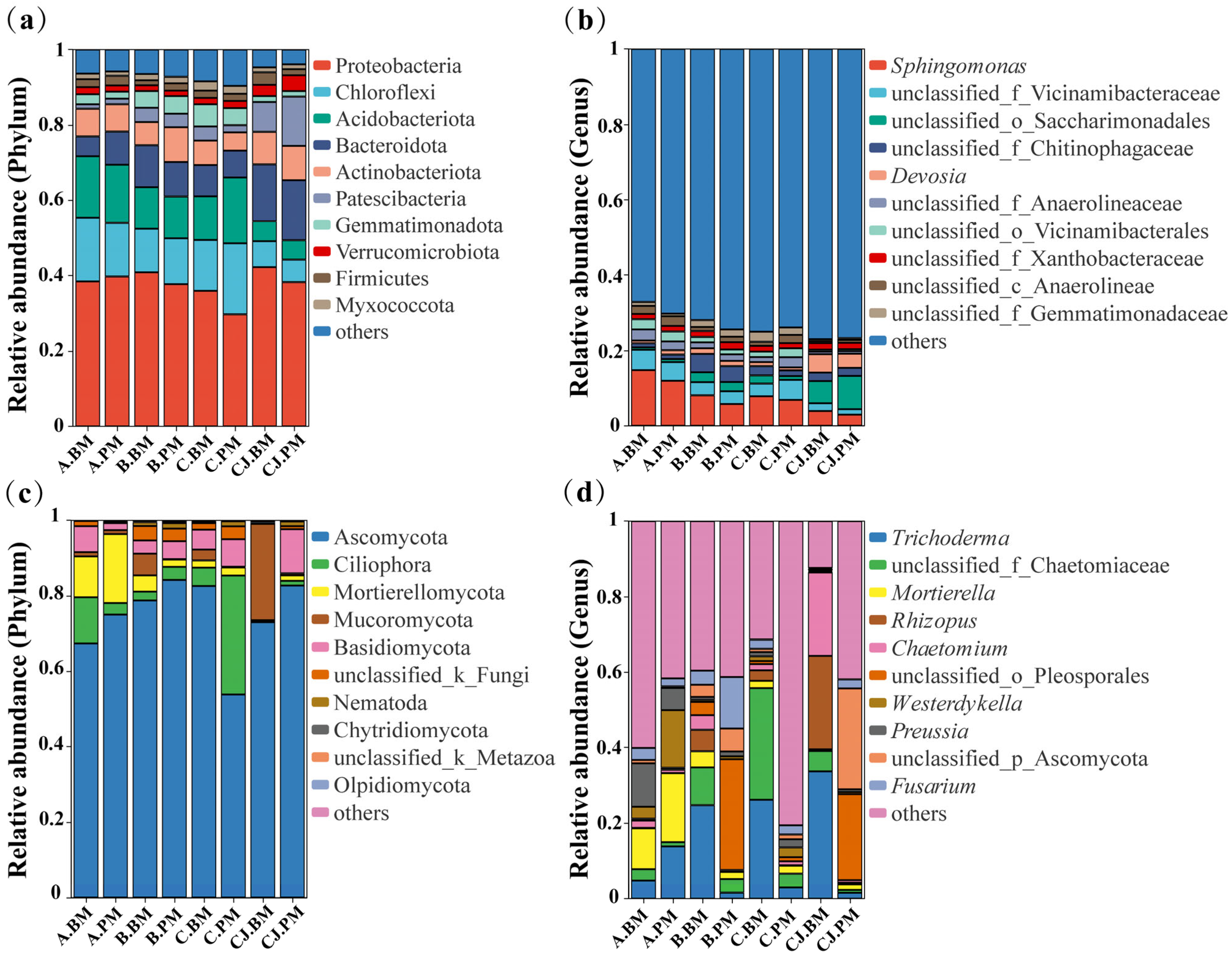
3.2.1. Microbial Community Structure
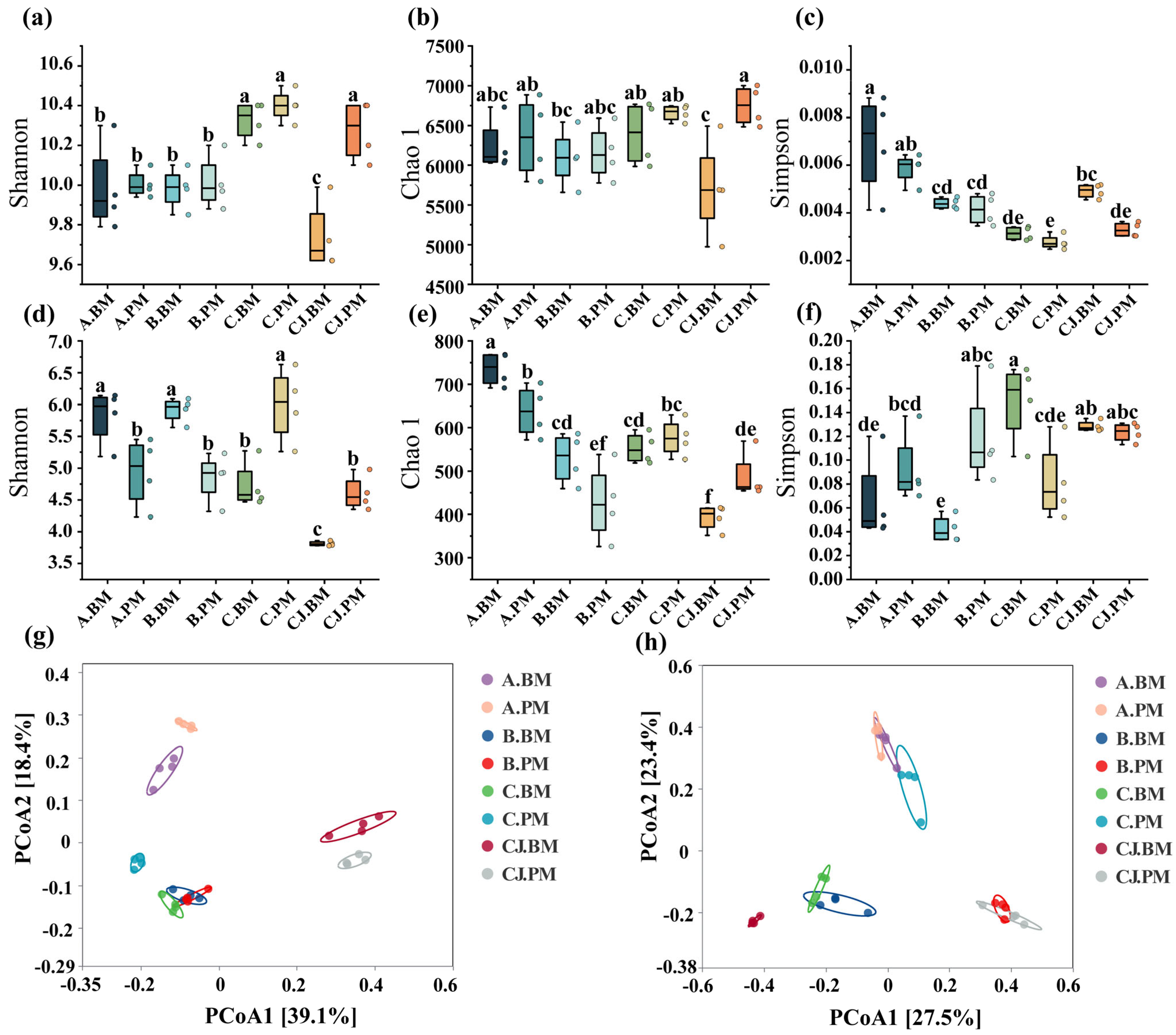
3.2.2. Alpha Diversity Analysis
3.2.3. Beta Diversity Analysis
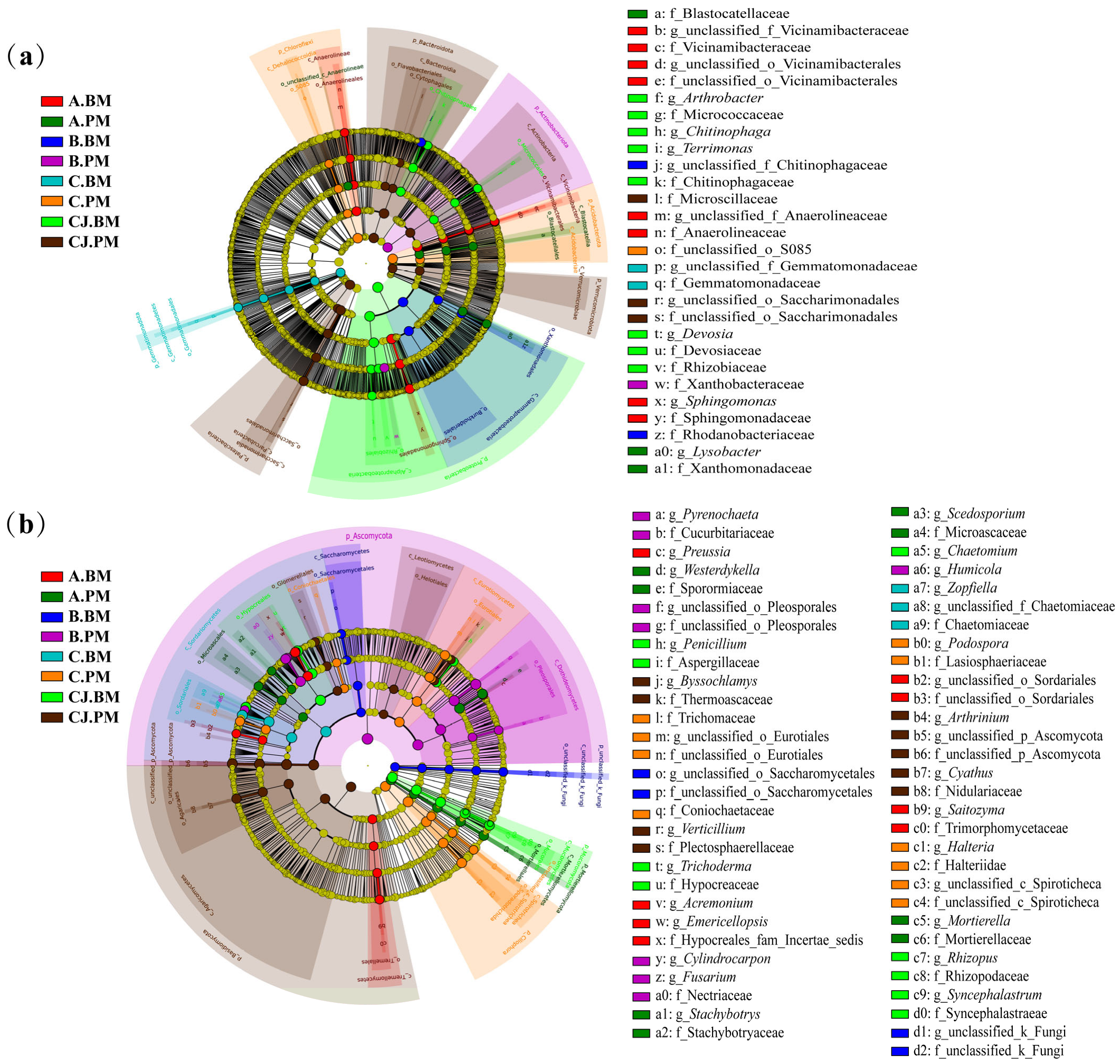
3.2.4. Species Difference Analysis
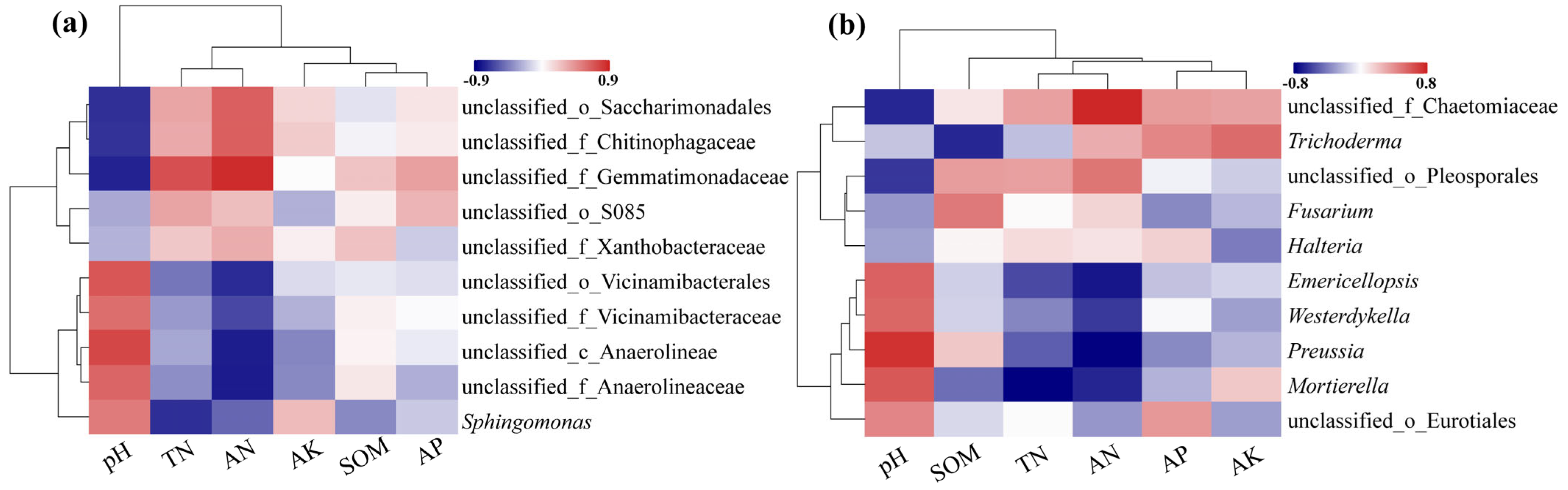
3.2.5. Environmental Factor Correlation Analysis
3.3. Analysis of Cultivable Bacterial Communities in Tomato Rhizosphere Soil and Nursery Substrate
3.3.1. Rhizosphere Bacterial Enumeration and Isolation Results
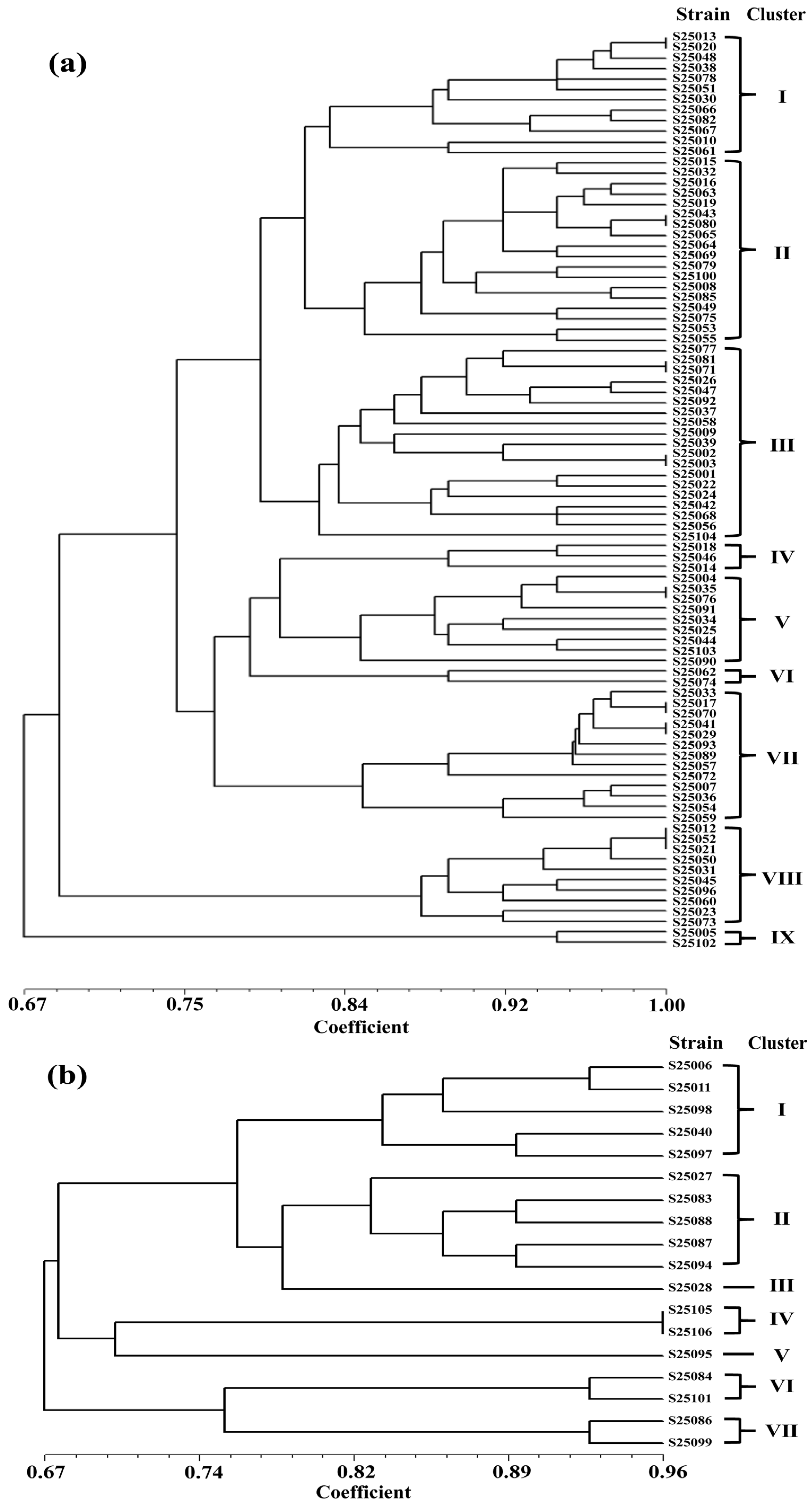
3.3.2. BOX-PCR Fingerprinting Analysis
3.4. Screening Results of Growth-Promoting Bacteria from Rhizosphere Soil and Nursery Substrate
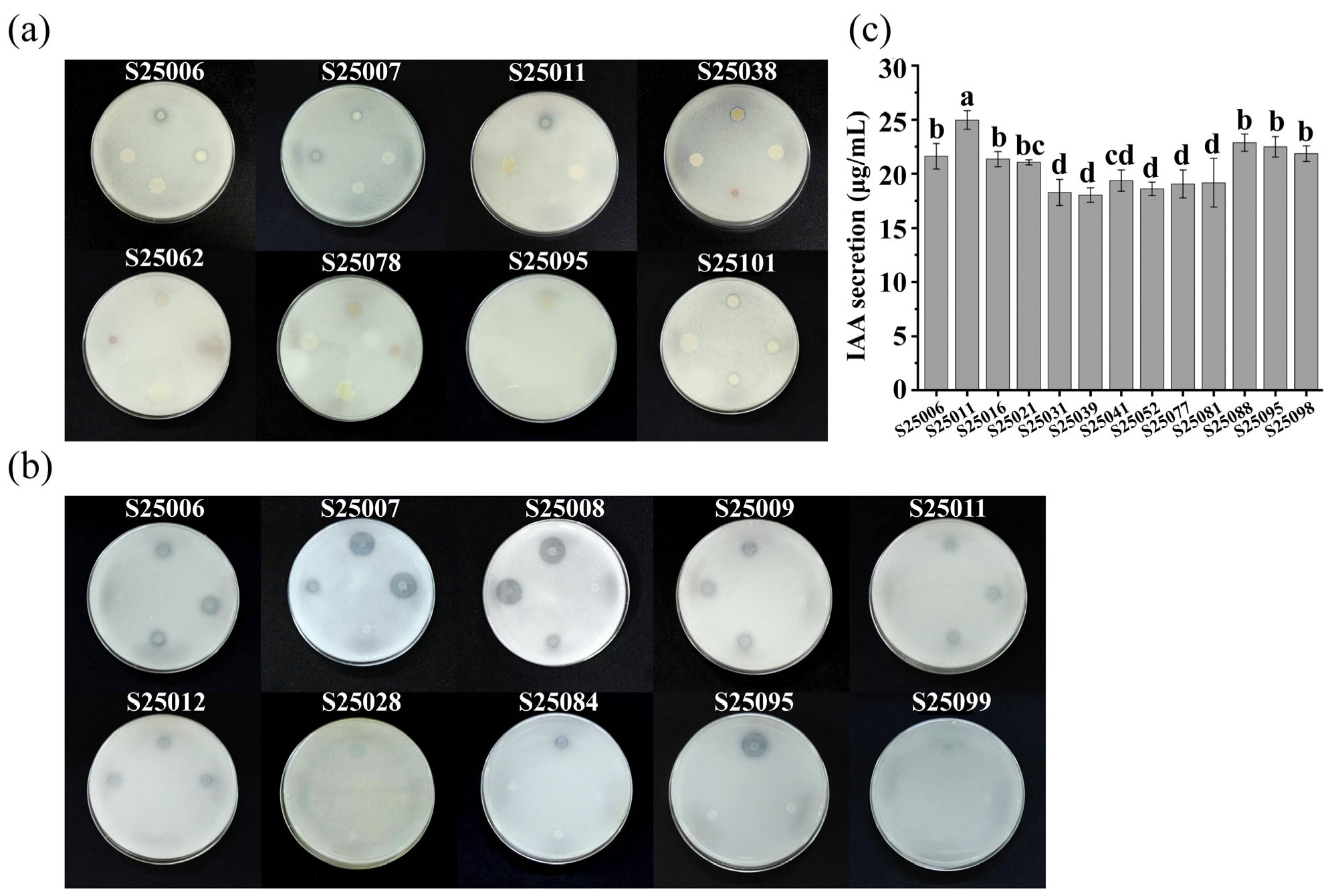
3.4.1. Screening Results of Phosphate-Solubilizing Bacteria
- Qualitative screening
- 2.
- Quantitative screening
3.4.2. Screening Results of Potassium-Solubilizing Bacteria
- Qualitative screening
- 2.
- Quantitative screening
3.4.3. Screening Results of IAA-Producing Bacteria
3.5. Pot Experiment Results
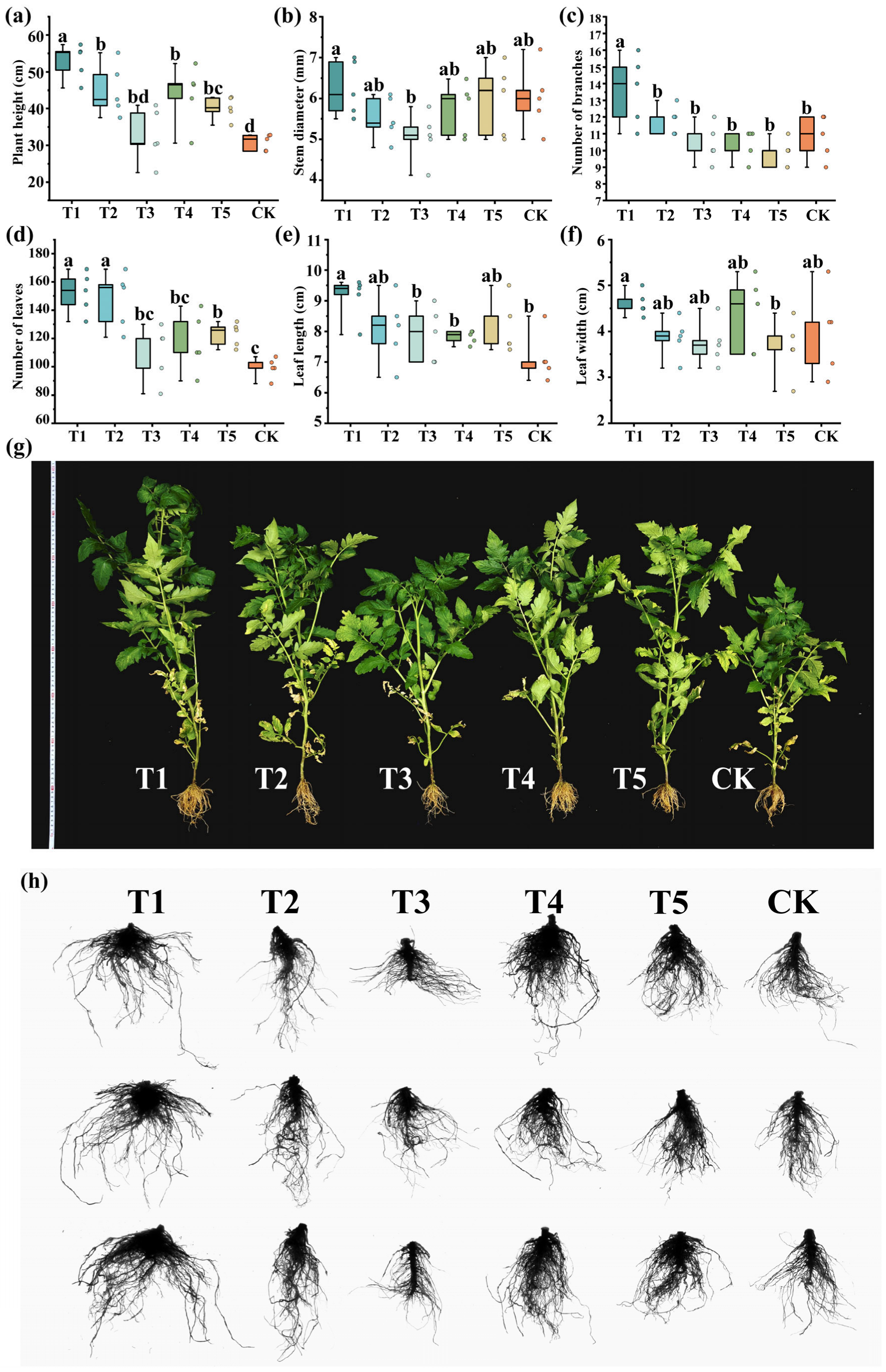
3.5.1. Agronomic Traits of Tomato Under Different Treatments
3.5.2. Root Architecture Under Different Treatments
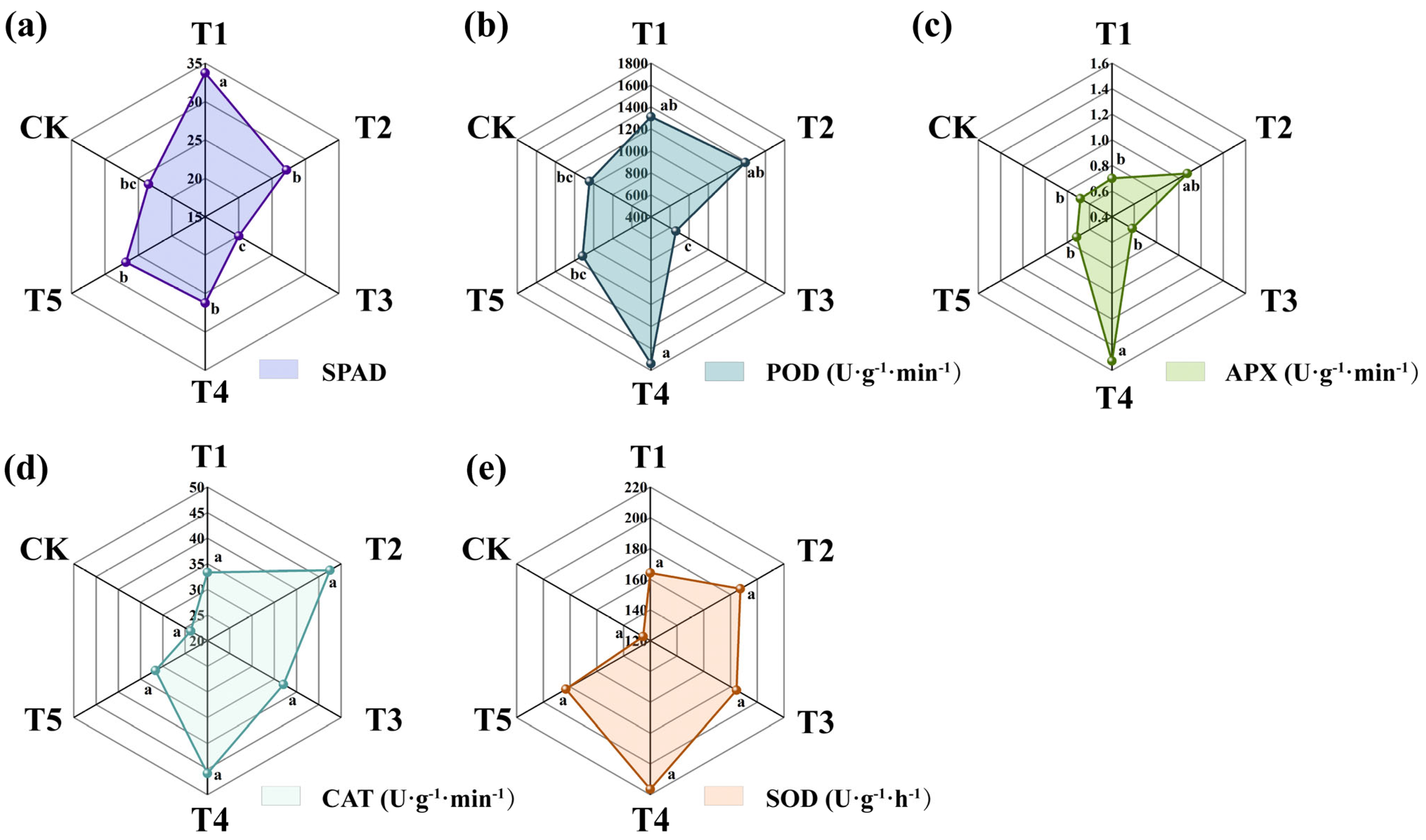
3.5.3. Leaf Physiological Indices Under Different Treatments
4. Discussion
5. Conclusions
Supplementary Materials
Author Contributions
Funding
Data Availability Statement
Acknowledgments
Conflicts of Interest
Abbreviations
| AN | Available nitrogen |
| AP | Available phosphorus |
| AK | Available potassium |
| CFU | Colony-forming unit |
| IAA | Indole-3-acetic acid |
| PKO | Pikovskaya medium |
| PGPR | Plant growth-promoting rhizobacteria |
| SOM | Soil organic matter |
| SPAD | Relative chlorophyll content |
| TN | Total nitrogen |
References
- Sun, L.; Chen, J.; Xiao, K.; Yang, W. Origin of the Domesticated Horticultural Species and Molecular Bases of Fruit Shape and Size Changes during the Domestication, Taking Tomato as an Example. Hortic. Plant J. 2017, 3, 125–132. [Google Scholar] [CrossRef]
- Carvalho, G.C.; de Camargo, B.A.F.; de Araújo, J.T.C.; Chorilli, M. Lycopene: From tomato to its nutraceutical use and its association with nanotechnology. Trends Food Sci. Technol. 2021, 118, 447–458. [Google Scholar] [CrossRef]
- Natalini, A.; Acciarri, N.; Cardi, T. Breeding for Nutritional and Organoleptic Quality in Vegetable Crops: The Case of Tomato and Cauliflower. Agriculture 2021, 11, 606. [Google Scholar] [CrossRef]
- FAOSTAT Database: Tomatoes Production Statistics of Site. Available online: https://www.fao.org/faostat/en/#data/QCL (accessed on 9 April 2026).
- Li, Y.; Wu, R.; Jia, S.; Fan, F.; Li, J.; Liu, S. Effects of Soil Fumigant-Mediated Changes in the Microbial Communities of Soil with Continuous Cropping on Tomato Yield and Soil-Borne Diseases. Microorganisms 2026, 14, 400. [Google Scholar] [CrossRef]
- Ma, M.; Taylor, P.W.J.; Chen, D.; Vaghefi, N.; He, J.-Z. Major Soilborne Pathogens of Field Processing Tomatoes and Management Strategies. Microorganisms 2023, 11, 263. [Google Scholar] [CrossRef]
- De Corato, U.; Patruno, L.; Avella, N.; Salimbeni, R.; Lacolla, G.; Cucci, G.; Crecchio, C. Soil management under tomato-wheat rotation increases the suppressive response against Fusarium wilt and tomato shoot growth by changing the microbial composition and chemical parameters. Appl. Soil Ecol. 2020, 154, 103601. [Google Scholar] [CrossRef]
- Vàsquez, H.; Ouhibi, C.; Forges, M.; Lizzi, Y.; Urban, L.; Aarrouf, J. Hormetic doses of UV-C light decrease the susceptibility of tomato plants to Botrytis cinerea infection. J. Phytopathol. 2020, 168, 524–532. [Google Scholar] [CrossRef]
- Cheng, H.; Zhang, D.; Ren, L.; Song, Z.; Li, Q.; Wu, J.; Fang, W.; Huang, B.; Yan, D.; Li, Y.; et al. Bio-activation of soil with beneficial microbes after soil fumigation reduces soil-borne pathogens and increases tomato yield. Environ. Pollut. 2021, 283, 117160. [Google Scholar] [CrossRef]
- Dury, J.; Schaller, N.; Garcia, F.; Reynaud, A.; Bergez, J.E. Models to support cropping plan and crop rotation decisions. A review. Agron. Sustain. Dev. 2012, 32, 567–580. [Google Scholar] [CrossRef]
- Takeda, F. System and Method to Improve the Penetration of Ultraviolet Light into Plant Beds. Patent 20250072337, 6 March 2025. [Google Scholar]
- Stager, A.; Mcgregor, G.; Berard, R. Flexible Diffuse-Reflective Smart Chamber for Effective Target Dosing of Complex Plant Surfaces and Methods of Use Thereof. Patent US20240382634A1, 21 November 2024. [Google Scholar]
- Saeed, M.F.; Shaheen, M.; Ahmad, I.; Zakir, A.; Nadeem, M.; Chishti, A.A.; Shahid, M.; Bakhsh, K.; Damalas, C.A. Pesticide exposure in the local community of Vehari District in Pakistan: An assessment of knowledge and residues in human blood. Sci. Total Environ. 2017, 587–588, 137–144. [Google Scholar] [CrossRef]
- Sim, J.X.; Drigo, B.; Doolette, C.L.; Vasileiadis, S.; Donner, E.; Karpouzas, D.G.; Lombi, E. Repeated applications of fipronil, propyzamide and flutriafol affect soil microbial functions and community composition: A laboratory-to-field assessment. Chemosphere 2023, 331, 138850. [Google Scholar] [CrossRef] [PubMed]
- Chen, Y.; Huang, X.; Yang, X.; Ye, W.; Wang, S.; Liu, M.; Su, X.; Shi, J.; Wang, Y.; Xu, J.; et al. Neglected contributions of residual herbicides at various levels on soybean root rot: Link with herbicide non-targeted soil microbial communities and functions. J. Environ. Manag. 2025, 393, 127137. [Google Scholar] [CrossRef]
- Parastesh, F.; Lajayer, B.A.; Dell, B. Plant Growth-Promoting Rhizobacteria and Biochar as Drought Defense Tools: A Comprehensive Review of Mechanisms and Future Directions. Curr. Issues Mol. Biol. 2025, 47, 1040. [Google Scholar] [CrossRef] [PubMed]
- Meng, K.; Ren, W.; Teng, Y.; Wang, B.; Han, Y.; Christie, P.; Luo, Y. Application of biodegradable seedling trays in paddy fields: Impacts on the microbial community. Sci. Total Environ. 2019, 656, 750–759. [Google Scholar] [CrossRef]
- Bu, S.; Nel, N.H.; Beavers, A.W.; Sugino, K.Y.; Alaimo, K.; Biernbaum, J.A.; Comstock, S.S. Influence of Two Root Media and Three Vermicompost Amendments on Bacterial Communities in a Greenhouse Container Garden Model System. Microorganisms 2025, 13, 1885. [Google Scholar] [CrossRef]
- Li, M.; Zhao, B.; Han, X.; Jiang, J.; Liu, C.; Liu, Y. Bioplastics (PC/GL) versus non-biodegradable plastics (PE/PP): Effects on growth and rhizosphere soil microbial-metabolomics of Houttuynia cordata. J. Hazard. Mater. 2025, 498, 139794. [Google Scholar] [CrossRef]
- Nambuthiri, S.; Fulcher, A.; Koeser, A.K.; Geneve, R.; Niu, G. Moving Toward Sustainability with Alternative Containers for Greenhouse and Nursery Crop Production: A Review and Research Update. HortTechnology 2015, 25, 8–16. [Google Scholar] [CrossRef]
- Li, H.; Wang, H.; Sun, W.; Wang, C.; Sun, H.; Yu, H. Proportion and Performance Optimization of Biomass Seedling Trays Based on Response Surface Analysis. Sustainability 2024, 16, 1103. [Google Scholar] [CrossRef]
- Zuluaga, M.Y.A.; Fattorini, R.; Cesco, S.; Pii, Y. Plant-microbe interactions in the rhizosphere for smarter and more sustainable crop fertilization: The case of PGPR-based biofertilizers. Front. Microbiol. 2024, 15, 1440978. [Google Scholar]
- Mohanty, P.; Singh, P.K.; Chakraborty, D.; Mishra, S.; Pattnaik, R. Insight Into the Role of PGPR in Sustainable Agriculture and Environment. Front. Sustain. Food Syst. 2021, 5, 667150. [Google Scholar] [CrossRef]
- Wang, Y.; Pei, Y.; Wang, X.; Dai, X.; Zhu, M. Antimicrobial metabolites produced by the plant growth-promoting rhizobacteria (PGPR): Bacillus and Pseudomonas. Adv. Agrochem. 2024, 3, 206–221. [Google Scholar] [CrossRef]
- Meena, M.; Swapnil, P.; Divyanshu, K.; Kumar, S.; Harish; Tripathi, Y.N.; Zehra, A.; Marwal, A.; Upadhyay, R.S. PGPR-mediated induction of systemic resistance and physiochemical alterations in plants against the pathogens: Current perspectives. J. Basic Microbiol. 2020, 60, 828–861. [Google Scholar] [CrossRef]
- Zhang, T.; Jian, Q.; Yao, X.; Guan, L.; Li, L.; Liu, F.; Zhang, C.; Li, D.; Tang, H.; Lu, L. Plant growth-promoting rhizobacteria (PGPR) improve the growth and quality of several crops. Heliyon 2024, 10, e31553. [Google Scholar] [CrossRef]
- Guo, M.; Gao, J.; Yang, M.; Liu, Y.; Fu, J.; Ma, R.; Xiong, F.; Zhang, T.; Liu, X.; Jin, Y.; et al. Synergistic effects of PGPR and organic fertilizer on soil fertility, enzyme activities, and microbial community composition in saline-alkali rice systems. Appl. Soil Ecol. 2025, 213, 106327. [Google Scholar] [CrossRef]
- Chi, Y.; Ma, X.; Chu, S.; You, Y.; Chen, X.; Wang, J.; Wang, R.; Zhang, X.; Zhang, D.; Zhao, T.; et al. Nitrogen cycle induced by plant growth-promoting rhizobacteria drives “microbial partners” to enhance cadmium phytoremediation. Microbiome 2025, 13, 113. [Google Scholar] [CrossRef] [PubMed]
- Sun, W.; Shahrajabian, M.H.; Soleymani, A. The Roles of Plant-Growth-Promoting Rhizobacteria (PGPR)-Based Biostimulants for Agricultural Production Systems. Plants 2024, 13, 613. [Google Scholar] [CrossRef]
- Torres-Solórzano, P.; la Cruz, H.R.-D.; Altamirano-Hernández, J.; Macías-Rodríguez, L.; Campos-García, J.; Luna-Cruz, A. Inoculation with Pseudomonas spp. in Solanum lycopersicum increases yield and fruit quality under nutrient shortage conditions. PeerJ 2025, 13, e19796. [Google Scholar] [CrossRef] [PubMed]
- Ge, A.-H.; Wang, E. Exploring the plant microbiome: A pathway to climate-smart crops. Cell 2025, 188, 1469–1485. [Google Scholar] [CrossRef] [PubMed]
- Liu, Y.; Yu, J.; Wang, Z.; Penttinen, P.; Yu, X.; Zhao, K.; Ma, M.; Xiang, Q.; Gu, Y.; Liu, H.; et al. Bio-Matrix Pot Addition Enhanced the Vegetation Process of Iron Tailings by Pennisetum giganteum. Front. Microbiol. 2022, 13, 825660. [Google Scholar] [CrossRef]
- Simmons, T.; Caddell, D.F.; Deng, S.; Coleman-Derr, D. Exploring the Root Microbiome: Extracting Bacterial Community Data from the Soil, Rhizosphere, and Root Endosphere. J. Vis. Exp. 2018, 135, e57561. [Google Scholar]
- Bao, S. Soil Agrochemical Analysis, 3rd ed.; China Agricultural: Beijing, China, 2000; pp. 154–196.
- Caporaso, J.G.; Lauber, C.L.; Walters, W.A.; Berg-Lyons, D.; Lozupone, C.A.; Turnbaugh, P.J.; Fierer, N.; Knight, R. Global patterns of 16S rRNA diversity at a depth of millions of sequences per sample. Proc. Natl. Acad. Sci. USA 2011, 108, 4516–4522. [Google Scholar] [CrossRef]
- Usyk, M.; Zolnik, C.P.; Patel, H.; Levi, M.H.; Burk, R.D. Novel ITS1 Fungal Primers for Characterization of the Mycobiome. mSphere 2017, 2, e00488-17. [Google Scholar] [CrossRef] [PubMed]
- Chen, S. Ultrafast one-pass FASTQ data preprocessing, quality control, and deduplication using fastp. iMeta 2023, 2, e107. [Google Scholar] [CrossRef]
- Callahan, B.J.; Mcmurdie, P.J.; Rosen, M.J.; Han, A.W.; Johnson, A.J.A.; Holmes, S.P. DADA2: High-resolution sample inference from Illumina amplicon data. Nat. Methods 2016, 13, 581–583. [Google Scholar] [CrossRef] [PubMed]
- Sanders, E.R. Aseptic Laboratory Techniques: Plating Methods. J. Vis. Exp. 2012, e3064. [Google Scholar] [CrossRef]
- Borba, M.P.; Ballarini, A.E.; Witusk, J.P.D.; Lavin, P.; Van Der Sand, S. Evaluation of BOX-PCR and REP-PCR as Molecular Typing Tools for Antarctic Streptomyces. Curr. Microbiol. 2020, 77, 3573–3581. [Google Scholar] [CrossRef]
- Moulton, V.; Spillner, A.; Wu, T. UPGMA and the normalized equidistant minimum evolution problem. Theor. Comput. Sci. 2018, 721, 1–15. [Google Scholar] [CrossRef]
- Pikovskaya, R. Mobilization of phosphorus in soil in connection with the vital activity of some microbial species. Mikrobiologiya 1948, 17, 362–370. [Google Scholar]
- Murphy, J.A.; Riley, J.P. A modified single solution method for the determination of phosphate in natural waters. Anal. Chim. Acta 1962, 27, 31–36. [Google Scholar] [CrossRef]
- Hu, X.; Chen, J.; Guo, J. Two Phosphate- and Potassium-solubilizing Bacteria Isolated from Tianmu Mountain, Zhejiang, China. World J. Microbiol. Biotechnol. 2006, 22, 983–990. [Google Scholar] [CrossRef]
- Lewin, S.Z. Flame Photometers. J. Chem. Educ. 1960, 37, A705. [Google Scholar] [CrossRef]
- Wang, Y.-Y.; Li, P.-S.; Zhang, B.-X.; Wang, Y.-P.; Meng, J.; Gao, Y.-F.; He, X.-M.; Hu, X.-M. Identification of phosphate-solubilizing microorganisms and determination of their phosphate-solubilizing activity and growth-promoting capability. BioResources 2020, 15, 2560–2578. [Google Scholar] [CrossRef]
- Kuzyakov, Y.; Blagodatskaya, E. Microbial hotspots and hot moments in soil: Concept & review. Soil Biol. Biochem. 2015, 83, 184–199. [Google Scholar]
- Zhuang, H.; Lin, Z.; Rao, C.; Chi, Y. Effects of Co-Pyrolyzed Biochar from Straw and Pig Manure on Soil Fertility and Rice Yield. China Rice 2026, 32, 30–38. [Google Scholar]
- Wu, Q.-Y.; Ma, R.; Wang, X.; Ma, Y.-N.; Wang, Z.-S.; Wei, H.-L.; Zhang, X.-X. Effects of the invasion of Ralstonia solanacearum on soil microbial community structure in Wuhan, China. mSphere 2024, 9, e00665-23. [Google Scholar] [CrossRef]
- Yang, B.; Zhang, C.; Guan, C.; Feng, X.; Yan, D.; Zhang, Z.; Qin, Y.; Xiong, S.; Zhang, W.; Cai, X.; et al. Analysis of the composition and function of rhizosphere microbial communities in plants with tobacco bacterial wilt disease and healthy plants. Microbiol. Spectr. 2024, 12, e00559-24. [Google Scholar] [CrossRef]
- Zheng, X.; Liu, B.; Zhu, Y.; Wang, J.; Zhang, H.; Wang, Z. Bacterial community diversity associated with the severity of bacterial wilt disease in tomato fields in southeast China. Can. J. Microbiol. 2019, 57, 538–549. [Google Scholar] [CrossRef]
- Li, H.; Wang, C.; Zou, H.; Sun, H.; Wang, H.; Yu, Z.; Shi, J.; Liu, X. Structural Design and Performance Test of Biomass-Based Nursery Trays. Sustainability 2022, 14, 9101. [Google Scholar] [CrossRef]
- Oyesola, O.L.; Tonjock, R.K.; Bello, A.O.; Taiwo, O.S.; Obembe, O.O. Trichoderma: A Review of its Mechanisms of Action in Plant Sustainable Disease Control. IOP Conf. Ser. Earth Environ. Sci. 2025, 1492, 012008. [Google Scholar] [CrossRef]
- Villavicencio-Vásquez, M.; Espinoza-Lozano, F.; Espinoza-Lozano, L.; Coronel-León, J. Biological control agents: Mechanisms of action, selection, formulation and challenges in agriculture. Front. Agron. 2025, 7, 1578915. [Google Scholar] [CrossRef]
- Diatta, A.A.; Manga, A.G.B.; Bassène, C.; Mbow, C.; Battaglia, M.; Sambou, M.; Babur, E.; Uslu, Ö.S. Sustainable Production of Tomato Using Fish Effluents Improved Plant Growth, Yield Components, and Yield in Northern Senegal. Agronomy 2023, 13, 2696. [Google Scholar] [CrossRef]
- Rinke, C.; Schwientek, P.; Sczyrba, A.; Ivanova, N.N.; Anderson, I.J.; Cheng, J.-F.; Darling, A.; Malfatti, S.; Swan, B.K.; Gies, E.A.; et al. Insights into the phylogeny and coding potential of microbial dark matter. Nature 2013, 499, 431–437. [Google Scholar] [CrossRef] [PubMed]
- Siddique, F.; Xiaofeng, X.; Zhe, N.; Mingxiu, Y.; Dawei, L.; Yuting, L.; Naibo, Y.; Younis, H.; Niaz, N.; Junhua, Z. Genetic Diversity and Population Structure of Phyllosphere-Associated Xanthomonas euvesicatoria Bacteria in Physalis pubescens Based on BOX-PCR and ERIC-PCR in China. Plant Pathol. J. 2025, 41, 64–77. [Google Scholar] [CrossRef]
- Zhu, L.; Xu, H.; Zhang, Y.; Fu, G.; Wu, P.Q.; Li, Y. BOX-PCR and PCR-DGGE analysis for bacterial diversity of a naturally fermented functional food (Enzyme®). Food Biosci. 2014, 5, 115–122. [Google Scholar] [CrossRef]
- Dukare, A.; Kannaujia, P.; Kale, S.; Indore, N.; Singh, R.K.; Ram, S. Plastic film and organic mulching increases rhizosphere microbial population, plant growth, and mineral uptake in low input grown tomato in the northwestern region of India. J. Plant Nutr. 2020, 44, 814–828. [Google Scholar] [CrossRef]
- Zhao, Q.; Wang, R.; Song, Y.; Lu, J.; Zhou, B.; Song, F.; Zhang, L.; Huang, Q.; Gong, J.; Lei, J.; et al. Pyoluteorin-deficient Pseudomonas protegens improves cooperation with Bacillus velezensis, biofilm formation, co-colonizing, and reshapes rhizosphere microbiome. npj Biofilms Microbiomes 2024, 10, 145. [Google Scholar] [CrossRef]
- Xu, X.; Dinesen, C.; Pioppi, A.; Kovács, Á.T.; Lozano-Andrade, C.N. Composing a microbial symphony: Synthetic communities for promoting plant growth. Trends Microbiol. 2025, 33, 738–751. [Google Scholar] [CrossRef]
- Jiang, M.; Delgado-Baquerizo, M.; Yuan, M.M.; Ding, J.; Yergeau, E.; Zhou, J.; Crowther, T.W.; Liang, Y. Home-based microbial solution to boost crop growth in low-fertility soil. New Phytol. 2023, 239, 752–765. [Google Scholar] [CrossRef]
- Timofeeva, A.M.; Galyamova, M.R.; Sedykh, S.E. Plant Growth-Promoting Bacteria of Soil: Designing of Consortia Beneficial for Crop Production. Microorganisms 2023, 11, 2864. [Google Scholar] [CrossRef]
- Liu, Y.; Jia, B.; Ren, Y.; Xun, W.; Stefanic, P.; Yang, T.; Miao, Y.; Zhang, N.; Yao, Y.; Zhang, R.; et al. Bacterial social interactions in synthetic Bacillus consortia enhance plant growth. iMeta 2025, 4, e70053. [Google Scholar] [CrossRef] [PubMed]
- Rahman, S.; Rahmani, A.A.; Aziz, M.A.; Ahmad, M.; Sivasankaran, S.K.; Hirt, H.; Masmoudi, K. The Enterobacter sp. SA187 stimulates stress-responsive genes and promotes salt and heat stress tolerance in tomato plants. Sci. Hortic. 2025, 342, 114038. [Google Scholar] [CrossRef]
- Lucas, J.A.; Garcia-Villaraco, A.; Montero-Palmero, M.B.; Montalban, B.; Solano, B.R.; Gutierrez-Mañero, F.J. Physiological and Genetic Modifications Induced by Plant-Growth-Promoting Rhizobacteria (PGPR) in Tomato Plants under Moderate Water Stress. Biology 2023, 12, 901. [Google Scholar] [CrossRef] [PubMed]
- Gowtham, H.G.; Singh, S.B.; Shilpa, N.; Aiyaz, M.; Nataraj, K.; Udayashankar, A.C.; Amruthesh, K.N.; Murali, M.; Poczai, P.; Gafur, A.; et al. Insight into Recent Progress and Perspectives in Improvement of Antioxidant Machinery upon PGPR Augmentation in Plants under Drought Stress: A Review. Antioxidants 2022, 11, 1763. [Google Scholar] [CrossRef] [PubMed]




| Sample ID | Growth Stage | Seedling Tray Type | Sample Type |
|---|---|---|---|
| A.BM | Seedling stage A | Biomass seedling tray | Rhizosphere soil |
| A.PM | Seedling stage A | Plastic seedling tray | Rhizosphere soil |
| B.BM | Early fruiting stage B | Biomass seedling tray | Rhizosphere soil |
| B.PM | Early fruiting stage B | Plastic seedling tray | Rhizosphere soil |
| C.BM | Peak fruiting stage C | Biomass seedling tray | Rhizosphere soil |
| C.PM | Peak fruiting stage C | Plastic seedling tray | Rhizosphere soil |
| CJ.BM | Peak fruiting stage C | Biomass seedling tray | Seedling substrate |
| CJ.PM | Peak fruiting stage C | Plastic seedling tray | Seedling substrate |
| Sample ID | pH | SOM (g/kg) | TN (g/kg) | AN (mg/kg) | AP (mg/kg) | AK (mg/kg) |
|---|---|---|---|---|---|---|
| A.BM | 6.28 ± 0.05 b | 23.59 ± 1.77 b | 1.45 ± 0.03 b | 97.87 ± 7.01 c | 52.96 ± 2.12 b | 212.16 ± 30.91 ab |
| A.PM | 6.41 ± 0.05 a | 20.3 ± 1.09 c | 1.46 ± 0.03 b | 93.31 ± 4.04 c | 58.99 ± 1.95 a | 212.91 ± 19.30 ab |
| B.BM | 6.1 ± 0.04 c | 19.55 ± 1.00 c | 1.47 ± 0.06 b | 117.75 ± 5.32 b | 73.69 ± 6.46 a | 220.58 ± 23.16 a |
| B.PM | 6.13 ± 0.04 c | 28.35 ± 0.40 a | 1.67 ± 0.05 a | 116.55 ± 3.98 b | 82.18 ± 4.48 b | 201.21 ± 12.56 ab |
| C.BM | 6.13 ± 0.01 c | 22.89 ± 0.20 b | 1.71 ± 0.04 a | 149.25 ± 4.06 a | 72.30 ± 11.55 a | 232.25 ± 17.15 a |
| C.PM | 6.13 ± 0.05 c | 23.3 ± 1.28 b | 1.66 ± 0.10 a | 114.21 ± 4.10 b | 81.40 ± 8.40 a | 179.54 ± 11.88 b |
| Sample ID | Number of Culturable Microorganisms (CFU/g) |
|---|---|
| A.BM | 2.53 × 10⁹ ± 8.90 × 10⁸ a |
| A.PM | 4.53 × 10⁸ ± 4.74 × 10⁸ b |
| B.BM | 4.46 × 10⁷ ± 1.49 × 10⁷ b |
| B.PM | 3.47 × 10⁷ ± 1.45 × 10⁷ b |
| C.BM | 9.30 × 10⁶ ± 5.00 × 10⁵ b |
| C.PM | 1.26 × 10⁷ ± 2.52 × 10⁵ b |
| CJ.BM | 2.46 × 10⁷ ± 5.57 × 10⁵ b |
| CJ.PM | 1.94 × 10⁷ ± 6.56 × 10⁵ b |
| Sample ID | Number of Strains | Strain ID |
|---|---|---|
| A.BM | 18 | S25001-S25018 |
| A.PM | 16 | S25019-S25034 |
| B.BM | 16 | S25035-S25050 |
| B.PM | 14 | S25051-S25064 |
| C.BM | 9 | S25065-S25073 |
| C.PM | 6 | S25074-S25079 |
| CJ.BM | 16 | S25080-S25095 |
| CJ.PM | 11 | S25096-S25106 |
| Cluster | Number of Strains | Representative Strain | Related Strain | Similarity |
|---|---|---|---|---|
| I | 12 | S25048 | Bacillus velezensis (MZ276294.1) | 100% |
| II | 18 | S25063 | Bacillus siamensis (MN176482.1) | 99.93% |
| III | 19 | S25037 | Bacillus zanthoxyli (OL875277.1) | 100% |
| IV | 3 | S25018 | Bacillus tequilensis (MN543830.1) | 100% |
| V | 9 | S25034 | Bacillus safensis (NR_113945.1) | 100% |
| VI | 2 | S25062 | Bacillus altitudinis (OQ618976.1) | 100% |
| VII | 13 | S25089 | Bacillus subtilis (MK267098.1) | 100% |
| VIII | 10 | S25023 | Priestia aryabhattai (PV810461.1) | 100% |
| IX | 2 | S25005 | Microbacterium paraoxydans (LT629770.1) | 99.93% |
| Cluster | Number of Strains | Representative Strain | Related Strain | Similarity |
|---|---|---|---|---|
| I | 5 | S25098 | Brucella anthropi (MH281752.1) | 100% |
| II | 5 | S25088 | Chryseobacterium sp. (OR496587.1) | 99.78% |
| III | 1 | S25028 | Pseudomonas oryzagri (MT514506.1) | 98.76% |
| IV | 2 | S25106 | Cupriavidus necator (MN117667.1) | 99.55% |
| V | 1 | S25095 | Rouxiella badensis subsp. acadiensis (CP060592.1) | 99.78% |
| VI | 2 | S25101 | Serratia marcescens (CP139958.1) | 99.64% |
| VII | 2 | S25099 | Serratia sarumanii (CP124750.1) | 99.64% |
| Strain ID | Halo Zone Diameter (D)/mm | Colony Diameter (d)/mm | EC Value (D/d) | Soluble Phosphorus/mg/L | Initial pH | pH After 5 d | ΔpH |
|---|---|---|---|---|---|---|---|
| S25006 | 8.50 ± 0.80 b | 3.50 ± 0.58 d | 2.51 ± 0.70 a | 195.52 ± 4.52 b | 6.80 ± 0.40 a | 4.94 ± 0.40 bcd | 1.86 ± 0.77 a |
| S25007 | 8.00 ± 0.77 b | 7.00 ± 0.67 bc | 1.14 ± 0.01 c | 18.82 ± 1.60 fg | 6.98 ± 0.31 a | 6.14 ± 0.51 a | 0.84 ± 0.47 b |
| S25011 | 7.75 ± 0.76 b | 4.00 ± 0.59 d | 1.95 ± 0.09 b | 206.47 ± 4.18 a | 5.95 ± 0.29 bc | 4.39 ± 0.38 d | 1.56 ± 0.09 a |
| S25038 | 9.20 ± 0.85 b | 8.00 ± 0.75 b | 1.15 ± 0.00 c | 52.04 ± 2.18 c | 6.03 ± 0.37 bc | 5.29 ± 0.49 abc | 0.74 ± 0.29 b |
| S25062 | 7.75 ± 0.78 b | 6.55 ± 0.64 c | 1.18 ± 0.03 c | 28.47 ± 1.56 e | 5.60 ± 0.31 c | 4.73 ± 0.42 cd | 0.87 ± 0.12 b |
| S25078 | 8.80 ± 0.89 b | 8.19 ± 0.82 b | 1.07 ± 0.01 c | 36.33 ± 2.05 d | 5.97 ± 0.31 bc | 5.61 ± 0.54 abc | 0.36 ± 0.23 b |
| S25095 | 13.20 ± 1.05 a | 11.89 ± 0.86 a | 1.11 ± 0.02 c | 15.34 ± 1.64 g | 6.75 ± 0.33 a | 4.80 ± 0.44 cd | 1.95 ± 0.14 a |
| S25101 | 8.50 ± 0.73 b | 7.95 ± 0.74 b | 1.07 ± 0.01 c | 23.31 ± 1.89 f | 6.42 ± 0.29 ab | 5.71 ± 0.55 ab | 0.71 ± 0.39 b |
| Strain ID | Halo Zone Diameter (D)/mm | Colony Diameter (d)/mm | EC Value (D/d) | Supernatant K+ Concentration/mg/L |
|---|---|---|---|---|
| S25006 | 10.20 ± 2.27 b | 4.15 ± 0.89 a | 2.60 ± 0.99 ab | 1.75 ± 0.31 abc |
| S25007 | 14.79 ± 1.94 a | 4.59 ± 0.97 a | 3.35 ± 0.89 a | 1.70 ± 0.37 abc |
| S25008 | 14.49 ± 2.25 a | 4.35 ± 0.89 a | 3.46 ± 0.92 a | 2.35 ± 0.45 a |
| S25009 | 8.39 ± 1.95 bcd | 4.35 ± 0.95 a | 2.05 ± 0.85 b | 1.15 ± 0.33 c |
| S25011 | 7.90 ± 2.32 bcde | 4.25 ± 0.86 a | 1.95 ± 0.65 b | 1.45 ± 0.36 bc |
| S25012 | 8.56 ± 2.14 bc | 4.54 ± 0.81 a | 1.89 ± 0.07 b | 2.35 ± 0.44 a |
| S25028 | 5.90 ± 1.93 e | 4.62 ± 1.13 a | 1.36 ± 0.52 b | 1.25 ± 0.30 c |
| S25084 | 6.85 ± 1.89 cde | 4.28 ± 0.94 a | 1.61 ± 0.13 b | 1.40 ± 0.41 bc |
| S25095 | 13.85 ± 2.40 a | 4.25 ± 1.01 a | 3.35 ± 0.54 a | 2.10 ± 0.51 ab |
| S25099 | 6.10 ± 1.76 de | 4.30 ± 0.98 a | 1.50 ± 0.56 b | 1.20 ± 0.39 c |
| Treatment | Total Root Length (cm) | Root Tip Number | Mean Diameter (mm) | Surface Area (cm2) | Fractal Dimension |
|---|---|---|---|---|---|
| T1 | 634.37 ± 111.40 a | 316.33 ± 42.52 a | 1.86 ± 0.07 a | 65.60 ± 12.51 a | 1.72 ± 0.03 a |
| T2 | 407.90 ± 72.21 b | 232.33 ± 39.80 b | 1.56 ± 0.20 a | 36.03 ± 2.98 cd | 1.73 ± 0.02 a |
| T3 | 347.03 ± 53.00 b | 157.33 ± 17.62 c | 1.50 ± 0.13 a | 29.04 ± 3.45 d | 1.64 ± 0.01 b |
| T4 | 480.42 ± 61.71 b | 215.00 ± 13.00 bc | 1.83 ± 0.14 a | 49.23 ± 9.74 b | 1.68 ± 0.05 ab |
| T5 | 436.60 ± 79.49 b | 220.67 ± 52.16 bc | 1.77 ± 0.36 a | 42.40 ± 3.30 bc | 1.68 ± 0.03 ab |
| CK | 376.77 ± 5.64 b | 171.00 ± 13.89 bc | 1.59 ± 0.12 a | 34.46 ± 2.41 cd | 1.69 ± 0.05 ab |
Disclaimer/Publisher’s Note: The statements, opinions and data contained in all publications are solely those of the individual author(s) and contributor(s) and not of MDPI and/or the editor(s). MDPI and/or the editor(s) disclaim responsibility for any injury to people or property resulting from any ideas, methods, instructions or products referred to in the content. |
© 2026 by the authors. Licensee MDPI, Basel, Switzerland. This article is an open access article distributed under the terms and conditions of the Creative Commons Attribution (CC BY) license.
Share and Cite
Zhang, J.; Zhang, X.; Chen, Q. Biomass Seedling Trays Drive Rhizosphere Microbiome Restructuring and PGPR Enrichment in Tomato. Plants 2026, 15, 1486. https://doi.org/10.3390/plants15101486
Zhang J, Zhang X, Chen Q. Biomass Seedling Trays Drive Rhizosphere Microbiome Restructuring and PGPR Enrichment in Tomato. Plants. 2026; 15(10):1486. https://doi.org/10.3390/plants15101486
Chicago/Turabian StyleZhang, Jiayun, Xiangyu Zhang, and Qiang Chen. 2026. "Biomass Seedling Trays Drive Rhizosphere Microbiome Restructuring and PGPR Enrichment in Tomato" Plants 15, no. 10: 1486. https://doi.org/10.3390/plants15101486
APA StyleZhang, J., Zhang, X., & Chen, Q. (2026). Biomass Seedling Trays Drive Rhizosphere Microbiome Restructuring and PGPR Enrichment in Tomato. Plants, 15(10), 1486. https://doi.org/10.3390/plants15101486