Growth and Hormonal Responses to Salicylic Acid and Calcium Chloride Seed Priming in Domestic and Wild Salt-Tolerant Barley Species Under Saline Conditions

 , ,
, ,  , and
, and 
Abstract
1. Introduction
2. Results
2.1. Plant Biomass
2.2. Hormonal Profiling
2.2.1. Salicylic Acid
2.2.2. Abscisic Acid
2.2.3. Indole-3-Acetic Acid
2.2.4. 1-Aminocylopropane-1-Carboxylic Acid
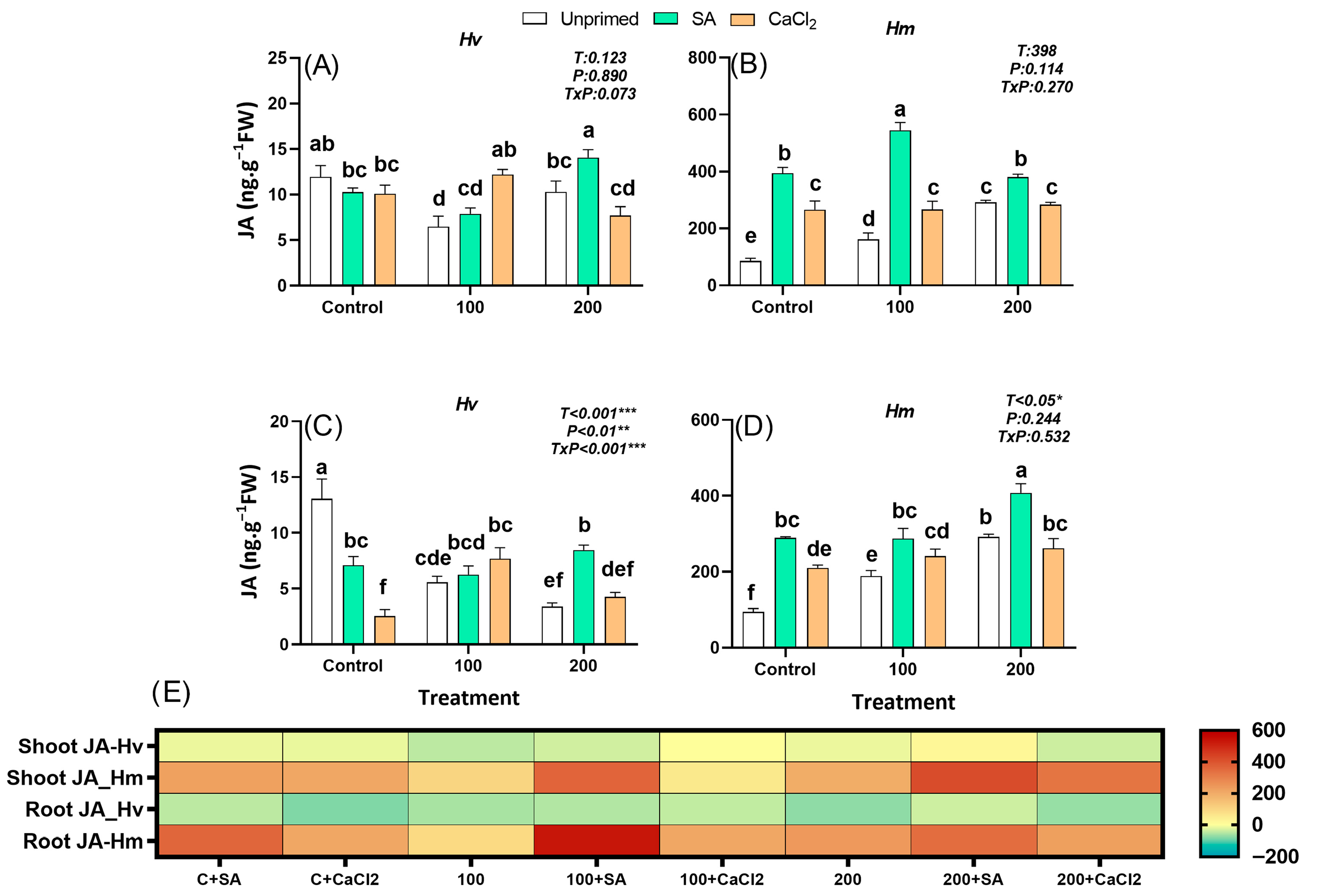
2.2.5. Jasmonic Acid
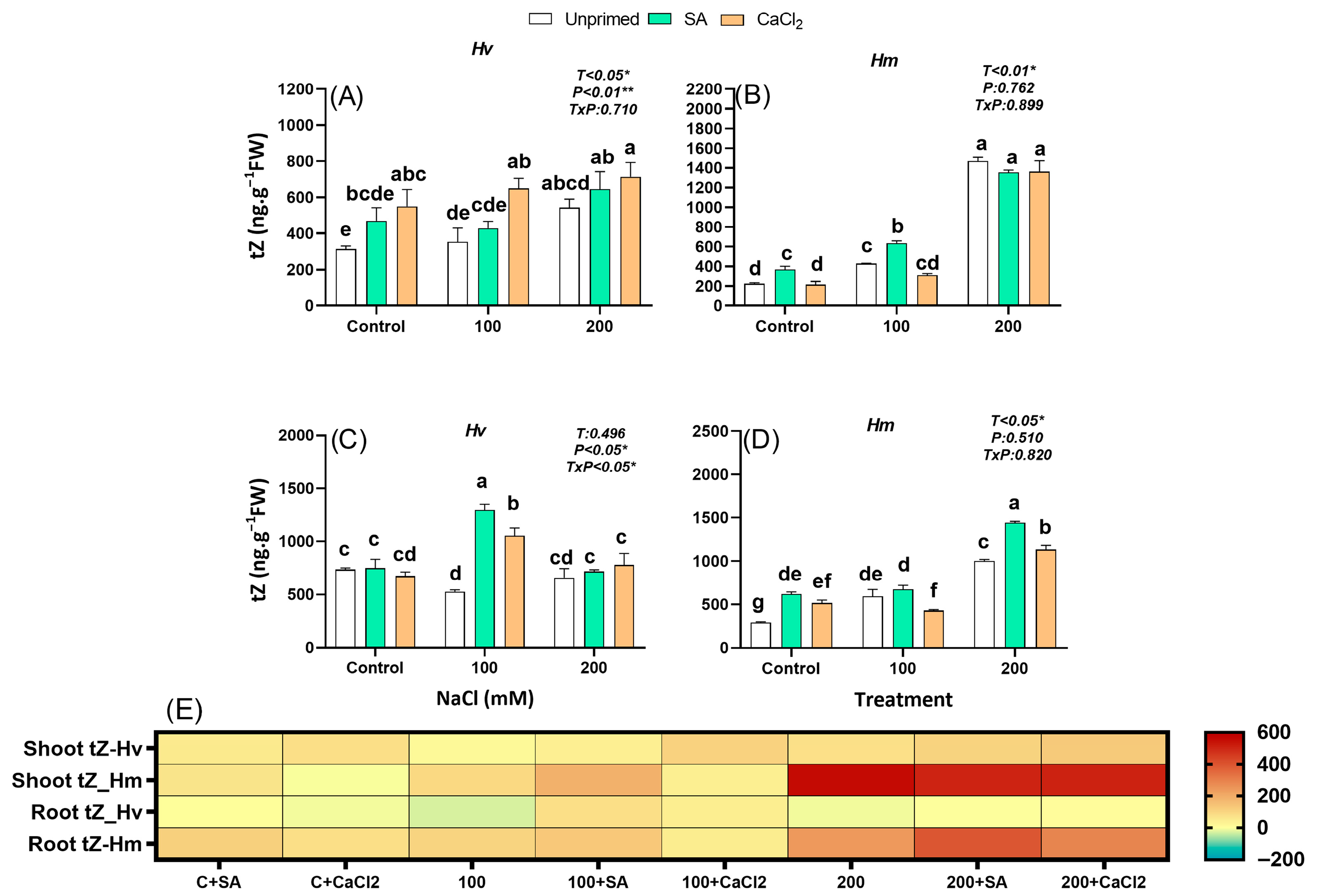
2.2.6. Trans-Zeatin
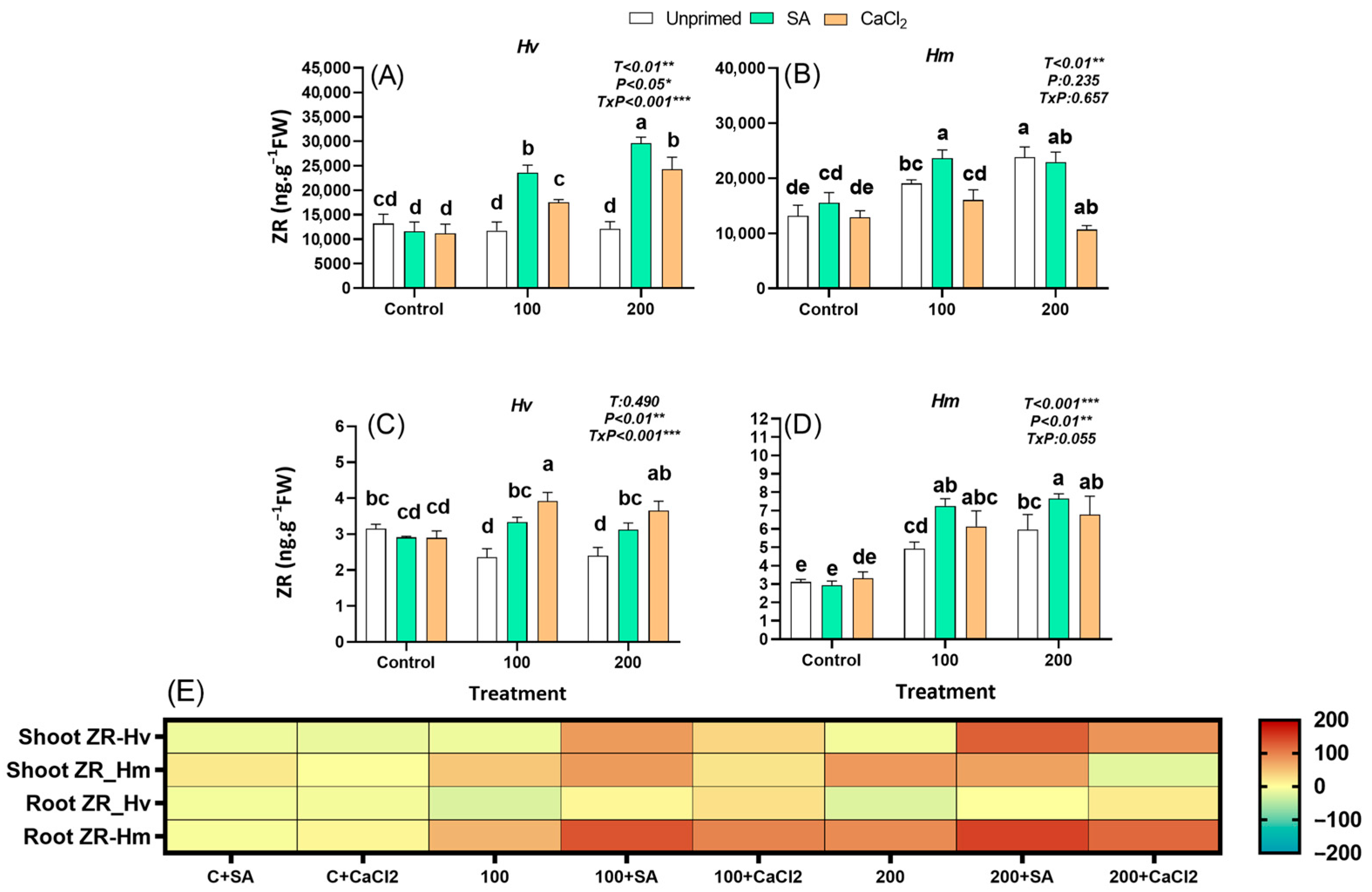
2.2.7. Zeatin Riboside
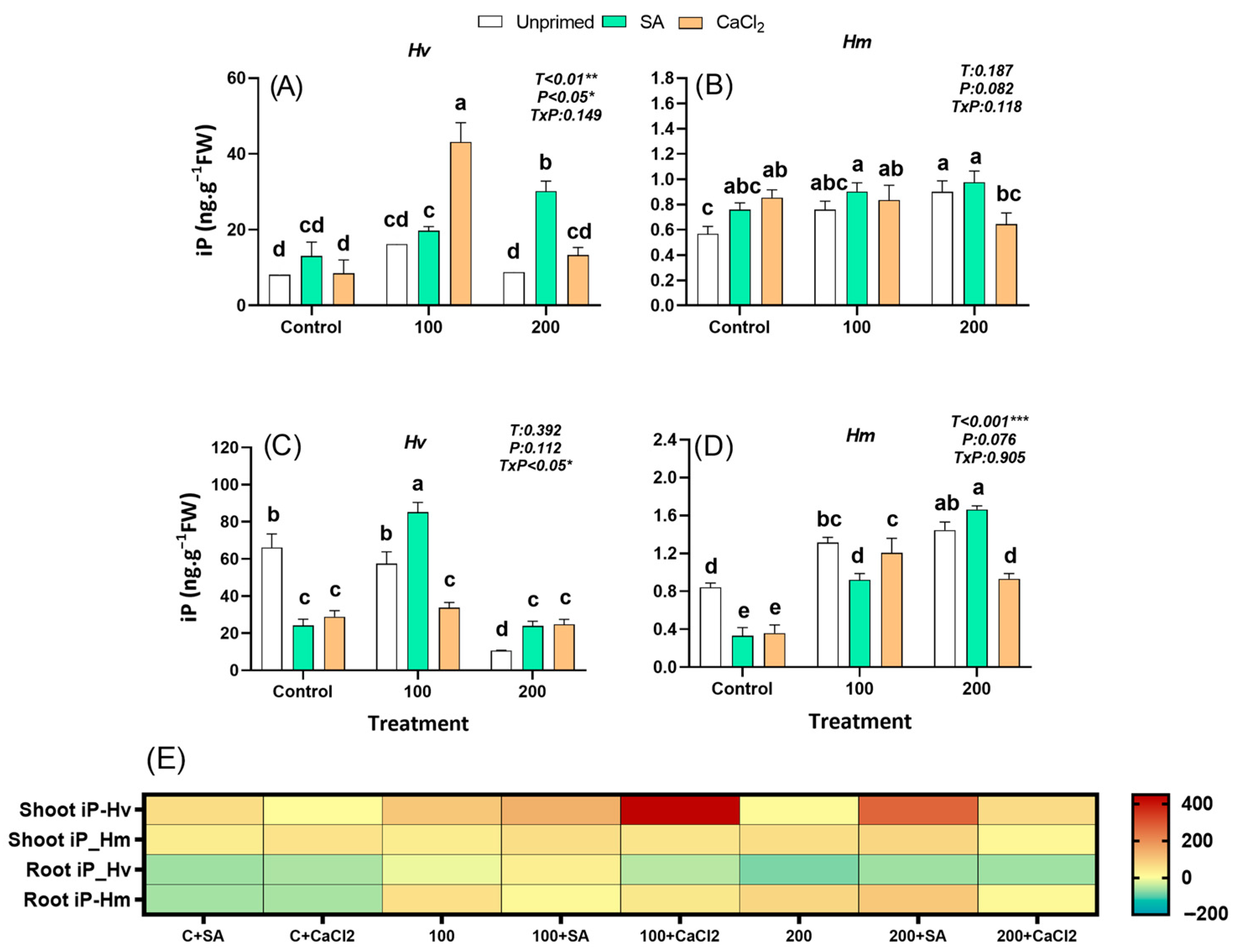
2.2.8. Isopentenyl Adenine
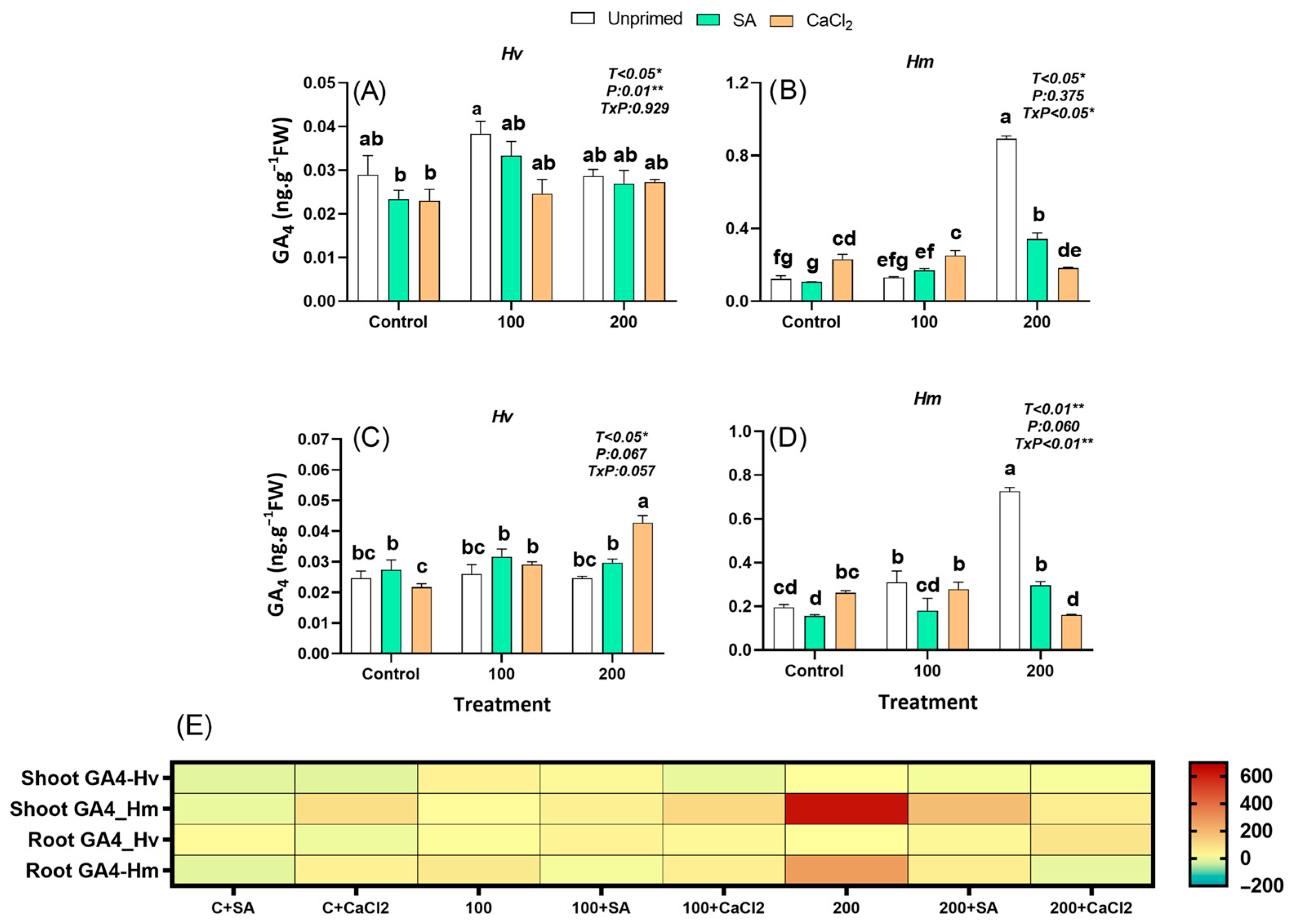
2.2.9. Gibberellin A4
2.3. Correlation and Principal Component Analyses
2.3.1. Pairwise Correlations Across Treatments and Species
2.3.2. Principal Component Analysis
3. Discussion
4. Materials and Methods
4.1. Plant Material
4.2. Experimental Design and Growth Conditions
4.3. Fresh Biomass Determination
4.4. Phytohormone Extraction and Analysis
4.5. Statistical Analysis
5. Conclusions
Supplementary Materials
Author Contributions
Funding
Data Availability Statement
Acknowledgments
Conflicts of Interest
Abbreviations
| Hv | Hordeum vulgare |
| Hm | Hordeum maritimum |
| ABA | abscisic acid |
| IAA | indole-3-acetic acid |
| JA | jasmonic acid |
| tZ | trans-zeatin |
| ZR | zeatin riboside |
| iP | isopentenyl adenine |
| GA4 | gibberellin A4 |
| ACC | 1-aminocyclopropane-1-carboxylic acid |
| TFW | total fresh weight |
| SFW | shoot fresh weight |
| RFW | root fresh weight |
| R/S | root-to-shoot ratio |
References
- Munns, R.; Gilliham, M. Salinity tolerance of crops—What is the cost? New Phytol. 2015, 208, 668–673. [Google Scholar] [CrossRef] [PubMed]
- Munns, R.; Tester, M. Mechanisms of salinity tolerance. Annu. Rev. Plant Biol. 2008, 59, 651–681. [Google Scholar] [CrossRef]
- Ben-Youssef, R.; Jelali, N.; Martínez-Andújar, C.; Abdelly, C.; Hernández, J.A. Salicylic acid and calcium chloride seed priming: A prominent frontier in inducing mineral nutrition balance and antioxidant system capacity to enhance the tolerance of barley plants to salinity. Plants 2024, 13, 1268. [Google Scholar] [CrossRef]
- Ghanem, M.E.; Albacete, A.; Martínez-Andújar, C.; Acosta, M.; Romero-Aranda, R.; Dodd, I.C.; Lutts, S.; Pérez-Alfocea, F. Hormonal changes during salinity-induced leaf senescence in tomato (Solanum lycopersicum L.). J. Exp. Bot. 2008, 59, 3039–3050. [Google Scholar] [CrossRef]
- Albacete, A.; Ghanem, M.E.; Martínez-Andújar, C.; Acosta, M.; Sanchez-Bravo, J.; Martinez, V.; Lutts, S.; Dodd, I.C.; Perez-Alfocea, F. Hormonal changes in relation to biomass partitioning and shoot growth impairment in salinized tomato (Solanum lycopersicum L.) Plants. J. Exp. Bot. 2008, 59, 4119–4131. [Google Scholar] [CrossRef]
- Khalloufi, M.; Martínez-Andújar, C.; Lachaâl, M.; Karray-Bouraoui, N.; Pérez-Alfocea, F.; Albacete, A. The interaction between foliar GA application and arbuscular mycorrhizal fungi inoculation improves growth in salinized tomato (Solanum lycopersicum L.) plants by modifying the hormonal balance. J. Plant Physiol. 2017, 214, 134–144. [Google Scholar] [CrossRef]
- Prerostova, S.; Dobrev, P.I.; Gaudinova, A.; Hosek, P.; Soudek, P.; Knirsch, V.; Vankova, R. Hormonal dynamics during salt stress responses of salt-sensitive Arabidopsis thaliana and salt-tolerant Thellungiella salsuginea. Plant Sci. 2017, 264, 188–198. [Google Scholar] [CrossRef]
- Albacete, A.; Ghanem, M.E.; Dodd, I.C.; Pérez-Alfocea, F. Principal component analysis of hormone profiling data suggests an important role for cytokinins in regulating leaf growth and senescence of salinized tomato. Plant Signal. Behav. 2010, 5, 45–48. [Google Scholar] [CrossRef] [PubMed]
- Rajasheker, G.; Jawahar, G.; Jalaja, N.; Kumar, S.A.; Kumari, P.H.; Punita, D.L.; Karumanchi, A.R.; Reddy, P.S.; Rathnagiri, P.; Sreenivasulu, N.; et al. Role and regulation of osmolytes and ABA interaction in salt and drought stress tolerance. In Plant Signaling Molecules: Role and Regulation Under Stressful Environments; Woodhead Publishing: Sawston, UK, 2019; pp. 417–436. [Google Scholar] [CrossRef]
- Rehman, M.; Saeed, M.S.; Fan, X.; Salam, A.; Munir, R.; Yasin, M.U.; Khan, A.R.; Muhammad, S.; Ali, B.; Ali, I.; et al. The multifaceted role of jasmonic acid in plant stress mitigation: An overview. Plants 2023, 12, 3982. [Google Scholar] [CrossRef]
- Pérez-Llorca, M.; Pollmann, S.; Müller, M. Ethylene and jasmonates signaling network mediating secondary metabolites under abiotic stress. Int. J. Mol. Sci. 2023, 24, 5990. [Google Scholar] [CrossRef] [PubMed]
- Ueguchi-Tanaka, M. Gibberellin metabolism and signaling. Biosci. Biotechnol. Biochem. 2023, 87, 1093–1101. [Google Scholar] [CrossRef]
- Castro-Camba, R.; Sánchez, C.; Vidal, N.; Vielba, J.M. Plant development and crop yield: The role of gibberellins. Plants 2022, 11, 2650. [Google Scholar] [CrossRef]
- Gao, J.; Zhuang, S.; Zhang, W. Advances in plant auxin biology: Synthesis, metabolism, signaling, interaction with other hormones, and roles under abiotic stress. Plants 2024, 13, 2523. [Google Scholar] [CrossRef]
- Hai, N.N.; Chuong, N.N.; Tu, N.H.C.; Kisiala, A.; Hoang, X.L.T.; Thao, N.P. Role and regulation of cytokinins in plant response to drought stress. Plants 2020, 9, 422. [Google Scholar] [CrossRef]
- Wahid, N.; Wahab, S.; Khan, M.N.; Ullah, B.; Razzaq, A.; Kaplan, A.; Hayat, K.; Ozdemir, F.A.; Ahmad, Q. Phytohormonal mechanisms for resilience against salinity stress in oilseed crops. In Oilseed Crops Under Abiotic Stress: Mitigation Strategies and Future Perspectives; Springer Nature: Singapore, 2025; pp. 283–319. [Google Scholar] [CrossRef]
- Banja, K.S.; Oyetunji, O.J. Salt stress in crops: Tolerance mechanisms and emerging amelioration strategies. In Plant Resilience to Abiotic Stress; IntechOpen: London, UK, 2025. [Google Scholar] [CrossRef]
- Liu, C.; Jiang, X.; Yuan, Z.; Da¸sgan, Y.D.; Liu, C.; Jiang, X.; Yuan, Z. Plant responses and adaptations to salt stress: A review. Horticulturae 2024, 10, 1221. [Google Scholar] [CrossRef]
- El Sabagh, A.; Islam, M.S.; Skalicky, M.; Ali Raza, M.; Singh, K.; Anwar Hossain, M.; Hossain, A.; Mahboob, W.; Iqbal, M.A.; Ratnasekera, D.; et al. Salinity stress in wheat (Triticum aestivum L.) in the changing climate: Adaptation and management strategies. Front. Agron. 2021, 3, 661932. [Google Scholar] [CrossRef]
- Yu, Z.; Duan, X.; Luo, L.; Dai, S.; Ding, Z.; Xia, G. How plant hormones mediate salt stress responses. Trends Plant Sci. 2020, 25, 1117–1130. [Google Scholar] [CrossRef] [PubMed]
- Ben-Youssef, R.; Jelali, N.; Boukari, N.; Albacete, A.; Martinez, C.; Alfocea, F.P.; Abdelly, C. The efficiency of different priming agents for improving germination and early seedling growth of local tunisian barley under salinity stress. Plants 2021, 10, 2264. [Google Scholar] [CrossRef]
- Huang, L.; Kuang, L.; Wu, L.; Shen, Q.; Han, Y.; Jiang, L.; Wu, D.; Zhang, G. The HKT transporter HvHKT1;5 negatively regulates salt tolerance. Plant Physiol. 2020, 182, 584–596. [Google Scholar] [CrossRef] [PubMed]
- Ismail, A.M.; Horie, T. Genomics, physiology, and molecular breeding approaches for improving salt tolerance. Annu. Rev. Plant Biol. 2017, 68, 405–434. [Google Scholar] [CrossRef] [PubMed]
- Maaroufi-Dguimi, H.; Mohammed, S.G.; Abdalgadir, H.; Omari Al Zahrani, F. Effects of chemical seed priming on germination performance and seedling growth of Lycopersicon esculentum (Mill.) under salt stress. Agron. Res. 2024, 22, 672–684. [Google Scholar] [CrossRef]
- Hussain, S.; Ahmed, S.; Akram, W.; Li, G.; Yasin, N.A. Selenium seed priming enhanced the growth of salt-stressed Brassica rapa L. through improving plant nutrition and the antioxidant system. Front. Plant Sci. 2023, 13, 1050359. [Google Scholar] [CrossRef]
- Saxena, R.K.M. Seed Priming: An effective approach to improve seed germination and abiotic stress tolerance. Indian J. Nat. Sci. 2021, 12, 32346–32357. [Google Scholar]
- Karimi, M.R.; Sabokdast, M.; Korang Beheshti, H.; Abbasi, A.R.; Bihamta, M.R. Seed priming with salicylic acid enhances salt stress tolerance by boosting antioxidant defense in Phaseolus vulgaris genotypes. BMC Plant Biol. 2025, 25, 489. [Google Scholar] [CrossRef] [PubMed]
- Chen, X.; Zhang, R.; Li, B.; Cui, T.; Liu, C.; Liu, C.; Chen, B.; Zhou, Y. Alleviation of oxidative damage induced by CaCl2 priming is related to osmotic and ion stress reduction rather than enhanced antioxidant capacity during germination under salt stress in sorghum. Front. Plant Sci. 2022, 13, 881039. [Google Scholar] [CrossRef]
- Al-Huqail, A.A.; Saleem, M.H.; Ali, B.; Azeem, M.; Mumtaz, S.; Yasin, G.; Marc, R.A.; Ali, S. Efficacy of priming wheat (Triticum aestivum) seeds with a benzothiazine derivative to Improve drought stress tolerance. Funct. Plant Biol. 2023, 50, 915–931. [Google Scholar] [CrossRef]
- Torun, H.; Novák, O.; Mikulík, J.; Strnad, M.; Ayaz, F.A. The effects of exogenous salicylic acid on endogenous phytohormone status in Hordeum vulgare L. under salt stress. Plants 2022, 11, 618. [Google Scholar] [CrossRef] [PubMed]
- Hongna, C.; Leyuan, T.; Junmei, S.; Xiaori, H.; Xianguo, C. Exogenous salicylic acid signal reveals an osmotic regulatory role in priming the seed germination of Leymus chinensis under salt-alkali stress. Environ. Exp. Bot. 2021, 188, 104498. [Google Scholar] [CrossRef]
- Kissoudis, C.; van de Wiel, C.; Visser, R.G.F.; van der Linden, G. Enhancing crop resilience to combined abiotic and biotic stress through the dissection of physiological and molecular crosstalk. Front. Plant Sci. 2014, 5, 207. [Google Scholar] [CrossRef]
- Yang, S.; Hai, F.I.; Nghiem, L.D.; Price, W.E.; Roddick, F.; Moreira, M.T.; Magram, S.F. Understanding the factors controlling the removal of trace organic contaminants by white-rot fungi and their lignin modifying enzymes: A critical review. Bioresour. Technol. 2013, 141, 97–108. [Google Scholar] [CrossRef] [PubMed]
- Ferchichi, S.; Hessini, K.; Dell’Aversana, E.; D’Amelia, L.; Woodrow, P.; Ciarmiello, L.F.; Fuggi, A.; Carillo, P. Hordeum vulgare and Hordeum maritimum respond to extended salinity stress displaying different temporal accumulation pattern of metabolites. Funct. Plant Biol. 2018, 45, 1096–1109. [Google Scholar] [CrossRef] [PubMed]
- Dell’aversana, E.; Hessini, K.; Ferchichi, S.; Fusco, G.M.; Woodrow, P.; Ciarmiello, L.F.; Abdelly, C.; Carillo, P. Salinity duration differently modulates physiological parameters and metabolites profile in roots of two contrasting barley genotypes. Plants 2021, 10, 307. [Google Scholar] [CrossRef]
- Hussain, S.; Nisar, F.; Gul, B.; Hameed, A. Seed Priming with melatonin improved salinity tolerance of halophytes during early life-cycle stages. Plant Growth Regul. 2024, 103, 351–368. [Google Scholar] [CrossRef]
- Acosta-Motos, J.R.; Ortuño, M.F.; Bernal-Vicente, A.; Diaz-Vivancos, P.; Sanchez-Blanco, M.J.; Hernandez, J.A. Plant responses to salt stress: Adaptive mechanisms. Agronomy 2017, 7, 18. [Google Scholar] [CrossRef]
- Gharaghanipor, N.; Arzani, A.; Rahimmalek, M.; Ravash, R. Physiological and transcriptome indicators of salt tolerance in wild and cultivated barley. Front. Plant Sci. 2022, 13, 819282. [Google Scholar] [CrossRef]
- Gómez, J.M.; González-Megías, A.; Armas, C.; Narbona, E.; Navarro, L.; Perfectti, F. The role of phenotypic plasticity in shaping ecological networks. Ecol. Lett. 2023, 26, 1035–1050. [Google Scholar] [CrossRef] [PubMed]
- Aziz, T.; Pekşen, E. Seed priming with gibberellic acid rescues chickpea (Cicer arietinum L.) from chilling stress. Acta Physiol. Plant 2020, 42, 139. [Google Scholar] [CrossRef]
- Farhangi-Abriz, S.; Ghassemi-Golezani, K. How can salicylic acid and jasmonic acid mitigate salt toxicity in soybean plants? Ecotoxicol. Environ. Saf. 2018, 147, 1010–1016. [Google Scholar] [CrossRef]
- Zheng, Y.; Wang, X.; Cui, X.; Wang, K.; Wang, Y.; He, Y. Phytohormones Regulate the abiotic stress: An overview of physiological, biochemical, and molecular responses in horticultural crops. Front. Plant Sci. 2023, 13, 1095363. [Google Scholar] [CrossRef]
- Ji, X.; Dong, B.; Shiran, B.; Talbot, M.J.; Edlington, J.E.; Hughes, T.; White, R.G.; Gubler, F.; Dolferus, R. Control of abscisic acid catabolism and abscisic acid homeostasis is important for reproductive stage stress tolerance in cereals. Plant Physiol. 2011, 156, 647–662. [Google Scholar] [CrossRef]
- Gietler, M.; Fidler, J.; Labudda, M.; Nykiel, M. Abscisic acid—Enemy or savior in the response of cereals to abiotic and biotic stresses? Int. J. Mol. Sci. 2020, 21, 4607. [Google Scholar] [CrossRef]
- Yang, J.; Zhang, W.; Wang, T.; Xu, J.; Wang, J.; Huang, J.; Sun, Y.; Ni, Y.; Guo, Y. Enhancing sweet sorghum emergence and stress resilience in saline-alkaline soils through ABA seed priming: Insights into hormonal and metabolic reprogramming. BMC Genom. 2025, 26, 241. [Google Scholar] [CrossRef]
- Singh, N.; Nandi, A.K. AtOZF1 positively regulates JA signaling and SA-JA cross-talk in Arabidopsis thaliana. J. Biosci. 2022, 47, 8. [Google Scholar] [CrossRef] [PubMed]
- Martínez-Andújar, C.; Albacete, A.; Martínez-Pérez, A.; Pérez-Pérez, J.M.; Asins, M.J.; Pérez-Alfocea, F. Root-to-shoot hormonal communication in contrasting rootstocks suggests an important role for the ethylene precursor aminocyclopropane-1-carboxylic acid in mediating plant growth under low-potassium nutrition in tomato. Front. Plant Sci. 2016, 7, 1782. [Google Scholar] [CrossRef] [PubMed]
- Martínez-Andújar, C.; Ruiz-Lozano, J.M.; Dodd, I.C.; Albacete, A.; Pérez-Alfocea, F. Hormonal and nutritional features in contrasting rootstock-mediated tomato growth under low-phosphorus nutrition. Front. Plant Sci. 2017, 8, 533. [Google Scholar] [CrossRef]
- Nair, A.U.; Bhukya, D.P.N.; Sunkar, R.; Chavali, S.; Allu, A.D. Molecular basis of priming-induced acquired tolerance to multiple abiotic stresses in plants. J. Exp. Bot. 2022, 73, 3355–3371. [Google Scholar] [CrossRef]
- Yang, Y.; Guo, Y. Elucidating the Molecular Mechanisms Mediating Plant Salt-Stress Responses. New Phytol. 2018, 217, 523–539. [Google Scholar] [CrossRef]
- Barwal, S.K.; Shah, S.H.; Pawar, A.; Siddiqui, M.H.; Agnihotri, R.K.; Vimala, Y.; Wani, S.H. Mechanistic insights of salicylic acid-mediated salt stress tolerance in Zea mays L. seedlings. Heliyon 2024, 10, e34486. [Google Scholar] [CrossRef]
- Ellouzi, H.; Zorrig, W.; Amraoui, S.; Oueslati, S.; Abdelly, C.; Rabhi, M.; Siddique, K.H.M.; Hessini, K. Seed Priming with salicylic acid alleviates salt stress toxicity in barley by suppressing ROS accumulation and improving antioxidant defense systems, compared to halo- and gibberellin priming. Antioxidants 2023, 12, 1779. [Google Scholar] [CrossRef]
- Guo, L.; Yu, H.; Zhang, C.; Kharbach, M. The role of phytohormones in alleviating salt stress in rice. Phyton-Int. J. Exp. Bot. 2024, 93, 3131–3149. [Google Scholar] [CrossRef]
- Kesawat, M.S.; Satheesh, N.; Kherawat, B.S.; Kumar, A.; Kim, H.U.; Chung, S.M.; Kumar, M. Regulation of reactive oxygen species during salt stress in plants and their crosstalk with other signaling molecules—Current perspectives and future directions. Plants 2023, 12, 864. [Google Scholar] [CrossRef] [PubMed]
- Ghosh, P.; Roychoudhury, A. Molecular basis of salicylic acid–phytohormone crosstalk in regulating stress tolerance in plants. Braz. J. Bot. 2024, 47, 735–750. [Google Scholar] [CrossRef]
- Martínez-Andújar, C.; Martínez-Pérez, A.; Albacete, A.; Martínez-Melgarejo, P.A.; Dodd, I.C.; Thompson, A.J.; Mohareb, F.; Estelles-Lopez, L.; Kevei, Z.; Ferrández-Ayela, A.; et al. Overproduction of ABA in rootstocks alleviates salinity stress in tomato shoots. Plant Cell Environ. 2021, 44, 2966–2986. [Google Scholar] [CrossRef] [PubMed]


Disclaimer/Publisher’s Note: The statements, opinions and data contained in all publications are solely those of the individual author(s) and contributor(s) and not of MDPI and/or the editor(s). MDPI and/or the editor(s) disclaim responsibility for any injury to people or property resulting from any ideas, methods, instructions or products referred to in the content. |
© 2025 by the authors. Licensee MDPI, Basel, Switzerland. This article is an open access article distributed under the terms and conditions of the Creative Commons Attribution (CC BY) license.
Share and Cite
Ben Youssef, R.; Jelali, N.; Martínez-Melgarejo, P.A.; Albacete, A.; Abdelly, C.; Pérez-Alfocea, F.; Martínez-Andújar, C. Growth and Hormonal Responses to Salicylic Acid and Calcium Chloride Seed Priming in Domestic and Wild Salt-Tolerant Barley Species Under Saline Conditions. Plants 2026, 15, 64. https://doi.org/10.3390/plants15010064
Ben Youssef R, Jelali N, Martínez-Melgarejo PA, Albacete A, Abdelly C, Pérez-Alfocea F, Martínez-Andújar C. Growth and Hormonal Responses to Salicylic Acid and Calcium Chloride Seed Priming in Domestic and Wild Salt-Tolerant Barley Species Under Saline Conditions. Plants. 2026; 15(1):64. https://doi.org/10.3390/plants15010064
Chicago/Turabian StyleBen Youssef, Rim, Nahida Jelali, Purificación Andrea Martínez-Melgarejo, Alfonso Albacete, Chedly Abdelly, Francisco Pérez-Alfocea, and Cristina Martínez-Andújar. 2026. "Growth and Hormonal Responses to Salicylic Acid and Calcium Chloride Seed Priming in Domestic and Wild Salt-Tolerant Barley Species Under Saline Conditions" Plants 15, no. 1: 64. https://doi.org/10.3390/plants15010064
APA StyleBen Youssef, R., Jelali, N., Martínez-Melgarejo, P. A., Albacete, A., Abdelly, C., Pérez-Alfocea, F., & Martínez-Andújar, C. (2026). Growth and Hormonal Responses to Salicylic Acid and Calcium Chloride Seed Priming in Domestic and Wild Salt-Tolerant Barley Species Under Saline Conditions. Plants, 15(1), 64. https://doi.org/10.3390/plants15010064