Next Article in Journal
Phylogenetic Divergence and Domestication Jointly Shape the Tomato Root Microbiome
Previous Article in Journal
Transcriptomics Reveals Cold Tolerance Maize Lines Involved in the Phenylpropanoid and Flavonoid Pathways
Previous Article in Special Issue
Harnessing Setaria as a Model for C4 Plant Adaptation to Abiotic Stress
error_outline You can access the new MDPI.com website here. Explore and share your feedback with us.
 
 
Article

Aluminum Alleviation of Iron Deficiency Chlorosis Is Conserved in Wild Rice Relative Oryza rufipogon and in Maize


by
Jover da Silva Alves
1,
Yugo Lima-Melo
1,
Andriele Wairich
1,
Vic Martini Sasso
2,
Vitor L. Nascimento
3,
Raul Antonio Sperotto
4,
Luciane Almeri Tabaldi
2,
Gustavo Brunetto
5 and
Felipe Klein Ricachenevsky
1,6,*
1
Biotechnology Center, Federal University of Rio Grande do Sul, Porto Alegre 91501-970, RS, Brazil
2
Botany Department, Federal University of Santa Maria, Santa Maria 97105-900, RS, Brazil
3
Biology Department, Natural Sciences Institute, Federal University of Lavras, Lavras 37200-900, MG, Brazil
4
Graduate Program in Plant Physiology, Botany Department, Biology Institute, Federal University of Pelotas, Pelotas 96160-000, RS, Brazil
5
Soil Department, Federal University of Santa Maria, Santa Maria 97105-900, RS, Brazil
6
Botany Department, Federal University of Rio Grande do Sul, Porto Alegre 91501-970, RS, Brazil
*
Author to whom correspondence should be addressed.
Plants 2026, 15(1), 159; https://doi.org/10.3390/plants15010159
Submission received: 9 November 2025 / Revised: 17 December 2025 / Accepted: 18 December 2025 / Published: 5 January 2026
(This article belongs to the Special Issue Molecular Regulation of Plant Stress Responses)

Abstract

Aluminum (Al), an element that has no biological function described in plants, is commonly found in acidic soils, reducing plant growth, despite some beneficial effects reported in the literature. Iron (Fe) is an essential nutrient for plants, and Fe deficiency causes leaf interveinal chlorosis. Remarkably, rice (Oryza sativa), a C3 crop considered tolerant to Al, shows alleviation of Fe deficiency chlorosis when exposed to Al, suggesting that Al can positively impact Fe homeostasis. However, whether this effect is observed only in rice or is common to other plant species is unknown. The rice wild progenitor Oryza rufipogon is closely related to the domesticated species, sharing several traits such as a semi-aquatic habit and use of the combined strategy for Fe uptake. Maize (Zea mays), on the other hand, is a C4 plant, adapted to well-aerated soils, and uses a classic chelation-based strategy for Fe uptake. Here we used these two Poaceae representatives to determine whether Al excess could alleviate Fe deficiency chlorosis in species other than rice. Although Al caused toxicity irrespective of Fe levels, its addition essentially abolished chlorosis in Fe-deficient plants. The expression of Fe deficiency-induced marker genes was reduced to control levels in both species, suggesting that the Al alleviation effect leads to systemic signaling and down-regulation of Fe uptake mechanisms. Al alleviation partially rescued photosynthetic machinery inhibited by Fe deficiency, suggesting that leaves are maintaining photosynthetic activity when Al is present even under low Fe conditions. Taken together, our data show that the Al alleviation effect is shared by two other Poaceae species in addition to O. sativa and suggest that it might not be directly linked to domestication, changes in C3/C4 metabolism, or Al tolerance levels found in different species.

1. Introduction

Cultivated rice (Oryza sativa), a Poaceae family member, is one of the most important domesticated crops, serving as a model species for cereal crops. With an annual global production of approximately 800 million tons [1], rice is a staple food for over half of the world’s population, meeting the caloric demands driven by rapid population growth [2]. Oryza sativa, a C3 photosynthetic plant, is part of the Oryza genus, which consists of 27 species with 11 different genome types, comprising 17 diploid and 10 allotetraploid genomes varying in size by up to 3.4-fold. Such high variation in genome size and ploidy represents approximately 15 million years of evolution [2,3]. Oryza rufipogon, the wild progenitor of O. sativa ssp. japonica [4], is a perennial plant able to grow in swamps, channels, marshes, and boundaries of ponds and lakes [5]. As with other wild rice species of the Oryza genus, O. rufipogon represents a valuable gene pool used to broaden the genetic diversity of cultivated rice. It has been used to search for tolerance to both biotic and abiotic stresses, including salinity stress, aluminum (Al) tolerance, and phosphorus (P) deficiency [6,7].
Another species of the Poaceae family, maize (Zea mays) is an important C4 photosynthetic cereal, ranking as one of the most widely grown crop worldwide, along with wheat and rice [8]. With an annual cultivation area of approximately 197 million hectares, maize is a staple food providing over 20% of the total caloric intake in numerous countries [9,10]. Its role extends beyond direct human consumption, contributing to livestock production and as a raw material in various industries, such as biofuel and ethanol production, highlighting its versatility and essential role in global food security [11,12,13]. Due to its large cultivation area, maize is grown in a wide variety of soils, exposing the plants to soil types that can result in complex stresses related to mineral disorders. Considering that the ionome is highly integrated, and plants have several mechanisms to control relative concentrations of nutrients [14,15,16], a deficiency or excess in one element can drastically impact the concentration or the homeostasis of others [14,15,17,18].
Approximately 40–50% of the world’s potentially arable land consists of acidic soils, where Al toxicity is a major factor limiting crop productivity [19,20]. Its soluble ionic form (Al3+) inhibits root elongation and reduces absorption of water and essential nutrients, leading to stunted root growth [21,22,23]. Al-sensitive crops such as maize can experience growth impairment and decreased photosynthesis even at low Al concentrations [24,25]. Al toxicity triggers a reduction in leaf expansion, stomatal closure, and photosynthetic efficiency, further impairing plant transpiration [26,27,28]. Strategies to mitigate these effects include breeding Al-tolerant cultivars, applying lime to neutralize soil acidity, and adopting sustainable soil management practices to improve soil quality [29,30]. Nevertheless, given the widespread occurrence of acidic soils, Al toxicity continues to be a major limitation in agricultural production.
Conversely, although iron (Fe) is the fourth most abundant element, it is frequently deficient in soils. It is estimated that one third of Earth’s soils are Fe-deficient [31]. The availability and solubility of Fe in soils are influenced by various factors, including soil pH, redox potential, microbial activity, organic matter content, and soil aeration [32,33,34]. Fe is an essential nutrient for plants, being involved in central functions such as electron transfer during photosynthesis and respiration, as well as in the metabolism of nitrogen (N) and sulfur (S) and chlorophyll biosynthesis [35,36,37]. Due to that, Fe deficiency causes interveinal chlorosis (a hallmark symptom) mainly in young leaves, which is used to diagnose Fe deficiency in field conditions [31,35,36].
Plants have evolved specific mechanisms for Fe uptake: (i) Strategy I, or reduction strategy, common to all non-Poaceae species, and (ii) Strategy II, or chelation strategy, common to Poaceae [16,38]. In the chelation strategy, Fe-deficient plants produce and release Fe(III)-chelating molecules named phytosiderophores (PS), which form highly stable hexadentate Fe(III)-PS complexes that are taken up by root cells via Yellow Stripe-Like (YSL) transporters localized at the plasma membrane [39,40]. In maize, the ZmYS1 (Yellow Stripe 1) gene plays a crucial role in the efficient uptake of Fe(III)-PS complexes. Maize plants lacking this functional ZmYS1 transporter (zmys1 mutants) exhibit interveinal chlorosis even when Fe is available in the soil, highlighting the importance of this mechanism for Fe acquisition [41]. Moreover, several genes involved in the Fe deficiency response are already characterized in Poaceae species, and their expression levels can be used as markers of Fe-deficient status [42,43,44,45].
Fe homeostasis can interact with the homeostasis of other nutrients, and plants regulate the relative concentrations of elements to maintain balance [16]. Interestingly, recent evidence has shown that Fe deficiency can be mitigated by combined deficiency or excess of other nutrients. For example, while plants under Fe deficiency alone typically develop chlorosis, plants under combined Fe and P deficiencies remain green [46]. A similar response has been observed in rice, barley, tomato, Lemma gibba, and cyanobacteria [47,48,49,50], suggesting a conserved mechanism involving Fe–P interaction. Recent studies also showed that Al may influence this balance, as rice plants exposed to combined Fe deficiency and Al excess have decreased Fe deficiency chlorosis and downregulation of Fe deficiency marker genes, which suggests that Al might induce P deficiency, mimicking the same chlorosis-alleviating phenotype [51]. However, since cultivated rice is an Al-tolerant crop [19], it remains unclear whether the same mechanism applies to other Poaceae species.
To test whether Fe deficiency alleviation by Al excess is conserved in other plant species besides rice, we first extended the investigation to O. rufipogon, the wild ancestor of cultivated rice [3,5,52]. We found that O. rufipogon responded quite similarly to rice, suggesting that the alleviation effect is based on an ancestral mechanism, not related to domestication. Next, we tested whether maize, a domesticated C4 and Al-sensitive crop, would also recover from chlorosis when exposed to combined Fe deficiency and Al. We found that Al excess also alleviated Fe deficiency chlorosis in maize. Our data support the hypothesis that the mitigation of Fe deficiency by Al is a conserved phenomenon, observed both in a close wild relative of rice and in maize. This suggests that the mechanism is unrelated to domestication or differences between C3 and C4 photosynthetic metabolisms and may be conserved across Poaceae, with potential relevance for improving nutrient management in cereal crops grown in acidic soils.

2. Results

2.1. Al Excess and Fe Deficiency Reduce Root Elongation in Oryza rufipogon

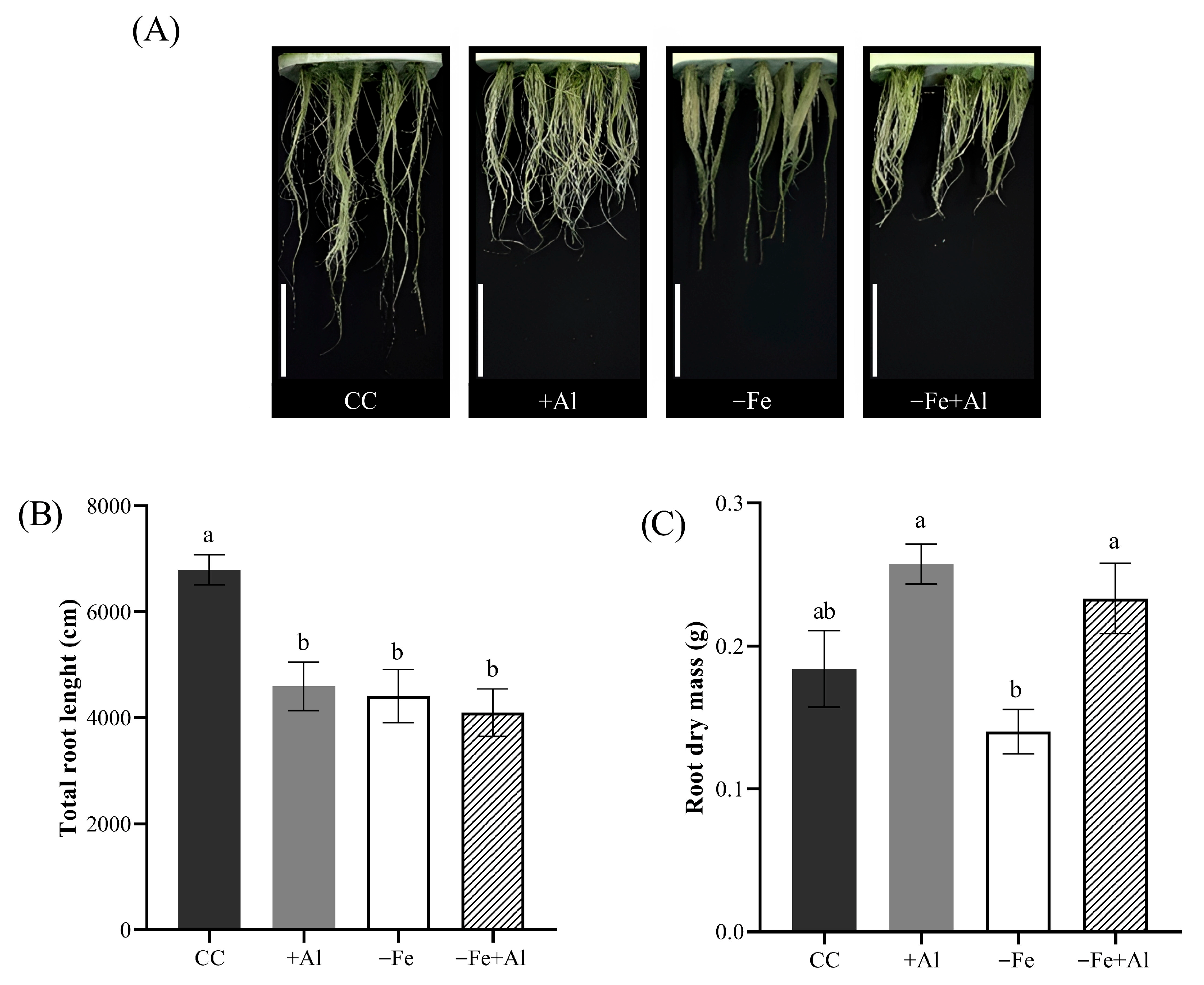
To evaluate the effects of Al excess and Fe deficiency on root development in O. rufipogon, we analyzed plants grown under four conditions: control (CC in figures), Al excess (+Al; 300 µM AlCl3), Fe deficiency (−Fe; no Fe added), and combined Fe deficiency and Al excess (−Fe+Al). Root length was significantly reduced in the +Al, −Fe, and −Fe+Al treatments compared to the control (Figure 1A,B), indicating that both Al excess and Fe deficiency inhibited root elongation, but their combined effects are not additive. This suggests that both Al excess and Fe deficiency negatively affect root growth in O. rufipogon, whereas their combination is not additionally toxic. The root dry mass was lower in −Fe plants compared with the control, whereas the +Al and −Fe+Al treatments did not differ from the control (Figure 1C). Together, these findings indicate that Al excess and Fe deficiency independently limit root elongation in O. rufipogon.

2.2. Al Excess Limits Shoot Development in Oryza rufipogon Independently of Fe

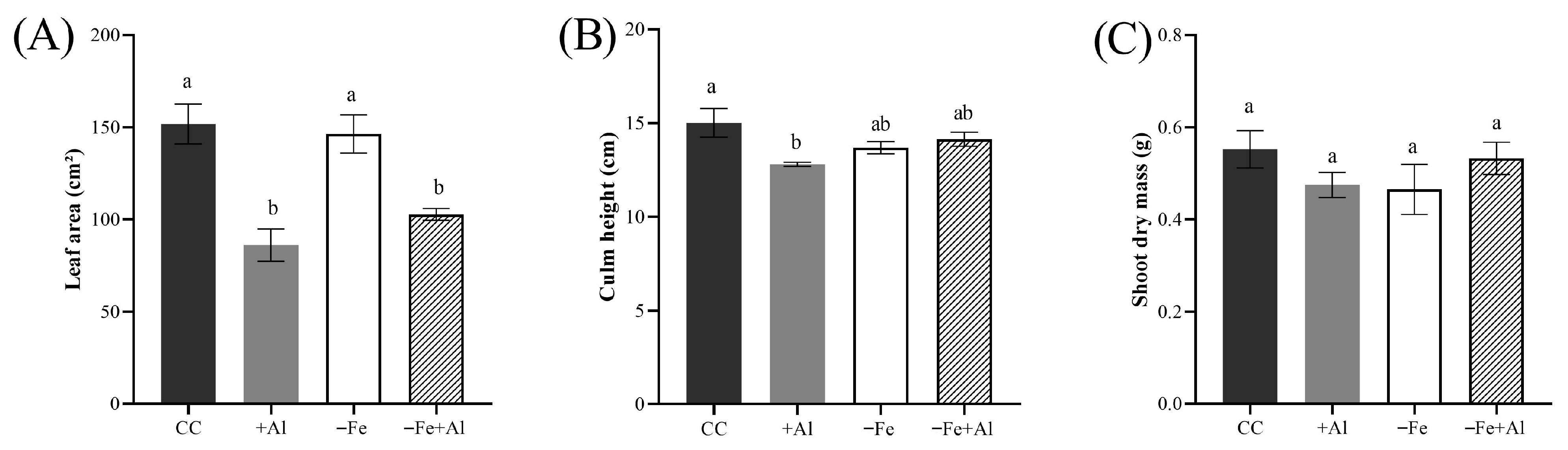
Plants under +Al and −Fe+Al showed a reduced leaf area compared to the control and −Fe treatments (Figure 2A). In contrast, plants exposed to −Fe alone maintained a leaf area similar to the control, suggesting that Al excess negatively affects leaf expansion independently of Fe status. Regarding culm height, only the +Al treatment showed lower values compared with the control (Figure 2B). In contrast, the shoot dry mass was similar across all treatments (Figure 2C). These results show that O. rufipogon is able to sustain shoot biomass under both Fe deficiency and combined Al excess and Fe deficiency, even though the leaf area is affected.

2.3. Al Excess Alleviates Fe Deficiency Chlorosis in Oryza rufipogon

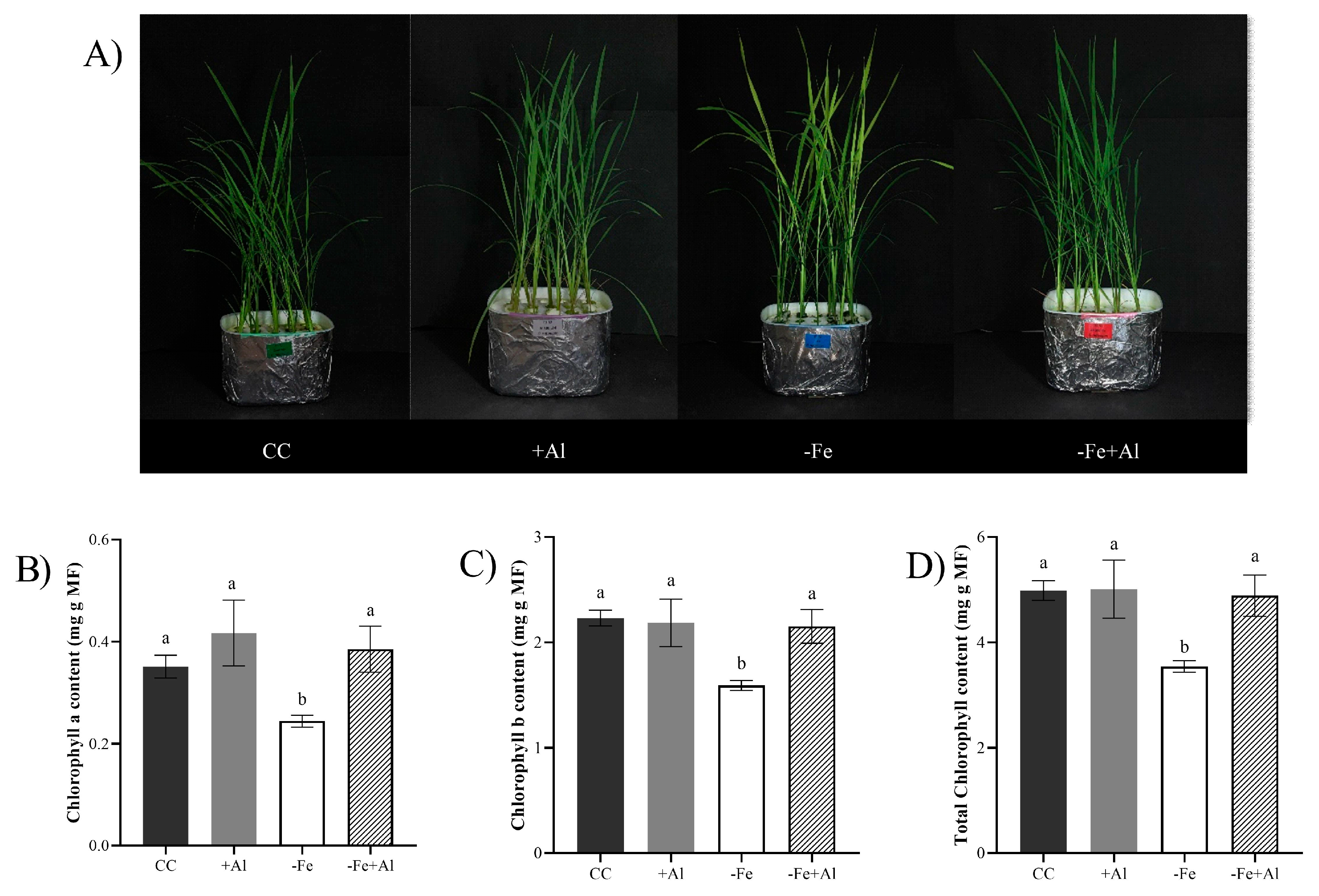
To evaluate whether the alleviating effect of Al on chlorosis observed in cultivated rice (O. sativa) [51] is conserved in its ancestral species O. rufipogon, we analyzed leaf chlorosis after 21 days of treatment. Plants exposed to +Al alone did not exhibit any visible phenotypic alterations, whereas those under Fe deficiency displayed pronounced chlorosis in the youngest leaf (Figure 3A). However, combined −Fe+Al showed chlorosis alleviation (Figure 3A). For chlorophyll a, there was a tendency for decrease in −Fe compared to the control, while both -Al and combined −Fe+Al were higher compared to −Fe (Figure 3B). Chlorophyll b and total chlorophyll were both reduced under Fe deficiency, while plants exposed to combined −Fe+Al exhibited alleviated chlorosis (Figure 3B–D). These findings confirm that the chlorosis-alleviating effect of Al excess observed in cultivated rice is also present in O. rufipogon.

2.4. Al Excess Decreases the Expression of Fe Deficiency Marker Genes in Oryza rufipogon Roots

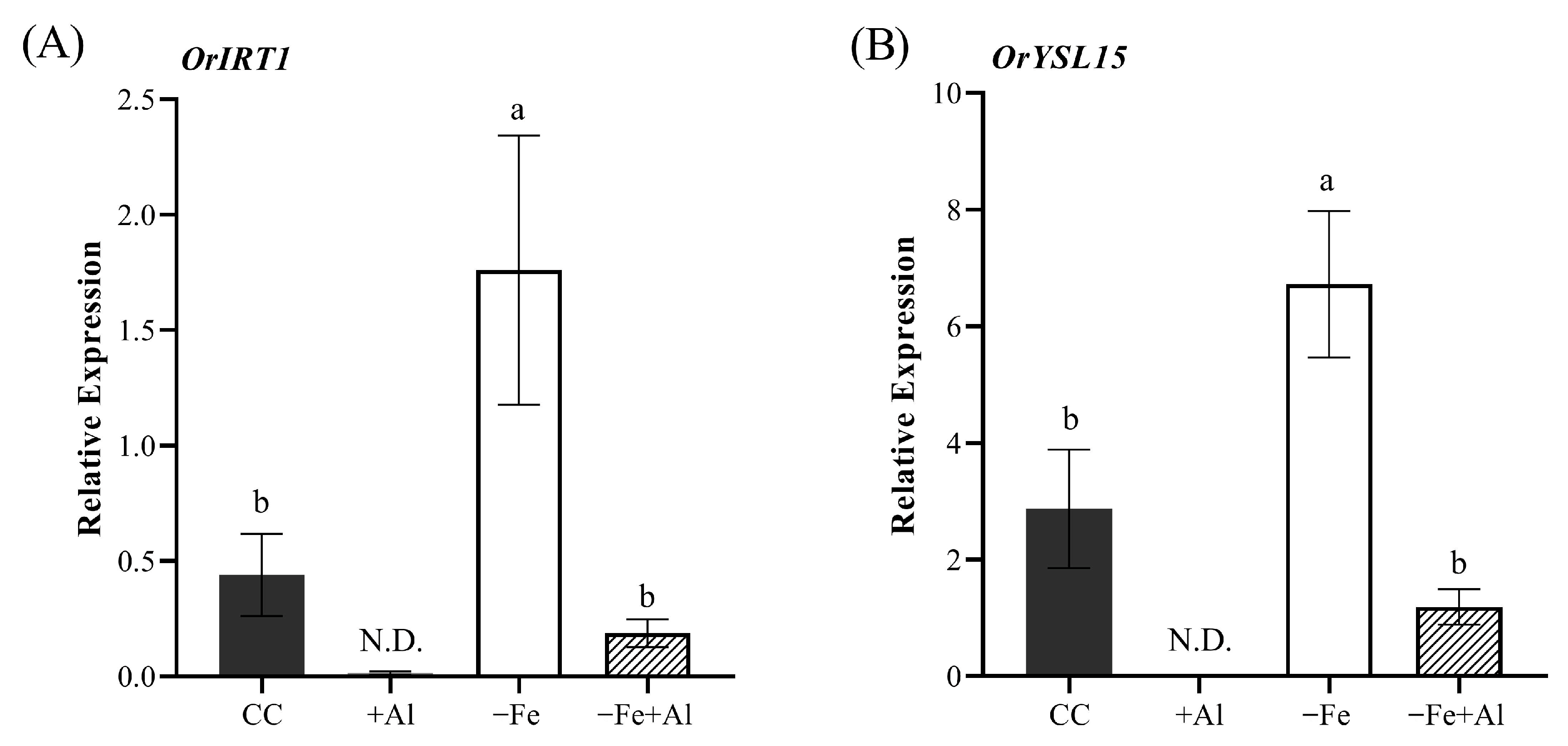
To investigate whether the chlorosis-alleviating effect of Al is associated with suppression of the Fe deficiency response, we analyzed the expression of OrIRT1 (Figure 4A) and OrYSL15 (Figure 4B) genes in roots of O. rufipogon after 10 days of treatment. These genes encode Fe transporters and have previously been used as molecular markers of Fe deficiency in Oryza species [43]. As expected, Fe deficiency induced the expression of both genes compared to control plants (Figure 4A,B). In contrast, expression in −Fe+Al plants was similar to control levels, indicating that Al inhibits the transcriptional activation of these Fe-deficiency markers genes.
In plants treated with +Al alone, transcript levels of both genes were not detected, while control plants exhibited basal expression (Figure 4A,B). This pattern suggests that Al may actively repress the expression of Fe deficiency marker genes even under Fe-sufficient conditions, as previously observed in O. sativa [51]. Altogether, these data indicate that Al interferes with the Fe signaling pathway and that this regulatory effect is conserved in O. rufipogon.

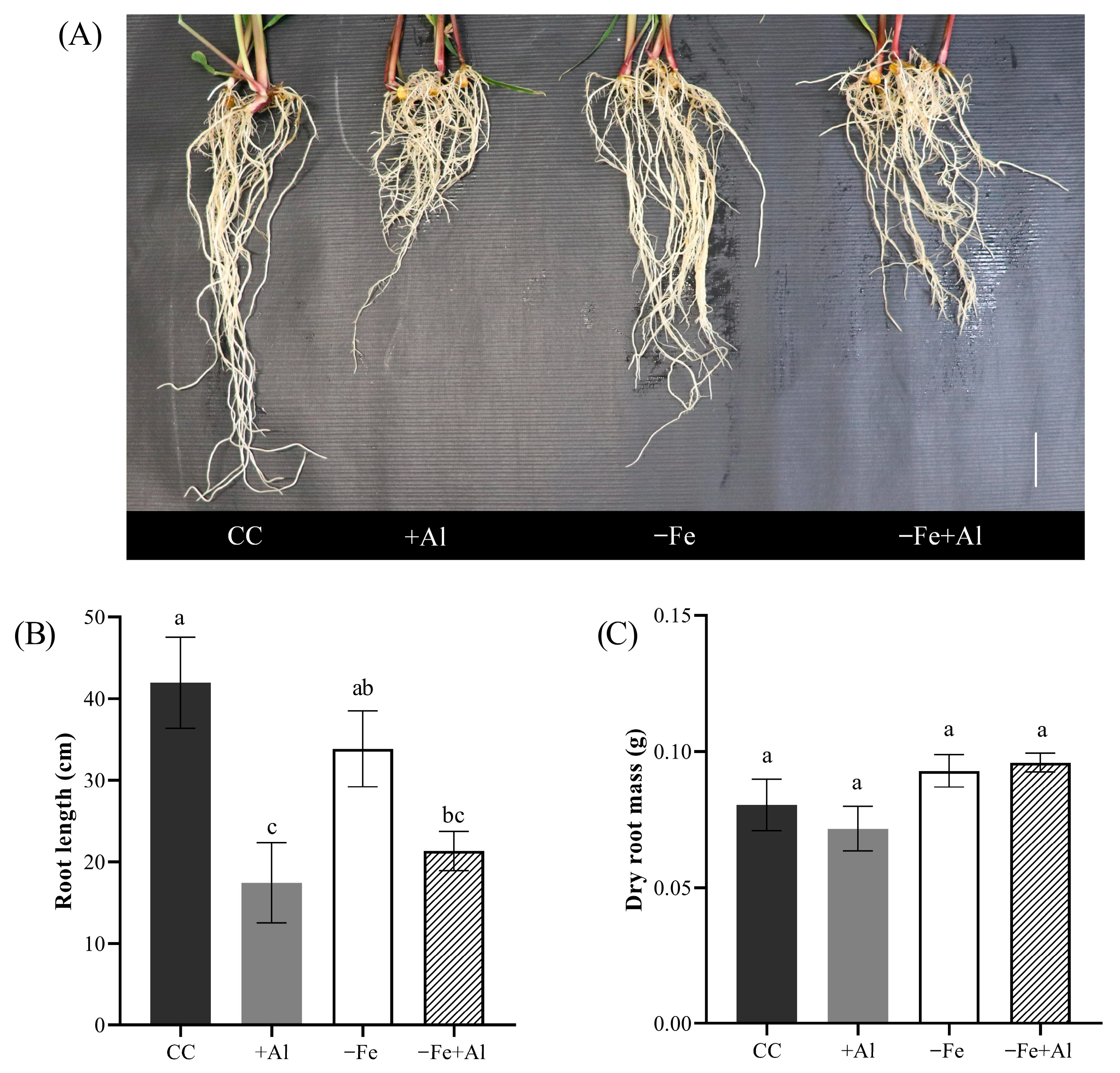
2.5. Al Excess Reduces Maize Root Length Independently of Fe Deficiency Without Affecting Root Biomass

To determine whether the Al-induced alleviation of Fe deficiency symptoms is conserved beyond the genus Oryza, we next evaluated its effect in maize under the same treatment conditions. Given that maize is more sensitive to Al compared to rice [19], we used 9 days of treatment instead of 21 days as with rice [51] and O. rufipogon (see above). As expected, root length was significantly affected by Al excess, as both +Al and −Fe+Al treatments resulted in reduced root length compared to the control (Figure 5A). Plants under −Fe also had a lower root length compared to the control but a higher one compared to +Al and −Fe+Al treatments (Figure 5B). These findings suggest that Al excess reduces root elongation independently of Fe deficiency. No statistical differences were observed in root dry mass among the treatments (Figure 5A,C). These findings indicate that overall biomass allocation to roots was maintained, even when Al-induced root shortening occurred.

2.6. Al Excess Alleviates Fe Deficiency Chlorosis in Maize

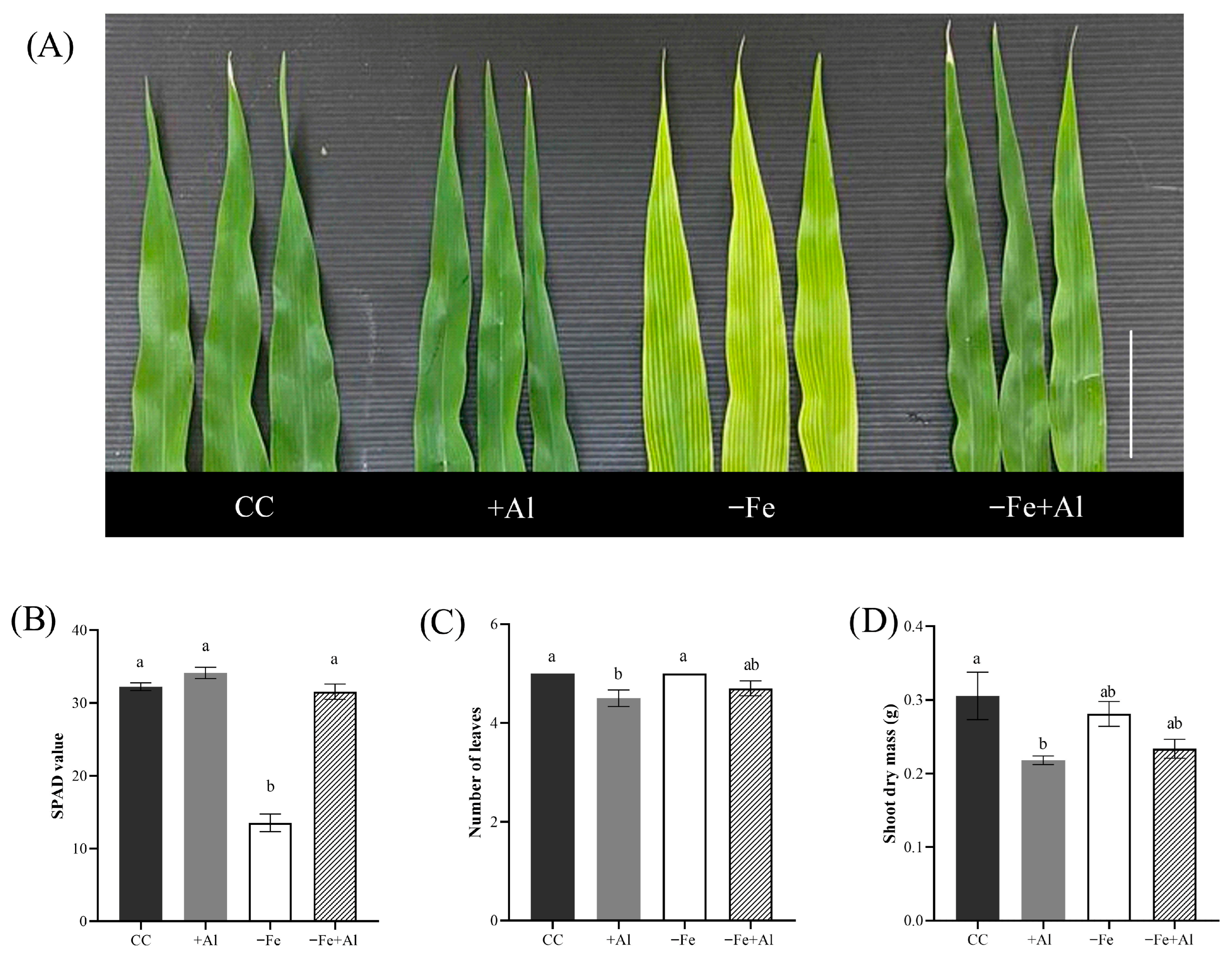
We next evaluated the effects of Al excess on leaf chlorosis. Although +Al treatment alone did not induce chlorosis, leaves were noticeably smaller than those of control plants. Leaves of Fe-deficient plants showed characteristic chlorosis, whereas −Fe+Al plants did not exhibit chlorosis, resembling the control and +Al treatments. To quantify the chlorosis alleviation effect, we measured chlorophyll content (SPAD values) in leaves. Plants grown under control, +Al, and −Fe+Al conditions showed similar SPAD values, indicating higher chlorophyll content and the absence of chlorosis. In contrast, plants under −Fe exhibited significantly lower SPAD values, confirming the observed chlorotic phenotype (Figure 6A,B). These observations demonstrate that Al excess mitigates chlorosis under Fe deficiency (Figure 6A), as also observed in O. sativa [51] and O. rufipogon.
Interestingly, leaves appeared slightly smaller when Al was added. Indeed, the +Al treatment resulted in a significant reduction in both leaf number and shoot dry mass compared to the control. While leaf numbers in plants grown in +Al or combined −Fe+Al were similar to the control but higher compared to −Fe, shoot dry mass was not statistically different compared to −Fe (Figure 6C,D). These data suggest a high sensitivity to Al in maize shoots.

2.7. Al Excess Mitigates Fe Deficiency-Induced Reduction in Photosynthesis in Maize

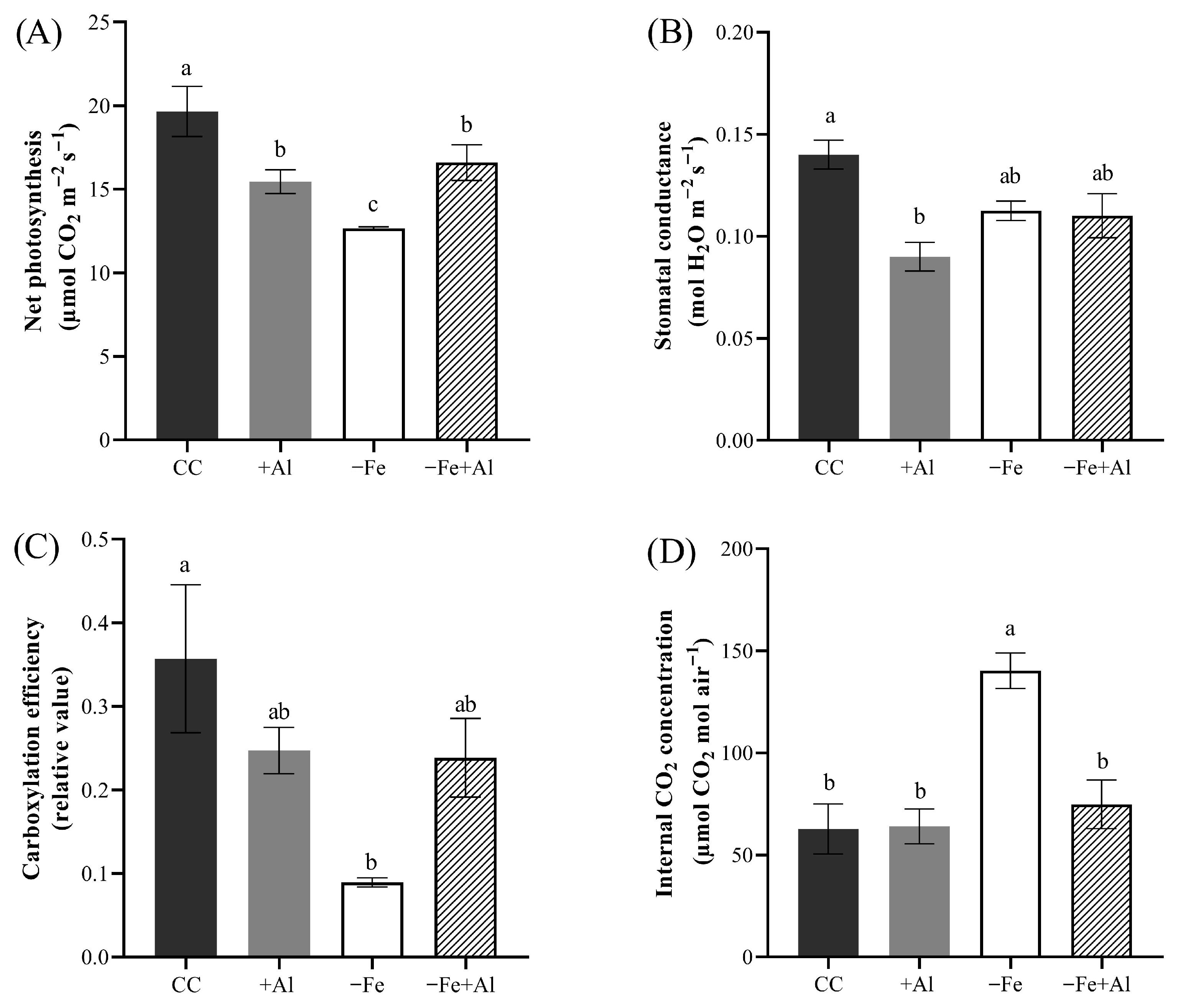
Next, we investigated how gas exchange parameters were affected in maize, a C4 species. After six days of treatment, we measured net photosynthesis, stomatal conductance, internal CO2 concentration, and estimated carboxylation efficiency. As expected, plants under −Fe treatment exhibited a marked reduction in net photosynthesis compared to the control. Notably, −Fe+Al plants showed net photosynthesis levels significantly higher than those observed under −Fe alone, although lower than control plants (Figure 7A). Net photosynthesis in +Al plants was lower than control plants, but comparable to both −Fe and −Fe+Al plants (Figure 1A). These results suggest that Al excess partially alleviates the negative impact of Fe deficiency on photosynthetic activity (Figure 7A).
Stomatal conductance was significantly reduced in +Al plants compared to the control, whereas −Fe and −Fe+Al treatments showed intermediate values that did not differ significantly from either the control or +Al treatments (Figure 7B). Carboxylation efficiency was significantly reduced in −Fe plants compared to the control. In contrast, plants grown under +Al and −Fe+Al treatments did not differ statistically from the control (Figure 7C). Plants under −Fe accumulated a significantly higher internal CO2 concentration than all other treatments, indicating impaired carbon fixation. +Al and −Fe+Al treatments exhibited significantly lower internal CO2 concentrations than −Fe plants, comparable to those of control plants (Figure 7C), indicating that Al supply under Fe deficiency restored CO2 assimilation capacity. Altogether, these findings suggest that while Al does not fully recover all photosynthetic parameters under Fe deficiency, it substantially alleviates the detrimental effects of Fe deficiency on photosynthetic performance.

2.8. Al Excess Decreases the Expression of Fe Deficiency Marker Genes in Maize Roots

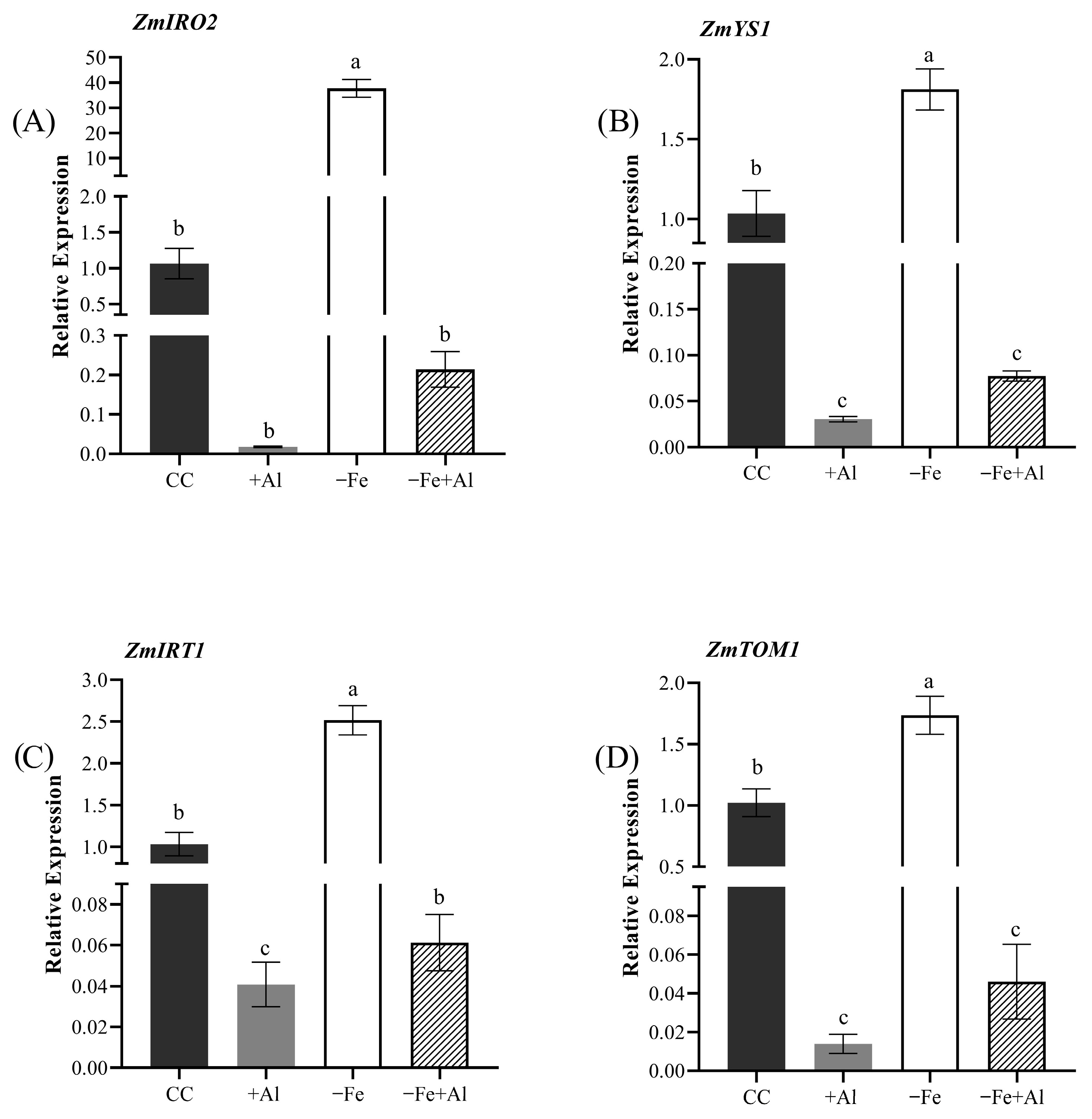
To determine whether the chlorosis-alleviating effect of Al in maize is associated with changes in Fe deficiency response at the molecular level in roots, we evaluated the expression of four Fe deficiency marker genes, ZmIRO2, ZmYS1, ZmIRT1, and ZmTOM1, based on a previous work [43]. As expected, Fe deficiency induced the expression of all four genes compared to control conditions (Figure 8A–D). However, Al strongly inhibits expression of Fe deficiency-induced genes. Under +Al and combined −Fe+Al treatment, expression of all genes was markedly reduced compared to both controls and −Fe alone (Figure 8A–D). These findings suggest that Al exposure strongly represses Fe deficiency marker genes in maize.

3. Discussion

Although Al is generally considered toxic, several studies have reported possible beneficial effects in plants, which depend on the concentration and species [53,54,55]; however, no clear physiological role has been established to explains these responses. Recent work by our group demonstrated that Al alleviates Fe deficiency chlorosis in rice plants, likely through the induction of phosphorus (P) deficiency [51]. P deficiency is known to also alleviate chlorosis in several plant species [47,48,49,50]. However, it remains unclear whether the effect of Al on Fe deficiency is restricted to rice or also occurs in other Poaceae species. Here we demonstrate that this phenomenon is conserved in both the closest wild relative of rice, O. rufipogon, and in the C4 crop maize.
Fe is an essential nutrient for plants, directly involved in N and S assimilation, chlorophyll biosynthesis, and central C metabolism, including photosynthesis and respiration [16,56]. When plants such as cultivated and wild rice or maize experience Fe deficiency, they typically exhibit chlorosis, characterized by leaf yellowing, as a classical symptom [43,57]. In response to Fe deficiency, plants induce a set of root-expressed genes responsible for Fe uptake from the soil. These genes correspond to two distinct uptake mechanisms: Strategy I is characterized by the induction of IRT1 (Iron-Regulated Transporter 1) expression, and Strategy II is marked by the induction of YSL15 expression [39,40,43]. Exceptionally, O. sativa and O. rufipogon employ a combined strategy, simultaneously inducing both IRT1 and YSL15 expression [43], as also observed under our experimental conditions (Figure 4). However, when Fe deficiency occurs together with Al excess, the transcriptional induction typically triggered by Fe deficiency is suppressed, resulting in expression levels similar to those in control plants. This indicates that Al interferes with the Fe deficiency signaling pathway by inhibiting the activation of Fe uptake genes. A similar response was observed in maize (Figure 8). These findings are consistent with our previous study in cultivated rice (O. sativa), which demonstrated that Al toxicity suppresses the induction of Fe deficiency marker genes to control-like levels [51], suggesting that this regulatory mechanism is conserved in at least three species of the Poaceae family.
O. rufipogon is the ancestral species from which O. sativa ssp. japonica was domesticated [3,52]. This wild relative represents an important reservoir of genetic variation for O. sativa, particularly for stress- and nutrition-related traits such as salt tolerance [58] and P deficiency tolerance [59], suggesting potential differences in ionomic regulation. Like cultivated rice, O. rufipogon is a semi-aquatic species that grows in permanently or seasonally flooded swamps and marshes, likely adapted to environmental conditions similar to those used for rice cultivation. Under such conditions, Fe3+ is reduced to Fe2+, increasing its bioavailability [60,61]. Likewise, Al3+ and PO43- ions also become more soluble and bioavailable in these environments [62]. Given the close phylogenetic relationship between the two species, and their shared ecological niches, it would be expected that the effect of Al on Fe deficiency chlorosis would be similar in O. rufipogon and O. sativa. Indeed, our data confirm that the Al-induced alleviation of Fe deficiency is not restricted to cultivated rice and therefore not a consequence of domestication. Nevertheless, environmental factors may strongly influence this mechanism, and whether other Oryza species or ecotypes not adapted to waterlogged conditions exhibit a similar response remains an open question.
Maize, on the other hand, is a domesticated crop characterized by C4 metabolism. C4 plants are known to exhibit distinct nutritional profiles, including higher N use efficiency compared to C3 and C3-C4 intermediate species [63,64], greater demand for reduced S forms [65,66], and altered P partitioning [67]. The homeostasis of N and P is closely linked to that of Fe [16], and Al and P share partially overlapping responsive genes networks [68]. However, it remains unknown whether the evolutionary transition from C3 to C4 metabolism also alters Fe homeostasis. Cultivated rice and its close relatives within the Oryza AA genome group, including O. rufipogon, employ a combined Fe acquisition strategy, whereas maize relies on the classic phytosiderophore-mediated, chelation-based strategy [43]. Our findings demonstrate that the Al-induced alleviation of Fe deficiency chlorosis also occurs in maize, a C4 species within the Poaceae family, suggesting that the mechanisms underlying this phenomenon might be conserved across the family. This conservation appears to persist despite the physiological and nutritional modifications associated with C4 metabolism, speciation, and domestication in maize. Moreover, considering that maize is substantially more sensitive to Al toxicity than rice [19,69], the observed alleviating effect of Al is unlikely to depend on intrinsic Al tolerance.
As previously noted, Fe is essential for photosynthesis, whereas plant exposure to Al is typically associated with increased production of reactive oxygen species and detrimental effects on photosynthetic performance. These adverse effects are often evidenced by reductions in stomatal conductance and in the activity of enzymes involved in carbon metabolism [70,71]. Although maize is generally more sensitive to Al toxicity than rice, under our experimental conditions, the negative impact of Al on photosynthesis was considerably less severe than that caused by Fe deficiency (Figure 7). This milder effect may reflect the modulation on the plant’s response to Fe deficiency, including the repression of genes associated with Fe uptake from the soil solution (Figure 8), resulting in a less pronounced deficiency response when Fe limitation occurs in the presence of Al. Additionally, it is noteworthy that Al toxicity exerted a stronger effect on root length and growth than Fe deficiency alone (Figure 5).
To deepen our understanding of how Al alleviates Fe deficiency symptoms in plants, future studies should dissect both the local and systemic mechanisms involved. Importantly, it is not clear whether this phenomenon is conserved in all Poaceae, given that we have tested only three species so far. Still, the fact that the same phenotype is found in two Oryza species and maize allows us to speculate that it might be conserved in other Poaceae. Moreover, the mechanism by which that occurs is not yet understood. We should explore whether P deficiency is induced by Al, how that alleviates chlorosis, and how elemental concentrations are altered in plants other than cultivated rice. Interestingly, P deficiency does alleviate Fe deficiency chlorosis in several species [46,47,48,49,50], suggesting that this could be conserved more broadly. However, more evidence is needed to confirm these hypotheses. Moreover, the answers to whether Al has the same effect and whether it operates by similar pathways to the known combined P and Fe deficiency phenotype are also not clear.
It should be noted that in the present study on O. rufipogon and maize, Fe, P, and Al concentrations or their localization were not measured. Consequently, we cannot determine whether the same P-related mechanisms previously proposed for cultivated rice also operate in these species. The evidence for Al-mediated alleviation of Fe deficiency presented here is based on (i) visual symptoms and chlorophyll/SPAD measurements, (ii) expression of Fe deficiency marker genes in roots, and (iii) photosynthetic performance in maize, rather than on direct determinations of Fe or P status. Elemental mapping (μXRF, LA-ICP-MS) and isotope tracing could reveal how Al influences Fe and P distribution and speciation, while split-root and mutant assays targeting Fe- and P-homeostasis genes would help identify key regulatory nodes. Integrating these approaches with chloroplast-level proteomic and physiological analyses will be essential to uncover how Al modifies Fe metabolism and photosynthetic function. Ultimately, expanding our investigations to additional Poaceae members and other botanical families will reveal whether the Al effect on Fe deficiency is conserved, as well as how ecologically relevant this interaction truly is.

4. Materials and Methods

4.1. Plant Materials and Growth Conditions

Experiments were performed in a controlled growth room at 26 °C ± 1 °C under a photoperiod of 16 h/8 h light/dark (150 μmol m−2 s−1), using a hydroponic system. Seeds of O. rufipogon (BRA 00004909-8) and Biomatrix hybrid maize (VTPRO3) were surface-sterilized by immersion in distilled water, sodium hypochlorite, and liquid detergent to minimize contamination and subsequently germinated in the dark at 25 °C for 24 h. O. rufipogon seeds were maintained for six days in Petri dishes with filter paper soaked in distilled water at 25 °C, while maize seeds were germinated for five days in gerbox® with filter paper moistened under the same conditions. After germination, seedlings were transferred to vermiculite and cultivated in nutrient solution, as previously described [43], with slight modifications, detailed below [51]. Briefly, the solution consisted of 700 μM K2SO4, 100 μM KCl, 100 μM KH2PO4, 2 mM Ca(NO3)2, 500 μM MgSO4, 10 μM H3BO3, 0.5 μM MnSO4, 0.5 μM ZnSO4, 0.2 μM CuSO4, 0.01 μM (NH4)6Mo7O24, and 100 μM Fe3+-EDTA, with a pH adjusted to 4.5. When the third leaf was fully expanded, O. rufipogon plants were transferred to 2 L plastic pots containing nutritive solution, while maize plants were transferred to 2 L plastic pots containing nutritive solution aerated by air pumps.
After an acclimation period of nine days for O. rufipogon and three days for maize, plants were subjected to the following treatments: control, aluminum (Al) stress (+Al; 300 μM AlCl3 added to the nutrient solution), Fe deficiency (−Fe; no Fe added), and combined (−Fe+Al). Nutrient solutions were changed every three days. The wild rice experiment lasted 21 days, whereas the maize experiment lasted 9 days, given that maize growth is faster in our conditions. We established the optimal treatment length in pilot experiments. The aluminum treatment concentration was the same as that used for rice [51], allowing direct comparison.
All experiments were conducted at least twice, and one representative experiment with independent biological replicates is shown.

4.2. Growth Measurements

After 21 days of treatment for O. rufipogon and 9 days for maize, shoots and roots of five plants per species and per treatment were collected and oven-dried at 65 °C until constant mass was achieved. Dry mass was determined using a precision balance. For O. rufipogon, culm height was measured with a millimeter ruler. Root samples were placed in a thin layer (0.5 cm) of distilled water and scanned using an EPSON 11,000 scanner at 600 dpi resolution. The total root system length and leaf area were analyzed using WinRHIZO© Pro 2007 software [72]. For maize, root length was measured manually with a millimeter ruler after nine days of treatment.

4.3. Chlorophyll Measurements

For O. rufipogon, shoot samples from plants treated for 21 days were collected and immediately frozen in liquid nitrogen. Each sample consisted of a pool of seven plants, with four biological replicates per treatment. Samples were ground in liquid nitrogen to quantify photosynthetic pigments. Chlorophyll a and b concentrations were determined according to Hiscox and Israelstan [73], using the equations described by Lichtenthaler [74]. For maize, after nine days of treatment, relative chlorophyll content was measured using a SPAD-502 chlorophyll meter (Minolta, Tokyo, Japan; n = 5). The readings were taken in the final third of each leaf, and each sample value represents the average of three measurements.

4.4. Gene Expression Analyses

For RT-qPCR analyses, O. rufipogon plants were treated for ten days and maize plants for six days before roots samples (n = 4) were collected. Gene expression analyses were performed as previously described [43]. Root samples were pulverized in liquid nitrogen, and total RNA was extracted using Plant RNA Reagent (Invitrogen®, Waltham, MA, USA) following the manufacturer’s instructions. RNA quantity and purity were assessed using a Nanodrop® spectrophotometer. First-strand cDNA was synthesized using M-MLV Reverse Transcriptase (Invitrogen®) after DNAse I (Invitrogen®) treatment, according to the manufacturer’s instructions. Relative gene expression was determined using a StepOne Real-Time PCR System (AppliedBiosystems®, Foster City, CA, USA), and data were analyzed following the method described by [75]. The OsUBQ5 gene [76] was used as an internal reference for O. rufipogon, whereas ZmUBQ (Zm00001d053834) served as the normalizer for maize. The primer sequences for all analyzed genes are listed in Supplementary Table S1.

4.5. Determination of Gas Exchange Parameters

Net photosynthesis, stomatal conductance, and intercellular CO2 concentration were measured using a portable infrared gas analyzer (IRGA) system equipped with a red–blue LED light source and a leaf chamber (LCpro-SD, ADC BioScientific, Hoddesdon, UK). Measurements were performed on the youngest fully expanded leaf, with each reading recorded over a 15 min period (n = 4). During gas exchange measurements, the chamber conditions were maintained at 1000 µmol m−2 s−1 photosynthetic photon flux density (PPFD), 420 ppm CO2 concentration, 28 °C temperature, and ambient relative humidity (≈75%). The carboxylation efficiency was calculated as the ratio of net photosynthesis (A) to intercellular CO2 concentration (Ci).

4.6. Statistical Analyses

Data were tested for normality and homoscedasticity and analyzed by two-way analysis of variance (ANOVA), followed by the Tukey HSD post hoc test (p < 0.05), using SISVAR software (version 5.6) [77].

5. Conclusions

Al alleviates Fe deficiency chlorosis in both the wild rice ancestor O. rufipogon and the C4 crop maize, indicating that this capacity is conserved in these two species in the Poaceae family.

Supplementary Materials

The following supporting information can be downloaded at https://www.mdpi.com/article/10.3390/plants15010159/s1, Table S1: Primer sequences used in this study.

Author Contributions

J.d.S.A. and F.K.R.: Conceptualization, Funding acquisition, Project administration, Supervision, and Writing—original draft; J.d.S.A., Y.L.-M., A.W. and V.M.S.: Investigation, Methodology, Software; V.L.N., L.A.T., G.B. and R.A.S.: Writing—review and editing. All authors have read and agreed to the published version of the manuscript.

Funding

Research in Felipe Ricachenevsky’s laboratory is currently financed by Conselho Nacional de Desenvolvimento Científico e Tecnológico (CNPq; grants 442304/2023-4, 444596/2024-0; 153376/2024-4, and 447431/2024-2), Fundação de Amparo à Pesquisa do Estado do Rio Grande do Sul (FAPERGS; grants 21/2551-0001960-3, 23/2551-0001862-4 and 22/2551-0000834-8) and Fundação de Amparo à Pesquisa do Estado de Minas Gerais (FAPEMIG Grant no. APQ-06535-2). This study was financed in part by the Coordenação de Aperfeiçoamento de Pessoal de Nível Superior—Brasil (CAPES)—Finance Code 001. Y.L.-M. received funding from CNPq (CNPq-BCB, 315006/2025-0) and CAPES (CAPES-PNPD 88887.473943/2020-00).

Data Availability Statement

The original contributions presented in this study are included in the article/Supplementary Material. Further inquiries can be directed to the corresponding author.

Acknowledgments

During the preparation of this work, the authors used ChatGPT 5.2 to improve readability and language accuracy. After using the tool, the authors carefully reviewed and edited the content as necessary and take full responsibility for the final version of the publication.

Conflicts of Interest

The authors declare no conflicts of interest.

References

  1. World Food and Agriculture—Statistical Yearbook 2025; FAO: Rome, Italy, 2025; ISBN 978-92-5-140174-3.
  2. Bin Rahman, A.N.M.R.; Zhang, J. Trends in Rice Research: 2030 and Beyond. Food Energy Secur. 2023, 12, e390. [Google Scholar] [CrossRef]
  3. Fornasiero, A.; Feng, T.; Al-Bader, N.; Alsantely, A.; Mussurova, S.; Hoang, N.V.; Misra, G.; Zhou, Y.; Fabbian, L.; Mohammed, N.; et al. Oryza Genome Evolution through a Tetraploid Lens. Nat. Genet. 2025, 57, 1287–1297. [Google Scholar] [CrossRef]
  4. Callaway, E. Domestication: The Birth of Rice. Nature 2014, 514, S58–S59. [Google Scholar] [CrossRef] [PubMed]
  5. Menguer, P.K.; Sperotto, R.A.; Ricachenevsky, F.K. A Walk on the Wild Side: Oryza Species as Source for Rice Abiotic Stress Tolerance. Genet. Mol. Biol. 2017, 40, 238–252. [Google Scholar] [CrossRef] [PubMed]
  6. Cao, Y.; Lou, Y.; Han, Y.; Shi, J.; Wang, Y.; Wang, W.; Ming, F. Al Toxicity Leads to Enhanced Cell Division and Changed Photosynthesis in Oryza rufipogon L. Mol. Biol. Rep. 2011, 38, 4839–4846. [Google Scholar] [CrossRef]
  7. Magudeeswari, P.; Balakrishnan, D.; Surapaneni, M.; Krishnam Raju, A.; Rao, Y.V.; Pranay, G.; Valarmathi, P.; Bhadana, V.P.; Neelamraju, S.; Sundaram, R.M. Exploring Stable Low Soil Phosphorous Stress Tolerance in Rice Using Novel Allele Recombination From Oryza rufipogon. Plant Breed, 2024; early view. [Google Scholar] [CrossRef]
  8. Erenstein, O.; Jaleta, M.; Sonder, K.; Mottaleb, K.; Prasanna, B.M. Global Maize Production, Consumption and Trade: Trends and R&D Implications. Food Sec 2022, 14, 1295–1319. [Google Scholar] [CrossRef]
  9. Ekpa, O.; Palacios-Rojas, N.; Kruseman, G.; Fogliano, V.; Linnemann, A.R. Sub-Saharan African Maize-Based Foods: Technological Perspectives to Increase the Food and Nutrition Security Impacts of Maize Breeding Programmes. Glob. Food Secur. 2018, 17, 48–56. [Google Scholar] [CrossRef]
  10. Santpoort, R. The Drivers of Maize Area Expansion in Sub-Saharan Africa. How Policies to Boost Maize Production Overlook the Interests of Smallholder Farmers. Land 2020, 9, 68. [Google Scholar] [CrossRef]
  11. Oikeh, S.O.; Menkir, A.; Maziya-Dixon, B.; Welch, R.; Glahn, R.P. Assessment of Concentrations of Iron and Zinc and Bioavailable Iron in Grains of Early-Maturing Tropical Maize Varieties. J. Agric. Food Chem. 2003, 51, 3688–3694. [Google Scholar] [CrossRef]
  12. Agarwal, M.; Rampure, M.; Todkar, A.; Sharma, P. Ethanol from Maize: An Entrepreneurial Opportunity in Agrobusiness. Biofuels 2019, 10, 385–391. [Google Scholar] [CrossRef]
  13. Prasanna, B.M.; Palacios-Rojas, N.; Hossain, F.; Muthusamy, V.; Menkir, A.; Dhliwayo, T.; Ndhlela, T.; San Vicente, F.; Nair, S.K.; Vivek, B.S.; et al. Molecular Breeding for Nutritionally Enriched Maize: Status and Prospects. Front. Genet. 2020, 10, 1392. [Google Scholar] [CrossRef]
  14. Pita-Barbosa, A.; Ricachenevsky, F.K.; Flis, P.M. One “OMICS” to Integrate Them All: Ionomics as a Result of Plant Genetics, Physiology and Evolution. Theor. Exp. Plant Physiol. 2019, 31, 71–89. [Google Scholar] [CrossRef]
  15. Ricachenevsky, F.K.; De Araújo Junior, A.T.; Fett, J.P.; Sperotto, R.A. You Shall Not Pass: Root Vacuoles as a Symplastic Checkpoint for Metal Translocation to Shoots and Possible Application to Grain Nutritional Quality. Front. Plant Sci. 2018, 9, 412. [Google Scholar] [CrossRef] [PubMed]
  16. Wairich, A.; Lima-Melo, Y.; Menguer, P.K.; Ortolan, F.; Ricachenevsky, F.K. Iron, Cold Iron, Is Master of Them All: Iron Crosstalk with Zinc, Copper, Phosphorus, and Nitrogen Homeostasis. J. Exp. Bot. 2025, 76, 4787–4803. [Google Scholar] [CrossRef] [PubMed]
  17. DeLoose, M.; Clúa, J.; Cho, H.; Zheng, L.; Masmoudi, K.; Desnos, T.; Krouk, G.; Nussaume, L.; Poirier, Y.; Rouached, H. Recent Advances in Unraveling the Mystery of Combined Nutrient Stress in Plants. Plant J. 2024, 117, 1764–1780. [Google Scholar] [CrossRef]
  18. Huang, X.-Y.; Salt, D.E. Plant Ionomics: From Elemental Profiling to Environmental Adaptation. Mol. Plant 2016, 9, 787–797. [Google Scholar] [CrossRef] [PubMed]
  19. Kochian, L.V.; Piñeros, M.A.; Liu, J.; Magalhaes, J.V. Plant Adaptation to Acid Soils: The Molecular Basis for Crop Aluminum Resistance. Annu. Rev. Plant Biol. 2015, 66, 571–598. [Google Scholar] [CrossRef]
  20. Von Uexküll, H.R.; Mutert, E. Global Extent, Development and Economic Impact of Acid Soils. Plant Soil 1995, 171, 1–15. [Google Scholar] [CrossRef]
  21. Ginocchio, R.; De La Fuente, L.M.; Sánchez, P.; Bustamante, E.; Silva, Y.; Urrestarazu, P.; Rodríguez, P.H. Soil Acidification as a Confounding Factor on Metal Phytotoxicity in Soils Spiked with Copper-Rich Mine Wastes. Environ. Toxicol. Chem. 2009, 28, 2069–2081. [Google Scholar] [CrossRef]
  22. Ma, J.F. Plant Root Responses to Three Abundant Soil Minerals: Silicon, Aluminum and Iron. Crit. Rev. Plant Sci. 2005, 24, 267–281. [Google Scholar] [CrossRef]
  23. Yamamoto, Y. Aluminum Toxicity in Plant Cells: Mechanisms of Cell Death and Inhibition of Cell Elongation. Soil Sci. Plant Nutr. 2019, 65, 41–55. [Google Scholar] [CrossRef]
  24. Wang, L.; Fan, X.-W.; Pan, J.-L.; Huang, Z.-B.; Li, Y.-Z. Physiological Characterization of Maize Tolerance to Low Dose of Aluminum, Highlighted by Promoted Leaf Growth. Planta 2015, 242, 1391–1403. [Google Scholar] [CrossRef]
  25. Peixoto, H.P.; Da Matta, F.M.; Da Matta, J.C. Responses Of The Photosynthetic Apparatus To Aluminum Stress In Two Sorghum Cultivars. J. Plant Nutr. 2002, 25, 821–832. [Google Scholar] [CrossRef]
  26. Yang, Z.-B.; Rao, I.M.; Horst, W.J. Interaction of Aluminium and Drought Stress on Root Growth and Crop Yield on Acid Soils. Plant Soil 2013, 372, 3–25. [Google Scholar] [CrossRef]
  27. Ahmed, I.M.; Nadira, U.A.; Cao, F.; He, X.; Zhang, G.; Wu, F. Physiological and Molecular Analysis on Root Growth Associated with the Tolerance to Aluminum and Drought Individual and Combined in Tibetan Wild and Cultivated Barley. Planta 2016, 243, 973–985. [Google Scholar] [CrossRef]
  28. Silva, C.O.; Brito, D.S.; Da Silva, A.A.; Do Rosário Rosa, V.; Santos, M.F.S.; De Souza, G.A.; Azevedo, A.A.; Dal-Bianco, M.; Oliveira, J.A.; Ribeiro, C. Differential Accumulation of Aluminum in Root Tips of Soybean Seedlings. Braz. J. Bot. 2020, 43, 99–107. [Google Scholar] [CrossRef]
  29. Rahman, M.A.; Lee, S.-H.; Ji, H.C.; Kabir, A.H.; Jones, C.S.; Lee, K.-W. Importance of Mineral Nutrition for Mitigating Aluminum Toxicity in Plants on Acidic Soils: Current Status and Opportunities. Int. J. Mol. Sci. 2018, 19, 3073. [Google Scholar] [CrossRef]
  30. Rahman, R.; Upadhyaya, H. Aluminium Toxicity and Its Tolerance in Plant: A Review. J. Plant Biol. 2021, 64, 101–121. [Google Scholar] [CrossRef]
  31. Mahender, A.; Swamy, B.P.M.; Anandan, A.; Ali, J. Tolerance of Iron-Deficient and -Toxic Soil Conditions in Rice. Plants 2019, 8, 31. [Google Scholar] [CrossRef]
  32. Becker, M.; Asch, F. Iron Toxicity in Rice—Conditions and Management Concepts. Z. Pflanzenernähr. Bodenk 2005, 168, 558–573. [Google Scholar] [CrossRef]
  33. Atta, S.K.; Mohammed, S.A.; Van Cleemput, O.; Zayed, A. Transformations of Iron and Manganese under Controlled Eh, Eh-pH Conditions and Addition of Organic Matter. Soil Technol. 1996, 9, 223–237. [Google Scholar] [CrossRef]
  34. Chen, C.; Hall, S.J.; Coward, E.; Thompson, A. Iron-Mediated Organic Matter Decomposition in Humid Soils Can Counteract Protection. Nat. Commun. 2020, 11, 2255. [Google Scholar] [CrossRef]
  35. Chen, H.; Zhang, Q.; Cai, H.; Zhou, W.; Xu, F. H2O2 Mediates Nitrate-induced Iron Chlorosis by Regulating Iron Homeostasis in Rice. Plant Cell Environ. 2018, 41, 767–781. [Google Scholar] [CrossRef] [PubMed]
  36. Shi, R.; Melzer, M.; Zheng, S.; Benke, A.; Stich, B.; Von Wirén, N. Iron Retention in Root Hemicelluloses Causes Genotypic Variability in the Tolerance to Iron Deficiency-Induced Chlorosis in Maize. Front. Plant Sci. 2018, 9, 557. [Google Scholar] [CrossRef] [PubMed]
  37. Li, J.; Cao, X.; Jia, X.; Liu, L.; Cao, H.; Qin, W.; Li, M. Iron Deficiency Leads to Chlorosis Through Impacting Chlorophyll Synthesis and Nitrogen Metabolism in Areca catechu L. Front. Plant Sci. 2021, 12, 710093. [Google Scholar] [CrossRef] [PubMed]
  38. Rodrigues, W.F.C.; Lisboa, A.B.P.; Lima, J.E.; Ricachenevsky, F.K.; Del-Bem, L. Ferrous Iron Uptake via IRT1 / ZIP Evolved at Least Twice in Green Plants. New Phytol. 2023, 237, 1951–1961. [Google Scholar] [CrossRef]
  39. Lee, S.; Chiecko, J.C.; Kim, S.A.; Walker, E.L.; Lee, Y.; Guerinot, M.L.; An, G. Disruption of OsYSL15 Leads to Iron Inefficiency in Rice Plants. Plant Physiol. 2009, 150, 786–800. [Google Scholar] [CrossRef]
  40. Inoue, H.; Kobayashi, T.; Nozoye, T.; Takahashi, M.; Kakei, Y.; Suzuki, K.; Nakazono, M.; Nakanishi, H.; Mori, S.; Nishizawa, N.K. Rice OsYSL15 Is an Iron-Regulated Iron(III)-Deoxymugineic Acid Transporter Expressed in the Roots and Is Essential for Iron Uptake in Early Growth of the Seedlings. J. Biol. Chem. 2009, 284, 3470–3479. [Google Scholar] [CrossRef]
  41. Curie, C.; Panaviene, Z.; Loulergue, C.; Dellaporta, S.L.; Briat, J.-F.; Walker, E.L. Maize Yellow Stripe1 Encodes a Membrane Protein Directly Involved in Fe(III) Uptake. Nature 2001, 409, 346–349. [Google Scholar] [CrossRef]
  42. De Oliveira, B.H.N.; Wairich, A.; Turchetto-Zolet, A.C.; Fett, J.P.; Ricachenevsky, F.K. The Mitochondrial Iron-Regulated (MIR) Gene Is Oryza Genus Specific and Evolved before Speciation within the Oryza sativa Complex. Planta 2020, 251, 94. [Google Scholar] [CrossRef] [PubMed]
  43. Wairich, A.; De Oliveira, B.H.N.; Arend, E.B.; Duarte, G.L.; Ponte, L.R.; Sperotto, R.A.; Ricachenevsky, F.K.; Fett, J.P. The Combined Strategy for Iron Uptake Is Not Exclusive to Domesticated Rice (Oryza sativa). Sci. Rep. 2019, 9, 16144. [Google Scholar] [CrossRef] [PubMed]
  44. Xu, J.; Xu, W.; Chen, X.; Zhu, H.; Fu, X.; Yu, F. Genome-Wide Association Analysis Reveals the Genetic Basis of Iron-Deficiency Stress Tolerance in Maize. Front. Plant Sci. 2022, 13, 878809. [Google Scholar] [CrossRef] [PubMed]
  45. Kenzhebayeva, S.; Atabayeva, S.; Sarsu, F.; Abekova, A.; Shoinbekova, S.; Omirbekova, N.; Doktyrbay, G.; Beisenova, A.; Shavrukov, Y. Organ-Specific Expression of Genes Involved in Iron Homeostasis in Wheat Mutant Lines with Increased Grain Iron and Zinc Content. PeerJ 2022, 10, e13515. [Google Scholar] [CrossRef]
  46. Nam, H.-I.; Shahzad, Z.; Dorone, Y.; Clowez, S.; Zhao, K.; Bouain, N.; Lay-Pruitt, K.S.; Cho, H.; Rhee, S.Y.; Rouached, H. Interdependent Iron and Phosphorus Availability Controls Photosynthesis through Retrograde Signaling. Nat. Commun. 2021, 12, 7211. [Google Scholar] [CrossRef]
  47. Guo, M.; Ruan, W.; Zhang, Y.; Zhang, Y.; Wang, X.; Guo, Z.; Wang, L.; Zhou, T.; Paz-Ares, J.; Yi, K. A Reciprocal Inhibitory Module for Pi and Iron Signaling. Mol. Plant 2022, 15, 138–150. [Google Scholar] [CrossRef]
  48. Saenchai, C.; Bouain, N.; Kisko, M.; Prom-u-thai, C.; Doumas, P.; Rouached, H. The Involvement of OsPHO1;1 in the Regulation of Iron Transport Through Integration of Phosphate and Zinc Deficiency Signaling. Front. Plant Sci. 2016, 7, 396. [Google Scholar] [CrossRef]
  49. Qiu, G.-W.; Zheng, W.-C.; Yang, H.-M.; Wang, Y.-Y.; Qi, X.; Huang, D.; Dai, G.-Z.; Shi, H.; Price, N.M.; Qiu, B.-S. Phosphorus Deficiency Alleviates Iron Limitation in Synechocystis Cyanobacteria through Direct PhoB-Mediated Gene Regulation. Nat. Commun. 2024, 15, 4426. [Google Scholar] [CrossRef]
  50. Tiziani, R.; Pranter, M.; Valentinuzzi, F.; Pii, Y.; Luigimaria, B.; Cesco, S.; Mimmo, T. Unraveling Plant Adaptation to Single and Combined Nutrient Deficiencies in a Dicotyledonous and a Monocotyledonous Plant Species. Plant Sci. 2023, 335, 111793. [Google Scholar] [CrossRef]
  51. Alves, J.D.S.; Menguer, P.K.; Lima-Melo, Y.; Fiorentini, V.H.R.; Ponte, L.R.; Olsson, R.V.; Sasso, V.M.; De Palma, N.; Tabaldi, L.A.; Brunetto, G.; et al. Aluminum Alleviates Iron Deficiency Chlorosis by Interfering with Phosphorus Homeostasis in Rice (Oryza sativa L.). Plant Physiol. Biochem. 2025, 220, 109427. [Google Scholar] [CrossRef]
  52. Stein, J.C.; Yu, Y.; Copetti, D.; Zwickl, D.J.; Zhang, L.; Zhang, C.; Chougule, K.; Gao, D.; Iwata, A.; Goicoechea, J.L.; et al. Genomes of 13 Domesticated and Wild Rice Relatives Highlight Genetic Conservation, Turnover and Innovation across the Genus Oryza. Nat. Genet. 2018, 50, 285–296. [Google Scholar] [CrossRef]
  53. Moreno-Alvarado, M.; García-Morales, S.; Trejo-Téllez, L.I.; Hidalgo-Contreras, J.V.; Gómez-Merino, F.C. Aluminum Enhances Growth and Sugar Concentration, Alters Macronutrient Status and Regulates the Expression of NAC Transcription Factors in Rice. Front. Plant Sci. 2017, 8, 73. [Google Scholar] [CrossRef]
  54. Ofoe, R.; Thomas, R.H.; Asiedu, S.K.; Wang-Pruski, G.; Fofana, B.; Abbey, L. Aluminum in Plant: Benefits, Toxicity and Tolerance Mechanisms. Front. Plant Sci. 2023, 13, 1085998. [Google Scholar] [CrossRef] [PubMed]
  55. Sun, L.; Zhang, M.; Liu, X.; Mao, Q.; Shi, C.; Kochian, L.V.; Liao, H. Aluminium Is Essential for Root Growth and Development of Tea Plants (Camellia sinensis). J. Integr. Plant Biol. 2020, 62, 984–997. [Google Scholar] [CrossRef]
  56. Therby-Vale, R.; Lacombe, B.; Rhee, S.Y.; Nussaume, L.; Rouached, H. Mineral Nutrient Signaling Controls Photosynthesis: Focus on Iron Deficiency-Induced Chlorosis. Trends Plant Sci. 2022, 27, 502–509. [Google Scholar] [CrossRef]
  57. Ponte, L.R.; Alves, J.D.S.; Lima-Melo, Y.; Menguer, P.K.; Boulanger, H.G.; Giehl, R.F.H.; Calixto, C.P.G.; Margis-Pinheiro, M.; Ricachenevsky, F.K. Abscisic Acid, Stress and Ripening (ASR) Proteins Play a Role in Iron Homeostasis in Rice (Oryza sativa L.). Plant Physiol. Biochem. 2025, 223, 109882. [Google Scholar] [CrossRef] [PubMed]
  58. Wairich, A.; Wember, L.S.; Gassama, L.J.; Wu, L.; Murugaiyan, V.; Ricachenevsky, F.K.; Margis-Pinheiro, M.; Frei, M. Salt Resistance of Interspecific Crosses of Domesticated and Wild Rice Species. J. Plant Nutr. Soil Sci. 2021, 184, 492–507. [Google Scholar] [CrossRef]
  59. Neelam, K.; Thakur, S.; Neha; Yadav, I.S.; Kumar, K.; Dhaliwal, S.S.; Singh, K. Novel Alleles of Phosphorus-Starvation Tolerance 1 Gene (PSTOL1) from Oryza rufipogon Confers High Phosphorus Uptake Efficiency. Front. Plant Sci. 2017, 8, 509. [Google Scholar] [CrossRef]
  60. Wairich, A.; De Oliveira, B.H.N.; Wu, L.-B.; Murugaiyan, V.; Margis-Pinheiro, M.; Fett, J.P.; Ricachenevsky, F.K.; Frei, M. Chromosomal Introgressions from Oryza meridionalis into Domesticated Rice Oryza sativa Result in Iron Tolerance. J. Exp. Bot. 2021, 72, 2242–2259. [Google Scholar] [CrossRef]
  61. Wairich, A.; Aung, M.S.; Ricachenevsky, F.K.; Masuda, H. You Can’t Always Get as Much Iron as You Want: How Rice Plants Deal with Excess of an Essential Nutrient. Front. Plant Sci. 2024, 15, 1381856. [Google Scholar] [CrossRef]
  62. Wang, P.; Yamaji, N.; Inoue, K.; Mochida, K.; Ma, J.F. Plastic Transport Systems of Rice for Mineral Elements in Response to Diverse Soil Environmental Changes. New Phytol. 2020, 226, 156–169. [Google Scholar] [CrossRef]
  63. Vogan, P.J.; Sage, R.F. Water-use Efficiency and Nitrogen-use Efficiency of C3 -C4 Intermediate Species of Flaveria Juss. (Asteraceae). Plant Cell Environ. 2011, 34, 1415–1430. [Google Scholar] [CrossRef]
  64. Sage, R.F.; Pearcy, R.W.; Seemann, J.R. The Nitrogen Use Efficiency of C3 and C4 Plants: III. Leaf Nitrogen Effects on the Activity of Carboxylating Enzymes in Chenopodium album (L.) and Amaranthus retroflexus (L.). Plant Physiol. 1987, 85, 355–359. [Google Scholar] [CrossRef]
  65. Gerlich, S.C.; Walker, B.J.; Krueger, S.; Kopriva, S. Sulfate Metabolism in C4 Flaveria Species Is Controlled by the Root and Connected to Serine Biosynthesis. Plant Physiol. 2018, 178, 565–582. [Google Scholar] [CrossRef]
  66. Jobe, T.O.; Zenzen, I.; Rahimzadeh Karvansara, P.; Kopriva, S. Integration of Sulfate Assimilation with Carbon and Nitrogen Metabolism in Transition from C3 to C4 Photosynthesis. J. Exp. Bot. 2019, 70, 4211–4221. [Google Scholar] [CrossRef]
  67. Krone, R.; Gerlich, S.; Mertens, M.; Koprivova, A.; Westhoff, P.; Kopriva, S. C4 Plants Respond to Phosphate Starvation Differently than C3 Plants. Plant Physiol. 2025, 198, kiaf327. [Google Scholar] [CrossRef]
  68. Magalhaes, J.V.; Piñeros, M.A.; Maciel, L.S.; Kochian, L.V. Emerging Pleiotropic Mechanisms Underlying Aluminum Resistance and Phosphorus Acquisition on Acidic Soils. Front. Plant Sci. 2018, 9, 1420. [Google Scholar] [CrossRef] [PubMed]
  69. Famoso, A.N.; Clark, R.T.; Shaff, J.E.; Craft, E.; McCouch, S.R.; Kochian, L.V. Development of a Novel Aluminum Tolerance Phenotyping Platform Used for Comparisons of Cereal Aluminum Tolerance and Investigations into Rice Aluminum Tolerance Mechanisms. Plant Physiol. 2010, 153, 1678–1691. [Google Scholar] [CrossRef] [PubMed]
  70. Xu, L.; Liu, C.; Cui, B.; Wang, N.; Zhao, Z.; Zhou, L.; Huang, K.; Ding, J.; Du, H.; Jiang, W.; et al. Transcriptomic Responses to Aluminum (Al) Stress in Maize. J. Integr. Agric. 2018, 17, 1946–1958. [Google Scholar] [CrossRef]
  71. Silva, S.; Pinto, G.; Dias, M.C.; Correia, C.M.; Moutinho-Pereira, J.; Pinto-Carnide, O.; Santos, C. Aluminium Long-Term Stress Differently Affects Photosynthesis in Rye Genotypes. Plant Physiol. Biochem. 2012, 54, 105–112. [Google Scholar] [CrossRef]
  72. Arsenault, J.-L.; Poulcur, S.; Messier, C.; Guay, R. WinRHlZOTM, a Root-Measuring System with a Unique Overlap Correction Method. Hortscience 1995, 30, 906. [Google Scholar] [CrossRef]
  73. Hiscox, J.D.; Israelstam, G.F. A method for the extraction of chlorophyll from leaf tissue without maceration. Can. J. Bot. 1979, 57, 1332–1334. [Google Scholar] [CrossRef]
  74. Lichtenthaler, H.K. Chlorophylls and Carotenoids: Pigments of Photosynthetic Biomembranes. In Methods in Enzymology; Elsevier: Amsterdam, The Netherlands, 1987; Volume 148, pp. 350–382. ISBN 978-0-12-182048-0. [Google Scholar]
  75. Livak, K.J.; Schmittgen, T.D. Analysis of Relative Gene Expression Data Using Real-Time Quantitative PCR and the 2−ΔΔCT Method. Methods 2001, 25, 402–408. [Google Scholar] [CrossRef] [PubMed]
  76. Jain, M.; Nijhawan, A.; Tyagi, A.K.; Khurana, J.P. Validation of Housekeeping Genes as Internal Control for Studying Gene Expression in Rice by Quantitative Real-Time PCR. Biochem. Biophys. Res. Commun. 2006, 345, 646–651. [Google Scholar] [CrossRef] [PubMed]
  77. Ferreira, D.F. Sisvar: A Computer Statistical Analysis System. Ciênc. Agrotec. 2011, 35, 1039–1042. [Google Scholar] [CrossRef]
Figure 1. Root phenotype of Oryza rufipogon plants under Fe deficiency and Al excess. (A) Representative images of root systems after ten days of treatment with control solution (CC), 300 µM AlCl3 (+Al), no Fe (−Fe), or combined (−Fe+Al). (B) Total root length and (C) root dry mass of plants shown in (A). Different letters indicate statistically significant differences according to Tukey’s test (p ≤ 0.05). Values represent mean ± SE (n = 5). Scale bar in (A) = 15 cm.
Plants 15 00159 g001
Figure 2. Shoot phenotype of Oryza rufipogon plants under Fe deficiency and Al excess. (A) Leaf area, (B) culm height, and (C) shoot dry mass of plants treated with control solution (CC), 300 µM AlCl3 (+Al), no Fe (−Fe), or combined (−Fe+Al). Different letters indicate statistically significant differences according to Tukey’s test (p ≤ 0.05). Values represent mean ± SE (n = 5).
Plants 15 00159 g002
Figure 3. Visual phenotype and photosynthetic pigment contents in Oryza rufipogon plants under Fe deficiency and Al excess. (A) Representative images of the youngest fully expanded leaves after 21 days of treatment. (B) Chlorophyll a, (C) chlorophyll b, and (D) total chlorophyll content in leaves of plants treated with control solution (CC), 300 µM AlCl3 (+Al), no Fe (−Fe), or combined (−Fe+Al). Different letters indicate statistically significant differences according to Tukey’s test (p ≤ 0.05). Values represent mean ± SE (n = 4).
Plants 15 00159 g003
Figure 4. Relative expression of Fe homeostasis genes in Oryza rufipogon roots. Relative expression of (A) OrIRT1 and (B) OrYSL15 in roots of plants treated with control solution (CC), 300 µM AlCl3 (+Al), no Fe (−Fe), or combined (−Fe+Al) after ten days of treatment. Data were normalized to OrUBQ5. N.D.: not detected. Different letters indicate statistically significant differences according to Tukey’s test (p ≤ 0.05). Values represent mean ± SE (n = 4).
Plants 15 00159 g004
Figure 5. Root phenotype of maize plants under Fe deficiency and Al excess. (A) Representative images of root systems after nine days of treatment with control solution (CC), 300 µM AlCl3 (+Al), no Fe (−Fe), or combined (−Fe+Al). Scale bar = 5 cm. (B) Total root length and (C) root dry mass. Different letters indicate statistically significant differences according to Tukey’s test (p ≤ 0.05). Values represent mean ± SE (n = 4 for B; n = 7 for C).
Plants 15 00159 g005
Figure 6. Shoot phenotype of maize plants under Fe deficiency and Al excess. (A) Representative images of the youngest fully expanded leaves after nine days of treatment with control solution (CC), 300 µM AlCl3 (+Al), no Fe (−Fe), or combined (−Fe+Al). Scale bar = 5 cm. (B) Relative chlorophyll content (SPAD values), (C) number of leaves, and (D) shoot dry mass. Different letters indicate statistically significant differences according to Tukey’s test (p ≤ 0.05). Values represent mean ± SE (n = 5 for B; n = 10 for C; n = 7 for D).
Plants 15 00159 g006
Figure 7. Photosynthetic performance of maize plants under Fe deficiency and Al excess. (A) Net photosynthesis, (B) stomatal conductance, (C) intercellular CO2 concentration, and (D) carboxylation efficiency in the youngest fully expanded leaf after nine days of treatment with control solution (CC), 300 µM AlCl3 (+Al), no Fe (−Fe), or combined (−Fe+Al). Different letters indicate statistically significant differences according to Tukey’s test (p ≤ 0.05). Values represent mean ± SE (n = 4).
Plants 15 00159 g007
Figure 8. Relative expression of Fe deficiency marker genes in maize roots under Fe deficiency and Al excess. Relative expression of (A) ZmIRO2, (B) ZmYS1, (C) ZmIRT1, and (D) ZmTOM1 in roots of maize plants treated for nine days with control solution (CC), 300 µM AlCl3 (+Al), no Fe (−Fe), or combined (−Fe+Al). Data were normalized to ZmUBQ. Different letters indicate statistically significant differences according to Tukey’s test (p ≤ 0.05). Values represent mean ± SE (n = 4).
Plants 15 00159 g008
Disclaimer/Publisher’s Note: The statements, opinions and data contained in all publications are solely those of the individual author(s) and contributor(s) and not of MDPI and/or the editor(s). MDPI and/or the editor(s) disclaim responsibility for any injury to people or property resulting from any ideas, methods, instructions or products referred to in the content.