Article

Comprehensive Chloroplast Genomic Insights into Amaranthus: Resolving the Phylogenetic and Taxonomic Status of A. powellii and A. bouchonii

1
Zhejiang Province Key Laboratory of Plant Secondary Metabolism and Regulation, College of Life Sciences and Medicine, Zhejiang Sci-Tech University, Hangzhou 310018, China
2
Eastern China Conservation Centre for Wild Endangered Plant Resources, Shanghai Chenshan Botanical Garden, Shanghai 201602, China
*
Authors to whom correspondence should be addressed.
These authors contributed equally to this work.
Plants 2025, 14(5), 649; https://doi.org/10.3390/plants14050649

Submission received: 15 November 2024 / Revised: 14 February 2025 / Accepted: 18 February 2025 / Published: 20 February 2025
(This article belongs to the Special Issue Plant Taxonomy, Phylogeny, and Evolution)

Abstract

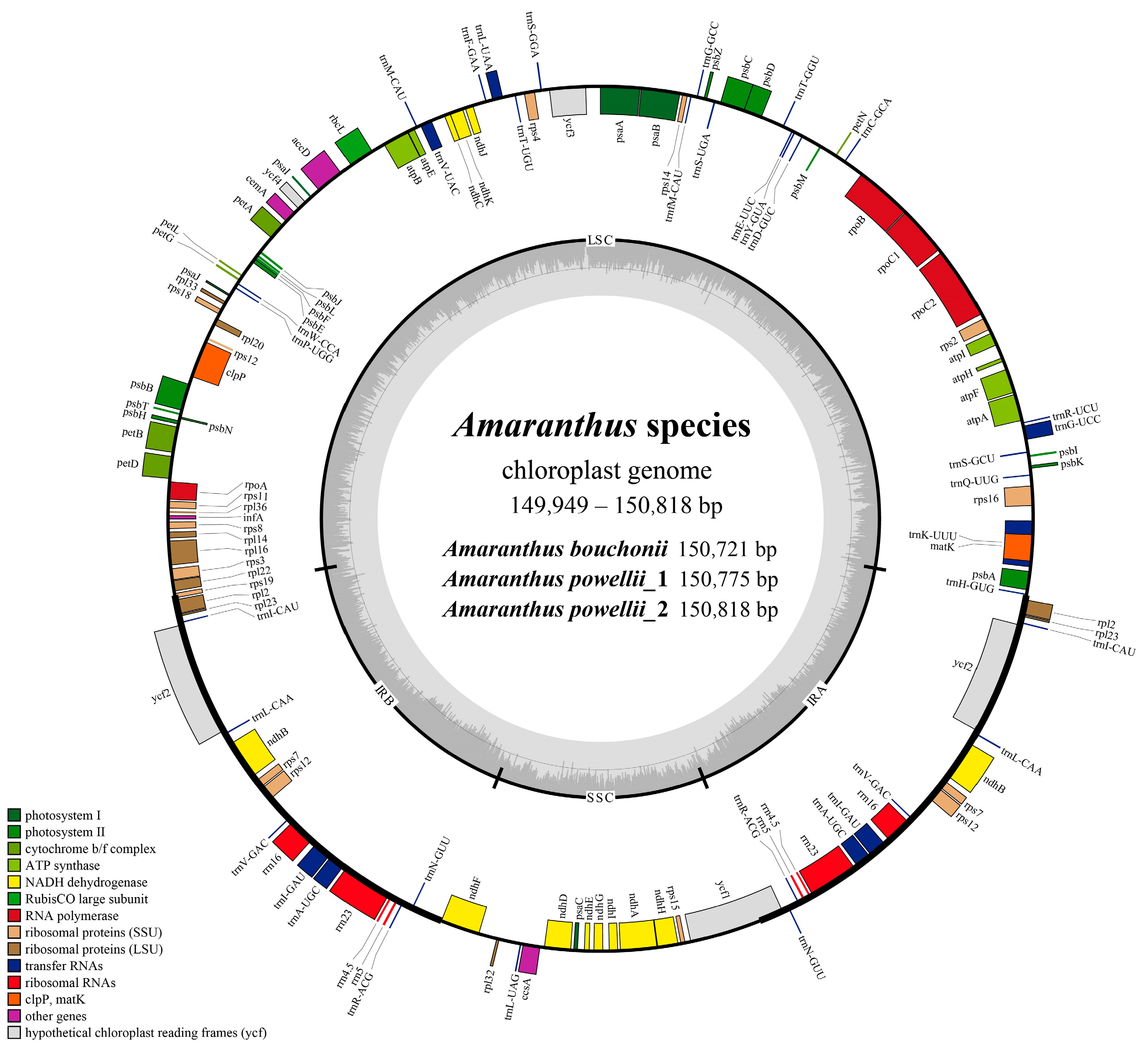
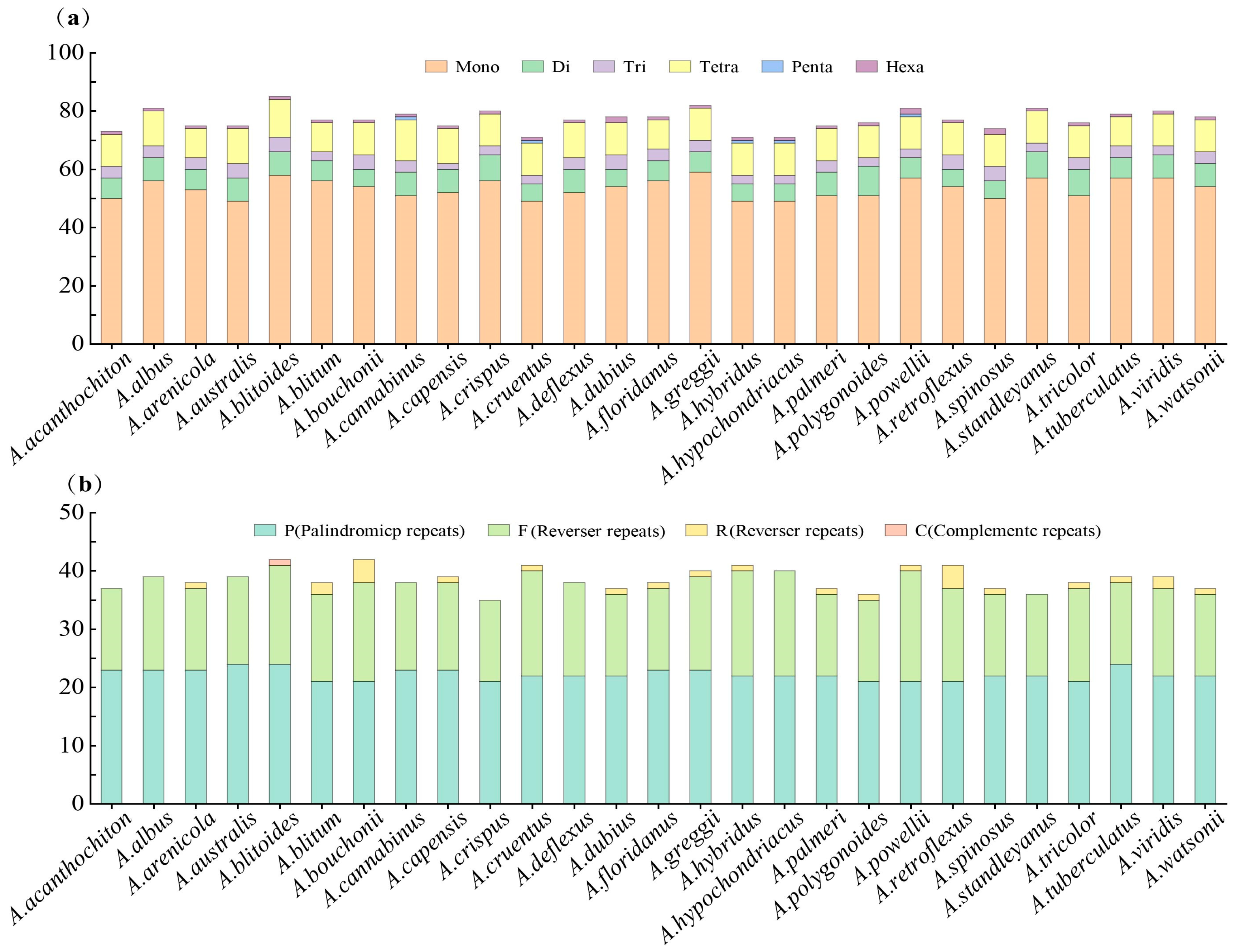
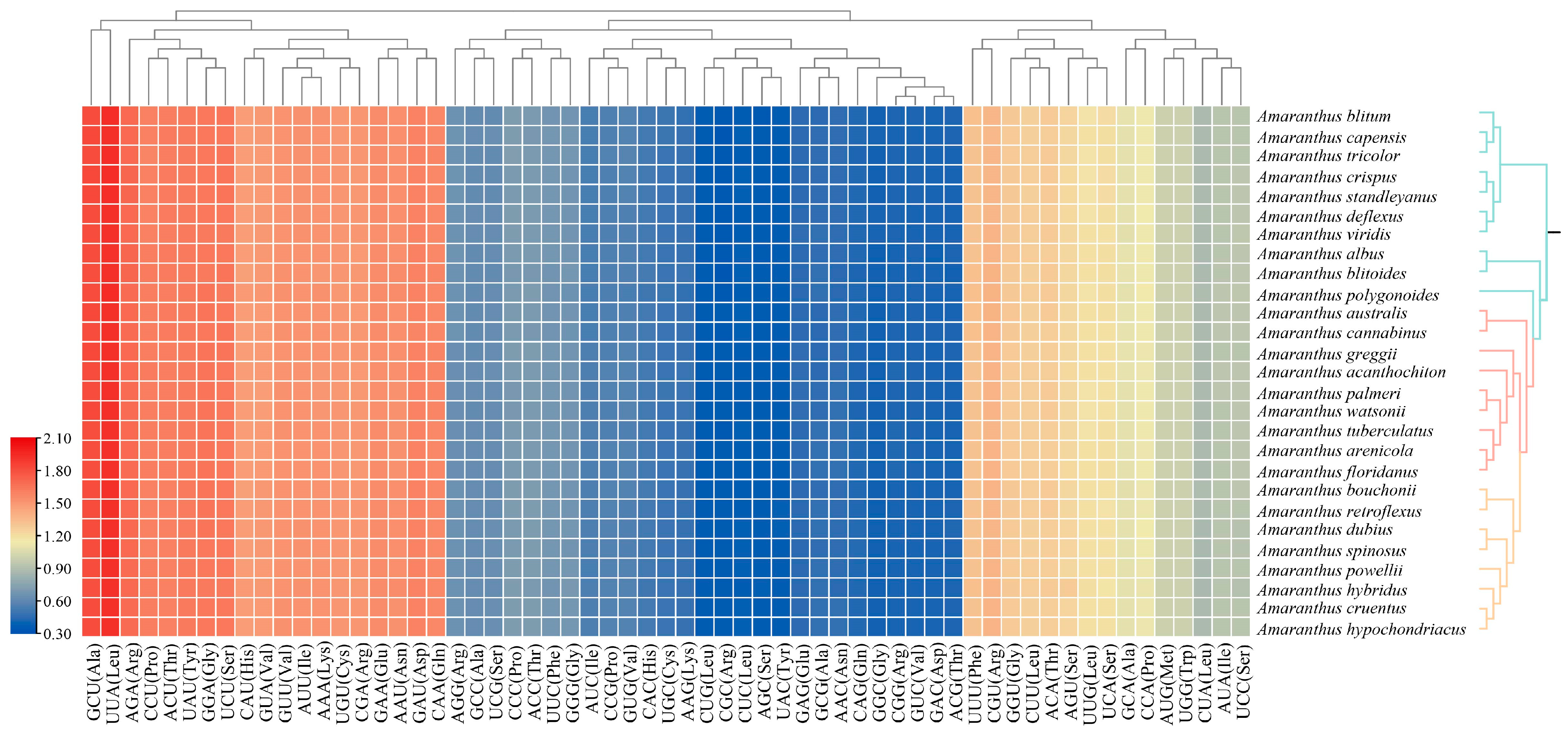
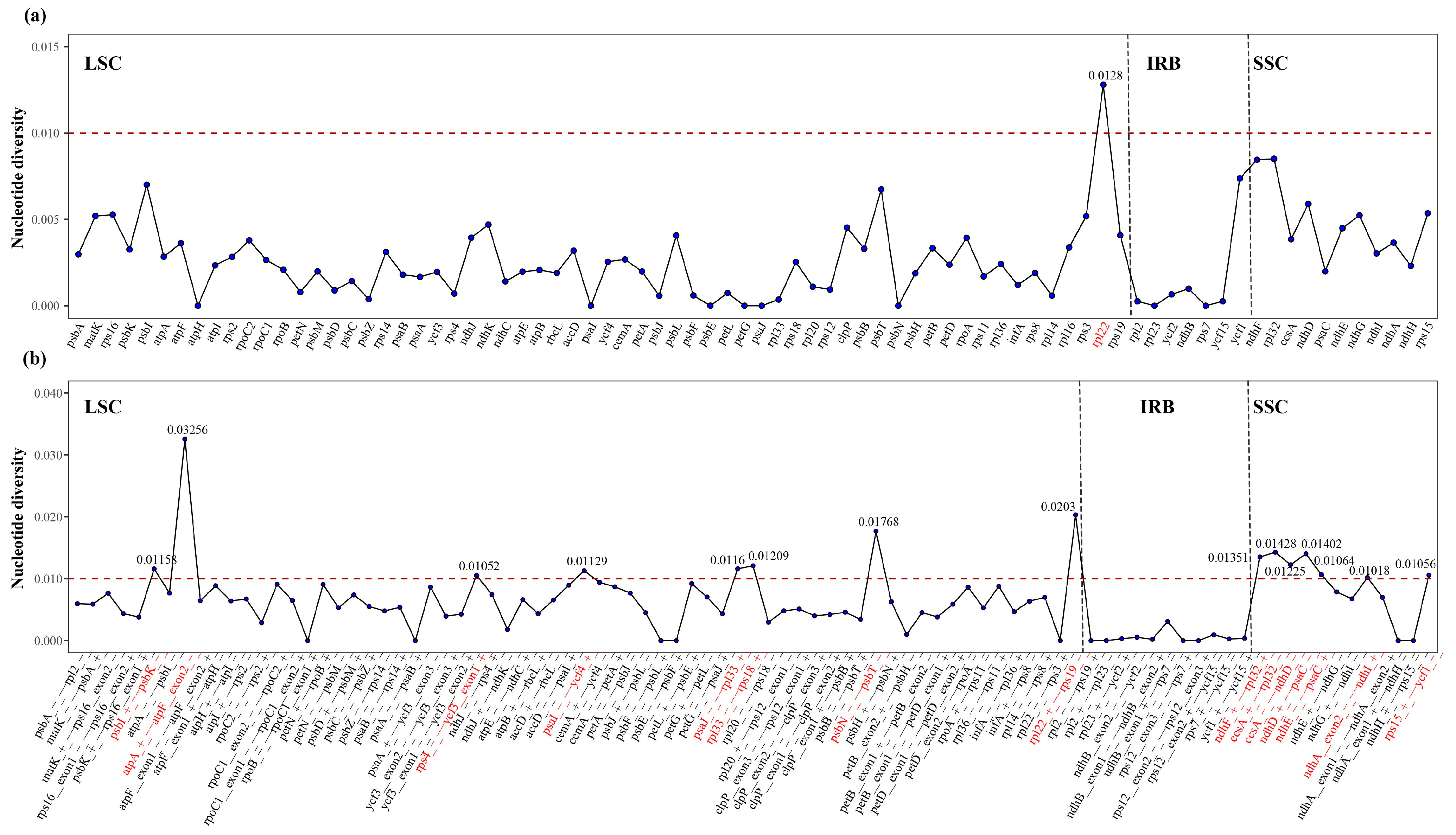
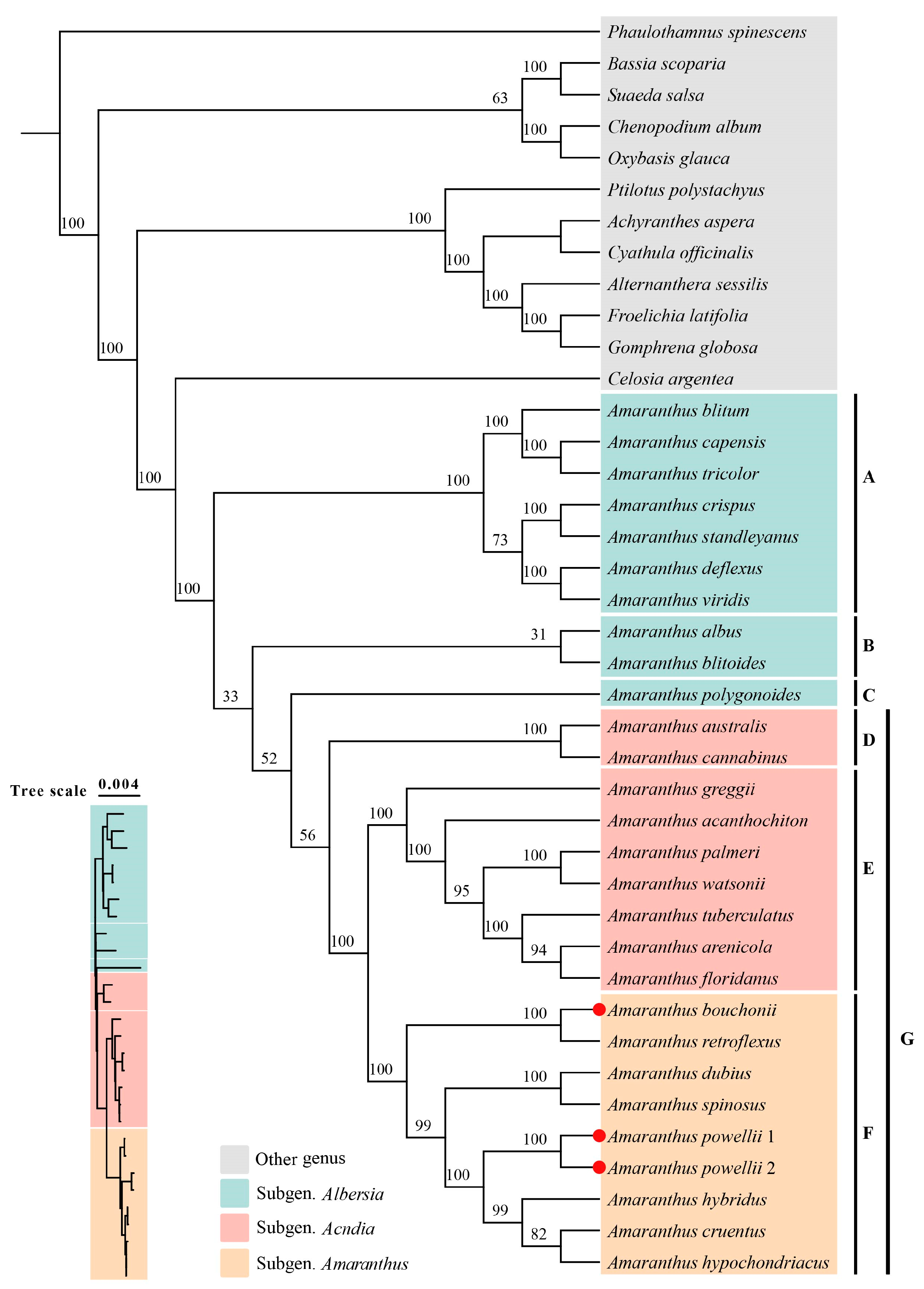
Amaranthus, a genus in Amaranthaceae, is divided into three subgenera—Amaranthus, Acnida, and Albersia—and contains approximately 70 to 80 species. Understanding its phylogenetic relationships is essential for species classification, genetic diversity assessment, and evolutionary studies. This knowledge is vital for improving Amaranthus utilization in crop improvement and managing the ecological impacts of invasive weeds. In this study, we analyzed the chloroplast genomes of 27 Amaranthus species across all three subgenera to characterize their genomic features and construct a comprehensive phylogenetic tree. Our aim was to elucidate the phylogenetic relationships within the genus and evaluate interspecific affinities among the subgenera. We also addressed the taxonomic ambiguity surrounding A. bouchonii and A. powellii to determine their distinct species within the genus. Chloroplast genome sizes ranged from 149,949 to 150,818 bp, with GC content varying between 36.52% and 36.63%. Comparative structural analyses confirmed highly conserved quadripartite structures, gene content, and organization, comprising 87 protein-coding genes, 37 tRNAs, and 8 rRNAs. Repeat and codon usage analyses revealed conserved repeat patterns and a preference for codons ending in A or U. Selection pressure analysis indicated a predominantly purifying selection, with matK showing signs of positive selection, particularly in A. spinosus. Phylogenetic analysis of 80 protein-coding genes confirmed the monophyly of subgenus Amaranthus but found Alberisa and Acnida to be paraphyletic. Despite their morphological similarity, A. bouchonii and A. powellii were placed in separate clades within subgenus Amaranthus, with A. bouchonii clustering with A. retroflexus, and A. powellii aligning with the A. hybridus complex. Additionally, we identified 16 variable regions as potential molecular markers for species identification. Our study provides the most comprehensive Amaranthus chloroplast genome dataset to date, offering new insights into its evolutionary relationships and valuable genomic resources for taxonomy, germplasm management, and invasive risk assessment.
Keywords: Amaranthus taxonomy; chloroplast genome; genome conservation; species identification; phylogenetic analyses; comparative genomics Amaranthus taxonomy; chloroplast genome; genome conservation; species identification; phylogenetic analyses; comparative genomics