Article

Exploration of the Donors and Specific Genes of B Subgenome in Perilla frutescens Based on Genomic Analysis


1
State Key Laboratory of Bioactive Substance and Function of Natural Medicines & National Engineering Laboratory for Breeding of Endangered Medicinal Materials, Institute of Medicinal Plant Development, Chinese Academy of Medical Sciences & Peking Union Medical College, Beijing 100193, China
2
Hainan Provincial Key Laboratory of Resources Conservation and Development of Southern Medicine, Hainan Branch of the Institute of Medicinal Plant Development, Chinese Academy of Medical Sciences and Peking Union Medical College, Haikou 570311, China
*
Authors to whom correspondence should be addressed.
These authors contributed equally to this work.
Plants 2025, 14(23), 3698; https://doi.org/10.3390/plants14233698
Submission received: 7 November 2025 / Revised: 30 November 2025 / Accepted: 1 December 2025 / Published: 4 December 2025
(This article belongs to the Special Issue Applications of Omics and Bioinformatics in Medicinal Plants)

Abstract

Perilla frutescens is an important medicinal and edible plant in Asia and was introduced in Europe and North America mainly as a spice plant. The commonly cultivated species is an allotetraploid (AABB). While the identity of its AA diploid donor has been preliminarily clarified, the other donor, BB, has not been discovered yet, and the taxonomic status and characteristics of the BB donor remain unresolved. Based on the published genomes of Perilla spp., we employed a collinearity analysis, gene structure similarity assessment, and multi-level functional annotation to infer the genomic and phenotypic features of the B subgenome. Results suggest that the protein sequences of the B and A subgenomes exhibit the highest similarity, while the protein sequences of Lavandula angustifolia or Ocimum basilicum are less similar to the B subgenome, and two subgenomes also possess the largest number of homologous genes and have similar gene structures. A total of 90 BB progenitor-specific genes were significantly enriched in pathways related to secondary metabolite biosynthesis and environmental stress response. Among these genes, the terpene synthase genes constitute the main genetic basis for the diversity of bioactive components in perilla. The discovery of a homologous gene containing the NB-ARC domain, associated with resistance to late blight, suggests that BB may contribute to key disease-resistant traits. Further gene family analysis revealed that compared with the A subgenome, the B subgenome exhibited fewer genes and lower diversity in the TPS and NB-ARC families. These findings indicate that BB may have originated from an unfound or extinct species within the Perilla spp. The BB donor might be less diversified than AA, possibly adapting to a narrow geographic and climatic range.

1. Introduction

Perilla frutescens is a highly diverse plant species, which is widely cultivated and utilized across East Asia, Southeast Asia, and other regions as an important industrial crop. Wild Perilla spp. has been discovered in East Asian countries such as China and Japan. It is generally believed that P. frutescens was first domesticated in China [1,2,3]. Nowadays, it has been introduced to Europe and North America, mainly as a spice plant. P. frutescens serves as both a vegetable for consumption and as a spice due to its aromatic properties. It also boasts a long history of medicinal use. Its unique therapeutic value is documented in the classical Chinese medical text, the Compendium of Materia Medica, and the leaves, stems, and seeds of P. frutescens are listed in the Chinese Pharmacopoeia. Behind its extensive applications and diversity lies a complex genomic makeup.
The identification of the karyotype of P. frutescens dates back to 1994, when it was recognized as an allotetraploid (2n = 4x = 40, AABB) [4]. Since then, several studies have explored the diploid progenitors of its two subgenomes. Ito et al. published the first report on its donor AA. By creating hybrid lines and combining karyotype identification methods, they found that the allotetraploid P. frutescens had ten common chromosomes with the diploid Perilla citriodora in the triploidy F1 generation, so they believed that P. citriodora was one donor of P. frutescens [4]. Subsequently, Ito et al. provided further evidence indicating P. citriodora as a donor of P. frutescens from the perspective of key terpene synthases (TPSs). They found that the sequences of geraniol synthases from P. citriodora and P. frutescens were mostly the same [5]. In 2021, a study of the first P. frutescens and P. citriodora genomes confirmed that P. citriodora is the AA donor of P. frutescens at the genomic level [6].
Although the origin of the A subgenome in P. frutescens has gradually become clear, the other donor, BB, remains enigmatic. To date, no germplasm resources have been confirmed as direct descendants of BB. This has severely hampered the deep understanding of the entire history of this widely used crop, including its origin, evolution, as well as the mechanisms of its genomic evolution [4,6,7,8,9,10].
As a species rich in chemical diversity, P. frutescens was found to be classifiable into distinct germplasm groups based on the major compounds of its volatile oils. This led to the introduction of the concept of chemotypes, establishing a framework for understanding its metabolic diversity [11]. Chemotypes of leaves with different monoterpene components exhibit distinct odors, endowing them with entirely different sensory characteristics and application values. However, the chemotypes of P. frutescens are different from the diploid P. citriodora. In numerous germplasm surveys, the perillaldehyde type and perilla ketone type have been found to be comparatively common [12,13,14]. In contrast, in P. citriodora, the citral type currently exhibits the highest prevalence, and no evidence of the perillaldehyde type has been found in this diploid species [4,13,15]. This difference in chemotype distribution suggests that the emergence of the perillaldehyde type may be closely associated with the contribution of another unknown donor, BB. Since the BB germplasm has not been discovered yet, the direct evidence supporting this hypothesis is still lacking, making it an unresolved issue in understanding the formation of chemotype differences and the metabolic evolution of P. frutescens [4,9,10,15]. Thus, revealing the characteristics of the BB genome will also be important for the exploration of this species’ metabolic evolution.
Allopolyploids are relatively common in plants, but it is not an easy task to identify the donor species of these subgenomes. With the development of sequencing technology, genomic analyses such as collinearity, phylogenetics, structural variation, and gene structures of homologous genes have become important methods for inferring the taxonomic status and potential characteristics of the donor species [16,17]. These methods are suitable choices for investigating P. frutescens to make inferences about its genomes. In addition, because perillaldehyde is a monoterpene, it is evident that the TPSs determining the biosynthesis of perillaldehyde hold significant importance for studying the evolution of P. frutescens and identifying clues for BB. Previous studies have also proved that the evolutionary history of P. frutescens can be inferred by the sequence similarity of terpenoid synthases [5,8]. Therefore, systematically analyzing the diversity of TPSs in P. frutescens and their subgenomic distributions could provide critical points for elucidating the evolutionary origins of BB and its related chemotypes. The published genomes of the Perilla spp. provide genomic insights for studying BB, enabling the inference of potential characteristics possessed by BB at the genomic level.
Against this background, we aimed to infer the characteristics of the unknown ancestor, BB, of P. frutescens through multi-dimensional analyses of its genomic information. We compared the protein sequence and gene structural similarity of the B subgenome of P. frutescens with the A subgenome and the genomes of two close relatives of the Perilla spp. Furthermore, a set of “BB progenitor-specific genes” was screened and used to predict potential BB traits. We also analyzed the distribution of the TPS gene family and nucleotide-binding adaptor shared by Apaf-1, R proteins, and the Ced-4 (NB-ARC) disease resistance gene family in each subgenome. The results of these multi-dimensional analyses were used to construct inferences about the unknown BB progenitor of P. frutescens at the genomic level and propose hypotheses regarding its potential geographical distribution.

2. Results

2.1. Analysis of Protein Sequence Similarity Between BB and Its Related Species

To explore whether BB might have originated from a species of the genus Perilla or some other closely related genus, we first dissected PF40, a genome of P. frutescens with clearly defined A and B subgenomic regions [6]. The genome analysis revealed that the A subgenome showed an advantage in terms of the number of genes, with a total of 20,936 genes, while the B subgenome had 17,676 genes [6]. We selected the A subgenome, which was obtained by splitting PF40, as well as two other species, Lavandula angustifolia and Ocimum basilicum, from the genera Lavandula and Ocimum of the Family Labiatae. These two species have high-quality reference genome data and are known to be the closest evolutionary relatives of P. frutescens [18,19,20,21].
Next, the protein sequences were aligned between the split B subgenome against each of the other three genomes. Synteny analysis based on sequence similarity indicated that the B subgenome and the A subgenome exhibited strong collinearity in all 10 chromosomes, suggesting a high degree of homology in the sequences of the coding genes (Figure 1a–c). However, significant reductions in collinearity were observed when the B subgenomes were analyzed in the two close relatives, L. angustifolia and O. basilicum (Figure 1a–c). A similar high collinearity between subgenomes and low collinearity between the subgenomes and the genomes of close relatives had also been observed in a previous study of O. basilicum [21]. Although the B subgenome shares many homologous sequence fragments with L. angustifolia and O. basilicum, these fragments were much shorter and more scattered (Figure 1a,b). The lack of genomic data for more species of the Lamiaceae family limits the systematic analysis of their genomic similarities. However, the highly conserved sequences of the A and B subgenomes suggest that BB may have originated from a species of the genus Perilla or even the same ancestor species as AA.

2.2. Analysis of Similarity of Gene Structures Between BB and Its Related Species

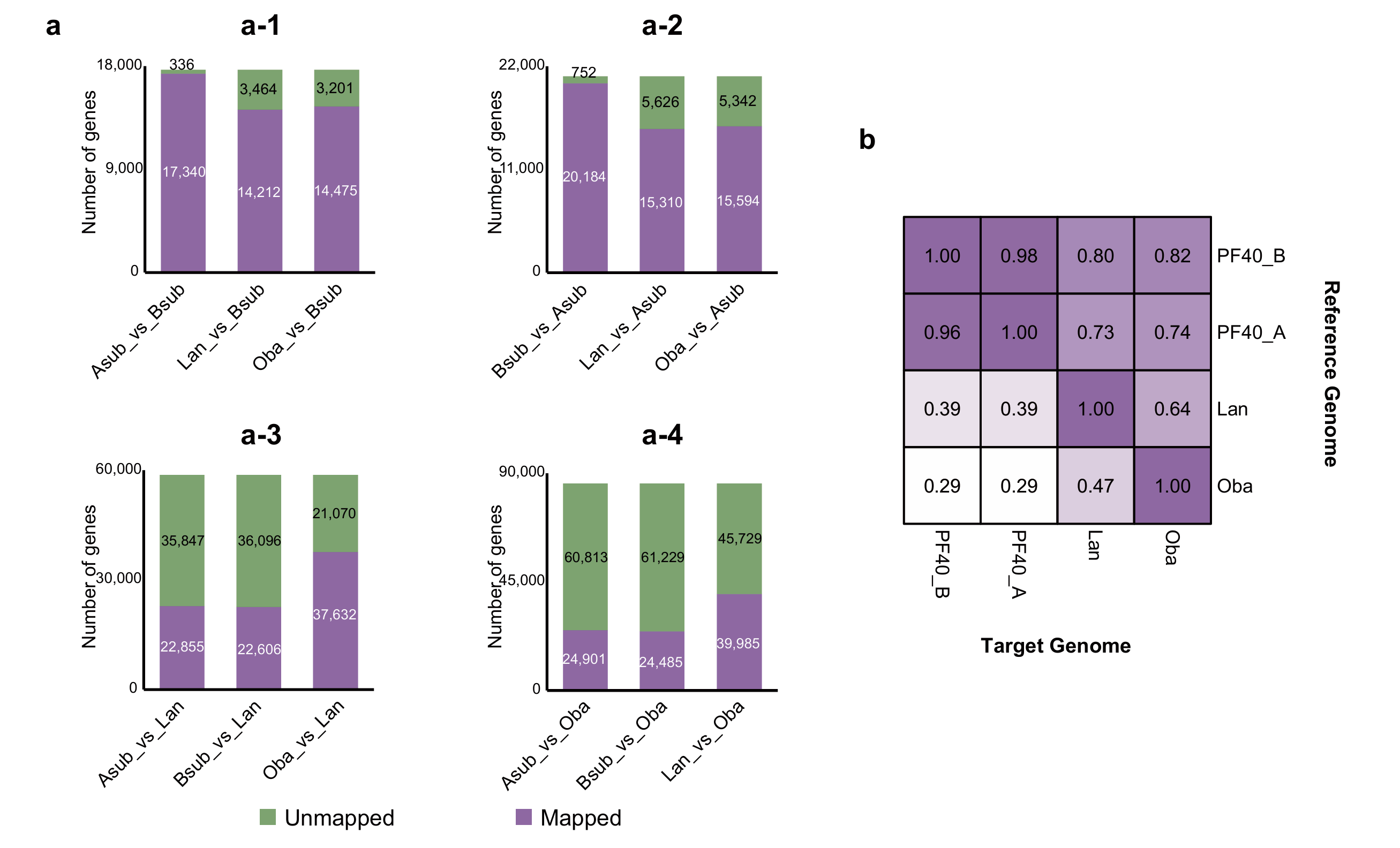
The protein sequence similarity can only partly reflect the relationship between homologous genes. The number of exons, the splicing sites, and other gene structures can also be used to evaluate the similarities between homologous genes [22] and should be considered as well. So we further compared the B subgenome, the A subgenome, L. angustifolia, and O. basilicum with each other based on the gene structures of homologous genes. The results showed that when the B subgenome was used as the reference genome, the A subgenome had the largest number of similar genes with it (Figure 2a). When the A subgenome was used as the reference genome, the B subgenome also had the largest number of similar genes with A, while the similarity of either A or B with L. angustifolia or O. basilicum was significantly lower (Figure 2a,b). Given the similarities in both the protein sequences and gene structures, it is highly likely that BB also originated from a Perilla species, but it still maintains a certain degree of differentiation from AA.

2.3. Screening and Functional Annotation of BB Progenitor-Specific Genes

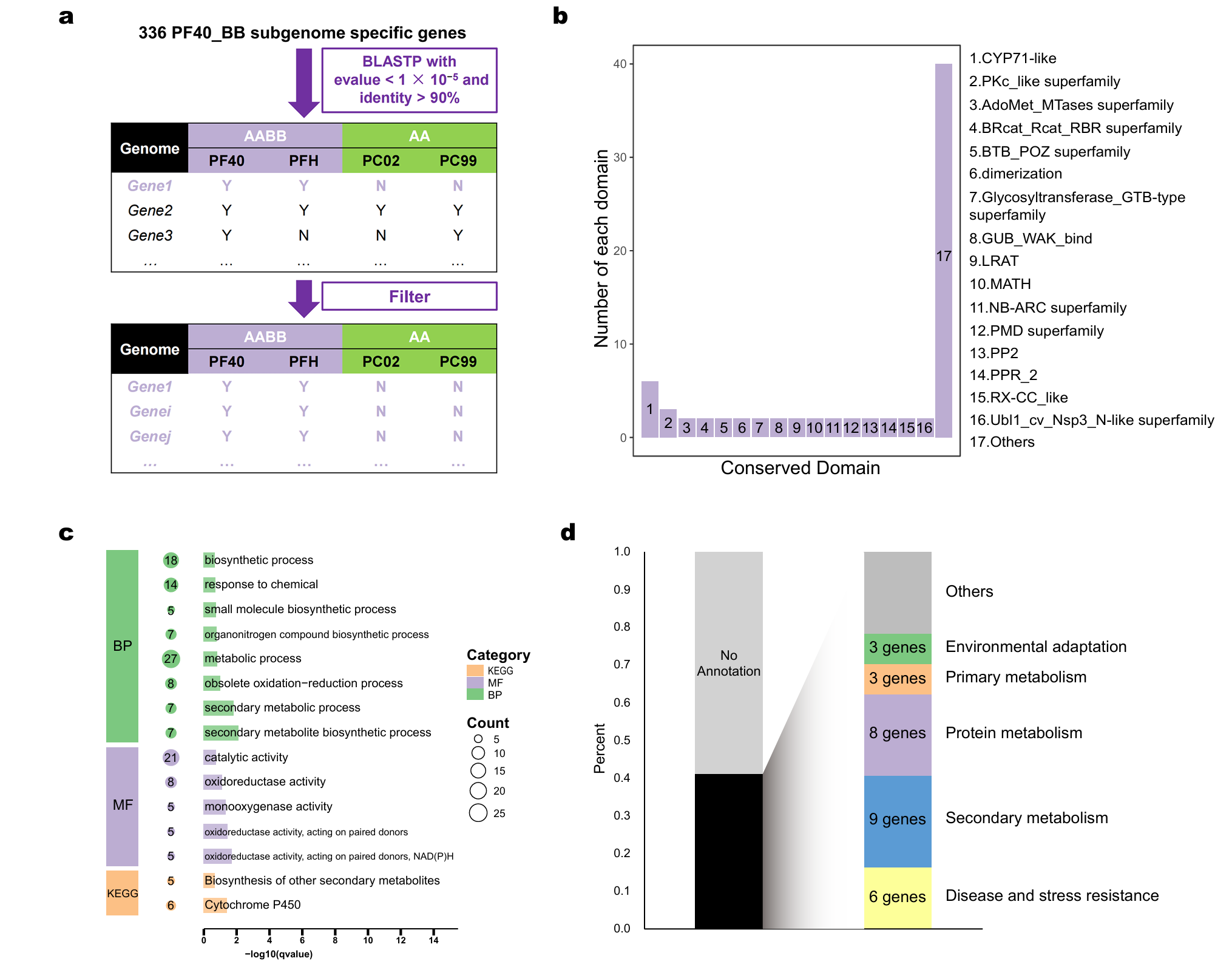
In order to speculate on the characteristics of the BB progenitor, we further focused on the BB progenitor-specific genes. We systematically compared the protein sequences and gene structures of homologous genes between the B and A subgenomes. This approach identified 336 genes that are specific to the B subgenome (Figure 2a, Supplementary Table S1). To obtain more convincing BB progenitor-specific genes, our further analysis included the two published allotetraploid P. frutescens genomes, PF40 and Hoko-3, as well as the two diploid P. citriodora genomes, PC02 and PC99, which were both considered to be the AA diploids. We retained genes that were present in both PF40 and Hoko-3 but were absent in both PC02 and PC99. Eventually, 90 genes were obtained, which we defined as “BB progenitor-specific genes” (Figure 3a). Due to the extremely similar genomes, there may exist genes that are either present or absent in both subgenomes, which would cause a deviation in the screening of “BB progenitor-specific genes”. There are significant differences in geographical distribution, as well as morphological and genomic differences, between PF40 and Hoko-3 [6,23], and the genome size of PC99 is 10% smaller than that of PC02 [6]. This diversity of genomes can, to some extent, enhance the reliability of the screening for “BB progenitor-specific genes”.
The annotation of the BB progenitor-specific genes was then performed by three different methods. As shown in Figure 3b, the proteins encoded by the 90 genes contain a total of 77 complete domains. Among the 90 genes, the cytochrome P450 family 71 (CYP71-like) domain is the most numerous. The CYP71 family genes are involved in secondary metabolic processes in many species of Lamiaceae, and they have been found to modify monoterpenoids in plants such as mint and perilla [24,25,26]. Other domains have not been clearly reported to be related to the secondary metabolisms of perilla and its related species. Therefore, we speculate that BB may have different monoterpenes from AA.
GO and KEGG enrichment showed that 90 “BB progenitor-specific genes” were mainly enriched in secondary metabolic processes and chemical responses. This suggests that these genes may be related to specific environmental adaptations (Figure 3c).
Then, we annotated each of the 90 genes based on the results of blasting in NCBI and searching for the functions of the identified homologous proteins in the Uniprot database. The results showed that 32.2% of the genes were related to secondary metabolism, disease and stress resistance, and protein and fatty acid metabolism functions (Figure 3d, Supplementary Table S2). Among them, TPS KAH6789932.1 caught our attention. BLAST v2.10.1 analysis revealed that this protein shares 52.76% sequence identity with the SabS1 enzyme from Salvia pomifera, which has been reported to synthesize sabinene (Supplementary Table S2) [27]. In addition, we identified KAH6788468.1 as a homolog of the late blight resistance protein R1A-10 in Solanum demissum through a BLAST alignment, which showed 32.62% sequence identity (Supplementary Table S2). Since the sequence similarity between KAH6788468.1 and R1A-10 is relatively low, it is likely to have a completely different function from R1A-10. The domain prediction indicates that KAH6788468.1 contains a complete NB-ARC domain, so it may be related to disease resistance [28] (Figure 3b, Supplementary Table S3). So, we speculated that BB may have originated in an area with a high incidence of late blight disease.

2.4. Asymmetric Distribution of TPS Families Between Subgenomes

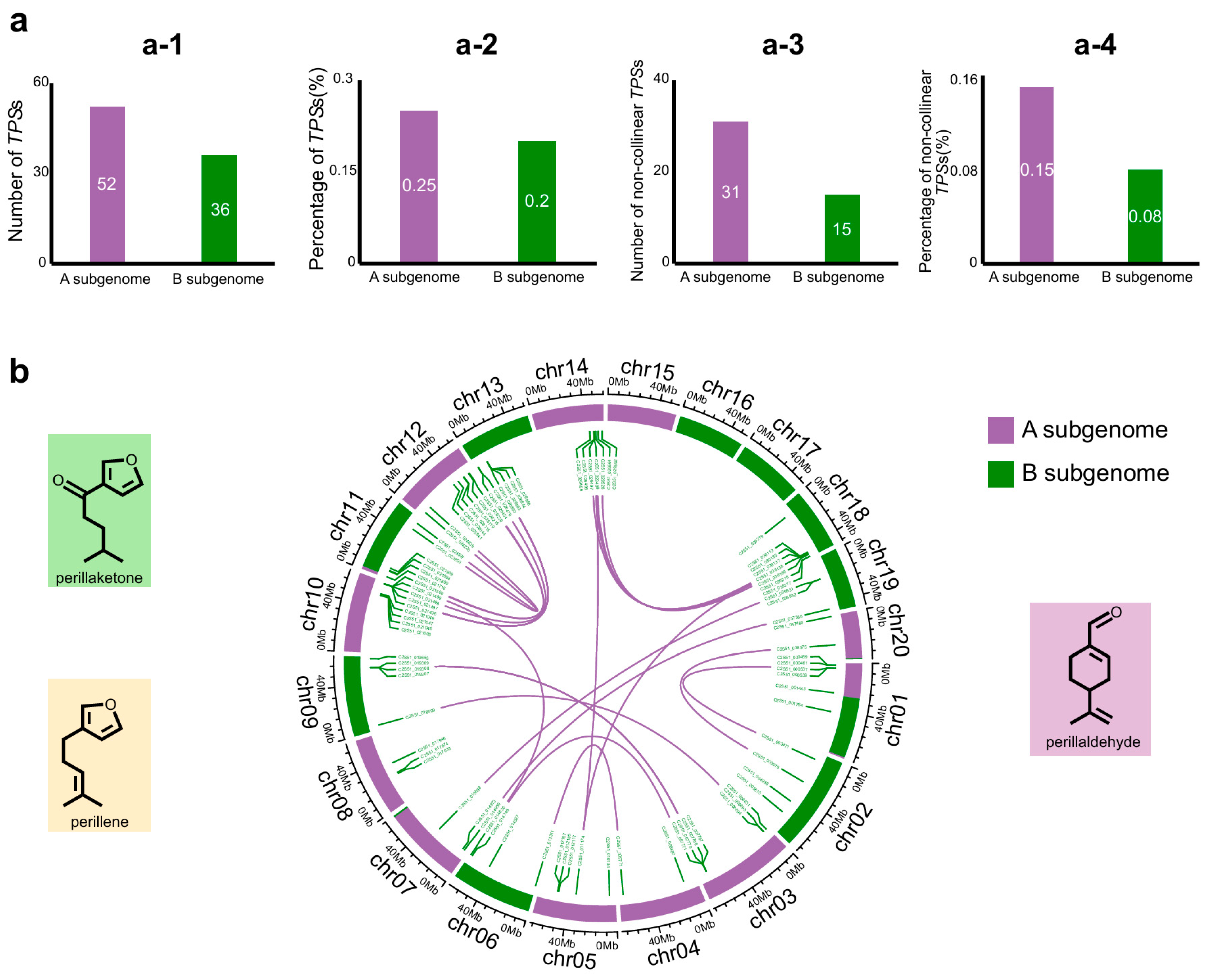
Given that a TPS is included in the “BB progenitor-specific genes” and the number of CYP71-like domains in the “BB progenitor-specific genes” is the highest, we speculate that BB may differ from AA in terms of monoterpene diversity. Considering that TPSs determine the formation of the terpene skeleton and affect the diversity of the terpene skeleton, and as cytochrome P450 modifies terpenes [25], the diversity of monoterpene chemotypes in P. frutescens might be the result of both terpene synthases (TPSs) and cytochrome P450 (CYP450). The TPS family is closely related to the chemical diversity of P. frutescens, and its distribution and functional differentiation can reflect the differences in origin among subgenomes. Firstly, we identified 99 candidate TPSs from the PF40 genome by HMMER [29]. Using CD-Search, we further screened the corresponding proteins with complete Terpene_cyclase_plant_C1, the PLN02592 superfamily, the PLN02279 superfamily, or the Isoprenoid_Biosyn_C1 superfamily domain. Finally, 88 TPSs were obtained for subsequent analysis. The gene distribution showed that 52 genes were located in the A subgenome and 36 genes were located in the B subgenome (Figure 4a).
In terms of the proportion of all genes in the subgenome, the proportion of TPSs in the A subgenome is 0.25%, and in the B subgenome, it is 0.20%. The TPSs in the A subgenome have a greater quantitative advantage (Figure 4a). Analysis based on protein sequence similarity revealed that there were 21 pairs of TPS genes that were colinear between the A subgenome and the B subgenome, accounting for 40.4% and 58.3% of the total TPSs in the A subgenome and the B subgenome, respectively (Figure 4a,b). All TPS genes except the 21 pairs of collinear TPSs were defined as non-collinear TPSs (Figure 4a). This indicates that the A subgenome has more specific TPSs. The quantitative and differentiative advantages of the TPSs in the A subgenome also indicate that the A subgenome may make a greater contribution to the terpene diversity of P. frutescens. It also suggests that although the A and B subgenomes are highly similar, there is still differentiation between the BB-donor species and P. citriodora that may have led to their chemotypic differences. The species contributing to the B subgenome might have had different traits from P. citriodora in the past.

2.5. Asymmetric Distribution of NB-ARC Families Between Subgenomes

P. frutescens is an important economic crop, so studying its disease resistance and control has significance for its production. Its resistance to different diseases can also reflect the P. frutescens’ adaptability to its environment. It is widely believed that the proteins involved in pathogen recognition in plants are resistance (R) proteins [30]. Most of these R proteins contain a central nucleotide-binding domain (NB-ARC), and this domain is believed to regulate the activity of R proteins [28]. Therefore, studying the differences in the NB-ARC genes in these subgenomes is beneficial for inferring the resistance characteristics and geographical distributions of the donors of P. frutescens.
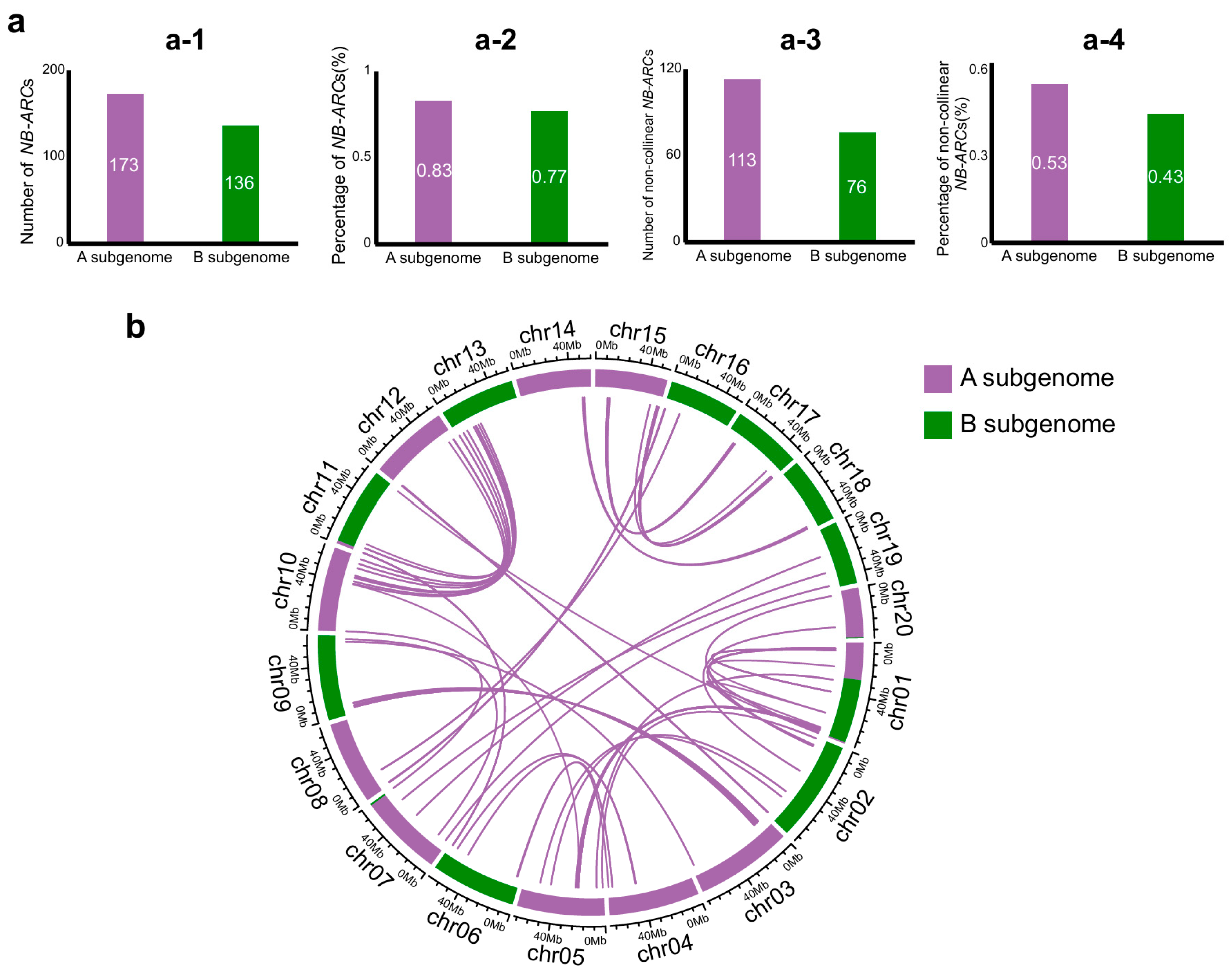
A gene containing the NB-ARC domain and sharing 32.62% protein sequence identity with R1A-10 was identified among the “BB progenitor-specific genes” (Supplementary Tables S2 and S3). This finding suggests that the disease-resistant characteristics of BB warrant further attention. These characteristics might reflect the differences in evolution between BB and AA. Therefore, we identified and analyzed the NB-ARCs in the PF40 genome. Through a search of HMMER, a total of 355 candidate NB-ARCs were identified in PF40. Using CD-Search, we further screened the corresponding proteins for the complete NB-ARC domain. Eventually, 309 NB-ARCs were obtained for subsequent analysis. Among them, 136 NB-ARCs were distributed in the B-subgenomic region, accounting for 0.77% of the total genes in the B subgenome, and 173 NB-ARCs were distributed in the A subgenome, accounting for 0.83% of the total genes in the A subgenome (Figure 5a). There are a total of 60 pairs of co-linear NB-ARCs in the A and B subgenomes, accounting for 34.7% and 44.1% of the total NB-ARCs in the A and B subgenomes, respectively (Figure 5a,b). All NB-ARC genes except the 60 pairs of collinear NB-ARCs were defined as non-collinear NB-ARCs (Figure 5a).
Thus, we found that the A subgenome has more NB-ARCs compared to the B subgenome, and its gene family diversity is higher. This genomic feature suggests that the AA donor may have evolved with more complex and diverse disease resistance mechanisms, and this difference may reflect that the AA and BB donors experienced different pathogenic selection pressures during their evolution: the AA donor had a broader adaptability, while the BB donor may have adapted to specific habitats with relatively lower pathogenic pressure.

3. Discussion

It is generally believed that P. frutescens is an allotetraploid (2n = 4x = 40, AABB). The diploid progenitor of the A subgenome has been identified. However, the origin of the B subgenome remains unclear. Since the A and B have fused in several chromosomes [6], it is hard to determine the exact chromosome number of BB. Might it originate from another species in the same genus? Or is there a possibility that the BB subgenome comes from a species of a closely related genus? In this study, based on the published genomes of Perilla spp., L. angustifolia, and O. basilicum, we discovered that, compared with the two species from other genera, the A subgenome was highly similar to the B subgenome in their protein sequences and conserved gene structures of homologous genes. Furthermore, we analyzed the “BB progenitor-specific genes” and found an asymmetric distribution of genes from both the TPS and NB-ARC families in the A and B subgenomes. These genes show a higher number and diversity in the A subgenome.
Previous speculations about the progenitor of the B subgenome have suggested that it existed in China, but they have failed to identify the species from which this subgenome originated [9]. Genomic analysis indicates that the B subgenome is older than the A subgenome and its donor, P. citriodora, and that the B subgenome shows great concordance with the genome of P. citriodora [6]. However, no in-depth analysis or feature inference has been reported in the B subgenome. This study was the first to focus on the taxonomic status and key genetic characteristics of the B subgenome. Based on the above analysis, we infer that the unfound donor of the B subgenome of P. frutescens might have been a species within the genus Perilla that adapted to a specific habitat. This study has reduced the possibility of the BB’s origin from other genera and so has narrowed down the search range to the genus Perilla.
Genomic analysis holds significant application value in exploring the origin and history of polyploids. This study evaluated the similarity between the B subgenome and its relatives by comparing the collinearity of their protein sequences and the structural similarity of their homologous genes. Through the screening of “BB progenitor-specific genes” and the analysis of gene families, the possible characteristics of BB were speculated upon. Similarly, genomic methods have also been applied to other polyploids. For example, for Avena barbata (AABB), researchers selected 12 closely related species of the same genus to compare and inferred the unknown donors of the subgenomes through phylogenetic and sequence similarity analyses. They also compared subgenome-specific “PAV genes” and further analyzed the functions of these genes [16]. In Elymus nutans (StStYYHH), researchers compared the degree of similarity and the evolutionary relationship between the subgenome and 28 related species through phylogenetic analysis and sequence similarity studies, and inferred the taxonomic status of the unknown Y subgenome [17]. There were also some different approaches to discriminate between subgenomes. For example, in Trapa, by collecting population samples of 26 species or varieties within the genus, researchers clarified the evolution of subgenomes among different species and varieties through phenotypic measurement, population structure analysis, and population differentiation analysis, and discovered that one species within the genus might contain a new subgenome [31]. In conclusion, our future work could focus on collecting as many Perilla species as possible for phylogenetic and comparative genomic analysis, and the analyses of subgenomic characteristics at the expression level could also be included.
We have discovered that the protein sequences and gene structures of the B subgenome are highly conserved with the A subgenome. However, the most closely related species, Keiskea szechuanensis [19], cannot be included in the comparison due to a lack of genomic data. Furthermore, the genomes of only four species of the genus Perilla have been sequenced. We defined the “BB progenitor-specific genes” based on their presence/absence patterns in P. frutescens and P. citriodora, namely, that they exist in the two genomes of P. frutescens (PF40 and Hoko-3) but are absent in the two genomes of P. citriodora (PC02 and PC99). Thus, the structural variations that are common to both of the two P. frutescens genomes or the two P. citriodora genomes may affect the determination of the “BB progenitor-specific genes”. The annotation bias of any one of the genomes may also have led to false positives and false negatives among the “BB progenitor-specific genes”. The newly generated genes in the PF40 and Hoko-3 genomes, which might be produced by tandem repeats, fragment repeats, or other mutations, may have resulted in the new genes generated through replication after polyploidization being wrongly identified as “BB progenitor-specific genes”. If more available genomes of related species of P. frutescens, in or out of the genus Perilla, can be obtained, the screening for PAV as “BB progenitor-specific genes” will be able to be analyzed from the perspective of the pan-genome, and the prediction results will be more accurate. In addition, due to the lack of possible BB progenitor samples, reliable experiments cannot be performed to verify our hypotheses. It is also difficult to confirm whether the donor species of BB has become extinct. This makes it impossible to obtain more information about BB at present. Future work can further explore possible samples from large-scale wild investigations in the targeted area. Then, the genomic and population genomics can be combined to deepen our understanding of BB and the evolution and domestication history of P. frutescens.
In conclusion, this study provides evidence from a comparative genomic perspective to infer the taxonomic status and potential distribution of BB, which can help search for and conduct an in-depth exploration of the undiscovered BB ancestor.

4. Materials and Methods

4.1. Preparation of Genomic Data

The PF40 genome data of Perilla frutescens were downloaded from the Genomes database of NCBI (https://ftp.ncbi.nlm.nih.gov/genomes/all/GCA/019/511/825/GCA_019511825.2_ICMM_Pfru_2.0/ (accessed on 18 July 2025)). The Lavandula angustifolia genome data were from NCBI (https://ftp.ncbi.nlm.nih.gov/genomes/all/GCA/028/984/105/GCA_028984105.1_UGA_lav_v1/ (accessed on 20 July 2025)). The Ocimum basilicum genome data were obtained from the BasilBase website (https://basil.breedbase.org/easy_gdb/about.php (accessed on 25 August 2025)).

4.2. Collinearity Analysis

Before collinear analysis, the Perilla frutescens PF40 genome was split using SAMtools (v1.10) [32] based on subgenomic region information to obtain the AA and BB subgenomic sequences. The collinearity dot map of the genome was plotted using WGDI (v0.6.5) [33]. The parameters of the WGDI dot plot configuration file were set as multiple = 1, score = 100, evalue = 1 × 10⁻⁵, repeat_number = 10, position = order, blast_reverse = false. Chromosome synteny plots were drawn using the JCVI (v1.1.11) [34]. The JCVI parameters were set as the default parameters. The syntenic gene pairs generated by JCVI were further processed by BLASTP to calculate sequence identity.

4.3. Analysis of Gene Structural Similarity

The intersect tool of BEDtools (v2.30.0) [35] was used to split the PF40 genome annotation gff file into gff files for the A and B subgenomes. Liftoff (v1.6.3) [22] was used to analyze the gene structure similarity between genomes based on the gff annotation files of genomes, with parameters of Liftoff set to default.

4.4. Enrichment Analysis and Annotation of Genes

GO and KEGG enrichment analysis of the gene set used EggNOG-mapper (v6.0.5) [36] and TBtools (v2.376) [37]. For each gene in the gene set, we searched for the first homologous gene in the uniprot_sprot database that met the standard of evalue > 1 × 10⁻⁵ through BLASTP [38], and took it as the preliminary annotation of each gene in the gene set. Then we extracted the detailed functional descriptions of these homologous genes in the Uniprot [39] database as further functional annotations.
Batch CD-Search [40] (https://www.ncbi.nlm.nih.gov/Structure/bwrpsb/bwrpsb.cgi (accessed on 12 September 2025)) was used for the classification of gene families. The protein sequences corresponding to the gene set were used as input. The domains in the Batch CD-Search results with incomplete N or C termini or evalue > 1 × 10⁻⁵ were removed. The information of the filtered domains was statistically analyzed using a custom script and visualized using the R package “ggplot2” (v3.5.0) (https://ggplot2.tidyverse.org (accessed on 25 September 2025)).

4.5. Identification and Collinearity Analysis of the TPS Family

To identify candidate TPS genes in P. frutescens, the Hidden Markov Model (HMM) profile corresponding to the Terpene_synth domain (PF01397) and Terpene_synth_C domain (PF03936) was retrieved from Pfam (http://pfam.xfam.org/ (accessed on 9 July 2025)). Using “hmmsearch --cut_tc” of HMMER (v3.3.2) (http://hmmer.org/ (accessed on 10 July 2025)), we searched for sequences with an evalue < 1 × 10⁻⁵ in the protein sequences of the PF40 genome based on the two HMM files, then merged and removed duplicates. The collinearity analysis of the TPSs in PF40 was conducted using diamond (v2.0.11.149) [41] and TBtools. Distribution and collinearity of genes were visualized using the R package “circlize” [42].

4.6. Identification and Collinearity Analysis of the NB-ARC Family

To identify candidate NB-ARCs in P. frutescens, the Hidden Markov Model (HMM) profile corresponding to the NB-ARC domain (PF00931) was retrieved from Pfam (http://pfam.xfam.org/ (accessed on 5 September 2025)). The following analyses were conducted with the same method as for the TPS family.

Supplementary Materials

The following supporting information can be downloaded at: https://www.mdpi.com/article/10.3390/plants14233698/s1, Table S1: 336 genes that are specific to the B subgenome based on the similarity in protein sequences and gene structures; Table S2: Annotation of “BB progenitor-specific genes” through the Uniprot database based on homologous genes; Table S3: Conserved domains of the BB progenitor-specific genes that were predicted through CD-search.

Author Contributions

Funding acquisition, J.W., Q.W., Z.G.; conceptualization, Z.L., J.W.; formal analysis, Z.L.; methodology, Z.L., B.W.; resources, J.W.; writing—original draft preparation, Z.L.; writing—review and editing, B.W., Z.G., J.W.; investigation, W.W.; data curation, Z.L., Y.L.; software, Y.L.; visualization, Z.L.; validation, B.W., W.W., Z.G.; supervision, Z.G., J.W.; project administration, Q.W., J.W. All authors have read and agreed to the published version of the manuscript.

Funding

This study was supported by the National Key R & D Program of China (Grant number: 2022YFC3501504), the earmarked fund for CARS (CARS-21), CAMS Innovation Fund for Medical Sciences (CIFMS) (grant no. 2023-I2M-2-006 and 2021-I2M-1-032), Hainan Province Outstanding Talent Team Project of China (HNYT20240003).

Data Availability Statement

Data are contained within the article or Supplementary Materials.

Acknowledgments

We thank all the participants in this study.

Conflicts of Interest

The authors declare no conflicts of interest.

References

  1. Li, H.-L. The vegetables of ancient China. Econ. Bot. 1969, 23, 253–260. [Google Scholar] [CrossRef]
  2. Zeven, A.; De Wet, J.M. Dictionary of Cultivated Plants and Their Regions of Diversity Excluding Most Ornamentals, Forest Trees and Lower Plants; Centre for Agricultural Publishing and Documentation: Wageningen, The Netherlands, 1982; pp. 39–40. [Google Scholar]
  3. Nitta, M.; Lee, J.K.; Kang, C.W.; Katsuta, M.; Yasumoto, S.; Liu, D.; Nagamine, T.; Ohnishi, O. The Distribution of Perilla Species. Genet. Resour. Crop Evol. 2005, 52, 797–804. [Google Scholar] [CrossRef]
  4. Honda, G.; Yuba, A.; Kojima, T.; Tabata, M. Chemotaxonomic and cytogenetic studies on Perilla frutescens var. citriodora (‘Lemon Egoma’). Nat. Med. 1994, 48, 185–190. [Google Scholar]
  5. Ito, M.; Honda, G. Geraniol synthases from perilla and their taxonomical significance. Phytochemistry 2007, 68, 446–453. [Google Scholar] [CrossRef] [PubMed]
  6. Zhang, Y.; Shen, Q.; Leng, L.; Zhang, D.; Chen, S.; Shi, Y.; Ning, Z.; Chen, S. Incipient diploidization of the medicinal plant Perilla within 10,000 years. Nat. Commun. 2021, 12, 5508. [Google Scholar] [CrossRef]
  7. Ito, M.; Kato, H.; Oka, Y. Phylogenetic analysis of Japanese Perilla species by using DNA polymorphisms. Nat. Med. 1998, 52, 248–252. [Google Scholar]
  8. Masumoto, N.; Korin, M.; Ito, M. Geraniol and linalool synthases from wild species of perilla. Phytochemistry 2010, 71, 1068–1075. [Google Scholar] [CrossRef]
  9. Deguchi, Y.; Ito, M. Investigation of microsatellite loci for the identification of registered varieties of Perilla frutescens and a discussion on the ancestor species of P. frutescens. J. Nat. Med. 2023, 77, 412–420. [Google Scholar] [CrossRef]
  10. Ito, M.; Honda, G. A taxonomic study of Japanese wild Perilla (Labiatae). J. Phytogeoer. Taxon. 1996, 44, 43–52. [Google Scholar]
  11. Ito, H. Studies on Folium perillae. VI. Constituent of essential oils and evaluation of genus Perilla. Yakugaku Zasshi J. Pharm. Soc. Jpn. 1970, 90, 883–892. [Google Scholar] [CrossRef] [PubMed]
  12. Zhang, X.; Wu, W.; Zheng, Y.; Chen, L.; Qianrong, C. Essential oil variations in different Perilla L. accessions: Chemotaxonomic implications. Plant Syst. Evol. 2009, 281, 1–10. [Google Scholar] [CrossRef]
  13. Nitta, M.; Kobayashi, H.; Ohnishi-Kameyama, M.; Nagamine, T.; Yoshida, M. Essential oil variation of cultivated and wild Perilla analyzed by GC/MS. Biochem. Syst. Ecol. 2006, 34, 25–37. [Google Scholar] [CrossRef]
  14. Wei, C.-L.; Guo, B.-L.; Zhang, C.-W.; Zhang, F.; Tian, J.; Bai, X.-L.; Zhang, S.-N. Perilla resources of China and essential oil chemotypes of Perilla leaves. China J. Chin. Mater. Medica 2016, 41, 1823–1834. [Google Scholar] [CrossRef]
  15. Ito, M.; Kiuchi, F.; Yang, L.L.; Honda, G. Perilla citriodora from Taiwan and its phytochemical characteristics. Biol. Pharm. Bull. 2000, 23, 359–362. [Google Scholar] [CrossRef]
  16. He, Q.; Xiao, Y.; Li, T.; Wang, Y.; Wang, Y.; Wang, Y.; Li, W.; Liu, N.; Gong, Z.; Du, H. High-quality genome of allotetraploid Avena barbata provides insights into the origin and evolution of B subgenome in Avena. J. Integr. Plant Biol. 2025, 67, 1515–1532. [Google Scholar] [CrossRef] [PubMed]
  17. Xiong, Y.; Yuan, S.; Xiong, Y.; Li, L.; Peng, J.; Zhang, J.; Fan, X.; Jiang, C.; Sha, L.-N.; Wang, Z. Analysis of allohexaploid wheatgrass genome reveals its Y haplome origin in Triticeae and high-altitude adaptation. Nat. Commun. 2025, 16, 3104. [Google Scholar] [CrossRef] [PubMed]
  18. Boachon, B.; Buell, C.R.; Crisovan, E.; Dudareva, N.; Garcia, N.; Godden, G.; Henry, L.; Kamileen, M.O.; Kates, H.R.; Kilgore, M.B.; et al. Phylogenomic mining of the mints reveals multiple mechanisms contributing to the evolution of chemical diversity in Lamiaceae. Mol. Plant 2018, 11, 1084–1096. [Google Scholar] [CrossRef]
  19. Wang, Y.; Wu, X.; Chen, Y.; Xu, C.; Wang, Y.; Wang, Q. Phylogenomic analyses revealed widely occurring hybridization events across Elsholtzieae (Lamiaceae). Mol. Phylogenet. Evol. 2024, 198, 108112. [Google Scholar] [CrossRef]
  20. Hamilton, J.P.; Vaillancourt, B.; Wood, J.C.; Wang, H.; Jiang, J.; Soltis, D.E.; Buell, C.R.; Soltis, P.S. Chromosome-scale genome assembly of the ‘Munstead’ cultivar of Lavandula angustifolia. BMC Genom. Data 2023, 24, 75. [Google Scholar] [CrossRef]
  21. Zhang, J.; Abu-Abied, M.; Milavski, R.; Adler, C.; Shachter, A.; Kahane-Achinoam, T.; Melnik-Ben-Gera, H.; Davidovich-Rikanati, R.; Powell, A.F.; Chaimovitsh, D.; et al. Chromosome-level assembly of basil genome unveils the genetic variation driving Genovese and Thai aroma types. Plant J. 2025, 121, e17224. [Google Scholar] [CrossRef]
  22. Shumate, A.; Salzberg, S.L. Liftoff: Accurate mapping of gene annotations. Bioinformatics 2021, 37, 1639–1643. [Google Scholar] [CrossRef]
  23. Tamura, K.; Sakamoto, M.; Tanizawa, Y.; Mochizuki, T.; Matsushita, S.; Kato, Y.; Ishikawa, T.; Okuhara, K.; Nakamura, Y.; Bono, H. A highly contiguous genome assembly of red perilla (Perilla frutescens) domesticated in Japan. DNA Res. 2023, 30, dsac044. [Google Scholar] [CrossRef] [PubMed]
  24. Mau, C.J.D.; Karp, F.; Ito, M.; Honda, G.; Croteau, R.B. A candidate cDNA clone for (-)-limonene-7-hydroxylase from Perilla frutescens. Phytochemistry 2010, 71, 373–379. [Google Scholar] [CrossRef]
  25. Fujiwara, Y.; Ito, M. Molecular cloning and characterization of a Perilla frutescens cytochrome P450 enzyme that catalyzes the later steps of perillaldehyde biosynthesis. Phytochemistry 2017, 134, 26–37. [Google Scholar] [CrossRef]
  26. Lupien, S.; Karp, F.; Wildung, M.; Croteau, R. Regiospecific cytochrome P450 limonene hydroxylases from mint (Mentha) species: cDNA Isolation, characterization, and functional expression of (−)-4S-limonene-3-hydroxylase and (−)-4S-limonene-6-hydroxylase. Arch. Biochem. Biophys. 1999, 368, 181–192. [Google Scholar] [CrossRef]
  27. Kampranis, S.C.; Ioannidis, D.; Purvis, A.; Mahrez, W.; Ninga, E.; Katerelos, N.A.; Anssour, S.; Dunwell, J.M.; Degenhardt, J.; Makris, A.M.; et al. Rational conversion of substrate and product specificity in a Salvia monoterpene synthase: Structural insights into the evolution of terpene synthase function. Plant Cell 2007, 19, 1994–2005. [Google Scholar] [CrossRef]
  28. Van Ooijen, G.; Mayr, G.; Kasiem, M.M.; Albrecht, M.; Cornelissen, B.J.; Takken, F.L. Structure–function analysis of the NB-ARC domain of plant disease resistance proteins. J. Exp. Bot. 2008, 59, 1383–1397. [Google Scholar] [CrossRef]
  29. Eddy, S.R. Accelerated profile HMM searches. PLoS Comput. Biol. 2011, 7, e1002195. [Google Scholar] [CrossRef] [PubMed]
  30. Martin, G.B.; Bogdanove, A.J.; Sessa, G. Understanding the functions of plant disease resistance proteins. Annu. Rev. Plant Biol. 2003, 54, 23–61. [Google Scholar] [CrossRef] [PubMed]
  31. Fan, X.; Qu, M.; Rybicki, N.; Dodd, L.L.; Min, J.; Chen, Y.; Gao, L. Genomic resequencing unravels species differentiation and polyploid origins in the aquatic plant genus Trapa. Plant J. 2025, 123, e70463. [Google Scholar] [CrossRef]
  32. Danecek, P.; Bonfield, J.K.; Liddle, J.; Marshall, J.; Ohan, V.; Pollard, M.O.; Whitwham, A.; Keane, T.; McCarthy, S.A.; Davies, R.M.; et al. Twelve years of SAMtools and BCFtools. GigaScience 2021, 10, giab008. [Google Scholar] [CrossRef]
  33. Sun, P.; Jiao, B.; Yang, Y.; Shan, L.; Li, T.; Li, X.; Xi, Z.; Wang, X.; Liu, J. WGDI: A user-friendly toolkit for evolutionary analyses of whole-genome duplications and ancestral karyotypes. Mol. Plant 2022, 15, 1841–1851. [Google Scholar] [CrossRef]
  34. Tang, H.; Krishnakumar, V.; Zeng, X.; Xu, Z.; Taranto, A.; Lomas, J.S.; Zhang, Y.; Huang, Y.; Wang, Y.; Yim, W.C.; et al. JCVI: A versatile toolkit for comparative genomics analysis. iMeta 2024, 3, e211. [Google Scholar] [CrossRef]
  35. Quinlan, A.R. BEDTools: The swiss-army tool for genome feature analysis. Curr. Protoc. Bioinform. 2014, 47, 11.12.1–11.12.34. [Google Scholar] [CrossRef] [PubMed]
  36. Cantalapiedra, C.P.; Hernández-Plaza, A.; Letunic, I.; Bork, P.; Huerta-Cepas, J. eggNOG-mapper v2: Functional annotation, orthology assignments, and domain prediction at the metagenomic scale. Mol. Biol. Evol. 2021, 38, 5825–5829. [Google Scholar] [CrossRef] [PubMed]
  37. Chen, C.; Wu, Y.; Li, J.; Wang, X.; Zeng, Z.; Xu, J.; Liu, Y.; Feng, J.; Chen, H.; He, Y.; et al. TBtools-II: A “one for all, all for one” bioinformatics platform for biological big-data mining. Mol. Plant 2023, 16, 1733–1742. [Google Scholar] [CrossRef]
  38. Altschul, S.F.; Gish, W.; Miller, W.; Myers, E.W.; Lipman, D.J. Basic local alignment search tool. J. Mol. Biol. 1990, 215, 403–410. [Google Scholar] [CrossRef]
  39. Ahmad, S.; Jose da Costa Gonzales, L.; Bowler-Barnett, E.H.; Rice, D.L.; Kim, M.; Wijerathne, S.; Luciani, A.; Kandasaamy, S.; Luo, J.; Watkins, X.; et al. The UniProt website API: Facilitating programmatic access to protein knowledge. Nucleic Acids Res. 2025, 53, W547–W553. [Google Scholar] [CrossRef]
  40. Wang, J.; Chitsaz, F.; Derbyshire, M.K.; Gonzales, N.R.; Gwadz, M.; Lu, S.; Marchler, G.H.; Song, J.S.; Thanki, N.; Yamashita, R.A.; et al. The conserved domain database in 2023. Nucleic Acids Res. 2023, 51, D384–D388. [Google Scholar] [CrossRef] [PubMed]
  41. Buchfink, B.; Reuter, K.; Drost, H.-G. Sensitive protein alignments at tree-of-life scale using DIAMOND. Nat. Methods 2021, 18, 366–368. [Google Scholar] [CrossRef]
  42. Gu, Z.; Gu, L.; Eils, R.; Schlesner, M.; Brors, B. Circlize implements and enhances circular visualization in R. Bioinformatics 2014, 30, 2811–2812. [Google Scholar] [CrossRef] [PubMed]
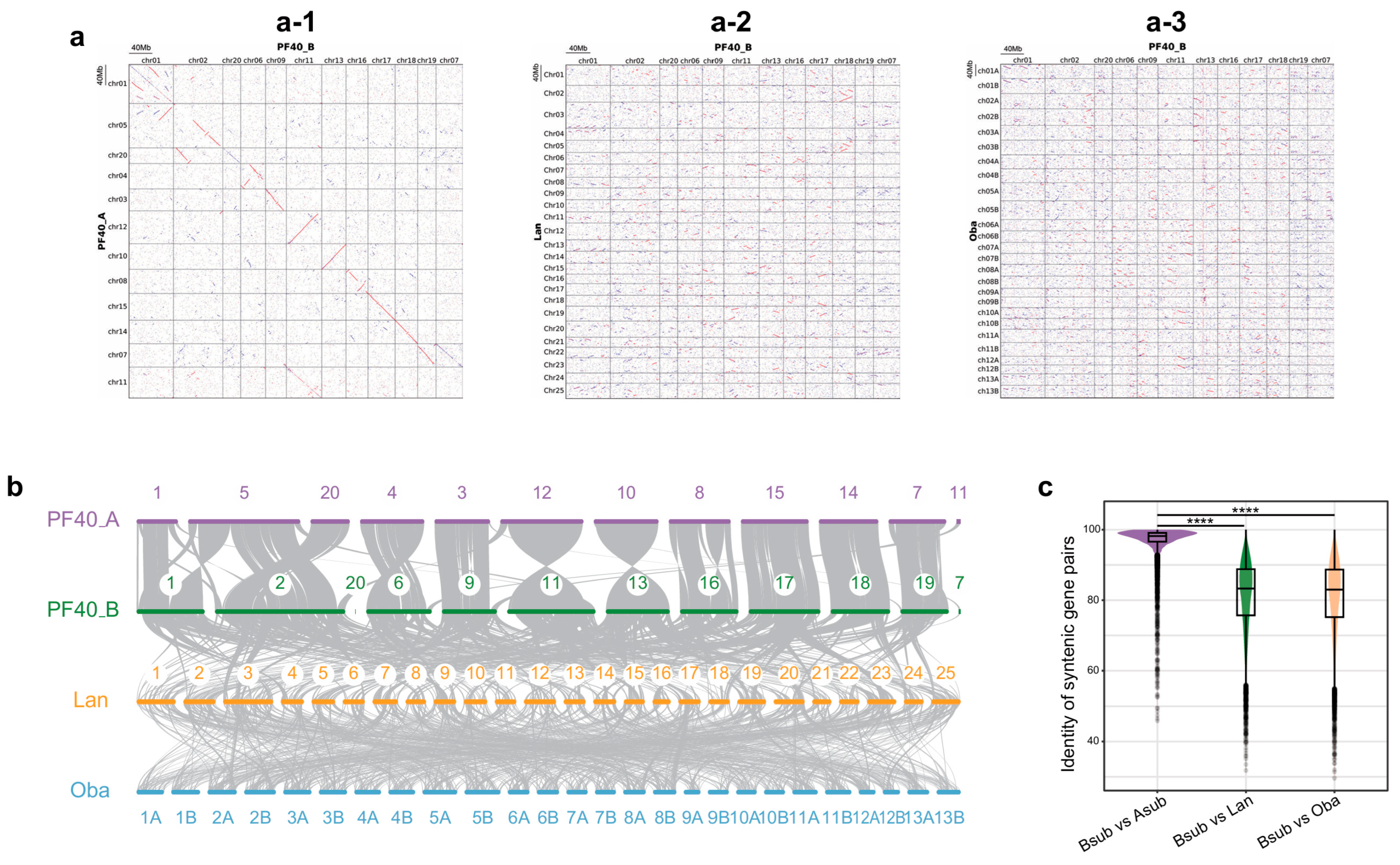
Figure 1. Collinearity among the B subgenome, the A subgenome, and the two closely related species. (a) Similarity between the B and A subgenomes of P. frutescens, L. angustifolia, and O. basilicum based on their protein sequences. Each red dot represents the high similarity of the proteins encoded by the corresponding syntenic genes from the two genomes. (a-1a-3) show the genomic dot plots between the B subgenome and the A subgenome, the B subgenome and the L. angustifolia genome, and the B subgenome and the O. basilicum genome, respectively; (b) Synteny between the B subgenome and the A subgenome of P. frutescens, as well as the genomes of L. angustifolia and O. basilicum. The gray lines connect the genes that have the most similar sequences. PF40_A represents the A subgenome of P. frutescens, PF40_B represents the B subgenome of P. frutescens, Lan represents the genome of L. angustifolia, and Oba represents the genome of O. basilicum; (c) Distribution for the identities of the protein sequences of syntenic gene pairs (two-tailed Student’s t-test, **** p < 0.0001). These gene pairs were obtained through analysis of the synteny in (b).
Plants 14 03698 g001
Figure 2. Pairwise comparison of the B subgenome, the A subgenome, and two closely related genomes based on the similarity of the gene structures of homologous genes. (a) Statistics of genes with similar structures in the B subgenome and other genomes. “Mapped” represents genes with similar structures and is represented by purple bars, while “Unmapped” represents genes with dissimilar structures and is represented by green bars. (a-1a-4) show the number of genes that are structurally similar to other genomes in the B subgenome, A subgenome, and the genomes of L. angustifolia and O. basilicum, respectively. (b) Proportion of genes in the reference genome that are structurally similar to homologous genes in the target genomes. Asub represents the A subgenome of P. frutescens, Bsub represents the B subgenome of P. frutescens, Lan represents the genome of L. angustifolia, and Oba represents the genome of O. basilicum.
Plants 14 03698 g002
Figure 3. Screening and functional annotation of BB progenitor-specific genes. (a) Screening methods for “BB progenitor-specific genes” based on the published genomes of Perilla spp. (b) Conversed domain prediction of the “BB progenitor-specific genes”. “Conserved Domain” represents the names of conserved domains. “Number of each domain” indicates the number of each type of conserved domain included in “BB progenitor-specific genes”. CYP71-like: Cytochrome P450 family 71-like. PKc_like superfamily: Protein Kinases, catalytic domain. AdoMet_MTases superfamily: S-adenosylmethionine-dependent methyltransferases. BRcat_Rcat_RBR superfamily: Benign-catalytic and required-for-catalysis domains, part of the RBR (RING1-BRcat-Rcat) domain. BTB_POZ superfamily: Broad-Complex, Tramtrack and Bric a brac/poxvirus and zinc finger. GUB_WAK_bind: Wall-associated receptor kinase galacturonan-binding. LRAT: Lecithin retinol acyltransferase. MATH: Meprin and TRAF-C homology. NB-ARC superfamily: Nucleotide-Binding adaptor shared by APAF1, certain R genes and CED4. PMD superfamily: Plant mobile domain. PP2: Phloem protein 2. PPR_2: Pentatricopeptide repeat family. RX-CC_like: Coiled-coil domain of the potato virux X resistance protein and similar proteins. Ubl1_cv_Nsp3_N-like superfamily: First ubiquitin-like domain located at the N-terminus of coronavirus SARS-CoV non-structural protein 3 and related proteins; (c) GO and KEGG enrichment analysis of the “BB progenitor-specific genes”. BP represents “Biological process”, MF represents “Molecular function”; (d) Classification of functional annotation for “BB progenitor-specific genes” based on homogenes.
Plants 14 03698 g003
Figure 4. Asymmetric distribution showed that the TPS family in the B subgenome has fewer genes and non-collinear genes. (a) Comparison of TPSs located in the A subgenome and the B subgenome. (a-1) shows the number of TPSs in the B subgenome and A subgenome. (a-2) shows the percentage of TPSs in total genes of the B subgenome or A subgenome. (a-3) shows the number of non-collinear TPSs in the B subgenome or A subgenome. (a-4) shows the percentage of non-collinear TPSs in the B subgenome or A subgenome. (b) Distribution and collinearity of TPSs in the B and A subgenomes. Purple lines connect genes with highly similar protein sequences.
Plants 14 03698 g004
Figure 5. Asymmetric distribution showed the NB-ARC family in the B subgenome has fewer genes and more non-collinear genes. (a) Comparison of NB-ARCs located in the A subgenome and the B subgenome. (a-1) shows the number of NB-ARCs in the B subgenome or A subgenome. (a-2) shows the percentage of NB-ARCs in the total genes of the B subgenome or A subgenome. (a-3) shows the number of non-collinear NB-ARCs in the B subgenome or A subgenome. (a-4) shows the percentage of non-collinear NB-ARCs in the B subgenome or A subgenome. (b) Collinearity of NB-ARCs in the B and A subgenomes. Purple lines connect genes with highly similar protein sequences.
Plants 14 03698 g005
Disclaimer/Publisher’s Note: The statements, opinions and data contained in all publications are solely those of the individual author(s) and contributor(s) and not of MDPI and/or the editor(s). MDPI and/or the editor(s) disclaim responsibility for any injury to people or property resulting from any ideas, methods, instructions or products referred to in the content.