Article

Biochar Organic Fertilizer Combined with Indigenous Microorganisms Enhances the Growth of Landscape Grass Cultivated in a Substrate Mixed with Iron Tailings and Mining Topsoil

1
Key Laboratory of Pollution Ecology and Environmental Engineering, Institute of Applied Ecology, Chinese Academy of Sciences, Shenyang 110016, China
2
College Environmental, Shenyang University, Shenyang 110044, China
3
College of Life Science and Engineering, Shenyang University, Shenyang 110044, China
4
Northeast Geological S&T Innovation Center of China Geological Survey, Shenyang 110000, China
5
Key Laboratory of Black Soil Evolution and Ecological Effect, Ministry of Natural Resources, Shenyang 110000, China
6
National-Local Joint Engineering Laboratory of Contaminated Soil Remediation by Bio-Physicochemical Synergistic Process, Shenyang 110142, China
*
Author to whom correspondence should be addressed.
Plants 2024, 13(21), 3042; https://doi.org/10.3390/plants13213042

Submission received: 27 September 2024 / Revised: 28 October 2024 / Accepted: 29 October 2024 / Published: 30 October 2024

Abstract

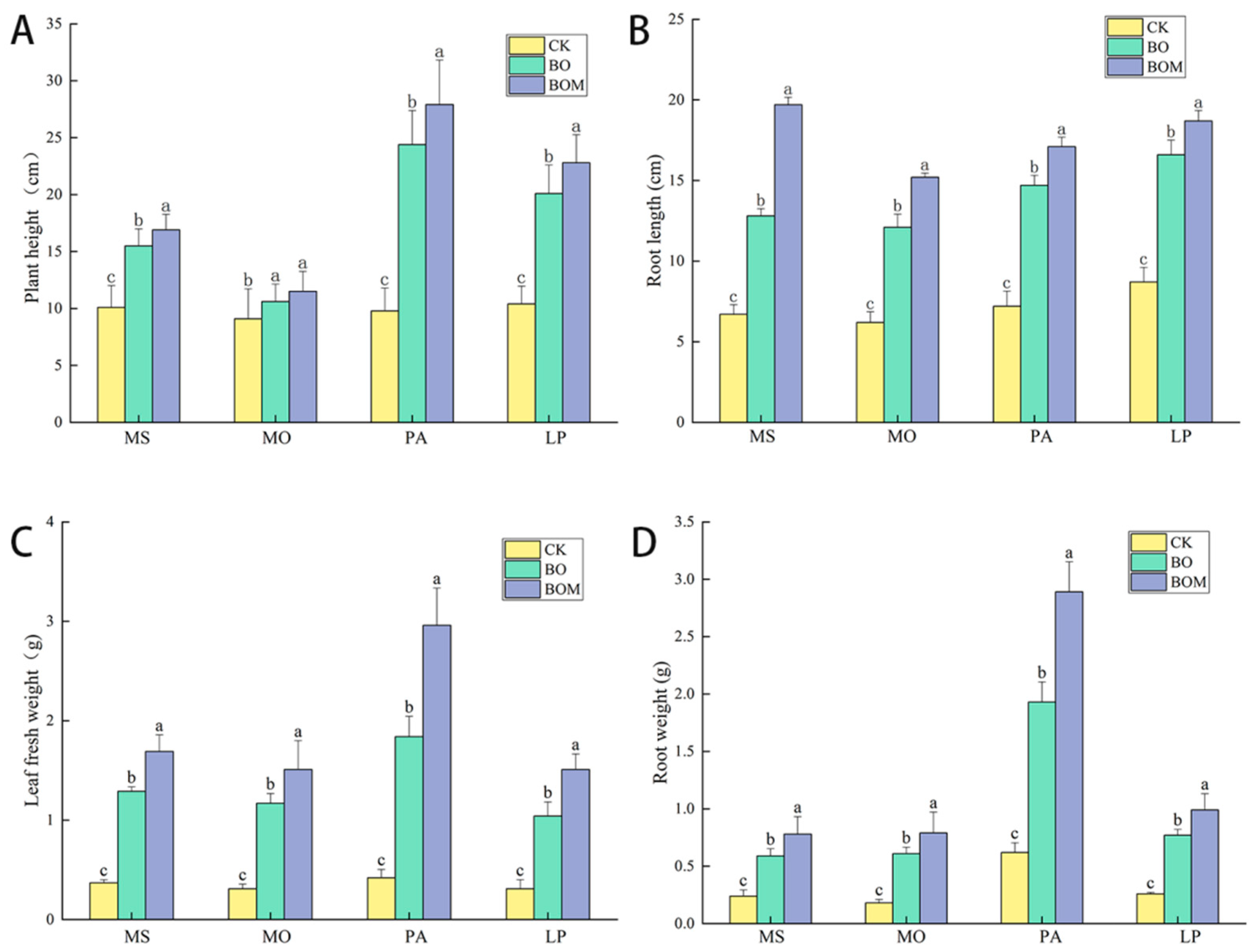
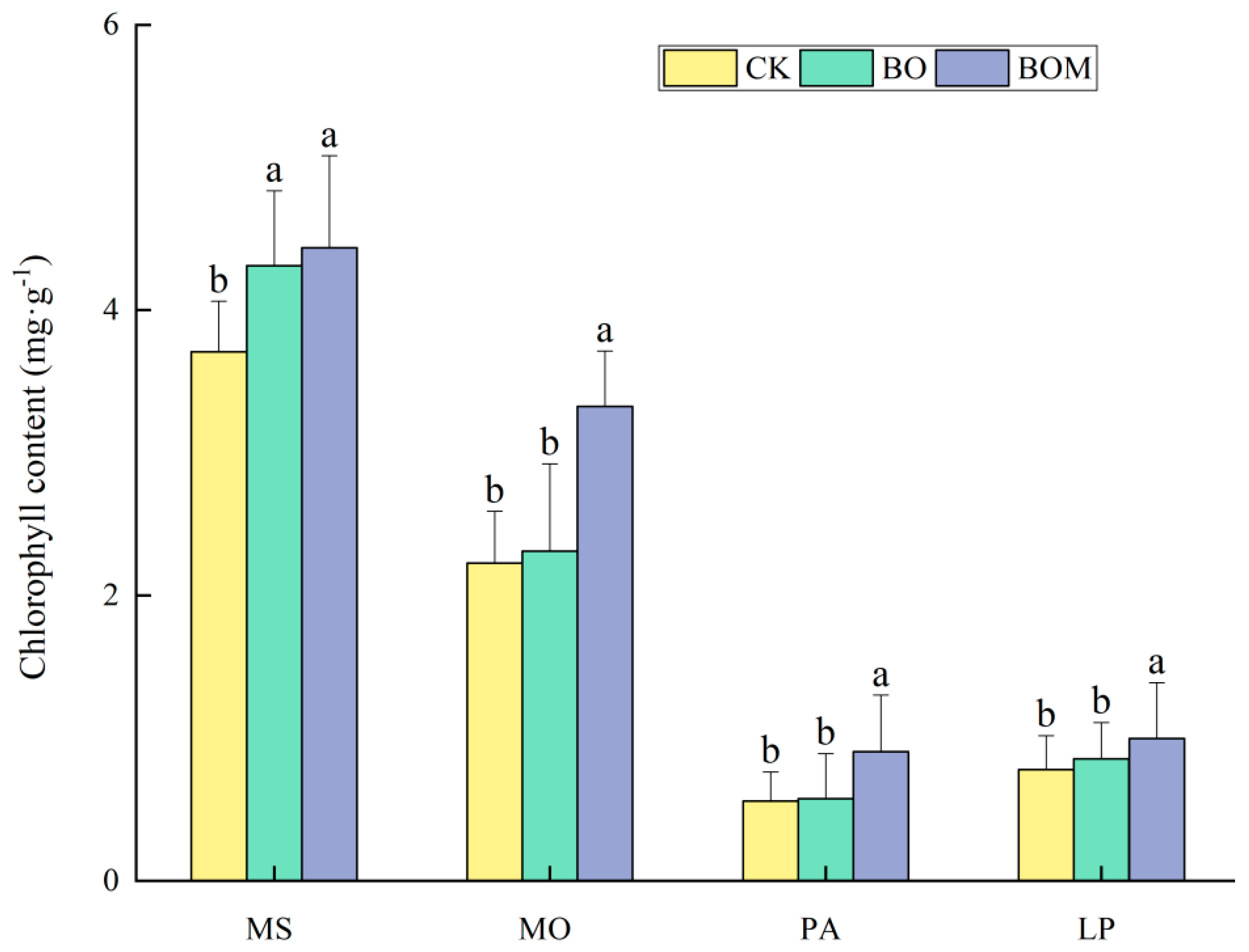
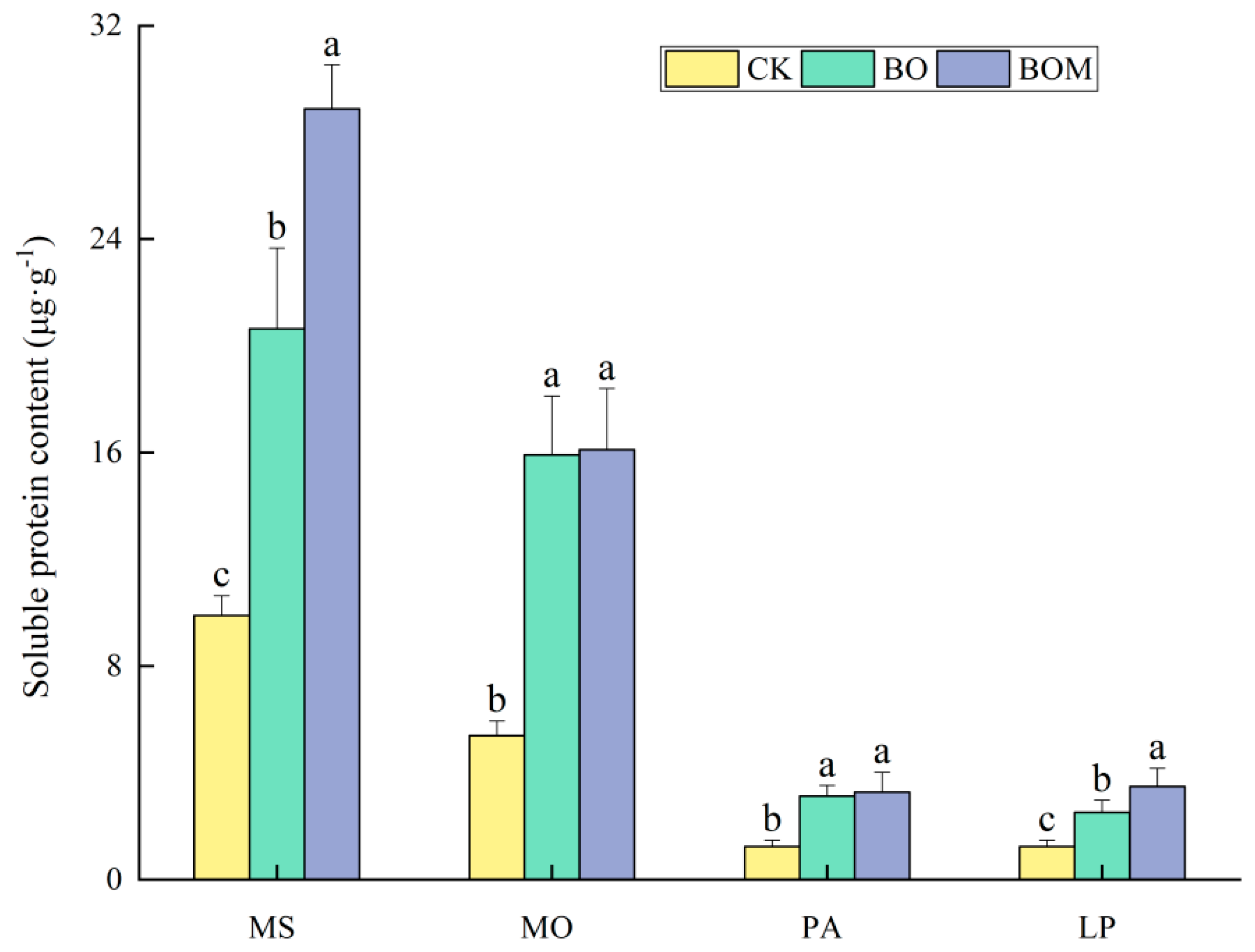
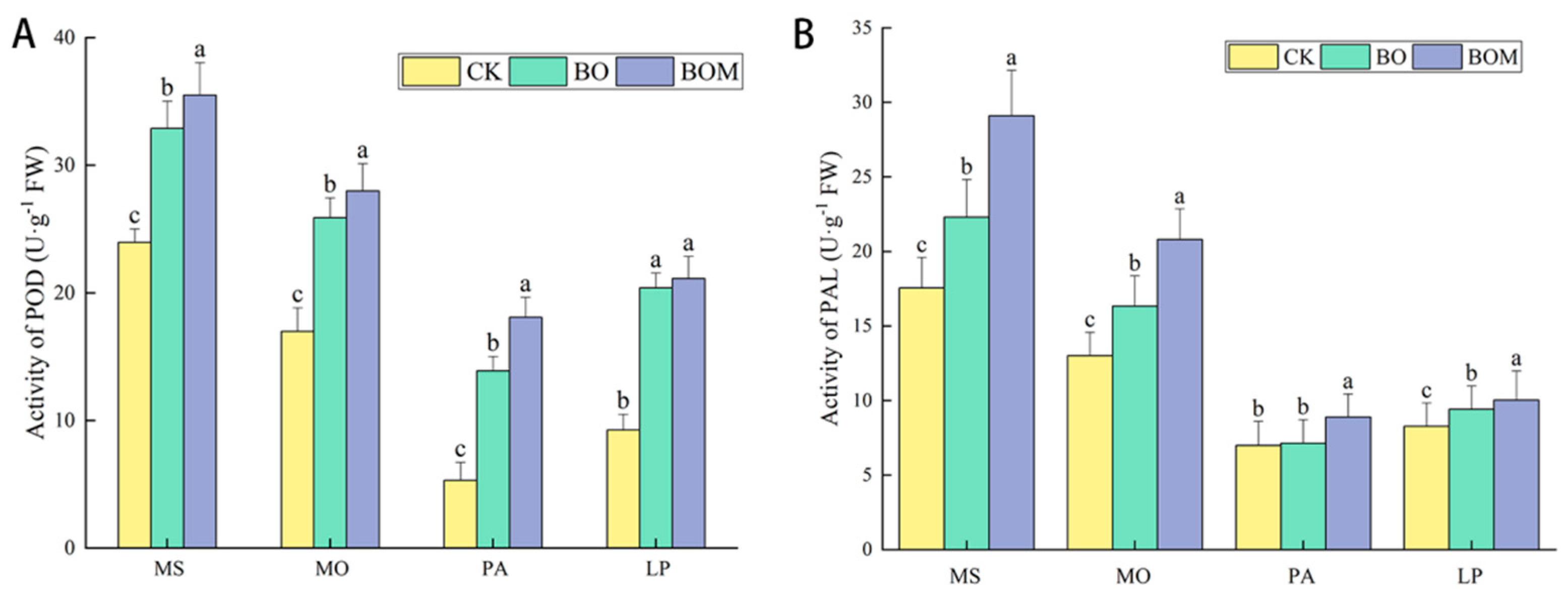
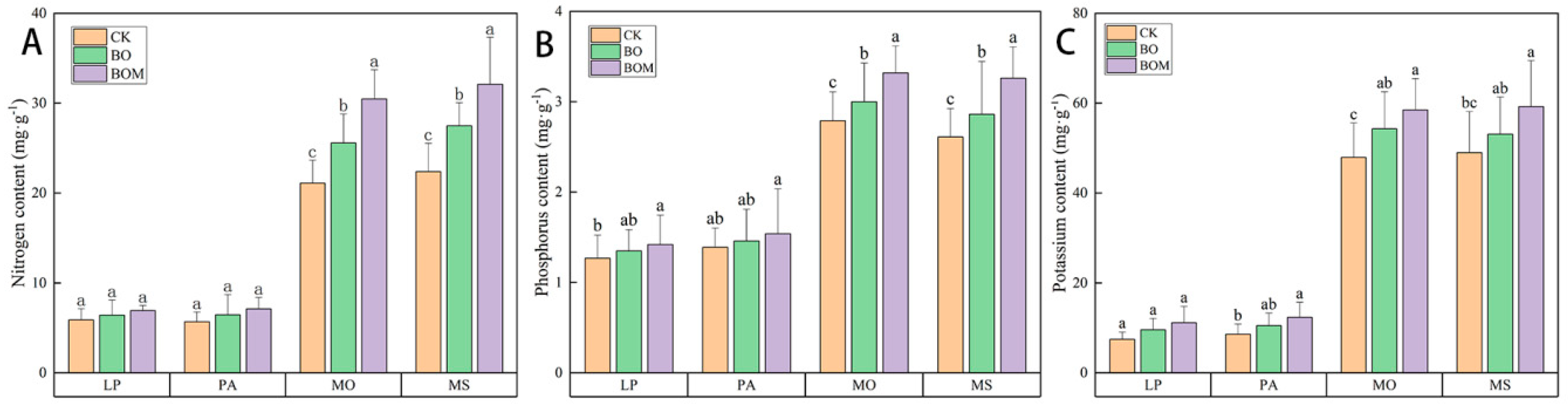
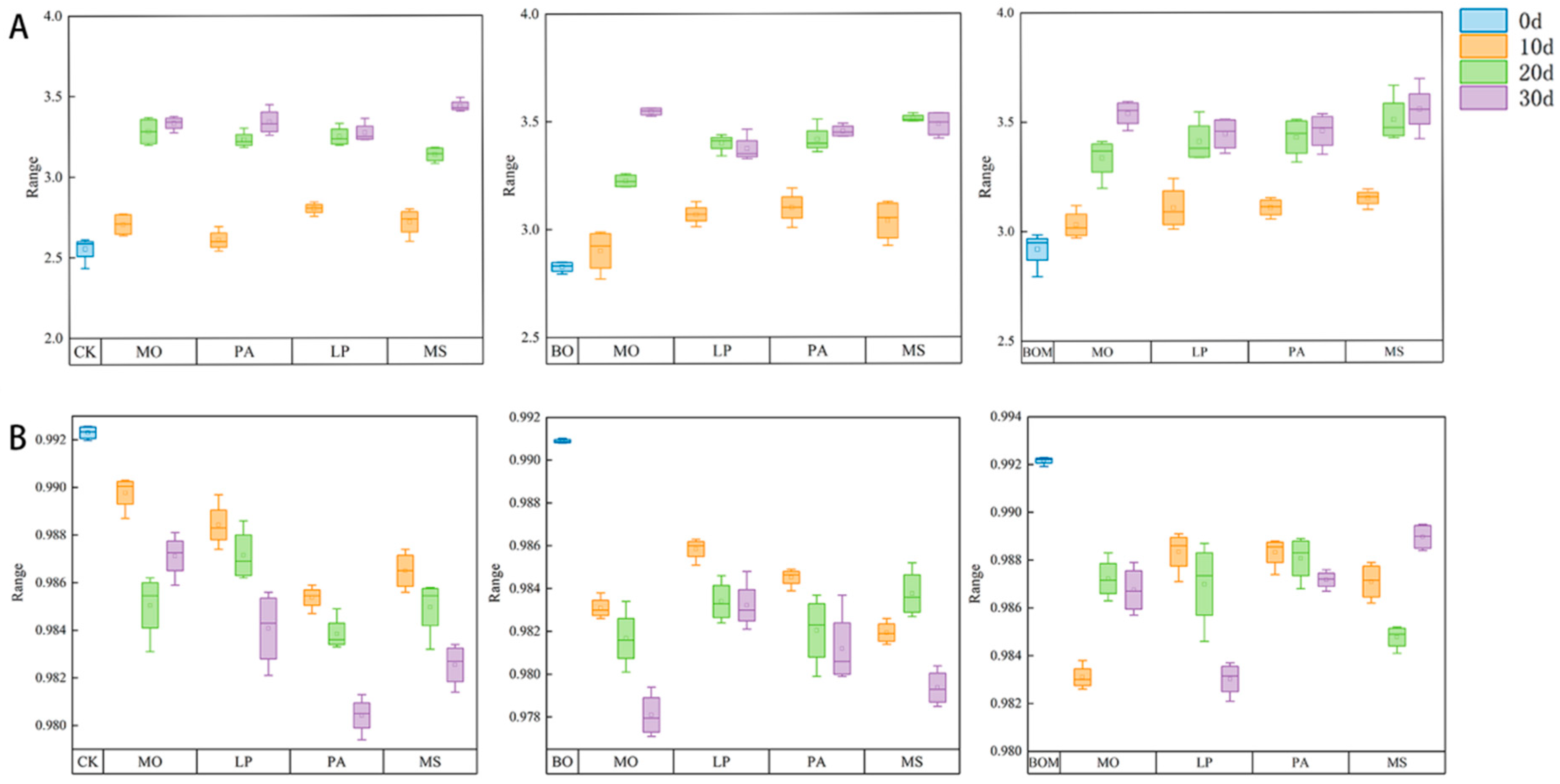
Iron tailings from the mining process occupy vast land areas and pose a significant ecological risk. In order to reuse iron tailings resources and carry out in situ ecological restoration of a mine, in this study, a medium of mixed iron tailings and mining topsoil (m:m = 3:1) was used to plant landscape grasses, including Lolium perenne L. (L. perenne), Pennisetum alopecuroides (L.) Spreng. (P. alopecuroides), Melilotus officinalis (L.) Lam. (M. officinalis), and Medicago sativa L. (M. sativa). Biochar and chicken manure were used as biochar organic fertilizers and indigenous microorganisms were isolated from the rhizosphere soil of tested grasses. They were applied to enhance landscape grass growth by regulating rhizosphere microbial communities and nutrient conditions. The results showed that the biochar organic fertilizers significantly promoted the growth of the four landscape grasses, notably P. alopecuroides, increasing plant height, root length, root weight, and leaf fresh weight by 169%, 60%, 211%, and 388%, respectively. Additionally, L. perenne exhibited the greatest height increase (10%) following the application of bacterial solutions. Moreover, indigenous bacterial solutions enhanced chlorophyll content and phenylalanine ammonia-lyase (PAL) activity, with P. alopecuroides showing the highest chlorophyll increase of 58% and M. sativa exhibiting a 30.58% rise in PAL activity. The biochar organic fertilizer also significantly elevated soluble protein content in P. alopecuroides and M. sativa by 195% and 152%, respectively. It also effectively enhanced peroxidase (POD) activity in Poaceae grasses by 120% to 160%. After adding indigenous microorganisms, the rhizosphere soil of the landscape grass showed the highest Shannon–Wiener diversity index, reaching 3.561. The rhizosphere soil of M. officinalis had the highest microbial richness, with a value of 39. Additionally, the addition of indigenous microorganisms increased the nitrogen, phosphorus, and potassium content of the four plants by 8–19%, 6–14%, and 8–18%, respectively. This study offers a new approach for managing mining waste and ecological restoration in mining areas.
Keywords: iron tails; waste utilization; landscape grass; rhizosphere improvement; ecological restoration iron tails; waste utilization; landscape grass; rhizosphere improvement; ecological restoration