


Abstract
Bacterial blight (BB) is a devastating disease of rice in the tropics of Indian sub-continent, where the presence of Xoo races with varying levels of genetic diversity and virulence renders disease management extremely challenging. In this context, marker-assisted improvement of plant resistance has been proven as one of the most promising approaches for the development of sustainable rice cultivars. The present study demonstrates the marker-assisted introgression of the three BB resistant genes (Xa21 + xa13 + xa5) into the background of HUR 917, a popular aromatic short grain (ASG) rice cultivar in India. The performance of the resulting improved products (near isogenic lines (NILs), HR 23-5-37-83-5, HR 23-5-37-121-10, HR 23-5-37-121-14, HR 23-65-6-191-13, HR 23-65-6-237-2, HR 23-65-6-258-10 and HR 23-65-6-258-21) establishes the utility of marker-assisted selection (MAS) approach for accelerated trait introgression in rice. The MAS-bred lines carrying three introgressed genes showed broad spectrum BB resistance (lesion length, LL of 1.06 ± 1.35 cm to 4.61 ± 0.87 cm). Besides, these improved lines showed the complete product profile of recurrent parent HUR 917 along with the enhanced level of durable BB resistance. The improved introgression lines with durable BB resistance would contribute to sustainable rice production in India, particularly in the Indo-Gangetic plane that has substantial acreage under HUR 917.
1. Introduction
Rice has the global identity as staple food crop for more than half of the world population with substantial acreage (167.13 mha) and production (782.0 million tons) [1]. In India, it is grown on ~44.5 mha area producing 172.5 million tons with an average productivity of 3.88 tons per hectare [1] which is directly linked to the livelihood and economy. Global rice production should increase by 40% to feed the world population by 2030 [2]. The sustainability of the global rice production is challenged by several factors, of which growing vulnerability of the crop to changing pest pathogen dynamics remains crucial [2,3]. More than 40 types of biotic and abiotic stresses threaten rice cultivation around the globe. The key biotic stresses of rice include diseases caused by various fungi, bacteria, nematode and viruses that impact upon almost every stage of the crop growth and development [3]. Amongst these diseases, bacterial blight (BB) (Xanthomonas oryzae pv. Oryzae), blast caused (Magnaporthe oryzae) and sheath blight (ShB) (Rhizoctonia solani) substantially reduce rice yield in addition to deteriorating the quality of the rice grain [3].
Indian sub-continent is well known for its native wealth of basmati and aromatic non-basmati rice, of which aromatic short grain (ASG) types remain important with respect to aroma, cooking and quality traits. These traits are responsible for greater consumer preference globally and fetching premium prices in domestic as well as in global markets [4,5]. Unfortunately, low yielding capacity and susceptibility to various pests and diseases render the deployment of ASG types in rice breeding challenging. Non-basmati scented rice varieties are primarily grown in the Indo-Gangetic region of India including states like Uttar Pradesh, Bihar, and Chhattisgarh. The HUR 917, a popular ASG type rice variety of medium duration, has raised much hope amongst farmers and rice-exporters owing to its superiority over other preferred aromatic non-basmati rice [5,6]. However, the susceptibility of this rice variety to BB contributes to inconsistent yield.
BB is a devastating disease across rice ecology (temperate to tropical) and territory, causing substantial losses (20–100%) in rice yield [7,8]. Disease symptoms appear in the form of leaf blight and Kresek (wilt phage). The warm temperatures (25–30 °C), high humidity, heavy rainfall and water stagnation coupled with heavy nitrogen dose [9] promote disease occurrence. Besides, luxuriant crop growth, close spacing and winds injury also make rice crop prone to BB spread [10]. The Xoo inoculum enters through injured plant epidermis and perpetuates in the xylem vessels. The pathogenic Xoo races, highly dynamic and diverse in nature [11,12,13], produce a variety of toxic secretions including extracellular polysaccharides, extracellular enzyme, iron chelating siderophores and the type III-secretion dependent effectors [14,15] that compromise plant’s immune response [16]. To date, globally, 30 races of Xoo have been documented [13,17,18].
Improving plant resistance through incorporation of resistance genes (R genes) is an effective strategy for managing BB in rice [19]. Modern genomic tools and techniques have facilitated mapping and more importantly, the stacking of R genes into elite agronomic backgrounds having susceptibility the disease [11,20,21,22,23]. More than 40 genes have been reported in rice that confer BB resistance with varying range of effectiveness against diversified Xoo races [22,24]. Of these, the genes, Xa4, xa5, Xa7, xa13, Xa21 and Xa38 have been most frequently deployed to incorporate BB resistance in rice cultivars [20,21,22]. For instance, the xa5 gene encoding gamma subunit of transcription factor IIA5 (TFIIA) in combination with the genes Xa7 and Xa21 improved BB resistance of the recipient genotypes [20,25,26]. Similarly, the gene xa13 encoding a plasma membrane protein has been reported to confer broad spectrum BB resistance, in complementation with Xa21 against majority of the Indian virulent Xoo races [20,27]. The Xa21 gene coding for an NBS-LRR protein remains the most effective for imparting broad spectrum BB resistance and therefore the Xa21 gene has been extensively used in rice breeding programs [20,21,22,28,29].
The functional complementation of these gene(s) is found to be more effective, and results in comparatively broader spectrum of durable resistance in comparison to the deployment of the single resistance gene [20,21,22,30]. The eastern region of India is the hotspot for BB disease, and the R genes with functional complementarities including Xa21 + xa13 + xa5 + Xa4, Xa21 + xa13 + xa5 and Xa21 + xa13 have been proven successful against the Xoo races [20,21,22]. Therefore, deployment of functional R gene combinations is imperative to extend the durability and resistance levels to counter the evolving virulent races of the pathogen [31,32]. Recent advancements in molecular breeding techniques make it convenient to improve the varieties/lines for desirable traits with great precision and efficiency. Molecular breeding techniques such as MAS, marker-assisted backcrossing (MABC), and genomic selection (GS) have provided strong evidence in support of their efficient use in indirect selection/or to trace the trait of interest in plant breeding programs [20,33].
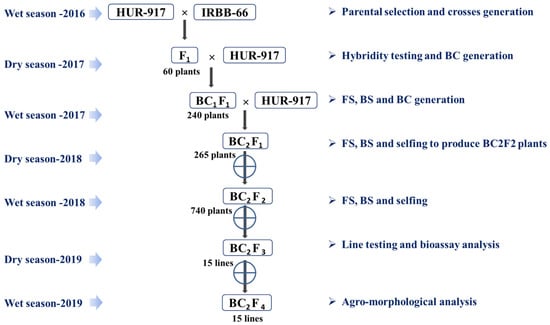
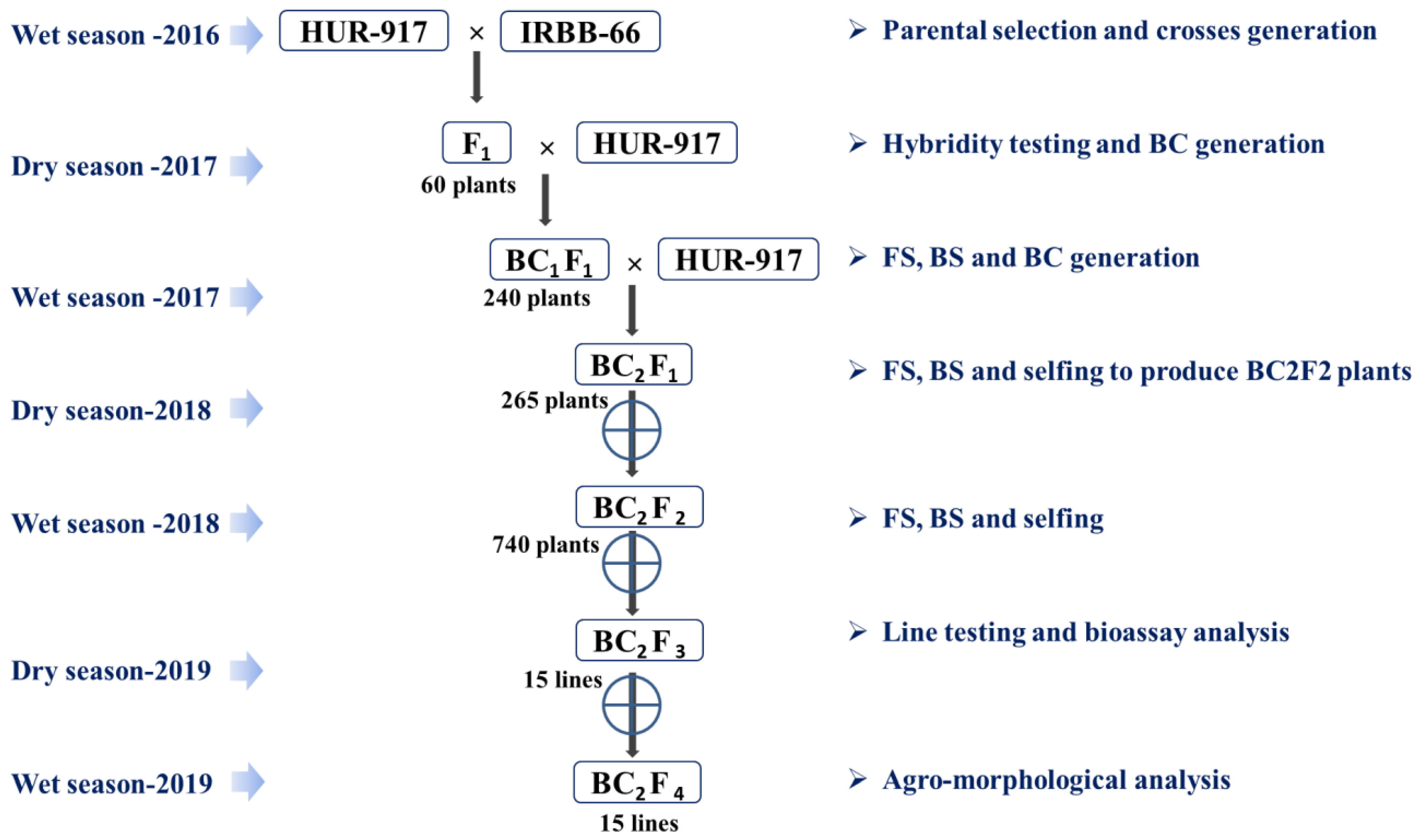
In view of the above, the current study was undertaken with the objective to transfer R gene combinations with the greatest functional compatibility (Xa21 + xa13 + xa5) into a BB-susceptible yet popular short grain aromatic rice variety HUR 917. The study incorporated broad spectrum BB resistance into the rice variety HUR 917 that is still grown in sizeable acreage in Indo-Gangetic planes of India (Figure 1).
Figure 1.
Marker-aided breeding strategy followed for the development of improved HUR 917.
2. Materials and Methods
2.1. Experimental Materials and Breeding Strategy
We selected IRBB66 carrying five BB resistance genes (Xa21 + xa13 + Xa7 + xa5 + Xa4) and having closest genetic relationship (0.77) with the recurrent parent (RP) for marker-aided improvement of BB resistance level of the popular variety HUR 917 (Table 1 and Table S1, Supplementary Figure S1) [34]. Hybridity of the individual F1 plants generated from the cross HUR 917/IRBB66 was confirmed with the DNA markers (pTA248, xa13prom and RM122) [3,7,20,35,36,37] (Table 2). The true hybrids were backcrossed with the RP to generate BC1F1 seeds. Advancement of target gene(s)/traits with maximum RP genome recovery was assessed in every back-cross (BC) generation with linked and informative DNA markers, followed by phenotyping. The best BC1F1 plants with maximum RP genome and phenome were advanced to the next generation. The BC2F1 plants were also subjected to foreground selection (FS), background selection (BS) and phenotyping to identify the plants with maximum recovery for RP genome and phenome (Table 3 and Table S2). Selection differential (Δd) analysis for the product profile traits, days to fifty percent flowering (DFF), plant height (PH), grain L/B ratio, head rice recovery (HRR) and aroma content was performed in BC and segregating generation (Supplementary Table S3). The percent disease index (PDI) and area under disease progress curve (AUDPC) analysis was done to recover BB resistant NILs (Supplementary Table S3). The positive BC2F1 with perfect product profile traits were advanced to BC2F2 generation, and FS was repeated in order to identify the plants that were homozygous for Xa21 + xa13 + xa5 gene combination (Table 3). Further, desirable plants were advanced with single seed descent (SSD) under field using rapid generation advance (RGA) strategy to accelerate development of the NILs [36].
Table 1.
Details of parental lines, their pedigrees, maturity duration and zone of adoption.
Table 2.
Gene specific/linked SSR markers used for introgression of the corresponding gene in HUR 917 background.
Table 3.
Brief summary of crosses and RP genome recuperation in the NILs of HUR 917.
2.2. PCR and Marker Analysis
The genomic DNA from the leaf sample of each plant (20–22 days old seedling) was extracted and purified using CTAB method [39]. The PCR reaction was carried out using 15 ng of template DNA, 1× Taq assay buffer, 0.3 mM of MgCl2, 133.0 µM of dNTPs, 1 U/µL of Taq DNA polymerase (Thermo-scientific, Life Science Products, Mumbai, Maharashtra, India) and 1.25 µM of each primer (Eurofins, Genomics, Hyderabad, India). The PCR was carried out in an Eppendorf Thermo Cycler with the following program: (1) initial denaturation at 94 °C for 3 min; (2) 39 cycles for denaturation for 30 s at 94 °C, annealing for 30 s at 56 °C, extension for 1 min at 72 °C; and (3) final extension at 72 °C for 5 min. The amplified products were resolved with 2.5% MetaphorTM Agarose gel (Typhoon FLA 700, Alpha Innotech, MA, USA) and visualized under a UV light source in photographed gel documentation (Gel-Doc) system (Gel DocTM XR, Bio-Rad Laboratories Inc., Hercules, CA, USA).
Target traits in F1 and BC generations were traced using trait linked-DNA markers, pTA248 lying 0.2 cM distant to Xa21 [7,36,37], xa13prom with 0 cM distant to xa13 [3,20,36] and RM122 with 0.4 cM distance to xa5 [35,36] (Table 2). Moreover, genome recovery of the RP was monitored with 82 polymorphic SSR markers (Supplementary Tables S2 and S4) that span entire rice genome [20,33,40]. These 82 SSRs were selected from 360 SSRs based on the polymorphism survey between HUR 917 and IRBB66. Recombinant selection was carried out using the markers RM26969 (Xa21), RM23356 and RM22914 (xa13) and RM17941 (xa5) flanking the BB resistant genes on chromosome 11, 8, and 5, respectively, (Table 2). The molecular data in the backcross generations were used to visualize genotype of individuals using Graphical Genotyper (GGT2.0) software [41].
2.3. Disease Bioassay Analysis
Each BC generations and NILs (BC2F3) carrying effective hetero/homo-alleliec combinations of R genes were grown in field condition along with parents and bio-assayed with eight virulent Xoo pathotypes/races (Xa17, Xa7, xa2, Xb7, Xc4, xd1, xa1 and xa5) prevalent in the eastern region of the country. The pathotypes were maintained in peptone sucrose agar (PSA) medium [42] and single spore culture with 108 cfu/mL bacterial Xoo suspension density was used for inoculation. The top five leaves of each plant were clipped off and inoculated [43]. Post inoculation, the plants were observed after every 24 hours’ time interval to note the appearance of disease symptoms. The LL were measured at 14, 21 and 28 days after inoculation (DAI) [13] using a disease score index of 0–9 [44,45]. The LL of <5 cm was considered resistant (R), 5–10 cm was considered moderately resistant (MR), 10–15 cm was moderately susceptible and >15 cm was considered highly susceptible. The epidemiological parameters like PDI and AUDPC which indicates overtime disease accumulation were calculated to assess the disease severity [9].
2.4. Agro-Morpho Evaluation of NILs
The BC2F3 and BC2F4 NILs along with RP and donor parents were evaluated for yield and other agro-morphological traits in randomized complete block design (RCBD) with three replications. Standard agronomic management practices were followed for raising the rice crop at two locations (ICAR-National Rice Research Institute, Cuttack and Banaras Hindu University, Uttar Pradesh) in India. The data were recorded on five plants from each of the entries for the characters namely: days to panicle initiation (DPI), days to first panicle emergence (DFPE), days to 50% flowering (DFF), days to maturity (DM), plant height (PH), number of effective tillers per plant (NETPP), panicle length (PL), number of grains per panicle (NGP), test weight (TW), grain yield per plant (GYPP), and disease severity (DS). Further, the lines were also analyzed for grain and cooking quality parameters such as head rice recovery (HRR) [46], kernel length before cooking (KLBC), kernel breadth before cooking (KBBC), length/breadth ratio (L/B), amylose content (AC), GC content [47] and aroma as described by [48]. The statistical analysis was performed using DARwin-6.0, XLSTAT and SPSS packages. Use of plant material complies with relevant institutional, national, and international guidelines and legislation.
3. Results
3.1. Molecular Characterization of Parents and Selection of Donor
Of the total 360 SSRs screened among the six rice genotypes (HUR 917, IRBB66, IR 64 MAS, CRMS 31B MAS, improved PR 114 and Lalat MAS), 82 (22.8%) SSRs showed polymorphism among the RP, HUR 917 and the five donors (Supplementary Tables S1 and S2). The diversity analysis revealed varying degrees of genetic relatedness (0.06 to 0.77) among the parents (Supplementary Table S1 and Figure S1). The donor genotype, IRBB66 (Xa21 + xa13 + Xa7 + xa5 + Xa4) showed closest genetic relation with RP (0.77) followed by IR 64-MAS (Xa21 + xa13 + xa5 + Xa4) (0.76) and CRMS 31B-MAS (Xa21 + xa13 + xa5 + Xa4) (0.50). The bioassay analysis of IRBB 66 also showed incompatible or HR disease reaction (PDI of 3.65 ± 0.110, AUDPC of 74.13 and LL of 0.57 ± 0.21 cm to 1.83 ± 0.35 cm) (Table 4 and Table S3). To avoid undesirable linkage drag and allow a rapid fixation of segregating loci, the genotype IRBB66 [22] was used as a donor in the present backcross scheme.
Table 4.
Disease reaction (LL after 21 days of inoculation) of NILs (BC2F3) carrying introgressed resistance genes in different combinations against 8 different races of Xoo.
3.2. MABB Based Trait Improvement for BB Resistant in HUR-917
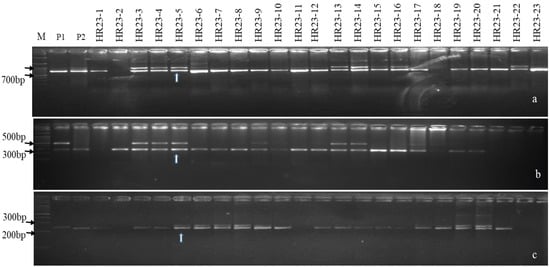
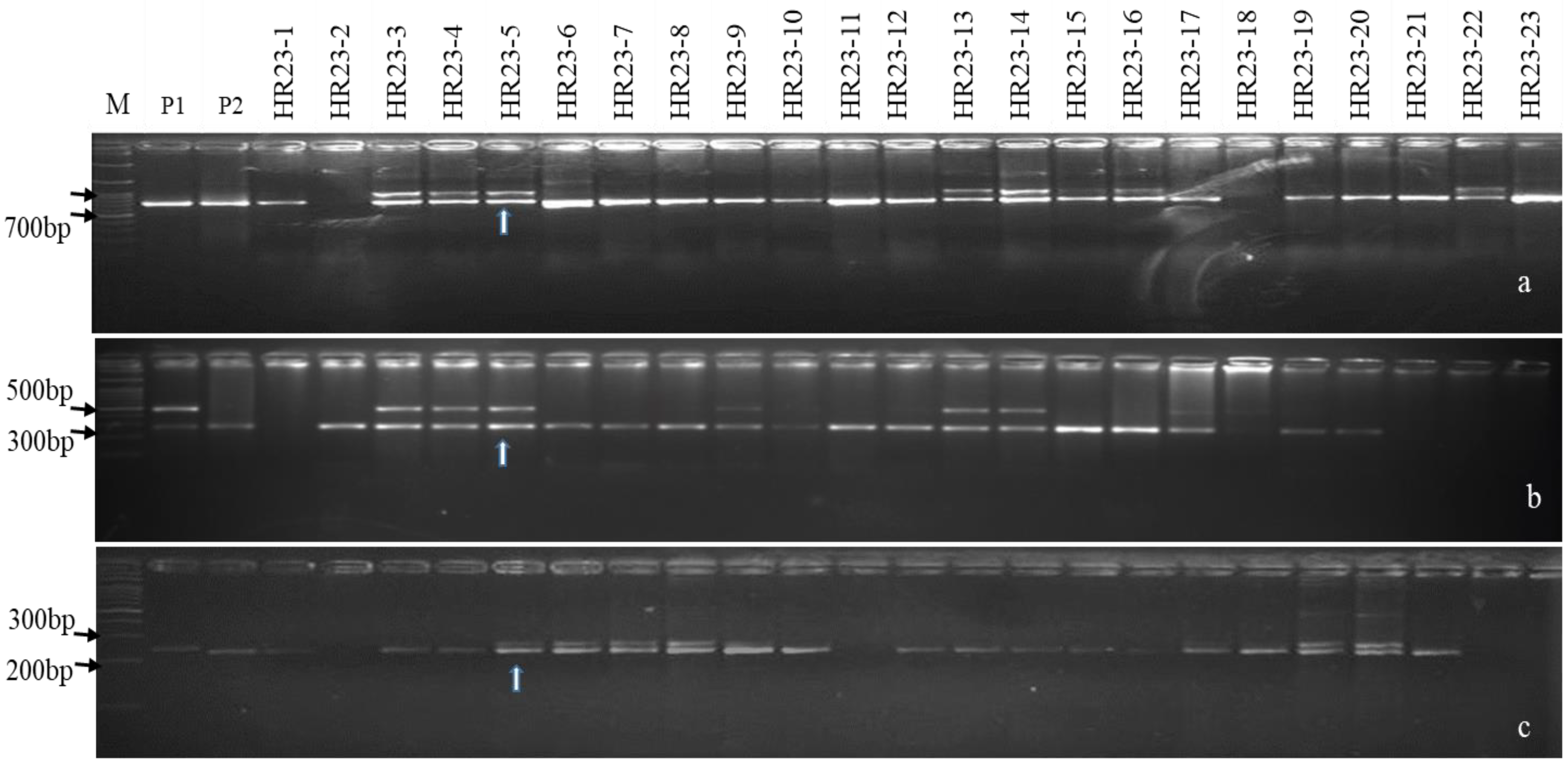
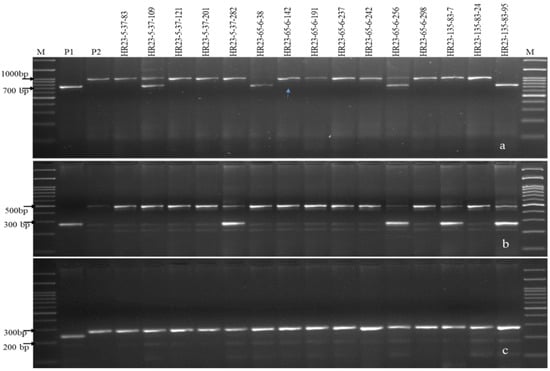
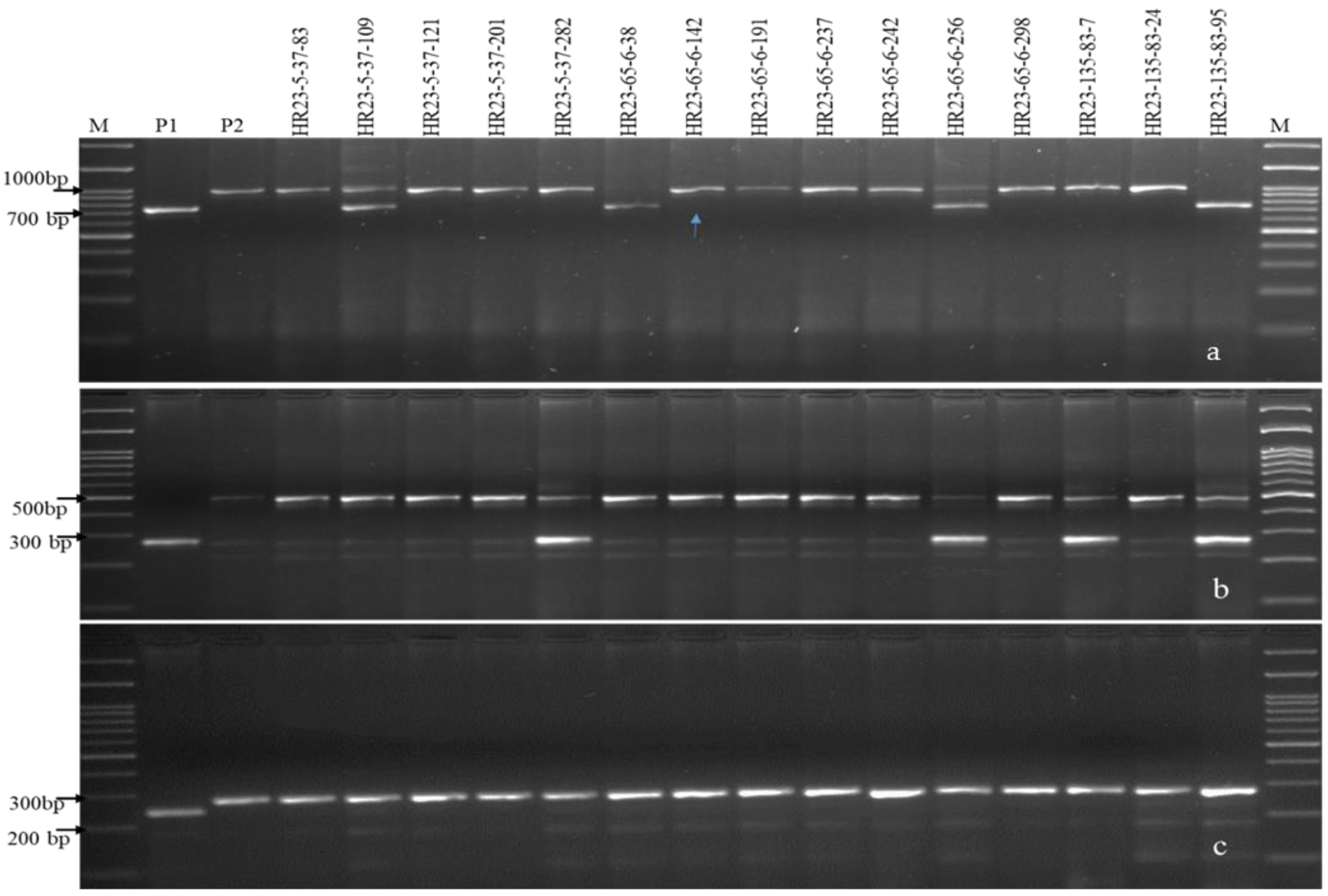
The F1s of HUR 917/IRBB66 were tested for hybridity using trait-linked SSR markers pTA248 (~0.2 cM, from Xa21) [7,36,37], xa13prom (0.0 cM from xa13) [3,20,36] and RM122 (0.4 cM from xa5) [35,36] (Table 2). The five F1s with confirmed hybridity were then crossed with the RP to generate BC1F1s that were evaluated for agro-morphological traits. Eighteen of the total 240 BC1F1 plants were found to carry three R alleles (Xa21 + xa13 + xa5) with 69.51 to 81.71% RP genome and superior phenome (Agro-morphology* and moderate resistant (MR), PDI of 11.82 ± 0.360 to 35.14 ± 0.344, AUDPC of 204.43 to 599.27) (Table 3 and Table S3, Figure 2) [49]. Six BC1F1s carrying >80.0% RP genome and desirable phenome were advanced to BC2F1 with 265 seeds (data not presented). Three positive BC2F1 plants carrying 90.85 to 91.46% RP genome and superior phenome (at par with RP with PDI of 5.19 ± 0.114 to 13.48 ± 0.752, MR) were self-pollinated to develop NILs (Table 3, Supplementary Table S3, Figure 3 and Figure 4) [49]. The BS revealed heteroallelism for 26.9 and 9.24% SSR markers in BC1F1 and in BC2F1, respectively, which were further analyzed in BC2F2 (Supplementary Figure S4). FS analysis in 740 BC2F2 seeds revealed homozygosity for R genes in 15 plants (2 and 3 R genes), with disease reactions confirming their resistant to moderately resistant nature (PDI of 2.48 ± 0.624 to 18.24 ± 0.225, AUDPC of 72.24 to 178.25) (Table 4 and Table S3). The BS analysis in BC2F2 with SSR markers suggested >92.0% RP genome recovery in BC2F2 (Table 3 and Table 4). BC2F2 plants were subjected to phenotyping and generation advancement to allow selection of the most desirables.
Figure 2.
PCR amplification of BB resistance gene (s) in BC1F1. (a) Amplicons of the Xa21 gene using pTA248 primer. (b) Amplicons of the xal3 gene using xal3prom primer. (c) Amplicons of the xa5 gene using RM122 primer; M, marker; P1, donor parent (IRBB66); P2, recurrent parent (HUR 917), Lanes 4–26 represent BC1F1 plants; vertical arrows indicate a positive plant heterozygote for all targeted genes.
Figure 3.
PCR amplification of bacterial blight resistant gene(s) in BC2F2. (a) Amplicons of the Xa21 gene using pTA248 primer. (b) Amplicons of the xal3 gene using xal3 prom primer. (c) Amplicons of the xa5 gene using RM122 primer; M, marker; P1, RP (HUR 917); P2, donor parent (IRBB66), Lanes 4–18 represent NILs, vertical arrows indicate positive plant homozygous/heterozygous for targeted genes.
Figure 4.
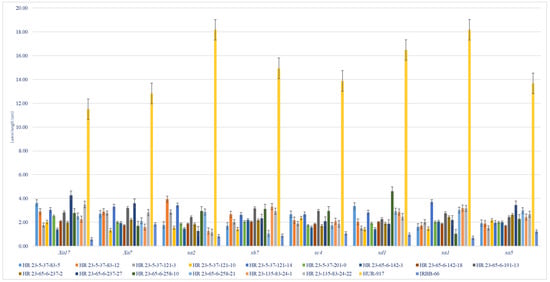
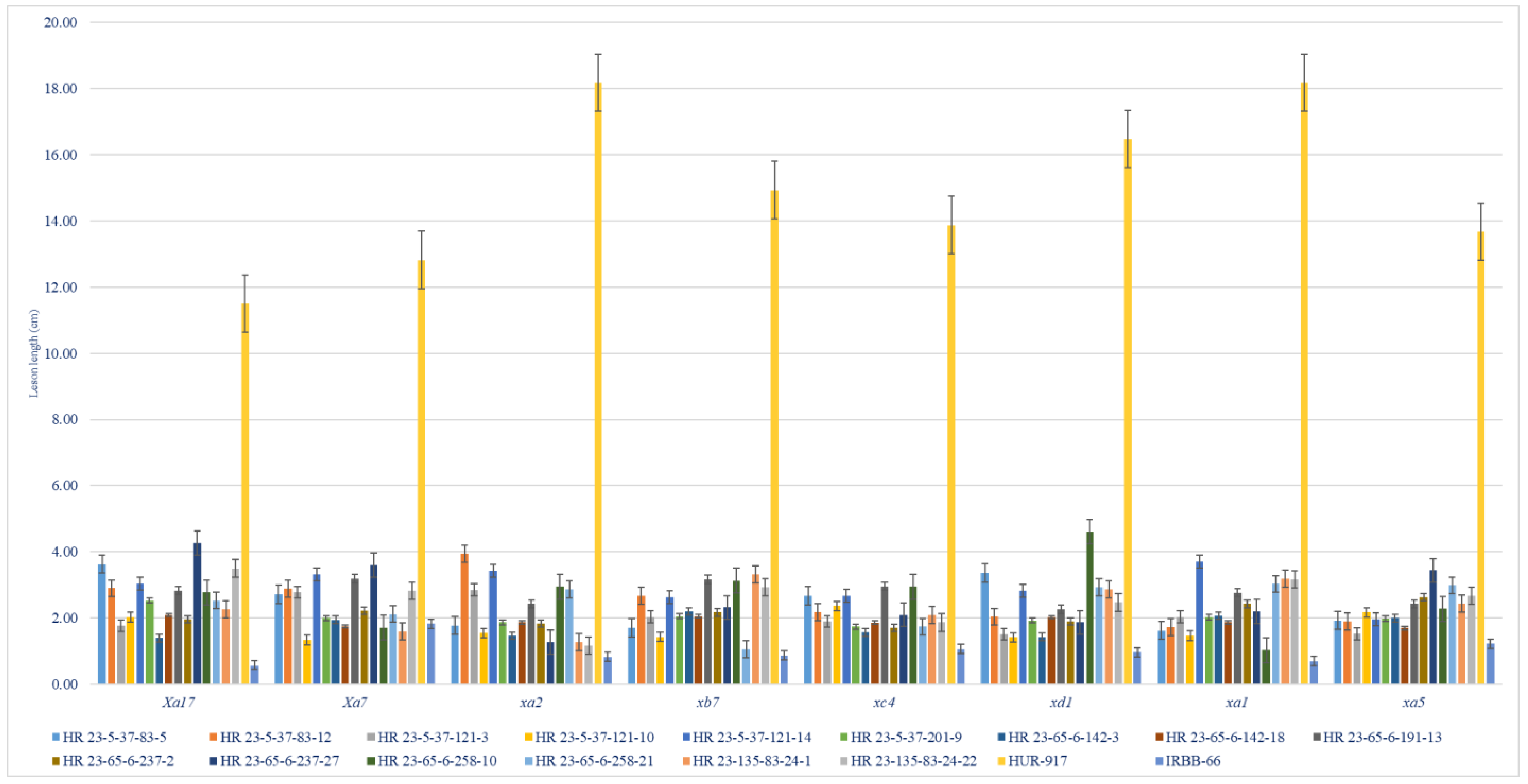
Extent of BB resistance in parents and derivative NILs (BC2F3) inoculated with 8 virulent Xoo isolates after 21 days of inoculation.
3.3. Genome Introgression on the Carrier and Non-Carrier Chromosomes
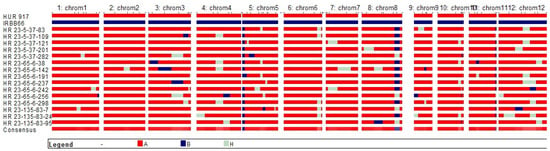
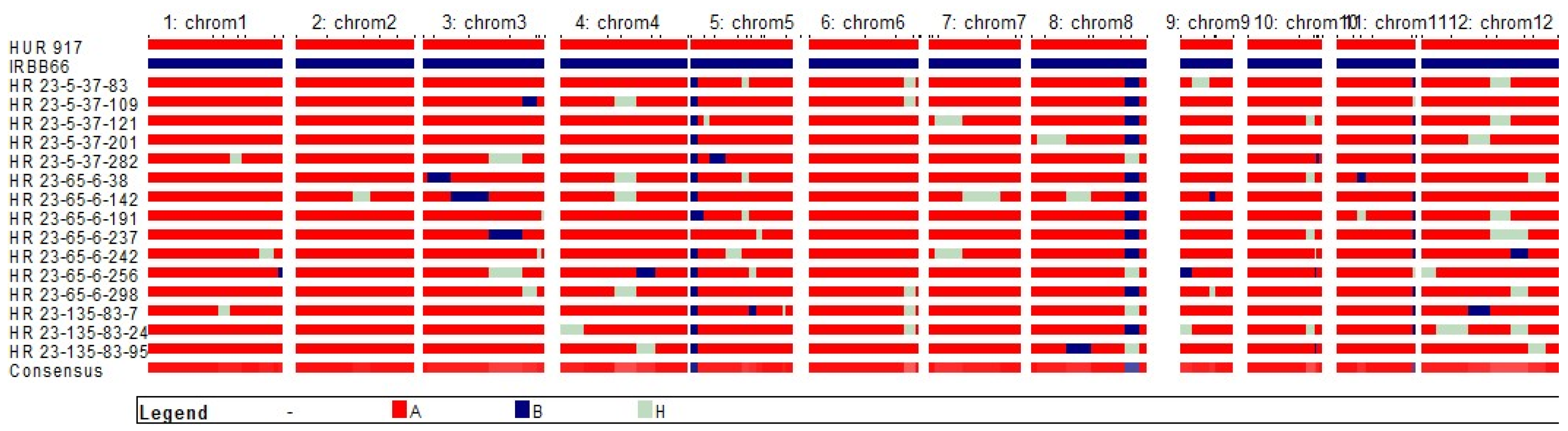
The success of the trait improvement strategy relies upon the extent of the RP genome recovery in the resulting products while retaining originality of the RP. Our results suggested an average of 95.17% RP genome recovery in the resulting pyramided lines, representing genomic segments from the chromosomes 1, 2, 4, 5, 6, 7, 9, 10 and 12 (Table 3 and Figure 5). The R genes (Xa21, xa13 and xa5) located on chromosomes 11, 8 and 5, respectively, were staked with negligible linkage drags (delimited up to 3.4-Mb downstream of xa5, 2.6-Mb upstream and 4.1-Mb downstream of xa13, and 1.1-Mb upstream of Xa21) (Figure 5, Supplementary Figure S3). Analysis with the SSR marker RM122 supported successful introgression of xa5 in total 14 NILs along with >80% RP genome recovery. Similarly, the marker pattern of xa13 prom suggested the presence of xa13 in eleven NILs with 85.7% RP genome, where HR 23-5-37-83, HR 23-5-37-109, HR 23-5-37-121, HR 23-65-6-38, HR 23-65-6-191, HR 23-65-6-237, HR 23-65-6-242, HR 23-65-6-298 and HR 23-135-83-24 were recovered with the complete chromosome 8 of the RP parent. Besides, 11 NILs having Xa21 had substantial RP genome (83.2%) with desirable phenotypic traits. On an average, 76.07 (72.75%) markers confirmed homozygosity and 3.00 (3.65%) markers had heterozygosity, whereas 2.93 (3.57%) markers showed homozygosity for donor alleles. The pyramids (BC2F2), HR 23-135-83-24, HR 23-65-6-258 and HR 23-5-37-201 with all target R genes were recovered with 95.12% RP genome followed by HR 23-5-37-83, HR 23-65-6-142 and HR 23-65-6-237 with 93.90% RP genome and phenome (Supplementary Table S4 and Figure 5).
Figure 5.
Graphical representation of genomic contributions from parents in NILs derived from the cross between HUR-917 (RP) and IRBB66 (Donor), NILs: 1–15, Legend A-represent RP, B-donor and H-heterozygosity; Chromosome 5, 8 and 11 harbors R genes, xa5, xa13 and Xa21, respectively.
3.4. Morphological Evaluation of NILs
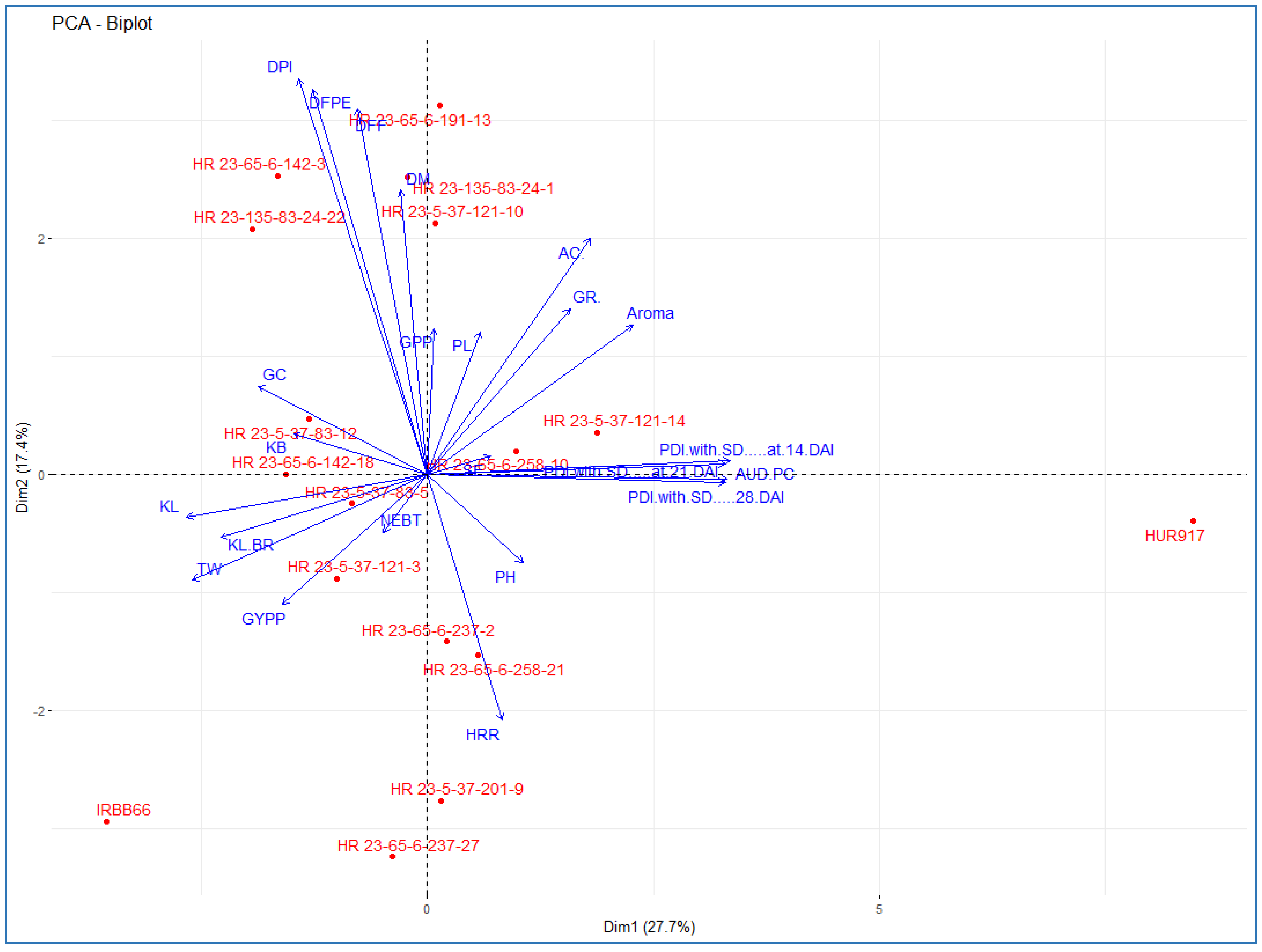
The phenotyping data of selected plants in backcross generations were recorded progressing but least selection differential (Δd) for most of the product profile traits like, days to 50% flowering (DFF) (2.12), plant height (PH) (1.68), grain L/B ratio (0.15) and head rice recovery (HRR) (1.53) (Supplementary Table S3). Analysis of variance (ANOVA) among NILs and parents showed substantial variances (at p ≤ 0.001) in all studied traits (Table 5). The selected BC2F4 NILs, HR 23-5-37-121-10 (7132.62 kg/ha), HR 23-65-6-237-2 (6692.66 kg/ha), HR 23-5-37-83-5 (6399.36 kg/ha), HR 23-65-6-258-10 (6066.06 kg/ha), HR 23-65-6-258-21 (5866.08 kg/ha), HR 23-65-6-191-13 (5499.45 kg/ha) and HR 23-5-37-121-14 (5399.46 kg/ha) carrying targeted R gene combination (Xa21 + xa13 + xa5) showed broad spectrum of BB resistance (PDI of 3.28 ± 0.24 to 7.42 ± 0.35, LL of 1.06 ± 1.35 cm to 4.61 ± 0.87 cm) (Table 4, Table 6 and Table S6, Figure 4, Figure 5, Figures S5 and S6). These selected BC2F4 NILs were subjected to robust phenotyping for grain quality, and the results revealed similar quality as of RP with selection differentials: Δd = 0.11 (Grain L/B ration), Δd = 0.72 (HRR) and Δd = 0.0 (Aroma) (Table 6, Tables S3 and S6). The majority of the three resistance genes containing NILs were similar to the RP for the basic agro-morpho and quality traits (Figure 6). Furthermore, genetic relatedness amongst parents and NILs were assessed based on similarity metrics data of 82 SSR markers, which ranged from 0.06 to 0.94 (data not presented). The entire 17 genotypes (including parents) could be distinguished into 2 two major clusters, cluster I-A consisted of only one genotype i.e., IRBB66 with similarity coefficient value of 0.77. Whereas cluster-II consisted of RP and 15 NILs derivatives with maximum similarity coefficient value of 0.94 between HUR 917 (RP) and HR 23-5-37-201 followed by HR 23-5-37-109 (0.93), HR 23-135-83-95 (0.93), HR 23-5-37-83 (0.91) and HR 23-5-37-121 (0.93). The NILs, HR 23-5-37-83-5, HR 23-5-37-121-10, HR 23-5-37-121-14, HR 23-65-6-191-13, HR 23-65-6-237-2, HR 23-65-6-258-10 and HR 23-65-6-258-21 which are carrying triplet homoalleles of R genes (Xa21 + xa13 + xa5) and had more than 90% RP genome achieved complete product profile as of HUR 917 (Table 6 and Supplementary Figure S2). The HR 23-5-37-121-10, HR 23-65-6-258-21 and HR 23-5-37-121-14 were found to have similar 1000-grain weight (Test weight), HRR, AC content and aroma as of RP which are the most important product profile trait needed to be recovered in this experiment (Table 6, Supplementary Table S6). The quality assessment of NILs suggested that the introgressed R gene combination had similar quality parameters including grain type (Table 6 and Supplementary Figure S6) HRR (53.6% to 79.2%), AC content (20.09% to 24.12%), and GC content (31 to 59) (Table 5). It is important to note that the aroma (BADH2), which was fixed in early generation, was retained in the NILs (Supplementary Figure S4). Besides, sensory evaluation results revealed that there was no significant difference between RP and NILs with respect to aroma. (Supplementary Table S5).
Table 5.
ANOVA of parents and BC2F3 and BC2F4 (pooled) derivatives of HUR 917/IRBB66 for morpho-agronomical traits.
Table 6.
Duncan’s Multiple Range test (DMRT) for analysis of pairwise differences among parents and NILs of HUR 917/IRBB66.
Figure 6.
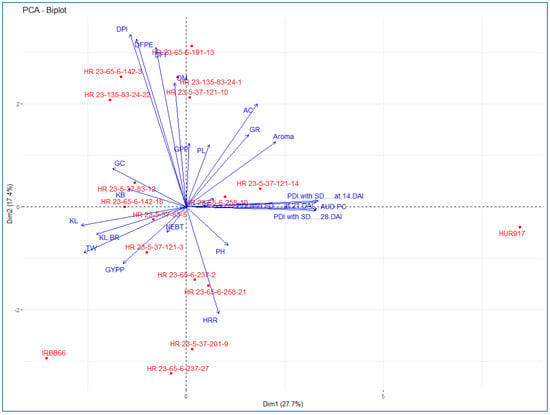
Biplot diagram of 21 traits including yield, quality and other agro-morphological traits in the parents and NILs.
3.5. Bioassay of the NILs for BB Resistance
The results from bioassay of NILs suggested resistance reactions (PDI of 1.83 ± 0.24 to 9.12 ± 0.37, AUDPC of 36.07 to 154.5, LL of 1.06 ± 1.35 cm to 4.61 ± 0.87 cm), and the recorded levels remained at par with the donor parent (Table 4 and Table S3). Fifteen NILs namely, HR 23-5-37-83-5, HR 23-5-37-83-12, HR 23-5-37-121-3, HR 23-5-37-121-10, HR 23-5-37-121-14, HR 23-5-37-201-9, HR 23-65-6-142-3, HR 23-65-6-142-18, HR 23-65-6-191-13, HR 23-65-6-237-2, HR 23-65-6-237-27, HR 23-65-6-258-10, HR 23-65-6-258-21, HR 23-135-83-24-1 and HR 23-135-83-24-22 that attained homozygosity for the three R genes had broad spectrum of BB resistance against eight Xoo pathotypes (Table 4, Figure 4). The NILs (BC2F3s) harboring three homo-alleles of R genes (xa21 + xa13 + xa5) and maximum RP genome (93.90 to 94.51%) had LL in the range of 1.06 ± 1.35 cm to 4.61 ± 0.87 cm, which corresponded to resistant category (disease score of 1). The HR 23-5-37-83-5 showed LL between 1.37 cm to 2.72 cm and product profile at par with the RP for the traits, DFF (108 days), TW (16.4g), HRR (68.6%), AC (22.73%) and aroma (2), followed by HR 23-5-37-121-10 (LL, 1.34 cm to 2.17 cm; DFF, 110 days; TW, 14.2 g; HRR, 65.8%; AC, 22.87% and aroma, 2), HR 23-5-37-121-14 (LL, 1.97 cm to 4.03 cm; DFF, 108 days; TW, 13.6g; HRR, 76.5%; AC, 24.12% and aroma, 2), HR 23-65-6-191-13 (LL, 2.27 cm to 3.19 cm; DFF, 110 days; TW, 16.4g; HRR, 53.6%; AC, 23.66% and aroma, 2 score), HR 23-65-6-237-2 (LL, 1.70 cm to 2.62 cm; DFF, 105 days; TW, 16.4g; HRR, 53.6%; AC, 23.66% and aroma, 2 score), HR 23-65-6-258-10 (LL, 1.03 cm to 4.61 cm; DFF, 109 days; TW, 16.4 g; HRR, 73.1%; AC, 22.78% and aroma, 2 score) and HR 23-65-6-258-21 (LL, 1.06 cm to 3.03 cm; DFF: 106 days; TW, 15.6 g; HRR, 79.2%; AC, 20.12% and aroma, 2 score) (Table 4, Table 6 and Table S6, Figure 4). The LL observed on the lines containing Xa21 + xa5 genes varied from 4.20 ± 1.23 cm to 7.97 ± 1.16 cm, while these ranged from 1.74 ± 0.51 cm to 2.53 ± 0.31 cm in the NILs carrying xa13 + xa5 gene combination (*data are not presented).
4. Discussion
Non-basmati ASG rice with exclusivity to aroma, has excellent cooking quality traits, owing to which it attracts global consumer preference and premium prices in the international markets [4,5]. It is also a reservoir of nutritionally important traits. Research aiming to improve nutrients like Zn, Fe, vitamins and antioxidants by utilizing this genetic resource has opened the new avenues for rice export [50]. Despite having comparatively low amylose content, ASG lines provide better quality and aroma than basmati types [51]. In addition, this genetic resource retains substantial aroma even under warmer conditions [6]. Widespread preference for the ASG variety HUR 917 faces some challenges due to its less yielding capacity [52], vulnerability against stresses [53] and lodging [54]. The increased BB susceptibility of this variety has caused inconsistency in its yield. Enhancing resistance level of the host plant presents a standard practice to mitigate the risks of disease and pest attacks [20,21,22,54]. Evidence suggests that stacking of more than one R gene resulting in quantitative complementation or synergistic response, improves the resistance level of plants [55]. In recent years, advanced genomic tools [5,33,54,56] have made significant contributions to trait improvement in plant breeding. Several R genes conferring durable resistance against major biotic stresses have been successfully incorporated in basmati and non-basmati rice backgrounds [18,20,21,22,48,57].
In this study, the genotype IRBB 66 (a derivative of IR 24) has high level of resistance against hyper-virulent Xoo pathotypes owing to the presence of five R genes (Table 4 and Figure 4). We selected IRBB 66 as a donor for MABC scheme because of its highest genetic proximity to the RP (Figure 2) and similarity in quality traits of both [20]. The F1s with hetero-alleles of effective R gene combinations (Xa21+ Xa7 + Xa4) had resistant reaction, however, backcross progenies with only Xa21 gene had moderately resistant reaction. The improved lines did not show any linkage drag from the donor genomic segments (Figure 5 and Figure 6), which might be due to genetic closeness among donor and RP genotypes. DMRT and biplot analysis revealed perfect recovery of product profile and value-added traits in the derivatives (Table 6 and Figure 6) [36]. Stepwise BS analysis coupled with robust phenotyping led to a substantial increase in the RP genome (94.51% in BC2F2 and 96.95% in BC2F4*) [21,22]. The majority of the NILs carrying three R genes (Xa21 + xa13 + xa5), were found to be morphologically similar (duration, grain, yield and quality parameters) to RP with least selection differential (>0.90 similarity index, data not presented) (Table 3, Table 6 and Table S6 and Supplementary Figure S6) and at par resistance with the donor, IRBB66 (Table 4). Phenotyping in combination with MAS in backcross generations was proven equally important as this strategy helped fast-track the transfer of genomic regions of functional relevance. Whereas SSR markers employed in the BS usually target the non-coding and heterochromatic regions and therefore may not be suitable to quantify the recovery of functional part of the genome [21]. (*data are not presented).
Notably, selection differentials for most of the desirable traits changed progressively throughout BC and segregating generations. No change in aroma, a key parameter, was reported in the BC1F1 generation (Score-02) (Supplementary Table S5 and Supplementary Figure S4). Intensive selection caused fixing of the aroma trait (a key trait in ASG governed by the two recessive genes badh1 and badh2) during the early generations [58,59,60,61]. The sensory panel test revealed no substantial differences for aroma in RP and the derivatives, which validated the successful recovery of all major gene(s) responsible for fragrance i.e., 2-acetyl-1-pyrroline (2AP) in rice. The targeted product profile in NILs was attained since most of the traits considered in the study were attributed to a number of small effect genes/QTLs.
Adoption of limited backcrosses in this study found to have substantial edge over burden of more backcrosses as our rapid backcross scheme accelerated accumulation of desirable genes (minor) in derivatives. Thus, inclusion of genetically close parents in MAS not only reduces the breeding cycle, but it can also contribute to enhance response to selection for important traits in later stage of the population [21,62,63].
The bioassay of NILs confirmed the successful introgression of the R genes, and the lines manifested incompatible disease response against all virulent Xoo pathotypes considered in the study. The improved introgression lines with two or more effective R gene combinations showed resistance levels comparable to that of donor, which validated the efficacy of the introgression strategy followed in the current study.
5. Conclusions
Genomics-aided trait improvement to combat BB disease is an environmentally-sound and economically-viable strategy to achieve sustainable rice production worldwide. Prevalence of genetically diverse virulent Xoo strains over agro-climatic zone renders this disease extremely challenging to manage. The results of this study revealed that three R genes (xa5 + xa13 + Xa21) in combination could impart broad spectrum BB resistance. We demonstrated the precise stacking of R genes into the background of the popular rice variety HUR 917.
Supplementary Materials
The following supporting information can be downloaded at: https://www.mdpi.com/article/10.3390/plants12061363/s1, Supplementary Figure S1. Genetic relationship amongst the recurrent parent HUR 917 and donors. Supplementary Figure S2. Genetic relationship amongst the recurrent parent HUR 917 and NILs. Supplementary Figure S3. Physical position of SSR markers used for gene introgression and genome recovery of the recurrent parent. Supplementary Figure S4. PCR amplification of BADH2 gene in BC2F4 NILs using FMbadh2-E7 functional marker; M, Marker; P1- IRBB66, P2-RP (HUR 917) and lane 3–18 are NILs. Supplementary Figure S5. Bacterial blight disease severity in parents and NILs after 21 days of inoculation of eight virulent Xoo races. Supplementary Figure S6. Field view parents and NILs of HUR 917/IRBB66. (a) Comparative field view of parents and derivatives. (b) Panicle size of NILs and parents. (c) Grain size of parents and NILs. Supplementary Table S1. Similarity matrix of parental lines taken for genetic diversity analysis. Supplementary Table S2. A list of polymorphic SSR markers between parents HUR 917 and IRBB66. Supplementary Table S3. Brief summary of selection differential and bacterial blight disease index in BC and advanced segregating generations. Supplementary Table S4. RP genome recovery in BC2F2 generation. Supplementary Table S5. X2 analysis for aroma and palatability in RP and improved lines (BC2F4) based on panel test. Supplementary Table S6. Performance of parents and BC2F4 derivatives of HUR 917/IRBB66 for 15 morpho-agronomical traits disease severity, AUDPC value and genome recovery.
Author Contributions
Conceptualization, R.P.S. and R.V.; Data curation, P.S. and S.C.; Formal analysis, D.J., D.R. and G.D.; Investigation, M.K. and S.C.; Methodology, S.S. and R.V.; Project administration, O.N.S.; Resources, A.K.M.; Software, V.S.; Supervision, R.P.S.; Validation, V.S., P.S., S.B. and A.K.M.; Visualization, P.B.A., M.C. and S.B.; Writing—original draft, M.K. and R.V.; Writing—review & editing, C.M. and A.B. All authors have read and agreed to the published version of the manuscript.
Funding
This research received no external funding.
Institutional Review Board Statement
Not applicable.
Informed Consent Statement
Not applicable.
Data Availability Statement
Not applicable.
Acknowledgments
Authors are thankful to director, IAS, BHU Varanasi and ICAR-National Rice Research Institute, Cuttack, Odisha, India for providing all the necessary facilities; also thankful to UGC BHU fellowship for financial support. The study is a part of the Ph.D. research work of the first author.
Conflicts of Interest
The authors declare no conflict of interest.
References
- FAOSTAT. Rice Crop Data. 2018. Available online: http://www.fao.org/faostat/en/#data/QC (accessed on 12 March 2018).
- Khush, G.S.; Mackill, D.J.; Sidhu, G.S. Breeding Rice for Resistance to Bacterial Leaf Blight. In IRRI Bacterial Blight of Rice; IRRI: Manila, Philippines, 1989; pp. 207–217. [Google Scholar]
- Singh, A.; Gopalakrishnan, S.; Singh, V.; Prabhu, K.; Mohapatra, T.; Singh, N.; Sharma, T.; Nagarajan, M.; Vinod, K.K.; Singh, D.; et al. Marker assisted selection: A paradigm shift in Basmati breeding. Indian J. Genet. 2011, 71, 120–128. [Google Scholar]
- Rani, N.S.; Ahmed, M.I.; Krishnaveni, B. Screening rice hybrids for quality traits. Int. Rice Res. Notes 1998, 23, 4–5. [Google Scholar]
- Singh, V.K.; Singh, A.; Singh, S.P.; Ellur, R.K.; Choudhary, V.; Sarkel, S.; Singh, D.; Krishnan, S.G.; Nagarajan, M.; Vinod, K.K.; et al. Incorporation of blast resistance into “PRR78”, an elite Basmati rice restorer line, through marker assisted backcross breeding. Field Crop. Res. 2012, 128, 8–16. [Google Scholar] [CrossRef] [Scilit]
- Singh, R.K.; Gautam, P.L.; Saxena, S.; Singh, S. Scented Rice Germplasm: Conservation, Evaluation and Utilization. In Aromatic Rices; Singh, R.K., Singh, U.S., Khush, G.S., Eds.; Oxford & IBH Publishing Co. Pvt. Ltd.: New Delhi, India, 2000; pp. 107–133. [Google Scholar]
- Khush, G.S. What it will take to feed 5.0 billion rice consumers in 2030. Plant Mol. Biol. 2005, 59, 1–6. [Google Scholar] [CrossRef] [Scilit] [PubMed]
- Singh, G.P.; Singh, S.R.; Singh, R.V.; Singh, R.M. Variation and qualitative losses caused by bacterial blight in different rice varieties. Indian Phytopathol. 1997, 30, 180–185. [Google Scholar]
- IRRI. International Rice Research Institute, Rice Fact Sheet, Bacterial Blight. March 2010. Available online: https://download.ceris.purdue.edu/file/1503 (accessed on 2 July 2020).
- Eamchit, S.; Mew, T.W. Comparison of virulence of Xanthomonas compastris pv. oryzae in Thailand and the Philippines. Plant Dis. 1982, 66, 556–559. [Google Scholar] [CrossRef] [Scilit]
- Song, C.; Yang, B. Mutagenesis of 18 Type III effectors reveals virulence function of XopZpxo99 in Xanthomonas oryzae pv. oryzae. Mol. Plant Microbe Interact. 2010, 23, 893–902. [Google Scholar] [CrossRef] [Scilit] [PubMed]
- White, F.F.; Potnis, N.; Jones, J.B.; Koebnik, R. The type III effectors of Xanthomonas. Mol. Plant Pathol. 2009, 10, 749–766. [Google Scholar] [CrossRef] [Scilit]
- Mondal, K.K.; Meena, B.R.; Junaid, A.; Verma, G.; Mani, C.; Majumder, D.; Khicher, M.; Kumar, S.; Banik, S. Pathotyping and genetic screening of type III effectors in Indian strains of Xanthomonas oryzae pv. oryzae causing bacterial leaf blight of rice. Physiol. Mol. Plant Pathol. 2014, 86, 98–106. [Google Scholar] [CrossRef] [Scilit]
- Jones, J.D.; Dang, J.L. The plant immune system. Nature 2006, 444, 323–329. [Google Scholar] [CrossRef] [Scilit] [PubMed]
- White, F.F.; Yang, B. Host and pathogen factors controlling the rice Xanthomonas oryzae interaction. Plant Physiol. 2009, 150, 1677–1686. [Google Scholar] [CrossRef] [Scilit] [PubMed]
- Park, C.; Ronald, P.C. Cleavage and nuclear localization of the rice Xa21 immune receptor. Nat. Commun. 2012, 3, 920. [Google Scholar] [CrossRef] [Scilit] [PubMed]
- Adhikari, T.B.; Basnyat, R.C.; Mew, T.W. Virulence of Xanthomonas oryzae pv. Oryzae on rice lines containing single resistance genes and gene combinations. Plant Dis. 1999, 83, 46–50. [Google Scholar] [CrossRef] [Scilit] [PubMed]
- Balachiranjeevi, C.; Bhaskar, N.S.; Abhilash, V.; Akanksha, S.; Viraktamath, B.C.; Madhav, M.S.; Hariprasad, A.S.; Laha, G.S.; Prasad, M.S.; Balachandran, S.; et al. Marker-assisted introgression of bacterial blight and blast resistance into DRR17B, an elite, fine-grain type maintainer line of rice. Mol. Breed. 2015, 35, 151. [Google Scholar] [CrossRef] [Scilit]
- Sundaram, R.M.; Vishnupriya, M.R.; Biradar, S.K.; Laha, G.S.; Reddy, G.A.; Rani, N.S.; Sarma, N.P.; Sonti, R.V. Marker assisted introgression of bacterial blight resistance in Samba Mahsuri, an elite indica rice variety. Euphytica 2008, 160, 411–422. [Google Scholar] [CrossRef] [Scilit]
- Dash, A.K.; Rao, R.N.; Rao, G.J.N.; Verma, R.L.; Katara, J.L.; Mukherjee, A.K.; Singh, O.N.; Bagchi, T.B. Phenotypic and Marker-Assisted Genetic Enhancement of Parental Lines of Rajalaxmi, an Elite Rice Hybrid. Front. Plant Sci. 2016, 7, 1005. [Google Scholar] [CrossRef] [Scilit]
- Ellur, R.K.; Khanna, A.; Yadav, A.; Pathania, S.; Rajashekar, H.; Singh, V.K.; Gopala Krishnan, S.; Bhowmicka, P.K.; Nagaraj, M.; Vinod, K.K.; et al. Improvement of Basmati rice varieties for resistance to blast and bacterial blight diseases using marker assisted back-cross breeding. Plant Sci. 2016, 242, 330–341. [Google Scholar] [CrossRef] [Scilit]
- Hsu, Y.C.; Chiu, C.H.; Yap, R.; Tseng, U.C.; Wu, Y.P. Pyramiding Bacterial Blight Resistance Genes in Tainung82 for Broad-Spectrum Resistance Using Marker-Assisted Selection. Inter. J. Mol. Sci. 2020, 21, 1281. [Google Scholar] [CrossRef] [Scilit]
- Yap, R.; Hsu, Y.C.; Wu, Y.P.; Lin, Y.R.; Kuo, C.W. Multiplex PCR genotyping for five bacterial blight resistance genes applied to marker-assisted selection in rice (Oryza sativa). Plant Breed. 2016, 135, 309–317. [Google Scholar] [CrossRef] [Scilit]
- Kim, S.M.; Suh, J.P.; Qin, Y.; Noh, T.H.; Reinke, R.F.; Jena, K.K. Identification and fine mapping of a new resistance gene, Xa40, conferring resistance to bacterial blight races in rice (Oryza sativa L.). Theor. Appl. Genet. 2015, 128, 1933–1943. [Google Scholar] [CrossRef] [Scilit]
- Iyer, A.S.; McCouch, S.R. The rice bacterial blight resistance gene xa5 encodes a novel form of disease resistance. Mol. Plant Microbe Interact. 2004, 17, 1348–1354. [Google Scholar] [CrossRef] [Scilit] [PubMed]
- Wang, Y.H.; Liu, S.J.; Ji, S.L.; Zhang, W.W.; Wang, C.M.; Jiang, L.; Wan, J.M. Fine mapping and marker-assisted selection (MAS) of a low glutelin content gene in rice. Cell Res. 2005, 15, 622–630. [Google Scholar] [CrossRef] [Scilit]
- Chu, Z.; Fu, B.; Yang, H.; Xu, C.; Li, Z.; Sanchez, A.; Park, Y.J.; Bennetzen, J.L.; Zhang, Q.; Wang, S. Targeting xa13, a recessive gene for bacterial blight resistance in rice. Theor. Appl. Genet. 2006, 112, 455–461. [Google Scholar] [CrossRef] [Scilit]
- Song, W.-Y.; Wang, G.-L.; Chen, L.-L.; Kim, H.-S.; Pi, L.-Y.; Holsten, T.; Gardner, J.; Wang, B.; Zhai, W.-X.; Zhu, L.-H.; et al. A receptor kinase-like protein encoded by the rice disease resistance gene, Xa21. Science 1995, 270, 1804–1806. [Google Scholar] [CrossRef] [Scilit] [PubMed]
- Peng, H.; Chen, Z.; Fang, Z.; Zhou, J.; Xia, Z.; Gao, L.; Chen, L.; Li, L.; Li, T.; Zhai, W.; et al. Rice Xa21 primed genes and pathways that are critical for combating bacterial blight infection. Sci. Rep. 2015, 5, 12165. [Google Scholar] [CrossRef] [Scilit]
- Rajpurohit, D.; Kumar, R.; Kumar, M.; Paul, P.; Awasthi, A.; Osman Basha, P.; Puri, A.; Jhang, T.; Singh, K.; Dhaliwal, H.S. Pyramiding of two bacterial blight resistance and a semi dwarfing gene in Type 3 Basmati using marker-assisted selection. Euphytica 2011, 178, 111–126. [Google Scholar] [CrossRef] [Scilit]
- Singh, S.; Sidhu, J.S.; Huang, N.; Vikal, Y.; Li, Z.; Brar, D.S.; Dhaliwal, H.S.; Khush, G.S. Pyramiding three bacterial blight resistance genes (Xa5, Xa13 and Xa21) using marker-assisted selection into indica rice cultivar PR106. Theor. Appl. Genet. 2001, 102, 1011–1015. [Google Scholar] [CrossRef] [Scilit]
- Suh, J.-P.; Jeung, J.-U.; Noh, T.-H.; Cho, Y.-C.; Park, S.-H.; Park, H.-S.; Shin, M.-S.; Kim, C.-K.; Jena, K.K. Development of breeding lines with three pyramided resistance genes that confer broad-spectrum bacterial blight resistance and their molecular analysis in rice. Rice 2013, 6, 5. [Google Scholar] [CrossRef] [Scilit]
- Verma, R.L.; Singh, S.; Singh, P.; Kumar, V.; Singh, S.P.; Samantaray, S.; Singh, O.N. Genetic purity assessment of indica rice hybrids through DNS fingerprinting and grow-out test. J. Environ. Biol. 2017, 38, 1321–1331. [Google Scholar] [CrossRef] [Scilit]
- Cheema, K.; Grewal, N.; Vikal, Y.; Sharma, R.; Lore, J.S.; Das, A.; Bhatia, D.; Mahajan, R.; Gupta, V.; Bharaj, T.S.; et al. A novel bacterial blight resistant gene from Oryza nivara mapped to 38 kb region on chromosome 4L and transferred to Oryza sativa L. Genet. Res. Camb. 2008, 90, 397–407. [Google Scholar] [CrossRef] [Scilit]
- Chen, X.; Temnykh, S.; Xu, Y.; Cho, Y.G.; McCouch, S.R. Development of a microsatellite framework map providing genome wide coverage in rice (Oryza sativa L.). Theor. Appl. Genet. 1997, 95, 553–567. [Google Scholar] [CrossRef] [Scilit]
- Das, G.; Pradhan, B.; Bastia, D.; Samantaray, S.; Jena, D.; Rout, D.; Arsode, P.B.; Singh, V.; Mukherjee, A.K.; Mohan, C.; et al. Pyramiding Submergence Tolerance and Three Bacterial Blight Resistance Genes in Popular Rice Variety Hasanta through Marker-Assisted Backcross Breeding. Agriculture 2022, 12, 1815. [Google Scholar] [CrossRef] [Scilit]
- Ronald, P.C.; Albano, B.; Tabien, R.; Abenes ML, P.; Wu, K.S.; McCouch, S.R. Genetic and physical analysis of the rice bacterial blight disease resistance locus Xa21. Mol. Gen. Genet. 1992, 236, 113–120. [Google Scholar] [CrossRef] [Scilit] [PubMed]
- Shi, W.; Yang, Y.; Chen, S.; Xu, M. Discovery of a new fragrance allele and the development of functional markers for the breeding of fragrant rice varieties. Mol. Breed. 2008, 22, 185–192. [Google Scholar] [CrossRef] [Scilit]
- Doyle, J.J.; Doyle, J.L. A rapid DNA isolation procedure for small quantities of fresh leaf tissue. Phytochem. Bull. 1987, 19, 11–15. [Google Scholar]
- Yoshimura, S.; Yoshimura, A.; Iwata, N.; McCouch, S.R.; Abenes, M.L.; Baraoidan, M.R.; Mew, T.W.; Nelson, R.J. Tagging and combining of bacterial blight resistance genes in rice using RAPD and RFLP markers. Mol. Breed. 1995, 1, 375–387. [Google Scholar] [CrossRef] [Scilit]
- SSR Markers. Available online: https://www.gramene.org/SSR (accessed on 10 October 2022).
- Berloo, R.V. GGT 2.0: Versatile software for visualization and analysis of genetic data. J. Hered. 2008, 99, 232–236. [Google Scholar] [CrossRef] [Scilit] [PubMed]
- Fahy, P.C.; Persley, G.J. Plant Bacterial Diseases: A Diagnostic Guide; Academic Press: New York, NY, USA, 1983; p. 393. [Google Scholar]
- Kauffman, H.E.; Reddy, A.; Hsieh, S.P.Y.; Merca, S.D. An improved technique for evaluating resistance of varieties to Xanthomonas oryzae pv. oryzae. Plant Dis. Rep. 1973, 57, 537–541. [Google Scholar]
- IRRI. Injuries Caused by Diseases. In Standard Evaluation System for Rice (SES), 5th ed.; International Rice Research Institute: Los Baños, Philippines, 2013; pp. 18–27. [Google Scholar]
- Gnanamanickam, S.S.; Brindha, P.V.; Narayanan, N.N.; Vasudevan, P.; Kavitha, S. An overview of bacterial blight disease of rice and strategies for its management. Curr. Sci. 1999, 77, 1435–1443. [Google Scholar]
- Ghosh, A.K.; Nanda, B.B.; Swami, S.G.; Nayak, B.B. Influence of nitrogen on the physico-chemical characteristics of rice grain. Oryza 1971, 891, 87–97. [Google Scholar]
- Juliano, B.O. A simplified assay for milled rice amylose. Cereal Sci. Today 1971, 16, 340–360. [Google Scholar]
- Khanna, A.; Sharma, V.; Ellur, R.K.; Shikari, A.; Krishnan, S.G.; Singh, U.D.; Prakash, G.; Sharma, T.R.; Rathour, R.; Variar, M.; et al. Development and evaluation of near-isogenic lines for major blast resistance gene(s) in Basmati rice. Theor. Appl. Genet. 2015, 128, 1243–1259. [Google Scholar] [CrossRef] [Scilit] [PubMed]
- Kumar, M.; Singh, R.P.; Singh, O.N.; Singh, P.; Arsode, P.; Namrata; Chaudhary, M.; Jena, D.; Singh, V.; Rout, D.; et al. Genetic analysis for bacterial blight resistance in indica rice (Oryza sativa L.) cultivars. Oryza 2019, 56, 247–255. [Google Scholar] [CrossRef] [Scilit]
- Rani, N.S.; Pandey, M.K.; Prasad, G.S.V.; Sudharshan, I. Historical significance, grain quality features and precision breeding for improvement of export quality basmati varieties in India. Indian J. Crop. Sci. 2006, 1, 29–41. [Google Scholar]
- Pal, S. Beyond Basmati: 7 Scented Varieties of Traditional Rice You Need to Try Now! 2018. Available online: https://www.thebetterindia.com/144329/traditional-aromatic-rice-india-basmati/ (accessed on 24 June 2019).
- Varaprasad, G.S.; Kota, S.; Padmavathi, G.; Madhav, M.S. Breeding for improved aromatic short grain rices of India. In Proceedings of the Third International Conference on Agriculture and Horticulture, Telangana, India, 27–29 October 2014. [Google Scholar]
- Ali, A.; Xu, J.; Ismail, A.; Fu, B.; Vijaykumar, C.; Gao, Y.; Domingo, J.; Maghirang, R.; Yu, S.; Gregorio, G.; et al. Hidden diversity for abiotic and biotic stress tolerances in the primary gene pool of rice revealed by a large backcross breeding program. Field Crop. Res. 2006, 97, 66–76. [Google Scholar] [CrossRef] [Scilit]
- Chukwu, S.C.; Rafii, M.Y.; Ramlee, S.I.; Ismail, S.I.; Hasan, M.M.; Oladosu, Y.A.; Magaji, U.G.; Akos, I.; Olalekan, K.K. Bacterial leaf blight resistance in rice: A review of conventional breeding to molecular approach. Mol. Biol. Rep. 2019, 46, 1519–1532. [Google Scholar] [CrossRef] [Scilit]
- Sanchez, A.C.; Brar, D.S.; Huang, N.; Li, Z.; Khush, G.S. Sequence tagged site marker-assisted selection for three bacterial blight resistance genes in rice. Crop. Sci. 2000, 40, 792–797. [Google Scholar] [CrossRef] [Scilit]
- Cobb, J.N.; Biswas, P.S.; Platten, J.D. Back to the future: Revisiting MAS as a tool for modern plant breeding. Theor. Appl. Genet. 2019, 132, 647–667. [Google Scholar] [CrossRef] [Scilit] [PubMed]
- Singh, P.; Verma, R.L.; Singh, R.S.; Singh, R.P.; Singh, H.B.; Arsode, P.; Kumar, M.; Singh, P.K. Biotic Stress Management in Rice (Oryza sativa L.) Through Conventional and Molecular Approaches. In New Frontiers in Stress Management for Durable Agriculture; Springer: Singapore, 2020; pp. 609–644. [Google Scholar]
- Singh, A.; Singh, P.K.; Singh, R.; Pandit, A.; Mahato, A.K.; Gupta, D.K.; Tyagi, K.; Singh, A.K.; Singh, N.K.; Sharma, T.R. SNP haplotypes of the BADH1 gene and their association with aroma in rice (Oryza sativa L.). Mol. Breed. 2010, 26, 325–338. [Google Scholar] [CrossRef] [Scilit]
- Bradbury, L.M.T.; Fitzgerald, T.L.; Henry, R.J.; Jin, Q.S.; Waters, D.L.E. The gene for fragrance in rice. Plant Biotechnol. J. 2005, 3, 363–370. [Google Scholar] [CrossRef] [Scilit]
- Eram, S.; Singh, A.K.; Singh, A.; Singh, N.K.; Singh, P.K. Physicochemical characterization and organoleptic analysis in rice cultivars. Indian J. Agric. Res. 2014, 48, 437–445. [Google Scholar] [CrossRef] [Scilit]
- Singh, V.K.; Singh, A.; Singh, S.P.; Ellur, R.K.; Singh, D.; Gopala Krishnan, S.; Bhowmik, P.K.; Nagarajan, M.; Vinod, K.K.; Singh, U.D.; et al. Marker-assisted simultaneous but stepwise backcross breeding for pyramiding blast resistance genes Pi2 and Pi54 into an elite Basmati rice restorer line PRR78. Plant Breed. 2013, 132, 486–495. [Google Scholar]
- Kumar, M.; Singh, R.P.; Singh, O.N.; Singh, P.; Arsode, P.; Jena, D.; Samantaray, S.; Verma, R.L. Generation mean analysis for bacterial blight resistance and yield traits in rice. J. Pharmacogn. 2019, 8, 2120–2124. [Google Scholar]

Disclaimer/Publisher’s Note: The statements, opinions and data contained in all publications are solely those of the individual author(s) and contributor(s) and not of MDPI and/or the editor(s). MDPI and/or the editor(s) disclaim responsibility for any injury to people or property resulting from any ideas, methods, instructions or products referred to in the content. |
© 2023 by the authors. Licensee MDPI, Basel, Switzerland. This article is an open access article distributed under the terms and conditions of the Creative Commons Attribution (CC BY) license (https://creativecommons.org/licenses/by/4.0/).