Article

Application of Citrus and Apple Fibers for Formulation of Quercetin/Fiber Aggregates: Impact of Quercetin Concentration


1
Faculty of Food Technology Osijek, Josip Juraj Strossmayer University of Osijek, Franje Kuhača 18, 31 000 Osijek, Croatia
2
Department of Food, Bioprocessing and Nutrition Sciences, North Carolina State University, Raleigh, NC 27695, USA
*
Author to whom correspondence should be addressed.
Plants 2022, 11(24), 3582; https://doi.org/10.3390/plants11243582

Submission received: 26 November 2022 / Revised: 15 December 2022 / Accepted: 16 December 2022 / Published: 19 December 2022

Abstract

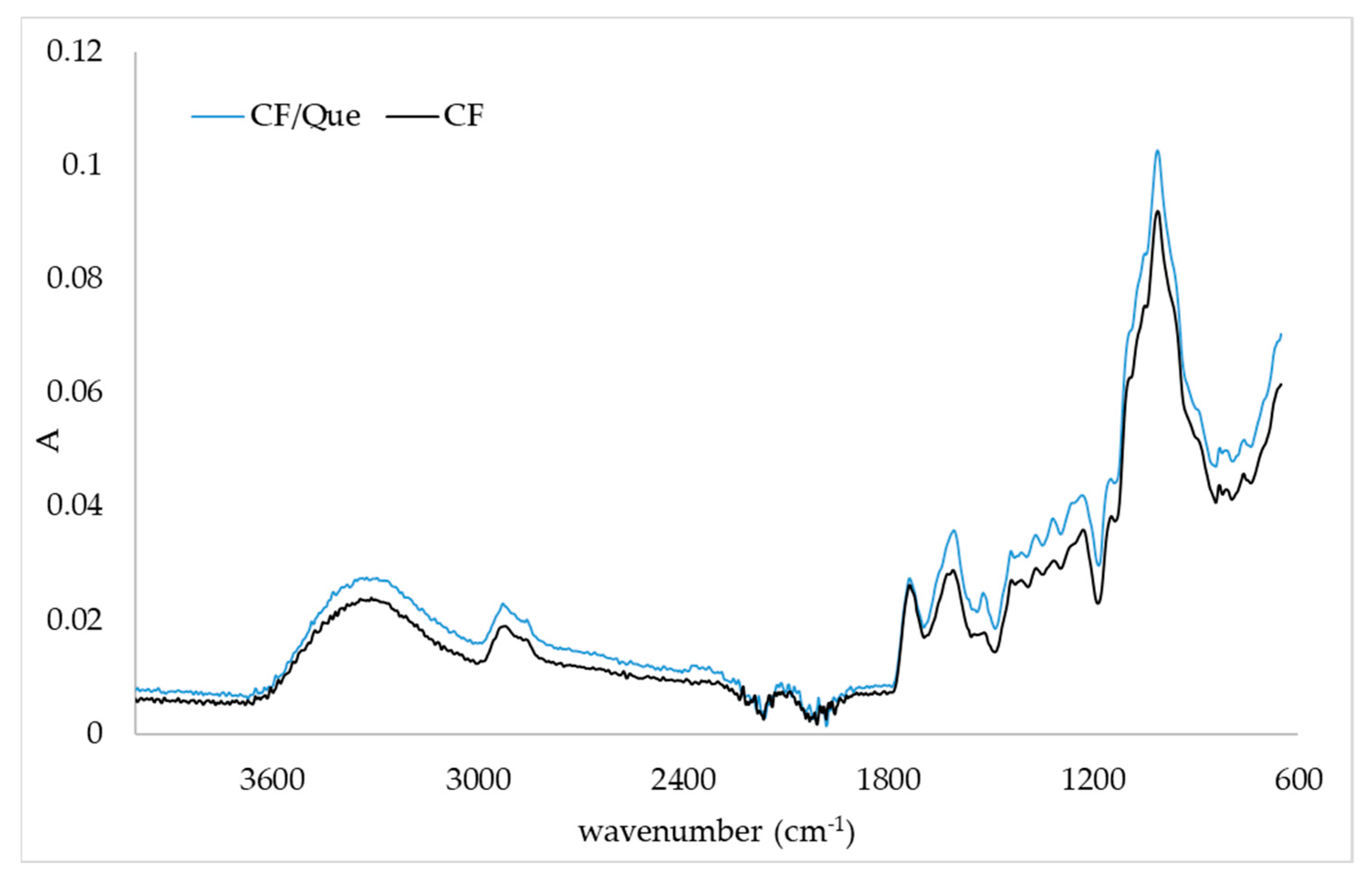
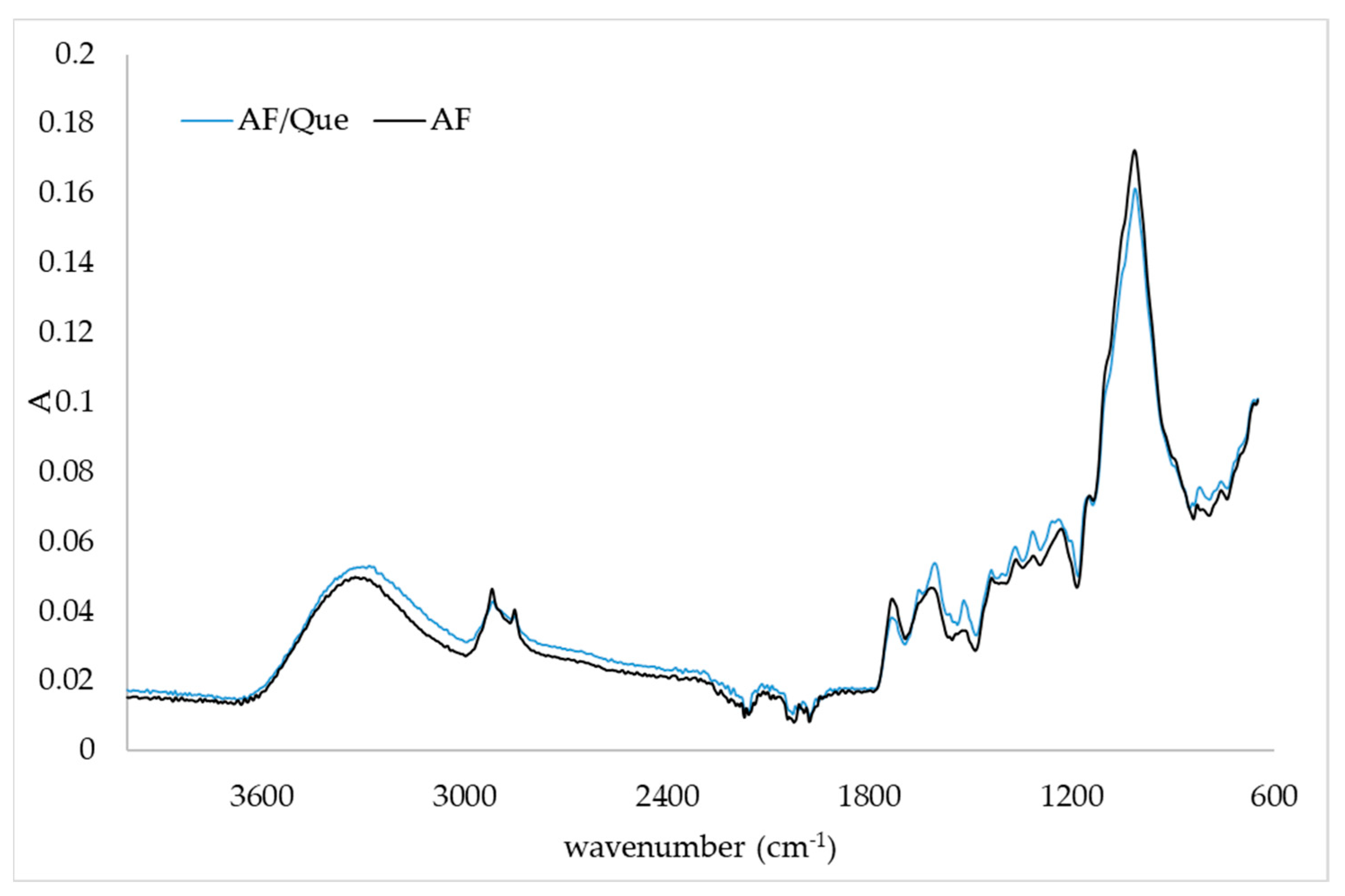
Among flavonoids, quercetin has gained special attention due to its positive biological activities. Quercetin’s disadvantages, such as its hydrophobic nature, poor solubility, and permeability, could be overcome by complexation with different polymers. Dietary fibers are known as carriers of polyphenols, which can protect them from environmental conditions and thus allow them to be absorbed. In this study, apple and citrus fibers (as applicable food by-products) were used as carriers of quercetin. A constant amount of fibers (1%) and different concentrations of quercetin solution (5 mM, 10 mM, and 20 mM) were complexed. Obtained fiber aggregates were subjected to HPLC to determine the quercetin concentration and antioxidant activity of aggregates (ABTS, DPPH, FRAP, and CUPRAC assays). IR spectra were recorded to confirm complexation of quercetin with selected fibers, and an additional DSC study was performed to evaluate the thermal stability of fiber aggregates. The results of HPLC analysis showed that quercetin had higher affinity towards apple fiber than citrus fiber, without proportional trends of adsorption. Consequently, apple fiber aggregates had higher antioxidant potential than citrus fiber aggregates. FTIR-ATR analysis showed the formation of new bands and the loss of existing bands when quercetin was present. Adsorption of quercetin also had an impact on the thermal stability of formulated fiber aggregates. For apple fiber, this impact was negative, while for citrus fiber, the impact was positive. These results could contribute to greater understanding of quercetin’s behavior during the preparation of food additives based on polyphenols and fibers.
Keywords: quercetin; apple fiber; citrus fiber; HPLC; structural changes; thermal stability; antioxidant activity quercetin; apple fiber; citrus fiber; HPLC; structural changes; thermal stability; antioxidant activity