Article

Response of Olive Shoots to Salinity Stress Suggests the Involvement of Sulfur Metabolism

by
Muhammad Ajmal Bashir
1,2,
Cristian Silvestri
2,*,
Eleonora Coppa
2,
Elena Brunori
3,
Valerio Cristofori
2,
Eddo Rugini
2,
Touqeer Ahmad
1,
Ishfaq Ahmad Hafiz
1,
Nadeem Akhtar Abbasi
1,
Muhammad Kausar Nawaz Shah
4 and
Stefania Astolfi
2,*
1
Department of Horticulture, PMAS Arid Agriculture University, Rawalpindi 46300, Pakistan
2
Department of Agriculture and Forest Sciences (DAFNE), University of Tuscia, 01100 Viterbo, Italy
3
Department for Innovation in Biological, Agro-Food and Forest Systems, Tuscia University, via San Camillo de Lellis snc, 01100 Viterbo, Italy
4
Department of Plant Breeding and Genetics, PMAS Arid Agriculture University, Rawalpindi 46000, Pakistan
*
Authors to whom correspondence should be addressed.
Plants 2021, 10(2), 350; https://doi.org/10.3390/plants10020350

Submission received: 19 January 2021 / Revised: 7 February 2021 / Accepted: 8 February 2021 / Published: 12 February 2021

Abstract

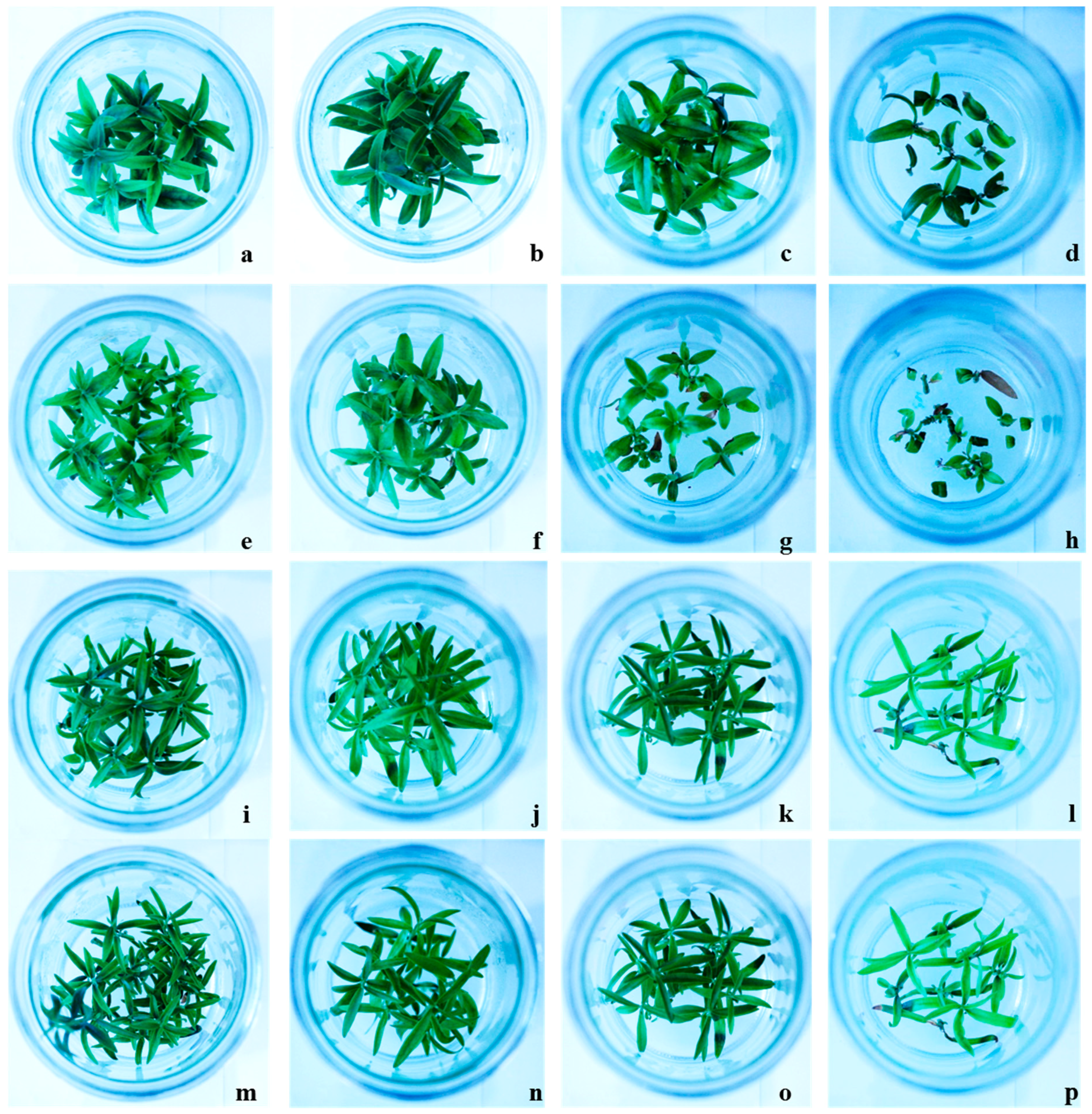
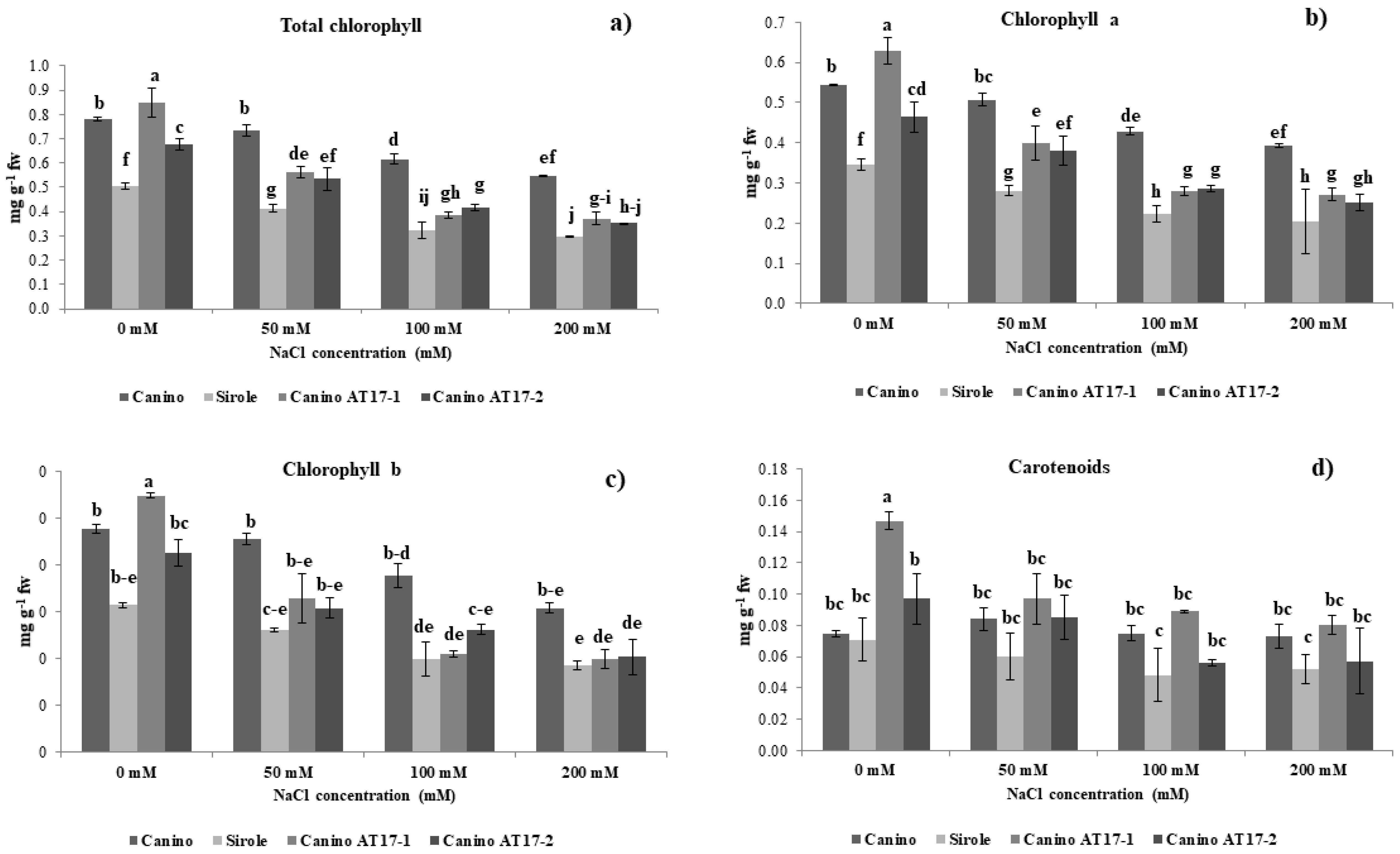
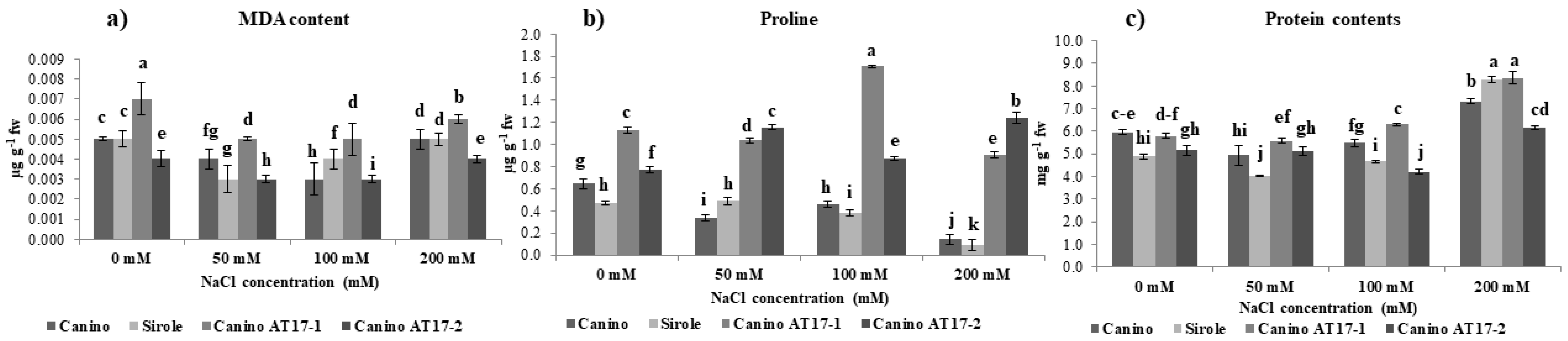
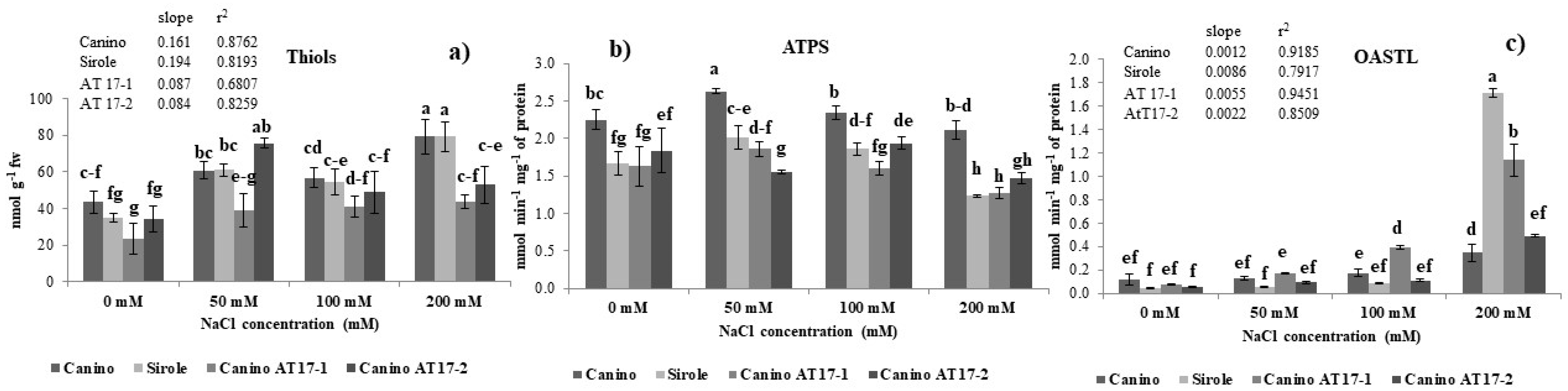
Global warming has two dangerous global consequences for agriculture: drought, due to water scarcity, and salinization, due to the prolonged use of water containing high concentrations of salts. Since the global climate is projected to continue to change over this century and beyond, choosing salt-tolerant plants could represent a potential paramount last resort for exploiting the secondary saline soils. Olive is considered moderately resistant to soil salinity as compared to other fruit trees, and in the present study, we investigated the influence of NaCl solutions (ranging from 0 to 200 mM) in a salt-tolerant (cv Canino) and two of its transgenic lines (Canino AT17-1 and Canino AT17-2), overexpressing tobacco osmotin gene, and in a salt-sensitive (Sirole) olive cultivar. After four weeks, most of the shoots of both Canino and Sirole plants showed stunted growth and ultimate leaf drop by exposure to salt-enriched media, contrary to transgenic lines, that did not show injuries and exhibited a normal growth rate. Malondialdehyde (MDA) content was also measured as an indicator of the lipid peroxidation level. To evaluate the role of the S assimilatory pathway in alleviating the adverse effects of salt stress, thiols levels as well as extractable activities of ATP sulfurylase (ATPS) and O-acetyl serine(thiol)lyase (OASTL), the first and the last enzyme of the S assimilation pathway, respectively, have been estimated. The results have clearly depicted that both transgenic lines overexpressing osmotin gene coped with increasing levels of NaCl by the induction of S metabolism, and particularly increase in OASTL activity closely paralleled changes of NaCl concentration. Linear correlation between salt stress and OASTL activity provides evidence that the S assimilation pathway plays a key role in adaptive response of olive plants under salt stress conditions.
Keywords: Olea europaea L.; osmotin; salinity; sulfur assimilation; transgenesis Olea europaea L.; osmotin; salinity; sulfur assimilation; transgenesis