Article

Habitat Suitability and Establishment Limitations of a Problematic Liana
by
Christopher C. Dickinson
,
John G. Jelesko
and
Jacob N. Barney
*
School of Plant and Environmental Sciences, Virginia Tech, Blacksburg, VA 24061, USA
*
Author to whom correspondence should be addressed.
Plants 2021, 10(2), 263; https://doi.org/10.3390/plants10020263

Submission received: 17 December 2020 / Revised: 22 January 2021 / Accepted: 23 January 2021 / Published: 29 January 2021
(This article belongs to the Section Plant Ecology)

Abstract

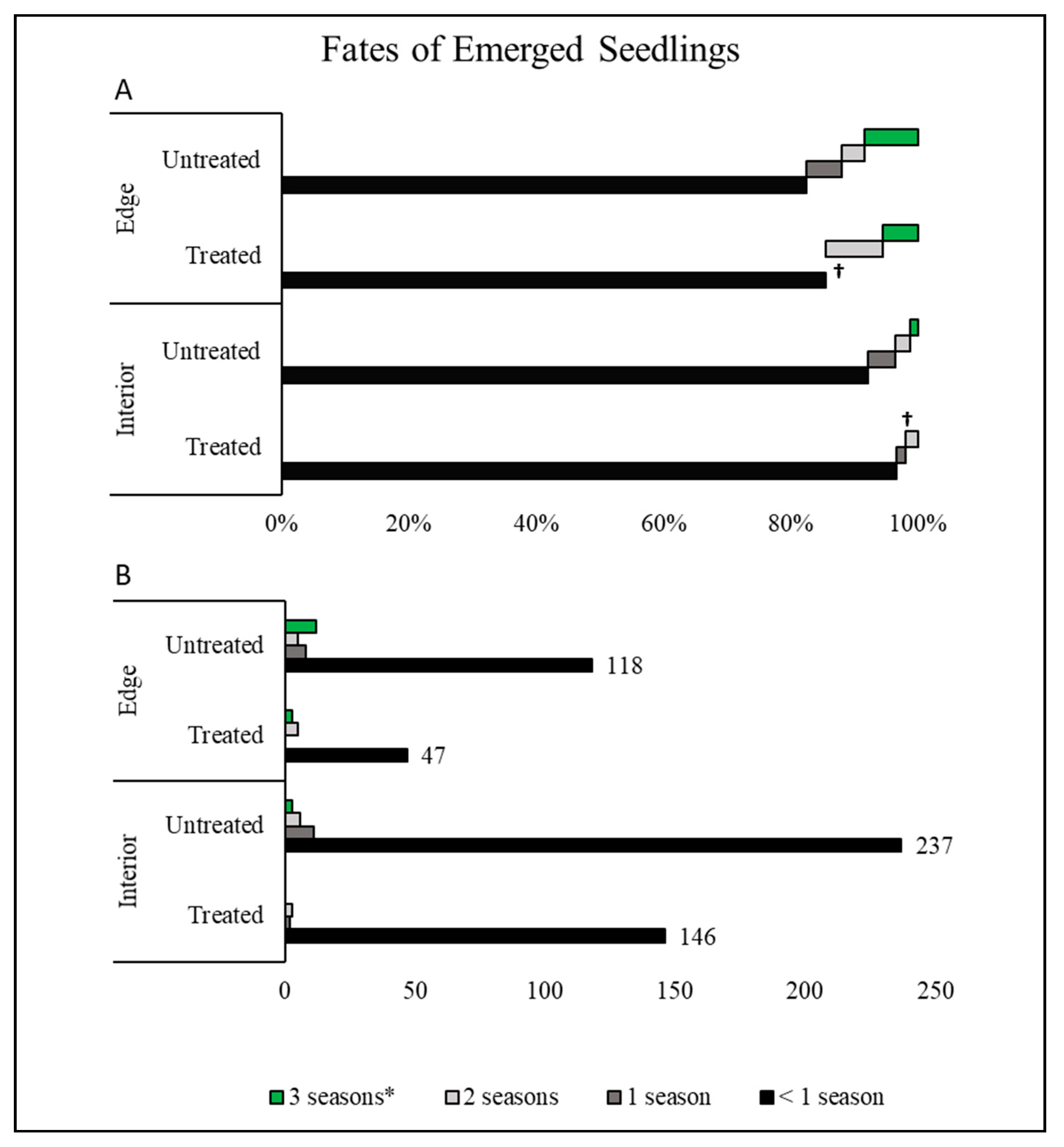
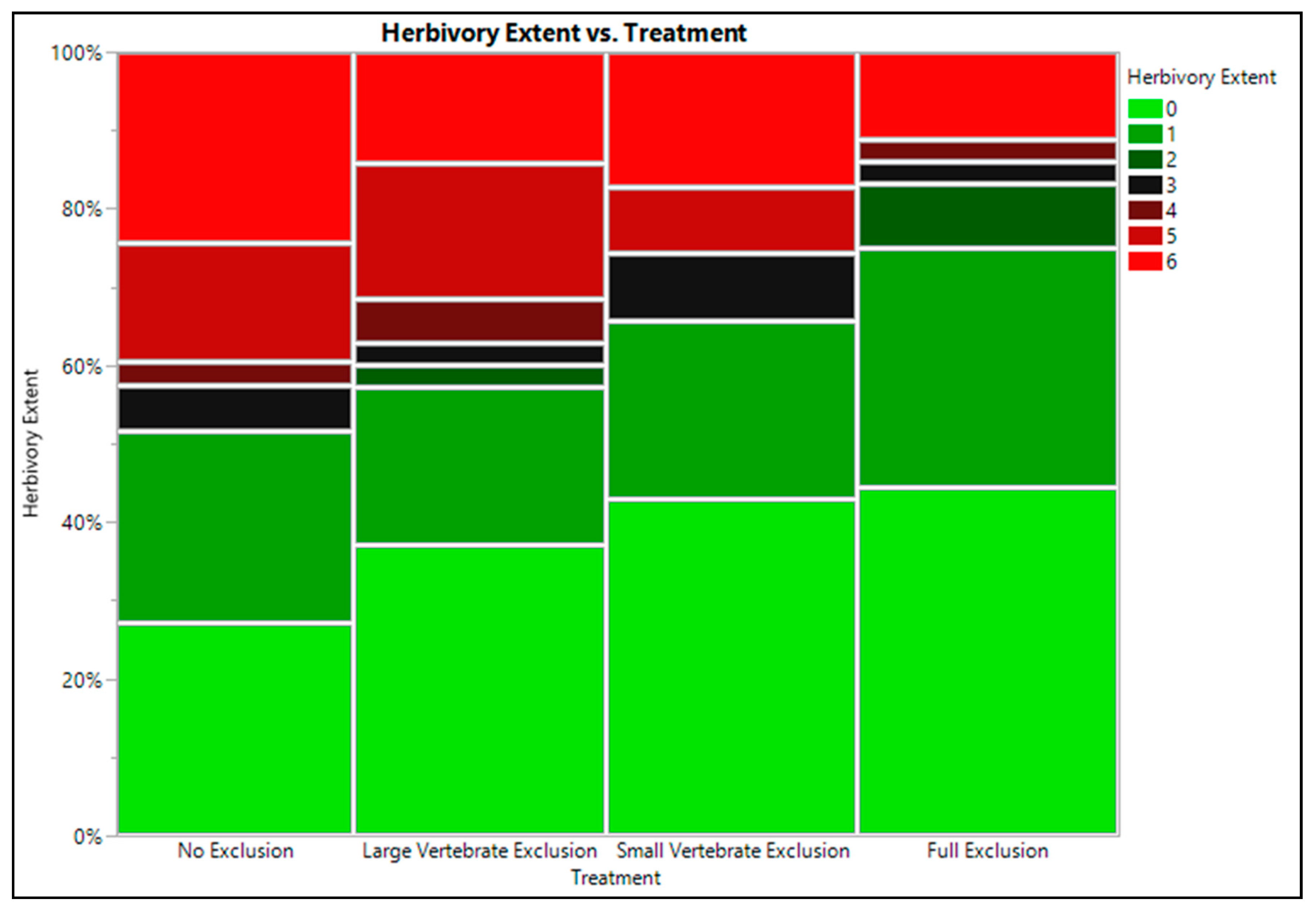
The US native liana, poison ivy (Toxicodendron radicans), responsible for contact dermatitis in humans, is a competitive weed with great potential for expansion in disturbed habitats. To facilitate a better understanding of this threat, we sought to evaluate habitat suitability, population demography, and biotic interactions of poison ivy, using a series of complementary field studies in the two habitats where it most commonly occurs—forest interiors and edges. Of the 2500 seeds planted across both habitats, poison ivy initially colonized forest interiors (32% emergence) at a higher rate than edge habitats (16.5% emergence). However, forest interior seedlings were less likely to survive (interior n = 3; edge n = 15), which might be attributed to herbivore pressure when the seedlings were smaller in the less competitive forest interior. Once established, the poison ivy seedlings appeared to be more tolerant of herbivory, except that of large grazers such as deer. The early life stage of seedling emergence, survival, and establishment are critical in poison ivy success, with biotic pressure, especially from plant competition and deer, limiting recruitment. A suitable habitat of this expanding native liana would increase with increasing forest fragmentation, but might be buffered by the expanding deer population.
Keywords: deer; herbivory; poison ivy; Toxicodendron radicans deer; herbivory; poison ivy; Toxicodendron radicans