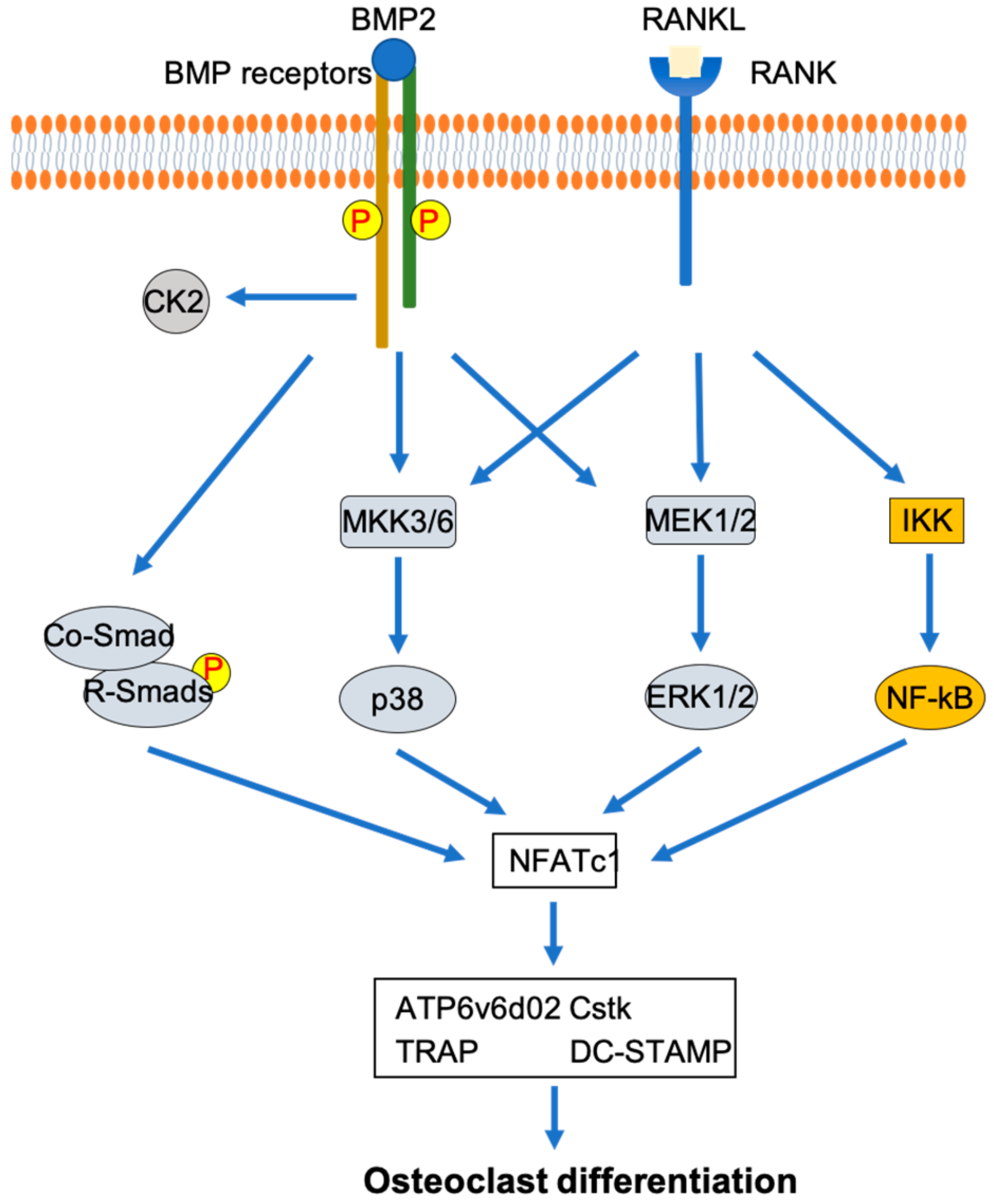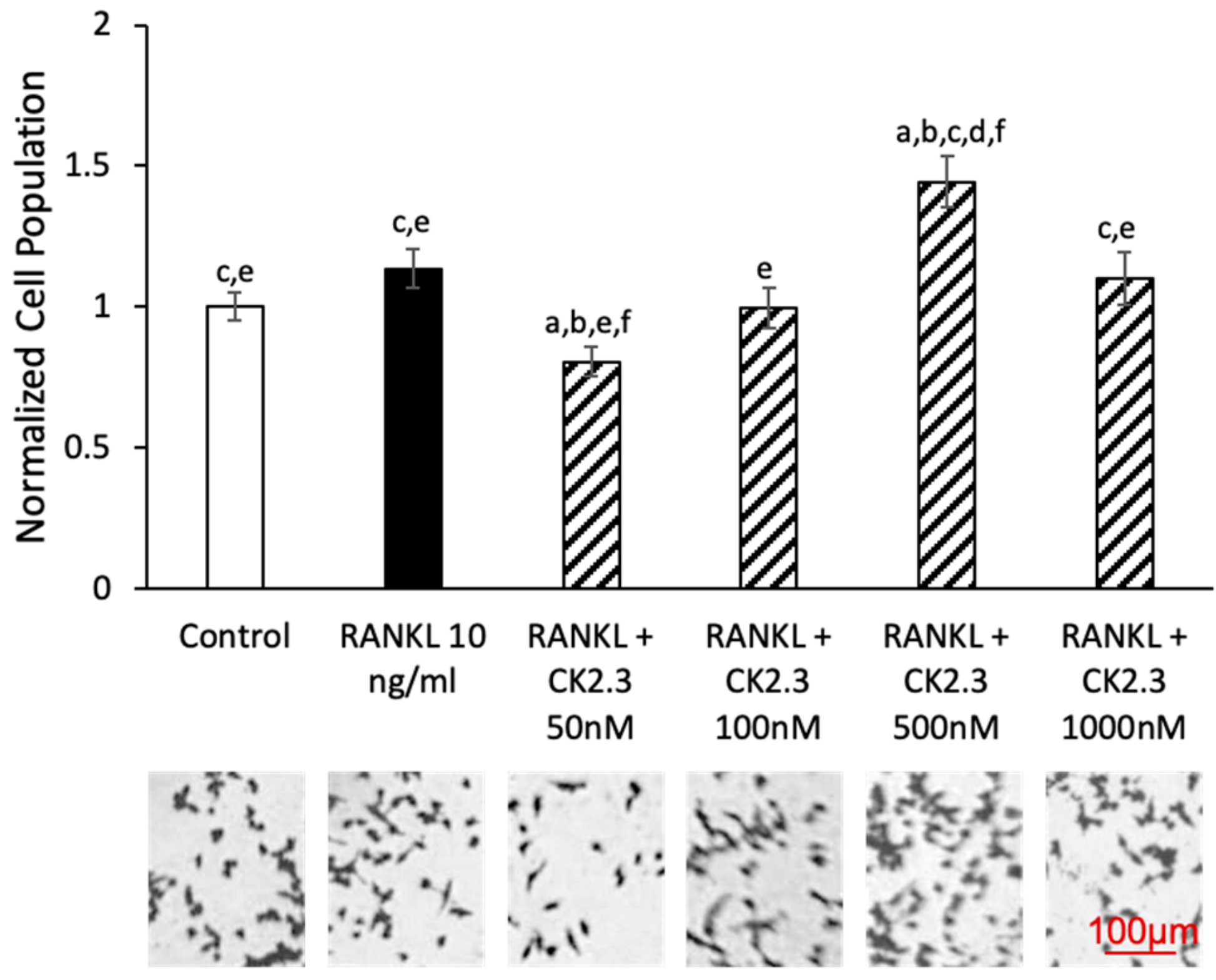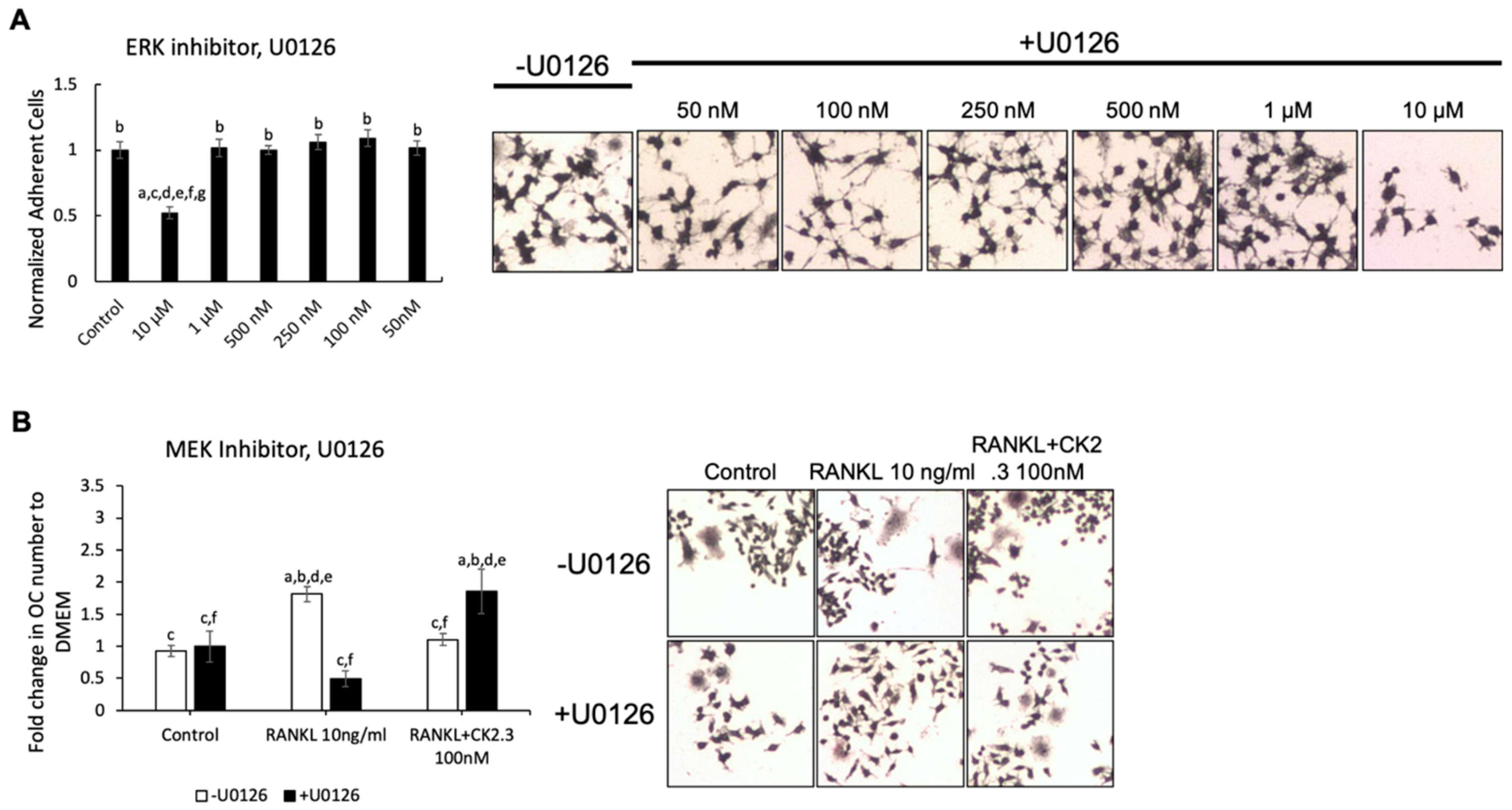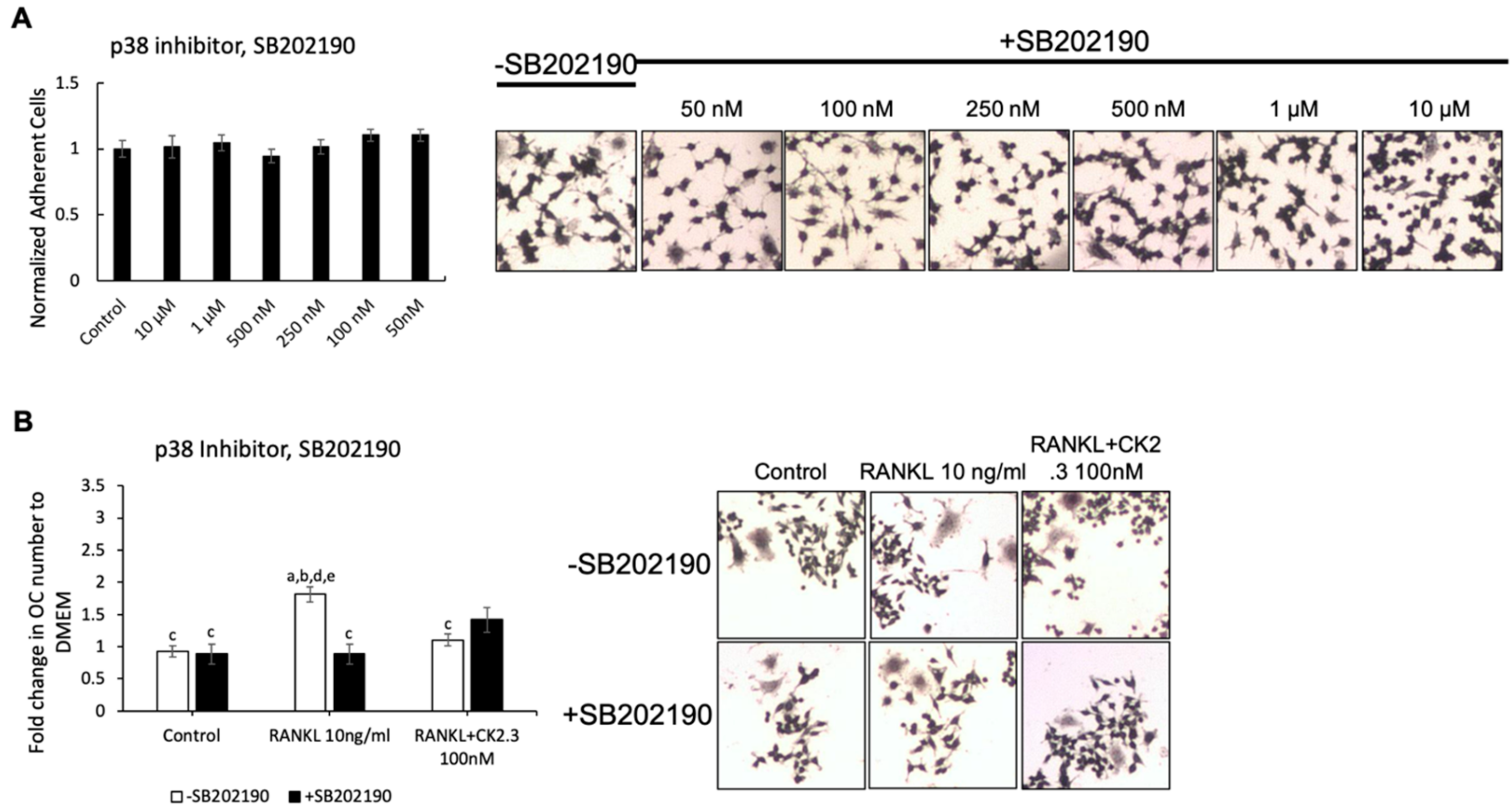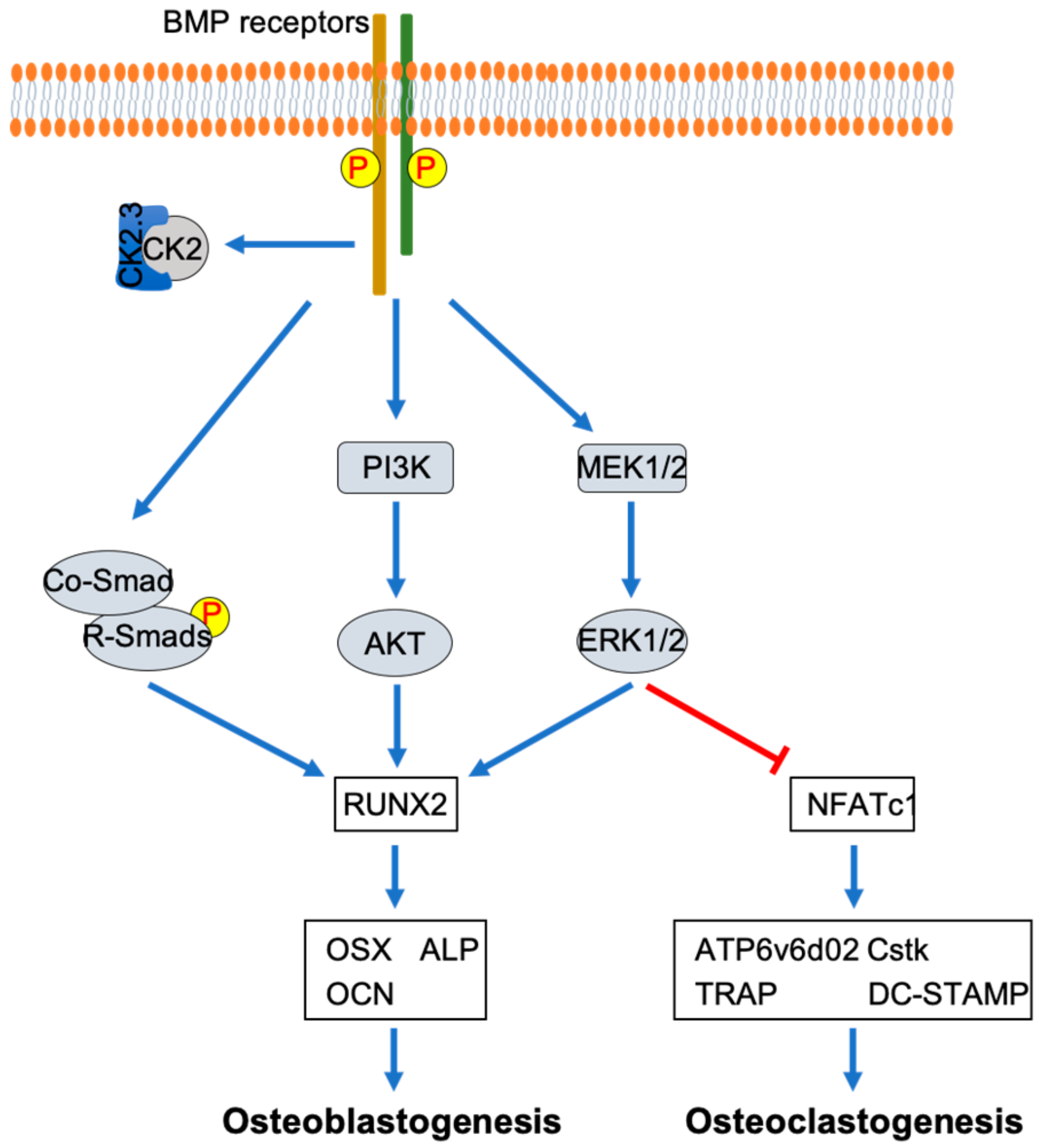
A Synthetic Peptide, CK2.3, Inhibits RANKL-Induced Osteoclastogenesis through BMPRIa and ERK Signaling Pathway


Abstract
Share and Cite
Nguyen, J.; Kelly, S.; Wood, R.; Heubel, B.; Nohe, A. A Synthetic Peptide, CK2.3, Inhibits RANKL-Induced Osteoclastogenesis through BMPRIa and ERK Signaling Pathway. J. Dev. Biol. 2020, 8, 12. https://doi.org/10.3390/jdb8030012
Nguyen J, Kelly S, Wood R, Heubel B, Nohe A. A Synthetic Peptide, CK2.3, Inhibits RANKL-Induced Osteoclastogenesis through BMPRIa and ERK Signaling Pathway. Journal of Developmental Biology. 2020; 8(3):12. https://doi.org/10.3390/jdb8030012
Chicago/Turabian StyleNguyen, John, Semaj Kelly, Ryan Wood, Brian Heubel, and Anja Nohe. 2020. "A Synthetic Peptide, CK2.3, Inhibits RANKL-Induced Osteoclastogenesis through BMPRIa and ERK Signaling Pathway" Journal of Developmental Biology 8, no. 3: 12. https://doi.org/10.3390/jdb8030012
APA StyleNguyen, J., Kelly, S., Wood, R., Heubel, B., & Nohe, A. (2020). A Synthetic Peptide, CK2.3, Inhibits RANKL-Induced Osteoclastogenesis through BMPRIa and ERK Signaling Pathway. Journal of Developmental Biology, 8(3), 12. https://doi.org/10.3390/jdb8030012