Article

Development and Experimental Evaluation of the Athena Parallel Robot for Minimally Invasive Pancreatic Surgery †

1
CESTER, Department of Mechanical Engineering, Technical University of Cluj-Napoca, Memorandumului 28, 400114 Cluj-Napoca, Romania
2
European University of Technology, European Union
3
Department of Surgery—Practical Abilities, “Iuliu Hatieganu” University of Medicine and Pharmacy, 400337 Cluj-Napoca, Romania
4
Department of Surgery, “Iuliu Hatieganu” University of Medicine and Pharmacy, 400347 Cluj-Napoca, Romania
5
Department of Internal Medicine, “Iuliu Hatieganu” University of Medicine and Pharmacy, 400347 Cluj-Napoca, Romania
6
École Centrale Nantes, Nantes Université, CNRS, LS2N, UMR 6004, F-44000 Nantes, France
7
Technical Sciences Academy of Romania, B-dul Dacia, 26, 030167 Bucharest, Romania
*
Authors to whom correspondence should be addressed.
This article is an extended version of our paper published in Pisla, D., Pusca, A., Caprariu, A., Pisla, A., Gherman, B., Vaida, C., Chablat, D. Design analysis of an innovative parallel robot for minimally invasive pancreatic surgery. In International Workshop on Medical and Service Robots, Springer Nature: Cham, Switzerland, 2–4 July 2025; pp. 466–476.
Robotics 2026, 15(2), 33; https://doi.org/10.3390/robotics15020033 (registering DOI)
Submission received: 8 December 2025 / Revised: 19 January 2026 / Accepted: 21 January 2026 / Published: 1 February 2026

Abstract

This paper presents the development and experimental evaluation of the Athena parallel robot, a novel system designed for robot-assisted pancreatic surgery. The development of the experimental model based on the kinematic scheme, including the command and control system (hardware and software), the calibration procedure, and the performance measurements of the experimental model based on finite element analyses of the 3D model, are also detailed in this paper. Based on these finite element analyses, a region of the robot that introduces clearance during the operation of the experimental model is found. The paper also presents the methodology used for mapping the robot’s workspace with an optical system, which enabled improvements to ensure coverage of the entire pancreas area. The results obtained before and after the mechanical improvements are presented, demonstrating a reduction in clearance by up to 4.1 times following part replacement, as well as a workspace extension that enables the active instrument to reach the entire pancreatic region.

1. Introduction

Pancreatic surgery has significantly evolved since its origins in the late 19th century. The first attempted pancreaticoduodenectomy was performed by Alessandro Codivilla in 1898, with an overwhelming mortality rate at that time. Immediately afterwards, William Stewart achieved the first successful partial excision of the duodenum and pancreas at Johns Hopkins Hospital [1,2]. Key developments followed with the introduction of “Roux-en-Y” principle by Cesar Roux in 1892, and Georg Hirschel successfully completing the pancreaticoduodenectomy in a single stage in 1914. The field was revolutionized in 1935 when Allen Oldfather Whipple presented his technique—the Whipple procedure (WP) at the American Surgical Association meeting. This procedure has been the gold standard in pancreatic surgery ever since, significantly affecting the mortality rate [1,2].
Today, the improved pylorus-preserving technique introduced by Traverso and Longmire has become extremely safe, with an associated mortality rate of less than 3% in high-volume centers [3,4].
Pancreatic cancer surgery is divided into three main categories, covering all areas of the pancreas. These procedures are used depending on the location of the tumoral lesion and are classified as follows: pancreaticoduodenectomy (WP or Pylorus-Preserving Whipple Procedure—PPWP) [5,6,7], distal pancreatectomy (DP) accompanied or not with splenectomy [8,9,10], and total pancreatectomy (TP) [11,12,13].
Nowadays, pancreatic cancer ranks 7th globally in terms of mortality and 14th in incidence. In Europe, it ranks second in terms of the number of new cases, with countries such as Hungary, Slovakia, Czech Republic, and Serbia having the highest incidence rates among the European countries [14,15].
The prognosis for pancreatic cancer remains poor against all the surgical improvements and the standardization of systematic oncological therapy, with studies showing an overall 5-year survival (OS) rate of 5%. However, if the tumor is detected at an early stage and treated curatively, the OS increases to 30% in selected cases [16,17].
The cornerstone of robot-assisted laparoscopic surgery was marked in the early 2000s when Intuitive Surgical introduced the da Vinci robot, the first system designed for minimally invasive surgery with approval from the Food and Drug Administration (FDA) [18,19,20]. The first robot-assisted distal pancreatectomy (RDP) was performed using the da Vinci system in 2003 by Melvin [21]. Around the same period, Giulianotti [22] published his own results, comprising five RDP and eight robot-assisted pancreatoduodenectomies (RPDs). The outcomes were found to be safer and more feasible compared to laparoscopic surgery, and an increase in reports of robotic surgical interventions was also observed [23]. Robot-assisted surgical procedures are becoming increasingly common. This trend is driven by the many advantages offered by these systems; examples of such systems include da Vinci, da Vinci S, da Vinci Si, da Vinci Xi, da Vinci SP, Senhance, and Versius [23,24]. These robotic systems eliminate the triangulation effect, increase precision, and improve dexterity. For enhancing the safety of the medical procedure and patient safety, laparoscopic cameras that enable full 3D vision are used, employing Firefly technology [24], thus reducing hand tremors and scaling movement. In addition to these advantages, a series of new control modes and technologies have been developed and presented in detail in [25,26]. Moreover, this approach allows for the manipulation of multiple instruments and improves ergonomics by enabling the surgeon to sit at the robot’s control console, following the master–slave concept [27], and consecutively adding the possibility of performing remote interventions in extremely selected cases (the telesurgery concept) [27,28,29]. Besides these advantages, robot-assisted surgery also presents several disadvantages, including the high cost of surgery, a steep learning curve, the setup requirements in operating rooms, potential collisions between the robot’s arms, the large amount of space the robot occupies in the operating room, the lack of haptic feedback, and the limited intraoperative workspace [30].
Due to the facts outlined above, the limited number of robotic systems, and the high complexity of pancreatic surgery, especially in the reconstructive part of the WP, research into the development of new robotic systems for the pancreas remains open and mandatory to improving quality of life, patient safety, and the field of robot-assisted surgery.
This paper aims to present the development and experimental evaluation of the Athena parallel robot for minimally invasive pancreatic surgery [31]. The robot was developed based on the results obtained in [32], where a stiffness analysis was performed using two conceptual solutions (Athena 1 and Athena 2 [32]).
The paper is structured as follows: Section 2 presents the experimental model of the Athena parallel robot developed based on the kinematic scheme and the 3D model, the command and control logic and graphical interface, the calibration procedure, the stiffness analysis, and the methodology used to perform the clearance and define the workspace of the experimental model. Section 3 presents the results of the experiments based on the methodology presented in Section 2. Section 4 and Section 5 present a series of discussions and conclusions regarding the results obtained based on the 3D model used to perform the finite element analysis and the experimental model of the Athena parallel robot presented in this paper.

2. Materials and Methods

2.1. Experimental Model of the Athena Parallel Robot

The experimental model of the Athena parallel robot was developed starting from the kinematic scheme (Figure 1) and simplified model selected following the results obtained in [32].
The Athena parallel robot consists of nine passive revolute joints (RiR, i = 1…9), three passive prismatic joints (PiR, i = 1…3), two passive universal joints (UiR, i = 1…2), three active translation joints (q1, q2, and q3) and one active revolute joint (q4) provided by the active instrument integrated with the proposed solution. To ensure the RCM (remote center of motion) [33,34], a passive spherical mechanism composed of four passive revolute joints (RSi, i = 1…4) and a passive cylindrical joint (CS1) are used. The connection between the passive spherical mechanism and the robot is achieved using two spherical joints (Si, i = 1…2), which enables the spherical mechanism to be adjusted and locked according to the surgeon’s needs.
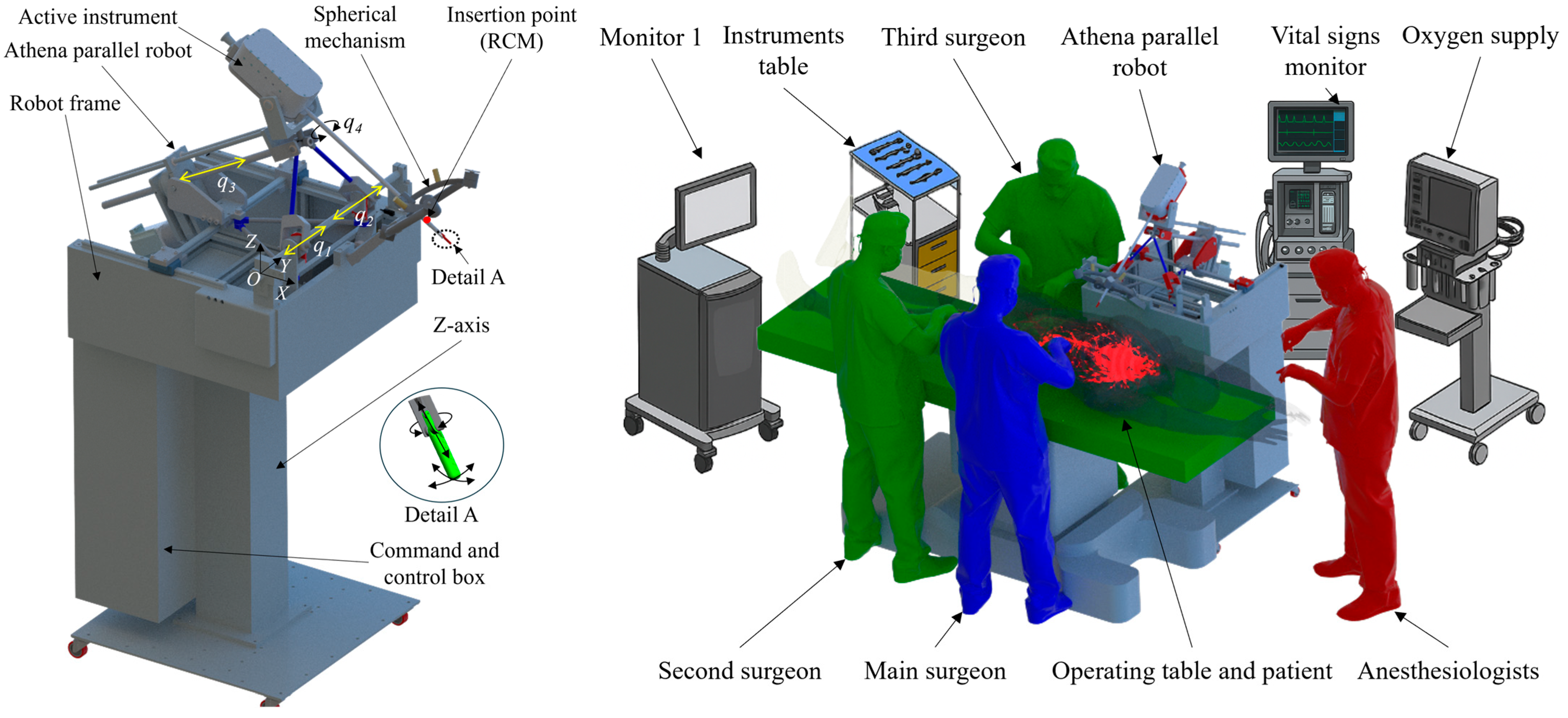
The CAD model of the Athena parallel robot was generated using Siemens NX, Siemens Digital Industries Software, Koln, Germany [35], and a detailed view with a description of the 3D model is presented in [36]. Figure 2 illustrates the integration of the Athena parallel robot into the operating room, where we can observe that the footprint of the robot is approximately the same as that of a third surgeon or nurse.
The robot is on the opposite side of the main surgeon, while the second and third surgeons are positioned on both sides of the operating table. The third surgeon controls the robot according to the main surgeon’s requirements, using it to generate the intraoperative workspace necessary for performing the Whipple procedure (WP). During this procedure, the robot retracts organs that obstruct the main surgeon’s field of view, such as the stomach, duodenum, and liver. Furthermore, Figure 2 also illustrates the equipment integrated into the operating room, as well as the position of the anesthesia team at the head of the patient.
The Athena parallel robot, as shown in Figure 2, is actuated by three translation joints that control the active instrument attached to the robot’s end-effector, so that it can perform ψ and θ orientations and insertion of the active instrument around and along the RCM point (Figure 2) [33,34]. The robotic system and the active instrument are controlled through a master–slave architecture [37,38], with the third surgeon handling the active instrument attached to the robot (slave) through the master’s console, which consist of a 3D Space Mouse or a haptic device (Omega 7).
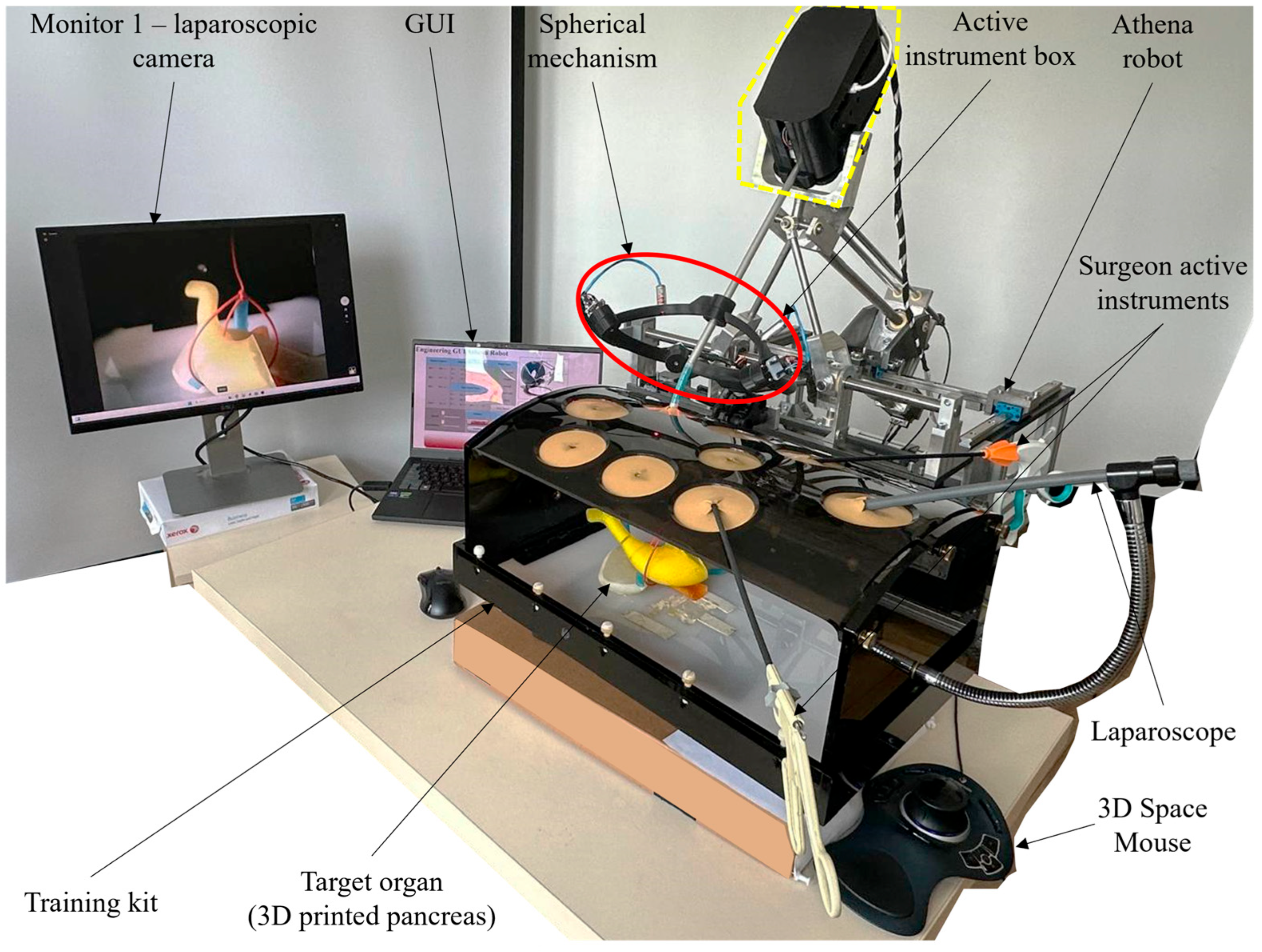
The experimental model of the Athena parallel robot is illustrated in Figure 3, which presents its integration into the simulation of the pancreatic cancer resection procedure (WP). This procedure, known as the Whipple procedure, involves the resection of the head of the pancreas along with three major reconstructions: between the stomach and small intestine, the pancreas and small intestine, and the bile duct and small intestine [5,6].
The robot’s main task is to manipulate an active instrument that holds and retracts organs from the intraoperative field. This active instrument provides four degrees of freedom (DOFs), while its distal tip is mounted on a flexible module that provides the surgeon with a range of motion additional to that of the robot, enabling the successful manipulation of organs or tissues within the intraoperative field.
To integrate the Athena parallel robot with all procedures performed on the pancreas (DP and TP), it is necessary to extend the q3 axis so that the instrument attached to the Athena robot covers the entire intraoperative working space required for these procedures. To resolve this issue, a rigid element with a length of 100 mm was designed and attached to the experimental model, shown in Figure 3 and in Section 2.3, which facilitates, through a spherical mechanism, the adjustment and reaching of all points in the intraoperative field depending on the type of intervention being performed (WP, DP, or TP).
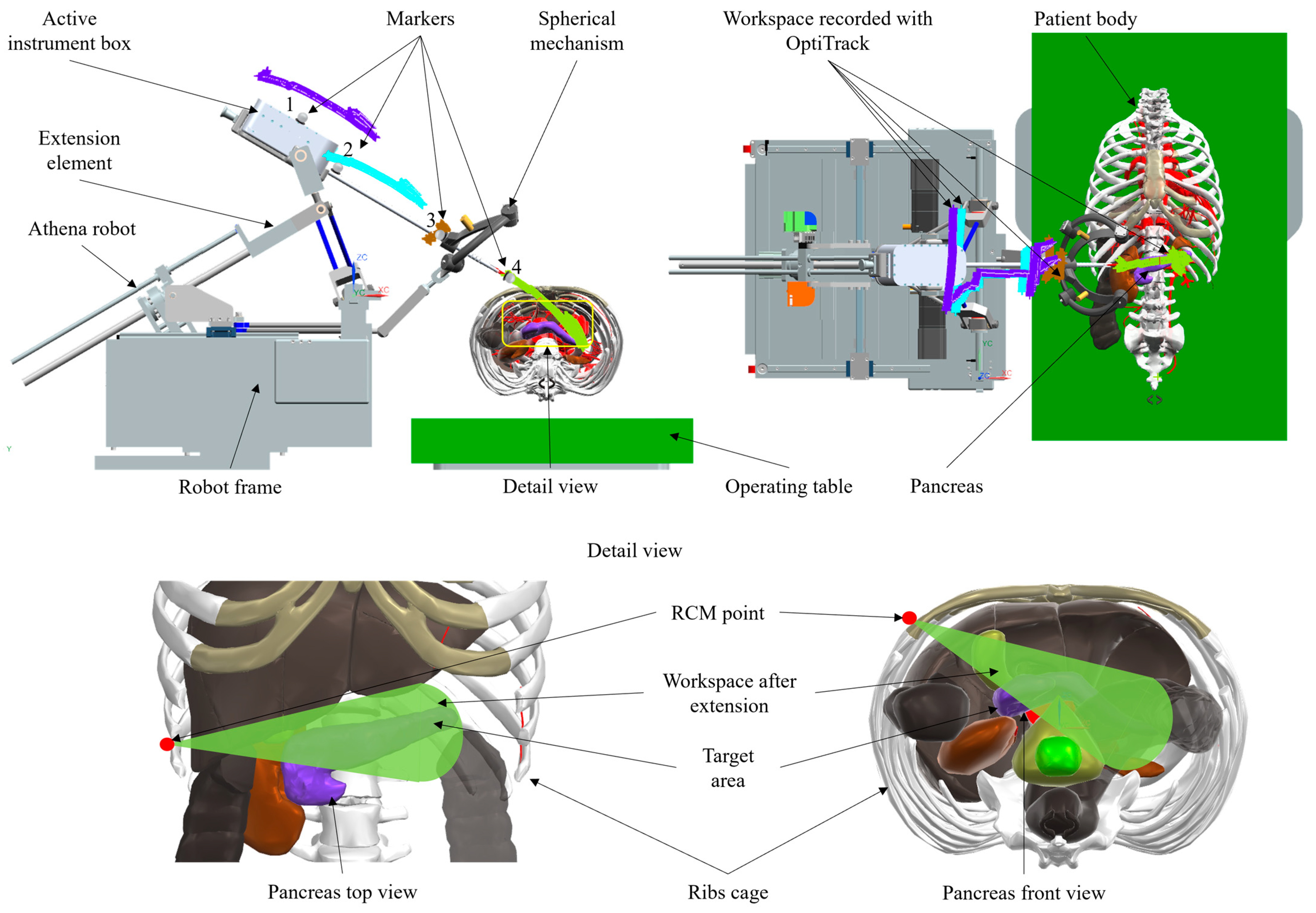
An experimental validation is presented in Section 3.2, where the workspace of the experimental model recorded using the OptiTrack camera system was integrated with the 3D model. Section 3.2 illustrates that, by adding the rigid element, the active instrument also reaches the tail of the pancreas, thus covering the entire area of the pancreas.
Figure 3 presents the attachment of the flexible active instrument to the spherical mechanism that provides the mechanical constraint of the RCM point. For this stage of the Whipple procedure simulation, a commercial test kit was used in which the pancreas and part of the stomach were mounted, with the stomach retracted from the intraoperative field using the flexible active instrument attached to the robot. These organs were developed based on computed tomography data and were 3D printed in a 1:1 scale on a MediJet J5 printer [39] using PolyJet technology. The intraoperative field was recorded using a laparoscopic camera fixed to the test kit, with the image displayed on Monitor 1, while the robot’s graphical interface was displayed on a laptop. To control the robot, a 3D Space Mouse is operated by a third surgeon according to the instructions of the main surgeon, who manipulates two active instruments. A detailed description of the robot’s operating mode is presented in [32,34,40], also describing the operating modes of the robot and the flexible active instrument—modes that are activated after the calibration phase of the entire system, which is detailed in Section 2.2.
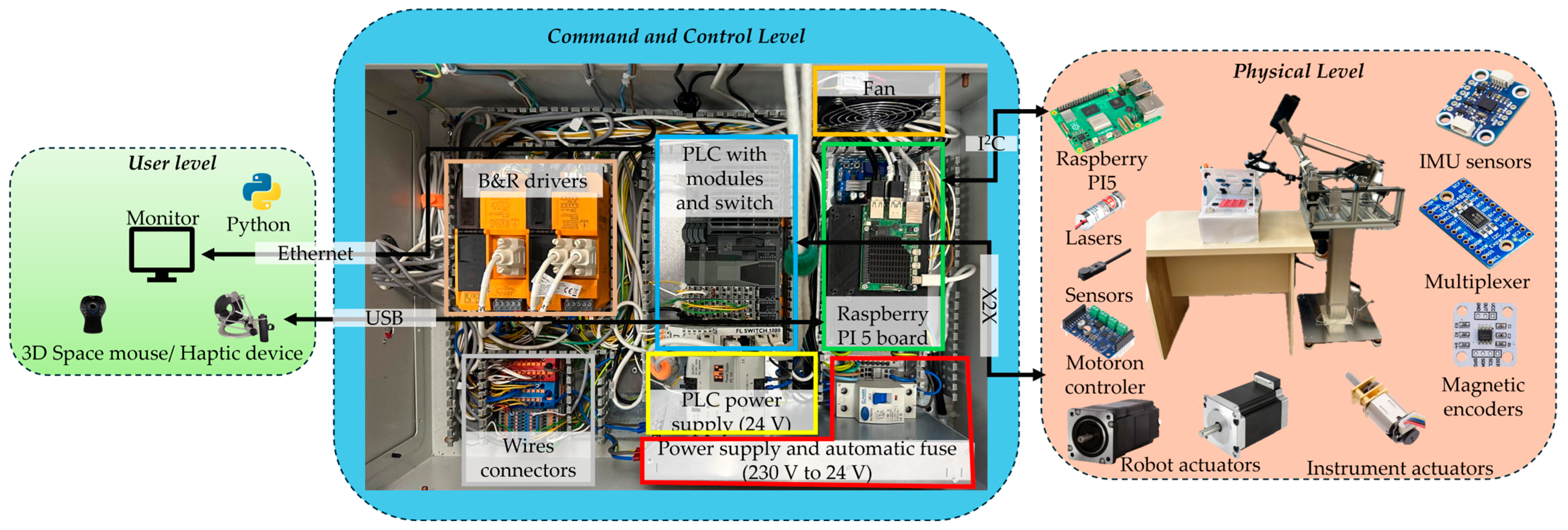
The command and control architecture of the Athena parallel robot has three levels: the user level, the command and control level, and the physical level of the robot. The hardware of all three levels is illustrated in Figure 4, where the hardware components of the robot can be observed. Data transmission from the user level to the physical level of the robot is achieved using the Modbus, Ethernet, X2X, and I2C (Inter-Integrated Circuit) communication protocols.
The user level consists of the monitor, on which the intraoperative field is displayed and to which one of the two peripherals (the 3D Space Mouse or Haptic device) is added, and through which the surgeon controls the physical structure, with the data being managed and converted by the command and control system. The connection is established through a USB port, which is connected to the Raspberry PI 5 board integrated into the command and control panel.
The command and control level uses a Bernecker & Rainer (B&R) PLC [41] with modules and an ethernet switch that transfer information between the user and the physical level. A dedicated power supply prevents voltage fluctuations, and an automatic fuse protects against short circuits. The three motors of the Athena parallel robot are controlled by two B&R drivers, while the active instrument uses a Raspberry PI 5 board with two Motoron drivers that control five micro-metal DC motors. Communication protocols include Modbus (between the PLC and Raspberry PI), X2X (stepper motors, drivers, and the PLC) and I2C (the active motors of the instrument, the magnetic rotary encoders, and IMU sensors for calibration).
The physical level includes mechanical elements with active and passive joints, three Nanotec motors for the translation joints of the Athena parallel robot, and five micro-metal DC motors for the active instrument. Additional components include inductive proximity sensors at the end positions, magnetic encoders on the spherical mechanism, a laser system for simple RCM identification, and three IMU sensors for calibration (mounted on the spherical mechanism, the connecting element, and the robot frame). The IMU and encoder signals are transmitted via a multiplexer to the Raspberry PI 5 using I2C protocols.
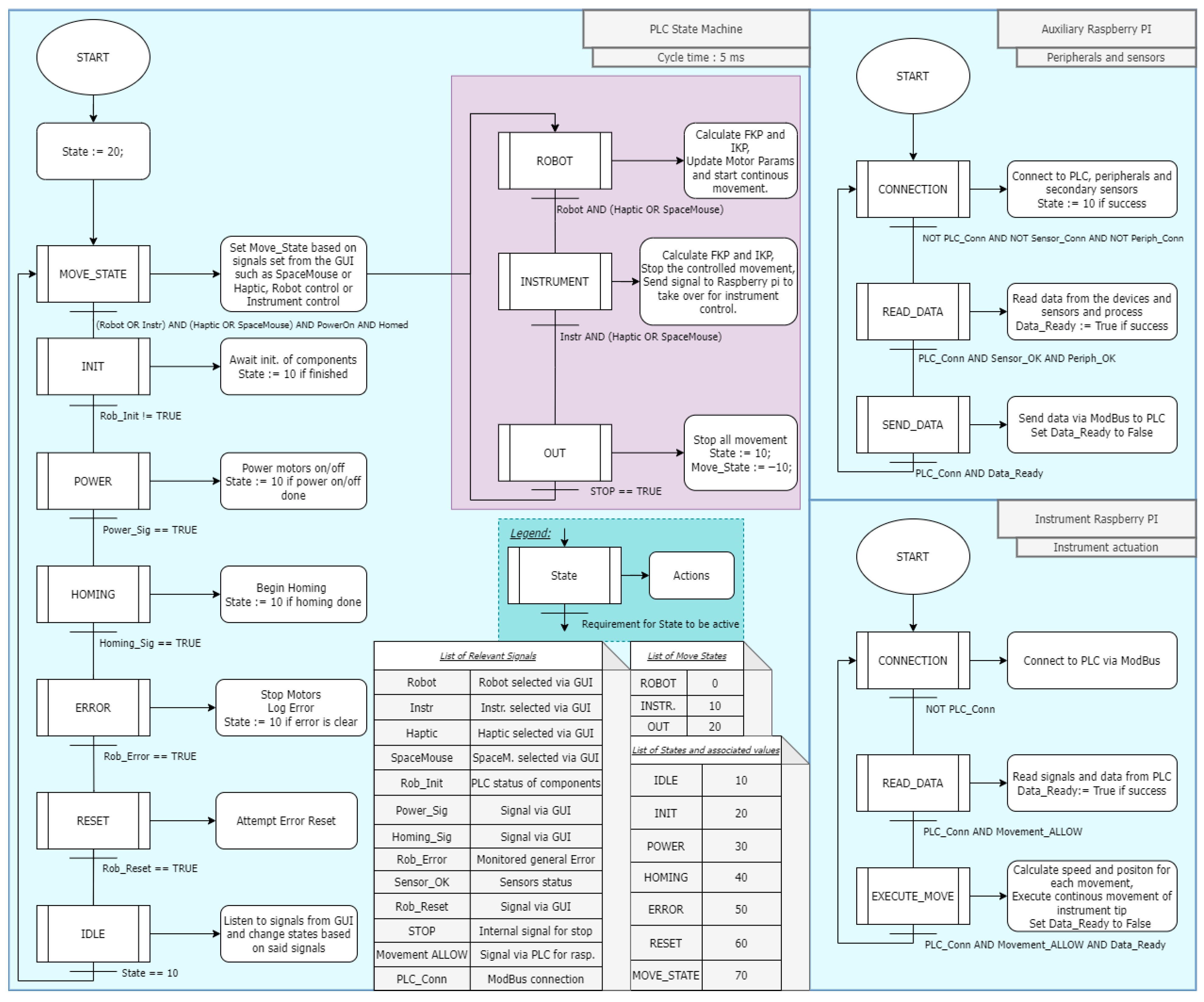
The software scheme is illustrated in Figure 5, which presents an overview of the state machines present in each component of the command and control system.
As shown in Figure 5, three state machines run simultaneously to initialize and control the robot. The PLC state machine tracks the robot’s states and responds to user commands via the graphical interface and peripherals. At startup, the INIT state waits for hardware initialization. Once the hardware is ready and both Raspberry PI 5 boards connect to the PLC via Modbus, the system enters the IDLE state, from which all other states are accessible via the GUI. POWER_ON activates the active joints and disables the motor brakes. HOMING initiates the procedure for zeroing the joints relative to the geometrical model. ERROR stops the robot when faults occur, while RESET clears errors when possible. MOVE_STATE is activated when the robot is initialized, homed, a control device is selected, and either the robot or an instrument is selected to be controlled. Within the PLC state machine, a secondary state machine, highlighted in violet, starts once the controlled movement of the robot or instrument is in effect, managing the switch between the control peripherals (space mouse or haptic device) and equipment (robot or active instrument). The Raspberry PI 5, which is present in the control box, as seen in Figure 4, is responsible for the auxiliary sensors and connection of the peripherals. A state machine that connects to the PLC via Modbus runs continuously, reads the data from the sensors and peripherals, and sends it to the PLC to be used. Similarly, the second Raspberry PI 5 board, which manages the instrument connections to the PLC via Modbus, reads data from the PLC and, based on user inputs, moves the active instrument.
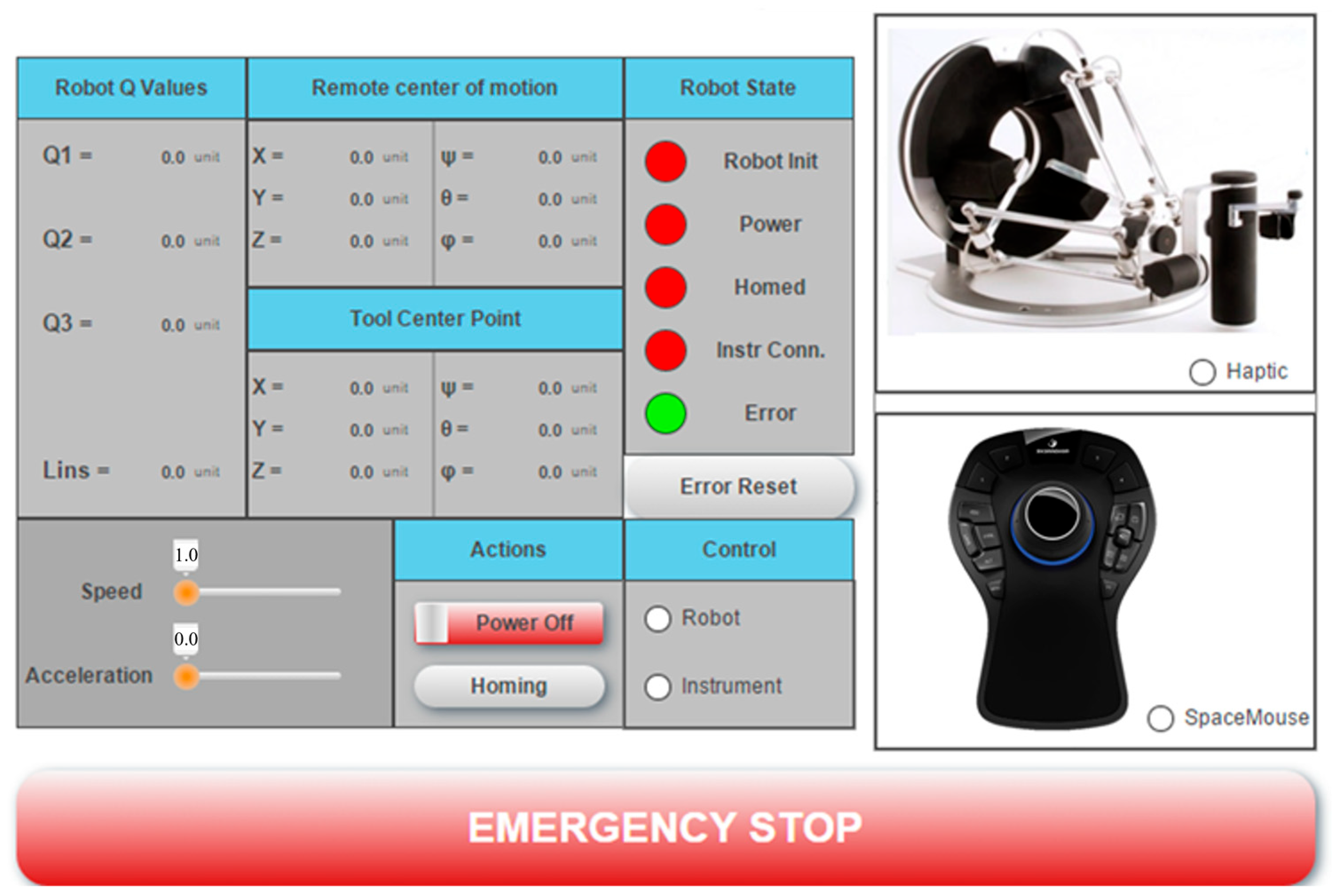
The graphical user interface used to communicate with the robotic system was developed using MappView, version 5.16.1, a software module from B&R that makes it possible to run the graphical interface directly from the PLC, and to connect to it via the network switch. The auxiliary Raspberry PI 5, besides managing the data from the sensors, can also access the graphical interface without the need for an additional computer connected to the network. To ensure the mechanical stability and long-term reliability of the proposed solution for surgical procedures, continuous monitoring of the mechanical structure is used, achieved using sensors attached to the mechanical structure of the spherical mechanism (AS5600 magnetic encoders and BNO055 sensors), which constantly transmit data to the graphical interface illustrated in Figure 6.

2.2. Calibration Procedure Performed on the Experimental Model

To use the Athena parallel robot, the robot should be calibrated when establishing the RCM point. This calibration involves establishing the position and orientation of the RCM point by adjusting the position of the spherical mechanism to the patient’s anatomical characteristics. To establish the position of the RCM, a point relative to the patient’s position, the two lasers attached to the spherical mechanism are used, and are fixed straight to the RCM point of the spherical mechanism, achieving the initial visual positioning of the spherical mechanism above the insertion point by the surgeon.
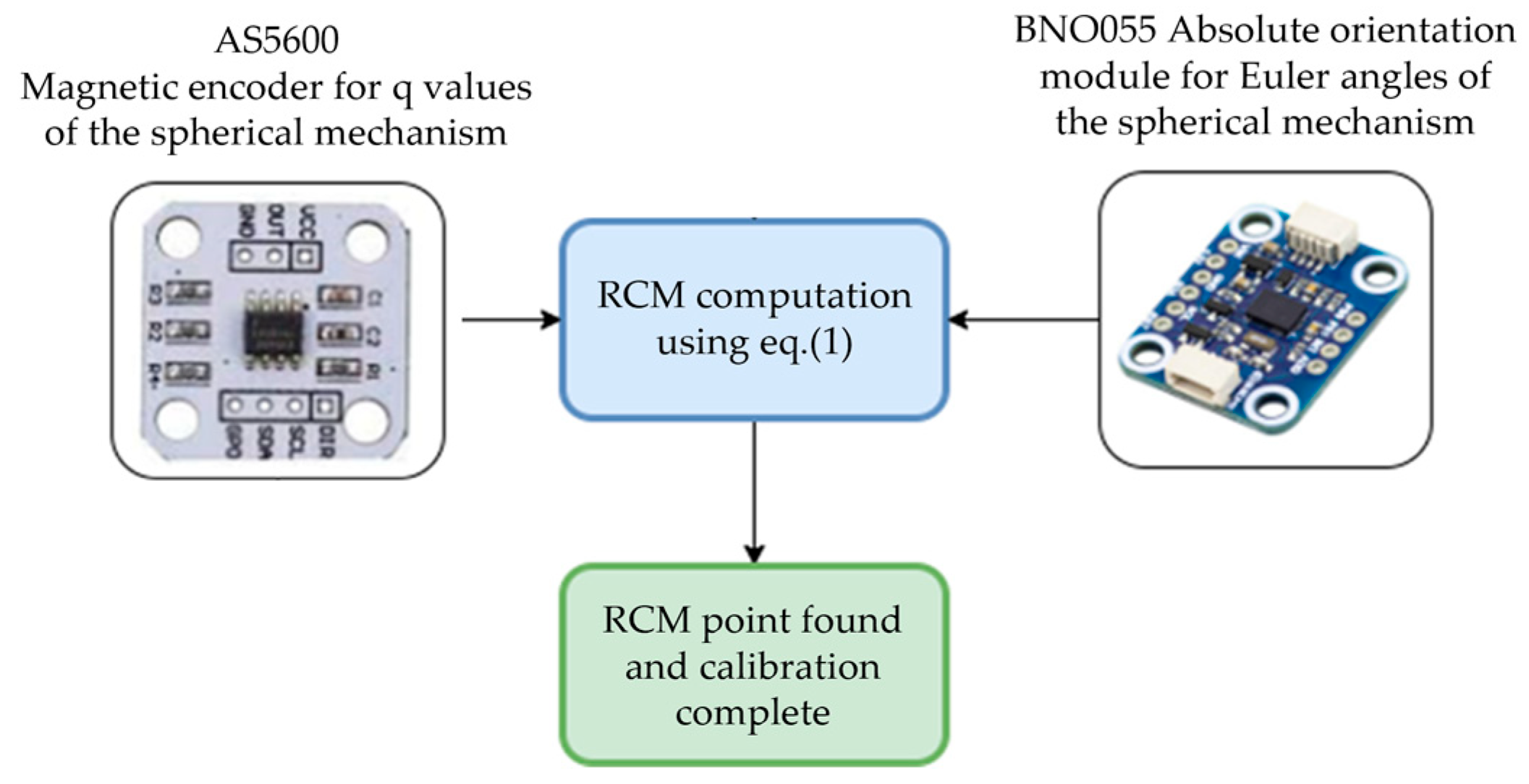
Following the visual positioning of the spherical mechanism, the calibration procedure begins by positioning the robot to the home position. After homing, the active instrument is attached to the robot, and the data provided by the magnetic encoders positioned on the spherical mechanism in the area of the passive revolute joints (RSi, i = 1... 4) and the values provided by the three absolute orientation modules (IMUs), which are mounted on the connecting element of the robot’s spherical mechanism, and on the robot’s base, are used as inputs in the inverse kinematic model, as shown in Figure 7, thus providing the angle at which the spherical mechanism is fixed relative to the robot’s fixed reference system (OXYZ).
Using the angles provided by the magnetic encoders, the orientation of the spherical mechanism provided by the absolute orientation modules, and Equation (1), the position of the RCM is determined relative to the fixed coordinate system.
The final orientation of the end-effector is calculated once the RCM point of the robot is defined (it is automatically calculated by reading the data from the Euler angles from the BNO−055 orientation modules), with the frame of the RCM point being expressed as
X R C M Y R C M Z R C M 1 T = T 0 S p h 1 T S p h 1 S p h 2 T S p h 2 S p h M e c R s p h 0 0 1 T
where [ T ] 0 Sph 1 is the transformation matrix of the robot coordinate system to the first spherical joint, [ T ] Sph 1 Sph 2 from the first to the second, and [ T ] Sph 2 SphMec from the second to the attaching point (the spherical mechanism), and Rsph is radius of the spherical mechanism.
Using the direct kinematic model, XE, YE, and ZE are calculated after the homing procedure, which reads the q values of the active joints. Then, ψ , θ , and lins are calculated, and these are later used to compute XP, YP, and ZP.
Using the input–output Equation (2), the inverse kinematic models (Equations (4) and (5)) and the direct kinematic models (Equations (6) and (7)) can be expressed and used to determine the final position of the RCM required at this calibration stage.
f 1 : l 02 + ( q 1 + ( q 2 / 2 ) ) Y P = 0 f 2 : l 4 + l 1 2 q 2 ( q 1 / 2 ) 2 2 Z P l 03 2 X P l 01 2 = 0 f 3 : q 3 + l 2 min + l 5 2 X P l 01 l 4 cos λ + l 3 2 q 2 q 1 / 2 2 2 Z P l 4 sin λ l 03 2 = 0
where
X P = ( l l i n s ) c o s ( ψ ) s i n ( θ ) ; Y P = ( l l i n s ) s i n ( ψ ) s i n ( θ ) ; Z P = ( l l i n s ) c o s ( θ ) ; λ = a t a n Z P l 03 , X P l 01 .
q 1 = Y P l 1 2 l 4 2 X P 2 + Z P 2 + 2 l 4 X P 2 + Z P 2 ; q 2 = Y P + l 1 2 l 4 2 X P 2 + Z P 2 + 2 l 4 X P 2 + Z P 2 ; q 3 = N + D / 2 r 2 .
where
N = 2 r 2 l 2 min ; r 2 = X P 2 + Z P 2 ; D = T 1 + T 2 + T 3 + T 4 + T 5 + T 6 ; T 1 = 4 Z P 6 + 4 X P 6 + 12 X P 2 4 Z P 4 ; T 2 = 8 X P 5 l 5 + 16 X P 3 Z P 2 l 5 + 8 X P Z P 4 l 5 ; T 3 = 4 r 2 ( X P 2 + Z P 2 ) ( l 3 2 + l 4 2 + l 5 2 ) ; T 4 = r 2 X P 2 + Z P 2 q 1 2 + q 2 2 + 4 r 2 q 1 q 2 2 X P 2 Z P 2 q 1 2 + q 2 2 + 4 X P 2 Z P 2 q 1 q 2 ; T 5 = 4 A X P 5 + X P 4 l 5 + 2 X P 3 Z P 2 + 2 X P 2 Z P 2 l 5 + X P Z P 4 + Z P 5 4 B r X P 3 + X P Z P 2 l 4 ; T 6 = 8 B r l 4 X P 3 + 2 X P 2 Z P 2 + Z P 4 + X P 3 l 5 + X P Z P 2 l 5 ; A = 4 l 3 2 q 1 2 + 2 q 2 q 1 q 2 2 ; B = X P 2 + Z P 2 .
θ = atan 2 S θ , C θ ψ = atan 2 S ψ , C ψ
where
C θ = X R C M X P 2 + Y R C M Y P 2 + Z R C M Z P 2 Z R C M Z P S θ = 1 C θ 2 S ψ = X R C M X P X R C M X P 2 + Y R C M Y P 2 + Z R C M Z P 2 1 sin θ C ψ = Y R C M Y P X R C M X P 2 + Y R C M Y P 2 + Z R C M Z P 2 1 sin θ
Due to the position of the operating field, which targets the pancreas, located in front of the robot, as illustrated in Section 3.2, the negative value of the θ angle has been considered for the forward kinematics of the Athena robot.
Based on Equations (1)–(7) and considering the RCM, the coordinates of the end-effector are
X E = L cos ψ sin θ + X P Y E = L sin ψ sin θ + Y P Z E = L cos θ + Z P

2.3. Stiffness Analysis of the Athena Parallel Robot

To validate the mechanical components of the CAD model and to prevent any potential issues that may occur due to incorrect component dimensions, a robot rigidity analysis was performed using finite element analysis for two positions of the robot using a force applied in two directions. These analyses identified the areas of the robot that require improvement. These analyses are an extension of the data presented in [32].
Based on the CAD model, a kinematic model of the Athena parallel robot was developed in Siemens NX, Siemens Digital Industries Software, Koln, Germany using the Animation Designer module [34]. This model enabled positioning of the system in the maximum inserted configuration, corresponding to the situation in which the surgical instrument is fully introduced into the patient’s body. The maximum force applied to the tip of the instrument for performing simulations is 15 N, which is the force used in the pancreatic surgery according to the data presented in [42].
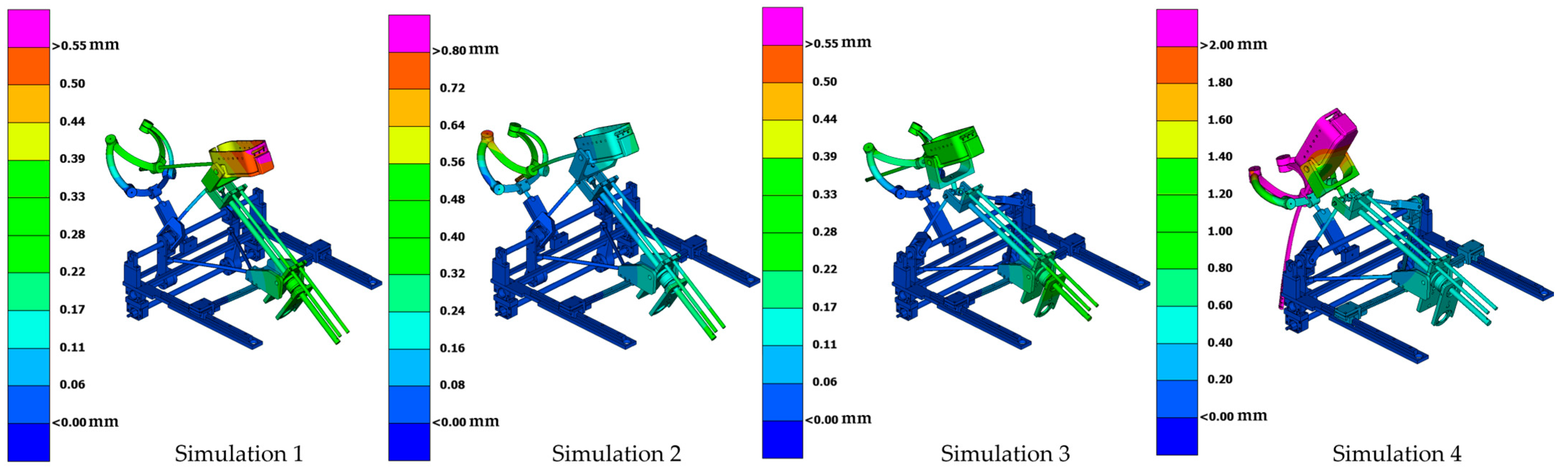
The stiffness of the robot was evaluated through four finite element simulations:
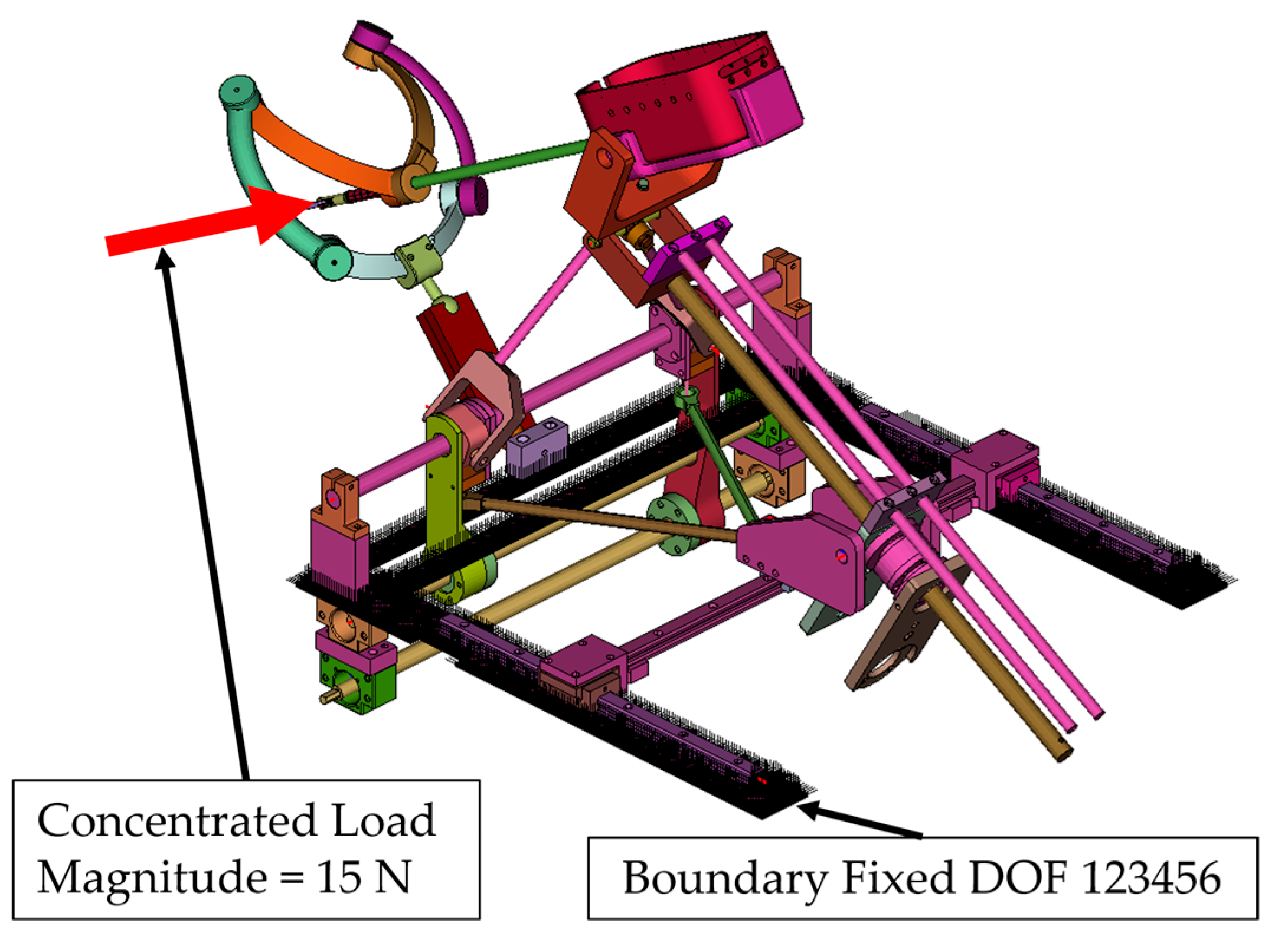
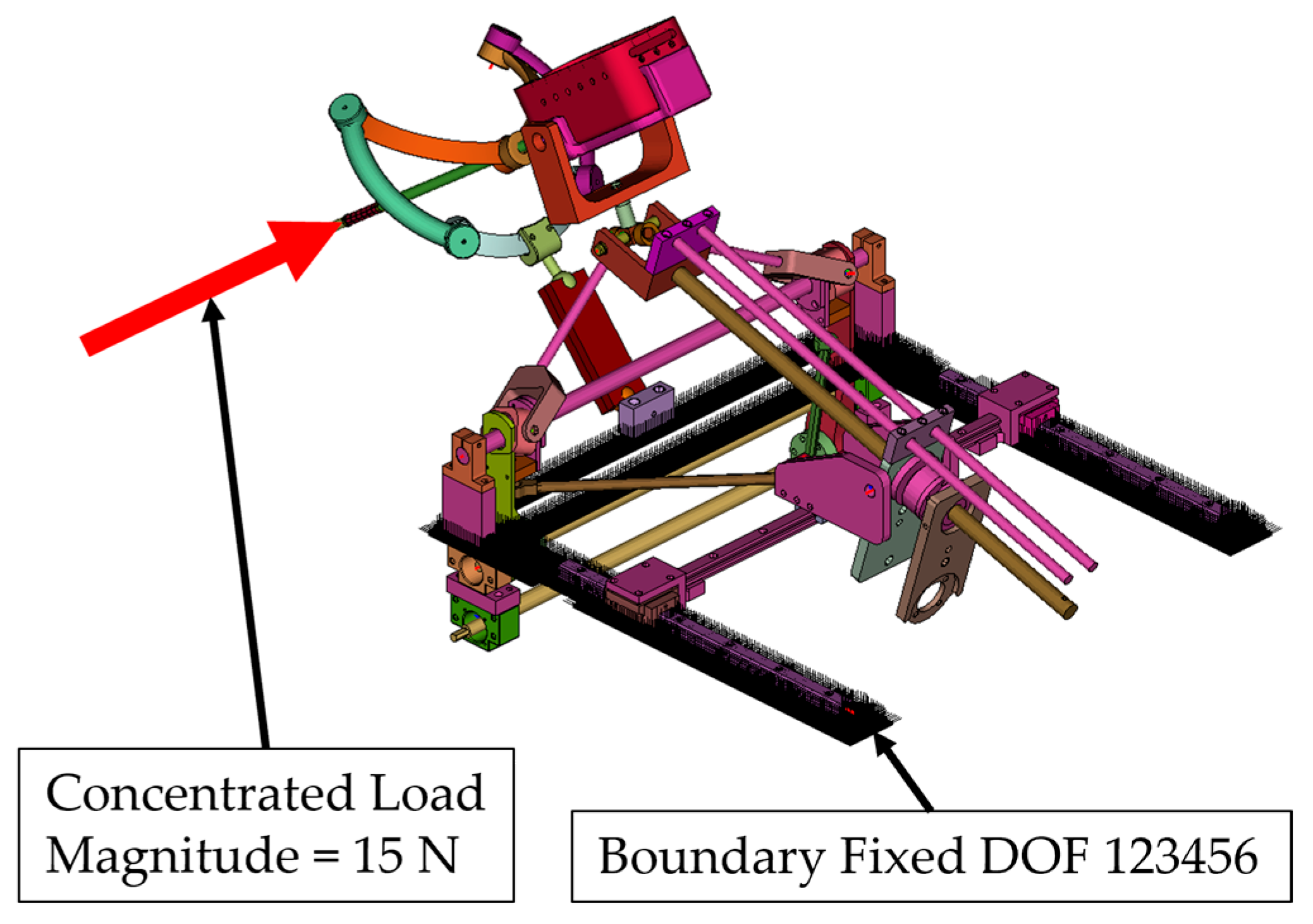
  • Simulation 1: Robot in the home position, with a load of 15 N applied along the instrument axis (Figure 8).
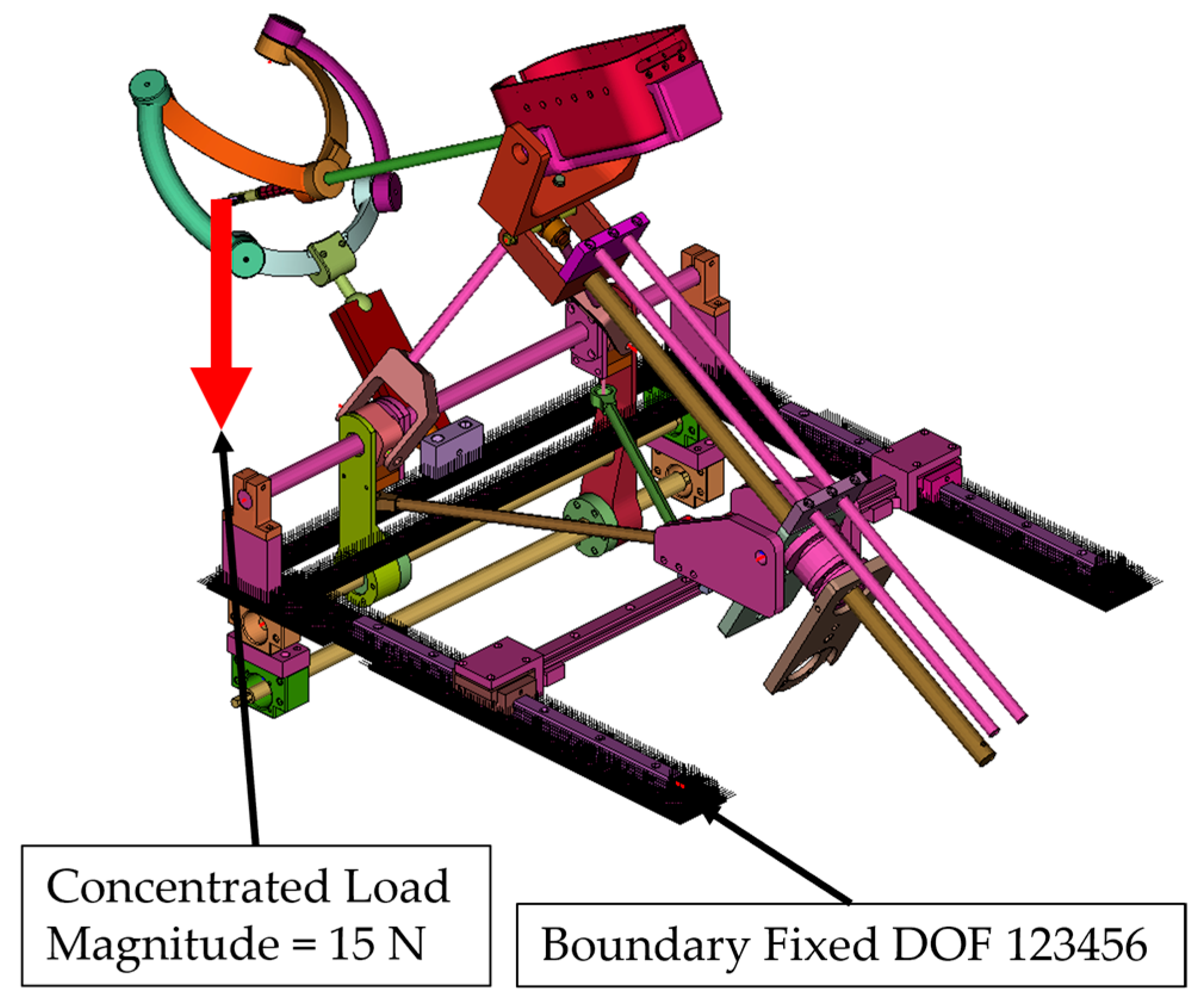
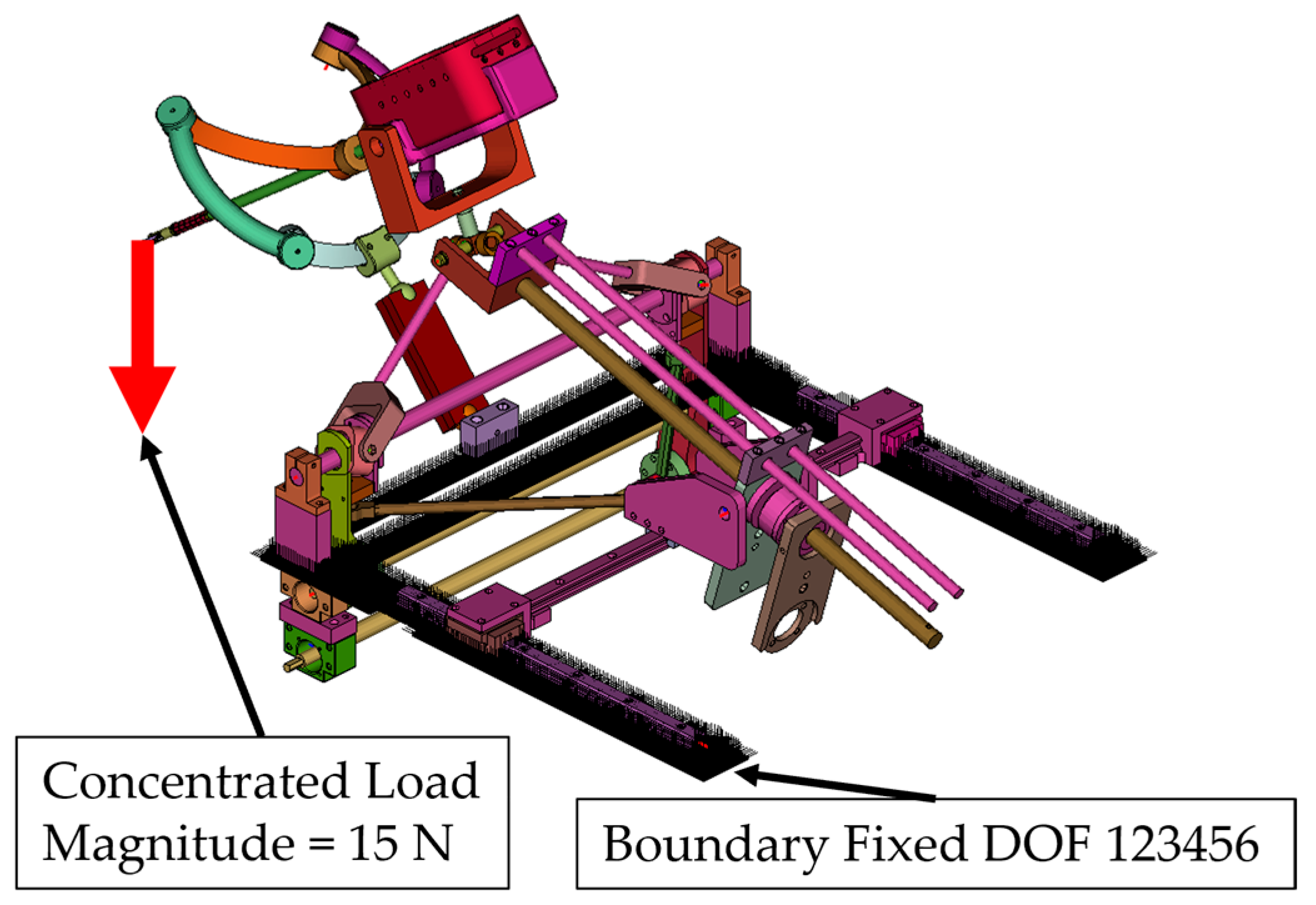
  • Simulation 2: Robot in the home position, with a load of 15 N applied along the global Z axis (gravity direction) (Figure 9).
  • Simulation 3: Robot in the maximum inserted position, with a load of 15 N applied along the instrument axis (Figure 10).
  • Simulation 4: Robot in the maximum inserted position, with a load of 15 N applied along the global Z axis (gravity direction) (Figure 11).
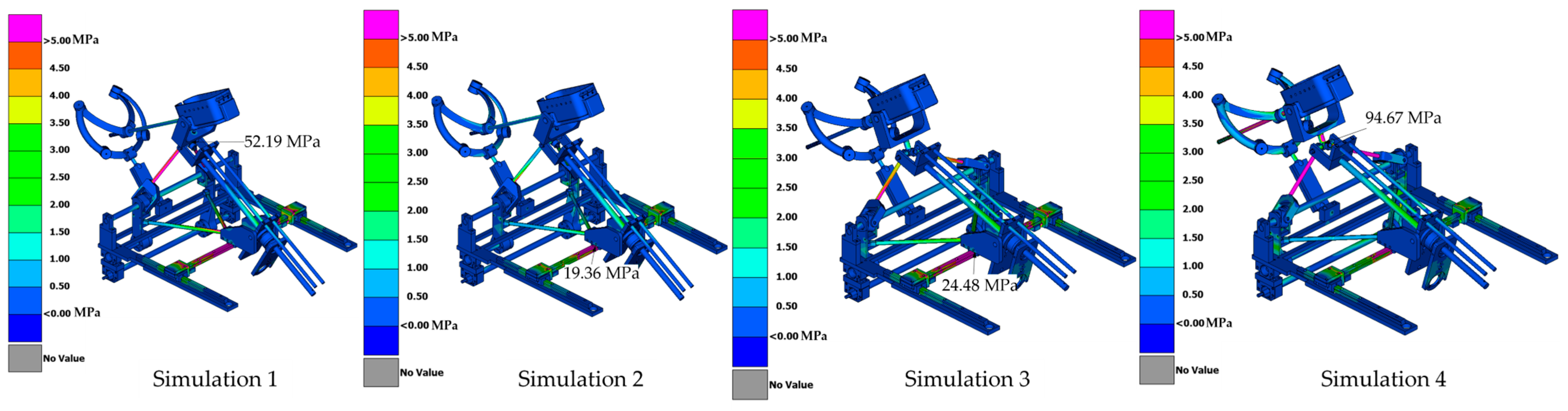
These two modes of force application (along the instrument tip and along the global Z axis—the gravity direction), as illustrated in Figure 8, Figure 9, Figure 10 and Figure 11, were used to study the robot’s behavior when tissue is pulled along the instrument axis or along the global Z axis (gravity direction), and the results obtained are presented in Table 1.
The following modeling assumptions and settings were common for all four simulations:
  • All relevant structural components of the robot were meshed using 3D continuum elements.
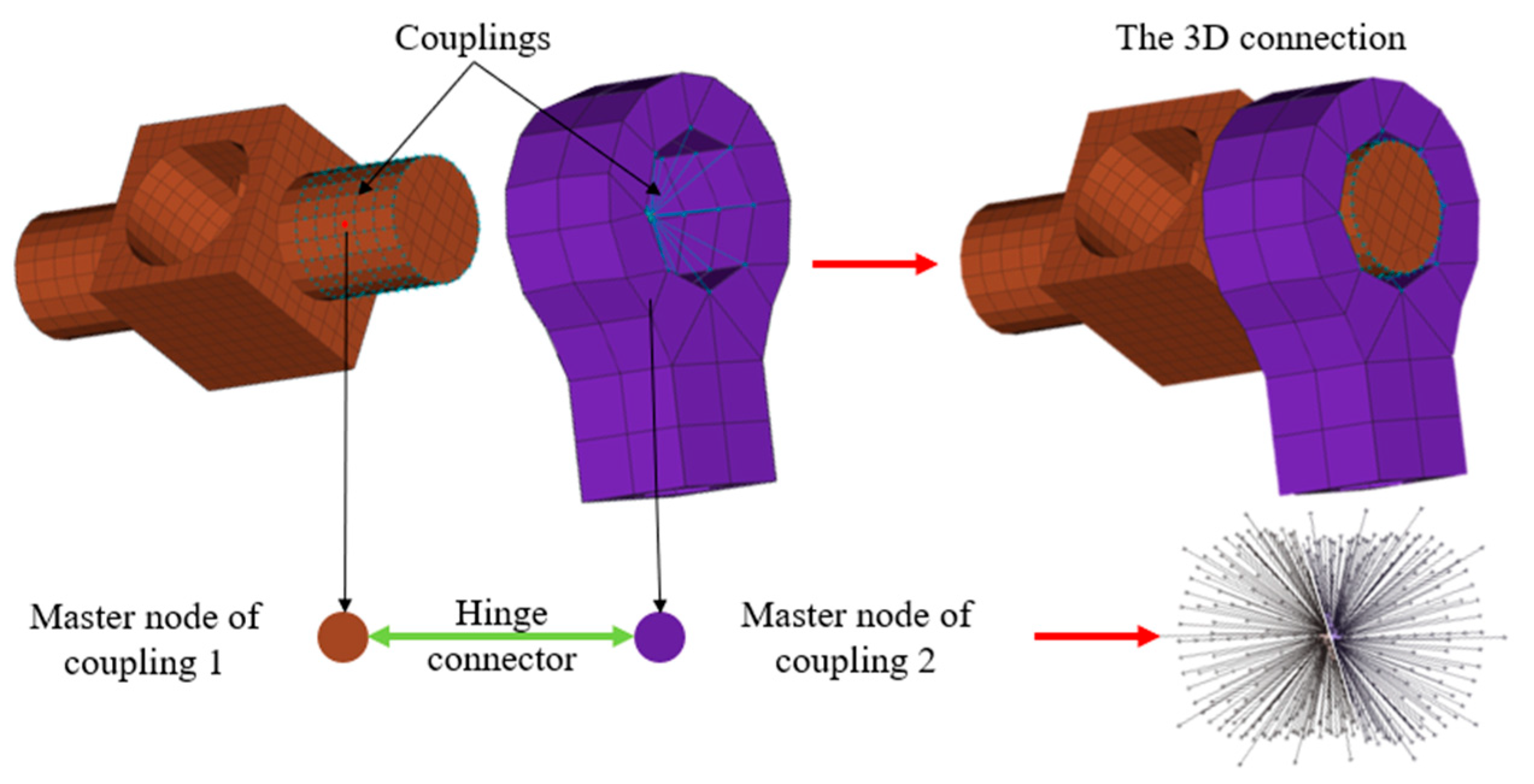
  • Passive joints were modeled using joints and connector elements (hinge, translational, and cylindrical) (Figure 12).
  • Realistic frictional behavior was defined for all connector elements.
  • The mass of auxiliary components not explicitly modeled (e.g., motors) was introduced via mass elements.
  • Active joints were locked using kinematic joints to obtain a statically determined configuration.
  • A fixed boundary condition was applied at the bolt holes of the lower frame (Figure 8, Figure 9, Figure 10 and Figure 11).
  • A gravitational acceleration of 9.8 m/s2 was applied to the entire model.
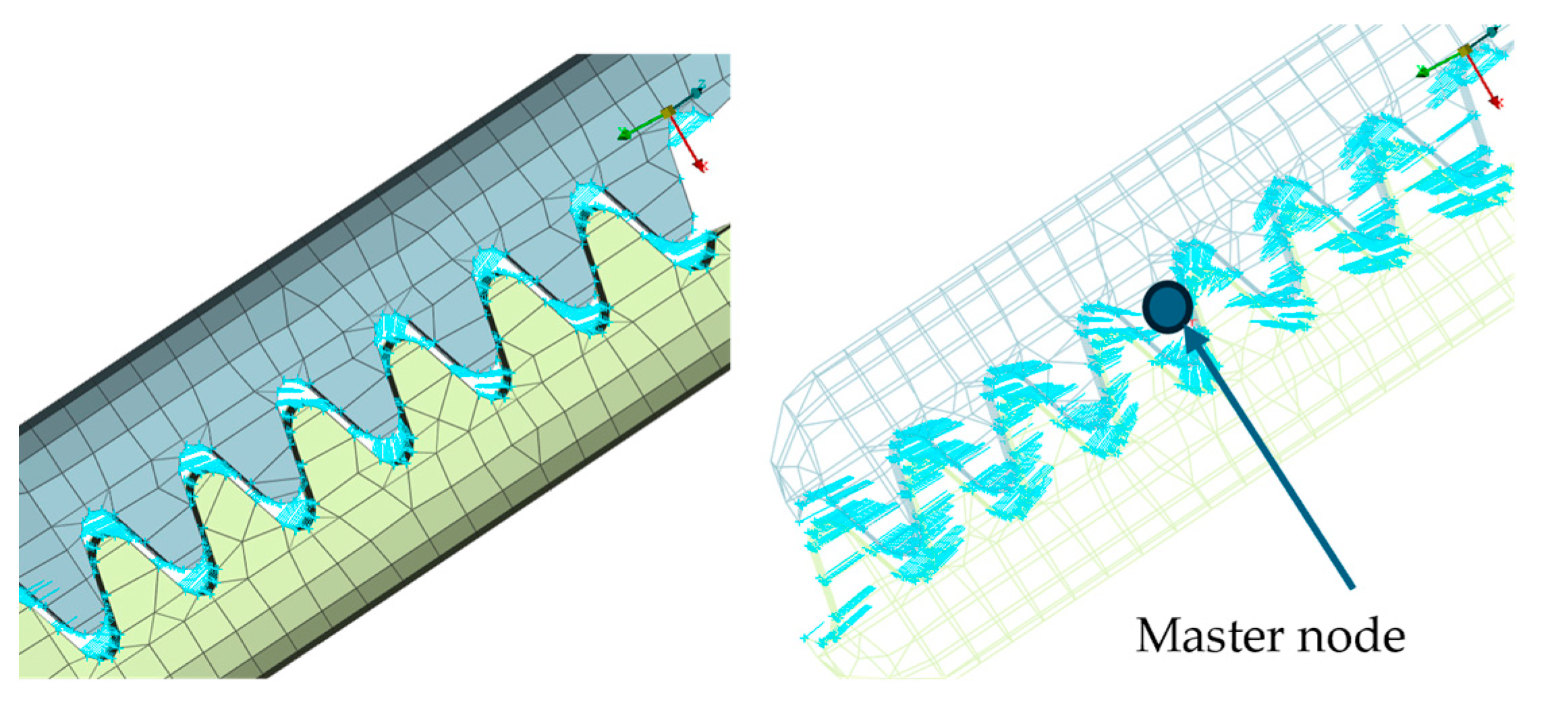
  • A concentrated force of 15 N was applied to the master node of the coupling at the instrument tip (Figure 8, Figure 9, Figure 10 and Figure 11):
    Along the local instrument Z axis in Simulation 1 and Simulation 3.
    Along the global Z axis in Simulation 2 and Simulation 4.
  • To prevent buckling and preserve realistic load transmission, steel material properties were assigned to the instrument shaft.
  • A static nonlinear analysis step was used.
Figure 12 illustrates the modeling of the passive joints of the Athena parallel robot, using joints and connector elements (hinge or cylindrical) where the corresponding friction force was included.
The objective of these static simulations was to determine the overall stiffness of the robot and to assess the mechanical behavior of components subjected to stresses and deformations. The results of this simulation are detailed in Section 3.1, where the results of the FEA analysis are presented.
Based on the simulations presented above, the experimental model was used to determine the displacements that occur during robot manipulation on the linear guides of the q3 axis, which takes over the force applied at the instrument level, thus determining the backlash that occurs on this axis.
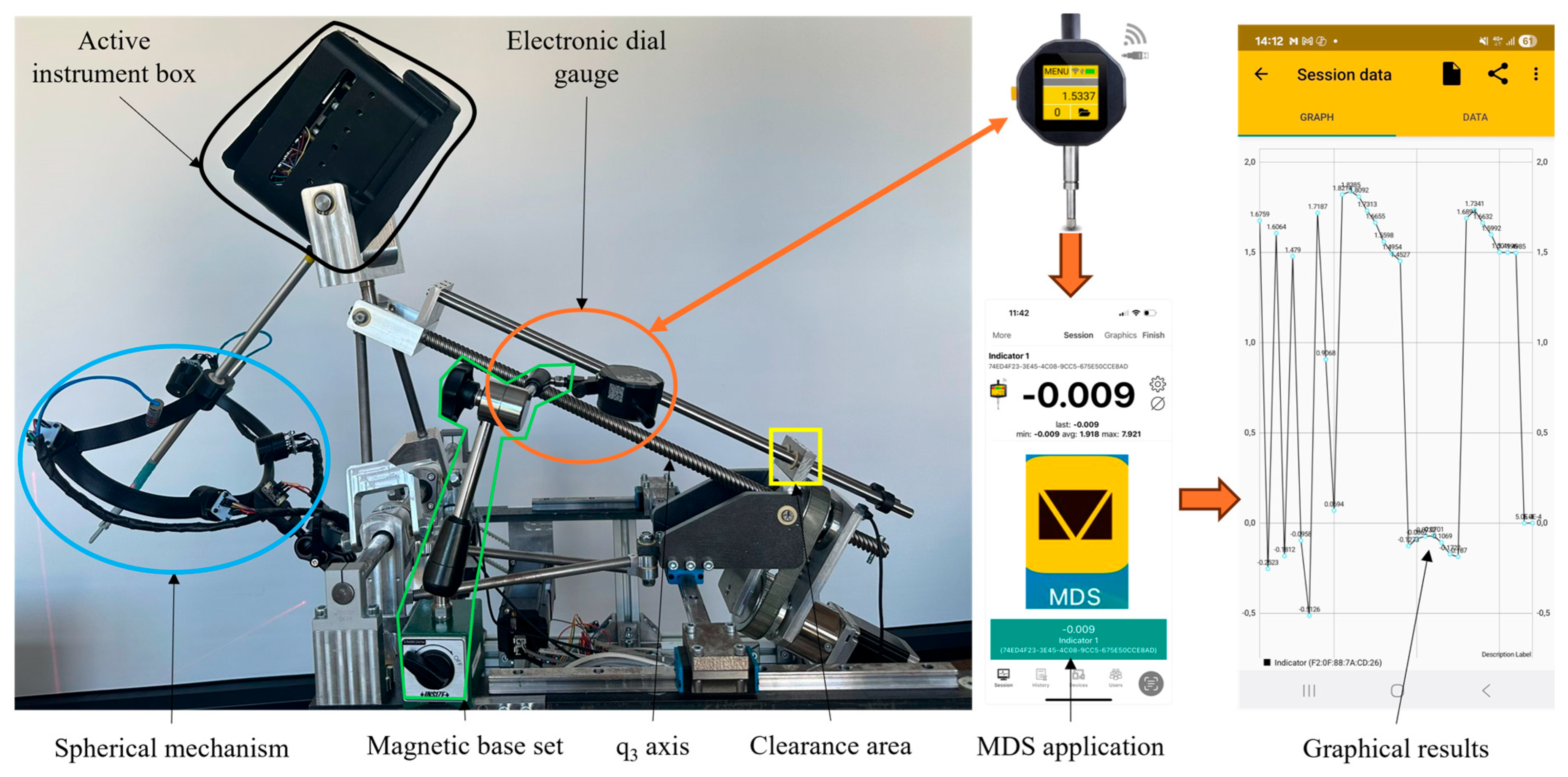
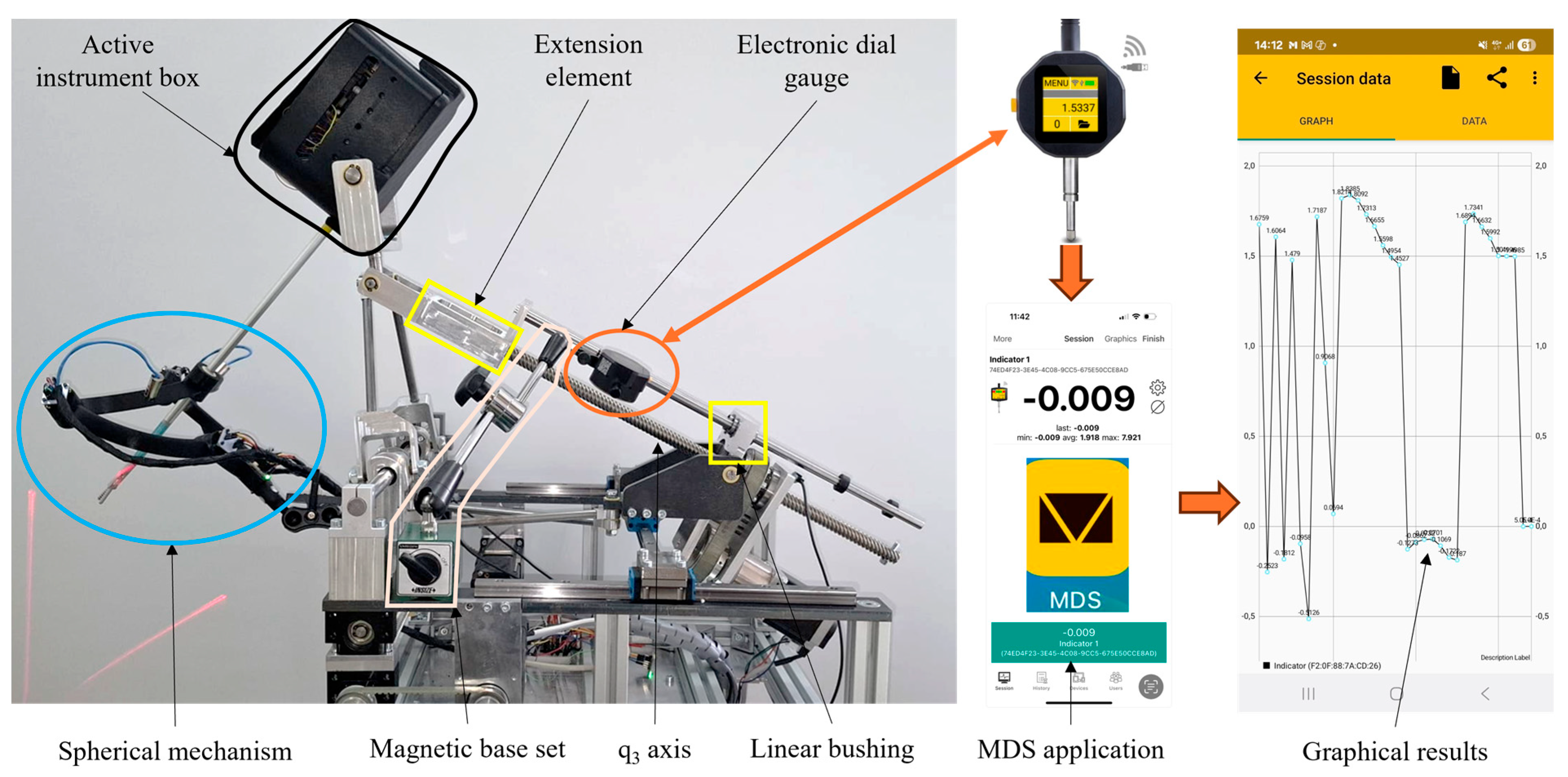
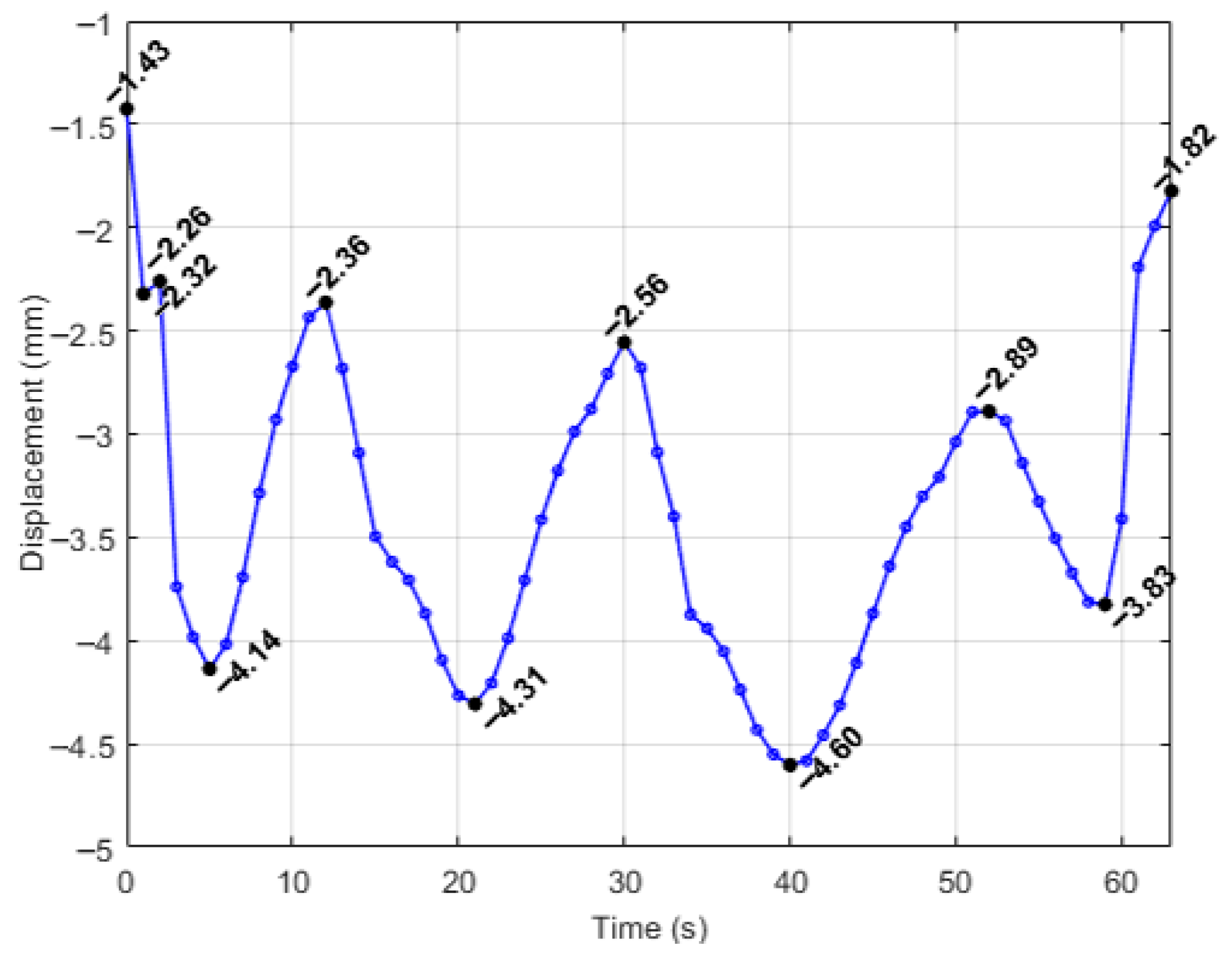
To experimentally determine the clearance that occurs on the q3 axis during robot operation, an electronic dial gauge (Figure 13—green line) was used to measure the linear q3 axis over its entire active stroke. The data was recorded using the MDS application, and the recorded data was transferred and saved in real time using a smartphone.
Based on this data, graphs were generated displaying the clearance recorded throughout the active stroke of the q3 axis. Based on this data, the q3 axis was optimized by replacing the parts that introduce clearance, in particular the Teflon bushings through which the q3 axis guide elements slide. The experimental stand used to perform measurements, along with the elements that introduce clearance to the q3 axis, is shown in yellow in Figure 13. After replacing these elements, the updated experimental stand is shown in yellow in Figure 14, where the replacement of the Teflon bushings with two linear bearings, which reduce the clearance, can be observed.

2.4. Robot Workspace Assessment

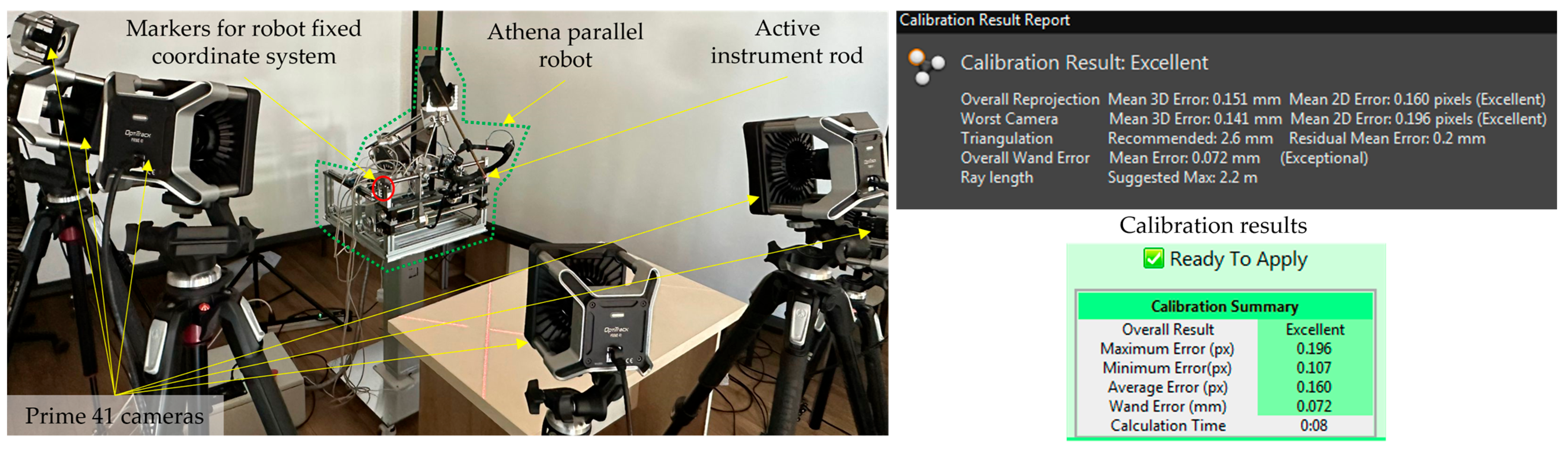
The experimental measurement setup used (Figure 15) to map the workspace of the Athena parallel robot is presented in Figure 16. An OptiTrack system [43] was used to perform measurements, and recorded the positions of the markers placed on the active instrument attached to the Athena parallel robot. The OptiTrack measurement system consists of six Prime 41 cameras positioned around the robot’s mechanical structure, with an accuracy of less than 0.3 mm for positioning and 0.05 degrees for orientation [43]. These cameras are connected to the system’s control unit, which captures, processes, and transmits the information to the computer system running the Motive program, which provides a graphical interface that allows the user to visualize the workspace and record the positions of the markers attached to the robot’s active instrument.
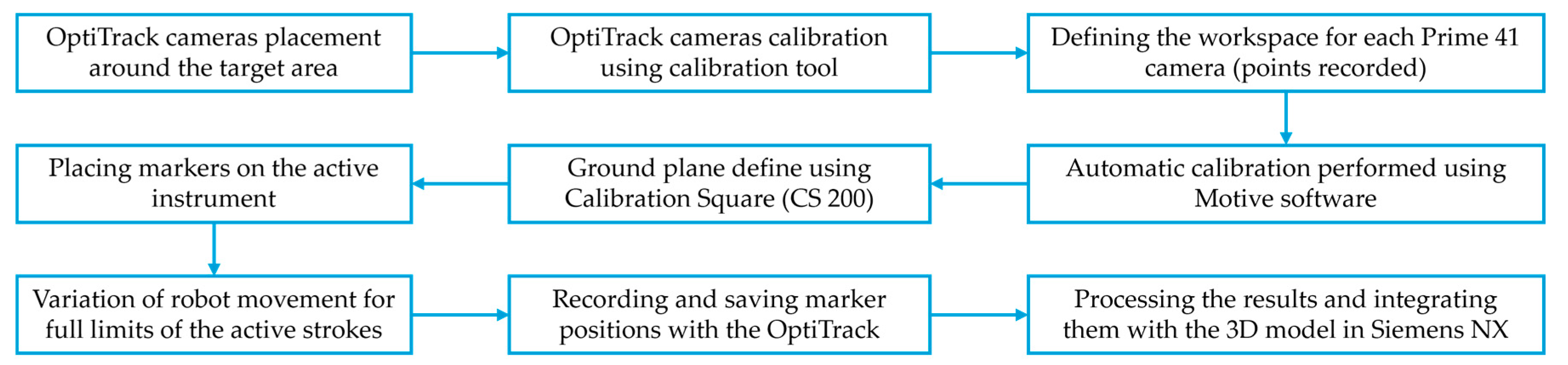
To experimentally measure the workspace of the Athena parallel robot model using the OptiTrack system, it is necessary to perform the robot calibration steps (described in 2.2), followed by the calibration of the OptiTrack system and the positioning of markers on the target area (the active instrument). The steps required to calibrate the OptiTrack system and perform measurements are illustrated in Figure 15 and Figure 16, which show the experimental setup used to map the workspace of the Athena parallel robot and the results obtained after calibration of the OptiTrack system.
Following the measurements taken with the OptiTrack camera system, the data were saved using the Motive software, version 2.1.0 and processed in MATLAB, version R2024b, then the data integrated into the 3D model of the Athena parallel robot. The results, presented in Section 3.2 of the results section, show an extension of the active stroke q3 of the Athena parallel robot through the addition of a rigid aluminum element. This modification improves the robot’s workspace, facilitating access to the target organ (pancreas) without requiring adjustment to or the repositioning of the patient on the operating table.

3. Results

3.1. Stiffness Analysis Results for the Athena Parallel Robot

The results of the stiffness analysis for the Athena parallel robot are illustrated in Figure 17 and Figure 18 and are summarized in Table 1. Figure 17 illustrates the robot’s deflected shape for all four simulations, plotted with a deformation scale factor of 100 for enhanced visualization. The largest displacements occurred in Simulation 2 and Simulation 4, where the load was applied along the global Z axis. Moreover, higher displacements were observed in the maximum inserted configuration compared to the home position.
Figure 18 presents the von Mises stress distribution at the end of each simulation. The maximum stress occurred in Simulation 4 on a C45 steel component, reaching 67.67 MPa—below the material’s yield strength of 310 MPa. In all simulations, the highest stresses were consistently located in the universal joint region.
To quantify the global stiffness of the robot, the displacement at the node where the external force was applied (at the instrument tip, Figure 19) was extracted, and the stiffness was calculated using Equation (9):
K = F u
where F is the applied force and u is the total displacement of the master node.
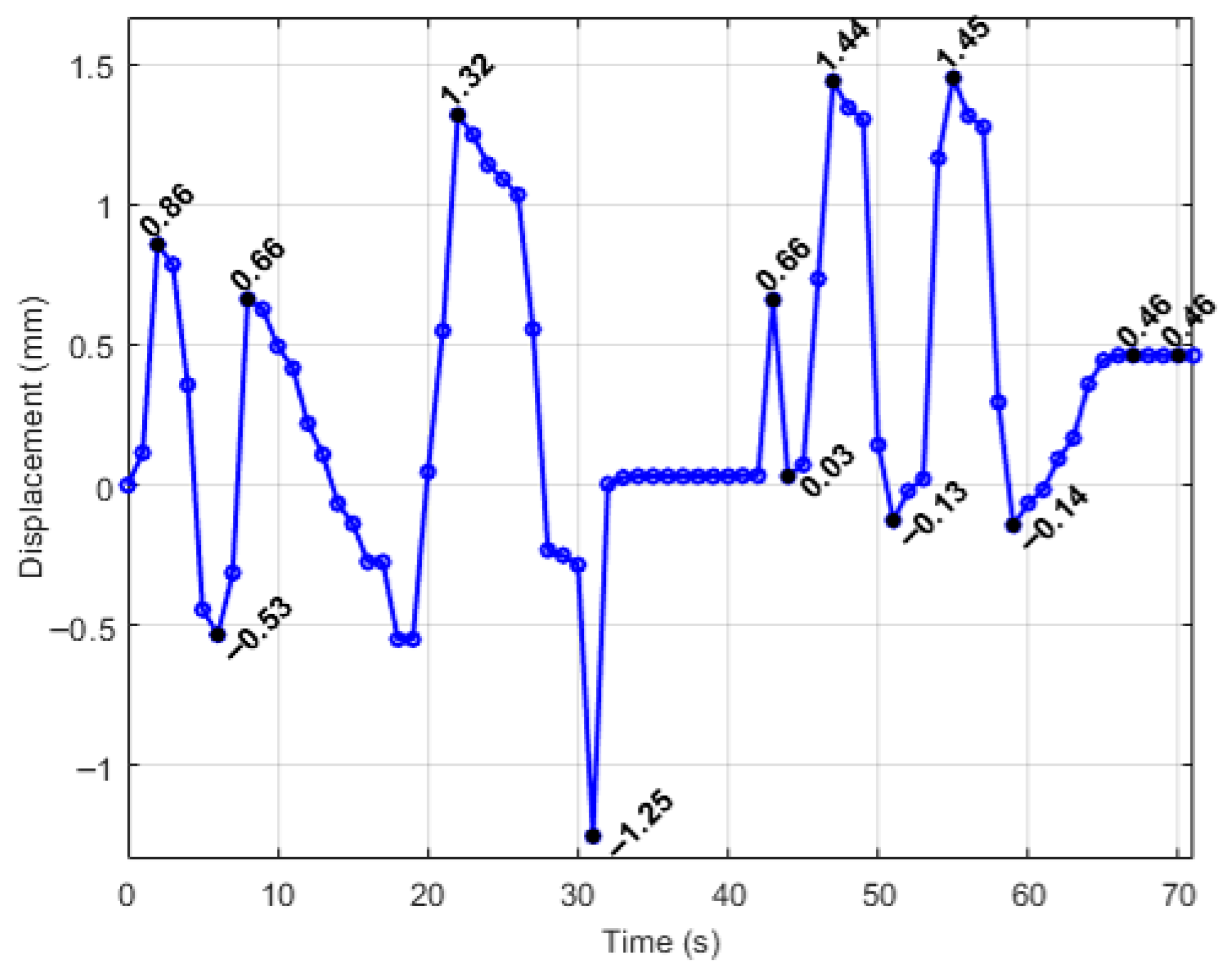
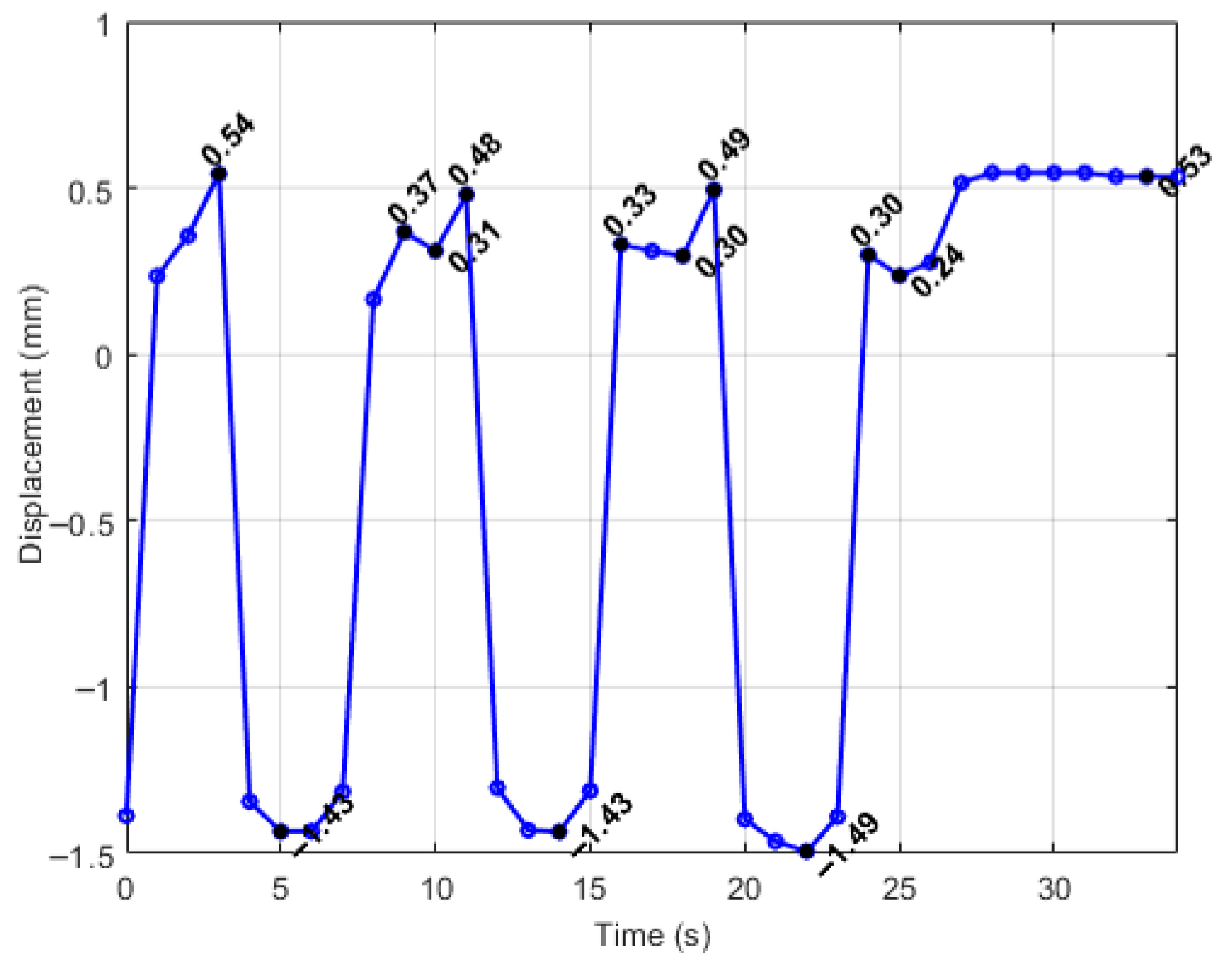
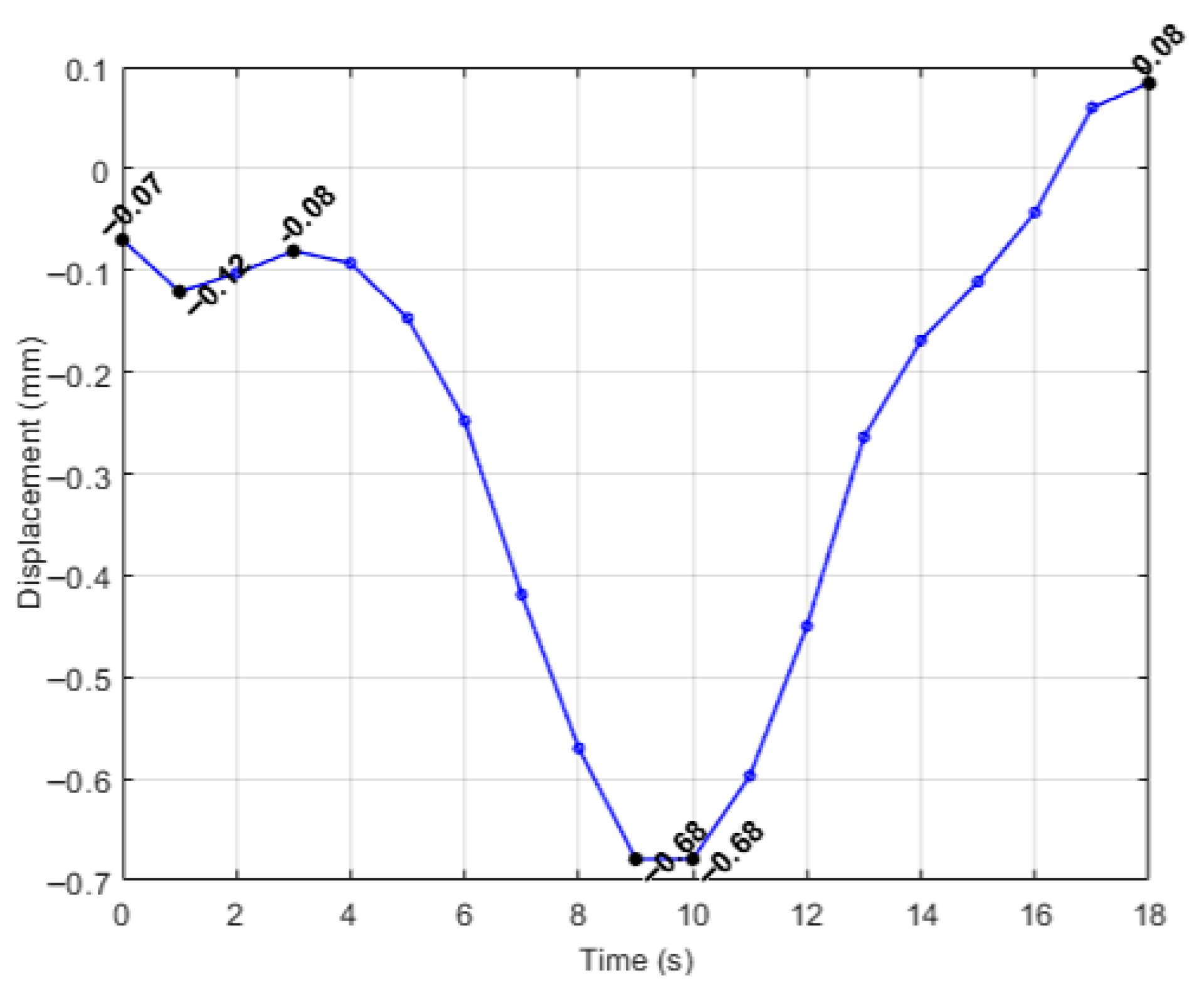
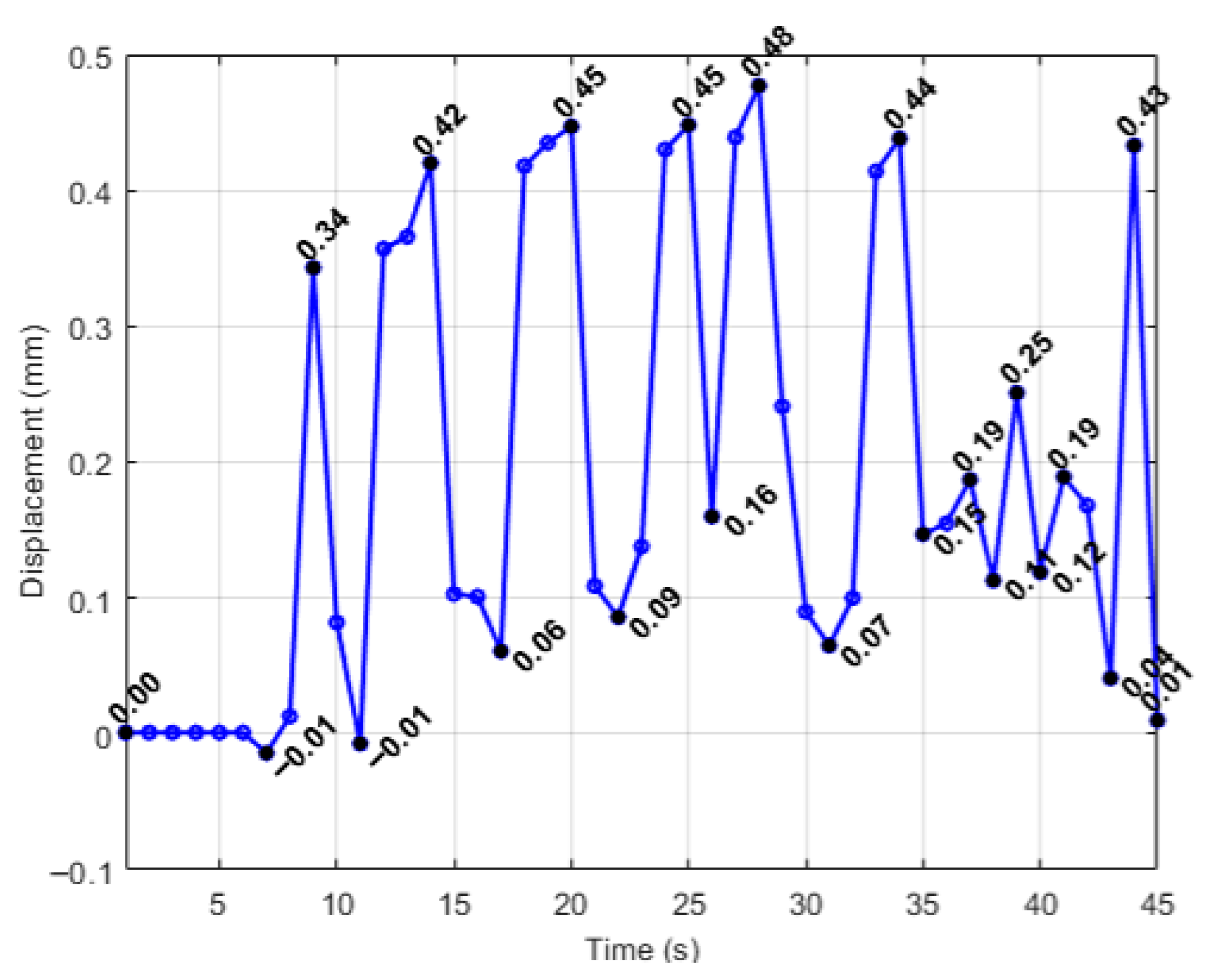
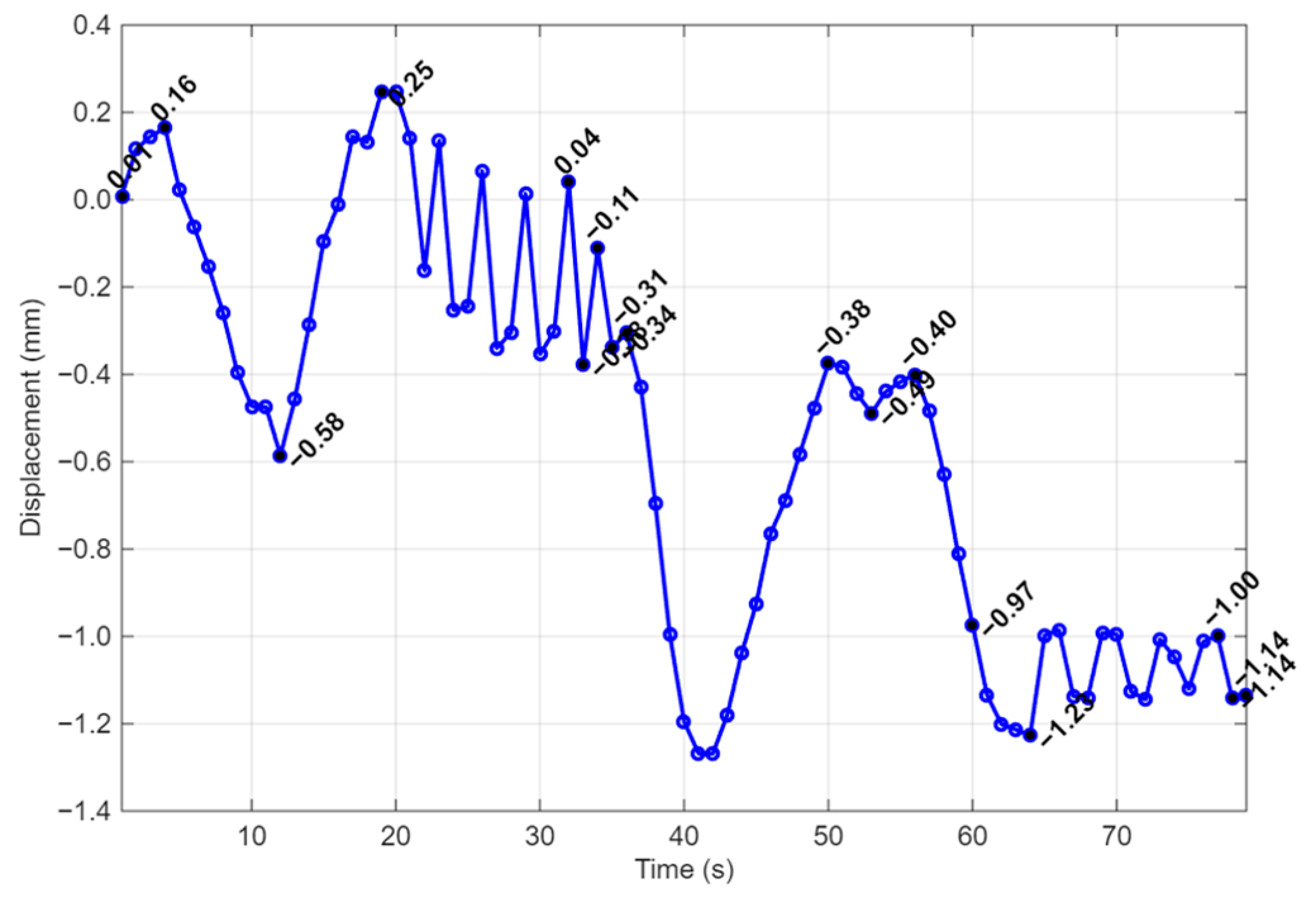
Based on the simulations presented above, the stressed areas and the area introducing significant clearance to the q3 axis were identified. This clearance was determined experimentally using the setup presented in Figure 13 and Figure 14. The values obtained from measurements on the q3 axis, before and after replacing the parts that caused this clearance, are illustrated in Figure 20, Figure 21, Figure 22, Figure 23, Figure 24 and Figure 25, which show graphs generated using the MDS application on a smartphone.
Figure 20 presents the results of the measurement performed using the dial gauge when q3 is used to perform the expansion movement; the minimum displacement recorded was −1.25 mm, while the maximum value was 1.44 mm, and the average measurements were 0.45 mm, with a maximum deformation value of 2.69 mm.
Figure 21 presents the results of the measurement performed using the dial gauge when the q3 axis is retracted and its extension is varied in both directions. The minimum displacement recorded was −1.49 mm, while the maximum value was 0.54 mm, and the average measurements were −0.26 mm, with a maximum deformation value of 2.03 mm.
Figure 22 presents the results of the measurement performed using the dial gauge when the q3 axis is extended to the end of its stroke, to which is added the variation in the axis in both directions, this being the worst-case scenario. The minimum displacement recorded for this case was −4.60 mm, while the maximum value was −1.42 mm, and the average measurements were −3.41 mm, with a maximum deformation value of 5.16 mm.
Figure 23 presents the results of the measurement performed using the dial gauge when q3 is used to perform the expansion movement after the clearance area has been replaced with the linear bushing, and the minimum displacement recorded was −0.67 mm, while the maximum value was 0.08 mm, and the average measurement was 0.084 mm, with a maximum deformation value of 0.76 mm. In this case, the clearance was reduced by approximately 3.5 times compared to the case presented in Figure 20.
Figure 24 presents the result of the second set of measurements performed after replacing the part that introduced clearance with the linear bushings. This case presents the changing direction of the active stroke of q3, with the results obtained presenting a minimum displacement of −0.014 mm and a maximum displacement of 0.47 mm, with an average total of 0.19 mm and an absolute value of 0.49 mm compared to the set of measurements presented in Figure 21, where the maximum measured clearance indicates a value of 2.03 mm. Thus, by using the linear bushings, the clearance was reduced by approximately 4.1 times.
Figure 25 presents the worst-case scenario, which is when the q3 axis is extended to the upper limit of the stroke and the direction of the q3 axis is changed. For this case, the minimum displacement measured was −1.26 mm, the maximum displacement was 0.24 mm, while the average of the measurements was −0.54 mm. The absolute value for this measurement is 1.51 mm, while for the same scenario, according to the data presented in Figure 22, the measurement indicates a value of 5.16 mm. Following the use of linear bushings, it can be observed that the clearance has been reduced by approximately 3.4 times in this case as well.

3.2. Workspace Mapping Results for the Athena Parallel Robot

The theoretical workspace of the Athena parallel robot was presented in one paper [32], where the covered area is sufficient for WP intervention. Based on this data, the workspace of the experimental model of the Athena parallel robot with, the integration of the rigid extension element (Figure 14), was measured using the OptiTrack camera system by recording the positions of four markers attached to the active instrument. The first marker was positioned on the instrument housing, providing information about the general orientation of the device in space. The second marker was mounted on the upper part of the instrument rod, enabling the tracking of axial movements and linear displacements. The third marker was placed on the spherical mechanism at the CS1 joint, while the fourth marker was fixed to the tip of the instrument, representing the main point of interest for surgical interventions, as this is the area that interacts directly with the patient’s tissues.
The movements performed with the active instrument and recorded with the OptiTrack camera system focused on performing the orientation and insertion of the active instrument, with orientation being achieved through the changing of joint angles, thus enabling the instrument to achieve the different tilt angles necessary to access different anatomical areas near the pancreas. Insertion was controlled by axial displacement of the instrument, allowing different depths to be reached in the intraoperative field depending on the requirements of the surgical procedure (WP, DP, TP). The data extracted from OptiTrack were processed using the MATLAB program, and the data were subsequently integrated into the 3D model using the point cloud obtained in MATLAB for all four markers, thus defining the experimental workspace illustrated in Figure 26.
According to the data presented in Figure 26, it can be observed that by integrating the data with the 3D model, the robot’s workspace covers the entire pancreas, thus allowing for a clear overview of the correspondence between the experimentally measured workspace and the geometry of the robotic system. This integration made it possible to identify anatomical areas that can be accessed via different configurations of the spherical mechanism, thus observing that, by changing the configuration of the spherical system, all areas required for performing interventions on the pancreas can be reached, thus observing the direct influence between the selection of the configuration and the workspace recorded with the camera system.
Based on the results obtained from the sets of measurements performed before adding the rigid extension element, it was observed that, for the selected spherical mechanism configuration, the active instrument covers only the head of the pancreas, the volume covered being sufficient for this procedure but at the same time insufficient to access to the entire pancreas, namely the body and tail. This limitation highlights the need to extend the q3 axis so that, regardless of the selected configuration of the spherical mechanism, the working space can cover all regions of the pancreas—its head, body, and tail—which is an essential requirement to ensure the robot’s flexibility for different types of pancreatic surgery.
In Figure 14 and Figure 26, it can be observed that the integration of the rigid element with the q3 axis is achieved without modifying the robot’s kinematics and without compromising the rigidity or accuracy of the system.
This improvement to the workspace gives both the surgeon and the system increased flexibility, in terms of planning and performing procedures, enabling surgical approaches that were not previously possible with the initial robot configuration presented in Figure 13 and detailed in [32].
The results obtained from these measurements, as well as from the integration of this rigid element into the robot’s mechanical structure, confirm that the initial design objectives, and the task of the Athena robot in its extended configuration (Figure 14 and Figure 26), can be used for a wide range of pancreatic surgical procedures, from limited resections or the Whipple procedure to total or distal pancreatectomies requiring access to the entire organ.

4. Discussion

The experimental results obtained for the Athena parallel robot demonstrate significant advances in the development of a novel robotic system suitable for pancreatic surgical applications. The finite element simulations performed on the 3D model show that the robot exhibits configuration-dependent stiffness characteristics, with values ranging from 4.82 N/mm to 60 N/mm, depending on the loading direction and the robot’s position. The lowest stiffness value was recorded in Simulation 4, in which the robot was in the maximum insertion position, with a gravitational load applied to the tip of the instrument. This finding is clinically relevant because this configuration represents a typical working scenario during pancreatic surgery, where the instrument is fully inserted into the patient’s body. The maximum von Mises stress of 67.67 MPa, occurring in Simulation 4, remained well below the yield strength of 310 MPa for the C45 steel component, thus providing adequate safety margins in terms of the structural design. The consistent location of maximum stresses in the universal joint area near the q3 axis indicates that this area may benefit from the optimization approach also presented in this paper.
The experimental evaluation of the q3 axis clearance was performed with a dial gauge, recording significant clearance in the initial configuration presented in Figure 13, with maximum deformation values reaching 5.16 mm in the worst-case scenario. Replacing the Teflon bushings with linear bearings resulted in a 3.4- to 4.1-fold reduction in clearance in all tested conditions, reducing the maximum deformation to 1.51 mm. Although this improvement is substantial, further optimization may be necessary to achieve the levels of precision required for minimally invasive pancreatic procedures, but for this experimental model, the deformation can be considered acceptable, and future studies will focus on reducing it. Thus, the results obtained and presented in this paper are consistent with previous studies that emphasize the critical importance of mechanical precision in surgical robotics [43,44,45,46,47], where even small positioning errors can compromise patient safety and surgical outcomes.
The results of workspace mapping using the OptiTrack system demonstrated that the initial configuration (Figure 13) of the Athena parallel robot provided adequate coverage only for procedures involving the pancreatic head, such as the Whipple procedure (WP). This limitation is significant because distal pancreatectomy (DP) and total pancreatectomy (TP) require access to the body and tail regions of the pancreas. Extending the q3 axis by 100 mm resolved this limitation, allowing for complete coverage of the pancreas regardless of the configuration of the spherical mechanism. This change improves the clinical versatility of the system without requiring patient repositioning during surgery, which is important for maintaining sterile field integrity, reducing operating time, and minimizing potential errors that can occur during patient repositioning. The integration of the OptiTrack camera system measurements with the 3D model provides important validation of the kinematic models and robot design, confirming that theoretical predictions of the workspace align with experimental data.
The multi-sensor calibration approach using IMUs and magnetic encoders provides a reliable method for establishing the RCM, and the laser-based alignment system for RCM positioning provides intuitive visual feedback for surgical staff, potentially reducing setup time in the operating room.
Future research will be focused on dynamic stiffness analyses to evaluate the robot’s behavior under surgical forces, complementing the current static evaluations. Mechanical improvements will be aimed at reducing the clearance in the q3 axis for better positioning accuracy. A force sensor (FT 300 [48]) at the end-effector will be integrated with the robot to provide haptic feedback during surgery. Furthermore, intelligent algorithms will be developed to track surgical instruments and to provide real-time suggestions to improve surgeon efficiency. These advances will enhance the clinical utility and safety of the Athena parallel robot for pancreatic surgery.

5. Conclusions

This work reports the experimental validation and performance assessment of the Athena parallel robot, a novel system developed to support minimally invasive pancreatic surgery, where the main role of the Athena parallel robot is to assist the surgeon during the medical procedure by performing tasks such as manipulating instruments (active instruments or the laparoscopic camera) or fixing and supporting various areas that may obstruct the intraoperative field, thereby reducing the effect of the surgeon’s hand fatigue. The study advanced the robot from a conceptual design to a fully functional experimental prototype. A dedicated calibration strategy, based on a spherical mechanism instrumented with IMUs and magnetic encoders, enabled precise identification of the Remote Center of Motion, thereby ensuring the fulcrum effect required for safe laparoscopic access.
Structural evaluation through Finite Element Analysis demonstrated that the robot maintains mechanical integrity under representative surgical loads; even in the most demanding simulated scenario, stresses remained well below the material yield limit, confirming that the structure provides adequate stiffness for accurate manipulation and organ retraction.
Experimental testing further revealed mechanical clearance issues along the linear q3 axis, which were successfully resolved by replacing Teflon bushings with high-precision linear bearings. This modification significantly enhanced the linearity and repeatability of the active stroke. Workspace measurements acquired with the OptiTrack system verified that the volume the robot is able to reach, augmented by the improved q3 stroke, is sufficient to access the relevant surgical region without requiring patient or table repositioning.
Overall, the findings indicate that the Athena robot possesses the mechanical stability, kinematic precision, and operational reach necessary to function as an effective assistant during minimally invasive abdominal surgery. By assuming tasks such as organ retraction and camera handling, the system has the potential to reduce surgeon fatigue and enhance ergonomics in the operating room. Future efforts will concentrate on pre-clinical evaluations to investigate in vivo performance, on the integration of advanced control strategies to enable semi-autonomous instrument positioning, and also on integrating a force sensor (FT 300 [48,49]) capable of providing feedback from the intraoperative field, with the data collected being transmitted to the haptic device that is already integrated into the robot’s command and control logic.

6. Patents

  • Vaida, C., Gherman, B., Tucan, P., Birlescu, I., Chablat, D., Pisla, D.: Parallel Robotic System for MIS of the Pancreas, Patent Pending A00522/11.09.2024.
  • Pisla, D., Chablat, D., Birlescu, I., Vaida, C., Pusca, A., Tucan, P., Ghermna, B. AUTOMATIC INSTRUMENT FOR ROBOT-ASSISTED MINIMALLY INVASIVE SURGERY. Romania, Patent number: RO138293A0. 2024, pp.15.

Author Contributions

Conceptualization, D.P., N.A.H., C.V., B.G., P.T., A.C. (Andra Ciocan), A.P. (Alexandru Pusca) and D.C.; methodology, D.P., B.G., C.V. and D.C.; software, A.P. (Adrian Pisla) and A.C. (Andrei Cailean); validation, N.A.H., R.C., C.R., A.C. (Andra Ciocan), D.P. and D.C.; formal analysis, C.V., B.G., P.T. and A.C. (Andrei Caprariu); investigation, A.P. (Alexandru Pusca); resources, D.P.; data curation, A.P. (Adrian Pisla), B.G., P.T. and C.V.; writing—original draft preparation, A.P. (Alexandru Pusca), A.C. (Andrei Caprariu) and A.C. (Andrei Cailean); writing—review and editing, D.P., D.C., A.C. (Andra Ciocan), C.V. and B.G.; visualization, D.P., D.C., A.P. (Alexandru Pusca), B.G. and C.V.; supervision, D.P.; project administration, D.P. and D.C.; funding acquisition, D.P. and D.C. All authors have read and agreed to the published version of the manuscript.

Funding

This research was funded by the project New smart and adaptive robotics solutions for personalized minimally invasive surgery in cancer treatment—ATHENA, funded by European Union—Next Generation EU and Romanian Government, under National Recovery and Resilience Plan for Romania, contract no. 760072/23.05.2023, code CF 116/15.11.2022, through the Romanian Ministry of Research, Innovation and Digitalization, within Component 9, investment I8.

Data Availability Statement

The original contributions presented in the study are included in the article, further inquiries can be directed to the corresponding author.

Conflicts of Interest

The authors declare no conflicts of interest.

Abbreviations

The following abbreviations are used in this manuscript:
3DThree-Dimensional
WPWhipple Procedure
PPWPPylorus-Preserving Whipple Procedure
DPDistal Pancreatectomy
TPTotal Pancreatectomy
OSOverall Survival
FDAFood and Drug Administration
RDPRobot-Assisted Distal Pancreatectomy
RPDRobot-Assisted Pancreatoduodenectomies
RCMRemote Center Of Motion
CADComputer-Aided Design
DOFDegrees of Freedom
I2CInter-Integrated Circuit
USBUniversal Serial Bus
B&RBernecker & Rainer
PLCProgrammable Logic Controller
DCDirect Current
IMUInertial Measurement Unit
INITInitialization
GUIGraphical User Interface

References

  1. Ansari, D.; Tingstedt, B.; Andersson, B.; Holmquist, F.; Sturesson, C.; Williamsson, C.; Sasor, A.; Borg, D.; Bauden, M.; Andersson, R. Pancreatic Cancer: Yesterday, Today & Tomorrow. Future Oncol. 2016, 12, 1929–1946. [Google Scholar] [CrossRef]
  2. Mizrahi, J.D.; Surana, R.; Valle, J.W.; Shroff, R.T. Pancreatic cancer. Lancet 2020, 395, 2008–2020. [Google Scholar] [CrossRef]
  3. Park, W.; Chawla, A.; O’Reilly, E.M. Pancreatic cancer: A review. JAMA 2021, 326, 851–862. [Google Scholar] [CrossRef] [PubMed]
  4. Connor, A.A.; Gallinger, S. Pancreatic cancer evolution and heterogeneity: Integrating omics and clinical data. Nat. Rev. Cancer 2022, 22, 131–142. [Google Scholar] [CrossRef] [PubMed]
  5. Logarajah, S.I.; Jackson, T.; Darwish, M.; Nagatomo, K.; Cho, E.; Osman, H.; Jeyarajah, D.R. Whipple pancreatoduo-denectomy: A technical illustration. Surg. Open Sci. 2022, 7, 62–67. [Google Scholar] [CrossRef]
  6. Symeonidis, D.; Zacharoulis, D.; Kissa, L.; Samara, A.A.; Petsa, E.; Tepetes, K. From classic whipple to pylorus preserving pancreaticoduodenectomy and ultimately to pylorus resecting-stomach preserving pancreaticoduodenectomy: A review. Chirurgia 2023, 118, 335–347. [Google Scholar]
  7. Cawich, S.O.; Cabral, R.; Douglas, J.; Thomas, D.A.; Mohammed, F.Z.; Naraynsingh, V.; Pearce, N.W. Whipple’s procedure for pancreatic cancer: Training and the hospital environment are more important than volume alone. Surg. Pract. Sci. 2023, 14, 100211. [Google Scholar] [CrossRef]
  8. De Pastena, M.; van Bodegraven, E.A.; Mungroop, T.H.; Vissers, F.L.; Jones, L.R.; Marchegiani, G.; Balduzzi, A.; Klompmaker, S.; Paiella, S.; Tavakoli Rad, S.; et al. Distal pancre-atectomy fistula risk score (D-FRS): Development and international validation. Ann. Surg. 2023, 277, e1099–e1105. [Google Scholar] [CrossRef]
  9. Ban, D.; Garbarino, G.M.; Ishikawa, Y.; Honda, G.; Jang, J.Y.; Kang, C.M.; Maekawa, A.; Murase, Y.; Nagakawa, Y.; Nishino, H.; et al. Surgical approaches for minimally invasive distal pancreatectomy: A systematic review. J. Hepato-Biliary-Pancreat. Sci. 2022, 29, 151–160. [Google Scholar] [CrossRef]
  10. Balzano, G.; Zerbi, A.; Aleotti, F.; Capretti, G.; Melzi, R.; Pecorelli, N.; Mercalli, A.; Nano, R.; Magistretti, P.; Gavazzi, F.; et al. Total Pancreatectomy with Islet Autotrans-plantation as an Alternative to High-risk Pancreatojejunostomy After Pancreaticoduodenectomy: A Prospective Ran-domized Trial. Ann. Surg. 2023, 277, 894–903. [Google Scholar] [CrossRef]
  11. Chaouch, M.A.; Leon, P.; Cassese, G.; Aguilhon, C.; Khayat, S.; Panaro, F. Total pancreatectomy with intraportal islet autotransplantation for pancreatic malignancies: A literature overview. Expert Opin. Biol. Ther. 2022, 22, 491–497. [Google Scholar] [CrossRef] [PubMed]
  12. Petrucciani, N.; Nigri, G.; Giannini, G.; Sborlini, E.; Antolino, L.; de’Angelis, N.; Gavriilidis, P.; Valente, R.; Lainas, P.; Dagher, I.; et al. Total pancreatectomy for pancreatic carcinoma: When, why, and what are the outcomes? Results of a systematic review. Pancreas 2020, 49, 175–180. [Google Scholar]
  13. Karim, S.A.M.; Abdulla, K.S.; Abdulkarim, Q.H.; Rahim, F.H. The outcomes and complications of pancreaticoduo-denectomy (Whipple procedure): Cross sectional study. Int. J. Surg. 2018, 52, 383–387. [Google Scholar] [CrossRef] [PubMed]
  14. McGuigan, A.; Kelly, P.; Turkington, R.C.; Jones, C.; Coleman, H.G.; McCain, R.S. Pancreatic cancer: A review of clinical diagnosis, epidemiology, treatment and outcomes. World J. Gastroenterol. 2018, 24, 4846–4861. [Google Scholar] [CrossRef] [PubMed]
  15. Puckett, Y.; Garfield, K. Pancreatic Cancer. In StatPearls; StatPearls Publishing: Treasure Island, FL, USA, 2024. [Google Scholar] [PubMed]
  16. Nortunen, M.; Meriläinen, S.; Ylimartimo, A.; Peroja, P.; Karjula, H.; Niemelä, J.; Saarela, A.; Huhta, H. Evolution of pancreatic surgery over time and effects of centralization-a single-center retrospective cohort study. J. Gastrointest. Oncol. 2023, 14, 366–378. [Google Scholar] [CrossRef]
  17. Nießen, A.; Hackert, T. State-of-the-art surgery for pancreatic cancer. Langenbecks Arch. Surg. 2022, 407, 443–450. [Google Scholar] [CrossRef]
  18. Morrell, A.L.G.; Morrell-Junior, A.C.; Morrell, A.G.; Mendes, J.M.F.; Tustumi, F.; De-Oliveira-E-Silva, L.G.; Morrell, A. The history of robotic surgery and its evolution: When illusion becomes reality. Rev. Colégio Bras. Cir. 2021, 48, e20202798. [Google Scholar] [CrossRef]
  19. Molle, F.; Savastano, M.C.; Giannuzzi, F.; Fossataro, C.; Brando, D.; Molle, A.; Rebecchi, M.T.; Falsini, B.; Mattei, R.; Mirisola, G.; et al. 3D Da Vinci robotic surgery: Is it a risk to the surgeon’s eye health? J. Robot. Surg. 2023, 17, 1995–2000. [Google Scholar] [CrossRef]
  20. Pisla, D.; Birlescu, I.; Crisan, N.; Pusca, A.; Andras, I.; Tucan, P.; Radu, C.; Gherman, B.; Vaida, C. Singularity Analysis and Geometric Optimization of a 6-DOF Parallel Robot for SILS. Machines 2022, 10, 764. [Google Scholar] [CrossRef]
  21. Melvin, W.S.; Needleman, B.J.; Krause, K.R.; Ellison, E.C. Robotic resection of pancreatic neuroendocrine tumor. J. Laparoendosc. Adv. Surg. Tech. A 2003, 13, 33–36. [Google Scholar] [CrossRef]
  22. Giulianotti, P.C.; Coratti, A.; Angelini, M.; Sbrana, F.; Cecconi, S.; Balestracci, T.; Caravaglios, G. Robotics in general surgery: Personal experience in a large community hospital. Arch. Surg. 2003, 138, 777–784. [Google Scholar] [CrossRef]
  23. Damoli, I.; Butturini, G.; Ramera, M.; Paiella, S.; Marchegiani, G.; Bassi, C. Minimally invasive pancreatic surgery—A review. Wideochir. Inne Tech. Maloinwazyjne 2015, 10, 141–149. [Google Scholar] [CrossRef]
  24. Kolbeinsson, H.M.; Chandana, S.; Wright, G.P.; Chung, M. Pancreatic Cancer: A Review of Current Treatment and Novel Therapies. J. Investig. Surg. 2022, 36, 2129884. [Google Scholar] [CrossRef]
  25. Fan, Y.; Xu, L.; Liu, S.; Li, J.; Xia, J.; Qin, X.; Li, Y.; Gao, T.; Tang, X. The state-of-the-art and perspectives of laser ablation for tumor treatment. Cyborg Bionic Syst. 2024, 5, 0062. [Google Scholar] [CrossRef]
  26. Wang, X.; Guo, S.; Xu, Z.; Zhang, Z.; Sun, Z.; Xu, Y. A robotic teleoperation system enhanced by augmented reality for natural human–robot interaction. Cyborg Bionic Syst. 2024, 5, 0098. [Google Scholar] [CrossRef]
  27. Tucan, P.; Vaida, C.; Horvath, D.; Caprariu, A.; Burz, A.; Gherman, B.; Iakab, S.; Pisla, D. Design and Experimental Setup of a Robotic Medical Instrument for Brachytherapy in Non-Resectable Liver Tumors. Cancers 2022, 14, 5841. [Google Scholar] [CrossRef]
  28. Li, J.; Yang, X.; Chu, G.; Feng, W.; Ding, X.; Yin, X.; Zhang, L.; Lv, W.; Ma, L.; Sun, L.; et al. Application of Improved Robot-assisted Laparoscopic Telesurgery with 5G Technology in Urology. Eur. Urol. 2023, 83, 41–44. [Google Scholar] [CrossRef] [PubMed]
  29. Vaida, C.; Pisla, D.; Plitea, N.; Gherman, B.; Gyurka, B.; Stancel, E.; Hesselbach, J.; Raatz, A.; Vlad, L.; Graur, F. Development of a control system for a parallel robot used in minimally invasive surgery. In International Conference on Advancements of Medicine and Health Care through Technology; Vlad, S., Ciupa, R.V., Nicu, A.I., Eds.; Springer: Berlin/Heidelberg, Germany, 2009; pp. 171–176. [Google Scholar] [CrossRef]
  30. Pisla, D.; Gherman, B.; Plitea, N.; Gyurka, B.; Vaida, C.; Vlad, L.; Graur, F.; Radu, C.; Suciu, M.; Szilaghi, A.; et al. Parasurg hybrid parallel robot for minimally invasive surgery. Chirurgia 2011, 106, 619–625. [Google Scholar]
  31. Haidegger, T.; Speidel, S.; Stoyanov, D.; Satava, R.M. Robot-assisted minimally invasive surgery—Surgical robotics in the data age. In Proceedings of the IEEE; IEEE: New York, NY, USA, 2022; Volume 110, pp. 835–846. [Google Scholar] [CrossRef]
  32. Pisla, D.; Pusca, A.; Caprariu, A.; Pisla, A.; Gherman, B.; Vaida, C.; Chablat, D. Design analysis of an innovative parallel robot for minimally invasive pancreatic surgery. In International Workshop on Medical and Service Robots; Springer Nature: Cham, Switzerland, 2025; pp. 466–476. [Google Scholar] [CrossRef]
  33. Eldridge, B.; Gruben, K.; LaRose, D.; Funda, J.; Gomory, S.; Karidis, J.; McVicker, J.; Taylor, R.; Anderson, J. A remote center of motion robotic arm for computer assisted surgery. Robotica 1996, 14, 103–109. [Google Scholar] [CrossRef]
  34. Pisla, D.; Birlescu, I.; Vaida, C.; Tucan, P.; Pisla, A.; Gherman, B.; Crisan, N.; Plitea, N. Algebraic modeling of kinematics and singularities for a prostate biopsy parallel robot. Proc. Rom. Acad. Ser. A 2018, 19, 489–497. [Google Scholar]
  35. Siemens PLM Software. Available online: https://plm.sw.siemens.com/en-US/nx/cad-online/ (accessed on 2 December 2025).
  36. Pisla, D.; Pusca, A.; Gherman, B.; Pisla, A.; Birlescu, I.; Tucan, P.; Vaida, C.; Chablat, D. Modeling and Simulation of a Novel Parallel Robotic System for Minimally Invasive Pancreatic Surgery. J. Mech. Robot. 2025, 18, 024501. [Google Scholar]
  37. Saini, S.; Orlando, M.F.; Pathak, P.M. Intelligent control of a master-slave based robotic surgical system. J. Intell. Robot. Syst. 2022, 105, 94. [Google Scholar] [CrossRef]
  38. Rus, G.; Andras, I.; Vaida, C.; Crisan, N.; Gherman, B.; Radu, C.; Tucan, P.; Iakab, S.; Hajjar, N.A.; Pisla, D. Artificial Intelligence-Based Hazard Detection in Robotic-Assisted Single-Incision Oncologic Surgery. Cancers 2023, 15, 3387. [Google Scholar] [CrossRef]
  39. Foley, R.; Walsh, K.; O’Cearbhaill, E.; McMahon, C.J. Three-Dimensional Printed Cardiac Models Demonstrating Extensive Cardiac Calcification Assist in Preprocedural Planning. World J. Pediatr. Congenit. Heart Surg. 2025, 16, 543–546. [Google Scholar] [CrossRef]
  40. Pusca, A.; Covaciu, F.; Burz, A.; Horsia, A.; Mougenot, P.; Pisla, A.; Nagy, J.; Pop, N.; Zima, I.; Chablat, D.; et al. Development of an innovative parallel robot used in laparoscopic pancreatic surgery. In Proceedings of the 14th IFToMM International Symposium on Science of Mechanisms and Machines, Brasov, Romania, 23–25 October 2025; Springer: Cham, Switzerland, 2025. [Google Scholar]
  41. Herbuś, K.; Ociepka, P. Verification of operation of the actuator control system using the integration the B&R Automation Studio software with a virtual model of the actuator system. In IOP Conference Series: Materials Science and Engineering; IOP Publishing: Bristol, UK, 2017; Volume 227, p. 012056. [Google Scholar]
  42. Wagner, C.R.; Stylopoulos, N.; Jackson, P.G.; Howe, R.D. The benefit of force feedback in surgery: Examination of blunt dissection. Presence Teleoperators Virtual Environ. 2007, 16, 252–262. [Google Scholar]
  43. Ameler, T.; Warzecha, M.; Hes, D.; Fromke, J.; Schmitz-Stolbrink, A.; Friedrich, C.M.; Blohme, K.; Brandt, L.; Brungel, R.; Hensel, A.; et al. A Comparative Evaluation of SteamVR Tracking and the OptiTrack System for Medical Device Tracking. In Proceedings of the Annual International Conference of the IEEE Engineering in Medicine and Biology Society, Berlin, Germany, 23–27 July 2019; pp. 1465–1470. [Google Scholar]
  44. Ferguson, J.M.; Pitt, B.; Kuntz, A.; Granna, J.; Kavoussi, N.L.; Nimmagadda, N.; Barth, E.J.; Herrell, S.D.; Webster, R.J., III. Comparing the accuracy of the da Vinci Xi and da Vinci Si for image guidance and automation. Int. J. Med. Robot. Comput. Assist. Surg. 2020, 16, 1–10. [Google Scholar] [CrossRef]
  45. Kwartowitz, D.M.; Herrell, S.D.; Galloway, R.L. Toward image-guided robotic surgery: Determining intrinsic accuracy of the da Vinci robot. Int. J. Comput. Assist. Radiol. Surg. 2006, 1, 157–165. [Google Scholar] [CrossRef]
  46. Cepolina, F.; Razzoli, R.P. An introductory review of robotically assisted surgical systems. Int. J. Med. Robot. Comput. Assist. Surg. 2022, 18, e2409. [Google Scholar] [CrossRef]
  47. Li, W.; Yin, Y.; Zhou, H.; Fan, Y.; Yang, Y.; Gao, Q.; Li, P.; Gao, G.; Li, J. Recent advances in electrospinning techniques for precise medicine. Cyborg Bionic Syst. 2024, 5, 0101. [Google Scholar] [CrossRef]
  48. Schmatz, F.; Beuß, F.; Sender, J.; Flügge, W. Use of human-robot collaboration to enhance process monitoring of mechanical joining. Procedia Manuf. 2020, 52, 272–276. [Google Scholar] [CrossRef]
  49. Al, G.A.; Martinez-Hernandez, U. Multimodal barometric and inertial measurement unit-based tactile sensor for robot control. IEEE Sens. J. 2022, 23, 1962–1971. [Google Scholar] [CrossRef]
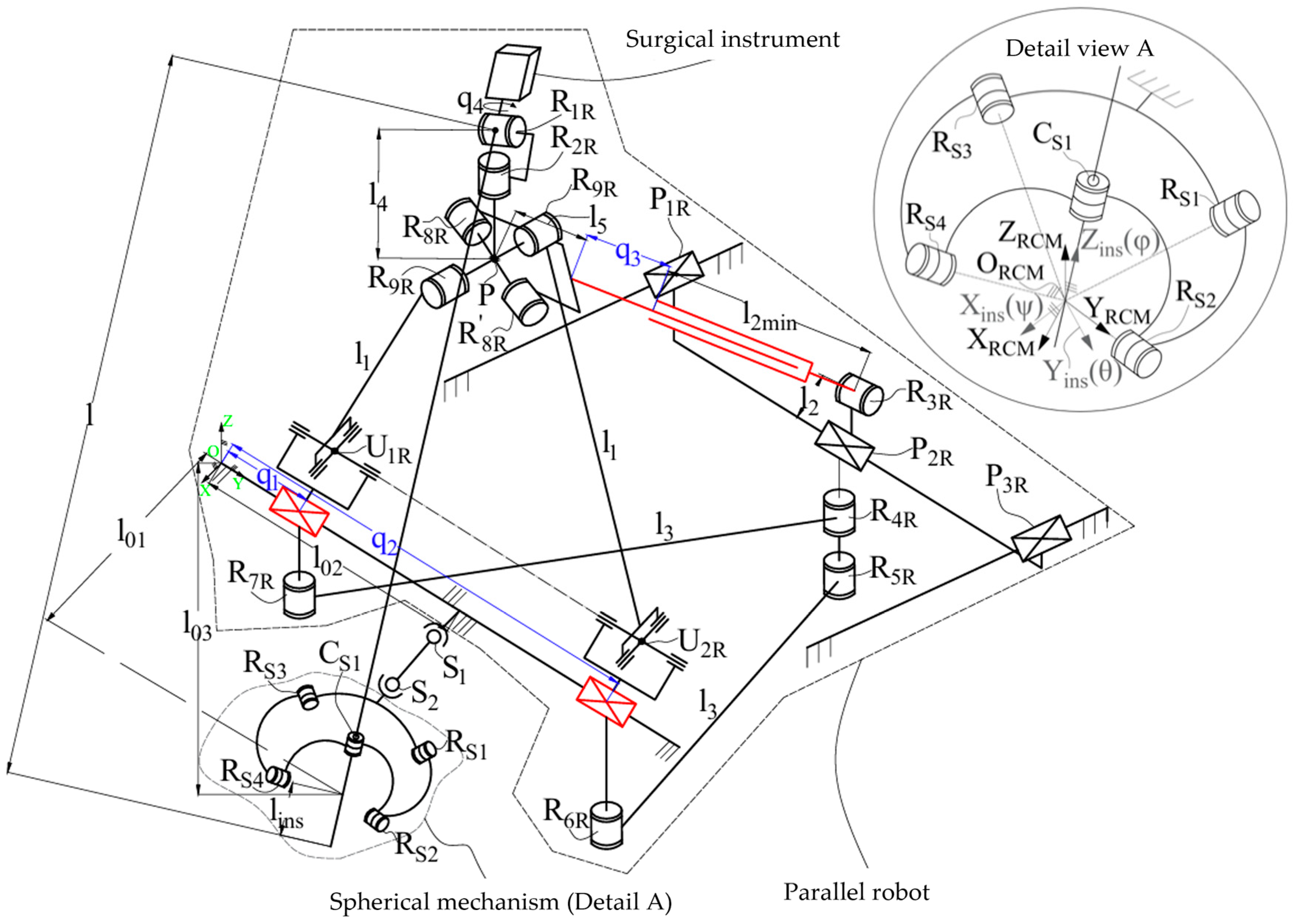
Figure 1. Kinematic scheme of the Athena parallel robot (reprinted from ref. [32]).
Robotics 15 00033 g001
Figure 2. The 3D model of Athena parallel robot integrated into the operating room.
Robotics 15 00033 g002
Figure 3. Experimental model of the Athena parallel robot integrated into a simulation of the Whipple procedure.
Robotics 15 00033 g003
Figure 4. Hardware-level configuration of the Athena parallel robot.
Robotics 15 00033 g004
Figure 5. Software configuration of the Athena parallel robot.
Robotics 15 00033 g005
Figure 6. Graphical user interface of the Athena parallel robot.
Robotics 15 00033 g006
Figure 7. Calibration procedure diagram.
Robotics 15 00033 g007
Figure 8. Simulation 1 loadcase description.
Robotics 15 00033 g008
Figure 9. Simulation 2 loadcase description.
Robotics 15 00033 g009
Figure 10. Simulation 3 loadcase description.
Robotics 15 00033 g010
Figure 11. Simulation 4 loadcase description.
Robotics 15 00033 g011
Figure 12. Modeling of passive joints.
Robotics 15 00033 g012
Figure 13. Experimental setup used for clearance measurements for the q3 axis of the Athena parallel robot.
Robotics 15 00033 g013
Figure 14. Experimental setup after replacing components that introduce clearance to the q3 axis of the Athena parallel robot.
Robotics 15 00033 g014
Figure 15. Steps used to calibrate OptiTrack and workspace mapping.
Robotics 15 00033 g015
Figure 16. Experimental setup for workspace mapping.
Robotics 15 00033 g016
Figure 17. Detailed view of maximum displacements for all four simulations.
Robotics 15 00033 g017
Figure 18. Detailed view of maximum von Mises stress distributions for all four simulations.
Robotics 15 00033 g018
Figure 19. Position of the master node for the tip of the instrument.
Robotics 15 00033 g019
Figure 20. Displacement measurement using a dial gauge when q3 are extended.
Robotics 15 00033 g020
Figure 21. Displacement measurement using dial gauge when q3 is changing direction.
Robotics 15 00033 g021
Figure 22. Displacement measurement using the dial gauge when q3 is extended to near the end of the stroke.
Robotics 15 00033 g022
Figure 23. Displacement measurement using the dial gauge after replacing the clearance area when q3 is extended.
Robotics 15 00033 g023
Figure 24. Displacement measurement using the dial gauge after replacing the clearance area when q3 is changing direction.
Robotics 15 00033 g024
Figure 25. Displacement measurement using the dial gauge after replacing the clearance area when q3 is extended to near the end of the stroke.
Robotics 15 00033 g025
Figure 26. Workspace recorded with the OptiTrack system and integrated with the 3D model.
Robotics 15 00033 g026
Table 1. Results of all simulations including the evaluated stiffness values.
SimulationDisplacement of the Master Node [mm]Applied Force on the Master Node [N]Calculated Stiffness (F/u) [N/mm]Maximum von Mises Stress [MPa]
Simulation 10.271555.5652.19
Simulation 20.511529.4119.36
Simulation 30.25156024.48
Simulation 43.11154.8267.67
Disclaimer/Publisher’s Note: The statements, opinions and data contained in all publications are solely those of the individual author(s) and contributor(s) and not of MDPI and/or the editor(s). MDPI and/or the editor(s) disclaim responsibility for any injury to people or property resulting from any ideas, methods, instructions or products referred to in the content.