
A Hierarchical Trajectory Planning Framework for Autonomous Underwater Vehicles via Spatial–Temporal Alternating Optimization



Abstract
1. Introduction
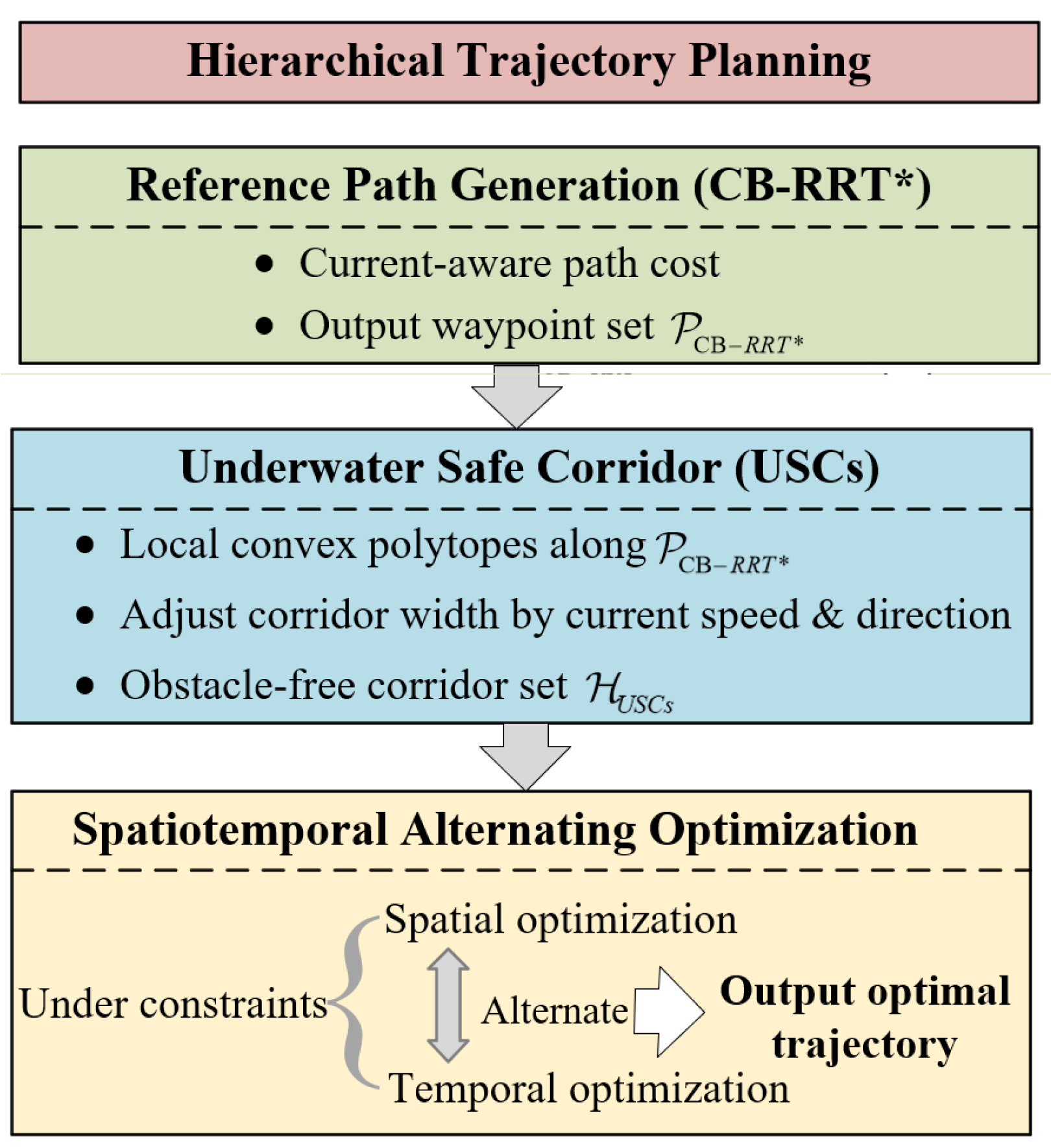
- A current-aware hierarchical trajectory planning framework is proposed that decouples path generation from trajectory optimization, enhancing scalability and computational efficiency in complex 3D marine environments.
- An internal constraint formulation for USCs is developed, decoupling collision-avoidance constraints from the number and geometry of obstacles, thereby ensuring safety while improving optimization efficiency.
- A spatio-temporal joint trajectory optimization method for AUVs that explicitly accounts for ocean-current effects. The objective is a weighted sum of path length, smoothness, energy consumption, and travel time. Using Bézier parameterization to construct the spatial path and a spatio-temporal alternating scheme to jointly optimize control points and segment durations, the method yields a smooth trajectory that satisfies kinematic constraints and provides time-varying position, velocity, and acceleration profiles.
2. Ocean Environment and AUV Kinematic Model
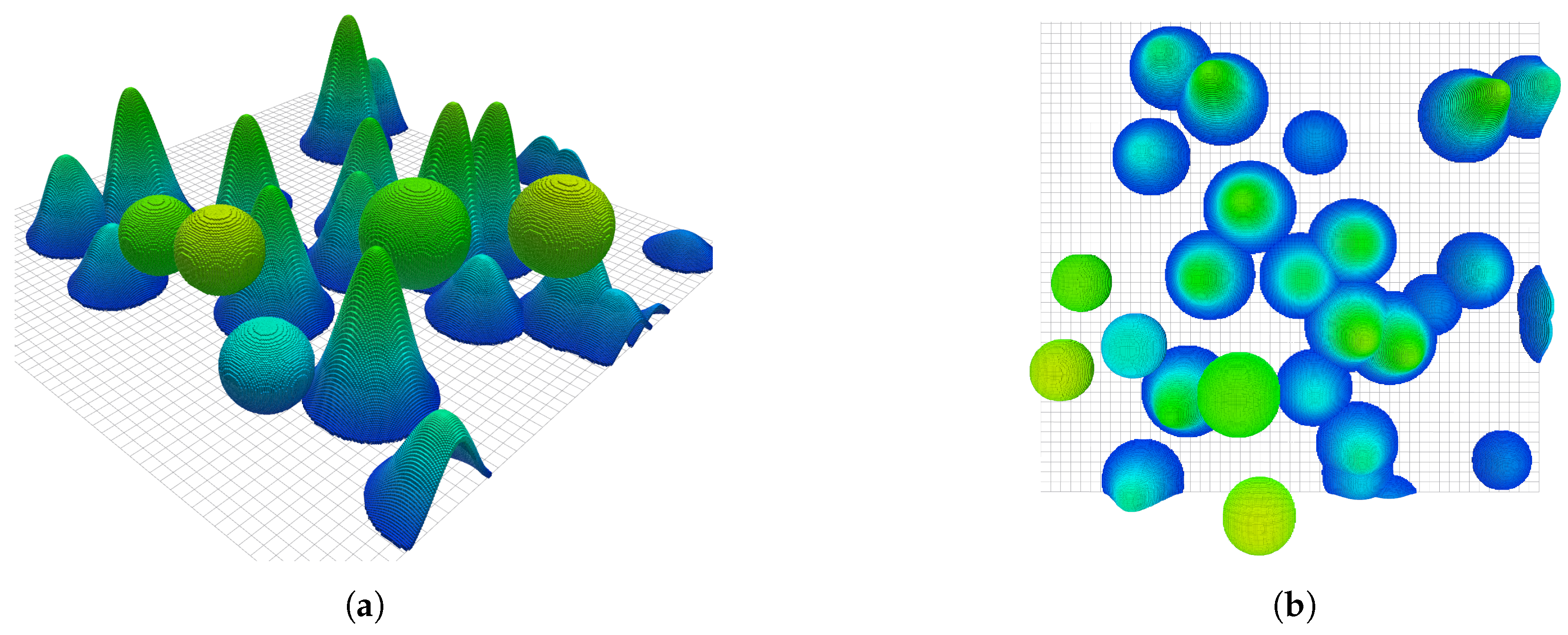
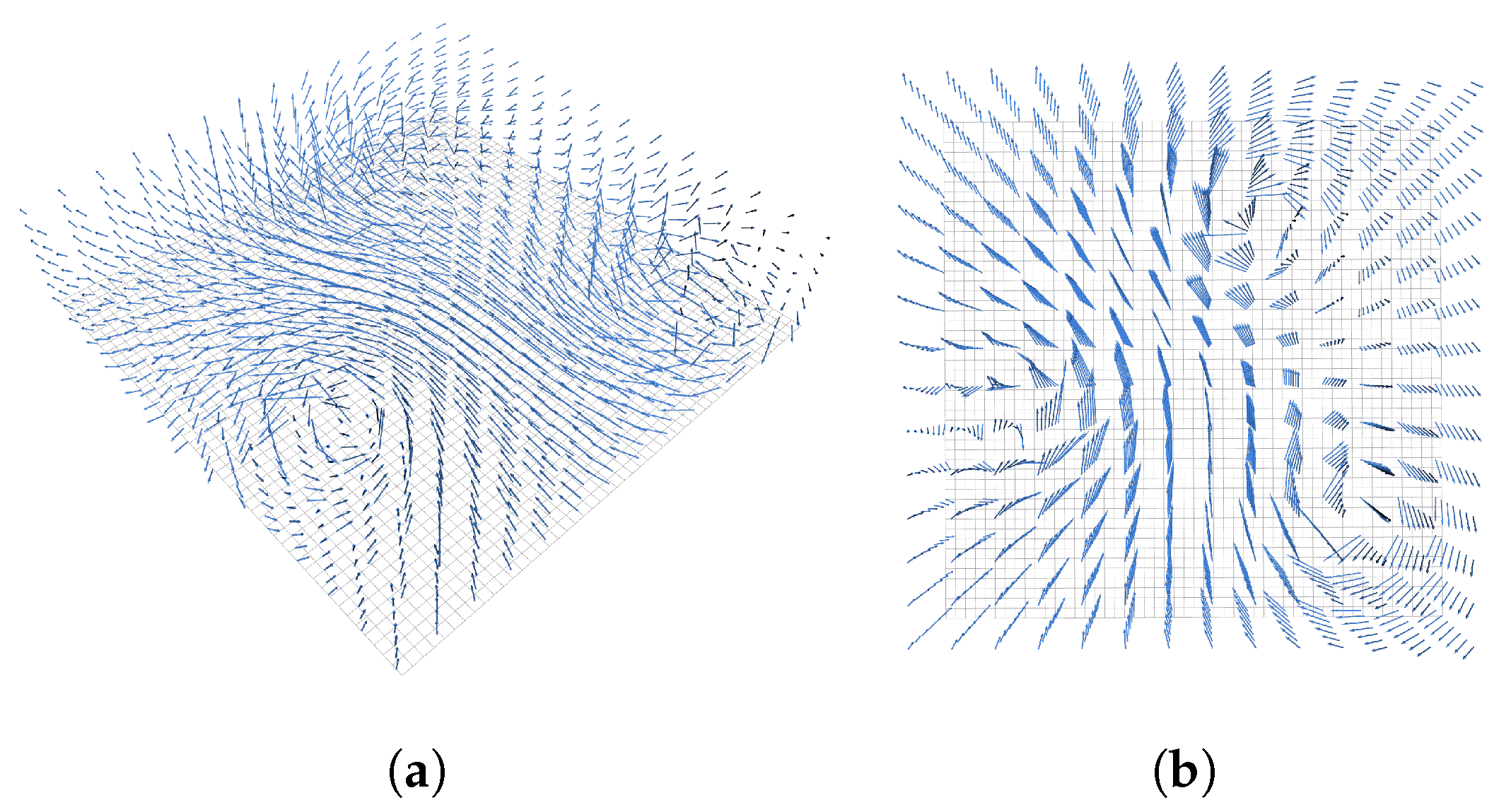
2.1. Modeling of Underwater Obstacles and Ocean Currents
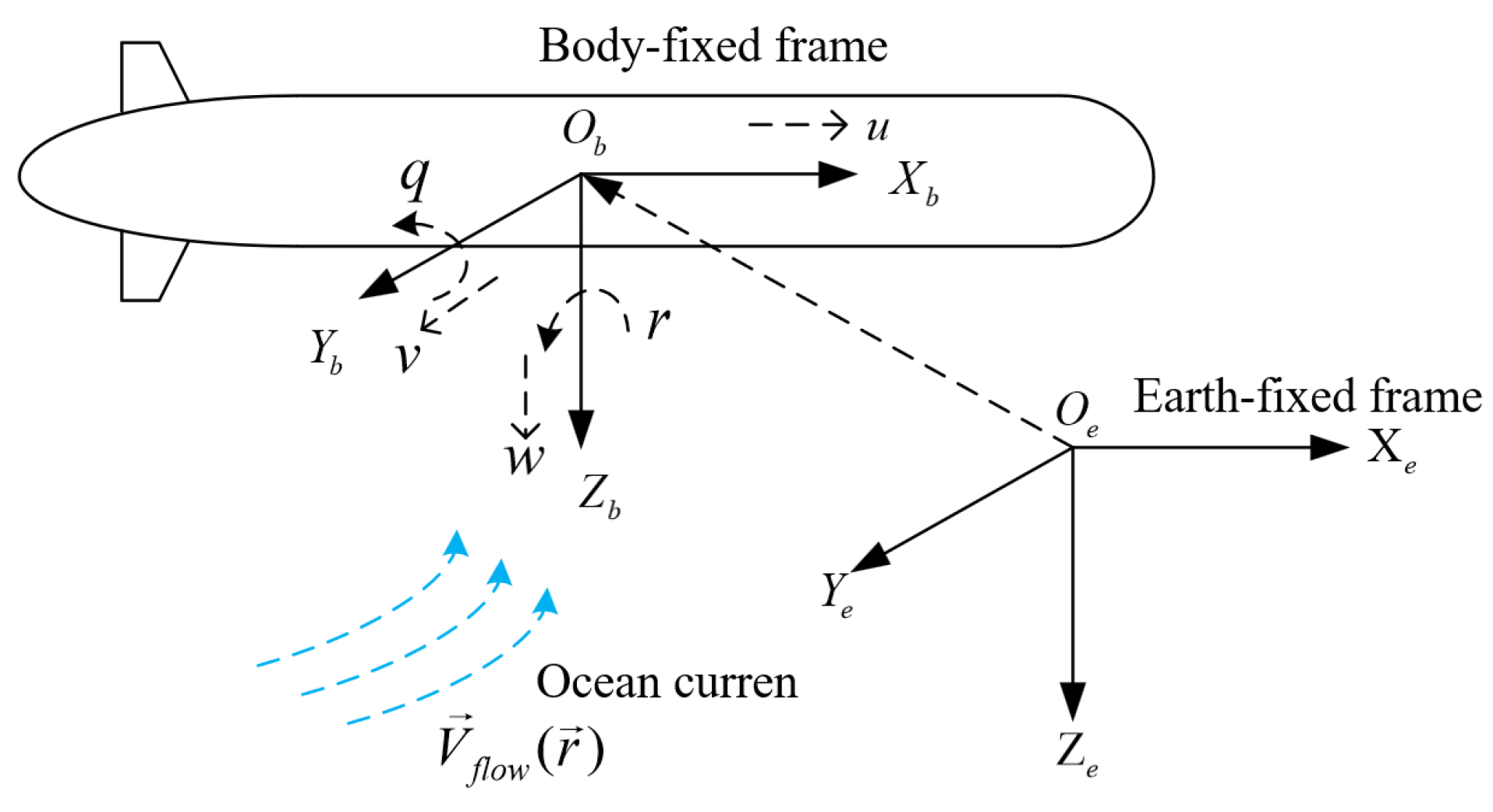
2.2. AUV Kinematic Model
3. Hierarchical Trajectory Planning Framework
3.1. Generation of Reference Path Based on CB-RRT*
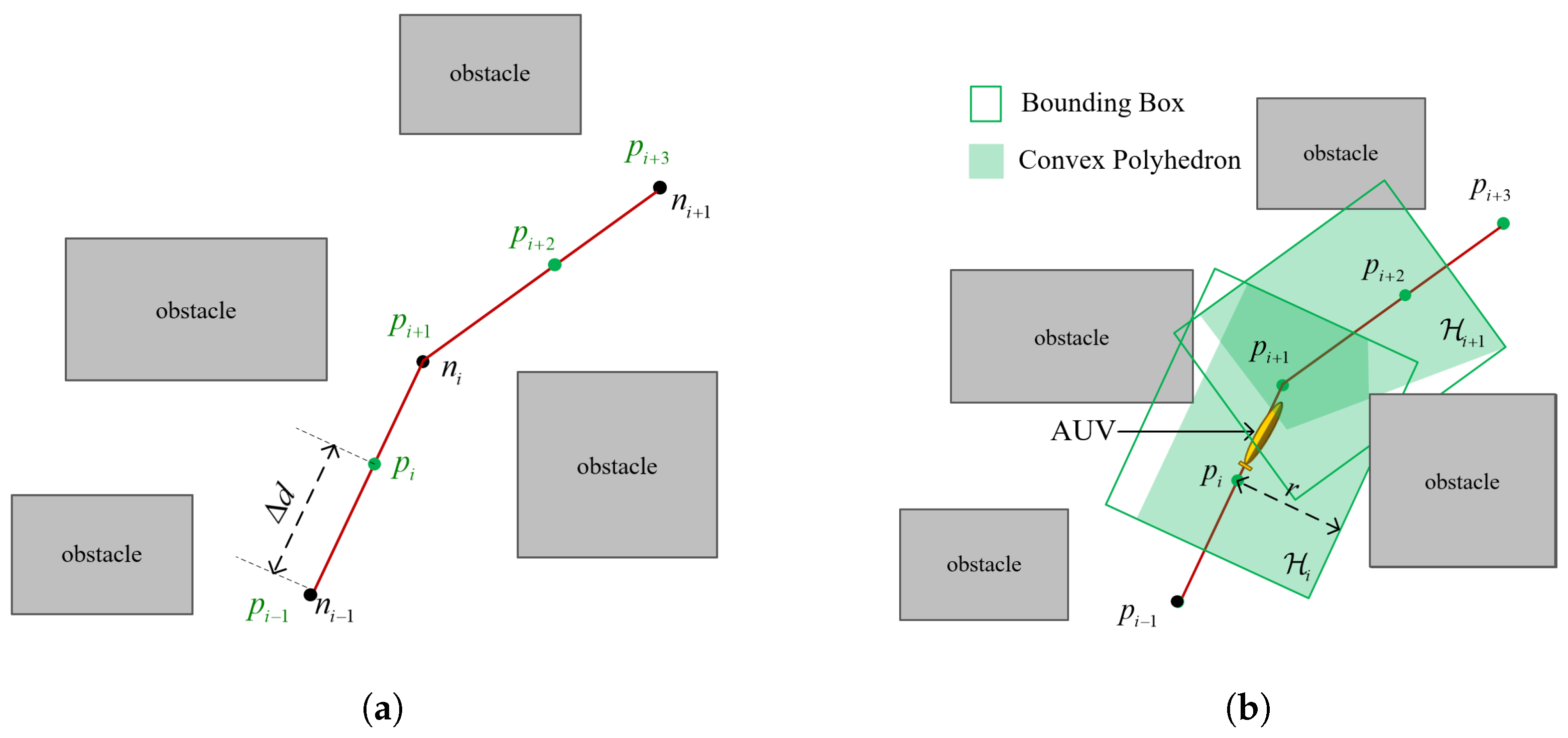
3.2. Construction of USCs
| Algorithm 1 CB-RRT* Algorithm |
| Require: Start node , goal node , obstacle set , flow field , step size , maximum iterations , parameters |
| Ensure: Reference path |
|
3.3. Trajectory Optimization Based on Spatio-Temporal
3.3.1. Spatial Optimization
3.3.2. Temporal Optimization
3.3.3. Spatio-Temporal Alternating Optimization
| Algorithm 2 Spatio-temporal alternating optimization |
| Require: Initial path , USC , weights , |
| Ensure: Optimized trajectory with temporal profile |
|
4. Simulations and Analysis
4.1. Simulation Setup
4.2. Path Generation Experiments
4.2.1. Experimental Setup and Evaluation Metrics
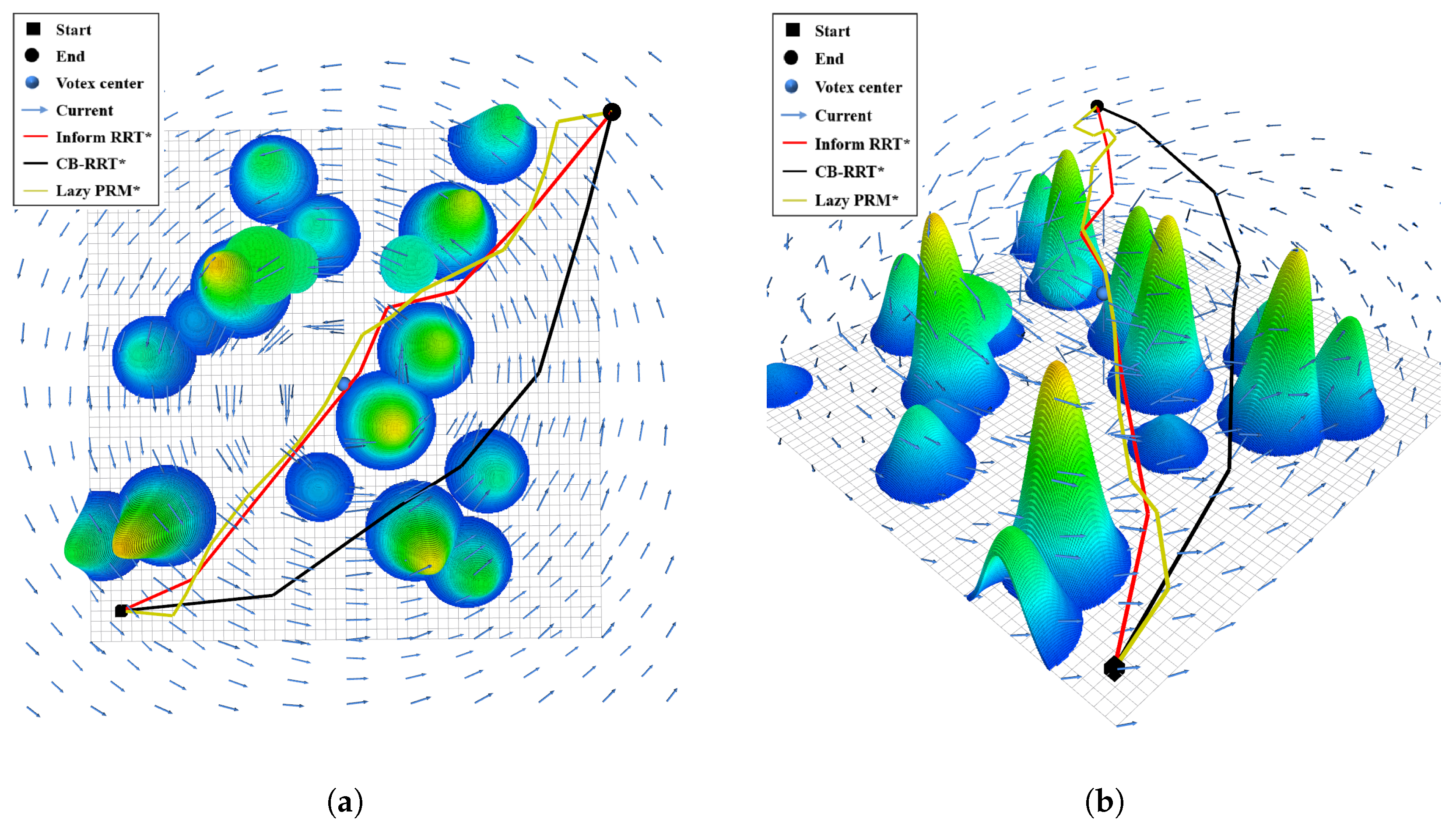
- Downstream Scenario: The goal is located downstream within the flow field, where the current predominantly assists vehicle motion.
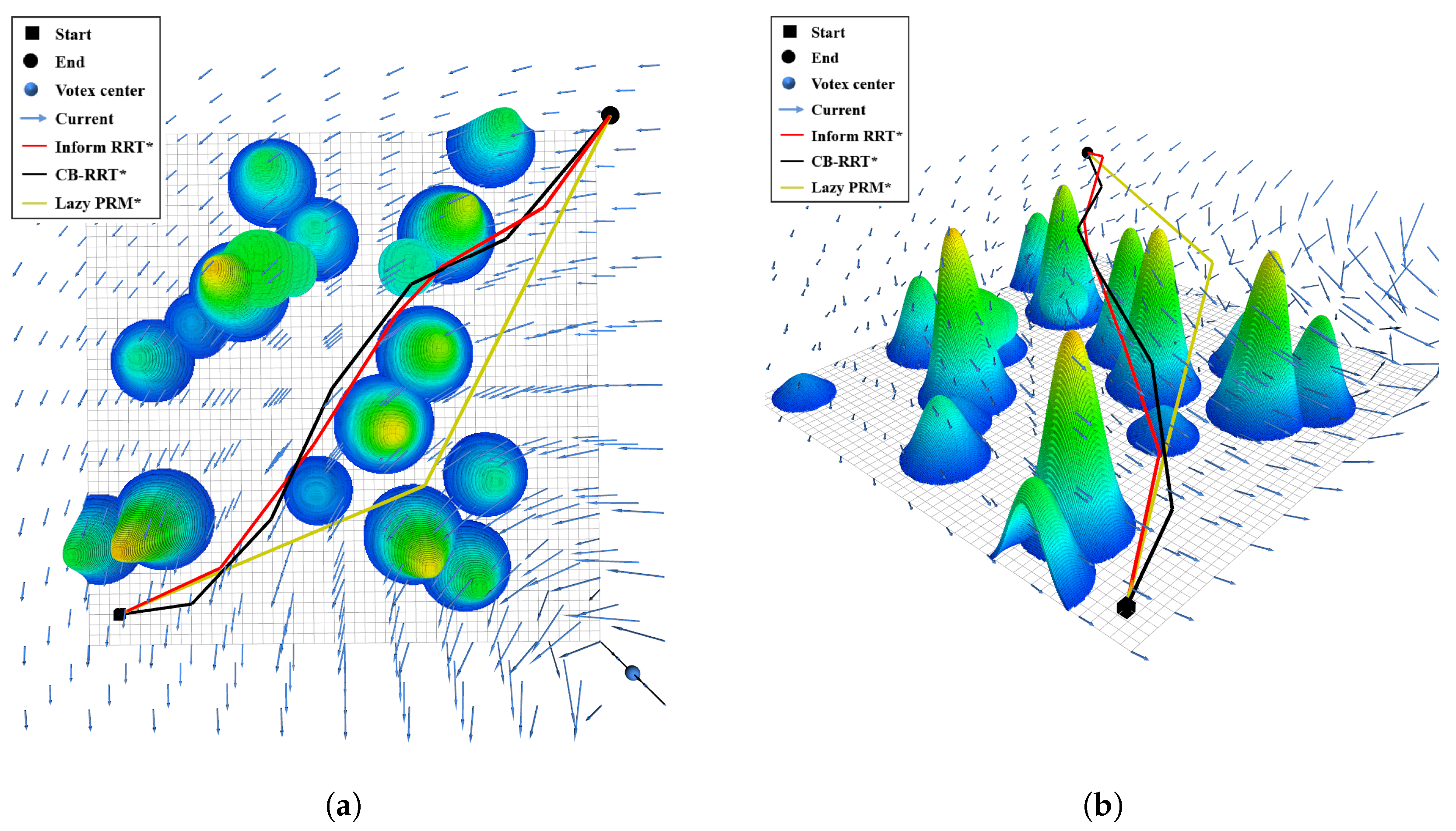
- Upstream Scenario: The goal lies upstream, forcing the vehicle to overcome current resistance or exploit low-velocity corridors to reduce energy loss.
4.2.2. Visualization Analysis
- Path Smoothness: Across both flow conditions, CB-RRT* produces paths with gradual transitions and minimal curvature discontinuities, particularly at turning points. In comparison, Informed-RRT* and LazyPRM* frequently generate zigzag-like trajectories containing multiple large-angle deviations. These geometric discontinuities, although collision-free, introduce substantial control and actuation demands when later converted into dynamically feasible trajectories.
- Flow-Field Adaptability: CB-RRT* demonstrates an explicit tendency to exploit favorable current regions, selecting segments where local flow vectors provide propulsion assistance or reduced resistance. The baseline algorithms, however, largely prioritize geometric distance and therefore ignore the hydrodynamic implications of the surrounding flow field.
4.2.3. Quantitative Performance Analysis
4.3. Trajectory Optimization Experiments
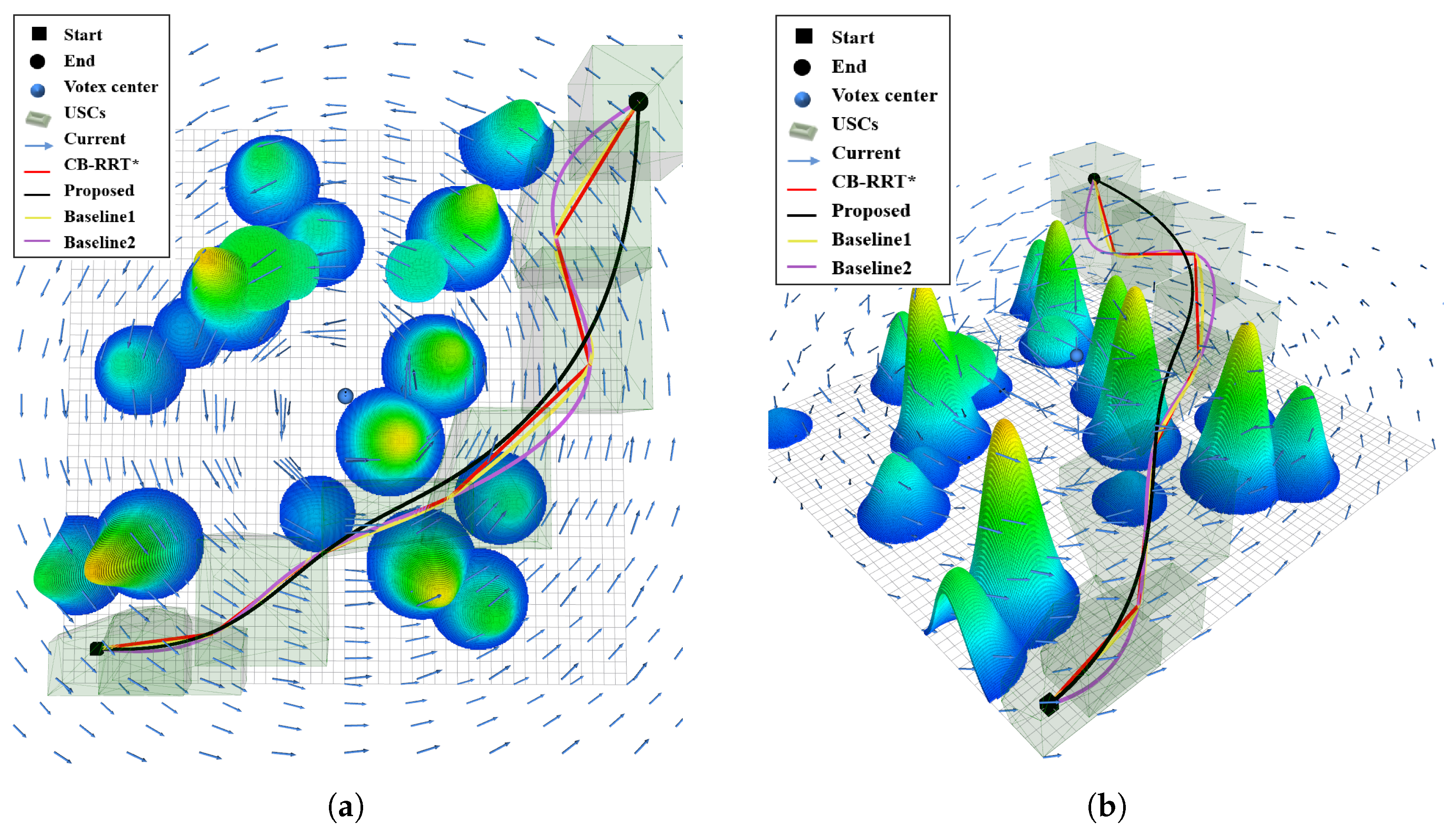
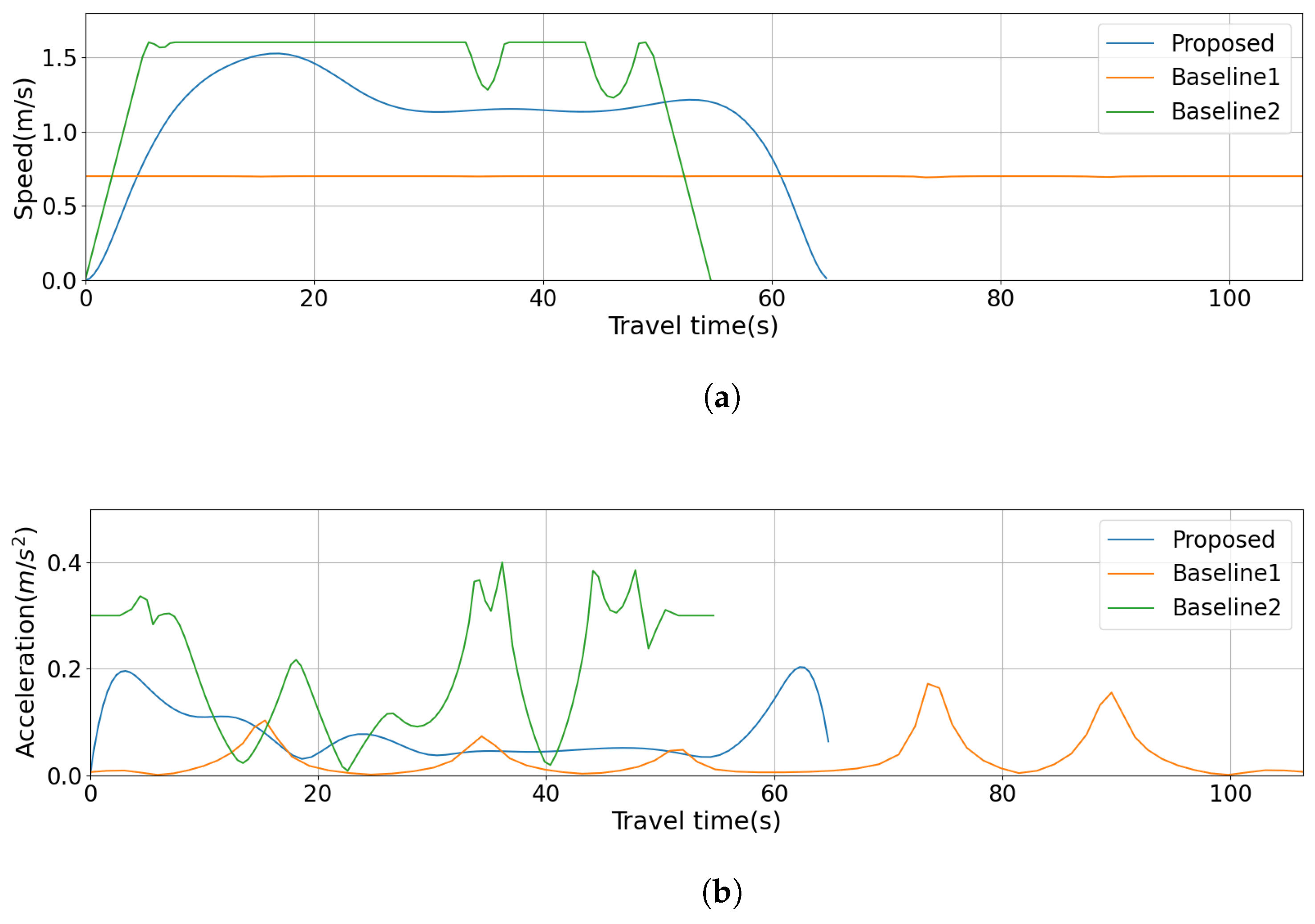
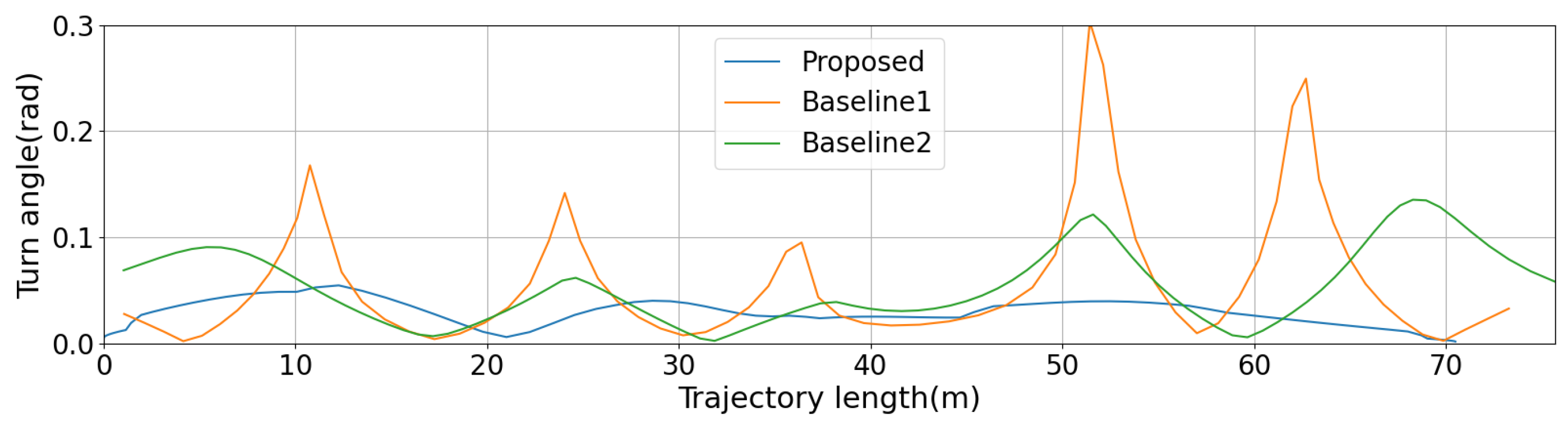
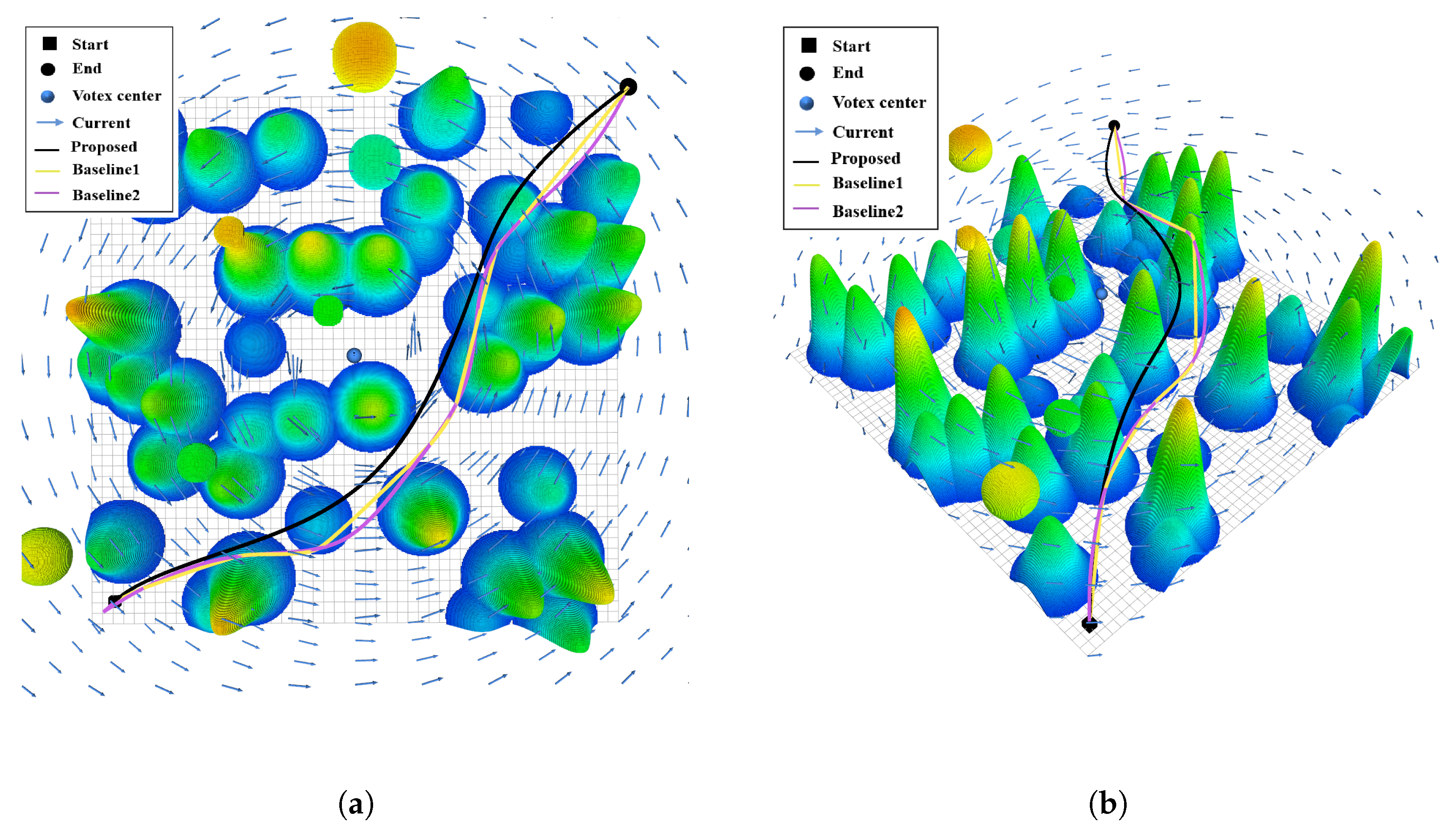
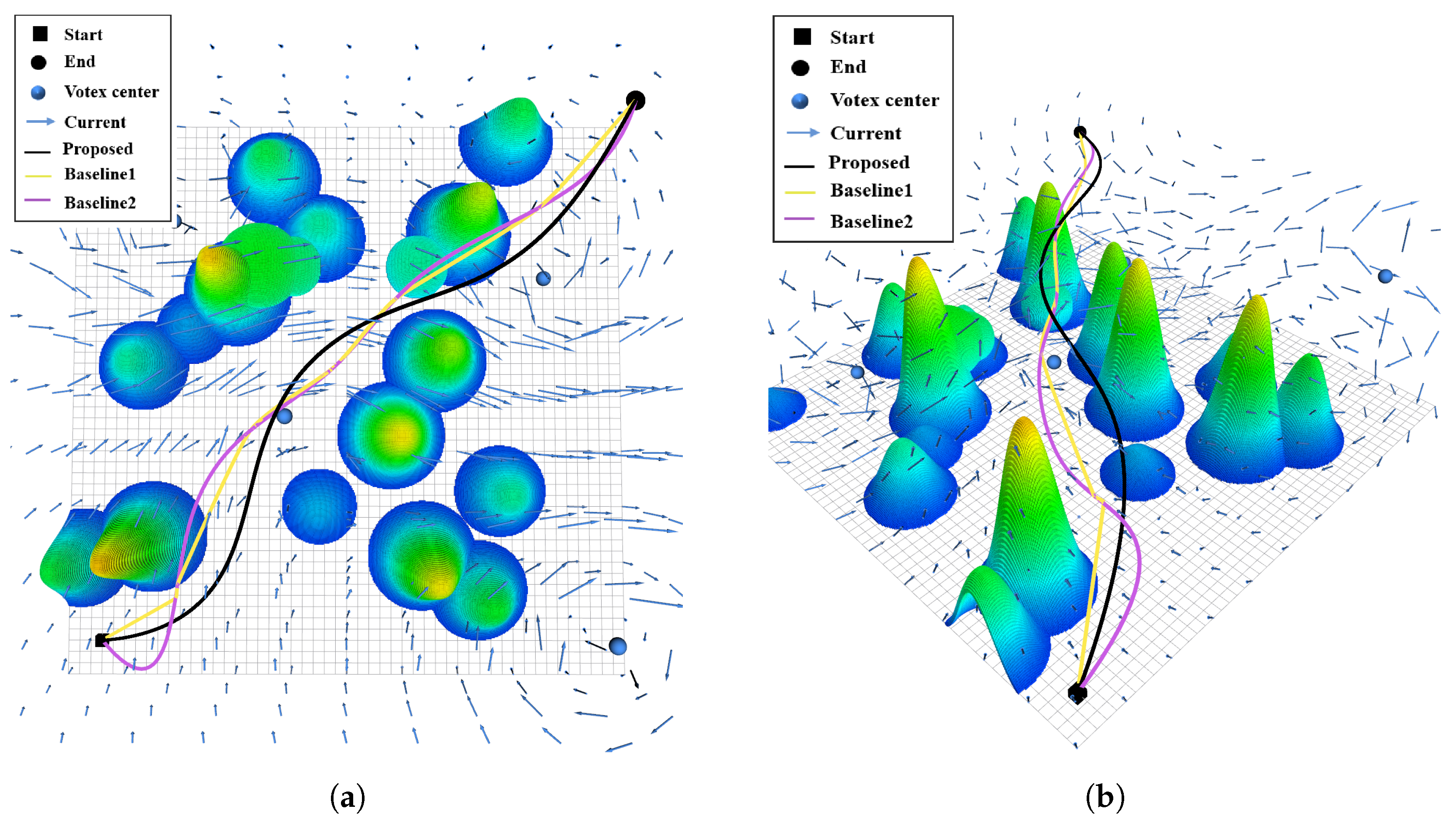
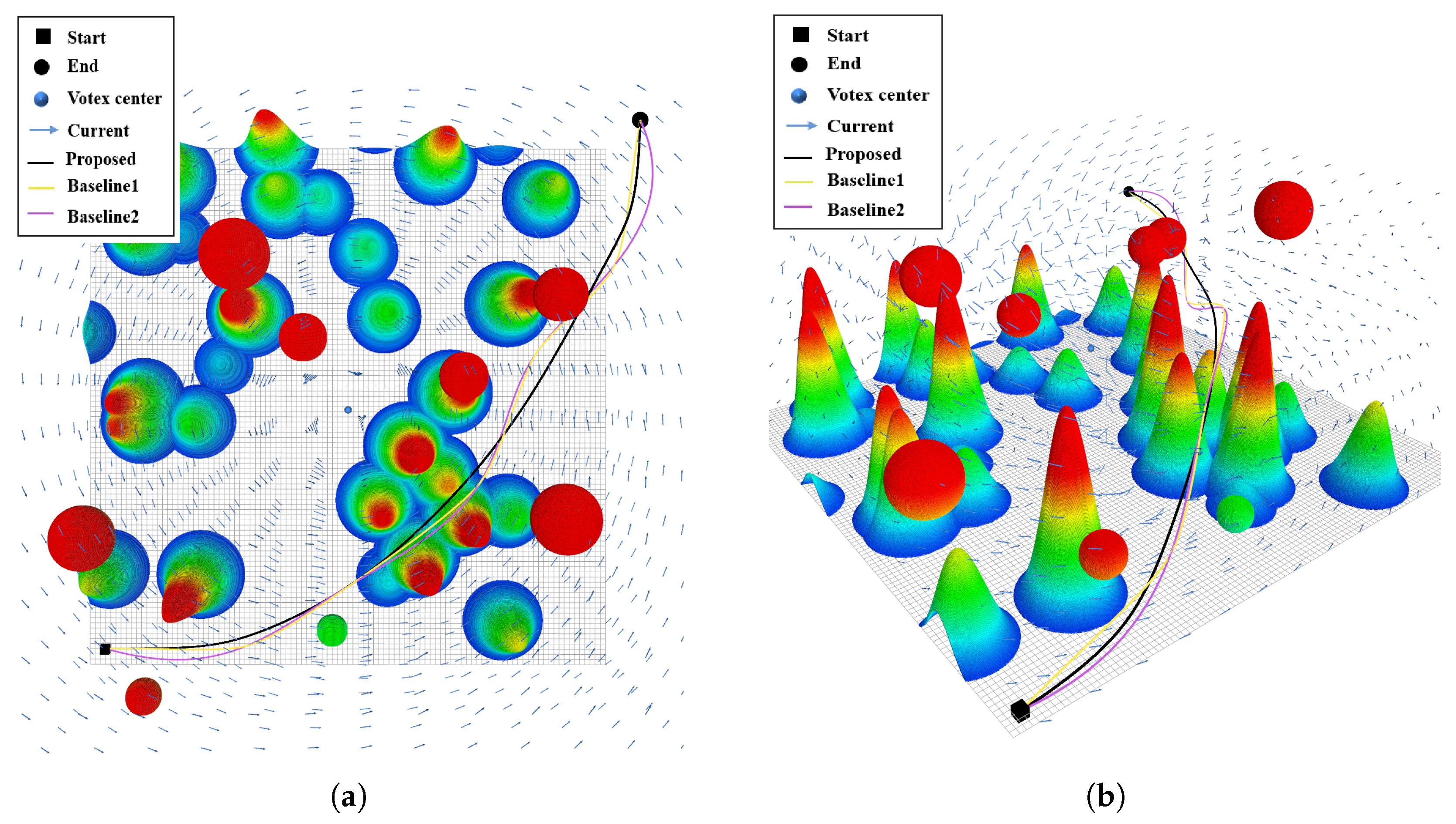
- Baseline 1 (Decoupled Geometric Smoothing + Constant Speed): The initial path is smoothed using Bezier curves, after which a simple time allocation strategy is applied, enforcing a constant cruising velocity of for the AUV. This method aligns with common practices in existing studies (e.g., [22,23]), where the optimization is restricted to geometric refinement, with temporal dynamics and execution feasibility largely overlooked.
- Baseline 2 (Decoupled Optimization + TOPPRA): The geometric profile is first refined using B-Spline smoothing, and the temporal parameterization is subsequently obtained via the Time-Optimal Path Parameterization (TOPPRA) algorithm [24]. To ensure comparability with the proposed framework, the velocity and acceleration bounds imposed in TOPPRA are kept identical to those adopted in our method, thereby isolating the effect of the optimization paradigm itself.
- Proposed Method: The proposed framework performs coupled optimization of the spatial geometry and temporal variables through a spatio-temporal alternating strategy. By jointly refining both aspects in an iterative manner, the resulting trajectory improves smoothness, feasibility, and dynamic consistency, enabling more reliable execution in complex three-dimensional ocean current environments.
4.3.1. Experiments in Basic Scenarios
4.3.2. Robustness Testing in Complex Scenarios
4.3.3. Computational Time Analysis
5. Conclusions and Future Work
Author Contributions
Funding
Data Availability Statement
Conflicts of Interest
References
- Gallimore, E.; Terrill, E.; Pietruszka, A.; Gee, J.; Nager, A.; Hess, R. Magnetic survey and autonomous target reacquisition with a scalar magnetometer on a small AUV. J. Field Robot. 2020, 37, 1246–1266. [Google Scholar] [CrossRef]
- Ribas, D.; Palomeras, N.; Ridao, P.; Carreras, M.; Mallios, A. Girona 500 AUV: From survey to intervention. IEEE/ASME Trans. Mechatron. 2011, 17, 46–53. [Google Scholar] [CrossRef]
- Khan, M.T.R.; Jembre, Y.Z.; Ahmed, S.H.; Seo, J.; Kim, D. Data freshness based AUV path planning for UWSN in the internet of underwater things. In Proceedings of the IEEE Global Communications Conference (GLOBECOM), Big Island, HI, USA, 9–13 December 2019; IEEE: Piscataway, NJ, USA, 2019; pp. 1–6. [Google Scholar] [CrossRef]
- Kuffner, J.J.; LaValle, S.M. RRT-Connect: An efficient approach to single-query path planning. In Proceedings of the IEEE International Conference on Robotics and automation (ICRA), San Francisco, CA, USA, 24–28 April 2000; IEEE: Piscataway, NJ, USA, 2000; Volume 2, pp. 995–1001. [Google Scholar] [CrossRef]
- Albarakati, S.; Lima, R.M.; Giraldi, L.; Hoteit, I.; Knio, O. Optimal 3D trajectory planning for AUVs using ocean general circulation models. Ocean Eng. 2019, 188, 106266. [Google Scholar] [CrossRef]
- Feng, H.; Hu, Q.; Zhao, Z.; Feng, X. Smooth path planning under maximum curvature constraints for autonomous underwater vehicles based on rapidly-exploring random tree star with B-spline curves. Eng. Appl. Artif. Intell. 2024, 133, 108583. [Google Scholar] [CrossRef]
- Liang, Q.; Zhao, X.; Ye, X. A Motion Planning Method for an Autonomous Underwater Vehicle with Kinematic Constraints. In Proceedings of the IEEE International Conference on Mechatronics and Automation (ICMA), Harbin, China, 6–9 August 2023; IEEE: Piscataway, NJ, USA, 2023; pp. 923–928. [Google Scholar] [CrossRef]
- Wen, J.; Yang, J.; Wang, T. Path planning for autonomous underwater vehicles under the influence of ocean currents based on a fusion heuristic algorithm. IEEE Trans. Veh. Technol. 2021, 70, 8529–8544. [Google Scholar] [CrossRef]
- Sun, M.; Xiao, X.; Luan, T.; Zhang, X.; Wu, B.; Zhen, L. The path planning algorithm for UUV based on the fusion of grid obstacles of artificial potential field. Ocean Eng. 2024, 306, 118043. [Google Scholar] [CrossRef]
- Li, X.; Yu, S. Three-dimensional path planning for AUVs in ocean currents environment based on an improved compression factor particle swarm optimization algorithm. Ocean Eng. 2023, 280, 114610. [Google Scholar] [CrossRef]
- Wang, R.; Jiang, T.; Bai, G.; Wang, Y.; Wang, S.; Tan, M. Stepwise cooperative trajectory planning for multiple BUVs based on temporal-spatial Bezier curves. IEEE Trans. Instrum. Meas. 2023, 72, 8503414. [Google Scholar] [CrossRef]
- Liu, S.; Watterson, M.; Mohta, K.; Sun, K.; Bhattacharya, S.; Taylor, C.J.; Kumar, V. Planning dynamically feasible trajectories for quadrotors using safe flight corridors in 3-D complex environments. IEEE Robot. Autom. Lett. 2017, 2, 1688–1695. [Google Scholar] [CrossRef]
- Zou, Z.; Zhang, Z.; Lu, Z.; Li, X.; Wang, M.; Wang, Y.; Hao, J.; Li, G. Discrete States-Based Trajectory Planning for Nonholonomic Robots. In Proceedings of the IEEE International Conference on Robotics and Biomimetics (ROBIO), Koh Samui, Thailand, 4–9 December 2023; IEEE: Piscataway, NJ, USA, 2023; pp. 1–8. [Google Scholar] [CrossRef]
- Wang, X.; Deng, Z.; Peng, H.; Wang, L.; Wang, Y.; Tao, L.; Lu, C.; Peng, Z. Autonomous docking trajectory optimization for unmanned surface vehicle: A hierarchical method. Ocean Eng. 2023, 279, 114156. [Google Scholar] [CrossRef]
- Qi, Z.; Shao, Z.; Ping, Y.S.; Hiot, L.M.; Leong, Y.K. An Improved Heuristic Algorithm for UAV Path Planning in 3D Environment. In Proceedings of the 2010 Second International Conference on Intelligent Human-Machine Systems and Cybernetics, Nanjing, China, 26–28 August 2010; IEEE: Piscataway, NJ, USA, 2010; Volume 2, pp. 258–261. [Google Scholar] [CrossRef]
- Garau, B.; Alvarez, A.; Oliver, G. AUV Navigation through Turbulent Ocean Environments Supported by Onboard H-ADCP. In Proceedings of the 2006 IEEE International Conference on Robotics and Automation (ICRA), Orlando, FL, USA, 15–19 May 2006; IEEE: Piscataway, NJ, USA, 2006; pp. 3556–3561. [Google Scholar] [CrossRef]
- Fossen, T.I. Handbook of Marine Craft Hydrodynamics and Motion Control; John Wiley & Sons: Chichester, UK, 2011. [Google Scholar] [CrossRef]
- Wang, Z.; Zhou, X.; Xu, C.; Gao, F. Geometrically Constrained Trajectory Optimization for Multicopters. IEEE Trans. Robot. 2022, 38, 3259–3278. [Google Scholar] [CrossRef]
- Sun, B.; Niu, N. Multi-AUVs cooperative path planning in 3D underwater terrain and vortex environments based on improved multi-objective particle swarm optimization algorithm. Ocean Eng. 2024, 311, 118944. [Google Scholar] [CrossRef]
- Meng, J.; Kay, S.; Li, A.; Pawar, V.M. UAV path planning system based on 3D informed RRT* for dynamic obstacle avoidance. In Proceedings of the 2018 IEEE International Conference on Robotics and Biomimetics (ROBIO), Kuala Lumpur, Malaysia, 12–15 December 2018; IEEE: Piscataway, NJ, USA, 2018; pp. 1653–1658. [Google Scholar] [CrossRef]
- Hauser, K.K. Lazy collision checking in asymptotically-optimal motion planning. In Proceedings of the 2015 IEEE International Conference on Robotics and Automation (ICRA), Seattle, DC, USA, 26–30 May 2015; IEEE: Piscataway, NJ, USA, 2015; pp. 2951–2957. [Google Scholar] [CrossRef]
- Song, B.; Wang, Z.; Zou, L. An improved PSO algorithm for smooth path planning of mobile robots using continuous high-degree Bezier curve. Appl. Soft Comput. 2021, 100, 106960. [Google Scholar] [CrossRef]
- Hassani, V.; Lande, S.V. Path planning for marine vehicles using Bézier curves. IFAC-PapersOnLine 2018, 51, 305–310. [Google Scholar] [CrossRef]
- Pham, H.; Pham, Q.C. A new approach to time-optimal path parameterization based on reachability analysis. IEEE Trans. Robot. 2018, 34, 645–659. [Google Scholar] [CrossRef]



| Parameter | Description | Value |
|---|---|---|
| Initial and terminal velocity | ||
| Initial and terminal acceleration | ||
| Maximum velocity | ||
| Maximum acceleration | ||
| Baseline safety radius of USC | ||
| Interpolation step size | ||
| Weight for trajectory length cost | ||
| Weight for trajectory smoothness cost | ||
| Weight for current-induced energy cost | ||
| Weight for travel time cost |
| Algorithm | Path | Max Steering | Current | Time | Spatial Objective |
|---|---|---|---|---|---|
| Length (m) | Angle (rad) | Energy | (ms) | Cost | |
| Downstream Scenario | |||||
| CB-RRT* | 70.65 | 0.45 | −9.12 | 10.23 | 20.19 |
| Informed-RRT* | 66.79 | 0.93 | 1.58 | 6.31 | 29.90 |
| LazyPRM* | 72.95 | 1.22 | 5.88 | 129.63 | 39.51 |
| Upstream Scenario | |||||
| CB-RRT* | 67.93 | 0.54 | 8.15 | 10.35 | 36.68 |
| Informed-RRT* | 67.38 | 0.85 | 8.81 | 8.23 | 37.14 |
| LazyPRM* | 68.70 | 0.74 | 9.35 | 134.28 | 37.27 |
| Method | Length | Max Turning | Total Turning | Current | Travel |
|---|---|---|---|---|---|
| (m) | Angle (rad) | Angle (rad) | Energy | Time (s) | |
| Ours | 70.52 | 0.050 | 2.35 | −9.49 | 64.25 |
| Baseline 1 | 74.46 | 0.300 | 4.49 | −9.26 | 106.37 |
| Baseline 2 | 77.09 | 0.140 | 5.29 | −8.60 | 55.98 |
| Scenario | Method | Length (m) | Max Turning Angle (rad) | Total Turn (rad) | Energy | Time (s) | Cost |
|---|---|---|---|---|---|---|---|
| Dense Obstacles | Ours | 75.21 | 0.078 | 2.74 | −8.57 | 67.12 | 29.87 |
| Baseline 1 | 77.90 | 0.226 | 4.46 | −7.14 | 111.28 | 37.82 | |
| Baseline 2 | 80.64 | 0.126 | 6.00 | −8.22 | 56.89 | 33.33 | |
| Complex Flow | Ours | 70.94 | 0.071 | 2.88 | −7.83 | 58.69 | 28.14 |
| Baseline 1 | 68.52 | 0.454 | 3.83 | −7.10 | 97.88 | 32.39 | |
| Baseline 2 | 72.92 | 0.171 | 4.79 | −7.36 | 53.12 | 29.99 | |
| Large Scale | Ours | 150.49 | 0.047 | 2.59 | −15.20 | 132.59 | 59.81 |
| Baseline 1 | 154.39 | 0.224 | 3.33 | −14.96 | 220.56 | 70.85 | |
| Baseline 2 | 157.54 | 0.103 | 4.23 | −14.21 | 107.60 | 62.10 |
| Scenario | CB-RRT* (ms) | USCs Const. (ms) | Trajectory Opt. (ms) | Total Time (ms) |
|---|---|---|---|---|
| Basic Scenario | 10.25 | 4.76 | 648.19 | 663.20 |
| Dense Obstacles | 10.64 | 7.31 | 657.19 | 675.14 |
| Complex Flow | 10.41 | 5.37 | 706.24 | 722.02 |
| Large Scale | 12.34 | 12.55 | 1495.37 | 1520.26 |
Disclaimer/Publisher’s Note: The statements, opinions and data contained in all publications are solely those of the individual author(s) and contributor(s) and not of MDPI and/or the editor(s). MDPI and/or the editor(s) disclaim responsibility for any injury to people or property resulting from any ideas, methods, instructions or products referred to in the content. |
© 2026 by the authors. Licensee MDPI, Basel, Switzerland. This article is an open access article distributed under the terms and conditions of the Creative Commons Attribution (CC BY) license.
Share and Cite
Yan, J.; Zhang, H. A Hierarchical Trajectory Planning Framework for Autonomous Underwater Vehicles via Spatial–Temporal Alternating Optimization. Robotics 2026, 15, 18. https://doi.org/10.3390/robotics15010018
Yan J, Zhang H. A Hierarchical Trajectory Planning Framework for Autonomous Underwater Vehicles via Spatial–Temporal Alternating Optimization. Robotics. 2026; 15(1):18. https://doi.org/10.3390/robotics15010018
Chicago/Turabian StyleYan, Jinjin, and Huiling Zhang. 2026. "A Hierarchical Trajectory Planning Framework for Autonomous Underwater Vehicles via Spatial–Temporal Alternating Optimization" Robotics 15, no. 1: 18. https://doi.org/10.3390/robotics15010018
APA StyleYan, J., & Zhang, H. (2026). A Hierarchical Trajectory Planning Framework for Autonomous Underwater Vehicles via Spatial–Temporal Alternating Optimization. Robotics, 15(1), 18. https://doi.org/10.3390/robotics15010018