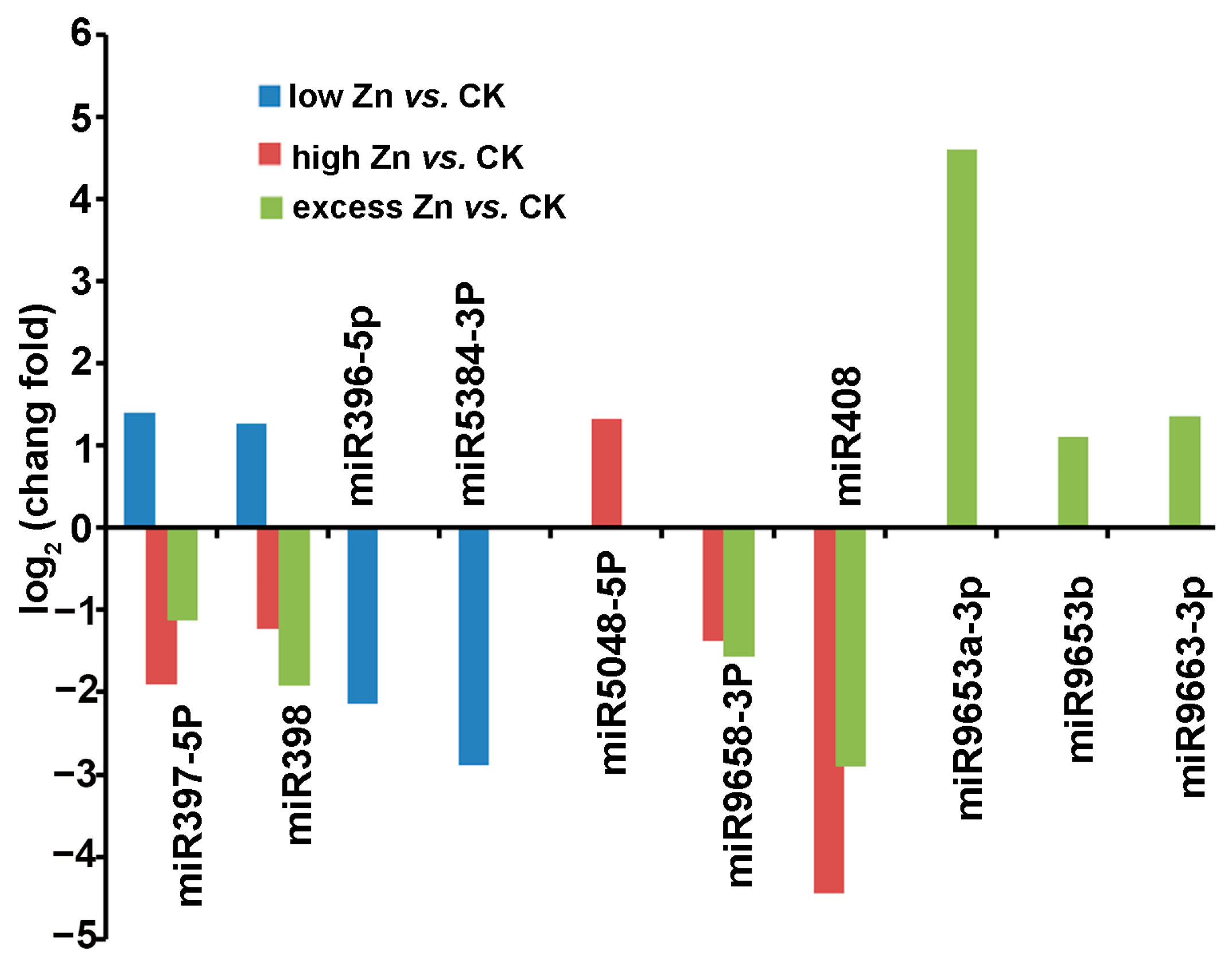
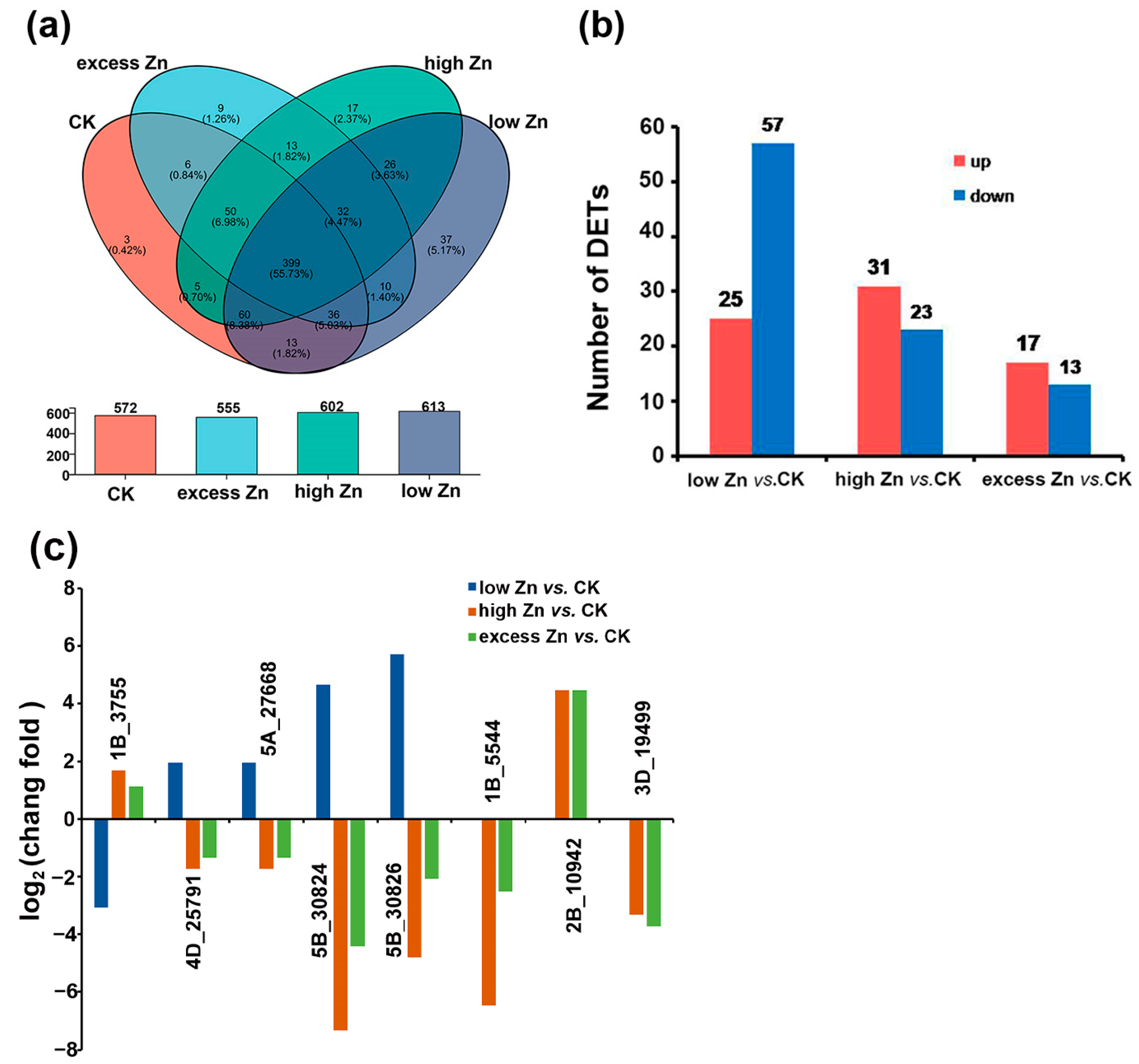
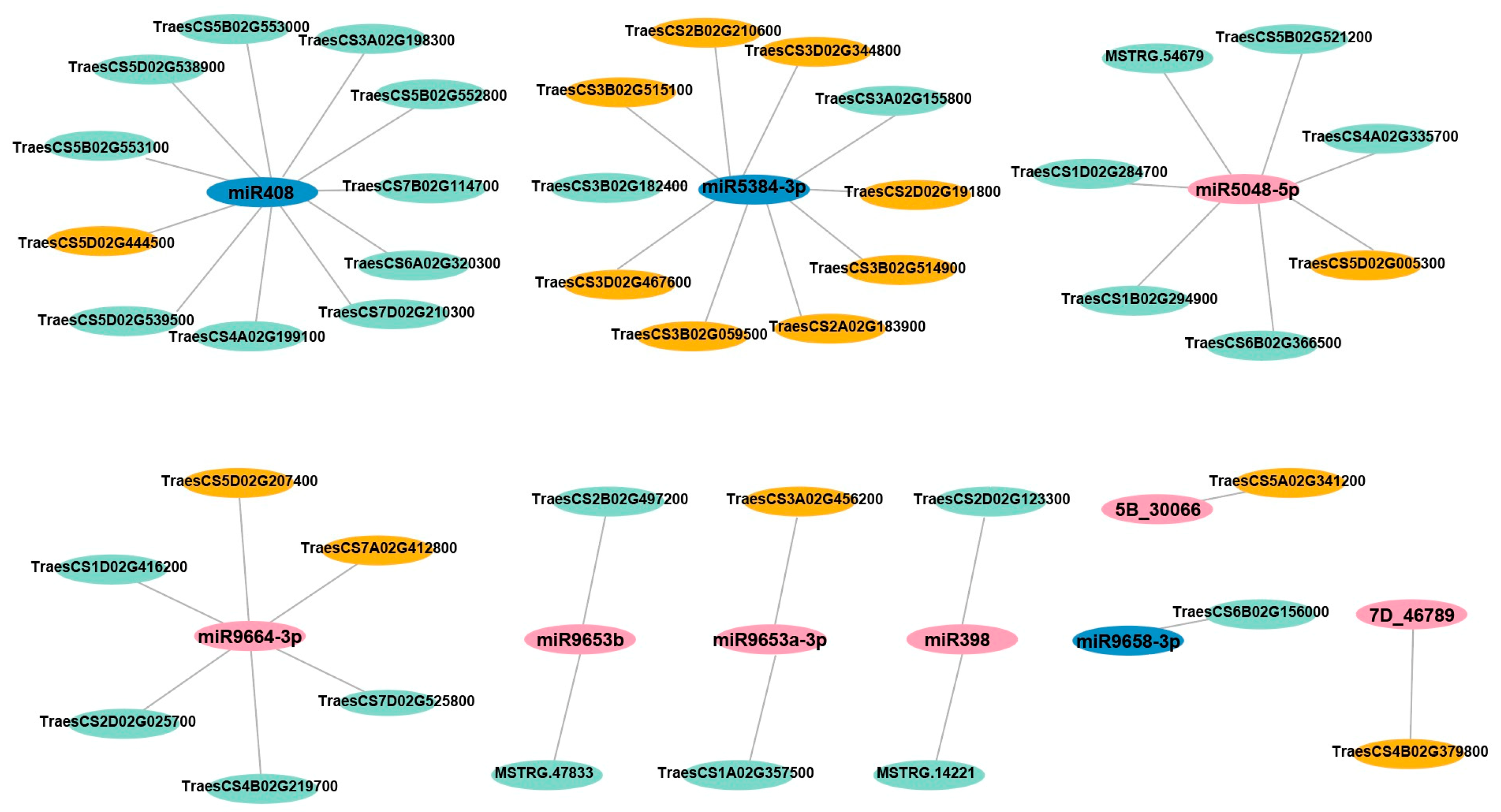
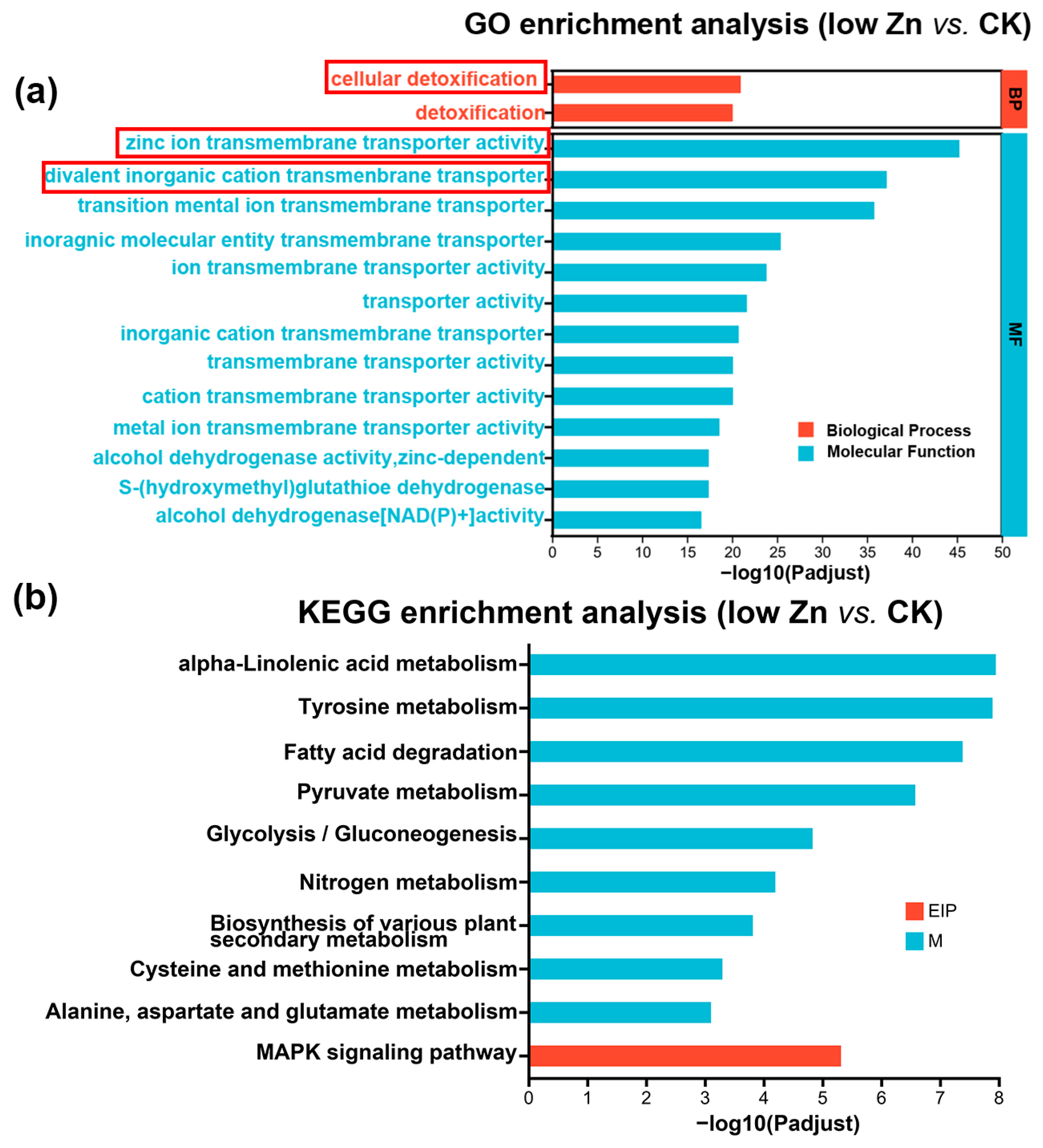
Physiological and Transcriptomic Analysis of Bread Wheat MicroRNAs in Response to Zinc Availability


Abstract
1. Introduction
2. Materials and Methods
2.1. Plant Materials and Growth Conditions
2.2. Treatments and Experiment Design
2.3. Determination of Chlorophyll Content, MDA Content, and Peroxidation Content
2.4. RNA Isolation, Library Preparation, and Sequencing
2.5. Sequence Analysis and Identification of Novel and Known miRNAs
2.6. Prediction of Target RNAs of miRNAs
2.7. Differentially Expressed mRNAs and miRNA Identification
2.8. GO and KEGG Pathway Enrichment Analysis
2.9. Validation of the Expression of miRNAs and Genes by qRT-PCR
3. Results
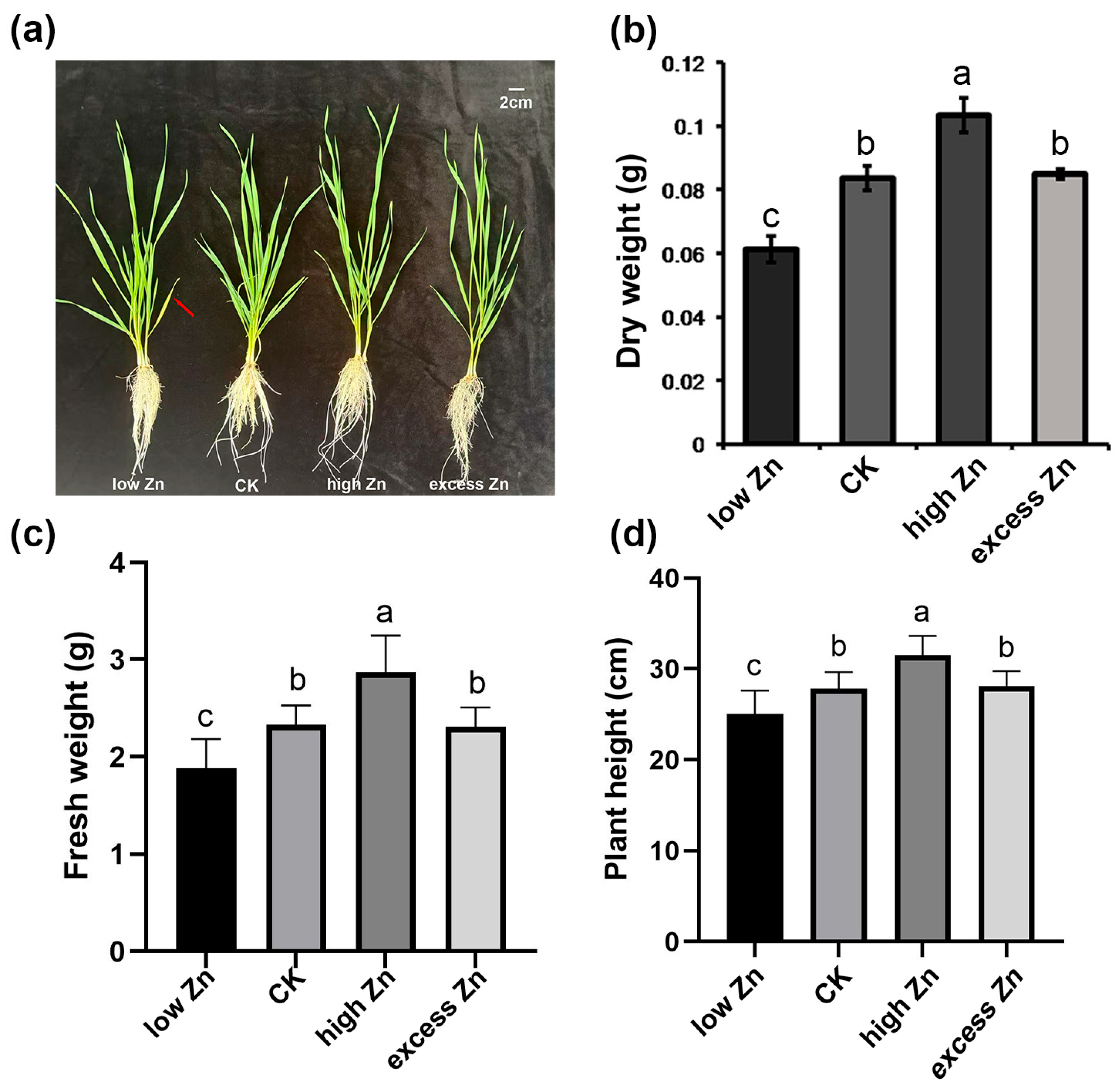
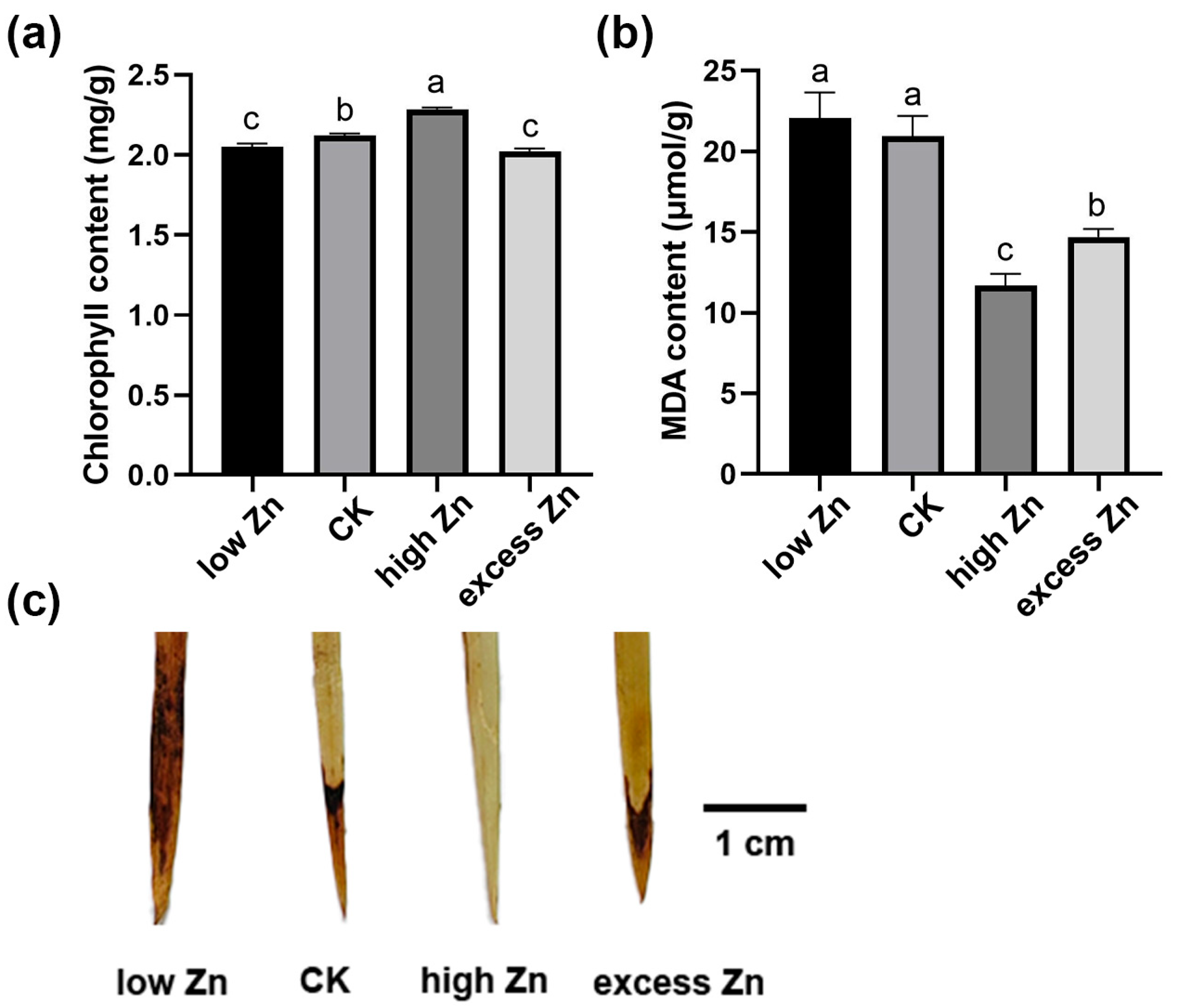
3.1. Morphological and Physiological Responses of Wheat to Different Zn Concentrations
3.2. Alterations in Transcriptome Profiles in Response to Zn Treatment in Wheat
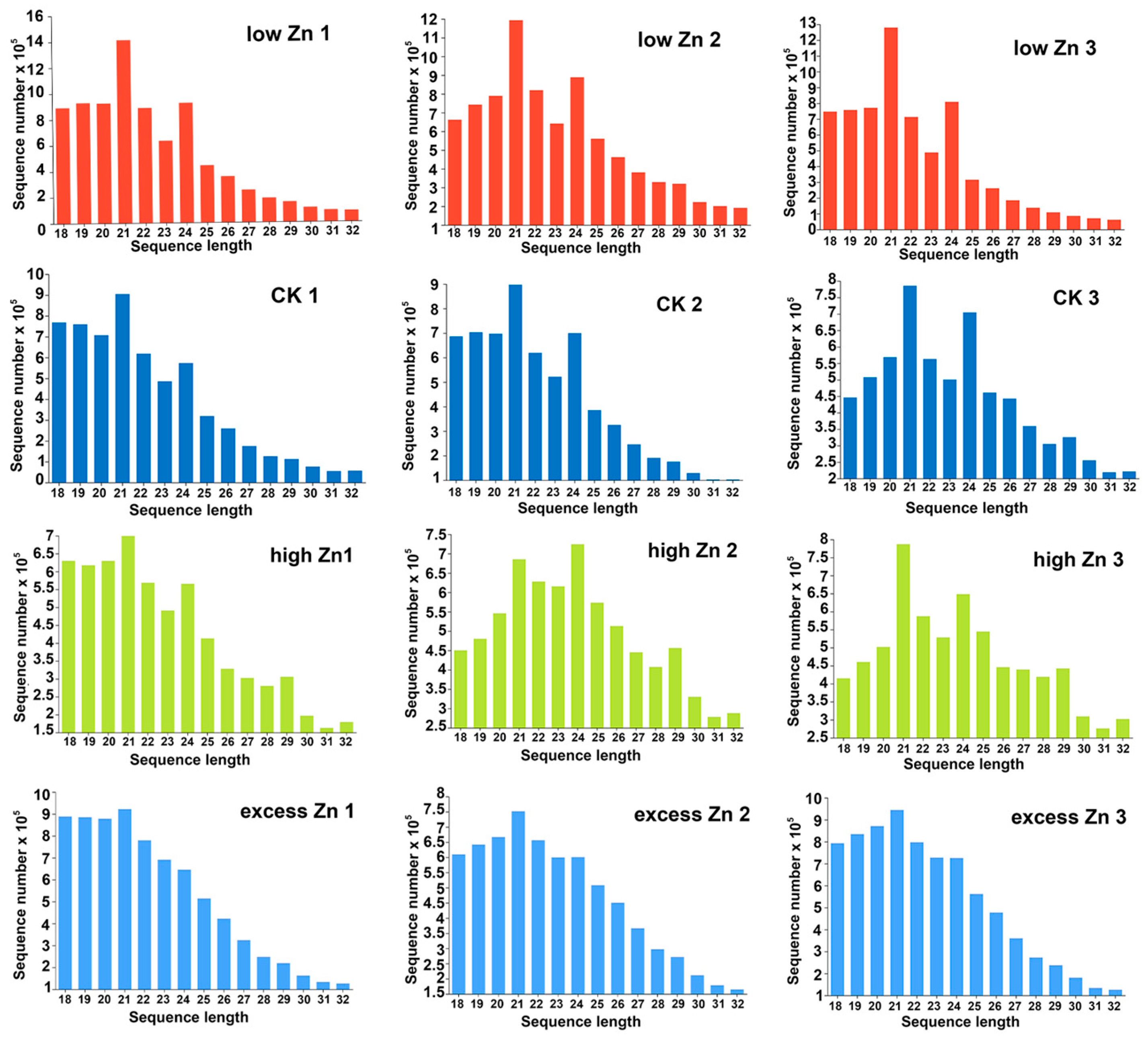
3.3. Characterization of Small RNAs via High-Throughput Sequencing
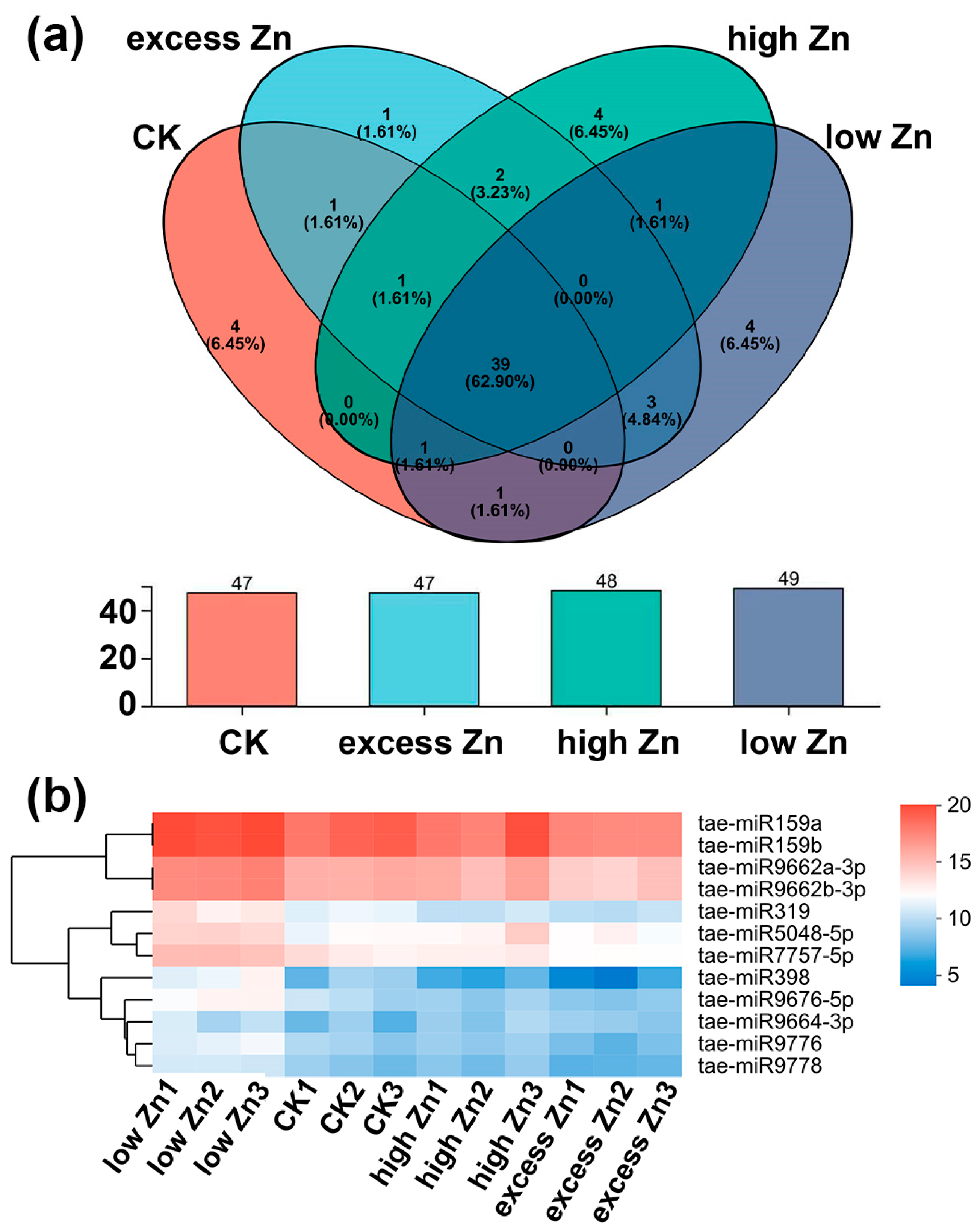
3.4. Identification of Known miRNAs in Wheat
3.5. Identification of Novel miRNAs in Wheat
3.6. Target Gene Prediction and Functional Classification of Zn-Response miRNAs
3.7. Prediction and Enrichment Analysis of miRNA Targets Responding to Low Zn
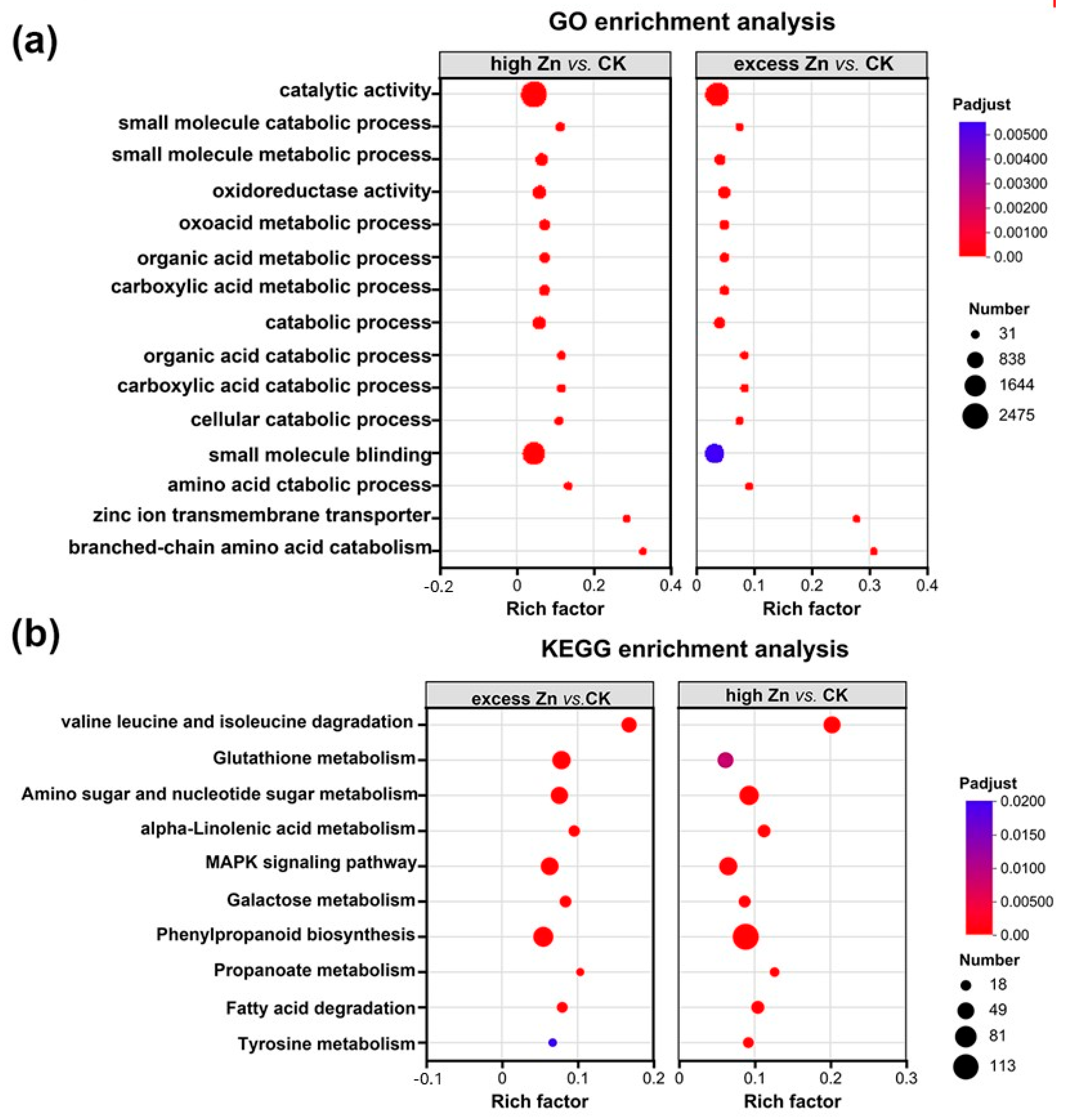
3.8. Prediction and Enrichment Analysis of miRNA Targets Responding to High and Excess Zn
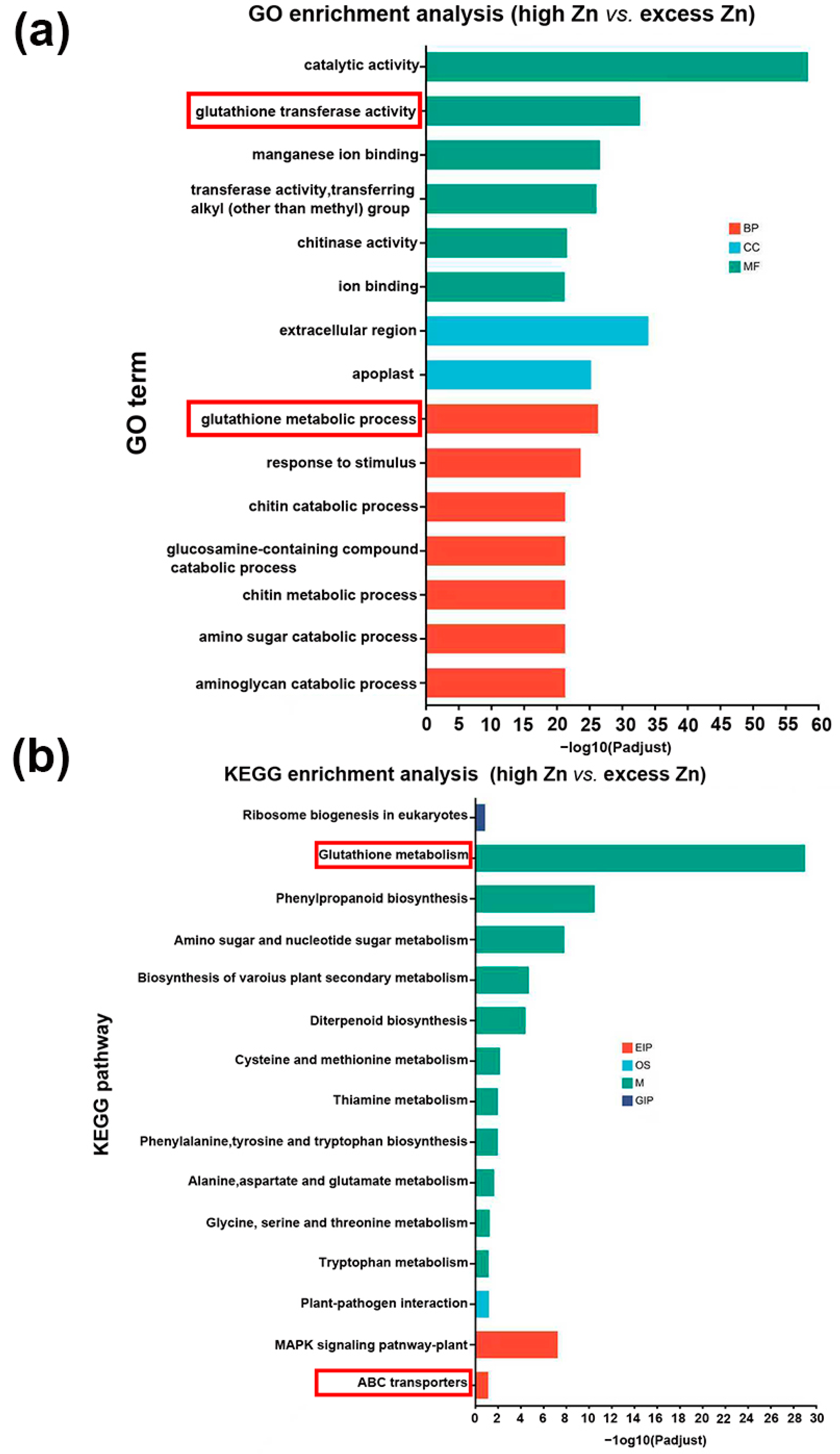
3.9. Differentially Enriched Analysis of miRNA Targets Responding Between High Zn and Excess Zn
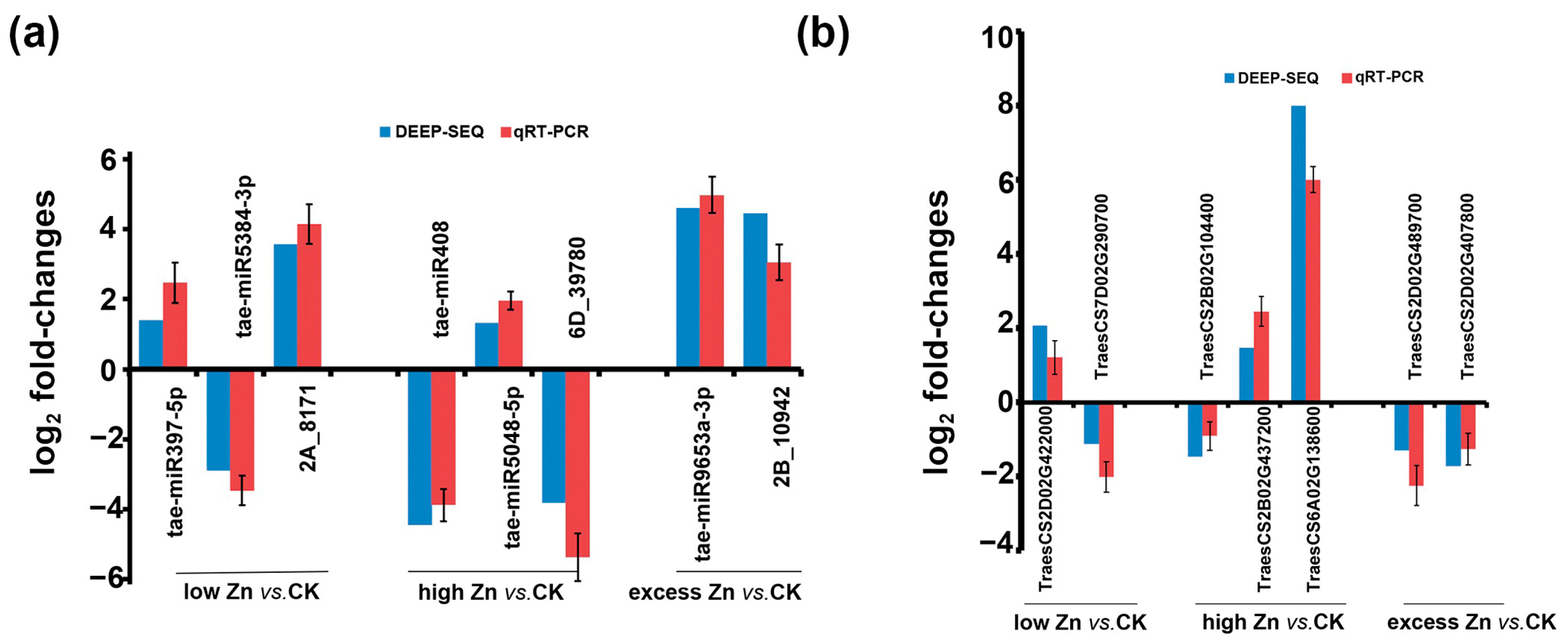
3.10. Validation of Differentially Expressed miRNA and mRNA by qRT-PCR
4. Discussion
4.1. miRNAs Play Significant Roles in Zn Uptake and Utilization
4.2. The Crucial Role of the ZIP Family in Zn Homeostasis in Plants
4.3. The Function of Glutathione and ABC Transporter in Zn Tolerance in Plants
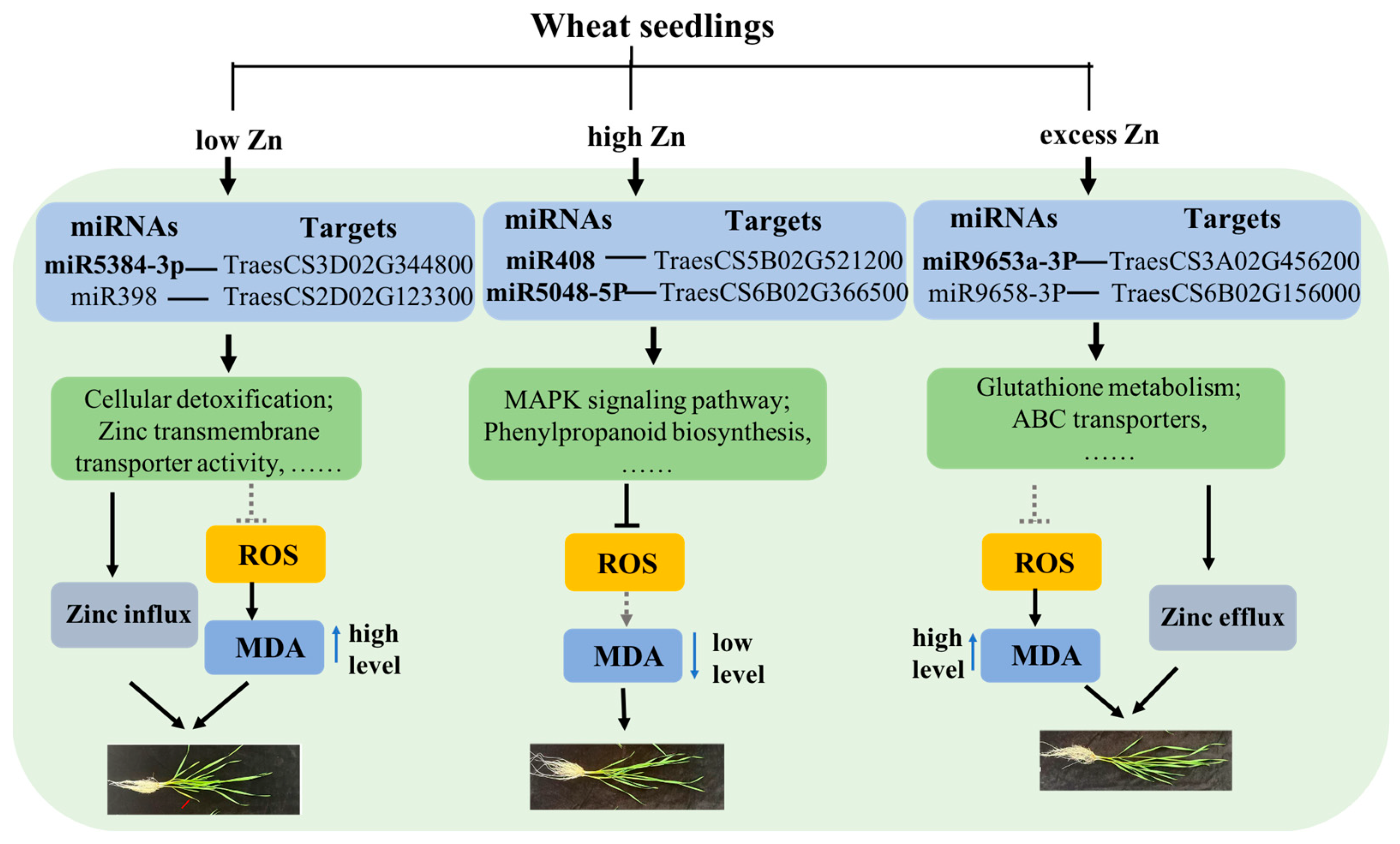
5. Conclusions
Supplementary Materials
Author Contributions
Funding
Institutional Review Board Statement
Informed Consent Statement
Data Availability Statement
Conflicts of Interest
References
- Chasapis, C.; Loutsidou, A.; Spiliopoulou, C.; Stefanidou, M. Zinc and human health: An update. Arch. Toxicol. 2012, 86, 521–534. [Google Scholar] [CrossRef]
- Andreini, C.; Banci, L.; Bertini, I.; Rosato, A. Counting the zinc-proteins encoded in the human genome. J. Proteome Res. 2006, 5, 196–201. [Google Scholar] [CrossRef]
- Huang, S.; Naoki, Y.; Ma, J. Zinc transport in rice: How to balance optimal plant requirements and human nutrition. J. Exp. Bot. 2022, 73, 1800–1808. [Google Scholar] [CrossRef]
- Haydon, M.; Cobbett, C. A novel major facilitator superfamily protein at the tonoplast influences zinc tolerance and accumulation in Arabidopsis. Plant Physiol. 2007, 143, 1705–1719. [Google Scholar] [CrossRef]
- Eide, D. Zinc transporters and the cellular trafficking of zinc. Biochim. Biophys. Acta 2006, 1763, 711–722. [Google Scholar] [CrossRef]
- Lin, Y.; Liang, H.; Yang, S.; Boch, A.; Clemens, S.; Chen, C.; Wu, J.; Huang, J.; Yeh, K. Arabidopsis IRT3 is a zinc-regulated and plasma membrane localized zinc/iron transporter. New Phytol. 2009, 182, 392–404. [Google Scholar] [CrossRef]
- Milner, M.; Seamon, J.; Craft, E.; Kochian, L. Transport properties of members of the ZIP family in plants and their role in Zn and Mn homeostasis. J. Exp. Bot. 2013, 64, 369–381. [Google Scholar] [CrossRef]
- Lee, S.; Jeong, H.; Kim, S.; Lee, J.; Guerinot, M.; An, G. OsZIP5 is a plasma membrane zinc transporter in rice. Plant Mol. Biol. 2010, 73, 507–517. [Google Scholar] [CrossRef] [PubMed]
- Bashir, K.; Ishimaru, Y.; Nishizawa, N. Molecular mechanism of zinc uptake and translocation in rice. Plant Soil 2012, 361, 189–201. [Google Scholar] [CrossRef]
- Tiong, J.; McDonald, G.; Genc, Y.; Shirley, N.; Langridge, P.; Huang, C. Increased expression of six ZIP family genes by zinc (Zn) deficiency is associated with enhanced uptake and root-to-shoot translocation of Zn in barley (Hordeum vulgare). New Phytol. 2015, 207, 1097–1109. [Google Scholar] [CrossRef] [PubMed]
- Evens, N.; Buchner, P.; Williams, L.; Hawkesford, M. The role of ZIP transporters and group F bZIP transcription factors in the Zn-deficiency response of wheat (Triticum aestivum). Plant J. 2017, 92, 291–304. [Google Scholar] [CrossRef] [PubMed]
- Campos, A.; Kruijer, W.; Alexander, R.; Akkers, R.; Danku, J.; Salt, D.; Aarts, M. Natural variation in Arabidopsis thaliana reveals shoot ionome, biomass, and gene expression changes as biomarkers for zinc deficiency tolerance. J. Exp. Bot. 2017, 68, 3643–3656. [Google Scholar] [CrossRef] [PubMed]
- Arrivault, S.; Senger, T.; Kramer, U. The Arabidopsis metal tolerance protein AtMTP3 maintains metal homeostasis by mediating Zn exclusion from the shoot under Fe deficiency and Zn oversupply. Plant J. 2006, 46, 861–879. [Google Scholar] [CrossRef]
- Desbrosses-Fonrouge, A.; Voigt, K.; Schroder, A.; Arrivault, S.; Thomine, S.; Kramer, U. Arabidopsis thaliana MTP1 is a Zn transporter in the vacuolar membrane which mediates Zn detoxification and drives leaf Zn accumulation. FEBS Lett. 2005, 579, 4165–4174. [Google Scholar] [CrossRef] [PubMed]
- Hussain, D.; Haydon, M.; Wang, Y.; Wong, E.; Sherson, S.; Young, J.; Camakaris, J.; Harper, J.; Cobbett, C. P-type ATPase heavy metal transporters with roles in essential zinc homeostasis in Arabidopsis. Plant Cell 2004, 16, 1327–1339. [Google Scholar] [CrossRef]
- Baxter, I.; Tchieu, J.; Sussman, M.; Boutry, M.; Palmgren, M.; Gribskov, M.; Harper, J.; Axelsen, K. Genomic comparison of P-type ATPase ion pumps in Arabidopsis and rice. Plant Physiol. 2003, 132, 618–628. [Google Scholar] [CrossRef]
- Ajeesh Krishna, T.P.; Maharajan, T.; Victor Roch, G.; Ignacimuthu, S.; Antony Ceasar, S. Structure, function, regulation and phylogenetic relationship of ZIP family transporters of plants. Front Plant Sci. 2020, 11, 662–679. [Google Scholar] [CrossRef]
- Ochoa Tufiño, V.; Almira Casellas, M.; van Duynhoven, A.; Flis, P.; Salt, D.; Schat, H.; Aarts, M. Arabidopsis thaliana Zn transporter genes ZIP3 and ZIP5 provide the main Zn uptake route and act redundantly to face Zn deficiency. Plant J. 2025, 121, e17251. [Google Scholar] [CrossRef]
- Iwakawa, H.; Tomari, Y. Molecular insights into microRNA-mediated translational repression in plants. Mol. Cell 2013, 52, 591–601. [Google Scholar] [CrossRef] [PubMed]
- Kim, D.; Sung, Y.; Park, J.; Kim, S.; Kim, J.; Park, J.; Ha, H.; Bae, J.; Kim, S.; Baek, D. General rules for functional microRNA targeting. Nat. Genet. 2016, 48, 1517–1526. [Google Scholar] [CrossRef]
- Zhang, X.; Cheng, L.; Shang, H.; Chen, Q.; Lu, M.; Mu, D.; Li, X.; Meng, X.; Wu, Y.; Han, X.; et al. Research advances of coloring mechanism regulated by MicroRNAs in plants. Plant Physiol. Biochem. 2024, 215, 109036. [Google Scholar] [CrossRef] [PubMed]
- Liu, Q.; Yan, S.; Yang, T.; Zhang, S.; Chen, Y.; Liu, B. Small RNAs in regulating temperature stress response in plants. J. Integr. Plant Biol. 2017, 59, 774–791. [Google Scholar] [CrossRef] [PubMed]
- Xue, H.; Liu, J.; Oo, S.; Patterson, C.; Liu, W.; Li, Q.; Wang, G.; Li, L.; Zhang, Z.; Pan, X.; et al. Differential responses of wheat (Triticum aestivum L.) and cotton (Gossypium hirsutum L.) to nitrogen deficiency in the root morpho-physiological characteristics and potential microRNA-mediated mechanisms. Front. Plant Sci. 2022, 30, 928229. [Google Scholar] [CrossRef]
- Tiwari, J.; Buckseth, T.; Zinta, R.; Saraswati, A.; Singh, R.; Rawat, S.; Chakrabarti, S. Genome-wide identification and characterization of microRNAs by small RNA sequencing for low nitrogen stress in potato. PLoS ONE 2020, 19, e0233076. [Google Scholar] [CrossRef]
- Verbruggen, N.; Hermans, C.; Schat, H. Molecular mechanisms of metal hyperaccumulation in plants. New Phytol. 2009, 181, 759–776. [Google Scholar] [CrossRef]
- Hall, J. Cellular mechanisms for heavy metal detoxification and tolerance. J. Exp. Bot. 2011, 53, 1–11. [Google Scholar] [CrossRef]
- Sunkar, R.; Kapoor, A.; Zhu, J. Posttranscriptional induction of two Cu/Zn superoxide dismutase genes in Arabidopsis is mediated by down regulation of miR398 and important for oxidative stress tolerance. Plant Cell 2006, 18, 2051–2065. [Google Scholar] [CrossRef]
- He, H.; He, L.; Gu, M. Role of microRNAs in aluminum stress in plants. Plant Cell Rep. 2014, 33, 831–836. [Google Scholar] [CrossRef]
- Jiang, S.; Shi, C.; Wu, J. Genotypic differences in arsenic, mercury, lead and cadmium in milled rice (Oryza sativa L.). Int. J. Food Sci. Nutr. 2012, 63, 468–475. [Google Scholar] [CrossRef]
- Zeng, H.; Zhang, X.; Ding, M.; Zhu, Y. Integrated analyses of miRNAome and transcriptome reveal zinc deficiency responses in rice seedlings. BMC Plant Biol. 2019, 19, 585–602. [Google Scholar] [CrossRef] [PubMed]
- Li, Y.; Zhang, Y.; Shi, D.; Liu, X.; Qin, J.; Ge, Q.; Xu, L.; Pan, X.; Li, W.; Zhu, Y.; et al. Spatial-temporal analysis of zinc homeostasis reveals the response mechanisms to acute zinc deficiency in Sorghum bicolor. New Phytol. 2013, 200, 1102–1115. [Google Scholar] [CrossRef] [PubMed]
- Wei, C.; Jiao, Q.; Agathokleous, E.; Liu, H.; Li, G.; Zhang, J.; Fahad, S.; Jiang, Y. Hormetic effects of zinc on growth and antioxidant defense system of wheat plants. Sci. Total Environ. 2022, 807, 150992. [Google Scholar] [CrossRef]
- Kong, L.; Chen, P.; Chang, C. Drought resistance and ginsenosides biosynthesis in response to abscisic acid in Panax ginseng C. A. Meyer. Int. J. Mol. Sci. 2023, 24, 9194. [Google Scholar] [CrossRef] [PubMed]
- Jiang, Y.; Lei, P.; Ma, L.; Dong, K.; Zhang, Y.; Zhao, J.; Guo, X.; Liu, J.; Li, W.; Tao, L.; et al. Effects of bleeding of Actinidia arguta (Sieb. & Zucc) Planch. ex miq. on its plant growth, physiological characteristics and fruit quality. BMC Plant Biol. 2023, 23, 531. [Google Scholar] [CrossRef]
- Shao, Y.; Wang, R.; Zhou, Y.; Yang, Y.; Xu, F.; Guo, Y.; Wang, Y.; Ma, N.; Zhou, X.; Wang, C.; et al. LlHsfA5-LsHsfA4 antagonism balances thermotolerance via LlAPX2-mediated reactive oxygen homeostasis in Lilium longiflorum. Plant J. 2025, 122, e70249. [Google Scholar] [CrossRef]
- Friedlander, M.; Mackowiak, S.; Li, N.; Chen, W.; Rajewsky, N. miRDeep2 accurately identifies known and hundreds of novel microRNA genes in seven animal clades. Nucleic Acids Res. 2011, 40, 37–52. [Google Scholar] [CrossRef] [PubMed]
- Wu, H.; Ma, Y.; Chen, T.; Wang, M.; Wang, X. PsRobot: A web-based plant small RNA meta-analysis toolbox. Nucleic Acids Res. 2012, 40, W22–W28. [Google Scholar] [CrossRef]
- Mei, F.; Chen, B.; Du, L.; Li, S.; Zhu, D.; Chen, N.; Zhang, Y.; Li, F.; Wang, Z.; Cheng, X.; et al. A gain-of-function allele of a DREB transcription factor gene ameliorates drought tolerance in wheat. Plant Cell 2022, 34, 4472–4494. [Google Scholar] [CrossRef]
- Basit, F.; Nazir, M.; Shahid, M.; Abbas, S.; Javed, M.; Naqqash, T.; Liu, Y.; Yajing, G. Application of zinc oxide nanoparticles immobilizes the chromium uptake in rice plants by regulating the physiological, biochemical and cellular attributes. Physiol. Mol. Biol. Plants 2022, 28, 1175–1190. [Google Scholar] [CrossRef]
- Noctor, G.; Cohen, M.; Trémulot, L.; Châtel-Innocenti, G.; Van-Breusegem, F.; Mhamdi, A. Glutathione: A key modulator of plant defence and metabolism through multiple mechanisms. J. Exp. Bot. 2024, 75, 4549–4572. [Google Scholar] [CrossRef]
- Martinoia, E.; Klein, M.; Geisler, M.; Bovet, L.; Forestier, C.; Kolukisaoglu, U.; Müller-Röber, B.; Schulz, B. Multifunctionality of plant ABC transporters—more than just detoxifiers. Planta 2002, 214, 345–355. [Google Scholar] [CrossRef] [PubMed]
- Bartel, D. MicroRNAs: Genomics, biogenesis, mechanism, and function. Cell 2004, 116, 281–297. [Google Scholar] [CrossRef] [PubMed]
- Feng, Y.; Yu, Y.; Zhou, Y.; Yang, Y.; Lei, M.; Lian, J.; He, H.; Zhang, Y.; Huang, W.; Chen, Y. A natural variant of miR397 mediates a feedback loop in circadian rhythm. Plant Physiol. 2020, 182, 204–214. [Google Scholar] [CrossRef]
- Gupta, O.; Meena, N.; Sharma, I.; Sharma, P. Differential regulation of microRNAs in response to osmotic, salt and cold stresses in wheat. Mol. Biol. Rep. 2014, 41, 4623–4629. [Google Scholar] [CrossRef]
- Jones-Rhoades, M.; Bartel, D. Computational identification of plant microRNAs and their targets, including a stress-induced miRNA. Mol. Cell 2004, 14, 787–799. [Google Scholar] [CrossRef]
- Swetha, C.; Basu, D.; Pachamuthu, K.; Tirumalai, V.; Nair, A.; Prasad, M.; Shivaprasad, P. Major domestication-related phenotypes in Indica rice are due to loss of miRNA-mediated laccase silencing. Plant Cell 2018, 30, 2649–2662. [Google Scholar] [CrossRef]
- Ali, S.; Huang, S.; Zhou, J.; Bai, Y.; Liu, Y.; Shi, L.; Liu, S.; Hu, Z.; Tang, Y. miR397-LACs mediated cadmium stress tolerance in Arabidopsis thaliana. Plant Mol. Biol. 2023, 113, 415–430. [Google Scholar] [CrossRef]
- He, L.; Hannon, G. MicroRNAs: Small RNAs with a big role in gene regulation. Nat. Rev. Genet. 2004, 5, 522–531. [Google Scholar] [CrossRef] [PubMed]
- Jones-Rhoades, M.; Bartel, D.; Bartel, B. MicroRNAS and their regulatory roles in plants. Annu. Rev. Plant Biol. 2006, 57, 19–53. [Google Scholar] [CrossRef]
- Van Daele, I.; Gonzalez, N.; Vercauteren, I.; de Smet, L.; Inzé, D.; Roldán-Ruiz, I.; Vuylsteke, M. A comparative study of seed yield parameters in Arabidopsis thaliana mutants and transgenics. Plant Biotechnol. J. 2012, 10, 488–500. [Google Scholar] [CrossRef]
- Gao, F.; Wang, K.; Liu, Y.; Chen, Y.; Chen, P.; Shi, Z.; Luo, J.; Jiang, D.; Fan, F.; Zhu, Y.; et al. Blocking miR396 increases rice yield by shaping inflorescence architecture. Nat. Plants 2016, 2, 15196. [Google Scholar] [CrossRef]
- Li, S.; Gao, F.; Xie, K.; Zeng, X.; Cao, Y.; Zeng, J.; He, Z.; Ren, Y.; Li, W.; Deng, Q.; et al. The OsmiR396c-OsGRF4-OsGIF1 regulatory module determines grain size and yield in rice. Plant Biotechnol. J. 2016, 14, 2134–2146. [Google Scholar] [CrossRef]
- Xie, H.; Su, F.; Niu, Q.; Geng, L.; Cao, X.; Song, M.; Dong, J.; Zheng, Z.; Guo, R.; Zhang, Y.; et al. Knockout of miR396 genes increases seed size and yield in soybean. J. Integr. Plant Biol. 2024, 66, 1148–1157. [Google Scholar] [CrossRef]
- Burkhead, J.; Reynolds, K.; Abdel-Ghany, S.; Cohu, C.; Pilon, M. Copper homeostasis. New Phytol. 2009, 182, 799–816. [Google Scholar] [CrossRef]
- Gao, Y.; Feng, B.; Gao, C.; Zhang, H.; Wen, F.; Tao, L.; Fu, G.; Xiong, J. The evolution and functional roles of miR408 and its targets in plants. Int. J. Mol. Sci. 2022, 23, 530. [Google Scholar] [CrossRef]
- Schuetz, M.; Benske, A.; Smith, R.; Watanabe, Y.; Tobimatsu, Y.; Ralph, J.; Demura, T.; Ellis, B.; Samuels, A. Laccases direct lignification in the discrete secondary cell wall domains of protoxylem. Plant Physiol. 2014, 166, 798–807. [Google Scholar] [CrossRef]
- Grotz, N.; Fox, T.; Connolly, E.; Park, W.; Guerinot, M.; Eide, D. Identification of a family of zinc transporter genes from Arabidopsis that respond to zinc deficiency. Proc. Natl. Acad. Sci. USA 1998, 95, 7220–7224. [Google Scholar] [CrossRef] [PubMed]
- Tan, L.; Zhu, Y.; Fan, T.; Peng, C.; Wang, J.; Sun, L.; Chen, C. OsZIP7 functions in xylem loading in roots and inter-vascular transfer in nodes to deliver Zn/Cd to grain in rice. Biochem. Biophys. Res. Commun. 2019, 512, 112–118. [Google Scholar] [CrossRef]
- Zhang, X.; Kong, J.; Yu, L.; Wang, A.; Yang, Y.; Li, X.; Wang, J. Functional characterization of Fagopyrum tataricum ZIP gene family as a metal ion transporter. Front. Plant Sci. 2024, 15, 1373066. [Google Scholar] [CrossRef] [PubMed]
- Noctor, G.; Gomez, L.; Vanacker, H.; Foyer, C. Interactions between biosynthesis, compartmentation and transport in the control of glutathione homeostasis and signalling. J. Exp. Bot. 2002, 53, 1283–1304. [Google Scholar] [CrossRef] [PubMed]
- Noctor, G.; Mhamdi, A.; Chaouch, S.; Han, Y.; Neukermans, J.; Marquez-Garcia, B.; Queval, G.; Foyer, C. Glutathione in plants: An integrated overview. Plant Cell Environ. 2012, 35, 454–484. [Google Scholar] [CrossRef]
- Averill-Bates, D.A. The antioxidant glutathione. Vitam. Horm. 2023, 121, 109–141. [Google Scholar] [CrossRef] [PubMed]
- Hicks, L.; Cahoon, R.; Bonner, E.; Rivard, R.; Sheffield, J.; Jez, J. Thiol-based regulation of redox-active glutamate-cysteine ligase from Arabidopsis thaliana. Plant Cell 2007, 19, 2653–2661. [Google Scholar] [CrossRef] [PubMed]
- Wang, Y.; Zhao, W.; Hao, J.; Xu, W.; Luo, Y.; Wu, W.; Yang, Z.; Liang, Z.; Huang, K. Changes in biosynthesis and metabolism of glutathione upon ochratoxin A stress in Arabidopsis thaliana. Plant Physiol. Biochem. 2014, 79, 10–18. [Google Scholar] [CrossRef] [PubMed]
- Sharma, S.; Dietz, K. The significance of amino acids and amino acid-derived molecules in plant responses and adaptation to heavy metal stress. J. Exp. Bot. 2006, 57, 711–726. [Google Scholar] [CrossRef]
- Yadav, S. Heavy metals toxicity in plants: An overview on the role of glutathione and phytochelatins in heavy metal stress tolerance of plants. S. Afr. J. Bot. 2010, 76, 167–179. [Google Scholar] [CrossRef]
- Brunetti, P.; Zanella, L.; De Paolis, A.; Di Litta, D.; Cecchetti, V.; Falasca, G.; Barbieri, M.; Altamura, M.; Costantino, P.; Cardarelli, M. Cadmium-inducible expression of the ABC-type transporter AtABCC3 increases phytochelatin-mediated cadmium tolerance in Arabidopsis. J. Exp. Bot. 2015, 66, 3815–3829. [Google Scholar] [CrossRef]
- Song, W.; Mendoza-Cózatl, D.; Lee, Y.; Schroeder, J.; Ahn, S.; Lee, H.; Wicker, T.; Martinoia, E. Phytochelatin-metal (loid) transport into vacuoles shows different substrate preferences in barley and Arabidopsis. Plant Cell Environ. 2014, 37, 1192–1201. [Google Scholar] [CrossRef]



| Sample | Raw Reads | Clean Reads | Total Mapped | Multiple Mapped | Unique Mapped | Mapping Percentage (%) |
|---|---|---|---|---|---|---|
| low Zn 1 | 58,186,780 | 57,750,704 | 51,836,541 | 3,670,449 | 48,166,092 | 89.76 |
| low Zn 2 | 53,889,272 | 53,463,878 | 49,256,940 | 3,358,308 | 45,898,632 | 92.13 |
| low Zn 3 | 54,905,412 | 54,488,640 | 50,365,672 | 3,427,094 | 46,938,578 | 92.43 |
| CK 1 | 59,220,060 | 58,736,976 | 55,231,763 | 3,707,867 | 51,523,896 | 94.03 |
| CK 2 | 58,160,146 | 57,702,512 | 53,827,814 | 3,519,179 | 50,308,635 | 93.29 |
| CK 3 | 60,921,576 | 60,435,612 | 56,324,316 | 3,864,653 | 52,459,663 | 93.2 |
| high Zn 1 | 56,079,222 | 55,635,414 | 51,765,283 | 3,585,458 | 48,179,825 | 93.04 |
| high Zn 2 | 53,609,902 | 53,192,442 | 49,703,693 | 3,302,778 | 46,400,915 | 93.44 |
| high Zn | 63,064,846 | 62,571,948 | 57,702,552 | 4,150,294 | 53,552,258 | 92.22 |
| excess Zn 1 | 58,352,298 | 57,903,976 | 50,606,464 | 3,249,235 | 47,357,229 | 87.4 |
| excess Zn 2 | 54,337,636 | 53,912,330 | 48,109,408 | 3,276,943 | 44,832,465 | 89.24 |
| excess Zn 3 | 52,864,122 | 52,416,984 | 48,214,552 | 3,054,900 | 45,159,652 | 91.98 |
Disclaimer/Publisher’s Note: The statements, opinions and data contained in all publications are solely those of the individual author(s) and contributor(s) and not of MDPI and/or the editor(s). MDPI and/or the editor(s) disclaim responsibility for any injury to people or property resulting from any ideas, methods, instructions or products referred to in the content. |
© 2026 by the authors. Licensee MDPI, Basel, Switzerland. This article is an open access article distributed under the terms and conditions of the Creative Commons Attribution (CC BY) license.
Share and Cite
Sun, S.; He, Y.; Chen, P.; Chang, C.; Kong, L. Physiological and Transcriptomic Analysis of Bread Wheat MicroRNAs in Response to Zinc Availability. Biomolecules 2026, 16, 75. https://doi.org/10.3390/biom16010075
Sun S, He Y, Chen P, Chang C, Kong L. Physiological and Transcriptomic Analysis of Bread Wheat MicroRNAs in Response to Zinc Availability. Biomolecules. 2026; 16(1):75. https://doi.org/10.3390/biom16010075
Chicago/Turabian StyleSun, Shuhan, Yanlong He, Peng Chen, Cheng Chang, and Lingyao Kong. 2026. "Physiological and Transcriptomic Analysis of Bread Wheat MicroRNAs in Response to Zinc Availability" Biomolecules 16, no. 1: 75. https://doi.org/10.3390/biom16010075
APA StyleSun, S., He, Y., Chen, P., Chang, C., & Kong, L. (2026). Physiological and Transcriptomic Analysis of Bread Wheat MicroRNAs in Response to Zinc Availability. Biomolecules, 16(1), 75. https://doi.org/10.3390/biom16010075