N6-Methyladenosine (m6A)-Mediated Regulation of Lipid Metabolism: Molecular Mechanisms, Pathological Implications, and Therapeutic Perspectives
 ,
,
Abstract
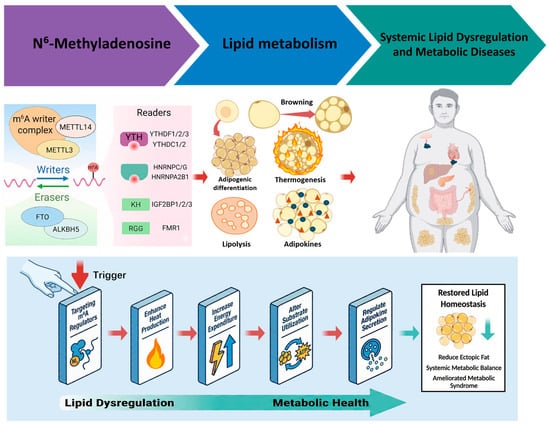
1. Introduction
2. Molecular Mechanism of m6A Modification
2.1. m6A Writers
2.2. m6A Erasers
2.3. m6A Readers
2.4. m6A Modification in the Regulation of Adipocyte Development and Metabolism
2.5. Regulation of Adipogenesis by m6A Modification
2.6. Regulation of Thermogenesis by m6A Modification
2.7. Regulation of Lipolysis by m6A Modification
2.8. Interactions Between m6A Modification and Adipokines
3. m6A Modification in the Regulation of Metabolic Diseases
3.1. Role of m6A in Hepatic Lipid Homeostasis and Fatty Liver-Related Diseases
3.2. Role of m6A in Insulin Resistance and Type 2 Diabetes
3.3. m6A-Mediated Inter-Organ Communication
3.3.1. Beyond Cell Autonomy
3.3.2. BAT-Systemic Axis
3.3.3. Heart as an m6A-Regulated Endocrine Organ
3.3.4. Gut–Microbiota–Adipose Tissue Axis as a Potential Regulatory Pathway
4. Therapeutic Strategies Targeting the m6A Pathway
4.1. Development of FTO Inhibitors for m6A Modulation
4.2. Development of METTL3 Inhibitors for m6A Modulation
4.3. Exploring m6A Reader Protein Modulation
4.4. Challenges and Future Directions for m6A-Targeted Therapies
5. Conclusions and Future Perspectives
Author Contributions
Funding
Institutional Review Board Statement
Informed Consent Statement
Data Availability Statement
Conflicts of Interest
Abbreviations
| 3′-UTRs | 3′ untranslated regions |
| α-KG | 2-oxoglutarate |
| ALKBH5 | AlkB homolog 5 |
| ANGPTL3, 4, 8 | Angiopoietin-like proteins 3, 4, and 8 |
| APN | Adiponectin |
| AT | adipose tissue |
| BAT | brown adipose tissue |
| ceRNA | competing endogenous RNA |
| EGCG | epigallocatechin gallate |
| eWAT | epididymal white adipose tissue |
| FASN | fatty acid synthase |
| FTO | fat mass and obesity-associated |
| HAKAI | E3 ubiquitin-protein ligase |
| HFD | high-fat diet |
| HGA | homogentisic acid |
| HIF1A | hypoxia-inducible factor 1α |
| HNRNP | heterogeneous nuclear ribonucleoprotein |
| HSL | hormone-sensitive lipase |
| IGF2BP1–3 | insulin-like growth factor 2 mRNA-binding proteins 1–3 |
| KD | knockdown |
| KO | knockout |
| LPS | lipopolysaccharide |
| m1A | N1-methyladenosine |
| m6A | N6-methyladenosine |
| m6Am | N6,2′-O-dimethyladenosine |
| MACOM | m6A-METTL associated complex |
| MASLD | metabolic dysfunction-associated steatotic liver disease |
| MCE | mitotic clonal expansion |
| METTL3 | Methyltransferase-like 3 |
| METTL14 | Methyltransferase-like 14 |
| METTL16 | Methyltransferase-like 16 |
| MTC | methyltransferase complex |
| NADP+ | nicotinamide adenine dinucleotide phosphate |
| NAFLD | non-alcoholic fatty liver disease |
| RBP4 | Retinol-binding protein 4 |
| RSV | Resveratrol |
| TG | triglycerides |
| T2D | type 2 diabetes |
| UCP1 | uncoupling protein 1 |
| VIRMA | Vir-like m6A methyltransferase associated protein |
| WAT | white adipose tissue |
| WTAP | Wilms’ tumor 1-associating protein |
| YTH | YT521-B homology |
| ZC3H13 | Zinc finger CCCH domain-containing protein 13 |
References
- Gupta, A.; Shah, K.; Gupta, V. Interconnected epidemics: Obesity, metabolic syndrome, diabetes and cardiovascular diseases—Insights from research and prevention strategies. Discov. Public Health 2025, 22, 6. [Google Scholar] [CrossRef]
- Ng, M.; Gakidou, E.; Lo, J.; Abate, Y.H.; Abbafati, C.; Abbas, N.; Abbasian, M.; Abd ElHafeez, S.; Abdel-Rahman, W.M.; Abd-Elsalam, S.; et al. Global, regional, and national prevalence of adult overweight and obesity, 1990–2021, with forecasts to 2050: A forecasting study for the global burden of disease study 2021. Lancet 2025, 405, 813–838. [Google Scholar] [CrossRef]
- Busebee, B.; Ghusn, W.; Cifuentes, L.; Acosta, A. Obesity: A review of pathophysiology and classification. Mayo Clin. Proc. 2023, 98, 1842–1857. [Google Scholar] [CrossRef]
- Sakers, A.; De Siqueira, M.K.; Seale, P.; Villanueva, C.J. Adipose-tissue plasticity in health and disease. Cell 2022, 185, 419–446. [Google Scholar] [CrossRef]
- Bian, X.; Liu, R.; Meng, Y.; Xing, D.; Xu, D.; Lu, Z. Lipid metabolism and cancer. J. Exp. Med. 2021, 218, e20201606. [Google Scholar] [CrossRef] [PubMed]
- Rohrig, F.; Schulze, A. The multifaceted roles of fatty acid synthesis in cancer. Nat. Rev. Cancer 2016, 16, 732–749. [Google Scholar] [CrossRef]
- Cypess, A.M.; Cannon, B.; Nedergaard, J.; Kazak, L.; Chang, D.C.; Krakoff, J.; Tseng, Y.; Scheele, C.; Boucher, J.; Petrovic, N.; et al. Emerging debates and resolutions in brown adipose tissue research. Cell Metab. 2025, 37, 12–33. [Google Scholar] [CrossRef] [PubMed]
- Mahmoud, A.M. An overview of epigenetics in obesity: The role of lifestyle and therapeutic interventions. Int. J. Mol. Sci. 2022, 23, 1341. [Google Scholar] [CrossRef]
- Roundtree, I.A.; Evans, M.E.; Pan, T.; He, C. Dynamic RNA modifications in gene expression regulation. Cell 2017, 169, 1187–1200. [Google Scholar] [CrossRef] [PubMed]
- Zhao, B.S.; Roundtree, I.A.; He, C. Post-transcriptional gene regulation by mRNA modifications. Nat. Rev. Mol. Cell Biol. 2017, 18, 31–42. [Google Scholar] [CrossRef]
- Krug, R.M.; Morgan, M.A.; Shatkin, A.J. Influenza viral mRNA contains internal N6-methyladenosine and 5′-terminal 7-methylguanosine in cap structures. J. Virol. 1976, 20, 45–53. [Google Scholar] [CrossRef]
- Liu, Y.; Yang, D.; Liu, T.; Chen, J.; Yu, J.; Yi, P. N6-methyladenosine-mediated gene regulation and therapeutic implications. Trends Mol. Med. 2023, 29, 454–467. [Google Scholar] [CrossRef]
- Jia, G.; Fu, Y.; Zhao, X.; Dai, Q.; Zheng, G.; Yang, Y.; Yi, C.; Lindahl, T.; Pan, T.; Yang, Y.; et al. N6-methyladenosine in nuclear RNA is a major substrate of the obesity-associated FTO. Nat. Chem. Biol. 2011, 7, 885–887. [Google Scholar] [CrossRef]
- Wang, L.; Song, C.; Wang, N.; Li, S.; Liu, Q.; Sun, Z.; Wang, K.; Yu, S.C.; Yang, Q. NADP modulates RNA m6A methylation and adipogenesis via enhancing FTO activity. Nat. Chem. Biol. 2020, 16, 1394–1402. [Google Scholar] [CrossRef] [PubMed]
- Kang, Q.; Zhu, X.; Ren, D.; Ky, A.; MacDougald, O.A.; O’Rourke, R.W.; Rui, L. Adipose METTL14-elicited n6-methyladenosine promotes obesity, insulin resistance, and NAFLD through suppressing β adrenergic signaling and lipolysis. Adv. Sci. 2023, 10, e2301645. [Google Scholar] [CrossRef] [PubMed]
- Yang, Y.; Cai, J.; Yang, X.; Wang, K.; Sun, K.; Yang, Z.; Zhang, L.; Yang, L.; Gu, C.; Huang, X.; et al. Dysregulated m6A modification promotes lipogenesis and development of non-alcoholic fatty liver disease and hepatocellular carcinoma. Mol. Ther. 2022, 30, 2342–2353. [Google Scholar] [CrossRef]
- Kim, J.; Lee, G. Metabolic control of m6A RNA modification. Metabolites 2021, 11, 80. [Google Scholar] [CrossRef]
- Meyer, K.D.; Saletore, Y.; Zumbo, P.; Elemento, O.; Mason, C.E.; Jaffrey, S.R. Comprehensive analysis of mRNA methylation reveals enrichment in 3′ UTRs and near stop codons. Cell 2012, 149, 1635–1646. [Google Scholar] [CrossRef]
- Zheng, Q.; Hou, J.; Zhou, Y.; Li, Z.; Cao, X. The RNA helicase DDX46 inhibits innate immunity by entrapping m6A-demethylated antiviral transcripts in the nucleus. Nat. Immunol. 2017, 18, 1094–1103. [Google Scholar] [CrossRef] [PubMed]
- Bertero, A.; Brown, S.; Madrigal, P.; Osnato, A.; Ortmann, D.; Yiangou, L.; Kadiwala, J.; Hubner, N.C.; de Los, M.I.; Sadee, C.; et al. The SMAD2/3 interactome reveals that TGFbeta controls m6A mRNA methylation in pluripotency. Nature 2018, 555, 256–259. [Google Scholar] [CrossRef]
- Bartosovic, M.; Molares, H.C.; Gregorova, P.; Hrossova, D.; Kudla, G.; Vanacova, S. N6-methyladenosine demethylase FTO targets pre-mRNAs and regulates alternative splicing and 3′-end processing. Nucleic Acids Res. 2017, 45, 11356–11370. [Google Scholar]
- Coots, R.A.; Liu, X.M.; Mao, Y.; Dong, L.; Zhou, J.; Wan, J.; Zhang, X.; Qian, S.B. m6A facilitates eIF4f-independent mRNA translation. Mol. Cell 2017, 68, 504–514.e7. [Google Scholar]
- Barbieri, I.; Tzelepis, K.; Pandolfini, L.; Shi, J.; Millan-Zambrano, G.; Robson, S.C.; Aspris, D.; Migliori, V.; Bannister, A.J.; Han, N.; et al. Promoter-bound METTL3 maintains myeloid leukaemia by m6A-dependent translation control. Nature 2017, 552, 126–131. [Google Scholar] [CrossRef]
- Wang, X.; Lu, Z.; Gomez, A.; Hon, G.C.; Yue, Y.; Han, D.; Fu, Y.; Parisien, M.; Dai, Q.; Jia, G.; et al. N6-methyladenosine-dependent regulation of messenger RNA stability. Nature 2014, 505, 117–120. [Google Scholar] [CrossRef] [PubMed]
- Nilsen, T.W. Molecular biology. Internal mRNA methylation finally finds functions. Science 2014, 343, 1207–1208. [Google Scholar] [PubMed]
- Huang, H.; Weng, H.; Chen, J. m6A modification in coding and non-coding RNAs: Roles and therapeutic implications in cancer. Cancer Cell 2020, 37, 270–288. [Google Scholar] [CrossRef]
- Wang, P.; Doxtader, K.A.; Nam, Y. Structural basis for cooperative function of Mettl3 and Mettl14 methyltransferases. Mol. Cell 2016, 63, 306–317. [Google Scholar] [CrossRef] [PubMed]
- Ping, X.L.; Sun, B.F.; Wang, L.; Xiao, W.; Yang, X.; Wang, W.J.; Adhikari, S.; Shi, Y.; Lv, Y.; Chen, Y.S.; et al. Mammalian WTAP is a regulatory subunit of the RNA n6-methyladenosine methyltransferase. Cell Res. 2014, 24, 177–189. [Google Scholar] [CrossRef]
- Yue, Y.; Liu, J.; Cui, X.; Cao, J.; Luo, G.; Zhang, Z.; Cheng, T.; Gao, M.; Shu, X.; Ma, H.; et al. VIRMA mediates preferential m6A mRNA methylation in 3′UTR and near stop codon and associates with alternative polyadenylation. Cell Discov. 2018, 4, 10. [Google Scholar]
- Wen, J.; Lv, R.; Ma, H.; Shen, H.; He, C.; Wang, J.; Jiao, F.; Liu, H.; Yang, P.; Tan, L.; et al. Zc3h13 regulates nuclear RNA m6A methylation and mouse embryonic stem cell self-renewal. Mol. Cell 2018, 69, 1028–1038.e6. [Google Scholar] [CrossRef]
- Bawankar, P.; Lence, T.; Paolantoni, C.; Haussmann, I.U.; Kazlauskiene, M.; Jacob, D.; Heidelberger, J.B.; Richter, F.M.; Nallasivan, M.P.; Morin, V.; et al. Hakai is required for stabilization of core components of the m6A mRNA methylation machinery. Nat. Commun. 2021, 12, 3778. [Google Scholar] [CrossRef] [PubMed]
- Patil, D.P.; Chen, C.K.; Pickering, B.F.; Chow, A.; Jackson, C.; Guttman, M.; Jaffrey, S.R. m6A RNA methylation promotes XIST-mediated transcriptional repression. Nature 2016, 537, 369–373. [Google Scholar] [CrossRef]
- Knuckles, P.; Lence, T.; Haussmann, I.U.; Jacob, D.; Kreim, N.; Carl, S.H.; Masiello, I.; Hares, T.; Villasenor, R.; Hess, D.; et al. Zc3h13/flacc is required for adenosine methylation by bridging the mRNA-binding factor rbm15/spenito to the m6A machinery component wtap/fl(2)d. Genes. Dev. 2018, 32, 415–429. [Google Scholar] [CrossRef] [PubMed]
- Pendleton, K.E.; Chen, B.; Liu, K.; Hunter, O.V.; Xie, Y.; Tu, B.P.; Conrad, N.K. The u6 snRNA m6A methyltransferase METTL16 regulates SAM synthetase intron retention. Cell 2017, 169, 824–835.e14. [Google Scholar] [CrossRef]
- Zhang, X.; Wei, L.H.; Wang, Y.; Xiao, Y.; Liu, J.; Zhang, W.; Yan, N.; Amu, G.; Tang, X.; Zhang, L.; et al. Structural insights into FTO’s catalytic mechanism for the demethylation of multiple RNA substrates. Proc. Natl. Acad. Sci. USA 2019, 116, 2919–2924. [Google Scholar] [CrossRef] [PubMed]
- Kaur, S.; Tam, N.Y.; McDonough, M.A.; Schofield, C.J.; Aik, W.S. Mechanisms of substrate recognition and n6-methyladenosine demethylation revealed by crystal structures of ALKBH5-RNA complexes. Nucleic Acids Res. 2022, 50, 4148–4160. [Google Scholar] [CrossRef]
- Gao, Z.; Zha, X.; Li, M.; Xia, X.; Wang, S. Insights into the m6A demethylases FTO and ALKBH5: Structural, biological function, and inhibitor development. Cell Biosci. 2024, 14, 108. [Google Scholar] [CrossRef]
- Chen, Z.; Zhong, X.; Xia, M.; Zhong, J. The roles and mechanisms of the m6a reader protein YTHDF1 in tumor biology and human diseases. Mol. Ther. Nucleic Acids 2021, 26, 1270–1279. [Google Scholar] [CrossRef]
- Shi, H.; Wang, X.; Lu, Z.; Zhao, B.S.; Ma, H.; Hsu, P.J.; Liu, C.; He, C. YTHDF3 facilitates translation and decay of N6-methyladenosine-modified RNA. Cell Res. 2017, 27, 315–328. [Google Scholar] [CrossRef]
- Xiao, W.; Adhikari, S.; Dahal, U.; Chen, Y.S.; Hao, Y.J.; Sun, B.F.; Sun, H.Y.; Li, A.; Ping, X.L.; Lai, W.Y.; et al. Nuclear m6A reader YTHDC1 regulates mRNA splicing. Mol. Cell 2016, 61, 507–519. [Google Scholar] [CrossRef]
- Alarcon, C.R.; Goodarzi, H.; Lee, H.; Liu, X.; Tavazoie, S.; Tavazoie, S.F. HNRNPA2b1 is a mediator of m6A-dependent nuclear RNA processing events. Cell 2015, 162, 1299–1308. [Google Scholar] [CrossRef]
- Liu, N.; Dai, Q.; Zheng, G.; He, C.; Parisien, M.; Pan, T. N6-methyladenosine-dependent RNA structural switches regulate RNA-protein interactions. Nature 2015, 518, 560–564. [Google Scholar] [CrossRef] [PubMed]
- Wu, X.; Chen, H.; Li, K.; Zhang, H.; Li, K.; Tan, H. The biological function of the n6-methyladenosine reader YTHDC2 and its role in diseases. J. Transl. Med. 2024, 22, 490. [Google Scholar] [CrossRef]
- Huang, H.; Weng, H.; Sun, W.; Qin, X.; Shi, H.; Wu, H.; Zhao, B.S.; Mesquita, A.; Liu, C.; Yuan, C.L.; et al. Recognition of RNA N6-methyladenosine by IGF2BP proteins enhances mRNA stability and translation. Nat. Cell Biol. 2018, 20, 285–295. [Google Scholar] [CrossRef]
- Edupuganti, R.R.; Geiger, S.; Lindeboom, R.; Shi, H.; Hsu, P.J.; Lu, Z.; Wang, S.Y.; Baltissen, M.; Jansen, P.; Rossa, M.; et al. N6-methyladenosine (m6A) recruits and repels proteins to regulate mRNA homeostasis. Nat. Struct. Mol. Biol. 2017, 24, 870–878. [Google Scholar] [PubMed]
- Taura, D.; Noguchi, M.; Sone, M.; Hosoda, K.; Mori, E.; Okada, Y.; Takahashi, K.; Homma, K.; Oyamada, N.; Inuzuka, M.; et al. Adipogenic differentiation of human induced pluripotent stem cells: Comparison with that of human embryonic stem cells. FEBS Lett. 2009, 583, 1029–1033. [Google Scholar] [CrossRef]
- Xiong, C.; Xie, C.; Zhang, L.; Zhang, J.; Xu, K.; Fu, M.; Thompson, W.E.; Yang, L.; Chen, Y.E. Derivation of adipocytes from human embryonic stem cells. Stem Cells Dev. 2005, 14, 671–675. [Google Scholar] [CrossRef]
- Azzam, S.K.; Alsafar, H.; Sajini, A.A. FTO m6A demethylase in obesity and cancer: Implications and underlying molecular mechanisms. Int. J. Mol. Sci. 2022, 23, 3800. [Google Scholar] [CrossRef] [PubMed]
- Yang, Z.; Yu, G.; Zhu, X.; Peng, T.; Lv, Y. Critical roles of FTO-mediated mRNA m6A demethylation in regulating adipogenesis and lipid metabolism: Implications in lipid metabolic disorders. Genes Dis. 2022, 9, 51–61. [Google Scholar] [CrossRef]
- Mota De Sa, P.; Richard, A.J.; Hang, H.; Stephens, J.M. Transcriptional regulation of adipogenesis. Compr. Physiol. 2017, 7, 635–674. [Google Scholar] [CrossRef]
- Zhang, M.; Zhang, Y.; Ma, J.; Guo, F.; Cao, Q.; Zhang, Y.; Zhou, B.; Chai, J.; Zhao, W.; Zhao, R. The demethylase activity of FTO (fat mass and obesity associated protein) is required for preadipocyte differentiation. PLoS ONE 2015, 10, e0133788. [Google Scholar] [CrossRef]
- Zhao, X.; Yang, Y.; Sun, B.; Shi, Y.; Yang, X.; Xiao, W.; Hao, Y.; Ping, X.; Chen, Y.; Wang, W.; et al. FTO-dependent demethylation of N6-methyladenosine regulates mRNA splicing and is required for adipogenesis. Cell Res. 2014, 24, 1403–1419. [Google Scholar] [CrossRef]
- Merkestein, M.; Laber, S.; McMurray, F.; Andrew, D.; Sachse, G.; Sanderson, J.; Li, M.; Usher, S.; Sellayah, D.; Ashcroft, F.M.; et al. FTO influences adipogenesis by regulating mitotic clonal expansion. Nat. Commun. 2015, 6, 6792. [Google Scholar] [CrossRef] [PubMed]
- Wu, R.; Liu, Y.; Yao, Y.; Zhao, Y.; Bi, Z.; Jiang, Q.; Liu, Q.; Cai, M.; Wang, F.; Wang, Y.; et al. FTO regulates adipogenesis by controlling cell cycle progression via m6A-YTHDF2 dependent mechanism. Biochim. Biophys. Acta Mol. Cell Biol. Lipids 2018, 1863, 1323–1330. [Google Scholar] [CrossRef]
- Wang, X.; Wu, R.; Liu, Y.; Zhao, Y.; Bi, Z.; Yao, Y.; Liu, Q.; Shi, H.; Wang, F.; Wang, Y. m6A mRNA methylation controls autophagy and adipogenesis by targeting atg5 and atg7. Autophagy 2020, 16, 1221–1235. [Google Scholar] [CrossRef] [PubMed]
- Sun, D.; Zhao, T.; Zhang, Q.; Wu, M.; Zhang, Z. Fat mass and obesity-associated protein regulates lipogenesis via m6A modification in fatty acid synthase mRNA. Cell Biol. Int. 2021, 45, 334–344. [Google Scholar] [CrossRef] [PubMed]
- Wu, R.; Guo, G.; Bi, Z.; Liu, Y.; Zhao, Y.; Chen, N.; Wang, F.; Wang, Y.; Wang, X. m6A methylation modulates adipogenesis through JAK2-STAT3-c/EBPbeta signaling. Biochim. Biophys. Acta Gene Regul. Mech. 2019, 1862, 796–806. [Google Scholar] [CrossRef]
- Li, T.; Zhao, J.; Yuan, J.; Ding, R.; Yang, G.; Cao, J.; Zhao, X.; Liu, J.; Liu, Y.; Xu, P.; et al. Harnessing engineered exosomes as METTL3 carriers: Enhancing osteogenesis and suppressing lipogenesis in bone marrow mesenchymal stem cells for postmenopausal osteoporosis treatment. Mater. Today Bio 2025, 32, 101648. [Google Scholar] [CrossRef]
- Yao, Y.; Bi, Z.; Wu, R.; Zhao, Y.; Liu, Y.; Liu, Q.; Wang, Y.; Wang, X. METTL3 inhibits BMSC adipogenic differentiation by targeting the JAK1/STAT5/c/EBPbeta pathway via an m6A-YTHDF2-dependent manner. FASEB J. 2019, 33, 7529–7544. [Google Scholar] [CrossRef]
- Chao, M.; Wang, M.; Han, H.; Liu, Y.; Sun, X.; Tian, T.; Pang, W.; Cai, R. Profiling of m6A methylation in porcine intramuscular adipocytes and unravelling PHKG1 represses porcine intramuscular lipid deposition in an m6A-dependent manner. Int. J. Biol. Macromol. 2024, 272, 132728. [Google Scholar] [CrossRef]
- Liao, X.; Cai, D.; Liu, J.; Hu, H.; You, R.; Pan, Z.; Chen, S.; Xu, K.; Dai, W.; Zhang, S.; et al. Deletion of mettl3 in mesenchymal stem cells promotes acute myeloid leukemia resistance to chemotherapy. Cell Death Dis. 2023, 14, 796. [Google Scholar] [CrossRef]
- Zhang, T.; Ren, Z.; Mao, R.; Yi, W.; Wang, B.; Yang, H.; Wang, H.; Liu, Y. LINC00278 and BRG1: A key regulatory axis in male obesity and preadipocyte adipogenesis. Metabolism 2025, 168, 156194. [Google Scholar] [CrossRef] [PubMed]
- Chao, X.; Guo, L.; Ye, C.; Liu, A.; Wang, X.; Ye, M.; Fan, Z.; Luan, K.; Chen, J.; Zhang, C.; et al. ALKBH5 regulates chicken adipogenesis by mediating LCAT mRNA stability depending on m6A modification. BMC Genomics 2024, 25, 634. [Google Scholar] [CrossRef]
- Cen, S.; Li, J.; Cai, Z.; Pan, Y.; Sun, Z.; Li, Z.; Ye, G.; Zheng, G.; Li, M.; Liu, W.; et al. TRAF4 acts as a fate checkpoint to regulate the adipogenic differentiation of MSCs by activating PKM2. EBioMedicine 2020, 54, 102722. [Google Scholar] [CrossRef]
- Zhou, B.; Liu, C.; Xu, L.; Yuan, Y.; Zhao, J.; Zhao, W.; Chen, Y.; Qiu, J.; Meng, M.; Zheng, Y.; et al. N6-methyladenosine reader protein YT521-b homology domain-containing 2 suppresses liver steatosis by regulation of mRNA stability of lipogenic genes. Hepatology 2021, 73, 91–103. [Google Scholar] [CrossRef]
- Xie, W.; Cui, Y.; Yue, L.; Zhang, T.; Huang, C.; Yu, X.; Ma, D.; Liu, D.; Cheng, R.; Zhao, X.; et al. m6A reader HNRNPC facilitates adipogenesis by regulating cytoskeletal remodeling through enhanced lcp1 mRNA stability. Aging Dis. 2024, 16, 1080–1098. [Google Scholar]
- Huang, X.; He, W.; Fan, S.; Li, H.; Ye, G. IGF2BP3-mediated enhanced stability of MYLK represses MSC adipogenesis and alleviates obesity and insulin resistance in HFD mice. Cell Mol. Life Sci. 2024, 81, 17. [Google Scholar] [PubMed]
- Xiang, H.; Zhong, Z.; Peng, Y.; Jiang, S. The emerging role of zfp217 in adipogenesis. Int. J. Mol. Sci. 2017, 18, 1367. [Google Scholar] [CrossRef]
- Song, T.; Yang, Y.; Wei, H.; Xie, X.; Lu, J.; Zeng, Q.; Peng, J.; Zhou, Y.; Jiang, S.; Peng, J. Zfp217 mediates m6a mRNA methylation to orchestrate transcriptional and post-transcriptional regulation to promote adipogenic differentiation. Nucleic Acids Res. 2019, 47, 6130–6144. [Google Scholar] [CrossRef] [PubMed]
- Liu, Q.; Zhao, Y.; Wu, R.; Jiang, Q.; Cai, M.; Bi, Z.; Liu, Y.; Yao, Y.; Feng, J.; Wang, Y.; et al. ZFP217 regulates adipogenesis by controlling mitotic clonal expansion in a METTL3-m6A dependent manner. RNA Biol. 2019, 16, 1785–1793. [Google Scholar] [CrossRef] [PubMed]
- Peng, H.; Chen, B.; Wei, W.; Guo, S.; Han, H.; Yang, C.; Ma, J.; Wang, L.; Peng, S.; Kuang, M.; et al. N6-methyladenosine (m6A) in 18s rRNA promotes fatty acid metabolism and oncogenic transformation. Nat. Metab. 2022, 4, 1041–1054. [Google Scholar] [CrossRef] [PubMed]
- Rothwell, N.J.; Stock, M.J. Diet-induced thermogenesis. Adv. Nutr. Res. 1983, 5, 201–220. [Google Scholar]
- Cypess, A.M.; Lehman, S.; Williams, G.; Tal, I.; Rodman, D.; Goldfine, A.B.; Kuo, F.C.; Palmer, E.L.; Tseng, Y.H.; Doria, A.; et al. Identification and importance of brown adipose tissue in adult humans. N. Engl. J. Med. 2009, 360, 1509–1517. [Google Scholar] [CrossRef]
- Zhang, Z.; Chen, N.; Yin, N.; Liu, R.; He, Y.; Li, D.; Tong, M.; Gao, A.; Lu, P.; Zhao, Y.; et al. The rs1421085 variant within FTO promotes brown fat thermogenesis. Nat. Metab. 2023, 5, 1337–1351. [Google Scholar] [CrossRef]
- Tews, D.; Fischer-Posovszky, P.; Fromme, T.; Klingenspor, M.; Fischer, J.; Ruther, U.; Marienfeld, R.; Barth, T.F.; Moller, P.; Debatin, K.M.; et al. FTO deficiency induces UCP-1 expression and mitochondrial uncoupling in adipocytes. Endocrinology 2013, 154, 3141–3151. [Google Scholar] [CrossRef]
- Claussnitzer, M.; Dankel, S.N.; Kim, K.; Quon, G.; Meuleman, W.; Haugen, C.; Glunk, V.; Sousa, I.S.; Beaudry, J.L.; Puviindran, V.; et al. FTO obesity variant circuitry and adipocyte browning in humans. N. Engl. J. Med. 2015, 373, 895–907. [Google Scholar] [CrossRef]
- Wu, R.; Chen, Y.; Liu, Y.; Zhuang, L.; Chen, W.; Zeng, B.; Liao, X.; Guo, G.; Wang, Y.; Wang, X. M6a methylation promotes white-to-beige fat transition by facilitating hif1a translation. EMBO Rep. 2021, 22, e52348. [Google Scholar]
- Wei, D.; Sun, Q.; Li, Y.; Li, C.; Li, X.; Sun, C. Leptin reduces plin5 m6A methylation through FTO to regulate lipolysis in piglets. Int. J. Mol. Sci. 2021, 22, 1060. [Google Scholar] [CrossRef]
- Ronkainen, J.; Mondini, E.; Cinti, F.; Cinti, S.; Sebert, S.; Savolainen, M.J.; Salonurmi, T. Fto-deficiency affects the gene and MicroRNA expression involved in brown adipogenesis and browning of white adipose tissue in mice. Int. J. Mol. Sci. 2016, 17, 1851. [Google Scholar] [CrossRef] [PubMed]
- Wang, Y.; Gao, M.; Zhu, F.; Li, X.; Yang, Y.; Yan, Q.; Jia, L.; Xie, L.; Chen, Z. METTL3 is essential for postnatal development of brown adipose tissue and energy expenditure in mice. Nat. Commun. 2020, 11, 1648. [Google Scholar] [CrossRef] [PubMed]
- Xie, R.; Yan, S.; Zhou, X.; Gao, Y.; Qian, Y.; Hou, J.; Chen, Z.; Lai, K.; Gao, X.; Wei, S. Activation of METTL3 promotes white adipose tissue beiging and combats obesity. Diabetes 2023, 72, 1083–1094. [Google Scholar] [CrossRef] [PubMed]
- Li, Y.; Zhang, Y.; Zhang, T.; Ping, X.; Wang, D.; Chen, Y.; Yu, J.; Liu, C.; Liu, Z.; Zheng, Y.; et al. RNA m6 a methylation regulates glycolysis of beige fat and contributes to systemic metabolic homeostasis. Adv. Sci. 2023, 10, e2300436. [Google Scholar] [CrossRef]
- Wang, Y.; Li, X.; Liu, C.; Zhou, L.; Shi, L.; Zhang, Z.; Chen, L.; Gao, M.; Gao, L.; Xu, Y.; et al. WTAP regulates postnatal development of brown adipose tissue by stabilizing METTL3 in mice. Life Metab. 2022, 1, 270–284. [Google Scholar] [CrossRef] [PubMed]
- Yan, S.; Zhou, X.; Wu, C.; Gao, Y.; Qian, Y.; Hou, J.; Xie, R.; Han, B.; Chen, Z.; Wei, S.; et al. Adipocyte YTH N6-methyladenosine RNA-binding protein 1 protects against obesity by promoting white adipose tissue beiging in male mice. Nat. Commun. 2023, 14, 1379. [Google Scholar] [CrossRef]
- Dai, N.; Zhao, L.; Wrighting, D.; Kramer, D.; Majithia, A.; Wang, Y.; Cracan, V.; Borges-Rivera, D.; Mootha, V.K.; Nahrendorf, M.; et al. IGF2BP2/IMP2-deficient mice resist obesity through enhanced translation of ucp1 mRNA and other mRNAs encoding mitochondrial proteins. Cell Metab. 2015, 21, 609–621. [Google Scholar] [CrossRef]
- Yoshizawa, T.; Sato, Y.; Sobuz, S.U.; Mizumoto, T.; Tsuyama, T.; Karim, M.F.; Miyata, K.; Tasaki, M.; Yamazaki, M.; Kariba, Y.; et al. SIRT7 suppresses energy expenditure and thermogenesis by regulating brown adipose tissue functions in mice. Nat. Commun. 2022, 13, 7439. [Google Scholar] [CrossRef] [PubMed]
- Shao, J.; Wang, M.; Zhang, A.; Liu, Z.; Jiang, G.; Tang, T.; Wang, J.; Jia, X.; Lai, S. Interference of a mammalian circRNA regulates lipid metabolism reprogramming by targeting mir-24-3p/igf2/PI3k-AKT-mTOR and igf2bp2/ucp1 axis. Cell. Mol. Life Sci. 2023, 80, 252. [Google Scholar] [CrossRef]
- Wang, L.; Wang, Y.; Ding, K.; Li, Z.; Zhang, Z.; Li, X.; Song, Y.; Xie, L.; Chen, Z. YTHDC1 promotes postnatal brown adipose tissue development and thermogenesis by stabilizing PPARγ. EMBO J. 2025, 44, 3360–3380. [Google Scholar] [CrossRef]
- Zimmermann, R.; Strauss, J.G.; Haemmerle, G.; Schoiswohl, G.; Birner-Gruenberger, R.; Riederer, M.; Lass, A.; Neuberger, G.; Eisenhaber, F.; Hermetter, A.; et al. Fat mobilization in adipose tissue is promoted by adipose triglyceride lipase. Science 2004, 306, 1383–1386. [Google Scholar] [CrossRef]
- Sylvers-Davie, K.L.; Davies, B.S.J. Regulation of lipoprotein metabolism by ANGPTL3, ANGPTL4, and ANGPTL8. Am. J. Physiol. Endocrinol. Metab. 2021, 321, E493–E508. [Google Scholar] [CrossRef]
- Yoshida, K.; Shimizugawa, T.; Ono, M.; Furukawa, H. Angiopoietin-like protein 4 is a potent hyperlipidemia-inducing factor in mice and inhibitor of lipoprotein lipase. J. Lipid Res. 2002, 43, 1770–1772. [Google Scholar] [CrossRef]
- Wang, C.; Shie, S.; Wen, M.; Hung, K.; Hsieh, I.; Yeh, T.; Wu, D. Loss of FTO in adipose tissue decreases angptl4 translation and alters triglyceride metabolism. Sci. Signal. 2015, 8, ra127. [Google Scholar] [CrossRef] [PubMed]
- Zeng, B.; Wu, R.; Chen, Y.; Chen, W.; Liu, Y.; Liao, X.; Guo, G.; Wang, X. FTO knockout in adipose tissue effectively alleviates hepatic steatosis partially via increasing the secretion of adipocyte-derived IL-6. Gene 2022, 818, 146224. [Google Scholar] [CrossRef]
- Stratigopoulos, G.; Burnett, L.C.; Rausch, R.; Gill, R.; Penn, D.B.; Skowronski, A.A.; LeDuc, C.A.; Lanzano, A.J.; Zhang, P.; Storm, D.R.; et al. Hypomorphism of FTO and rpgrip1l causes obesity in mice. J. Clin. Investig. 2016, 126, 1897–1910. [Google Scholar] [CrossRef] [PubMed]
- Mizuno, T.M. Fat mass and obesity associated (FTO) gene and hepatic glucose and lipid metabolism. Nutrients 2018, 10, 1600. [Google Scholar] [CrossRef] [PubMed]
- Huang, X.; Huang, X.; Guo, H.; Li, J.; Zhou, C.; Huang, Y.; Lai, C.; Zeng, W.; Tan, X.; Niu, L.; et al. Intermittent hypoxia-induced METTL3 downregulation facilitates MGLL-mediated lipolysis of adipocytes in OSAS. Cell Death Discov. 2022, 8, 10. [Google Scholar] [CrossRef]
- Zhou, R.; Rui, L.; Kang, Q. Adipose m6a reader YTHDF2 regulates white adipose tissue growth and metabolism. Diabetes 2024, 73, 2. [Google Scholar] [CrossRef]
- Ohashi, K.; Shibata, R.; Murohara, T.; Ouchi, N. Role of anti-inflammatory adipokines in obesity-related diseases. Trends Endocrinol. Metab. 2014, 25, 348–355. [Google Scholar] [CrossRef]
- Yu, H.; Wu, H.; Xie, Q.; Liu, Z.; Chen, Z.; Tu, Q.; Chen, J.; Fang, F.; Qiu, W. Construction of ceRNA and m6A-related lncRNA networks associated with anti-inflammation of AdipoAI. Front. Immunol. 2022, 13, 1051654. [Google Scholar] [CrossRef]
- Kleinridders, A.; Schenten, D.; Konner, A.C.; Belgardt, B.F.; Mauer, J.; Okamura, T.; Wunderlich, F.T.; Medzhitov, R.; Bruning, J.C. MyD88 signaling in the CNS is required for development of fatty acid-induced leptin resistance and diet-induced obesity. Cell Metab. 2009, 10, 249–259. [Google Scholar] [CrossRef]
- Liu, S.; Song, S.; Wang, S.; Cai, T.; Qin, L.; Wang, X.; Zhu, G.; Wang, H.; Yang, W.; Fang, C.; et al. Hypothalamic FTO promotes high-fat diet-induced leptin resistance in mice through increasing CX3CL1 expression. J. Nutr. Biochem. 2024, 123, 109512. [Google Scholar] [CrossRef]
- Irisarri, A.; Corral, A.; Perez-Salvador, N.; Bellver-Sanchis, A.; Ribalta-Vilella, M.; Bentanachs, R.; Alegret, M.; Laguna, J.C.; Barroso, E.; Palomer, X.; et al. FTO inhibition mitigates high-fat diet-induced metabolic disturbances and cognitive decline in SAMP8 mice. Mol. Med. 2025, 31, 73. [Google Scholar] [CrossRef]
- Wu, J.; Li, Y.; Yu, J.; Gan, Z.; Wei, W.; Wang, C.; Zhang, L.; Wang, T.; Zhong, X. Resveratrol attenuates high-fat diet induced hepatic lipid homeostasis disorder and decreases m6A RNA methylation. Front. Pharmacol. 2020, 11, 568006. [Google Scholar] [CrossRef]
- Rong, B.; Feng, R.; Liu, C.; Wu, Q.; Sun, C. Reduced delivery of epididymal adipocyte-derived exosomal resistin is essential for melatonin ameliorating hepatic steatosis in mice. J. Pineal Res. 2019, 66, e12561. [Google Scholar] [CrossRef]
- Yang, Q.; Graham, T.E.; Mody, N.; Preitner, F.; Peroni, O.D.; Zabolotny, J.M.; Kotani, K.; Quadro, L.; Kahn, B.B. Serum retinol binding protein 4 contributes to insulin resistance in obesity and type 2 diabetes. Nature 2005, 436, 356–362. [Google Scholar] [CrossRef]
- Yang, Q.; Diao, N.; Ma, F.; Huang, Z.; Lin, M.; Liu, X.; Guo, Q.; Li, P.; Tang, J.; Gao, X.; et al. PI(4,5)p2 alleviates colitis by inhibiting intestinal epithelial cell pyroptosis through NNMT-mediated RBP4 m6A modification. Cell Death Dis. 2024, 15, 923. [Google Scholar] [CrossRef] [PubMed]
- Wang, Y.; Liu, J.; Wang, Y. Role of TNF-alpha-induced m6a RNA methylation in diseases: A comprehensive review. Front. Cell Dev. Biol. 2023, 11, 1166308. [Google Scholar] [CrossRef] [PubMed]
- Wang, J.; Yan, S.; Lu, H.; Wang, S.; Xu, D. METTL3 attenuates LPS-induced inflammatory response in macrophages via NF-kappab signaling pathway. Mediat. Inflamm. 2019, 2019, 3120391. [Google Scholar] [CrossRef]
- Cai, Y.; Yu, R.; Kong, Y.; Feng, Z.; Xu, Q. METTL3 regulates LPS-induced inflammatory response via the NOD1 signaling pathway. Cell Signal. 2022, 93, 110283. [Google Scholar] [CrossRef] [PubMed]
- Mehrdad, M.; Doaei, S.; Gholamalizadeh, M.; Fardaei, M.; Fararouei, M.; Eftekhari, M.H. Association of FTO rs9939609 polymorphism with serum leptin, insulin, adiponectin, and lipid profile in overweight adults. Adipocyte 2020, 9, 51–56. [Google Scholar] [CrossRef]
- Li, Z.; Qi, J.; Liu, H.; Tang, Y.; Liu, J.; Sun, C. Abnormal m6A modification in non-alcoholic fatty liver disease. J. Cent. South Univ. Med. Sci. 2021, 46, 785–792. [Google Scholar]
- Kang, H.; Zhang, Z.; Yu, L.; Li, Y.; Liang, M.; Zhou, L. FTO reduces mitochondria and promotes hepatic fat accumulation through RNA demethylation. J. Cell Biochem. 2018, 119, 5676–5685. [Google Scholar] [CrossRef]
- Tang, Z.; Sun, C.; Yan, Y.; Niu, Z.; Li, Y.; Xu, X.; Zhang, J.; Wu, Y.; Li, Y.; Wang, L.; et al. Aberrant elevation of FTO levels promotes liver steatosis by decreasing the m6a methylation and increasing the stability of SREBF1 and ChREBP mRNAs. J. Mol. Cell Biol. 2023, 14, mjac061. [Google Scholar] [CrossRef]
- Peng, Z.; Gong, Y.; Wang, X.; He, W.; Wu, L.; Zhang, L.; Xiong, L.; Huang, Y.; Su, L.; Shi, P.; et al. METTL3-m6A-rubicon axis inhibits autophagy in nonalcoholic fatty liver disease. Mol. Ther. 2022, 30, 932–946. [Google Scholar] [CrossRef]
- Barajas, J.M.; Lin, C.; Sun, H.; Alencastro, F.; Zhu, A.C.; Aljuhani, M.; Navari, L.; Yilmaz, S.A.; Yu, L.; Corps, K.; et al. METTL3 regulates liver homeostasis, hepatocyte ploidy, and circadian rhythm-controlled gene expression in mice. Am. J. Pathol. 2022, 192, 56–71. [Google Scholar] [CrossRef]
- Qin, Y.; Li, B.; Arumugam, S.; Lu, Q.; Mankash, S.M.; Li, J.; Sun, B.; Li, J.; Flavell, R.A.; Li, H.; et al. m6A mRNA methylation-directed myeloid cell activation controls progression of NAFLD and obesity. Cell Rep. 2021, 37, 109968. [Google Scholar] [CrossRef]
- Wang, W.; Yan, J.; Han, L.; Zou, Z.; Xu, A. Silencing METTL14 alleviates liver injury in non-alcoholic fatty liver disease by regulating mitochondrial homeostasis. Biomol. Biomed. 2024, 24, 505–519. [Google Scholar] [CrossRef] [PubMed]
- Ding, K.; Zhang, Z.; Han, Z.; Shi, L.; Li, X.; Liu, Y.; Li, Z.; Zhao, C.; Cui, Y.; Zhou, L.; et al. Liver ALKBH5 regulates glucose and lipid homeostasis independently through GCGR and mTORC1 signaling. Science 2025, 387, eadp4120. [Google Scholar] [CrossRef] [PubMed]
- Jiang, Y.; Peng, J.; Song, J.; He, J.; Jiang, M.; Wang, J.; Ma, L.; Wang, Y.; Lin, M.; Wu, H.; et al. Loss of hilnc prevents diet-induced hepatic steatosis through binding of IGF2BP2. Nat. Metab. 2021, 3, 1569–1584. [Google Scholar] [CrossRef]
- Bravard, A.; Lefai, E.; Meugnier, E.; Pesenti, S.; Disse, E.; Vouillarmet, J.; Peretti, N.; Rabasa-Lhoret, R.; Laville, M.; Vidal, H.; et al. FTO is increased in muscle during type 2 diabetes, and its overexpression in myotubes alters insulin signaling, enhances lipogenesis and ROS production, and induces mitochondrial dysfunction. Diabetes 2011, 60, 258–268. [Google Scholar] [CrossRef]
- Peng, S.; Xiao, W.; Ju, D.; Sun, B.; Hou, N.; Liu, Q.; Wang, Y.; Zhao, H.; Gao, C.; Zhang, S.; et al. Identification of entacapone as a chemical inhibitor of FTO mediating metabolic regulation through FOXO1. Sci. Transl. Med. 2019, 11, eaau7116. [Google Scholar] [CrossRef] [PubMed]
- Sun, J.; Wang, Y.; Fu, H.; Kang, F.; Song, J.; Xu, M.; Ning, G.; Wang, J.; Wang, W.; Wang, Q. Mettl3-mediated m6a methylation controls pancreatic bipotent progenitor fate and islet formation. Diabetes 2024, 73, 237–249. [Google Scholar] [CrossRef]
- Men, L.; Sun, J.; Luo, G.; Ren, D. Acute deletion of METTL14 in β-cells of adult mice results in glucose intolerance. Endocrinology 2019, 160, 2388–2394. [Google Scholar] [CrossRef]
- De Jesus, D.F.; Zhang, Z.; Kahraman, S.; Brown, N.K.; Chen, M.; Hu, J.; Gupta, M.K.; He, C.; Kulkarni, R.N. m6A mRNA methylation regulates human beta-cell biology in physiological states and in type 2 diabetes. Nat. Metab. 2019, 1, 765–774. [Google Scholar] [CrossRef]
- Regue, L.; Zhao, L.; Ji, F.; Wang, H.; Avruch, J.; Dai, N. RNA m6a reader IMP2/IGF2BP2 promotes pancreatic beta-cell proliferation and insulin secretion by enhancing PDX1 expression. Mol. Metab. 2021, 48, 101209. [Google Scholar] [CrossRef] [PubMed]
- Zhu, X.; Tang, H.; Yang, M.; Yin, K. N6-methyladenosine in macrophage function: A novel target for metabolic diseases. Trends Endocrinol. Metab. 2023, 34, 66–84. [Google Scholar]
- Xiao, L.; De Jesus, D.F.; Ju, C.; Wei, J.B.; Hu, J.; DiStefano-Forti, A.; Tsuji, T.; Cero, C.; Mannisto, V.; Manninen, S.M.; et al. m6A mRNA methylation in brown fat regulates systemic insulin sensitivity via an inter-organ prostaglandin signaling axis independent of UCP1. Cell Metab. 2024, 36, 2207–2227.e9. [Google Scholar] [CrossRef]
- Xiao, L.; De Jesus, D.F.; Ju, C.; Wei, J.; Hu, J.; DiStefano-Forti, A.; Gonzales, V.S.; Tsuji, T.; Wei, S.; Bluher, M.; et al. Divergent roles of m6A in orchestrating brown and white adipocyte transcriptomes and systemic metabolism. Nat. Commun. 2025, 16, 533. [Google Scholar] [CrossRef]
- Rabolli, C.; Longenecker, J.Z.; Naarmann-de Vries, I.S.; Serrano, J.; Petrosino, J.M.; Kyriazis, G.A.; Dieterich, C.; Accornero, F. The cardiac METTL3/m6A pathway regulates the systemic response to western diet. JCI Insight 2025, 10, e188414. [Google Scholar] [CrossRef]
- Jiang, F.; Liu, K.; Chen, J.; Cao, Y.; Chen, W.; Zhao, W.; Song, G.; Liang, C.; Zhou, Y.; Huang, H.; et al. Mettl3-mediated m6A modification of fgf16 restricts cardiomyocyte proliferation during heart regeneration. eLife 2022, 11, e77014. [Google Scholar] [PubMed]
- Wang, C.; Shen, S.; Kang, J.; Sugai-Munson, A.; Xiao, X.; Zhang, Y.; Zhu, J.; Liu, Z.; McKay, T.B.; Akeju, O.; et al. METTL3 is essential for exercise benefits in diabetic cardiomyopathy. Circulation 2025, 152, 327–345. [Google Scholar] [CrossRef]
- Chiba, A.; Watanabe-Takano, H.; Miyazaki, T.; Mochizuki, N. Cardiomyokines from the heart. Cell. Mol. Life Sci. 2018, 75, 1349–1362. [Google Scholar] [CrossRef]
- Wang, S.; Yang, Y.; Jiang, X.; Zheng, X.; Wei, Q.; Dai, W.; Zhang, X. Nurturing gut health: Role of m6a RNA methylation in upholding the intestinal barrier. Cell Death Discov. 2024, 10, 271. [Google Scholar] [CrossRef]
- Jabs, S.; Biton, A.; Bécavin, C.; Nahori, M.; Ghozlane, A.; Pagliuso, A.; Spanò, G.; Guérineau, V.; Touboul, D.; Giai Gianetto, Q.; et al. Impact of the gut microbiota on the m6A epitranscriptome of mouse cecum and liver. Nat. Commun. 2020, 11, 1344. [Google Scholar] [CrossRef]
- Liu, Y.; Liu, J.; Ren, R.; Xin, Z.; Luo, Y.; Chen, Y.; Huang, C.; Liu, Y.; Yang, T.; Wang, X. Short-term and long-term high-fat diet promote metabolic disorder through reprogramming mRNA m6A in white adipose tissue by gut microbiota. Microbiome 2025, 13, 75. [Google Scholar] [CrossRef]
- Saad, M.J.A.; Santos, A.; Prada, P.O. Linking gut microbiota and inflammation to obesity and insulin resistance. Physiology 2016, 31, 283–293. [Google Scholar] [CrossRef]
- An, L.; Wirth, U.; Koch, D.; Schirren, M.; Drefs, M.; Koliogiannis, D.; Niess, H.; Andrassy, J.; Guba, M.; Bazhin, A.V.; et al. The role of gut-derived lipopolysaccharides and the intestinal barrier in fatty liver diseases. J. Gastrointest. Surg. 2022, 26, 671–683. [Google Scholar] [CrossRef] [PubMed]
- Huang, Z.; Yao, Q.; Ma, S.; Zhou, J.; Wang, X.; Meng, Q.; Liu, Y.; Yu, Z.; Chen, X. The synergistic role of gut microbiota and RNA in metabolic diseases: Mechanisms and therapeutic insights. Front. Microbiol. 2025, 16, 1504395. [Google Scholar] [CrossRef]
- Gu, Z.; Mu, Q.; Qian, L.; Lin, Y.; Jiang, W.; Lu, S.; Miao, L.; Ge, X. Integrated multi-omics analysis reveals the role of resveratrol in regulating the intestinal function of megalobrama amblycephala via m6A methylation. Int. J. Mol. Sci. 2025, 26, 8587. [Google Scholar] [CrossRef] [PubMed]
- Chen, H.; Ren, Y.; Yu, J.; Ren, J.; Zeng, Y.; Wu, Y.; Zhang, Q.; Xiao, X. Crosstalk between the m6a modification and the gut microbiota in lipid metabolism. Microbiol. Res. 2026, 302, 128356. [Google Scholar] [PubMed]
- Wu, R.; Yao, Y.; Jiang, Q.; Cai, M.; Liu, Q.; Wang, Y.; Wang, X. Epigallocatechin gallate targets FTO and inhibits adipogenesis in an mRNA m6A-YTHDF2-dependent manner. Int. J. Obes. 2018, 42, 1378–1388. [Google Scholar]
- Huang, Y.; Yan, J.; Li, Q.; Li, J.; Gong, S.; Zhou, H.; Gan, J.; Jiang, H.; Jia, G.; Luo, C.; et al. Meclofenamic acid selectively inhibits FTO demethylation of m6a over ALKBH5. Nucleic Acids Res. 2015, 43, 373–384. [Google Scholar] [CrossRef] [PubMed]
- You, Y.; Fu, Y.; Huang, M.; Shen, D.; Zhao, B.; Liu, H.; Zheng, Y.; Huang, L. Recent advances of m6a demethylases inhibitors and their biological functions in human diseases. Int. J. Mol. Sci. 2022, 23, 5815. [Google Scholar] [CrossRef]
- Gao, Y.; Wang, P.; Lu, S.; Ma, W. METTL3 inhibitor STM2457 improves metabolic dysfunction-associated fatty liver disease by regulating mitochondrial function in mice. J. South. Med. Univ. 2023, 43, 1689–1696. [Google Scholar]
- Du, Y.; Yuan, Y.; Xu, L.; Zhao, F.; Wang, W.; Xu, Y.; Tian, X. Discovery of METTL3 small molecule inhibitors by virtual screening of natural products. Front. Pharmacol. 2022, 13, 878135. [Google Scholar] [CrossRef] [PubMed]
- Chen, B.; Ye, F.; Yu, L.; Jia, G.; Huang, X.; Zhang, X.; Peng, S.; Chen, K.; Wang, M.; Gong, S.; et al. Development of cell-active n6-methyladenosine RNA demethylase FTO inhibitor. J. Am. Chem. Soc. 2012, 134, 17963–17971. [Google Scholar] [CrossRef]
- Zhou, L.; Xu, H.; Huang, Y.; Yang, C. Targeting the RNA demethylase FTO for cancer therapy. RSC Chem. Biol. 2021, 2, 1352–1369. [Google Scholar] [CrossRef] [PubMed]
- Huang, Y.; Su, R.; Sheng, Y.; Dong, L.; Dong, Z.; Xu, H.; Ni, T.; Zhang, Z.S.; Zhang, T.; Li, C.; et al. Small-molecule targeting of oncogenic FTO demethylase in acute myeloid leukemia. Cancer Cell 2019, 35, 677–691.e10. [Google Scholar] [CrossRef]
- Yankova, E.; Blackaby, W.; Albertella, M.; Rak, J.; De Braekeleer, E.; Tsagkogeorga, G.; Pilka, E.S.; Aspris, D.; Leggate, D.; Hendrick, A.G.; et al. Small-molecule inhibition of METTL3 as a strategy against myeloid leukaemia. Nature 2021, 593, 597–601. [Google Scholar] [CrossRef]
- Rauch, S.; He, C.; Dickinson, B.C. Targeted m6A reader proteins to study epitranscriptomic regulation of single RNAs. J. Am. Chem. Soc. 2018, 140, 11974–11981. [Google Scholar] [CrossRef]
- Pan, J.; Huang, T.; Deng, Z.; Zou, C. Roles and therapeutic implications of m6a modification in cancer immunotherapy. Front. Immunol. 2023, 14, 1132601. [Google Scholar] [CrossRef]
- Jiang, X.; Liu, B.; Nie, Z.; Duan, L.; Xiong, Q.; Jin, Z.; Yang, C.; Chen, Y. The role of m6a modification in the biological functions and diseases. Signal Transduct. Target. Ther. 2021, 6, 74. [Google Scholar] [CrossRef]
- Zhang, H.; Lu, W.; Tang, H.; Chen, A.; Gao, X.; Zhu, C.; Zhang, J. Novel insight of N6-methyladenosine in cardiovascular system. Medicina 2025, 61, 222. [Google Scholar] [CrossRef]
- Yu, L.; Alariqi, M.; Li, B.; Hussain, A.; Zhou, H.; Wang, Q.; Wang, F.; Wang, G.; Zhu, X.; Hui, F.; et al. CRISPR/dcas13(rx) derived RNA N6-methyladenosine (m6A) dynamic modification in plant. Adv. Sci. 2024, 11, e2401118. [Google Scholar] [CrossRef]
- Shi, H.; Xu, Y.; Tian, N.; Yang, M.; Liang, F. Inducible and reversible RNA N6-methyladenosine editing. Nat. Commun. 2022, 13, 1958. [Google Scholar] [CrossRef]
- Zeng, L.; Liu, Y.; Wrynla, X.H.; Abbott, T.R.; Han, M.; Zhu, Y.; Chemparathy, A.; Lin, X.; Chen, X.; Wang, H.; et al. Broad-spectrum CRISPR-mediated inhibition of SARS-CoV-2 variants and endemic coronaviruses in vitro. Nat. Commun. 2022, 13, 2766. [Google Scholar] [CrossRef]
- Wang, X.; Liu, S.; Sun, Y.; Yu, X.; Lee, S.M.; Cheng, Q.; Wei, T.; Gong, J.; Robinson, J.; Zhang, D.; et al. Preparation of selective organ-targeting (SORT) lipid nanoparticles (LNPs) using multiple technical methods for tissue-specific mRNA delivery. Nat. Protoc. 2023, 18, 265–291. [Google Scholar] [CrossRef] [PubMed]
- Iqbal, Z.; Rehman, K.; Mahmood, A.; Shabbir, M.; Liang, Y.; Duan, L.; Zeng, H. Exosome for mRNA delivery: Strategies and therapeutic applications. J. Nanobiotechnol. 2024, 22, 395. [Google Scholar] [CrossRef] [PubMed]
- Liu, H.; Su, Y.; Jiang, X.; Gao, J. Cell membrane-coated nanoparticles: A novel multifunctional biomimetic drug delivery system. Drug Deliv. Transl. Res. 2023, 13, 716–737. [Google Scholar] [CrossRef] [PubMed]

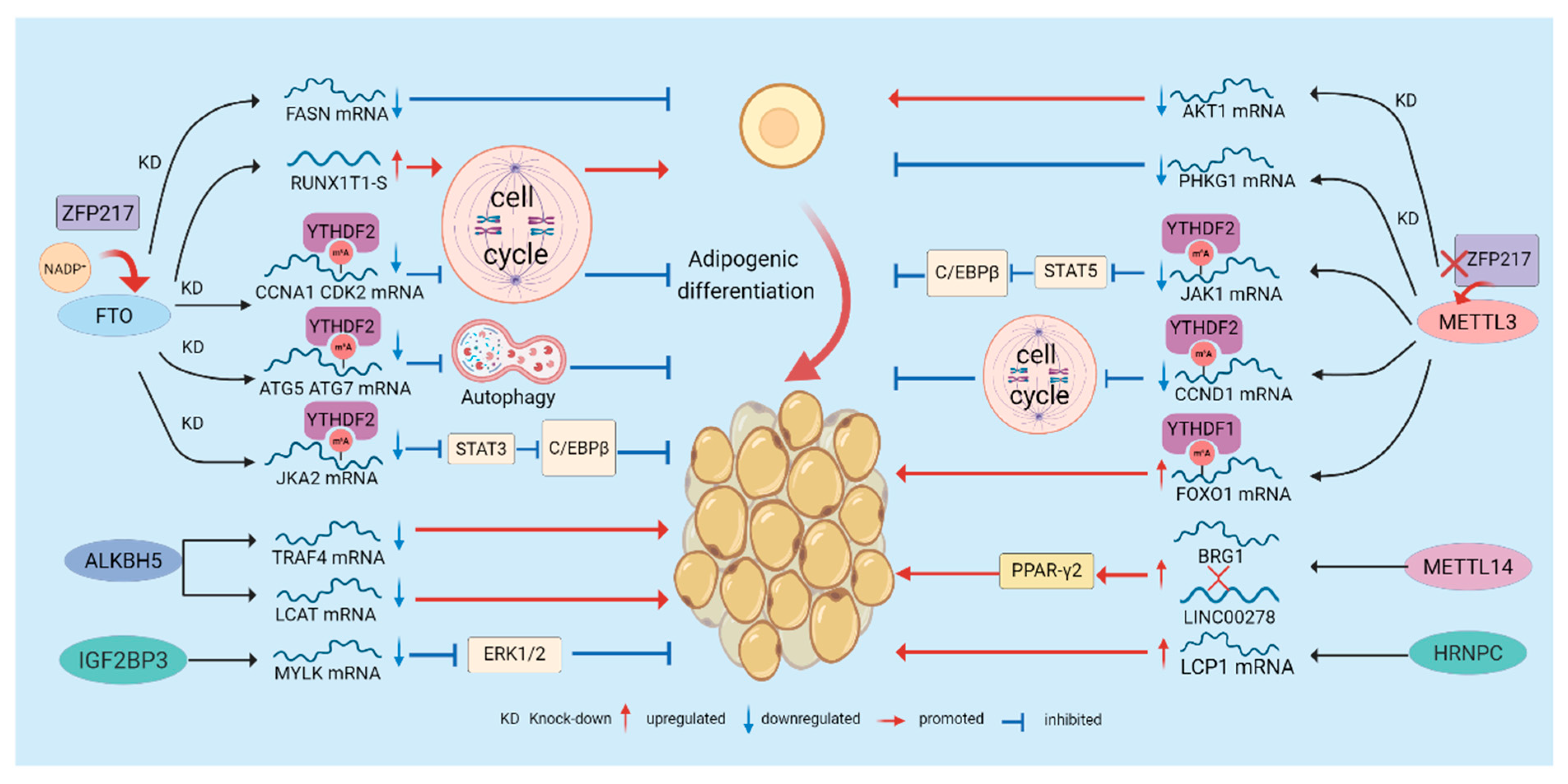

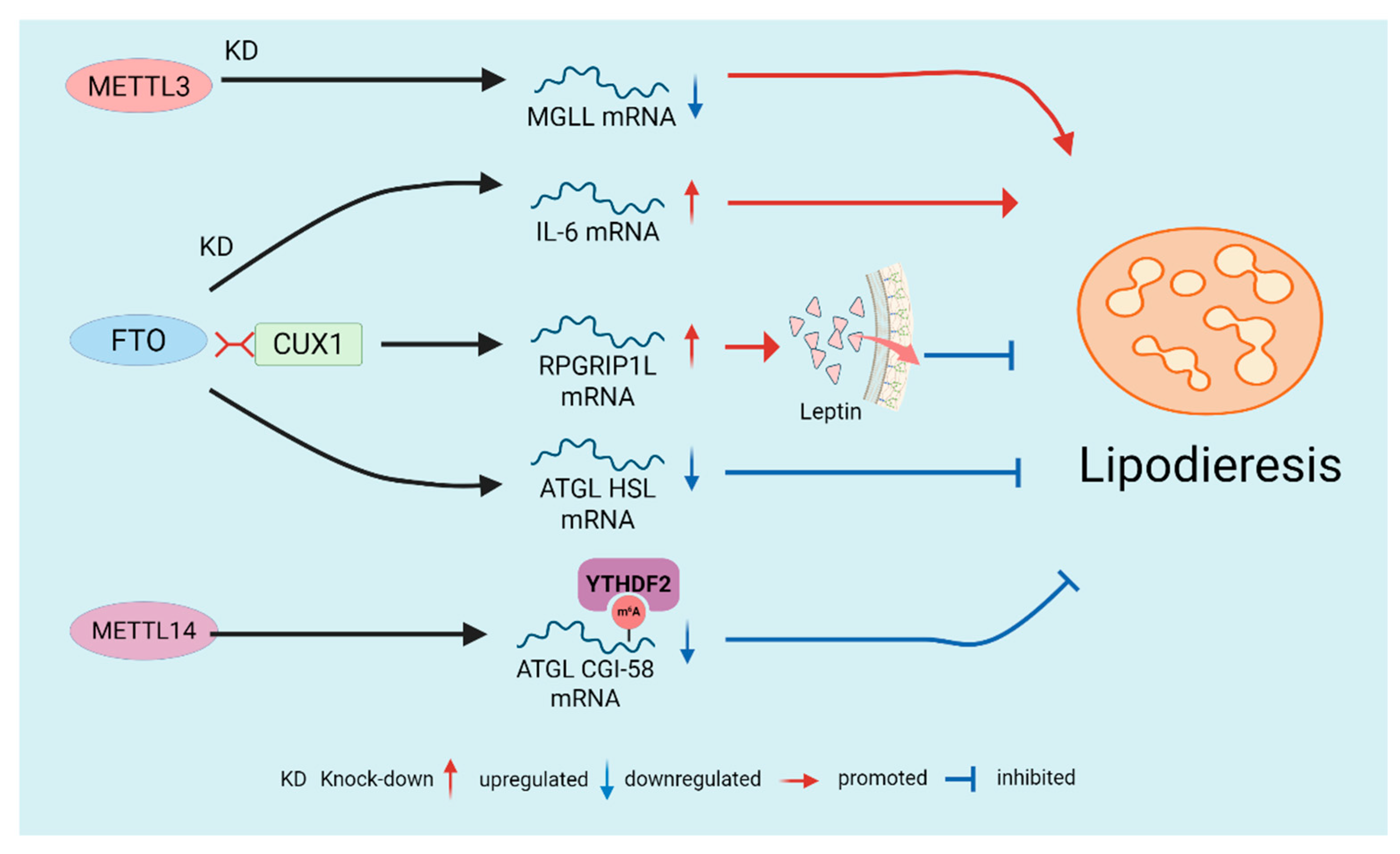
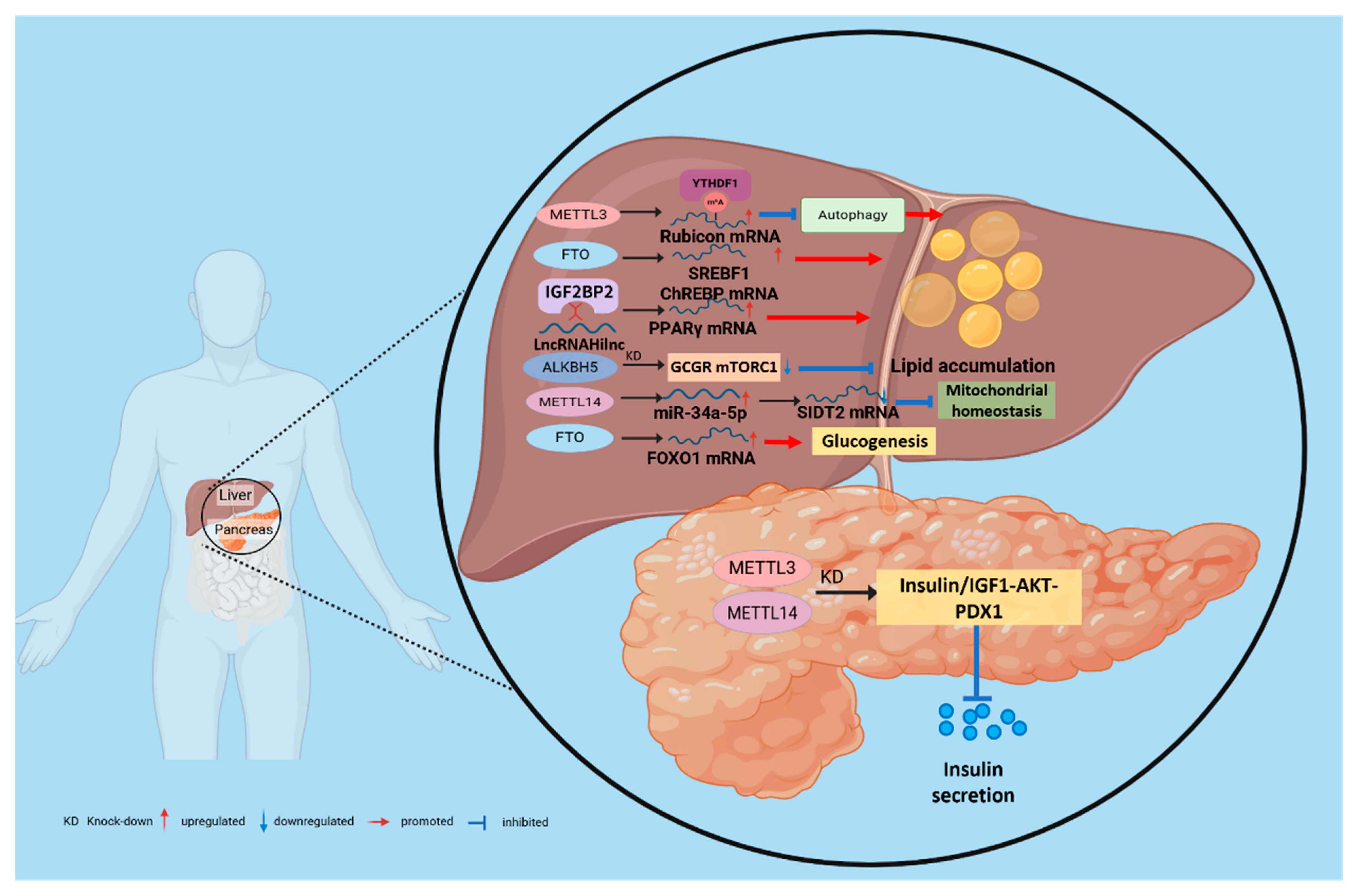


| Adipokine | Primary Source/Tissue | m6A-Related Mechanism | Observed Effects/Downstream Signals | Potential Therapeutic Implication | References |
|---|---|---|---|---|---|
| APN | WAT | lncRNAs interact with m6A-dependent epitranscriptomic mechanisms via ceRNA networks to modulate APN-mediated anti-inflammatory signaling. | m6A-related regulation may enhance or mediate the capacity of adiponectin—or adiponectin receptor agonists—to suppress inflammatory responses. | Targeting m6A modifications or associated lncRNAs could therefore potentiate the anti-inflammatory effects of APN-based therapies. | [99] |
| Leptin | Adipocytes secrete factors that act on the hypothalamus. | FTO contributes to HFD-induced leptin resistance. Upregulation of the FTO–CX3CL1 pathway increases hypothalamic SOCS3, which impairs leptin–STAT3 signaling. | FTO-mediated alterations in m6A are closely linked to leptin sensitivity, leptin resistance, and the regulation of energy metabolism. | Modulating FTO or m6A status may improve leptin responsiveness or modify energy expenditure. Natural interventions—such as RSV—have been associated with changes in m6A levels, suggesting peripheral treatments can influence the leptin axis. | [101,103] |
| FTO inhibition increases leptin levels in eWAT and elevates inflammatory markers, indicating a role for FTO in AT metabolism. | Targeting FTO can therefore alter tissue leptin concentrations and inflammatory biomarker profiles. | [102] | |||
| Leptin regulates the m6A methylation status of Plin5 by upregulating FTO expression, thereby influencing lipid-droplet formation and lipid metabolism. | Changes in the m6A status of Plin5 alter lipid-droplet dynamics and cellular energy metabolism. | These observations indicate that adipokines are not only regulated by m6A but can also act upstream to modulate m6A-related enzymes, forming feedback regulatory loops. | [78] | ||
| Resistin | Adipocyte-secreted factors are implicated in hepatic steatosis. | Melatonin promotes m6A demethylation of resistin mRNA, facilitating its degradation and reducing intracellular resistin levels. | m6A demethylation decreases resistin mRNA stability, which may alleviate endoplasmic reticulum (ER) stress–associated hepatic steatosis. | Promoting resistin mRNA degradation—for example, via melatonin treatment or modulation of relevant m6A demethylases—could represent a potential strategy to improve hepatic steatosis. | [104] |
| ANGPTL4 | Adipocytes/liver | FTO status influences cellular ANGPTL4 levels; ANGPTL4 inhibits LPL and extracellular TG hydrolysis | Modulates extracellular lipolysis via LPL inhibition; impacts circulating TG and lipolytic capacity | Targeting the FTO–ANGPTL4 axis could restore lipolysis and normalize circulating triglycerides | [92] |
| IL-6 | Adipocytes, AT macrophages | m6A influences IL-6 mRNA stability/translation; FTO KO elevates IL-6 in adipocyte models. | Increased IL-6 promotes inflammatory signaling and can stimulate lipolytic. | m6A-directed interventions could modulate inflammatory tone and lipolysis in AT. | [93,108] |
| TNF-α | AT macrophages/adipocytes | m6A regulation can alter TNF-α transcript stability and expression (context-dependent) | Drives local and systemic inflammation, contributes to insulin resistance | m6A targeting might reduce chronic adipose inflammation and improve insulin sensitivity | [107] |
| Regulator | Tissue/Cell Type | Condition/Context | Biological Outcome (Effect on Lipid Metabolism) | Molecular Mechanism/Target | Consensus or Context-Dependent | References |
|---|---|---|---|---|---|---|
| FTO | Preadipocytes | Adipogenesis | Promotes (Differentiation) | Splicing of RUNX1T1; Cell cycle regulation (CCNA2) | Consensus (Generally pro-adipogenic) | [52,54] |
| FTO | Hepatocytes | Lipogenesis/MASLD | Promotes (Steatosis) | Demethylates SREBF1, ChREBP (Stabilizes lipogenic factors) | Consensus | [112] |
| METTL3 | Preadipocytes (BMSCs) | Adipogenesis | Inhibits (Differentiation) | Methylates JAK1 (Decay), FOXO1 (Translation) | Dominant View (But complex targets) | [58,59] |
| METTL3 | Hepatocytes | MASLD/Lipotoxicity | Protective (Prevents Steatosis) | Maintains circadian/metabolic homeostasis (KO leads to MASLD) | Cell-Type Dependent (Contrasts with myeloid role) | [114] |
| METTL3 | Hepatocytes | HFD/FFA | Promotes (Lipid Accumulation) | Methylates Rubicon (Suppresses Autophagy) | Context-Dependent (Specific to autophagy inhibition) | [113] |
| METTL3 | Myeloid Cells (Macrophages) | Inflammation/MASLD | Promotes (Pathology) | Methylates inflammatory cytokines; Activates Macrophages | Cell-Type Specific (Opposite to hepatocyte function) | [115] |
| METTL3 | BAT | Thermogenesis | Promotes (Energy Expenditure) | Stabilizes PRDM16, UCP1 | Consensus (Essential for BAT identity) | [80] |
| Compound/Drug | Target | Class | Key Effects in Preclinical Metabolic Models | References |
|---|---|---|---|---|
| Entacapone | FTO | Drug Repositioning | Inhibits adipogenesis, improves insulin sensitivity, and drives hepatic gluconeogenesis via FOXO1. | [121] |
| EGCG | FTO | Natural Product | Inhibits adipocyte differentiation and increases m6A levels. | [141] |
| Meclofenamic acid | FTO | Drug Repositioning | Inhibits FTO activity and increases energy expenditure. | [142] |
| FB23 | FTO | Small-Molecule Inhibitor | Ameliorates HFD-induced obesity, metabolic dysfunction, and cognitive decline. | [102] |
| N-CDPCB/CHTB | FTO | Small-Molecule Inhibitor | Increases mRNA m6A levels in 3T3-L1cell. | [143] |
| STM2457 | METTL3 | Small-Molecule Inhibitor | Reduces hepatic lipid deposition, decreases body weight, and improves glucose tolerance and insulin sensitivity. | [144] |
| Quercetin | METTL3 | Natural Product | Inhibits METTL3 activity and reduces m6A levels at the cellular level. | [145] |
Disclaimer/Publisher’s Note: The statements, opinions and data contained in all publications are solely those of the individual author(s) and contributor(s) and not of MDPI and/or the editor(s). MDPI and/or the editor(s) disclaim responsibility for any injury to people or property resulting from any ideas, methods, instructions or products referred to in the content. |
© 2026 by the authors. Licensee MDPI, Basel, Switzerland. This article is an open access article distributed under the terms and conditions of the Creative Commons Attribution (CC BY) license.
Share and Cite
Zhu, Q.; Hu, Y.; Li, M.; Yang, H.; Zhao, L.; Zhao, Y. N6-Methyladenosine (m6A)-Mediated Regulation of Lipid Metabolism: Molecular Mechanisms, Pathological Implications, and Therapeutic Perspectives. Biomolecules 2026, 16, 101. https://doi.org/10.3390/biom16010101
Zhu Q, Hu Y, Li M, Yang H, Zhao L, Zhao Y. N6-Methyladenosine (m6A)-Mediated Regulation of Lipid Metabolism: Molecular Mechanisms, Pathological Implications, and Therapeutic Perspectives. Biomolecules. 2026; 16(1):101. https://doi.org/10.3390/biom16010101
Chicago/Turabian StyleZhu, Qingjun, Yunyi Hu, Minhao Li, Haili Yang, Le Zhao, and Yongju Zhao. 2026. "N6-Methyladenosine (m6A)-Mediated Regulation of Lipid Metabolism: Molecular Mechanisms, Pathological Implications, and Therapeutic Perspectives" Biomolecules 16, no. 1: 101. https://doi.org/10.3390/biom16010101
APA StyleZhu, Q., Hu, Y., Li, M., Yang, H., Zhao, L., & Zhao, Y. (2026). N6-Methyladenosine (m6A)-Mediated Regulation of Lipid Metabolism: Molecular Mechanisms, Pathological Implications, and Therapeutic Perspectives. Biomolecules, 16(1), 101. https://doi.org/10.3390/biom16010101