Impacts of Oxygen Tension on Developmental Competence of Preimplantation Embryos


Abstract
1. Introduction
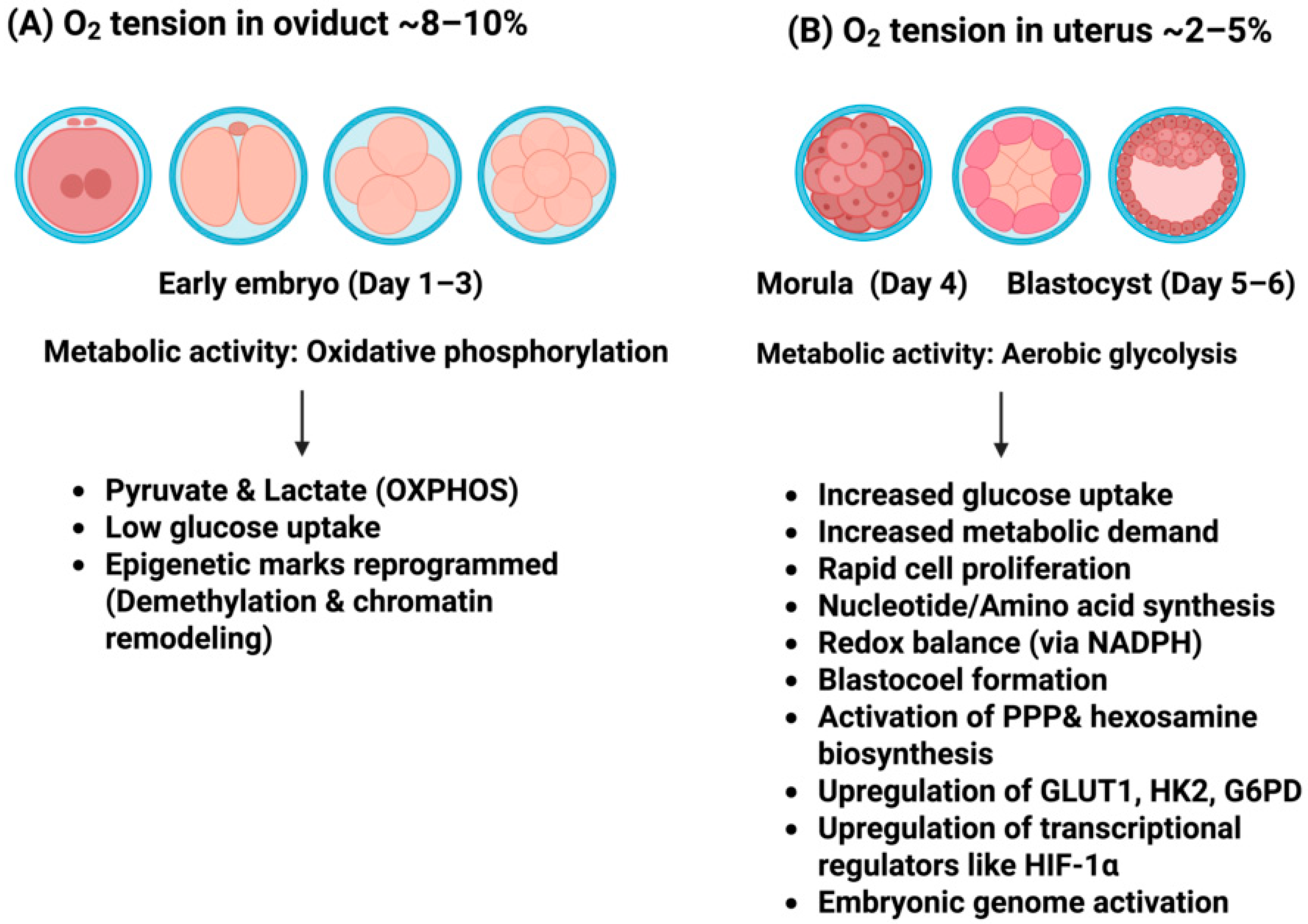
2. Oxygen Tension in the Female Reproductive Tract
3. Oxygen Tension in Culture Systems and Its Effects on Embryo Development: From Past to Present
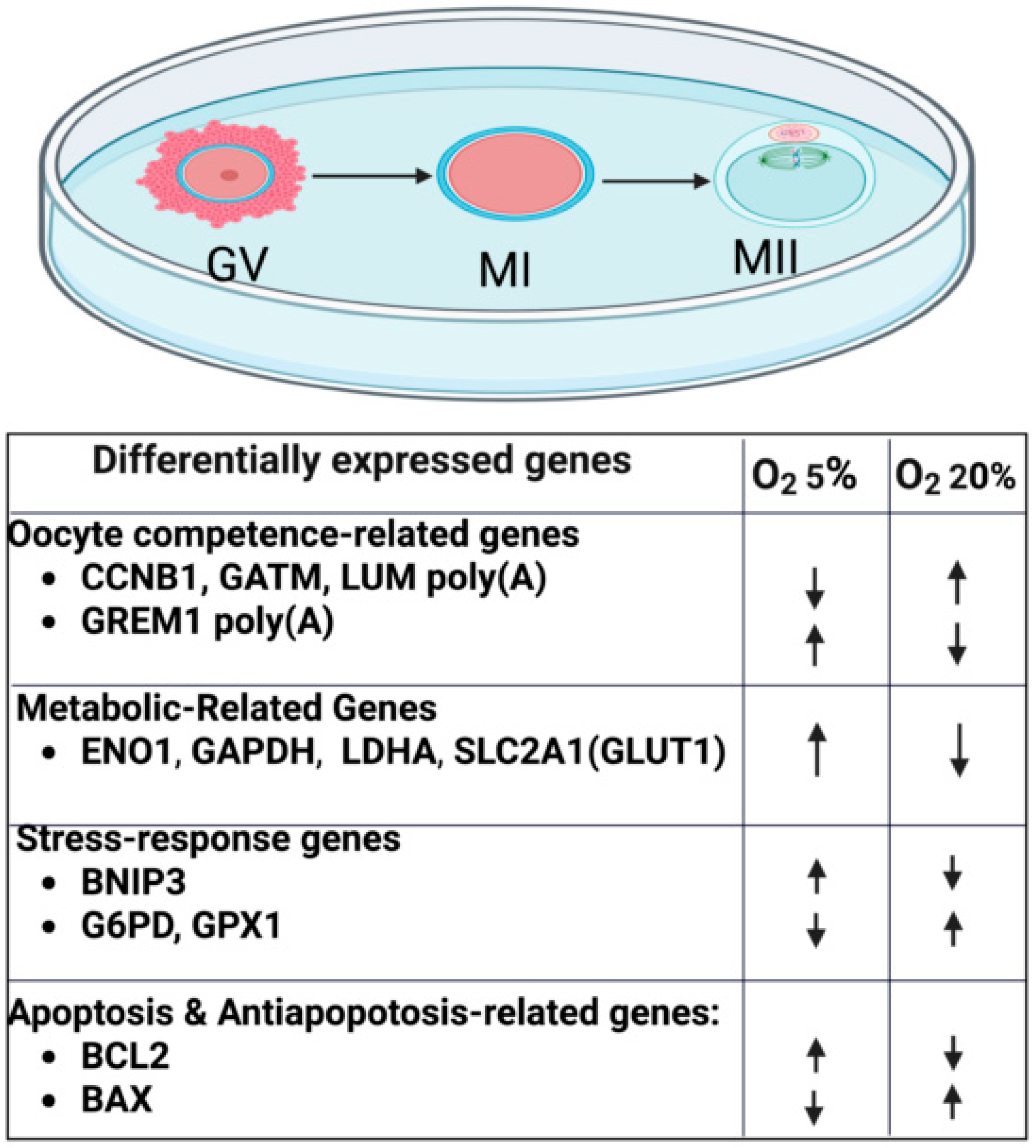
3.1. Impacts of Oxygen Tension on In Vitro Maturation (IVM) and Oocyte Competence
3.2. Reduced Oxygen, Hypoxia (Low) and Ultra-Hypoxia (Ultra-Low) in Embryo Culture Systems
3.3. Biphasic Oxygen Strategies in Culture Systems: A New Frontier for Enhancing Embryo Competence and Clinical Success
4. Oxygen Uptake and Metabolism in Pre-Implantation Embryos
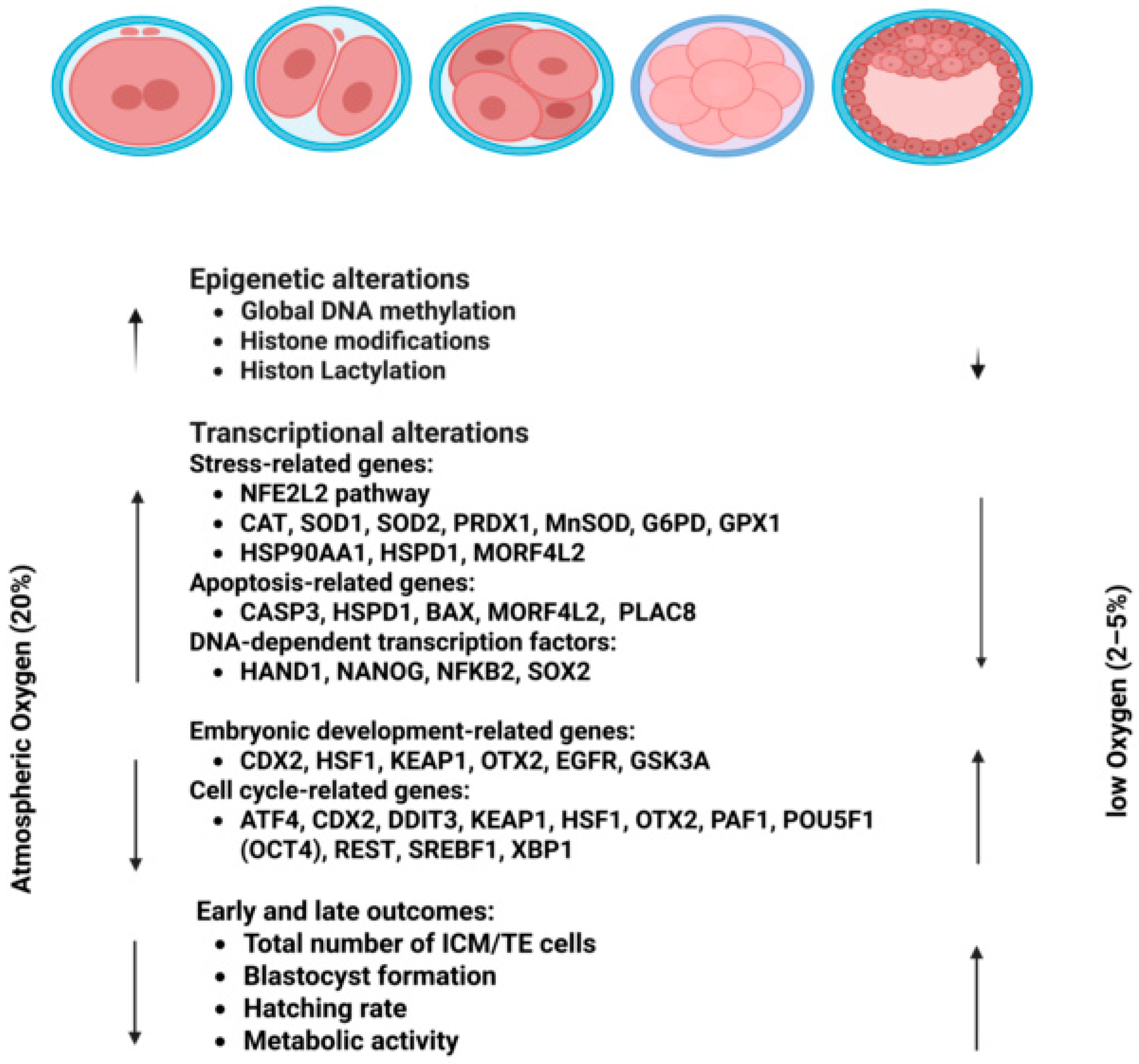
5. Impacts of Oxygen Tension on Gene Expression in Pre-Implantation Embryos
5.1. Oxygen Tension Modulates Genome-Wide Differential Expression of Genes in Pre-Implantation Embryos
5.2. Oxygen Tension Modulates Expression of Genes Involved in Regulation of Oxidative Stress and Embryo Metabolism
6. Impacts of Oxygen Tension on Epigenetic Programming in Early Embryos and Extraembryonic Tissues
6.1. Epigenetic Regulators Affected by Oxygen Tension During Pre-Implantation Development
6.2. Long-Term Epigenetic Alterations for Placenta and Postnatal Health
7. Future Perspectives
8. Conclusions
Author Contributions
Funding
Institutional Review Board Statement
Informed Consent Statement
Data Availability Statement
Conflicts of Interest
References
- Agarwal, A.; Maldonado Rosas, I.; Anagnostopoulou, C.; Cannarella, R.; Boitrelle, F.; Munoz, L.V.; Finelli, R.; Durairajanayagam, D.; Henkel, R.; Saleh, R. Oxidative stress and assisted reproduction: A comprehensive review of its pathophysiological role and strategies for optimizing embryo culture environment. Antioxidants 2022, 11, 477. [Google Scholar] [CrossRef] [PubMed]
- Khurana, N.; Wales, R. Effects of Oxygen Concentration on the Metabolism of. Reprod. Fertil. Dev. 1989, 1, 99–106. [Google Scholar] [CrossRef]
- Ng, K.Y.B.; Mingels, R.; Morgan, H.; Macklon, N.; Cheong, Y. In vivo oxygen, temperature and pH dynamics in the female reproductive tract and their importance in human conception: A systematic review. Hum. Reprod. Update 2018, 24, 15–34. [Google Scholar] [CrossRef]
- Morin, S.J. Oxygen tension in embryo culture: Does a shift to 2% O2 in extended culture represent the most physiologic system? J. Assist. Reprod. Genet. 2017, 34, 309–314. [Google Scholar] [CrossRef]
- Agarwal, A.; Allamaneni, S.S. Role of free radicals in female reproductive diseases and assisted reproduction. Reprod. Biomed. Online 2004, 9, 338–347. [Google Scholar] [CrossRef] [PubMed]
- Agarwal, A.; Saleh, R.A.; Bedaiwy, M.A. Role of reactive oxygen species in the pathophysiology of human reproduction. Fertil. Steril. 2003, 79, 829–843. [Google Scholar] [CrossRef]
- Steptoe, P.C.; Edwards, R.G.; Purdy, J.M. Human blastocysts grown in culture. Nature 1971, 229, 132–133. [Google Scholar] [CrossRef]
- Guerin, P.; El Mouatassim, S.; Menezo, Y. Oxidative stress and protection against reactive oxygen species in the pre-implantation embryo and its surroundings. Hum. Reprod. Update 2001, 7, 175–189. [Google Scholar] [CrossRef]
- Nasr-Esfahani, M.H.; Aitken, J.R.; Johnson, M.H. Hydrogen peroxide levels in mouse oocytes and early cleavage stage embryos developed in vitro or in vivo. Development 1990, 109, 501–507. [Google Scholar] [CrossRef]
- Yang, H.W.; Hwang, K.J.; Kwon, H.C.; Kim, H.S.; Choi, K.W.; Oh, K.S. Detection of reactive oxygen species (ROS) and apoptosis in human fragmented embryos. Hum. Reprod. 1998, 13, 998–1002. [Google Scholar] [CrossRef] [PubMed]
- Kwon, H.C.; Yang, H.W.; Hwang, K.J.; Yoo, J.H.; Kim, M.S.; Lee, C.H.; Ryu, H.S.; Oh, K.S. Effects of low oxygen condition on the generation of reactive oxygen species and the development in mouse embryos cultured in vitro. J. Obstet. Gynaecol. Res. 1999, 25, 359–366. [Google Scholar] [CrossRef]
- Kitagawa, Y.; Suzuki, K.; Yoneda, A.; Watanabe, T. Effects of oxygen concentration and antioxidants on the in vitro developmental ability, production of reactive oxygen species (ROS), and DNA fragmentation in porcine embryos. Theriogenology 2004, 62, 1186–1197. [Google Scholar] [CrossRef]
- Pabon, J.E., Jr.; Findley, W.E.; Gibbons, W.E. The toxic effect of short exposures to the atmospheric oxygen concentration on early mouse embryonic development. Fertil. Steril. 1989, 51, 896–900. [Google Scholar] [CrossRef]
- De Munck, N.; Janssens, R.; Segers, I.; Tournaye, H.; Van de Velde, H.; Verheyen, G. Influence of ultra-low oxygen (2%) tension on in-vitro human embryo development. Hum. Reprod. 2019, 34, 228–234. [Google Scholar] [CrossRef]
- Umaoka, Y.; Noda, Y.; Narimoto, K.; Mori, T. Effects of oxygen toxicity on early development of mouse embryos. Mol. Reprod. Dev. 1992, 31, 28–33. [Google Scholar] [CrossRef] [PubMed]
- Bavister, B. Oxygen concentration and preimplantation development. Reprod. Biomed. Online 2004, 9, 484–486. [Google Scholar] [CrossRef]
- Kasterstein, E.; Strassburger, D.; Komarovsky, D.; Bern, O.; Komsky, A.; Raziel, A.; Friedler, S.; Ron-El, R. The effect of two distinct levels of oxygen concentration on embryo development in a sibling oocyte study. J. Assist. Reprod. Genet. 2013, 30, 1073–1079. [Google Scholar] [CrossRef] [PubMed]
- Mantikou, E.; Bontekoe, S.; Van Wely, M.; Seshadri, S.; Repping, S.; Mastenbroek, S. Low oxygen concentrations for embryo culture in assisted reproductive technologies. Hum. Reprod. Update 2013, 19, 209. [Google Scholar] [CrossRef] [PubMed]
- Harvey, A.; Kind, K.; Pantaleon, M.; Armstrong, D.; Thompson, J. Oxygen-regulated gene expression in bovine blastocysts. Biol. Reprod. 2004, 71, 1108–1119. [Google Scholar] [CrossRef]
- Kind, K.L.; Collett, R.A.; Harvey, A.J.; Thompson, J.G. Oxygen-regulated expression of GLUT-1, GLUT-3, and VEGF in the mouse blastocyst. Mol. Reprod. Dev. Inc. Gamete Res. 2005, 70, 37–44. [Google Scholar] [CrossRef]
- Rinaudo, P.F.; Giritharan, G.; Talbi, S.; Dobson, A.T.; Schultz, R.M. Effects of oxygen tension on gene expression in preimplantation mouse embryos. Fertil. Steril. 2006, 86, 1265.e1–1265.e36. [Google Scholar] [CrossRef] [PubMed]
- Gardner, D.K.; Lane, M. Ex vivo early embryo development and effects on gene expression and imprinting. Reprod. Fertil. Dev. 2005, 17, 361–370. [Google Scholar] [CrossRef]
- Li, W.; Goossens, K.; Van Poucke, M.; Forier, K.; Braeckmans, K.; Van Soom, A.; Peelman, L.J. High oxygen tension increases global methylation in bovine 4-cell embryos and blastocysts but does not affect general retrotransposon expression. Reprod. Fertil. Dev. 2016, 28, 948–959. [Google Scholar] [CrossRef] [PubMed]
- Gaspar, R.C.; Arnold, D.R.; Correa, C.A.; da Rocha, C.V., Jr.; Penteado, J.C.; Del Collado, M.; Vantini, R.; Garcia, J.M.; Lopes, F.L. Oxygen tension affects histone remodeling of in vitro–produced embryos in a bovine model. Theriogenology 2015, 83, 1408–1415. [Google Scholar] [CrossRef]
- Ghosh, J.; Coutifaris, C.; Sapienza, C.; Mainigi, M. Global DNA methylation levels are altered by modifiable clinical manipulations in assisted reproductive technologies. Clin. Epigenetics 2017, 9, 14. [Google Scholar] [CrossRef]
- Katz-Jaffe, M.G.; Linck, D.W.; Schoolcraft, W.B.; Gardner, D.K. A proteomic analysis of mammalian preimplantation embryonic development. Reproduction 2005, 130, 899–905. [Google Scholar] [CrossRef]
- Wale, P.; Gardner, D. Time-lapse analysis of mouse embryo development in oxygen gradients. Reprod. Biomed. Online 2010, 21, 402–410. [Google Scholar] [CrossRef]
- Kirkegaard, K.; Hindkjaer, J.J.; Ingerslev, H.J. Effect of oxygen concentration on human embryo development evaluated by time-lapse monitoring. Fertil. Steril. 2013, 99, 738–744. e734. [Google Scholar] [CrossRef]
- Wale, P.L.; Gardner, D.K. Oxygen regulates amino acid turnover and carbohydrate uptake during the preimplantation period of mouse embryo development. Biol. Reprod. 2012, 87, 21–28. [Google Scholar] [CrossRef] [PubMed]
- Waldenström, U.; Engström, A.-B.; Hellberg, D.; Nilsson, S. Low-oxygen compared with high-oxygen atmosphere in blastocyst culture, a prospective randomized study. Fertil. Steril. 2009, 91, 2461–2465. [Google Scholar] [CrossRef]
- Meintjes, M.; Chantilis, S.J.; Douglas, J.D.; Rodriguez, A.J.; Guerami, A.R.; Bookout, D.M.; Barnett, B.D.; Madden, J.D. A controlled randomized trial evaluating the effect of lowered incubator oxygen tension on live births in a predominantly blastocyst transfer program. Hum. Reprod. 2009, 24, 300–307. [Google Scholar] [CrossRef] [PubMed]
- Kovačič, B.; Vlaisavljević, V. Influence of atmospheric versus reduced oxygen concentration on development of human blastocysts in vitro: A prospective study on sibling oocytes. Reprod. Biomed. Online 2008, 17, 229–236. [Google Scholar] [CrossRef]
- Yang, Y.; Xu, Y.; Ding, C.; Khoudja, R.Y.; Lin, M.; Awonuga, A.O.; Dai, J.; Puscheck, E.E.; Rappolee, D.A.; Zhou, C. Comparison of 2, 5, and 20% O2 on the development of post-thaw human embryos. J. Assist. Reprod. Genet. 2016, 33, 919–927. [Google Scholar] [CrossRef]
- Kaser, D.; Bogale, B.; Sarda, V.; Farland, L.; Racowsky, C. Randomized controlled trial of low (5%) vs. ultralow (2%) oxygen tension for in vitro development of human embryos. Fertil. Steril. 2016, 106, e4. [Google Scholar] [CrossRef]
- Fischer, B.; Bavister, B. Oxygen tension in the oviduct and uterus of rhesus monkeys, hamsters and rabbits. Reproduction 1993, 99, 673–679. [Google Scholar] [CrossRef] [PubMed]
- Ottosen, L.D.; Hindkjær, J.; Husth, M.; Petersen, D.E.; Kirk, J.; Ingerslev, H.J. Observations on intrauterine oxygen tension measured by fibre-optic microsensors. Reprod. Biomed. Online 2006, 13, 380–385. [Google Scholar] [CrossRef]
- Mastroianni, L.; Jones, R. Oxygen tension within the rabbit fallopian tube. Reproduction 1965, 9, 99–102. [Google Scholar] [CrossRef]
- Maas, D.H.; Storey, B.T.; Mastroianni, L., Jr. Oxygen Tension in the Oviduct of the Rhesus Monkey (Macaca Mulatta). Fertil. Steril. 1976, 27, 1312–1317. [Google Scholar] [CrossRef]
- Rodesch, F.; Simon, P.; Donner, C.; Jauniaux, E. Oxygen measurements in endometrial and trophoblastic tissues during early pregnancy. Obstet. Gynecol. 1992, 80, 283–285. [Google Scholar]
- Krisher, R.L.; Prather, R.S. A role for the Warburg effect in preimplantation embryo development: Metabolic modification to support rapid cell proliferation. Mol. Reprod. Dev. 2012, 79, 311–320. [Google Scholar] [CrossRef]
- Nevo, A.C. Dependence of sperm motility and respiration on oxygen concentration. Reproduction 1965, 9, 103–107. [Google Scholar] [CrossRef] [PubMed]
- Wenger, R.H.; Kurtcuoglu, V.; Scholz, C.C.; Marti, H.H.; Hoogewijs, D. Frequently asked questions in hypoxia research. Hypoxia 2015, 3, 35–43. [Google Scholar] [CrossRef]
- Lim, M.; Thompson, J.G.; Dunning, K.R. HYPOXIA AND REPRODUCTIVE HEALTH: Hypoxia and ovarian function: Follicle development, ovulation, oocyte maturation. Reproduction 2021, 161, F33–F40. [Google Scholar] [CrossRef]
- e Paula, L.d.C.; Andrzejewski, J.; Julian, D.; Spicer, L.; Hansen, P. Oxygen and steroid concentrations in preovulatory follicles of lactating dairy cows exposed to acute heat stress. Theriogenology 2008, 69, 805–813. [Google Scholar] [CrossRef]
- Redding, G.P.; Bronlund, J.E.; Hart, A.L. Theoretical investigation into the dissolved oxygen levels in follicular fluid of the developing human follicle using mathematical modelling. Reprod. Fertil. Dev. 2008, 20, 408–417. [Google Scholar] [CrossRef] [PubMed]
- Bermejo-Álvarez, P.; Lonergan, P.; Rizos, D.; Gutiérrez-Adán, A. Low oxygen tension during IVM improves bovine oocyte competence and enhances anaerobic glycolysis. Reprod. Biomed. Online 2010, 20, 341–349. [Google Scholar] [CrossRef]
- Hashimoto, S.; Minami, N.; Takakura, R.; Yamada, M.; Imai, H.; Kashima, N. Low oxygen tension during in vitro maturation is beneficial for supporting the subsequent development of bovine cumulus–oocyte complexes. Mol. Reprod. Dev. Inc. Gamete Res. 2000, 57, 353–360. [Google Scholar] [CrossRef]
- Racedo, S.; Wrenzycki, C.; Lepikhov, K.; Salamone, D.; Walter, J.; Niemann, H. Epigenetic modifications and related mRNA expression during bovine oocyte in vitro maturation. Reprod. Fertil. Dev. 2009, 21, 738–748. [Google Scholar] [CrossRef]
- Knijn, H.; Wrenzycki, C.; Hendriksen, P.; Vos, P.; Herrmann, D.; Van der Weijden, G.; Niemann, H.; Dieleman, S. Effects of oocyte maturation regimen on the relative abundance of gene transcripts in bovine blastocysts derived in vitro or in vivo. Reproduction 2002, 124, 365–375. [Google Scholar] [CrossRef] [PubMed]
- Kumar, P.; Verma, A.; Kumar, M.; De, S.; Kumar, R.; Datta, T.K. Expression pattern of glucose metabolism genes correlate with development rate of buffalo oocytes and embryos in vitro under low oxygen condition. J. Assist. Reprod. Genet. 2015, 32, 471–478. [Google Scholar] [CrossRef]
- El-Sanea, A.M.; Abdoon, A.S.S.; Kandil, O.M.; El-Toukhy, N.E.; El-Maaty, A.M.A.; Ahmed, H.H. Effect of oxygen tension and antioxidants on the developmental competence of buffalo oocytes cultured in vitro. Vet. World 2021, 14, 78. [Google Scholar] [CrossRef]
- Iwamoto, M.; Onishi, A.; Fuchimoto, D.-i.; Somfai, T.; Takeda, K.; Tagami, T.; Hanada, H.; Noguchi, J.; Kaneko, H.; Nagai, T. Low oxygen tension during in vitro maturation of porcine follicular oocytes improves parthenogenetic activation and subsequent development to the blastocyst stage. Theriogenology 2005, 63, 1277–1289. [Google Scholar] [CrossRef] [PubMed]
- Kang, J.-T.; Atikuzzaman, M.; Kwon, D.-K.; Park, S.-J.; Kim, S.-J.; Moon, J.-H.; Koo, O.-J.; Jang, G.; Lee, B.-C. Developmental competence of porcine oocytes after in vitro maturation and in vitro culture under different oxygen concentrations. Zygote 2012, 20, 1–8. [Google Scholar] [CrossRef]
- Banwell, K.; Lane, M.; Russell, D.; Kind, K.; Thompson, J. Oxygen concentration during mouse oocyte in vitro maturation affects embryo and fetal development. Hum. Reprod. 2007, 22, 2768–2775. [Google Scholar] [CrossRef] [PubMed]
- Akin, N.; Ates, G.; von Mengden, L.; Herta, A.-C.; Meriggioli, C.; Billooye, K.; Stocker, W.A.; Ghesquiere, B.; Harrison, C.A.; Cools, W. Effects of lactate, super-GDF9, and low oxygen tension during bi-phasic in vitro maturation on the bioenergetic profiles of mouse cumulus–oocyte complex. Biol. Reprod. 2023, 109, 432–449. [Google Scholar] [CrossRef]
- Naillat, F.; Saadeh, H.; Nowacka-Woszuk, J.; Gahurova, L.; Santos, F.; Tomizawa, S.-i.; Kelsey, G. Oxygen concentration affects de novo DNA methylation and transcription in in vitro cultured oocytes. Clin. Epigenetics 2021, 13, 132. [Google Scholar] [CrossRef] [PubMed]
- Inoue, Y.; Akano, S.; Suzuki, Y.; Ushiroshoji, K.; Kamio, A.; Shirasuna, K.; Iwata, H. Effect of Oxygen Tension Modification During Oocyte Maturation on Porcine Oocyte Quality. Vet. Sci. 2025, 12, 954. [Google Scholar] [CrossRef]
- Bennemann, J.; Grothmann, H.; Wrenzycki, C. Reduced oxygen concentration during in vitro oocyte maturation alters global DNA methylation in the maternal pronucleus of subsequent zygotes in cattle. Mol. Reprod. Dev. 2018, 85, 849–857. [Google Scholar] [CrossRef]
- e Paula, L.D.C.; Hansen, P. Interactions between oxygen tension and glucose concentration that modulate actions of heat shock on bovine oocytes during in vitro maturation. Theriogenology 2007, 68, 763–770. [Google Scholar] [CrossRef]
- Pinyopummintr, T.; Bavister, B. Optimum gas atmosphere for in vitro maturation and in vitro fertilization of bovine oocytes. Theriogenology 1995, 44, 471–477. [Google Scholar] [CrossRef]
- He, H.; Zhang, H.; Li, Q.; Fan, J.; Pan, Y.; Zhang, T.; Robert, N.; Zhao, L.; Hu, X.; Han, X. Low oxygen concentrations improve yak oocyte maturation and enhance the developmental competence of preimplantation embryos. Theriogenology 2020, 156, 46–58. [Google Scholar] [CrossRef]
- Anckaert, E.; Ates, G.; Liveyns, A.; Van Ranst, H.; Mostinckx, L.; Cools, W.; Mortier, A.; Massie, A.; De Vos, M.; Akin, N. Effects of physiological oxygen tension on human cumulus-oocyte-complex metabolism during in vitro maturation: An exploratory study. J. Ovarian Res. 2025, 18, 270. [Google Scholar] [CrossRef]
- Pham, H.H.; Tran, V.Q.; Le, A.H.; Nguyen, D.L.; Pham, T.D.; Vu, A.L.; Le, T.K.; Le, H.L.; Huynh, B.G.; Ho, T.M. Impact of low versus high oxygen tension on human oocyte maturation during biphasic capacitation IVM (CAPA-IVM). J. Assist. Reprod. Genet. 2025, 42, 1805–1812. [Google Scholar] [CrossRef]
- Sánchez, F.; Lolicato, F.; Romero, S.; De Vos, M.; Van Ranst, H.; Verheyen, G.; Anckaert, E.; Smitz, J. An improved IVM method for cumulus-oocyte complexes from small follicles in polycystic ovary syndrome patients enhances oocyte competence and embryo yield. Hum. Reprod. 2017, 32, 2056–2068. [Google Scholar] [CrossRef]
- Sanchez, F.; Le, A.H.; Ho, V.N.; Romero, S.; Van Ranst, H.; De Vos, M.; Gilchrist, R.B.; Ho, T.M.; Vuong, L.N.; Smitz, J. Biphasic in vitro maturation (CAPA-IVM) specifically improves the developmental capacity of oocytes from small antral follicles. J. Assist. Reprod. Genet. 2019, 36, 2135–2144. [Google Scholar] [CrossRef] [PubMed]
- Vuong, L.N.; Nguyen, L.K.; Le, A.H.; Pham, H.H.; Ho, V.N.; Le, H.L.; Pham, T.D.; Dang, V.Q.; Phung, T.H.; Smitz, J. Fresh embryo transfer versus freeze-only after in vitro maturation with a pre-maturation step in women with high antral follicle count: A randomized controlled pilot study. J. Assist. Reprod. Genet. 2021, 38, 1293–1302. [Google Scholar] [CrossRef] [PubMed]
- Pham, H.; Le, A.; Nguyen, A.; Ha, U.; Nguyen, T.; Pham, T.; Ho, T.; Vuong, L. P-580 Cumulative live birth rate of oocyte in-vitro maturation with a pre-maturation step in women with polycystic ovary syndrome or high antral follicle count. Hum. Reprod. 2022, 37, deac107. 535. [Google Scholar] [CrossRef]
- Sutton-McDowall, M.L.; Gilchrist, R.B.; Thompson, J.G. The pivotal role of glucose metabolism in determining oocyte developmental competence. Reproduction 2010, 139, 685. [Google Scholar] [CrossRef]
- de los Santos, M.J.; Gámiz, P.; Albert, C.; Galán, A.; Viloria, T.; Pérez, S.; Romero, J.L.; Remohï, J. Reduced oxygen tension improves embryo quality but not clinical pregnancy rates: A randomized clinical study into ovum donation cycles. Fertil. Steril. 2013, 100, 402–407. [Google Scholar] [CrossRef]
- Barberi, M.; Orlando, G.; Sciajno, R.; Serrao, L.; Fava, L.; Preti, S.; Bonu, M.; Borini, A. High or low oxygen tension Comparison of embryo culture in different incubators: P-174. Hum. Reprod. 2012, 27, ii162–ii205. [Google Scholar]
- Dumoulin, J.C.; Meijers, C.J.; Bras, M.; Coonen, E.; Geraedts, J.P.; Evers, J.L. Effect of oxygen concentration on human in-vitro fertilization and embryo culture. Hum. Reprod. 1999, 14, 465–469. [Google Scholar] [CrossRef] [PubMed]
- Dumoulin, J.C.; Vanvuchelen, R.C.; Land, J.A.; Pieters, M.H.; Geraedts, J.P.; Evers, J.L. Effect of oxygen concentration on in vitro fertilization and embryo culture in the human and the mouse. Fertil. Steril. 1995, 63, 115–119. [Google Scholar] [CrossRef] [PubMed]
- Gardner, D.K. The impact of physiological oxygen during culture, and vitrification for cryopreservation, on the outcome of extended culture in human IVF. Reprod. Biomed. Online 2016, 32, 137–141. [Google Scholar] [CrossRef]
- Peng, Z.F.; Shi, S.L.; Jin, H.X.; Yao, G.D.; Wang, E.Y.; Yang, H.Y.; Song, W.Y.; Sun, Y.P. Impact of oxygen concentrations on fertilization, cleavage, implantation, and pregnancy rates of in vitro generated human embryos. Int. J. Clin. Exp. Med. 2015, 8, 6179–6185. [Google Scholar]
- Kelley, R.L.; Gardner, D.K. Combined effects of individual culture and atmospheric oxygen on preimplantation mouse embryos in vitro. Reprod. Biomed. Online 2016, 33, 537–549. [Google Scholar] [CrossRef]
- Nastri, C.O.; Nóbrega, B.N.; Teixeira, D.M.; Amorim, J.; Diniz, L.M.; Barbosa, M.W.; Giorgi, V.S.; Pileggi, V.N.; Martins, W.P. Low versus atmospheric oxygen tension for embryo culture in assisted reproduction: A systematic review and meta-analysis. Fertil. Steril. 2016, 106, 95–104.e17. [Google Scholar] [CrossRef] [PubMed]
- Kelley, R.L.; Gardner, D.K. Individual culture and atmospheric oxygen during culture affect mouse preimplantation embryo metabolism and post-implantation development. Reprod. Biomed. Online 2019, 39, 3–18. [Google Scholar] [CrossRef]
- Olson, S.; Seidel, G., Jr. Reduced oxygen tension and EDTA improve bovine zygote development in a chemically defined medium. J. Anim. Sci. 2000, 78, 152–157. [Google Scholar] [CrossRef]
- Lim, J.; Reggio, B.; Godke, R.; Hansel, W. Development of in-vitro-derived bovine embryos cultured in 5% CO2 in air or in 5% O2, 5% CO2 and 90% N2. Hum. Reprod. 1999, 14, 458–464. [Google Scholar] [CrossRef]
- Shahzad, Q.; Pu, L.; Ahmed Wadood, A.; Waqas, M.; Xie, L.; Shekhar Pareek, C.; Xu, H.; Liang, X.; Lu, Y. Proteomics analysis reveals that Warburg effect along with modification in lipid metabolism improves in vitro embryo development under low oxygen. Int. J. Mol. Sci. 2020, 21, 1996. [Google Scholar] [CrossRef]
- Kea, B.; Gebhardt, J.; Watt, J.; Westphal, L.M.; Lathi, R.B.; Milki, A.A.; Behr, B. Effect of reduced oxygen concentrations on the outcome of in vitro fertilization. Fertil. Steril. 2007, 87, 213–216. [Google Scholar] [CrossRef]
- Ciray, H.N.; Aksoy, T.; Yaramanci, K.; Karayaka, I.; Bahceci, M. In vitro culture under physiologic oxygen concentration improves blastocyst yield and quality: A prospective randomized survey on sibling oocytes. Fertil. Steril. 2009, 91, 1459–1461. [Google Scholar] [CrossRef]
- Rendón Abad, M.; Serra, V.; Gamiz, P.; de Los Santos, J.M.; Remohí, J.; Navarro, A.T.; de Los Santos, M.J. The influence of oxygen concentration during embryo culture on obstetric and neonatal outcomes: A secondary analysis of a randomized controlled trial. Hum. Reprod. 2020, 35, 2017–2025. [Google Scholar] [CrossRef] [PubMed]
- Van Montfoort, A.P.; Arts, E.G.; Wijnandts, L.; Sluijmer, A.; Pelinck, M.-J.; Land, J.A.; Van Echten-Arends, J. Reduced oxygen concentration during human IVF culture improves embryo utilization and cumulative pregnancy rates per cycle. Hum. Reprod. Open 2020, 2020, hoz036. [Google Scholar] [CrossRef]
- Chen, L.; Ma, S.; Xie, M.; Gong, F.; Lu, C.; Zhang, S.; Lin, G. Oxygen concentration from days 1 to 3 after insemination affects the embryo culture quality, cumulative live birth rate, and perinatal outcomes. J. Assist. Reprod. Genet. 2023, 40, 2609–2618. [Google Scholar] [CrossRef]
- de Los Santos, M.J.; Gámiz, P.; de Los Santos, J.M.; Romero, J.L.; Prados, N.; Alonso, C.; Remohi, J.; Dominguez, F. The metabolomic profile of spent culture media from day-3 human embryos cultured under low oxygen tension. PLoS ONE 2015, 10, e0142724. [Google Scholar] [CrossRef]
- Christianson, M.S.; Zhao, Y.; Shoham, G.; Granot, I.; Safran, A.; Khafagy, A.; Leong, M.; Shoham, Z. Embryo catheter loading and embryo culture techniques: Results of a worldwide web-based survey. J. Assist. Reprod. Genet. 2014, 31, 1029–1036. [Google Scholar] [CrossRef]
- Labs, E.G.G.o.G.P.i.I.; De los Santos, M.J.; Apter, S.; Coticchio, G.; Debrock, S.; Lundin, K.; Plancha, C.E.; Prados, F.; Rienzi, L.; Verheyen, G. Revised guidelines for good practice in IVF laboratories (2015). Hum. Reprod. 2016, 31, 685–686. [Google Scholar] [CrossRef] [PubMed]
- Belli, M.; Zhang, L.; Liu, X.; Donjacour, A.; Ruggeri, E.; Palmerini, M.G.; Nottola, S.A.; Macchiarelli, G.; Rinaudo, P. Oxygen concentration alters mitochondrial structure and function in in vitro fertilized preimplantation mouse embryos. Hum. Reprod. 2019, 34, 601–611. [Google Scholar] [CrossRef] [PubMed]
- Belli, M.; Rinaudo, P.; Palmerini, M.G.; Ruggeri, E.; Antonouli, S.; Nottola, S.A.; Macchiarelli, G. Pre-implantation mouse embryos cultured in vitro under different oxygen concentrations show altered ultrastructures. Int. J. Environ. Res. Public Health 2020, 17, 3384. [Google Scholar] [CrossRef]
- Kaskar, K.; Cochran, R.; Hamilton, D.; David, A.; Henkel, R.; Gibbons, W.; Blesson, C. Does culture of embryos in an ultra-low (2%) oxygen environment yield better blastocyst development than 6% oxygen using time-lapse morphokinetics? Reprod. Biomed. Online 2019, 39, e9. [Google Scholar] [CrossRef]
- Varghese, J.; Link, B.; Wong, B.; Thundathil, J.C. Comparison of the developmental competence of in vitro-produced mouse embryos cultured under 5 versus 2% O2 with in vivo-derived blastocysts. J. Assist. Reprod. Genet. 2024, 41, 3089–3103. [Google Scholar] [CrossRef] [PubMed]
- Ma, Y.-Y.; Chen, H.-W.; Tzeng, C.-R. Low oxygen tension increases mitochondrial membrane potential and enhances expression of antioxidant genes and implantation protein of mouse blastocyst cultured in vitro. J. Ovarian Res. 2017, 10, 47. [Google Scholar] [CrossRef]
- Feil, D.; Lane, M.; Roberts, C.T.; Kelley, R.L.; Edwards, L.J.; Thompson, J.G.; Kind, K.L. Effect of culturing mouse embryos under different oxygen concentrations on subsequent fetal and placental development. J. Physiol. 2006, 572, 87–96. [Google Scholar] [CrossRef]
- Balasubramanian, S.; Son, W.; Kumar, B.M.; Ock, S.; Yoo, J.; Im, G.; Choe, S.; Rho, G. Expression pattern of oxygen and stress-responsive gene transcripts at various developmental stages of in vitro and in vivo preimplantation bovine embryos. Theriogenology 2007, 68, 265–275. [Google Scholar] [CrossRef]
- Yuan, Y.Q.; Van Soom, A.; Coopman, F.O.; Mintiens, K.; Boerjan, M.L.; Van Zeveren, A.; de Kruif, A.; Peelman, L.J. Influence of oxygen tension on apoptosis and hatching in bovine embryos cultured in vitro. Theriogenology 2003, 59, 1585–1596. [Google Scholar] [CrossRef]
- Nakagawa, K.; Shirai, A.; Nishi, Y.; Sugiyama, R.; Kuribayashi, Y.; Sugiyama, R.; Inoue, M. A study of the effect of an extremely low oxygen concentration on the development of human embryos in assisted reproductive technology. Reprod. Med. Biol. 2010, 9, 163–168. [Google Scholar] [CrossRef]
- Fawzy, M.; Emad, M.; AbdelRahman, M.Y.; Abdelghafar, H.; Hafez, F.F.A.; Bedaiwy, M.A. Impact of 3.5% O2 culture on embryo development and clinical outcomes: A comparative study. Fertil. Steril. 2017, 108, 635–641. [Google Scholar] [CrossRef]
- Ferrieres-Hoa, A.; Gala, A.; Haouzi, D.; Roman, K.; Hamamah, S. Ultra-low (2%) oxygen tension positively affects blastocyst quality. Fertil. Steril. 2017, 108, e151. [Google Scholar] [CrossRef]
- Morin, S.; Wang, T.; Tao, X.; Earnhardt, M.; Seli, E.; Scott, R. Ultra-low oxygen (O2) tension after day 3 of in vitro development does not alter blastocyst transcriptome: A comparison of 2% versus 5% o2 tension in extended culture. Fertil. Steril. 2018, 110, e51. [Google Scholar] [CrossRef]
- Herbemont, C.; Labrosse, J.; Bennani-Smires, B.; Cedrin-Durnerin, I.; Peigne, M.; Sermondade, N.; Sarandi, S.; Vivot, A.; Vicaut, E.; Talib, Z. Impact of oxygen tension according to embryo stage of development: A prospective randomized study. Sci. Rep. 2021, 11, 22313. [Google Scholar] [CrossRef]
- Boskovic, N.; Ivask, M.; Yazgeldi Gunaydin, G.; Yaşar, B.; Katayama, S.; Salumets, A.; Org, T.; Kurg, A.; Lundin, K.; Tuuri, T. Oxygen level alters energy metabolism in bovine preimplantation embryos. Sci. Rep. 2025, 15, 11327. [Google Scholar] [CrossRef]
- Chen, H.-H.; Lee, C.-I.; Huang, C.-C.; Cheng, E.-H.; Lee, T.-H.; Lin, P.Y.; Chen, C.-H.; Lee, M.-S. Biphasic oxygen tension promotes the formation of transferable blastocysts in patients without euploid embryos in previous monophasic oxygen cycles. Sci. Rep. 2023, 13, 4330. [Google Scholar] [CrossRef]
- Li, M.; Xue, X.; Shi, J. Ultralow Oxygen Tension (2%) Is Beneficial for Blastocyst Formation of In Vitro Human Low-Quality Embryo Culture. BioMed Res. Int. 2022, 2022, 9603185. [Google Scholar] [CrossRef] [PubMed]
- Kaser, D.J.; Bogale, B.; Sarda, V.; Farland, L.V.; Williams, P.L.; Racowsky, C. Randomized controlled trial of low (5%) versus ultralow (2%) oxygen for extended culture using bipronucleate and tripronucleate human preimplantation embryos. Fertil. Steril. 2018, 109, 1030–1037.e1032. [Google Scholar] [CrossRef] [PubMed]
- Brouillet, S.; Baron, C.; Barry, F.; Andreeva, A.; Haouzi, D.; Gala, A.; Ferrières-Hoa, A.; Loup, V.; Anahory, T.; Ranisavljevic, N. Biphasic (5–2%) oxygen concentration strategy significantly improves the usable blastocyst and cumulative live birth rates in in vitro fertilization. Sci. Rep. 2021, 11, 22461. [Google Scholar] [CrossRef]
- Chu, L.-F.; Leng, N.; Zhang, J.; Hou, Z.; Mamott, D.; Vereide, D.T.; Choi, J.; Kendziorski, C.; Stewart, R.; Thomson, J.A. Single-cell RNA-seq reveals novel regulators of human embryonic stem cell differentiation to definitive endoderm. Genome Biol. 2016, 17, 173. [Google Scholar] [CrossRef]
- Croxatto, H.B. Physiology of gamete and embryo transport through the fallopian tube. Reprod. Biomed. Online 2002, 4, 160–169. [Google Scholar] [CrossRef]
- Leese, H.J.; Baumann, C.G.; Brison, D.R.; McEvoy, T.G.; Sturmey, R.G. Metabolism of the viable mammalian embryo: Quietness revisited. Mol. Hum. Reprod. 2008, 14, 667–672. [Google Scholar] [CrossRef] [PubMed]
- Link, B.J. The Effect of Sub 5% Oxygen Tension on In Vitro Human Embryo Development; Old Dominion University: Norfolk, VA, USA, 2021. [Google Scholar]
- Huang, Y.; Ha, S.; Li, Z.; Li, J.; Xiao, W. CHK1-CENP B/MAD2 is associated with mild oxidative damage-induced sex chromosome aneuploidy of male mouse embryos during in vitro fertilization. Free Radic. Biol. Med. 2019, 137, 181–193. [Google Scholar] [CrossRef]
- Bolton, H.; Graham, S.J.; Van der Aa, N.; Kumar, P.; Theunis, K.; Fernandez Gallardo, E.; Voet, T.; Zernicka-Goetz, M. Mouse model of chromosome mosaicism reveals lineage-specific depletion of aneuploid cells and normal developmental potential. Nat. Commun. 2016, 7, 11165. [Google Scholar] [CrossRef]
- Zhang, Y.; Qian, D.; Li, Z.; Huang, Y.; Wu, Q.; Ru, G.; Chen, M.; Wang, B. Oxidative stress-induced DNA damage of mouse zygotes triggers G2/M checkpoint and phosphorylates Cdc25 and Cdc2. Cell Stress Chaperones 2016, 21, 687–696. [Google Scholar] [CrossRef] [PubMed]
- Singla, S.; Iwamoto-Stohl, L.K.; Zhu, M.; Zernicka-Goetz, M. Autophagy-mediated apoptosis eliminates aneuploid cells in a mouse model of chromosome mosaicism. Nat. Commun. 2020, 11, 2958. [Google Scholar] [CrossRef] [PubMed]
- Leese, H.J. Metabolism of the preimplantation embryo: 40 years on. Reproduction 2012, 143, 417–427. [Google Scholar] [CrossRef]
- Leese, H.J. History of oocyte and embryo metabolism. Reprod. Fertil. Dev. 2015, 27, 567–571. [Google Scholar] [CrossRef]
- Barnett, D.K.; Bavister, B.D. What is the relationship between the metabolism of preimplantation embryos and their developmental competence? Mol. Reprod. Dev. 1996, 43, 105–133. [Google Scholar] [CrossRef]
- Harvey, A. The role of oxygen in ruminant preimplantation embryo development and metabolism. Anim. Reprod. Sci. 2007, 98, 113–128. [Google Scholar] [CrossRef]
- Bulusu, V.; Prior, N.; Snaebjornsson, M.T.; Kuehne, A.; Sonnen, K.F.; Kress, J.; Stein, F.; Schultz, C.; Sauer, U.; Aulehla, A. Spatiotemporal analysis of a glycolytic activity gradient linked to mouse embryo mesoderm development. Dev. Cell 2017, 40, 331–341.E4. [Google Scholar] [CrossRef]
- Sobrido-Cameán, D.; Coulson, B.; Oswald, M.C.; Pettini, T.; Baines, R.A.; Landgraf, M. Conserved mitochondrial reactive oxygen species and HIF1-alpha signalling during an embryonic critical period directs subsequent nervous system development. bioRxiv 2024. [Google Scholar] [CrossRef]
- Marsico, T.V.; Silva, M.V.; Valente, R.S.; Annes, K.; Rissi, V.B.; Glanzner, W.G.; Sudano, M.J. Unraveling the consequences of oxygen imbalance on early embryo development: Exploring mitigation strategies. Animals 2023, 13, 2171. [Google Scholar] [CrossRef]
- Catt, J.W.; Henman, M. Toxic effects of oxygen on human embryo development. Hum. Reprod. 2000, 15, 199–206. [Google Scholar] [CrossRef]
- Crosier, A.E.; Farin, P.W.; Dykstra, M.J.; Alexander, J.E.; Farin, C.E. Ultrastructural morphometry of bovine compact morulae produced in vivo or in vitro. Biol. Reprod. 2000, 62, 1459–1465. [Google Scholar] [CrossRef] [PubMed]
- Rinaudo, P.; Schultz, R.M. Effects of embryo culture on global pattern of gene expression in preimplantation mouse embryos. Reproduction 2004, 128, 301–311. [Google Scholar] [CrossRef]
- Mantikou, E.; Jonker, M.J.; Wong, K.M.; van Montfoort, A.P.; de Jong, M.; Breit, T.M.; Repping, S.; Mastenbroek, S. Factors affecting the gene expression of in vitro cultured human preimplantation embryos. Hum. Reprod. 2016, 31, 298–311. [Google Scholar] [CrossRef]
- Gupta, S.; Sekhon, L.; Kim, Y.; Agarwal, A. The role of oxidative stress and antioxidants in assisted reproduction. Curr. Women’s Health Rev. 2010, 6, 227–238. [Google Scholar] [CrossRef]
- Amin, A.; Gad, A.; Salilew-Wondim, D.; Prastowo, S.; Held, E.; Hoelker, M.; Rings, F.; Tholen, E.; Neuhoff, C.; Looft, C. Bovine embryo survival under oxidative-stress conditions is associated with activity of the NRF2-mediated oxidative-stress-response pathway. Mol. Reprod. Dev. 2014, 81, 497–513. [Google Scholar] [CrossRef]
- Harvey, A.J.; Kind, K.L.; Thompson, J.G. REDOX regulation of early embryo development. Reproduction 2002, 123, 479–486. [Google Scholar] [CrossRef]
- Huang, D.W.; Sherman, B.T.; Lempicki, R.A. Systematic and integrative analysis of large gene lists using DAVID bioinformatics resources. Nat. Protoc. 2009, 4, 44–57. [Google Scholar] [CrossRef] [PubMed]
- Paul, S.; Ghosh, S.; Mandal, S.; Sau, S.; Pal, M. NRF2 transcriptionally activates the heat shock factor 1 promoter under oxidative stress and affects survival and migration potential of MCF7 cells. J. Biol. Chem. 2018, 293, 19303–19316. [Google Scholar] [CrossRef]
- Ullah, O.; Li, Z.; Ali, I.; Xu, L.; Liu, H.; Shah, S.Z.A.; Fang, N. Pterostilbene alleviates hydrogen peroxide-induced oxidative stress via nuclear factor erythroid 2 like 2 pathway in mouse preimplantation embryos. J. Reprod. Dev. 2019, 65, 73–81. [Google Scholar] [CrossRef]
- Morita, K.; Tokoro, M.; Hatanaka, Y.; Higuchi, C.; Ikegami, H.; Nagai, K.; Anzai, M.; Kato, H.; Mitani, T.; Taguchi, Y. Peroxiredoxin as a functional endogenous antioxidant enzyme in pronuclei of mouse zygotes. J. Reprod. Dev. 2018, 64, 161–171. [Google Scholar] [CrossRef] [PubMed]
- Neumann, C.A.; Cao, J.; Manevich, Y. Peroxiredoxin 1 and its role in cell signaling. Cell Cycle 2009, 8, 4072–4078. [Google Scholar] [CrossRef]
- De Simoni, S.; Linard, D.; Hermans, E.; Knoops, B.; Goemaere, J. Mitochondrial peroxiredoxin-5 as potential modulator of mitochondria-ER crosstalk in MPP+-induced cell death. J. Neurochem. 2013, 125, 473–485. [Google Scholar] [CrossRef]
- Maxwell, P.H.; Pugh, C.; Ratcliffe, P. The PVHL-HIF-1 system: A key mediator of oxygen homeostasis. In Hypoxia: From Genes to the Bedside; Springer: Berlin/Heidelberg, Germany, 2001; pp. 365–376. [Google Scholar]
- Greijer, A.; Van Der Groep, P.; Kemming, D.; Shvarts, A.; Semenza, G.; Meijer, G.; Van De Wiel, M.; Belien, J.; Van Diest, P.; van Der Wall, E. Up-regulation of gene expression by hypoxia is mediated predominantly by hypoxia-inducible factor 1 (HIF-1). J. Pathol. A J. Pathol. Soc. Great Br. Irel. 2005, 206, 291–304. [Google Scholar] [CrossRef]
- Bracken, C.; Whitelaw, M.; Peet, D. The hypoxia-inducible factors: Key transcriptional regulators of hypoxic responses. Cell. Mol. Life Sci. CMLS 2003, 60, 1376–1393. [Google Scholar] [CrossRef]
- Oktay, Y.; Dioum, E.; Matsuzaki, S.; Ding, K.; Yan, L.-J.; Haller, R.G.; Szweda, L.I.; Garcia, J.A. Hypoxia-inducible factor 2α regulates expression of the mitochondrial aconitase chaperone protein frataxin. J. Biol. Chem. 2007, 282, 11750–11756. [Google Scholar] [CrossRef] [PubMed]
- Scortegagna, M.; Ding, K.; Oktay, Y.; Gaur, A.; Thurmond, F.; Yan, L.-J.; Marck, B.T.; Matsumoto, A.M.; Shelton, J.M.; Richardson, J.A. Multiple organ pathology, metabolic abnormalities and impaired homeostasis of reactive oxygen species in Epas1−/− mice. Nat. Genet. 2003, 35, 331–340. [Google Scholar] [CrossRef]
- Rabbani, M.; Rogers, P. Role of vascular endothelial growth factor in endometrial vascular events before implantation in rats. Reproduction 2001, 122, 85–90. [Google Scholar] [CrossRef] [PubMed]
- Krüssel, J.S.; Behr, B.; Milki, A.A.; Hirchenhain, J.; Wen, Y.; Bielfeld, P.; Polan, M.L. Vascular endothelial growth factor (VEGF) mRNA splice variants are differentially expressed in human blastocysts. Mol. Hum. Reprod. 2001, 7, 57–63. [Google Scholar] [CrossRef]
- Whitty, A.; Kind, K.L.; Dunning, K.R.; Thompson, J.G. Effect of oxygen and glucose availability during in vitro maturation of bovine oocytes on development and gene expression. J. Assist. Reprod. Genet. 2021, 38, 1349–1362. [Google Scholar] [CrossRef]
- Gardner, D.K.; Wale, P.L. Analysis of metabolism to select viable human embryos for transfer. Fertil. Steril. 2013, 99, 1062–1072. [Google Scholar] [CrossRef]
- Chi, F.; Sharpley, M.S.; Nagaraj, R.; Roy, S.S.; Banerjee, U. Glycolysis-independent glucose metabolism distinguishes TE from ICM fate during mammalian embryogenesis. Dev. Cell 2020, 53, 9–26.e24. [Google Scholar] [CrossRef] [PubMed]
- Ruane, P.T.; Tan, C.M.; Adlam, D.J.; Kimber, S.J.; Brison, D.R.; Aplin, J.D.; Westwood, M. Protein O-GlcNAcylation promotes trophoblast differentiation at implantation. Cells 2020, 9, 2246. [Google Scholar] [CrossRef]
- Berling, F.P.; Mendes, C.M.; Goissis, M.D. Influence of glucose and oxygen tension on the trophectoderm and the inner cell mass of in vitro produced bovine embryos. Theriogenology 2024, 225, 89–97. [Google Scholar] [CrossRef] [PubMed]
- Rizos, D.; Gutiérrez-Adán, A.; Perez-Garnelo, S.; De la Fuente, J.; Boland, M.; Lonergan, P. Bovine embryo culture in the presence or absence of serum: Implications for blastocyst development, cryotolerance, and messenger RNA expression. Biol. Reprod. 2003, 68, 236–243. [Google Scholar] [CrossRef]
- Rizos, D.; Lonergan, P.; Boland, M.; Arroyo-Garcia, R.; Pintado, B.; Fuente, J.D.l.; Gutiérrez-Adán, A. Analysis of differential messenger RNA expression between bovine blastocysts produced in different culture systems: Implications for blastocyst quality. Biol. Reprod. 2002, 66, 589–595. [Google Scholar] [CrossRef]
- Niemann, H.; Wrenzycki, C. Alterations of expression of developmentally important genes in preimplantation bovine embryos by in vitro culture conditions: Implications for subsequent development. Theriogenology 2000, 53, 21–34. [Google Scholar] [CrossRef]
- Kohda, T.; Ishino, F. Embryo manipulation via assisted reproductive technology and epigenetic asymmetry in mammalian early development. Philos. Trans. R. Soc. B Biol. Sci. 2013, 368, 20120353. [Google Scholar] [CrossRef] [PubMed]
- Duranthon, V.; Watson, A.J.; Lonergan, P. Preimplantation embryo programming: Transcription, epigenetics, and culture environment. Reproduction 2008, 135, 141. [Google Scholar] [CrossRef]
- Burr, S.; Caldwell, A.; Chong, M.; Beretta, M.; Metcalf, S.; Hancock, M.; Arno, M.; Balu, S.; Kropf, V.L.; Mistry, R.K. Oxygen gradients can determine epigenetic asymmetry and cellular differentiation via differential regulation of Tet activity in embryonic stem cells. Nucleic Acids Res. 2018, 46, 1210–1226. [Google Scholar] [CrossRef]
- Simon, M.C.; Keith, B. The role of oxygen availability in embryonic development and stem cell function. Nat. Rev. Mol. Cell Biol. 2008, 9, 285–296. [Google Scholar] [CrossRef] [PubMed]
- Canovas, S.; Ross, P.J. Epigenetics in preimplantation mammalian development. Theriogenology 2016, 86, 69–79. [Google Scholar] [CrossRef] [PubMed]
- Skiles, W.M.; Kester, A.; Pryor, J.H.; Westhusin, M.E.; Golding, M.C.; Long, C.R. Oxygen-induced alterations in the expression of chromatin modifying enzymes and the transcriptional regulation of imprinted genes. Gene Expr. Patterns 2018, 28, 1–11. [Google Scholar] [CrossRef]
- Chia, N.; Wang, L.; Lu, X.; Senut, M.-C.; Brenner, C.A.; Ruden, D.M. Hypothesis: Environmental regulation of 5-hydroxymethylcytosine by oxidative stress. Epigenetics 2011, 6, 853–856. [Google Scholar] [CrossRef] [PubMed]
- Delatte, B.; Jeschke, J.; Defrance, M.; Bachman, M.; Creppe, C.; Calonne, E.; Bizet, M.; Deplus, R.; Marroquí, L.; Libin, M. Genome-wide hydroxymethylcytosine pattern changes in response to oxidative stress. Sci. Rep. 2015, 5, 12714. [Google Scholar] [CrossRef]
- Zhang, A.; Xu, B.; Sun, Y.; Lu, X.; Gu, R.; Wu, L.; Feng, Y.; Xu, C. Dynamic changes of histone H3 trimethylated at positions K4 and K27 in human oocytes and preimplantation embryos. Fertil. Steril. 2012, 98, 1009–1016. [Google Scholar] [CrossRef]
- Gao, Y.; Hyttel, P.; Hall, V.J. Regulation of H3K27me3 and H3K4me3 during early porcine embryonic development. Mol. Reprod. Dev. Inc. Gamete Res. 2010, 77, 540–549. [Google Scholar] [CrossRef]
- Corry, G.N.; Tanasijevic, B.; Barry, E.R.; Krueger, W.; Rasmussen, T.P. Epigenetic regulatory mechanisms during preimplantation development. Birth Defects Res. Part C Embryo Today Rev. 2009, 87, 297–313. [Google Scholar] [CrossRef]
- Sarmento, O.F.; Digilio, L.C.; Wang, Y.; Perlin, J.; Herr, J.C.; Allis, C.D.; Coonrod, S.A. Dynamic alterations of specific histone modifications during early murine development. J. Cell Sci. 2004, 117, 4449–4459. [Google Scholar] [CrossRef]
- Zhang, D.; Tang, Z.; Huang, H.; Zhou, G.; Cui, C.; Weng, Y.; Liu, W.; Kim, S.; Lee, S.; Perez-Neut, M. Metabolic regulation of gene expression by histone lactylation. Nature 2019, 574, 575–580. [Google Scholar] [CrossRef]
- Gardner, D.K.; Truong, T.T. Culture of the mouse preimplantation embryo. In Comparative Embryo Culture: Methods and Protocols; Springer: New York, NY, USA, 2019; pp. 13–32. [Google Scholar]
- Yang, W.; Wang, P.; Cao, P.; Wang, S.; Yang, Y.; Su, H.; Nashun, B. Hypoxic in vitro culture reduces histone lactylation and impairs pre-implantation embryonic development in mice. Epigenetics Chromatin 2021, 14, 57. [Google Scholar] [CrossRef] [PubMed]
- de Waal, E.; Mak, W.; Calhoun, S.; Stein, P.; Ord, T.; Krapp, C.; Coutifaris, C.; Schultz, R.M.; Bartolomei, M.S. In vitro culture increases the frequency of stochastic epigenetic errors at imprinted genes in placental tissues from mouse concepti produced through assisted reproductive technologies. Biol. Reprod. 2014, 90, 1–12. [Google Scholar] [CrossRef] [PubMed]
- Hashimoto, S.; Minami, N.; Yamada, M.; Imai, H. Excessive concentration of glucose during in vitro maturation impairs the developmental competence of bovine oocytes after in vitro fertilization: Relevance to intracellular reactive oxygen species and glutathione contents. Mol. Reprod. Dev. Inc. Gamete Res. 2000, 56, 520–526. [Google Scholar] [CrossRef]
- Pereira, M.M.; Machado, M.A.; Costa, F.Q.; Serapiao, R.V.; Viana, J.H.; Camargo, L.S. Effect of oxygen tension and serum during IVM on developmental competence of bovine oocytes. Reprod. Fertil. Dev. 2010, 22, 1074–1082. [Google Scholar] [CrossRef]
- Branco, M.R.; King, M.; Perez-Garcia, V.; Bogutz, A.B.; Caley, M.; Fineberg, E.; Lefebvre, L.; Cook, S.J.; Dean, W.; Hemberger, M. Maternal DNA methylation regulates early trophoblast development. Dev. Cell 2016, 36, 152–163. [Google Scholar] [CrossRef]
- Obeidat, Y.M.; Evans, A.J.; Tedjo, W.; Chicco, A.J.; Carnevale, E.; Chen, T.W. Monitoring oocyte/embryo respiration using electrochemical-based oxygen sensors. Sens. Actuators B Chem. 2018, 276, 72–81. [Google Scholar] [CrossRef]
- Rivera, K.R.; Pozdin, V.A.; Young, A.T.; Erb, P.D.; Wisniewski, N.A.; Magness, S.T.; Daniele, M. Integrated phosphorescence-based photonic biosensor (iPOB) for monitoring oxygen levels in 3D cell culture systems. Biosens. Bioelectron. 2019, 123, 131–140. [Google Scholar] [CrossRef]
- Greco, G.; Agostini, M.; Barone, S.; Cecchini, M. Embryo development in dynamic microfluidic systems. Sens. Actuators B Chem. 2017, 250, 525–532. [Google Scholar] [CrossRef]
- Azimzadeh, M.; Khashayar, P.; Amereh, M.; Tasnim, N.; Hoorfar, M.; Akbari, M. Microfluidic-based oxygen (O2) sensors for on-chip monitoring of cell, tissue and organ metabolism. Biosensors 2021, 12, 6. [Google Scholar] [CrossRef]
- Smith, G.D.; Takayama, S. Application of microfluidic technologies to human assisted reproduction. MHR Basic Sci. Reprod. Med. 2017, 23, 257–268. [Google Scholar] [CrossRef]
- Zarbakhsh, S. Effect of antioxidants on preimplantation embryo development in vitro: A review. Zygote 2021, 29, 179–193. [Google Scholar] [CrossRef]
- Brás de Guimarães, B.; Martins, L.; Metello, J.L.; Ferreira, F.L.; Ferreira, P.; Fonseca, J.M. Application of artificial intelligence algorithms to estimate the success rate in medically assisted procreation. Reprod. Med. 2020, 1, 181–194. [Google Scholar] [CrossRef]
- Raimundo, J.; Cabrita, P. Artificial intelligence at assisted reproductive technology. Procedia Comput. Sci. 2021, 181, 442–447. [Google Scholar] [CrossRef]
- Graham, M.E.; Jelin, A.; Hoon, A.H., Jr.; Wilms Floet, A.M.; Levey, E.; Graham, E.M. Assisted reproductive technology: Short-and long-term outcomes. Dev. Med. Child Neurol. 2023, 65, 38–49. [Google Scholar] [CrossRef] [PubMed]



| Species/Ref. | Oxygen Tension(s) Tested During IVM (% O2) | Optimal Oxygen Tension for IVM | Key IVM Outcomes | Overall Conclusion |
|---|---|---|---|---|
| Mouse [54,55,56] | 2, 5, 10, 20 | No single optimum | IVM O2 did not affect maturation or fertilization but modified epigenetic programming, blastocyst cell allocation, apoptosis, and fetal/placental outcomes. | Oxygen tension during IVM influences oocyte quality and developmental programming rather than nuclear maturation per se. |
| Porcine [52,53,57] | 5, 20 (CAPA-IVM) | 5% | Nuclear maturation largely unaffected by O2; 5% O2 enhanced oocyte activation potential and promoted glycolytic gene expression in cumulus cells. | Low O2 improves oocyte competence and metabolic programming without altering maturation rates. |
| Bovine [46,47,58,59,60] | 5, 10, 20 | 20% | Reduced O2 markedly decreased MII rates and fertilization and increased polyspermy; under specific conditions, low O2 altered metabolism and epigenetic programming. | Atmospheric O2 generally supports optimal bovine IVM, while reduced O2 may impair maturation and fertilization despite metabolic adaptations. |
| Buffalo [50,51] | 5, 20 | 5% | 5% O2 increased MII rates, cumulus expansion, glycolytic activity, and reduced oxidative stress; antioxidants partially rescued high-O2 effects. | Reduced O2 supports meiotic maturation and metabolic competence in buffalo oocytes. |
| Yak [61] | 1, 5, 10, 20 | 5% | 5% O2 yielded highest maturation rates, optimal gene expression profiles, and lowest apoptosis; 1% O2 was detrimental. | Yak oocyte maturation is highly oxygen-sensitive, with 5% O2 providing optimal conditions. |
| Human [62,63] | 5, 20 (CAPA-IVM) | Context-dependent | 5% O2 improved metabolic efficiency during pre-IVM but reduced maturation and fertilization compared with 20% O2. | Oxygen effects during human IVM are phase-specific; metabolic benefits of low O2 may not translate into improved maturation outcomes. |
| Species | Study Design | Developmental Stage | Optimal O2 (%) | Key Outcomes | Conclusion |
|---|---|---|---|---|---|
| Mouse [20,27,89,90,91,92,93,94] | Monophasic | Morula/Blastocyst | 2–5% | 2% O2 ↑ GLUT-1, GLUT-3, VEGF; 3–5% O2 ↑ blastocyst and hatch rates, lower ROS, better mitochondrial structure | Low O2 improves pre-implantation development, mitochondrial function, antioxidant defense. Development at 2% O2 was significantly delayed. |
| Mouse [20,27,94] | Biphasic | Morula/Blastocyst | 2–7% | Sequential or alternating O2 ↑ oxygen-regulated gene expression; similar blastocyst rates | Low O2 enhances embryo viability and gene regulation. 2% O2 negatively effects fetal development in mice. |
| Porcine [12,53] | Monophasic | Blastocyst | 5% | 5% O2 ↑ blastocyst formation, ↓ ROS, ↓ DNA fragmentation | Low O2 enhances embryo developmental ability. |
| Bovine [24,95,96] | Monophasic | Cleavage/Blastocyst | 5% | 5% O2 ↑ morula and blastocyst survival, ↓ apoptosis, ↑ total cell number | 5% O2 optimal for embryo culture, maximizing survival and quality. |
| Bovine [19] | Biphasic | Blastocyst | 2–7% | Alternating O2 ↑ GLUT1, ICM proportions, gene expression | Biphasic O2 affects post-compaction embryo gene regulation. |
| Buffalo [50,51,80] | Monophasic | Cleavage/Blastocyst | 5% | 5% O2 ↑ blastocyst formation, ↑ cell number, ↑ glycolysis, ↑ cryo-survival | 5% O2 supports optimal embryo development. |
| Yak [61] | Monophasic | Cleavage/Blastocyst | 5% | Blastocyst rates ↑, ICM/TE cell number ↑, apoptosis ↓; ultra-low 1% O2 ↓ cleavage and blastocyst | 5% O2 optimizes development and blastocyst quality; 1% O2 severely impairs embryos. |
| Human embryos [17,69,71,74,81,82,84,97] | Monophasic | Cleavage | 5–6% | 5% O2 ↑ Day 3 embryo score, ↑ top-quality embryos, ↑ implantation and pregnancy rates | 5% O2 improves pre-implantation embryo quality and cumulative live birth. |
| Human embryos [30,31,33,74,82,85,98,99] | Monophasic | Blastocyst | 5% | ↑ blastocyst formation, ↑ birth rate, ↓ apoptosis | 5% O2 yields better blastocyst outcomes and higher live birth. |
| Human embryo [33,34,100,101,102,103,104,105,106] | Biphasic | Blastocyst | 5→2% | Sequential culture ↑ total and usable blastocyst rates, cumulative live birth; improved metabolism and transcriptome profiles. Biphasic O2 promoted glycolysis and lipid metabolism, mimicking in vivo conditions. | Sequential 5→2% O2 enhances blastulation, embryo quality, and live birth rates. |
Disclaimer/Publisher’s Note: The statements, opinions and data contained in all publications are solely those of the individual author(s) and contributor(s) and not of MDPI and/or the editor(s). MDPI and/or the editor(s) disclaim responsibility for any injury to people or property resulting from any ideas, methods, instructions or products referred to in the content. |
© 2026 by the authors. Licensee MDPI, Basel, Switzerland. This article is an open access article distributed under the terms and conditions of the Creative Commons Attribution (CC BY) license.
Share and Cite
Mehdinejadiani, S.; Link, B.; Kastelic, J.P.; Thundathil, J. Impacts of Oxygen Tension on Developmental Competence of Preimplantation Embryos. Biomolecules 2026, 16, 341. https://doi.org/10.3390/biom16030341
Mehdinejadiani S, Link B, Kastelic JP, Thundathil J. Impacts of Oxygen Tension on Developmental Competence of Preimplantation Embryos. Biomolecules. 2026; 16(3):341. https://doi.org/10.3390/biom16030341
Chicago/Turabian StyleMehdinejadiani, Shayesteh, Brad Link, John P. Kastelic, and Jacob Thundathil. 2026. "Impacts of Oxygen Tension on Developmental Competence of Preimplantation Embryos" Biomolecules 16, no. 3: 341. https://doi.org/10.3390/biom16030341
APA StyleMehdinejadiani, S., Link, B., Kastelic, J. P., & Thundathil, J. (2026). Impacts of Oxygen Tension on Developmental Competence of Preimplantation Embryos. Biomolecules, 16(3), 341. https://doi.org/10.3390/biom16030341