Abstract
Glycosylphosphatidylinositol (GPI) biosynthesis defect 11 (GPIBD11), part of the heterogeneous group of congenital disorders of glycosylation, is caused by biallelic pathogenic variants in PIGW. This rare disorder has previously been described in only 12 patients. We report four novel patients: two sib fetuses with congenital anomalies affecting several organs, including the heart; a living girl with tetralogy of Fallot, global developmental delay, behavioral abnormalities, and atypic electroencephalography (EEG) without epilepsy; a girl with early-onset, treatment-resistant seizures, developmental regression, and recurrent infections, that ultimately passed away prematurely due to pneumonia. We also illustrate evolving facial appearance and biochemical abnormalities. We identify two novel genotypes and the first frameshift variant, supporting a loss-of-function pathogenic mechanism. By merging our cohort with patients documented in the literature, we deeply analyzed the clinical and genetic features of 16 patients with PIGW-related disorder, revealing a severe multisystemic condition deserving complex management and with uncertain long-term prognosis. We consider the role of PIGW within the critical 17q12 region, which is already associated with genomic disorders caused by deletion or duplication and characterized by variable expressivity. Finally, we discuss PIGW dosage effects and a second hit hypothesis in human development and disease.
1. Introduction
Glycosylphosphatidylinositols (GPI) are membrane glycolipids that anchor various proteins—such as enzymes, adhesion molecules, receptors, and complement regulatory proteins—to the cell surface. These proteins are Glycosylphosphatidylinositol Anchored Proteins (GPI-APs) [1]. The GPI-APs biosynthetic pathway is a multi-step process involving at least 16 steps requiring several distinct proteins encoded by Phosphatidyl Inositol Glycan (PIG) or Post GPI Attachment to Proteins (PGAP) genes. In humans, the GPI-APs pathway critically contributes to several developmental processes, including embryogenesis, neurogenesis and immune response [2,3,4,5].
Pathogenic variants in PIG/PGAP genes cause a group of clinically and genetically heterogeneous conditions, collectively known as GPI biosynthesis defects (GPIBDs), associated with a broad clinical spectrum, including intellectual disability ranging from mild to profound, global developmental delay affecting speech and motor skills, epilepsy with often early-onset and treatment-resistant seizures, behavioral and psychiatric comorbidities, movement disorders, congenital anomalies, and dysmorphic features [6,7,8]. PIGW (OMIM #610275), located on 17q12, encodes 504 amino acids inositol acyltransferase, characterized by 13 transmembrane domains.
Biallelic PIGW variants lead to an autosomal recessive condition,“hyperphosphatasia with mental retardation syndrome 5” or GPIBD11 (OMIM #616025), which was recently recognized as an ultra-rare condition. Only 12 patients with homozygous or compound heterozygous variants, including single nucleotide variants and a gene deletion, have previously been described [4,9,10,11,12,13,14,15]. Reported patients include five fetuses with multiple congenital anomalies and seven live-born children with global developmental delay, epilepsy, hypotonia, dysmorphic features, congenital anomalies, and elevated phosphatase serum alkaline (ALP) [4,9,10,11,12,13,14,15]. However, the phenotype remains ill-defined.
We report four new patients with genetically confirmed PIGW-related disorders encompassing two previously unreported genotypes, one of which includes the first documented frameshift variant. We also present a comprehensive review of previously reported patients’ clinical, molecular, and biochemical features. By merging these independent cohorts, we have deep-phenotyped and expanded the antenatal, post-mortem, and postnatal clinical spectrum of the PIGW-related disorder.
Finally, showing the multi-systemic role of PIGW in human development and disease and the related pathogenic mechanism, we interrogate the role of the gene within the recurrent genomic disorders associated with the 17q12.2 locus.
2. Materials and Methods
2.1. Patients
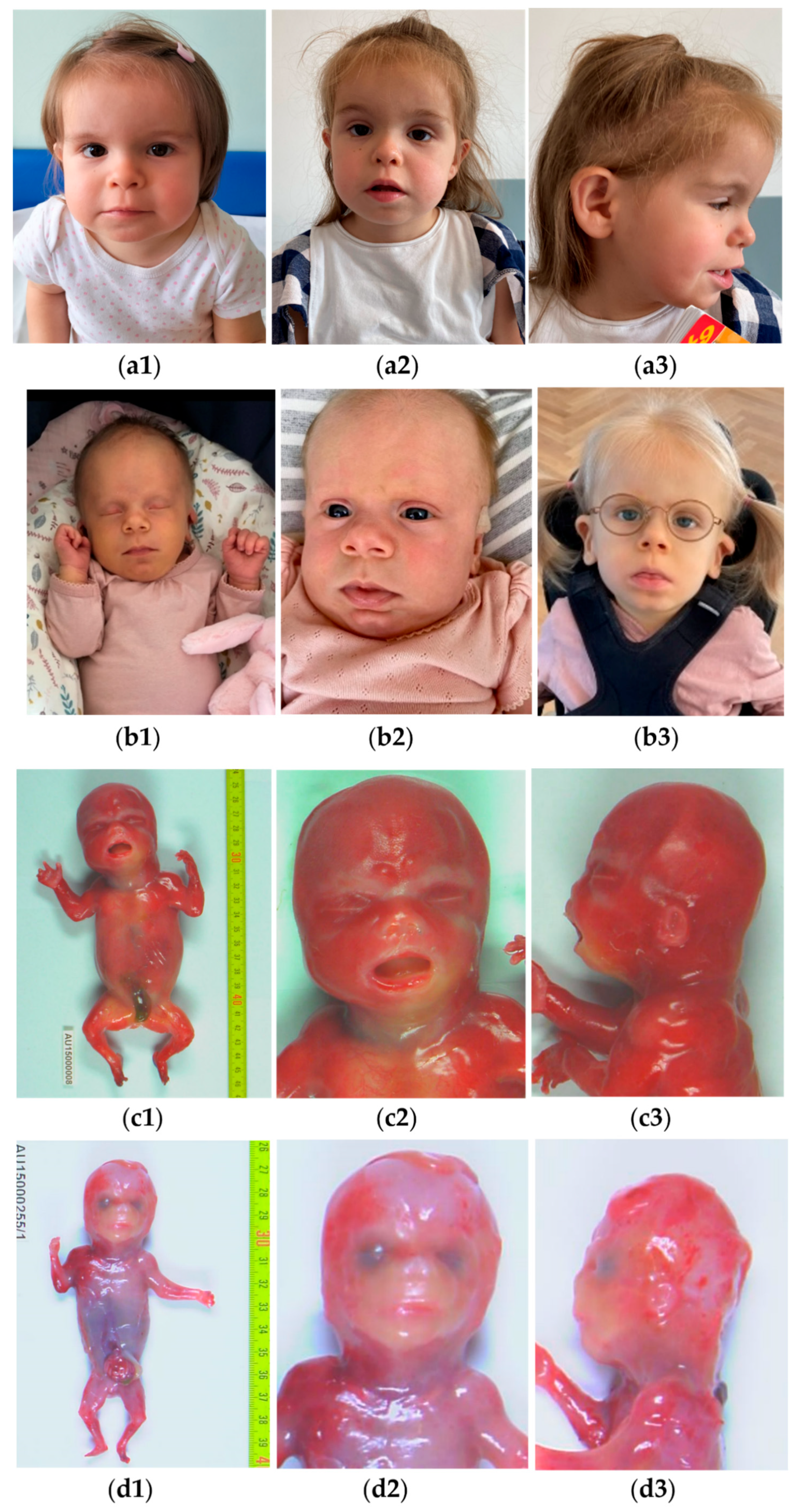
P1 was recruited at the Institute for Maternal and Child Health “Burlo Garofolo” in Trieste, Italy. A multidisciplinary team consisting of a pediatrician, pediatric neurologist, cardiologist, biologist and geneticist specialized in rare diseases was involved in the evaluation, diagnostic process, and follow-up. The diagnostic procedure included the discussion of whole exome sequencing (WES) data in the context of phenotypic data at interdisciplinary meetings [16]. Three additional novel patients were identified through GeneMatcher and Société Française de Fœtopathologie (SoFFoet) [17,18]. Clinicians and geneticists collected clinical and genetic details with a standardized form. We conducted our investigations according to the principles of the Declaration of Helsinki and local Institutional Ethical Committees and obtained informed consent from the participating subjects. We obtained permission to publish the photographs of all subjects shown in Figure 1.

Figure 1.
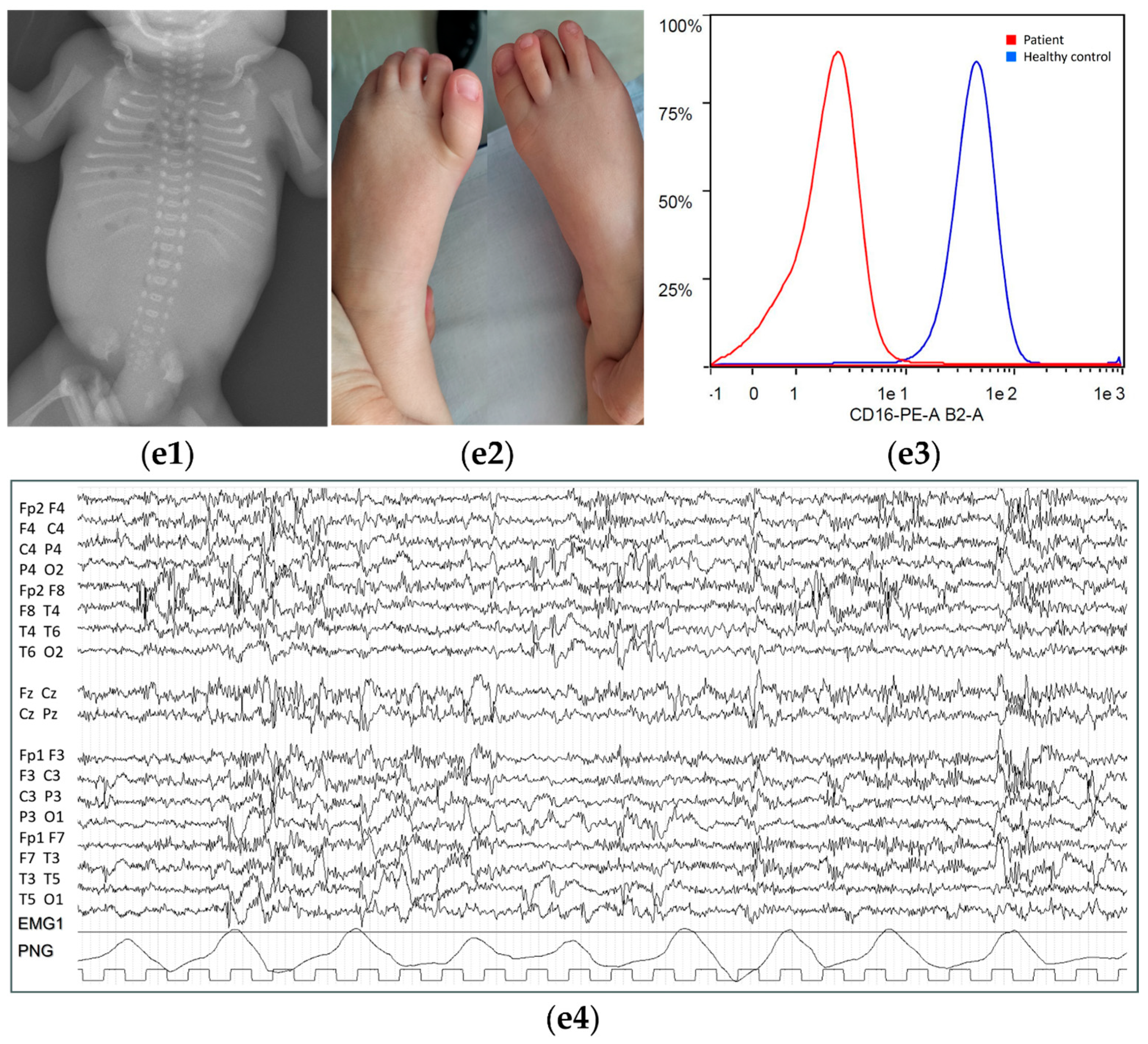
Phenotypic findings of novel PIGW patients. (a1) P1: in front view at 21 mth showing squared face with large forehead, depressed nasal root, short nose, and thin upper lip; (a2) P1: in front view at 38 mth showing coarse face with prominent forehead, depressed nasal root, marked philtrum, widened mouth with thin upper lip; (a3) P1: profile view evidencing anteverted, slightly low-set ears, short nose, protruding philtrum, micrognathia; (b1) P2: in front view at 20 dy showing long, large forehead in dolichocephaly, hypotelorism, bulbous nasal tip, and marked philtrum; (b2) P2: in front view at 2 mth showing prominent forehead, depressed nasal root, marked, protruding philtrum, thin upper lip; thin feathery hair; (b3) P2: in front view at 3.5 yrs showing prominent forehead, marked, protruding philtrum, widened mouth with thin upper lip, low-set, cupped ears with bilateral anteverted and down slanting helix and large lobes; (c1) P3: total body anterior view at 19 + 5 wgs showing micromelia; (c2) P3: in front view at 19 + 5 wgs showing hypertelorism and short nose; (c3) P3: profile view at 19 + 5 wgs showing low set ears; (d1) P4: total body anterior view at 14 + 3 wgs showing micromelia and omphalocele; (d2) P4: in front view at 14 + 3 wgs showing short nose, long and smooth philtrum; (d3) P4: profile view at 14 + 3 wgs showing turricephaly; (e1) P3: X-rays at 19 + 5 wgs showing short ribs and enlarged metaphysis; (e2) P1: feet showing low-set left toe; overcrowding of toe; (e3) P1: flow cytometry showing CD16 expression on patient’s neutrophils (red histogram) and donor’s neutrophils (blue histogram). (e4) P1: sleep EEG of the patient at the age of 4 yrs (longitudinal bipolar montage; sensitivity = 200 μV/cm, EMG1 = left deltoid muscle, PNG = pneumogram) is characterized by the absence of the typical electroencephalographic patterns of non-REM sleep and the presence of diffuse rapid activity and multifocal paroxysmal abnormalities. Dy: days of life; mth: months of life; Wgs: weeks of gestation; Yrs: years of life.
2.2. WES Analysis, Interpretation and Validation
Singleton/Trio WES were performed at the respective institutions. Genomic DNA was extracted from peripheral blood. The target enrichment kit and WES statistics are detailed in Table S1. Data processing, including sequence alignment to GRCh37/hg19, variant filtering and prioritization, predicted functional impact, inheritance and validation, were performed as previously reported and summarized in the Supplementary Material. We confirmed and segregated analysis of variants using Sanger sequencing.
2.3. Immune Cytometry
CD16 is a GPI-anchored protein highly expressed on the surface of natural killers, neutrophils, monocytes, and macrophages. To analyze CD16 expression, 100 µL of heparinized blood samples were surface stained with PE-conjugated anti-CD16 antibodies (Miltenyi Biotec, Bergisch Gladbach, Germany) and incubated for 20 min at room temperature. The samples were investigated using the MACSQuant Analyzer 10 flow cytometer (Miltenyi Biotec, Bergisch Gladbach, Germany) and processed with FlowLogic software, https://flowlogic.software/ last (accessed on 4 December 2024).
2.4. Graphs
We created histograms and pies (Figure 3) with Excel (Microsoft) and the “Alluvial plot” (Figure 3e) online (https://www.bioinformatics.com.cn/plot_basic_alluvial_plot_017_en, accessed on 4 December 2024).
2.5. Search Method for Literature Review
We searched MEDLINE (PubMed) with the keywords “GPI”, “GPIAP” or “glycosylphosphatidylinositol-anchored protein” in combination with “PIGW”. We further reviewed every relevant reference in the acquired articles which we did not find in the MEDLINE search. We considered articles written in English and published between 2010 and July 2024. We gathered only cases with a confirmed molecular diagnosis.
3. Results
We identified a total of four novel patients with genetically confirmed PIGW-related disorders. These include two sib fetuses and two live-born girls.
3.1. Clinical Reports
The proband 1 (P1) was a 4-year-old girl, second-born of a healthy, non-consanguineous couple from northern Italy, who had one previously unexplained miscarriage and a healthy boy. The girl’s family history was unremarkable. After a spontaneous conception, an increased risk for trisomy 21 (1/94) resulted in a combined first-trimester screening test. We detected an overriding aorta at the second-trimester ultrasound (US) at 20 weeks of gestation (wgs). After genetic consultation, we performed amniocentesis with non-conclusive karyotype, FISH investigation for 22q11.2 deletion, and genomic microarray. The second-level US followed the pregnancy for cardiac defect without the detection of other anomalies. The baby was spontaneously delivered at 37 + 6 wgs. Birth weight was 2700 g (90 percentile, pct). APGAR was 9/9. Newborn screenings (hearing and metabolic) were normal. At birth, an echocardiogram confirmed a complex cardiac malformation type tetralogy of Fallot, with ventricular septal defect, without obstruction but with altered pressures in the pulmonary artery, and with an atrial septal defect, ostium secundum type. The patient underwent medical treatment with furosemide until the surgical correction at two months of life. Subsequently, she presented global developmental delay. Genetic evaluation at 21 months of life disclosed peculiar facial features: squared face with a broad forehead, depressed nasal root with a short nose, thin upper lip, occasional mild protruding tongue, and diastema. Growth parameters (height: 83 cm (52 pct), weight 10 kg (15 pct), head circumference 47.7 cm (70 pct)) were average. Neuropsychiatric and neuropsychologic evaluations confirmed a global developmental delay with gross motor difficulties and verbal language delay. Clinical re-evaluations at 38 (Figure 1(a1)) and 45 months of age (Figure 1(a2)) described more evident facial dysmorphisms, including a coarse face with a prominent forehead, depressed nasal root, marked philtrum, and widened mouth with thin upper lip. In the profile view, we also observed anteverted, slightly low-set ears, a short nose, a protruding philtrum, and micrognathia (Figure 1(a3)). There were no hand anomalies, but the left toe was low-set, and the subject presented overcrowding of the toe (Figure 1(e2)). We also noted a unilateral inguinal hernia. Neurologic re-evaluation confirmed a global developmental delay, with absent speech, limited comprehension, and immature gross and fine motor skills. The objective neurologic examination revealed that the patient had low muscle mass but normal strength. No clinically recognizable epileptic episodes were reported. We noted behavior abnormalities with poor gaze engagement, limited pointing, and deficit attention. EEG during sleep proved: (a) the absence of typical elements of physiological organization that differentiate phases of drowsiness/sleepiness from phases of deeper sleep; (b) the presence of diffuse rapid activity that increases in amplitude and becomes dominant as sleep onset progresses; and (c) the presence of multifocal paroxysmal abnormalities (Figure 1(e4)). Given the absence of clinically recognizable epilepsy and limited patient collaboration, the EEG was recorded during sleep only at follow-up. Surgical treatment for correction of the right inguinal hernia was performed before the age of four. Odontostomatological evaluation revealed tooth agenesis and maxillofacial CT confirmed the inclusion of elements 82–83 and the absence of elements 35 and 45. Biochemical investigations pointed out hypophosphatasia with increased plasma values of ALP (519 U/L) at 45 months of age. Flow cytometry documented a near-absent expression of CD16 on the patient’s neutrophils (Figure 1(e3)). Comprehensively, immunophenotyping showed a GPI-anchored protein deficiency. Brain MRI, abdominal US, ophthalmological, ear, nose and throat and audiological evaluations were unremarkable. Personalized follow-up is ongoing at the referral pediatric center for rare diseases.
Proband 2 (P2) was the second-born child of healthy Danish parents, with a healthy older brother and later a healthy younger brother. Her mother had well-managed hypothyroidism throughout the otherwise uneventful pregnancy. The patient was born at 37 + 5 wgs. Birth weight was 4040 g. At birth, she was able to breastfeed. Due to persistent jaundice and lethargy, she was treated with phototherapy at the maternity ward. At four days old, she was examined by a pediatrician due to folds on both ears. Having dismissed the suspicion of a syndrome, the family was advised to consult an ear, nose and throat- specialist. The facial appearance developed gradually after birth (Figure 1(b1–b3)). At five months, the suspicion of a syndrome was raised again due to delayed motor development and distinctive facial appearance: she was slightly dysmorphic, with dolichocephaly, hypotelorism, large ears, a flat nasal bridge, and thin feathery hair. She also exceeded height and weight curves by more than three standard deviations. At six months, an abdominal US revealed bilateral hydronephrosis, which was treated with prophylactic antibiotics. Concomitantly, she was hospitalized several times a month due to frequent respiratory infections. By 10 months, she could roll back to front and grasp objects with her hands, but she still had limited head control. However, epileptic spasms began at 10 months, leading to developmental regression. The initial seizures were characterized by a distant gaze and cyanosis around the lips, accompanied by a series of flexions in the trunk and upper extremities, lasting for 2–3 s each, occurring consecutively, and associated with vomiting. The first EEG was described as hypsarrhythmic. She lost head control, the ability to roll, and the use of her hands. By age 3, she exhibited profound global developmental delay, with minimal abilities beyond briefly grasping objects. She had no eye contact, no speech, and experienced difficulties swallowing. Her seizures were challenging to manage; we tried several anti-epileptic drugs, prompting the initiation of a ketogenic diet.
Additionally, she had elevated alkaline phosphatase levels: ALP was measured 12 times from 9 to 42 months of age, and it was always elevated between 610–940 U/L (reference 134–518 U/L). She also required glasses due to hypermetropia. Approximately one month prior to her death, we documented two additional seizure types: (1) vertical tonic eye deviations persisting for several minutes and (2) focal tonic seizures with impaired awareness lasting more than three minutes, characterized and accompanied by eye deviation and apnea. The patient passed away at 3 years and 10 months of age due to asystole-related to pneumonia.
Proband (P3) was a 19 + 5 wgs fetus born of a healthy consanguineous couple from France, who had a previously unexplained miscarriage. After a spontaneous conception, an antenatal ultrasound identified short, long bones with femoral bowing, short hands and feet, cardiopathy and Blake’s pouch cyst. Because of the severe prognosis, termination of pregnancy (TOP) was established at 19 + 5 wgs. A fetal autopsy identified a female fetus with nuchal oedema, microcephaly, micromelia with brachyphalangy (Figure 1(c1)) and facial dysmorphism, including hypertelorism, short nose and low set ears (Figure 1(c2,c3)). Postmortem X-rays showed platyspondyly, shortening of long bones, short ribs and enlarged metaphysis (Figure 1(e1)). Internal examination disclosed bilateral renal dysplasia, overriding aorta and small brain with enlarged ventricles and cerebellum hypoplasia.
A few months later, the couple had a third pregnancy (P4). A first-trimester ultrasound identified omphalocele, shortening of the long bones and cleft palate. The parents asked for a TOP at 14 + 3 wgs. A fetal autopsy identified a male fetus with micromelia, duplication of right hallux, omphalocele and anal atresia (Figure 1(d1)). Facial dysmorphism included turricephaly, a short nose, and a long and smooth philtrum (Figure 1(d2,d3)). Postmortem X-rays revealed shortening of the long bones, platyspondyly, short ribs and brachyphalangy. Internal examination disclosed significant great artery asymmetry and bilateral renal dysplasia.
3.2. Molecular Findings
WES in P1 identified two PIGW missense variants, found in a heterozygous state in the healthy father (c.106A>G; p. (Arg36Gly)) and mother (c.1227T>G; p. (Cys409Trp)). The variants were classified as likely pathogenic (see Table S1). We did not detect any additional (likely) pathogenic variants that could explain the proband’s entire or partial phenotype. In particular, homozygous p.(Arg36Gly) has been previously reported in three fetuses from two unrelated families [13,15] and described as pathogenic in the HGMD database, while p.(Cys409Trp) has never been reported.
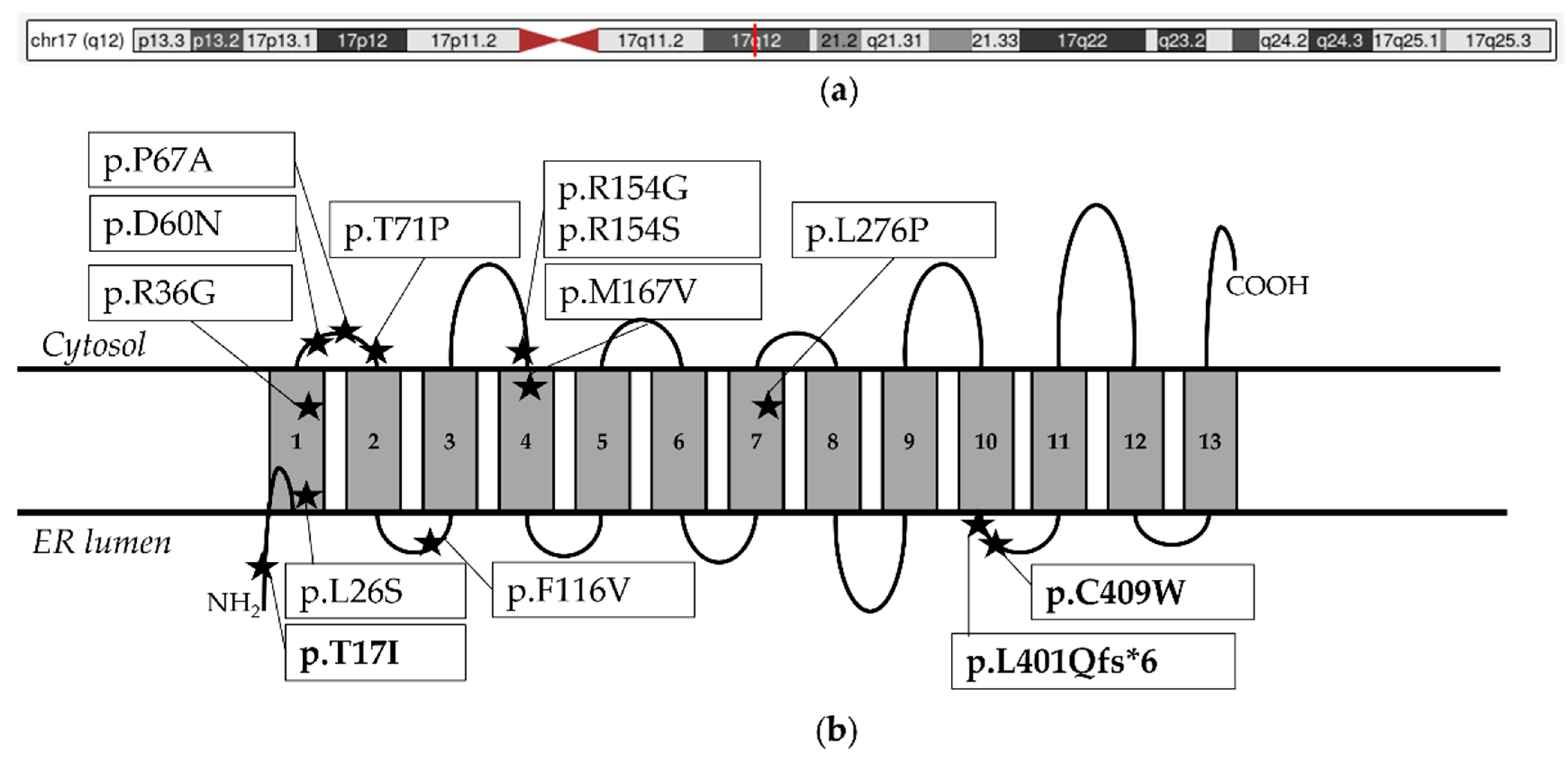
We evaluated the functional impact of the substitutions using several in silico tools, which predicted these variants as deleterious with a CADD Phred score of 23.4 and 26.7, respectively. The substitution in position 36 of PIGW affected an amino acid located in the protein’s first transmembrane domain. In contrast, the second change was in a protein region between the 10th and 11th domains (Figure 2).
WES in P2 identified compound heterozygous PIGW variants (c.50C>T, p.(Thr17Ile); c.1202del, p.(Leu401GlnfsTer6)) existing in heterozygous state in the healthy parents. The missense change was reported once in ClinVar (Variant_ID 1928004), and the frameshift was novel and never before reported. Notably, the missense variant was absent from gnomAD, while the frameshift variant was reported only in the heterozygous state with a very low allele frequency (Table S1). The variants were classified as likely pathogenic and pathogenic, respectively (see Table S1). The substitution in position 17 of PIGW affected an amino acid in the N-terminal facing the endoplasmic reticulum.
In P3, singleton WES analysis identified a known likely pathogenic homozygous missense variant in PIGW (c.106A>G; p.(Arg36Gly)). Sanger sequencing confirmed the presence of the p.(Arg36Gly) in a homozygous state in the affected sibling, P4. The healthy parents were confirmed to be carriers of the variant.
All patients had preliminary, negative micro-array analysis.
Figure 2.
PIGW reported variants (a) Chromosome 17 representation, indicating the location of PIGW gene in red, from UCSC Genome Browser on Human (https://genome.ucsc.edu/index.html, accessed on 28 August 2024), The red line in the figure caption corresponds to the genomic region 17q12.2, which is critical for recurrent deletion/duplication and involves various contiguous genes, including PIGW, Numbers 1–13 refer to PIGW transmembrane domains; (b) schematic diagram of the PIGW protein (NP_848612.2), showing the position of the reported variants indicated with stars (shortened amino acids nomenclature). Novel variants in our patients are marked in bold.
3.3. Literature Review
Eight selected papers reporting 12 PIGW patients belonging to 10 unrelated families have been evaluated [4,9,10,11,12,13,14,15] and included in the study. Family histories, molecular investigations, results and interpretations, and detailed description of clinical and biochemical findings have been collected and summarized in Table 1, together with the patients reported here.
Table 1.
Familial, molecular, clinical, and biochemical presentations of probands with PIGW-related condition.
The molecular, clinical and biochemical findings related to the totality of PIGW patients from the literature and the current study have been analyzed together.
Twelve missense single nucleotide variants, one frameshift variant, and one gene deletion are reported. Most of the variants are in the transmembrane domains of the protein (9/12, 75%). All single nucleotide variants are represented in the schematic protein according to their position (Figure 2).
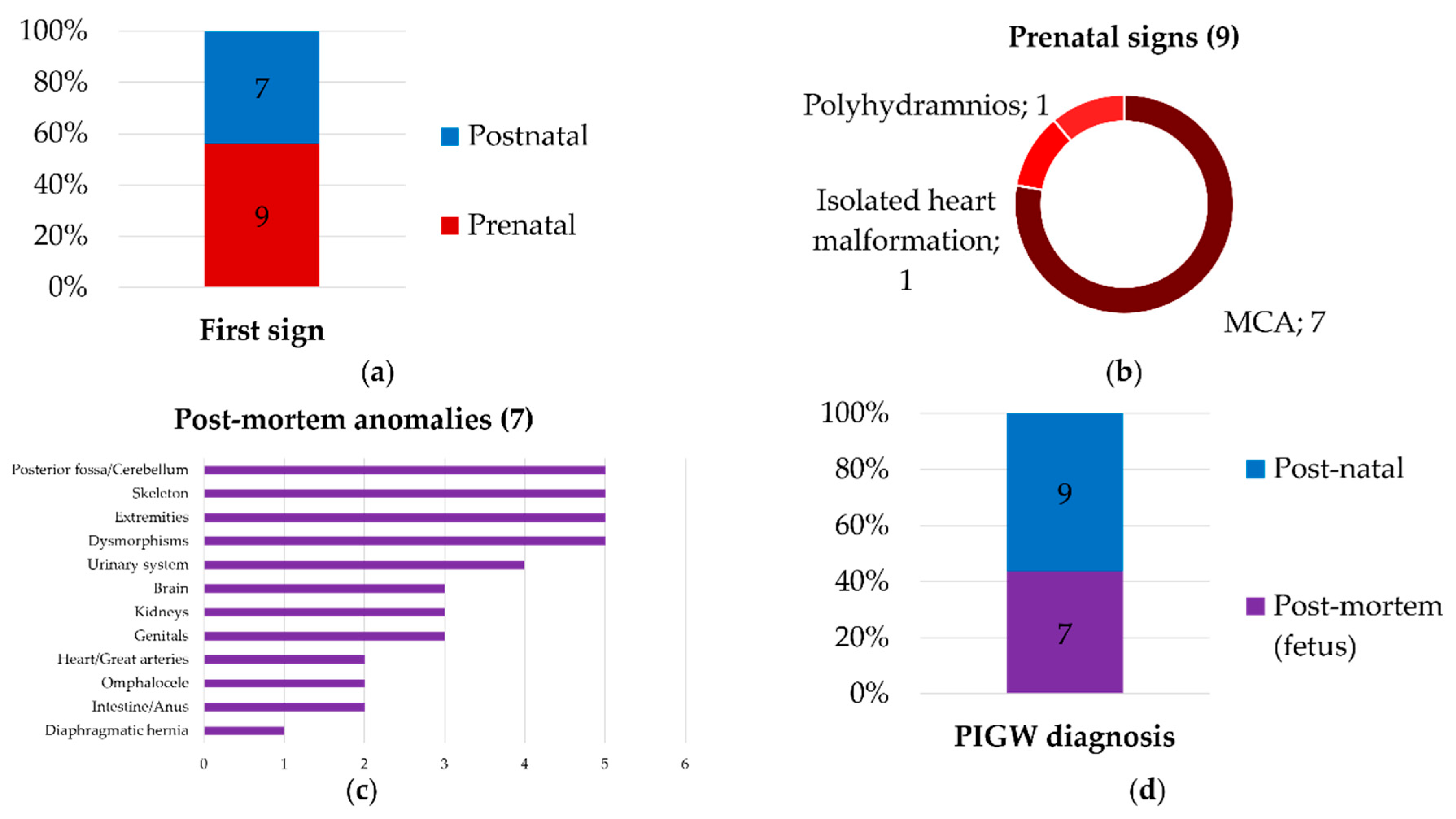
We extrapolated information concerning the setting (pre-/post-natal) of the first medical referral and molecular diagnosis determination (post-mortem/natal). The first referral was at the early stages of gestation during the first trimester in most cases (7/9, 77.7%). 9/16 (56.2%) had at least one prenatal finding (Figure 3a), and seven out of the nine (77.7%) had multiple congenital anomalies (Figure 3b). All fetuses with multiple congenital anomalies were diagnosed following a fetal pathological examination, which permitted an extension of the phenotype description (Figure 3c). No prenatal diagnosis was performed in any case (Figure 3d).
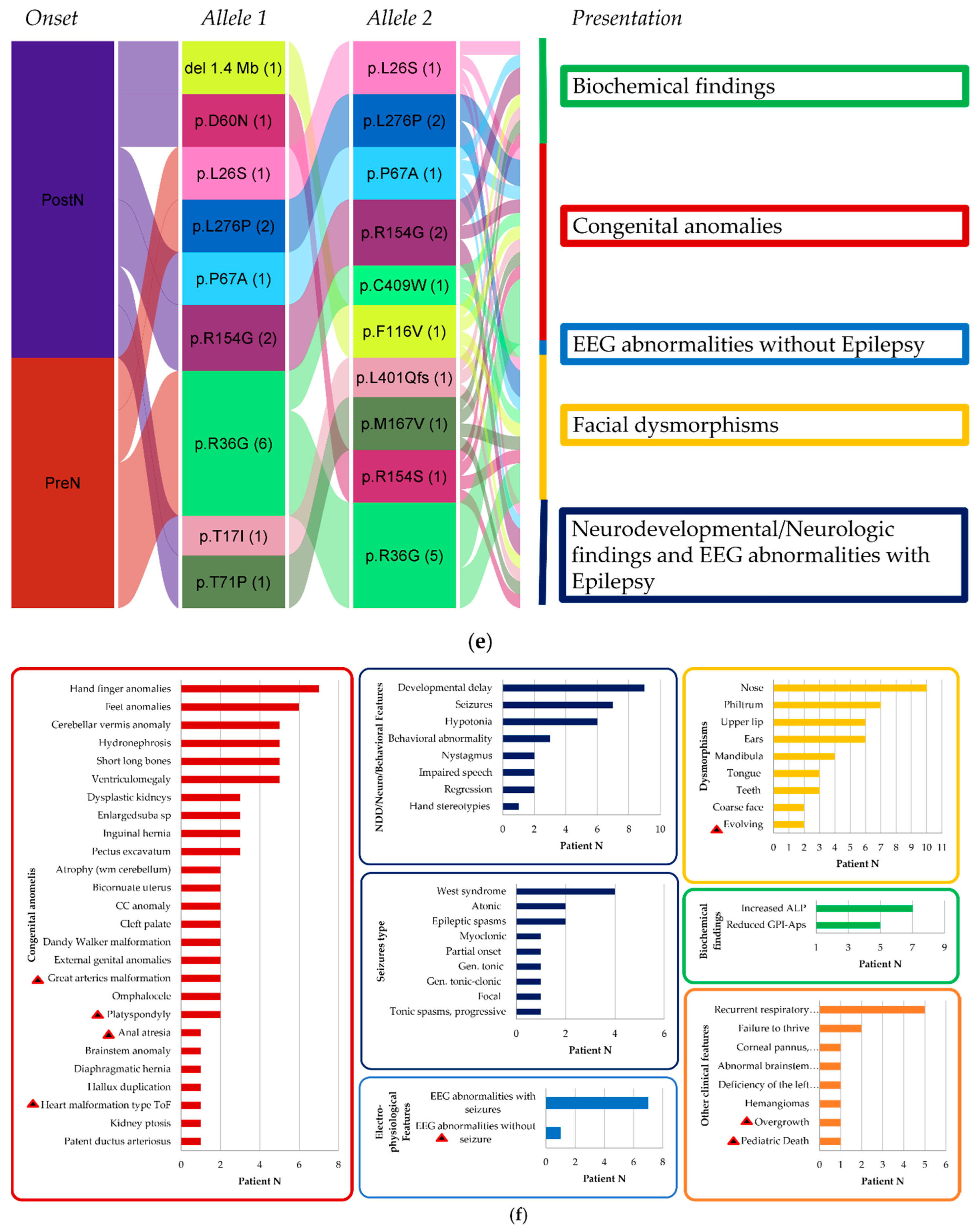
After reviewing all the clinical descriptions of patients, we grouped most of the signs and symptoms into major categories: congenital anomalies, facial dysmorphisms, neurodevelopmental disorder/neurological findings including epilepsy, EEG abnormalities and behavior, and biochemical findings. Associations between genotypes and main categories have been taken into account (Figure 3e).

Figure 3.
Referral, diagnostic setting and presentation (a) Histogram showing the number of patients based on the setting (prenatal/postnatal) of the first sign at the time of medical referral; (b) pie chart representing the distribution of presentations in patients with prenatal signs, numbers refer to the patients; MCA: multiple congenital anomalies; (c) histogram showing the number of fetuses having anomalies in the listed systems/organs; (d) histogram representing the number of patients according to the setting (post-mortem/postnatal) at the moment of molecular diagnosis with PIGW variant identification; (e) alluvial plot showing, from left to right: column 1: setting of onset/referral (PostN: postnatal, PreN: prenatal), column 2: PIGW allele 1, column 3: PIGW allele 2, (shortened amino acids nomenclature for PIGW variants, number in brackets refer to the patients; color correspondence between column 2 and 3 refers to patients), column 4: presentation according to major phenotype categories (major phenotype categories: biochemical findings (green), congenital anomalies (red), EEG abnormalities without epilepsy (light blue); facial dysmorphism (yellow), neurodevelopmental/neurological and EEG abnormalities with epilepsy (dark blue), (f) histograms showing the number of patients with congenital anomalies (in red, on the left), neurodevelopmental/neurological/behavioral features (dark blue, in the middle and top), EEG abnormalities (light blue, in the middle and bottom), facial dysmorphism (in yellow, on the right and top), biochemical findings (in green, on the right and in the middle), other clinical features (in orange, on the right and bottom). Novel features presented in our patients are marked with a triangle with red outline. Legend: T1: first trimester; PreN: prenatal; PostN: postnatal; suba sp: sub-arachnoid spaces; wm: white matter; ToF: Tetralogy of Fallot; sp: spams; Gen.: generalized; sy: syndrome.
4. Discussion
By merging data from novel and already reported patients, we analyzed a cohort of 16 PIGW patients, focusing on molecular, clinical and biochemical findings.
4.1. New Clinical Findings
New findings from the herein-described patients emerged. We reported for the first time three patients with cardiac and great artery malformations. P1 exhibited an antenatally detected overriding of the aorta within a tetralogy of Fallot, requiring neonatal surgery. P3 and P4 exhibited an overriding aorta and great artery asymmetry, respectively. Before this occurrence, only a patent ductus arteriosus was recorded in a child [10]. After excluding alternative causes, we questioned the role of PIGW variants in cardiac organogenesis. First, PIGW was expressed in the heart muscle (https://www.proteinatlas.org/ENSG00000277161-PIGW/tissue#rna_expression, accessed on 28 August 2024). In addition, cardiac anomalies were observed in patients with altered GPI-biosynthesis pathways. For example, biallelic variants in PIGL portrayed a syndromic association, including congenital heart disease, with coloboma, ichthyosiform dermatosis, mental retardation and ear anomalies (CHIME) [19,20]. In some patients, pathogenic variants in PIGA were associated with cardiac anomalies, especially atrial septal defects [21,22]. Although cardiomyopathy was previously reported as an overlooked feature and potentially the cause of early demise in PIG/PGAP genes, none of the PIGW patients in this paper were diagnosed with cardiomyopathy [23,24].
Odontostomatological evaluation in P1 indicated tooth agenesis. Considering the sporadic presentation in the family, the absence of alternative etiology and the already described widely spaced teeth [10,14], tooth agenesis could be a new finding.
An additional unique skeletal finding was a duplicated hallux found in P4. Skeletal and extremity anomalies were frequent in the PIGW cohort. Some fetuses presented shortening of the long bones, femoral bowing, short ribs, enlarged metaphysis and platyspondyly. Minor anomalies such as brachypahalangy/clinodactyly, thumb and hallux anomalies were also common. P2 showed early post-natal overgrowth. Although additional evidence is needed, overgrowth and tooth agenesis have been reported in at least one patient with a pathogenic PIGA variant, supporting a potential role of GPI-related pathways in skeletal and dental development [21]
P4 exceptionally presented anal atresia. Rarely, intestinal anomalies have been described, with only one fetus showing intestinal malrotation [15].
Otherwise, congenital anomalies in our patients confirmed the already reported frequent kidney dysplasia, genitourinary anomalies, brain and posterior fossa malformations and wall defects [4,13,15].
We also provide the first documented evolution of phenotype in P1 and P2, with slight similarities concerning the facial appearance, especially concerning the nose (depressed nasal root), the philtrum (marked philtrum) and the mouth (widened, down slanting, thin upper lip).
In addition, P1 was the first patient with recorded EEG abnormalities without clinically evident seizures. However, she presented with global developmental delay, which is a key finding in all PIGW children, and with behavioral anomalies, which have been less consistently reported.
Finally, we described P2, a girl with severe neurological presentation, developmental regression, and early-onset, progressive, uncontrollable epilepsy. Postnatal neurological presentation with varying severity was common in the previously reported cohort, and regression posed a differential diagnosis with Rett/likely Rett syndrome [14]. However, we highlight here the severity of P2’s natural history, who passed away at the age of 3 due to asystolia in the context of pneumonia. Recurrent respiratory infections have been documented in other patients, including one who developed epileptic clusters in West syndrome during the course of pneumonia at 23 months of age, with subsequent worsening of epileptic episodes during fever and infections [10,11,14]. In addition, one patient had frequent aspiration pneumonia [4].
Although a PIGW diagnosis was not ascertained, the index patient’s brother, reported by Fu and colleagues as having a developmental delay, died at the age of 7 months because of recurrent pulmonary infection [11]. P2 is the first PIGW patient to die within the first years of life, and we highlight the risk of death in cases of severe respiratory infection. Previously, some authors have stated that patients with GPI-ADs, especially PIGA-encephalopathy, were at risk of premature death due to the development of cardiomyopathy [23].
We noticed that in two families (P1, P3–P4), an early unexplained miscarriage was reported. Although present data are insufficient to advance the hypothesis of human embryonic lethality in case of biallelic PIGW variants, it might represent the extreme phenotype of the spectrum.
The genotype-reversal phenotype documented high serum ALP in both P1 and P2, supporting the correlation between biallelic PIGW variants and this candidate biomarker. In addition, P1 showed decreased GPI-APs, advancing the clinical interpretation of the novel genotype, and expanding the biochemical phenotype.
4.2. A Continuous and Broad Phenotypic Spectrum
Although only recently described, the ultra-rare PIGW-related disorder was associated with a heterogeneous syndromic presentation. On the one hand, as for P3 and P4, multiple structural anomalies affecting the brain and posterior fossa, genitourinary and skeletal systems, and diaphragm and abdominal wall characterized severe fetal presentations leading to TOP [13,15]. A partial phenotype description was available for them with unknown functional and neurologic outcomes. On the other hand, for P2, the first reason for postnatal medical referral was an early, severe neurodevelopmental condition with global developmental delay and early-onset epileptic encephalopathy or seizures [4,10,11,12,14]. P1 belonged to a likely intermediate clinical entity and supported the existence of an overlapping and continuous spectrum between early-onset presentation with multiple malformations and neurodevelopmental disorders. This study’s comprehensive data analysis highlighted a continuous and broad spectrum instead of a pleiotropic effect of PIGW.
Most patients had prenatal signs (9/16, 56.2%, Figure 3b), and several showed evident signs in the first trimester (7/9, 77.8%, Figure 3c), suggesting that PIGW-related disorders could appear very early due to anomalous fetal development. In most of these cases, TOP was required due to multiple congenital anomalies (7/9, 78%), which were correlated to a poor prognostic outcome even before the determination of an etiologic diagnosis. Half of the couples with an affected fetus (2/4, 50%) had a personal history of malformed fetuses, attesting to the recurrence of multiple congenital anomalies before the definitive diagnosis of recessive disease. All the cases with TOP underwent a fetal-pathological examination, allowing the confirmation of major anomalies and the description of minor anomalies and facial dysmorphisms. Previously, authors suggested a differential diagnosis with Fryns or Fryns-like syndrome [15]. The association of malformations resulted in multi-systemic involvement in all cases, affecting the brain (5/9) and heart (3/9). Including the newly described cardiac malformations, we demonstrate that PIGW disruption may affect the development of almost all major human systems, especially the brain, cerebellum, kidneys and genitourinary system, gastrointestinal system, skeleton, diaphragm and abdominal wall. In addition, we highlight the possibility of an isolated prenatal heart malformation.
To the best of our knowledge, there is no prenatal diagnosis of PIGW. This could mainly be related to the severity of fetal presentation, requiring a medical termination despite the precise etiology or, as in the case of our patient with an apparently isolated cardiac malformation, due to limited, first-level molecular investigation.
Two of the children, both with a diagnosis in the post-natal setting due to developmental concerns, had apparently isolated prenatal signs, including tetralogy of Fallot in P1 and polyhydramnios in the context of maternal diabetes [14]. Pediatric cases reached a conclusive diagnosis by WES or epilepsy-gene panels.
The comprehensive data collection in this review elucidated that most of the patients presenting with neurodevelopmental disorder/epilepsy had facial dysmorphisms and at least a concurrent congenital anomaly. Congenital anomalies could be major, especially involving the brain, brainstem or cerebellum, or minor, as in the case of hydronephrosis, skeletal, extremities anomalies and inguinal hernias. One of the patients described by Hogrebe et al. presented only with neurologic/neurodevelopmental issues with epilepsy and a large tongue without malformations [12]. However, her second cousin, harboring the same PIGW genotype, presented ankyloglossia and extremity anomalies, confirming that every PIGW genotype was associated with at least one congenital anomaly (Table 1, Figure 3e) [12]. Facial dysmorphisms are also very common.
To date, the PIGW sample size has been very limited. Even expanding the cohort up to sixteen characterized patients, the phenotypic spectrum may be biased, and it will likely be expanded in the future as additional cases are identified.
4.3. New Molecular Findings
We report on two novel genotypes, including two new missense variants and the first frameshift variant.
Only the p.(Arg36Gly) variant was recurrent in several patients, including P1, P3 and P4, in a homozygous (P3–P4) or composite heterozygous state (P1) and has been associated with all the phenotypic categories (Figure 3e).
This variant consisted of the substitution of the positive charge arginine in position 36 with a non-polar amino acid (glycine) within the first transmembrane domain of the protein (Figure 2a). Although the functional relevance of the p.(Arg36Gly) was not investigated, the variant has already been documented at homozygous state in three fetuses from two unrelated families [13,15]. In two sib fetuses with multiple anomalies, the variant was classified as likely pathogenic since the mutant amino acid was predicted to disturb the transport activity of the protein [13]. In the third fetus with early and severe clinical presentation, it was firstly classified as a variant of unknown significance (VUS) and finally considered to have a likely causative role [15].
The second missense variant c.1227T>G, p.(Cys409Trp), found in P1 only, consisted of the change of a nucleotide (thymine replaced with guanine), which involved the substitution of the conserved, polar, uncharged amino acid (cysteine) with an aromatic amino acid (tryptophan), and located between the tenth and eleventh transmembrane protein domain. This variant was novel and was not reported in PIGW patients nor disease/clinical databases (ClinVar, HGMD). Considering the clinically heterogeneous condition’s rarity, the novel variant in P1 was first classified as VUS. Biochemical insights attesting to decreased expression of GPIs provided further evidence for a likely causative role for the P1 genotype since pathogenic variants in genes coding for proteins involved in intermediate and late steps of GPI biosynthesis were primarily associated with increased plasma ALP levels.
The third missense variant, c.50C>T, p.(Thr17Ile), found only in P2, consisted of the substitution of a nucleotide (cytosine replaced with thymine), which involved the substitution of the polar amino acid (threonine) with the non-polar amino acid (isoleucine), located in the luminal topological domain. This variant was novel and had neither been reported in PIGW patients nor disease/clinical databases (ClinVar https://www.ncbi.nlm.nih.gov/clinvar/ accessed on 28 August 2024, HGMD (Qiagen) https://digitalinsights.qiagen.com/about-corporate/ accessed on 28 August 2024).
The variant c.1202del, p.(Leu401GlnfsTer6), found only in P2, was the first non-missense reported in PIGW. It consisted of a single nucleotide deletion leading to a shift of the reading frame and predicted to result in a prematurely truncating protein. The paucity of loss-of-function PIGW variants in the compound heterozygous state (and the absence in homozygosity) with a complete GPI deficiency could suggest that they were incompatible with life, advancing the hypothesis of a more extreme, early lethal phenotype, missing clinical attention and diagnosis. Unfortunately, knockout PIGW animals or cellular models to corroborate these hypotheses are lacking at the time of writing. Fang and colleagues described the first complete loss-of-function effect due to a heterozygous deletion of the entire PIGW gene in trans with a missense mutation [10]. The authors documented an inherited deletion, spanning about 1.4 Mb, involving likely additional contiguous genes in the 17q12 region (genomic coordinates not provided) [10]. The novel pathogenic frameshift variant in P2 thus supported a loss-of-function disease mechanism [10].
4.4. Considerations on PIGW Variants
This study identifies complex genotype-phenotype correlation with 12 missense variants, one frameshift variant, and one gene deletion combined in 10 private genotypes for 16 affected individuals. The families with PIGW patients were from different ancestries, including Asia, Europe, Northern Africa, and South America. Most patients had a PIGW variant in a homozygous state (11 from seven families). Consanguinity was reported in four families. Five unrelated individuals had compound heterozygous changes, including one presenting 17q12 deletion (breakpoints not reported) encompassing the PIGW gene [10]. All heterozygous parents and carrier family members were healthy.
The human PIGW-related GPI biosynthesis pathway is crucial in several developmental processes and embryogenesis [5]. GPI-APs play crucial roles in embryogenesis, and animal model studies have demonstrated that embryonic lethality occurred when there was complete GPI deficiency, as reported for the Piga gene knockout mice, which belongs to the same pathway as PIGW [25]. We can, therefore, speculate that cell surfaces lacking GPI anchoring proteins due to deficient PIG/PGAP gene activity are fundamental to correct human development.
As for other GPI genes, affected patients presented PIGW variants with likely partial or abolished protein activity [26]. Patient cells showed variably decreased levels of GPI-anchored proteins compared to controls, consistent with a hypomorphic or loss-of-function effect [12]. In line with these findings, in vitro functional studies elucidated that PIGW mutations reduced protein activity. In particular, Hogrebe and colleagues showed that the p.(Arg154Gly) had a reduced ability to restore GPI-APs in PIGW-deficient cells compared to wild-type protein [12].
Genotype-phenotype correlation is challenging in PIGW-related disorders. Firstly, the same genotype was associated with different manifestations. The totality of homozygous c.106A>G, p.(Arg36Gly) patients were fetuses (5) from three unrelated families presenting with multiple congenital anomalies involving great arteries/heart, brain, kidney and genitourinary system, skeleton, abdominal wall defects and dysmorphism. It was noteworthy that the final presentation also differed in the case of sibling fetuses, suggesting inter- and intra-familial clinical variability.
4.5. Challenging Genotype-Driven Follow-Up
In the post-genomic era of personalized medicine, getting a molecular diagnosis orients personalized access to care and follow-up. However, in the case of ultra-rare diseases with few described patients, such as PIGW-related disorders, a lack of available long-term follow-up or general guidelines makes patient management challenging. One of the main issues in PIGW children concerns the control of seizures. The great majority of pediatric patients experienced early-onset epilepsy (8/9, 88.9%), with several cases of partial control or uncontrolled epilepsy (5/8, 62.5%). P2 underwent different therapeutic approaches, including the initiation of a ketogenic diet, but they were all unsuccessful. P1 required a neonatal cardio-surgical intervention for tetralogy of Fallot, which was the first example of major surgery in the cohort of GPB11, and it took place before the determination of the diagnosis. P1 also underwent a minor surgical treatment for an inguinal hernia. The literature also described inguinal with or without umbilical hernia in other patients [9,11]. In P1, the benefits of an early diagnosis of a likely syndromic condition were evident in follow-up management. Considering the high prevalence of seizures, family educative counselling could help to detect and recognize at-risk episodes. Since seizures sometimes worsen during infection and fever, surveillance and prompt medical treatment for fever and respiratory infections could prevent potential severe medical complications. Odontostomatologic care for P1 was also planned, and multidisciplinary follow-up is ongoing at the referral center for rare diseases. No evidence-based prognostic information can be provided.
4.6. Perspectives
PIGW is located at the locus 17q12 within a critical genomic region. Recurrent, reciprocal contiguous gene syndromes are due to deletion or duplication around 1 or 2 Mb mediated by Non-Allelic Homologous Recombination (Figure S1, Supplementary Data).
The 17q12 deletion syndrome (OMIM #614527) is typically characterized by maturity-onset diabetes of the young type 5, renal cysts and Müllerian anomalies mainly associated with HNF1B haploinsufficiency (OMIM #189907) [27]. Besides the well-recognized role of HNF1B, among other genes encompassed in the genomic region, LHX1 has been proposed as a possible modifier for earlier onset renal disease [28]. Considering the frequency of genitourinary involvement with kidney dysplasia and hydronephrosis, and the occurrence of Mullerian anomalies in patients with biallelic PIGW variants, PIGW could also be involved in these manifestations in larger microdeletions. Additional inconstant clinical features include dysmorphisms, developmental delay, intellectual disability, seizures and skeletal anomalies [29,30]. LHX1 has been proposed as a candidate for neurodevelopmental findings and autism spectrum disorder, as well as in the microduplication syndrome [31]. The reciprocal duplication syndrome (OMIM #614526) is typically characterized by incomplete penetrance and more variable expressivity, including intellectual disabilities, behavioral abnormalities, and seizures [32]. To the best of our knowledge, variable expression in 17q12 genomic disorders is recognized without straightforward elucidation of causative genes and reasons underlying phenotypic differences. The prenatal presentation and the cohort of fetuses with heterozygous 17q12 deletion or duplication typically present hydronephrosis and kidney anomalies, while heart malformation and restricted growth have been described in an exiguous subgroup [33,34,35].
However, strict genotype-phenotype correlation is still missing, especially for heart malformation, seizure, dysmorphisms and skeletal anomalies.
Fang et al. reported the only compound heterozygous patients with a 1.4 Mb microdeletion encompassing PIGW and a contralateral PIGW missense variant, proposing biallelic PIGW alteration as the cause for neurologic presentation and epilepsy [10]. P2 was the first reported patient with a PIGW frameshift variant in trans with a missense one, with severe neurologic presentation, epilepsy and bilateral hydronephrosis. In both patients, a null PIGW allele together with a missense variant were associated to GPBD11. Experimental studies on some pathogenic PIGW missense variants suggested a reduced protein function, corroborating a likely loss-of-function PIGW disease mechanism. In a sub-group of individuals with 17q12 deletion/duplications, a second hit hemizygous PIGW alteration could contribute as a penetrance modifier for kidney anomalies, heart malformation, seizure, dysmorphisms and skeletal anomalies. Variants in other single genes, genomic imbalances, and alternative molecular mechanisms could probably explain clinical variability.
Further investigations are needed to clarify the role of PIGW, even in light of a more personalized prognosis determination in the case of early detection of 17q12 imbalances by first-tier prenatal molecular investigations in the setting of genomic microarray analysis and genomic screening.
5. Conclusions
The PIGW-related disorder is an ultra-rare, broad, continuous spectrum disorder characterized by congenital anomalies involving the heart and great arteries, severe neurodevelopment concern, and facial dysmorphisms. In this study, we highlighted the occurrence of EEG abnormalities without early-onset seizures, as well as early-onset, progressive and uncontrolled epilepsy and concomitant to frequent respiratory infections as a risk of severe, life-threatening medical comorbidity. Evoking a PIGW diagnosis based on clinical presentation has seemed highly challenging so far, enhancing the value of Next Generation Sequencing for precise diagnosis. In the case of a heterozygous pathogenic PIGW variant, microarray should be considered for 17q12 deletion. In contrast, the utility of intentional screening searching for pathogenic PIGW variants in individuals with 17q12 genomic disorder is still being determined. In the case of prenatal diagnosis of PIGW-associated disease, counselling will be based on the severity of congenital anomalies and the high risk of neurodevelopmental concerns and epilepsy. Biochemical markers, serum ALP and flow cytometry could supplement the genetic testing and contribute to PIGW variant classification in the post-natal setting. After diagnosis, dedicated management should include neurological, neurophysiological and developmental assessments; surveillance for epilepsy, respiratory infections and fever; growth monitoring, brain MRI, heart and abdominal US; ophthalmologic and odontostomatologic evaluations. Long-term follow-up and networking are fundamental for monitoring age-related comorbidities, defining prognosis, and orienting seizure treatments.
Supplementary Materials
The following supporting information can be downloaded at: https://www.mdpi.com/article/10.3390/biom14121626/s1, Figure S1: 17q12 genomic region; Table S1: Summary of WES info and statistics, [36,37,38,39,40,41,42,43,44,45,46].
Author Contributions
L.M. and A.F. designed; L.M. supervised the study; A.F. reviewed the literature; A.F., M.L., E.S. and L.M. drafted the manuscript; A.T., C.Z. and A.B. contributed to correct the manuscript draft; A.F., E.P., C.Z. and I.B. evaluated P1; L.M., G.G. and A.M. evaluated the molecular data for P1; A.M. and E.V. carried out experiments for P1; E.S. and A.B. evaluated P2; M.L. and C.T. evaluated P3 and P4. All authors have read and agreed to the published version of the manuscript.
Funding
The European Union financed this work through the contribution of Next Generation EU funds granted to the Institute for Maternal and Child Health IRCCS Burlo Garofolo, Trieste—Italy (project number: PNRR-MR1-2022-12376811).
Institutional Review Board Statement
The study was conducted according to the Declaration of Helsinki. After genetic counseling through our medical genetic services, the patients were recruited for molecular diagnostic purposes. Institutional review board (or ethics committee) research approval was not required.
Informed Consent Statement
Written informed consent has been obtained for all the subjects involved in the study.
Data Availability Statement
The data presented in this study are available upon request from the corresponding author. Due to privacy restrictions, they are not publicly available.
Acknowledgments
The authors are grateful to Giulia Pianigiani for helping create the plot and to Martina Bradaschia for revising the manuscript in English.
Conflicts of Interest
Authors declare no conflicts of interest. At the moment of submission, A.F. is external consultant for Menarini Silicon Biosystems S.p.A. working on the cbNIPT project.
References
- Ohishi, K.; Inoue, N.; Kinoshita, T. PIG-S and PIG-T, Essential for GPI Anchor Attachment to Proteins, Form a Complex with GAA1 and GPI8. EMBO J. 2001, 20, 4088–4098. [Google Scholar] [CrossRef] [PubMed]
- Kinoshita, T.; Fujita, M. Biosynthesis of GPI-Anchored Proteins: Special Emphasis on GPI Lipid Remodeling. J. Lipid Res. 2016, 57, 6–24. [Google Scholar] [CrossRef] [PubMed]
- Jaeken, J.; Péanne, R. What Is New in CDG? J. Inherit. Metab. Dis. 2017, 40, 569–586. [Google Scholar] [CrossRef] [PubMed]
- Foskett, G.K.; Engleman, E.; Klotz, J.; Choi, O.; Tolentino, L.; Kochhar, A.; Yang, Q.Z.; Stevenson, D.A. Use of Flow Cytometry for Diagnosis of Epilepsy Associated With Homozygous PIGW Variants. Pediatr. Neurol. 2018, 85, 67–70. [Google Scholar] [CrossRef]
- Wu, T.; Yin, F.; Guang, S.; He, F.; Yang, L.; Peng, J. The Glycosylphosphatidylinositol Biosynthesis Pathway in Human Diseases. Orphanet J. Rare Dis. 2020, 15, 129. [Google Scholar] [CrossRef]
- Nguyen, T.T.M.; Murakami, Y.; Wigby, K.M.; Baratang, N.V.; Rousseau, J.; St-Denis, A.; Rosenfeld, J.A.; Laniewski, S.C.; Jones, J.; Iglesias, A.D.; et al. Mutations in PIGS, Encoding a GPI Transamidase, Cause a Neurological Syndrome Ranging from Fetal Akinesia to Epileptic Encephalopathy. Am. J. Hum. Genet. 2018, 103, 602–611. [Google Scholar] [CrossRef]
- Bayat, A.; Knaus, A.; Pendziwiat, M.; Afenjar, A.; Barakat, T.S.; Bosch, F.; Callewaert, B.; Calvas, P.; Ceulemans, B.; Chassaing, N.; et al. Lessons Learned from 40 Novel PIGA Patients and a Review of the Literature. Epilepsia 2020, 61, 1142–1155. [Google Scholar] [CrossRef]
- Loong, L.; Tardivo, A.; Knaus, A.; Hashim, M.; Pagnamenta, A.T.; Alt, K.; Böhrer-Rabel, H.; Caro-Llopis, A.; Cole, T.; Distelmaier, F.; et al. Biallelic Variants in PIGN Cause Fryns Syndrome, Multiple Congenital Anomalies-Hypotonia-Seizures Syndrome, and Neurologic Phenotypes: A Genotype-Phenotype Correlation Study. Genet. Med. 2023, 25, 37–48. [Google Scholar] [CrossRef]
- Chiyonobu, T.; Inoue, N.; Morimoto, M.; Kinoshita, T.; Murakami, Y. Glycosylphosphatidylinositol (GPI) Anchor Deficiency Caused by Mutations in PIGW Is Associated with West Syndrome and Hyperphosphatasia with Mental Retardation Syndrome. J. Med. Genet. 2014, 51, 203–207. [Google Scholar] [CrossRef]
- Fang, Z.; Hu, C.; Zhou, S.; Yu, L. PIGW-Related Glycosylphosphatidylinositol Deficiency: A Case Report and Literature Review. Neurol. Sci. 2024, 45, 2253–2260. [Google Scholar] [CrossRef]
- Fu, L.; Liu, Y.; Chen, Y.; Yuan, Y.; Wei, W. Mutations in the PIGW Gene Associated with Hyperphosphatasia and Mental Retardation Syndrome: A Case Report. BMC Pediatr. 2019, 19, 68. [Google Scholar] [CrossRef] [PubMed]
- Hogrebe, M.; Murakami, Y.; Wild, M.; Ahlmann, M.; Biskup, S.; Hörtnagel, K.; Grüneberg, M.; Reunert, J.; Linden, T.; Kinoshita, T.; et al. A Novel Mutation in PIGW Causes Glycosylphosphatidylinositol Deficiency without Hyperphosphatasia. Am. J. Med. Genet. Part A 2016, 170, 3319–3322. [Google Scholar] [CrossRef] [PubMed]
- Meier, N.; Bruder, E.; Lapaire, O.; Hoesli, I.; Kang, A.; Hench, J.; Hoeller, S.; De Geyter, J.; Miny, P.; Heinimann, K.; et al. Exome Sequencing of Fetal Anomaly Syndromes: Novel Phenotype–Genotype Discoveries. Eur. J. Hum. Genet. 2019, 27, 730–737. [Google Scholar] [CrossRef] [PubMed]
- Peron, A.; Iascone, M.; Salvatici, E.; Cavirani, B.; Marchetti, D.; Corno, S.; Vignoli, A. PIGW-Related Glycosylphosphatidylinositol Deficiency: Description of a New Patient and Review of the Literature. Am. J. Med. Genet. A 2020, 182, 1477–1482. [Google Scholar] [CrossRef]
- Ronzoni, L.; Boito, S.; Meossi, C.; Cesaretti, C.; Rinaldi, B.; Agolini, E.; Rizzuti, T.; Pezzoli, L.; Silipigni, R.; Novelli, A.; et al. Prenatal Ultrasound Findings Associated with PIGW Variants: One More Piece in the FRYNS Syndrome Puzzle? PIGW-related Prenatal Findings. Prenat. Diagn. 2022, 42, 1493–1502. [Google Scholar] [CrossRef]
- Musante, L.; Costa, P.; Zanus, C.; Faletra, F.; Murru, F.M.; Bianco, A.M.; La Bianca, M.; Ragusa, G.; Athanasakis, E.; d’Adamo, A.P.; et al. The Genetic Diagnosis of Ultrarare DEEs: An Ongoing Challenge. Genes 2022, 13, 500. [Google Scholar] [CrossRef]
- Sobreira, N.; Schiettecatte, F.; Valle, D.; Hamosh, A. GeneMatcher: A Matching Tool for Connecting Investigators with an Interest in the Same Gene. Hum. Mutat. 2015, 36, 928–930. [Google Scholar] [CrossRef]
- SoFFœt—Società Francese Di Fetopatologia. Available online: https://soffoet.fr/ (accessed on 12 December 2024).
- Rolland, M.; Dubourg, C.; Cospain, A.; Droitcourt, C.; Pasquier, L. Child with a Mild CHIME Syndrome Phenotype and Carrying a Novel p.(Asp52Asn) PIGL Pathogenic Variant in Association with the Previously Reported p.(Leu167Pro) Variant: A Case Report. Pediatr. Dermatol. 2022, 39, 434–437. [Google Scholar] [CrossRef]
- Winter-Paquette, L.M.; Al Suwaidi, H.H.; Sajjad, Y.; Bricker, L. Congenital Diaphragmatic Hernia and Early Lethality in PIGL-Related Disorder. Eur. J. Med. Genet. 2022, 65, 104501. [Google Scholar] [CrossRef]
- van der Crabben, S.N.; Harakalova, M.; Brilstra, E.H.; van Berkestijn, F.M.C.; Hofstede, F.C.; van Vught, A.J.; Cuppen, E.; Kloosterman, W.; Ploos van Amstel, H.K.; van Haaften, G.; et al. Expanding the Spectrum of Phenotypes Associated with Germline PIGA Mutations: A Child with Developmental Delay, Accelerated Linear Growth, Facial Dysmorphisms, Elevated Alkaline Phosphatase, and Progressive CNS Abnormalities. Am. J. Med. Genet. A 2014, 164A, 29–35. [Google Scholar] [CrossRef]
- The Phenotype of a Germline Mutation in PIGA: The Gene Somatically Mutated in Paroxysmal Nocturnal Hemoglobinuria—PubMed. Available online: https://pubmed.ncbi.nlm.nih.gov/22305531/ (accessed on 24 July 2024).
- Bayat, A.; Lindau, T.; Aledo-Serrano, A.; Gil-Nagel, A.; Barić, I.; Bartoniček, D.; Mateševac, J.; Ramadža, D.P.; Žigman, T.; Pušeljić, S.; et al. GPI-Anchoring Disorders and the Heart: Is Cardiomyopathy an Overlooked Feature? Clin. Genet. 2023, 104, 598–603. [Google Scholar] [CrossRef] [PubMed]
- Bayat, A.; Kløvgaard, M.; Johannesen, K.M.; Barakat, T.S.; Kievit, A.; Montomoli, M.; Parrini, E.; Pietrafusa, N.; Schelhaas, J.; van Slegtenhorst, M.; et al. Deciphering the Premature Mortality in PIGA-CDG—An Untold Story. Epilepsy Res. 2021, 170, 106530. [Google Scholar] [CrossRef] [PubMed]
- Murakami, Y.; Kanzawa, N.; Saito, K.; Krawitz, P.M.; Mundlos, S.; Robinson, P.N.; Karadimitris, A.; Maeda, Y.; Kinoshita, T. Mechanism for Release of Alkaline Phosphatase Caused by Glycosylphosphatidylinositol Deficiency in Patients with Hyperphosphatasia Mental Retardation Syndrome. J. Biol. Chem. 2012, 287, 6318–6325. [Google Scholar] [CrossRef] [PubMed]
- Clinical Variability in Inherited Glycosylphosphatidylinositol Deficiency Disorders—Bellai-Dussault—2019—Clinical Genetics—Wiley Online Library. Available online: https://onlinelibrary.wiley.com/doi/abs/10.1111/cge.13425 (accessed on 1 May 2024).
- Large Genomic Rearrangements in the Hepatocyte Nuclear Factor-1β (TCF2) Gene Are the Most Frequent Cause of Maturity-Onset Diabetes of the Young Type 5|Diabetes|American Diabetes Association. Available online: https://diabetesjournals.org/diabetes/article/54/11/3126/25457/Large-Genomic-Rearrangements-in-the-Hepatocyte (accessed on 5 May 2024).
- Mefford, H.C.; Clauin, S.; Sharp, A.J.; Moller, R.S.; Ullmann, R.; Kapur, R.; Pinkel, D.; Cooper, G.M.; Ventura, M.; Ropers, H.H.; et al. Recurrent Reciprocal Genomic Rearrangements of 17q12 Are Associated with Renal Disease, Diabetes, and Epilepsy. Am. J. Hum. Genet. 2007, 81, 1057–1069. [Google Scholar] [CrossRef] [PubMed]
- Moreno-De-Luca, D.; Mulle, J.G.; Kaminsky, E.B.; Sanders, S.J.; Myers, S.M.; Adam, M.P.; Pakula, A.T.; Eisenhauer, N.J.; Uhas, K.; Weik, L.; et al. Deletion 17q12 Is a Recurrent Copy Number Variant That Confers High Risk of Autism and Schizophrenia. Am. J. Hum. Genet. 2010, 87, 618–630. [Google Scholar] [CrossRef]
- Nagamani, S.C.S.; Erez, A.; Shen, J.; Li, C.; Roeder, E.; Cox, S.; Karaviti, L.; Pearson, M.; Kang, S.-H.L.; Sahoo, T.; et al. Clinical Spectrum Associated with Recurrent Genomic Rearrangements in Chromosome 17q12. Eur. J. Hum. Genet. 2010, 18, 278–284. [Google Scholar] [CrossRef]
- Loirat, C.; Bellanné-Chantelot, C.; Husson, I.; Deschênes, G.; Guigonis, V.; Chabane, N. Autism in Three Patients with Cystic or Hyperechogenic Kidneys and Chromosome 17q12 Deletion. Nephrol. Dial. Transplant. 2010, 25, 3430–3433. [Google Scholar] [CrossRef]
- Mefford, H. 17q12 Recurrent Duplication. In GeneReviews®; Adam, M.P., Feldman, J., Mirzaa, G.M., Pagon, R.A., Wallace, S.E., Bean, L.J., Gripp, K.W., Amemiya, A., Eds.; University of Washington, Seattle: Seattle, WA, USA, 1993. [Google Scholar]
- Jing, X.-Y.; Huang, L.-Y.; Zhen, L.; Han, J.; Li, D.-Z. Prenatal Diagnosis of 17q12 Deletion Syndrome: A Retrospective Case Series. J. Obstet. Gynaecol. 2019, 39, 323–327. [Google Scholar] [CrossRef]
- Verscaj, C.P.; Velez-Bartolomei, F.; Bodle, E.; Chan, K.; Lyons, M.J.; Thorson, W.; Tan, W.-H.; Rodig, N.; Graham, J.M.; Peron, A.; et al. Characterization of the Prenatal Renal Phenotype Associated with 17q12, HNF1B, Microdeletions. Prenat. Diagn. 2024, 44, 237–246. [Google Scholar] [CrossRef]
- Zhou, C.-X.; Zhu, X.-Y.; Zhu, Y.-J.; Gu, L.-L.; He, L.-L.; Liu, W.; Yang, Y.; Wu, X.; Duan, H.-L.; Ru, T.; et al. Prenatal Features of 17q12 Microdeletion and Microduplication Syndromes: A Retrospective Case Series. Taiwan. J. Obstet. Gynecol. 2021, 60, 232–237. [Google Scholar] [CrossRef]
- Musante, L.; Faletra, F.; Meier, K.; Tomoum, H.; Najarzadeh Torbati, P.; Blair, E.; North, S.; Gärtner, J.; Diegmann, S.; Beiraghi Toosi, M.; et al. TTC5 Syndrome: Clinical and Molecular Spectrum of a Severe and Recognizable Condition. Am. J. Med. Genet. A 2022, 188, 2652–2665. [Google Scholar] [CrossRef]
- Highnam, G.; Wang, J.J.; Kusler, D.; Zook, J.; Vijayan, V.; Leibovich, N.; Mittelman, D. An Analytical Framework for Optimizing Variant Discovery from Personal Genomes. Nat. Commun. 2015, 6, 6275. [Google Scholar] [CrossRef]
- Richards, S.; Aziz, N.; Bale, S.; Bick, D.; Das, S.; Gastier-Foster, J.; Grody, W.W.; Hegde, M.; Lyon, E.; Spector, E.; et al. Standards and Guidelines for the Interpretation of Sequence Variants: A Joint Consensus Recommendation of the American College of Medical Genetics and Genomics and the Association for Molecular Pathology. Genet. Med. 2015, 17, 405–424. [Google Scholar] [CrossRef]
- Limongelli, I.; Marini, S.; Bellazzi, R. PaPI: Pseudo Amino Acid Composition to Score Human Protein-Coding Variants. BMC Bioinform. 2015, 16, 123. [Google Scholar] [CrossRef]
- Adzhubei, I.; Jordan, D.M.; Sunyaev, S.R. Predicting Functional Effect of Human Missense Mutations Using PolyPhen-2. Curr. Protoc. Hum. Genet. 2013, 7, Unit7.20. [Google Scholar] [CrossRef]
- Sim, N.-L.; Kumar, P.; Hu, J.; Henikoff, S.; Schneider, G.; Ng, P.C. SIFT Web Server: Predicting Effects of Amino Acid Substitutions on Proteins. Nucleic. Acids Res. 2012, 40, W452–W457. [Google Scholar]
- Jian, X.; Boerwinkle, E.; Liu, X. In Silico Prediction of Splice-Altering Single Nucleotide Variants in the Human Genome. Nucleic. Acids Res. 2014, 42, 13534–13544. [Google Scholar] [CrossRef]
- Kircher, M.; Witten, D.M.; Jain, P.; O’Roak, B.J.; Cooper, G.M.; Shendure, J. A General Framework for Estimating the Relative Pathogenicity of Human Genetic Variants. Nat. Genet. 2014, 46, 310–315. [Google Scholar] [CrossRef]
- Schwarz, J.M.; Rödelsperger, C.; Schuelke, M.; Seelow, D. MutationTaster Evaluates Disease-Causing Potential of Sequence Alterations. Nat. Methods 2010, 7, 575–576. [Google Scholar] [CrossRef]
- Bayat, A.; Fenger, C.D.; Techlo, T.R.; Højte, A.F.; Nørgaard, I.; Hansen, T.F.; Rubboli, G.; Møller, R.S. Impact of Genetic Testing on Therapeutic Decision-Making in Childhood-Onset Epilepsies—A Study in a Tertiary Epilepsy Center. Neurotherapeutics 2022, 19, 1353–1367. [Google Scholar] [CrossRef]
- Lefebvre, M.; Bruel, A.-L.; Tisserant, E.; Bourgon, N.; Duffourd, Y.; Collardeau-Frachon, S.; Attie-Bitach, T.; Kuentz, P.; Assoum, M.; Schaefer, E.; et al. Genotype-First in a Cohort of 95 Fetuses with Multiple Congenital Abnormalities: When Exome Sequencing Reveals Unexpected Fetal Phenotype-Genotype Correlations. J. Med. Genet. 2021, 58, 400–413. [Google Scholar] [CrossRef]
Disclaimer/Publisher’s Note: The statements, opinions and data contained in all publications are solely those of the individual author(s) and contributor(s) and not of MDPI and/or the editor(s). MDPI and/or the editor(s) disclaim responsibility for any injury to people or property resulting from any ideas, methods, instructions or products referred to in the content. |
© 2024 by the authors. Licensee MDPI, Basel, Switzerland. This article is an open access article distributed under the terms and conditions of the Creative Commons Attribution (CC BY) license (https://creativecommons.org/licenses/by/4.0/).