
SpecZoo: An AI-Powered Platform for Spectral Analysis and Visualization in Science and Education

Abstract
1. Introduction
2. Design of SpecZoo
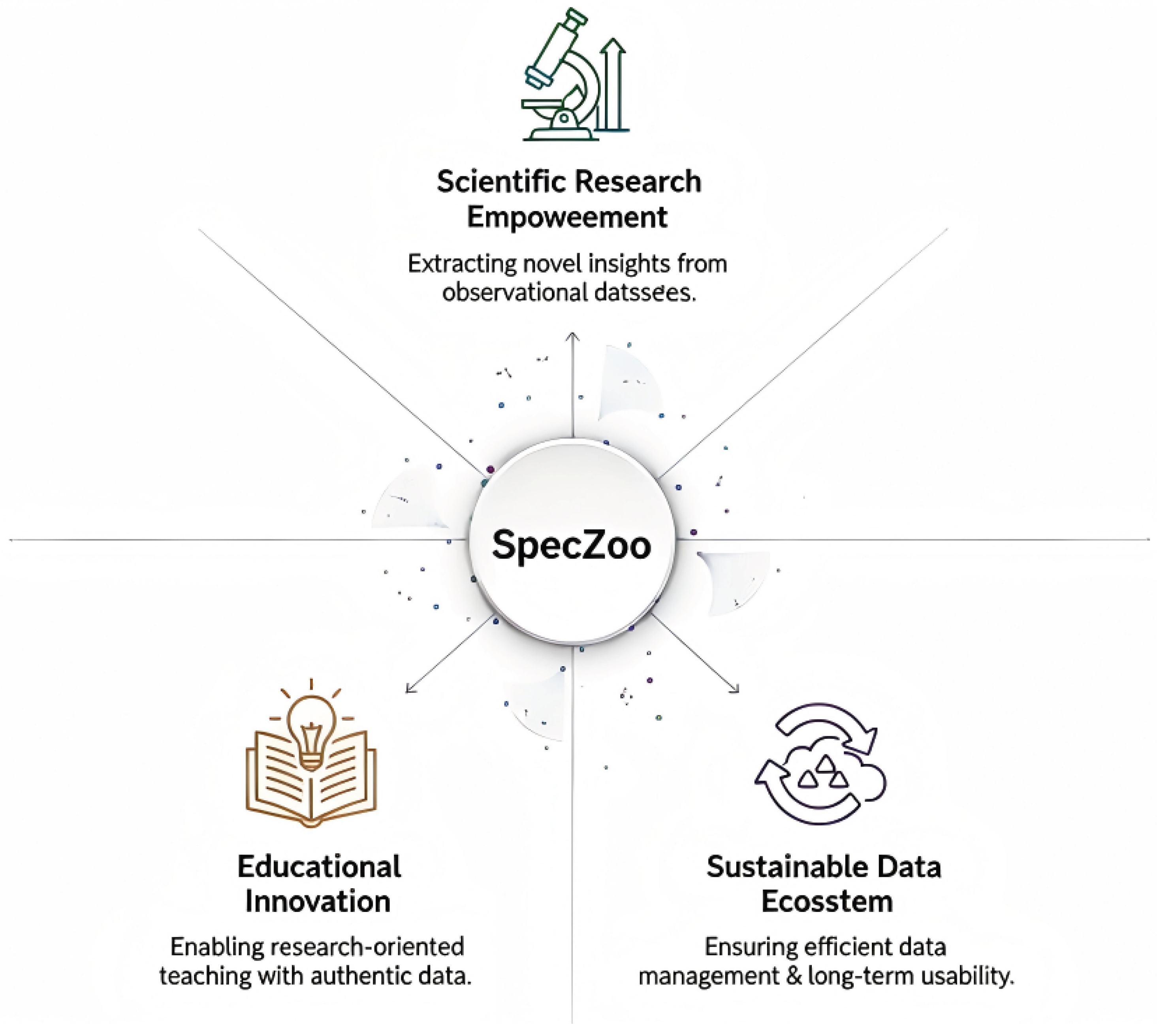
2.1. Design Philosophy
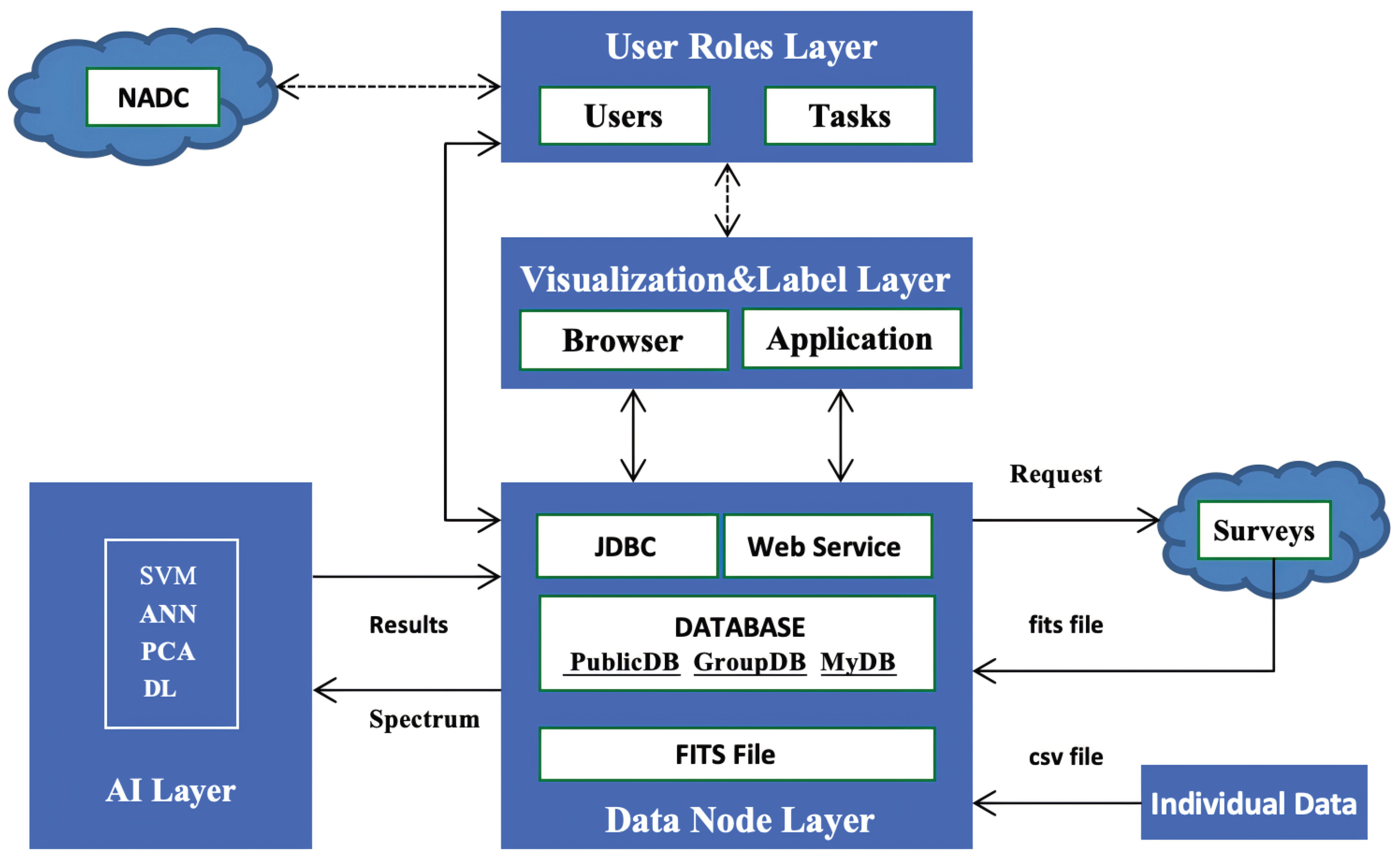
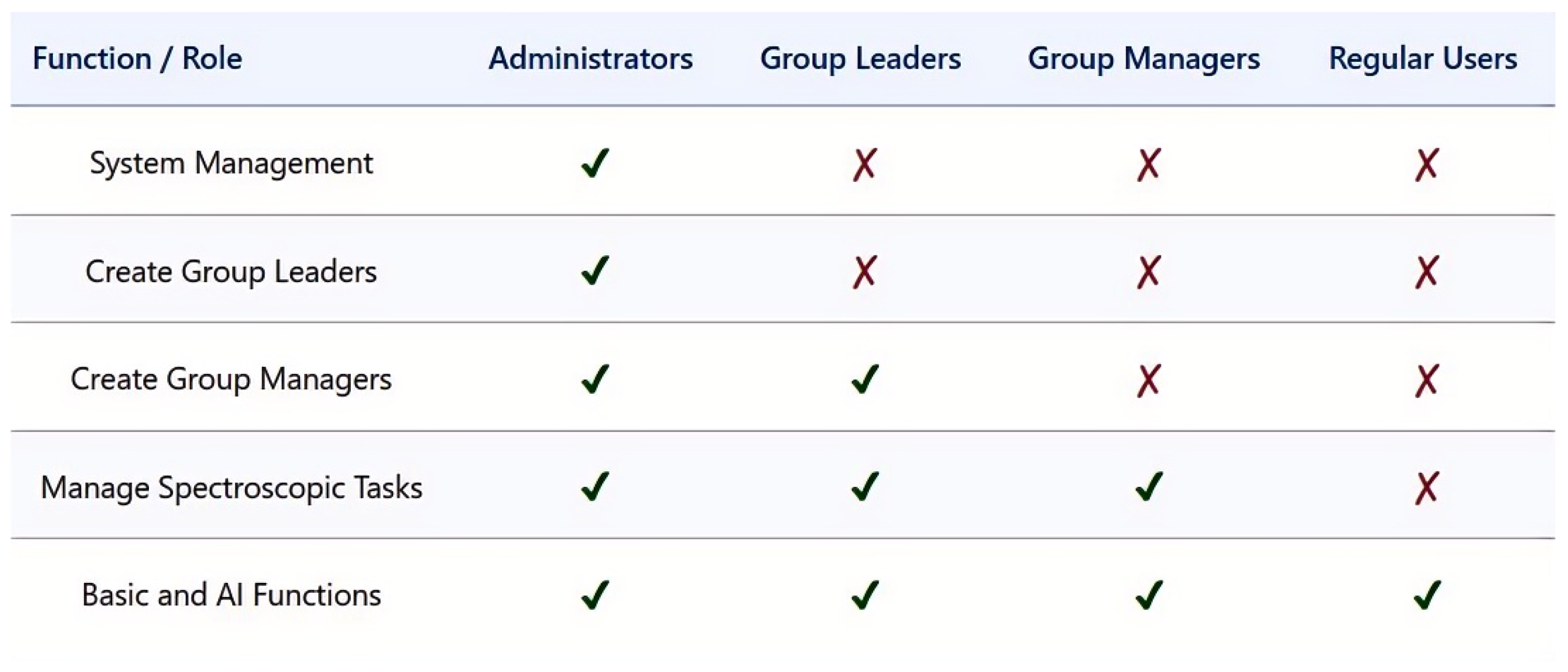
2.2. Modular Architecture of SpecZoo
3. Implementation of SpecZoo
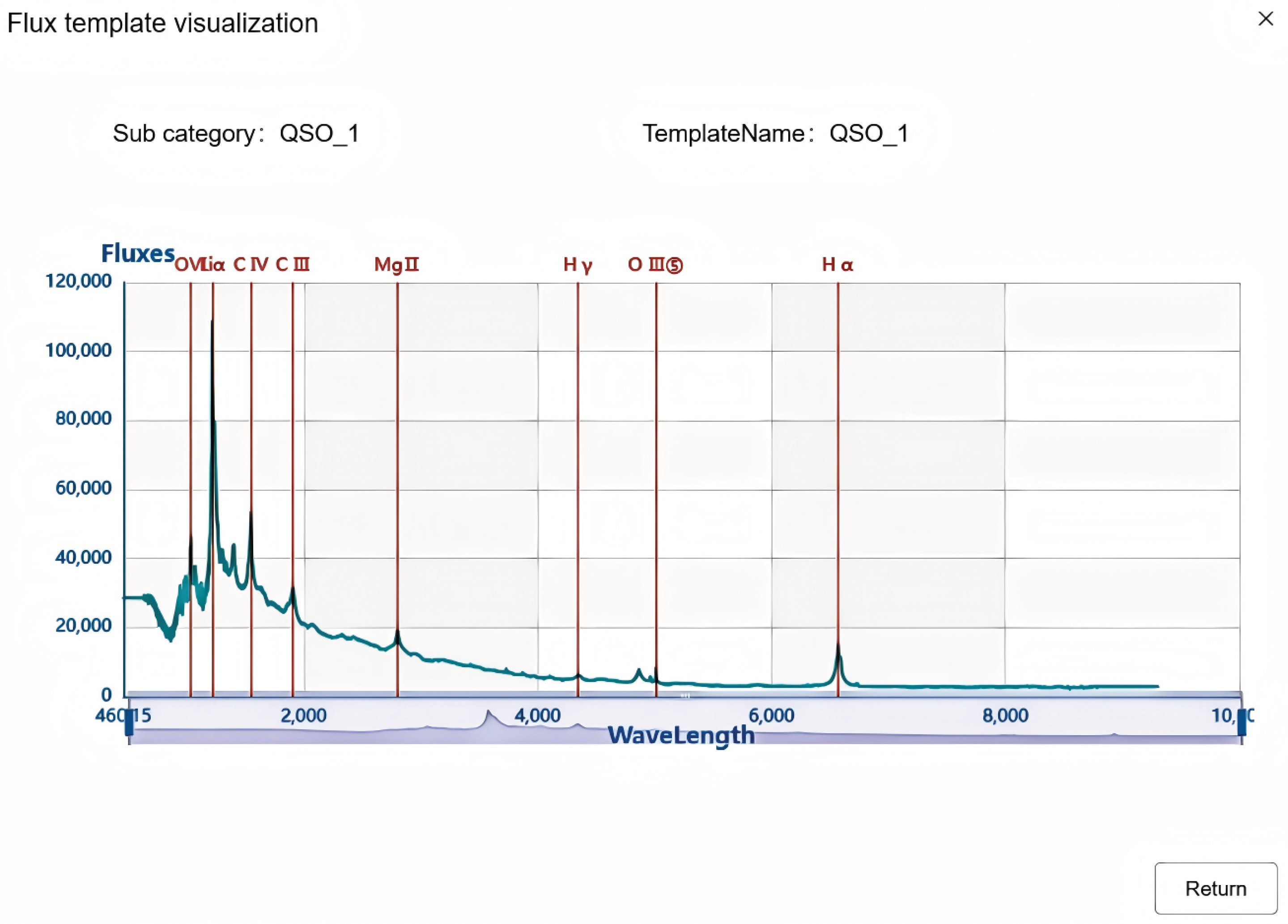
3.1. Basic Functions
3.2. Advanced AI-Powered Features
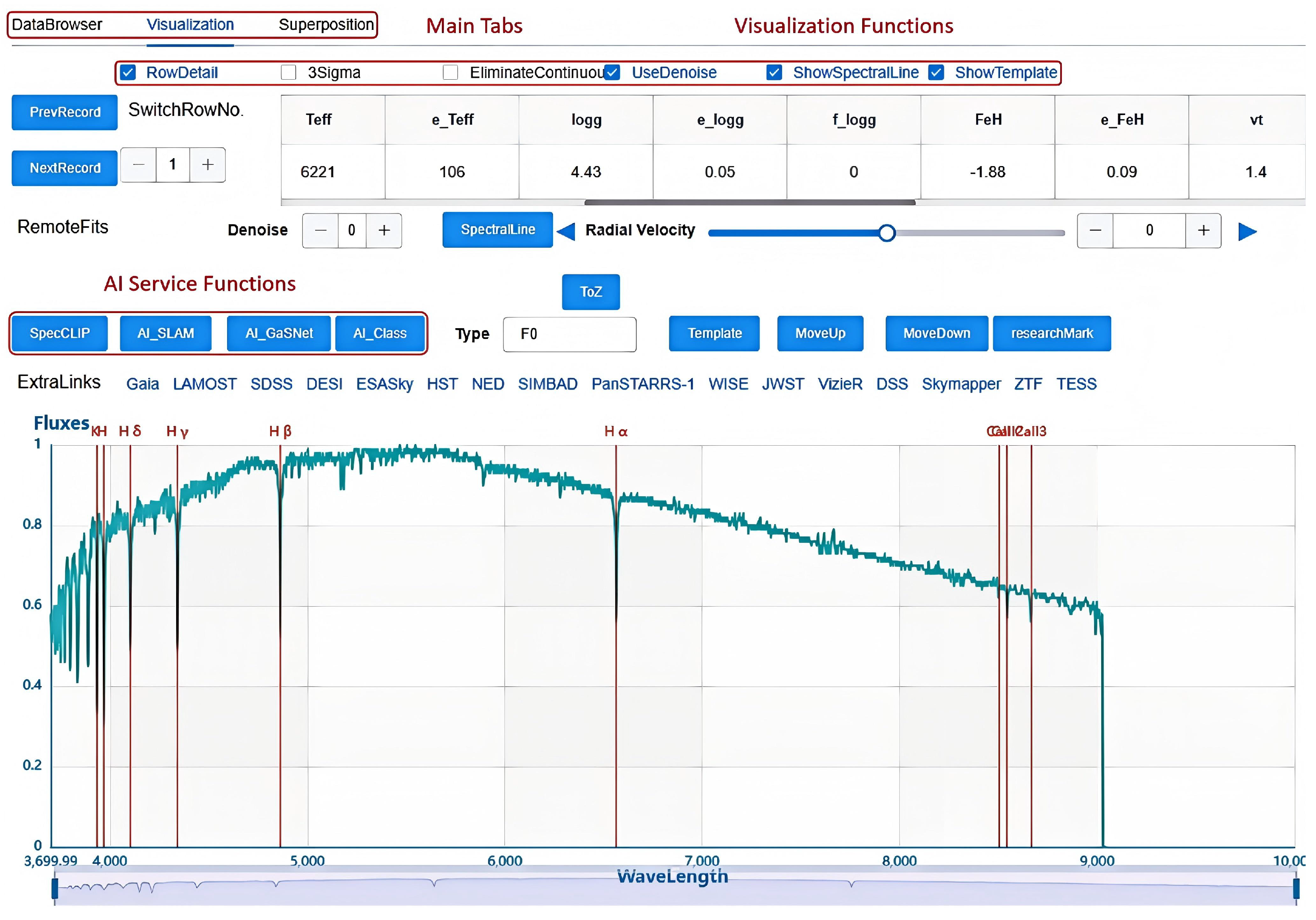
3.3. An Example for Displaying the Main Interface and Validation of the AI Functionalities
4. Use Cases for Science
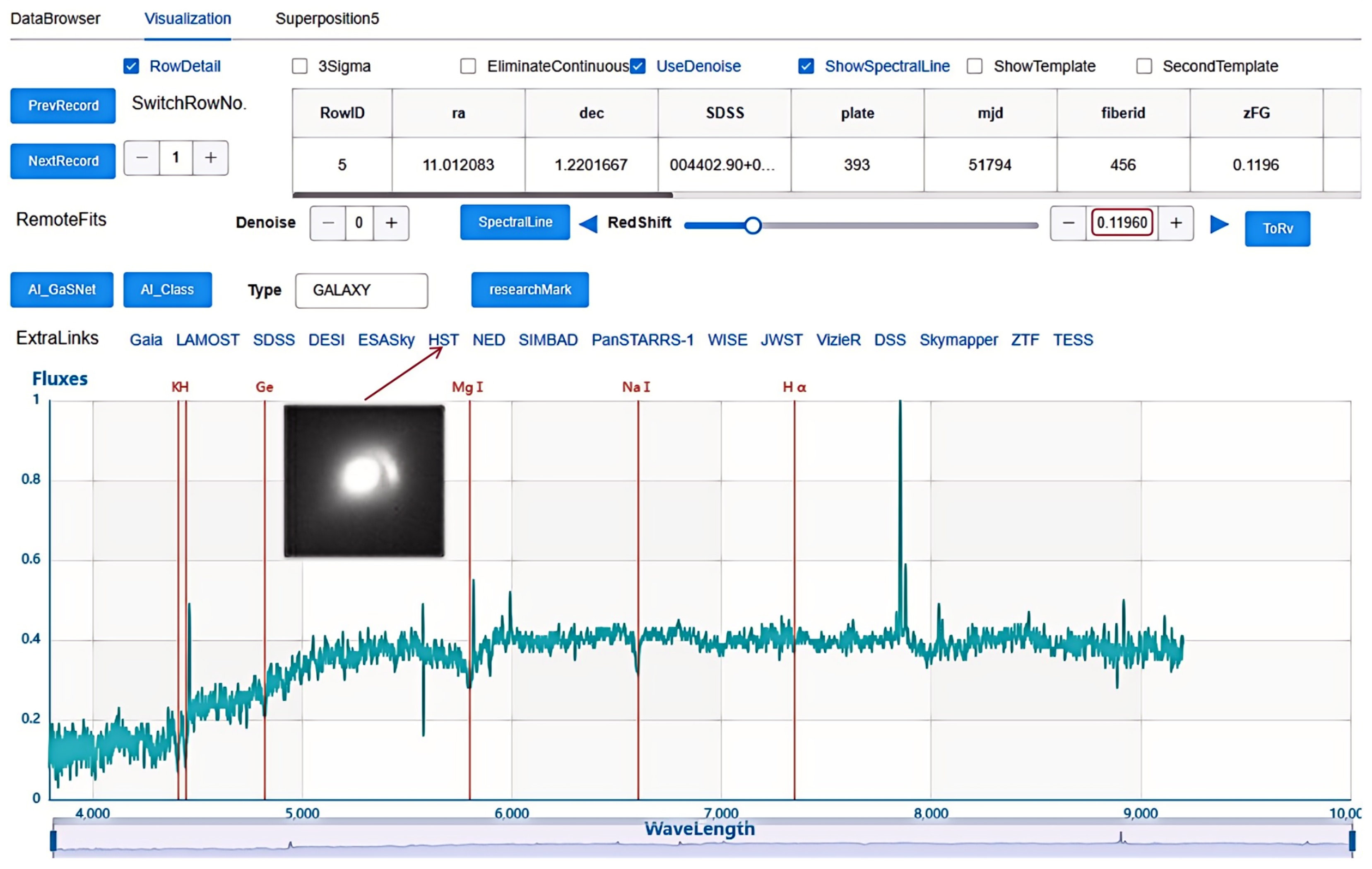
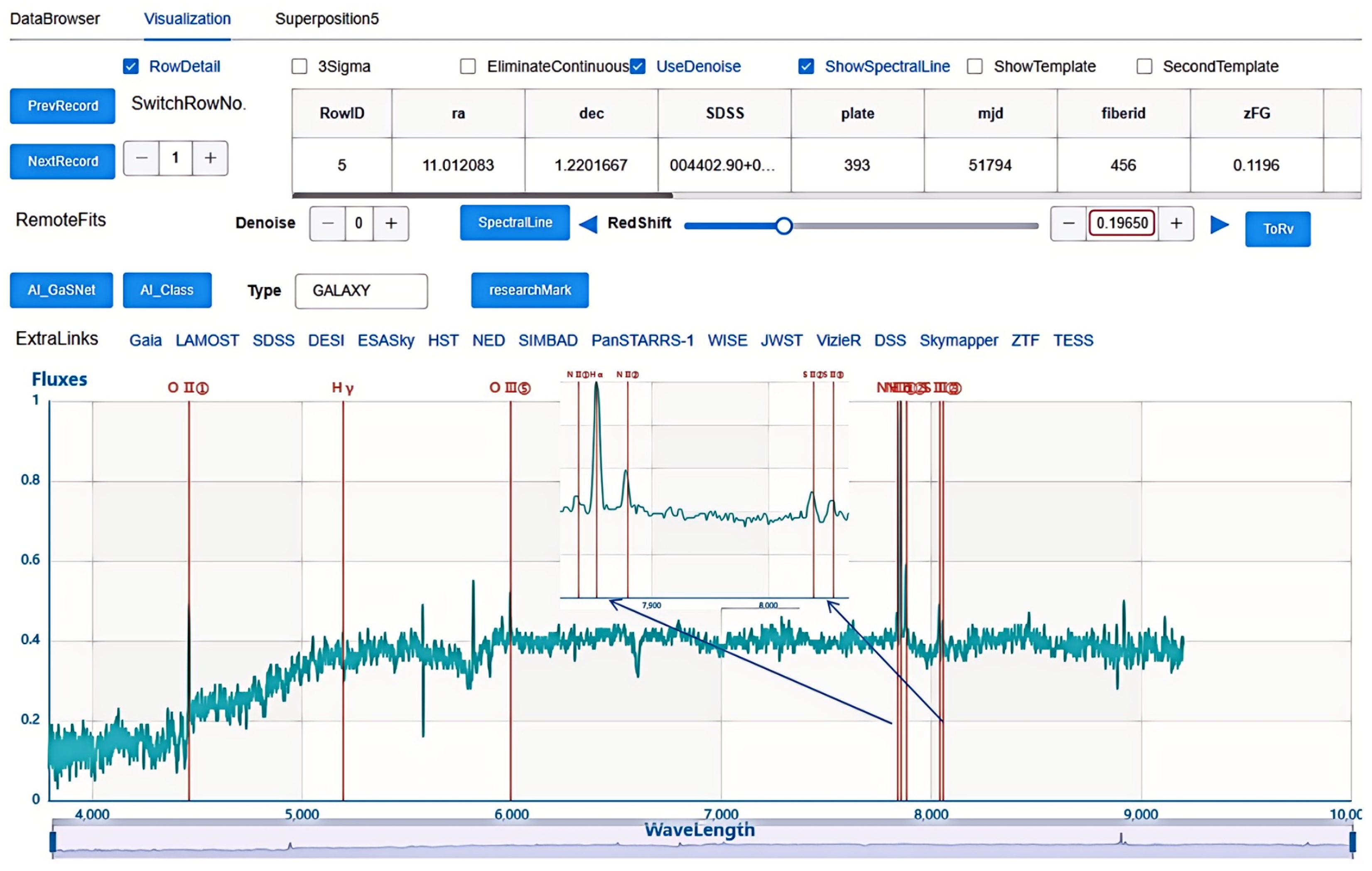
4.1. Identification of Strong Gravitational Lens Candidates
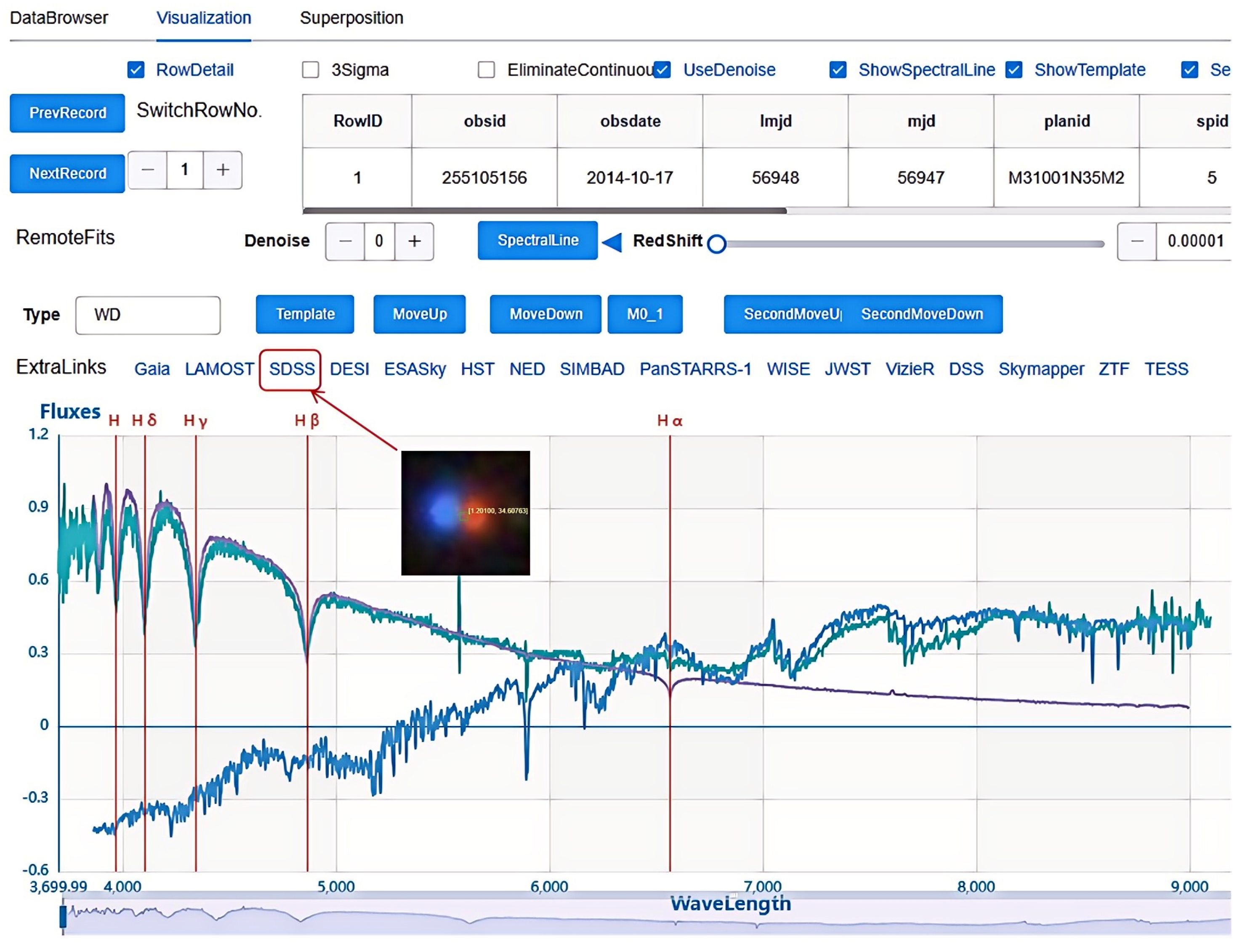
4.2. White Dwarf–Main Sequence Binary Systems
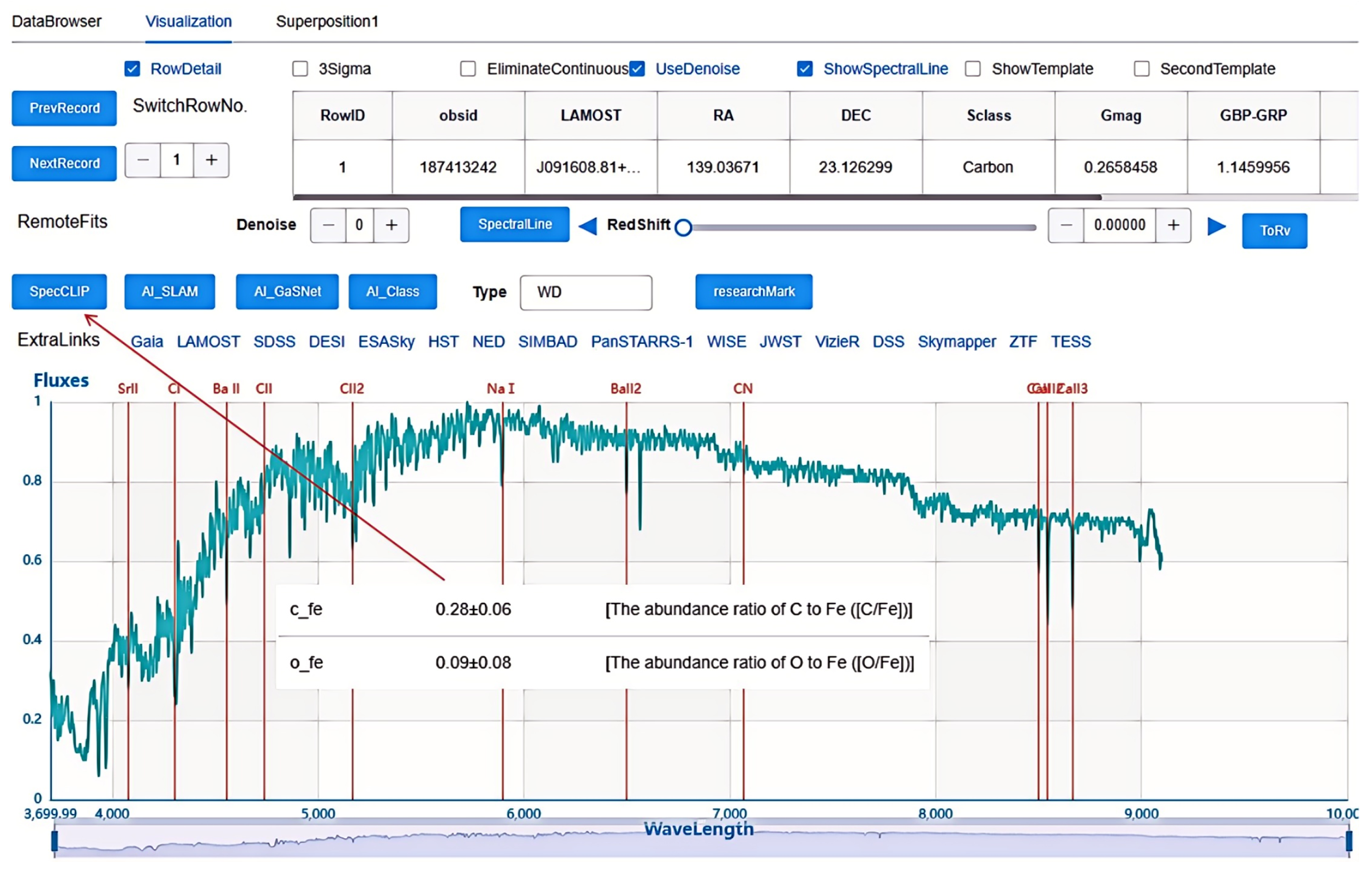
4.3. Efficient Identification and Subtype Classification of Carbon Stars
5. Use Cases for Education
5.1. Assist in Foundational Teaching
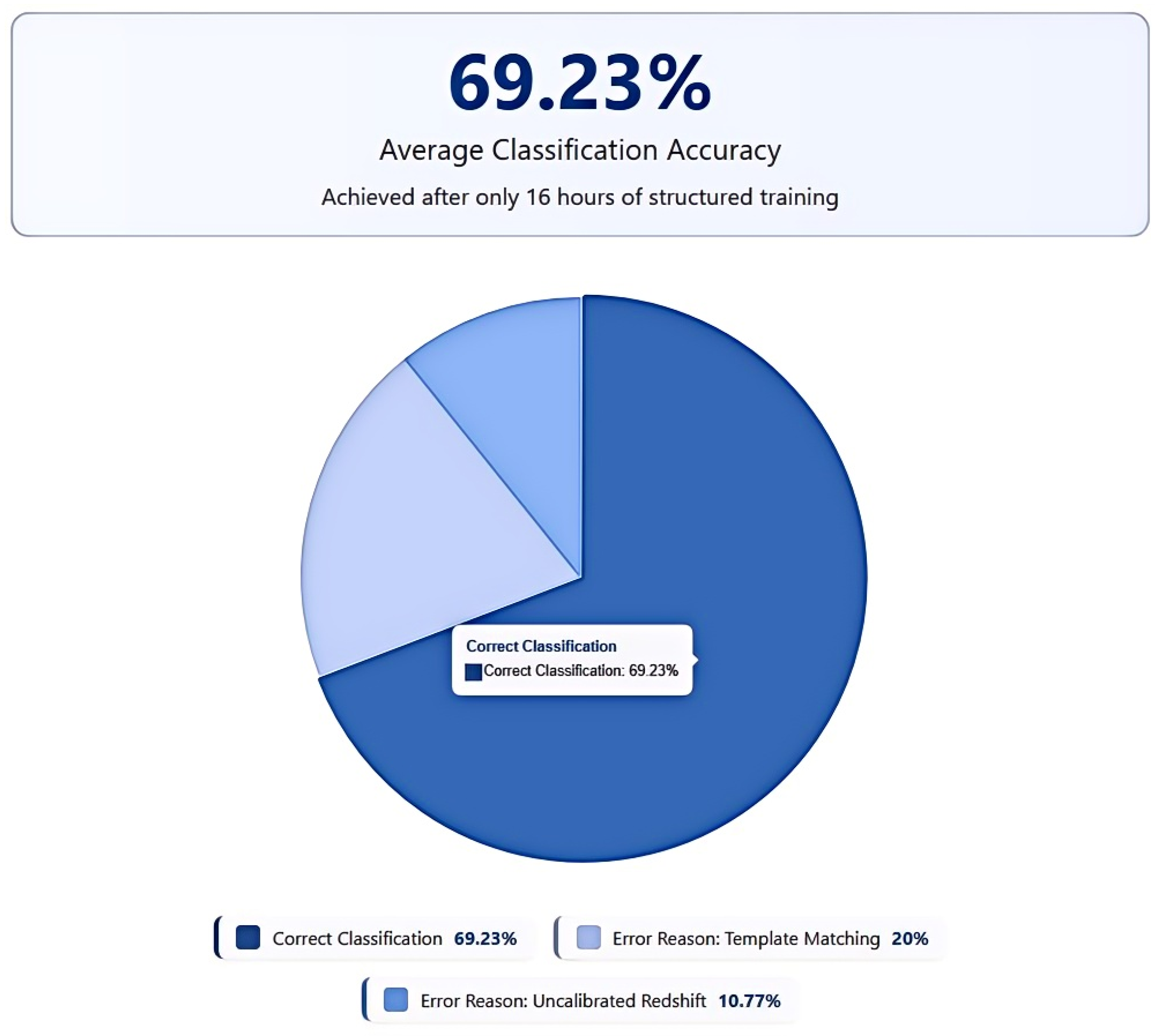
5.2. Support for Research-Oriented Teaching
- (1)
- The gravitational-lens group performed a systematic search of 220,000 LAMOST galaxy spectra with the machine-learning approach, identifying 170 candidate strong lenses. Subsequent manual verification on SpecZoo yielded around 20 high-probability lens candidates.
- (2)
- The carbon-star group manually reviewed and subclassified existing carbon-star catalogs via SpecZoo, optimized the deep-learning algorithm from He et al. [34], and applied it to the latest LAMOST data release.
- (3)
- The WDMS group reproduced the methodology of Pérez-Couto et al. [35] and successfully adapted its unsupervised machine-learning approach to low-resolution LAMOST spectra for WDMS candidate detection.
6. Conclusions
Author Contributions
Funding
Data Availability Statement
Acknowledgments
Conflicts of Interest
| 1 | https://nadc.china-vo.org/speczoo-system/ (accessed on 22 January 2026). |
| 2 | The class, which enrolls around 30 junior physics majors each year, prepares students for careers in scientific research. |
References
- Zhao, G.; Zhao, Y.H.; Chu, Y.Q.; Jing, Y.P.; Deng, L.C. LAMOST Spectral Survey—An Overview. Res. Astron. Astrophys. 2012, 12, 723–734. [Google Scholar]
- Kollmeier, J.; Anderson, S.F.; Blanc, G.A.; Blanton, M.R.; Covey, K.R.; Crane, J.; Drory, N.; Frinchaboy, P.M.; Froning, C.S.; Johnson, J.A.; et al. SDSS-V: Pioneering Panoptic Spectroscopy. Bull. Am. Astron. Soc. 2019, 51, 274. [Google Scholar]
- Levi, M.E.; Allen, L.E.; Raichoor, A.; Baltay, C.; Benzvi, S.; Beutler, F.; Bolton, A.; Castander, F.J.; Chuang, C.H.; Cooper, A.; et al. The Dark Energy Spectroscopic Instrument (DESI). Bull. Am. Astron. Soc. 2019, 51, 57. [Google Scholar] [CrossRef]
- Lindegren, L.; Perryman, M. GAIA: Global astrometric interferometer for astrophysics. Astron. Astrophys. Suppl. Ser. 1996, 116, 579–595. [Google Scholar] [CrossRef]
- Laruelo, A.; Barbarisi, I.; Salgado, J.; Osuna, P. VOSpec Spectral Analysis Tools. In Proceedings of the Astronomical Data Analysis Software and Systems XVII, London, UK, 23–26 September 2007; Astronomical Society of the Pacific: San Francisco, CA, USA, 2008; Volume 394, p. 513. [Google Scholar]
- Busko, I. SPECVIEW: An interactive java tool for visualization and analysis of spectral data. In Proceedings of the Astronomical Data Analysis Software and Systems IX, Waikoloa Village, HI, USA, 3–6 October 2000; Astronomical Society of the Pacific: San Francisco, CA, USA, 2000; Volume 216, p. 79. [Google Scholar]
- Škoda, P.; Draper, P.W.; Neves, M.C.; Andrešič, D.; Jenness, T. Spectroscopic analysis in the virtual observatory environment with SPLAT-VO. Astron. Comput. 2014, 7, 108–120. [Google Scholar] [CrossRef]
- Lebouteiller, V.; Barry, D.; Spoon, H.; Bernard-Salas, J.; Sloan, G.; Houck, J.; Weedman, D. CASSIS: The Cornell Atlas of Spitzer/infrared spectrograph sources. Astrophys. J. Suppl. Ser. 2011, 196, 8. [Google Scholar] [CrossRef]
- van der Walt, S.J.; Crellin-Quick, A.; Bloom, J.S. SkyPortal: An astronomical data platform. J. Open Source Softw. 2019, 4, 1247. [Google Scholar] [CrossRef]
- Simpson, R.; Page, K.R.; De Roure, D. Zooniverse: Observing the world’s largest citizen science platform. In Proceedings of the 23rd International Conference on World Wide Web, Seoul, Republic of Korea, 7–11 April 2014; pp. 1049–1054. [Google Scholar]
- Lei, G.; Xu, Y.; Niu, C.; Tian, H.; Zhang, Y.; Cui, C.; Zhao, Y. Design and Implementation of an Expert Platform for Spectral Inspection. Astron. Res. Technol. 2018, 15, 216–224. [Google Scholar]
- Hardt, D. (Ed.) The OAuth 2.0 Authorization Framework. RFC 6749, Internet Engineering Task Force (IETF), October 2012, 76p. Available online: https://www.rfc-editor.org/info/rfc6749 (accessed on 1 January 2026).
- Li, D.; Mei, H.; Shen, Y.; Su, S.; Zhang, W.; Wang, J.; Zu, M.; Chen, W. ECharts: A declarative framework for rapid construction of web-based visualization. Vis. Inform. 2018, 2, 136–146. [Google Scholar] [CrossRef]
- Hanchett, E.; Listwon, B. Vue.js in Action; Simon and Schuster: New York, NY, USA, 2018. [Google Scholar]
- Boaglio, F. Spring Boot: Acelere o Desenvolvimento de Microsserviços; Casa do Código: Lisbon, Portugal, 2017. [Google Scholar]
- Ho, C. Using MyBatis in Spring. In Pro Spring 3; Springer: Berlin/Heidelberg, Germany, 2012; pp. 397–435. [Google Scholar]
- Prieto, C.A.; Majewski, S.; Schiavon, R.; Cunha, K.; Frinchaboy, P.; Holtzman, J.; Johnston, K.; Shetrone, M.; Skrutskie, M.; Smith, V.; et al. APOGEE: The Apache point observatory galactic evolution experiment. Astron. Nachrichten Astron. Notes 2008, 329, 1018–1021. [Google Scholar] [CrossRef]
- Wu, J.; He, Y.; Wang, W.; Qu, M.; Jiang, B.; Zhang, Y. Classification of Astronomical Spectra Based on Multiscale Partial Convolution. Astron. J. 2024, 167, 260. [Google Scholar] [CrossRef]
- Zhang, B.; Liu, C.; Deng, L.C. Deriving the Stellar Labels of LAMOST Spectra with the Stellar LAbel Machine (SLAM). Astrophys. J. Suppl. Ser. 2020, 246, 9. [Google Scholar] [CrossRef]
- Zhao, X.; Huang, Y.; Xue, G.; Kong, X.; Liu, J.; Tang, X.; Beers, T.C.; Ting, Y.S.; Luo, A.L. SpecCLIP: Aligning and Translating Spectroscopic Measurements for Stars. arXiv 2025, arXiv:2507.01939. [Google Scholar] [CrossRef]
- Zhong, F.; Napolitano, N.R.; Heneka, C.; Krogager, J.K.; Demarco, R.; Bouché, N.F.; Loveday, J.; Fritz, A.; Verdier, A.; Roukema, B.F.; et al. Galaxy Spectra Networks (GaSNet). III. Generative Pre-trained Network for Spectrum Reconstruction, Redshift Estimate and Anomaly Detection. arXiv 2024, arXiv:2412.21130. [Google Scholar]
- De Jong, R.S.; Agertz, O.; Berbel, A.A.; Aird, J.; Alexander, D.A.; Amarsi, A.; Anders, F.; Andrae, R.; Ansarinejad, B.; Ansorge, W.; et al. 4MOST: Project Overview and Information for the First Call for Proposals. arXiv 2019, arXiv:1903.02464. [Google Scholar] [CrossRef]
- Li, H.; Aoki, W.; Matsuno, T.; Xing, Q.; Suda, T.; Tominaga, N.; Chen, Y.; Honda, S.; Ishigaki, M.N.; Shi, J.; et al. Four-hundred very metal-poor stars studied with LAMOST and Subaru. II. Elemental abundances. Astrophys. J. 2022, 931, 147. [Google Scholar] [CrossRef]
- Kaifu, N. Subaru telescope. In Proceedings of the Advanced Technology Optical/IR Telescopes VI. SPIE, Kona, HI, USA, 23–25 March 1998; Volume 335, pp. 14–22. [Google Scholar]
- Brammer, G.B.; Van Dokkum, P.G.; Franx, M.; Fumagalli, M.; Patel, S.; Rix, H.W.; Skelton, R.E.; Kriek, M.; Nelson, E.; Schmidt, K.B.; et al. 3D-HST: A Wide-field Grism Spectroscopic Survey with the Hubble Space Telescope. Astrophys. J. Suppl. Ser. 2012, 200, 13. [Google Scholar] [CrossRef]
- Zhong, F.; Li, R.; Napolitano, N.R. Galaxy Spectra neural Networks (GaSNets). I. Searching for strong lens candidates in eBOSS spectra using Deep Learning. Res. Astron. Astrophys. 2022, 22, 065014. [Google Scholar] [CrossRef]
- Miao, H.; Gong, Y.; Chen, X.; Huang, Z.; Li, X.D.; Zhan, H. Cosmological constraint precision of photometric and spectroscopic multi-probe surveys of China Space Station Telescope (CSST). Mon. Not. R. Astron. Soc. 2023, 519, 1132–1148. [Google Scholar] [CrossRef]
- Ren, J.; Luo, A.L.; Zhao, Y. Search and Research Progress on White Dwarf–Main-Sequence Binaries. Prog. Astron. 2014, 32, 462–480. [Google Scholar]
- Willems, B.; Kolb, U. Detached White Dwarf Main-sequence Star Binaries. Astron. Astrophys. 2004, 419, 1057–1076. [Google Scholar] [CrossRef]
- Barnbaum, C.; Stone, R.P.S.; Keenan, P.C. A Moderate-Resolution Spectral Atlas of Carbon Stars: R, J, N, CH, and Barium Stars. Astrophys. J. Suppl. Ser. 1996, 105, 419. [Google Scholar] [CrossRef]
- Li, L.; Zhang, K.; Cui, W.; Shi, J.; Ji, W.; Huo, Z.; Gao, Y.; Zhang, S.; Sun, M. Identification of Carbon Stars from LAMOST DR7. Astrophys. J. Suppl. Ser. 2024, 271, 12. [Google Scholar] [CrossRef]
- Jaschek, C.; Conde, H.; De Sierra, A.C. Catalogue of Stellar Spectra Classified in the Morgan-Keenan System; Universidad Nacional de La Plata: La Plata, Argentina, 1964. [Google Scholar]
- Slettebak, A. The Be stars. Space Sci. Rev. 1979, 23, 541–580. [Google Scholar] [CrossRef]
- He, Y.; Cao, Z.; Deng, H.; Wang, F.; Mei, Y.; Tan, L. Identification of Carbon Stars in LAMOST DR9 Based on Deep Learning. Astrophys. J. Suppl. Ser. 2024, 274, 6. [Google Scholar] [CrossRef]
- Pérez-Couto, X.; Manteiga, M.; Villaver, E. Finding White Dwarfs’ Hidden Companions using an Unsupervised Machine Learning Technique. arXiv 2025, arXiv:2503.04672. [Google Scholar] [CrossRef]



| Parameter | Unit | Description | ||
|---|---|---|---|---|
| SpecCLIP | Mass | Stellar mass | 0.086 | |
| Age | Gyr | Stellar age | 1.337 | |
| rv | km s−1 | Radial velocity | 5.289 | |
| Teff | K | Effective temperature | 132.669 | |
| dex | Metallicity | 0.056 | ||
| dex | Abundance ratio of C to Fe | 0.037 | ||
| dex | Abundance ratio of O to Fe | 0.049 | ||
| dex | Abundance ratio of to Fe | 0.020 | ||
| dex | Abundance ratio of N to Fe | 0.049 | ||
| dex | Abundance ratio of Al to Fe | 0.046 | ||
| dex | Abundance ratio of Ca to Fe | 0.029 | ||
| dex | Abundance ratio of Mg to Fe | 0.031 | ||
| dex | Abundance ratio of Si to Fe | 0.028 | ||
| dex | Abundance ratio of Ti to Fe | 0.056 | ||
| dex | Abundance ratio of Mn to Fe | 0.031 | ||
| dex | Abundance ratio of Ni to Fe | 0.025 | ||
| dex | Abundance ratio of Cr to Fe | 0.074 | ||
| log g | dex | Surface gravity | 0.079 | |
| SLAM | Teff | K | Effective temperature | 50 |
| log g | dex | Surface gravity | 0.09 | |
| dex | Iron-to-hydrogen abundance ratio | 0.07 | ||
| GasNet-III | Best-Fit_CLASS | - | Matched astronomical classification | - |
| Best-Fit_Z | - | Estimated redshift | - | |
| Degeneracy | - | Robustness Parameter | - | |
| min_chi_square | - | Goodness of fit | - |
| Parameters | Values | Literature Values | Description |
|---|---|---|---|
| Teff | 5955.58 ± 215.07 | 6221 ± 106 | Effective temperature [K] |
| −1.89 ± 0.23 | −0.88 ± 0.09 | Metallicity [dex] | |
| log g | 4.14 | 4.43 ± 0.05 | Surface gravity [dex] |
| Best-Fit_CLASS | STAR | STAR | Matched astronomical classification |
| Best-Fit_Z | −0.00011 | - | Estimated redshift |
| AI CLASS | F0 | - | AI recommends subcategories |
Disclaimer/Publisher’s Note: The statements, opinions and data contained in all publications are solely those of the individual author(s) and contributor(s) and not of MDPI and/or the editor(s). MDPI and/or the editor(s) disclaim responsibility for any injury to people or property resulting from any ideas, methods, instructions or products referred to in the content. |
© 2026 by the authors. Licensee MDPI, Basel, Switzerland. This article is an open access article distributed under the terms and conditions of the Creative Commons Attribution (CC BY) license.
Share and Cite
Pu, Y.; Lei, G.; Xu, Y.; Chen, X.; Tian, H. SpecZoo: An AI-Powered Platform for Spectral Analysis and Visualization in Science and Education. Universe 2026, 12, 64. https://doi.org/10.3390/universe12030064
Pu Y, Lei G, Xu Y, Chen X, Tian H. SpecZoo: An AI-Powered Platform for Spectral Analysis and Visualization in Science and Education. Universe. 2026; 12(3):64. https://doi.org/10.3390/universe12030064
Chicago/Turabian StylePu, Yuanhao, Guohong Lei, Yang Xu, Xunzhou Chen, and Haijun Tian. 2026. "SpecZoo: An AI-Powered Platform for Spectral Analysis and Visualization in Science and Education" Universe 12, no. 3: 64. https://doi.org/10.3390/universe12030064
APA StylePu, Y., Lei, G., Xu, Y., Chen, X., & Tian, H. (2026). SpecZoo: An AI-Powered Platform for Spectral Analysis and Visualization in Science and Education. Universe, 12(3), 64. https://doi.org/10.3390/universe12030064