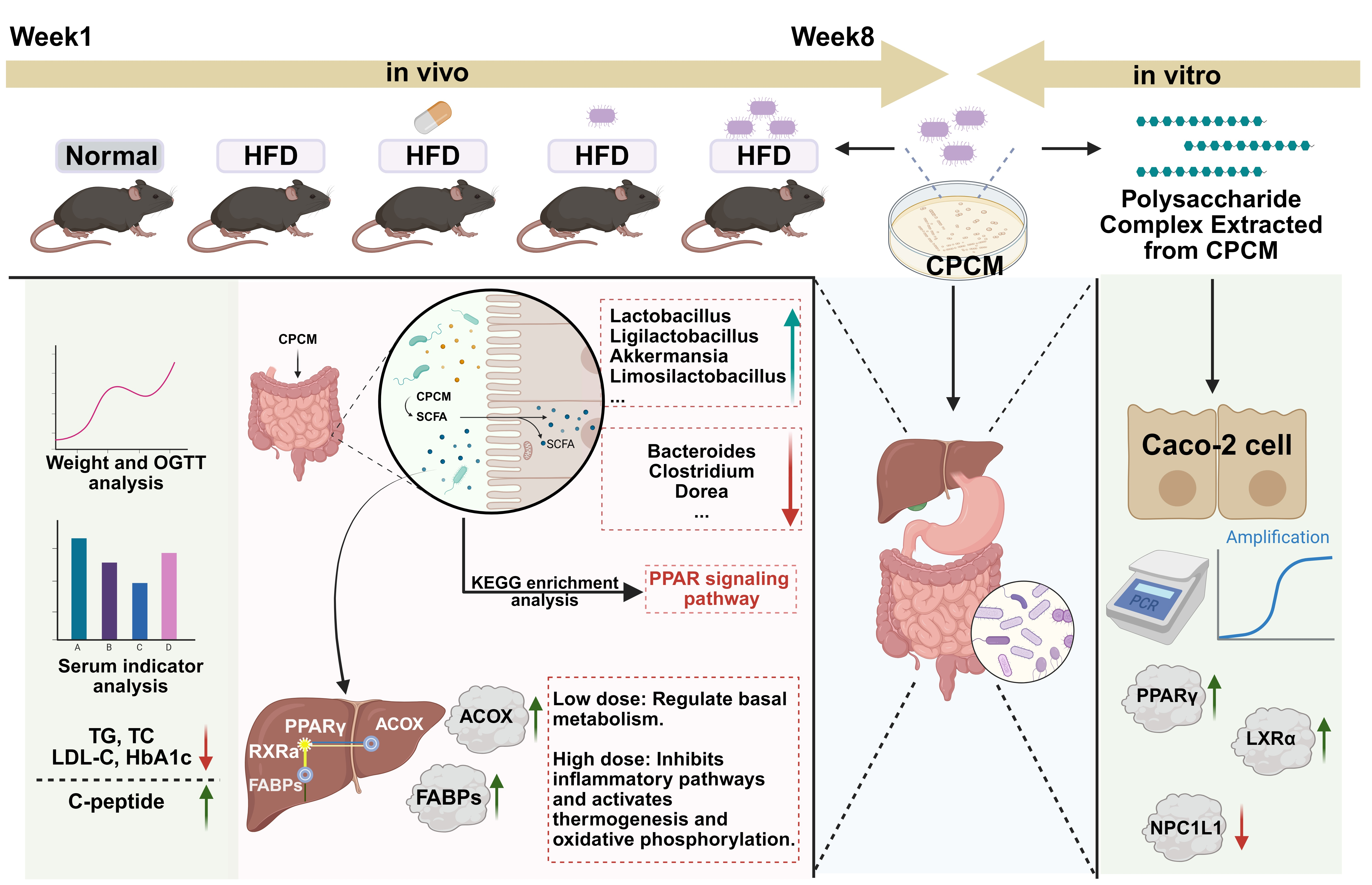

Mechanistic Insights into Lactobacillus harbinensis and Other Probiotics Regulating Lipid Metabolism in T2DM Mice via the PPARγ-LXRα-NPC1L1 Signaling Pathway Based on Multi-Omics Analysis
Abstract
1. Introduction
2. Materials and Methods
2.1. Source and Culture of Strains
2.2. Animals and Treatments
2.3. Biochemical Parameter Analysis
2.4. Metagenomic Sequencing
2.4.1. Processing of Metagenome Sequencing Data
2.4.2. Taxonomic and Functional Annotation
2.5. Proteomics Analysis
2.6. Cell Experiments
2.6.1. Extraction of Exopolysaccharides
2.6.2. Impact of EPS on the Viability of Caco-2 Cells
2.6.3. Establishment of the Cholesterol Absorption Model in Caco-2 Cells
2.6.4. The Effect of EPS on Cholesterol Uptake in Caco-2 Cells
2.6.5. Quantitative Real-Time PCR
2.7. Data Analysis
Statistical Analyses of Proteomics
3. Results
3.1. Effect of CPCM on Glucose and Lipid Metabolism in db/db Mice
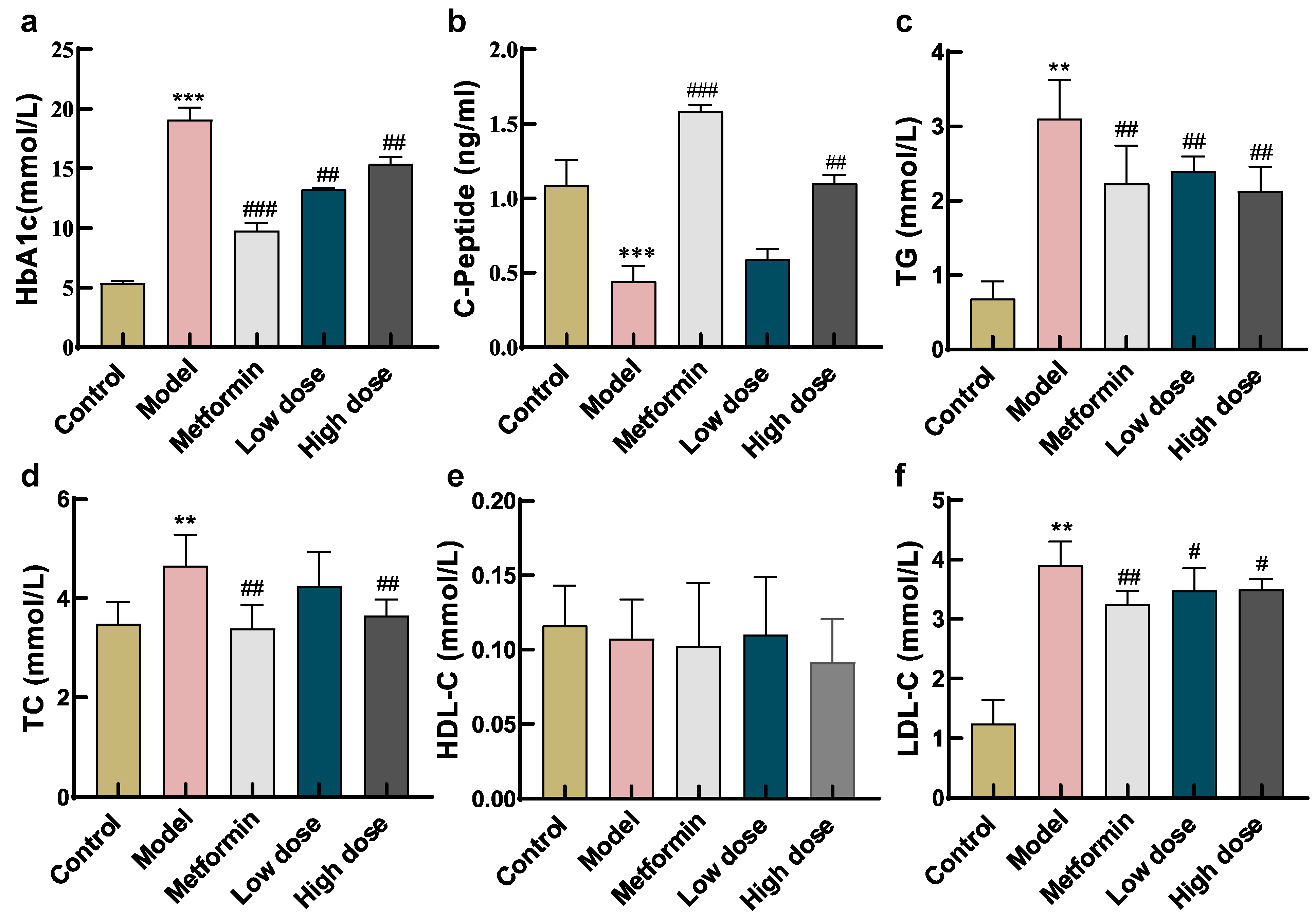
3.1.1. Effect of CPCM on Glycated Hemoglobin (HbA1c) and C-Peptide (CP) in db/db Mice
3.1.2. Effect of CPCM on Serum Lipid Profiles (TC, TG, LDL-C, and HDL-C) in db/db Mice
3.1.3. Effect of CPCM on Fasting Blood Glucose Levels in db/db Mice
3.1.4. Effect of CPCM on Oral Glucose Tolerance Test (OGTT) in db/db Mice
3.1.5. Effect of CPCM on Body Weight in db/db Mice
3.2. Restructuring of Gut Microbiota Functional Genes by CPCM
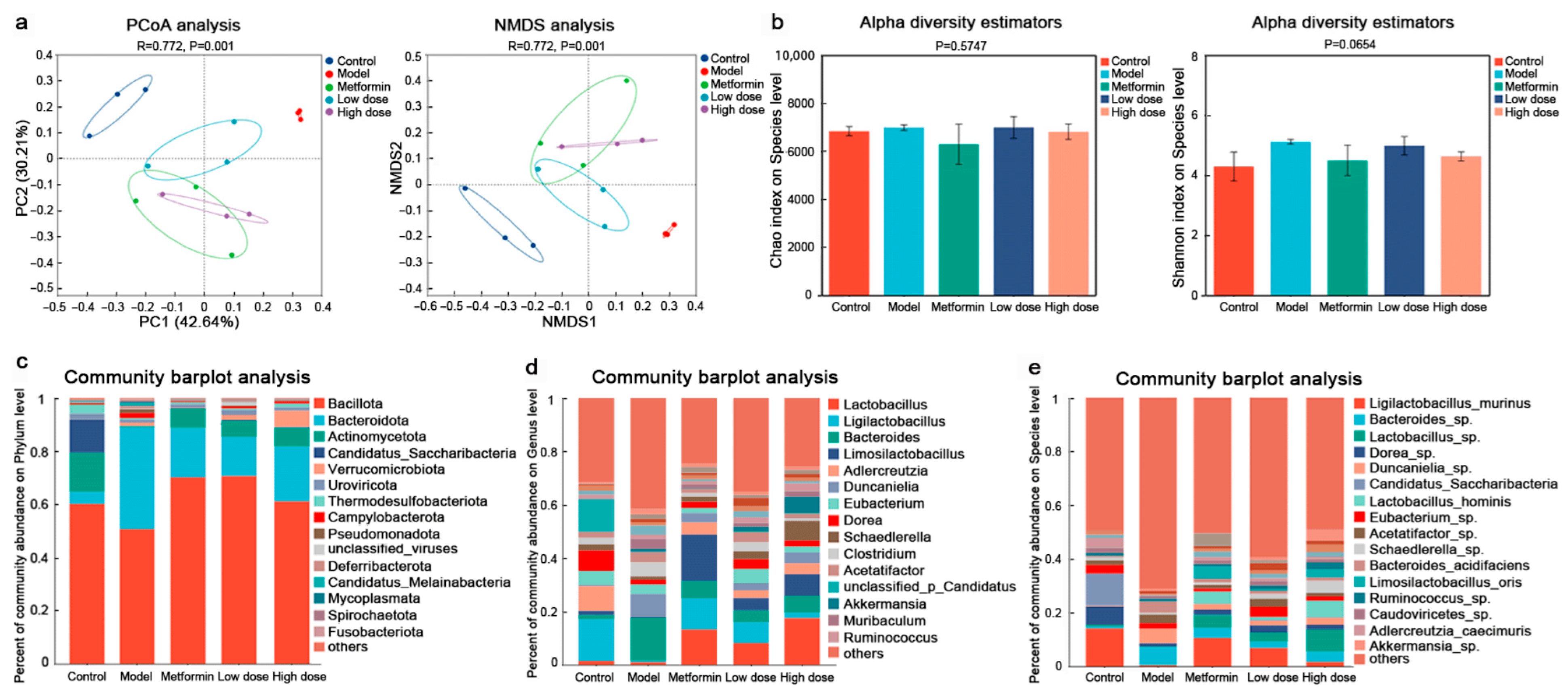
3.2.1. Effect of CPCM on Gut Microbiota Diversity in db/db Mice
3.2.2. CPCM Modulates the Gut Microbiota Structure in db/db Mice
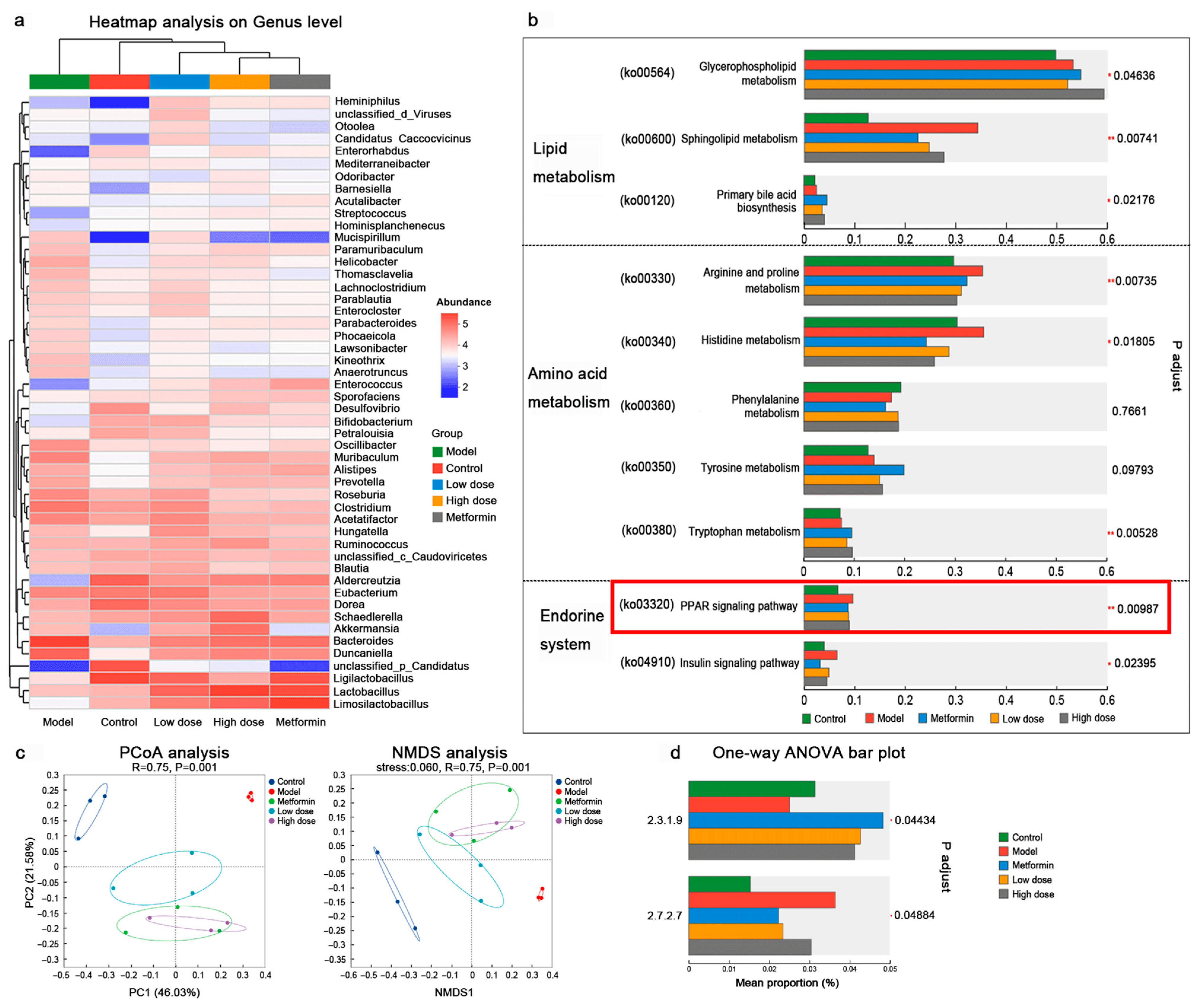
3.2.3. Remodeling of the Gut Microbiota’s Functional Gene Profile by CPCM
3.3. Effect of CPCM on Hepatic Protein Expression in db/db Mice
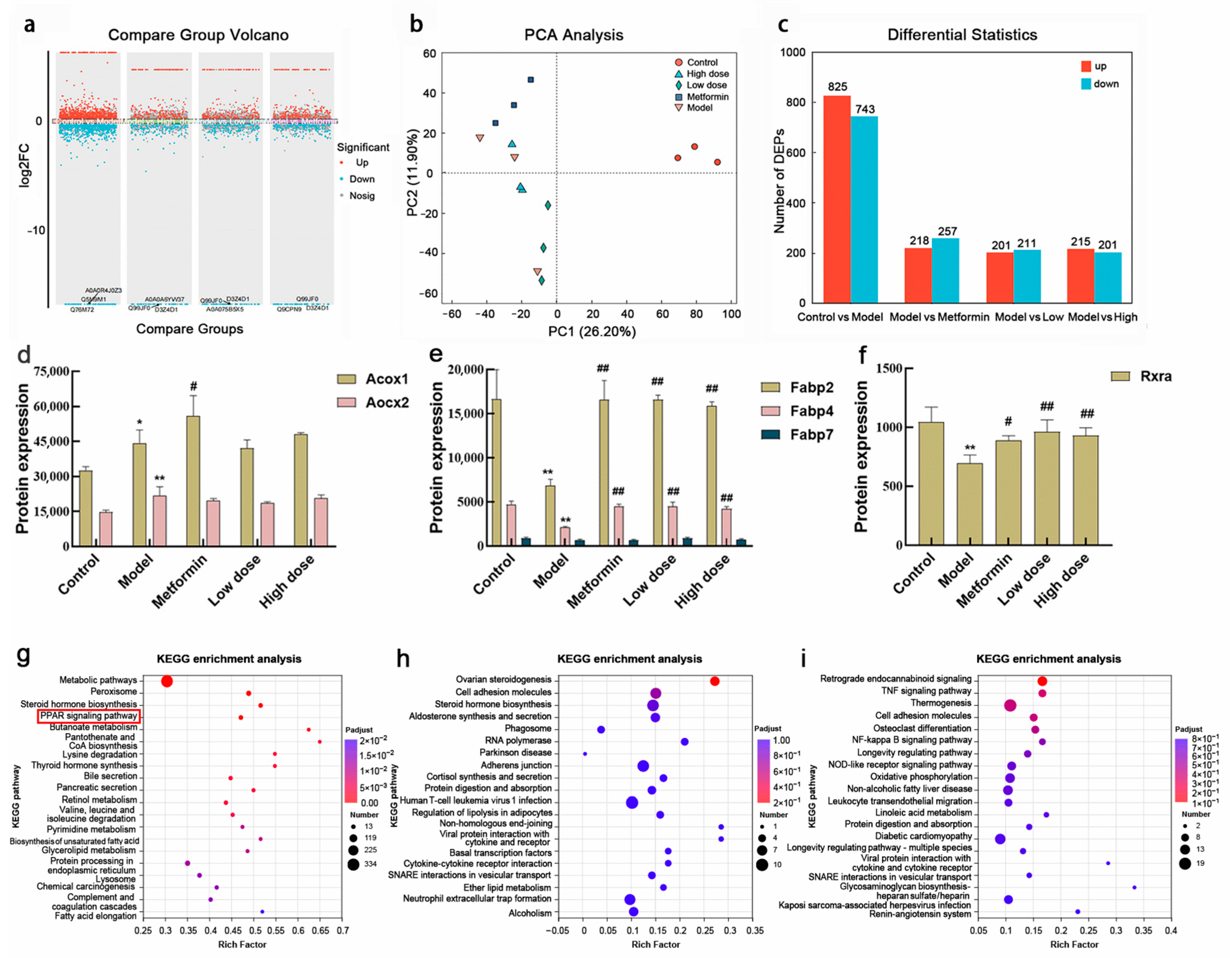
3.3.1. Identification of Differentially Expressed Hepatic Proteins
3.3.2. Modulation of Key PPAR Signaling Pathway Proteins in the Liver by CPCM
- -
- Fatty acid β-oxidation rate-limiting enzymes (ACOX1 and ACOX2), which indicate impaired hepatic fatty acid catabolism;
- -
- Fatty acid transport proteins (FABP1, FABP2, FABP4, and FABP7), suggesting compromised uptake and intracellular trafficking of fatty acids;
- -
- RXRa, the essential dimerization partner of PPARγ, whose reduction may attenuate PPARγ transcriptional activity.
3.3.3. Effect of CPCM on Signaling Pathways of Differentially Expressed Proteins in the Liver of db/db Mice
3.4. Effect of CPCM-Derived Exopolysaccharides (EPS) on Cholesterol Absorption in Caco-2 Cells
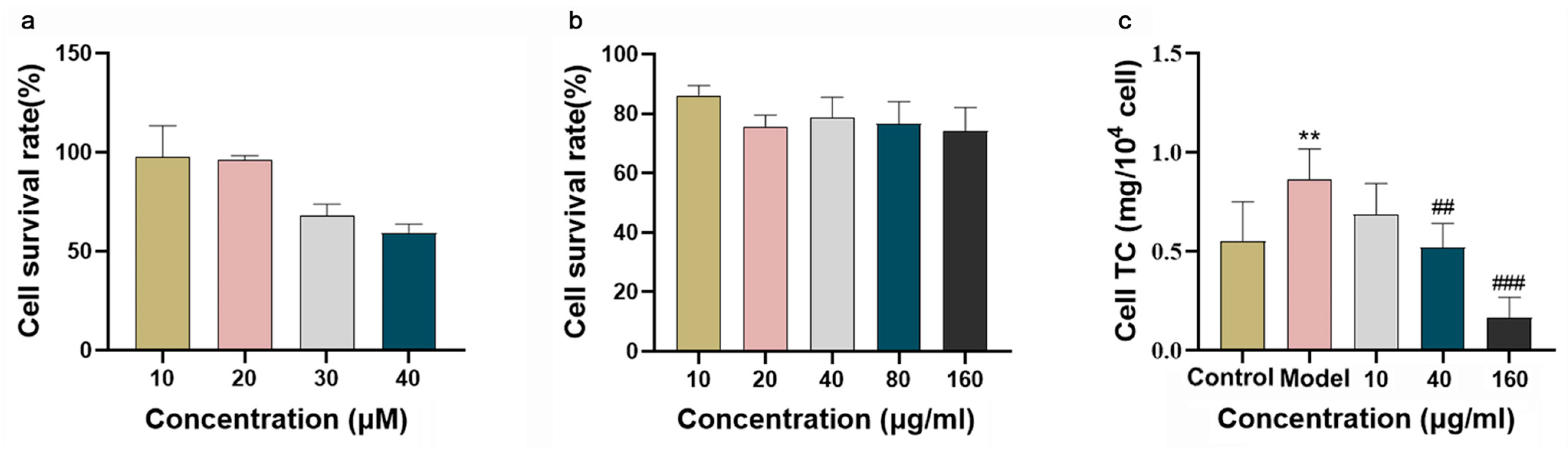
3.4.1. Effect of EPS and Cholesterol Micelles on the Viability of Caco-2 Cells
3.4.2. Effect of EPS on Cholesterol Absorption in Caco-2 Cells
3.4.3. Effect of EPS on PPARγ, LXRα, and NPC1L1 mRNA Levels in Caco-2 Cells
4. Discussion
5. Conclusions
Supplementary Materials
Author Contributions
Funding
Institutional Review Board Statement
Informed Consent Statement
Data Availability Statement
Conflicts of Interest
Abbreviations
| AUC | Area under the curve |
| ANOVA | Analysis of variance |
| BSA | Bovine Serum Albumin |
| BH | Benjamini–Hochberg |
| CPCM | Composite probiotics derived from fermented camel milk |
| CDCA | Chenodeoxycholic acid |
| CP | C-peptide |
| Chao index | Chao diversity index |
| DM | Diabetes mellitus |
| DEP | Differentially expressed proteins |
| DMSO | Dimethyl sulfoxide |
| DMEM | Dulbecco’s Modified Eagle Medium |
| EPS | Exopolysaccharides |
| ELISA | Enzyme-linked immunosorbent assay |
| FXR | Farnesoid X receptor |
| FABP | Fatty acid-binding protein |
| FBG | Fasting blood glucose |
| GLP-1 | Glucagon-like peptide-1 |
| GPR43/41 | G protein-coupled receptor |
| HbA1c | Glycated Hemoglobin A1c |
| HDL-C | High-density lipoprotein cholesterol |
| IDF | International Diabetes Federation |
| IACUC | Institutional Animal Care and Use Committee |
| KEGG | Kyoto Encyclopedia of Genes and Genomes |
| LXRα | Liver X receptor α |
| LPS | Lipopolysaccharide |
| LCA | Lithocholic acid |
| LAB | Lactic acid bacteria |
| LDL-C | Low-density lipoprotein cholesterol |
| LC–MS | Liquid chromatography-mass spectrometry |
| MyD88 | Myeloid differentiation factor 88 |
| MTT | 3-(4,5-dimethylthiazol-2-yl)-2,5-diphenyltetrazolium bromide |
| NPC1L1 | Niemann–Pick C1-like 1 |
| NF-κB | Nuclear factor kappa-B |
| NMDS | Non-metric multidimensional scaling |
| PPARγ | Peroxisome proliferator-activated receptor γ |
| PYY | Peptide tyrosine tyrosine |
| PCoA | Principal coordinate analysis |
| OGTT | Oral glucose tolerance test |
| PBS | Phosphate-buffered saline |
| qPCR | Quantitative real-time PCR |
| RXRα | Retinoid X receptor α |
| SCFA | Short-chain fatty acid |
| SPF | Specific pathogen-free |
| SD | standard deviation |
| T2DM | Type 2 diabetes mellitus |
| TGR5 | Takeda G Protein-Coupled Receptor 5 |
| TLR | Toll-like receptor |
| T-α-MCA | Tauro-α-muricholic acid |
| T-β-MCA | Tauro-β-muricholic acid |
| TC | Total cholesterol |
| TG | Triglycerides |
| TFA | Trifluoroacetic acid |
References
- GBD 2021 Diabetes Collaborators. Global, regional, and national burden of diabetes from 1990 to 2021, with projections of prevalence to 2050: A systematic analysis for the Global Burden of Disease Study 2021. Lancet 2023, 402, 203–234. [Google Scholar] [CrossRef]
- International Diabetes Federation. IDF Diabetes Atlas, 11th ed.; International Diabetes Federation: Brussels, Belgium, 2025. [Google Scholar]
- Ofosu, F.K.; Elahi, F.; Daliri, E.B.-M.; Aloo, S.O.; Chelliah, R.; Han, S.-I.; Oh, D.-H. Fermented sorghum improves type 2 diabetes remission by modulating gut microbiota and their related metabolites in high fat diet-streptozotocin induced diabetic mice. J. Funct. Foods 2023, 107, 105666. [Google Scholar] [CrossRef]
- Xu, X.; Zhang, F.; Ren, J.; Zhang, H.; Jing, C.; Wei, M.; Jiang, Y.; Xie, H. Dietary intervention improves metabolic levels in patients with type 2 diabetes through the gut microbiota: A systematic review and meta-analysis. Front Nutr. 2024, 10, 1243095. [Google Scholar] [CrossRef]
- Wu, H.; Lv, B.; Zhi, L.; Shao, Y.; Liu, X.; Mitteregger, M.; Chakaroun, R.; Tremaroli, V.; Hazen, S.L.; Wang, R.; et al. Microbiome–metabolome dynamics associated with impaired glucose control and responses to lifestyle changes. Nat. Med. 2025, 31, 2222–2231. [Google Scholar] [CrossRef]
- Bednarska, G.N.; Håberg, K.A. Understanding Patterns of the Gut Microbiome May Contribute to the Early Detection and Prevention of Type 2 Diabetes Mellitus: A Systematic Review. Microorganisms 2025, 13, 134. [Google Scholar] [CrossRef]
- Shi, Y.-P.; Pan, Z.-L.; Zhang, J.; Xue, L.-Y.; Li, M.-Q. Gut dysbiosis, low-grade inflammation, and renal impairment severity in elderly diabetic nephropathy. World J. Diabetes 2025, 16, 108245. [Google Scholar] [CrossRef]
- Zhang, B.; Fan, X.; Du, H.; Zhao, M.; Zhang, Z.; Zhu, R.; He, B.; Zhang, Y.; Li, X.; Li, J.; et al. Foodborne Carbon Dot Exposure Induces Insulin Resistance through Gut Microbiota Dysbiosis and Damaged Intestinal Mucus Layer. ACS Nano 2023, 17, 6081–6094. [Google Scholar] [CrossRef] [PubMed]
- Zhang, Y.; Xu, D.; Cai, X.; Xing, X.; Shao, X.; Yin, A.; Zhao, Y.; Wang, M.; Fan, Y.-N.; Liu, B.; et al. Gut Commensal Barnesiella Intestinihominis Ameliorates Hyperglycemia and Liver Metabolic Disorders. Adv. Sci. 2025, 12, e2411181. [Google Scholar] [CrossRef] [PubMed]
- Chen, Z.; Radjabzadeh, D.; Chen, L.; Kurilshikov, A.; Kavousi, M.; Ahmadizar, F.; Ikram, M.A.; Uitterlinden, A.; Zhernakova, A.; Fu, J.; et al. Association of Insulin Resistance and Type 2 Diabetes With Gut Microbial Diversity: A Microbiome-Wide Analysis From Population Studies. JAMA Netw. Open 2021, 4, e2118811. [Google Scholar] [CrossRef]
- Chirivi, M.; Rendon, C.J.; Myers, M.N.; Prom, C.M.; Roy, S.; Sen, A.; Lock, A.L.; Contreras, G.A. Lipopolysaccharide induces lipolysis and insulin resistance in adipose tissue from dairy cows. J. Dairy Sci. 2021, 105, 842–855. [Google Scholar] [CrossRef] [PubMed]
- Mei, Z.; Wang, F.; Bhosle, A.; Wang, F.; Amrisha, B.; Dong, D.; Raaj, M.; Andrew, G.; Zhang, Y.; Liu, Y.; et al. Strain-specific gut microbial signatures in type 2 diabetes identified in a cross-cohort analysis of 8,117 metagenomes. Nat. Med. 2024, 30, 2265–2276. [Google Scholar] [CrossRef]
- Xu, C.; Liu, J.; Gao, J.; Wu, X.; Cui, C.; Wei, H.; Zheng, R.; Peng, J. Combined Soluble Fiber-Mediated Intestinal Microbiota Improve Insulin Sensitivity of Obese Mice. Nutrients 2020, 12, 351. [Google Scholar] [CrossRef]
- Tillett, J.B.; Dwiyanto, J.; Secombe, R.K.; George, T.; Zhang, V.; Anderson, D.; Duggan, E.; Giri, R.; Loo, D.; Stoll, T.; et al. SCFA biotherapy delays diabetes in humanized gnotobiotic mice by remodeling mucosal homeostasis and metabolome. Nat. Commun. 2025, 16, 2893. [Google Scholar] [CrossRef]
- Schlicht, K.; Pape, L.; Rohmann, N.; Knappe, C.; Epe, J.; Geisler, C.; Pohlschneider, D.; Brodesser, S.; Kruse, L.; Rohlfing, M.E.; et al. Prediabetes and type 2 diabetes but not obesity are associated with alterations in bile acid related gut microbe-microbe and gut microbe-host community metabolism. Gut Microbes 2025, 17, 2474143. [Google Scholar] [CrossRef]
- Zhang, Y.Y.; Fu, Z.Y.; Wei, J.; Qi, W.; Baituola, G.; Luo, J.; Meng, Y.J.; Guo, S.Y.; Yin, H.Y.; Jiang, S.Y.; et al. A LIMA1 variant promotes low plasma LDL cholesterol and decreases intestinal cholesterol absorption. Science 2018, 360, 1087–1092. [Google Scholar] [CrossRef] [PubMed]
- Li, M.; Zhang, T.; Xu, P. Epidemiological survey on overweight, obesity and obesity-related hypertension of school-age children in Xinjiang. J. Xinjiang Med. Univ. 2020, 43, 1–5. [Google Scholar]
- Selic, G.; Sun, X.; Jiesimu, A.; Wang, Y.M.; Wu, Y.C.; Nabi, X. Probiotic properties of probiotics in traditional fermented dairy products from Xinjiang. Chin. J. Microecol. 2019, 31, 502–508. [Google Scholar] [CrossRef]
- Wang, Y.; Wu, Y.; Sailike, J.; Sun, X.; Abuduwaili, N.; Tuoliuhan, H.; Yusufu, M.; Nabi, X. Fourteen composite probiotics alleviate type 2 diabetes through modulating gut microbiota and modifying M1/M2 phenotype macrophage in db/db mice. Pharmacol. Res. 2020, 161, 105150. [Google Scholar] [CrossRef] [PubMed]
- Sun, X.; Selic, G.; Wang, Y.; Wu, Y.; Nabi, X. Effects of milk-derived compound probiotics on GLP-1 in type 2 diabetic rats and its regulatory mechanism. Chin. J. Microecol. 2020, 32, 384–391. [Google Scholar] [CrossRef]
- Dilidaxi, D.; Liu, L.; Selic, J.; Wu, Y.; Wang, Y.; Nabi, X. Probiotic characteristics of the lactic acid bacteria and yeasts in Xinjiang-traditional fermented dairy products. China Microecol. 2018, 30, 5–9+13. [Google Scholar] [CrossRef]
- Wang, Y.; Dilidaxi, D.; Wu, Y.; Sailike, J.; Sun, X.; Nabi, X. Composite probiotics alleviate type 2 diabetes by regulating intestinal microbiota and inducing GLP-1 secretion in db/db mice. Biomed Pharmacother. 2020, 125, 109914. [Google Scholar] [CrossRef] [PubMed]
- Sun, X.; Selic, G.; Wang, Y.; Geminghali, M.; Wu, Y.; Nabi, X. Cholesterol-lowering ability of milk-derived compound probiotics. J. Xinjiang Med. Univ. 2020, 43, 110–1106. [Google Scholar] [CrossRef]
- Jiaerken, D.; Manaer, T.; Shen, F.; Hudayibieergen, K.; Ma, J.N.; Nabi, X. Beneficial effects of Xinjiang composite probiotics from camel milk on lipid metabolism in db/db mice via modulating bile acids. China Dairy Ind. 2024, 52, 5–16. (In Chinese) [Google Scholar] [CrossRef]
- Fenneman, A.C.; Weidner, M.; Chen, L.A.; Nieuwdorp, M.; Blaser, M.J. Antibiotics in the pathogenesis of diabetes and inflammatory diseases of the gastrointestinal tract. Nat. Rev. Gastroenterol. Hepatol. 2023, 20, 81–100. [Google Scholar] [CrossRef] [PubMed]
- Hosomi, K.; Saito, M.; Park, J.; Murakami, H.; Shibata, N.; Ando, M.; Nagatake, T.; Konishi, K.; Ohno, H.; Tanisawa, K.; et al. Oral administration of Blautia wexlerae ameliorates obesity and type 2 diabetes via metabolic remodeling of the gut microbiota. Nat. Commun. 2022, 13, 4477. [Google Scholar] [CrossRef] [PubMed]
- Shen, X.; Jin, H.; Zhao, F.; Kwok, L.Y.; Zhao, Z.; Sun, Z. Short-term probiotic supplementation affects the diversity, genetics, growth, and interactions of the native gut microbiome. iMeta 2024, 3, e253. [Google Scholar] [CrossRef] [PubMed]
- Li, D.; Liu, C.M.; Luo, R.; Sadakane, K.; Lam, T.-W. MEGAHIT: An ultra-fast single-node solution for large and complex metagenomics assembly via succinct de Bruijn graph. Bioinformatics 2015, 31, 1674–1676. [Google Scholar] [CrossRef] [PubMed]
- Han, C.; Shi, C.; Liu, L.; Han, J.; Yang, Q.; Wang, Y.; Li, X.; Fu, W.; Gao, H.; Huang, H.; et al. Majorbio Cloud 2024: Update single-cell and multiomics workflows. iMeta 2024, 3, e217. [Google Scholar] [CrossRef] [PubMed]
- Cui, C.; Gao, S.; Shi, J.; Wang, K. Gut-Liver Axis: The Role of Intestinal Microbiota and Their Metabolites in the Progression of Metabolic Dysfunction-Associated Steatotic Liver Disease. Gut Liver 2025, 19, 479–507. [Google Scholar] [CrossRef]
- Baars, D.P.; Fondevila, M.F.; Meijnikman, A.S.; Nieuwdorp, M. The central role of the gut microbiota in the pathophysiology and management of type 2 diabetes. Cell Host Microbe 2024, 32, 1280–1300. [Google Scholar] [CrossRef] [PubMed]
- Caroline, D.; Véronique, T.; Anne, T.; JeanCharles, F.; Catherine, F.; Véronique, C.; Bart, S.; Sophie, L. Niemann-Pick C1 like 1 gene expression is down-regulated by LXR activators in the intestine. Biochem. Biophys. Res. Commun. 2006, 340, 1259–1263. [Google Scholar] [CrossRef]
- Tahseen, M.B.A.; Axel, K.; Ranjan, N.D.; Alsafar, H.S.; Mohab, R.; Franziska, S.; Christian, S.; Hauke, B.; Mohamed, S.I. Uncovering the relationship between gut microbial dysbiosis, metabolomics, and dietary intake in type 2 diabetes mellitus and in healthy volunteers: A multi-omics analysis. Sci. Rep. 2023, 13, 17943. [Google Scholar] [CrossRef] [PubMed]
- Niu, H.; Zhou, M.; Ji, A.; Zogona, D.; Wu, T.; Xu, X. Molecular Mechanism of Pasteurized Akkermansia muciniphila in Alleviating Type 2 Diabetes Symptoms. J. Agric. Food Chem. 2024, 72, 13083–13098. [Google Scholar] [CrossRef] [PubMed]
- Larsen, N.; Vogensen, K.F.; Berg, F.W.J.; Nielsen, D.S.; Andreasen, A.S.; Pedersen, B.K.; Al-Soud, W.A.; Sørensen, S.J.; Hansen, L.H.; Jakobsen, M. Gut microbiota in human adults with type 2 diabetes differs from non-diabetic adults. PLoS ONE 2010, 5, e9085. [Google Scholar] [CrossRef] [PubMed]
- Bahar-Tokman, H.; Demirci, M.; Keskin, F.E.; Cagatay, P.; Taner, Z.; OzturkBakar, Y.; Ozyazar, M.; Kiraz, N.; Kocazeybek, B.S. Firmicutes/Bacteroidetes Ratio in the Gut Microbiota and IL-1β, IL-6, IL-8, TLR2, TLR4, TLR5 Gene Expressions in Type 2 Diabetes. Clin. Lab. 2022, 68, 1903–1910. [Google Scholar] [CrossRef] [PubMed]
- He, Y.; Wu, W.; Zheng, H.-M.; Li, P.; McDonald, D.; Sheng, H.-F.; Chen, M.-X.; Chen, Z.-H.; Ji, G.-Y.; Zheng, Z.-D.-X.; et al. Regional variation limits applications of healthy gut microbiome reference ranges and disease models. Nat. Med. 2018, 24, 1532–1535. [Google Scholar] [CrossRef] [PubMed]
- Wong, J.M. Gut microbiota and cardiometabolic outcomes: Influence of dietary patterns and their associated components. Am. J. Clin. Nutr. 2014, 100, 369S–377S. [Google Scholar] [CrossRef]
- Parada Venegas, D.; De La Fuente, M.K.; Landskron, G.; González, M.J.; Quera, R.; Dijkstra, G.; Harmsen, H.J.M.; Faber, K.N.; Hermoso, M.A. Short Chain Fatty Acids (SCFAs)-Mediated Gut Epithelial and Immune Regulation and Its Relevance for Inflammatory Bowel Diseases. Front. Immunol. 2019, 10, 277. [Google Scholar] [CrossRef]
- Huang, Y.; Zheng, Y. The probiotic Lactobacillus acidophilus reduces cholesterol absorption through the down-regulation of Niemann-Pick C1-like 1 in Caco-2 cells. Br. J. Nutr. 2009, 103, 473–478. [Google Scholar] [CrossRef]
- Repa, J.J.; Berge, K.E.; Pomajzl, C.; Richardson, J.A.; Hobbs, H.; Mangelsdorf, D.J. Regulation of ATP-binding cassette sterol transporters ABCG5 and ABCG8 by the liver X receptors alpha and beta. J. Biol. Chem. 2002, 277, 18793–18800. [Google Scholar] [CrossRef]
- Zelcer, N.; Tontonoz, P. Liver X receptors as integrators of metabolic and inflammatory signaling. J. Clin. Investig. 2006, 116, 607–614. [Google Scholar] [CrossRef] [PubMed]
- Cao, G.; Liang, Y.; Broderick, C.L.; Oldham, B.A.; Beyer, T.P.; Schmidt, R.J.; Zhang, Y.; Stayrook, K.R.; Suen, C.; Otto, K.A.; et al. Antidiabetic action of a liver x receptor agonist mediated by inhibition of hepatic gluconeogenesis. J. Biol. Chem. 2003, 278, 1131–1136. [Google Scholar] [CrossRef] [PubMed]
- Steffensen, K.R.; Neo, S.Y.; Stulnig, T.M.; Vega, V.B.; Rahman, S.S.; Schuster, G.U.; Gustafsson, J.-A.; Liu, E.T. Genome-wide expression profiling; a panel of mouse tissues discloses novel biological functions of liver X receptors in adrenals. J. Mol. Endocrinol. 2004, 33, 609–622. [Google Scholar] [CrossRef] [PubMed]



| Group | Before Treatment (mmol/L) | Week 2 (mmol/L) | Week 4 (mmol/L) | Week 6 (mmol/L) | Week 8 (mmol/L) |
|---|---|---|---|---|---|
| Control | 5.36 ± 1.15 | 6.49 ± 1.11 | 6.20 ± 1.04 | 6.28 ± 0.53 | 6.70 ± 0.83 |
| Model | 17.50 ± 2.10 *** | 24.96 ± 2.25 *** | 27.43 ± 2.01 *** | 27.33 ± 1.68 *** | 26.41 ± 1.88 *** |
| Metformin | 17.31 ± 1.48 | 24.70 ± 2.00 | 25.01 ± 2.44 # | 24.19 ± 1.65 ### | 20.96 ± 1.84 ### |
| Low dose | 17.41 ± 1.51 | 24.88 ± 2.18 | 26.78 ± 1.63 | 25.08 ± 1.46 ## | 24.29 ± 2.03 # |
| High dose | 17.78 ± 1.46 | 24.21 ± 2.20 | 26.51 ± 1.68 | 25.70 ± 1.18 # | 23.78 ± 1.91 ## |
| Group | 0 min (mmol/L) | 30 min (mmol/L) | 60 min (mmol/L) | 90 min (mmol/L) | 120 min (mmol/L) | AUC |
|---|---|---|---|---|---|---|
| Control | 6.28 ± 0.70 | 12.60 ± 1.26 | 9.80 ± 1.32 | 8.39 ± 1.07 | 6.59 ± 1.17 | 1116.88 ± 61.09 |
| Model | 27.78 ± 2.09 *** | 33.50 ± 2.16 *** | 32.25 ± 2.53 *** | 29.53 ± 2.13 *** | 27.34 ± 1.78 *** | 3685.38 ± 89.06 *** |
| Metformin | 20.36 ± 3.11 ### | 28.65 ± 1.36 ### | 26.74 ± 1.07 ## | 24.69 ± 1.08 ### | 21.26 ± 1.18 ### | 3026.88 ± 119.90 ### |
| Low dose | 21.60 ± 2.17 ### | 30.46 ± 1.76 ## | 28.45 ± 1.23 ## | 26.10 ± 1.30 ### | 23.41 ± 1.27 ### | 3225.88 ± 153.29 ### |
| High dose | 21.95 ± 1.02 ### | 29.83 ± 2.56 ### | 27.00 ± 1.64 ## | 25.64 ± 1.91 ### | 22.19 ± 2.12 ### | 3136.13 ± 166.92 ### |
| Symbol | Protein Name | Kegg Genes | Regulate | p-Value |
|---|---|---|---|---|
| Acox1 | Peroxisomal acyl-coenzyme A oxidase 1 | mmu:11430 | down | <0.05 |
| Acox2 | Peroxisomal acyl-coenzyme A oxidase 2 | mmu:93732 | down | <0.01 |
| Fabp1 | Fatty acid-binding protein, liver | mmu:14080 | down | 0.069 |
| Fabp2 | Fatty acid-binding protein, intestinal | mmu:14079 | down | <0.01 |
| Fabp4 | Fatty acid-binding protein, adipocyte | mmu:11770 | down | <0.01 |
| Fabp7 | Fatty acid binding protein 7, brain | mmu:12140 | down | 0.053 |
| Rxra | Retinoic acid receptor RXR | mmu:20181 | down | <0.01 |
| Group | PPARγ | LXRα | NPC1L1 |
|---|---|---|---|
| Control | 1.0 | 1.0 | 1.0 |
| 10 μg/mL | 1.3 * | 1.1 | 0.9 |
| 40 μg/mL | 1.7 ** | 1.9 ** | 0.5 * |
| 160 μg/mL | 2.9 ** | 2.5 ** | 0.4 * |
Disclaimer/Publisher’s Note: The statements, opinions and data contained in all publications are solely those of the individual author(s) and contributor(s) and not of MDPI and/or the editor(s). MDPI and/or the editor(s) disclaim responsibility for any injury to people or property resulting from any ideas, methods, instructions or products referred to in the content. |
© 2026 by the authors. Licensee MDPI, Basel, Switzerland. This article is an open access article distributed under the terms and conditions of the Creative Commons Attribution (CC BY) license.
Share and Cite
Yeerjiang, B.; Manaer, T.; Liu, X.; Bieerdimulati, R.; Nabi, X. Mechanistic Insights into Lactobacillus harbinensis and Other Probiotics Regulating Lipid Metabolism in T2DM Mice via the PPARγ-LXRα-NPC1L1 Signaling Pathway Based on Multi-Omics Analysis. Metabolites 2026, 16, 157. https://doi.org/10.3390/metabo16030157
Yeerjiang B, Manaer T, Liu X, Bieerdimulati R, Nabi X. Mechanistic Insights into Lactobacillus harbinensis and Other Probiotics Regulating Lipid Metabolism in T2DM Mice via the PPARγ-LXRα-NPC1L1 Signaling Pathway Based on Multi-Omics Analysis. Metabolites. 2026; 16(3):157. https://doi.org/10.3390/metabo16030157
Chicago/Turabian StyleYeerjiang, Baheban, Tabusi Manaer, Xuelian Liu, Reziya Bieerdimulati, and Xinhua Nabi. 2026. "Mechanistic Insights into Lactobacillus harbinensis and Other Probiotics Regulating Lipid Metabolism in T2DM Mice via the PPARγ-LXRα-NPC1L1 Signaling Pathway Based on Multi-Omics Analysis" Metabolites 16, no. 3: 157. https://doi.org/10.3390/metabo16030157
APA StyleYeerjiang, B., Manaer, T., Liu, X., Bieerdimulati, R., & Nabi, X. (2026). Mechanistic Insights into Lactobacillus harbinensis and Other Probiotics Regulating Lipid Metabolism in T2DM Mice via the PPARγ-LXRα-NPC1L1 Signaling Pathway Based on Multi-Omics Analysis. Metabolites, 16(3), 157. https://doi.org/10.3390/metabo16030157