Next Article in Journal
The Significance of Solid Lipid Nanoparticles (SLNs) and Nanostructured Lipid Carriers (NLCs) in the Treatment of Atopic Dermatitis
Previous Article in Journal
Mechanistic Insights into the Anticancer Activity of the Crotalicidin-Derived Ctn-2 Peptide in Triple-Negative Breast Cancer
 
 
Due to scheduled maintenance work on our servers, there may be short service disruptions on this website between 11:00 and 12:00 CEST on March 28th.
Review

Cobalamin Metabolism Is a Key Process of Breast Cancer Cells That Offers New Ways for Diagnosis and Treatment


by
Jorge L. Gutierrez-Pajares
1,*,
Isabel Gómez-Betancur
2 and
Francisco León
3,*
1
Centro de Estudios e Investigación en Salud y Sociedad, Facultad de Ciencias Médicas, Universidad Bernardo O’Higgins, Santiago 8370993, Chile
2
Colombian Network of Scientific Women, Bogota 110111, Colombia
3
Department of Drug Discovery and Biomedical Sciences, College of Pharmacy, University of South Carolina, Columbia, SC 29208, USA
*
Authors to whom correspondence should be addressed.
Sci. Pharm. 2026, 94(1), 18; https://doi.org/10.3390/scipharm94010018
Submission received: 2 December 2025 / Revised: 12 February 2026 / Accepted: 13 February 2026 / Published: 17 February 2026

Abstract

Cobalamin, also known as vitamin B12, is an essential cofactor involved in one-carbon metabolism, mitochondrial function, and epigenetic regulation. As humans rely entirely on dietary intake of cobalamin paired with a highly coordinated absorption and transportation system, disruptions to this metabolic process can have profound health consequences. Breast cancer, the most frequently diagnosed malignancy among women worldwide, exhibits distinct metabolic adaptations, including altered cobalamin uptake and dependency on B12-driven biochemical pathways. This review summarizes the molecular mechanisms governing cobalamin metabolism, with a focus on absorption, transport, and intracellular processes relevant to breast cancer biology. We then examine how breast cancer cells reprogram these pathways. Finally, we evaluate emerging pharmaceutical strategies that target cobalamin metabolism, including B12-based imaging probes, cobalamin-conjugated drug delivery systems, and inhibitors of B12-dependent enzymes. Although these approaches show promise, further research is needed to define subtype-specific metabolic signatures, optimize cobalamin-mediated drug targeting, and clarify how systemic B12 status influences therapeutic response. By integrating biochemical, epidemiological, and translational perspectives, this review outlines how cobalamin-centered strategies may contribute to more precise diagnostic and therapeutic options for breast cancer.

1. Introduction

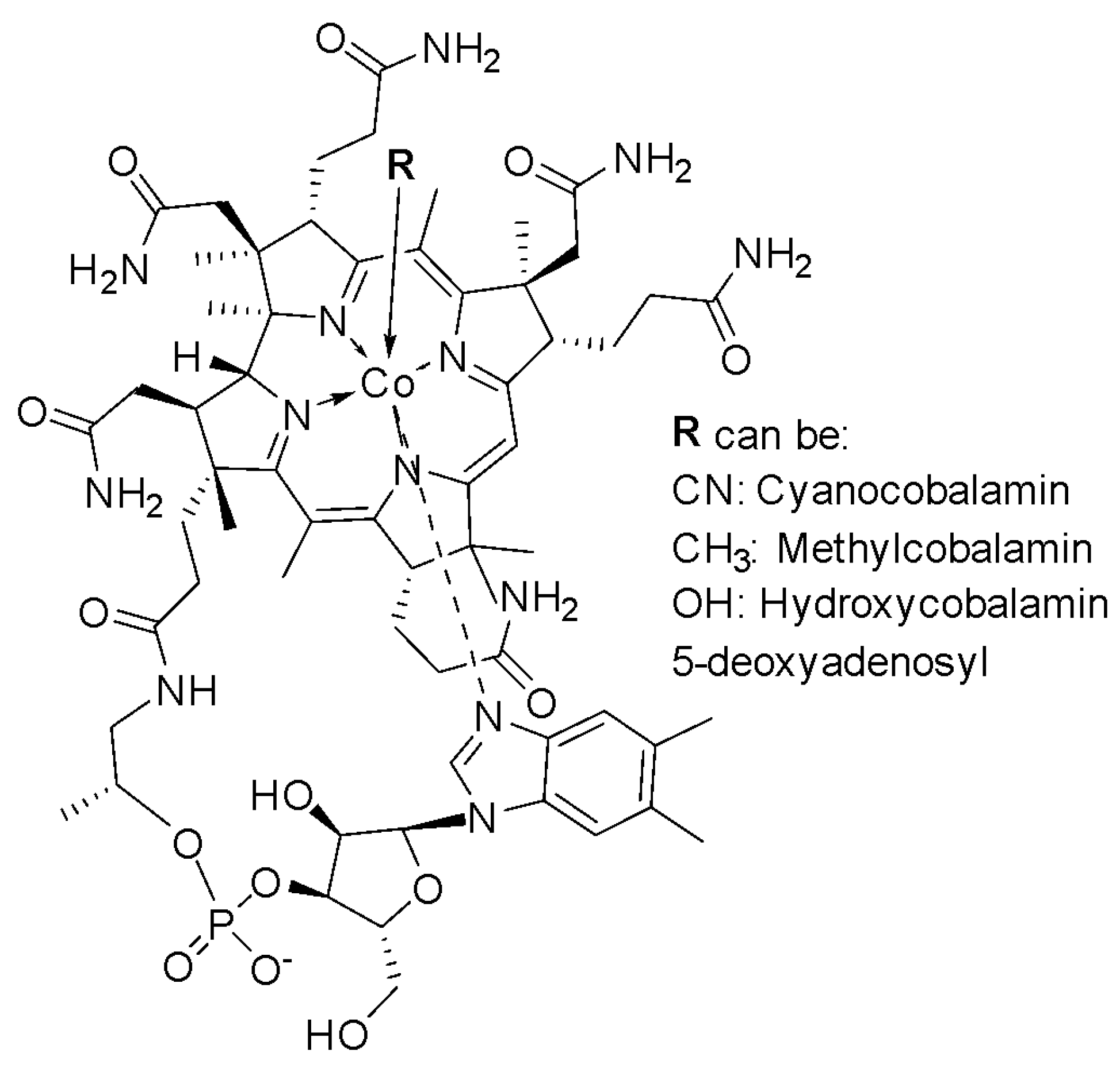
Cobalamin (Cbl) is a water-soluble vitamin that is biosynthesized by bacteria and archaea [1,2]. Humans are unable to synthesize Cbl; therefore, it must be obtained from animal products, fermented plant-based foods, or supplements [3,4]. Cbl holds a distinctive place in human biology as the only known cobalt-bound biomolecule and the largest vitamin in the human body. Cbl’s chemical structure resembles the heme structure present in hemoglobin, with a corrin ring connected to a 5,6-dimethyl benzimidazole, with diversity afforded by different ligands (R). These ligands include hydroxyl, cyano, methyl, and deoxyl-adenosyl groups, which are conjugated to the cobalt core (Figure 1). Its unique molecular structure enables it to serve as a critical cofactor for two essential enzymes in humans: 5-methyltetrahydrofolate-homocysteine methyltransferase and mitochondrial methylmalonyl-CoA mutase. These enzymes are fundamental to human metabolism, playing vital roles in methionine synthesis and fatty acid metabolism, respectively [5]. Cbl metabolism in humans is complex and requires specialized proteins which facilitate its absorption and transport, including haptocorrin (HC), intrinsic factor (IF) and transcobalamin (TC), that are encoded by TCN1 [6], CBLIF [7] and TCN2 [8], respectively (Table 1).
Cancer is currently the leading cause of death worldwide [10]. In a recent publication, Zhao et al. reported an almost 80% increase in new cancer cases among people under 50 years old around the world in the period 1990–2019 [11]. In this study, early-onset breast cancer was linked to a high mortality rate [11]. Breast tumors can be histopathologically classified as hormone receptor-positive or -deficient. Within these two types of breast tumors are distinct subtypes based on the expression of the human epidermal growth factor receptor 2 [12,13]. It is well-known that among these two types of breast tumors, triple-negative breast cancer is considered more aggressive [14].
Herein, we explore the relationship between Cbl metabolism and breast cancer, with a specific focus on how Cbl can be utilized in two key clinical applications: as a delivery vector for cancer treatments and as an imaging tool for diagnostic purposes in breast cancer management.

2. Topics

2.1. Cobalamin Metabolism

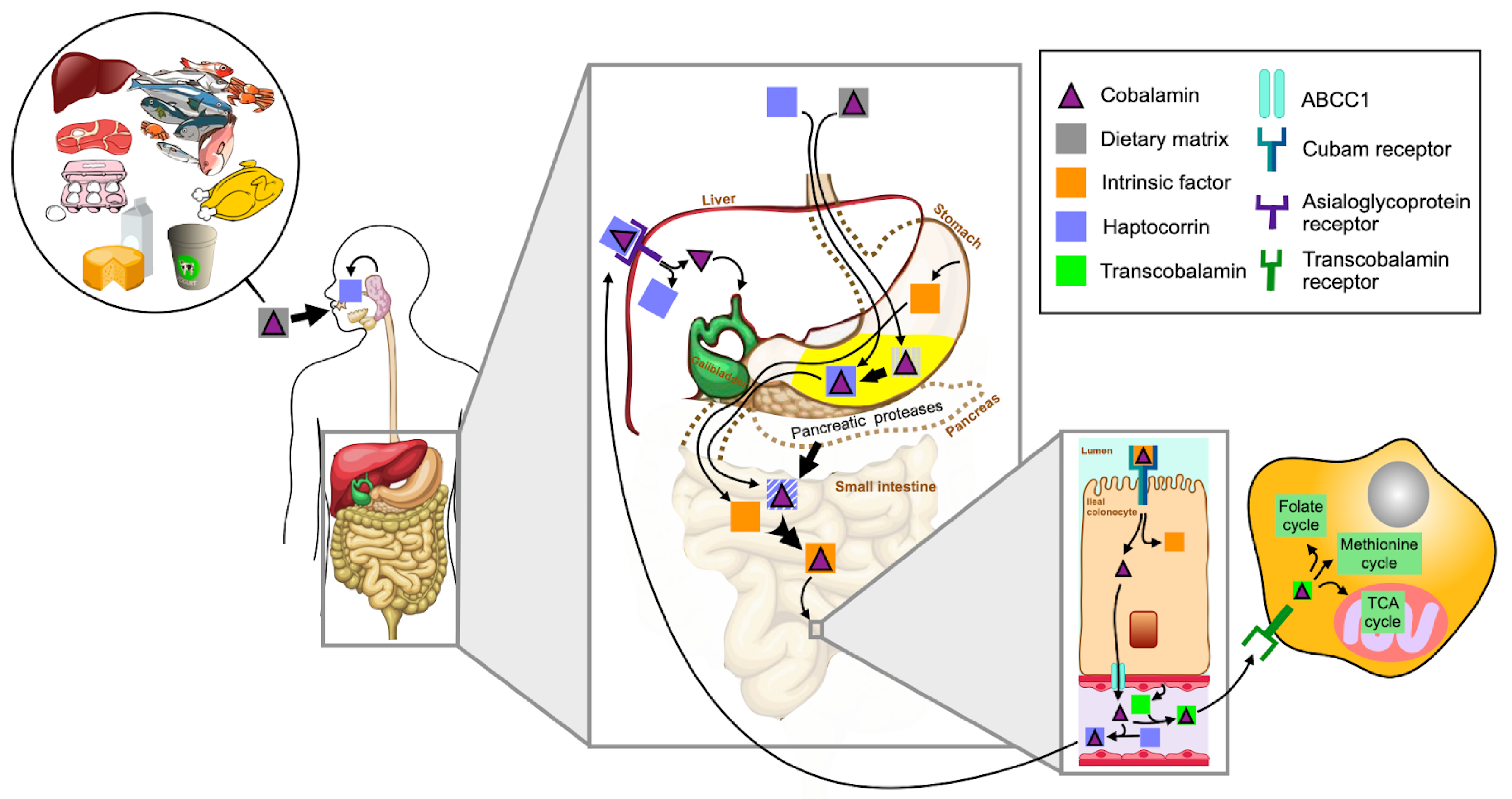
Cbl can be obtained from different foods, mainly animal-derived products such as meat, fish, eggs and dairy [15]. Cbl absorption’s process starts in the mouth, where chewing stimulates the secretion of the Cbl binding protein haptocorrin (HC) from salivary glands [16] (Figure 2). Upon arrival to the stomach, Cbl is freed from the food matrix by the collaborative action of HCl and pepsin [17,18] and is then bound to HC to prevent hydrolysis of Cbl by the acidic stomach secretions [19,20]. In the stomach, specialized epithelial cells named parietal cells produce and secrete another Cbl-binding protein, intrinsic factor (IF), that also forms part of the chyme [21]. Once in the duodenum, the pancreatic proteases release Cbl from HC [22,23], allowing IF to bind Cbl [21].
Then, the IF: Cbl complex is absorbed in the last portion of the small intestine, the ileum [24]. The absorption of IF: Cbl is mediated by the Cubam receptor (Cubilin and Amnionless) located in the apical surface of the ileal cells [25]. Within the ileal cells, Cbl is released from IF and exported to the bloodstream through ATP-binding cassette (ABC)-drug transporter, ABCC1 [26]. Once in the bloodstream, Cbl binds HC synthesized by blood cells [27] or transcobalamin (TC) produced by vascular endothelial cells [28]. In the blood, around 85% of Cbl is bound to HC, while the remaining Cbl is bound to TC [29].
Megalin [30] and the transcobalamin receptor (CD320) [31,32] mediate the uptake of TC: Cbl from blood into cells. On the other hand, hepatocytes uptake the HC: Cbl through the asialoglycoprotein receptors [33] and secrete Cbl into bile [34,35], as part of the entero-hepatic circulation of Cbl.
Within the cell, Cbl is utilized as a cofactor of relevant metabolic pathways: tricarboxylic acid, methionine, and folate cycles (reviewed in [31,36,37]). Therefore, Cbl presence is essential for key functions of cells. As expected, Cbl deficiency due to malabsorption is observed in patients with diseases that affect the stomach [38], small intestine [39], or pancreas [40]. Importantly, Cbl metabolism has been linked to increased proliferation of cancer cells [31,41]. In support of this idea, epidemiological studies have shown a direct association between elevated serum Cbl and the occurrence of cancer [42,43,44] and mortality [45]. In particular, Lacombe et al. determined that sustained plasma Cbl concentrations of ≥1000 ng/mL showed a strong association with solid cancer occurrence [42], and Chang-Gu et al., in a retrospective study, determined that elevated serum/plasma B12 was associated with shorter median overall survival and with increased metastasis in colon cancer patients [46].

2.2. Breast Cancer and Cobalamin

It has been demonstrated that breast cancer cells express receptors for Cbl-binding proteins. Analysis by immunohistochemistry of tumor xenografts derived from the human breast cancer cell lines MCF-7, ZR-75, and MDA-MB-231 showed that both TCN2 and CD320 are expressed in this model of solid tumor development [47], suggesting that breast cancer cells possess the ability to absorb Cbl. Notably, the triple-negative breast cancer (TNBC) cell line MDA-MB-231 exhibits significantly higher levels of CD320 protein expression compared to the ER+/PR+ breast cancer cell line MCF-7 [47], implying that Cb1 metabolism may confer a more aggressive phenotype. Moreover, CD320 expression is upregulated in breast cancer stem cells. Importantly, Jiang et al. [48] reported that the promoter of CD320 contains binding sites for transcription factors involved in cell proliferation, which could be further exploited by cancer cells for promoting tumor growth or resistance to apoptosis. Moreover, downregulation of CD320 decreases cell proliferation in vitro [41]. Thus, the CD320 expression in breast cancer cells may facilitate the endocytosis of TC: Cbl to promote tumor growth.
In addition, gene expression of Megalin (LRP2) has been detected to be higher in the ER+/PR+ breast cancer cell lines MCF-7 and T-47D compared to immortalized human mammary cells [49]. Although no mechanistic studies on Megalin’s role in breast cancer are available, it has been reported that metformin-induced downregulation of megalin induces cell death of thyroid cancer cells in vitro via the c-Jun N-terminal kinase [50]. Moreover, siRNA-mediated downregulation of LRP2 decreased cell proliferation and increased cell death in melanoma cells [51]. Further studies are still required to define the role of Megalin in TNBC cells and metastasis.
Few studies have addressed the roles of Cubilin and Amnionless in breast cancer. So far, Cubilin gene expression has been detected in T-47D breast cancer cells, but not in MCF-7 cells [49,52]. Meanwhile, the expression of Amnionless in breast cancer has not been addressed.
Interestingly, it has been reported that HC is highly expressed in lobular, ductal, and mucinous human breast tumor cells [53], suggesting that the asialoglycoprotein receptors might be upregulated in these tissues to ensure the uptake of HC: Cbl. Although no specific studies to define the role of asialoglycoprotein receptors in human breast tissue have been conducted, it has been reported that the breast cancer line MCF-7 does not express ASGR1 [54,55]. Since the asialoglycoprotein receptor 2 promotes migration and metastasis of gastric cancer cells [56], more studies are required to evaluate the expression and function of the asialoglycoprotein receptors in aggressive TNBC.
As aforementioned, ABCC1 functions as a free-Cbl exporter in ileal cells [26]. Using immunohistochemistry, it has been shown that ABCC1 expression levels remain comparable between normal breast tissue and different breast cancer subtypes (both estrogen receptor-positive and triple-negative breast cancers) [57]. Although more experiments should be performed to clearly delineate the role of ABCC1 in breast cancer cells, this report indicates that Cbl export through ABCC1 may not influence breast cancer cell growth.
Interestingly, it has been recently suggested that Cbl promotes proliferation and precludes cisplatin-induced apoptosis in breast cancer cells by preserving mitochondrial membrane potential and decreasing the activation of caspases [58]. Altogether, the information presented here points to the idea that breast cancer is able to uptake Cbl mainly through CD320 to proliferate and acquire resistance to chemotherapy. This hypothesis should be further tested in pre-clinical and clinical studies.

2.2.1. One-Carbon Metabolism and Breast Cancer Risk

One-carbon (1C) metabolism is a critical biochemical network that integrates B vitamins, folate, riboflavin (B2), pyridoxine (B6), and Cbl to support nucleotide synthesis, DNA methylation, and genomic stability [59]. Dysregulation or hyperactivation of this pathway can alter epigenetic patterns and promote carcinogenesis by influencing chromatin structure and gene expression through changes in methyl donor availability (S-adenosylmethionine, SAM) [60]. Epidemiologic studies indicate that adequate intake of B vitamins, particularly folate, is associated with reduced breast cancer risk, whereas deficiencies may increase susceptibility [59]. Furthermore, Zeng et al. suggest that B vitamins involved in one-carbon metabolism may play a protective role against breast cancer, particularly ER+/PR+ subtypes. However, given the inconsistent evidence reported thus far and the likelihood that the relationship between B vitamins and breast cancer risk is influenced by multiple, as yet unidentified factors, further research is needed [61]. Notably, Zhang et al. identified seven 1C metabolism-related genes that could be used to generate a risk score model to accurately predict the prognosis of breast cancer patients, including MAT2B, DNMT3B, AHCYL1, CHDH, SHMT2, CHKB, and CHPT1, using a risk score model that accurately predicts the prognosis of breast cancer patients [62]. Through this model, they found that high-risk patients are characterized by elevated expression of SHMT2 and DNMT3B, higher mutational burden, unfavorable tumor microenvironments with low levels of T follicular helper cells and naïve B cells, and higher neutrophil infiltration. The study also found that MAT2B and CHKB are closely associated with immune checkpoints, suggesting that patients with elevated expression of these genes may benefit from immune checkpoint inhibitors. Additionally, the model revealed differences in drug sensitivity between high-risk and low-risk groups, providing a potential tool for personalized chemotherapy and immunotherapy. Enrichment of pathways such as the IL-17 signaling pathway in high-risk patients and peroxisome metabolism in low-risk patients further highlights the role of 1C metabolism in BC progression and treatment response. These findings offer valuable insights into BC prognosis and therapeutic strategies [62]. Later, Galvez Navas et al. also related some of the genes mentioned by Zhang et al. in an in silico functional database study [63]. Additionally, genetic polymorphisms in key enzymes of the 1C metabolism pathway, such as methylenetetrahydrofolate reductase (MTHFR), have been linked to variations in breast cancer risk, with certain alleles conferring higher susceptibility, especially in individuals with low folate intake [64]. These findings underscore the importance of 1C metabolism in breast cancer etiology and highlight potential targets for genetic and nutritional risk stratification, including Cbl.

2.2.2. Epigenetic Reprogramming: The Influence of Cobalamin on Breast Cancer Gene Expression

Epigenetic reprogramming denotes the process by which gene expression is altered without altering the underlying DNA sequence, as modifications like DNA methylation, histone formation, and chromatin remodeling are erased and re-established. This process occurs naturally during early embryonic development and in the formation of germ cells, where it resets the epigenetic landscape to a pluripotent state, allowing for proper development and differentiation [65]. Cancer development involves a close interplay between genetic and epigenetic mechanisms, both of which contribute to the malignant phenotype. Epigenetic alterations can lead to gene mutations, while mutations often occur in genes responsible for regulating the epigenome. These alterations are typically manifested as abnormal DNA methylation patterns, disrupted histone post-translational modifications, and changes in chromatin structure or organization. Most epigenomic disturbances arise from dysfunctions within the cellular epigenetic machinery, leading to altered expression of genes that are otherwise genetically normal. In some cases, these epigenetic disruptions directly cause changes in gene activity. The identification of an epigenetic landscape of cancer has provided significant insights into tumor initiation, progression, and potential strategies for diagnosis, therapy, and prevention [66,67].
In breast cancer, key epigenetic mechanisms include DNA methylation, histone modifications, and non-coding RNA regulation, all of which play crucial roles in the onset and progression of the disease. Epigenetic alterations often induced by genetic mutations (~30%) and sporadic influences (~70%) disturb normal gene expression patterns and activate transcriptional pathways associated with processes such as cell dedifferentiation and epithelial-to-mesenchymal transition, facilitating the transformation of healthy cells into malignant ones. As breast cancer progresses, its epigenetic landscape undergoes continuous changes. The complex interaction between accumulating genetic and epigenetic alterations, along with influences from the microenvironment, shapes the phenotypic diversity of cancer cells and promotes tumor advancement, including the development of invasive and metastatic traits [68].
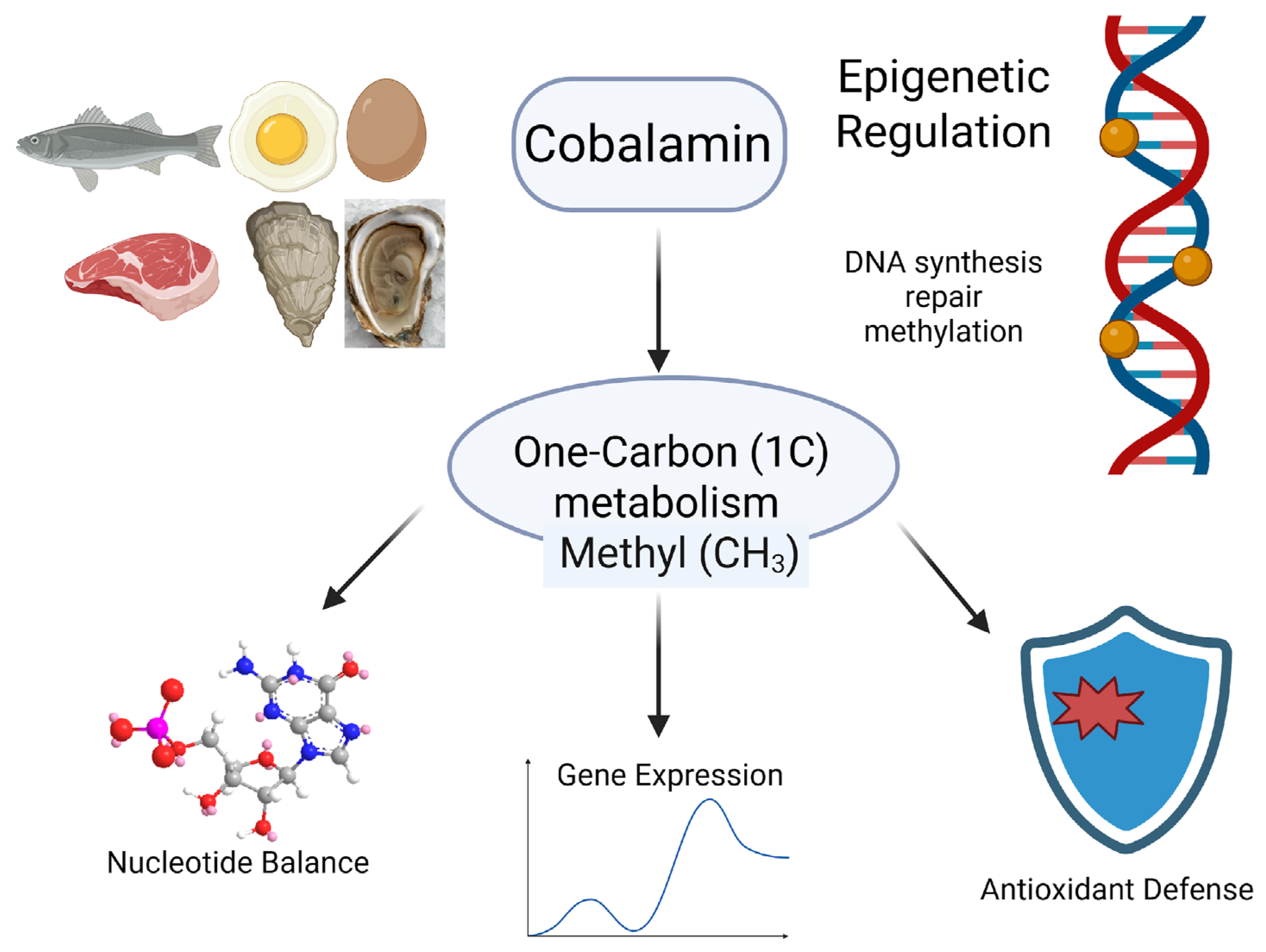
As described in Section 2.1, folate and other methyl-associated B vitamins, including Cbl, are essential nutrients that play crucial roles in DNA synthesis, repair, and methylation (processes intricately connected to epigenetic regulation). These vitamins are central to maintaining genomic stability and modulating epigenetic mechanisms involved in cancer progression [69,70]. 1C metabolism supports various cellular processes by providing one-carbon units (methenyl, formyl, and methyl groups) required for molecular synthesis, nucleotide balance, gene expression control through epigenetic mechanisms, and antioxidant defense. This system forms a core biochemical foundation for understanding how B vitamins affect gene expression [71]. Acting as a coenzyme in methyl transfer reactions, Cbl facilitates the conversion of homocysteine to methionine, generating the methyl groups necessary for biosynthetic methylation [72]. Additionally, methylcobalamin helps regenerate the folate cofactor 5-methyltetrahydrofolate into tetrahydrofolate, enabling the folate cycle to continue its role in the synthesis of purines and pyrimidines [73] (Figure 3).
The clinical significance of breast cancer is evidenced by findings that Cbl and methionine participate in 1C metabolism. This process is essential for DNA synthesis, repair, and methylation, and a deficiency in these nutrients may interfere with DNA methylation and synthesis, leading to aberrant gene expression, DNA instability, and eventual development of cancer [71]. Earlier studies of Naushad et al. found that homocysteine and polymorphisms in 1C metabolism genes modulate the epigenetic regulation of two pivotal genes (RASSF1 and BRCA1), thereby exerting a direct influence on breast cancer progression and elucidating the methionine dependency characteristic. They also observed an inverse correlation between Cbl levels and DNA methylation at the RASSF1 and BRCA1 loci, suggesting that, if validated clinically, maintaining optimal Cbl status could represent a promising public health intervention to mitigate breast cancer risk [74]. Later, it was found in an analysis for breast cancer patients that combined deficiencies of folate and Cbl may elevate the incidence of breast cancer tumors exhibiting altered methylation at the RARB and BRCA1 genes. While RASSF1A transcription appears to be only modestly influenced by 1C metabolism nutrients, its methylation-driven downregulation may offer deeper insights into the gene-specific regulatory roles of individual one-carbon metabolites [75]. Gálvez-Navas et al. confirmed direct correlations between 1C metabolism, B vitamins, and different genes in breast cancer, including RARB, BRCA1, and RASSF1A [63].
Recent findings indicate that transient expression of the reprogramming factors OCT4, SOX2, KLF4, and MYC (OSKM) in mice leads to a systemic depletion of Cbl and induces molecular signatures characteristic of methionine deprivation. Supplementation with Cbl has been shown to enhance reprogramming efficiency both in vivo and in cultured cells, suggesting a cell-intrinsic mechanism. The authors propose that similar plasticity-driven mechanisms may be conserved across multiple adult tissues with limited regenerative capacity, implying that Cbl could likewise facilitate tissue repair in these contexts [76].

2.3. Targeting Breast Cancer Cobalamin Metabolism

A retrospective study of hospitalized cancer patients in Italy showed that Cbl hypervitaminosis was found to be associated with a worse clinical condition and that Cbl levels were significantly elevated in advanced cases compared to early-stage patients [77]. Additionally, Haghighat et al. found that serum levels of Cbl in patients with breast cancer are higher than in healthy individuals [78]. These works highlight the importance of Cbl metabolism in breast cancer, which could be used for targeting these malignant cells.
Emerging strategies in cancer metabolism highlight several potential therapeutic targets within the 1C metabolism pathway. Inhibiting Cbl uptake through the transcobalamin receptor CD320 may restrict vitamin B12 availability to tumor cells. The evidence that breast cancer cells can uptake Cbl, combined with Cbl transport mechanisms, suggests that developing modified Cbl derivatives could serve as an effective strategy for delivering anti-cancer drugs specifically to breast cancer. In fact, an early study by Bagnato et al. found that a colchicine derivative conjugated to Cbl was cytotoxic to the breast cancer cell line SK-BR-3 exposed for 96 h [79]. In addition, it has been reported that Cbl derivatives can target lysosome and mitochondria function in MCF-7 cells with cytotoxic activities (IC50) below 10 μM [80].
Another interesting strategy is to target rapidly dividing cancer cells with anticancer agents bound to antibodies against CD320. Since it has been reported that cancer cells (including MCF-7 and MDA-MB-231 cells) show an increased and sustained expression of CD320, Quadros et al. developed a monoclonal antibody against the extracellular domain of CD320 coupled to saporin, an inhibitor of ribosomal assembly [81]. This treatment inhibited the cancer cell growth in vitro more efficiently than in normal cells. However, no in vivo assays have been performed with this conjugate.
Recently, an increased interest in in vivo imaging of primary and metastatic tumors using radioisotope-labeled Cbl is under development. Thus, 89zirconium-labeled Cbl was demonstrated to be uptaken by the CD320-expressing breast cancer cell line MDA-MB-453 [82], indicating that Cbl derivatives may be used as suitable tracers for tumor visualization. In another study, 111indium labeled Cbl (111I-Cbl) was detected in breast tumors of invasive ductal carcinomas, high-grade ductal carcinoma in situ, invasive lobular carcinoma, and inflammatory breast cancer in women with breast cancer intravenously injected with 111I-Cbl prior to biopsy or breast surgery [83]. Interestingly, the signal intensity was significantly higher in triple-negative and HER2-positive tumors compared to ER+/PR+ tumors. This latter finding was confirmed using the triple-negative breast cancer line MDA-MB-231 in murine xenograft tumor models [83]. The clinical and pre-clinical evidence indicates that radioactive-labeled Cbl is a plausible method to detect breast cancer cells in vivo and also supports the idea of using CD320 to target these cells.
The integration of Cbl with photodynamic therapy represents an innovative therapeutic strategy in breast cancer treatment. Mantareva et al. investigated the potential of Cbl-modified compounds by creating derivatives that incorporated Zinc(II)-phthalocyanines, which are light-sensitive compounds. Using two distinct breast cancer cell lines, MCF-7 and MDA-MB-231, they demonstrated that the presence of Cbl enhanced the effectiveness of photodynamic therapy [84]. This improvement is likely to occur because Cbl facilitates better cellular uptake and targeting of the photosensitive compounds. When exposed to light, these compounds trigger cell death specifically in cancer cells.
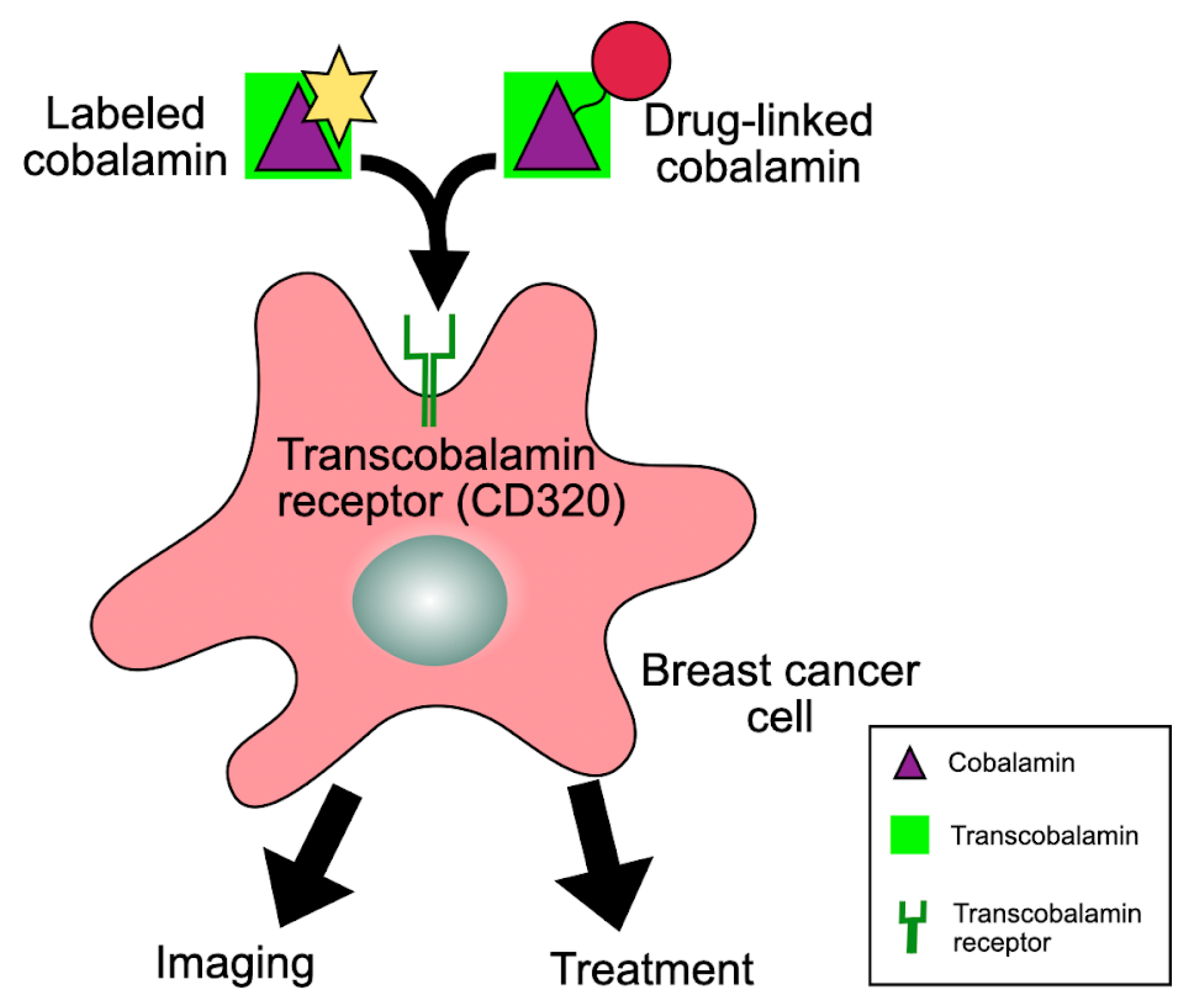
Researchers are investigating the transcobalamin receptor CD320 and Cbl-dependent metabolic pathways as emerging therapeutic targets to inhibit cancer cell proliferation. Lacombe et al. conducted a comprehensive analysis examining the role of Cbl and transcobalamins in cancer diagnosis and prognosis, as well as their potential application in therapy [85]. Their study delves into how Cbl-dependent pathways function within cancer cells, alongside variations in plasma and tumor levels of transcobalamins, ultimately leading to novel proposals for screening and treatment strategies that integrate these elements (Figure 4).
As aforementioned, targeting Cbl metabolism of breast cancer cells through CD320 interaction with TCN2 shows a plausible way to detect and attack breast cancer cells, especially since CD320 is cell-cycle-regulated and upregulated in highly proliferating cells such as many cancer types, meaning that individuals with tumors or high-turnover tissues can show markedly higher CD320 expression compared with healthy controls. In this context, it would be relevant to detect polymorphisms present in both CD320 and TCN2 to improve the success of this personalized treatment, as CD320 polymorphisms were reported to promote functional variability in receptor abundance or activity between subjects [86,87]. Similarly, a missense polymorphism in TCN2 has been reported to change the transcobalamin structure and negatively affect its interaction with its receptor [88]. Taken together, the available evidence suggests that pre-therapeutic screening for CD320 and TCN2 polymorphisms should be considered to optimize the efficacy of Cbl-based anticancer therapies.

3. Limitations and Conclusions

With respect to the potential clinical applications of cobalamin and its derivatives, Wolffenbuttel et al. reviewed the therapeutic use of these compounds and reported evidence demonstrating that cobalamin is essential for the restoration of normal hematological function, including the reversal of anemia, as well as for neurological recovery, with documented improvements in cognitive impairment and peripheral neuropathy [89]. In addition, cobalamin supplementation supports the normalization of key metabolic pathways. The authors further note that long-term parenteral administration of hydroxocobalamin, even at high doses, is generally well tolerated, with decades of clinical experience indicating minimal systemic toxicity. Reported adverse effects associated with hydroxocobalamin are uncommon and include transient hypokalemia during initial treatment, dermatological reactions such as acne or rosacea, and rare hypersensitivity responses. In contrast, isolated reports suggest that high-dose cyanocobalamin may, in rare cases, be associated with neuropsychiatric and dermatological adverse effects [90]. Moreover, emerging evidence indicates that excessive vitamin B12 intake may alter gut microbiota composition, potentially increasing susceptibility to infection [91]. Future studies incorporating novel biomarkers and accounting for potential risk modifiers and genetic polymorphisms are warranted to better clarify these associations.
Cbl metabolism plays an active role in breast cancer cells, as suggested through extensive research. These cancer cells exhibit a sophisticated mechanism for Cbl uptake, characterized by their ability to both produce and secrete TC and express TC receptors. This natural biological pathway makes Cbl particularly valuable as a delivery vehicle in breast cancer applications. The versatility of Cbl as a vector stems from this inherent uptake system, making it an excellent candidate for two key applications: carrying pro-drugs directly to cancer cells and serving as a carrier for imaging labels. This dual functionality of Cbl and its ability to serve both therapeutic and diagnostic purposes make it an especially promising tool in the development of targeted breast cancer interventions. It should be highlighted that there is a lack of in vivo studies as a proof-of-concept methodology, as well as clinical trials to fully validate the usefulness of targeting Cbl metabolism in breast cancer.

Funding

This research received no external funding.

Data Availability Statement

Data will be made available on request.

Conflicts of Interest

The authors declare no conflicts of interest.

Abbreviations

The following abbreviations are used in this manuscript:
CblCobalamin
HCHaptocorrin
IFIntrinsic factor
TCTranscobalamin
ABCATP-binding cassette
TNBCTriple-negative breast cancer
EREstrogen receptor
PRProgesterone receptor
HER2Human Epidermal Growth Factor Receptor 2
1COne carbon
SAMS-Adenosyl-L-methionine
MTHFRMethylenTetrahydroFolate Reductase

References

  1. Sokolovskaya, O.M.; Shelton, A.N.; Taga, M.E. Sharing Vitamins: Cobamides Unveil Microbial Interactions. Science 2020, 369, eaba0165. [Google Scholar] [CrossRef]
  2. Martens, J.H.; Barg, H.; Warren, M.J.; Jahn, D. Microbial Production of Vitamin B12. Appl. Microbiol. Biotechnol. 2002, 58, 275–285. [Google Scholar] [CrossRef] [PubMed]
  3. Gomes Soares, M.; Bevilaqua, G.C.; Marcondes Tassi, É.M.; Reolon Schmidt, V.C. Fermented Foods and Beverages: A Potential in Situ Vitamin B12 Biofortification—A Literature Review. Int. J. Food Sci. Nutr. 2023, 74, 655–667. [Google Scholar] [CrossRef] [PubMed]
  4. Obeid, R.; Heil, S.G.; Verhoeven, M.M.A.; van den Heuvel, E.G.H.M.; de Groot, L.C.P.G.M.; Eussen, S.J.P.M. Vitamin B12 Intake From Animal Foods, Biomarkers, and Health Aspects. Front. Nutr. 2019, 6, 93. [Google Scholar] [CrossRef] [PubMed]
  5. Kräutler, B. Biochemistry of B12-Cofactors in Human Metabolism. Subcell. Biochem. 2012, 56, 323–346. [Google Scholar] [CrossRef]
  6. Johnston, J.; Yang-Feng, T.; Berliner, N. Genomic Structure and Mapping of the Chromosomal Gene for Transcobalamin I (TCN1): Comparison to Human Intrinsic Factor. Genomics 1992, 12, 459–464. [Google Scholar] [CrossRef]
  7. Gordon, M.M.; Brada, N.; Remacha, A.; Badell, I.; del Río, E.; Baiget, M.; Santer, R.; Quadros, E.V.; Rothenberg, S.P.; Alpers, D.H. A Genetic Polymorphism in the Coding Region of the Gastric Intrinsic Factor Gene (GIF) Is Associated with Congenital Intrinsic Factor Deficiency. Hum. Mutat. 2004, 23, 85–91. [Google Scholar] [CrossRef]
  8. Trakadis, Y.J.; Alfares, A.; Bodamer, O.A.; Buyukavci, M.; Christodoulou, J.; Connor, P.; Glamuzina, E.; Gonzalez-Fernandez, F.; Bibi, H.; Echenne, B.; et al. Update on Transcobalamin Deficiency: Clinical Presentation, Treatment and Outcome. J. Inherit. Metab. Dis. 2014, 37, 461–473. [Google Scholar] [CrossRef]
  9. Stelzer, G.; Rosen, N.; Plaschkes, I.; Zimmerman, S.; Twik, M.; Fishilevich, S.; Stein, T.I.; Nudel, R.; Lieder, I.; Mazor, Y.; et al. The GeneCards Suite: From Gene Data Mining to Disease Genome Sequence Analyses. Curr. Protoc. Bioinform. 2016, 54, 1.30.1–1.30.33. [Google Scholar] [CrossRef]
  10. Bray, F.; Laversanne, M.; Sung, H.; Ferlay, J.; Siegel, R.L.; Soerjomataram, I.; Jemal, A. Global Cancer Statistics 2022: GLOBOCAN Estimates of Incidence and Mortality Worldwide for 36 Cancers in 185 Countries. CA Cancer J. Clin. 2024, 74, 229–263. [Google Scholar] [CrossRef]
  11. Zhao, J.; Xu, L.; Sun, J.; Song, M.; Wang, L.; Yuan, S.; Zhu, Y.; Wan, Z.; Larsson, S.; Tsilidis, K.; et al. Global Trends in Incidence, Death, Burden and Risk Factors of Early-Onset Cancer from 1990 to 2019. BMJ Oncol. 2023, 2, e000049. [Google Scholar] [CrossRef] [PubMed]
  12. Wei, S. Hormone Receptors in Breast Cancer: An Update on the Uncommon Subtypes. Pathol. Res. Pract. 2023, 250, 154791. [Google Scholar] [CrossRef] [PubMed]
  13. Yam, C.; Mani, S.A.; Moulder, S.L. Targeting the Molecular Subtypes of Triple Negative Breast Cancer: Understanding the Diversity to Progress the Field. Oncologist 2017, 22, 1086–1093. [Google Scholar] [CrossRef] [PubMed]
  14. Adrada, B.E.; Moseley, T.W.; Kapoor, M.M.; Scoggins, M.E.; Patel, M.M.; Perez, F.; Nia, E.S.; Khazai, L.; Arribas, E.; Rauch, G.M.; et al. Triple-Negative Breast Cancer: Histopathologic Features, Genomics, and Treatment. Radiogr. Rev. Publ. Radiol. Soc. N. Am. Inc 2023, 43, e230034. [Google Scholar] [CrossRef]
  15. Chungchunlam, S.M.S.; Moughan, P.J. Comparative Bioavailability of Vitamins in Human Foods Sourced from Animals and Plants. Crit. Rev. Food Sci. Nutr. 2024, 64, 11590–11625. [Google Scholar] [CrossRef]
  16. Blakeley, M.; Sobczyńska-Malefora, A.; Carpenter, G. The Origins of Salivary Vitamin A, Vitamin B12 and Vitamin D-Binding Proteins. Nutrients 2020, 12, 3838. [Google Scholar] [CrossRef]
  17. Schubert, M.L. Gastric Exocrine and Endocrine Secretion. Curr. Opin. Gastroenterol. 2009, 25, 529–536. [Google Scholar] [CrossRef]
  18. Baik, H.W.; Russell, R.M. Vitamin B12 Deficiency in the Elderly. Annu. Rev. Nutr. 1999, 19, 357–377. [Google Scholar] [CrossRef]
  19. Kittang, E.; Schjønsby, H. Effect of Gastric Anacidity on the Release of Cobalamins from Food and Their Subsequent Binding to R-Protein. Scand. J. Gastroenterol. 1987, 22, 1031–1037. [Google Scholar] [CrossRef]
  20. Okuda, K. Discovery of Vitamin B12 in the Liver and Its Absorption Factor in the Stomach: A Historical Review. J. Gastroenterol. Hepatol. 1999, 14, 301–308. [Google Scholar] [CrossRef]
  21. Al-Awami, H.M.; Raja, A.; Soos, M.P. Physiology, Gastric Intrinsic Factor. In StatPearls; StatPearls Publishing: Treasure Island, FL, USA, 2025. [Google Scholar]
  22. Guéant, J.L.; Djalali, M.; Aouadj, R.; Gaucher, P.; Monin, B.; Nicolas, J.P. In Vitro and in Vivo Evidences That the Malabsorption of Cobalamin Is Related to Its Binding on Haptocorrin (R Binder) in Chronic Pancreatitis. Am. J. Clin. Nutr. 1986, 44, 265–277. [Google Scholar] [CrossRef] [PubMed]
  23. Guéant, J.L.; Champigneulle, B.; Djalali, M.; Bigard, M.A.; Gaucher, P.; Hassouni, A.; Nicolas, J.P. In-Vitro Test of Haptocorrin Degradation for Biological Diagnosis of Exocrine Pancreatic Dysfunction Using Duodenal Juice Collected during Endoscopy. Lancet 1986, 2, 709–712. [Google Scholar] [CrossRef] [PubMed]
  24. Donaldson, R.M. How Does Cobalamin (Vitamin B12) Enter and Traverse the Ileal Cell? Gastroenterology 1985, 88, 1069–1071. [Google Scholar] [CrossRef] [PubMed]
  25. He, Q.; Madsen, M.; Kilkenney, A.; Gregory, B.; Christensen, E.I.; Vorum, H.; Højrup, P.; Schäffer, A.A.; Kirkness, E.F.; Tanner, S.M.; et al. Amnionless Function Is Required for Cubilin Brush-Border Expression and Intrinsic Factor-Cobalamin (Vitamin B12) Absorption in Vivo. Blood 2005, 106, 1447–1453. [Google Scholar] [CrossRef]
  26. Beedholm-Ebsen, R.; van de Wetering, K.; Hardlei, T.; Nexø, E.; Borst, P.; Moestrup, S.K. Identification of Multidrug Resistance Protein 1 (MRP1/ABCC1) as a Molecular Gate for Cellular Export of Cobalamin. Blood 2010, 115, 1632–1639. [Google Scholar] [CrossRef]
  27. Guéant, J.-L.; Namour, F. Vitamin B12: Absorption, Metabolism, and Deficiency. In Encyclopedia of Gastroenterology; Academic Press: Amsterdam, The Netherlands, 2004; pp. 619–624. ISBN 978-0-12-386860-2. [Google Scholar]
  28. Quadros, E.V.; Regec, A.L.; Khan, K.M.; Quadros, E.; Rothenberg, S.P. Transcobalamin II Synthesized in the Intestinal Villi Facilitates Transfer of Cobalamin to the Portal Blood. Am. J. Physiol. 1999, 277, G161–G166. [Google Scholar] [CrossRef]
  29. Nexo, E.; Christensen, A.-L.; Hvas, A.-M.; Petersen, T.E.; Fedosov, S.N. Quantification of Holo-Transcobalamin, a Marker of Vitamin B12 Deficiency. Clin. Chem. 2002, 48, 561–562. [Google Scholar] [CrossRef]
  30. Moestrup, S.K.; Birn, H.; Fischer, P.B.; Petersen, C.M.; Verroust, P.J.; Sim, R.B.; Christensen, E.I.; Nexø, E. Megalin-Mediated Endocytosis of Transcobalamin-Vitamin-B12 Complexes Suggests a Role of the Receptor in Vitamin-B12 Homeostasis. Proc. Natl. Acad. Sci. USA 1996, 93, 8612–8617. [Google Scholar] [CrossRef]
  31. Gick, G.G.; Arora, K.; Sequeira, J.M.; Nakayama, Y.; Lai, S.-C.; Quadros, E.V. Cellular Uptake of Vitamin B12: Role and Fate of TCblR/CD320, the Transcobalamin Receptor. Exp. Cell Res. 2020, 396, 112256. [Google Scholar] [CrossRef]
  32. Alam, A.; Woo, J.-S.; Schmitz, J.; Prinz, B.; Root, K.; Chen, F.; Bloch, J.S.; Zenobi, R.; Locher, K.P. Structural Basis of Transcobalamin Recognition by Human CD320 Receptor. Nat. Commun. 2016, 7, 12100. [Google Scholar] [CrossRef]
  33. Velkova, A.; Diaz, J.E.L.; Pangilinan, F.; Molloy, A.M.; Mills, J.L.; Shane, B.; Sanchez, E.; Cunningham, C.; McNulty, H.; Cropp, C.D.; et al. The FUT2 Secretor Variant p.Trp154Ter Influences Serum Vitamin B12 Concentration via Holo-Haptocorrin, but Not Holo-Transcobalamin, and Is Associated with Haptocorrin Glycosylation. Hum. Mol. Genet. 2017, 26, 4975–4988. [Google Scholar] [CrossRef] [PubMed]
  34. Guéant, J.L.; Monin, B.; Boissel, P.; Gaucher, P.; Nicolas, J.P. Biliary Excretion of Cobalamin and Cobalamin Analogues in Man. Digestion 1984, 30, 151–157. [Google Scholar] [CrossRef] [PubMed]
  35. el Kholty, S.; Gueant, J.L.; Bressler, L.; Djalali, M.; Boissel, P.; Gerard, P.; Nicolas, J.P. Portal and Biliary Phases of Enterohepatic Circulation of Corrinoids in Humans. Gastroenterology 1991, 101, 1399–1408. [Google Scholar] [CrossRef]
  36. Banerjee, R.; Gherasim, C.; Padovani, D. The Tinker, Tailor, Soldier in Intracellular B12 Trafficking. Curr. Opin. Chem. Biol. 2009, 13, 484–491. [Google Scholar] [CrossRef] [PubMed]
  37. Gherasim, C.; Lofgren, M.; Banerjee, R. Navigating the B(12) Road: Assimilation, Delivery, and Disorders of Cobalamin. J. Biol. Chem. 2013, 288, 13186–13193. [Google Scholar] [CrossRef]
  38. Abosamra, M.; Bateman, A.C.; Jalal, M. Chronic Atrophic Gastritis—An Overlooked Association with Severe Vitamin B12 Deficiency: A Case Report and Rapid Review of Literature. J. R. Coll. Physicians Edinb. 2023, 53, 176–178. [Google Scholar] [CrossRef]
  39. Ao, M.; Tsuji, H.; Shide, K.; Kosaka, Y.; Noda, A.; Inagaki, N.; Nakase, H.; Tanaka, K. High Prevalence of Vitamin B-12 Insufficiency in Patients with Crohn’s Disease. Asia Pac. J. Clin. Nutr. 2017, 26, 1076–1081. [Google Scholar] [CrossRef]
  40. Collins, J.T.; Nguyen, A.; Omole, A.E.; Badireddy, M. Anatomy, Abdomen and Pelvis, Small Intestine. In StatPearls; StatPearls Publishing: Treasure Island, FL, USA, 2025. [Google Scholar]
  41. Lai, S.-C.; Nakayama, Y.; Sequeira, J.M.; Quadros, E.V. Down-Regulation of Transcobalamin Receptor TCblR/CD320 by siRNA Inhibits Cobalamin Uptake and Proliferation of Cells in Culture. Exp. Cell Res. 2011, 317, 1603–1607. [Google Scholar] [CrossRef][Green Version]
  42. Lacombe, V.; Chabrun, F.; Lacout, C.; Ghali, A.; Capitain, O.; Patsouris, A.; Lavigne, C.; Urbanski, G. Persistent Elevation of Plasma Vitamin B12 Is Strongly Associated with Solid Cancer. Sci. Rep. 2021, 11, 13361. [Google Scholar] [CrossRef]
  43. Arendt, J.F.B.; Pedersen, L.; Nexo, E.; Sørensen, H.T. Elevated Plasma Vitamin B12 Levels as a Marker for Cancer: A Population-Based Cohort Study. J. Natl. Cancer Inst. 2013, 105, 1799–1805. [Google Scholar] [CrossRef]
  44. Arendt, J.F.B.; Nexo, E. Cobalamin Related Parameters and Disease Patterns in Patients with Increased Serum Cobalamin Levels. PLoS ONE 2012, 7, e45979. [Google Scholar] [CrossRef] [PubMed]
  45. Arendt, J.F.H.; Farkas, D.K.; Pedersen, L.; Nexo, E.; Sørensen, H.T. Elevated Plasma Vitamin B12 Levels and Cancer Prognosis: A Population-Based Cohort Study. Cancer Epidemiol. 2016, 40, 158–165. [Google Scholar] [CrossRef] [PubMed]
  46. Chang-Gu, B.; Golovko, G.; D’Andrea, A.P.; Khanipov, K. Association between Vitamin B12 Levels and Colon Cancer Survival: A Global Network Study. Cancer Res. Commun. 2026, 6, 302–309. [Google Scholar] [CrossRef]
  47. Sysel, A.M.; Valli, V.E.; Nagle, R.B.; Bauer, J.A. Immunohistochemical Quantification of the Vitamin B12 Transport Protein (TCII), Cell Surface Receptor (TCII-R) and Ki-67 in Human Tumor Xenografts. Anticancer Res. 2013, 33, 4203–4212. [Google Scholar] [PubMed]
  48. Jiang, W.; Sequeira, J.M.; Nakayama, Y.; Lai, S.-C.; Quadros, E.V. Characterization of the Promoter Region of TCblR/CD320 Gene, the Receptor for Cellular Uptake of Transcobalamin-Bound Cobalamin. Gene 2010, 466, 49–55. [Google Scholar] [CrossRef][Green Version]
  49. Rowling, M.J.; Kemmis, C.M.; Taffany, D.A.; Welsh, J. Megalin-Mediated Endocytosis of Vitamin D Binding Protein Correlates with 25-Hydroxycholecalciferol Actions in Human Mammary Cells. J. Nutr. 2006, 136, 2754–2759. [Google Scholar] [CrossRef]
  50. He, Y.; Cao, L.; Wang, L.; Liu, L.; Huang, Y.; Gong, X. Metformin Inhibits Proliferation of Human Thyroid Cancer TPC-1 Cells by Decreasing LRP2 to Suppress the JNK Pathway. OncoTargets Ther. 2020, 13, 45–50. [Google Scholar] [CrossRef]
  51. Andersen, R.K.; Hammer, K.; Hager, H.; Christensen, J.N.; Ludvigsen, M.; Honoré, B.; Thomsen, M.-B.H.; Madsen, M. Melanoma Tumors Frequently Acquire LRP2/Megalin Expression, Which Modulates Melanoma Cell Proliferation and Survival Rates. Pigment Cell Melanoma Res. 2015, 28, 267–280. [Google Scholar] [CrossRef]
  52. Chlon, T.M.; Taffany, D.A.; Welsh, J.; Rowling, M.J. Retinoids Modulate Expression of the Endocytic Partners Megalin, Cubilin, and Disabled-2 and Uptake of Vitamin D-Binding Protein in Human Mammary Cells. J. Nutr. 2008, 138, 1323–1328. [Google Scholar] [CrossRef]
  53. Waibel, R.; Treichler, H.; Schaefer, N.G.; van Staveren, D.R.; Mundwiler, S.; Kunze, S.; Küenzi, M.; Alberto, R.; Nüesch, J.; Knuth, A.; et al. New Derivatives of Vitamin B12 Show Preferential Targeting of Tumors. Cancer Res. 2008, 68, 2904–2911. [Google Scholar] [CrossRef]
  54. Jain, V.; Nath, B.; Gupta, G.K.; Shah, P.P.; Siddiqui, M.A.; Pant, A.B.; Mishra, P.R. Galactose-Grafted Chylomicron-Mimicking Emulsion: Evaluation of Specificity against HepG-2 and MCF-7 Cell Lines. J. Pharm. Pharmacol. 2009, 61, 303–310. [Google Scholar] [CrossRef] [PubMed]
  55. Liu, H.-Y.; Qian, H.-H.; Zhang, X.-F.; Li, J.; Yang, X.; Sun, B.; Ma, J.-Y.; Chen, L.; Yin, Z.-F. Improved Method Increases Sensitivity for Circulating Hepatocellular Carcinoma Cells. World J. Gastroenterol. 2015, 21, 2918–2925. [Google Scholar] [CrossRef] [PubMed]
  56. Tanaka, H.; Kanda, M.; Miwa, T.; Tanaka, C.; Kobayashi, D.; Umeda, S.; Shibata, M.; Suenaga, M.; Hattori, N.; Hayashi, M.; et al. Pattern-Specific Transcriptomics Identifies ASGR2 as a Predictor of Hematogenous Recurrence of Gastric Cancer. Mol. Cancer Res. 2018, 16, 1420–1429. [Google Scholar] [CrossRef]
  57. Nedeljković, M.; Tanić, N.; Prvanović, M.; Milovanović, Z.; Tanić, N. Friend or Foe: ABCG2, ABCC1 and ABCB1 Expression in Triple-Negative Breast Cancer. Breast Cancer 2021, 28, 727–736. [Google Scholar] [CrossRef] [PubMed]
  58. Aslan, V.; Usta, D.D.; Yar Sağlam, A.S.; Özet, A.; Sütcüoglu, O.; Dikmen, K.; Özdemir, N. The Responsiveness of Breast Cancer Cells to Varied Levels of Vitamin B12, Cisplatin, and G-CSF. Int. J. Mol. Sci. 2025, 26, 9086. [Google Scholar] [CrossRef]
  59. Chen, J.; Gammon, M.D.; Chan, W.; Palomeque, C.; Wetmur, J.G.; Kabat, G.C.; Teitelbaum, S.L.; Britton, J.A.; Terry, M.B.; Neugut, A.I.; et al. One-Carbon Metabolism, MTHFR Polymorphisms, and Risk of Breast Cancer. Cancer Res. 2005, 65, 1606–1614. [Google Scholar] [CrossRef]
  60. Bernasocchi, T.; Mostoslavsky, R. Subcellular One Carbon Metabolism in Cancer, Aging and Epigenetics. Front. Epigenet. Epigenom. 2024, 2, 1451971. [Google Scholar] [CrossRef]
  61. Zeng, J.; Gu, Y.; Fu, H.; Liu, C.; Zou, Y.; Chang, H. Association Between One-Carbon Metabolism-Related Vitamins and Risk of Breast Cancer: A Systematic Review and Meta-Analysis of Prospective Studies. Clin. Breast Cancer 2020, 20, e469–e480. [Google Scholar] [CrossRef]
  62. Zhang, T.; Liu, J.; Wang, M.; Liu, X.; Qu, J.; Zhang, H. Prognosis Stratification and Response to Treatment in Breast Cancer Based on One-Carbon Metabolism-Related Signature. Front. Oncol. 2023, 13, 1288909. [Google Scholar] [CrossRef]
  63. Gálvez-Navas, J.M.; Molina-Montes, E.; Rodríguez-Barranco, M.; Ramírez-Tortosa, M.; Gil, Á.; Sánchez, M.-J. Molecular Mechanisms Linking Genes and Vitamins of the Complex B Related to One-Carbon Metabolism in Breast Cancer: An In Silico Functional Database Study. Int. J. Mol. Sci. 2024, 25, 8175. [Google Scholar] [CrossRef]
  64. Li, Z.; Zhang, J.; Zou, W.; Xu, Q.; Li, S.; Wu, J.; Zhu, L.; Zhang, Y.; Xu, L.; Zhang, Y.; et al. The Methylenetetrahydrofolate Reductase (MTHFR) C677T Gene Polymorphism Is Associated with Breast Cancer Subtype Susceptibility in Southwestern China. PLoS ONE 2021, 16, e0254267. [Google Scholar] [CrossRef]
  65. Suvà, M.L.; Riggi, N.; Bernstein, B.E. Epigenetic Reprogramming in Cancer. Science 2013, 339, 1567–1570. [Google Scholar] [CrossRef] [PubMed]
  66. Baylin, S.B.; Jones, P.A. Epigenetic Determinants of Cancer. Cold Spring Harb. Perspect. Biol. 2016, 8, a019505. [Google Scholar] [CrossRef] [PubMed]
  67. da Silva Costa, P.M.; Sales, S.L.A.; Pinheiro, D.P.; Pontes, L.Q.; Maranhão, S.S.; do Ó Pessoa, C.; Furtado, G.P.; Furtado, C.L.M. Epigenetic Reprogramming in Cancer: From Diagnosis to Treatment. Front. Cell Dev. Biol. 2023, 11, 1116805. [Google Scholar] [CrossRef] [PubMed]
  68. Cortellesi, E.; Savini, I.; Veneziano, M.; Gambacurta, A.; Catani, M.V.; Gasperi, V. Decoding the Epigenome of Breast Cancer. Int. J. Mol. Sci. 2025, 26, 2605. [Google Scholar] [CrossRef]
  69. Peterson, C.T.; Rodionov, D.A.; Osterman, A.L.; Peterson, S.N. B Vitamins and Their Role in Immune Regulation and Cancer. Nutrients 2020, 12, 3380. [Google Scholar] [CrossRef]
  70. Savic, B.; Savic, B.; Stanojlovic, S. Epigenetic DNA Methylation Under the Influence of Low-Dose Ionizing Radiation, and Supplementation with Vitamin B12 and Folic Acid: Harmful or Beneficial for Professionals? Epigenomes 2025, 9, 17. [Google Scholar] [CrossRef]
  71. Ducker, G.S.; Rabinowitz, J.D. One-Carbon Metabolism in Health and Disease. Cell Metab. 2017, 25, 27–42. [Google Scholar] [CrossRef]
  72. Sorin, M.; Watkins, D.; Gilfix, B.M.; Rosenblatt, D.S. Methionine Dependence in Tumor Cells: The Potential Role of Cobalamin and MMACHC. Mol. Genet. Metab. 2021, 132, 155–161. [Google Scholar] [CrossRef]
  73. Dang, S.; Jain, A.; Dhanda, G.; Bhattacharya, N.; Bhattacharya, A.; Senapati, S. One Carbon Metabolism and Its Implication in Health and Immune Functions. Cell Biochem. Funct. 2024, 42, e3926. [Google Scholar] [CrossRef]
  74. Naushad, S.M.; Reddy, C.A.; Kumaraswami, K.; Divyya, S.; Kotamraju, S.; Gottumukkala, S.R.; Digumarti, R.R.; Kutala, V.K. Impact of Hyperhomocysteinemia on Breast Cancer Initiation and Progression: Epigenetic Perspective. Cell Biochem. Biophys. 2014, 68, 397–406. [Google Scholar] [CrossRef]
  75. Pirouzpanah, S.; Taleban, F.-A.; Mehdipour, P.; Atri, M. Association of Folate and Other One-Carbon Related Nutrients with Hypermethylation Status and Expression of RARB, BRCA1, and RASSF1A Genes in Breast Cancer Patients. J. Mol. Med. 2015, 93, 917–934. [Google Scholar] [CrossRef] [PubMed]
  76. Kovatcheva, M.; Melendez, E.; Chondronasiou, D.; Pietrocola, F.; Bernad, R.; Caballe, A.; Junza, A.; Capellades, J.; Holguín-Horcajo, A.; Prats, N.; et al. Vitamin B12 Is a Limiting Factor for Induced Cellular Plasticity and Tissue Repair. Nat. Metab. 2023, 5, 1911–1930. [Google Scholar] [CrossRef] [PubMed]
  77. Sottotetti, F.; Malovini, A.; Maccarone, S.; Riva, G.; Tibollo, V.; Palumbo, R.; Tagliaferri, B.; Bellazzi, R.; Cena, H.; Di Sabatino, A.; et al. Vitamin B12 Status in Hospitalised Cancer Patients: Prevalence and Clinical Implications of Depletion and Hypervitaminosis. Clin. Nutr. ESPEN 2024, 63, 585–594. [Google Scholar] [CrossRef] [PubMed]
  78. Haghighat, G.; Khajeh-Mehrizi, A.; Ranjbar, H. Evaluation of Serum Vitamin B12 Levels in Patients with Colon and Breast Cancer: A Case-Control Study. Int. J. Hematol.-Oncol. Stem Cell Res. 2023, 17, 240–244. [Google Scholar] [CrossRef]
  79. Bagnato, J.D.; Eilers, A.L.; Horton, R.A.; Grissom, C.B. Synthesis and Characterization of a Cobalamin-Colchicine Conjugate as a Novel Tumor-Targeted Cytotoxin. J. Org. Chem. 2004, 69, 8987–8996. [Google Scholar] [CrossRef]
  80. Rossier, J.; Hauser, D.; Kottelat, E.; Rothen-Rutishauser, B.; Zobi, F. Organometallic Cobalamin Anticancer Derivatives for Targeted Prodrug Delivery via Transcobalamin-Mediated Uptake. Dalton Trans. 2017, 46, 2159–2164. [Google Scholar] [CrossRef]
  81. Quadros, E.V.; Nakayama, Y.; Sequeira, J.M. Saporin Conjugated Monoclonal Antibody to the Transcobalamin Receptor TCblR/CD320 Is Effective in Targeting and Destroying Cancer Cells. J. Cancer Ther. 2013, 4, 1074–1081. [Google Scholar] [CrossRef]
  82. Kuda-Wedagedara, A.N.W.; Workinger, J.L.; Nexo, E.; Doyle, R.P.; Viola-Villegas, N. 89Zr-Cobalamin PET Tracer: Synthesis, Cellular Uptake, and Use for Tumor Imaging. ACS Omega 2017, 2, 6314–6320. [Google Scholar] [CrossRef]
  83. Collins, D.A. Imaging Cobalamin Uptake within Malignant Breast Tumors In Vivo. Mol. Imaging Biol. 2019, 21, 356–367. [Google Scholar] [CrossRef]
  84. Mantareva, V.; Iliev, I.; Sulikovska, I.; Durmuş, M.; Angelov, I. Cobalamin (Vitamin B12) in Anticancer Photodynamic Therapy with Zn(II) Phthalocyanines. Int. J. Mol. Sci. 2023, 24, 4400. [Google Scholar] [CrossRef]
  85. Lacombe, V.; Lenaers, G.; Urbanski, G. Diagnostic and Therapeutic Perspectives Associated to Cobalamin-Dependent Metabolism and Transcobalamins’ Synthesis in Solid Cancers. Nutrients 2022, 14, 2058. [Google Scholar] [CrossRef]
  86. McCaddon, A.; Carr, D.F.; Peter, H.; Moat, S.J.; Quadros, E.V. Transcobalamin Receptor Gene Polymorphisms and Mutation in an Elderly Population. Clin. Nutr. ESPEN 2023, 55, 425–427. [Google Scholar] [CrossRef]
  87. Zinck, J.W.; De Groh, M.; MacFarlane, A.J. Genetic Modifiers of Folate, Vitamin B-12, and Homocysteine Status in a Cross-Sectional Study of the Canadian Population. Am. J. Clin. Nutr. 2015, 101, 1295–1304. [Google Scholar] [CrossRef]
  88. Li, P.; Huang, L.; Zheng, Y.; Pan, X.; Peng, R.; Jiang, Y.; Finnell, R.H.; Li, H.; Qiao, B.; Wang, H.-Y. A Missense Mutation in TCN2 Is Associated with Decreased Risk for Congenital Heart Defects and May Increase Cellular Uptake of Vitamin B12 via Megalin. Oncotarget 2017, 8, 55216–55229. [Google Scholar] [CrossRef]
  89. Wolffenbuttel, B.H.; Owen, P.J.; Ward, M.; Green, R. Vitamin B12. BMJ 2023, 383, e071725. [Google Scholar] [CrossRef]
  90. Elgharably, N.; Al Abadie, M.; Al Abadie, M.; Ball, P.A.; Morrissey, H. Vitamin B Group Levels and Supplementations in Dermatology. Dermatol. Rep. 2023, 15, 9511. [Google Scholar] [CrossRef]
  91. Wan, Z.; Zheng, J.; Zhu, Z.; Sang, L.; Zhu, J.; Luo, S.; Zhao, Y.; Wang, R.; Zhang, Y.; Hao, K.; et al. Intermediate Role of Gut Microbiota in Vitamin B Nutrition and Its Influences on Human Health. Front. Nutr. 2022, 9, 1031502. [Google Scholar] [CrossRef] [PubMed]
Figure 1. Chemical structure of cobalamin made on Chemdraw V25.5.
Scipharm 94 00018 g001
Figure 2. Cobalamin human metabolism. Cbl is obtained from different food sources, such as meat and dairy products. The matrix that is bound to Cbl in food sources is replaced in the stomach by haptocorrin secreted in the saliva. Once in the small intestine, pancreatic proteases release Cbl from haptocorrin, and Cbl is then bound to the gastric intrinsic factor. This IF-bound complex is then uptaken by intestinal cells, and free Cbl is released to the bloodstream, where it binds to transcobalamin. Cells from different tissues can uptake Cbl bound to transcobalamin for its intracellular metabolism in folate, methionine, or the TCA cycles. The figure was generated with the help of Microsoft® PowerPoint for Mac version 16.105.
Scipharm 94 00018 g002
Figure 3. Cellular one-carbon (1C) metabolism. After cellular Cbl uptake, Cbl is metabolized to regulate nucleotide balance, gene expression, and DNA repair and to promote antioxidant defense (made on BioRender® https://app.biorender.com/user/signin accessed on 18 October 2025).
Scipharm 94 00018 g003
Figure 4. Novel strategies to target breast cancer cells based on vitamin B12 metabolism. Considering that breast cancer cells and breast cancer stem cells express CD320, the proposal to apply novel therapies or detection tools with modified Cbl becomes a plausible strategy for treatment and imaging. Therefore, Cbl-based vectors may be useful to target breast cancer cells or stem cells. These vectors could carry radionuclides labeled cobalamin (yellow star) or chemotherapeutic-conjugated cobalamin (red circle) for visualization with magnetic resonance imaging or specific anticancer treatment. The figure was generated with the help of Microsoft® PowerPoint for Mac, version 16.105.
Scipharm 94 00018 g004
Table 1. Expression of genes related to human Cbl metabolism. Data was obtained from GeneCards (https://www.genecards.org, accessed on 18 October 2025) [9] and GTEx Analysis Release V8 (dbGaP Accession phs000424.v8.p2) (https://gtexportal.org, accessed on 18 October 2025).
ProteinGeneChromosomal LocationOrgans with Highest Gene Expression
HaptocorrinTCN111q12.1Salivary gland, blood, esophagus, stomach, vagina, spleen
Intrinsic factorCBLIF11q12.1Stomach
TranscobalaminTCN222q12.2Breast, adipose (visceral and subcutaneous), spleen, lung, breast, small intestine (ileum), thyroid, uterus, testis, adrenal gland, Fallopian tube.
CubilinCUBN10p13Kidney, thyroid, ovary, testis, pituitary, small intestine (ileum).
AmnionlessAMN14q32.32Small intestine (ileum), colon, kidney, liver, esophagus.
MegalinLRP22q31.1Thyroid, kidney, brain, breast, adipose tissue (visceral), lung.
Transcobalamin receptorCD32019p13.2Testis, spleen, thyroid, breast, adipose tissue, uterus, artery, Fallopian tube, colon, small intestine (ileum), prostate, ovary.
Asialoglycoprotein receptor 1ASGR117p13.1Liver
Asialoglycoprotein receptor 2ASGR217p13.1Liver, blood, spleen
ATP Binding Cassette Subfamily C Member 1ABCC116p13.11Esophagus, aorta, thyroid, lung, testis, prostate, colon, bladder, spleen, vagina, cervix, uterus, small intestine, stomach, ovary, Fallopian tubes, breast.
Disclaimer/Publisher’s Note: The statements, opinions and data contained in all publications are solely those of the individual author(s) and contributor(s) and not of MDPI and/or the editor(s). MDPI and/or the editor(s) disclaim responsibility for any injury to people or property resulting from any ideas, methods, instructions or products referred to in the content.