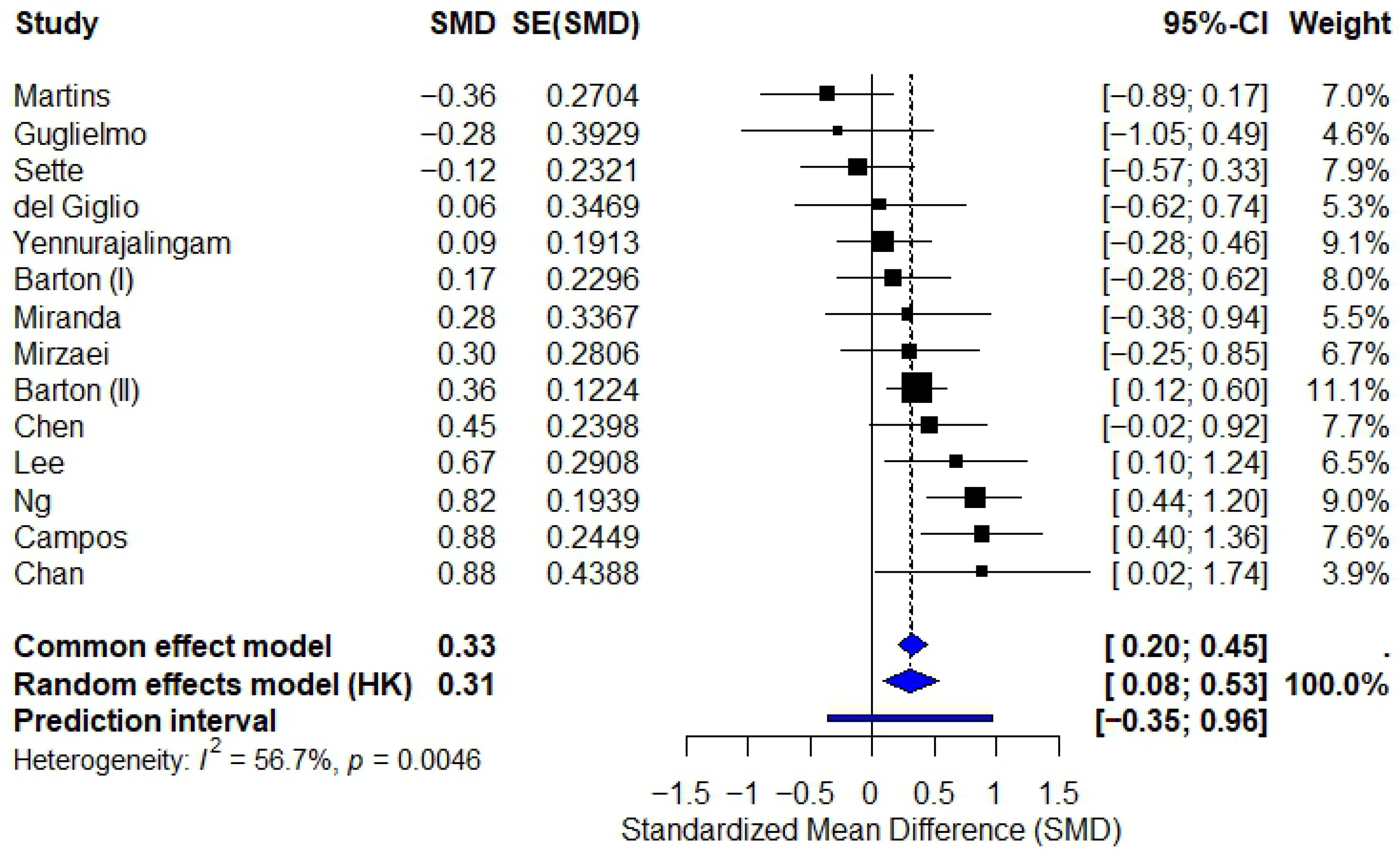

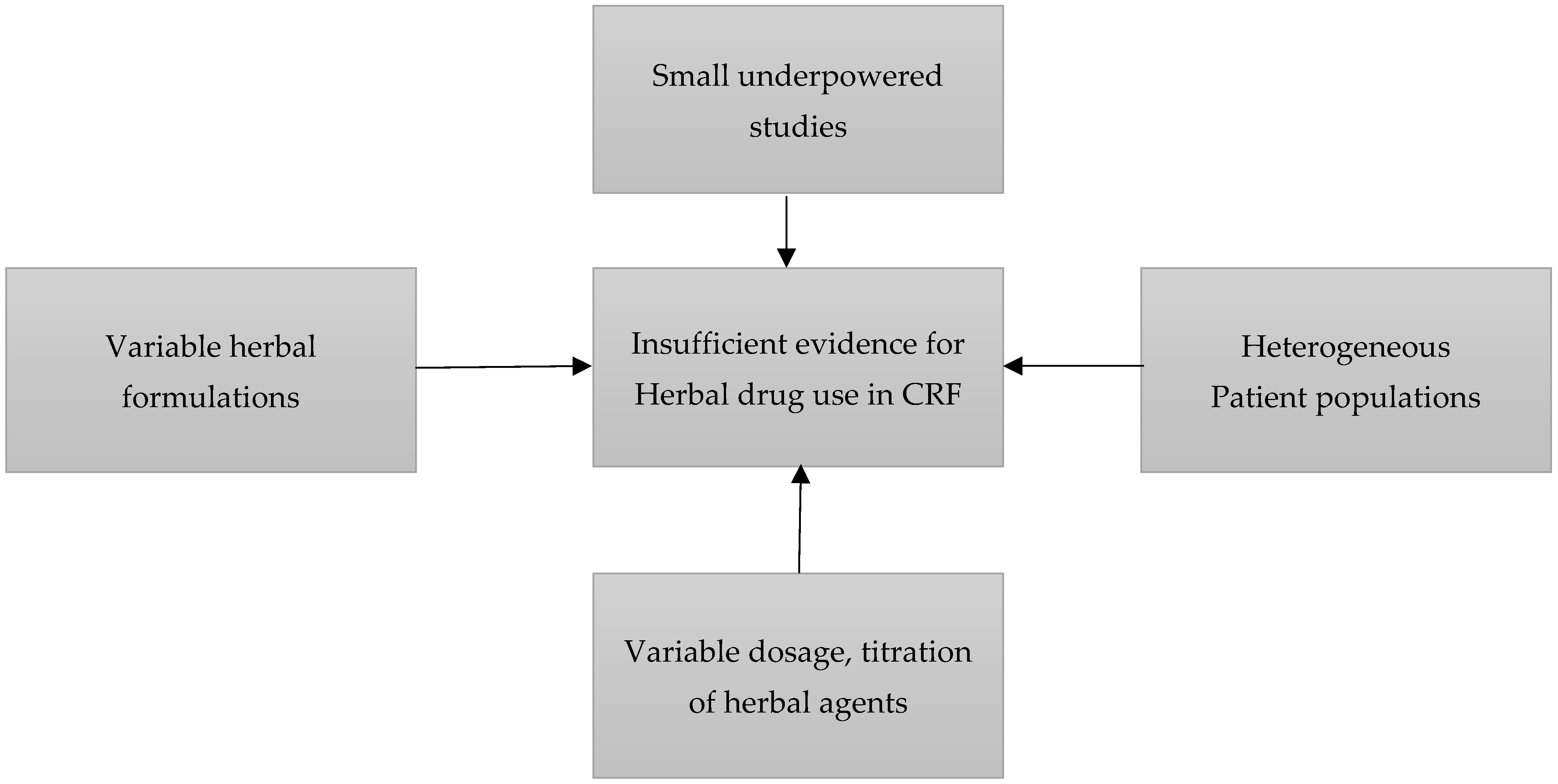
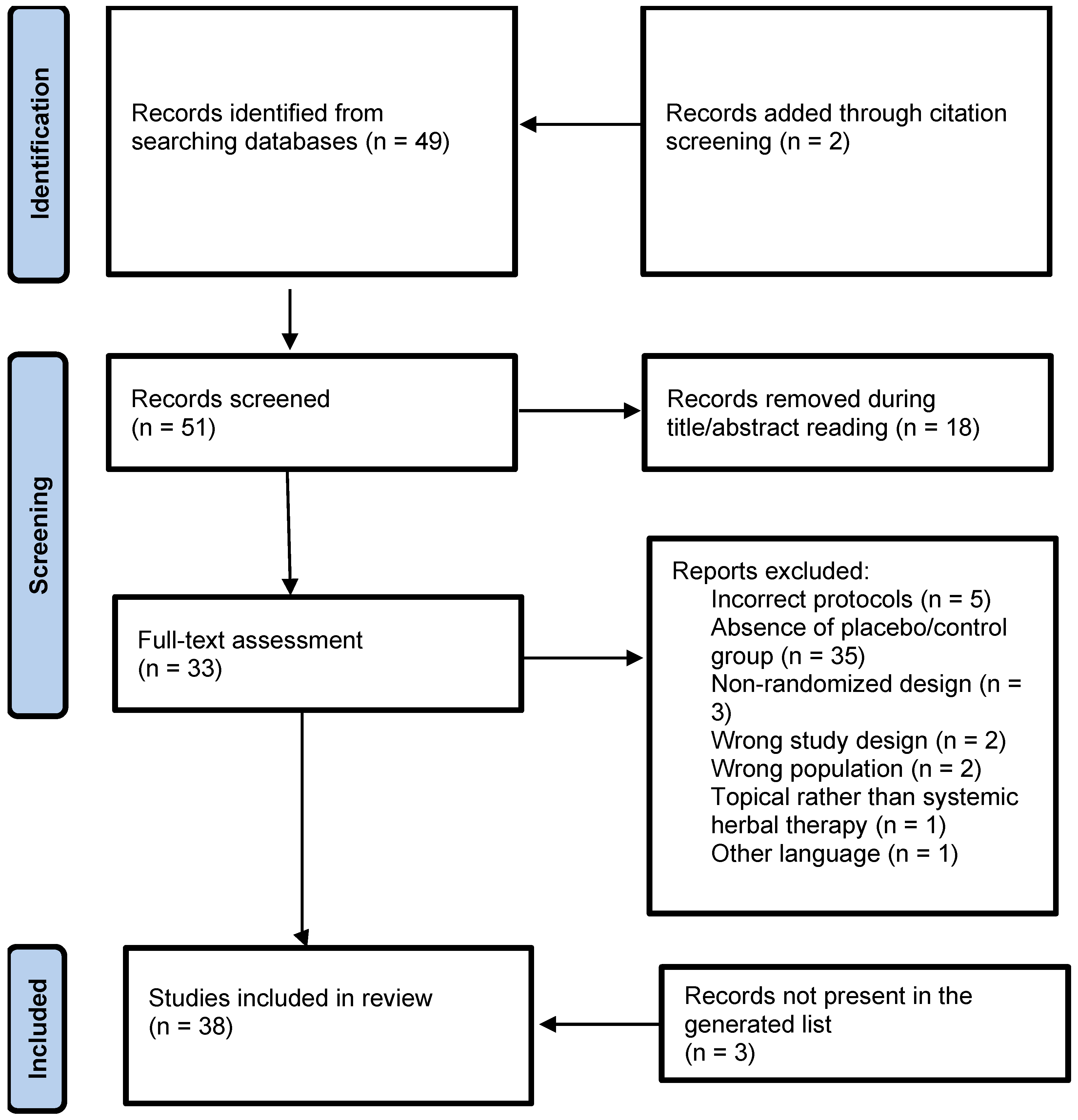
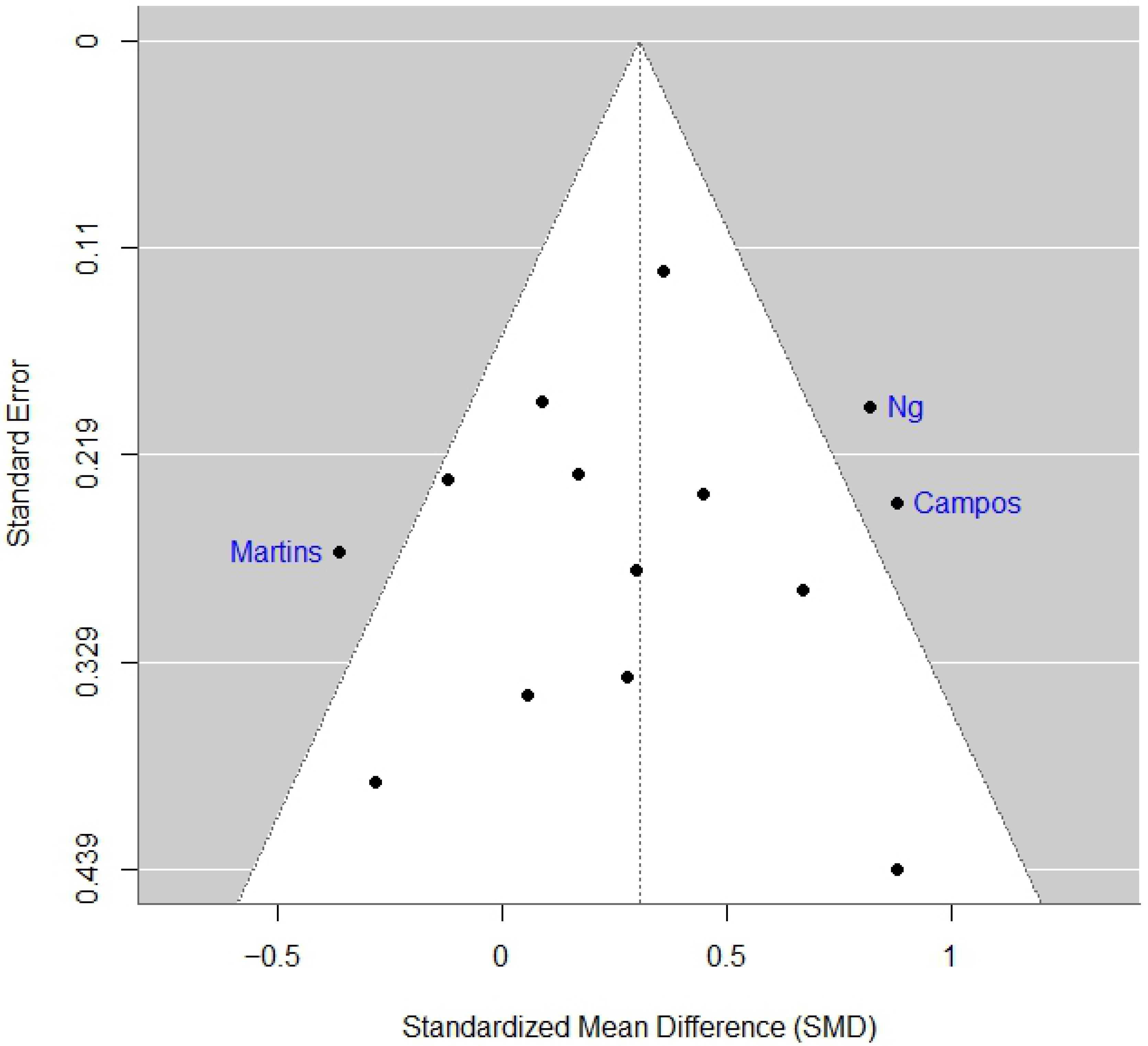
Efficacy of Phytotherapy for Cancer-Related Fatigue: A Systematic Review and Meta-Analysis of Randomized Controlled Trials

 ,
,
Abstract
1. Introduction
2. Methodology
2.1. Protocol and Registration
2.2. Eligibility Criteria
- (a)
- Population (P)
- (b)
- Intervention (I)
- -
- Ginseng (Panax ginseng, American ginseng);
- -
- Guaraná (Paullinia cupana);
- -
- Traditional Chinese Medicine formulations;
- -
- Other plant-derived interventions.
- (c)
- Comparison (C)
- (d)
- Outcomes (O)
- (e)
- Study Design (S)
2.3. Exclusion Criteria
- (a)
- Studies without use of systemic phytotherapeutic agents;
- (b)
- Studies comparing a not-placebo group to phytotherapy;
- (c)
- Studies using a design other than RCT;
- (d)
- Studies written in other language than English.
2.4. Information Sources and Search Strategy
- (a)
- Electronic Databases
- (b)
- Search Strategy
2.5. Study Selection Process
2.6. Data Extraction and Management
2.7. Data Synthesis and Statistical Methods
2.8. Ethical Considerations
3. Results
3.1. Study Selection
3.2. Characteristics of Included Studies
3.3. Risk of Bias Assessment
3.4. Meta-Analysis of the Effect of Phytotherapy on Cancer-Related Fatigue
- (a)
- Overall Effect
3.5. Publication Bias
Funnel Plot and Statistical Tests
3.6. Certainty of Evidence (GRADE)
4. Discussion
5. Conclusions
Supplementary Materials
Author Contributions
Funding
Institutional Review Board Statement
Informed Consent Statement
Data Availability Statement
Conflicts of Interest
References
- Campos, M.P.O.; Hassan, B.J.; Riechelmann, R.; Del Giglio, A. Cancer-related fatigue: A practical review. Ann. Oncol. 2011, 22, 1273–1279. [Google Scholar] [CrossRef]
- Al Maqbali, M.; Al Sinani, M.; Al Naamani, Z.; Al Badi, K.; Tanash, M.I. Prevalence of Fatigue in Patients With Cancer: A Systematic Review and Meta-Analysis. J. Pain Symptom Manag. 2021, 61, 167–189.e14. [Google Scholar] [CrossRef] [PubMed]
- Bower, J.E. Cancer-related fatigue—Mechanisms, risk factors, and treatments. Nat. Rev. Clin. Oncol. 2014, 11, 597–609. [Google Scholar] [CrossRef] [PubMed]
- Bower, J.E. The role of neuro-immune interactions in cancer-related fatigue: Biobehavioral risk factors and mechanisms. Cancer 2019, 125, 353–364. [Google Scholar] [CrossRef] [PubMed]
- Kwon, C.Y.; Lee, B.; Kong, M.; Lee, S.H.; Jung, H.J.; Kim, K.I.; Lee, B. Effectiveness and safety of herbal medicine for cancer-related fatigue in lung cancer survivors: A systematic review and meta-analysis. Phytother. Res. 2021, 35, 751–770. [Google Scholar] [CrossRef]
- Finnegan-John, J.; Molassiotis, A.; Richardson, A.; Ream, E. A systematic review of complementary and alternative medicine interventions for the management of cancer-related fatigue. Integr. Cancer Ther. 2013, 12, 276–290. [Google Scholar] [CrossRef]
- Anand, K.; Kaur Massaon, H.; Prabhakar, P.K. Herbal Therapies in Cancer Patients: Managing Side Effects and Improving Quality of Life. Sumat. Med. J. 2024, 7, 28–37. [Google Scholar] [CrossRef]
- Yin, S.Y.; Wei, W.C.; Jian, F.Y.; Yang, N.S. Therapeutic applications of herbal medicines for cancer patients. Evid. Based Complement. Altern. Med. 2013, 2013, 302426. [Google Scholar] [CrossRef]
- Shi, J.; Weng, J.H.; Mitchison, T.J. Immunomodulatory drug discovery from herbal medicines: Insights from organ-specific activity and xenobiotic defenses. Elife 2021, 10, e73673. [Google Scholar] [CrossRef]
- Nakadate, K.; Ito, N.; Kawakami, K.; Yamazaki, N. Anti-Inflammatory Actions of Plant-Derived Compounds and Prevention of Chronic Diseases: From Molecular Mechanisms to Applications. Int. J. Mol. Sci. 2025, 26, 5206. [Google Scholar] [CrossRef]
- Page, M.J.; McKenzie, J.E.; Bossuyt, P.M.; Boutron, I.; Hoffmann, T.C.; Mulrow, C.D.; Shamseer, L.; Tetzlaff, J.M.; Akl, E.A.; Brennan, S.E.; et al. The PRISMA 2020 statement: An updated guideline for reporting systematic reviews. BMJ 2021, 372, n71. [Google Scholar] [CrossRef]
- Ouzzani, M.; Hammady, H.; Fedorowicz, Z.; Elmagarmid, A. Rayyan-a web and mobile app for systematic reviews. Syst. Rev. 2016, 5, 210. [Google Scholar] [CrossRef] [PubMed]
- Gallardo-Gómez, D.; Richardson, R.; Dwan, K. Standardized mean differences in meta-analysis: A tutorial. Cochrane Evid. Synth. Methods 2024, 2, e12047. [Google Scholar] [PubMed]
- DerSimonian, R.; Laird, N. Meta-analysis in clinical trials revisited. Contemp. Clin. Trials 2015, 45, 139–145. [Google Scholar] [CrossRef] [PubMed]
- Sterne, J.A.C.; Savović, J.; Page, M.J.; Elbers, R.G.; Blencowe, N.S.; Boutron, I.; Cates, C.J.; Cheng, H.Y.; Corbett, M.S.; Eldridge, S.M.; et al. RoB 2: A revised tool for assessing risk of bias in randomised trials. BMJ 2019, 366, l4898. [Google Scholar] [CrossRef]
- Yennurajalingam, S.; Tannir, N.M.; Williams, J.L.; Lu, Z.; Hess, K.R.; Frisbee-Hume, S.; House, H.L.; Lim, Z.D.; Lim, K.-H.; Lopez, G.; et al. A Double-Blind, Randomized, Placebo-Controlled Trial of Panax ginseng for Cancer-Related Fatigue in Patients With Advanced Cancer. J. Natl. Compr. Cancer Netw. 2017, 15, 1111–1120. [Google Scholar] [CrossRef]
- Sette CVde, M.; Ribas de Alcântara, B.B.; Schoueri, J.H.M.; Cruz, F.M.; Cubero Dde, I.G.; Pianowski, L.F.; Peppone, L.J.; Fonseca, F.; del Giglio, A. Purified Dry Paullinia cupana (PC-18) Extract for Chemotherapy-Induced Fatigue: Results of Two Double-Blind Randomized Clinical Trials. J. Diet. Suppl. 2018, 15, 673–683. [Google Scholar] [CrossRef]
- Ng, M.L.; Majid, A.M.S.A.; Yee, S.M.; Natesan, V.; Basheer, M.K.A.; Gnanasekaran, A.; Al-Suede, F.S.R.; Parish, C.; Dalal, M.; Ming, L.C.; et al. A phase II randomized, double-blind, placebo-controlled study of Nuvastatic (C50SEW505OESA), a standardized rosmarinic acid-rich polymolecular botanical extract formulation to reduce cancer-related fatigue in patients with solid tumors. Support. Care Cancer 2024, 32, 331. [Google Scholar] [CrossRef]
- Mirzaei, H.; Gharehgozlou, R.; Heydarirad, G.; Fahimi, S.; Ghafari, S.; Mosavat, S.H.; Moghani, M.M.; Hajian, P. Efficacy and Safety of Jollab (a Saffron-Based Beverage) on Cancer-Related Fatigue in Breast Cancer Patients: A Double-Blind Randomized Clinical Trial. Complement. Med. Res. 2022, 29, 437–445. [Google Scholar] [CrossRef]
- Martins SPdos, S.; Ferreira, C.L.; del Giglio, A. Placebo-Controlled, Double-Blind, Randomized Study of a Dry Guarana Extract in Patients with Head and Neck Tumors Undergoing Chemoradiotherapy: Effects on Fatigue and Quality of Life. J. Diet. Suppl. 2017, 14, 32–41. [Google Scholar] [CrossRef]
- Miranda, V.d.C.; Trufelli, D.C.; Santos, J.; Campos, M.P.; Nobuo, M.; Miranda, M.d.C.; Schlinder, F.; Riechelmann, R.; del Giglio, A. Effectiveness of guaraná (Paullinia cupana) for postradiation fatigue and depression: Results of a pilot double-blind randomized study. J. Altern. Complement. Med. 2009, 15, 431–433. [Google Scholar]
- Lee, J.Y.; Kim, E.H.; Yoon, J.H.; Eo, W.; Yoon, S.W. Traditional Herbal Medicine, Sipjeondaebo-Tang, for Cancer-Related Fatigue: A Randomized, Placebo-Controlled, Preliminary Study. Integr. Cancer Ther. 2021, 20, 15347354211040830. [Google Scholar] [CrossRef]
- Guglielmo, M.; Di Pede, P.; Alfieri, S.; Bergamini, C.; Platini, F.; Ripamonti, C.I.; Orlandi, E.; Iacovelli, N.A.; Licitra, L.; Maddalo, M.; et al. A randomized, double-blind, placebo controlled, phase II study to evaluate the efficacy of ginseng in reducing fatigue in patients treated for head and neck cancer. J. Cancer Res. Clin. Oncol. 2020, 146, 2479–2487. [Google Scholar] [CrossRef]
- del Giglio, A.B.; Lerner, T.G.; Paiva, H.S.; Azevedo, R.G.S.; Guariento, R.T.; Goldman, C.; Carelli, B.; Schindler, F.; Pianowski, L.; Cruz, F.M.; et al. Purified Dry Extract of Paullinia cupana (Guaraná) (PC-18) for Chemotherapy-Related Fatigue in Patients with Solid Tumors: An Early Discontinuation Study. J. Diet. Suppl. 2013, 10, 325–334. [Google Scholar] [CrossRef] [PubMed]
- Chen, H.W.; Lin, I.H.; Chen, Y.J.; Chang, K.H.; Wu, M.H.; Su, W.H.; Huang, G.C.; Lai, Y.L. A novel infusible botanically-derived drug, PG2, for cancer-related fatigue: A phase II double-blind, randomized placebo-controlled study. Clin. Investig. Med. 2012, 35, E1–E11. [Google Scholar]
- Chan, A.; Chan, D.; Ng, D.Q.; Zheng, H.F.; Tan, Q.M.; Tan, C.J.; Toh, J.H.M.; Yap, N.Y.; Toh, Y.L.; Ke, Y.; et al. HEalth-Related Quality of Life-Intervention in Survivors of Breast and Other Cancers Experiencing Cancer-Related Fatigue and Associated Cognitive Symptoms Using TraditionAL Chinese Medicine: The ‘HERBAL’ Trial. Integr. Cancer Ther. 2025, 24, 15347354251314514. [Google Scholar] [CrossRef] [PubMed]
- de Oliveira Campos, M.P.; Riechelmann, R.; Martins, L.C.; Hassan, B.J.; Casa, F.B.A.; Giglio, A.D. Guarana (Paullinia cupana) Improves Fatigue in Breast Cancer Patients Undergoing Systemic Chemotherapy. J. Altern. Complement. Med. 2011, 17, 505–512. [Google Scholar]
- Barton, D.L.; Liu, H.; Dakhil, S.R.; Linquist, B.; Sloan, J.A.; Nichols, C.R.; McGinn, T.W.; Stella, P.J.; Seeger, G.R.; Sood, A.; et al. Wisconsin Ginseng (Panax quinquefolius) to Improve Cancer-Related Fatigue: A Randomized, Double-Blind Trial, N07C2. J. Natl. Cancer Inst. 2013, 105, 1230–1238. [Google Scholar] [CrossRef]
- Barton, D.L.; Soori, G.S.; Bauer, B.A.; Sloan, J.A.; Johnson, P.A.; Figueras, C.; Duane, S.; Mattar, B.; Liu, H.; Atherton, P.J.; et al. Pilot study of Panax quinquefolius (American ginseng) to improve cancer-related fatigue: A randomized, double-blind, dose-finding evaluation: NCCTG trial N03CA. Support. Care Cancer 2010, 18, 179–187. [Google Scholar]
- Asiimwe, J.B.; Nagendrappa, P.B.; Atukunda, E.C.; Kamatenesi, M.M.; Nambozi, G.; Tolo, C.U.; Ogwang, P.E.; Sarki, A.M. Prevalence of the Use of Herbal Medicines among Patients with Cancer: A Systematic Review and Meta-Analysis. Evid.-Based Complement. Altern. Med. 2021, 2021, 9963038. [Google Scholar] [CrossRef]
- Nono, S.M.; Kyomya, J.; Tolo, C.U.; Oyuru, A.; Duhimbaze, A.; Yadesa, T.M. Factors associated with herbal medicine use among patients with cancer attending a tertiary hospital in Southwestern Uganda: A cross-sectional study. Discov. Oncol. 2025, 16, 2163. [Google Scholar] [CrossRef] [PubMed]
- Iwai, C.; Konishi, T.; Aso, S.; Matsui, H.; Fushimi, K.; Yasunaga, H. Trends in the use of Japanese herbal Kampo medicine in inpatients with cancer: A 14-year nationwide analysis. Int. J. Clin. Oncol. 2025, 30, 2244–2256. [Google Scholar] [CrossRef] [PubMed]
- Ahmed, S.; Alsharif, K.F.; Aschner, M.; Alzahrani, K.J.; Akkol, E.K.; Türkcanoğlu, E.G.; Khan, H. A deep dive into herbal extraction: Techniques, trends, and technological advancements. S. Afr. J. Bot. 2026, 188, 9–37. [Google Scholar]
- Li, Y.; Xu, Z.; Du, P.; Gao, J.; Wang, S.; Pang, X.; Ren, C.; Liu, Y.; Zhang, C. Methodological challenges in pilot trials of herbal medicine: Barriers to evidence-based practice. J. Clin. Epidemiol. 2025, 182, 111754. [Google Scholar]
- Wang, X.; Chan, A.W.K. Challenges and patenting strategies for Chinese herbal medicine. Chin. Med. 2010, 5, 24. [Google Scholar] [CrossRef]
- Alok, S.; Jain, S.K.; Verma, A.; Kumar, M.; Mahor, A.; Sabharwal, M. Herbal antioxidant in clinical practice: A review. Asian Pac. J. Trop. Biomed. 2014, 4, 78–84. [Google Scholar] [CrossRef]
- Hong, C.E.; Lyu, S.Y. Immunomodulatory Natural Products in Cancer Organoid-Immune Co-Cultures: Bridging the Research Gap for Precision Immunotherapy. Int. J. Mol. Sci. 2025, 26, 7247. [Google Scholar] [CrossRef]
- Gonfa, Y.H.; Tessema, F.B.; Bachheti, A.; Rai, N.; Tadesse, M.G.; Nasser Singab, A.; Chaubey, K.K.; Bachheti, R.K. Anti-inflammatory activity of phytochemicals from medicinal plants and their nanoparticles: A review. Curr. Res. Biotechnol. 2023, 6, 100152. [Google Scholar] [CrossRef]
- Akhlada Siddiqui, N.; Anurag Saifi, A.; Kesharwani, A.; Parihar, V.K.; Sharma, A. Neuroprotective Action of Selected Natural Drugs Against Neurological Diseases and Mental Disorders: Potential Use Against Radiation Damage. Neurochem. Res. 2024, 49, 2336–2351. [Google Scholar] [CrossRef]
- Wang, X.S. Pathophysiology of cancer-related fatigue. Clin. J. Oncol. Nurs. 2008, 12, 11–20. [Google Scholar] [CrossRef]
- Maselli-Schoueri, J.H.; Aguiar Junior, P.N.; Giglio, A.D. Natural supplementation to effectively treat cancer-induced fatigue: Evidence of a meta-analysis on the use of guaraná. Rev. Assoc. Med. Bras. 2024, 70, e20240528. [Google Scholar] [CrossRef]
- Bower, J.E.; Bak, K.; Berger, A.; Breitbart, W.; Escalante, C.P.; Ganz, P.A.; Schnipper, H.H.; Lacchetti, C.; Ligibel, J.A.; Lyman, G.H.; et al. Screening, Assessment, and Management of Fatigue in Adult Survivors of Cancer: An American Society of Clinical Oncology Clinical Practice Guideline Adaptation. J. Clin. Oncol. 2014, 32, 1840–1850. [Google Scholar] [CrossRef]
- Fabi, A.; Bhargava, R.; Fatigoni, S.; Guglielmo, M.; Horneber, M.; Roila, F.; Weis, J.; Jordan, K.; Ripamonti, C. Cancer-related fatigue: ESMO Clinical Practice Guidelines for diagnosis and treatment. Ann. Oncol. 2020, 31, 713–723. [Google Scholar] [CrossRef]
- Jahromi, B.; Pirvulescu, I.; Candido, K.D.; Knezevic, N.N. Herbal Medicine for Pain Management: Efficacy and Drug Interactions. Pharmaceutics 2021, 13, 251. [Google Scholar] [CrossRef]
- Gyllenhaal, C.; Merritt, S.L.; Peterson, S.D.; Block, K.I.; Gochenour, T. Efficacy and safety of herbal stimulants and sedatives in sleep disorders. Sleep Med. Rev. 2000, 4, 229–251. [Google Scholar] [CrossRef] [PubMed]
- Iizuka, N.; Hamamoto, Y. Constipation and herbal medicine. Front. Pharmacol. 2015, 6, 73. [Google Scholar] [CrossRef] [PubMed]
- Chiaramonte, R.; Bonfiglio, M.; Caramma, S.; Condorelli, R. The Role of Rehabilitation in the Treatment of Constipation in Oncological Patients. J. Clin. Med. 2023, 12, 5083. [Google Scholar] [CrossRef] [PubMed]


| Study | Year of Publication | Years of Enrollment | Years of Implementation | Follow-Up Duration | Population (Inclusion Criteria) | Exclusion Criteria | Study Design | Endpoints | Cancer Types | Performance Status | Fatigue Endpoint | Medication | Key Findings | Country |
|---|---|---|---|---|---|---|---|---|---|---|---|---|---|---|
| Guglielmo et al. [23] | 2024 | 2018–2022 | 2020–2021 | 12 months (median) | Adults ≥ 18 y with stage II–III breast cancer receiving NAC | Prior systemic therapy; active infection; ECOG > 2 | Multicenter retrospective cohort | Primary: pCR; Secondary: DFS, OS, fatigue score change | Breast | ECOG 0–2 | Change in FACIT-F from baseline to post-NAC | American ginseng (Panax quinquefolius, Euquinax®) 1000 mg/day orally (2 × 500 mg capsules) for 8 weeks; placebo: 2 capsules/day for 8 weeks | While pertuzumab significantly increased pCR rates (absolute gain ~15–20%), fatigue improvements were modest and primarily driven by baseline-to-follow-up changes, with limited evidence of a clinically relevant incremental effect | USA |
| Lee et al. [22] | 2021 | May 2018–June 2020 | 2018–2020 | 6 weeks total (3-week treatment; assessments through week 6) | Adults > 19 y with confirmed malignant solid tumor; ≥1 month since last major cancer treatment; moderate to severe fatigue (BFI ≥ 4) lasting > 1 month, started or worsened with cancer/treatment; ECOG performance status < 2; stable use of fatigue-relevant meds/supplements allowed if unchanged ≥ 2 weeks | Moderate–severe pain (NRS ≥ 4); pleural effusion/ascites/peripheral edema grade ≥ 3 (CTCAE v4.03); anemia requiring transfusion; hypothyroidism; psychological or mental disorder; nutritional dystrophy; paralytic/atrophic myopathy incl. myasthenia gravis; alcohol or psychotropic drug abuse; pregnant or breastfeeding; planned surgery/chemotherapy/ radiotherapy during study; AST or ALT ≥ 2 × ULN; serum creatinine ≥ 1.5 × ULN | Randomized, double-blind, placebo-controlled preliminary trial; 1:1 allocation with permuted blocks; intention-to-treat analysis with LOCF | Primary: BFI; Secondary: HADS; EORTC QLQ-C30; immunoregulatory tests; safety | Breast, gastrointestinal, lung, head and neck, urogenital; mostly locoregional disease (stage I–III; one stage IV) | ECOG 0–1 (eligibility required < 2) | BFI score change through week 3 (end of treatment) and trajectory to week 6 | Sipjeondaebo-tang (SDT) 3 g orally three times daily vs. matched placebo for 3 weeks; both groups received standardized fatigue-relief education | BFI improved in both arms and was significantly better with SDT at week 3 (mean 3.56 ± 1.18 vs. 4.63 ± 1.83); ANCOVA adjusted difference favoring SDT (p ≈ 0.04). EORTC QLQ-C30 global health improved more with SDT (p = 0.02). HADS and immune markers showed no between-group differences. No significant toxicities (one grade 1 dyspepsia in SDT; one grade 1 pruritus in placebo). Fatigue reduction waned by week 6 in both arms | Korea |
| Martins et al. [20] | 2016 | NR | NR | Questionnaires at D1, D21, D42, D63; survival monitored during study period (~30 months) | Adults with localized or locally advanced head and neck cancer (stage I–IV) with indication for concurrent chemoradiotherapy; with/without prior surgery or induction chemotherapy | Chronic diseases causing fatigue (e.g., chronic renal failure, fibromyalgia, chronic anemia, untreated hypothyroidism); oral mucosa problems unrelated to cancer; untreated depression or anxiety | Phase II, randomized, double-blind, placebo-controlled trial | Primary: effect of guaraná on cancer-related fatigue during chemoradiotherapy; Secondary: quality of life (QoL) domains, toxicity (CTCAE), survival | Head and neck squamous cell carcinoma (sites included oral cavity, oropharynx, nasopharynx, larynx) | KPS tracked; % with KPS reduction reported; baseline threshold not specified | FACIT-F (FACT-F) fatigue scale; additional QoL instruments: FACIT-HN, EORTC QLQ-C30, QLQ-H&N35 | Guaraná (Paullinia cupana) dry extract 50 mg PO twice daily during chemoradiotherapy | No sustained benefit of guaraná on fatigue or QoL vs. placebo; transient early improvements in some H&N35 domains; later greater weight loss and more NG tube/analgesic use in guaraná arm; no significant toxicity differences; no OS difference | Brazil |
| Miranda et al. [21] | 2009 | NR | NR | ≈5 weeks (start, mid, end of RT course) | Consenting adults with histologically confirmed early-stage breast cancer indicated for adjuvant RT | Prior RT; anemia; clinical depression; inability to consen; contraindications to guaraná (uncontrolled hypertension, prior arrhythmia, insomnia) | Randomized, double-blind, placebo-controlled crossover during adjuvant RT; 36 pts; 75 mg guaraná daily vs. placebo; crossover at mid-RT | Fatigue and depression scores (Chalder Fatigue Scale, MD Anderson Brief Fatigue Inventory, Beck Depression Inventory II) compared across phases | Breast cancer (predominantly ductal), stages I–II | NR | Change in Chalder and BFI scores | Guaraná extract 75 mg PO daily vs. placebo | No statistically significant differences vs. placebo for fatigue or depression; no significant toxicity observed | Brazil |
| Mirzaei et al. [19] | 2022 | October 2017–July 2018 | 2017–2018 | 4 weeks | Women 18–70 with histologically confirmed breast cancer referred for chemotherapy; developed fatigue after starting chemotherapy and had no prior fatigue | Unstable cardiopulmonary disease; proteinuria; AST > 3 × ULN; disabling lung disease; history of asthma; uncontrolled pain; severe infection; use of drugs that affect fatigue; active treatment for anemia; allergy to honey/saffron/rose components | Randomized, double-blind, placebo-controlled clinical trial (two parallel arms) | Primary: change in fatigue at weeks 0 and 4 via VAFS, FSS, and CFS (total and subscales); Secondary: safety/adverse effects | Breast cancer (patients receiving chemotherapy regimens including anthracycline/cyclophosphamide or taxane ± trastuzumab) | Not reported | VAFS; FSS; CFS (physical, affective, cognitive subscales) | Jollab syrup 20 mL three times daily for 4 weeks (per 100 mL: 79.96 g honey, 20 g rose water, 40 mg saffron extract) | Jollab significantly reduced fatigue vs. placebo: VAFS and FSS decreased (p < 0.001), CFS total and physical and cognitive subscales improved; affective subscale not significant; no safety concerns; higher dropout in placebo. | Iran |
| Ng et al. [18] | 2024 | 2019 (June–August) | 2019 (trial period concurrent with enrollment) | 9 weeks (baseline, weeks 3, 6, 9) | Adults with solid tumors (stage II–IV) undergoing chemotherapy; prescreened with BFI; included if fatigue increased by ≥1 point between assessments; ITT analyzed | Excluded if BFI fatigue severity did not increase by ≥1 between prescreen and next cycle | Multicenter, randomized, double-blind, placebo-controlled, phase II, parallel assignment | Primary: BFI and VAS-F fatigue scores (baseline, weeks 3, 6, 9); Secondary: SF-36 vitality/other domains; urinary F2-isoprostanes; ECOG status; AEs; labs/vitals | Bone, breast, lung, skin, gynecologic, GI andcolorectal, head and neck, other | ECOG 0–1 at baseline (≈50% ECOG 0; ≈50% ECOG 1 across groups) | BFI and VAS-F; change over time vs. placebo | Nuvastatic™ (C5OSEW5050ESA) 1000 mg orally three times daily for 9 weeks | Significant reductions vs. placebo: BFI (partial η2 = 0.333, p < 0.001) and VAS-F (partial η2 = 0.083, p < 0.001). Improved SF-36 (partial η2 = 0.243, p < 0.001). Urinary F2-isoprostanes decreased (mean diff 55.57; p < 0.001). Mild AEs only (vomiting 0.9%, fever 5.4%, headache 2.7%); no severe AEs reported | India |
| Sette (I) et al. [17] | 2018 | Not reported | Not reported | 21 days after randomization; crossover after 3 weeks with 1-week washout | Women with early breast cancer (stages I–III) starting adjuvant chemotherapy; increased fatigue on BFI after the first cycle | Uncontrolled hypertension; arrhythmias/heart disease; prior serious cardiovascular event; insomnial; depression/psychiatric illness; anemia; chronic renal failure; hypothyroidism; fibromyalgia | Study 1: double-blind randomized cross-over PC-18 37.5 mg BID vs. placebo | Primary: % of patients with ≥1 SD decrease in BFI at 21 days post-randomization; Chalder also assessed | Early breast cancer (stages I–III) | Not reported | BFI and Chalder Fatigue Questionnaire | PC-18 (purified Paullinia cupana) 37.5 mg BID | PC-18 not superior to placebo; notable placebo antifatigue effect; no significant toxicities | Brazil |
| Sette (II) et al. [17] | 2018 | Not reported | Not reported | 21 days after randomization | Women with early breast cancer (stages I–III) starting adjuvant chemotherapy; increased fatigue on BFI or Chalder after the first cycle | Uncontrolled hypertension, arrhythmias/heart disease; prior serious cardiovascular event; insomnia; depression/psychiatric illness; anemia; chronic renal failure; hypothyroidism; fibromyalgia | Study 2: phase II double-blind randomized parallel three-arm (placebo vs. PC-18 7.5 mg BID vs. PC-18 12.5 m BID) | Primary: % of patients with ≥1 SD decrease in BFI at 21 days; Chalder also assessed. | Early breast cancer (stages I–III) | Not reported | BFI and Chalder Fatigue Questionnaire | PC-18 (purified Paullinia cupana) 7.5 mg BID or 12.5 mg BID | PC-18 not superior to placebo at either dose; placebo group had significant rise in serum magnesium; multivariate: higher baseline magnesium and BFI and 12.5 mg dose associated with higher post-treatment BFI; no significant toxicities | Brazil |
| Yennurajalingam et al. [16] | 2017 | Not reported | Intervention for 28 days; assessments at baseline, days 8/15/29, plus 1 month post-treatment | Primary at day 29; safety also at ~2 months (incl. 1 month post-treatment) | Adults with cancer and CRF ≥ 4/10 on ESAS, present most of the day for ≥2 weeks; normal cognition; ECOG ≤ 2; no uncontrolled pain or depressive symptoms | Infections; uncontrolled diabetes; anticoagulants or systemic steroids; hepatitis A/B/C; significant uncontrolled hypertension or symptomatic tachycardia; active psychiatric illness; current use of ginseng or stimulants | Randomized, double-blind, placebo-controlled parallel-group trial | Primary: change in FACIT-F fatigue subscale fro baseline to day 29; Secondary: QoL (FACIT domains), mood (HADS), ESAS symptoms (incl. fatigue item), Global Symptom Evaluation, 6 min walk test, handgrip strength, safety (CTCAE v4.0) | Advanced solid tumors (various: genitourinary, breast, thoracic, gastrointestinal, others) | ECOG 0–2 | FACIT-F fatigue subscale | Panax ginseng extract 400 mg twice daily vs. matching placebo for 28 days; oral administration | Both groups improved on fatigue; PG not superior to placebo at day 29 (ΔFACIT-F 7.5 vs. 6.5; p = 0.67). Fewer any-grade AEs and fewer grade ≥3 AEs with PG (3–5: 1/63 vs. 9/64) | USA |
| Chan et al. [26] | 2025 | Unclear, looks like 2019–2022 | 2019–2022 | 10 weeks | ≥21 years old; reported a fatigue screen score of ≥4 in the past 7 days; had completed surgery, chemotherapy, or RT and were not planned to receive adjuvant therapy during the study period, except for aromatase inhibitors or ovarian suppression for breast cancer survivors | Metastases, cancer recurrence; untreated fatigue-causing co-morbidities; on fatigue-inducing medications; taking warfarin; receiving or planning to receive TCM treatment; breastfeeding or intending to conceive | RCT | QoL, CRF, perceived cognition, BDNF levels, BDNF genotyping | Breast, lymphoma, endometrial, pancreatic, ovarian, lung, uterine | ECOG 0–15 (100.0)/11 (84.6); 1–0 (0.0)/2 (15.4) | MFSI-SF | XBYRT was administered as oral granules at a dose of 24 g once daily, dissolved in hot water, for 8 weeks | No significant difference found in QoL; I—improved emotional fatigue at T3 and higher BDNF levels at T2 and T3; I—better perceived cognitive impairment at T2 and T3, and overall perceived cognitive function at T3. | Singapore |
| Chen et al. [25] | 2012 | NR | NR | 8 weeks | Advanced cancer with a fatigue score of at least 4 and a life expectancy of at least three months | Pregnancy or breastfeeding; uncontrolled systemic diseases; use of any central nervous system stimulators or standard cancer chemotherapy within the previous 30 days; KPS < 30% | RCT | CRF, AE | Breast, gynecologic, GI, head and neck, respiratory, male reproductive, others | Median KPS I 70/C 70 | FIRR | PG2 was administered as an intravenous infusion of 500 mg, three times weekly, over 4 weeks; during the second cycle, all patients received PG2 for an additional 4 weeks | PG2 improved CRF, with higher fatigue-improvement response at week 1 vs. placebo (57% vs. 32%; p = 0.043). At week 4, 60% achieved ≥10% BFI-T reduction; 72% of responders had ≥20% improvement. Benefits were sustained in 82%, and 71% of initial non-responders improved after prolonged treatment | Taiwan |
| Del Giglio et al. [24] | 2013 | NR | NR | 3 weeks | Adults with cancer at any stage receiving systemic chemotherapy | History of hypothyroidism; psychiatric disorder; anemia; prior antineoplastic treatment; insomnia; angina; uncontrolled hypertension; neurologic disorders; cardiovascular disease | Initially uncontrolled, open study; then, RCT | Fatigue, Anxiety and Depression, Sleep Quality Questionnaire, AEs | Breast, colorectal, lung/pleura, head and neck, ovarian, bone, stomach, urethra, pancreas, prostate, biliary tract | NR | FACIT-F; Chalder Fatigue Scale | PC-18 was administered orally at a dose of 37.5 mg twice daily for 21 days | Compared with baseline, BFI scores improved significantly after 3 weeks of PC-18 (mean reduction 2.5 points; p = 0.0002) | Brazil |
| Barton et al. [29] | 2010 | 2005–2006 | 2005–2006 | 8 weeks | Adults with cancer-related fatigue ≥ 4/10 for ≥1 month; life expectancy ≥ 6 months; various solid tumors | Other medical causes of fatigue ruled out | Multicenter, randomized, double-blind, placebo-controlled pilot trial | Primary: BFI activity-interference AUC; Secondary: BFI usual fatigue, SF-36 vitality, PSQI, quality-of-life domains | Mixed solid tumors (breast, colon, lung, others) | Not reported. | BFI); SF-36 vitality | American ginseng 750–2000 mg/day | High-dose ginseng showed trend toward improvement, but nonetheless non-significant | USA |
| Barton et al. [28] | 2013 | 2008–2011 | 2008–2011 | 8 weeks | Adults with cancer-related fatigue ≥ 4/10 for ≥1 month, diagnosed within past 2 years; on or recently completed chemotherapy/RT | Brain/CNS lymphoma; changes in treatment planned; alternative causes of fatigue; pain/insomnia ≥ 4/10; steroid/opioid use; prior/current ginseng use | Randomized, double-blind, placebo-controlled phase III trial | Primary: MFSI-SF general fatigue at 4 weeks; Secondary: fatigue at 8 wks, POMS, BFI, toxicity | Mixed solid and hematologic cancers (predominantly breast) | Not reported | MFSI-SF general fatigue; POMS; BFI | American ginseng 2000 mg/day | No significant difference at 4 weeks (mean MFSI-SF change +14.4 vs. +8.2; p = 0.07); significant improvement at 8 weeks, with greater fatigue reduction vs. placebo (+20.0 vs. +10.3 points, p = 0.003), most pronounced in patients receiving active cancer therapy | USA |
| Campos et al. [27] | 2011 | 2008–2009 | 2008–2009 (3-cycle intervention) | ~49 days total | Women 22–70 with histologically confirmed breast cancer starting first chemotherapy cycle; fatigue worsened ≥1 category after first cycle; provided informed consent | Hypothyroidism; depression/psychiatric disease; anemia; prior antineoplastic therapy; insomnia; cardiovascular disease; uncontrolled hypertension; neurologic disorders; use of antidepressants/anxiolytics/sleep aids; severe fatigue at baseline or failure to worsen after cycle 1 | Phase II, randomized, double-blind, placebo-controlled crossover trial (21 days per arm, 7-day washout) | Primary: FACIT-F global fatigue score; Secondary: FACT-ES, BFI, Chalder Scale, PSQI, HADS, safety | Breast cancer (all stages) | Not reported. | FACIT-F improvement; BFI and Chalder changes | Guaraná extract 50 mg twice daily | Guaraná vs. placebo: FACIT-F increased by +14.2 points at day 21 and +23.5 points at day 49 (vs declines with placebo; p < 0.01); ≥1-SD FACIT-F improvement in 52–66% vs. 10–13% with placebo. BFI decreased by −3.2 points (day 21) and −2.2 points (day 49) vs. minimal/no improvement with placebo (p < 0.01). Chalder Fatigue score decreased by −4.6 points at day 21 (p < 0.01) | Brazil |
| RoB Category | Trials (n) | Studies |
|---|---|---|
| Low Risk | 2 | Barton et al. [28]; Yennurajalingam et al. [16] |
| Some Concerns | 6 | Barton et al. [29]; Campos et al. [27]; Mirzaei et al. [19]; Ng et al. [18]; Chen et al. [25]; Lee et al. [22] |
| High Risk | 6 | del Giglio et al. [24]; Guglielmo et al. [23]; Miranda et al. [21]; Chan et al. [26]; Sette et al. [17]; Martins et al. [20] |
| Subgroup/Category | Representative Trials | k (Trials) | Pooled SMD | 95% CI | I2 (%) | Interpretation |
|---|---|---|---|---|---|---|
| Herbal Class | ||||||
| Ginseng (Panax spp.) | Barton et al. [28]; Barton et al. [29]; Yennurajalingam et al. [16]; Guglielmo et al. [23] | 4 | 0.22 | −0.11 to 0.53 | 12.1 | Not statistically significant |
| Guaraná (Paullinia cupana) | Campos et al. [27]; del Giglio et al. [24]; Miranda et al. [21]; Sette et al. [17]; Martins et al. [20] | 5 | 0.15 | −0.46 to 0.76 | 71.4 | Very imprecise; not statistically significant; wide range from possible harm to benefit; highly heterogeneous |
| Other herbal formulations (Jollab, Nuvastatic, PG2, XBYRT, SDT) | Mirzaei et al. [19]; Ng et al. [18]; Chan et al. [26]; Chen et al. [25]; Lee et al. [22] | 5 | 0.62 | 0.33 to 0.91 | 0 | Statistically significant; no heterogeneity |
| Methodological Quality | ||||||
| Low risk of bias | Barton et al. [28]; Yennurajalingam et al. [16] | 2 | 0.34 | −3.31 to 3.99 | 64.0 | Non-statistically significant trend favoring phytotherapy; very imprecise |
| Some concerns | Barton et al. [29]; Campos et al. [27]; Mirzaei et al. [19]; Ng et al. [18]; Chen et al. [25]; Lee et al. [22] | 5 | 0.56 | 0.25 to 0.87 | 34.2 | Moderate effect; statistically significant; driven by small studies |
| High risk of bias | Del Giglio et al. [24]; Guglielmo et al. [23]; Miranda et al. [20]; Chan et al. [26]; Sette et al. [17]; Martins et al. [20] | 6 | −0.01 | −0.43 to 0.42 | 32.8 | Non-significant; no clear trend |
| Disease Timepoint | ||||||
| Advanced disease | Chen et al. [25]; Martins et al. [20]; Yennurajalingam et al. [16] | 3 | 0.08 | −0.89 to 1.04 | 60.2 | Non-statistically significant |
| Early disease | Lee et al. [22]; Sette et al. [17]; Miranda et al. [21] | 3 | 0.24 | −0.83 to 1.30 | 61.7 | Non-significant; trend toward benefit |
| Survivorship | Chan et al. [26]; Barton et al. [28]; Guglielmo et al. [23] | 3 | 0.31 | −0.88 to 1.51 | 50.4 | Non-significant; trend toward benefit |
| Treatment Duration | ||||||
| <4 weeks | Del Giglio et al. [24]; Lee et al. [22]; Miranda et al. [21]; Mirzaei et al. [19]; Sette et al. [17]; Yennurajalingam et al. [16] | 6 | 0.16 | −0.13 to 0.46 | 12.3 | Non-statistically significant |
| ≥4 weeks | Barton et al. [28]; Barton et al. [29]; Chen et al. [25]; Chan et al. [26]; Guglielmo et al. [23]; Martins et al. [20]; Ng et al. [18] | 7 | 0.31 | −0.11 to 0.72 | 65,9 | Non-significant; trend toward benefit |
Disclaimer/Publisher’s Note: The statements, opinions and data contained in all publications are solely those of the individual author(s) and contributor(s) and not of MDPI and/or the editor(s). MDPI and/or the editor(s) disclaim responsibility for any injury to people or property resulting from any ideas, methods, instructions or products referred to in the content. |
© 2026 by the authors. Licensee MDPI, Basel, Switzerland. This article is an open access article distributed under the terms and conditions of the Creative Commons Attribution (CC BY) license.
Share and Cite
Matsas, S.; Medeiros Araujo de Matos, U.; Molina Llata, C.; del Giglio, A. Efficacy of Phytotherapy for Cancer-Related Fatigue: A Systematic Review and Meta-Analysis of Randomized Controlled Trials. Diseases 2026, 14, 39. https://doi.org/10.3390/diseases14020039
Matsas S, Medeiros Araujo de Matos U, Molina Llata C, del Giglio A. Efficacy of Phytotherapy for Cancer-Related Fatigue: A Systematic Review and Meta-Analysis of Randomized Controlled Trials. Diseases. 2026; 14(2):39. https://doi.org/10.3390/diseases14020039
Chicago/Turabian StyleMatsas, Silvio, Ursula Medeiros Araujo de Matos, Carolina Molina Llata, and Auro del Giglio. 2026. "Efficacy of Phytotherapy for Cancer-Related Fatigue: A Systematic Review and Meta-Analysis of Randomized Controlled Trials" Diseases 14, no. 2: 39. https://doi.org/10.3390/diseases14020039
APA StyleMatsas, S., Medeiros Araujo de Matos, U., Molina Llata, C., & del Giglio, A. (2026). Efficacy of Phytotherapy for Cancer-Related Fatigue: A Systematic Review and Meta-Analysis of Randomized Controlled Trials. Diseases, 14(2), 39. https://doi.org/10.3390/diseases14020039