1. Introduction
With the development of global communication technology, the fifth-generation mobile communication system (5G) is gradually evolving towards sixth-generation (6G) [
1]. In this process, the in-depth integration of terrestrial mobile communication networks and low-orbit satellites has become a common focus of both academic and industrial, and there has been a consensus on building an integrated communication network of air–space–ground–sea [
2]. As an authoritative institution for global mobile communication standards, the 3rd Generation Partnership Project (3GPP) has been conducting research on Non-Terrestrial Network (NTN)-related technologies since Release 14 (Rel-14) and has continued to deepen this research in subsequent releases. Rel-15 clarifies the technical route for the integration of 5G and satellite networks and defines eight Enhanced Mobile Broadband (eMBB) scenarios and two categories of Massive Machine-Type Communication (mMTC) scenarios systematically [
3]. During the Rel-16 phase, 3GPP officially initiated research on NTN-related standards, with a focus on exploring optimization and improvement schemes for each layer of the protocol stack. Entering the Rel-17 and Rel-18 phases, 3GPP has further improved the NTN standard, laying a solid foundation for the application of satellite communications in 5G networks [
4].
A set of control signaling is designed for 5G scenarios to support the communication of uplink and downlink transmission channels. Among them, the Physical Uplink Control Channel (PUCCH) is utilized to transmit Uplink Control Information (UCI), which mainly consists of Channel State Information (CSI), Scheduling Request (SR), and Hybrid Automatic Repeat Request Acknowledgment (HARQ-ACK) [
5]. The protocol standards define a total of 5 PUCCH configuration schemes, from format 0 to format 4, which are employed for scenarios with different number of UCI payload and OFDM symbols [
6], PUCCH of different formats occupy different time-frequency resources, which directly affect the performance of the detection algorithm at receiver, An PUCCH detection algorithm suitable for multi-user scenarios is proposed in [
7], which is based on the Minimum Mean Square Error (MMSE) detector. Semi-blind detection algorithms are proposed in [
8,
9,
10], where data symbols are used to enhance the performance of channel estimation as well as that of PUCCH detection.
The aforementioned semi-blind detection algorithms need Demodulation Reference Signals (DMRSs) for data-aided channel estimation; however, the number of DMRSs is extremely limited in some PUCCH formats, which makes it impossible to meet the channel estimation accuracy requirements at low SNR and ultimately degrades detection performance [
11]. To address the above issues, data-non-aided detection methods have attracted widespread attention. Researchers [
12] designed signaling based on 2nd-order Reed-Muller constellations and proposed a corresponding detection algorithm that improves detection performance while maintaining low complexity. The high-performance PUCCH detection algorithm, which is improved based on the framework of Generalized Likelihood Ratio Test (GLRT), is proposed in [
13,
14]. Prior research [
15] investigates PUCCH detection based on the Maximum Likelihood (ML) algorithm and reduces computational overhead in the detection process through an advanced transmission sequence design method.
It is worth noting that in the Low Earth Orbit (LEO) satellite communication system based on the 5G-NTN standard, there are technical challenges that are significantly different from those of terrestrial communication networks. Such as the large-scale spatial propagation loss due to the satellite’s orbital altitude, and the severe Doppler frequency offset caused by the satellite’s high speed [
16]. The performance of conventional PUCCH detection will deteriorate sharply when there exists a large Doppler frequency offset, and the received SNR is limited. Therefore, research on PUCCH performance-enhanced detection technologies for NTN scenarios is of great significance.
In [
17], the frequency offset matrix is derived to assess the impact of Doppler frequency offset on a single Orthogonal Frequency Division Multiplexing (OFDM) symbol, and frequency offset estimation is performed based on the matrix’s characteristics. In this paper, focusing on high-performance PUCCH detection under large Doppler frequency offsets, we examine the impact of frequency offset on multiple OFDM symbols with cyclic prefixes (CPs) and derive the corresponding frequency offset matrix. Subsequently, employing a two-dimensional search integrating UCI and frequency offset, and accounting for the impacts of both time delay and Doppler frequency offset, a PUCCH ML detection algorithm with robustness to time-frequency offsets is proposed. Finally, to meet the requirements of on-board implementation, the frequency offset matrix is simplified based on the sparse characteristics of its dominant elements.
2. System Model
2.1. PUCCH Signal Format
PUCCH can be divided into two main categories: long PUCCH and short PUCCH, based on the length of the UCI bits [
18]. LEO satellite communications require fast transmission of UCI to support high mobility and frequent handovers; the low processing delay of the short PUCCH perfectly matches the time sensitivity of LEO links. Due to the extremely limited number of resource elements occupied by short PUCCH, the SNR threshold of conventional detection methods is relatively high, which has become a bottleneck in system performance. This paper focuses on detection algorithms for short PUCCH, and for convenience of description, PUCCH format 1 will be taken as the research object in the following context; however, the method proposed in this paper can be extended to other PUCCH formats. PUCCH format 1 transmits 1 or 2 bits of UCI information, occupying one resource block (RB) in the frequency domain and 4 to 14 OFDM symbols in the time domain. The signal transmission processing flow is briefly described as follows:
The UCI bit information is constellation-mapped to obtain complex-valued symbols. Depending on the number of information bits carried in the UCI, either Binary Phase Shift Keying (BPSK) or Quadrature Phase Shift Keying (QPSK) is selected.
The complex-valued symbols are multiplied by a low Peak-to-Average Power Ratio (PAPR) sequence, and then spreading processing is performed employing orthogonal sequences to obtain data symbols.
The data symbols and DMRS symbols are mapped to the corresponding time-frequency resources.
OFDM modulation is implemented through the Inverse Fast Fourier Transform (IFFT) and adding the CP operation.
Note that in this paper, we design the PUCCH detection algorithm based on our standard. Compared with 5G NR, our standard’s physical layer is identical, while some differences exist in the higher layers.
2.2. Maximum Likelihood Detection Algorithm
For PUCCH detection, DMRS symbols can be utilized for time-frequency offset estimation and channel estimation, followed by coherent demodulation to obtain the result. However, the frequency-domain bandwidth of the short PUCCH occupies only 1 RB (12 subcarriers), and its DMRS symbol sequence is extremely short. The short DMRS sequence leads to unacceptable errors in time-frequency offset and channel estimation at low SNR, after which the performance of coherent demodulation degrades sharply.
Considering that PUCCH carriers carry a relatively small number of information bits, all possible UCI can be searched through traversal to obtain an ML-based detection algorithm [
15]. For each candidate UCI, the corresponding local sequence is generated, and correlation operations between the received sequence and different local sequences are performed respectively:
represents the frequency-domain signal corresponding to the
l-th OFDM symbol in the local sequence generated based on the candidate UCI information
i. And
represents the frequency-domain signal corresponding to the
l-th OFDM symbol in the received sequence. Therein
i is the index of candidate UCI, and
I is the total number of candidate UCI.
L and
K stand for the number of OFDM symbols allocated to the PUCCH and the number of subcarriers in each OFDM symbol, respectively.
Subsequently, a peak search is performed on the correlation results to get the UCI index corresponding to the peak value:
Finally, the UCI information bit corresponding to index i is output as the PUCCH detection result.
When there is no Doppler frequency offset, the performance of the aforementioned ML-based detection algorithm is significantly improved compared with coherent detection using DMRS symbols.
2.3. Characteristics and Impacts of LEO Satellite Channel
In the LEO satellite communication system, the high-speed movement of satellites causes a large-scale Doppler frequency offset. There will still be a residual frequency offset even after open-loop or closed-loop frequency offset synchronization. The satellite-ground communication link can be approximated as an Additive White Gaussian Noise (AWGN) channel. In addition, due to the narrow spectral bandwidth occupied by PUCCH, its in-band can be approximated as flat fading even in multipath fading scenarios.
Therefore, the channel can be modeled as a single tap, denoted as follows:
where
is the complex channel coefficient without considering frequency offset, and
is the residual frequency offset.
The sampling rate at the receiver is
, wherein
and
N represent subcarrier spacing and the number of FFT points, respectively. The received signal can be expressed as
where
and
are the time-domain representations of the transmitted signal and received signal, respectively.
is the normalized Doppler frequency offset.
is Gaussian noise with a power spectral density is
.
For each received OFDM symbol, after removing the CP with length
and performing an N-point FFT, the frequency-domain signal is obtained:
,
and
are the frequency-domain transmitted signal, frequency-domain received signal, and noise within an OFDM symbol. The frequency offset matrix
is a Toeplitz matrix, which is specifically expressed as follows:
The elements in
can be expressed as
wherein
,
k and
m represent the column index and row index of
, respectively.
Due to the influence of
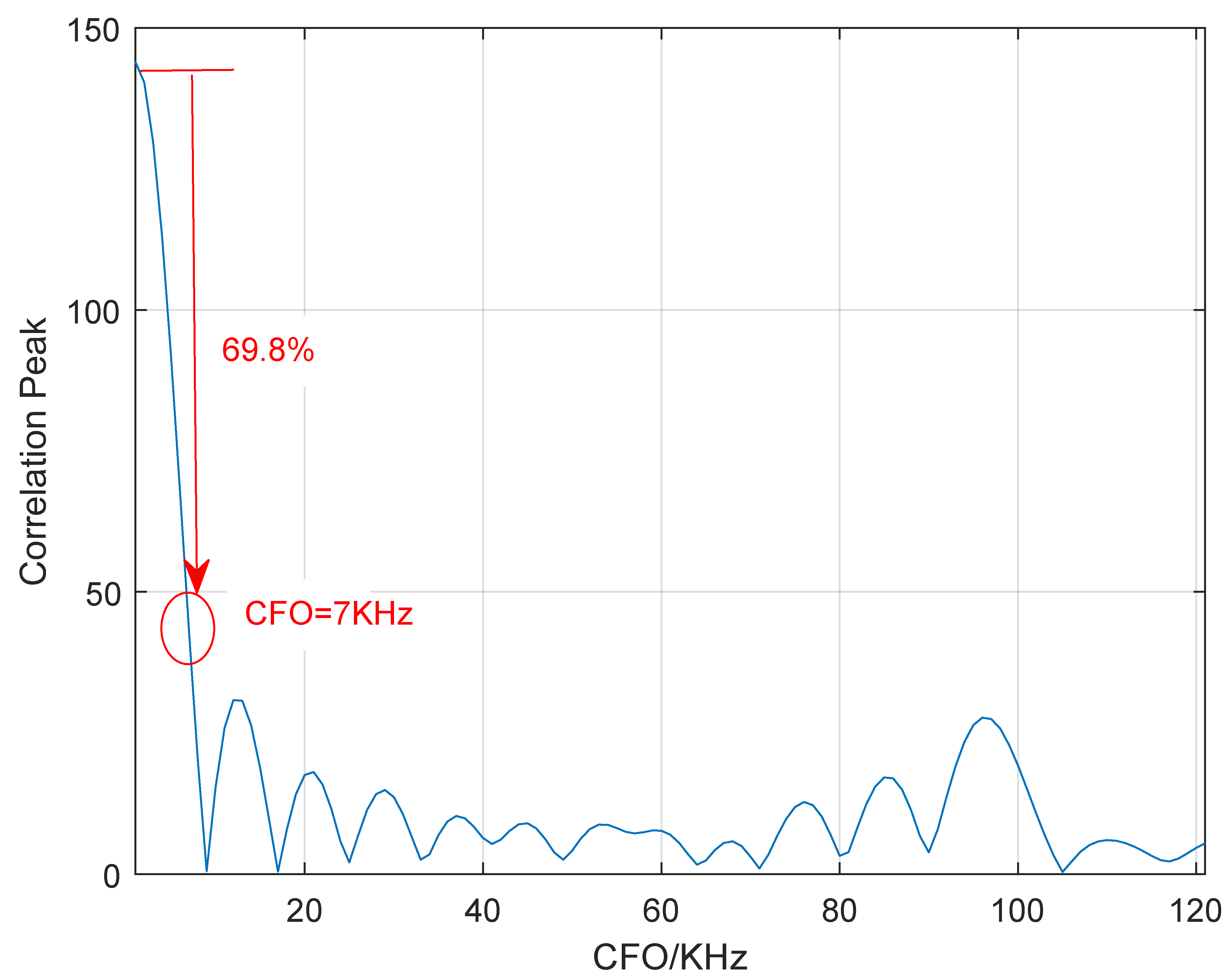
, the correlation peak in the ML-based detection algorithm will decrease significantly. The influence of different Doppler frequency offsets on the correlation peak is shown in
Figure 1, wherein the subcarrier spacing is set to 120 KHz.
Figure 1 illustrates that the correlation peak decreases sharply as the Doppler frequency offset increases. When the Doppler frequency offset is 7 KHz, it has decreased by
compared with the case without Doppler frequency offset. Therefore, the Doppler frequency offset will severely deteriorate the performance of the ML-based detection algorithm.
To address the issue of high-performance PUCCH detection in NTN scenarios, this paper conducts research on a PUCCH performance-enhanced detection algorithm. A PUCCH detection algorithm robust to Doppler frequency and time offsets is proposed by jointly considering their impacts.
4. Simulation Results
This section demonstrates the performance of the proposed time-frequency offset robust PUCCH detection algorithm through simulation results. The channel is set to an Additive White Gaussian Noise (AWGN) channel that matches the characteristics of satellite-ground transmission. Simulation is performed for PUCCH format-1, where the length of symbol is
, which is 1 RB, the number of OFDM symbols is set to
, and the number of UCI index is set to
, corresponding to 2-bit UCI. The specific simulation parameters are summarized in the
Table 2. Furthermore, the Block Error Rate (BLER) is used to measure UCI detection errors, which is defined as the number of incorrectly detected UCI divided by the total number of transmitted UCI.
Note that the Doppler frequency offset is set to 3.2 kHz, 5 KHz, and 10 KHz in the simulation of this paper. The reasons for selecting these Doppler frequency offset values are as follows: The satellite communication system is a satellite–ground closed-loop synchronous system. After frequency offset pre-compensation using ephemeris information, there is only a residual frequency offset of a few kHz. The Doppler frequency offsets of 3.2 kHz are a realistic value encountered in our engineering projects; at the same time, the Doppler frequency offsets of 5 kHz and 10 kHz are used to demonstrate the performance of the proposed method under more severe conditions. Furthermore, the time offset STO is set to 1 µs, which represents a typical LEO satellite communication scenario under reasonable link budget and accurate satellite-ground synchronization, and the STO estimation range of the proposed method in this paper is constrained by the CP length under the given PUCCH format.
The settings of the length of symbol , the number of OFDM symbol L, and the number of UCI index follow PUCCH format 1. The parameter configurations of subcarrier spacing SCS and frequency offset search step size are derived from our engineering projects. The maximum normalized frequency offset is set to 0.1 to characterize the performance of the proposed method under more severe conditions.
In addition, the following algorithms are involved in the simulation:
The traditional ML-based PUCCH detection algorithm (PUCCH-ML), corresponding to Equation (
1), which is used as a benchmark to demonstrate the performance of the algorithm proposed in this paper.
The PUCCH detection algorithm based on sequence segmentation correlation detection (PUCCH-subseq), which is frequently used in current engineering, segments the entire received PUCCH sequence for correlation detection and then performs merging processing.
The frequency offset robust PUCCH ML detection algorithm proposed in this paper (PUCCH-CFO) corresponds to Equation (
14).
The time-frequency offset robust PUCCH detection algorithm proposed in this paper (PUCCH-CFO-STO) corresponds to Equation (
18).
The time-frequency offset robust PUCCH detection algorithm with reduced complexity proposed in this paper (PUCCH-CFO-STO-LC).
In
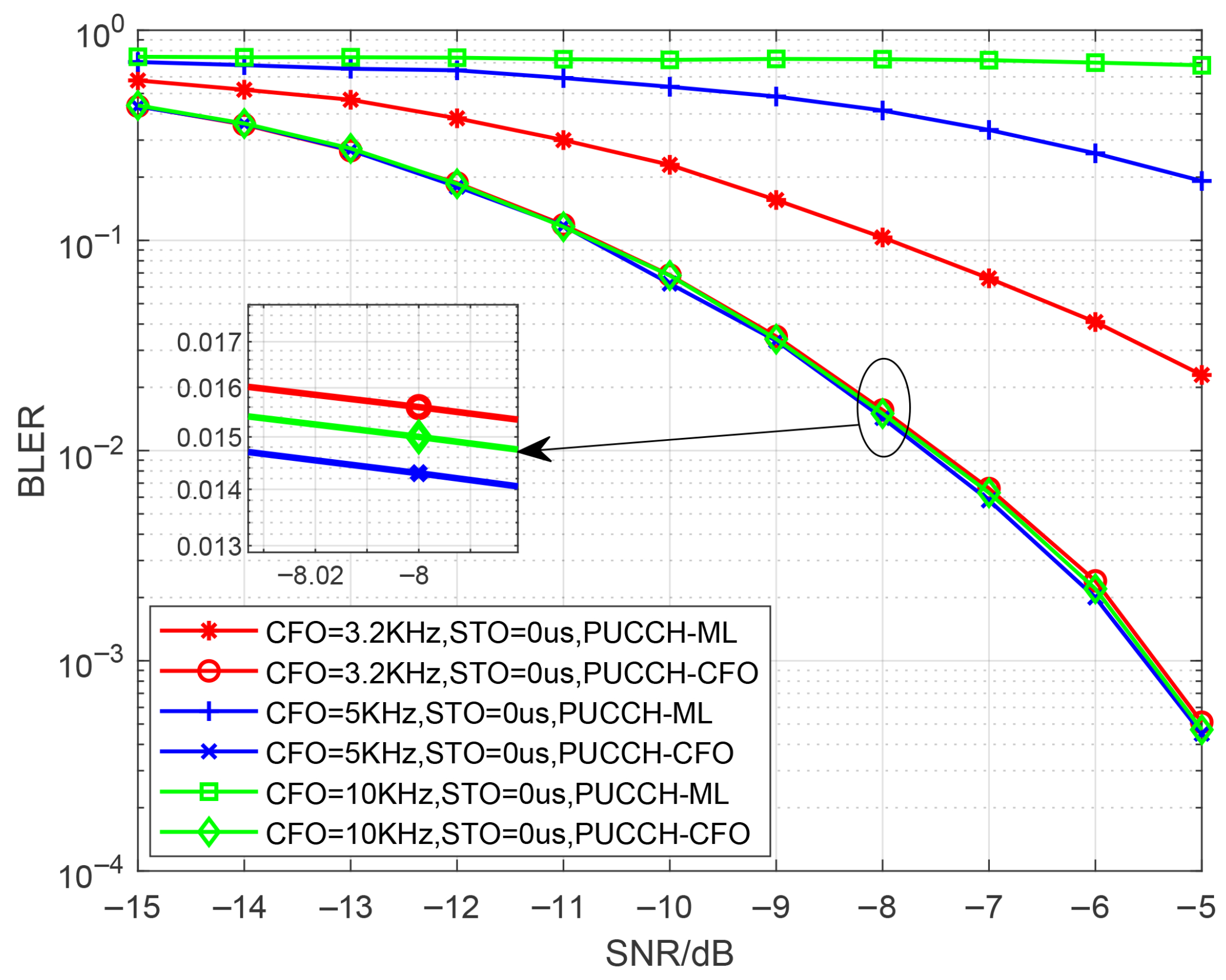
Figure 4, the performance of PUCCH-CFO and PUCCH-ML is shown for comparison under CFO settings of 3.2 KHz, 5 KHz, and 10 KHz, respectively. As can be seen from
Figure 4, the performance of PUCCH-ML deteriorates significantly with the increase of CFO, as no improvement measures have been incorporated into the PUCCH-ML algorithm to address the impact of CFO. When there are CFO of 5 kHz and 10 kHz, the Block Error Rate (BLER) of PUCCH-ML still cannot reach below the order of
. Compared with PUCCH-ML, PUCCH-CFO achieves a significant performance improvement, and its performance tends to be consistent under various CFO settings, when SNR = −5 dB and CFO = 10 KHz, there is approximately a third-order-of-magnitude improvement in BLER. Benefiting from the PUCCH-CFO algorithm process, a two-dimensional search is performed by setting a frequency offset search grid and combining the UCI index with the frequency offset index, which achieves frequency offset compensation while detecting signals.
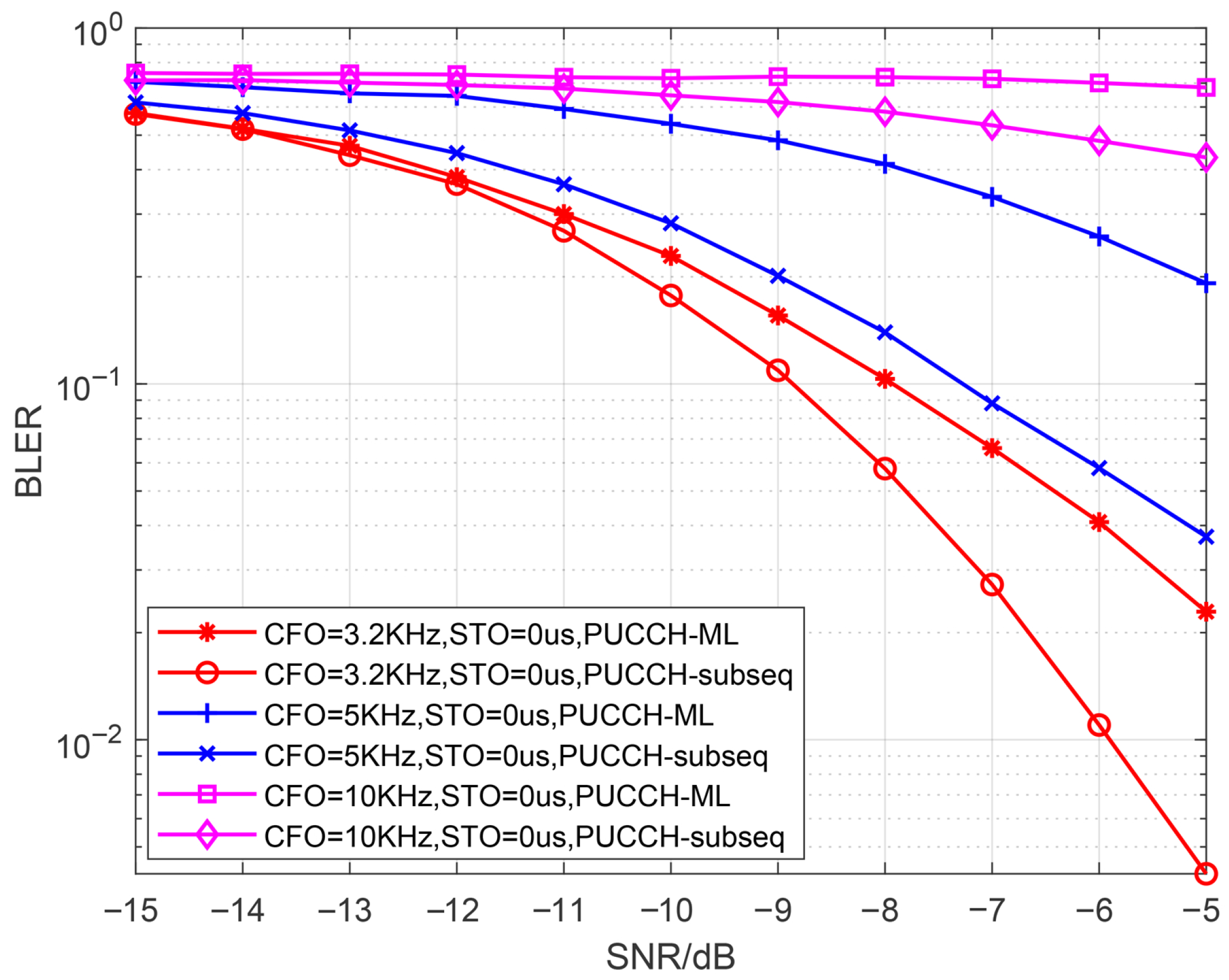
Figure 5 illustrates the performance comparison og PUCCH-subseq and PUCCH-ML under various frequency offset settings. There is a distortion caused by the CFO in the received sequence, while no such distortion exists in the local sequence. The difference between the received sequence and the local sequence will result in errors during the correlation detection process, and these errors accumulate at each symbol as shown in Equation (
12). Segmenting the sequence for correlation can reduce the cumulative number of symbols in each segment of the detection sequence, thereby alleviating the accumulation of errors and improving detection performance. It can be seen from
Figure 5 that the BLER performance of PUCCH-subseq is significantly improved compared to PUCCH-ML when CFO = 3.2 KHz, 5 KHz, and 10 KHz. When SNR = −5 dB, CFO = 3.2 KHz/5 KHz, the BLER performance improvement of PUCCH-subseq is nearly one order of magnitude.
Building on
Figure 4 and
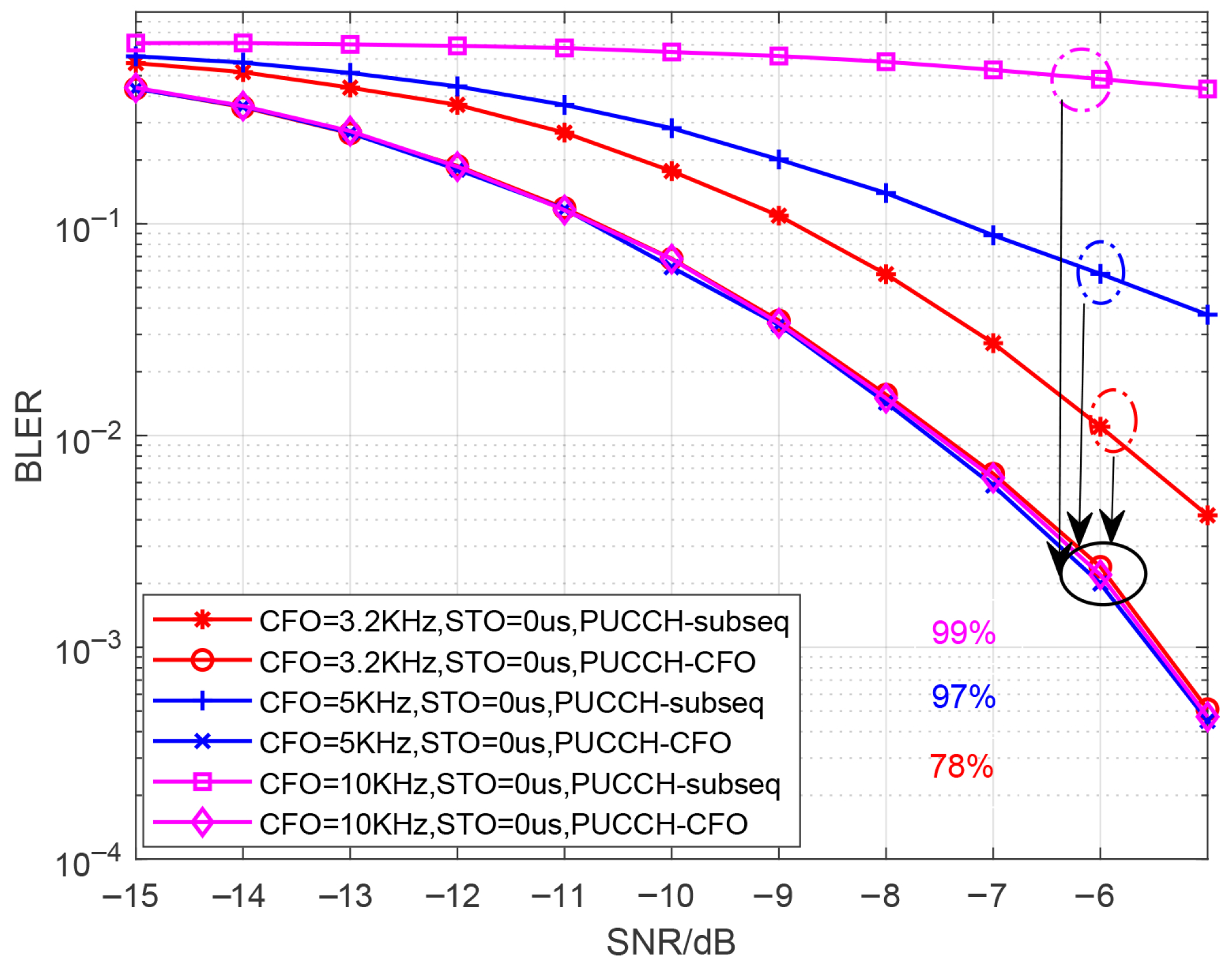
Figure 5, the performance comparison between PUCCH-CFO and PUCCH-subseq across various frequency offsets is further presented in
Figure 6. PUCCH-subeq reduces the impact of CFO by performing correlation detection on segmented signal sequences; however, it does not fundamentally address CFO, so its impact persists. Therefore, the BLER performance of PUCCH-subseq still shows significant deterioration with the increase of CFO. PUCCH-CFO performs frequency offset compensation simultaneously with signal detection, its BLER performance is robust to CFO and significantly superior to that of PUCCH-subseq. When SNR is −6 dB and CFO is 3.2 KHz, 5 KHz, and 10 KHz, PUCCH-CFO achieves BLER performance improvements of 78%, 97%, and 99% compared with PUCCH-subseq.
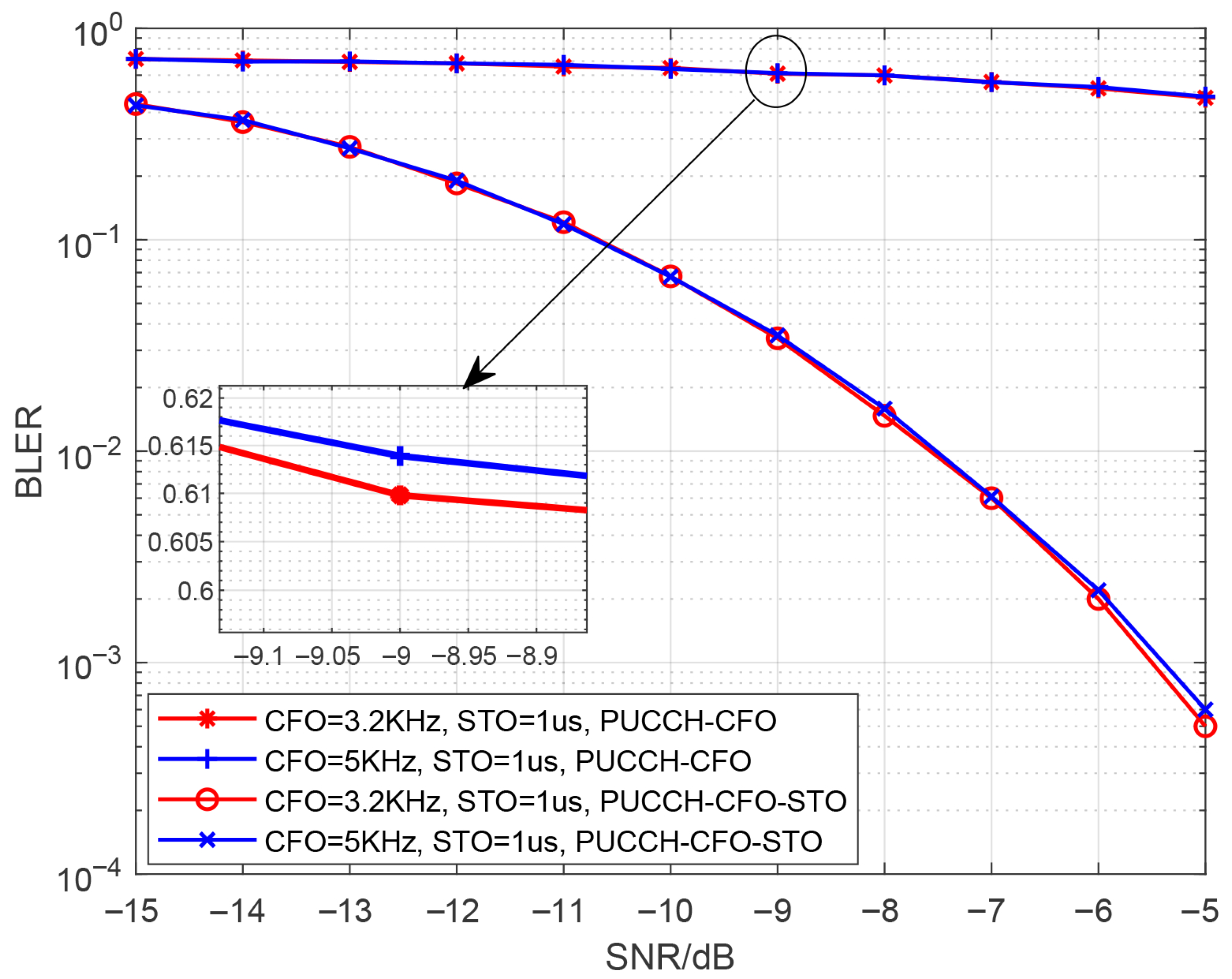
Figure 7 shows the performance comparison between PUCCH-CFO and PUCCH-CFO-STO in the presence of both time offset and CFO in satellite communication scenarios, wherein the time offset is set to 1 us, corresponding to half the length of the CP. Under the simulation parameter settings in this paper, the CP is 2 µs. Since the PUCCH-CFO does not compensate for the adverse effects caused by time offset, its BLER performance deteriorates severely when the STO = 1 µs. On the contrary, PUCCH-CFO-STO not only compensates for the CFO but also obtains the correlation peak at the position corresponding to the time offset for each OFDM symbol through DFT, thus exhibiting robustness to both time offset and CFO.
Figure 7 illustrates that PUCCH-CFO-STO achieves nearly consistent BLER performance across various CFO settings and shows a performance improvement of more than two orders of magnitude compared to PUCCH-CFO at SNR = −6 dB.
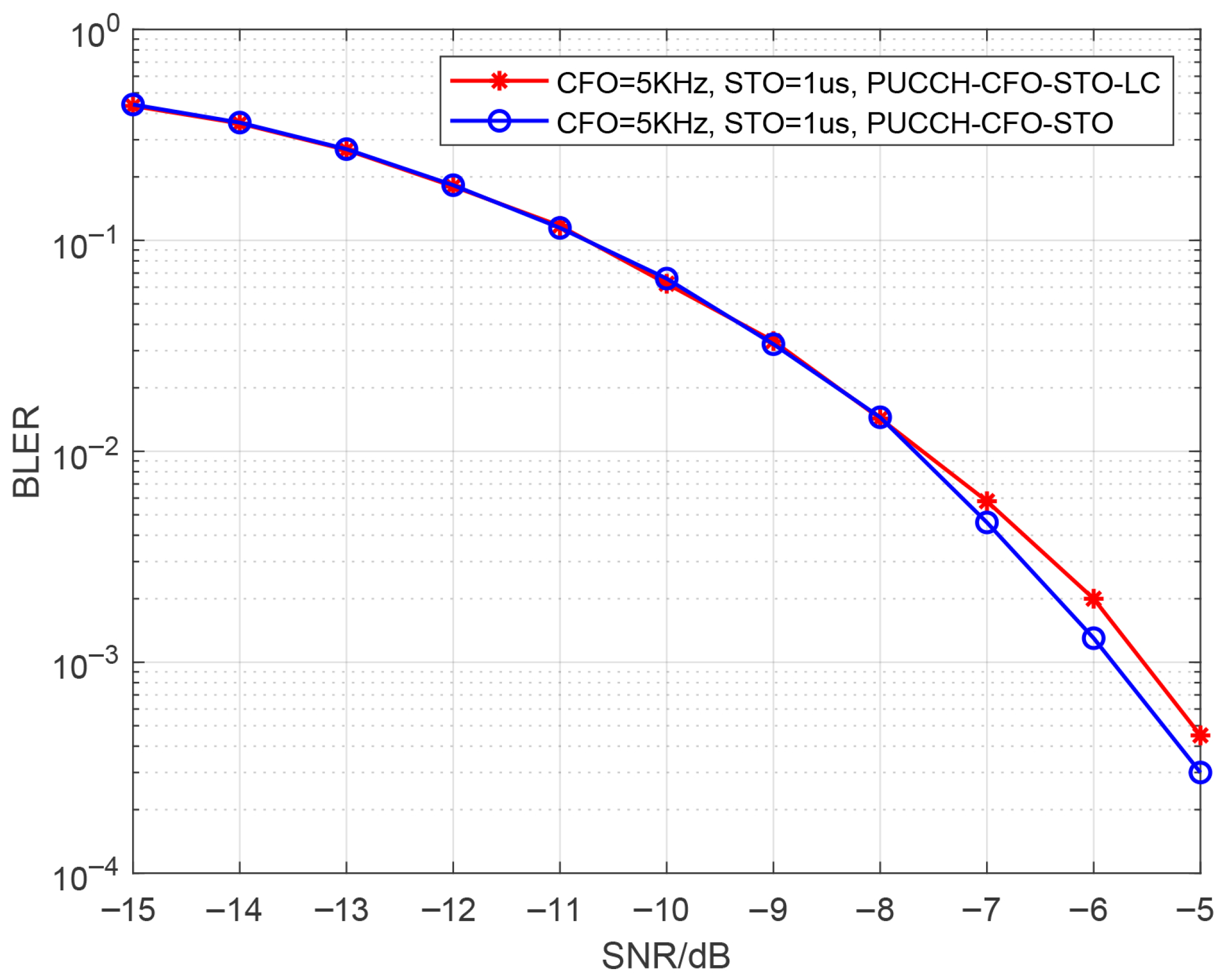
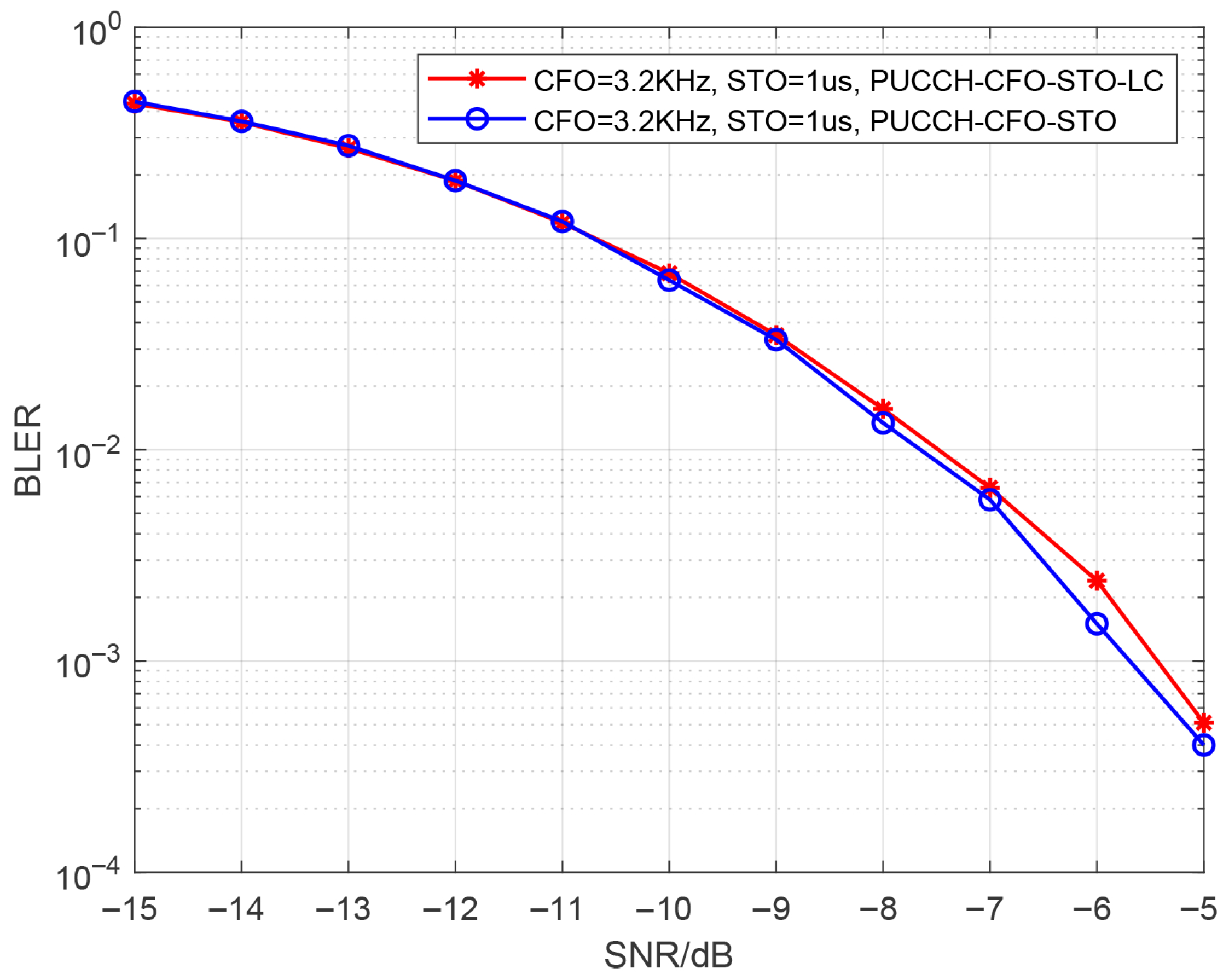
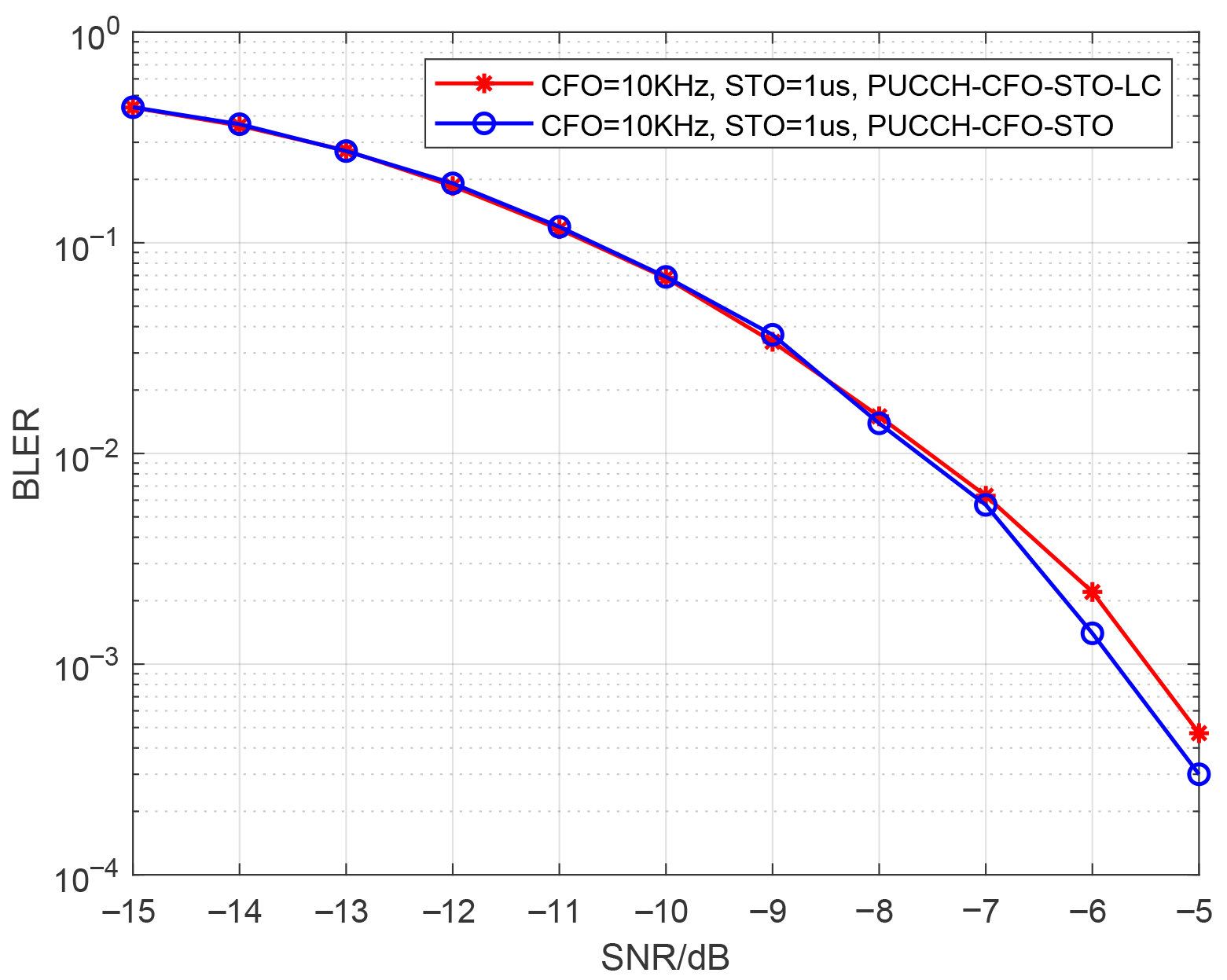
Under the settings of a time offset of 1 µs and CFO of 3.2 kHz, 5 kHz, and 10 kHz, the performance comparison of the PUCCH-CFO-STO using the exact frequency offset matrix and the simplified frequency offset matrix is shown in
Figure 8,
Figure 9 and
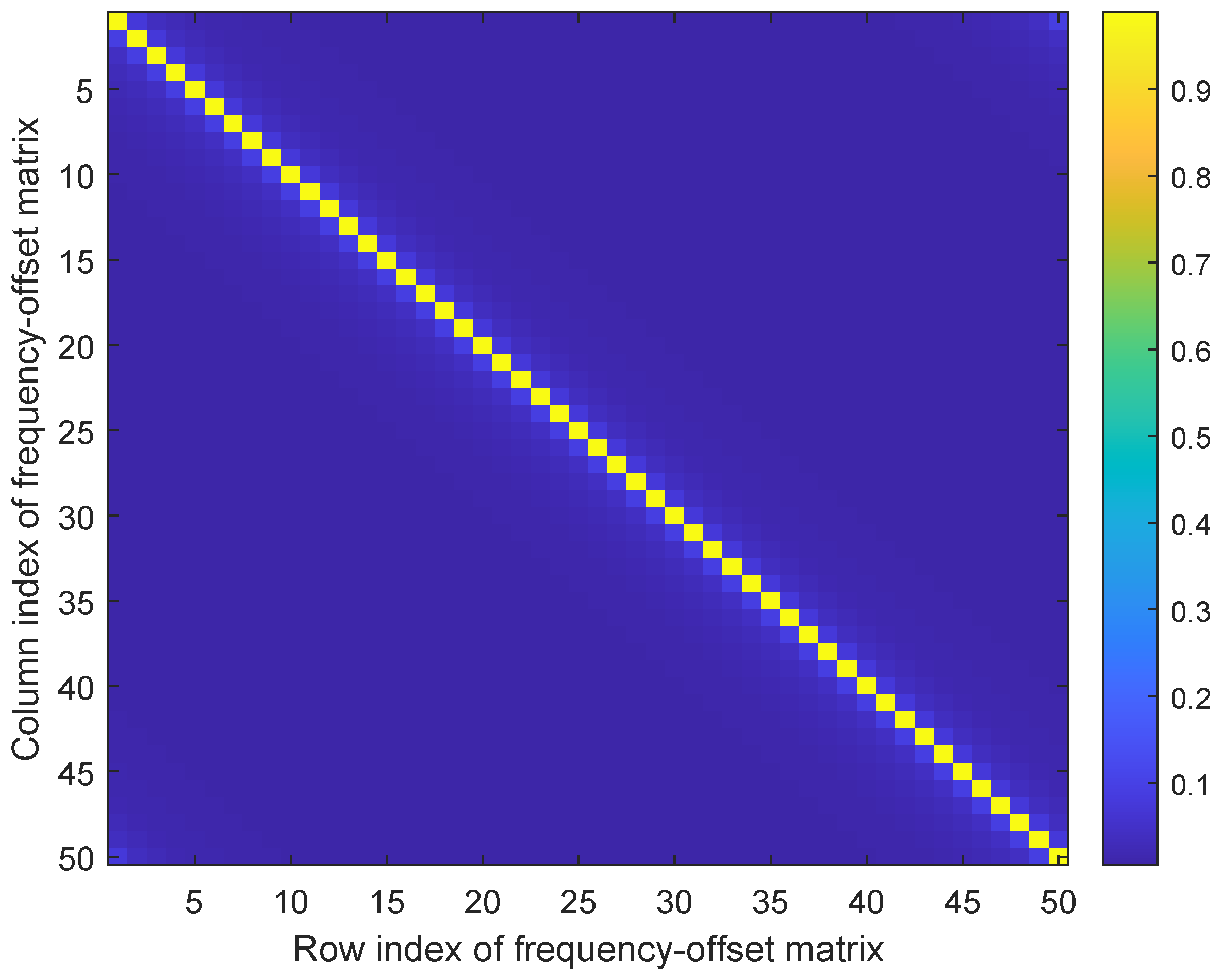
Figure 10. The simulation results show that under various CFO settings, the simplified frequency offset matrix achieves almost consistent BLER performance with the exact frequency offset matrix. Because under the parameter settings in this paper, which are typical satellite communication simulation parameter settings, the magnitude of the diagonal elements of the frequency offset matrix is significantly larger than that of the elements at other positions. Therefore, using the simplified frequency offset matrix results in negligible performance loss. Furthermore, as shown in
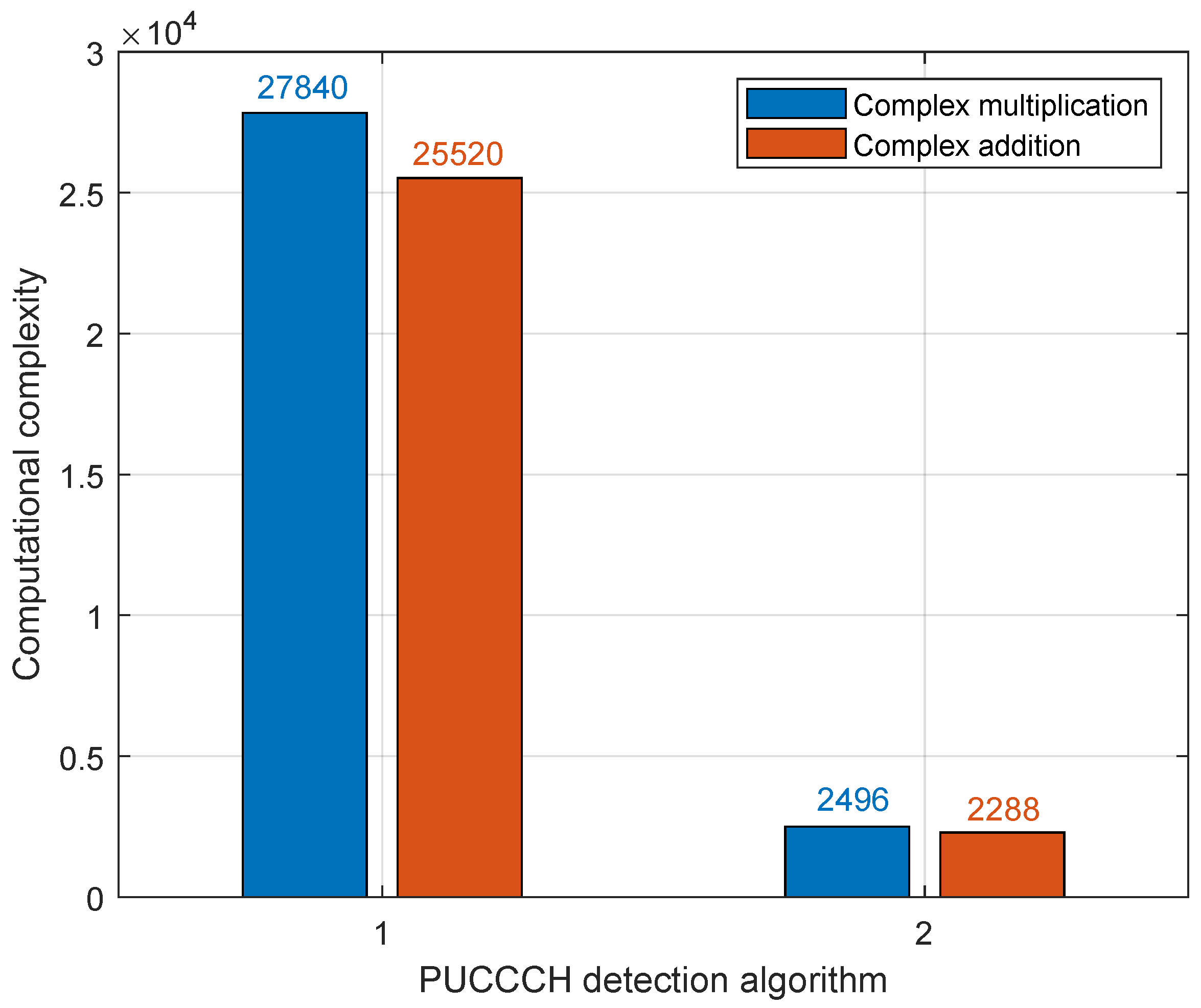
Figure 3, using the simplified frequency offset matrix significantly reduces computational complexity.