Article

A Machine Learning-Based Ultra-Wideband Microstrip Antenna for Microwave Imaging Applications

by
Md. Zulfiker Mahmud
Department of Computer Science and Engineering, Jagannath University, Dhaka 1100, Bangladesh
Electronics 2026, 15(2), 455; https://doi.org/10.3390/electronics15020455
Submission received: 27 November 2025 / Revised: 6 January 2026 / Accepted: 9 January 2026 / Published: 21 January 2026

Abstract

This study presents a compact bulb-shaped ultra-wideband microstrip patch antenna designed for microwave imaging applications, more specifically, breast tumor detection. Traditional antenna design methods for medical applications are time-consuming. The proposed antenna, designed in CST Microwave Studio 2019 on a Rogers RT 5880 substrate with a slotted ground plane, achieves a bandwidth of 11.1 GHz, a gain of 6.2 dBi, and an efficiency above 80%. In response to the limitations of conventional antenna design approaches, this study introduces a novel machine learning-based approach to accelerate the design process, where a custom CatBoost model predicts key dimensions—feedline width, large circle radius, and small circle radius, based on the performance metrics such as resonant frequency, minimum reflection coefficient, bandwidth, real and imaginary part of impedance. The model achieves a cross-validation score of 95.13% with a mean absolute error of 0.0166 mm, outperforming conventional machine learning approaches. Shapley Additive exPlanations analysis is applied to interpret feature contributions. A prototype is fabricated using the prediction of a machine learning model. The bulb-shaped antenna structure, wide operational bandwidth, consistent gain, and strong sensitivity to tissue dielectric variations enhance its effectiveness for breast tumor detection compared with conventional antennas. Furthermore, experiments with a breast phantom confirmed the prototype’s suitability for detecting dielectric contrasts in tissue, establishing a foundation for machine learning-assisted antenna design in medical imaging.

1. Introduction

The fundamental principle of microwave imaging (MWI) is to transmit low-power microwave signals from an antenna into the human body and to analyze the backscattered and forward-scattered signals to detect changes in the electrical properties of tissues. Tumorous cells exhibit a higher dielectric constant than normal cells, primarily due to their increased water content. These differences in scattered signals indicate the presence of tumors because they affect the energy of the received waves [1].
Therefore, antennas are the key elements of a microwave imaging system. They are used as the transceivers in MWI. Two types of antennas are used in MWI: resonant-type antennas and high-profile travelling-wave directive antennas, such as the Vivaldi antenna. Ultra-wideband (UWB) antennas are prominent candidates for microwave imaging applications due to their extraordinary features [2]. UWB antennas can operate in both high- and low-frequency ranges. They offer features like non-contact operation, biocompatibility, and environmental friendliness. As these antennas are well-suited for medical applications, researchers have proposed various UWB designs with characteristics such as omnidirectional or directive radiation patterns, narrow or wide bandwidths, and operation at different frequency ranges. In addition, high gain and efficiency remain an essential requirement for MWI [3].
This study presents a compact, bulb-shaped ultra-wideband (UWB) microstrip patch antenna for microwave imaging (MWI) applications, such as tumor detection. The bulb-shaped patch and partially slotted ground plane enhance antenna performance and help achieve the required characteristics for MWI. A machine learning-based approach is employed to predict antenna dimensions from performance metrics, enabling researchers to obtain the desired size for specific applications. The simulated design predicted by the machine learning model is prototyped and measured in a near-field laboratory, and the antenna is further tested using a simulated breast phantom to analyze the transmitted, received, and backscattered signals.

2. Literature Review

This study shows a well-detailed survey of UWB antennas, especially microstrip patch antennas for medical applications, and summarizes the primary requirements of UWB antennas for medical applications, such as lower electromagnetic radiation, higher range of precision, and low energy consumption [4]. To attain the desired characteristics, researchers all over the world proposed many UWB antennas, such as planar antennas [5], square-monopole and square patch antennas [6,7], tapered slot antennas (TSA) [8], hook-shaped antennas (HSA) [9], metamaterial-based antennas [10], CPW-fed and semicircular antennas [11,12], and several versions of Vivaldi antennas [13,14].
The lab-based prototype for microwave imaging using a UWB antenna was started in the last decade. The major finding of researchers, the MWI is capable of differentiating the tumorous and normal tissues of the human body in terms of dielectric properties such as dielectric constant, conductivity, and permittivity. The estimated dielectric values of tumorous cells are six to nine (6–9) times higher compared to the normal tissues [15]. These tumorous cells exhibit higher dielectric values due to their higher level of water content [16,17] than that of normal cells or fats [18]. Several researchers have proposed numerous techniques for performance enhancement of UWB antennas, such as metamaterials (MTM) [10], defective ground-plane [19], modified patches [20], adding an extra layer on substrate, namely super state, and many others. A well-designed compact and proficient UWB antenna is still a challenge for MWI applications. Researchers of this study have proposed a tapered slotted UWB antenna and has a dimension of 22 × 24 mm2, along with moderate gain and efficiency [8]. Another study creates a 25 × 25 × 1.6 mm3 CPW-fed antenna to achieve Ultra-wideband [21]. This study demonstrates a compact UWB bowtie antenna with high radiation efficiency and low backward radiation, validated for medical microwave imaging to accurately reconstruct tissue dielectric properties [22]. This work shows a low-cost, portable multistatic UWB microwave imaging system using an SRD-based pulse generator that can non-invasively detect breast tumor phantoms as small as 3 mm with a positioning error of 2.2 mm and a relative error of 1.7% [23]. Another study shows that a wearable vest with flexible UWB antennas can detect breast tumors as small as 1 cm by measuring changes in on-body signal propagation and channel characteristics, demonstrating potential for non-invasive self-monitoring [24]. Researchers of this study demonstrate that a novel UWB antipodal Vivaldi antenna can detect and image breast tumors as small as 0.9 mm in simulations and 16 mm in experimental phantoms, with a gain of 9.27 dB and directivity of 11 dB, confirming its suitability for early-stage breast cancer detection [13].
In recent years, researchers have focused on machine learning- and deep learning-based approaches for optimizing antenna parameters, as traditional approaches take a lot of time and resources to create the desired antenna structure. Mir et al. [25] have combined bottom-up optimization with a DNN-based TSEMO algorithm to design antennas in the range of 8.8–13.16 GHz and achieve wide bandwidth and flat gain. However, scalability and the small dataset pose challenges. Another study predicted rectangular patch antenna dimensions using ML models in the 1 to 8 GHz range, with random forest achieving the best result [26]. Authors have developed an ANN-based model to estimate rectangular patch dimensions for 6.39–8.83 GHz [27].
Analyzing the existing literature, it is seen that, despite having numerous UWB antenna designs and some ML/DL-based optimization methods, there is still a lack of compact high-performance antennas specially tailored for microwave imaging that would be able to combine broadband operation, high gain, efficiency, and practical validation. Additionally, ML/DL is a recent topic in this domain and has many limitations, such as small datasets, scalability issues, limited generalization, and a lack of experimental verification. Hence, there arises a demand for a more robust, data-driven, and experimentally validated design framework that reduces significant time during the design process.

3. Methodology

3.1. Antenna Design

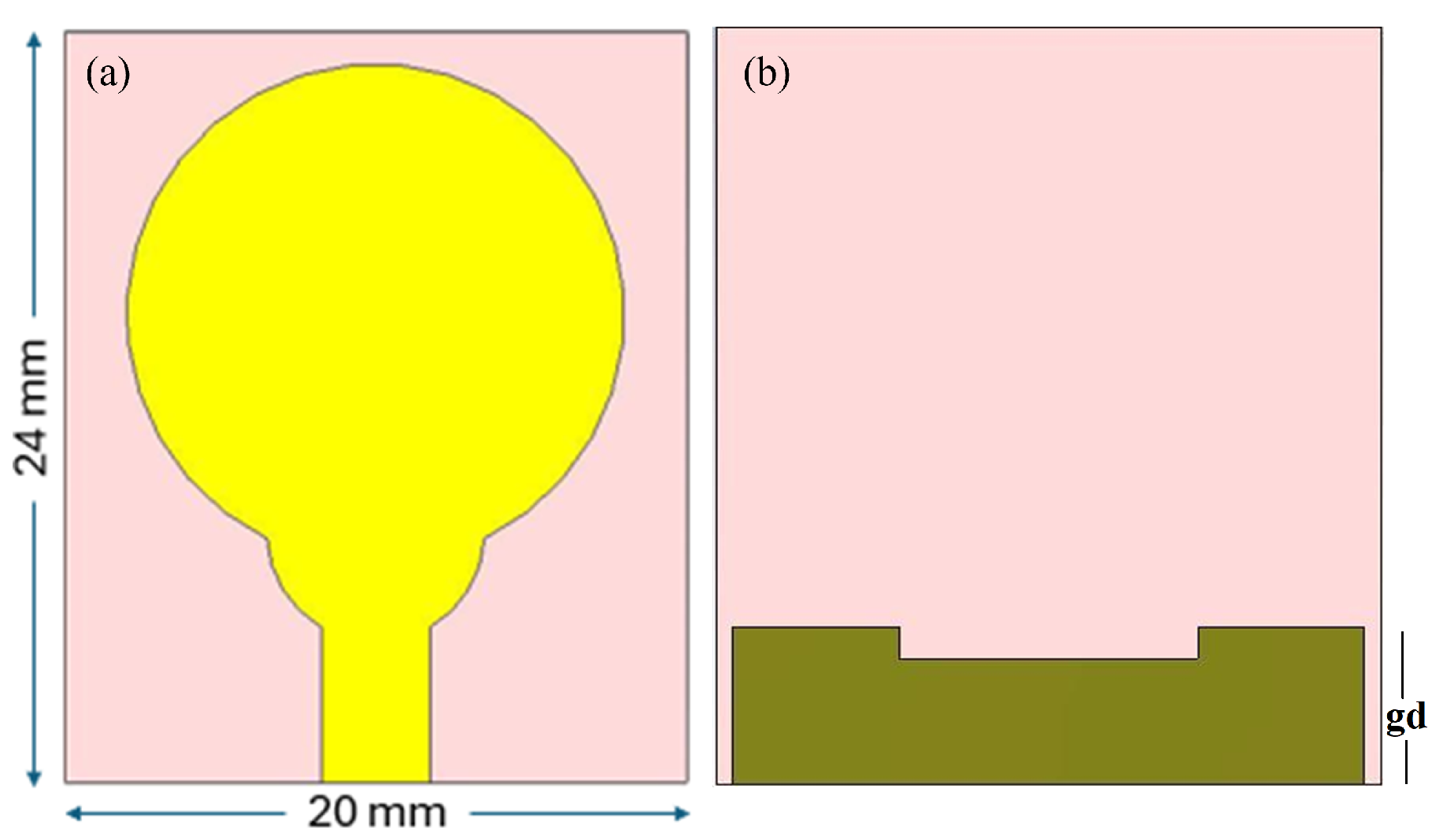
The structure of the proposed bulb-shaped UWB microstrip antenna is presented in Figure 1. The proposed antenna consists of three layers, namely: An electric bulb-shaped metallic radiating patch, a dielectric substrate, and a partial metallic ground plane. Rogers RT 5880 (lossy) material, having a dielectric constant of 2.2 and a loss tangent of 0.0009, has been used as the substrate of the antenna.
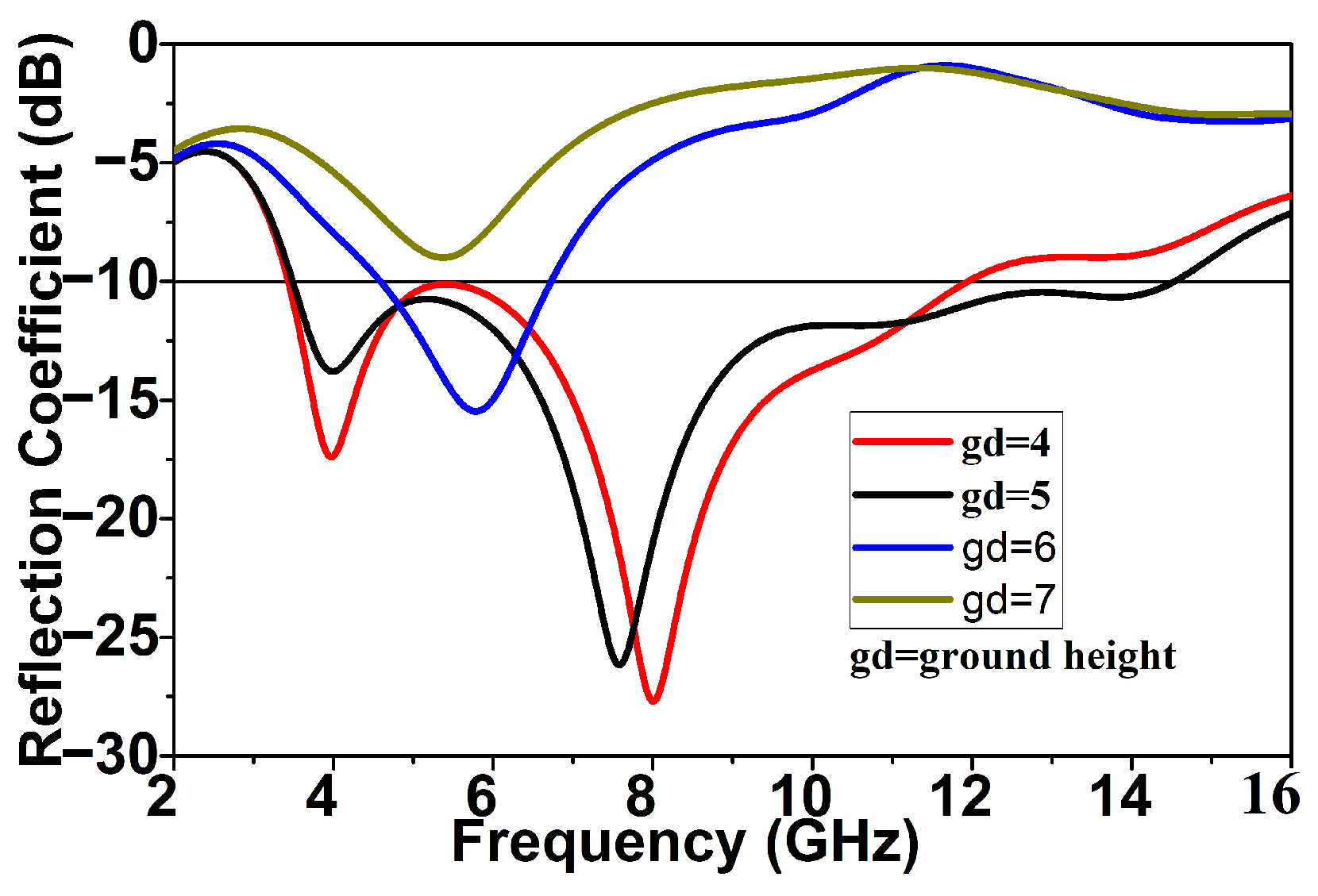
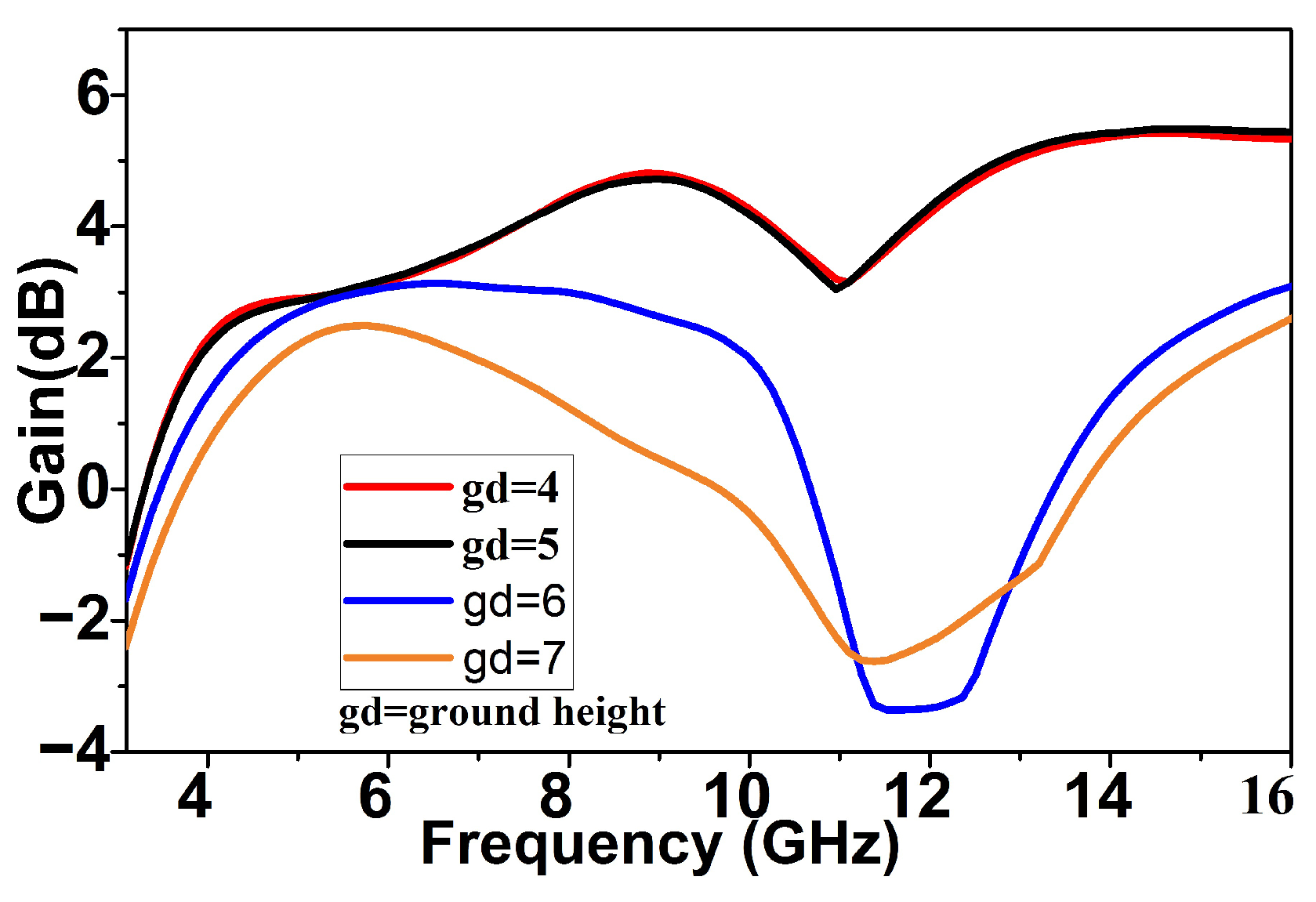
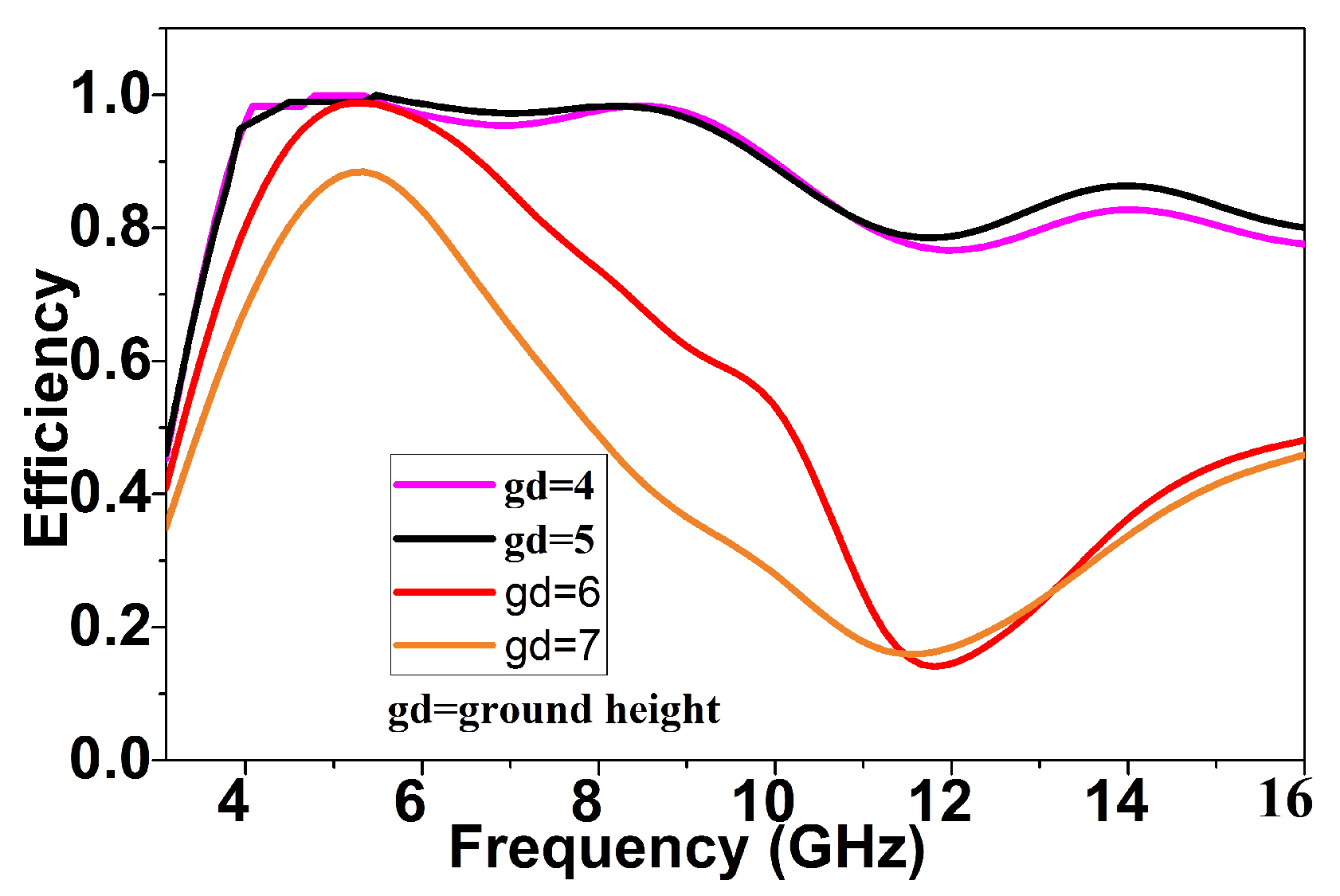
The size of the substrate is 24 × 20 × 1.57 mm3. A slotted partial ground plane with dimensions of 19 × 5 mm2 has been used as shown in Figure 2b. The length and width of the slot are 9 mm and 1 mm, respectively. The copper (annealed) is used for the patch and ground plane of the antenna. The proposed antenna is fed by a 50 ohm microstrip line. The dimension of the feed line is 3.5 × 5 mm2. The radiating bulb is made by three arcs of two different circles: one arc of a larger circle, placing the top in position, and two arcs of a smaller circle, placing the lower in position. The radius of the top larger circle of the radiating bulb is 8 mm, and the center of the circle is 15 mm apart from the feeding point of the antenna. On the other hand, the lower smaller circle has a radius of 3.5 mm, and the center is 8 mm apart from the feeding point. The dependency of the reflection coefficient on the height of the partial ground plane has been presented in Figure 3. It is observed that the height of the ground plane significantly affects both the return loss and the operating frequency range of the antenna. The largest bandwidth and good return loss have been achieved for a height of 5 mm of the partial ground plane. Similarly, Figure 4 and Figure 5 show that the selected height for the ground plane is doing well in terms of gain and efficiency as well. Therefore, it has been chosen for the base structure.

3.2. Data Collection and Preprocessing

The use of a machine learning–based optimization approach is justified by its ability to efficiently explore complex, multi-parameter design spaces and capture nonlinear relationships that are difficult to address using conventional or trial-and-error methods. This approach enables more accurate performance optimization of the bulb-shaped antenna, particularly in terms of bandwidth, gain, and tissue-interaction characteristics, thereby offering clear advantages over traditional design techniques. The methodology of this study, outlined in Figure 1, presents a complete workflow from traditional antenna dimension calculation and simulation to machine learning-based predictive modeling. A total of 300 antenna configurations are initially simulated using a 3 × 10 × 10 parametric sweep in CST Microwave Studio 2019, wherein three key design parameters: feedline width, radius of the larger circle, and radius of the smaller circle are systematically varied, as detailed in Table 1. These parameters are selected because they are the main radiating portion of the antenna. In contrast, other design parameters, such as substrate and ground dimensions and substrate height, are held constant to isolate their effects on the antenna performance. From the simulated configurations, those exhibiting resonant frequencies within the target range of 3.5 GHz to 14.5 GHz and demonstrating acceptable performance metrics are retained through manual analysis, yielding a dataset of 300 valid configurations. The simulation outputs are exported in CSV format for subsequent analysis. The resulting dataset comprises eight columns, including values for the larger circle radius, feedline width, smaller circle radius, resonant frequency, minimum S-parameter, bandwidth, input impedance magnitude, and the real and imaginary components of the input impedance. Here, the geometric parameters serve as the outputs to be predicted, and the performance metrics act as the inputs, establishing the nonlinear relation between antenna performance and geometry that is captured by the machine learning model. To train and test the machine learning models, the dataset is randomly split into two parts, with 90% for training the model and the remaining 10% for testing.

3.3. Correlation Matrix Analysis

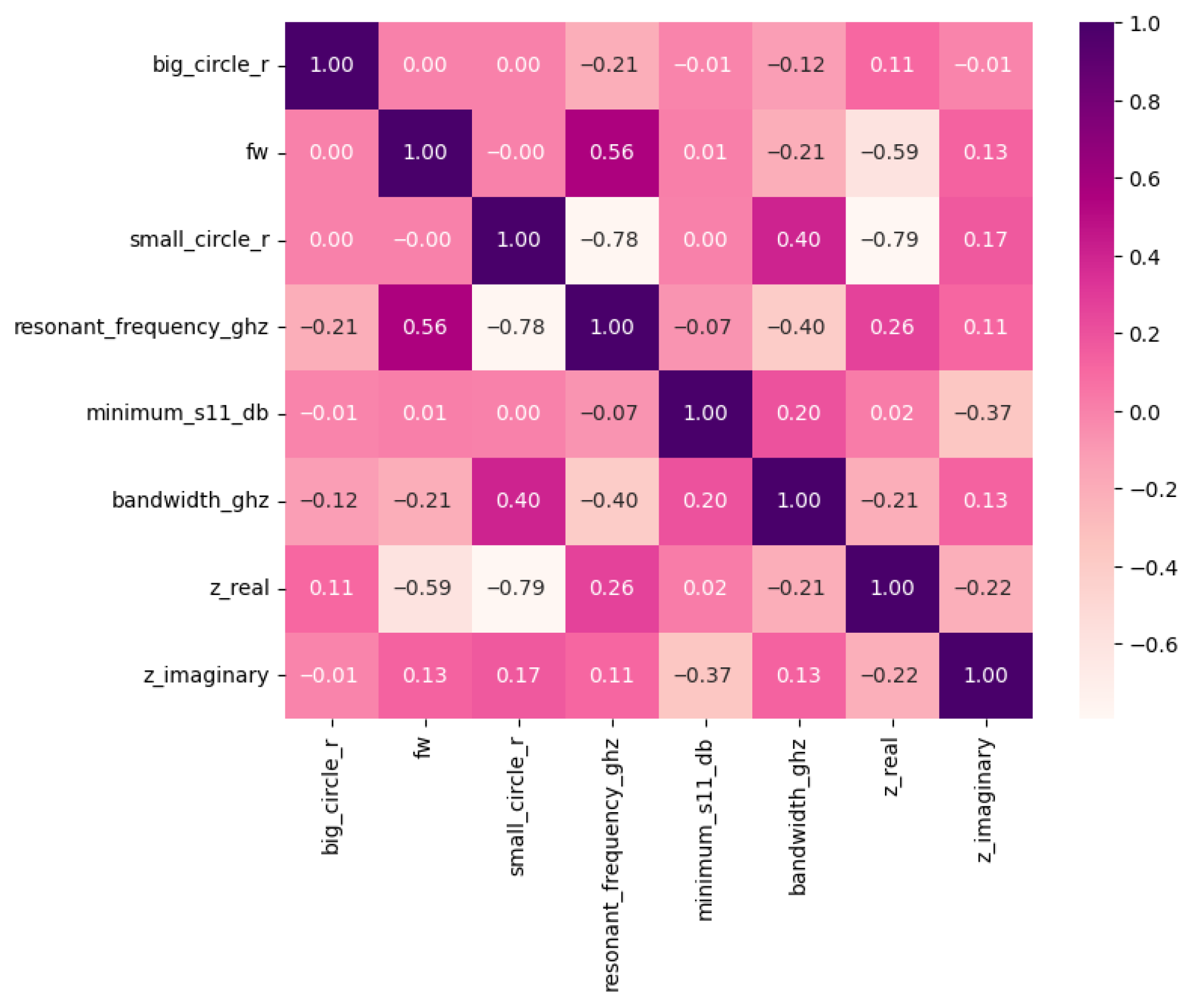
The correlation matrix in Figure 6 illustrates how the antenna performance metrics influence the geometric design parameters. The resonant frequency shows a strong negative correlation with the small circle radius (−0.78) and a moderate positive correlation with feedline width (0.56), and these highlights their critical role in frequency tuning. Resonant frequency also shows a negative correlation with big circle radius (−0.21). Bandwidth shows a moderate positive correlation with the small-circle radius (0.40), whereas the dependencies on the large-circle radius and feedline width remain weak. On the other hand, minimum s11 shows negligible correlation with all geometric parameters, indicating reduced sensitivity to structural variations. Furthermore, z_real exhibits strong negative correlations with both the small circle radius (−0.79) and feedline width (−0.59) but shows a weak positive relation with the big circle radius (0.11). Lastly, z_imaginary shows a weaker correlation with all three geometric parameters.
These correlations are consistent with theoretical expectations, in which feedline width and patch dimensions primarily determine impedance matching and resonant-frequency behavior in microstrip patch antennas.

3.4. Model Selection and Training

A custom CatBoost-based model is chosen for the prediction of antenna parameters due to its strong performance on tabular data and ability to model complex non-linear feature interactions without extensive preprocessing. However, this is done after a comparative analysis of this model with several others.
The custom catboost model is hyperparameter-tuned using RandomizedSearchCV with stratified cross-validation (cv = 5). The custom CatBoost model is wrapped inside MultiOutputRegressor so that it can predict multiple outputs at the same time. Table 2 shows the optimized hyperparameters of the model.

3.5. Explainable AI

SHAP (Shapley Additive exPlanations) is applied to interpret the predictions of the main model. It reveals how each input feature, such as resonant frequency, S11, bandwidth, real impedance, and imaginary impedance, contributes to the prediction of output parameters like big circle radius, small circle radius, and feedline width, thereby improving transparency and trust in the model.

4. Results and Discussions

This section presents the performance analysis of the proposed model, comparing it with other models to assess its performance. Along with these, this section shows the feature importance analysis and experimental validation of the proposed model’s prediction. The machine learning component was performed on a Lenovo IdeaPad Slim 3i laptop with an Intel Core i5-1035G1 CPU, 8 GB of RAM, and an NVIDIA MX330 GPU, running Python 3.11 and PyTorch 2.1. For performance evaluation, R2 Score, MAE, MSE, RMSE, and Explainable Variance Score are analyzed on both the training and testing sets. Afterwards, the result of the physically created antenna is analyzed. The average R2 score, obtained through cross-validation, represents the mean performance across all folds and reflects the model’s overall predictive accuracy and stability.

4.1. Performance Metrics

From Table 3, it is seen that the performance of the proposed model is quite acceptable, as these show very minor deviations from the ideal values. R2 value is above 95%, and the same goes for the explainable variance score; MSE and RMSE are also near zero. Moreover, the MAE is 0.0166 mm, which is quite low considering the dataset. In the dataset, the output values are between 3 to 9 mm. Thus, the average error is about 0.28%, which means the frequency shift is very low after prediction within the operating frequency range.

4.2. Quantitative Results

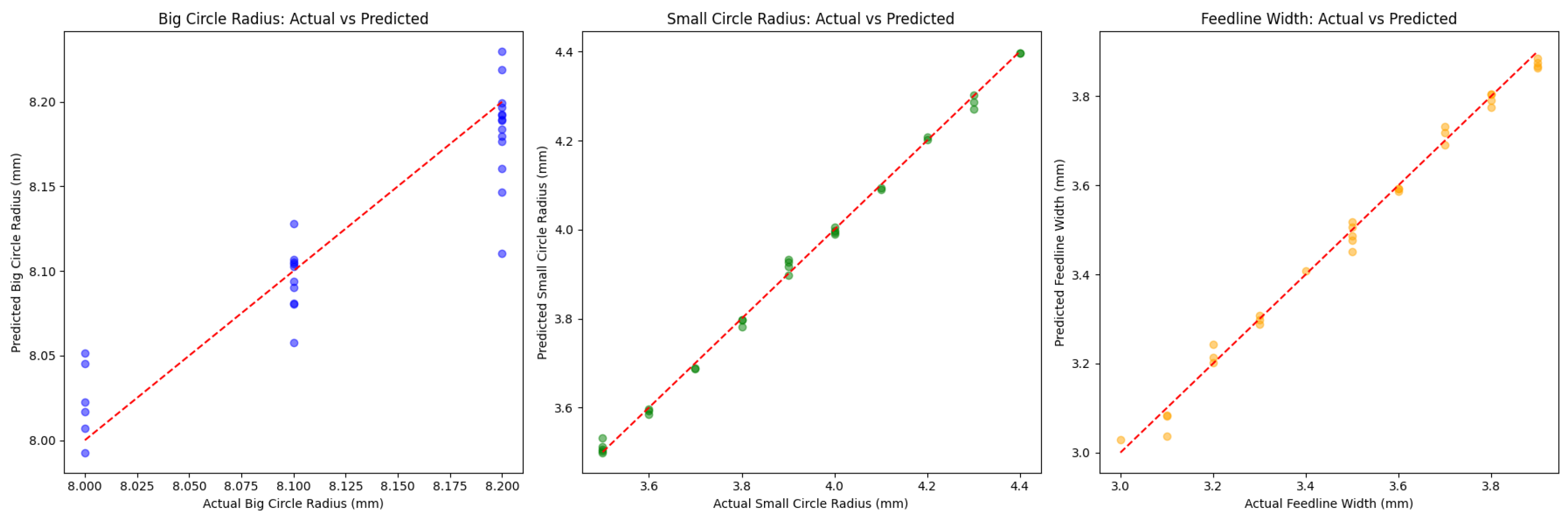
The actual versus predicted values for the big circle radius, small circle radius, and feedline width are represented in Figure 7. In all three cases, the predicted values align closely with the diagonal reference line, indicating high accuracy. The big circle radius exhibits minor clustering, while the small circle radius and feedline width demonstrate near-perfect linearity with minimal deviation. These results confirm the reliability of the model in estimating antenna dimensions.

4.3. Comparison with Other Models

A comparison of the proposed model with other state-of-the-art approaches on the same dataset, in which the proposed model consistently outperforms all counterparts, is illustrated in Table 4. It is followed by HistGradientBoosting, LightGBM, Random Forest, and XGBoost. From the comparison, it can be concluded that the boosting-based models perform better than other models overall, except for Random Forest, which uses the bagging technique. Except for these models, traditional approaches do not show promising results.

4.4. Feature Importance Analysis

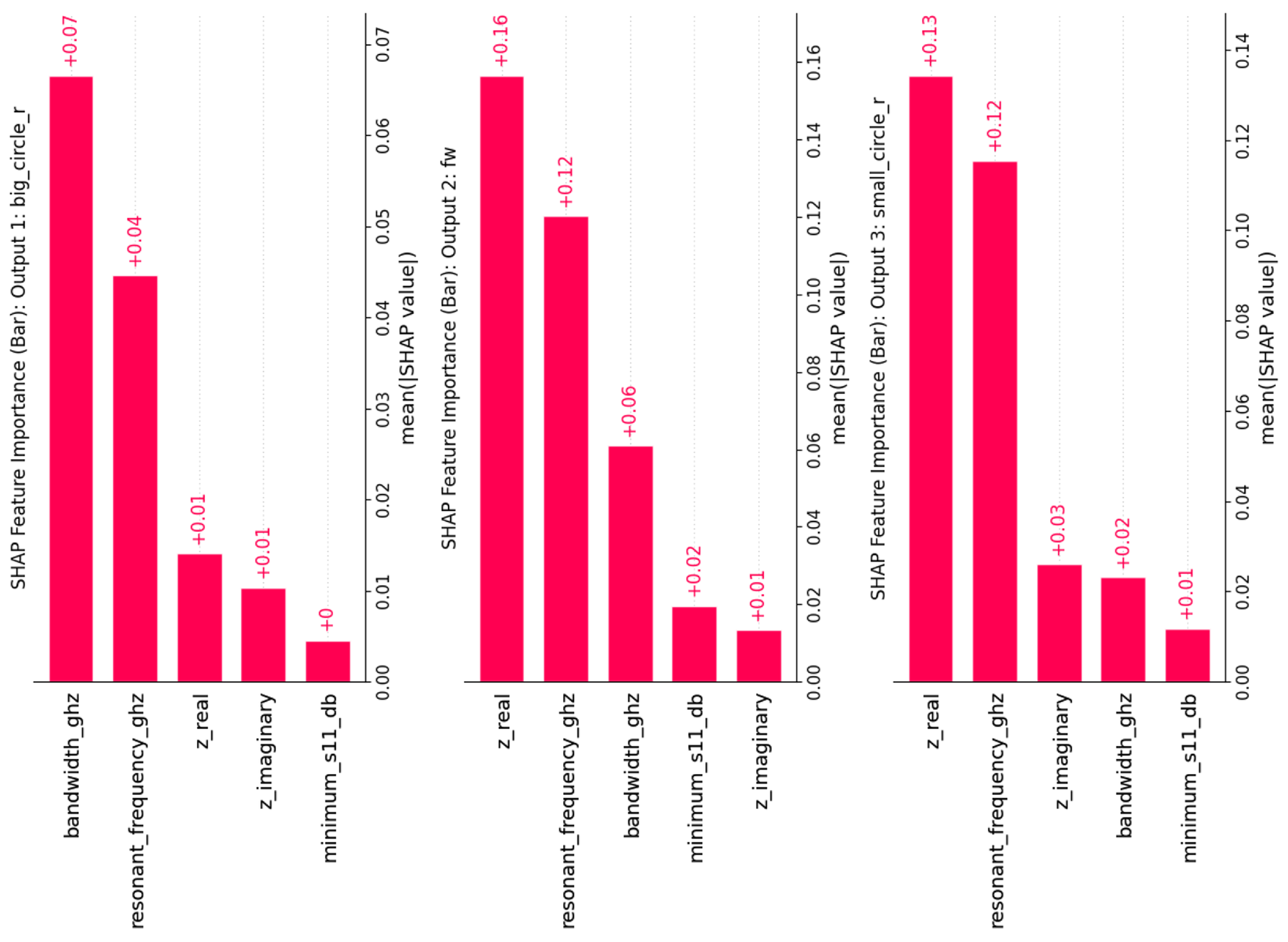
The SHAP-based feature importance for the three output parameters: big circle radius, small circle radius, and feedline width is presented in Figure 8. For the big circle radius, bandwidth shows the highest contribution; resonant frequency follows, while the others contribute little here. In the case of a small circle radius, z real and resonant frequency dominate with minor contribution from the z imaginary and bandwidth. For the feedline width, the real part of the impedance, z real, contributes most, followed by the resonant frequency. Apart from bandwidth, s11 and z imaginary also contribute to the prediction of feedline width. Overall, these results highlight that resonant frequency and real impedance (z real) are the most critical parameters dominating dimensional predictions, whereas minimum s11 plays only a marginal role.

4.5. Fabrication of the Proposed Antenna

Using the prediction of the proposed machine learning model, the inverse design process is implemented. Here, target antenna performance metrics, such as resonant frequency, s11, bandwidth, and impedance characteristics, are given as inputs to the model, which subsequently provides the corresponding geometrical parameters. A bulb-shaped microstrip patch antenna is designed based on model predictions and subsequently fabricated for detailed experimental validation in a practical environment.

4.5.1. Antenna Reflection Coefficient

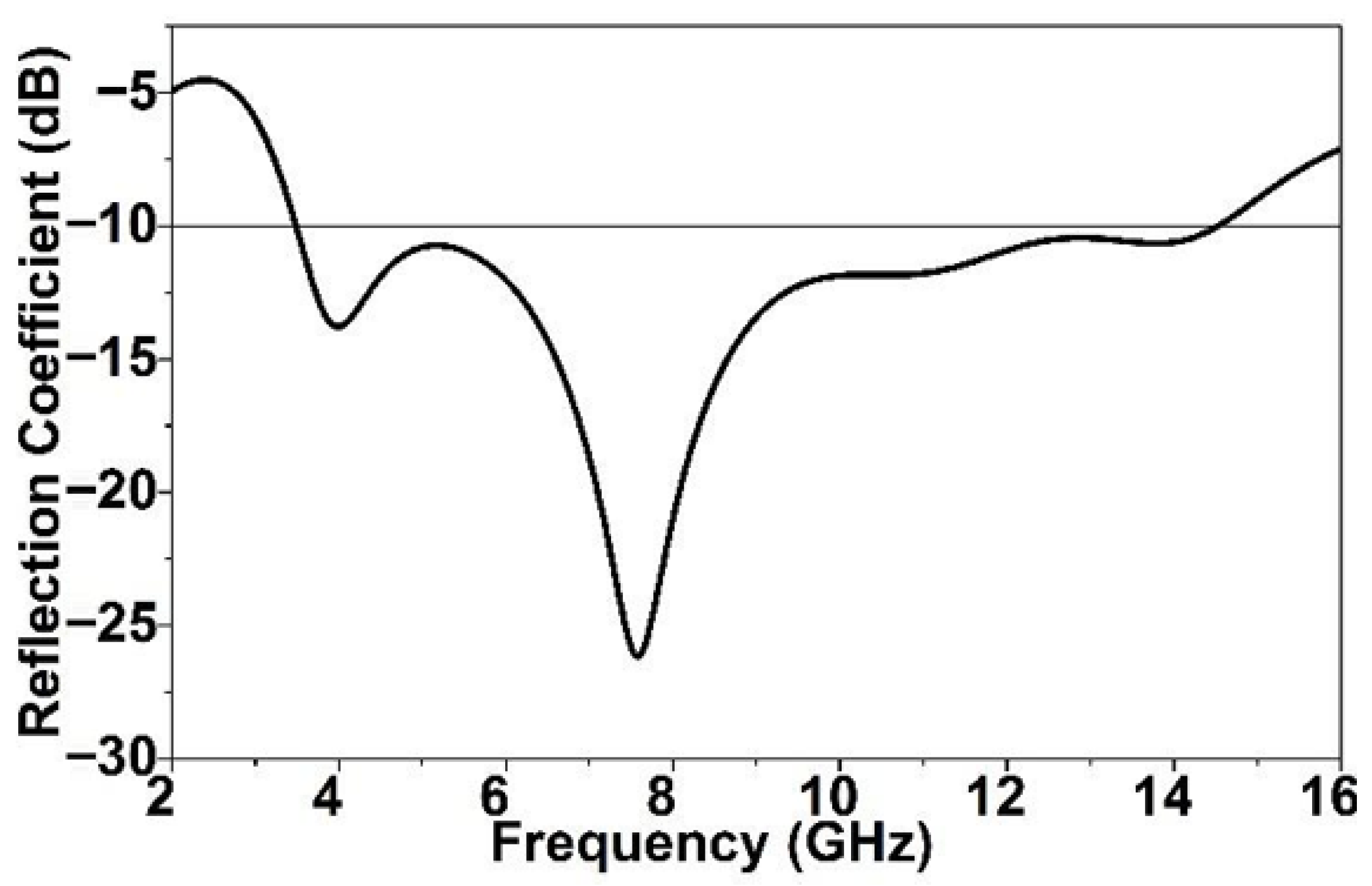
The reflection coefficient (S11) of the predicted electric bulb-shaped UWB microstrip-patch antenna is presented in Figure 9. The antenna possesses a large bandwidth of 11.112 GHz, ranging from 3.49 to 14.602 GHz. The bandwidth is measured at −10 dB point. The proposed antenna shows a return loss of −27 dB at the center operating frequency of 7.9 GHz. The coverage of a large bandwidth made the antenna suitable for ultra-wideband microwave imaging applications.

4.5.2. Efficiency and Gain

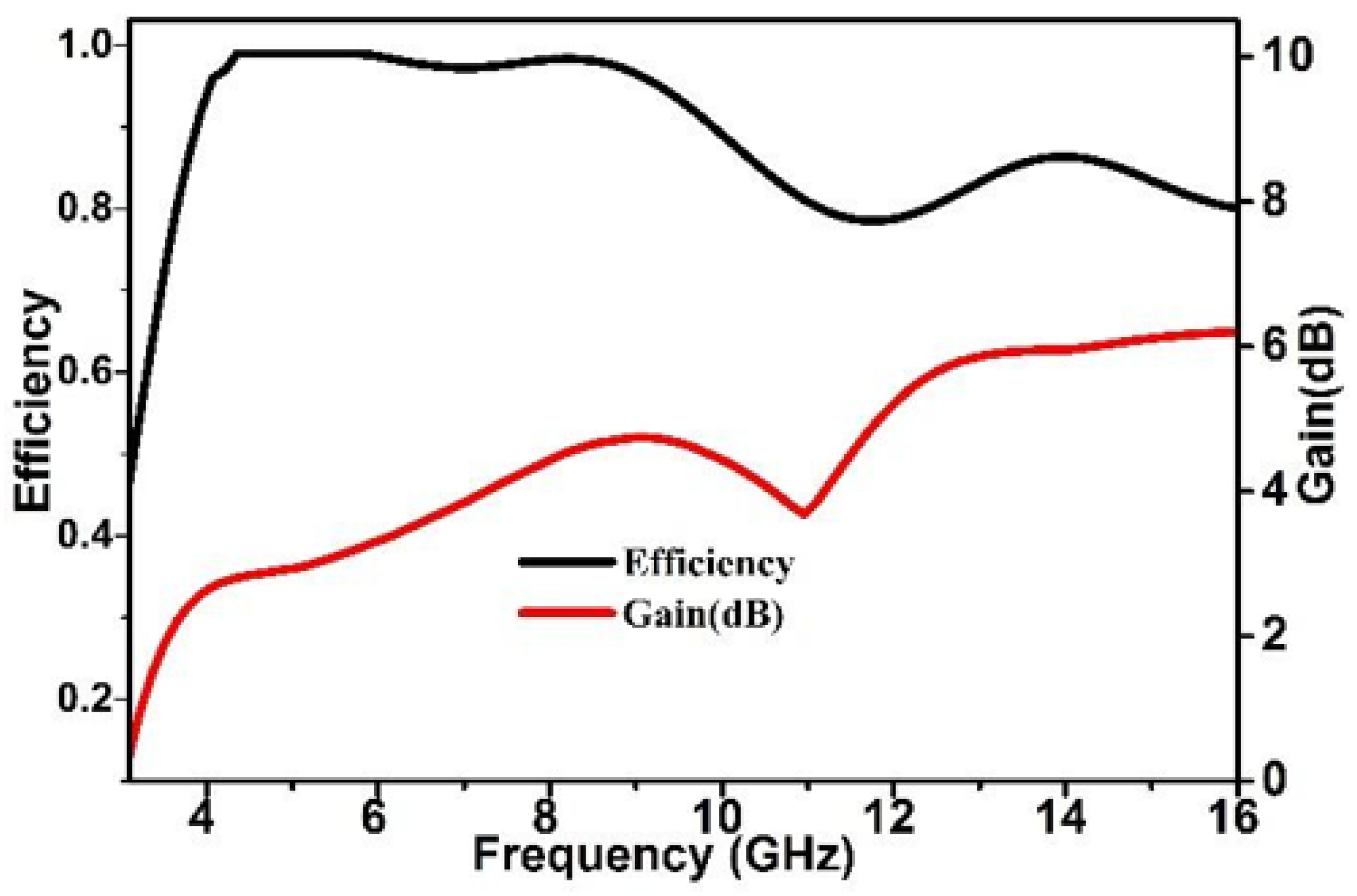
The realized gain and efficiency of the proposed antenna are presented in Figure 10. From the figure, it is clear that the proposed antenna shows good gain over the entire operating frequency band with a maximum realized gain of 6.2 dBi. The standard gain and higher efficiency of the proposed antenna make it more suitable for the use of UWB microwave imaging applications. The efficiency of the proposed antenna maintains high efficiency (more than 80%) over the total operating frequency band with a maximum efficiency of 98% as shown in Figure 4b.

4.5.3. Surface Current Distribution

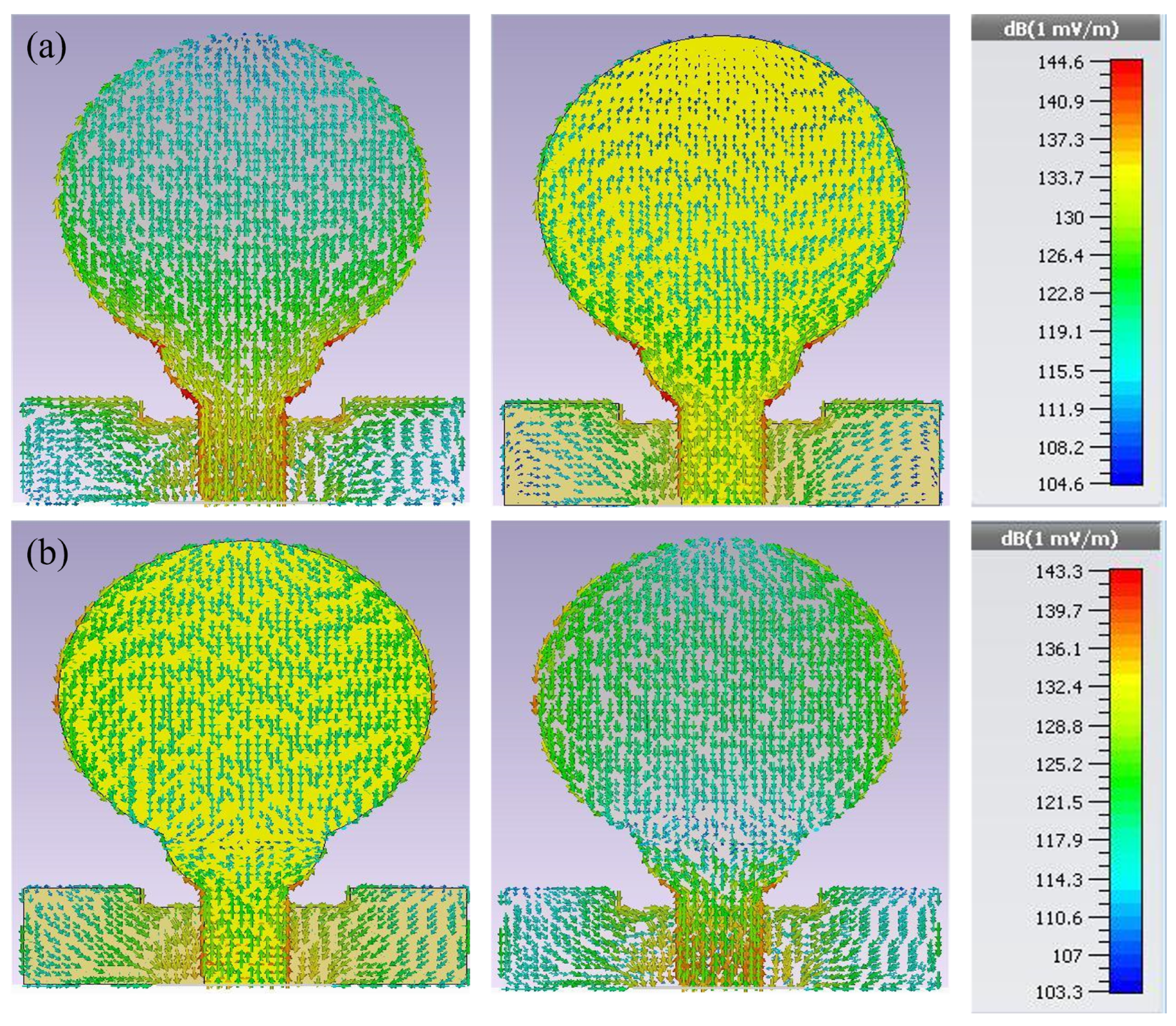
Figure 11a and Figure 11b show the surface current distribution of the proposed UWB bulb-shaped antenna at resonance frequencies of 3.94 GHz and 7.60 GHz, respectively. At lower resonance, the currents are mostly distributed around the feed line and the lower part of the patch. At a higher frequency, the induced current is evenly distributed over the conducting area. There exist a few nulls on the patch due to the higher-order current mode. The cutting edge of the bulb-shaped patch changes the current conducting path and changes the antenna characteristics, especially extending the upper limit of the operating frequency band. In both the patch and ground plane, the proposed antenna maintains the harmonic order flow, which assists in obtaining a wide frequency bandwidth.

4.5.4. Time Domain Results

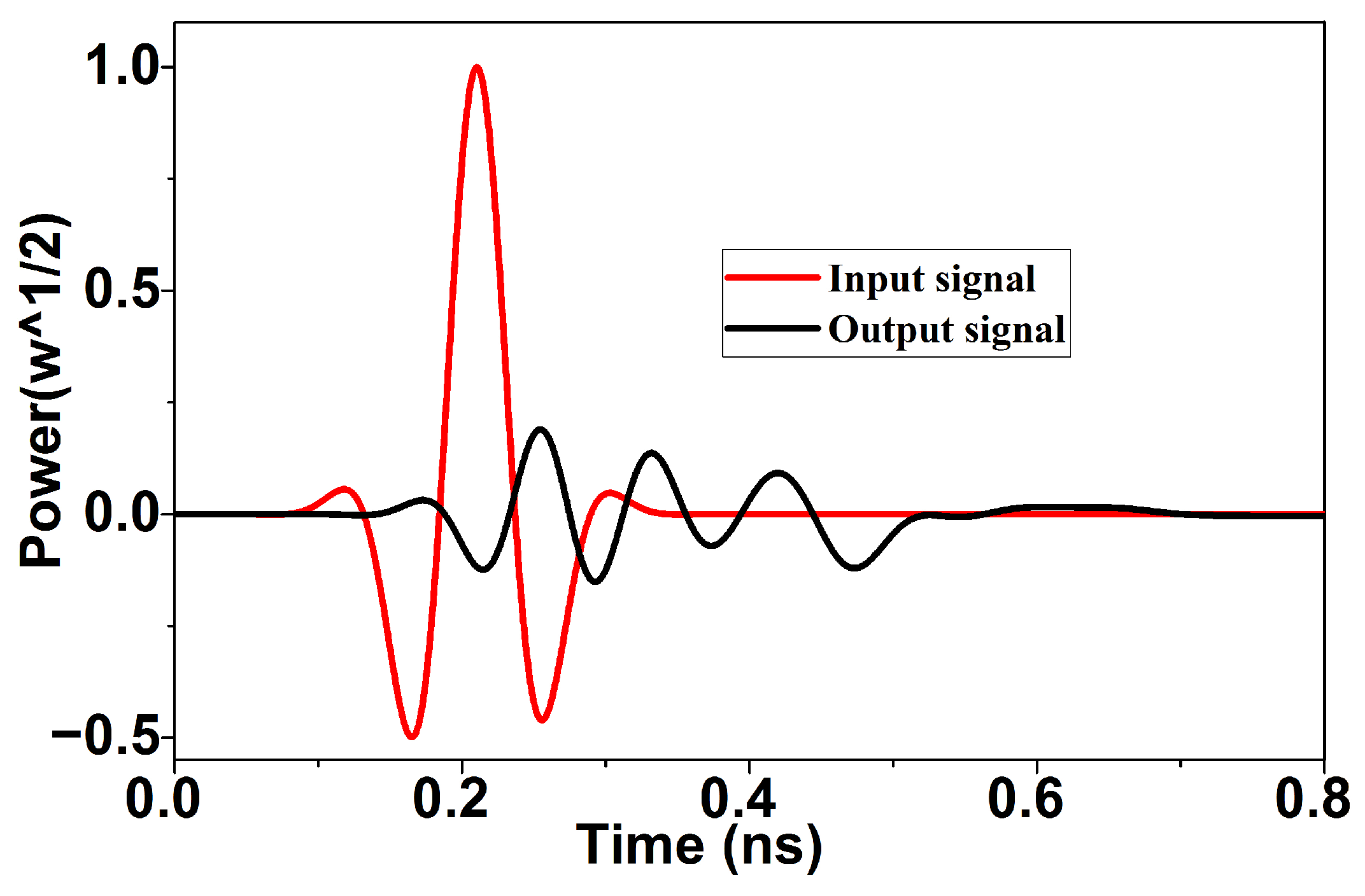
The time domain performance in the input–output pulse of the proposed antenna is presented in Figure 12. The measurement setup in Figure 15b is taken at a distance of 200 mm. The shapes of received and transmitted signals are nearly the same except that the transmitted one is spread in time. This proves the antenna’s capability to radiate a short pulse with small distortion and maintain lower time ringing.

4.5.5. Directivity Analysis

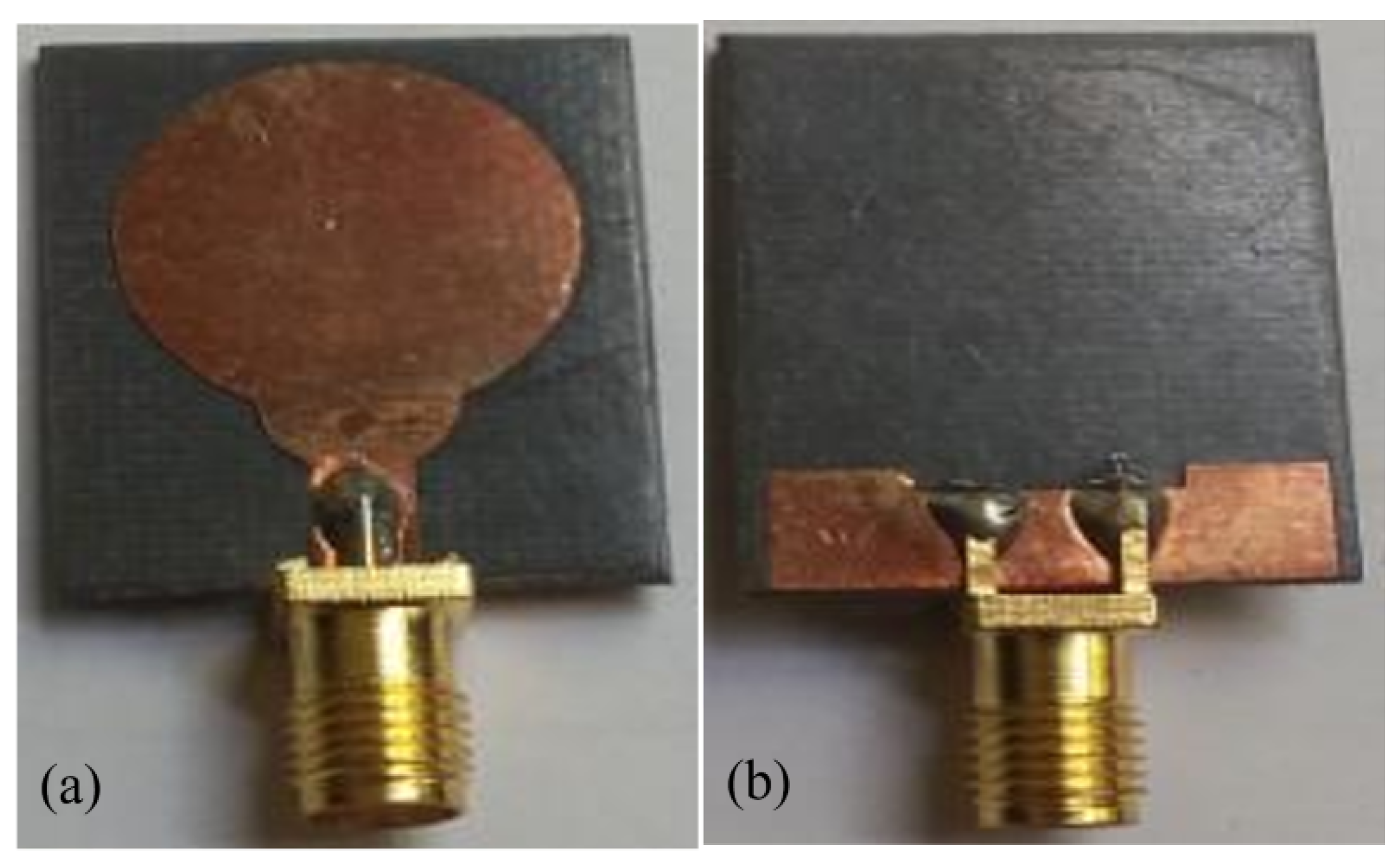
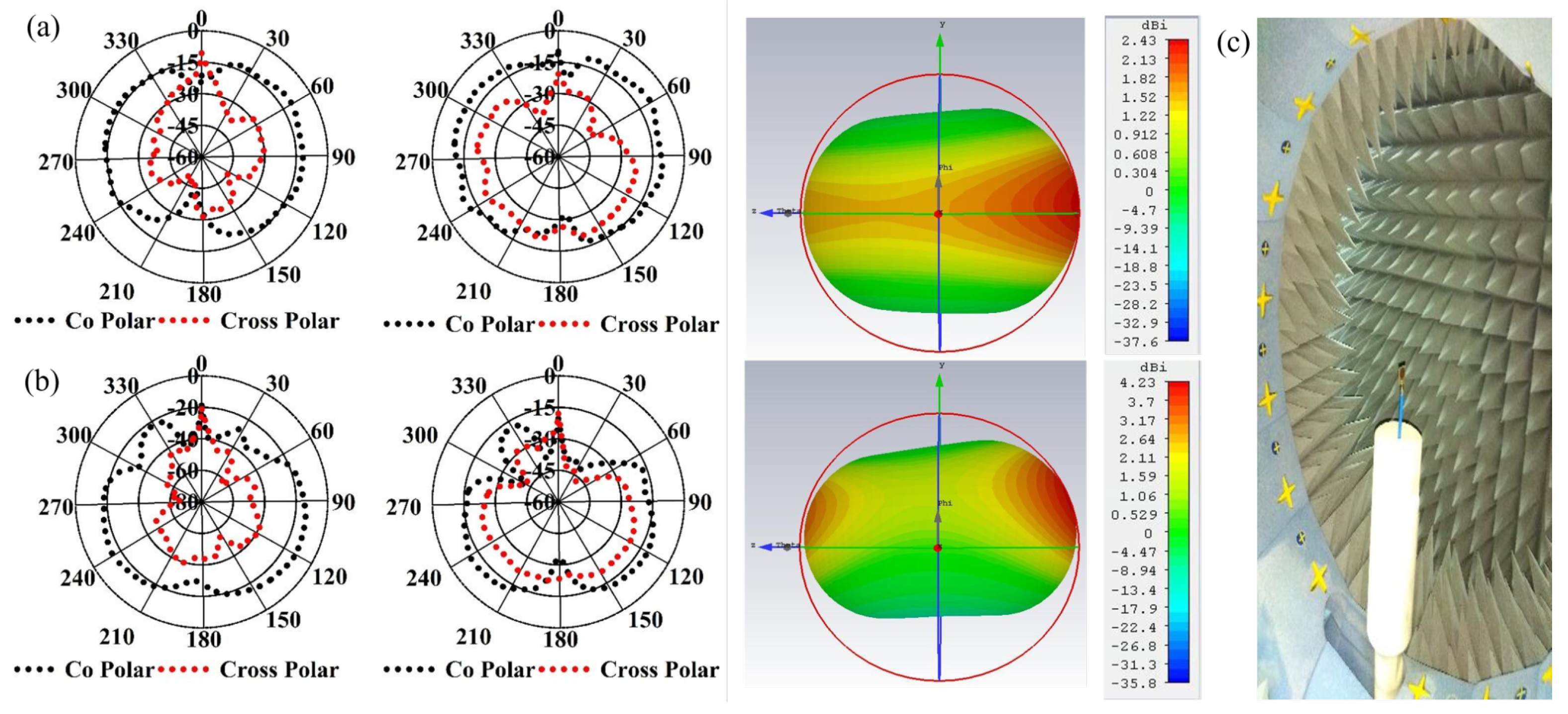
The photograph of the proposed fabricated prototype is shown in Figure 13a,b. Figure 14a,b present both the two (2D) and three-dimensional (3D) radiation patterns of the proposed prototype in Phi 0° (E-plane) and Phi 90° (H-plane). According to the Satimo measurement lab (UKM StarLab), xz-plane is taken as H where φ = 0° and the yz-plane is taken as E where φ = 90°. The measurement setup is presented in Figure 14c. Both cross-polarization and co-polarization for each plane at the resonance frequencies are presented. The designed prototype exhibits an evenly distributed omnidirectional radiation pattern across the operating frequencies and resonant points. At the lower resonance (3.94 GHz), the designed antenna presents an eight (8)-shaped radiation pattern. As the frequency increases, the cross-polarization of the proposed antenna becomes more directive due to changes in the current distribution. The currents are not evenly distributed at higher frequencies due to their higher-order excitation mode, leading to directive radiation. In addition, a few back lobes may arise at upper frequencies due to the multiple nulls in the current distribution.

4.5.6. Group Delay

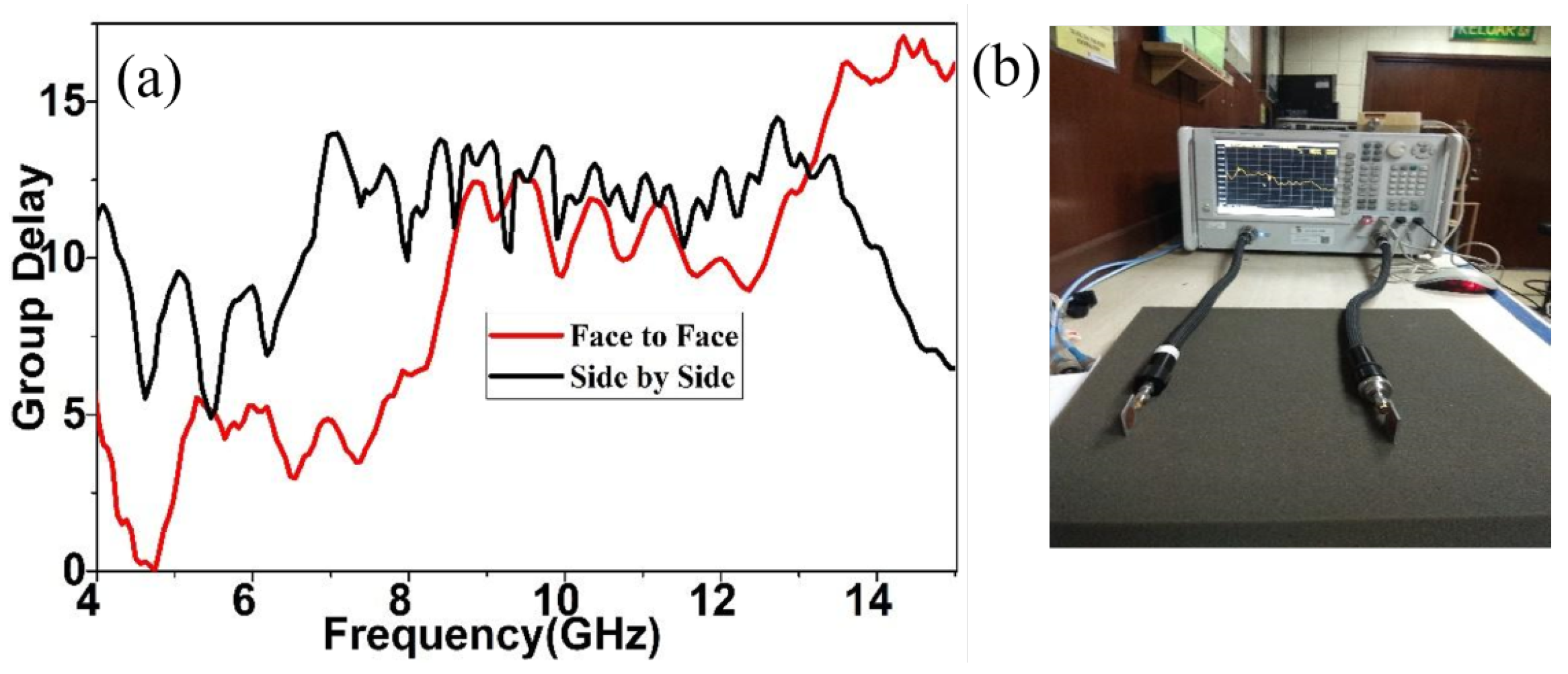
Group delay is the negative derivative of the phase response with respect to frequency. The group-delay observations for both the face-to-face and the side-by-side are presented in Figure 15a,b. The group delays in side-by-side and face-to-face orientation are almost similar. It is the profess of antenna omnidirectionality. The distance between the two antennas during group delay calculation is 250 mm. The measurement setup is shown in Figure 15b.

4.6. Imaging Performance Analysis

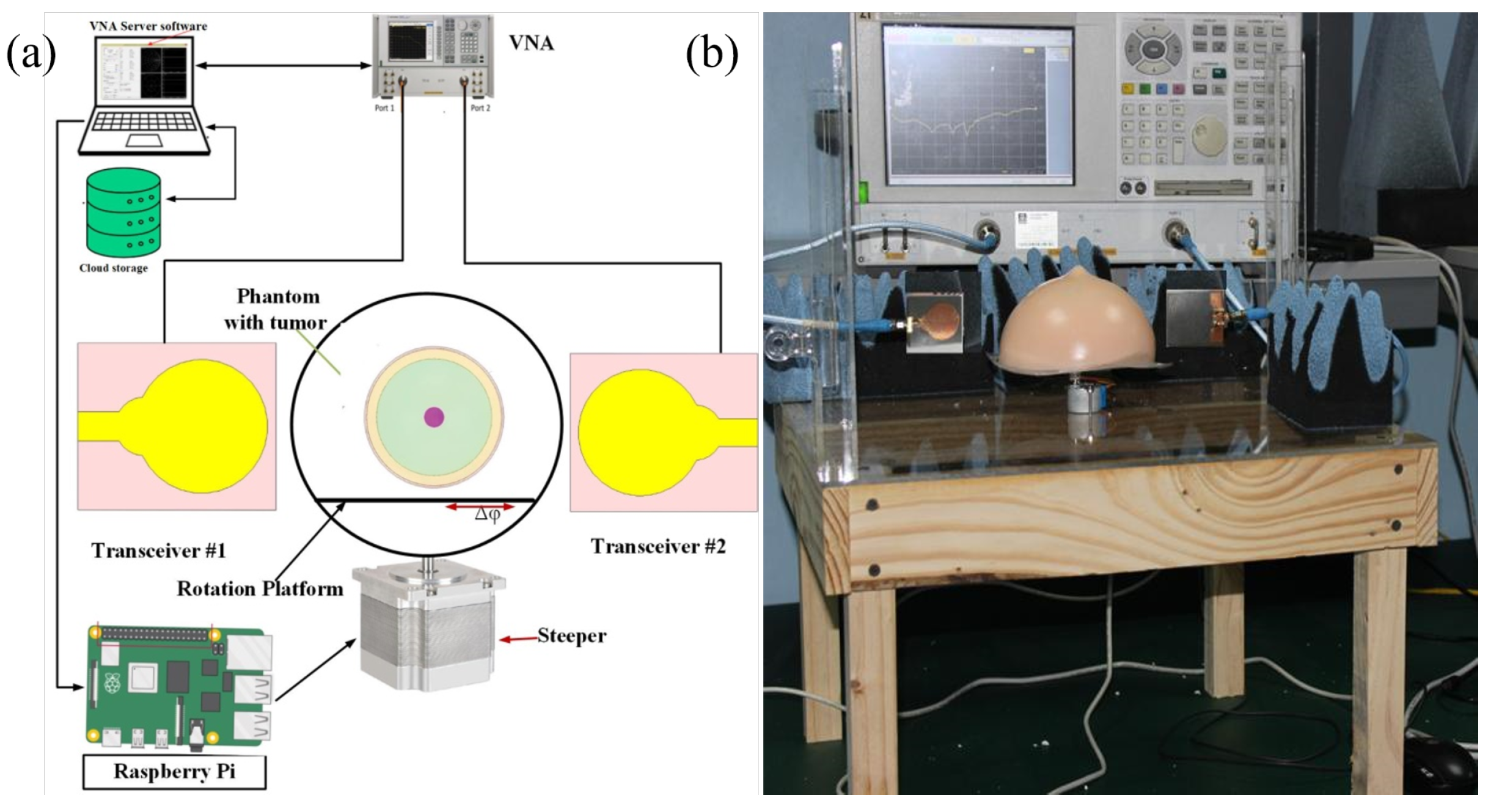
The primary objective of the imaging system is to detect variations in backscattered signals resulting from the differing dielectric properties of human breast tissues, particularly those of high-dielectric tumors. An automated setup was developed in which all mechanical components are controlled via a single PC. The antenna sensor functions as a transceiver, while signal acquisition is performed using a Programmable Network Analyzer (PNA). A block diagram and the practical implementation of the complete imaging system are depicted in Figure 16a,b. Data collection is performed using a mechanically driven rotating platform, controlled by a Raspberry Pi and a stepper motor driver, enabling full rotation from 0 to 2 pi radians. The system performs a 360° rotation in 7.2° increments, yielding a total of 50 measurement points. During testing, the phantom is rotated, and the resulting backscattered signals are analyzed to determine the location of the tumor. To simulate realistic biological conditions, a cylindrical bowl filled with a material mimicking the dielectric properties of the pectoralis major muscle (located beneath the breast tissue) is introduced into the setup. Repeating the experiments with this inclusion resulted in negligible changes in the measured data. The modified delay-and-sum algorithm incorporates a correlation-based weighting mechanism to suppress signals from multiple reflections. It enhances signals that closely align with the expected delay pattern while penalizing those that do not. Since multipath reflections travel longer distances, they introduce additional phase shifts, resulting in lower correlation with the predicted delays. This allows the algorithm to distinguish and minimize the impact of such reflections effectively.
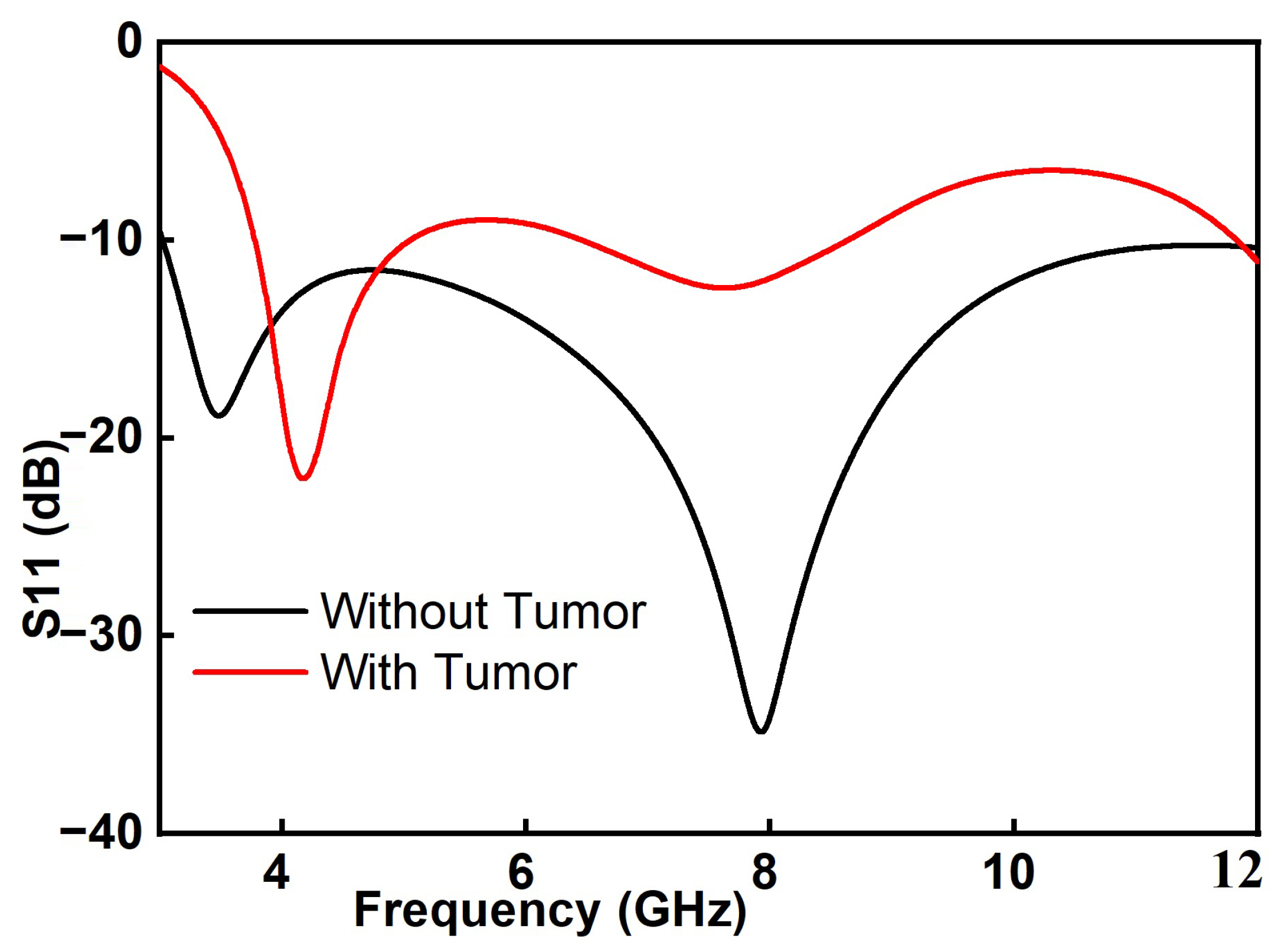
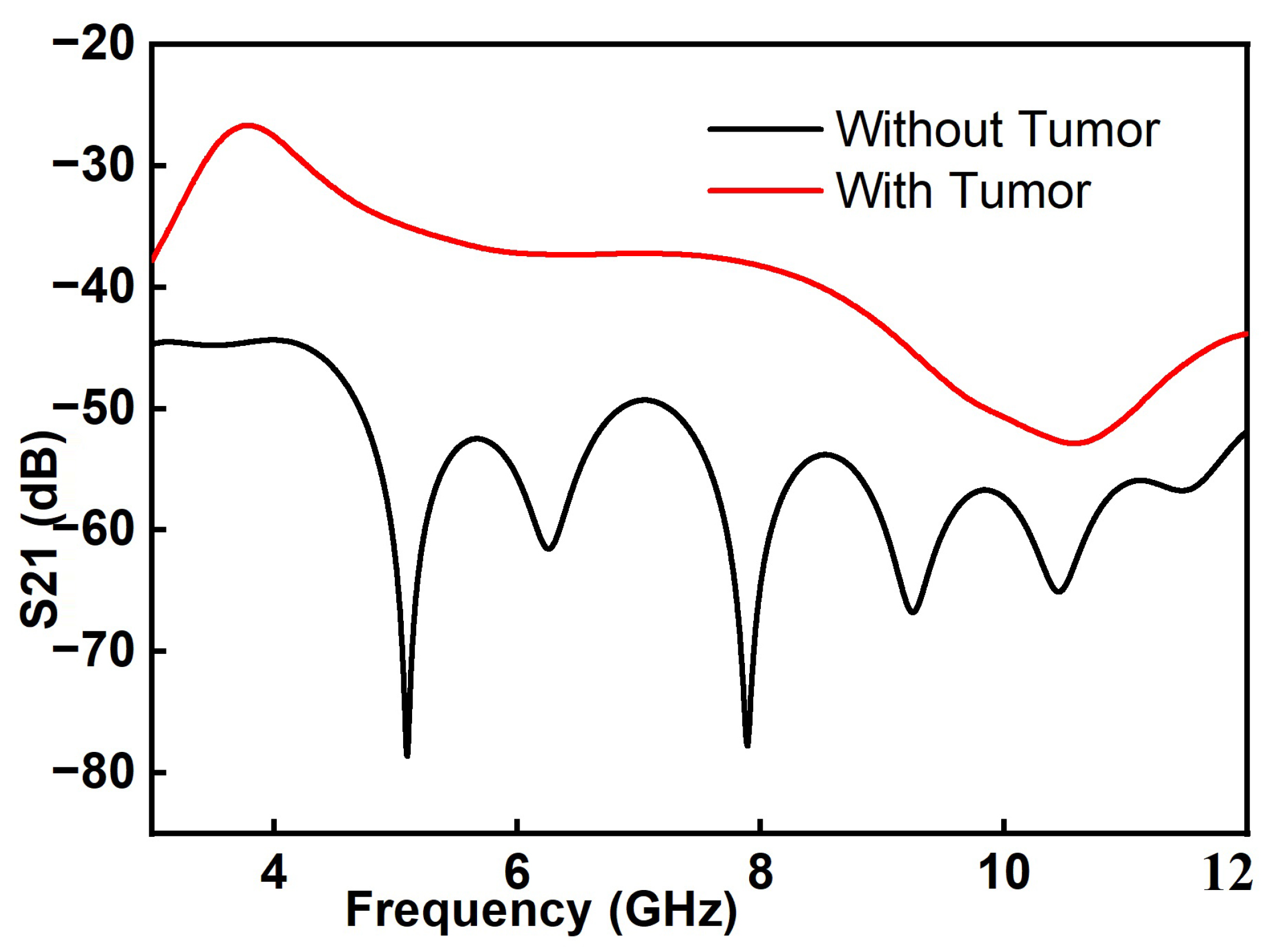
Forward- and backward-scattering signals are observed in both tumorous and tumor-free observations. The screening setup of the breast phantom is shown in Figure 16. Two antennas are placed in a front-to-back direction, one on each side of the phantom. One of the antennas acts as a transmitter, and another acts as a receiver. The simulated model of the breast phantom is designed with three layers: Skin, breast tissue, and a tumor layer. The tissue layer consists of 8.75 cm thickness and 5.14 of dielectric constant along with a 0.141 S/m conductivity [28]. The thickness of the skin layer is 2.5 mm with ε r = 38, and the conductivity is 1.49 S/m. A tumor cell with a size of 10 mm in diameter is placed inside the tissue whose dielectric constant is about 67. The dielectric constant of the tumor is much higher than that of normal breast tissue due to its higher watery content properties [29]. The normalized back- and forward-scattering (S11 and S21) signals for both tumor and tumor-free cases are presented in Figure 17 and Figure 18. The signal is attenuated by the tumor during its passage through the phantom. From the figure, it’s clearly visible that there have been significant changes in both S11 and S21 due to the presence of a tumor inside the breast tissue. It is also identically visible that the phase of two different setups shows two different phases of propagation, and the signals with a tumor exhibit a more negative phase than without a tumor.
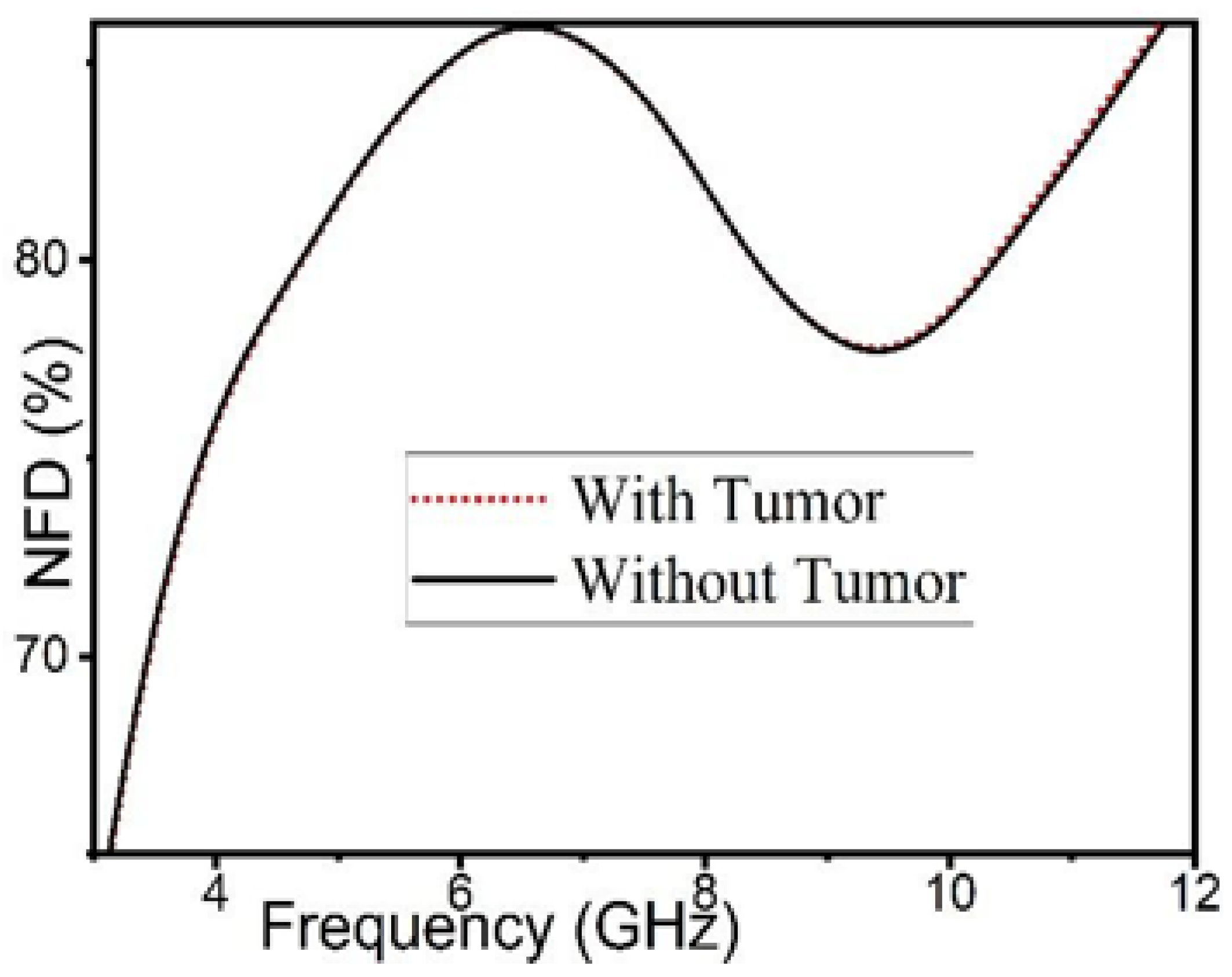
The ratio of radiated power to received power is calculated in terms of the near-field directivity (NFD). The radiated taken from the transmitting antenna, and the received power is taken from the receiving antenna. The NFD is calculated using the equation [30].
NFD = P f P T
Figure 19 presents the NFD of the proposed imaging configuration. The value is about 64%. It means that 64% of the transmitted power is radiated. It is clear that for the higher dielectric properties of the tumor, an identical location of the tumor is pointed in the received pulse and differentiated from the normal breast tissues.

5. Conclusions

This study presents a bulb-shaped UWB microstrip patch antenna developed using a combined simulation and machine learning-assisted design framework. The antenna is first designed and optimized in CST, followed by dataset generation through parametric sweeps. A custom CatBoost model is trained to predict key design dimensions with high accuracy, thus enabling reliable optimization. Based on the prediction of the model, a prototype antenna is fabricated and experimentally validated. The prototype exhibited wide bandwidth, high efficiency, and stable radiation characteristics. It also demonstrates good performance in breast-phantom testing. These results confirm the feasibility of integrating machine learning into antenna design to shorten development time while maintaining strong experimental performance. However, the dataset used in this work is limited to 300 samples, and only the topside geometrical parameters are made variable. Furthermore, while z_real and z_imaginary are available in the dataset and used among inputs, they are not parameters that end-users can externally use as inputs. Future work will focus on expanding the dataset, making the entire antenna structure variable, and developing an ML model that performs much better and relies on more practical features.

Funding

This research received no external funding.

Data Availability Statement

The original contributions presented in this study are included in the article. Further inquiries can be directed to the corresponding author.

Conflicts of Interest

The author declares no conflicts of interest.

References

  1. Al’Habsi, S.; Al’Ruzaiqi, T.; Gopinathan, S.T. Development of antenna for microwave imaging systems for breast cancer detection. J. Mol. Imaging Dyn. 2016, 6, 2. [Google Scholar] [CrossRef]
  2. Rafique, U.; Pisa, S.; Cicchetti, R.; Testa, O.; Cavagnaro, M. Ultra-wideband antennas for biomedical imaging applications: A survey. Sensors 2022, 22, 3230. [Google Scholar] [CrossRef]
  3. Othman, A.; Shaari, N.I.S.; Zobilah, A.M.; Shairi, N.A.; Zakaria, Z. Design of compact ultra wideband antenna for microwave medical imaging application. Indones. J. Electr. Eng. Comput. Sci. (IJEECS) 2019, 15, 1197–1202. [Google Scholar] [CrossRef]
  4. Saeidi, T.; Mahmood, S.N.; Saleh, S.; Timmons, N.; Al-Gburi, A.J.A.; Razzaz, F. Ultra-wideband (UWB) antennas for breast cancer detection with microwave imaging: A review. Results Eng. 2025, 25, 104167. [Google Scholar] [CrossRef]
  5. Uddin, S.; Mohibullah, M.; Hasan, M. Design of Ultra-Wideband (UWB) Microstrip Patch Antenna for Biomedical Telemetry Applications. ICCK Trans. Mob. Wirel. Intell. 2025, 1, 11–18. [Google Scholar] [CrossRef]
  6. Abdulla, F.A.A.; Demirkol, A. A novel textile-based UWB patch antenna for breast cancer imaging. Phys. Eng. Sci. Med. 2024, 47, 851–861. [Google Scholar] [CrossRef] [PubMed]
  7. Chaurasia, A.S.; Shankhwar, A.; Gupta, R. Design and analysis of UWB patch antenna for breast cancer detection. J. Integr. Sci. Technol. 2024, 12, 837. [Google Scholar] [CrossRef]
  8. Azim, R.; Islam, M.T.; Misran, N. Compact tapered-shape slot antenna for UWB applications. IEEE Antennas Wirel. Propag. Lett. 2011, 10, 1190–1193. [Google Scholar] [CrossRef]
  9. Liu, H.-W.; Yang, C.-F. Miniature hook-shaped monopole antenna for UWB applications. Electron. Lett. 2010, 46, 265–266. [Google Scholar] [CrossRef]
  10. Zhao, Z.; Chang, L.; Cui, Y.; Zhang, A. Miniaturized and wideband metasurface antenna sensor for breast tumor detection. Sens. Actuators A Phys. 2025, 394, 116973. [Google Scholar] [CrossRef]
  11. Naik, K.; Ketavath, K. In-Vitro Test of Miniaturized CPW-Fed Implantable Conformal Patch Antenna at ISM Band for Biomedical Applications. IEEE Access 2019, 7, 43547. [Google Scholar]
  12. Samsuzzaman, M.; Islam, M.T. A semicircular shaped super wideband patch antenna with high bandwidth dimension ratio. Microw. Opt. Technol. Lett. 2015, 57, 445–452. [Google Scholar] [CrossRef]
  13. Yıldız, Ş.; Kurt, M.B. Breast cancer detection using a high-performance ultra-wideband Vivaldi antenna in a radar-based microwave breast cancer imaging technique. Appl. Sci. 2025, 15, 6015. [Google Scholar] [CrossRef]
  14. Mahmud, M.; Islam, M.T.; Samsuzzaman, M.; Kibria, S.; Misran, N. Design and parametric investigation of directional antenna for microwave imaging application. IET Microw. Antennas Propag. 2016, 11, 770–778. [Google Scholar] [CrossRef]
  15. Fear, E.C.; Hagness, S.C.; Meaney, P.M.; Okoniewski, M.; Stuchly, M.A. Enhancing breast tumor detection with near-field imaging. IEEE Microw. Mag. 2002, 3, 48–56. [Google Scholar] [CrossRef]
  16. Gabriel, S.; Lau, R.W.; Gabriel, C. The dielectric properties of biological tissues: III. Parametric models for the dielectric spectrum of tissues. Phys. Med. Biol. 1996, 41, 2271–2293. [Google Scholar] [CrossRef]
  17. Lazebnik, A.; Converse, M.C.; Booske, S.H.; Okoniewski, M.S. Ultra-wideband electromagnetic characterization of normal, benign, and malignant breast tissues: Human and animal studies. Phys. Med. Biol. 2007, 52, 6093–6115. [Google Scholar] [CrossRef]
  18. Islam, M.T.; Mahmud, M.Z.; Misran, N.; Takada, J.-I.; Cho, M. Microwave breast phantom measurement system with compact side-slotted directional antenna. IEEE Access 2017, 5, 5321–5330. [Google Scholar] [CrossRef]
  19. Mahdi, R.H.; Alsudani, A.; Abdalrazak, M.Q.; Abdulnabi, H.A. Design of defective ground plane modified microstrip patch antenna for ultra-wideband applications. TELKOMNIKA Telecommun. Comput. Electron. Control 2024, 22, 34–41. [Google Scholar] [CrossRef]
  20. Mahmud, M.; Kibria, S.; Samsuzzaman, M.; Misran, N.; Islam, M.T. A New High Performance Hibiscus Petal Pattern Monopole Antenna for UWB Applications. Appl. Comput. Electromagn. Soc. J. 2016, 31, 373–380. [Google Scholar]
  21. Gautam, A.K.; Yadav, S.; Kanaujia, B.K. A CPW-fed compact UWB microstrip antenna. IEEE Antennas Wirel. Propag. Lett. 2013, 12, 151–154. [Google Scholar] [CrossRef]
  22. Fiser, O.; Hruby, V.; Vrba, J.; Drizdal, T.; Tesarik, J.; Vrba, J., Jr.; Vrba, D. UWB bowtie antenna for medical microwave imaging applications. IEEE Trans. Antennas Propag. 2022, 70, 5357–5367. [Google Scholar] [CrossRef]
  23. Liu, G.; Xiao, X.; Lu, M.; Zang, X.; Zhang, X.; Kikkawa, T. Ultra-wideband microwave imaging for breast tumor screening using step recovery diode-based pulse generator. Int. J. Circuit Theory Appl. 2024, 52, 1607–1620. [Google Scholar] [CrossRef]
  24. Särestöniemi, M.; Reponen, J.; Sonkki, M.; Myllymäki, S.; Pomalaza-Raez, C.; Tervonen, O.; Myllylä, T. Breast cancer detection feasibility with UWB flexible antennas on wearable monitoring vest. In Proceedings of the 2022 IEEE International Conference on Pervasive Computing and Communications Workshops and other Affiliated Events (PerCom Workshops), Pisa, Italy, 21–25 March 2022; pp. 751–756. [Google Scholar] [CrossRef]
  25. Mir, F.; Kouhalvandi, L.; Matekovits, L. Deep neural learning based optimization for automated high performance antenna designs. Sci. Rep. 2022, 12, 16801. [Google Scholar] [CrossRef] [PubMed]
  26. Kurniawati, N. Predicting Rectangular Patch Microstrip Antenna Dimension Using Machine Learning. J. Commun. 2021, 16, 394–399. [Google Scholar] [CrossRef]
  27. Thakare, V.; Singhal, P.K. Artificial Intelligence in the Estimation of Patch Dimensions of Rectangular Microstrip Antennas. Circuits Syst. 2011, 2, 330–337. [Google Scholar] [CrossRef]
  28. Gabriel, S.; Lau, R.; Gabriel, C. The dielectric properties of biological tissues: II. Measurements in the frequency range 10 Hz to 20 GHz. Phys. Med. Biol. 1996, 41, 2251. [Google Scholar] [CrossRef]
  29. Mahmud, M.Z.; Islam, M.T.; Rahman, M.N.; Alam, T.; Samsuzzaman, M. A miniaturized directional antenna for microwave breast imaging applications. Int. J. Microw. Wirel. Technol. 2017, 9, 2013–2018. [Google Scholar] [CrossRef]
  30. Amineh, R.K.; Trehan, A.; Nikolova, N.K. TEM horn antenna for ultra-wide band microwave breast imaging. Prog. Electromagn. Res. 2009, 13, 59–74. [Google Scholar] [CrossRef]
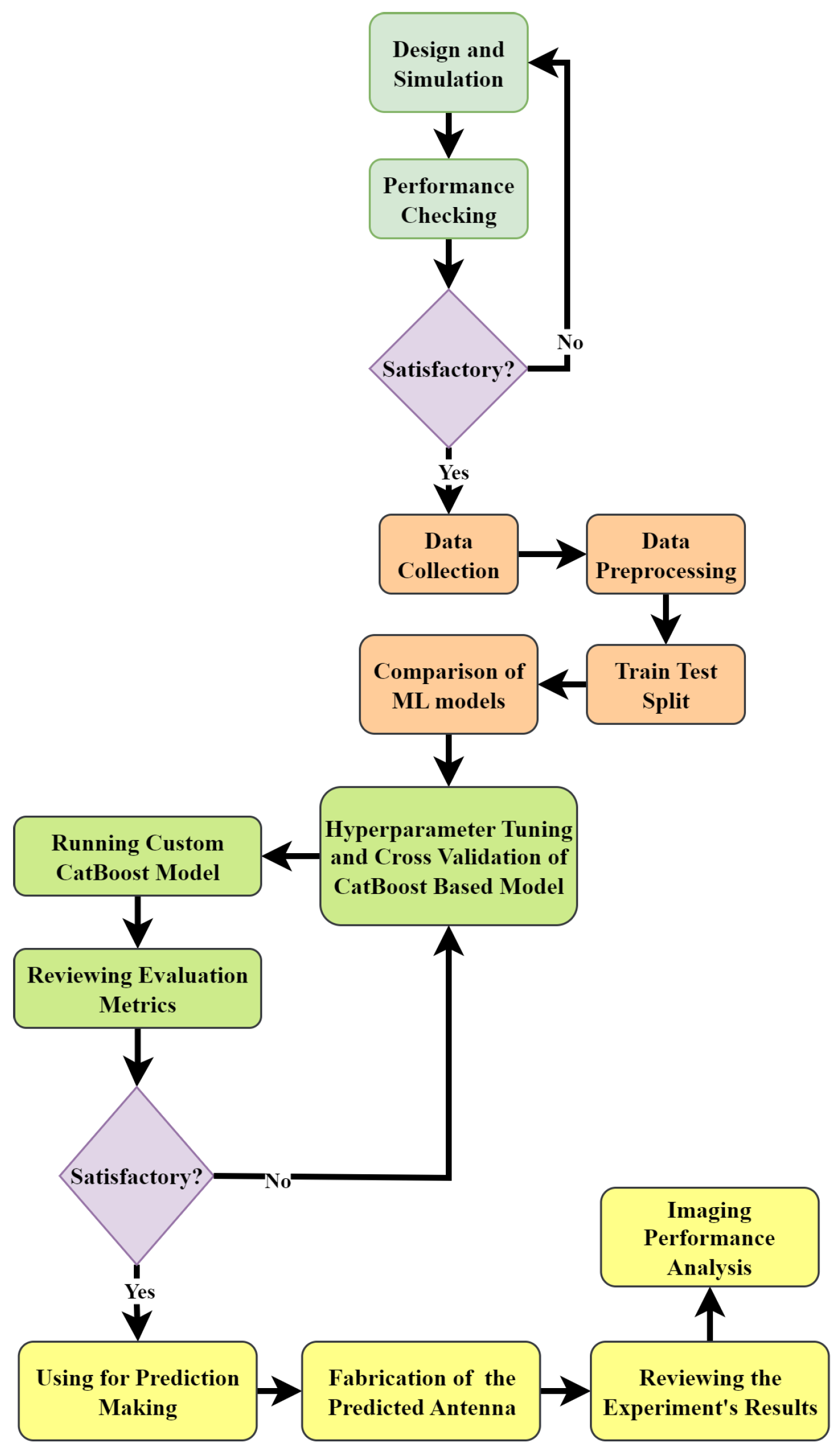
Figure 1. Block diagram of the proposed methodology. It contains the complete process from antenna designing, dataset creation, preprocessing, model selection, model training, model evaluation, predicted antenna fabrication, and result analysis.
Electronics 15 00455 g001
Figure 2. Antenna Geometry of the proposed design: (a) front view (left); (b) back view (right).
Electronics 15 00455 g002
Figure 3. Effect of the height of the ground plane on the reflection coefficient.
Electronics 15 00455 g003
Figure 4. Effect of ground plane’s height on gain of the antenna.
Electronics 15 00455 g004
Figure 5. Effect of the height of the ground plane on the efficiency of the antenna.
Electronics 15 00455 g005
Figure 6. Correlation Matrix Analysis of the Dataset.
Electronics 15 00455 g006
Figure 7. Predicted vs. actual output values of the proposed model.
Electronics 15 00455 g007
Figure 8. SHAP value analysis of the proposed model.
Electronics 15 00455 g008
Figure 9. Antenna reflection coefficient (S11).
Electronics 15 00455 g009
Figure 10. Antenna efficiency and gain.
Electronics 15 00455 g010
Figure 11. Surface current distribution of the antenna—(a) at 3.94 GHz and (b) 7.60 GHz.
Electronics 15 00455 g011
Figure 12. Time domain results: input–output pulse.
Electronics 15 00455 g012
Figure 13. The fabricated antenna (a) Front side (b) Back side.
Electronics 15 00455 g013
Figure 14. Radiation patterns (2D and 3D) of the proposed prototype: (a) at 3.94 GHz; (b) at 7.60 GHz; (c) Satimo Measurement setup.
Electronics 15 00455 g014
Figure 15. (a) Side by side (SbyS) and face to face (FtoF) group delay; (b) measurement setup of group delay.
Electronics 15 00455 g015
Figure 16. (a) Architecture of the proposed imaging system and (b) the imaging setup of the measurement. The performance of the proposed antenna in terms of MWI is analyzed in an artificial CST simulation environment.
Electronics 15 00455 g016
Figure 17. Normalized magnitude (S11) of back scattering signal over frequency.
Electronics 15 00455 g017
Figure 18. Normalized magnitude (S21) of forward scattering signal over frequency.
Electronics 15 00455 g018
Figure 19. Near-field directivity (NFD) of the proposed design in the presented imaging setup.
Electronics 15 00455 g019
Table 1. Parametric design range for antenna dimensions.
ParameterSymbolNumber of ValuesRange (mm)
Big circle radiusR38 to 8.2
Small circle radiusr103.1 to 3.9
Feedline widthfw103.5 to 4.4
Table 2. Selected hyper-parameter list for the proposed model.
HyperparameterValue
Learning Rate0.01
Max Depth4
Iterations4500
L2 Leaf Regularization0.5
Subsample Ratio0.6
Column Sampling by Level0.8
Table 3. Performance metrics of the proposed model.
MetricValue
Mean Squared Error (MSE)0.0005
Mean Absolute Error (MAE)0.0166
Root Mean Squared Error (RMSE)0.0228
Average R2 Score0.9513
Explainable Variance Score0.9528
Table 4. Comparison of model performance metrics on the dataset.
ModelTrain R2Train MSETrain MAETrain EVSTest R2Test MSETest MAETest EVS
XGBoost0.99991.37550.00080.99990.88940.00210.03240.9036
Random Forest0.98280.00030.01340.98280.90580.00160.03130.9144
LightGBM0.96170.00050.01540.96170.92150.00150.02960.9235
Gradient Boosting0.98260.00030.01230.98270.92090.00130.02750.9274
HistGradientBoosting0.96240.00050.01490.96240.92220.00150.03010.9238
DecisionTree1.00003.5 × 10−312.5 × 10−161.0000000.64780.00590.04550.6507
KNN0.82390.00260.03470.82410.71130.00840.05200.7377
Ridge0.68360.00400.04900.68360.59310.00490.05430.6313
BayesianRidge0.68270.00400.04910.68270.59790.00490.05410.6381
LinearRegression0.68360.00400.04900.68360.59260.00490.05430.6307
SVR0.63420.00490.05830.63640.59840.00450.05540.6445
Proposed Model0.99842.27 × 10−50.00360.99840.95130.00050.01660.9528
Disclaimer/Publisher’s Note: The statements, opinions and data contained in all publications are solely those of the individual author(s) and contributor(s) and not of MDPI and/or the editor(s). MDPI and/or the editor(s) disclaim responsibility for any injury to people or property resulting from any ideas, methods, instructions or products referred to in the content.