A Fuzzy-Machine Learning Framework for Energy Efficiency Optimization and Smart Transition Analysis in European Economies



Abstract
1. Introduction
2. The Stage of Knowledge in the Field
2.1. Machine Learning Approaches for Energy Efficiency and Smart Energy Systems
2.2. AI-Driven Energy Transition, Smart Cities, and Sustainability Perspectives
2.3. Fuzzy and Hybrid Decision-Making Approaches in Energy and Digital Transformation
2.4. Synthesis and Research Gap
3. Data Collection and Methodology
3.1. Data Collection
3.2. Fuzzy Clustering Approach (Fuzzy C-Means)
3.3. Rationale for Machine Learning-Based Validation
3.4. Supervised Machine Learning for Cluster Prediction and Feature Importance Analysis
3.4.1. Random Forest
3.4.2. XGBoost
4. Results
5. Discussion
5.1. Reliability of the Long-Term Analysis (2000–2024)
5.2. Rationale for Indicator Selection
5.3. Complexity and Added-Value of the Proposed Framework
6. Conclusions and Policy Recommendations
Author Contributions
Funding
Data Availability Statement
Conflicts of Interest
Abbreviations
| FCM | Fuzzy C-Means |
| ML | Machine Learning |
| RF | Random Forest |
| XGBoost | Extreme Gradient Boosting |
| PCA | Principal Component Analysis |
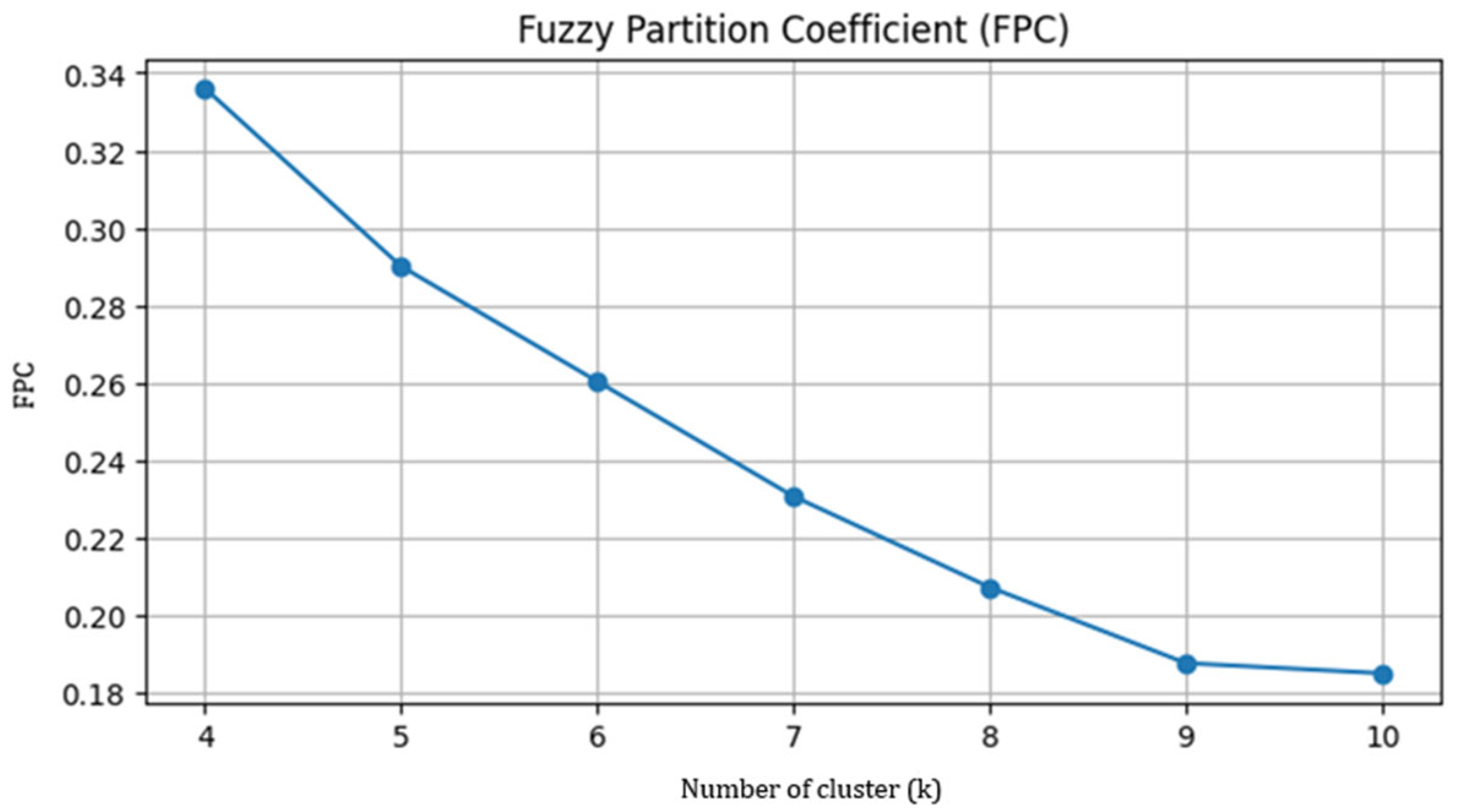
| FPC | Fuzzy Partition Coefficient |
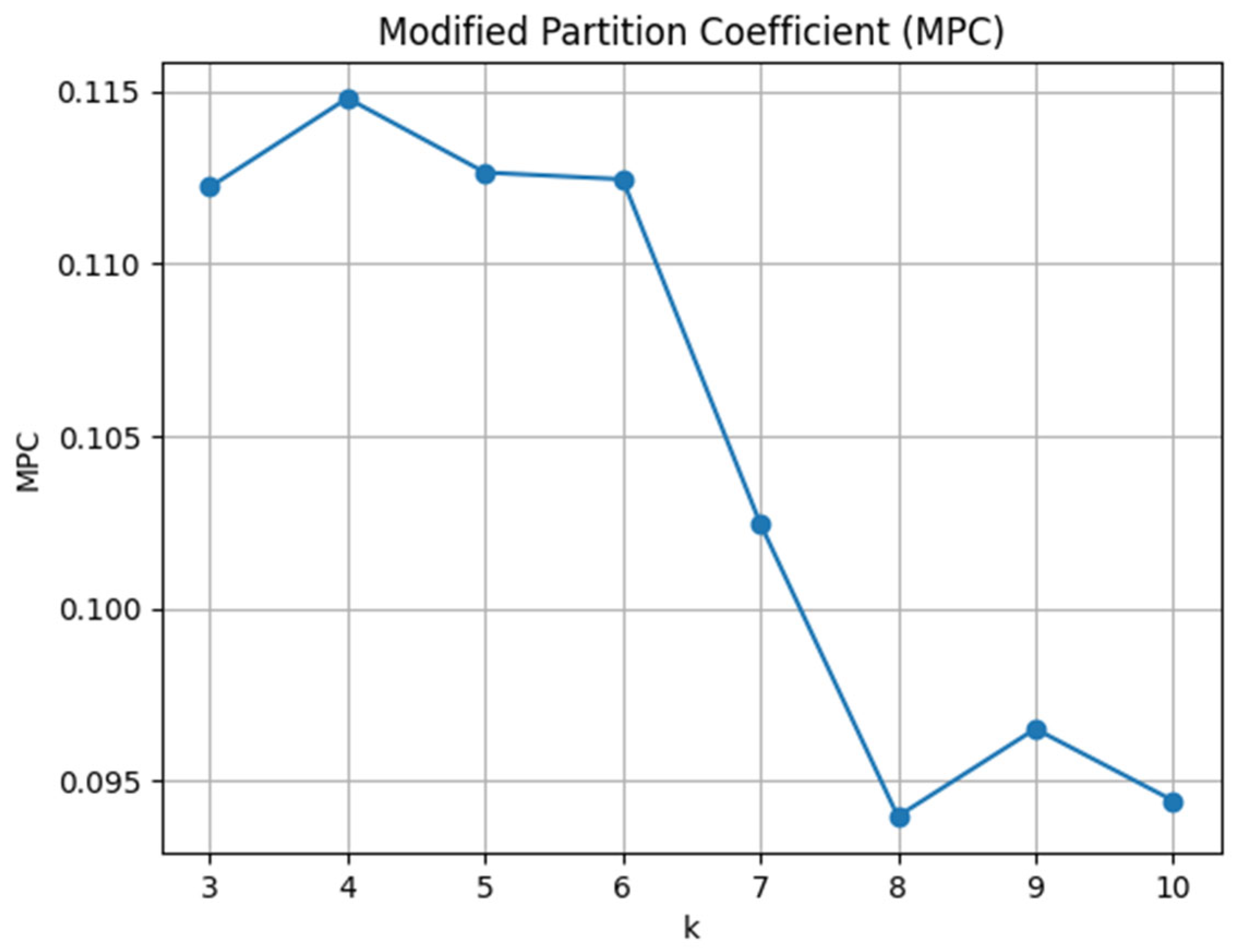
| MPC | Modified Partition Coefficient |
| GDP | Gross Domestic Product |
| CO2 | Carbon Dioxide Emissions |
| RNEC | Renewable Energy Consumption |
| GDPEU | GDP per unit of Energy Use (Energy Productivity) |
| EPC | Electric Power Consumption |
| IUI | Individuals using the internet |
| GCS | Gross Capital Formation |
| UPA | Urban population |
| EU | European Union |
| CEE | Central and Eastern Europe |
Appendix A
- (i)
- Updating cluster centers, according to Equation (A2):
- (ii)
- Updating the membership matrix, according to relation (A3):
References
- Igliński, B.; Kiełkowska, U.; Mazurek, K.; Drużyński, S.; Pietrzak, M.B.; Kumar, G.; Veeramuthu, A.; Skrzatek, M.; Zinecker, M.; Piechota, G. Renewable Energy Transition in Europe in the Context of Renewable Energy Transition Processes in the World. A Review. Heliyon 2024, 10, e40997. [Google Scholar] [CrossRef]
- Bluszcz, A.; Manowska, A.; Mansor, N.S. Decoupling Economy Growth and Emissions: Energy Transition Pathways Under the European Agenda for Climate Action. Energies 2025, 18, 5096. [Google Scholar] [CrossRef]
- Manowska, A.; Bluszcz, A.; Chomiak-Orsa, I.; Wowra, R. Towards Energy Transformation: A Case Study of EU Countries. Energies 2024, 17, 1778. [Google Scholar] [CrossRef]
- Horobet, A.; Tudor, C.D.; Belascu, L.; Herciu, M.; Ogrean, C. The Future of Energy in the European Union: Balancing Renewable Growth with Globalization and Digitalization. J. Appl. Econ. 2025, 28, 2548821. [Google Scholar] [CrossRef]
- Fedajev, A.; Mitić, P.; Kojić, M.; Radulescu, M. Driving Industrial and Economic Growth in Central and Eastern Europe: The Role of Electricity Infrastructure and Renewable Energy. Util. Policy 2023, 85, 101683. [Google Scholar] [CrossRef]
- Madsen, T.; Kountouris, I.; Bramstoft, R.; Koundouri, P.; Keles, D. European or National-Level Emission Reduction Policy? Effectiveness and Energy System Implications. Appl. Energy 2025, 388, 125672. [Google Scholar] [CrossRef]
- Lamb, W.F.; Grubb, M.; Diluiso, F.; Minx, J.C. Countries with Sustained Greenhouse Gas Emissions Reductions: An Analysis of Trends and Progress by Sector. Clim. Policy 2022, 22, 1–17. [Google Scholar] [CrossRef]
- Stermieri, L.; Kober, T.; McKenna, R.; Schmidt, T.J.; Panos, E. The Role of Digital Social Practices and Technologies in the Swiss Energy Transition towards Net-Zero Carbon Dioxide Emissions in 2050. Energy Policy 2024, 193, 114203. [Google Scholar] [CrossRef]
- Benedetti, I.; Guarini, G.; Laureti, T. Digitalization in Europe: A Potential Driver of Energy Efficiency for the Twin Transition Policy Strategy. Socio-Econ. Plan. Sci. 2023, 89, 101701. [Google Scholar] [CrossRef]
- Fotis, G.; Maris, T.I.; Mladenov, V. Risks, Obstacles and Challenges of the Electrical Energy Transition in Europe: Greece as a Case Study. Sustainability 2025, 17, 5325. [Google Scholar] [CrossRef]
- Budayan, C.; Dikmen, I.; Birgonul, M.T. Comparing the Performance of Traditional Cluster Analysis, Self-Organizing Maps and Fuzzy C-Means Method for Strategic Grouping. Expert Syst. Appl. 2009, 36, 11772–11781. [Google Scholar] [CrossRef]
- Zadeh, L.A. Fuzzy Sets. Inf. Control 1965, 8, 338–353. [Google Scholar] [CrossRef]
- Bezdek, J.C. Pattern Recognition with Fuzzy Objective Function Algorithms; Springer US: Boston, MA, USA, 1981; ISBN 978-1-4757-0452-5. [Google Scholar]
- Granger, C.W.J.; Ghysels, E.; Swanson, N.R.; Watson, M.W. Essays in Econometrics: Collected Papers of Clive W.J. Granger; Econometric Society monographs; Cambridge University Press: Cambridge, UK; New York, NY, USA, 2001; ISBN 978-0-521-79697-2. [Google Scholar]
- Brock, W.A.; Hommes, C.H. A Rational Route to Randomness. Econometrica 1997, 65, 1059. [Google Scholar] [CrossRef]
- Gao, X.; Xie, W. Advances in Theory and Applications of Fuzzy Clustering. Chin. Sci. Bull. 2000, 45, 961–970. [Google Scholar] [CrossRef]
- Arantes, R.F.M.; Zanon, L.G.; Calache, L.D.D.R.; Bertassini, A.C.; Carpinetti, L.C.R. A Fuzzy Multicriteria Group Decision Approach for Circular Business Models Prioritization. Production 2022, 32, e20220019. [Google Scholar] [CrossRef]
- Suleman, A.; Suleman, F.; Reis, E. FUZZY APPROACH TO DISCRETE DATA REDUCTION: AN APPLICATION IN ECONOMICS FOR ASSESSING THE SKILL PREMIUM. J. Bus. Econ. Manag. 2015, 17, 414–429. [Google Scholar] [CrossRef][Green Version]
- Chen, T.; Guestrin, C. XGBoost: A Scalable Tree Boosting System. In Proceedings of the 22nd ACM SIGKDD International Conference on Knowledge Discovery and Data Mining, San Francisco, CA, USA, 13 August 2016; pp. 785–794. [Google Scholar]
- Breiman, L. Random Forests. Mach. Learn. 2001, 45, 5–32. [Google Scholar] [CrossRef]
- Urs, A.L.A.D.; Sudharshan, A. A Multi-Factor Machine Learning Framework for Predicting and Profiling Student Academic Performance Using Behavioral, Financial, and Wearable Data. MethodsX 2025, 15, 103673. [Google Scholar] [CrossRef]
- Lu, J.; Ma, G.; Zhang, G. Fuzzy Machine Learning: A Comprehensive Framework and Systematic Review. IEEE Trans. Fuzzy Syst. 2024, 32, 3861–3878. [Google Scholar] [CrossRef]
- Iqbal, N.; Noureldin, M. Automated Methodological Approach Using Artificial Intelligence and Fuzzy Inference for Qualitative Sustainable and Economic Assessment of Buildings. Sci. Rep. 2025. [Google Scholar] [CrossRef]
- Ali Imran, M.; Flávia Dos Reis, A.; Brante, G.; Valente Klaine, P.; Demo Souza, R. Machine Learning in Energy Efficiency Optimization. In Machine Learning for Future Wireless Communications; Luo, F., Ed.; Wiley: Hoboken, NJ, USA, 2020; pp. 105–117. ISBN 978-1-119-56225-2. [Google Scholar]
- He, H.; Jiang, H. Deep Learning Based Energy Efficiency Optimization for Distributed Cooperative Spectrum Sensing. IEEE Wirel. Commun. 2019, 26, 32–39. [Google Scholar] [CrossRef]
- Venugopal, A.; Purad, H.C.; Shanbhog, M.; Malhotra, R.; Kaur, T.; Jha, N. AI-Driven Deep Learning Framework for Energy-Efficient Optimization in IoT-Enabled Wireless Networks. Int. J. Inf. Technol. 2025, 1–8. [Google Scholar] [CrossRef]
- Pham, A.-D.; Ngo, N.-T.; Ha Truong, T.T.; Huynh, N.-T.; Truong, N.-S. Predicting Energy Consumption in Multiple Buildings Using Machine Learning for Improving Energy Efficiency and Sustainability. J. Clean. Prod. 2020, 260, 121082. [Google Scholar] [CrossRef]
- Zekić-Sušac, M.; Mitrović, S.; Has, A. Machine Learning Based System for Managing Energy Efficiency of Public Sector as an Approach towards Smart Cities. Int. J. Inf. Manag. 2021, 58, 102074. [Google Scholar] [CrossRef]
- Harrouz, F.; Omari, M.; Kaddi, M.; Salameh, K.; Alnoman, A. Energy-Efficient Wireless Sensor Networks Through PUMA-Based Clustering and Grid Routing. Electronics 2025, 14, 4711. [Google Scholar] [CrossRef]
- Nižetić, S.; Arıcı, M.; Hoang, A.T. Smart and Sustainable Technologies in Energy Transition. J. Clean. Prod. 2023, 389, 135944. [Google Scholar] [CrossRef]
- Serban, A.C.; Lytras, M.D. Artificial Intelligence for Smart Renewable Energy Sector in Europe—Smart Energy Infrastructures for Next Generation Smart Cities. IEEE Access 2020, 8, 77364–77377. [Google Scholar] [CrossRef]
- Peng, X.; Guan, X.; Zeng, Y.; Zhang, J. Artificial Intelligence-Driven Multi-Energy Optimization: Promoting Green Transition of Rural Energy Planning and Sustainable Energy Economy. Sustainability 2024, 16, 4111. [Google Scholar] [CrossRef]
- Hinov, N. From Energy Efficiency to Energy Intelligence: Power Electronics as the Cognitive Layer of the Energy Transition. Electronics 2025, 14, 4673. [Google Scholar] [CrossRef]
- Eti, S.; Yüksel, S.; Dinçer, H.; Pamucar, D.; Deveci, M.; Olaru, G.O. A Machine Learning and Fuzzy Logic Model for Optimizing Digital Transformation in Renewable Energy: Insights into Industrial Information Integration. J. Ind. Inf. Integr. 2024, 42, 100734. [Google Scholar] [CrossRef]
- Aldulaimi, M.Y.M.; Çevik, M. AI-Enhanced MPPT Control for Grid-Connected Photovoltaic Systems Using ANFIS-PSO Optimization. Electronics 2025, 14, 2649. [Google Scholar] [CrossRef]
- International Energy Agency Energy System of Switzerland. Available online: https://www.iea.org/countries/switzerland (accessed on 5 December 2025).
- Federal Department of the Environment, Transport, Energy and Communications Principles of Energy Policy. Available online: https://www.uvek.admin.ch/en/energy-policy (accessed on 12 May 2025).
- Stratan, A.; Lopotenco, V.; Staver, L. The Impact of Climate Change on Food Security in the Republic of Moldova. Int. J. Conserv. Sci. 2025, 16, 1559–1568. [Google Scholar] [CrossRef]
- Gutium, T.; Balan, A. Energy Vulnerability and Quality of Life in Moldova: An Empirical Analysis and Sustainable Transition Policy. Int. J. Sustain. Risk Control 2025, 1, 74–80. [Google Scholar] [CrossRef]
- Santa, R.; Bošnjaković, M.; Rajcsanyi-Molnar, M.; Andras, I. Energy Systems in Transition: A Regional Analysis of Eastern Europe’s Energy Challenges. Clean Technol. 2025, 7, 84. [Google Scholar] [CrossRef]
- Kanó, I.S.; Vas, Z.; Lengyel, I.; Sávai, M.; Vida, G. Spatial Disparities in Economic Structural Change in Central and Eastern Europe During Integration. Intereconomics 2025, 60, 126–134. [Google Scholar] [CrossRef]
- Kolinets, L.; Gontis, V. Panel Regression for the GDP of the Central and Eastern European Countries Using Time-Varying Coefficients. arXiv 2025, arXiv:2510.04211. [Google Scholar] [CrossRef]
- Shivakumar, A.; Pye, S.; Anjo, J.; Miller, M.; Rouelle, P.B.; Densing, M.; Kober, T. Smart Energy Solutions in the EU: State of Play and Measuring Progress. Energy Strategy Rev. 2018, 20, 133–149. [Google Scholar] [CrossRef]
- World Intellectual Property Organization Switzerland Ranking in the Global Innovation Index. 2024. Available online: https://www.wipo.int/edocs/gii-ranking/2024/ch.pdf (accessed on 12 May 2025).
- European Commission European Innovation Scoreboard 2024 Country Profile Switzerland. Available online: https://ec.europa.eu/assets/rtd/eis/2024/ec_rtd_eis-country-profile-ch.pdf (accessed on 12 May 2025).
- Speich, M.; Chambers, J.; Ulli-Beer, S. Current and Future Development of Thermal Grids in Switzerland: An Organizational Perspective. Front. Sustain. Cities 2024, 6, 1379554. [Google Scholar] [CrossRef]
- International Energy Agency Energy System of Moldova. Available online: https://www.iea.org/countries/moldova (accessed on 12 May 2025).
- Bezdek, J.C.; Ehrlich, R.; Full, W. FCM: The Fuzzy c-Means Clustering Algorithm. Comput. Geosci. 1984, 10, 191–203. [Google Scholar] [CrossRef]
- Dunn, J.C. A Fuzzy Relative of the ISODATA Process and Its Use in Detecting Compact Well-Separated Clusters. J. Cybern. 1973, 3, 32–57. [Google Scholar] [CrossRef]
- Öztayşi, B.; Işık, M. Supplier Evaluation Using Fuzzy Clustering. In Supply Chain Management Under Fuzziness; Kahraman, C., Öztayşi, B., Eds.; Studies in Fuzziness and Soft Computing; Springer: Berlin/Heidelberg, Germany, 2014; Volume 313, pp. 61–79. ISBN 978-3-642-53938-1. [Google Scholar]
- Aloraini, B.; Cekim, H.O.; Karakavak, H.N.; Ozel, G. Fuzzy C-Means Clustering and LSTM-Based Magnitude Prediction of Earthquakes in the Aegean Region of Türkiye. Sci. Rep. 2025, 15, 33889. [Google Scholar] [CrossRef]
- Dogan, O.; Avvad, H. Fuzzy Clustering Based on Activity Sequence and Cycle Time in Process Mining. Axioms 2025, 14, 351. [Google Scholar] [CrossRef]
- Verma, R.K.; Tiwari, R.; Thakur, P.S. Partition Coefficient and Partition Entropy in Fuzzy C Means Clustering. J. Sci. Res. Rep. 2023, 29, 1–6. [Google Scholar] [CrossRef]
- Suleman, A. A New Perspective of Modified Partition Coefficient. Pattern Recognit. Lett. 2015, 56, 1–6. [Google Scholar] [CrossRef]
- Liu, Y.; Zhang, X.; Chen, J.; Chao, H. A Validity Index for Fuzzy Clustering Based on Bipartite Modularity. J. Electr. Comput. Eng. 2019, 2019, 2719617. [Google Scholar] [CrossRef]
- Zeraatpisheh, M.; Bakhshandeh, E.; Emadi, M.; Li, T.; Xu, M. Integration of PCA and Fuzzy Clustering for Delineation of Soil Management Zones and Cost-Efficiency Analysis in a Citrus Plantation. Sustainability 2020, 12, 5809. [Google Scholar] [CrossRef]
- Aburub, F.A.F.; N, Y.; Mohammad, S.I.S.; Raja, N.; Lingaraju, L.; William, P.; Vasudevan, A.; Hunitie, M.F.A. Fuzzy Clustering for Economic Data Mining: Mathematical Algorithmic Interpretations. J. Posthumanism 2024, 4, 350–370. [Google Scholar] [CrossRef]
- Pacifico, A. Fuzzy Clustering with Robust Learning Models for Soccer Player Profiling and Resilience Analysis. J. Big Data 2025, 12, 263. [Google Scholar] [CrossRef]
- Alsalem, K. A Hybrid Time Series Forecasting Approach Integrating Fuzzy Clustering and Machine Learning for Enhanced Power Consumption Prediction. Sci. Rep. 2025, 15, 6447. [Google Scholar] [CrossRef]
- Lindner, T.; Puck, J.; Verbeke, A. Beyond Addressing Multicollinearity: Robust Quantitative Analysis and Machine Learning in International Business Research. J. Int. Bus. Stud. 2022, 53, 1307–1314. [Google Scholar] [CrossRef]
- Auret, L.; Aldrich, C. Interpretation of Nonlinear Relationships between Process Variables by Use of Random Forests. Miner. Eng. 2012, 35, 27–42. [Google Scholar] [CrossRef]
- Maas, A.E.; Rottensteiner, F.; Heipke, C. A Label Noise Tolerant Random Forest for the Classification of Remote Sensing Data Based on Outdated Maps for Training. Comput. Vis. Image Underst. 2019, 188, 102782. [Google Scholar] [CrossRef]
- Olaniran, O.R.; Olaniran, S.F.; Allohibi, J.; Alharbi, A.A.; Alharbi, N.M. Mixed Effect Gradient Boosting for High-Dimensional Longitudinal Data. Sci. Rep. 2025, 15, 30927. [Google Scholar] [CrossRef]
- Ionescu, Ș.; Delcea, C.; Nica, I. Improving Real-Time Economic Decisions Through Edge Computing: Implications for Financial Contagion Risk Management. Computers 2025, 14, 196. [Google Scholar] [CrossRef]
- Tripathi, A.; Goswami, T.; Trivedi, S.K.; Sharma, R.D. A Multi Class Random Forest (MCRF) Model for Classification of Small Plant Peptides. Int. J. Inf. Manag. Data Insights 2021, 1, 100029. [Google Scholar] [CrossRef]
- Karbassiyazdi, E.; Fattahi, F.; Yousefi, N.; Tahmassebi, A.; Taromi, A.A.; Manzari, J.Z.; Gandomi, A.H.; Altaee, A.; Razmjou, A. XGBoost Model as an Efficient Machine Learning Approach for PFAS Removal: Effects of Material Characteristics and Operation Conditions. Environ. Res. 2022, 215, 114286. [Google Scholar] [CrossRef]
- t Hart, P. Great Policy Successes, 1st ed.; Compton, M., Ed.; Oxford University Press: Oxford, UK, 2019; ISBN 978-0-19-884371-9. [Google Scholar]
- Lanamäki, A.; Tuvikene, T. Framing Digital Future: Selective Formalization and Legitimation of Ridehailing Platforms in Estonia. Geoforum 2022, 136, 283–292. [Google Scholar] [CrossRef]
- Azzopardi, D.; Lenain, P.; Molnar, M.; Mosiashvili, N.; Pareliussen, J. Seizing the Productive Potential of Digital Change in Estonia; OECD Economics Department Working Papers; OECD: Paris, France, 2020; Volume 1639. [Google Scholar]
- Tutak, M.; Brodny, J. Technological Progress in Central and Eastern Europe: Digitalization and Business Innovation Leaders and Outsiders. J. Open Innov. Technol. Mark. Complex. 2024, 10, 100404. [Google Scholar] [CrossRef]
- Tajnikar, M.; Bonča, P.D.; Rubinić, I. The Eurozone’s Influence on the Cyclical Macroeconomic Performance: Comparative Analysis of Slovenia and Croatia. Econ. Res.-Ekon. Istraživanja 2023, 36, 2179502. [Google Scholar] [CrossRef]
- World Economic Forum. How a Small, Landlocked Country Can Serve as a Global Model for Innovation. Available online: https://www.weforum.org/stories/2023/01/how-a-small-landlocked-country-can-serve-as-a-global-model-for-innovation/ (accessed on 12 October 2025).
- Hotz-Hart, B. Innovation Switzerland: A Particular Kind of Excellence. In Innovation Policy and Governance in High-Tech Industries: The Complexity of Coordination; Springer: Berlin/Heidelberg, Germany, 2012. [Google Scholar] [CrossRef]
- Anouze, A.L.; Al Khalifa, M.M.; Al-Jayyousi, O.R. Reevaluating National Innovation Systems: An Index Based on Dynamic-Network Data Envelopment Analysis. Socio-Econ. Plan. Sci. 2024, 95, 102003. [Google Scholar] [CrossRef]
- Mullainathan, S.; Spiess, J. Machine Learning: An Applied Econometric Approach. J. Econ. Perspect. 2017, 31, 87–106. [Google Scholar] [CrossRef]
- Stetco, A.; Zeng, X.-J.; Keane, J. Fuzzy C-Means++: Fuzzy C-Means with Effective Seeding Initialization. Expert Syst. Appl. 2015, 42, 7541–7548. [Google Scholar] [CrossRef]



| Category | Countries | Description |
|---|---|---|
| EU Member States—Central and Eastern Europe (CEE) | Bulgaria, Croatia, Czechia, Estonia, Hungary, Latvia, Lithuania, Poland, Romania, Slovak Republic, Slovenia | Represent economies characterized by structural transformation, EU energy policy alignment, convergence processes, and heterogeneous trajectories of digitalization and efficiency improvements [40,41,42,43]. |
| Advanced Non-EU High-Performer | Switzerland | Provides an upper-benchmark reference for energy efficiency, technological sophistication, innovation capacity, and smart transition maturity [44,45,46]. |
| EU Neighborhood/Emerging Energy System | Moldova | Represents a structurally constrained economy with lower energy efficiency, higher vulnerability to external shocks, and limited integration into EU energy frameworks. Offers contrast and highlights divergence patterns [47]. |
| Code | Indicator | Description | Conceptual Relevance |
|---|---|---|---|
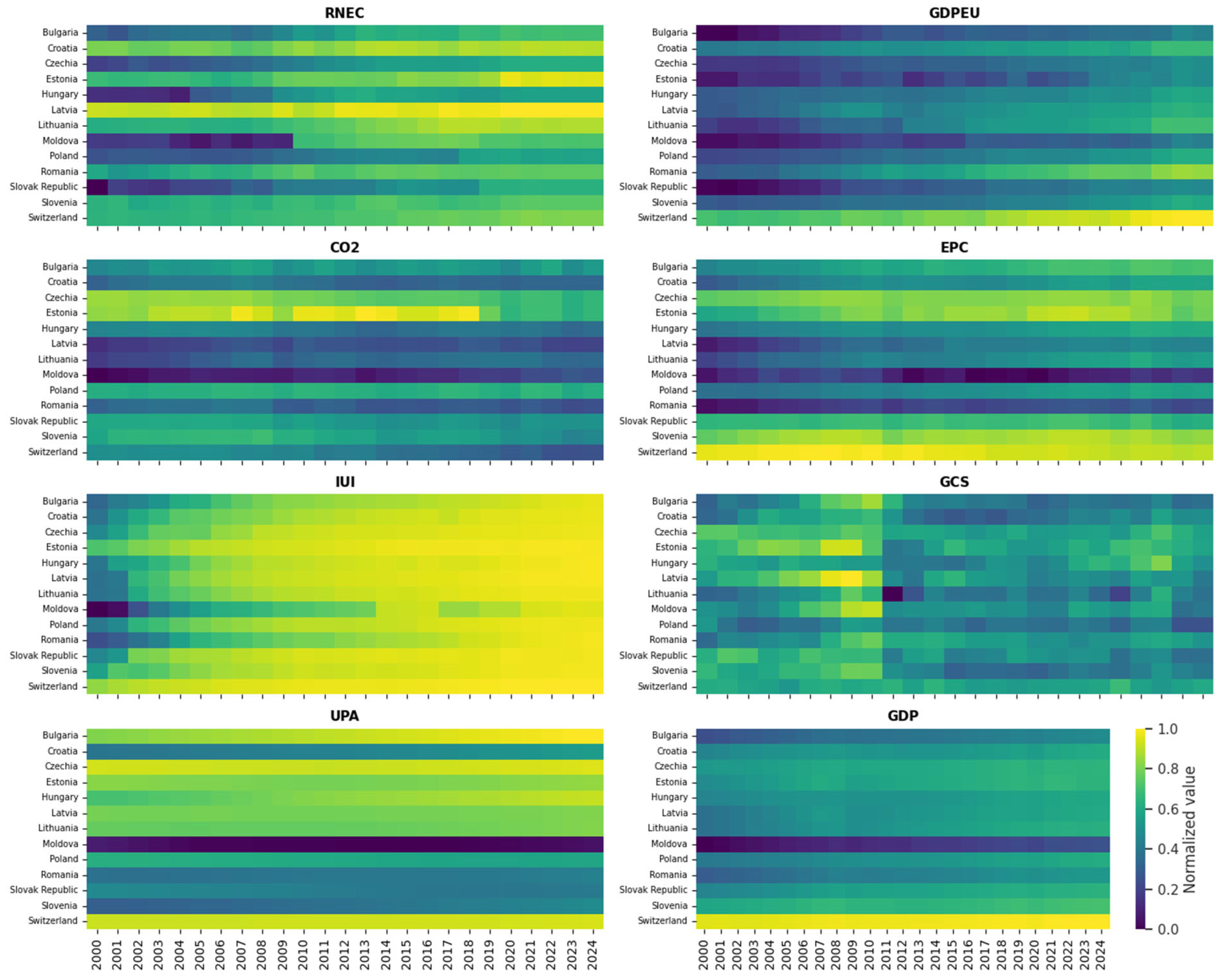
| RNEC | Renewable energy consumption (% of total final energy consumption) | Indicates how much of a country’s energy mix is renewable | Higher values = stronger renewable adoption |
| GDPEU | GDP per unit of energy use (constant 2021 PPP $ per kg of oil equivalent) | Measures efficiency of energy use in generating economic output | Higher values = greater efficiency |
| CO2 | Carbon dioxide (CO2) emissions excluding LULUCF per capita (t CO2e/capita) | Environmental impact of energy consumption | Higher values = higher environmental pressure |
| EPC | Electric power consumption (kWh per capita) | Overall energy demand per capita | Higher values = more energy-intensive economies |
| IUI | Individuals using the Internet (% of population) | Digitalization level | Higher values = more advanced digital capabilities |
| GCS | Gross capital formation (% of GDP) | Investment capacity | Higher values = stronger capital accumulation |
| UPA | Urban population (% of total) | Degree of urbanization | Higher values = more urbanized society |
| GDP | GDP per capita (constant 2015 US$) | Economic development | Higher values = richer economies |
| RNEC | GDPEU | CO2 | EPC | IUI | GCS | UPA | GDP | |
|---|---|---|---|---|---|---|---|---|
| Mean | 2.85 | 2.44 | 1.78 | 8.37 | 3.91 | 3.21 | 4.12 | 9.45 |
| Median | 2.92 | 2.42 | 1.77 | 8.38 | 4.21 | 3.20 | 4.20 | 9.46 |
| Maximum | 3.78 | 3.48 | 2.85 | 9.01 | 4.57 | 3.77 | 4.34 | 11.41 |
| Minimum | 1.30 | 1.69 | 0.85 | 7.53 | 0.24 | 2.56 | 3.74 | 7.20 |
| Std. dev. | 0.54 | 0.36 | 0.42 | 0.38 | 0.74 | 0.17 | 0.16 | 0.78 |
| Skewness | −0.67 | 0.44 | 0.33 | −0.26 | −2.04 | 0.30 | −0.72 | 0.15 |
| Kurtosis | 2.86 | 3.11 | 2.66 | 2.19 | 7.41 | 3.49 | 2.62 | 4.49 |
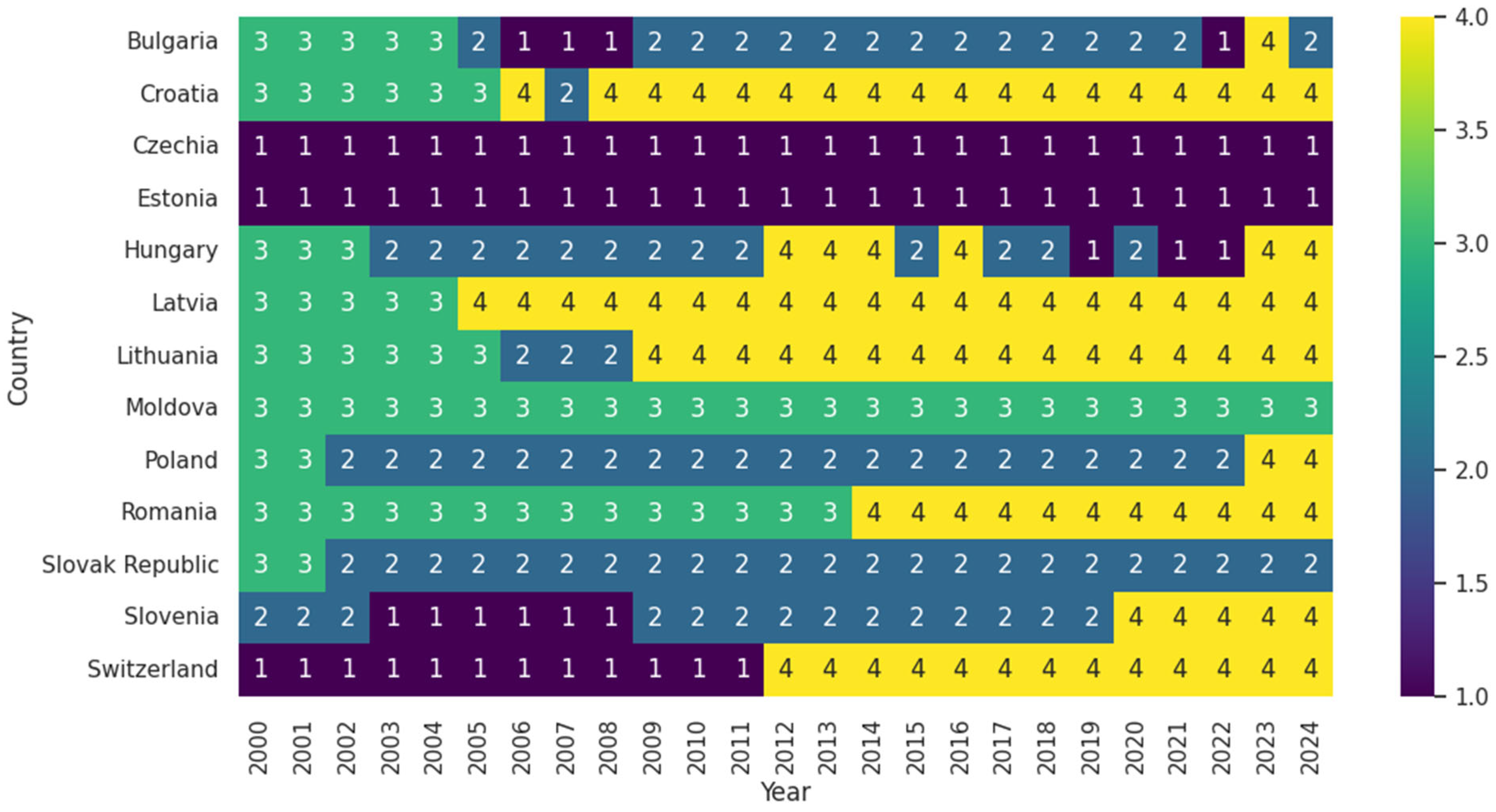
| Cluster | Countries | Membership |
|---|---|---|
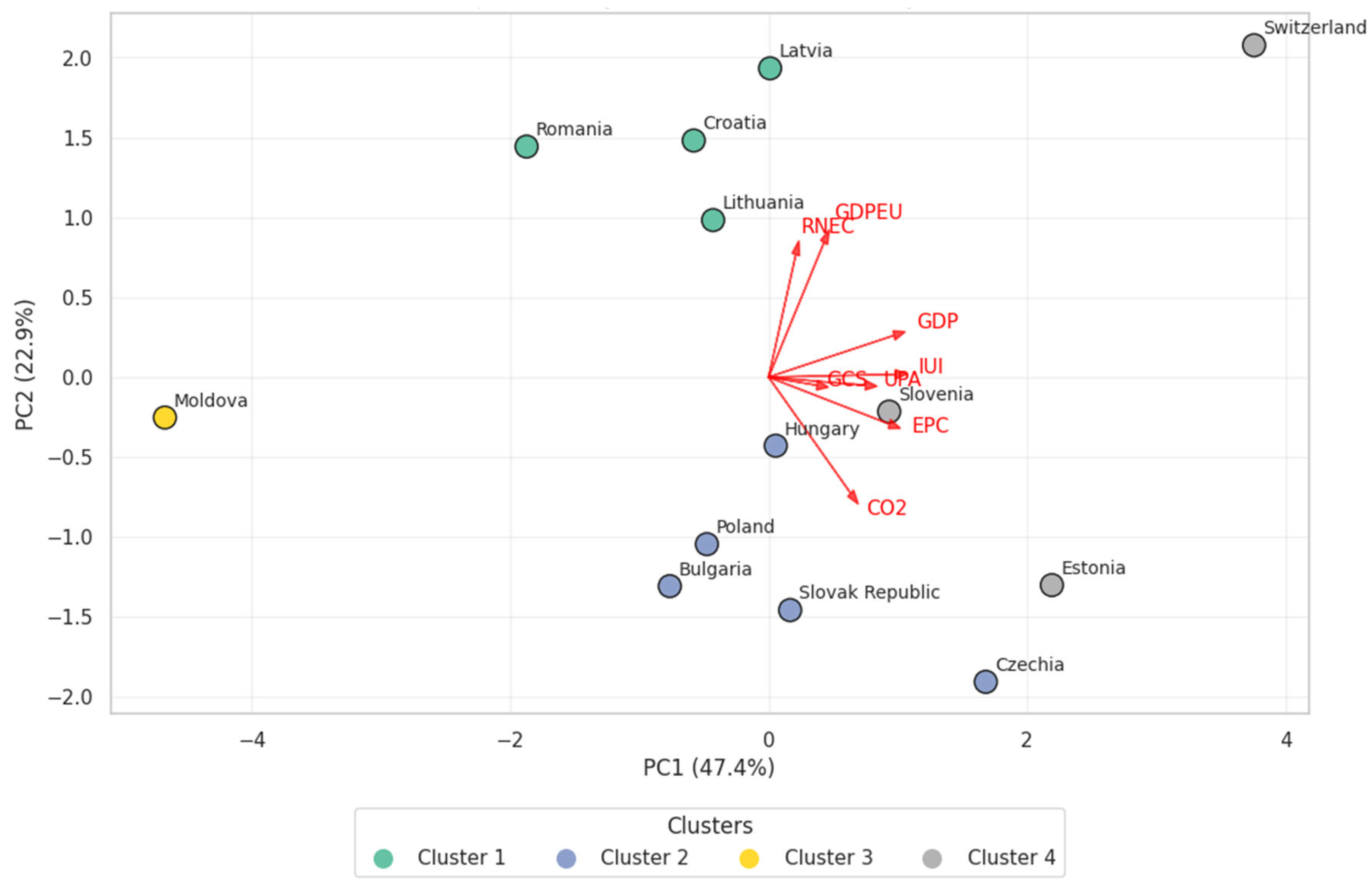
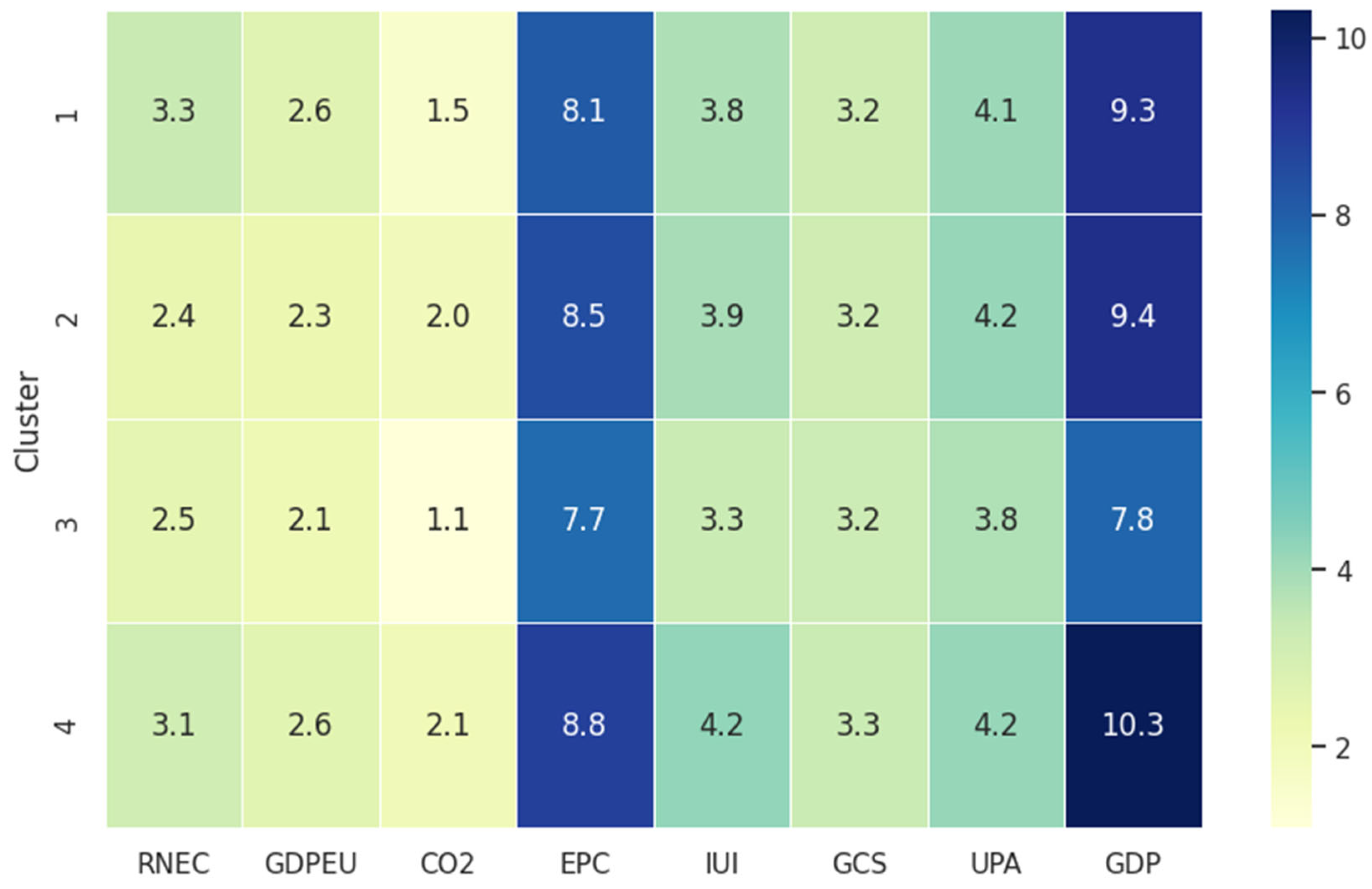
| 1 | Croatia, Latvia, Lithuania, Romania | 0.81 |
| 2 | Bulgaria, Czechia, Hungary, Poland, Slovak Republic | 0.69 |
| 3 | Moldova | 0.99 |
| 4 | Estonia, Slovenia, Switzerland | 0.65 |
| ML | Accuracy | Precision | Recall | F1-Score |
|---|---|---|---|---|
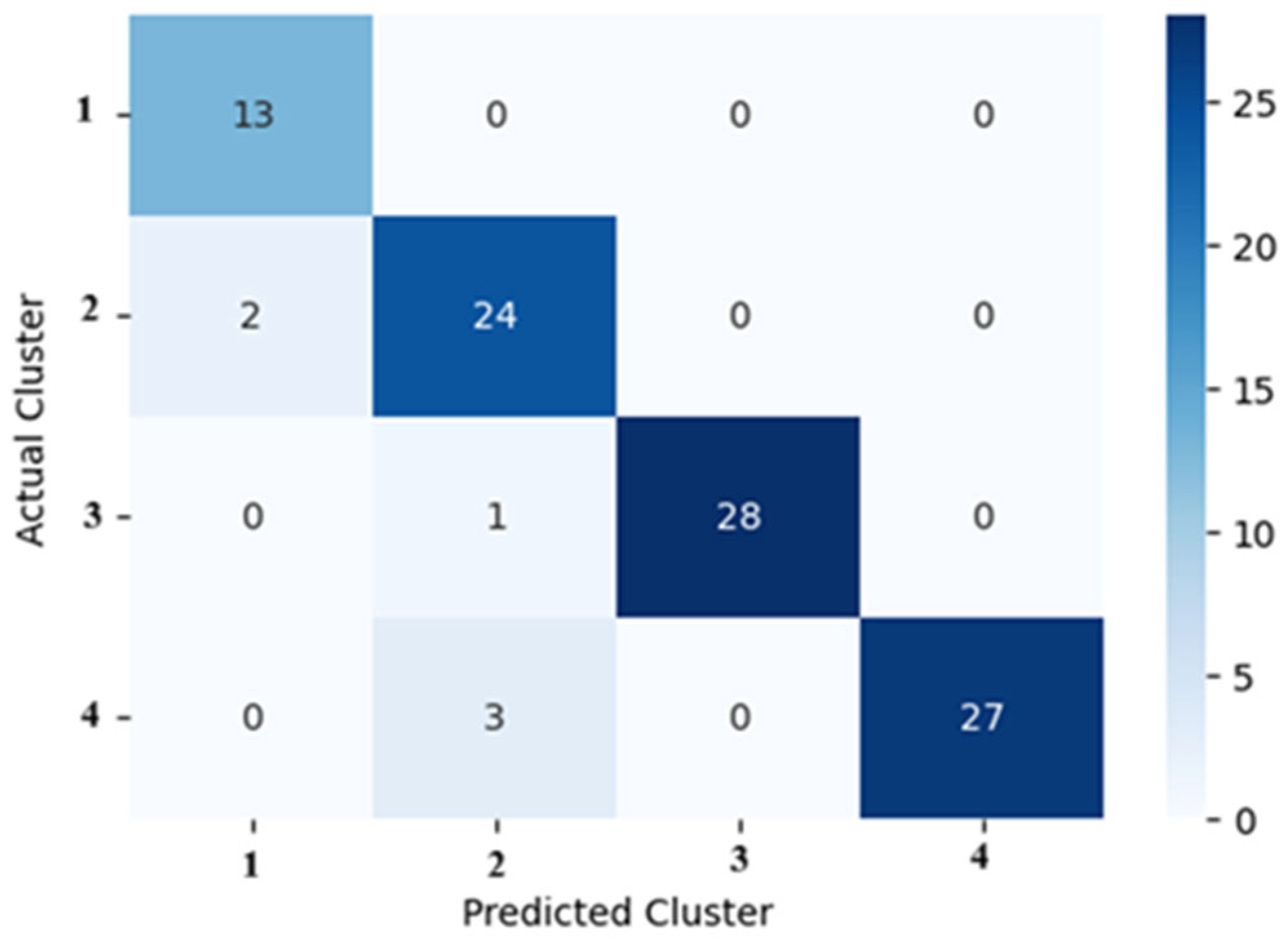
| Random Forest | 0.94 | 0.93 | 0.95 | 0.94 |
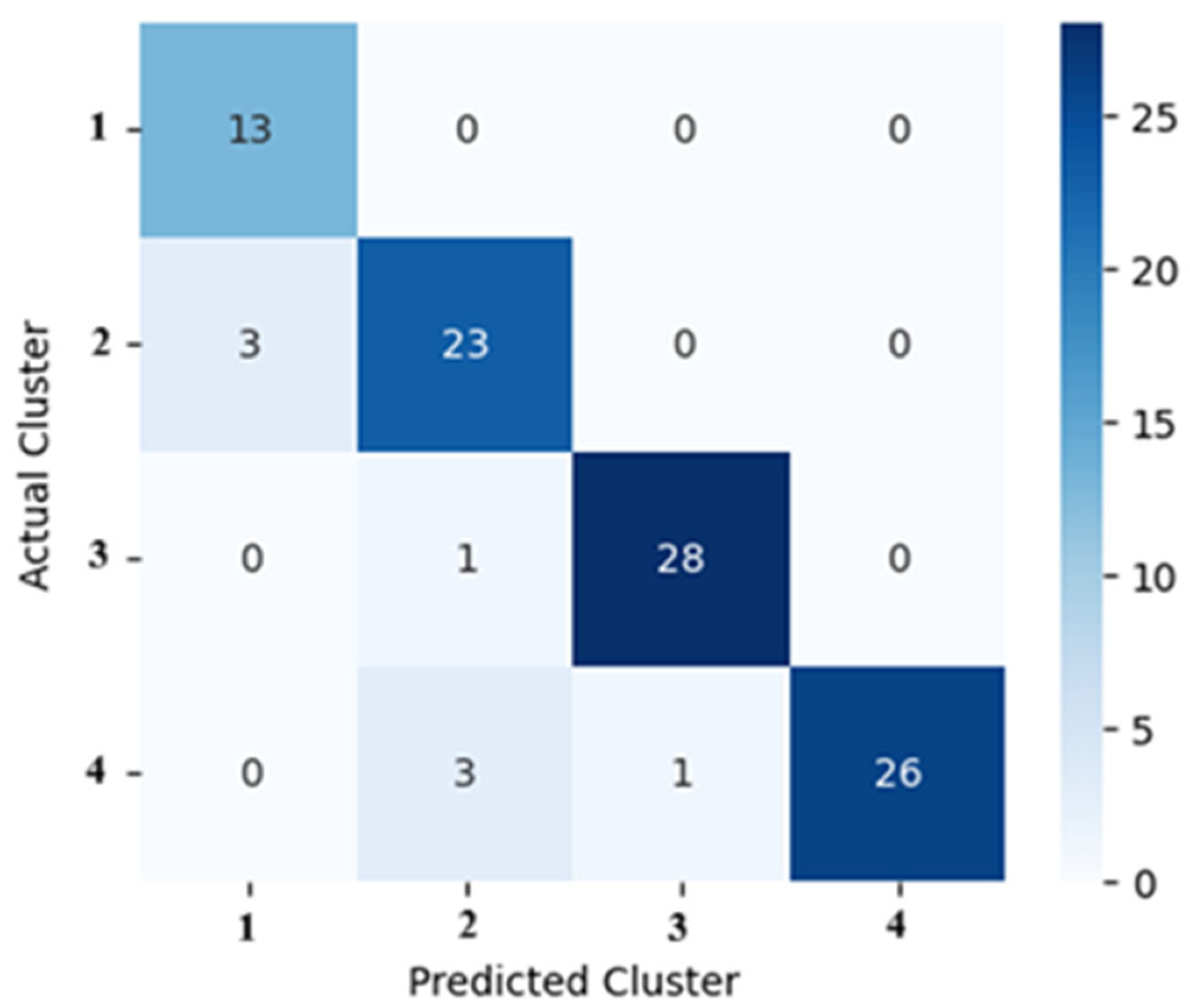
| XGBoost | 0.92 | 0.91 | 0.93 | 0.91 |
Disclaimer/Publisher’s Note: The statements, opinions and data contained in all publications are solely those of the individual author(s) and contributor(s) and not of MDPI and/or the editor(s). MDPI and/or the editor(s) disclaim responsibility for any injury to people or property resulting from any ideas, methods, instructions or products referred to in the content. |
© 2026 by the authors. Licensee MDPI, Basel, Switzerland. This article is an open access article distributed under the terms and conditions of the Creative Commons Attribution (CC BY) license.
Share and Cite
Nica, I.; Georgescu, I.; Kinnunen, J. A Fuzzy-Machine Learning Framework for Energy Efficiency Optimization and Smart Transition Analysis in European Economies. Electronics 2026, 15, 276. https://doi.org/10.3390/electronics15020276
Nica I, Georgescu I, Kinnunen J. A Fuzzy-Machine Learning Framework for Energy Efficiency Optimization and Smart Transition Analysis in European Economies. Electronics. 2026; 15(2):276. https://doi.org/10.3390/electronics15020276
Chicago/Turabian StyleNica, Ionuț, Irina Georgescu, and Jani Kinnunen. 2026. "A Fuzzy-Machine Learning Framework for Energy Efficiency Optimization and Smart Transition Analysis in European Economies" Electronics 15, no. 2: 276. https://doi.org/10.3390/electronics15020276
APA StyleNica, I., Georgescu, I., & Kinnunen, J. (2026). A Fuzzy-Machine Learning Framework for Energy Efficiency Optimization and Smart Transition Analysis in European Economies. Electronics, 15(2), 276. https://doi.org/10.3390/electronics15020276