A TPU-Based 3D Printed Robotic Hand: Design and Its Impact on Human–Robot Interaction



Abstract
1. Introduction
- Provides an experimental comparison of anthropomorphic robotic hands with identical structural designs but distinct material compositions (TPU vs. PLA), highlighting their differential impact on user experience.
- Employs a hybrid HRI evaluation framework that integrates quantitative measures (e.g., 5-point Likert scales, paired t-tests) with qualitative analyses, including open-ended emotional feedback and suggestions for improvement.
- Demonstrates empirically that user-perceived tactile and emotional characteristics of robotic hand materials significantly influence trust, emotional acceptance, and the overall quality of interaction.
2. Related Work
3. Implementation
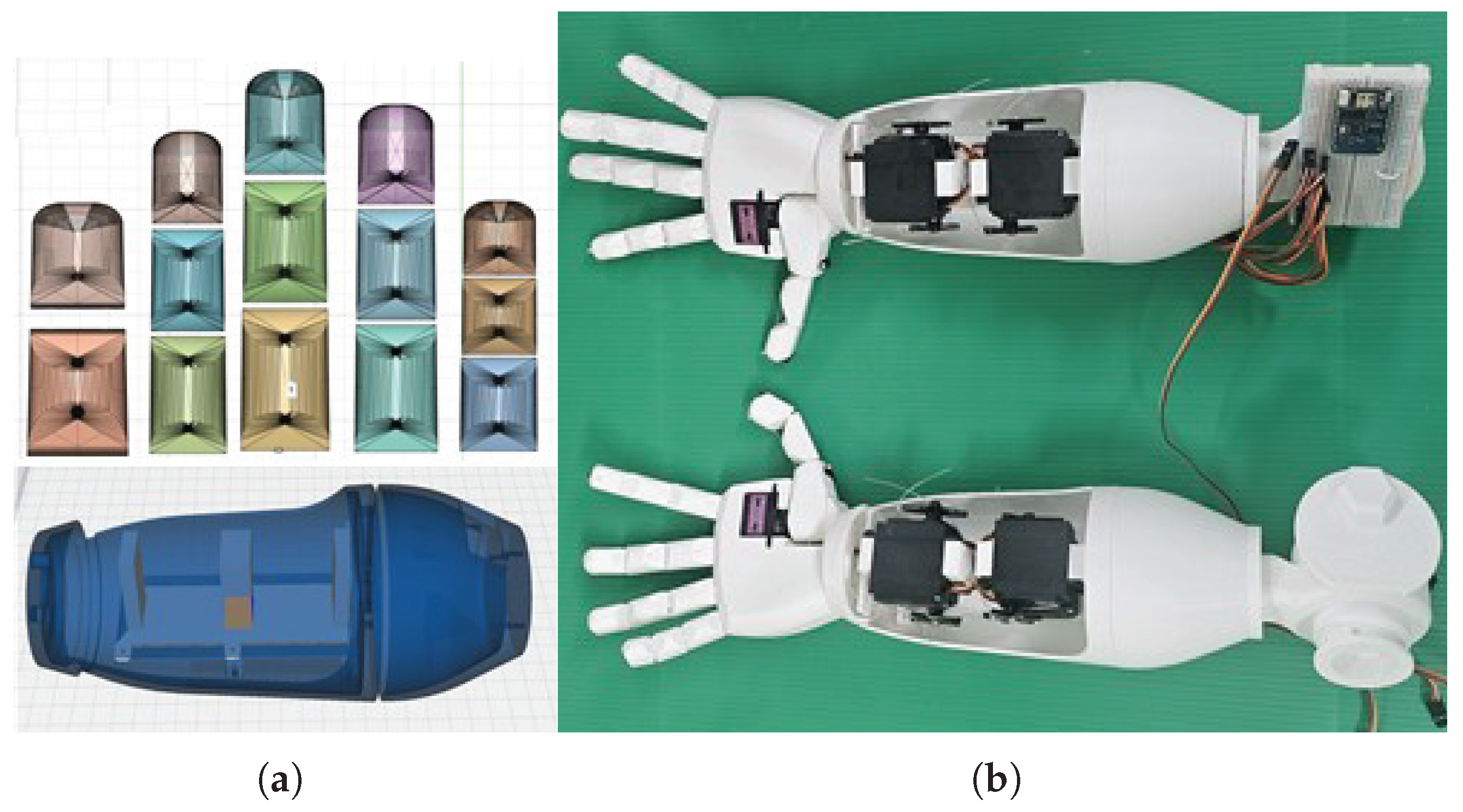
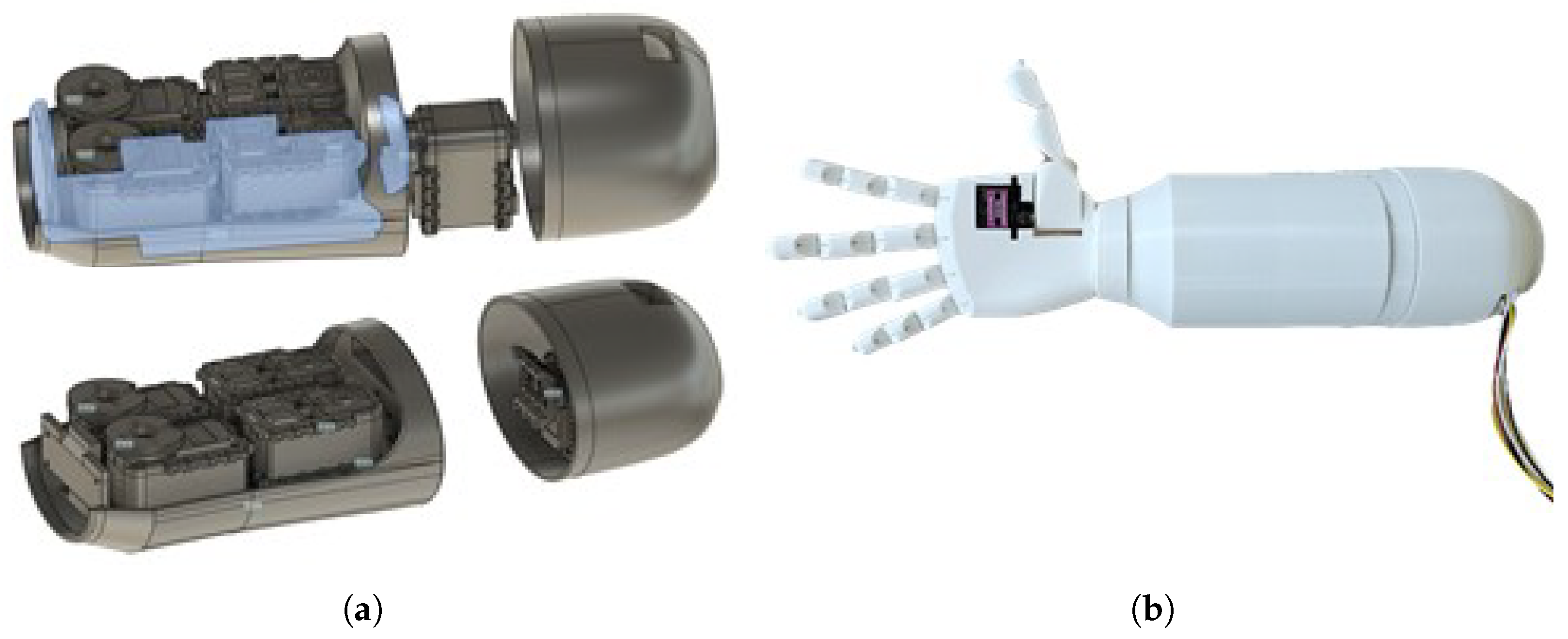
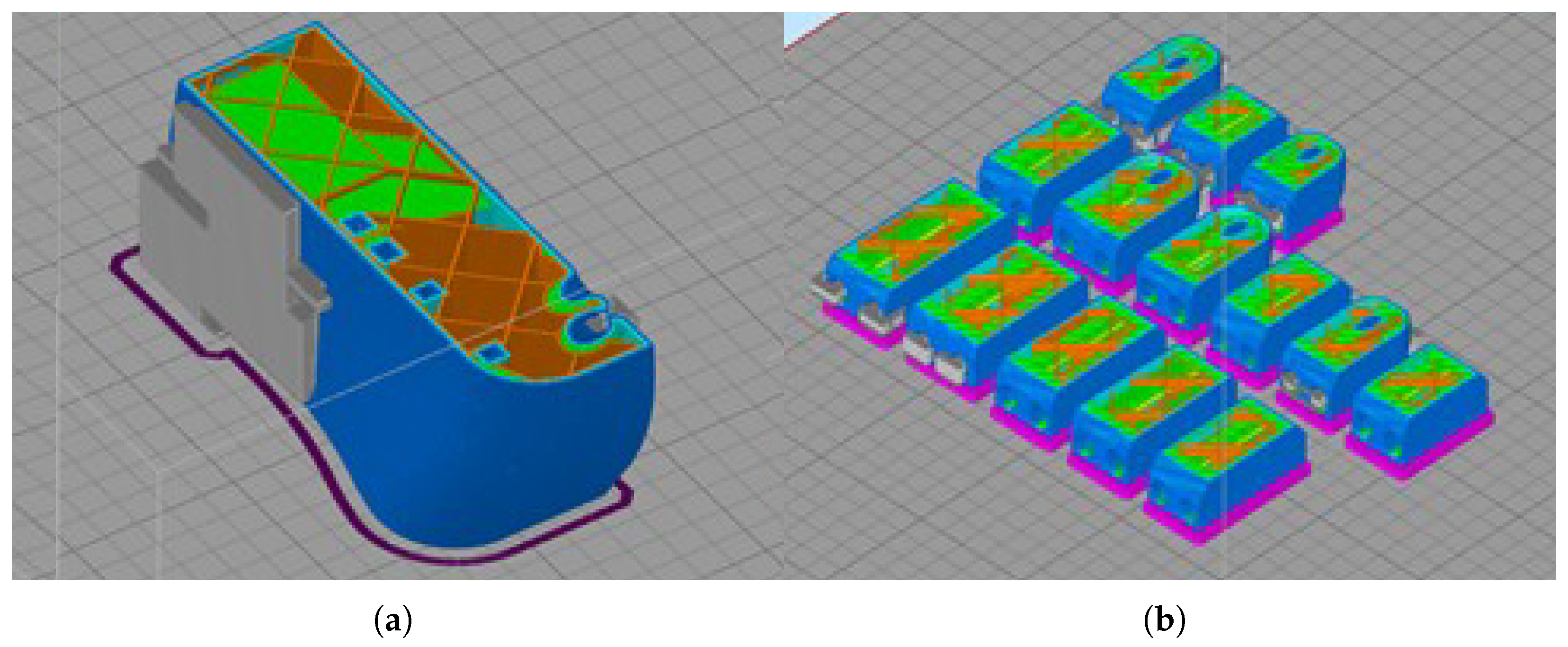
3.1. Robotic Hand Design and Fabrication
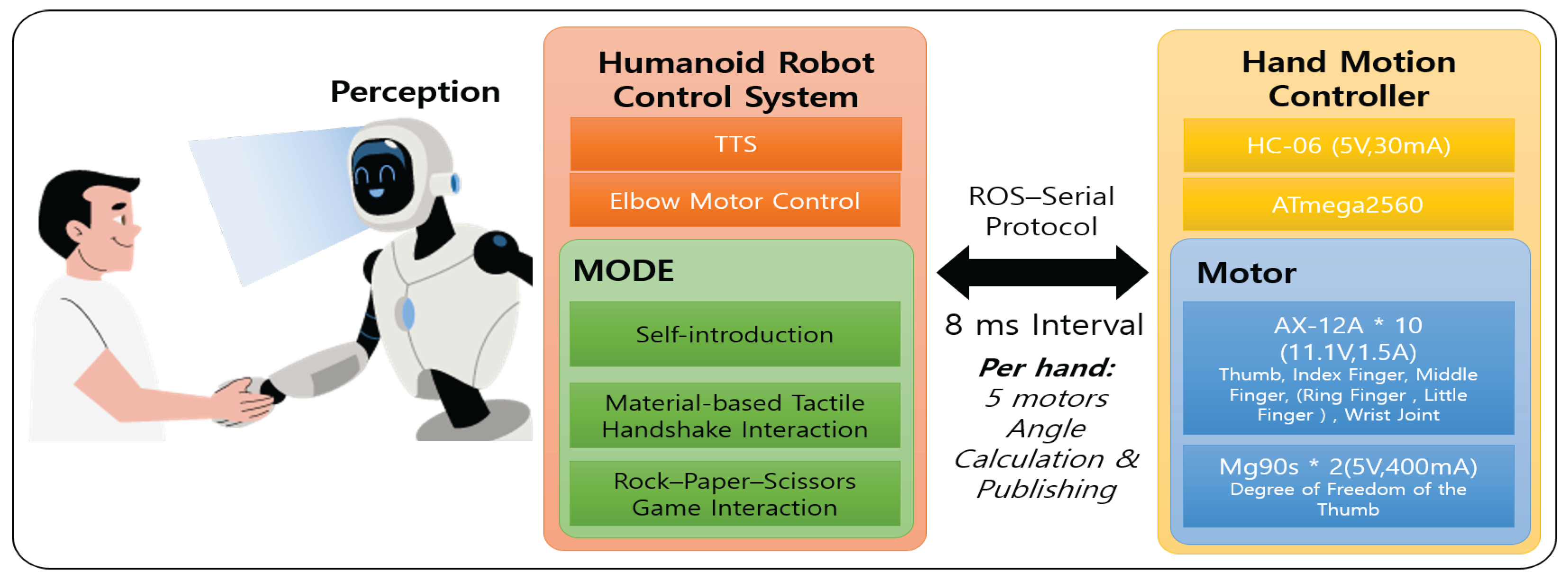
3.2. Hardware Configuration and Control Architecture
3.3. System Integration and Real-Time ROS Communication
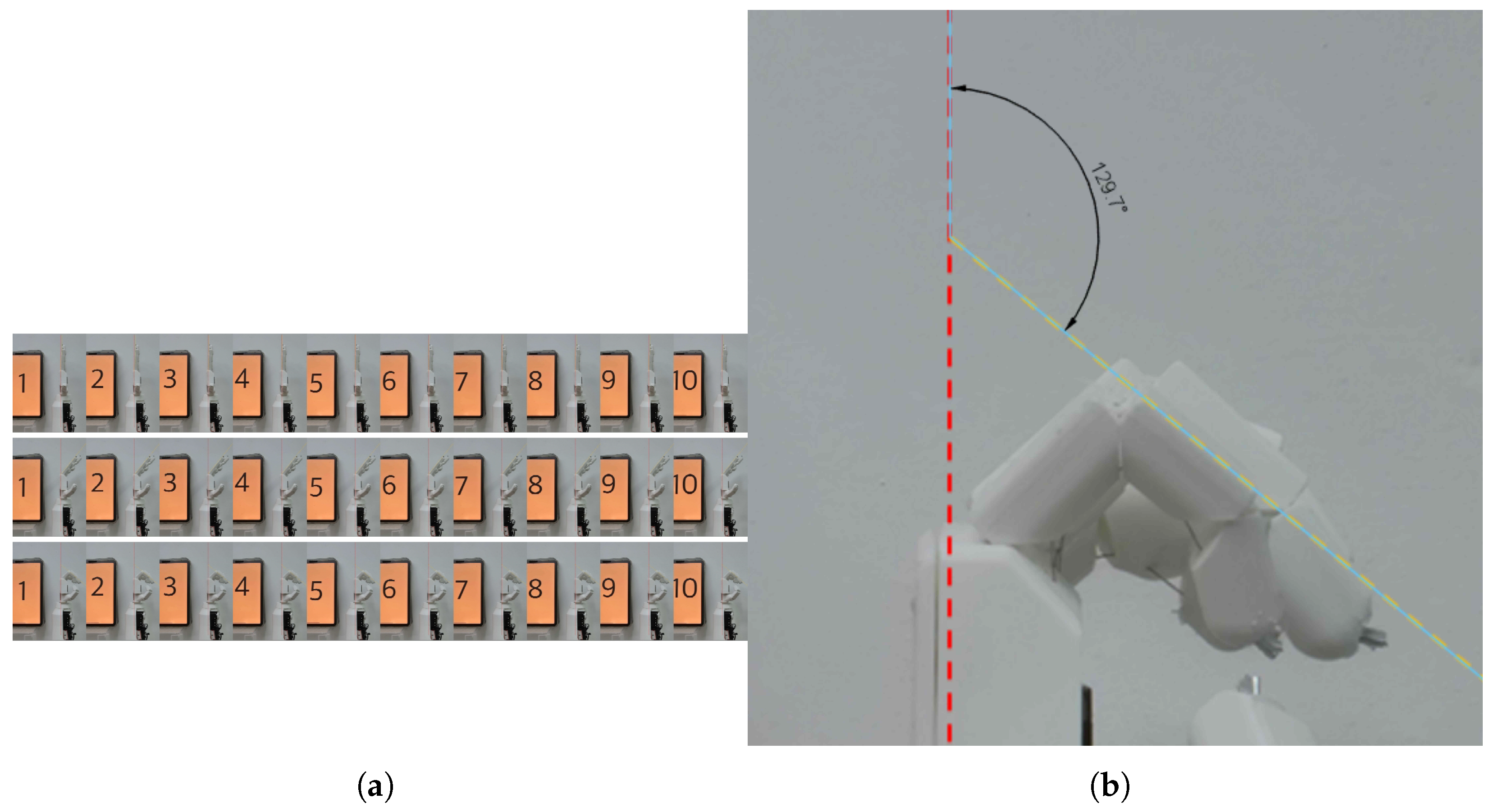
3.4. Gesture-Based Repetition Test and Joint Angle Analysis
- The Paper (Open) gesture demonstrated the lowest error, with a mean angle of 1.45°, a standard deviation of 0.25°, and a standard error of 0.078°. This high precision is attributed to minimal structural constraints and reduced friction.
- The Scissors (Partial Flexion) gesture maintained a high level of consistency, despite its intermediate flexed configuration.
- The Rock (Closed) gesture, which involves multiple joint movements, exhibited acceptable precision within the expected error margin.
3.5. Custom PCB Design for Integrated Robotic Hand Control
4. Evaluation
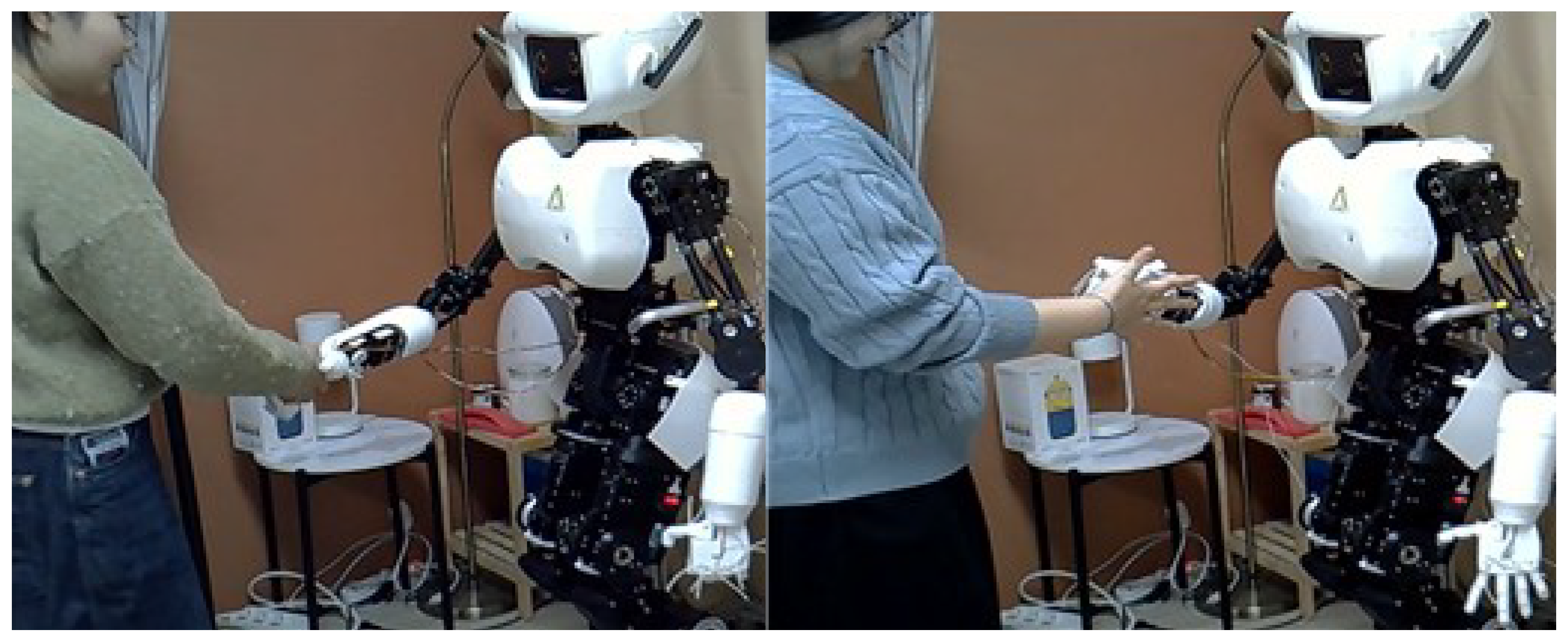
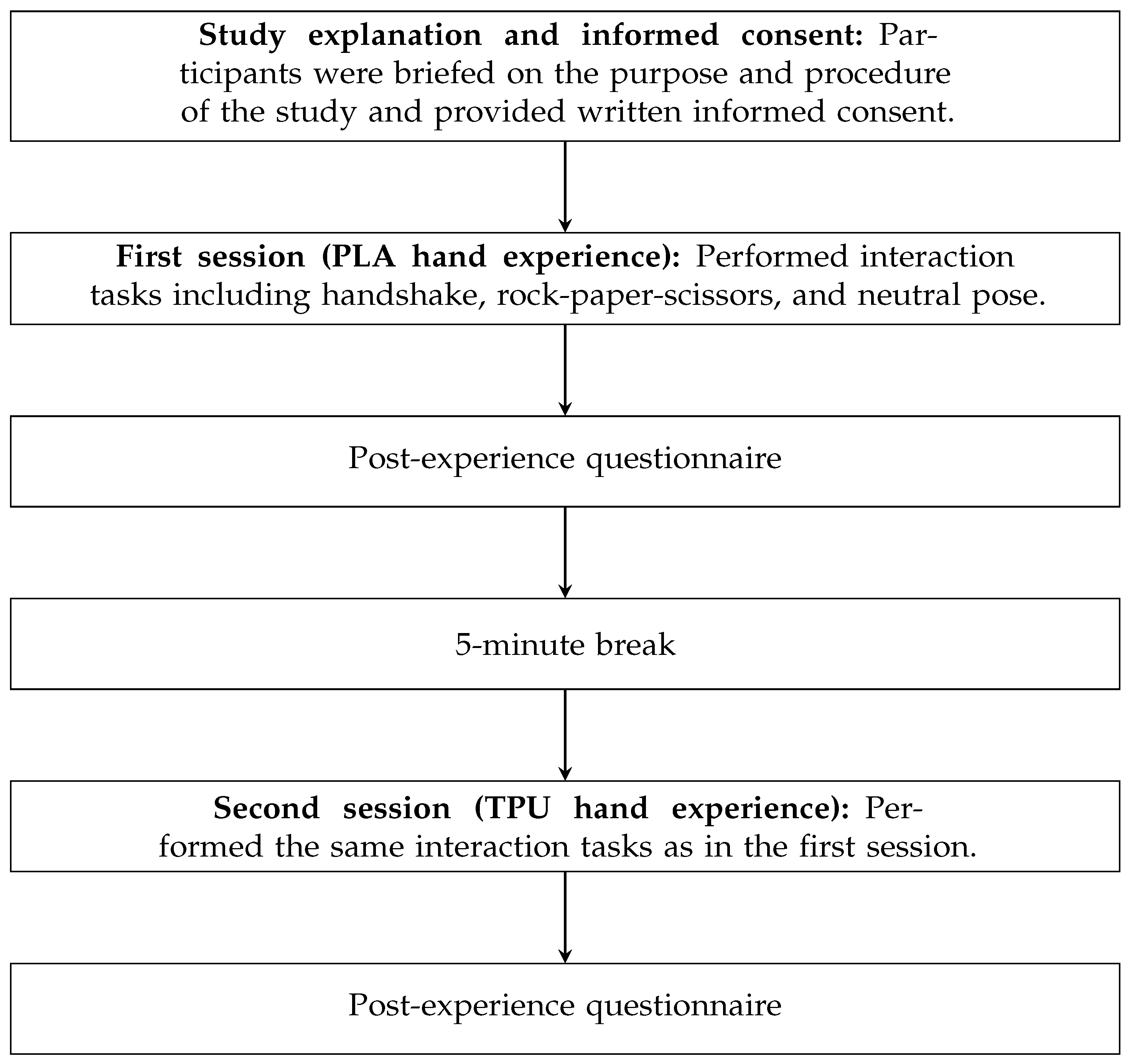
4.1. Experimental Design
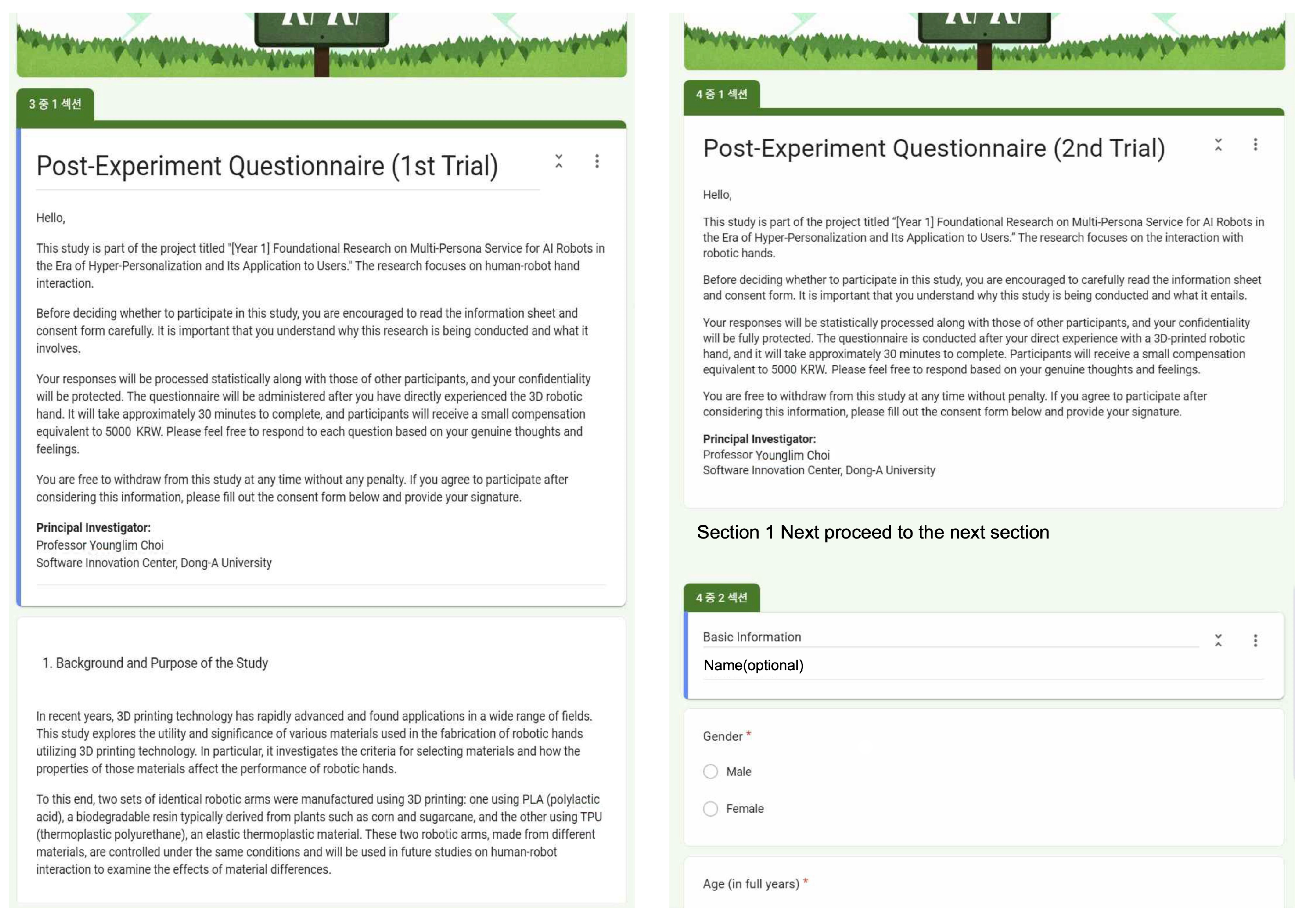
4.2. Data Collection and Analysis Methods
- Motion consistency
- Response speed
- Grip force satisfaction
- Surface texture satisfaction
- Hardness satisfaction
4.3. Experimental Results
4.4. Experimental Discussion
5. Conclusions and Future Work
Author Contributions
Funding
Data Availability Statement
Conflicts of Interest
References
- Goodrich, M.A.; Schultz, A.C. Human-robot interaction: A survey. Found. Trends Hum.-Comput. Interact. 2007, 1, 203–275. [Google Scholar] [CrossRef]
- Pu, Y.; Zheng, S.; Hu, X.; Tang, S.; An, N. Robotic skins inspired by auxetic metamaterials for programmable bending of soft actuators. Mater. Des. 2024, 246, 113334. [Google Scholar] [CrossRef]
- Gamboa-Montero, J.J.; Carrasco-Martinez, S.; Fernandez-Rodicio, E.; Alonso-Martin, F.; Castillo, J.C. Evaluating the effects of active social touch and robot expressiveness on user attitudes and behaviour in human–robot interaction. Sci. Rep. 2025, 15, 18483. [Google Scholar] [CrossRef]
- Tsirka, C.; Velentza, A.M.; Fachantidis, N. Touch in Human Social Robot Interaction: Systematic Literature Review with PRISMA Method. Int. J. Soc. Robot. 2025, 17, 2803–2825. [Google Scholar] [CrossRef]
- Iida, F.; Laschi, C. Soft Robotics: Challenges and Perspectives. In Proceedings of the European Future Technologies Conference and Exhibition, Budapest, Hungary, 4–6 May 2011. [Google Scholar]
- Dragan, A.D.; Bauman, S.; Forlizzi, J.; Srinivasa, S.S. Effects of Robot Motion on Human-Robot Collaboration. In Proceedings of the Tenth Annual ACM/IEEE International Conference on Human-Robot Interaction, Portland, OR, USA, 2–5 March 2015; Association for Computing Machinery: New York, NY, USA, 2015; HRI ’15, pp. 51–58. [Google Scholar] [CrossRef]
- Zheng, F. Learning the signatures of the human grasp using a scalable tactile glove. J. Semicond. 2019, 40, 070202. [Google Scholar] [CrossRef]
- Adeniji, A.; Chen, Z.; Liu, V.; Pattabiraman, V.; Bhirangi, R.; Haldar, S.; Abbeel, P.; Pinto, L. Feel the Force: Contact-Driven Learning from Humans. arXiv 2025, arXiv:2506.01944. [Google Scholar] [CrossRef]
- Xue, H.; Ren, J.; Chen, W.; Zhang, G.; Fang, Y.; Gu, G.; Xu, H.; Lu, C. Reactive Diffusion Policy: Slow-Fast Visual-Tactile Policy Learning for Contact-Rich Manipulation. arXiv 2025, arXiv:2503.02881. [Google Scholar] [CrossRef]
- Laschi, C.; Cianchetti, M. Soft Robotics: New Perspectives for Robot Bodyware and Control. Front. Bioeng. Biotechnol. 2014, 2, 3. [Google Scholar] [CrossRef] [PubMed]
- Kim, S.; Laschi, C.; Trimmer, B. Soft robotics: A bioinspired evolution in robotics. Trends Biotechnol. 2013, 31, 287–294. [Google Scholar] [CrossRef]
- Zhu, Z.; Wang, D.; Zhang, M.; Dong, L.; Yu, Q.; Jiang, C.; Zhu, X.; Chen, M.; Zhou, K.; Gu, G. Multimaterial 3D printed soft robots with embedded actuation and sensing. Sci. Adv. 2025, 11. [Google Scholar] [CrossRef]
- Yap, H.K.; Ng, H.Y.; Yeow, C.H. High-Force Soft Printable Pneumatics for Soft Robotic Applications. Soft Robot. 2016, 3, 144–158. [Google Scholar] [CrossRef]
- Grignaffini, L.; van der Kooij, H.; Sadeghi, A. A New Approach for Multi-Material Additive Manufacturing of a Sensorized Hybrid Soft Robotic Hand. In Proceedings of the 2024 10th IEEE RAS/EMBS International Conference for Biomedical Robotics and Biomechatronics (BioRob), Heidelberg, Germany, 1–4 September 2024. [Google Scholar] [CrossRef]
- Galindo, B.; Gil Alcolea, S.; Gómez, J.; Navas, A.; Murguialday, A.O.; Fernandez, M.P.; Puelles, R.C. Effect of the number of layers of graphene on the electrical properties of TPU polymers. IOP Conf. Ser. Mater. Sci. Eng. 2014, 64, 012008. [Google Scholar] [CrossRef]
- Palabiyik, E.; Tekay, E. Design and Characterization of TPU and Methacrylic Polymer Blends for Heat Triggered Shape Memory Applications. Polym. Eng. Sci. 2025, 36, e70214. [Google Scholar] [CrossRef]
- Zhou, L.Y.; Fu, J.; He, Y. A Review of 3D Printing Technologies for Soft Polymer Materials. Adv. Funct. Mater. 2020, 30, 2000187. [Google Scholar] [CrossRef]
- Huang, Y.; Xue, Y.; Wang, X.; Han, F. Mechanical behavior of three-dimensional pyramidal aluminum lattice materials. Mater. Sci. Eng. A 2017, 696, 520–528. [Google Scholar] [CrossRef]
- Mutlu, R.; Tawk, C.; Alici, G.; Sariyildiz, E. A 3D printed monolithic soft gripper with adjustable stiffness. In Proceedings of the IECON 2017—43rd Annual Conference of the IEEE Industrial Electronics Society, Beijing, China, 29 October–1 November 2017; IEEE Press: New York, NY, USA, 2017; pp. 6235–6240. [Google Scholar] [CrossRef]
- Scharff, R.; Doubrovski, E.; Poelman, W.; Jonker, P.; Wang, C.; Geraedts, J. Towards behavior design of a 3D-printed soft robotic hand. In Soft Robotics: Trends, Applications and Challenges, Proceedings of the Soft Robotics Week, Livorno, Italy, 25–30 April 2016; Laschi, C., Rossiter, J., Lida, F., Eds.; Biosystems & Biorobotics, Springer Nature: Berlin/Heidelberg, Germany, 2016; pp. 23–29. [Google Scholar] [CrossRef]
- Jung, I.; Lee, S. Characterization of 3D printed re-entrant midsole structure with various infill density and print direction. Sci. Rep. 2025, 15, 43719. [Google Scholar] [CrossRef]
- Wang, H.; Du, J.; Mao, Y. Hydrogel-Based Continuum Soft Robots. Gels 2025, 11, 254. [Google Scholar] [CrossRef] [PubMed]
- Zhang, N.; Zhou, P.; Yang, X.; Shen, F.; Ren, J.; Hou, T.; Dong, L.; Bian, R.; Wang, D.; Gu, G.; et al. Biomimetic rigid-soft finger design for highly dexterous and adaptive robotic hands. Sci. Adv. 2025, 11, eadu2018. [Google Scholar] [CrossRef]
- Mutlu, R.; Yildiz, S.K.; Alici, G.; in het Panhuis, M.; Spinks, G.M. Mechanical Stiffness Augmentation of a 3D Printed Soft Prosthetic Finger. In Proceedings of the IEEE/ASME International Conference on Advanced Intelligent Mechatronics (AIM), Banff, AB, Canada, 12–15 July 2016; IEEE: New York, NY, USA, 2016; pp. 7–12. [Google Scholar] [CrossRef]
- Choi, Y.R.; Park, Y.E.; Kim, J.W.; Lee, S. A Study on the Controller Design of 3D Printed Robot Hand using TPU Material. J. Korean Soc. Cloth. Text. 2024, 48, 312–327. [Google Scholar] [CrossRef]
- Cavallo, F.; Semeraro, F.; Fiorini, L.; Magyar, G.; Sincak, P.; Dario, P. Emotion Modelling for Social Robotics Applications: A Review. J. Bionic Eng. 2018, 15, 185–203. [Google Scholar] [CrossRef]
- Frohn-Sörensen, P.; Schreiber, F.; Manns, M.; Knoche, J.; Engel, B. Additive Manufacturing of TPU Pneu-Nets as Soft Robotic Actuators. In Towards Sustainable Customization: Bridging Smart Products and Manufacturing Systems, Proceedings of the CARV 2021 and MCPC 2021, Aalborg, Denmark, 31 October–1 November 2021; Lecture Notes in Mechanical Engineering; Springer: Berlin/Heidelberg, Germany, 2021; pp. 269–276. [Google Scholar] [CrossRef]
- Wang, D.; Wang, J.; Shen, Z.; Jiang, C.; Zou, J.; Dong, L.; Fang, N.X.; Gu, G. Soft Actuators and Robots Enabled by Additive Manufacturing. Annu. Rev. Control. Robot. Auton. Syst. 2023, 6, 31–63. [Google Scholar] [CrossRef]
- Dautenhahn, K. Socially intelligent robots: Dimensions of human–robot interaction. Philos. Trans. R. Soc. B Biol. Sci. 2007, 362, 679–704. [Google Scholar] [CrossRef] [PubMed]
- Fong, T.; Nourbakhsh, I.; Dautenhahn, K. A survey of socially interactive robots. Robot. Auton. Syst. 2003, 42, 143–166. [Google Scholar] [CrossRef]
- Silvera-Tawil, D.; Rye, D.; Velonaki, M. Artificial skin and tactile sensing for socially interactive robots: A review. Robot. Auton. Syst. 2015, 63, 230–243. [Google Scholar] [CrossRef]
- Sabinsson, E.; Green, K.E. How Do We Feel? User Perceptions of a Soft Robot Surface for Regulating Human Emotion in Confined Living Spaces. In Proceedings of the 30th IEEE International Conference on Robot & Human Interactive Communication (RO-MAN), Vancouver, BC, Canada, 8–12 August 2021. [Google Scholar] [CrossRef]
- Stock-Homburg, R. Survey of Emotions in Human-Robot Interactions: Perspectives from Robotic Psychology on 20 Years of Research. Int. J. Soc. Robot. 2022, 14, 389–411. [Google Scholar] [CrossRef]
- Corradini, F.; Leonesi, M.; Piangerelli, M. State of the Art and Future Directions of Small Language Models: A Systematic Review. Big Data Cogn. Comput. 2025, 9, 189. [Google Scholar] [CrossRef]
- Olugbade, T.; He, L.; Maiolino, P.; Heylen, D.; Bianchi-Berthouze, N. Touch Technology in Affective Human–, Robot–, and Virtual–Human Interactions: A Survey. Proc. IEEE 2023, 111, 1333–1354. [Google Scholar] [CrossRef]
- ASTM D638-22; Standard Test Method for Tensile Properties of Plastics. ASTM International: West Conshohocken, PA, USA, 2022.
- Jung, I.; Park, Y.; Choi, Y.R.; Kim, J.W.; Lee, S. A Study on the Motion Control of 3D Printed Fingers. Korean Fash. Text. Res. J. 2022, 24, 333–345. [Google Scholar] [CrossRef]
- Singh, S.; Ramakrishna, S.; Singh, R. Material issues in additive manufacturing: A review. J. Manuf. Process. 2017, 25, 185–200. [Google Scholar] [CrossRef]
- De Marzi, A.; Vibrante, M.; Bottin, M.; Franchin, G. Development of robot assisted hybrid additive manufacturing technology for the freeform fabrication of lattice structures. Addit. Manuf. 2023, 66, 103456. [Google Scholar] [CrossRef]
- Alhijaily, A.; Kilic, Z.M.; Bartolo, A.N.P. Teams of robots in additive manufacturing: A review. Virtual Phys. Prototyp. 2023, 18, e2162929. [Google Scholar] [CrossRef]
- Rabalo, M.; Rubio, E.; Agustina, B.; Camacho, A. Hybrid additive and subtractive manufacturing: Evolution of the concept and last trends in research and industry. Procedia CIRP 2023, 118, 741–746. [Google Scholar] [CrossRef]
- Ben Said, L.; Ayadi, B.; Alharbi, S.; Dammak, F. Recent Advances in Additive Manufacturing: A Review of Current Developments and Future Directions. Machines 2025, 13, 813. [Google Scholar] [CrossRef]
- Arobot4All. ALICE 3 Humanoid Robot. 2025. Available online: https://www.arobot4all.com/ALICE3 (accessed on 19 May 2025).
- Corrales-Paredes, A.; Sanz, D.O.; Terrón-López, M.J.; Egido-García, V. User Experience Design for Social Robots: A Case Study in Integrating Embodiment. Sensors 2023, 23, 5274. [Google Scholar] [CrossRef] [PubMed]
- Wang, Z.; Torigoe, Y.; Hirai, S. A Prestressed Soft Gripper: Design, Modeling, Fabrication, and Tests for Food Handling. IEEE Robot. Autom. Lett. 2017, 2, 1909–1916. [Google Scholar] [CrossRef]
- Bo, V.; Turco, E.; Pozzi, M.; Malvezzi, M.; Prattichizzo, D. A Data-Driven Topology Optimization Framework for Designing Robotic Grippers. In Proceedings of the 2023 IEEE International Conference on Soft Robotics (RoboSoft), Singapore, 3–7 April 2023; pp. 1–6. [Google Scholar] [CrossRef]



| Property | PLA | TPU | Improvement |
|---|---|---|---|
| Impact Absorption Energy (J/m2) | 18 J/m2 | 54 J/m2 | 300% |
| Fatigue Life (cycles) | 466% | ||
| Surface Hardness (Shore) | D75 | A95 | Improved similarity to skin tactile feel |
| Parameter | PLA Setting | TPU Setting | Recommended Range |
|---|---|---|---|
| Nozzle Temperature (°C) | 245 °C | 230 °C | 225–250 |
| Bed Temperature (°C) | 55 °C | 65 °C | – |
| Print Speed (mm/s) | 50 | 30 | 15–40 |
| Retraction Distance (mm) | 1 | 1.2 | 1–2 |
| Layer Height (mm) | 0.1 | 0.1 | ≤0.2 |
| Gesture | Mean Angle (°) | Standard Error (°) | Standard Deviation (°) |
|---|---|---|---|
| Paper (Open) | 1.45 | 0.078 | 0.25 |
| Scissors (Partial Flexion) | 38.85 | 0.085 | 0.27 |
| Rock (Closed) | 130.13 | 0.144 | 0.46 |
| Condition | Description |
|---|---|
| Inclusion Criteria | Undergraduate students and members of the general public affiliated with Dong-A University, aged between 19 and 65 |
| Total Participants | 48 recruited → 1 excluded due to invalid response → Final analysis with 47 participants |
| Exclusion Criteria | Participants unable to complete the questionnaire |
| Evaluation Category | Key Questionnaire Items |
|---|---|
| Motion Consistency | Predictability of movement, accuracy in object manipulation |
| Grip Force | Appropriateness of force control, satisfaction with grip strength |
| Response Speed | Satisfaction with the robot hand’s response time |
| Surface Texture Satisfaction | Perception of the hand’s tactile feel and texture |
| Hardness Satisfaction | Subjective evaluation of the hand’s firmness |
| Emotional Response & Preference | Overall emotional reaction, subjective comfort, material preference |
| Evaluation Category | Question No. | Summary of Questionnaire Item |
|---|---|---|
| 2. Grip force satisfaction | 3 | Did you feel the grip force was appropriately controlled? |
| 12 | Was the level of pressure appropriate? | |
| 15 | Was the grip strength sufficient? | |
| 3. Response speed | 17 | How would you rate the robot hand’s response speed? |
| 4. Surface texture satisfaction | 13 | Were you satisfied with the surface texture of the robot hand? |
| 5. Hardness satisfaction | 14 | Was the hardness of the robot hand at an appropriate level? |
| Item No. | Summary of Question | Purpose/Reason for Inclusion |
|---|---|---|
| 4 | Did the robot hand’s tactile sensation feel natural? | Assesses tactile realism as a separate emotional perception from overall surface satisfaction. |
| 5 | Was it comfortable to interact with the robot hand? | Emotional/affective response item for separate qualitative analysis. |
| 6 | Did you feel safe while using it? | Used for qualitative assessment of perceived safety and trust. |
| 7 | Did you enjoy the interaction? | Assesses emotional engagement and positive affect. |
| 8 | Did the interaction feel natural? | Evaluates overall fluency of the interaction; supports synthesis of qualitative impressions. |
| 9 | Overall satisfaction | Broad summary item; used as reference rather than core metric. |
| 10 | Did the tactile sensation feel natural? | Overlaps with Item 4; may be used separately or omitted due to redundancy. |
| 11 | Did it feel similar to a human hand? | Evaluates HRI-related subjective perception; part of qualitative assessment. |
| 18 | What emotions did you experience? | Open-ended emotional response; not suitable for quantitative analysis. |
| 19 | Did you feel uncomfortable or anxious? | Used as an indicator of negative emotion or psychological discomfort. |
| 20 | Suggestions for additional features | Open-ended input; used for exploratory analysis. |
| 21 | Any other suggestions or comments | General comments section; used for qualitative content analysis. |
| Evaluation Category | PLA Mean (5-Point Scale) | TPU Mean (5-Point Scale) |
|---|---|---|
| Motion consistency | 3.66 | 4.14 |
| Grip force | 3.79 | 4.38 |
| Response speed | 3.66 | 3.96 |
| Surface texture satisfaction | 2.87 | 4.23 |
| Hardness satisfaction | 2.87 | 4.40 |
| Evaluation Category | PLA Mean | TPU Mean | t-Value | p-Value | Sig. |
|---|---|---|---|---|---|
| Motion consistency | 3.66 | 4.14 | −3.453 | 0.0012 | Yes |
| Grip force | 3.79 | 4.38 | −5.529 | <0.001 | Yes |
| Response speed | 3.66 | 3.96 | −2.455 | 0.0179 | Yes |
| Surface texture | 2.87 | 4.23 | −9.672 | <0.001 | Yes |
| Hardness satisfaction | 2.87 | 4.40 | −10.313 | <0.001 | Yes |
| Emotion Type | PLA Example Response | TPU Example Response |
|---|---|---|
| Curiosity/Novelty | “It felt mechanical but interesting.” “The way the robot hand moved was strange but fun.” | “It felt like a real human hand, so it was fascinating.” “I was surprised by the natural movement.” |
| Discomfort/Alienation | “It felt stiff and uncomfortable.” | (Almost no responses) |
| Comfort | “It felt hard, but not as bad as I expected.” | “The touch was soft and comfortable.” “The gentle grasp felt just like a real human hand.” |
| Enjoyment/Fun | “Playing rock-paper-scissors was fun.” “Interacting with the robot hand was interesting.” | “The hand-grasping motion was fun and cute.” “It responded well, so I got immersed.” |
| Indifference/Neutral | “I just thought of it as a robot.” “I didn’t feel any particular emotion.” | “It didn’t feel very different, but it was natural.” |
Disclaimer/Publisher’s Note: The statements, opinions and data contained in all publications are solely those of the individual author(s) and contributor(s) and not of MDPI and/or the editor(s). MDPI and/or the editor(s) disclaim responsibility for any injury to people or property resulting from any ideas, methods, instructions or products referred to in the content. |
© 2026 by the authors. Licensee MDPI, Basel, Switzerland. This article is an open access article distributed under the terms and conditions of the Creative Commons Attribution (CC BY) license.
Share and Cite
Choi, Y.; Lee, M.; Yea, S.; Kim, S.; Kim, H. A TPU-Based 3D Printed Robotic Hand: Design and Its Impact on Human–Robot Interaction. Electronics 2026, 15, 262. https://doi.org/10.3390/electronics15020262
Choi Y, Lee M, Yea S, Kim S, Kim H. A TPU-Based 3D Printed Robotic Hand: Design and Its Impact on Human–Robot Interaction. Electronics. 2026; 15(2):262. https://doi.org/10.3390/electronics15020262
Chicago/Turabian StyleChoi, Younglim, Minho Lee, Seongmin Yea, Seunghwan Kim, and Hyunseok Kim. 2026. "A TPU-Based 3D Printed Robotic Hand: Design and Its Impact on Human–Robot Interaction" Electronics 15, no. 2: 262. https://doi.org/10.3390/electronics15020262
APA StyleChoi, Y., Lee, M., Yea, S., Kim, S., & Kim, H. (2026). A TPU-Based 3D Printed Robotic Hand: Design and Its Impact on Human–Robot Interaction. Electronics, 15(2), 262. https://doi.org/10.3390/electronics15020262