Article

MetaD-DT: A Reference Architecture Enabling Digital Twin Development for Complex Engineering Equipment


1
State Key Laboratory of Fluid Power and Mechatronic Systems, School of Mechanical Engineering, Zhejiang University, Hangzhou 310027, China
2
School of Engineering, Zhejiang University, Hangzhou 310027, China
3
Wuxi Xuelang Industrial Intelligence Technology Co., Ltd., Wuxi 214131, China
*
Author to whom correspondence should be addressed.
These authors contributed equally to this work.
Electronics 2026, 15(1), 38; https://doi.org/10.3390/electronics15010038
Submission received: 14 November 2025 / Revised: 12 December 2025 / Accepted: 17 December 2025 / Published: 22 December 2025
(This article belongs to the Special Issue Digital Twinning: Trends Challenging the Future)

Abstract

Digital twin technology is emerging as a critical enabler for the lifecycle management of complex engineering equipment, yet its implementation faces significant hurdles. Generic, one-size-fits-all digital twin platforms often fail to address the unique characteristics of this domain—such as tightly coupled multi-physics, high-fidelity modeling requirements, and the need for real-time model execution under harsh operating conditions. This creates a critical need for a structured, reusable blueprint. However, a dedicated reference architecture that systematically guides the development of such specialized digital twins is notably absent. To bridge this gap, this paper proposes MetaD-DT, a reference architecture designed to enable and streamline the development of digital twins specifically for complex engineering equipment. We detail its comprehensive four-layer architecture, core functional modules, and streamlined graphical development workflow. The MetaD-DT’s efficacy and practical value are validated through two distinct industrial case studies: a health management system for diesel engine Diesel Particulate Filter (DPF) and an intelligent control optimization system for Indirect Air-Cooled (IAC) towers. These applications validate the framework’s ability to support the creation of robust digital twins that can effectively handle complex industrial dynamics and improve O&M (Operation And Maintenance) efficiency. This work provides a systematic architectural blueprint for the future development of specialized and efficient digital twins in the engineering equipment domain.

1. Introduction

In recent years, the global manufacturing sector has been undergoing a profound wave of digital transformation, prompting various countries to formulate intelligent manufacturing strategies to navigate this paradigm shift [1,2]. Against this backdrop, engineering equipment has emerged as a crucial frontier for technological innovation and application, with its importance steadily increasing. Broadly defined, engineering equipment refers to a series of complex devices and systems (e.g., engines, gas turbines, tunnel boring machines) that occupy a central position in the value chain across critical domains, including aerospace, transportation, energy, and heavy industry. These are indispensable tools for supporting the development of intelligent manufacturing strategies [3]. Such equipment typically operates under harsh environmental conditions, demanding high precision, efficiency, and reliability. Consequently, their design, manufacturing, operation, and maintenance (DMOM), and extending to Migration and Retirement necessitate the integration of multiple cutting-edge technologies. Therefore, the advancement of engineering equipment is not only a key driver for technological innovation across various industries but also holds significant strategic importance for achieving industrial upgrading.
Currently, engineering equipment faces numerous challenges across its DMOM stages. In the design phase, critical bottlenecks include the mismatch between designed performance and actual operational performance, as well as the incongruity between design methodologies and the rapid iteration of new technologies [4,5,6]. During the manufacturing phase, there is a pressing demand for precise control over production processes and substantial improvements in efficiency [7,8,9]. For the operation and maintenance phase, effective maintenance strategies that enhance equipment reliability and minimize downtime are paramount for boosting productivity [10,11,12]. Collectively, these challenges lead to a “three-high” dilemma for engineering equipment: high complexity in R&D(Research and Development) (involving multidisciplinary, multi-physical, multi-scale, multi-parameter, and multi-coupling factors), high lifecycle costs (encompassing R&D time, economic investment, and operational maintenance expenses), and high-performance targets (pursuing high precision, high efficiency, high reliability, and high intelligence). In this context, leveraging intelligent empowerment to comprehensively enhance the overall performance and production efficiency of engineering equipment has become a core challenge in the current industrial landscape [11]. Digital twin technology, by closely integrating physical equipment with its precise digital model and enabling real-time bidirectional interaction, offers an innovative approach and robust technical support for addressing these “three-high” pain points.
A digital twin can be defined as a virtual mirror of a physical entity, capable of dynamically acquiring data from the physical system and providing prediction and decision support through bidirectional interaction. Grieves first outlined the concept of a digital twin in his early research on product lifecycle management, referring to it as the “mirror space model” [13,14]. This initial model already encompassed the three key elements of a digital twin: the physical space, the virtual space, and the data link between them. More recently, the National Academies of Sciences, Engineering, and Medicine (NASEM) released a report on fundamental research gaps and future directions for digital twins [15], which further refined its definition: A digital twin is a set of virtual information structures that mimic the structure, context, and behavior of a natural, engineered, or social system (or complex system), capable of dynamically acquiring data updates from its physical twin, possessing predictive capabilities, and providing decision support to achieve value. The core of a digital twin lies in the bidirectional interaction between the virtual and physical systems. This bidirectional interaction involves information feedback loops between the physical system and the digital twin, as well as between the digital twin and the physical system, enabling both automated decision-making and human-interactive decisions.
The digital twin paradigm has experienced successful early adoption in sectors such as aerospace for structural health monitoring [16,17,18,19] and in smart factories for production process management [20,21,22,23]. Spurred by this success, a vibrant ecosystem of digital twin platforms has emerged, spearheaded by both major technology companies, such as Ansys and Siemens [24,25], and a growing number of open-source initiatives [24,25]. These platforms offer powerful, general-purpose toolkits for simulation, data management, and visualization [26]. However, their very nature as “general-purpose” solutions create a fundamental challenge. While they offer broad capabilities, their practical application often reveals common issues, such as a lack of standardized interfaces that limit interoperability, insufficient automation [27], and complex deployment procedures, leading to high development costs.
This challenge becomes particularly acute when applying these generic platforms to the unique domain of complex engineering equipment. A critical disconnect emerges because the core problems in this field—such as the need for tight coupling of multi-physics models, the computationally intensive demands of high-fidelity simulation for real-time applications, and the requirement for continuous model evolution under harsh, dynamic operating conditions—are not merely features to be added but are foundational architectural concerns. While recent research has made significant strides in specific algorithmic domains—such as digital twin-driven gear degradation prediction [28] and enhanced time–frequency analysis for fault feature extraction [29]—integrating these specialized capabilities on a generic foundation often results in brittle, bespoke solutions that are difficult to maintain and scale. This reveals a clear and significant research gap: the absence of a domain-specific reference architecture that systematically embeds the solutions to these challenges into its core design. Such architecture is crucial for accelerating development, reducing complexity, and fostering reusable innovation in this demanding field.
To address this critical gap, this paper proposes MetaD-DT, a novel reference architecture explicitly designed to enable and streamline the development of digital twins for complex engineering equipment. This research aims to validate the hypothesis that a domain-specific, structured reference architecture can overcome the limitations of generic platforms. To do so, this paper will first systematically define the foundational architectural requirements for this domain. Following this, it will detail the comprehensive design of the MetaD-DT architecture, explaining how its components and layers are tailored to meet these requirements. Finally, the efficacy and practical value of the proposed architecture will be verified through two distinct industrial case studies, providing a clear validation context for our contribution. The remainder of this paper is organized as follows: Section 2 provides a detailed analysis of the specific aspects of digital twin construction for engineering equipment, offering a comprehensive review of key enabling technologies. Building on this, Section 3 outlines the proposed digital twin architecture and its key functional features, as well as the digital twin development workflow. Section 4 demonstrates the practical application effects and engineering value of the proposed MetaD-DT in engineering equipment through specific case studies. Finally, Section 5 concludes this work and outlines future research directions.

2. Technical Requirements for Engineering Equipment Digital Twins

Digital twins for engineering equipment possess distinct characteristics that differentiate them from other systems. To build an effective reference architecture, it is essential first to understand the core challenges inherent to this domain. In this section, we analyze these unique aspects from five key perspectives. These challenges form the basis for the architectural requirements that follow.

2.1. Core Challenges and Architectural Implications

As an emerging technology that bridges the interaction gap between the physical and virtual worlds of complex products, digital twin technology offers new avenues for addressing the challenges in R&D design, manufacturing, and operation and maintenance of engineering equipment, particularly in meeting the demands of complex real-world operating conditions [30,31,32,33,34]. This is achieved through various means, including simulation, monitoring, analysis, diagnosis, prediction, and optimized control. However, digital twins for engineering equipment possess distinct characteristics in their technical systems, application scenarios, and performance requirements as shown in Figure 1, significantly differentiating them from other digital twin systems [35]. The unique aspects of engineering equipment digital twins are analyzed from multiple perspectives below. These aspects translate directly into a set of formidable challenges that any effective digital twin architecture must be designed to overcome.
1.
Modeling Complexity
Engineering equipment is a highly integrated and complex system, typically composed of multiple interconnected subsystems, including mechanical, hydraulic, electrical, control, and energy components. These subsystems are intricately coupled, forming highly complex and nonlinear, multidisciplinary, multi-physical, multiscale, and multistate coupled systems. Consequently, constructing digital twins for engineering equipment requires a deep integration of multidisciplinary knowledge and advanced modeling methodologies [16,36] to achieve a comprehensive and high-fidelity representation of their physical properties and behaviors. Nevertheless, relying solely on either purely physics-based or purely data-driven methods presents significant limitations [36,37]. Therefore, an engineering equipment digital twin architecture must provide native support for hybrid modeling approaches that fuse physics and data. This is essential for simulating the complex modeling processes involving multi-physical fields, multiple scales, and multiple components, thereby ensuring the accuracy and fidelity of the models [38].
2.
Harsh Operating Conditions
Engineering equipment generally operates in complex and harsh environments, encountering extreme conditions such as intense temperatures, high pressures, and severe vibrations [39]. These adverse conditions significantly complicate the assessment of equipment performance degradation, rendering the equipment prone to various failures. Any unplanned downtime for repair resulting from operational failures directly incurs substantial economic losses and time costs. More critically, given that engineering equipment often operates in strategic or pivotal locations, a sudden malfunction could even lead to catastrophic consequences. Hence, an engineering equipment digital twin must not only accurately reflect performance under normal operating conditions but also possess the capability for state prediction and risk assessment under extreme conditions [40], including highly sensitive analysis of potential fault data and precise risk early warning.
3.
System Reliability
The operation of an engineering equipment digital twin involves the acquisition and processing of massive amounts of data [41]. The integrity, accuracy, and security of this data are not only directly pertinent to the normal functioning of the physical equipment but also profoundly impact the effectiveness and reliability of its digital twin model. During the operation of a digital twin system, any software or hardware malfunction can lead to severe consequences, including data loss, erroneous decisions, or even equipment shutdown. To address this challenge, an engineering equipment digital twin architecture must be designed for exceptionally high reliability and stability in data acquisition, transmission, and storage [42]. It must support continuous 24/7 operation and incorporate robust fault-tolerant mechanisms, thereby guaranteeing real-time and highly consistent synchronization between the digital twin model and the physical equipment.
4.
Intelligent Adaptability
As task scenarios change and operating conditions evolve, the physical characteristics of engineering equipment dynamically vary. This necessitates that an engineering equipment digital twin possess a high degree of intelligent adaptability, capable of automatically adjusting and updating virtual model parameters based on real-time acquired data. This ensures continuous, high consistency and real-time synchronization between the virtual model and the physical equipment [43]. Furthermore, the digital twin system should incorporate autonomous learning and optimization capabilities, utilizing big data and artificial intelligence technologies to analyze operational data, automatically learn the characteristics of equipment behavior, optimize operational strategies, and provide real-time decision support [26]. This intelligent adaptation function can significantly enhance equipment operational efficiency and reliability, effectively meeting the demands of complex and changing task scenarios.
5.
Differentiated Customization
High acquisition costs, long R&D and manufacturing cycles, and extended service lifetimes typically characterize engineering equipment. As a long-term, continuous means of status monitoring and maintenance, a digital twin can leverage accumulated historical operational data for in-depth analysis. The insights derived can then be fed back into future design and manufacturing phases, thereby continuously optimizing the design of engineering equipment, effectively extending its lifespan, and improving overall operational efficiency [44,45]. It is noteworthy that even within the same series of equipment, individual manufacturing tolerances, initial defects, and varying operating conditions necessitate highly customized development for their corresponding digital twin systems. To this end, developing a digital twin development foundation with strong generality and configurability becomes crucial. Such a foundation can not only meet differentiated customization needs but also effectively shorten R&D cycles and reduce maintenance costs [46,47], providing essential platform support for the intelligent upgrading of engineering equipment.

2.2. Foundational Architectural Requirements

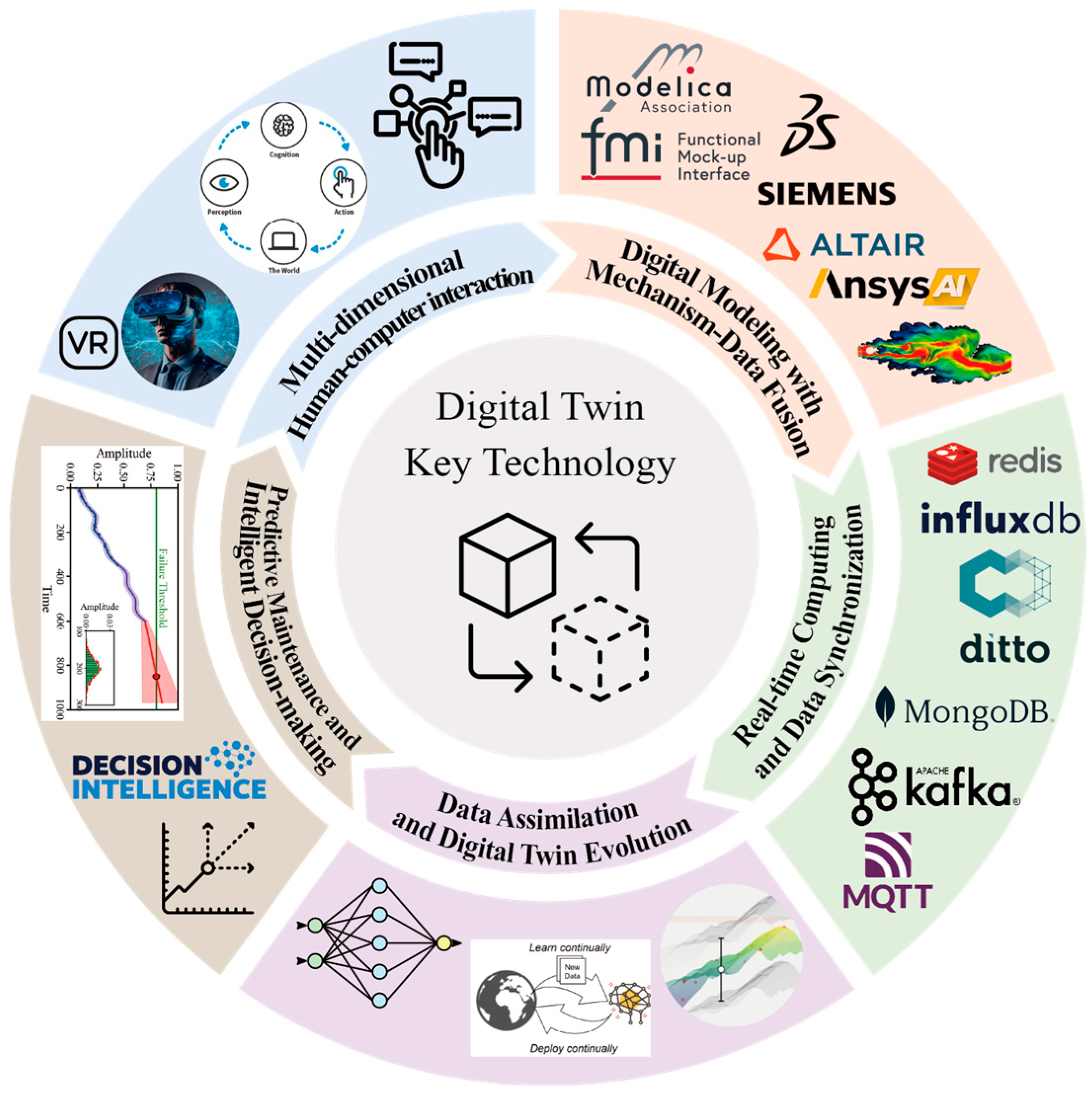
Based on the core challenges identified above, we derive five foundational requirements that the reference architecture must fulfill, as shown in Figure 2. These are not merely a list of desired technologies but rather essential architectural pillars that ensure the resulting digital twin is robust, efficient, and intelligent. A comprehensive analysis of key enabling technologies reveals that these requirements can be grouped into five primary directions:
  • Digital Modeling with Mechanism–Data Fusion
A foundational requirement for the architecture is to support the construction of digital models that accurately reflect the geometric, physical, behavioral, and rule-based information of a physical entity. Modeling for digital twins requires a careful trade-off between model computational accuracy and efficiency. It must precisely describe the behavior of physical systems based on physics-based modeling while simultaneously enhancing computational efficiency and generalization capability to meet the real-time interaction demands of digital twins. Mechanism–data fusion modeling is currently a predominant approach. Employing methods such as data-driven techniques [48], multi-fidelity modeling [39], surrogate models [49], and model order reduction [50,51] enables the deep integration of physics-based mechanisms and data-driven approaches [48,52,53]. This hybrid modeling approach facilitates the creation of more accurate and robust digital models, reduces computational complexity, accelerates simulation and prediction, and improves model accuracy, efficiency, and interpretability.
2.
Real-time Computing and Data Synchronization
The real-time simulation, prediction, and control capabilities of a digital twin architecture are predicated on its ability to process massive amounts of data. This demand for real-time computation and data synchronization encompasses multiple research domains, including high-performance computing, data transmission, model calibration, and synchronization algorithms. At the hardware level, techniques such as parallel computing [49] and GPU (Graphic Processing Unit) acceleration [50], as well as computational scheduling strategies within edge computing [51,54] and cloud computing architectures, can significantly enhance real-time computational performance. At the software level, high-performance computing technologies [55], model optimization [56], and data synchronization strategies [57] are employed to reduce computational latency and improve synchronization accuracy effectively. Real-time simulation and synchronization represent critical technologies yet to be fully mastered in the digital twin field, necessitating more efficient computational methods, more precise synchronization algorithms, and lower-latency data transmission techniques for the full potential of digital twin applications to be realized.
3.
Data Assimilation and Digital Twin Evolution
A key distinguishing feature of digital twins from general digital modeling or coupled simulations is their inherent capability for continuous evolution. This means a digital twin must constantly absorb and assimilate data, undergoing automatic updates and optimization to follow the operational state or behavior of its physical system. A digital twin platform needs to integrate data from diverse sources, types, accuracies, and resolutions (including sensor data, historical data, and simulation data) into a unified framework, covering multi-dimensional information such as structural, mechanical, thermal, and electrical properties. Algorithms enabling the update and evolution of digital twins include data assimilation [58,59], incremental learning [60,61], and adaptive learning [21,40]. For engineering equipment digital twin platforms, further attention is required for uncertainty quantification and risk assessment methods during the digital twin model evolution process, ensuring the reliability and safety of the twin’s progression.
4.
Predictive Maintenance and Intelligent Decision-making
Intelligent decision-making and prediction within an engineering equipment digital twin architecture involve complex dynamic behaviors, nonlinear characteristics, and multiple fault modes. Prediction models solely relying on historical data often struggle to accurately determine fault occurrences or the degree of performance degradation. A digital twin platform is not a singular model or a static operational state; it is a combination of various models (e.g., optimization, simulation, and visualization models), necessitating the integration of descriptive, predictive, and prescriptive analytical methods [22]. Digital twin platforms can utilize multi-model fusion methods [62,63] to integrate various types of prediction models, thereby improving prediction accuracy and robustness. Furthermore, by constructing predictive models that leverage both sensor data and twin computational data [64,65], the platform can enhance prediction capabilities even in data-scarce scenarios. Future research should further explore human–machine collaborative intelligent decision-making frameworks [66], which digitally encode and integrate human expert knowledge and experience into the decision-making process to enhance decision reliability and efficiency.
5.
Multi-dimensional Human–Computer Interaction
A digital twin platform facilitates efficient and intuitive bidirectional information exchange between humans and the twin model through various interaction modalities such as visual, auditory, tactile, and vocal interfaces. The introduction of these rich interaction methods enables users to understand and analyze complex physical systems more intuitively, significantly enhancing the human–computer user experience and improving decision-making efficiency. Current research in human–computer interaction for digital twins involves multimodal interaction fusion applications, including advanced data visualization [67], immersive 3D interactions via VR/AR/XR (Virtual Reality/Augmented Reality/Extended Reality) technologies [68,69,70,71], and emotional perception and data comprehension [72]. Future research needs to further enhance the real-time responsiveness and fluidity of interaction, improve cross-platform and multi-device collaborative interaction experiences, and elevate the efficiency of personalized customization development and the intelligence of interaction strategies.
These five foundational requirements—spanning from hybrid modeling and real-time computation to continuous evolution, intelligent decision-making, and intuitive interaction—provide a comprehensive set of criteria for the design and evaluation of a digital twin architecture for complex engineering equipment. They form the logical bridge between the problem domain and a viable solution.

3. The MetaD-DT Architecture and Core Functions

Building upon the architectural requirements derived in the previous section, this paper introduces MetaD-DT, a novel reference architecture specifically designed to enable the development of digital twins for complex engineering equipment. The fundamental design principle of MetaD-DT is grounded in modularity and scalability, aiming to provide a structured yet flexible blueprint rather than a monolithic platform. It is conceptualized not merely as a toolset but as a systematic framework that logically organizes the essential components and their interactions, ranging from heterogeneous data acquisition to intelligent decision-making.
MetaD-DT is positioned not as a proprietary platform constructed ab initio, but as a domain-specific reference architecture that synthesizes and abstracts existing mature technologies (e.g., Browser/Server architecture, containerization, and cross-platform SDKs). Unlike general-purpose Industrial IoT platforms that primarily focus on connectivity and visualization, MetaD-DT is architected specifically to resolve the dilemmas inherent to engineering equipment digital twin construction. It establishes a standardized integration pattern that bridges the gap between heterogeneous high-fidelity models (CAD, CAE, Control algorithms) and the operational environment. Crucially, it incorporates domain-specific mechanisms—such as real-time Model Order Reduction (ROM) management and edge–cloud collaborative container scheduling—that are typically absent in generic digital twin frameworks, thereby ensuring both simulation fidelity and real-time responsiveness.
To streamline the construction process, MetaD-DT leverages a graphical programming paradigm supported by a robust virtualization foundation. By utilizing multilingual SDKs and cross-platform container technologies, the architecture enables the seamless integration of heterogeneous components across diverse networks and protocols. The integrated toolchain covers the entire lifecycle—development, deployment, and Operation and Maintenance (O&M)—facilitating a “Component-to-Template” reuse mechanism. This allows verified digital assets to be adapted across varying scenarios by simply modifying specific modular parameters. Furthermore, the architecture supports flexible deployment topologies, spanning public/private clouds, industrial PCs, and edge devices. The following sections will elaborate on the MetaD-DT’s hierarchical structure, core functionalities, and the formalized operational workflow.

3.1. MetaD-DT Architectural Hierarchy

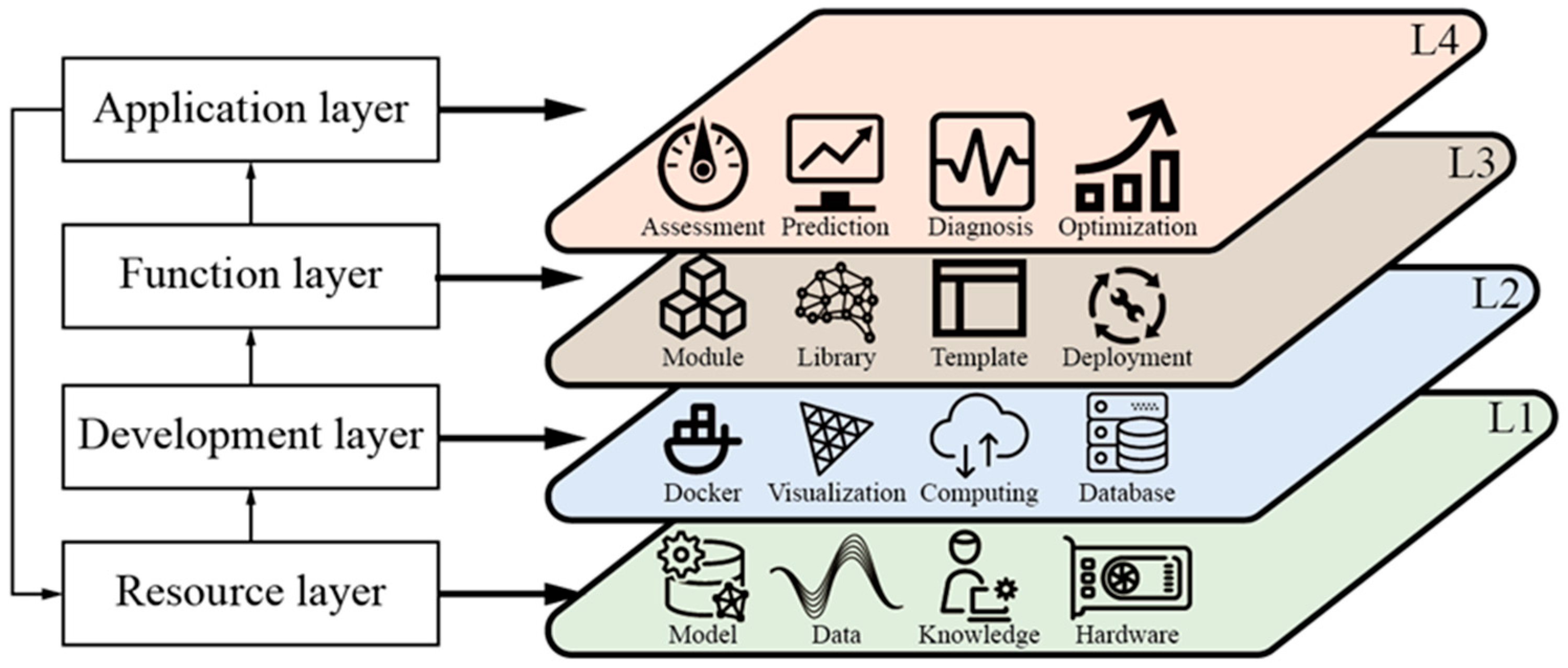
The architectural hierarchy of the MetaD-DT is sequentially structured into four layers: the resource layer, development layer, function layer, and application layer, as shown in Figure 3.
The four architectural layers of the MetaD-DT range from basic resource integration to technological integration, then to functional integration, and ultimately provide digital twin applications based on specific scenarios. Each layer assumes different functions, forming a well-structured, collaborative system. The specific functions of each layer are outlined as follows:
1.
Resource layer
The resource layer is foundation of digital twin construction, serves as the centralized repository of raw digital assets for the architecture. Its responsibility is to manage and provide access to the static, passive building blocks required for digital twin. It encompasses a range of software and hardware resources. This includes the raw material for the virtual world, such as geometric models (CAD), physics-based simulation models (CAE), historical operational data, maintenance records, and codified expert knowledge (e.g., technical manuals, rule sets). The software resources comprise models, data, and expert knowledge, among other elements. Hardware resources refer to the computational power required for digital twin operations, including CPU/GPU computing power, cloud storage, and high-speed networks.
2.
Development layer
The Function Layer constitutes the service-oriented logic tier of the architecture. It decouples complex technical implementations into granular, reusable functional units. This encompasses not only the essential core runtime environments for code execution, like containerization services and modular programming environments, but also a portfolio of fundamental technical services upon which any complex digital twin is built. Key among these services is 3D visualization rendering, distributed computing for parallel computation, and the distributed data management that handles the mechanics of underlying databases.
3.
Function layer
As the heart of the architecture, the Function Layer exposes the core capabilities of the digital twin system as a comprehensive toolkit of functional modules. It leverages the services of the Development Layer to offer high-level, domain-specific functionalities—such as model integration, data processing, and IoT connectivity. This critical layer acts as the bridge between the backend infrastructure and the final user application, and its modular composition will be detailed in Section 3.2.
4.
Application layer
The Application Layer serves as the top-level interaction interface, operating in two distinct modes: Design-time and Run-time.
Design-time Mode (Low-code Development): It functions as an Integrated Development Environment (IDE) where the workflow described in Section 3.3 is executed. Through the Scene Workspace (for backend logic orchestration) and Interface Workspace (for frontend visualization), developers invoke modules from the Function Layer to configure the digital twin without extensive coding.
Run-time Mode (Operational Execution): Upon deployment, this layer transforms into the operational dashboard for end-users (e.g., O&M engineers). It renders real-time monitoring interfaces, executes fault diagnosis logic, and visualizes decision support outcomes, effectively translating the underlying architectural capabilities into tangible industrial value.
The comprehensive four-layer structure described above is strategically designed to address the limitations inherent in current dominant digital twin paradigms. To contextualize the advantages of this hierarchical design, it is instructive to contrast MetaD-DT with existing solutions, which broadly fall into two categories: Simulation-centric platforms (e.g., Ansys Twin Builder) and IoT-centric platforms (e.g., Siemens MindSphere).
Simulation-centric platforms excel in high-fidelity physics modeling but often encounter bottlenecks regarding the real-time execution of heavy models on resource-constrained edge devices. They also typically lack flexible, lightweight deployment capabilities required for continuous industrial O&M scenarios. Conversely, IoT-centric platforms offer robust device connectivity and data visualization but frequently treat physical equipment as “black boxes.” These platforms often lack native support for the tight coupling of multi-physics mechanisms (such as Reduced Order Models) and complex engineering rules, limiting their depth in fault diagnosis.
As summarized in Table 1, MetaD-DT addresses these specific gaps for complex engineering equipment. It is not intended to replace these technologies but rather to bridge the divide between them. By integrating the high-fidelity modeling capabilities of simulation platforms with the agile connectivity of IoT platforms and introducing mechanisms like the Mechanism–Data Fusion Engine and Edge–Cloud Collaborative Scheduling, MetaD-DT ensures both the accuracy required for engineering analysis and the real-time performance necessary for operational control.
While MetaD-DT is presented in the context of engineering equipment, its layered design ensures high universality and scalability across different industrial sectors. The architecture adopts a strict decoupling strategy. The Development layer and Function layer provide industry-agnostic services (e.g., standard loT protocols like OPC UA/MQTT, generic visualization engines, and container scheduling), which remain constant regardless of the application domain. Domain-specific logic is encapsulated entirely within the Resource layer (as models/knowledge) and the Application layer (as templates).
Therefore, applying MetaD-DT to a new industry (e.g., switching from diesel engines to wind turbines) does not require restructuring the platform. It only entails re-placing the specific model assets in the Resource layer and making the corresponding configuration. This “Template-Instance” reuse mechanism significantly lowers the barrier for cross-industry migration.
It is worth noting that while this study focuses on the active DMOM phases, the MetaD-DT architecture inherently supports the End-of-Life stages. Specifically, the historical data accumulated in the Data Module serves as the evidentiary basis for Retirement decisions (e.g., residual life assessment), while the standardized asset encapsulation in the Resource Layer significantly reduces the complexity of Migration to next-generation systems.

3.2. Core Functional Modules of the Function Layer

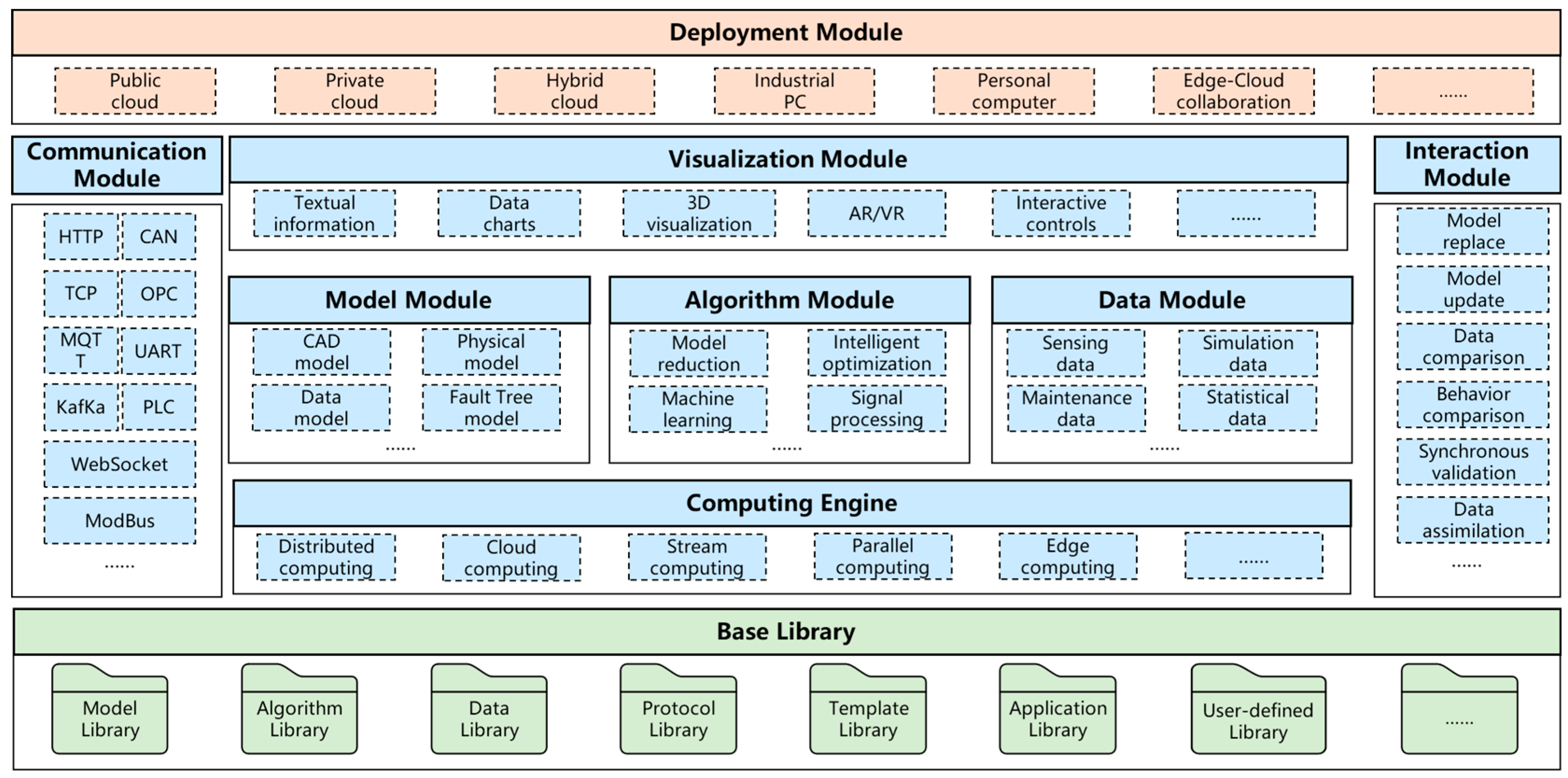
The core functional modules of the MetaD-DT constitute the comprehensive toolkit provided within its functional layer. These modules include basic libraries, model modules, algorithm modules, data modules, computing engines, communication modules, interaction modules, visualization modules, and deployment modules, as illustrated in Figure 4. Tools within each module are encapsulated into standardized components, enabling flexible and customizable integration and interaction through user-defined APIs or established protocols. This design ensures a high degree of flexibility and freedom in development.
  • Basic Library
The Basic Library serves as the centralized persistence repository for reusable technological assets within the digital twin architecture. It functions to standardize and accumulate domain knowledge, thereby minimizing redundant development efforts across different projects. This module manages a structured collection of resources, including standardized model libraries, algorithm libraries, database schemas, industrial protocol definitions, visualization components, and pre-configured scene templates. It implements the complete lifecycle management of these assets, handling operations such as the instantiation, version control, storage, retrieval, and retirement of library elements to ensure consistency across the platform.
2.
Model Module
The Model Module acts as the core container for abstracting physical entities into the virtual space. It allows the system to instantiate, calibrate, and manage heterogeneous models, ensuring a precise mapping of the physical entity’s state and behavior. This module encapsulates various modeling paradigms, including geometric descriptions (CAD), physics-based mechanisms (CAE), data-driven surrogates (ROM), and fault logic trees. It provides standard interfaces for importing external model files, performing parameter fusion, and maintaining the runtime state of the digital twin, effectively bridging the gap between static model definitions and dynamic operational requirements.
3.
Algorithm Module
The Algorithm Module functions as the logic execution container for the digital twin system. It encapsulates specific calculation rules and analytical methods into reusable components, decoupling the algorithmic logic from the underlying data flow. This module supports the orchestration of diverse algorithms, ranging from statistical analysis and signal processing to machine learning inference and intelligent optimization. By providing a standardized environment for algorithm training, encapsulation, and execution, it allows developers to flexibly define the computational behaviors required for tasks such as fault diagnosis, performance prediction, and process optimization.
4.
Data Module
The Data Module serves as the central processing hub for information flow, implementing the architecture’s unified data management strategy. It is responsible for the ingestion, cleaning, fusion, and storage of multi-source data to ensure high-quality inputs for upper-layer applications. This module handles heterogeneous data types, including time-series sensor data, relational service records, and unstructured simulation results. To address compatibility issues, it employs a standardized data mapping mechanism that transforms diverse raw inputs into a unified format, facilitating seamless data integration and efficient querying for real-time analysis.
5.
Computing Engine
The Computing Engine acts as the task scheduler and execution kernel for the digital twin. It is engineered to manage computational workloads, balancing resources between real-time control loops and intensive simulation tasks. To meet the high-fidelity requirements of complex equipment, the engine implements a hybrid computing strategy that leverages GPU acceleration (e.g., via CUDA integration) for parallel processing and deep learning inference. Furthermore, it employs a containerized resource scheduling mechanism (based on Kubernetes) to dynamically allocate distributed resources spanning edge devices and cloud clusters, ensuring that time-critical calculations such as model simulation and optimization solving are executed with minimal latency.
6.
Communication Module
The Communication Module provides a connectivity layer that links the virtual models with physical equipment. It implements a protocol adaptation mechanism to normalize data streams from diverse industrial interfaces (e.g., PLC, OPC UA, Modbus, CAN) into the platform’s internal message bus. To address data synchronization challenges, the module utilizes an event-driven architecture (supported by MQTT/Kafka) combined with a precise time-alignment algorithm. This ensures that asynchronous sensor data is buffered and synchronized based on global timestamps before processing. Beyond basic connectivity, this module ensures data integrity and security by integrating SSL/TLS encryption during transmission. It supports bidirectional data flow, handling both the acquisition of high-frequency telemetry data from sensors and the reliable forwarding of control commands to device actuators.
7.
Interaction Module
The Interaction Module implements the coupling logic between the backend digital twin and the frontend user interface or physical device. It functions as a bidirectional bridge that synchronizes the virtual state with the physical reality. This module manages the logic for model evolution, state comparison, and synchronous verification, ensuring that the digital twin accurately reflects dynamic physical changes. Furthermore, it defines the rules for human–machine interaction, processing user inputs from the visualization layer and translating them into executable system commands or model parameter updates.
8.
Visualization Module
The Visualization Module serves as the rendering engine for the Application Layer, decoupling the display logic from the backend data processing. It provides a library of graphical components to construct 2D dashboards and 3D immersive scenes based on WebGL technologies. This module binds real-time data streams to visual elements—such as charts, 3D model animations, and status indicators—allowing users to intuitively monitor system performance. It supports the dynamic configuration of visual styles and layout structures, enabling the rapid development of monitoring interfaces without extensive frontend coding.
9.
Deployment Module
The Deployment Module orchestrates the release and operation of the digital twin application in real-world industrial environments. It manages the configuration of hardware resources, network topologies, and runtime software dependencies. To address security and privacy concerns in industrial settings, this module implements Role-Based Access Control (RBAC) and supports private cloud or local air-gapped deployment modes, ensuring sensitive production data remains within the enterprise boundary. It streamlines the transition from development to operation by automating the packaging and distribution of the digital twin system to edge nodes or cloud servers.
To demonstrate how the proposed MetaD-DT architecture addresses the core challenges identified in Section 2, we established a logical mapping table between the foundational requirements and the specific functional modules described above. Table 2 details this correspondence, outlining the specific implementation mechanisms and the evaluation metrics.

3.3. Workflow Based on MetaD-DT

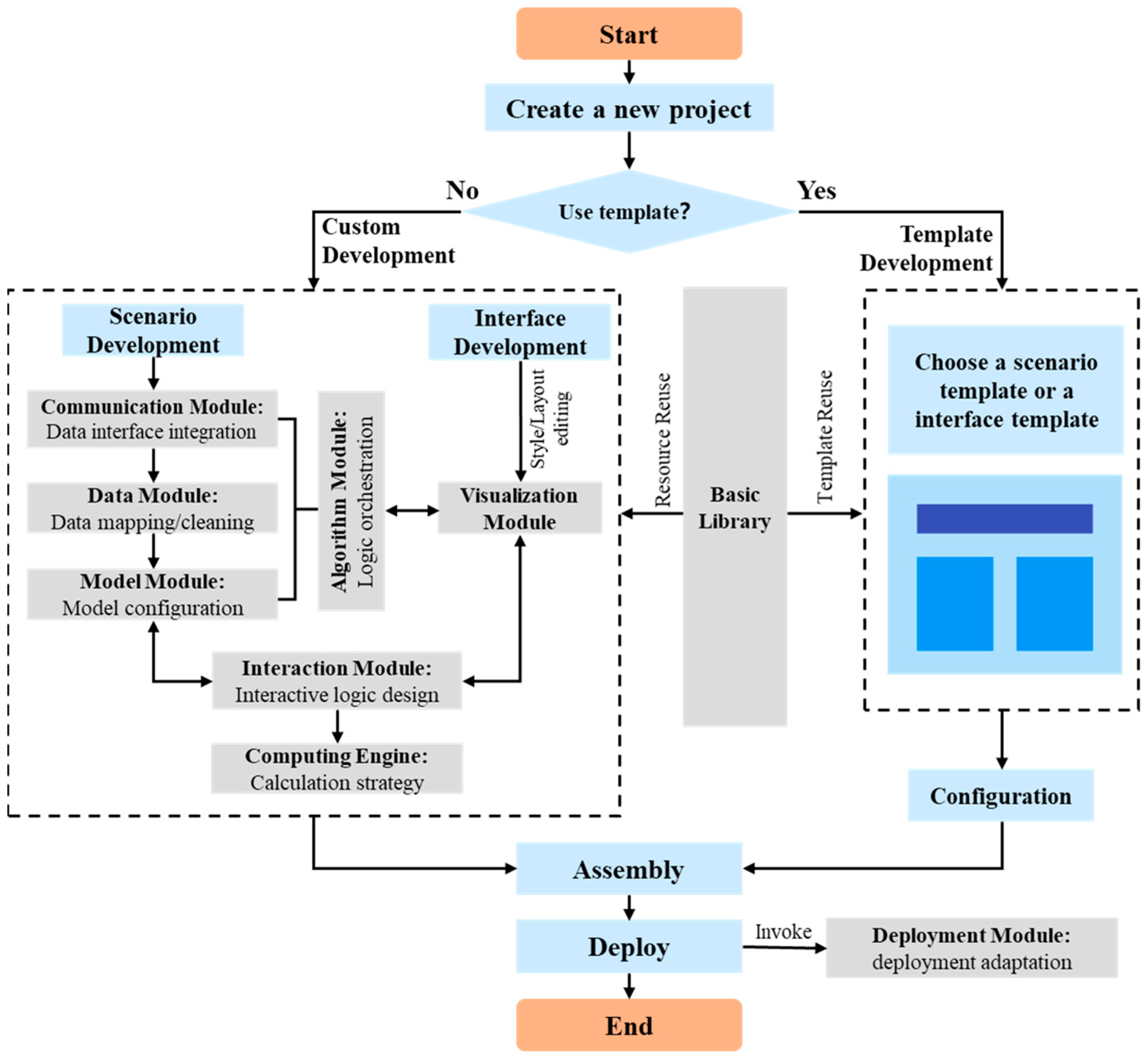
The MetaD-DT reference architecture culminates in the Application Layer, which provides a structured environment for the entire digital twin development and deployment lifecycle. This is realized through a streamlined development workflow that guides the developer from initial concept to a final, operational digital twin. The workflow logically segregates the development environment into a Scene Workspace for backend logic definition and an Interface Workspace for frontend UI design. To accommodate diverse project needs, the architecture enables two primary development modes:
  • Template-based Development: This mode leverages the MetaD-DT’s existing template library and is particularly suitable for scenarios where the target digital twin application exhibits a high degree of similarity to pre-existing templates.
  • Custom Development: This mode is designed for users with highly specialized or customized scenarios, allowing for the creation of unique application services beyond the scope of standard templates.
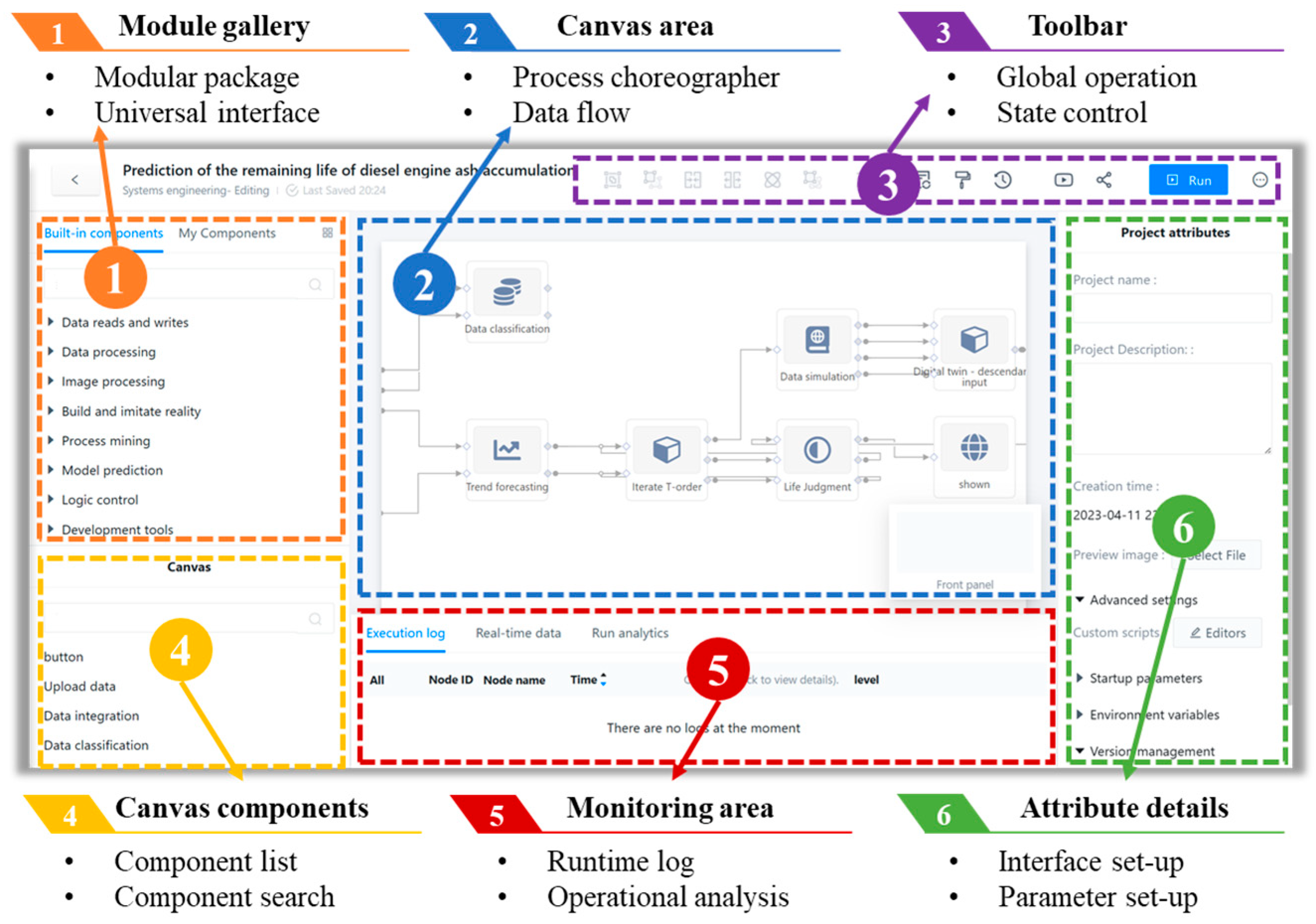
Within the Scene Workspace, digital twin backend application development is achieved through a graphical programming paradigm. The functional interface of the Scene Workspace is depicted in Figure 5. It is logically partitioned into the following areas: module gallery, canvas area, toolbar, canvas components, monitoring area, and attribute details.
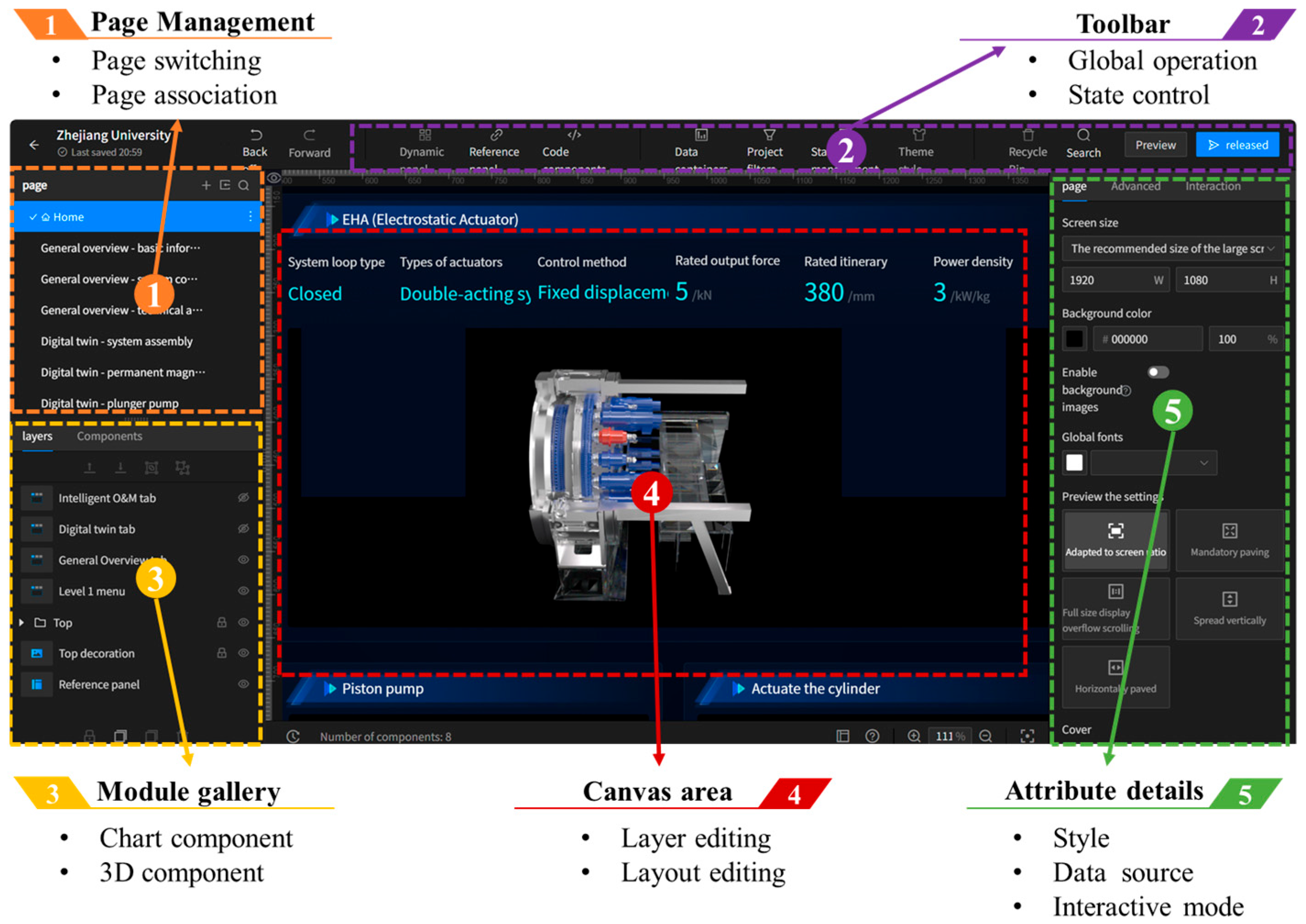
The Interface Workspace facilitates digital twin frontend application development. Its functional interface, as shown in Figure 6, comprises the page management area, toolbar, module gallery, canvas area, and attribute details.
The process of building a digital twin application using MetaD-DT is shown in the figure below:
The process of building a digital twin application using the workflow enabled by the MetaD-DT architecture is illustrated in Figure 7. After an initial requirements analysis, the developer begins the construction process within the workspace of the Application Layer. The core of this process involves using the graphical interface to invoke and configure the capabilities provided by the Function Layer’s core modules.
For example, within the Scene Workspace, the task of “backend development” is not abstract; it involves directly interacting with and orchestrating these modules:
  • Model editing is performed by calling the Model Module.
  • Algorithm editing utilizes the Algorithm Module.
  • The Data Module handles data editing and mapping.
  • IoT access editing involves configuring the Communication Module.
Concurrently, in the Interface Workspace, the developer designs the user interface by dragging and dropping components from the Visualization Module and configuring them as needed. Upon completion, the system integrates the backend logic and frontend interface, performs debugging, and finally, through the Deployment Module, deploys the application to its target environment.

4. Application Case of Engineering Equipment Digital Twin Based on MetaD-DT

To demonstrate the practical feasibility and validate the efficacy of the proposed MetaD-DT reference architecture, we applied its principles to develop two distinct and challenging digital twin systems for complex engineering equipment. The following sections provide a detailed introduction to these two systems: the digital twin-based DPF maintenance optimization system for diesel engines, and the digital twin-based control optimization system for inter-plant air-cooled condensers in thermal power plants. The following sections will detail the implementation process and the achieved results for each case.

4.1. Case Study 1: Digital Twin-Based DPF Maintenance Optimization for Diesel Engines

4.1.1. Problem Description

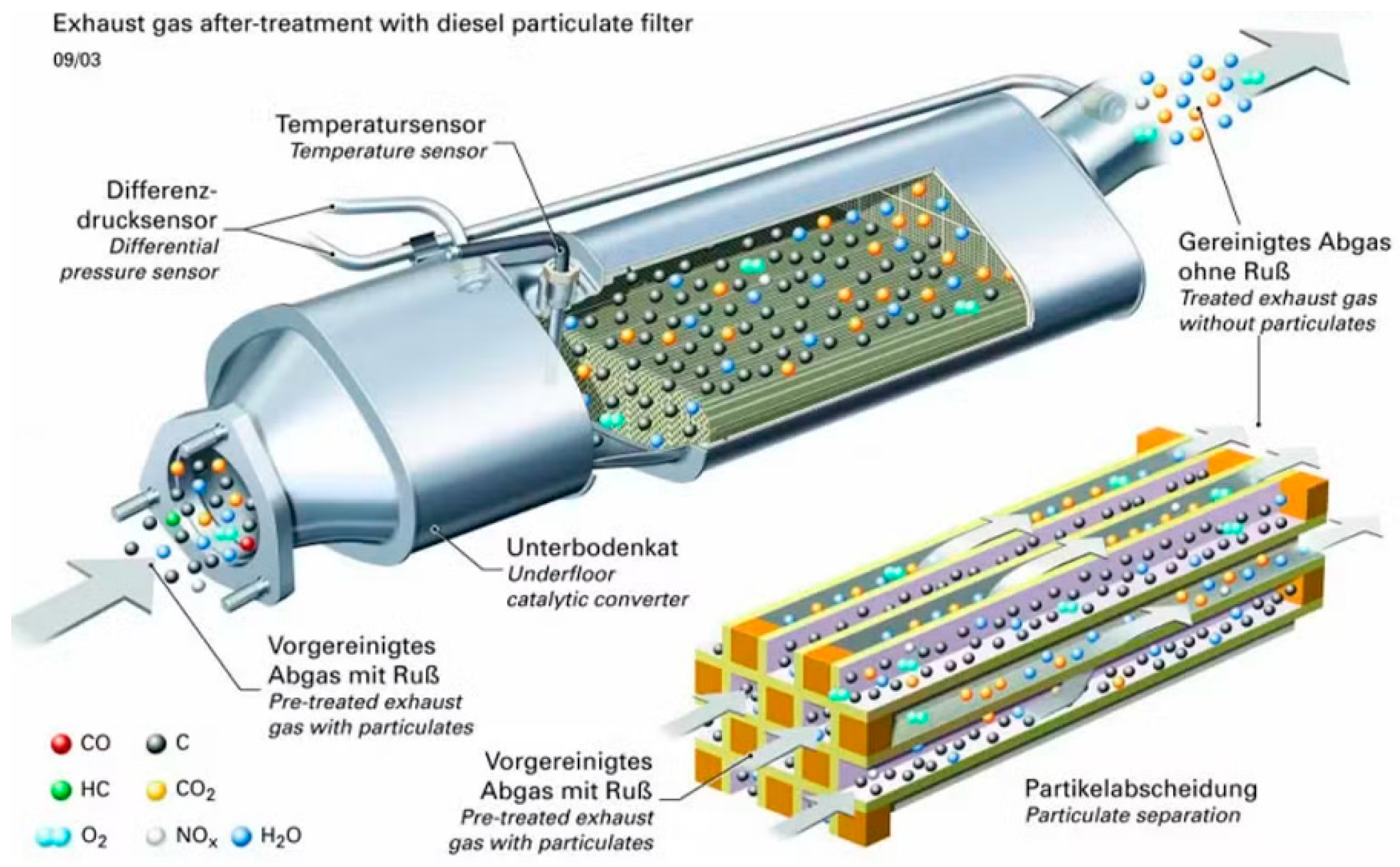
Diesel engines are a ubiquitous power source in industrial applications, extensively integrated into medium- to large-scale machinery such as automobiles, agricultural machinery, and construction equipment. Their deployment is vast, and their operating conditions are becoming increasingly complex. A critical component in modern diesel systems is the DPF, a device installed in the exhaust system to filter and reduce particulate matter emissions, its structure and principle are shown in Figure 8. DPFs can effectively purify exhaust gases by reducing particulate emissions by 70% to 90%. However, with prolonged service, DPFs are susceptible to two typical failures: soot overload and ash overload. These conditions lead to a decline in the engine’s power performance and fuel efficiency, cause vehicle emissions to exceed regulatory standards, and ultimately affect normal vehicle operation [73]. Therefore, to enhance and extend the DPF’s operational efficiency and lifespan, the timely removal of soot and ash accumulation is essential. Soot accumulation can be cleared through the vehicle’s built-in DPF regeneration function, whereas ash accumulation necessitates the use of specialized cleaning equipment for its removal.
The decision-making process for DPF regeneration and ash cleaning is strictly contingent upon whether the accumulated soot and ash loads exceed predefined thresholds, making the accurate acquisition of these values a critical task. However, during the actual operation of a diesel engine, neither the soot nor the ash levels within the DPF can be directly measured [75]; they must be acquired through indirect monitoring or estimation techniques. While research on DPF ash load calculation remains relatively scarce, methodologies for soot load calculation are extensive and comparatively mature. Common approaches include estimation based on operating time, mileage, fuel consumption, differential pressure, mechanistic models, and data-driven techniques. These methods vary significantly in terms of calculation accuracy, development workload, reliance on empirical data, and engineering application costs. To address current challenges—specifically the inability to directly monitor internal states, the lack of effective ash load monitoring, and imperfect health management services—digital twin technology offers a novel and promising paradigm for the intelligent operation and maintenance of DPF systems.

4.1.2. Digital Twin Construction Route

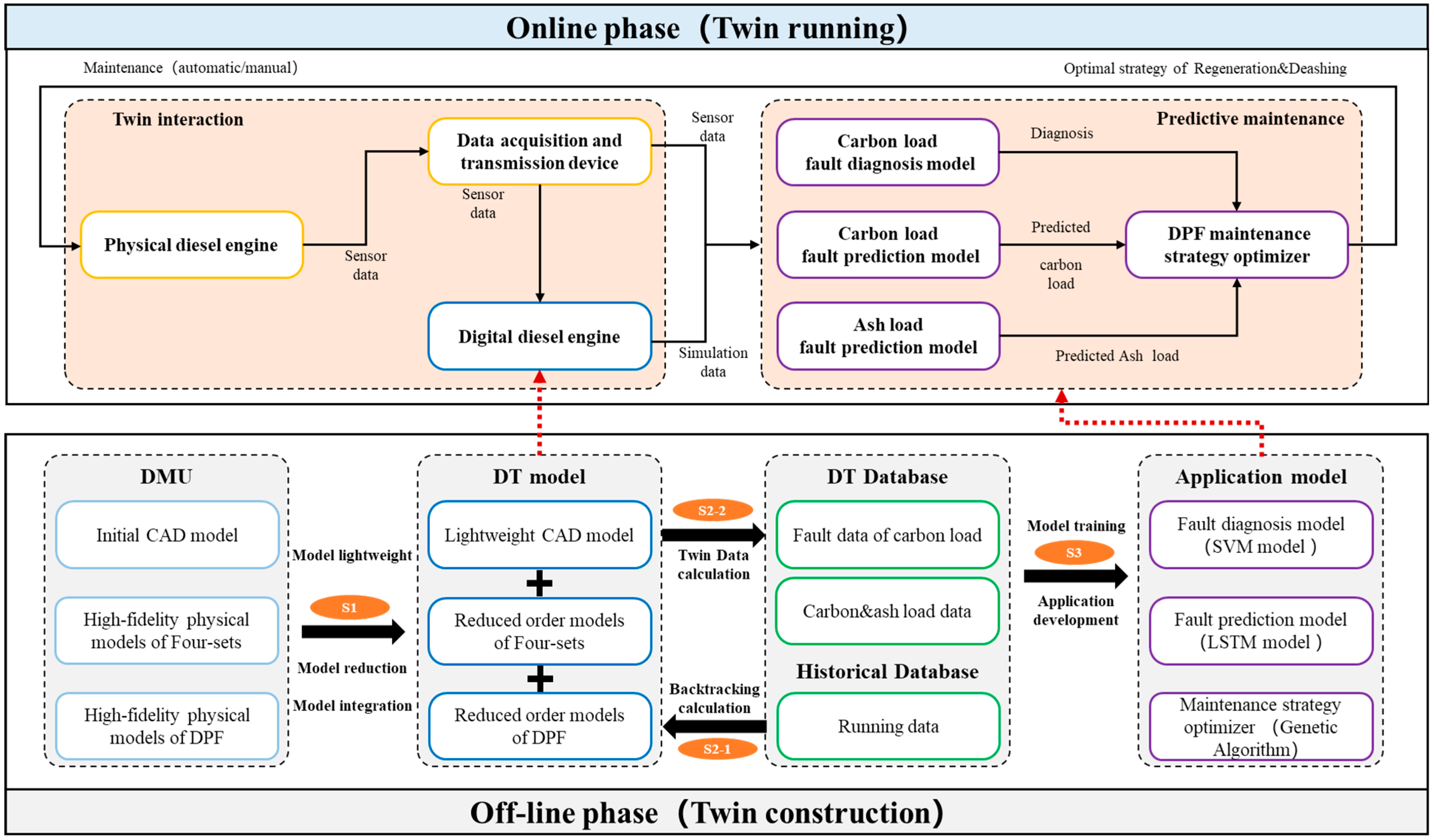
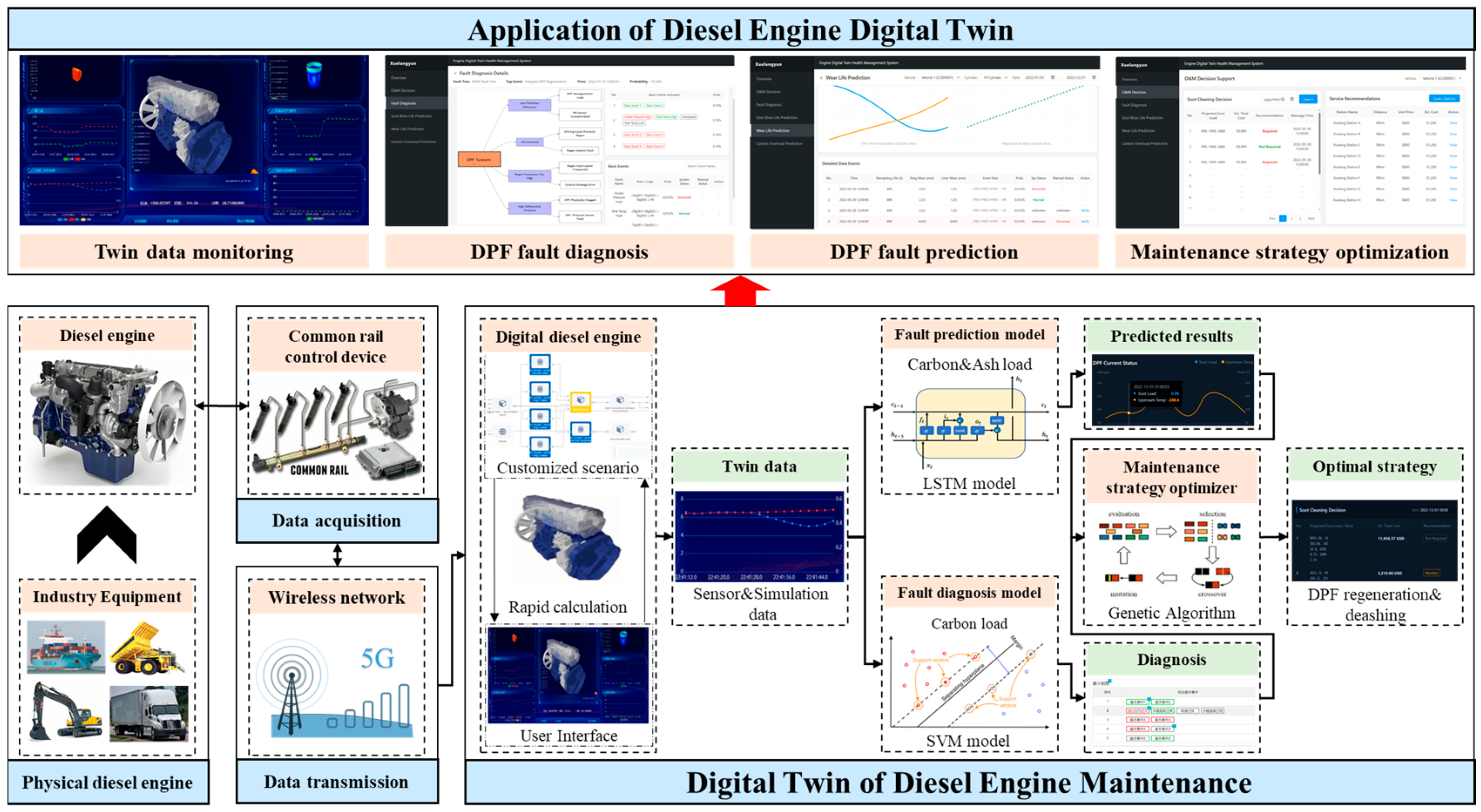
The technical roadmap for the digital twin-based operation and maintenance (O&M) management of DPF is illustrated in Figure 9. This roadmap is fundamentally divided into two phases: an offline twin construction phase and an online twin operation phase. The development of the DPF digital twin system followed the workflow enabled by the MetaD-DT, the process leveraged several core architectural modules for both offline construction and online operation.
Initially, the offline phase is dedicated to the construction of the twin model and the preparation of necessary data, which primarily encompasses the following steps:
  • S1 Digital Twin Model Construction
This step was executed primarily using the Model Module of the architecture. High-fidelity, physics-based models of the engine and DPF were first imported. To meet real-time requirements, the integrated Model-Order Reduction (ROM) Engine was then utilized to construct computationally efficient ROMs, the detailed specifications and performance is shown in Table 3. Finally, the Model Module’s integration capabilities were used to assemble the final, high-fidelity digital twin model.
  • S2 Twin Data Generation
Given that DPF soot and ash accumulation cannot be directly measured, extensive historical operational data (sampled at 1 Hz, covering approximately 6 months of operation) from the diesel engine is fed into the constructed digital twin model. By feeding historical operational data from the Data Module, we generated a rich, high-quality dataset of the corresponding soot and ash loads for model training.
  • S3 Predictive Maintenance Model Construction:
This step was performed within the Algorithm Module. Leveraging the twin-generated data, a Long Short-Term Memory (LSTM) model (configured with 2 stacked hidden layers of 128 units each and trained using the Adam optimizer) is trained to create a DPF soot accumulation fault prediction model and a DPF ash accumulation fault prediction model. Concurrently, a Support Vector Machine (SVM) model (utilizing a Radial Basis Function kernel) is trained using labeled historical fault data to develop a DPF soot accumulation fault diagnosis model. Finally, a DPF O&M decision optimizer is implemented using a Genetic Algorithm (GA) to find optimal maintenance strategies for DPF regeneration and ash cleaning.
During the online operation phase, real-time operating data from the physical diesel engine is transmitted to the digital twin model via data acquisition devices. The twin model then performs rapid computations to generate the engine’s real-time twin state data. Both the raw sensor data and the generated twin data are fed into the O&M model for fault diagnosis and predictive analysis. This process yields diagnostic and predictive results for DPF soot accumulation, as well as predictive results for DPF ash accumulation. Based on these outcomes, the DPF O&M decision optimizer conducts a maintenance decision optimization, presenting the user with the optimal maintenance strategy. The resulting regeneration decision can be executed either automatically by the system or manually, whereas the ash cleaning decision requires manual execution.

4.1.3. Digital Twin Application Effectiveness

The operational mechanism and application effects of the developed digital twin-based DPF health management system for diesel engines is illustrated in Figure 10. The digital twin application encompasses several key functionalities, including: a comparative analysis of the diesel engine’s physical and virtual states, diagnosis of abnormal soot accumulation faults, prediction of both soot and ash accumulation, and decision support for DPF regeneration and ash cleaning.
Diesel engines deployed in construction machinery across various regions are equipped with telematics devices featuring GPS positioning and wireless communication modules. These devices transmit engine sensor data to a central data center, from where it is forwarded to the digital twin platform. The platform then performs online, rapid computations using the diesel engine digital twin to generate key outputs, such as DPF soot and ash loads. This twin-generated data serves a dual purpose: it is utilized for statistical analysis and also acts as the primary input for the soot and ash accumulation fault prediction models, as well as the soot accumulation fault diagnosis model. Subsequently, the DPF O&M decision optimizer leverages the outputs from these diagnostic and predictive models to perform decision optimization, thereby deriving optimal strategies for DPF regeneration and ash cleaning. This provides both diesel engine manufacturers and vehicle operators with accurate and timely DPF maintenance recommendations.
The diesel engine DPF health management system integrates digital twin technology, machine learning techniques, and optimization algorithms to enable real-time virtual monitoring of critical state values, such as DPF soot and ash accumulation. This system effectively addresses the challenge of these important states not being conveniently or intuitively obtainable through conventional means. Furthermore, the digital twin framework supports a suite of applications, including DPF fault diagnosis, fault prediction, and maintenance decision-making. The DPF maintenance decision optimization service synthesizes multiple factors-such as the current soot fault status, projected growth trends of soot and ash accumulation, vehicle operating conditions, and economic maintenance costs—to formulate optimal strategies for DPF regeneration and ash cleaning. In comparison with traditional methods, this approach significantly enhances the timeliness, accuracy, and feasibility of DPF O&M. It empowers users to more precisely manage the maintenance schedule of the DPF, leading to a substantial reduction in both O&M costs and associated economic losses.
The DPF health management system demonstrates that the MetaD-DT’s modular design, particularly the synergistic operation of the Model Module, Computing Engine, and Algorithm Module, effectively supports the entire workflow for developing complex, data–physics fusion-based predictive maintenance systems.

4.2. Case Study 2: Digital Twin-Based Control Optimization of IAC Towers for Thermal Power Plants

4.2.1. Problem Description

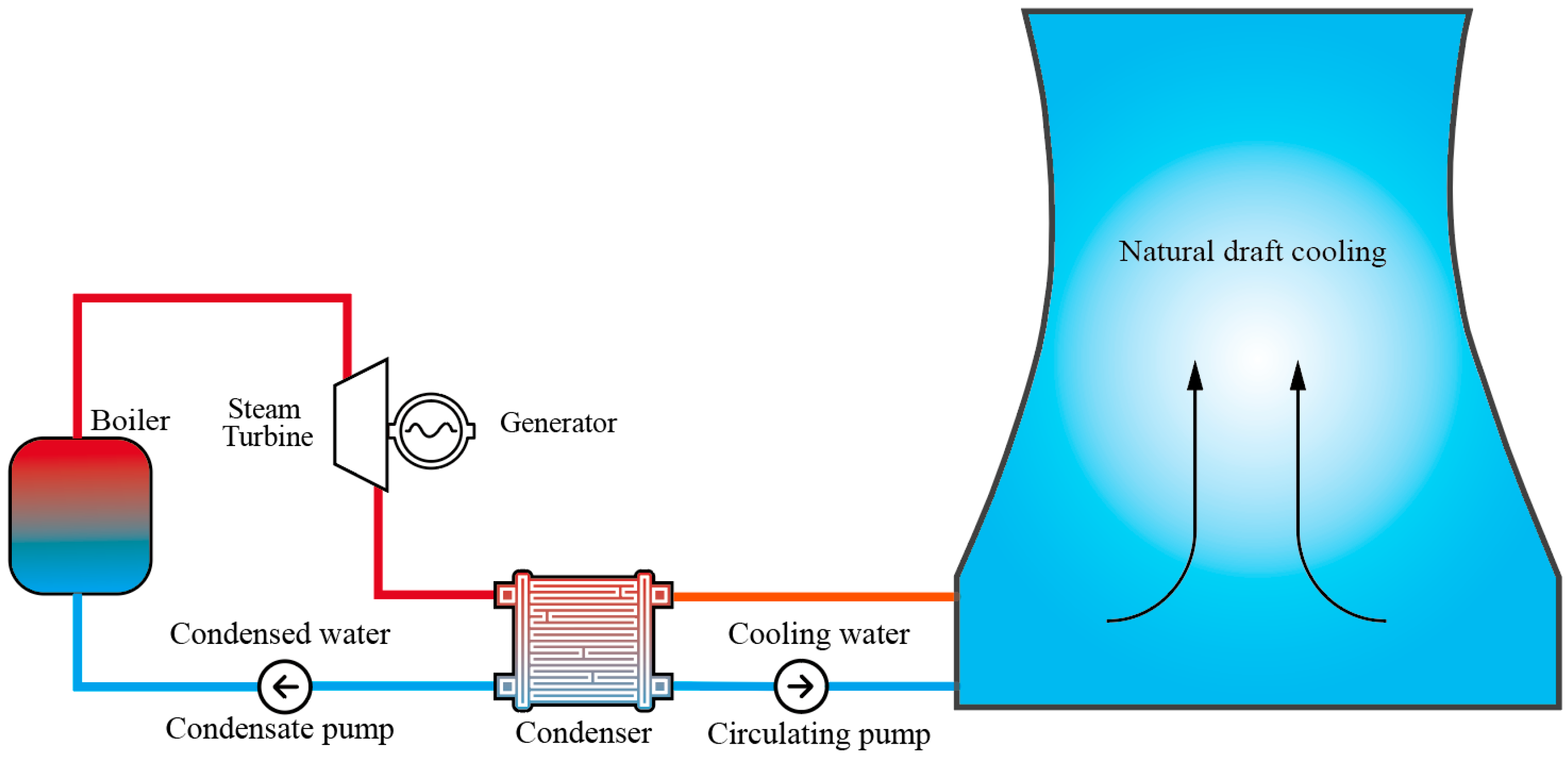
In thermal power generation and chemical processing facilities, enhancing energy utilization efficiency is paramount. A key process involves condensing turbine exhaust steam into water using an air-cooled system for recirculation back to the boiler. The IAC system is a prevalent technology for this purpose, offering benefits such as water conservation, energy savings, and high heat exchange performance, its structure and principle are shown in Figure 11. However, IAC systems face distinct operational challenges depending on the season. During summer operations, the cooling tower is susceptible to adverse weather conditions, such as strong winds, which can cause a sudden surge in turbine back pressure, posing a threat to the safe operation of the generator unit. Conversely, in winter, preventing the freezing and subsequent rupture of the cooling tube bundles requires maintaining the cooling water outlet temperature at an elevated level. This practice forces the turbine to operate at a back pressure higher than its optimal economic point, leading to increased heat consumption and greater coal usage.
The temperature control module constitutes a core component of existing IAC tower control systems, primarily functioning to regulate condenser pressure and the sector cooling water outlet temperature. The performance of this module is critical to both the operational reliability and economic efficiency of the plant. Commonly adopted strategies include fixed-point regulation, segmented control (typically combining PID logic with manual intervention), and model-based control (integrating predictive models with PID loops) [76]. Notably, in the specific industrial scenario addressed in this case, the system previously relied mainly on a segmented control strategy. However, these conventional approaches often exhibit limitations in flexibility, accuracy, and workflow efficiency. They are particularly prone to instability given the highly variable nature of ambient environmental conditions and unit load profiles, rendering them inadequate for meeting the increasingly stringent demands for energy conservation and risk mitigation. To overcome these deficiencies and enhance automated control standards, this work introduces digital twin technology to enable a more flexible and high-performance control paradigm.

4.2.2. Digital Twin Construction Route

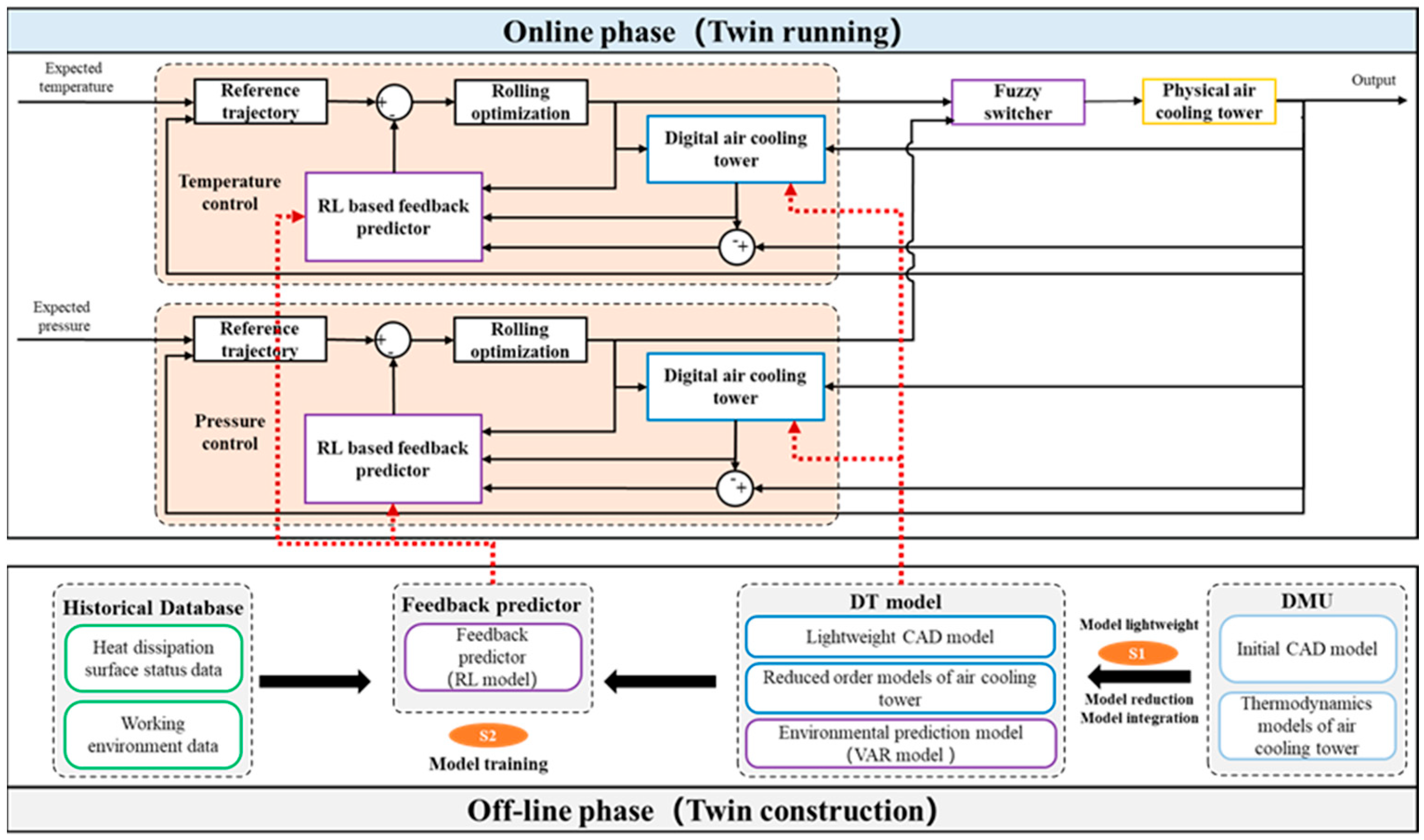
The technical roadmap for the intelligent control of IAC towers in thermal power plants, underpinned by digital twin technology, is illustrated in Figure 12. The core of this roadmap is an MPC strategy that leverages both a digital twin and reinforcement learning. In contrast to traditional MPC controllers, this novel controller integrates three key components: an IAC tower digital twin model, a reinforcement learning-based feedback predictor, and a fuzzy switcher. This architecture synthesizes the outputs from both temperature and pressure control models, thereby significantly enhancing the control system’s flexibility and robustness.
  • Fundamental Control Architecture based on MPC:
Both the temperature and pressure control loops for the IAC tower are built upon the MPC methodology. A key feature of this approach is its reliance on an accurate system model to perform dynamic prediction and rolling-horizon optimization. For instance, in the temperature control loop, the optimization objectives are twofold: (1) to minimize the variance between the predicted cooling water outlet temperature and its setpoint trajectory over a future prediction horizon (configured as 30 time-steps), and (2) to minimize the control energy consumed by the actuators (specifically regulating fan speed frequency and louver pitch angle) while ensuring their control outputs remain within prescribed limits (with a control horizon of 10 time-steps).
  • Digital Twin-based Hybrid Prediction Model:
The core predictive model of the IAC tower was constructed and managed within the architecture’s Model Module. It employs a hybrid structure: on one hand, an ROM of the fluid dynamics, based on deep neural networks, provides predictions for steady-state conditions. On the other hand, a high-fidelity simulation model, grounded in first principles of heat transfer, delivers accurate predictions for transient states, especially during large-scale operational shifts. The integration of these two models ensures both the accuracy and timeliness of predictions across both steady-state and transient regimes. Furthermore, by incorporating an ambient environmental prediction model, the system can forecast the future states of the IAC tower, thereby providing reliable predictive data for the MPC controller.
  • Reinforcement Learning-based Feedback Predictor:
The adaptive learning component of the controller was implemented as a specialized algorithm within the Algorithm Module. This module provided the environment to train and deploy the reinforcement learning agent, which continuously refines its predictions based on real-time feedback. By directly assimilating this feedback, it accelerates model learning, thereby enhancing the quality and adaptability of the control decisions.

4.2.3. Digital Twin Application Effectiveness

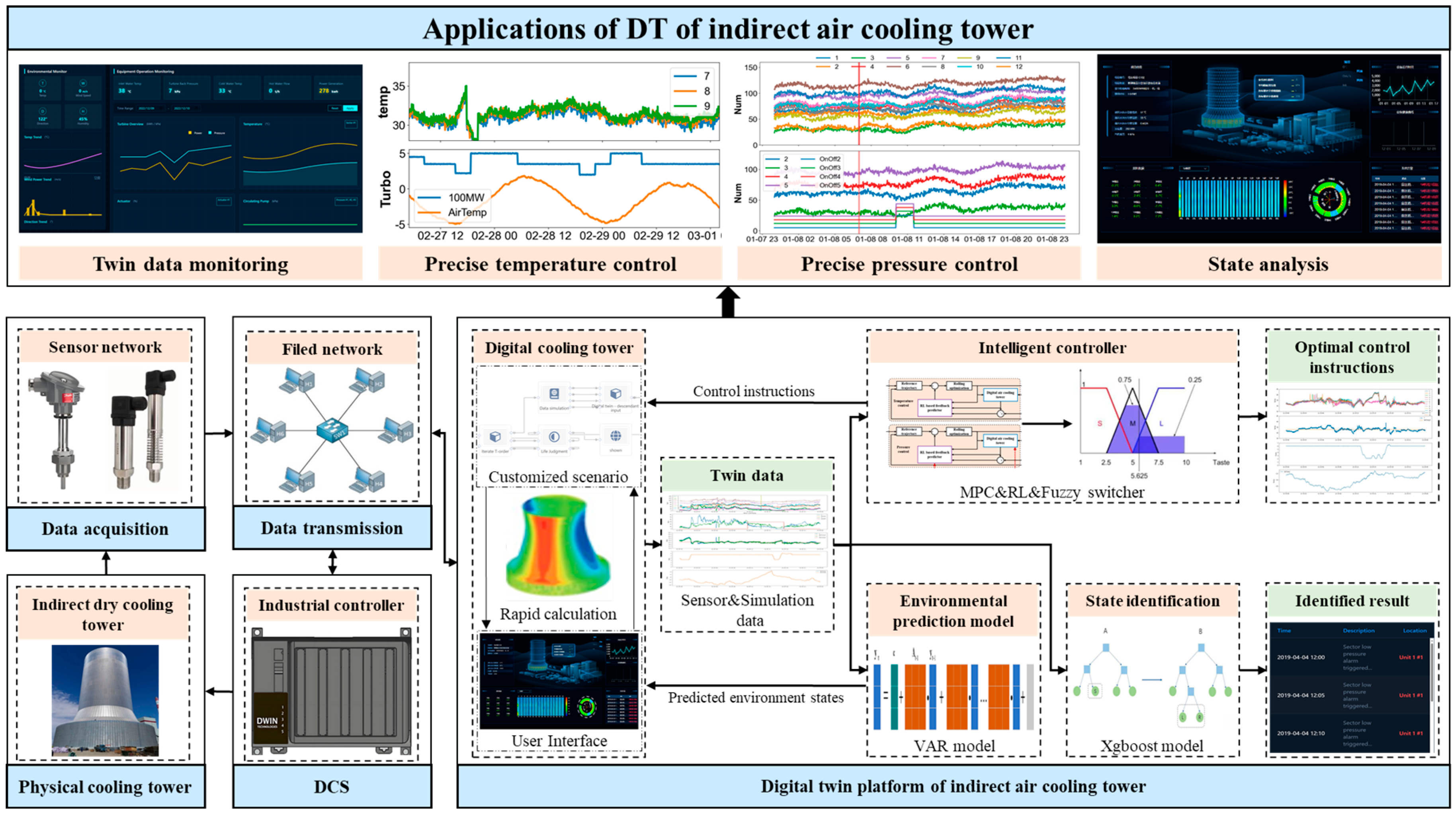
The operational mechanism and application effects of the proposed digital twin-based intelligent control system for IAC towers are illustrated in Figure 13. The system’s functionalities encompass real-time monitoring of the tower’s physical and virtual states, synchronized control of temperature and pressure, and diagnostic analysis of the heat exchanger surface condition. Data pertaining to the state of the IAC tower and the ambient environment, as monitored by the sensor network, is transmitted to the digital twin platform. Within the platform, dynamic predictions are generated by the digital twin of the IAC tower and the environmental prediction model. Based on these predictions, the intelligent temperature–pressure controller executes rolling-horizon optimization to determine the optimal control strategy. This strategy is then relayed to the Distributed Control System (DCS) and subsequently to industrial controllers. These controllers, in turn, manipulate actuators such as valves and louvers to achieve closed-loop control of the IAC tower’s temperature and pressure. Furthermore, the identified condition of the heat exchanger surfaces provides crucial diagnostic insights, assisting O&M engineers with the monitoring and analysis of the tower’s performance.
The intelligent control system for IAC towers integrates digital twin technology, reinforcement learning, and optimal control principles to achieve real-time, efficient, and coordinated control. The system can proactively anticipate temperature and pressure trends within the IAC tower and issue optimal operating commands. This feedforward control capability prevents the freezing and rupture of tube bundles while ensuring the turbine unit operates at its optimal backpressure point. Compared to the previously used segmented control strategy, the control strategy of digital twin method significantly improves control performance. As shown in Table 4, the detailed effect comparison is as follows: stabilizing the cooling water outlet temperature to within a control accuracy of ±0.5 °C; reducing the temperature differential across the heat exchanger surfaces by 8 °C, leading to higher uniformity; lowering the system’s critical operational low temperature by 5 °C; and achieving an approximate 1% reduction in coal consumption. Furthermore, the system enhances overall power generation efficiency, bolsters operational safety, elevates asset management standards, and reduces both the workload and technical complexity for O&M personnel.
This case specifically demonstrates the MetaD-DT’s capacity to support the creation of mission-critical, real-time control systems. It validates that the high-throughput capabilities of the Computing Engine, combined with the flexible integration offered by the Model Module and Algorithm Module, provide a robust framework for developing advanced, digital twin-driven control and optimization solutions for complex, dynamic industrial processes.

5. Conclusions

This paper addressed the significant challenges in developing digital twins for complex engineering equipment. We identified that the unique characteristics of this field—ranging from multi-physics complexity to stringent real-time performance and reliability demands—necessitate a specialized, structured approach. To address these multifaceted challenges, this paper presented MetaD-DT, a reference architecture specifically designed for the development and application of digital twins for engineering equipment.
This research detailed the comprehensive architecture, core functional modules, and streamlined development workflow of the digital twin based on the MetaD-DT. Its four-layer architecture provides a structured framework, while its modular design, graphical programming paradigm, and component-to-template reuse capabilities effectively reduce development complexity and costs. The MetaD-DT’s integrated toolchain directly addresses the identified key technical requirements, such as mechanism–data fusion modeling, real-time computing and data synchronization, data assimilation for model evolution, and intelligent decision-making. The feasibility and efficacy of this architecture were validated through two industrial case studies—a predictive health management system (DPF) and a real-time control optimization system (IAC tower). These cases provided tangible evidence that the MetaD-DT architecture effectively supports the development of robust, high-fidelity digital twins, leading to significant improvements in operational intelligence and efficiency.
Despite these contributions, we acknowledge that practical deployment faces challenges regarding compatibility and integration. While MetaD-DT effectively fuses Industrial IoT connectivity, low-code development, and multi-disciplinary simulation into a unified tool chain, deep integration with legacy industrial systems or non-standard protocols still requires significant custom adaptation. Furthermore, without standardized domain-specific workflows, users may face complexity when orchestrating these diverse modules.
To address these limitations, future work will focus on three optimization paths:
Architecture Optimization: Enhancing the data flow efficiency between functional modules to further reduce integration friction.
Standardization: Defining rigorous component interface specifications and SDKs to streamline the adaptation of third-party tools and legacy protocols.
Ecosystem Expansion: Integrating best-in-class open-source solutions and establishing a component marketplace to foster the sharing of industry-specific adapters, thereby minimizing fragmentation and redundant development.

Author Contributions

Conceptualization, H.G. and F.W.; methodology, H.G., F.W. and Y.G.; software, H.G., F.W. and Y.G.; validation, H.G. and Y.G.; formal analysis, H.G. and T.Z.; investigation, H.G., F.W. and T.Z.; resources, F.W. and Y.G.; data curation, H.G., F.W. and T.Z.; writing—original draft preparation, H.G., F.W. and T.Z.; writing—review and editing, H.G., F.W. and Y.G.; visualization, H.G., F.W. and T.Z.; supervision, F.W. and Y.G.; project administration, F.W. and Y.G.; funding acquisition, F.W. and Y.G. All authors have read and agreed to the published version of the manuscript.

Funding

This research was funded by the National Natural Science Foundation of China (Grant No. U2141209).

Data Availability Statement

The data presented in this study are available on request from the corresponding author.

Conflicts of Interest

Author Feng Wang, Taoping Zhao, and Yi Gu was employed by the company Wuxi Xuelang Industrial Intelligence Technology Co., Ltd. The remaining authors declare that the research was conducted in the absence of any com-mercial or financial relationships that could be construed as a potential conflict of interest. The funders had no role in the design of the study; in the collection, analyses, or interpretation of data; in the writing of the manuscript; or in the decision to publish the results.

Abbreviations

The following abbreviations are used in this manuscript:
ARAugmented Reality
CADComputer-Aided Design
CAEComputer-Aided Engineering
CANController Area Network
DCSDistributed Control System
DMOMDesign, Manufacturing, Operation, and Maintenance
DPFDiesel Particulate Filter
GAGenetic Algorithm
GEO-FNOGeometry-Aware Fourier Neural Operator
GPUGraphic Processing Unit
LSTMLong Short-Term Memory
IACIndirect Air-Cooled
IDEIntegrated Development Environment
IoTInternet of Things
MPCModel Predictive Control
MQTTMessage Queuing Telemetry Transport
NASEMNational Academies of Sciences, Engineering, And Medicine
OPC UAOpen Platform Communications Unified Architecture
PIDProportional–Integral–Derivative
PLCProgrammable Logic Controller
PODProper Orthogonal Decomposition
O&MOperation And Maintenance
R&DResearch and Development
RBACRole-Based Access Control
RBFRadial Basis Function
RLReinforcement Learning
ROMReduced-Order Model
SINDySparse Identification of Nonlinear Dynamics
SSLSecure Sockets Layer
SVMSupport Vector Machine
TLSTransport Layer Security
WebGLWeb Graphics Library
VRVirtual Reality
XRExtended Reality

References

  1. Zhang, L.; Liu, J.; Zhuang, C. Digital Twin Modeling Enabled Machine Tool Intelligence: A Review. Chin. J. Mech. Eng. 2024, 37, 47. [Google Scholar] [CrossRef]
  2. Wang, B.; Tao, F.; Fang, X.; Liu, C.; Liu, Y.; Freiheit, T. Smart Manufacturing and Intelligent Manufacturing: A Comparative Review. Engineering 2021, 7, 738–757. [Google Scholar] [CrossRef]
  3. Yang, S.; Wang, J.; Shi, L.; Tan, Y.; Qiao, F. Engineering Management for High-End Equipment Intelligent Manufacturing. Front. Eng. Manag. 2018, 5, 420–450. [Google Scholar] [CrossRef]
  4. Dongming, G. High-Performance Manufacturing. Int. J. Extreme Manuf. 2024, 6, 60201. [Google Scholar] [CrossRef]
  5. Baladeh, A.E.; Taghipour, S. Dynamic Multilevel Redundancy Allocation Optimization under Uncertainty. In Proceedings of the 2023 Annual Reliability and Maintainability Symposium (RAMS), Orlando, FL, USA, 23–26 January 2023; pp. 1–6. [Google Scholar]
  6. Vrolijk, A.-P.; Deng, Y.; Olechowski, A. Connecting Design Iterations to Performance in Engineering Design. Proc. Des. Soc. 2023, 3, 1067–1076. [Google Scholar] [CrossRef]
  7. Doellken, M.; Zimmerer, C.; Matthiesen, S. Challenges Faced by Design Engineers When Considering Manufacturing in Design—An Interview Study. Proc. Des. Soc. Des. Conf. 2020, 1, 837–846. [Google Scholar] [CrossRef]
  8. Wei, Y.; Hu, T.; Dong, L.; Ma, S. Digital Twin-Driven Manufacturing Equipment Development. Robot. Comput.-Integr. Manuf. 2023, 83, 102557. [Google Scholar] [CrossRef]
  9. Lu, Y.; Liu, C.; Wang, K.I.-K.; Huang, H.; Xu, X. Digital Twin-Driven Smart Manufacturing: Connotation, Reference Model, Applications and Research Issues. Robot. Comput.-Integr. Manuf. 2020, 61, 101837. [Google Scholar] [CrossRef]
  10. Kayode, J.F.; Afolalu, S.A.; Monye, S.I.; Adaramola, B.A. Overview of Maintenance Scope and Reliability in the Manufacturing Sector. In Proceedings of the 2024 International Conference on Science, Engineering and Business for Driving Sustainable Development Goals (SEB4SDG 2024), Omu-Aran, Nigeria, 2–4 April 2024; pp. 1–7. [Google Scholar] [CrossRef]
  11. Lee, J.; Ni, J.; Singh, J.; Jiang, B.; Azamfar, M.; Feng, J. Intelligent Maintenance Systems and Predictive Manufacturing. J. Manuf. Sci. Eng. 2020, 142, 110805. [Google Scholar] [CrossRef]
  12. Jasiulewicz-Kaczmarek, M.; Gola, A. Maintenance 4.0 Technologies for Sustainable Manufacturing—An Overview. IFAC-PapersOnLine 2019, 52, 91–96. [Google Scholar] [CrossRef]
  13. Grieves, M. Origins of the Digital Twin Concept. 2016. Available online: https://www.spaceis.cn/nd.jsp?id=78 (accessed on 6 June 2025).
  14. Grieves, M.; Vickers, J. Digital Twin: Mitigating Unpredictable, Undesirable Emergent Behavior in Complex Systems. In Transdisciplinary Perspectives on Complex Systems: New Findings and Approaches; Kahlen, F.-J., Flumerfelt, S., Alves, A., Eds.; Springer International Publishing: Cham, Switzerland, 2017; pp. 85–113. ISBN 978-3-319-38756-7. [Google Scholar]
  15. National Academies of Sciences, Engineering, and Medicine; National Academy of Engineering; Division on Earth and Life Studies; Division on Engineering and Physical Sciences; Board on Atmospheric Sciences and Climate; Board on Life Sciences; Computer Science and Telecommunications Board; Committee on Applied and Theoretical Statistics; Board on Mathematical Sciences and Analytics; Committee on Foundational Research Gaps and Future Directions for Digital Twins. Foundational Research Gaps and Future Directions for Digital Twins; National Academies Press: Washington, DC, USA, 2024; ISBN 978-0-309-70042-9. [Google Scholar]
  16. Tuegel, E.J.; Ingraffea, A.R.; Eason, T.G.; Spottswood, S.M. Reengineering Aircraft Structural Life Prediction Using a Digital Twin. Int. J. Aerosp. Eng. 2011, 2011, 154798. [Google Scholar] [CrossRef]
  17. Glaessgen, E.; Stargel, D. The Digital Twin Paradigm for Future NASA and U.S. Air Force Vehicles. In Proceedings of the 53rd AIAA/ASME/ASCE/AHS/ASC Structures, Structural Dynamics and Materials Conference, Honolulu, HI, USA, 23–26 April 2012; American Institute of Aeronautics and Astronautics: Reston, VA, USA, 2012. [Google Scholar]
  18. Phanden, R.K.; Sharma, P.; Dubey, A. A Review on Simulation in Digital Twin for Aerospace, Manufacturing and Robotics. Mater. Today Proc. 2021, 38, 174–178. [Google Scholar] [CrossRef]
  19. National Library of Medicine. The Increasing Potential and Challenges of Digital Twins. Nat. Comput. Sci. 2024, 4, 145–146. [Google Scholar] [CrossRef]
  20. Zhang, H.; Qi, Q.; Tao, F. A Multi-Scale Modeling Method for Digital Twin Shop-Floor. J. Manuf. Syst. 2022, 62, 417–428. [Google Scholar] [CrossRef]
  21. Hao, C.; Wang, Z.; Zou, Y.; Zhao, Z. Self-Learning Time-Varying Digital Twin System for Intelligent Monitoring of Automatic Production Line. J. Phys. Conf. Ser. 2023, 2456, 12021. [Google Scholar] [CrossRef]
  22. Ivanov, D. Intelligent Digital Twin (iDT) for Supply Chain Stress-Testing, Resilience, and Viability. Int. J. Prod. Econ. 2023, 263, 108938. [Google Scholar] [CrossRef]
  23. Zhuang, C.; Miao, T.; Liu, J.; Xiong, H. The Connotation of Digital Twin, and the Construction and Application Method of Shop-Floor Digital Twin. Robot. Comput.-Integr. Manuf. 2021, 68, 102075. [Google Scholar] [CrossRef]
  24. Gil, S.; Mikkelsen, P.H.; Gomes, C.; Larsen, P.G. Survey on Open-Source Digital Twin Frameworks–A Case Study Approach. Softw. Pract. Exp. 2024, 54, 929–960. [Google Scholar] [CrossRef]
  25. Infante, S.; Martín, C.; Robles, J.; Rubio, B.; Díaz, M.; Perea, R.G.; Montesinos, P.; Poyato, E.C. Integrating FMI and ML/AI Models on the Open-Source Digital Twin Framework OpenTwins. Softw. Pract. Exp. 2024, 54, 1470–1490. [Google Scholar] [CrossRef]
  26. Fur, S.; Heithoff, M.; Michael, J.; Netz, L.; Pfeiffer, J.; Rumpe, B.; Wortmann, A. Sustainable Digital Twin Engineering for the Internet of Production. In Digital Twin Driven Intelligent Systems and Emerging Metaverse; Karaarslan, E., Aydin, Ö., Cali, Ü., Challenger, M., Eds.; Springer Nature: Singapore, 2023; pp. 101–121. ISBN 978-981-99-0252-1. [Google Scholar]
  27. Tao, F.; Sun, X.; Cheng, J.; Zhu, Y.; Liu, W.; Wang, Y.; Xu, H.; Hu, T.; Liu, X.; Liu, T.; et al. makeTwin: A Reference Architecture for Digital Twin Software Platform. Chin. J. Aeronaut. 2024, 37, 1–18. [Google Scholar] [CrossRef]
  28. Zhao, D.; Wang, H.; Cui, L. Frequency-Chirprate Synchrosqueezing-Based Scaling Chirplet Transform for Wind Turbine Nonstationary Fault Feature Time–Frequency Representation. Mech. Syst. Signal Process. 2024, 209, 111112. [Google Scholar] [CrossRef]
  29. Zhi, S.; Niu, Y.; Ma, L.; Wu, H.; Shen, H.; Wang, T. Local Entropy Selection Scaling-Extracting Chirplet Transform for Enhanced Time-Frequency Analysis and Precise State Estimation in Reliability-Focused Fault Diagnosis of Non-Stationary Signals. Eksploat. Niezawodn.-Maint. Reliab. 2025. [Google Scholar] [CrossRef]
  30. Liu, M.; Fang, S.; Dong, H.; Xu, C. Review of Digital Twin about Concepts, Technologies, and Industrial Applications. J. Manuf. Syst. 2021, 58, 346–361. [Google Scholar] [CrossRef]
  31. Wang, Y.; Ren, W.; Li, Y.; Zhang, C. Complex Product Manufacturing and Operation and Maintenance Integration Based on Digital Twin. Int. J. Adv. Manuf. Technol. 2021, 117, 361–381. [Google Scholar] [CrossRef]
  32. Falekas, G.; Karlis, A. Digital Twin in Electrical Machine Control and Predictive Maintenance: State-of-the-Art and Future Prospects. Energies 2021, 14, 5933. [Google Scholar] [CrossRef]
  33. Ren, Z.; Wan, J.; Deng, P. Machine-Learning-Driven Digital Twin for Lifecycle Management of Complex Equipment. IEEE Trans. Emerg. Top. Comput. 2022, 10, 9–22. [Google Scholar] [CrossRef]
  34. Jingyu, L.; Weixi, J.; Chen, C.; Su, X. Maintenance Architecture Design of Equipment Operation and Maintenance System Based on Digital Twins. Proc. Inst. Mech. Eng. Part B 2024, 238, 1971–1990. [Google Scholar] [CrossRef]
  35. Fang, J.; Hu, W.; Liao, J.; Zhang, T.; Wang, K.; Liu, Z.; Wang, Y.; Tan, J. A High-End Equipment Real-Time Virtual-Real Interaction Implementation Based on Digital Twin. In Advances in Mechanical Design, Proceedings of the 2021 International Conference on Mechanical Design (2021 ICMD), Changsha, China, 11–13 August 2021; Tan, J., Liu, Y., Huang, H.-Z., Yu, J., Wang, Z., Eds.; Springer Nature: Singapore, 2024; pp. 1949–1972. [Google Scholar]
  36. Wang, S.; Lai, X.; He, X.; Qiu, Y.; Song, X. Building a Trustworthy Product-Level Shape-Performance Integrated Digital Twin With Multifidelity Surrogate Model. J. Mech. Des. 2022, 144, 031703. [Google Scholar] [CrossRef]
  37. Hamilton, F.; Lloyd, A.L.; Flores, K.B. Hybrid Modeling and Prediction of Dynamical Systems. PLoS Comput. Biol. 2017, 13, e1005655. [Google Scholar] [CrossRef]
  38. Zhang, Z.; Guan, Z.; Gong, Y.; Luo, D.; Yue, L. Improved Multi-Fidelity Simulation-Based Optimisation: Application in a Digital Twin Shop Floor. Int. J. Prod. Res. 2022, 60, 1016–1035. [Google Scholar] [CrossRef]
  39. Yang, B.; Yang, S.; Lv, Z.; Wang, F.; Olofsson, T. Application of Digital Twins and Metaverse in the Field of Fluid Machinery Pumps and Fans: A Review. Sensors 2022, 22, 9294. [Google Scholar] [CrossRef]
  40. Huang, Y.; Tao, J.; Sun, G.; Wu, T.; Yu, L.; Zhao, X. A Novel Digital Twin Approach Based on Deep Multimodal Information Fusion for Aero-Engine Fault Diagnosis. Energy 2023, 270, 126894. [Google Scholar] [CrossRef]
  41. Zheng, Q.; Ding, G.; Xie, J.; Li, Z.; Qin, S.; Wang, S.; Zhang, H.; Zhang, K. Multi-Stage Cyber-Physical Fusion Methods for Supporting Equipment’s Digital Twin Applications. Int. J. Adv. Manuf. Technol. 2024, 132, 5783–5802. [Google Scholar] [CrossRef]
  42. Tao, F.; Zhang, H.; Zhang, C. Advancements and Challenges of Digital Twins in Industry. Nat. Comput. Sci. 2024, 4, 169–177. [Google Scholar] [CrossRef]
  43. Ogunsakin, R.; Mehandjiev, N.; Marin, C.A. Towards Adaptive Digital Twins Architecture. Comput. Ind. 2023, 149, 103920. [Google Scholar] [CrossRef]
  44. Liu, X. A New Perspective on Digital Twin-Based Mechanical Design in Industrial Engineering. Innov. Appl. Eng. Technol. 2023, 2, 1–8. [Google Scholar] [CrossRef]
  45. Tao, F.; Cheng, J.; Qi, Q.; Zhang, M.; Zhang, H.; Sui, F. Digital Twin-Driven Product Design, Manufacturing and Service with Big Data. Int. J. Adv. Manuf. Technol. 2018, 94, 3563–3576. [Google Scholar] [CrossRef]
  46. Xie, R.; Chen, M.; Liu, W.; Jian, H.; Shi, Y. Digital Twin Technologies for Turbomachinery in a Life Cycle Perspective: A Review. Sustainability 2021, 13, 2495. [Google Scholar] [CrossRef]
  47. Muctadir, H.M.; Manrique Negrin, D.A.; Gunasekaran, R.; Cleophas, L.; van den Brand, M.; Haverkort, B.R. Current Trends in Digital Twin Development, Maintenance, and Operation: An Interview Study. Softw. Syst. Model. 2024, 23, 1275–1305. [Google Scholar] [CrossRef]
  48. Gao, H.; Fang, H.; Liu, H.; Tong, Y.; Yang, D.; Ouyang, X. Physics-Informed Neural Network for Solving Hydrodynamic Lubrication Characteristics of Piston Pump Slipper Pair; River Publishers: Aalborg, Denmark, 2025; ISBN 978-87-438-0825-1. [Google Scholar]
  49. Söderäng, E.; Hautala, S.; Mikulski, M.; Storm, X.; Niemi, S. Development of a Digital Twin for Real-Time Simulation of a Combustion Engine-Based Power Plant with Battery Storage and Grid Coupling. Energy Convers. Manag. 2022, 266, 115793. [Google Scholar] [CrossRef]
  50. Tong, X.; Liu, Q.; Pi, S.; Xiao, Y. Real-Time Machining Data Application and Service Based on IMT Digital Twin. J. Intell. Manuf. 2020, 31, 1113–1132. [Google Scholar] [CrossRef]
  51. López, C.E.B. Real-Time Event-Based Platform for the Development of Digital Twin Applications. Int. J. Adv. Manuf. Technol. 2021, 116, 835–845. [Google Scholar] [CrossRef]
  52. Monek, G.D.; Fischer, S. Expert Twin: A Digital Twin with an Integrated Fuzzy-Based Decision-Making Module. Decis. Mak. Appl. Manag. Eng. 2025, 8, 1–21. [Google Scholar] [CrossRef]
  53. Willcox, K.; Segundo, B. The Role of Computational Science in Digital Twins. Nat. Comput. Sci. 2024, 4, 147–149. [Google Scholar] [CrossRef] [PubMed]
  54. Wang, J.; Liu, Y.; Ren, S.; Wang, C.; Ma, S. Edge Computing-Based Real-Time Scheduling for Digital Twin Flexible Job Shop with Variable Time Window. Robot. Comput.-Integr. Manuf. 2023, 79, 102435. [Google Scholar] [CrossRef]
  55. Ruppert, T.; Abonyi, J. Integration of Real-Time Locating Systems into Digital Twins. J. Ind. Inf. Integr. 2020, 20, 100174. [Google Scholar] [CrossRef]
  56. Kuts, V.; Otto, T.; Tähemaa, T.; Bondarenko, Y. Digital Twin Based Synchronised Control and Simulation of the Industrial Robotic Cell Using Virtual Reality. J. Mach. Eng. 2019, 19, 128–144. [Google Scholar] [CrossRef]
  57. Zipper, H. Real-Time-Capable Synchronization of Digital Twins. IFAC-Pap. 2021, 54, 147–152. [Google Scholar] [CrossRef]
  58. Hu, X. Data Assimilation for Simulation-Based Real-Time Prediction/Analysis. In Proceedings of the 2022 Annual Modeling and Simulation Conference (ANNSIM), San Diego, CA, USA, 18–20 July 2022; pp. 404–415. [Google Scholar]
  59. Donato, L.; Galletti, C.; Parente, A. Self-Updating Digital Twin of a Hydrogen-Powered Furnace Using Data Assimilation. Appl. Therm. Eng. 2024, 236, 121431. [Google Scholar] [CrossRef]
  60. Calvetti, D.; Mêda, P.; Hjelseth, E.; de Sousa, H. Incremental Digital Twin Framework: A Design Science Research Approach for Practical Deployment. Autom. Constr. 2025, 170, 105954. [Google Scholar] [CrossRef]
  61. Lee, M.; Hu, Y.; Zhu, Y.; Zhou, X.; Zhao, Y.; Zhou, X. Learn to Update Digital Twins with Incremental Scenarios. In Proceedings of the 2nd International Workshop on Networked AI Systems; Association for Computing Machinery: New York, NY, USA, 2024; pp. 7–12. [Google Scholar]
  62. Hao, Z.; Yongqi, Z.; Huaxin, Z.; Dragoslav, S.; Maosen, C. Digital Twin-Driven Intelligent Construction: Features and Trends. Sdhm Struct. Durab. Health Monit. 2021, 15, 183–206. [Google Scholar] [CrossRef]
  63. Yang, J.; Sun, Y.; Cao, Y.; Hu, X. Predictive Maintenance for Switch Machine Based on Digital Twins. Information 2021, 12, 485. [Google Scholar] [CrossRef]
  64. Wang, L.; Wang, C.; Li, X.; Song, X.; Xu, D. State Perception and Prediction of Digital Twin Based on Proxy Model. IEEE Access 2023, 11, 36064–36072. [Google Scholar] [CrossRef]
  65. Orlova, E.V. Design Technology and AI-Based Decision Making Model for Digital Twin Engineering. Future Internet 2022, 14, 248. [Google Scholar] [CrossRef]
  66. Geng, B.; Varshney, P.K. Human-Machine Collaboration for Smart Decision Making: Current Trends and Future Opportunities. In Proceedings of the 2022 IEEE 8th International Conference on Collaboration and Internet Computing, CIC 2022, Las Vegas, NV, USA, 14–16 December 2022; pp. 61–67. [Google Scholar] [CrossRef]
  67. Magyar, P.; Hegedűs-Kuti, J.; Szőlősi, J.; Farkas, G. Real-Time Data Visualization of Welding Robot Data and Preparation for Future of Digital Twin System. Sci. Rep. 2024, 14, 10229. [Google Scholar] [CrossRef]
  68. Geng, R.; Li, M.; Hu, Z.; Han, Z.; Zheng, R. Digital Twin in Smart Manufacturing: Remote Control and Virtual Machining Using VR and AR Technologies. Struct. Multidiscip. Optim. 2022, 65, 321. [Google Scholar] [CrossRef]
  69. Zhang, J.; Zhu, J.; Zhou, Y.; Zhu, Q.; Wu, J.; Guo, Y.; Dang, P.; Li, W.; Zhang, H. Exploring Geospatial Digital Twins: A Novel Panorama-Based Method with Enhanced Representation of Virtual Geographic Scenes in Virtual Reality (VR). Int. J. Geogr. Inf. Sci. 2024, 38, 2301–2324. [Google Scholar] [CrossRef]
  70. Roy, S.; Singh, S.; Uddin, R. Rizwan-uddin XR and Digital Twins, and Their Role in Human Factor Studies. Front. Energy Res. 2024, 12, 1359688. [Google Scholar] [CrossRef]
  71. Yang, C.; Tu, X.; Autiosalo, J.; Ala-Laurinaho, R.; Mattila, J.; Salminen, P.; Tammi, K. Extended Reality Application Framework for a Digital-Twin-Based Smart Crane. Appl. Sci. 2022, 12, 6030. [Google Scholar] [CrossRef]
  72. Florea, A.; Lobov, A.; Lanz, M. Emotions-Aware Digital Twins for Manufacturing. Procedia Manuf. 2020, 51, 605–612. [Google Scholar] [CrossRef]
  73. Yan, F.; Cai, Z.; Li, Z.; Zhu, L.; Chen, P.; Zheng, S.; Wu, Y.; Li, Y.; Hu, J. Investigation of Diesel Particulate Filter Performance under Typical Failure Conditions. Energy 2024, 311, 133337. [Google Scholar] [CrossRef]
  74. What Is a Diesel Particulate Filter, or DPF? Available online: https://www.drive.com.au/news/what-is-a-diesel-particulate-filter-or-dpf/ (accessed on 13 March 2025).
  75. Park, G.; Park, S.; Hwang, T.; Oh, S.; Lee, S. A Study on the Impact of DPF Failure on Diesel Vehicles Emissions of Particulate Matter. Appl. Sci. 2023, 13, 7592. [Google Scholar] [CrossRef]
  76. Xin, X.; Zhang, Z.; Zhou, Y.; Liu, Y.; Wang, D.; Nan, S. A Comprehensive Review of Predictive Control Strategies in Heating, Ventilation, and Air-Conditioning (HVAC): Model-Free VS Model. J. Build. Eng. 2024, 94, 110013. [Google Scholar] [CrossRef]
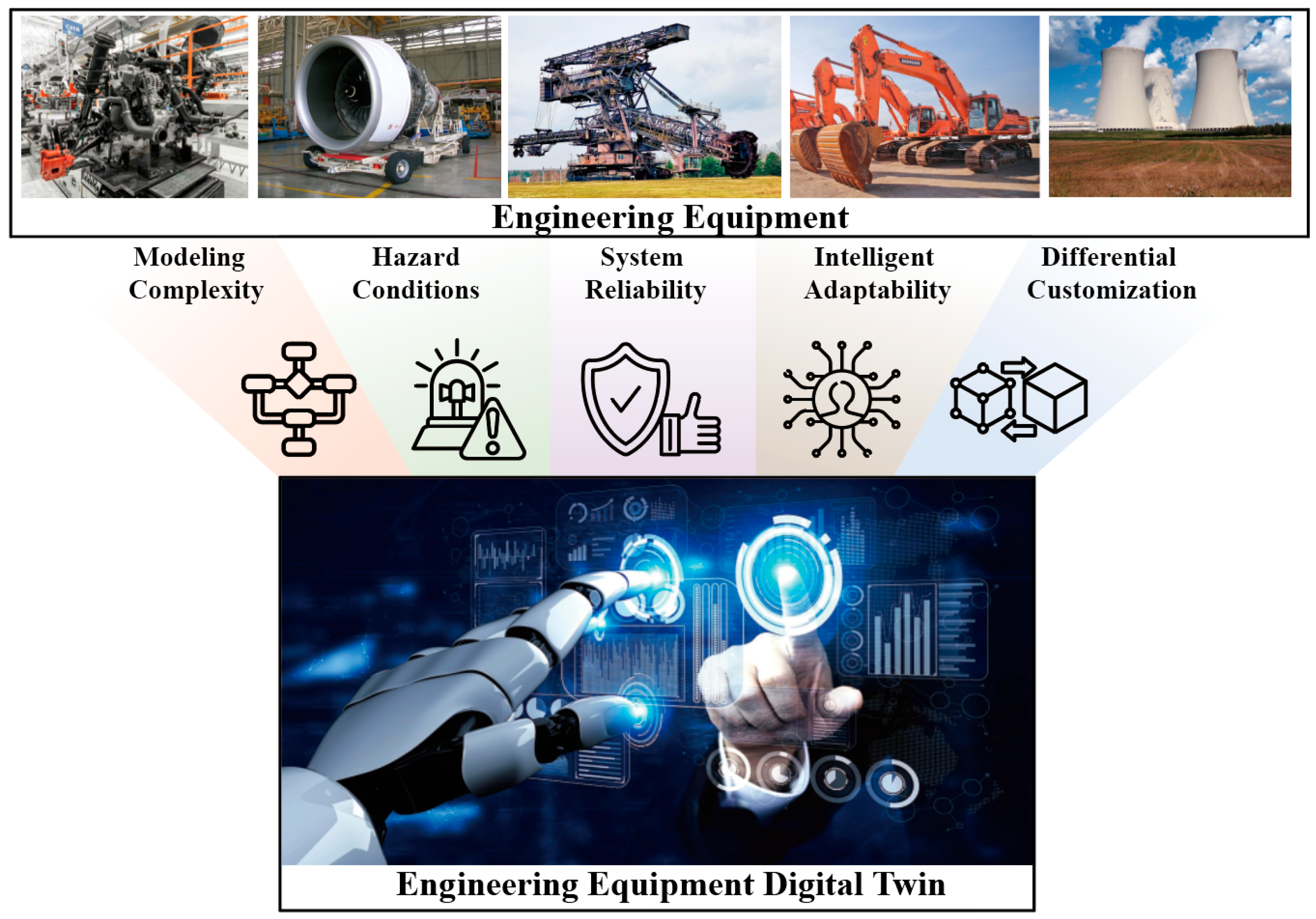
Figure 1. Unique Characteristics of Engineering Equipment Digital Twins.
Electronics 15 00038 g001
Figure 2. The key technology for the digital twin of engineering equipment.
Electronics 15 00038 g002
Figure 3. Four-Layer architecture of MetaD-DT.
Electronics 15 00038 g003
Figure 4. MetaD-DT functional modules.
Electronics 15 00038 g004
Figure 5. MetaD-DT scene workspace.
Electronics 15 00038 g005
Figure 6. MetaD-DT interface workspace.
Electronics 15 00038 g006
Figure 7. Example of digital twin development process.
Electronics 15 00038 g007
Figure 8. Schematic diagram of carbon load process in DPF of diesel engine [74].
Electronics 15 00038 g008
Figure 9. Technical route of diesel engine DPF digital twin construction.
Electronics 15 00038 g009
Figure 10. Implementation results and monitoring interface of the diesel engine DPF digital twin.
Electronics 15 00038 g010
Figure 11. The operation principle of the air-cooling tower.
Electronics 15 00038 g011
Figure 12. Technical route of digital twin construction of air-cooling tower.
Electronics 15 00038 g012
Figure 13. Implementation results and monitoring interface of air-cooling tower.
Electronics 15 00038 g013
Table 1. Comparison of MetaD-DT with typical digital twin platform.
FeatureSimulation Platforms (e.g., Ansys Twin Builder)IoT Platforms (e.g., Siemens MindSphere)MetaD-DT
Primary FocusHigh-fidelity Physics (CAE)Data Connectivity & VisualizationMechanism–Data Fusion & O&M
Model SupportStrong in PhysicsStrong in DataHybrid: Native support for ROMs and AI models
CustomizationLow: Closed ecosystem; hard to modify core algorithms.Medium: Standard widgets; limited algorithmic flexibility.High: Specific for engineering equipment customization (also template-based)
DeploymentWorkstation/Server-basedCloud-based (SaaS)Edge–Cloud Collaborative (Containerized)
Table 2. Mapping of Fundamental Requirements to MetaD-DT Architectural Elements and Evaluation Metrics.
RequirementKey ModulesImplementation MechanismEvaluation Metrics
Mechanism–Data Fusion ModelingModel Module
Algorithm Module
Embedded ROM Engine: Fuses physics-based constraints with data-driven correction layers using standardized FMU interfaces.Prediction Accuracy
Convergence Speed
Generalization Error
Real-time Computing & SynchronizationComputing Engine
Communication Module
Edge–Cloud Scheduling: Offloads training to cloud while executing inference on edge via GPU-accelerated containers; employs event-driven synchronization.End-to-End Latency
Synchronization Error Throughput
Data Assimilation & EvolutionData Module
Algorithm Module
Rolling-Window Update: Continuously assimilates new sensor data into the historical database to trigger online parameter tuning of the digital twin.Update Frequency
Data Completeness
Model Drift Rate
Predictive Maintenance & DecisionAlgorithm Module
Interaction Module
Optimization Solver: Integrates Rule Engines to generate maintenance strategies based on predicted states.False Alarm Rate
Decision Confidence
O&M Cost Reduction
Human–Computer InteractionVisualization Module
Interaction Module
Scene Graph Rendering: Decouples backend logic from WebGL-based 3D frontend; supports bi-directional command transmission via WebSocket.Rendering Frame Rate
Interaction Response Time
Usability Score
Table 3. Specifications and Performance Metrics of the Constructed Reduced-Order Models for Digital Twin Model.
Model NameAlgorithm
Strategy
Input VariablesOutputAccuracy 1
Soot Oxidation Rate ModelPOD-RBF
  • Initial Soot Load
  • Temperature
  • NO Concentration
  • NO2 Concentration
Residual Soot MassTrain: 99.99%
Test: 99.99%
Cylinder Liner Wear ModelPOD-RBF
  • Time
  • Operating Condition
  • Inlet Particle Size
  • Inlet Particle Concentration
Liner Wear AmountTrain: 99.75%
Test: 99.51%
DPF Pressure Drop ModelGEO-FNO
  • Inlet Gas Temperature
  • Inlet Gas Mass Flow
DPF Pressure DropTrain: 99.57%
Test: 90.51%
DPF Temperature Field ModelGEO-FNO
  • Inlet Gas Temperature
  • Inlet Gas Mass Flow
Temperature Distribution FieldTrain: 98.28%
Test: 96.50%
1 Accuracy refers to the fidelity of the ROM in reproducing the results of the physics-based CAE simulation.
Table 4. Comprehensive comparison between the baseline Segmented Control strategy and the proposed MetaD-DT-based strategy.
Performance MetricSegmented Control: PID + ManualMetaD-DT: MPC + RL + Fusion Model
1. Cooling Water Outlet Temperature StabilityUnstable in Harsh Conditions:
Stable weather: ±1∼±2 °C
Complex weather (Winter/Gale): ±2∼±5 °C
Extreme cases: >±8 °C
High Precision:
Consistently maintained within ±0.5 °C across varying load and weather conditions.
2. Sector Surface Temperature Difference (Thermal Uniformity)High Variance:
Stable weather:<5 °C
Complex weather: 8 °C∼15 °C
Extreme cases: >20 °C (High freezing risk)
High Uniformity:
Temperature difference reduced by approx. 8 °C, Significantly lower risk of tube bundle freezing.
3. System Critical Low Temperature (Anti-freezing Threshold)Conservative (Energy Waste): Setpoint must be kept >7 °C
to prevent freezing, reducing turbine efficiency.
Optimized (Energy Saving): Threshold lowered by 5 °C. Safe operation achievable at
1∼2 °C.
4. Labor DependencyHigh:
Heavy reliance on manual tuning during weather changes; high workload and operator stress.
Low:
Fully automated closed-loop control; manual intervention is rarely required.
5. Technical Complexity & CostLow:
Simple mechanism; mature technology; directly deployed on Edge Controllers (PLC).
High:
Requires high-fidelity modeling, massive data for RL training, and cloud–edge deployment coordination.
6. Overall Economic BenefitStandard:
Limited by conservative operation margins.
High:
Significant energy savings and extended equipment lifespan.
Disclaimer/Publisher’s Note: The statements, opinions and data contained in all publications are solely those of the individual author(s) and contributor(s) and not of MDPI and/or the editor(s). MDPI and/or the editor(s) disclaim responsibility for any injury to people or property resulting from any ideas, methods, instructions or products referred to in the content.