Article

Modularized Artificial Intelligence Services for Multiple Patients’ Medical Resource Sharing and Scheduling


by
Ming-Shen Jian
1,
Pei-Han Chen
2,*,
Cheng-He Wang
1 and
Bo-Yuan Huang
1
1
Cloud Computing and Intelligent System Laboratory, Department of CSIE, National Formosa University, Yunlin 632301, Taiwan
2
National Taiwan University Hospital Yunlin Branch, Yunlin 640203, Taiwan
*
Author to whom correspondence should be addressed.
Electronics 2026, 15(1), 31; https://doi.org/10.3390/electronics15010031
Submission received: 28 October 2025 / Revised: 4 December 2025 / Accepted: 16 December 2025 / Published: 22 December 2025
(This article belongs to the Special Issue New Trends in Cloud Computing for Big Data Analytics)

Abstract

This research addresses the growing challenges of patient scheduling with limited medical resources, such as consultation and examination services. Based on the concept of a pipeline, multiple intelligent heuristic algorithms are considered to optimize outpatient scheduling while reducing total time spent, including in consultation, the laboratory, or examination and idle time caused by scheduling conflicts. Multiple cross-department medical services with various patient conditions are considered for scheduling. To handle the complexity of limited examination resources, intelligent heuristic algorithms, like the genetic algorithm, simulated annealing, and ant colony optimization, are deployed. The modularized artificial intelligence service prioritizes minimizing not only patients’ average waiting time but also the total process time for all patients completing the medical service requests, while ensuring effective allocation of shared medical resources. According to the verification results, the genetic algorithm can adapt quickly to diverse hospital or patient requirements. Both average waiting time and total process time can be reduced and saved.

1. Introduction

In recent years, the healthcare system and medical resources have been confronted with unprecedented challenges due to the huge numbers of patients with limited medical resources. Simultaneously, to improve the effectiveness of treatment, sometimes additional examination or inspection is needed. These developments have led to a significant strain on medical materials, medical spaces, and human medical resources. In other words, arranging sufficient medications and diagnostic equipment or environments has become an important issue in the healthcare system. Since the efficient and equitable allocation or arrangement of limited medical resources has become a critical concern, the medical resource scheduling problem (MRSP) is a possible topic and solution for optimizing the deployment of limited resources, such as physicians, examination rooms, and treatment equipment, to ensure that patients receive timely and appropriate care. Each patient presents unique clinical needs, and the scheduling system must also account for patients undergoing long-term treatment and those requiring follow-up care. Achieving a balanced allocation under such circumstances is a pivotal yet nontrivial task in medical resource management [1]. Therefore this research aims to investigate the optimization of outpatient resource scheduling and examination or inspection resource sharing. In addition, considering the required computing resources for algorithm progression, cloud computing with a modular container for parallel processing is proposed. There has been research proposing distributed systems and parallel processing related to algorithm performance, enhanced through cloud computing platforms [2]. Based on the hybrid procedures of the algorithms, the convergence of the optimal solution searching could be enhanced. The primary objectives are twofold: (1) to minimize the average waiting time of each patient, and (2) to improve the overall efficiency of the patient treatment process. However, considering the possibility of overlap—use of the same examination room—the waiting time of each patient would be increased due to the conflict of treatment with the same medical resource. Hence, artificial intelligent heuristic algorithms should arrange and schedule the clinical workflows of patients based on the limited medical resources. The intelligent heuristic algorithms offered would find and search the possible optimal solution by simulating natural or biological processes. These methods have been proven to solve complex and dynamic optimization problems, often outperforming conventional techniques in terms of solution quality. By systematically analyzing the outcomes, we aim to identify different algorithmic approaches and find which heuristic method is most appropriate for solving the patient scheduling problem in a clinical setting [1]. The following chapters of this research are organized as follows: In Section 2, we introduce the various intelligent heuristic algorithms for different optimal problems. Section 3 provides the definition and objective function corresponding to the multiple patients’ medical resource sharing and scheduling in consultation, examination, and immediate follow-up consultation. The conflicts and the subjects are also introduced and defined. Then, the experiments and validation results are given in Section 4. The conclusion is given in Section 5. Finally, we give the discussion in Section 6.

2. Related Works

The problem of shared resource allocation has been extensively studied, and a wide array of algorithmic strategies have been proposed to address it. This section presents a structured review divided into three main subsections, (Section 2.1) Algorithms, (Section 2.2) Time Complexity, and (Section 2.3) and Intelligence Algorithms.

2.1. Algorithms

An algorithm is a procedure that is designed and executed step by step to solve the corresponding problem. It is expected to be efficient, accurate, and executable within a finite time frame. Algorithms can be categorized based on their operational approach and problem-solving methodology. In terms of operational approach, algorithms may be sequential (executed on a single thread) or parallel (executed across multiple threads or distributed systems). Based on problem-solving strategies, algorithms are commonly divided into the following:
Divide and Conquer, which recursively breaks down a complex problem into smaller, independent sub-problems and combines their solutions;
Dynamic Programming, which optimizes computations by storing the results of overlapping sub-problems to avoid redundant calculations;
Greedy Algorithms, which make the locally optimal choice at each stage with the intent of finding a global optimum;
Backtracking, which incrementally builds candidates for solutions and abandons those that fail to satisfy the constraints.

2.2. Time Complexity

Time complexity plays an important role in evaluating the performance and feasibility of algorithms. The problems facing algorithms are broadly categorized into classes as follows:
  • Polynomial-Time Problems: Solvable efficiently in polynomial time;
  • NP (Non-deterministic Polynomial-Time) Problems: Verifiable in polynomial time but not necessarily solvable in that time frame [3].
Hence, the time complexity helps in identifying the computational limits of algorithms. Based on the time complexity, feasible or suitable algorithms could be designed or more efficient alternatives could be selected.

2.3. Intelligence Algorithms

Intelligent algorithms based on algorithms, neural networks, deep learning, or machine learning are generally used for data management and prediction [4]. In this research, to find the optimal solution, the intelligent heuristic algorithms are discussed in the following sections.

Intelligent Heuristic Algorithms

Heuristic algorithms, in contrast, are inspired by human intuition, natural phenomena, or biological systems. They aim to find near-optimal solutions for complex and often NP-hard problems where exact solutions are either unknown or computationally infeasible. Unlike conventional algorithms, heuristic methods often incorporate randomness and probabilistic decision-making to avoid local optima and enhance global search capabilities. These algorithms are particularly useful in optimization problems involving uncertain, nonlinear, or large-scale search spaces. Prominent heuristic methods include the following:
  • Simulated Annealing (SA) [5,6,7,8], which mimics the cooling process of materials to escape local optima;
  • Genetic Algorithms (GAs) [3,9,10,11,12,13], which emulate the process of natural selection and evolution through mutation and crossover;
  • Ant Colony Optimization (ACO) [14,15,16,17], which models the pheromone-based pathfinding behavior of ant colonies to discover optimal routes.
These algorithms have demonstrated efficacy in diverse fields, such as scheduling, logistics, network design, and bioinformatics, and are increasingly being adopted in healthcare resource optimization scenarios [18,19].

2.4. Related Problem Domains

The challenges explored in this study are conceptually aligned with two classical combinatorial optimization problems: the Job Assignment Problem (JAP) and the Job Shop Scheduling Problem (JSSP). The Job Assignment Problem (JAP) [20,21] addresses the allocation of limited resources—such as machines in manufacturing lines or personnel in organizational structures—to specific tasks or roles. The JAP is prevalent in fields such as operations research, industrial engineering, and human resource planning. It represents a general class of resource allocation problems, including equipment scheduling and workforce assignment. The Job Shop Scheduling Problem (JSSP) [22,23,24] is another well-known optimization problem in the scheduling domain. It involves determining the most efficient sequence of tasks across multiple workstations or machines, subject to constraints. Applications of the JSSP range from production line scheduling in factories to operating room allocation in hospitals. The patient scheduling problem addressed in this study shares structural similarities with both the JAP and JSSP, particularly in its requirement to efficiently assign and sequence limited resources under time and process constraints.
Recently, there has been research based on artificial intelligence for healthcare resource and patient flow scheduling [18,19]. The limited hospital resources for patient scheduling has proven to be an important issue.

3. Proposed Modularized Artificial Intelligent Services

3.1. Definition

This study addresses the efficient utilization of shared resources within hospital environments, aiming to minimize the average patient waiting time across all stages of clinical service. To achieve this, we define key variables such as the number of patients, consultation durations, the probability of requiring diagnostic examinations after the initial consultation, and the probability of needing an immediate follow-up consultation after the examination. Based on these parameters, we adopt the Job Shop Scheduling Problem (JSSP) framework to model and optimize the patient scheduling problem. In our formulation, outpatient consultation rooms and examination facilities are conceptualized as workstations, while the patient flow—including consultation, diagnostics, and possible re-consultation—is modeled as operations. Each patient is considered an individual job, which may involve one to three sequential operations. Due to the heterogeneity of medical expertise, specialized equipment, and diverse patient care pathways, it is not feasible to execute all operations in a single workstation. Instead, tasks must be distributed and scheduled across multiple shared units, adhering to hospital-specific procedural constraints.

3.1.1. Patient Flow Scenarios

Patient journeys may involve one of the following three pathways:
  • Scenario 1: The patient receives only an outpatient consultation and is discharged.
  • Scenario 2: The patient receives an initial consultation followed by a diagnostic procedure. The case is complete pending diagnostic report results.
  • Scenario 3: The patient undergoes a consultation, examination, and immediate follow-up consultation within the same visit.
    These scenarios form the foundation for modeling task dependencies and temporal constraints in our scheduling algorithm.

3.1.2. Scheduling Dynamics Example

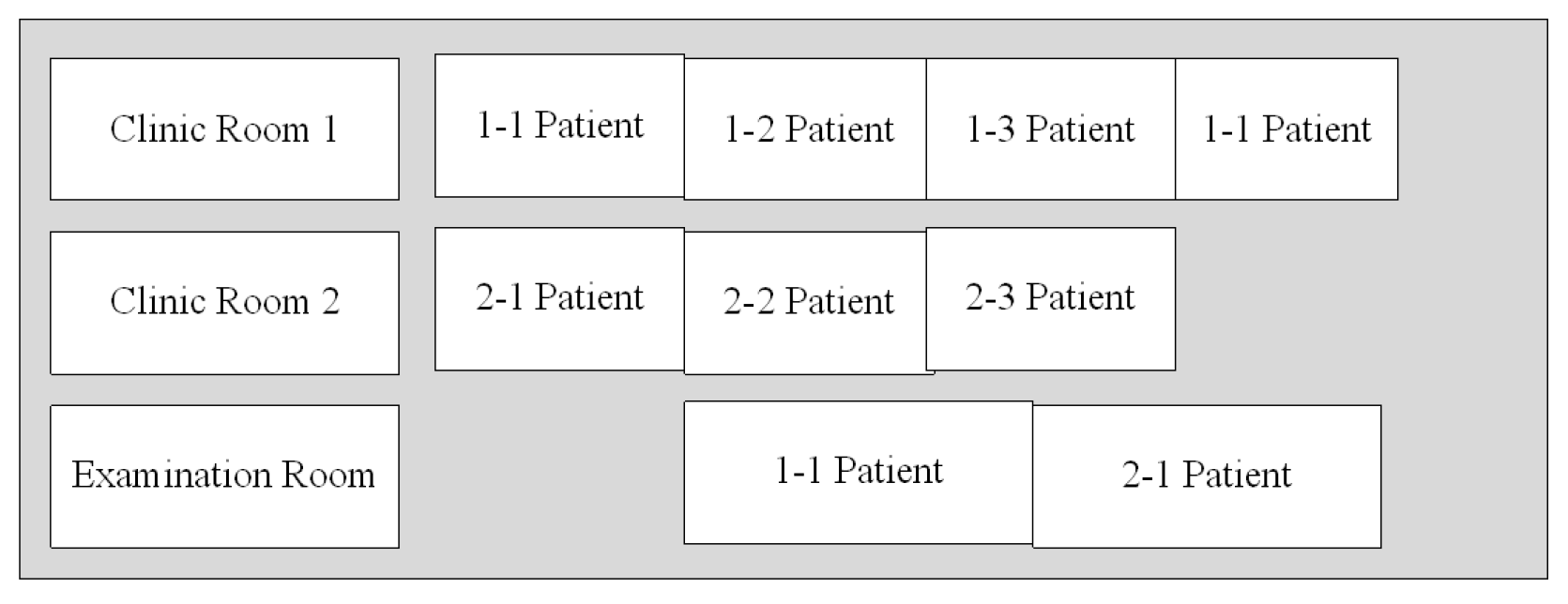
Figure 1 presents an example of scheduling dynamics involving multiple patients:
  • After the consultation with Patient 1-1,it is necessary to determine whether an examination is needed. Then, it is necessary to determine whether the examination room is currently occupied. In the figure, no one is currently being examined, so the examination can be performed immediately. When Patient 1-1 is undergoing an examination, time cannot be wasted. We need to maximize the use of medical institutions, so Patient 1-2 is arranged to be examined in outpatient clinic 1.
  • When arranging an immediate follow-up consultation for Patient 1-1, the immediate follow-up consultation can only be arranged after the consultation of Patent 1-3 is finished.
  • For Patient 2-1, the initial consultation ends just before the examination room becomes available. Suppose that an examination step is required. However, since the examination room is occupied at that moment, the patient must wait until it becomes available. In other words, Patient 2-1 should wait and have additional delay time.

3.2. Subjective Constraints

During the scheduling process in this study, we encountered four primary types of conflicts that could arise due to improper sequencing or resource contention.
  • Overlapping States for the Same Patient
    S i . exam S i . con + t ( i ) con S i . fcon S i . exam + t ( i ) exam
    This issue occurs when a single patient is scheduled for two different activities that overlap in time. For example, Patient 1 from Consultation Room 1 has two distinct activities: an initial consultation and a follow-up consultation (after examination). If the follow-up consultation starts before the initial consultation has finished, this overlap clearly indicates a conflict, as a patient cannot logically be in both states simultaneously. This represents a single-patient overlap problem. In this section, we assume the following:
    • i I : The set of patients;
    • r R : Resources (outpatient clinic and examination room);
    • o O : The patient’s medical service required (consultation (con), examination (exam), or follow-up consultation (fcon));
    • t ( i ) : Time for the medical service;
    • s i n : The exact starting time of the corresponding medical service in the schedule.
  • Overlapping Consultations for Different Patients This issue involves multiple patients being scheduled in the same consultation room at overlapping times. For example, in Consultation Room 2, both Patients 2-1 and 2-2 are scheduled for consultations when Patient 2-2 is scheduled to begin a consultation while Patient 2-1’s session is still ongoing. This scheduling conflict violates the exclusivity requirement of consultation rooms and defines a multi-patient overlap problem.
    S i . con S j . con + t ( j ) con S i . con S j . fcon + t ( j ) fcon S i . fcon S j . con + t ( j ) con S i . fcon S j . fcon + t ( j ) fcon
  • Examination Room Overlap A third conflict type involves the diagnostic examination room being scheduled for multiple patients at the same time. Suppose that Patients 1-1 from Consultation Room 1 and 2-2 from Consultation Room 2 are both scheduled for examinations with overlapping time intervals. This implies that one patient begins the examination before another patient has completed the examination. This leads to a diagnostic resource contention problem.
    s i , e x a m s j , e x a m + t ( j ) e x a m
  • Incorrect Consultation–Examination Order
    S i , e x a m S i , c o n + t ( i ) c o n
    The fourth issue arises when a patient’s stages are incorrectly sequenced. In practice, an examination should occur after the consultation that orders it. Moreover, for patients requiring a follow-up consultation, the correct sequence should always be initial consultation → examination → follow-up consultation. Any deviation from this flow represents a consultation sequence error. Hence, normally, a single patient would need to spend more time waiting in the outpatient consulting room or examination room if there exists another patient.

3.3. Objective Function

As introduced earlier, this study considers three types of patient consultation flows in a clinical setting with multiple subjects. Each patient would be initially defined according to the percentage as follows:
  • Let P c represent the percentage of patients with consultation only;
  • P c e represents the percentage of patients who require consultation and examination;
  • P c e c represents the percentage of patients who require consultation, examination, and immediate follow-up consultation.
All the probabilities would be
s S P s = 1 where S = { c , c e , c e c }
Suppose that the time for the consultation is t c , the time for the examination is t e , and the time for the immediate follow-up consultation is t f c . In addition, the time delay, which indicates the additional waiting time due to the current occupation of the examination room or consultation corresponding to the ith patient of the total I patients, can be defined as t ( i ) c d , t ( i ) e d ,   a n d   t ( i ) f c d . Due to the “Mutually Exclusive” states of various types of patient consultation flows, only one type of patient consultation flow would happen. Therefore, time spent for the i t h patient could be defined as follows.
The i-th patient corresponding to the required service status, P s ( i ) , could be P s ( i ) = P c , P c e , P c e c . Therefore, time spent for the ith patient related to any other j-th patient could be defined as follows:
T t o t a l i = t ( i ) c + t ( i ) c d when P s ( i ) = P c t ( i ) c + t ( i ) c d + t ( i ) c e + t ( i ) c e d when P s ( i ) = P c e t ( i ) c + t ( i ) c d + t ( i ) c e + t ( i ) c e d + t ( i ) f c + t ( i ) f c d when P s ( i ) = P c e c
Since the time spent for t c , t e , or  t f c corresponding to an individual patient would be similar, the main factor affecting the time spent would be the delay time corresponding to the type of patient consultation flow. Considering the subject conditions, the delay time of the i t h patient would be different due to the current occupation of the examination room or consultation. To enhance the medical service, we would like to establish the objective function as follows:
min i T t o t a l i
However, if each patient’s medical progress is arranged sequentially without any overlap, of course the delay time could be reduced to zero. In other words, the time spent serving all patients would be huge with an unreasonable schedule for zero delay time. In other words, the worst case of total time spent corresponding to all patients would be
I × P c × t c + I × P c e × ( t c + t e ) + I × P c e c × ( t c + t e + t f c )
Hence, to have a more reasonable schedule, we also minimize the total time spent of all patients. This means that we also minimize the total time of medical services corresponding to all patients.

3.4. Intelligent Heuristic Algorithm Framework and Execution Process

In this research, we have to consider the computing resources, computing performance of time spent, and accuracy of the schedule arrangement with minimal violations of constraints. Hence, we deploy intelligent heuristic algorithms in parallel based on the vector information coding in this research, including simulated annealing, the genetic algorithm, and the ant colony optimization method, for the optimal solution corresponding to all patients’ schedule arrangement. In the following, we give short descriptions of the workflow related to these three intelligent heuristic algorithms.

3.4.1. Genetic Algorithm (GA)

The process or procedure of the genetic algorithm in this research consists of the following steps:
  • Initialization and Representation: Define and initialize the dataset, generate the initial population, and set algorithm parameters. The code or chromosome used in the GA should be defined and represented corresponding to the possible solution. Each chromosome indicates a possible solution.
  • Termination Check: Evaluate whether the termination conditions (e.g., number of generations, convergence, etc.) are satisfied or not. When stopping, the rank 1 or the chromosome with the minimal fitness value would be the solution.
  • Selection: Select individuals from the current population based on fitness scores to participate in reproduction. The selected chromosomes will be used in the crossover process.
  • Crossover: Perform crossover (recombination) operations on selected individuals to produce offspring. The partial genes of the parent chromosome will be exchanged. Therefore, the new offspring will have partial genes from one parent chromosome and partial genes from another.
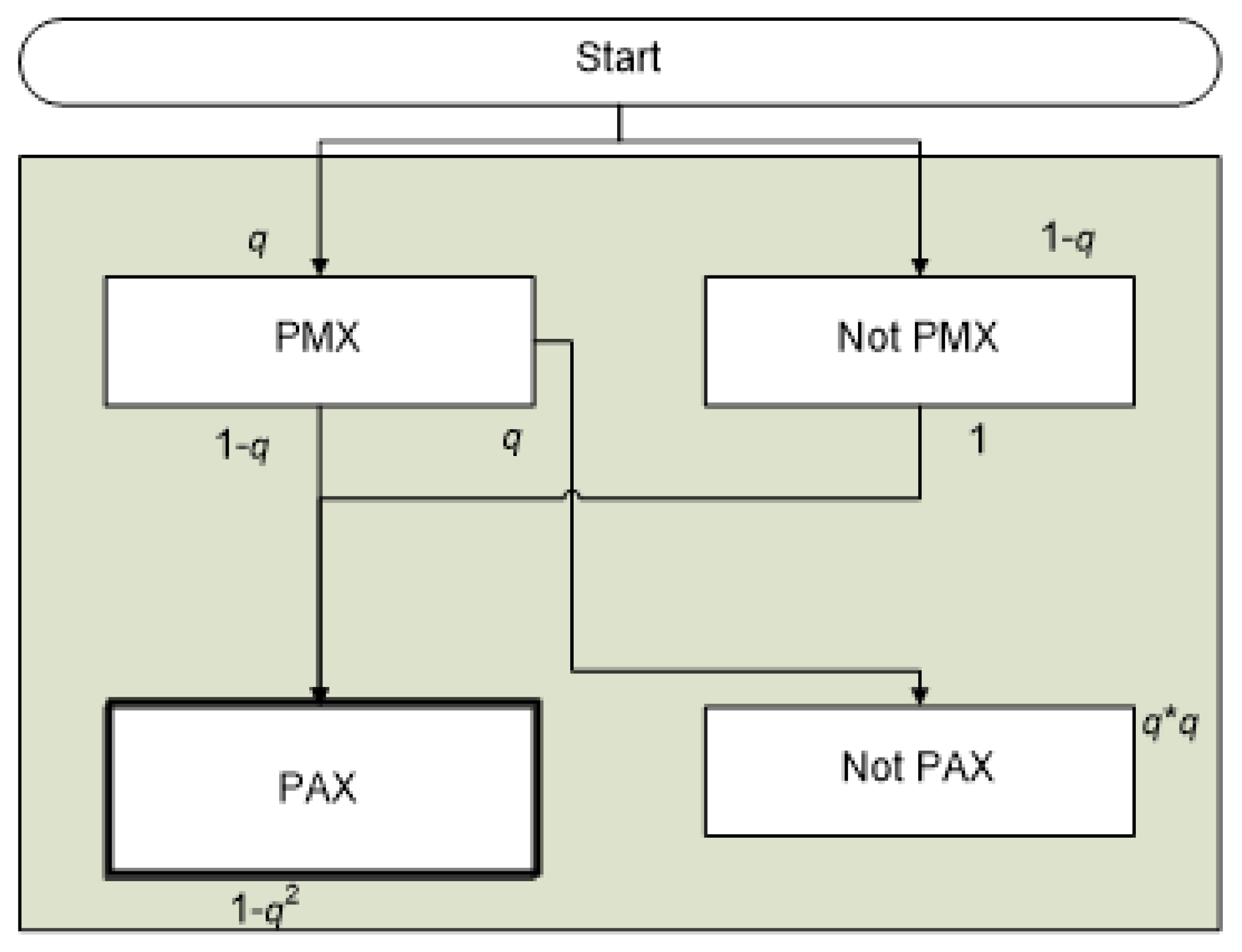
    In this research, the crossover procedure could be partially matched crossover (PMX) or Partial Attribute/Gene crossover (PAX). PMX was proposed for and is generally used in the genetic algorithm. Considering the representation of the chromosome, there are sequential numbers, where each number indicates an individual patient number. By using PMX, the new chromosome corresponding to the possible optimal solution would be created. Furthermore, each patient would possibly have three clinic statuses according to function 3: consultation, examination, and immediate follow-up consultation. Hence, we propose Partial Attribute/Gene crossover (PAX), which will only cross over genes with the same clinic status. This means that only the order of the same clinic status would change during the PAX crossover. In addition, to combine these two crossover methods, we adopt the two crossover steps depending on the probability [25]. Suppose that the probability of PMX crossover execution is q. In opposition, the probability of PMX crossover not being executed is 1−q. Considering PAX crossover, we assume that the probability of PAX crossover execution after PMX crossover execution would be 1−q. In opposition, the probability of PAX crossover not being executed is q. Hence, at least one crossover method would be selected for the new chromosome creation. The PMX and PAX crossover methods are established in individual containers. In other words, the crossover method of the genetic algorithm can now be modularized and independently executed. The containers are parallel-processed on the cloud. The XML-formatted chromosomes are received and delivered between the steps of the genetic algorithm and the corresponding containers. The following figure presents the hybrid crossover flowchart.
    The following is the pseudocode of the proposed genetic algorithm. Based on the hybrid crossover methods, at least one crossover method would be chosen. In other words, the genetic algorithm could keep searching the global optimal solution through enlarging the solution searching space.
  • Mutation: With a defined mutation probability, randomly alter certain genes to maintain diversity.
  • Fitness Evaluation: The fitness value corresponding to the objective function for each individual chromosome will be computed. All chromosomes will be ranked and sorted according to the fitness value. Only the chromosomes with a better fitness value will enter into the next generation or iteration.
  • Iteration: Repeat steps 2 through 6 until the termination condition in step 2 is met.
Figure 2 presents the procedure of the crossover including PMX and PAM.
The pseudocode of genetic algorithm is shown as Algorithm 1.

3.4.2. Simulated Annealing (SA)

The steps of the simulated annealing algorithm can be shown as follows:
  • Initialization: Set initial parameters, including the starting temperature, cooling schedule, and initial solution.
  • Fitness Evaluation: The system will calculate the fitness value of the initial data.
  • Termination Check: Evaluate whether the termination conditions (e.g., number of iterations, temperature, etc.) are satisfied or not.
  • Generate New Solution: Create a neighboring solution by making small changes corresponding to the current solution. In other words, the fitness of the new solution will be different from the current one.
  • Evaluate New solution: Compute the fitness value of the new candidate solution.
  • Acceptance Decision: If the fitness value of new solution is better, the system will accept the new solution for the next iteration. If not, in this research, we propose the limited tree simulated annealing structure based on the container to enlarge the possible solution searching space. Instead of the traditional solution selection procedure, we could change the difference in the temperature, reducing wd to limited the solutions kept. The following is the pseudocode of the limited tree annealing structure. Otherwise, the new solution would be rejected.
Therefore, the better or worse solutions would all be maintained temporarily. Similarly to the recursive procedure, when the temperature of the worse solution side is reduced to the same value as the better solution side, all solutions corresponding to the same tree level will be compared. The total number of solutions found could be estimated. In other words, in every single simulated annealing iteration, the solution space could be at least enlarged. In addition, the principle of the simulated annealing algorithm itself is not changed. Hence, by rapidly deploying the simulated annealing algorithm container, the limited tree structure is available and realistic.
  • Cooling Schedule: Reduce the temperature according to the predefined cooling function.
  • Iteration: Repeat steps 3 through 7 until the termination condition in step 3 is satisfied.
The pseudocode of simulated annealing is shown as Algorithm 2.
Algorithm 1: Genetic algorithm (GA) workflow
Input size α of population
New offspring rate p of generation
rate γ of mutation
numbers δ of generation
Result: Output Solution T
// Initialization
1. generate α feasible solutions randomly;
2. save them in the population Pop;
// Loop until terminal condition
3. for i = 1 to δ do
4. total numbers of offspring nc = ( α * p)/2;
5. for j = 1 to nc do
//Selection
6. select two parent solution TA and TB from Pop based on Tournament selection;
//Crossover
7. generate TC and TD by Hybrid Crossover Method to TA and TB;
8. TC and TD fixed/repaired
9. save TC and TD to Pop2;
10. endfor
//Mutation
11. for j = 1 to nc do
12. select a solution Tj from Pop2;
13. randomly mutate an attribute of Tj under the rate γ and generate a new solution Tj′;
14. if Tj′ is unfeasible
15. update Tj′ with a feasible solution by repairing Tj′;
16. endif
17. update Tj with Tj′ in Pop2;
//updating
18. sort Pop and Pop2 together based on the fitness value according to the objective function and only leave the best α individual in Pop
// The current best solution is T′
19. T = T′
20. endfor
//Returning the best solution
21. return the best solution T in Pop;
Algorithm 2: Simulated annealing (SA) workflow
Data: Probability μ of worse solution keeping
Initial temperature w
Temperature reducing in each iteration w r
Difference of the temperature reducing w d ( w d < w r )
Numbers δ of iteration
Result: Output Solution T
// Initialization
1. generate feasible solutions randomly T and compute the fitness f ( T ) ;
// Loop until terminal condition
2. while current iteration <= δ ;
3. current iteration +1;
4. T’ = new feasible solution from the neighbor
5. compute the fitness f(T′)
//Selection
6. If f(T′) is better than f(T)
7. T = T′
// limited tree annealing structure
8. else
9. for i = wd to wr do
10. T″ = new feasible solution from the neighbour of at T′
11. If f(T″) is better than f(T′)
12. T′ = T″
13. else
14. accept T′ = T″ with prob. μ
15. endif
16. endfor
17. If f(T′) is better than f(T)
18. accept T = T′ with prob. μ
19. endif
20. endif
21. w = w − wr;
22. endwhile
23. return the best solution T;

3.4.3. Ant Colony Optimization (ACO) Workflow

The procedures of the ant colony optimization algorithm can be shown as follows:
  • Initialization: Set parameters, including pheromone levels and heuristic factors, and initialize the ant population.
  • Solution Construction: Each artificial ant constructs a solution path probabilistically based on pheromone levels and heuristic information.
  • Fitness Evaluate: Evaluate the quality of each initial solution using a fitness function.
  • Termination Check: Determine whether the termination criteria (e.g., number of iterations and convergence) have been satisfied.
  • Pheromone Update: Update pheromone trails, which are used to indicate the quality of the found solutions. Evaporation is applied to reduce the influence of suboptimal paths.
  • IterationL: Repeat steps 3 through 5 until the stopping condition in step 4 is met.
    The primary objective of the optimization, and therefore the core of the fitness function, is the minimization of overall patient waiting time. A solution’s fitness is evaluated based on the total waiting time produced by the schedule it represents. A lower total waiting time indicates a higher fitness. This is directly referenced in the “Total Waiting Time and Objective Function Evaluation” Section, which states that this metric “directly corresponds to the objective function of this study.”
    A solution in this context is a complete schedule for all patients. In the ACO framework, each “ant” constructs a potential solution by navigating the solution space and making a series of probabilistic decisions. The construction process is guided by two key factors:
    • Pheromone Influence: This factor determines how much the existing pheromone trails influence an ant’s decision. A stronger pheromone trail on a path indicates that it has been part of successful solutions in previous iterations, making it a more attractive choice.
    • Heuristic Desirability: This factor, represented as the “waiting time influence factor”, provides heuristic information to guide the ants. It encourages ants to prioritize paths that are known to lead to a reduction in patient waiting time, directly aligning their choices with the overall fitness function.
    The pheromone trails are updated after each iteration to guide subsequent ants toward more promising areas of the solution space. This process involves two mechanisms:
    • Pheromone Evaporation: To avoid getting stuck in local optima and to encourage exploration, a portion of the pheromone evaporates from all paths. The “Pheromone Evaporation Rate” is set to 0.9, which means that 90% of the pheromone is retained and 10% evaporates after each iteration.
    • Pheromone Reinforcement (Deposition): Ants deposit pheromone on the paths they have traveled to construct their solutions. The  amount of pheromone deposited is proportional to the quality (fitness) of the solution found. The “pheromone reinforcement” value could be set by the system user, controlling how strongly these successful paths are positively reinforced. This ensures that paths leading to schedules with lower patient waiting times become more attractive for future ants.
The pseudocode of Ant colony optimization is shown as Algorithm 3.
Algorithm 3: Ant colony optimization
Data: Graph G ( V , E ) , Parameters ( α , β , ρ , Q , m )
Result: Best found solution S b e s t
Initialize pheromones τ i j τ 0 for all ( i , j ) E   S b e s t NULL   C b e s t
1. while Termination condition not met
2. for ant k = 0 to m do
3. Place ant k on starting node
4. while Solution for ant k is not complete do
Select next node j from current node i with probability:
P i j k = [ τ i j ] α [ η i j ] β l N i k [ τ i l ] α [ η i l ] β
N i k is the set of feasible neighbors for ant K
5. end while
6. if  L k < C b e s t then
7. C b e s t L k
8. end if
9. end for
10. for each edge ( , | E ) do Evaporation:  τ i j ( 1 P ) · τ i j Deposition: Calculate total deposited pheromone Δ τ i j
11. Δ τ i j = k = 1 m Δ τ i j k
12. where Δ τ i j k = Q / L if used edge ( , | ), else 0
13. τ i j τ i j + Δ τ i j
14. end for
15. end while
16. return  S b e s t

4. Experiments and Validation

In this research, the schedule of all patients is represented as the vector. Suppose that the probability of a patient who requires examination is α , and the probability of a patient who requires an immediate follow-up consultation after examination is β . Therefore, the percentage of P c , P c e , and P c e c corresponding to scenarios 1, 2, and 3 could be calculated as ( 1 α ) , α ( 1 β ) , and α β . To verify all algorithms, we assume that there are three total amount values of patients, 20, 50, and 100. The values of probability α and β could be set at 0.25, 0.5, and 0.75. In addition, the time spent in this research is defined as follows: consultation about 15 ± 5 (min), examination 20 ± 5 (min), and immediate follow-up consultation 10 ± 5 (min).
The following section presents experimental results evaluating the performance of three intelligent heuristic algorithms—simulated annealing (SA), the genetic algorithm (GA), and ant colony optimization (ACO)—under various configurations involving patient volumes, examination probabilities, and follow-up visit probabilities [1].
To represent the schedule for the algorithms, the vector, which includes all information, is used as one single possible solution of a schedule arrangement result. The array on page 13 shows an example of the data structure of a possible solution.
For example, the required medical services corresponding to patients and the department (clinic room) could be available initially and are shown as the following tables.
Table 1 and Table 2 show the possible medical services required by different patients (numbered).
Therefore, the representation is encoded as follows:
  • 1 3 1 2 4 1 2 5 5 6 5 6
The order of the individual numbers indicates the required medical service. For example, the number 2’s first time in the sequence indicates the consultation, and number 2’s second time in the sequence indicates the examination. Hence, we could have the representation of the information as follows:
State:State:State:State:State:State:State:
consultationconsultationFollow-upconsultationconsultationexaminationexamination
PtID: 1PtID: 3PtID: 1PtID: 2PtID: 4PtID: 1PtID: 2
DID: clinic1DID: clinic1DID: clinic1DID: clinic2DID: clinic2DID: examineDID: examine
Time: 15 ± 5Time: 15 ± 5Time: 10 ± 5Time: 15 ± 5Time: 15 ± 5Time: 20 ± 5Time: 20 ± 5
State represents the patient’s state, such as consultation, examination, and immediate follow-up consultation. PtID represents the patient’s serial ID. DID represents which clinic or examination room the patient is in. Time represents the time the patient needs to spend in this state.
If the time slot corresponding to a consultation room or examination room is currently available (without occupation), the required medical service corresponding to the patient will be added. Of course, this time schedule would go against the subject conditions (1 to 4). Hence the delay time should be added.
The evaluation metrics include total processing time, total waiting time, and average fitness.
  • Total Processing Time refers to the cumulative time required to complete all patients.
  • Total Waiting Time in a single generation or iteration denotes the cumulative idle time for all patients, calculated from the following:
    The delay between consultation and examination for those requiring examination;
    The delay between consultation and examination plus the delay between examination and follow-up for those requiring both.

4.1. Configurations and Parameters of Intelligent Heuristic Algorithms

SA Parameter Configuration:
  • Maximum Iterations: 1,000,000;
  • Initial Temperature: 1.0;
  • Cooling Rate: 0.9999;
  • Final Temperature: 0.
The simulated annealing algorithm was executed with an initial temperature of 1.0 and a geometric cooling schedule. In each iteration, the temperature is reduced by multiplying by 0.9999. The algorithm terminates when either the temperature reaches 0 or the iteration count hits 1,000,000—whichever occurs first. This single-solution search approach aims to escape local optima through probabilistic acceptance of inferior solutions during early exploration.
GA Parameter Configuration:
  • Population Size: 100;
  • Maximum Generations: 1000;
  • Crossover Rate: 0.8;
  • Mutation Rate: 0.1;
  • Elitism Rate: Top 10%;
  • Stopping Criterion: No improvement for 100 generations;
  • Selection Strategy: Tournament Selection (two-way).
In the GA setup, each generation maintains 100 individuals. An 80% crossover rate determines the likelihood of mating between selected parents, and a 10% mutation rate introduces variability to prevent premature convergence. Elitism ensures that the top 10% of solutions are directly carried forward to the next generation. Tournament selection compares pairs of individuals, selecting the fittest from each pair for reproduction. The algorithm terminates once the best solution has remained unchanged for over 100 generations.
ACO Parameter Configuration:
  • Iterations: 1,000,000;
  • Pheromone Reinforcement: 0.002;
  • Pheromone Evaporation Rate: 0.9;
  • Pheromone Influence Factor ( μ ) : 1;
  • Waiting Time Influence Factor ( γ ) : 3.
In the ACO algorithm, the simulation runs for 100,000 iterations. The pheromone reinforcement value of 0.002 controls how strongly successful paths are promoted in subsequent iterations. The evaporation rate of 0.9 ensures that 90% of pheromone levels are retained between iterations to balance exploration and exploitation and prevent convergence to suboptimal local solutions. The pheromone influence factor ( μ ) modulates the relative importance of pheromone trails, while the waiting time influence factor ( γ ) represents heuristic desirability, guiding ants to prioritize paths that reduce patient waiting time.

Experiments and Validation Results

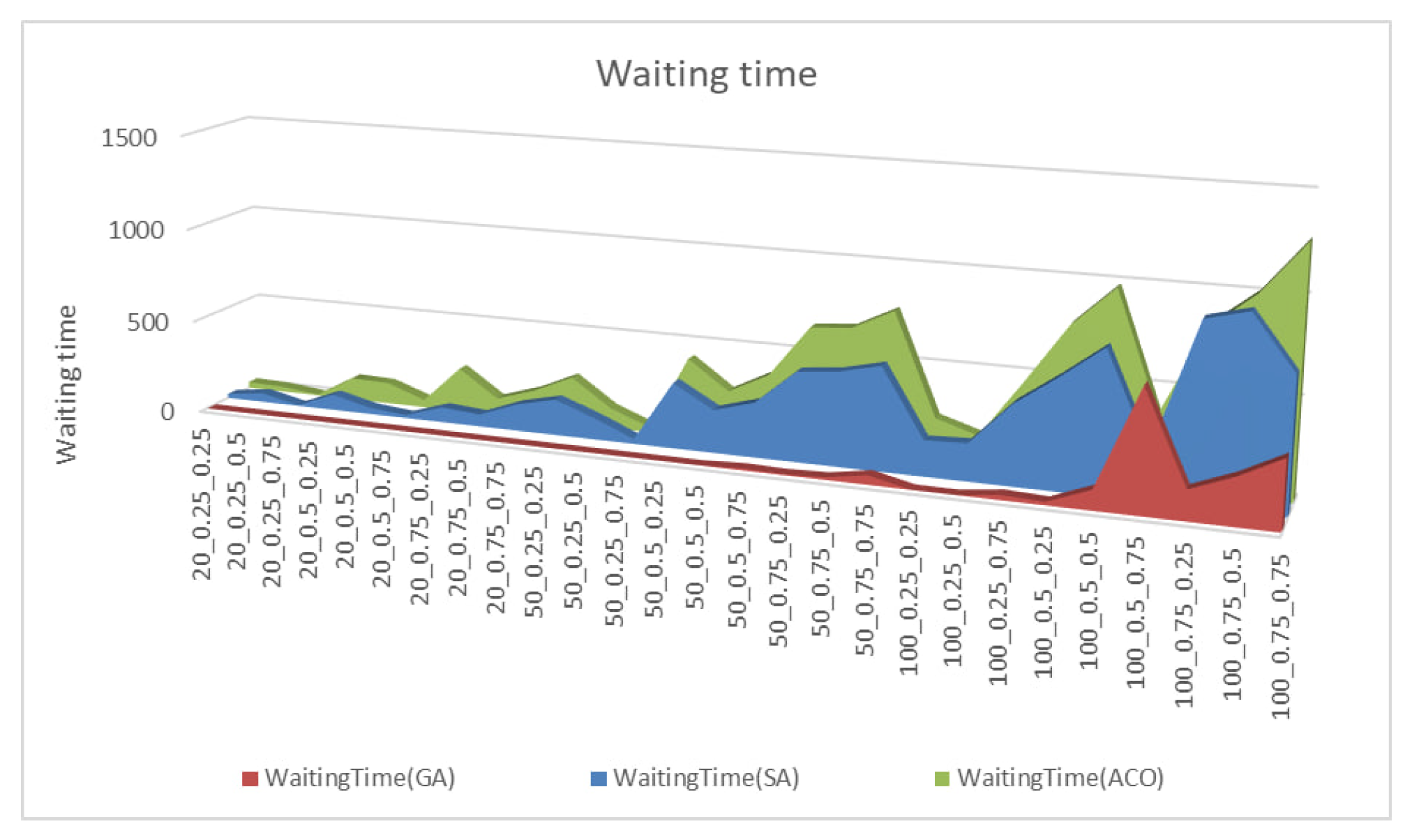
First, we define the label format as (total amount of patients _ α _ β ). For example, 20_0.25_0.25 indicates that the total number of patients is set to 20, α value is set to 0.25, and β value is set to 0.25. Figure 3 shows the result of patient arrangement for the minimal waiting time. Due to the fact that all values, such as total number of patients and probability α and β values, are increased, the conflicts in medical resource usage such as consultation and examination increase. In other words, the waiting time (idle time) for each patient waiting for the medical resource will also increase. All the intelligent heuristic algorithms show the same trend regarding the increasing time of medical resource waiting. In addition, according to the results, the waiting time through the genetic algorithm is smaller than that of the other algorithms. This means that the genetic algorithm could have a better arrangement for reducing the waiting time.
Figure 3 shows the comparison about the waiting time of patients between different algorithms.
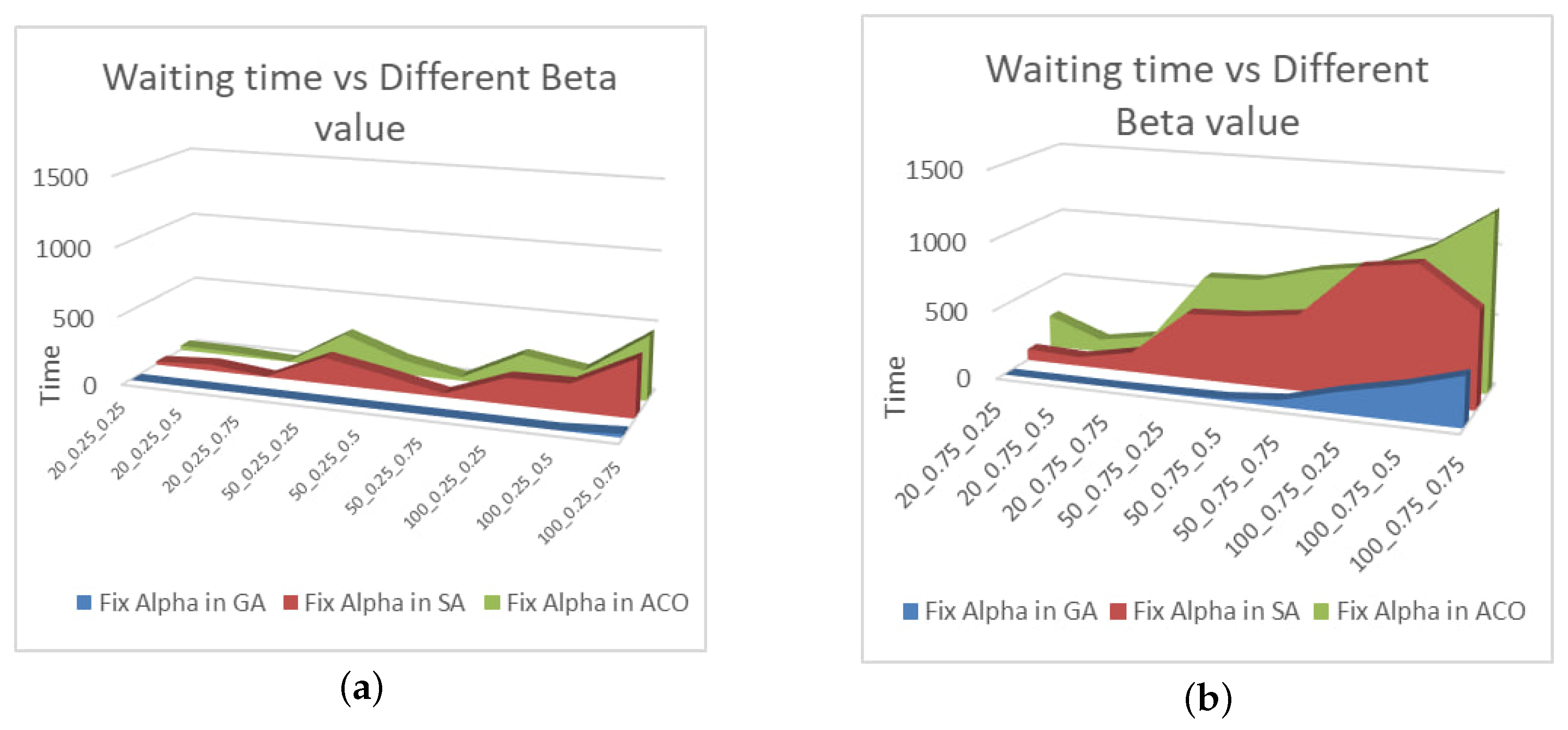
The result of patient arrangement for the minimal waiting time corresponds to the total number of patients, probability of a patient who requires examination, and probability of a patient who requires an immediate follow-up consultation. Considering the magnitude of the increase corresponding to the probability of a patient who requires an immediate follow-up consultation after examination, β , we fix the value α at 0.25 and 0.75. In the following figures, the waiting time for the increase in value α is obviously increased. If there are a total of 100 patients, the waiting time could be 10 times more in the GA with a 0.75 β value and almost 3 times more in ACO. In addition, with the same value of total number of patients and β , the magnitude of the increase related to the waiting time is obvious. This means that when more patients require the examination medical service ( α value from 0.25 to 0.75), the conflicts of resources or time between patients also increase. Furthermore, when the requirements of immediate follow-up consultation after examination increase, the conflicts regarding consultation room increase.
Figure 4 shows the comparison about the waiting time with the fixed Alpha value and various Beta values of patients between different algorithms.
The result of patient arrangement for the minimal waiting time corresponds to different total numbers of patients and probabilities of a patient who requires an immediate follow-up consultation, with the probability of a patient who requires examination set to (a) 0.25 or (b) 0.75. Considering the magnitude of the increase corresponding to the probability of a patient who requires examination, α , we fix the value β to 0.25 and 0.75. In the following figures, the waiting time for the increase in value β is increased. If there are in total 100 patients, the waiting time could be 2 times more in the GA with a 0.75 α value and only 1.5 times more in ACO. In addition, with the same value of total number of patients and β , the magnitude of the increase related to the waiting time is obvious. This means that when more patients require an immediate follow-up consultation after examination ( β value from 0.25 to 0.75), the conflicts of resources or time between patients also increase. Furthermore, when the requirements of examination increase, the possible patients who require an immediate follow-up consultation will also increase. The possible conflicts regarding consultation room increase. In other words, due to the fact that the value α will increase the total number of patients who require examination and lead to the possible increase in patients who require an immediate follow-up consultation, the waiting time could be almost 14 times more in the GA between α values of 0.25 and 0.75 and almost 3 times more in ACO with a total of 100 patients with the β value at 0.75.
The result of patient arrangement for the minimal waiting time corresponds to different total numbers of patients and probabilities of a patient who requires examination, with the probability of a patient who requires an immediate follow-up consultation set to (a) 0.25 or (b) 0.75.
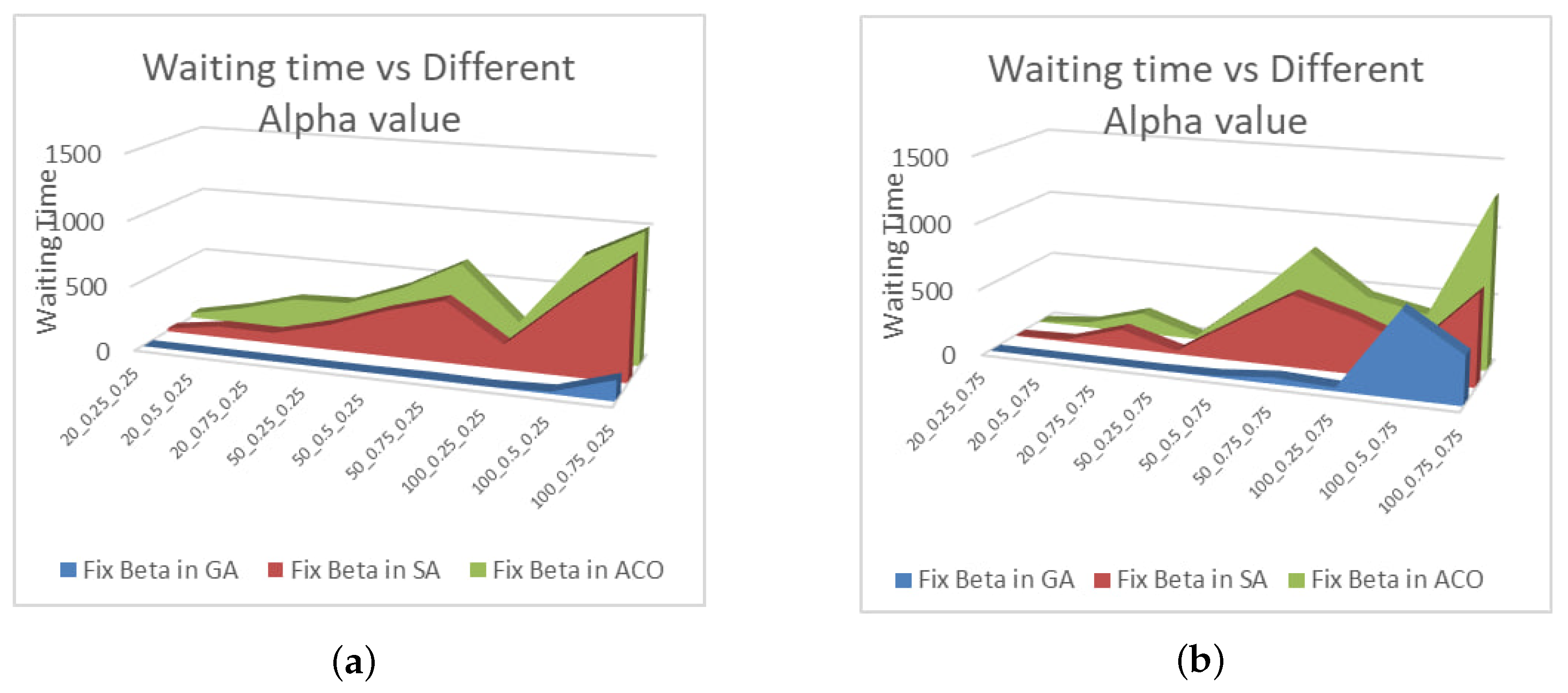
According to Equation (4), we could find the lowest delay time with the longest service time in the worst case. In other words, without any overlap of medical service between different patients, the time spent completing all patients’ medical services would be huge. In Figure 5, we can find that the genetic algorithm takes only about 40% of the time spent of the worst case when there are a total of 100 patients who have the highest probability of patients who require examination and the highest probability of patients who require an immediate follow-up consultation. The genetic algorithm could save about 50% of the time spent on average. And in most cases, there is no time delay or less conflict between patients.
Figure 6 shows the comparison about the waiting time with the fixed Beta value and various Alpha values of patients between different algorithms.

4.2. Comparative Analysis of Intelligent Heuristic Algorithms

In this study, three widely adopted intelligent heuristic algorithms—the genetic algorithm (GA), simulated annealing (SA), and ant colony optimization (ACO)—were selected and implemented to address the multi-patient shared resource scheduling problem [1]. Their performance was compared based on key evaluation metrics, including total processing time, total waiting time, and average fitness.
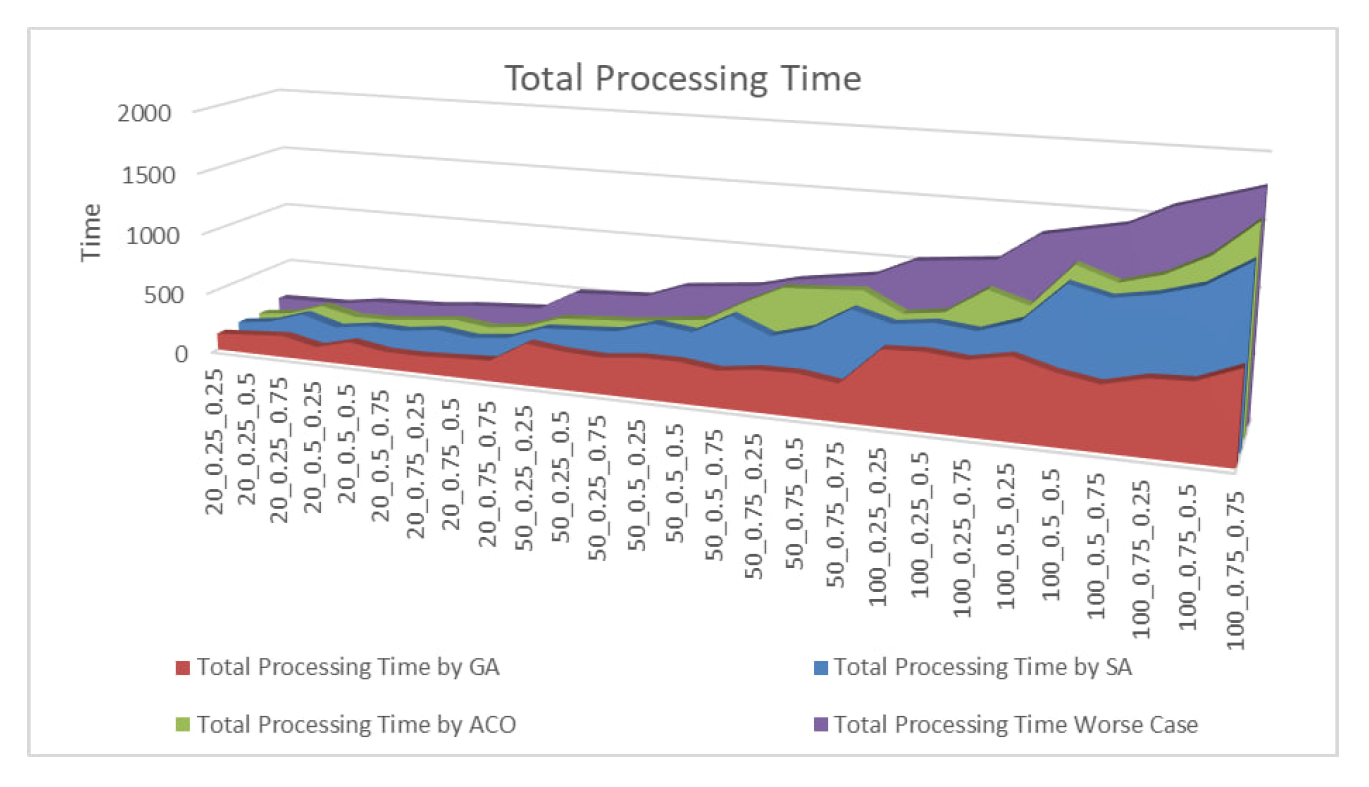
Total Processing Time Comparison. Under identical input data configurations, the GA consistently achieved the shortest total processing time across all scenarios. In contrast, the performance of SA and ACO was relatively close, with both incurring higher processing times than the GA. As the number of patients and the associated probabilities (e.g., examination and follow-up likelihood) increased, ACO’s processing time tended to be slightly higher than that of SA. Nevertheless, both algorithms required significantly more time than the GA under all tested conditions.
Total Waiting Time and Objective Function Evaluation. The GA again demonstrated superior performance, yielding significantly lower total waiting times compared to both SA and ACO. This metric directly corresponds to the objective function of this study—minimization of overall patient waiting time. Therefore, the results validate that the GA outperforms the other algorithms in achieving the optimization goal.
Summary and Observations. Overall, the experimental results clearly demonstrate that the genetic algorithm offers the most effective solution strategy for the patient scheduling problem presented in this research. Its strong global search capabilities and adaptive solution evolution mechanism enable it to explore the solution space thoroughly while avoiding entrapment in local optima. Furthermore, the GA’s ability to rapidly converge on high-quality solutions makes it particularly well-suited for scenarios requiring minimal waiting time and optimal resource utilization in complex medical scheduling environments.

5. Conclusions

In this study, we successfully applied and compared multiple heuristic algorithms to solve the complex problem of multi-patient shared medical resource scheduling. Due to the problem’s NP-hard and NP-complete characteristics—where traditional algorithms often fail to provide ideal solutions—we employed heuristic algorithms to obtain approximate solutions that are close to optimal. Based on empirical evidence, the GA demonstrated superior performance in the scheduling context addressed in this study.
Our proposed framework addressed the static scheduling of shared medical resources by predefining patient data and processing it under static assumptions. This setup effectively simulates real-world outpatient workflows under constrained conditions. For future applications in real-world clinical settings, enhancements such as dynamic scheduling capabilities and scaling the system to support more consultation and examination rooms will be essential. Increasing the number of these resources can substantially improve patient throughput and better optimize the allocation of limited healthcare resources.

6. Discussion

In this research, various algorithms are divided into modularized containers corresponding to an individual procedure or algorithm. To enhance the convergence performance, the key for enlarging the solution searching space is an important issue. In this research, considering the availability of the computing resource on the cloud platform, parallel processing based on container deployment is possible. The computing workload can be distributed to multiple containers on the cloud. The verification also shows the possibility and feasibility of the proposed system structure. However, physical computing resources are still the key for distributed parallel processing. In this research, due to the verification platform, the tree structure of the annealing algorithm is limited. Without enough computing resources, only a few additional solutions are available. In addition, since all procedures of the algorithms are modularized, all the data should be exchanged between containers. Although any new or better methods could be embedded immediately, the data transmitting between containers costs additional latency.
Although the modularized cloud-based containerization provides flexibility, scalability, and parallel execution of heuristic algorithms, it inevitably introduces overhead that influences overall computational performance. In the proposed system, each algorithmic stage—such as GA crossover modules (PMX and PAX), SA limited-tree exploration, or ACO pheromone update—is encapsulated in an independent container. Exchanging intermediate solutions and dispatching tasks requires inter-container communication, primarily through XML-formatted data transfer.
In this research, we compare different algorithms for the multiple patients’ clinic consultation, examination, and follow-up consultation scheduling. According to the verification results, we can find the optimal scheduling solution for reducing the latency or time spent for all patients. This shows the possibility of schedule arrangement between different clinics with overlap at the same examination procedure. However, in this research, the test data is known. This means that the arrival time and the medical care or service required (examination and follow-up consultation) are already known. If the status corresponding to each patient is the same as the known data, the schedule would be perfect. In opposition, considering the real-time situation, only the patients who pre-book the clinic medical service could be known. This means that any new patients coming would dynamically change the schedule. In this research, although the algorithm could still evaluate and keep searching for the optimal solution for the real-time condition, the optimal solution would also dynamically change. Searching for the optimal solution with dynamically changing conditions is useless and too difficult.
In this research, we assume that the time spent for consultation, examination, and the follow-up consultation corresponding to an individual patient is known. Hence, only the waiting time caused by the subject condition would affect the optimal solution. Here, we consider a possible trade-off scenario: to minimize the waiting time corresponding to an individual patient without going against the subject conditions, arranging every single patient for the medical service only after another single patient has completed the medical service would be a possible optimal solution. However, the total processing time would increase. Hence, only taking the waiting time into consideration is not enough. In particular, in this research, the waiting time would be caused by consultation room or examination room occupation in different departments. Therefore, we take the average waiting time instead of the single patient’s waiting time for general consideration. Patients could be fairly treated instead of prioritizing follow-up patients first, just because of the multiple waiting time delays caused.
Based on the empirical results and the conclusion presented in Section 5, it is evident that the genetic algorithm (GA) outperformed the other two algorithms—SA and ACO—in the context of shared medical resource scheduling. The GA’s ability to handle multiple objective functions and constraints makes it well-suited for complex optimization problems. As shown in Section 4, we compared all three algorithms across various combinations of patient numbers and medical probabilities. Key performance metrics included total scheduling time, average fitness per run, and the objective function value—total patient waiting time.
However, even though the genetic algorithm has the chance to find the optimal solution for patient scheduling, compared with the actual situation, the excessively long service time is still unreasonable. According to this research, suitably increasing the number of examination rooms would reduce the conflicts of medical service requests between different patients from various consultation rooms. In other words, considering the available information related to the total number of consultation rooms, examination rooms, and patients and the possible time spent corresponding to each medical service, the hospital would evaluate the possibility of exceeding working hours to complete all patients’ medical services.
For the extension toward real-time adaptive rescheduling, the following key points should be considered. Dynamic Arrival Modeling: We discuss how the system can be extended from a pre-known patient set to a dynamic queueing environment, where new patients arriving during clinic operations trigger partial rescheduling events. These events can be incorporated using rolling-horizon optimization or event-driven incremental scheduling.
Online Heuristic Updating: We explain how the three heuristic algorithms (GA, SA, and ACO) can be adapted for online use by maintaining an evolving population (GA), temperature-bound local search windows (SA), or incremental pheromone reinforcement (ACO).
Computational Cost—Total Processing Time: The analysis shows a clear distinction in the computational efficiency of the algorithms.
Genetic Algorithm (GA): It consistently achieved the shortest total processing time across all tested scenarios. Simulated Annealing (SA) and Ant Colony Optimization (ACO): Both incurred significantly higher processing times than the GA. Their performance was relatively close, although ACO’s processing time tended to be slightly higher than SA’s as the problem complexity (number of patients) increased.
Gain—Performance in Minimizing Waiting Time: The primary goal of the optimization was to minimize the total patient waiting time. The “gain” is measured by how well each algorithm achieved this objective.
Genetic Algorithm (GA): It demonstrated superior performance, yielding significantly lower total waiting times compared to both SA and ACO. This indicates that the GA was the most effective in finding high-quality solutions.
Analysis of Overhead and Additional Costs. Section 6 further elaborates on computational costs by highlighting the overhead introduced by the system’s modular, cloud-based architecture:
  • Inter-container Communication: The modular design requires data (like intermediate solutions) to be exchanged between different containers, which introduces latency and adds to the computational cost.
  • Orchestration Overhead: The system incurs overhead from scheduling containers, allocating resources (CPU and memory), and synchronizing their states.
  • Network and I/O Overhead: Context-switching and network I/O also contribute to delays, especially in multi-node cloud environments.
In summary, the analysis presented in this document concludes that the genetic algorithm provides the best cost/gain trade-off. It has the lowest computational cost (shortest processing time) while delivering the highest gain (minimal patient waiting time).

Author Contributions

Software, B.-Y.H.; Validation, P.-H.C., C.-H.W. and B.-Y.H.; Writing—original draft, M.-S.J., P.-H.C. and C.-H.W.; Writing—review & editing, M.-S.J.; Project administration, M.-S.J. All authors have read and agreed to the published version of the manuscript.

Funding

The work was supported by the National Taiwan University Hospital Yunlin Branch. Project Title: Patient-Safety Oriented Development of an Intelligent Medical Staff Scheduling System: A Case Study of Healthcare Professionals Institutional & Funding Information: Institution: National Taiwan University Hospital (NTUH) Yunlin Branch Grant Program: 2024 Interdisciplinary Research Project Project Serial Number: NTUHYL 2024-C013.

Data Availability Statement

Due to the hospital policy, we can not provide the restricted data for public research.

Acknowledgments

The authors would like to thank all colleagues and students who contributed to this study. This paper is also a revised version of some materials that originally appeared and were presented in a master thesis, Cheng-He Wang, 2025. Thanks to Wei-Siou Wu and Tzu-Wei Huang for helping in program progressing.

Conflicts of Interest

The authors declare no conflict of interest. The funders had no role in the design of the study; in the collection, analyses, or interpretation of data; in the writing of the manuscript; or in the decision to publish the results.

References

  1. Wang, C.H. Heuristic Algorithm for Solving the Scheduling Problem of Shared Resources Among Multiple Patients. Master’s Thesis, National Taiwan University of Science and Technology, Taiwan, China, 2025. [Google Scholar]
  2. Jian, M.S.; Shen, J.H.; Lee, K.W.; Jhou, Y.C.; Mai, C.T. Cloud Based Software Computing as a Service in Hybrid Evolution Algorithm with Feedback Assistance. J. Electron. Sci. Technol. 2016, 14, 362–369. [Google Scholar] [CrossRef]
  3. Jian, M.S.; You, M.S. Cloud Based Hybrid Evolution Algorithm for NP-Complete Pattern in Nurse Scheduling Problem. Int. J. Innov. Manag. Technol. 2016, 7, 234–237. [Google Scholar] [CrossRef]
  4. Zhu, P.; Chen, X.; Zhang, Z.; Li, P.; Cheng, X.; Dai, Y. AI-driven hypergraph neural network for predicting gasoline price trends. Energy Econ. 2025, 151, 108895. [Google Scholar] [CrossRef]
  5. El-Dosuky, M.A. CACO: Competitive Ant Colony Optimization, A Nature-Inspired Metaheuristic For Large-Scale Global Optimization. arXiv 2013, arXiv:1312.4044. [Google Scholar] [CrossRef]
  6. Yang, W.; Zhai, H.; Cui, L.; Guo, T. Research on Shared Vehicle Parking Location Optimization using Improved Simulated Annealing Algorithm. In Proceedings of the 5th International Conference on Neural Networks, Information and Communication Engineering (NNICE), Guangzhou, China, 10–12 January 2025; pp. 48–53. [Google Scholar] [CrossRef]
  7. Yang, X.; Liao, Z.; Hu, M.; Qian, B.; Song, J. Research on Agricultural Machinery Transportation Scheduling with an Improved Simulated Annealing Particle Swarm Optimization Algorithm. In Proceedings of the 5th International Conference on Neural Networks, Information and Communication Engineering (NNICE), Guangzhou, China, 10–12 January 2025; pp. 928–932. [Google Scholar] [CrossRef]
  8. Zhang, B.; Chen, X.; Chen, J.; Li, J.; Wang, X.; Jian, X. Path Planning for Distribution Network Robots with Adaptive Simulated Annealing-Enhanced Artificial Potential Field Method. In Proceedings of the IEEE International Conference on Industrial Technology (ICIT), Wuhan, China, 26–28 March 2025; pp. 1–7. [Google Scholar] [CrossRef]
  9. Jian, M.S.; Wang, C.H.; Wu, W.S.; Huang, T.W. Pipeline Based Genetic Algorithm for Patient Scheduling in Hospital Outpatient Department and Laboratory. In Proceedings of the 26th International Conference on Advanced Communications Technology (ICACT), PyeongChang, Republic of Korea, 4–7 February 2024; pp. 163–167. [Google Scholar] [CrossRef]
  10. Altamimi, M.; Ramaha, N. 0-1 Knapsack Problem Solving using Genetic Optimization Algorithm. Eng. Technol. J. 2024, 9, 4412–4426. [Google Scholar] [CrossRef]
  11. Guedan-Pecker, F.; Ramirez-Atencia, C. Airport take-off and landing optimization through genetic algorithms. Expert Syst. 2024, 41, e13565. [Google Scholar] [CrossRef]
  12. Guerrero, C.; Lera, I.; Juiz, C. Genetic Algorithm for Multi-Objective Optimization of Container Allocation in Cloud Architecture. J. Grid Comput. 2018, 16, 113–135. [Google Scholar] [CrossRef]
  13. Sayah, A.; Aqil, S.; Lahby, M. Hybrid Metaheuristics-Driven Distributed Task Scheduling for Latency-Sensitive Edge Data Processing. In Proceedings of the 12th IFIP International Conference on New Technologies, Mobility and Security (NTMS), Paris, France, 18–20 June 2025; pp. 129–135. [Google Scholar] [CrossRef]
  14. Shiraishi, M.; Takeuchi, R.; Nakagawa, H.; Nishimura, S.I.; Awazu, A.; Nishimori, H. Diverse stochasticity leads a colony of ants to optimal foraging. J. Theor. Biol. 2019, 465, 7–16. [Google Scholar] [CrossRef] [PubMed]
  15. Christensen, J.; Bastien, C. Chapter Seven—Heuristic and Meta-Heuristic Optimization Algorithms. In Nonlinear Optimization of Vehicle Safety Structures; Butterworth-Heinemann: Oxford, UK, 2016; pp. 277–314. [Google Scholar] [CrossRef]
  16. Jacob, M.; Gopika, S.; Cheripurathu, K.G. Multi-Constraint Multicast Routing for VANET using Hybridized Ant Colony with Artificial Bee Colony Optimization Algorithm. In Proceedings of the 3rd International Conference on Self Sustainable Artificial Intelligence Systems (ICSSAS), Erode, India, 11–13 June 2025; pp. 626–634. [Google Scholar] [CrossRef]
  17. Takagi, T.K.; Moriya, N.; Aoki, S.; Endo, K.; Muramatsu, M.; Fukagata, K. Implementation of spectral methods on Ising machines: Toward flow simulations on quantum annealer. Fluid Dyn. Res. 2024, 56. [Google Scholar] [CrossRef]
  18. Liu, Y.; Zhang, J.; Chan, F.T.S. AI-enhanced robust method for integrated healthcare resource pre-positioning and patient scheduling. Int. J. Prod. Res. 2024, 63, 729–757. [Google Scholar] [CrossRef]
  19. El Baz, N.; Mostafa, K. Applying Artificial Intelligence Algorithms for Optimized Hospital Resource Distribution and Improved Patient Flow Management. J. Comput. Intell. Hybrid Cloud Edge Comput. Netw. 2024, 8, 1–13. [Google Scholar]
  20. Semiz, F.; Polat, F. A Job-Assignment Heuristic for Lifelong Multi-Agent Path Finding Problem with Multiple Delivery Locations. arXiv 2020, arXiv:2003.07108. [Google Scholar] [CrossRef]
  21. Wang, Y.; Guo, T.; Liu, Z. An Expectation-Maximization Algorithm-based Autoregressive Model for the Fuzzy Job Shop Scheduling Problem. arXiv 2025, arXiv:2502.00018. [Google Scholar] [CrossRef]
  22. Jian, M.S.; Jhou, Y.C.; You, M.S. Modular Feedback Assistance Hybrid Evolution Algorithm Based on Cloud Environment for Job Shop Scheduling Problem Optimization. In Frontiers in Artificial Intelligence and Applications; IOS Press: Amsterdam, The Netherlands, 2015; Volume 275, pp. 205–215. [Google Scholar] [CrossRef]
  23. Wang, Z.; Li, J.; Chen, X.; Duan, P.; Li, J. Uncertain Interruptibility Multiobjective Flexible Job Shop via Deep Reinforcement Learning Based on Heterogeneous Graph Self-Attention. IEEE Trans. Neural Netw. Learn. Syst. 2025, 36, 18598–18612. [Google Scholar] [CrossRef] [PubMed]
  24. Li, Y.; Li, L.; Yang, X.; Zhao, B. Flexible Job Shop Scheduling Based On Energy Consumption of Method Research. IEEE Access 2025, 13, 127885–127901. [Google Scholar] [CrossRef]
  25. Jian, M.S.; Wu, W.S.; Lin, Y.H.; Wu, X.M.; Wang, P.W. Multi-Objective Optimization Based on Adaptive Evolution Algorithm for Disassembly Line Network Problems. In Proceedings of the 2022 24th International Conference on Advanced Communication Technology (ICACT), PyeongChang, Republic of Korea, 13–16 February 2022; pp. 524–533. [Google Scholar] [CrossRef]
Figure 1. The flowchart of all possible scenario corresponding to a single patient.
Electronics 15 00031 g001
Figure 2. The hybrid crossover flowchart.
Electronics 15 00031 g002
Figure 3. Waiting time.
Electronics 15 00031 g003
Figure 4. Waiting time vs. different Beta values. (a) different Beta values with fixed Alpha value 0.25; (b) different Beta values with fixed Alpha value 0.75.
Electronics 15 00031 g004
Figure 5. Waiting time vs. different Alpha values. (a) different Alpha values with fixed Beta value 0.25; (b) different Alpha values with fixed Beta value 0.75.
Electronics 15 00031 g005
Figure 6. Total processing time for completing all patients’ medical services.
Electronics 15 00031 g006
Table 1. Clinic room.
ConsultationExaminationFollow-Up Consultation
111
3
66
Table 2. Clinic room 2.
ConsultationExaminationFollow-Up Consultation
22
4
555
Disclaimer/Publisher’s Note: The statements, opinions and data contained in all publications are solely those of the individual author(s) and contributor(s) and not of MDPI and/or the editor(s). MDPI and/or the editor(s) disclaim responsibility for any injury to people or property resulting from any ideas, methods, instructions or products referred to in the content.