Article

Wideband 1-Bit Reconfigurable Transmitarray Using a Substrate-Integrated Cavity-Backed Patch Element


1
Air and Missile Defense College, Air Force Engineering University, Xi’an 710038, China
2
Suzhou Laboratory, Suzhou 215021, China
3
Shaanxi Key Laboratory of Artificially Structured Functional Materials and Devices, Air Force Engineering University, Xi’an 710038, China
4
School of Information Science and Engineering, Harbin Insitute of Technology, Weihai 264209, China
*
Authors to whom correspondence should be addressed.
Electronics 2026, 15(1), 200; https://doi.org/10.3390/electronics15010200 (registering DOI)
Submission received: 28 October 2025 / Revised: 2 December 2025 / Accepted: 29 December 2025 / Published: 1 January 2026

Abstract

A novel wideband 1-bit reconfigurable transmitarray (RTA) is proposed, which is based on a substrate-integrated cavity-backed patch (SCIBP) element. The RTA element consists of a pair of SCIBP antennas, achieving wideband operational capability through the optimization of dielectric substrate thickness. To suppress surface-wave propagation between adjacent RTA elements, a substrate-integrated waveguide (SIW) is designed to function as a metallic isolation wall. A 180° phase shift is realized by dynamically manipulating p-i-n diodes embedded within the SCIBP antenna structure. When the dielectric substrate thickness is increased from 6 mm to 10 mm, the 3 dB transmission bandwidth is expanded from 10% to 33.6%. The simulation results confirm that the proposed element realizes a 3 dB transmission bandwidth of 33.6%. A prototype RTA with 100 elements is designed, fabricated, and measured. The prototype achieves a peak gain of 16.6 dBi at 4.6 GHz, accompanied by an aperture efficiency of 17.2% and a 3 dB gain bandwidth of 18.9%. Furthermore, measured scanned beams illustrate that the proposed RTA possesses good beamscanning performance. Owing to its many advantages, such as wideband operation, lightweight design, low cost, simple structure, and easy fabrication, it is particularly suitable for application in intelligent communication systems and radar systems.

1. Introduction

Beamscanning antennas have become increasingly indispensable components in intelligent communication systems and radar systems, including intelligent transportation systems (ITSs), industrial Internet of Things (IIoT), personal communications, radar detection, radar localization, and radar recognition. Traditional phased array antennas are capable of realizing rapid beamscanning. Nevertheless, they demand numerous transmit/receive (T/R) modules, resulting in high costs and complex structures for wireless communication systems and radar systems. Equipped with advantages such as low cost, light weight, simple structure, and programmability, reconfigurable transmitarray/reflectarray antennas (RTAs/RRAs) hold significant potential to replace phased array antennas in fifth-generation (5G) wireless communication systems and radar systems [1,2,3,4,5,6]. Compared with reconfigurable reflectarray antennas (RRAs), RTAs eliminate feed blockage. In recent years, RTAs have attracted unprecedented research interest from academia and industry alike [7,8,9,10,11,12,13,14,15].
With the integration of control devices like p-i-n diodes and varactor diodes, RTA elements possess the capability to dynamically adjust the phase of electromagnetic (EM) waves, enabling RTAs to electronically steer beamscanning. Compared to RTA elements integrated with varactor diodes, those incorporating p-i-n diodes rely on discrete DC voltages for digital phase-shift control. Specifically, the 1-bit reconfigurable RTA element only requires two DC bias voltages to achieve phase shifting, which contributes to a simplified control circuit topology [16,17].
Based on this digitally reconfigurable framework, researchers have proposed a variety of design schemes for transmission/reflection programmable metasurfaces. Specifically, the programmable metasurface reported in [18] functions as an orbital angular momentum (OAM) generator, demonstrating high gain and broadband performance. In terms of application scenarios, Ref. [19] introduced an encodable dynamic metasurface tailored for communication and imaging systems. Additionally, digital metasurfaces are capable of realizing beamscanning functionality [20]. To address the challenge of reducing the profile height of reconfigurable transmitarray antennas (RTAs), Ref. [21] proposed a low-profile beamscanning transmitarray by integrating a polarization rotator with a digital metasurface.
Many methods have been proposed for RTAs, including the Huygens element [22], polarization converter [23], receiving–transmitting structure [24,25,26,27], and metasurface [28,29,30,31,32]. Electromagnetic (EM) wave coupling between two printed dipoles can be utilized to modulate the Huygens element’s current distribution, enabling 180° phase-shift functionality [33]. Furthermore, by manipulating the polarization state of incident EM waves, polarization converters can achieve 180° phase shifts while maintaining wideband performance [34]. By adjusting the operational states of p-i-n diodes integrated on the receiver, the RTA element enables 180° phase shifts for transmitted EM waves. Within a relatively wide frequency band, wideband RTAs can maintain stable radiation performance, transmission performance, and beamscanning capability. Wideband RTAs boast the following key advantages: 1. They enable multi-band compatibility, thus simplifying the overall system design. 2. They feature rapid operating frequency switching capability, which can effectively mitigate electromagnetic interference and enhance the anti-jamming performance of the system. 3. Compared with narrowband RTAs, wideband RTAs exhibit minimal variations in critical parameters—including impedance bandwidth, gain, and radiation pattern—across the entire operating bandwidth, leading to superior signal transmission stability and reliability. Accordingly, wideband RTAs play an irreplaceable role in modern communication and radar systems. In [24,25,26,27], the parasitic dipole, slot-coupling mechanism, coupling patch, and U-slot patch were utilized to broaden the RTA element’s bandwidth. Despite the ability of dielectric substrate thickness enhancement to widen the RTA’s transmission bandwidth, it may give rise to significant surface-wave excitation. As dielectric substrate thickness increases, surface waves exert an increasingly significant impact on beamscanning performance and element bandwidth. In practice, achieving a wide gain bandwidth while preserving good beamscanning performance solely by increasing the dielectric substrate thickness remains a significant challenge.
By incorporating a metal cavity around the antenna element to suppress the coupling between array elements, cavity-backed antenna arrays can achieve broadband and wide-angle scanning capabilities [33]. However, cavity-backed structures rely on “CNC” machining, which entails high fabrication costs and complicates structural assembly. Furthermore, the substrate-integrated waveguide (SIW) technology inherently offers superior electromagnetic isolation capability for RF/microwave systems. On radio frequency (RF) and microwave circuit boards, the substrate-integrated waveguide (SIW) is primarily employed to mitigate electromagnetic coupling between RF/microwave circuits and antenna elements—including power dividers, couplers, filters, and antenna arrays. In antenna design, dielectric integrated waveguide technology is extensively integrated into microstrip patch antennas. The substrate-integrated waveguide (SIW) is designed to function as a metal wall, effectively inhibiting surface-wave propagation while offering advantages such as lightweight design, low manufacturing cost, and facile fabrication [34].
A reconfigurable transmitarray antenna (RTA) element based on an SCIBP antenna is innovatively proposed, which incorporates substrate-integrated waveguide (SIW) technology. A 100-element RTA is designed, fabricated, and measured. The designed RTA achieves a wide gain bandwidth and good beamscanning performance. Section 2 describes the RTA element’s working principle, structure, and transmission performance. Furthermore, Section 3 illustrates both the simulation and measurement results of the RTA. In conclusion, Section 4 provides a comprehensive summary of the present study.

2. RTA Element Design

2.1. Structure of RTA Element

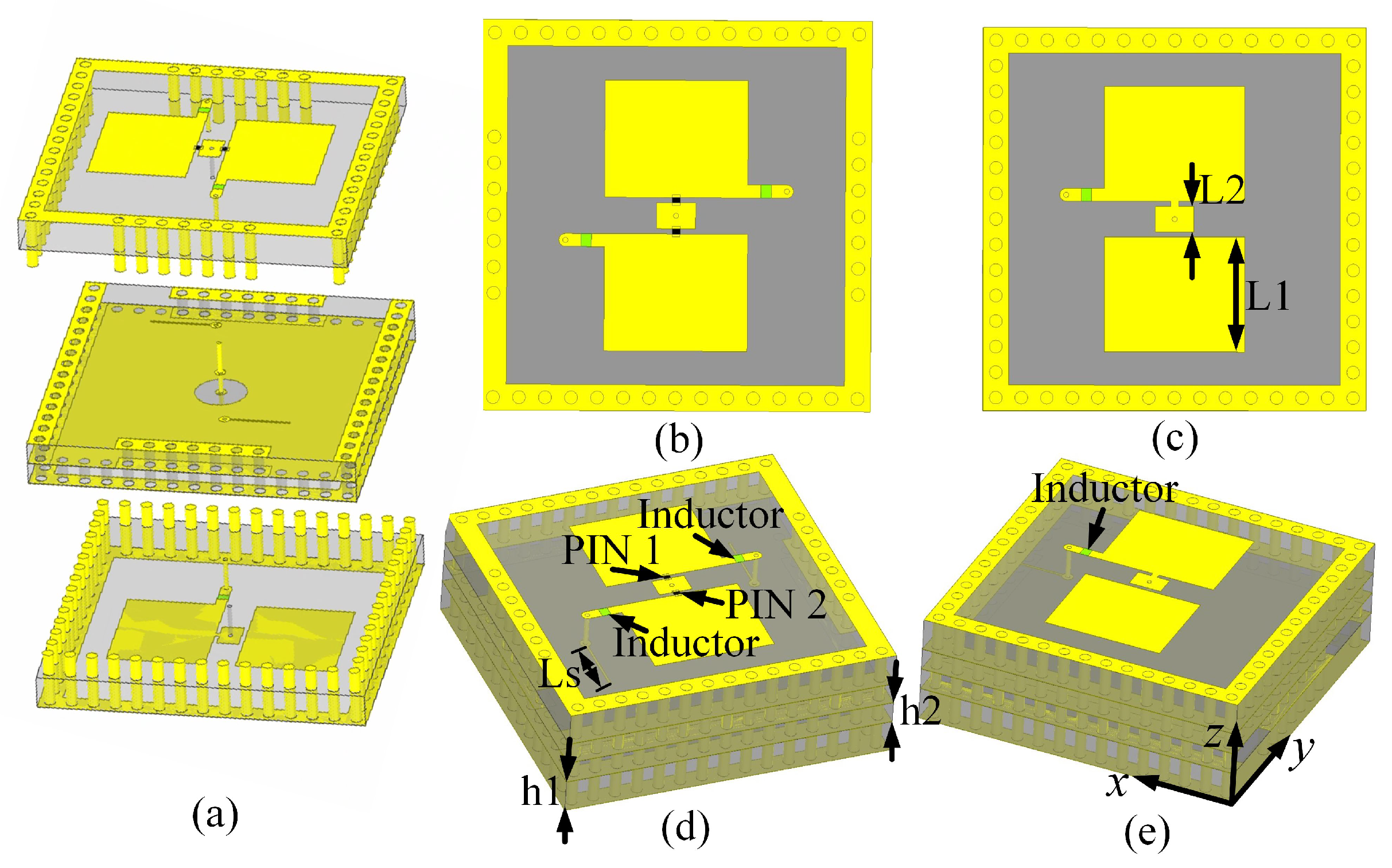
The proposed RTA element based on substrate-integrated waveguide technology is illustrated in Figure 1.
To design the RTA element, a receiving–transmitting structure is employed, with the receiving and radiating patches fabricated on an F4BTM440 dielectric substrate ( ϵ r = 4.4 and tan δ = 0.0025 ). The receiver and transmitter are interconnected via metallized vias and separated by a metallic ground. The receiver can actively achieve a 180° phase shift for the transmitted electromagnetic wave by switching the states of the integrated p-i-n diodes. In addition, bias circuits provide direct current bias voltage. To suppress RF current propagation from the radiating patch to the bias line, a strategic integration scheme is adopted: an RF inductor is incorporated into the bias line proximal to the radiating patch. This design capitalizes on the intrinsic ability of RF inductors to induce a back electromotive force (back-EMF) through electromagnetic induction—an inherent effect that impedes the flow of high-frequency alternating currents (ACs). Simultaneously, the bias circuits are positioned on the middle layer of the element, with the bias circuits and radiating patches isolated from each other by two metallic ground planes. The proposed element employs a cavity-backed structure to broaden the transmission bandwidth. Meanwhile, the metal cavity in the cavity-backed structure can suppress the propagation of surface waves, resulting in a complex fabrication process and high cost. Thus, an SIW is employed as a replacement for the conventional metal cavity, offering the advantages of low cost and ease of fabrication. Some key geometric parameters are P = 30 mm, W1 = 11 mm, W2 = 3 mm, h1 = 3 mm, h2 = 2 mm, L1 = 9 mm, and L2 = 2 mm. The RTA element’s state is switched via Infineon-BAR5002VH6327 p-i-n diodes, which are equivalent to a series of RLC elements: Rp = 3 Ω , Lp = 0.4 nH (ON) and Cp = 0.1 pF, Lp = 0.4 nH (OFF).

2.2. Work Mechanism and Simulated Results of RTA Element

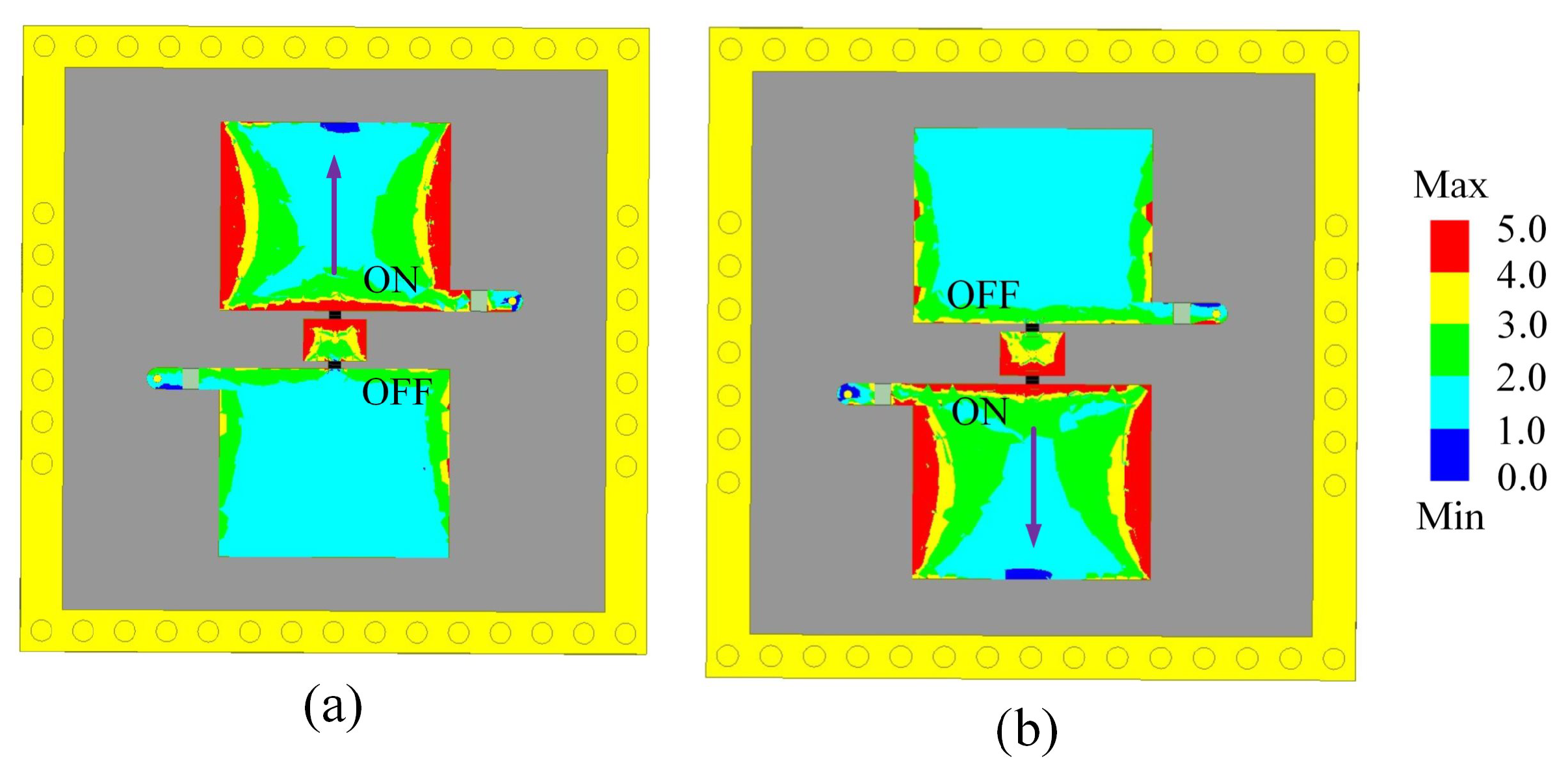
Electromagnetic simulation software is utilized to simulate the RTA element. Figure 2 illustrates the operating mechanism of the proposed RTA element.
With the p-i-n diodes switched ON, the transmitting patch shows high current density in Figure 2. It is obvious that the current distribution is symmetric in both states. As the current flows from the center of the RTA element to the receiving patch with ON, the current direction exhibits reversing symmetry between the two states. Based on antenna principles, the EM waves received by the symmetric receiving patches show a 180° phase difference between the two states. The received EM wave is transmitted to the transmitting patch through a metallized via. Subsequently, between the two states, the transmitting patch radiates electromagnetic waves featuring a 180° phase shift.
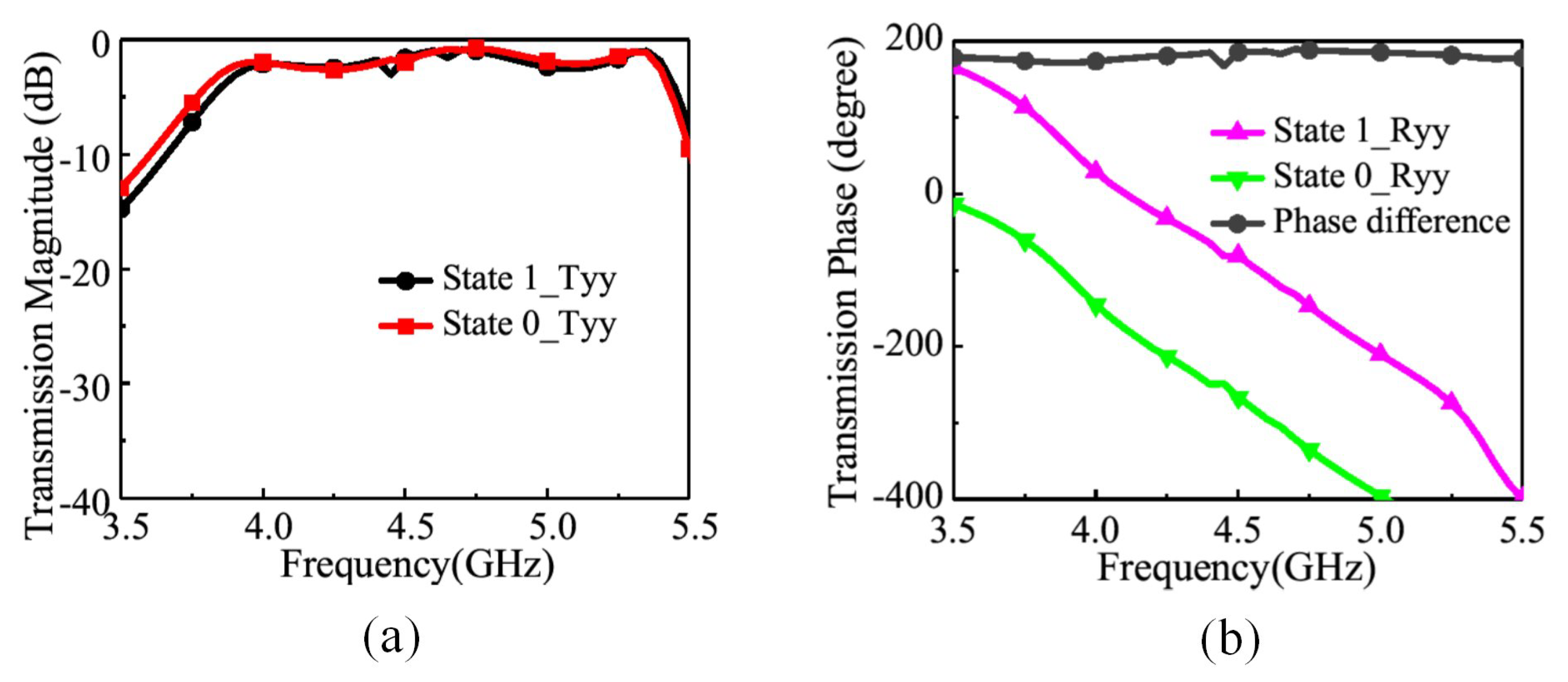
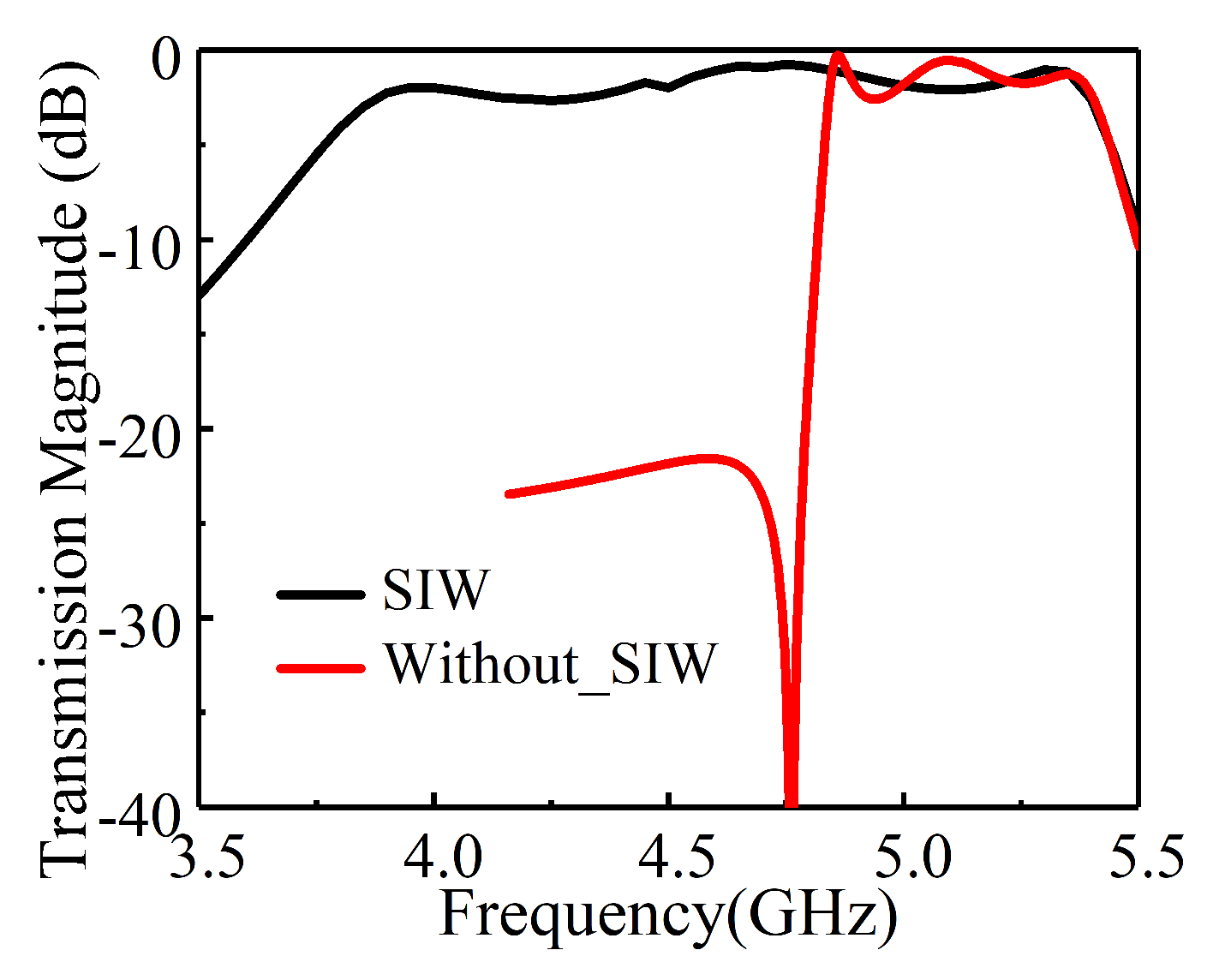
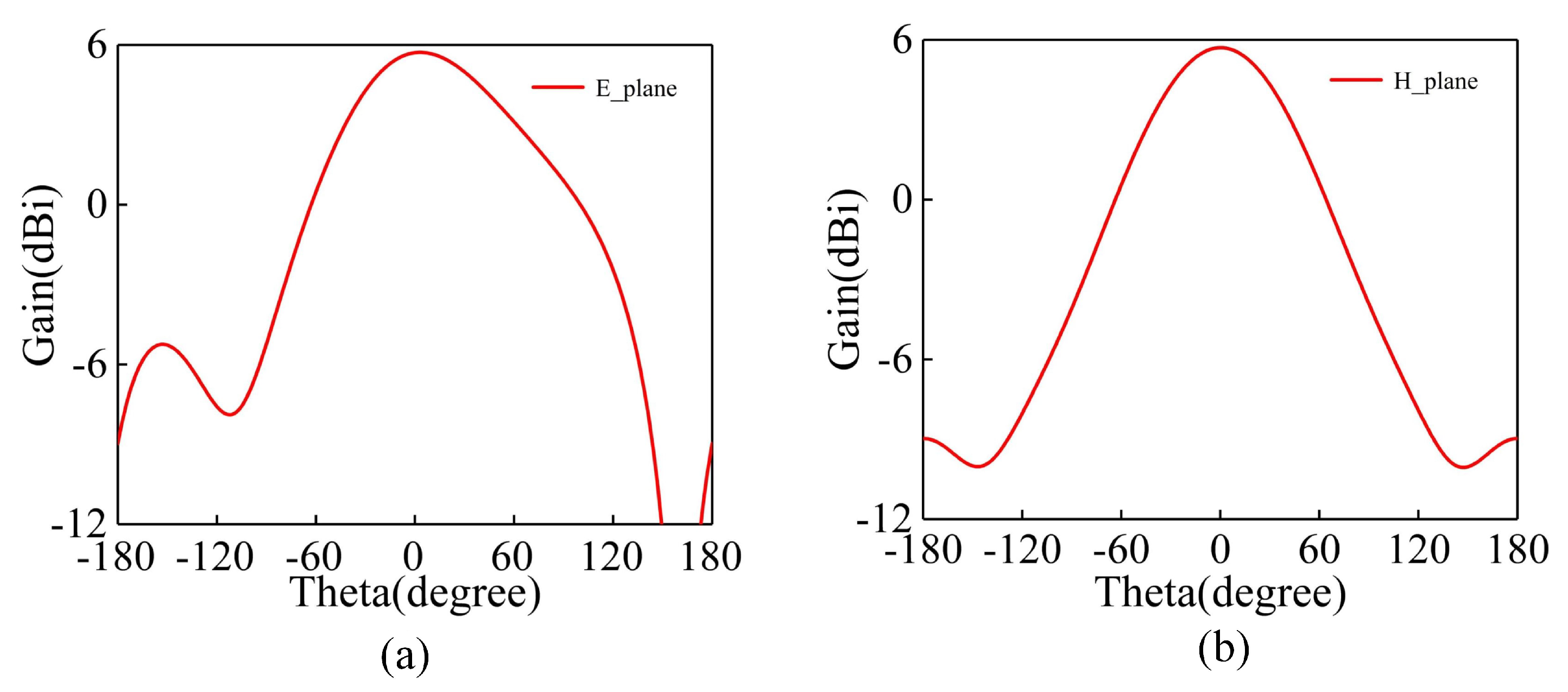
Figure 3 shows the transmission magnitude and phase performance corresponding to the two states. Figure 3a illustrates that the element presents a similar amplitude curve in the two states, indicating that the symmetric transmitting patches possess identical impedance. A 3 dB transmission bandwidth of 1.55 GHz (3.85–5.4 GHz, 33.6% at 4.6 GHz) is achieved, and the transmission amplitude reaches −1 dB at 4.6 GHz. Compared with the reported RTA element in [16,17,18,19,20,35,36,37], the proposed RTA element features a significantly wider transmission bandwidth. Additionally, Figure 3b demonstrates that, within the operational frequency range, a stable 180° phase shift is retained between the transmission phases corresponding to two states, which is attributed to the current reversal phase mechanism illustrated in Figure 2. As depicted in Figure 4, the element integrated with the SIW exhibits a wider transmission bandwidth than that without the SIW. This phenomenon confirms that the SIW cavity-backed patch element can effectively extend the bandwidth of the element by suppressing surface waves. As depicted in Figure 5, the E-plane and H-plane beamwidth of the proposed element are 89° and 108°, respectively, which is consistent with the fundamental operating principles of microstrip patch antennas.
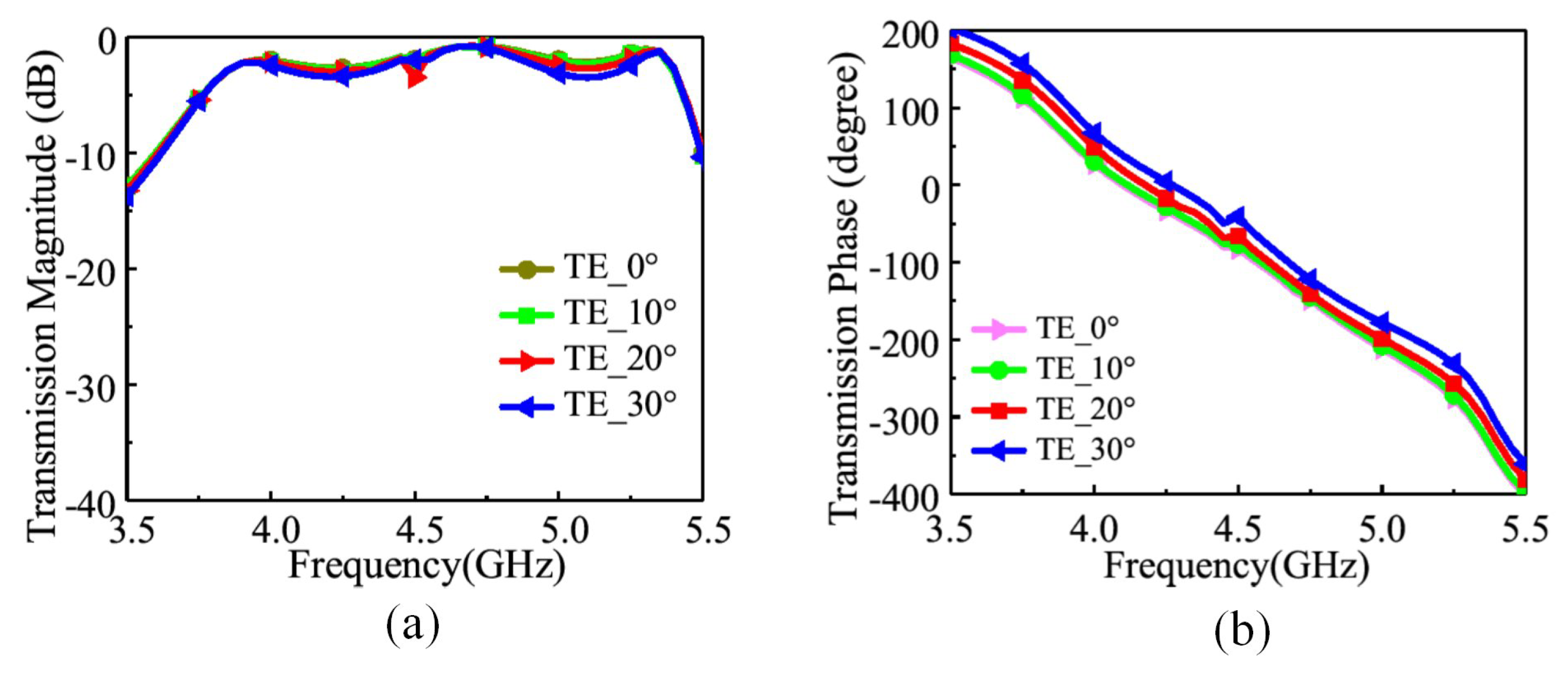
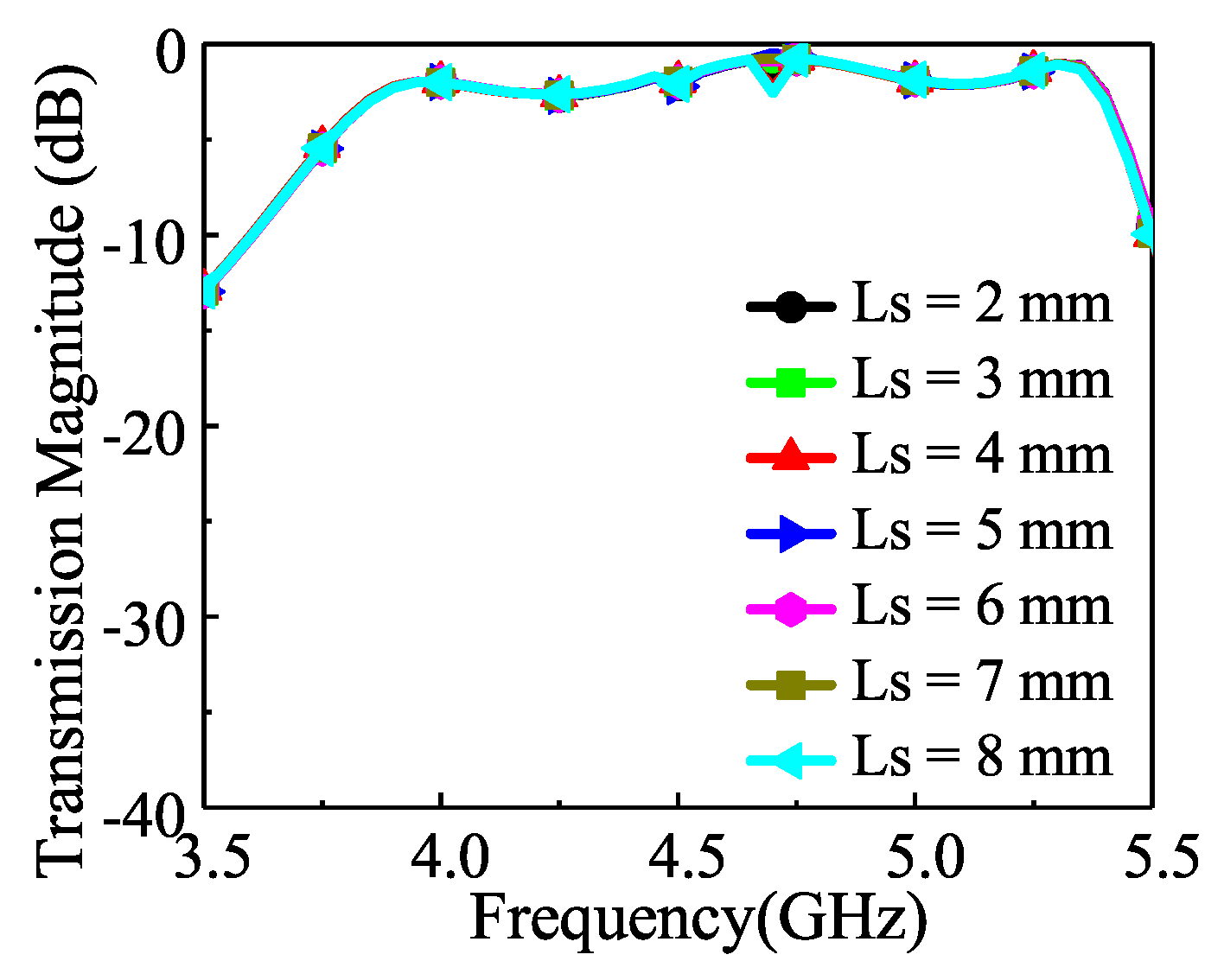
Since the feed source emits an incident spherical wave, the RTA element receives an oblique plane wave. With an increase in the distance between the element and the center of the RTA, the incident angle of the obliquely incident wave increases correspondingly. Thus, the transmission amplitude and phase performance are investigated under oblique incident. Figure 6a,b reveal that the RTA element maintains consistent amplitude and phase performance under 30° obliquely incident wave excitation. To mitigate the impact of the bias circuits, inductors are employed for RF choking. To show the influence of the bias circuit length, the transmission magnitude is simulated for various lengths of the bias circuit, with the results presented in Figure 7. Notably, the transmission magnitude curves are highly consistent for various bias circuit lengths, indicating that the bias circuit has a negligible impact on the performance of the RTA element.

3. RTA Design and Measurement

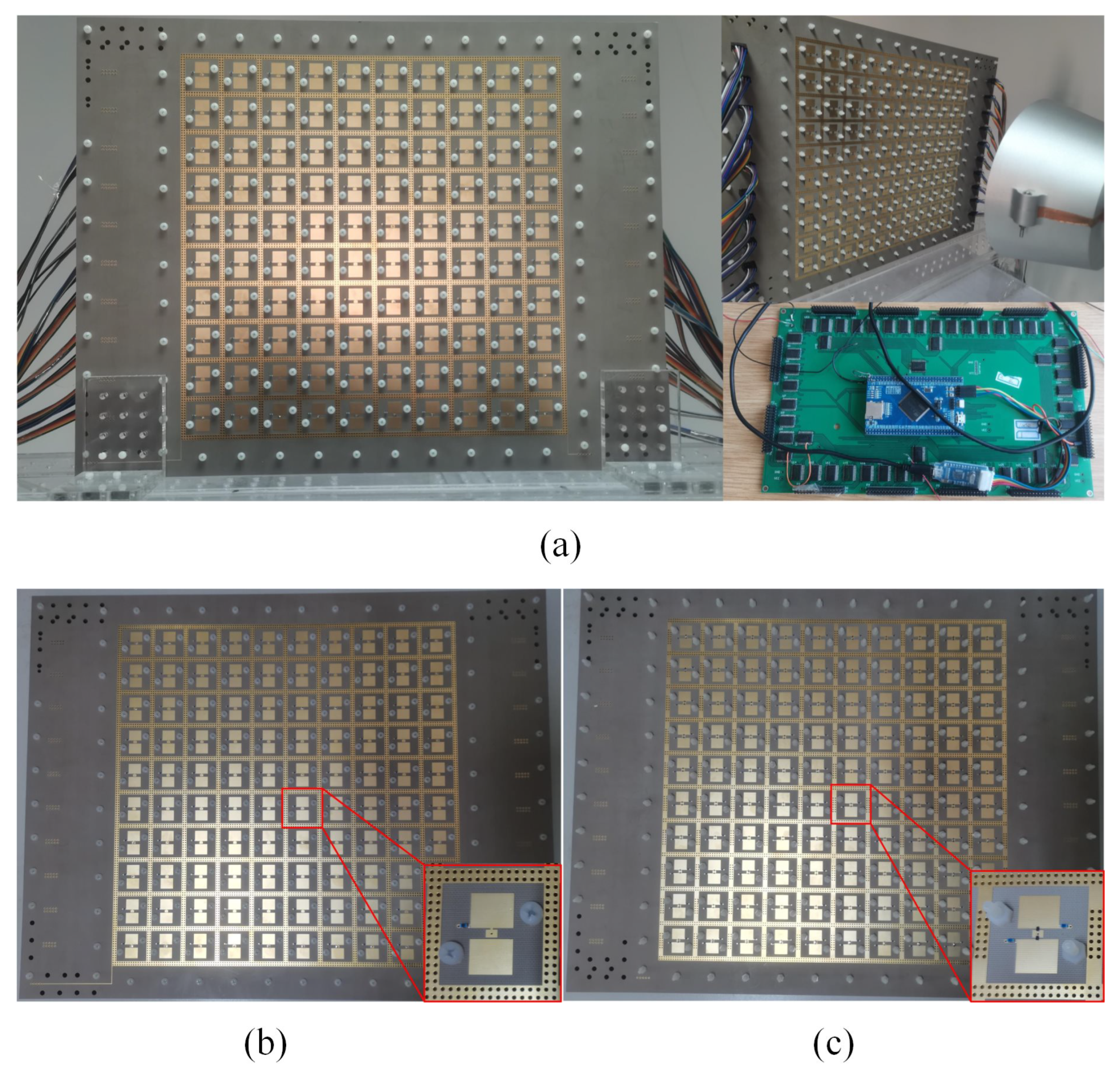
A 1-bit reconfigurable transmitarray antenna prototype with 100 elements was designed, manufactured, and measured, which is plotted in Figure 8.
The RTA features an effective aperture of 300 × 300 mm2. A linear-polarized corrugated horn antenna is adopted as the feed, and its focal length-to-diameter ratio (F/D) is 0.8. A beamsteering logic board is employed to independently provide direct current bias voltages for each p-i-n diode integrated into the RTA. Each pin of the beamsteering logic board is connected to the metallized vias on both sides of the RTA via the control lines. A personal computer (PC) delivers the beamsteering code to the beamsteering logic board, enabling precise control of the beam direction. At the specified beam angle, the required phase distribution of the reconfigurable transmitarray antenna (RTA) elements can be derived via the phase compensation algorithm. The phase distribution of the RTA is then converted into binary digital codes (0/1) in the PC and transmitted to the beamsteering logic board. In turn, each pin of the beamsteering logic board outputs the corresponding high or low level, thereby enabling precise phase distribution control of individual RTA elements.
Guided by array theory, by controlling the phase shift of individual array elements, the array antenna can steer beam direction. When the beam direction is u ^ 0 , the required phase shift φ m n of the m n t h element is calculated as follows:
φ m n = k · ( r f m n u ^ 0 · r m n ) + φ 0
where φ 0 is a constant phase, the position vector of the feed source is denoted as r f m n , r m , n represents the position vector of the m n t h element, and k denotes the propagation constant. With the proposed RTA element exhibiting a 1-bit discrete phase, the m n t h element’s phase shift ( φ m n q ) needs to be as close to φ m n as possible. The φ m n q can be described as
φ m n q = 180 , | φ m n 180 ± 2 l π | < 90 0 , o t h e r s
where l = 0, ±1, ±2, ±3….
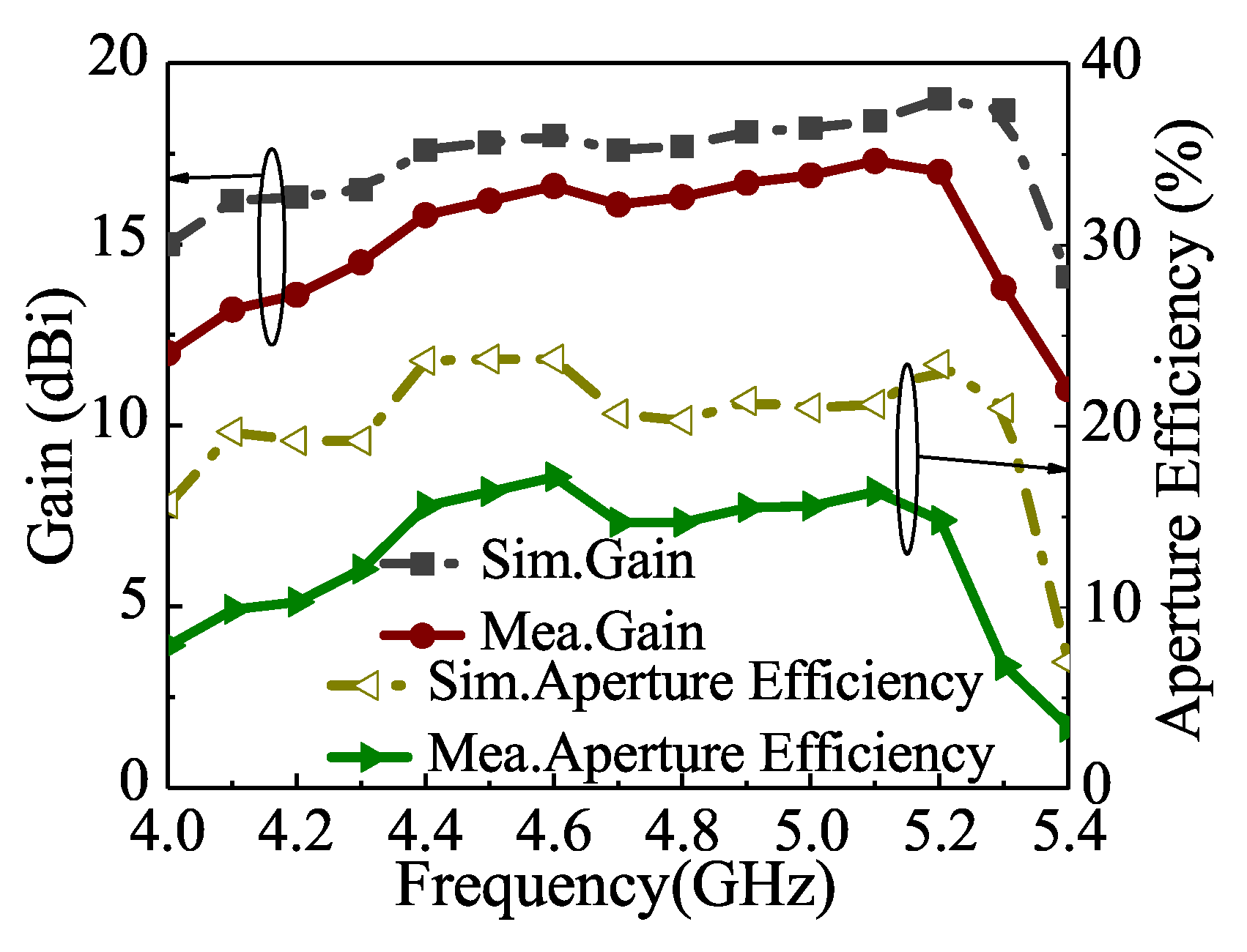
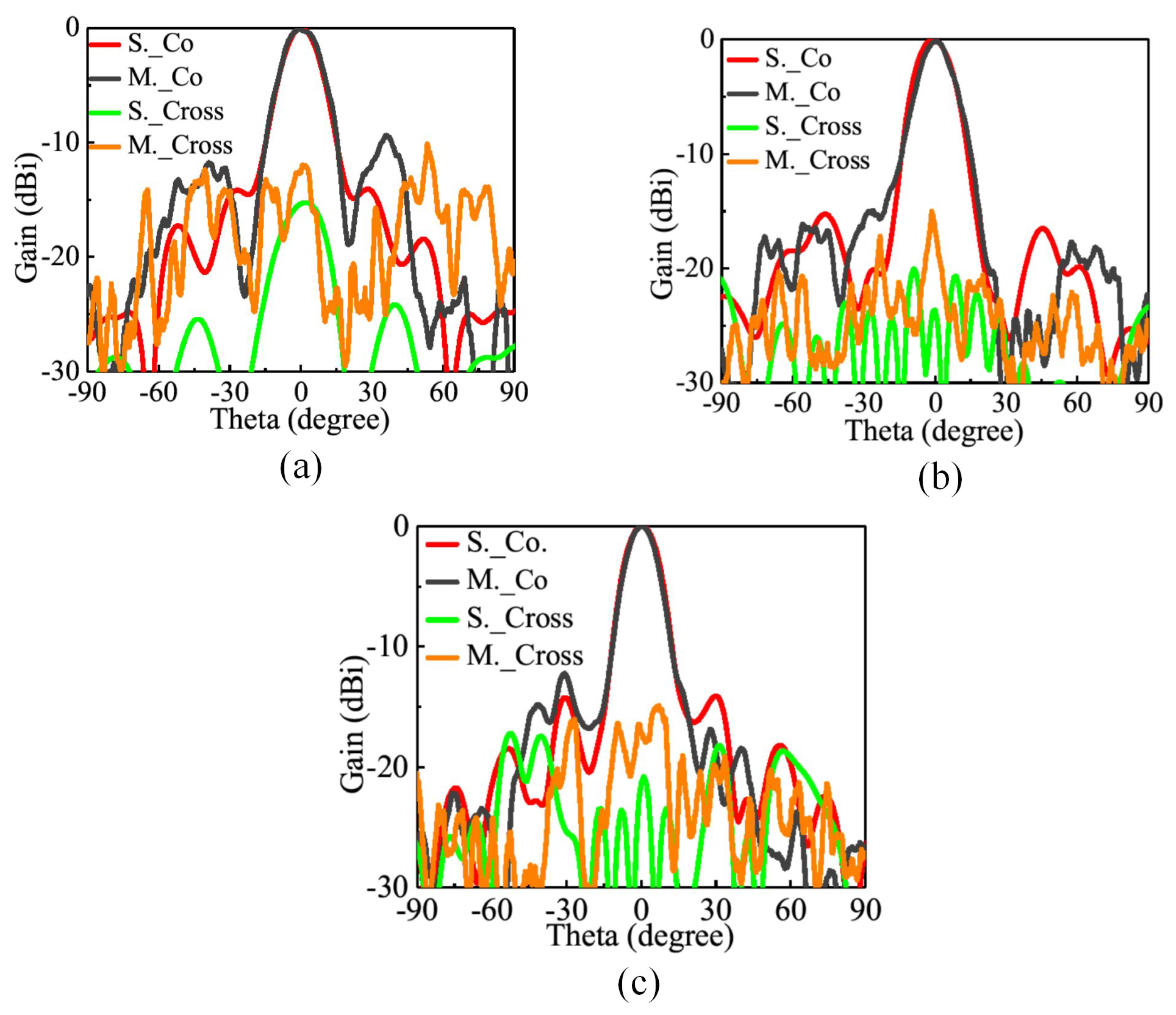
A y-polarized corrugated horn antenna is employed to illuminate the proposed 1-bit RTA, while the corresponding simulated and measured gain and efficiency are illustrated in Figure 9. At 4.6 GHz, the RTA achieves a measured gain of 16.6 dBi, with the corresponding aperture efficiency and 3 dB gain bandwidth being 17.2% and 18.9%, respectively. At 4.6 GHz, the measured gain is 16.6 dBi, with the corresponding aperture efficiency and 3 dB gain bandwidth being 17.2% and 18.9%, respectively. Additionally, the simulated gain, aperture efficiency, and 3 dB gain bandwidth are 18.3 dBi, 25.4%, and 26%, respectively. It can be seen that the measured results are lower than the simulated results. Since the element simulation adopts periodic boundary conditions, the abrupt change in boundary conditions at the array edges will cause variations in the transmission amplitude of edge elements. The degradation of transmission performance will lead to a decrease in beam gain and an increase in sidelobe level (SLL). The transmission loss of the element, including dielectric substrate loss, SIW loss, and impedance mismatching loss, has a negligible influence on the measured gain. PIN diodes exhibit errors between the simulation models and physical prototypes, which may induce a gain loss of 1 dB. Since one side of the edge element satisfies the periodicity, the transmission performance will not change significantly. Therefore, the impact of the edge effect is less than that of the insertion loss of PIN diodes and the transmission loss. Additionally, the transmission loss, including dielectric substrate loss, SIW loss, and impedance mismatching loss, has a negligible influence on the measured gain. Furthermore, fabrication and measurement errors contribute to the degradation of the measured beam gain. The measured and simulated H-plane radiation patterns at 4.3 GHz, 4.6 GHz, and 5.1 GHz are depicted in Figure 10. At several typical frequencies, the simulated results are consistent with the measured main beams. Measured results indicate that the cross-polarization level is less than −12 dB. This discrepancy is primarily due to fabrication errors and the enhanced coupling current on the metal patches of the SIW structure. Thus, the designed RTA has a good radiation pattern performance and wide bandwidth.
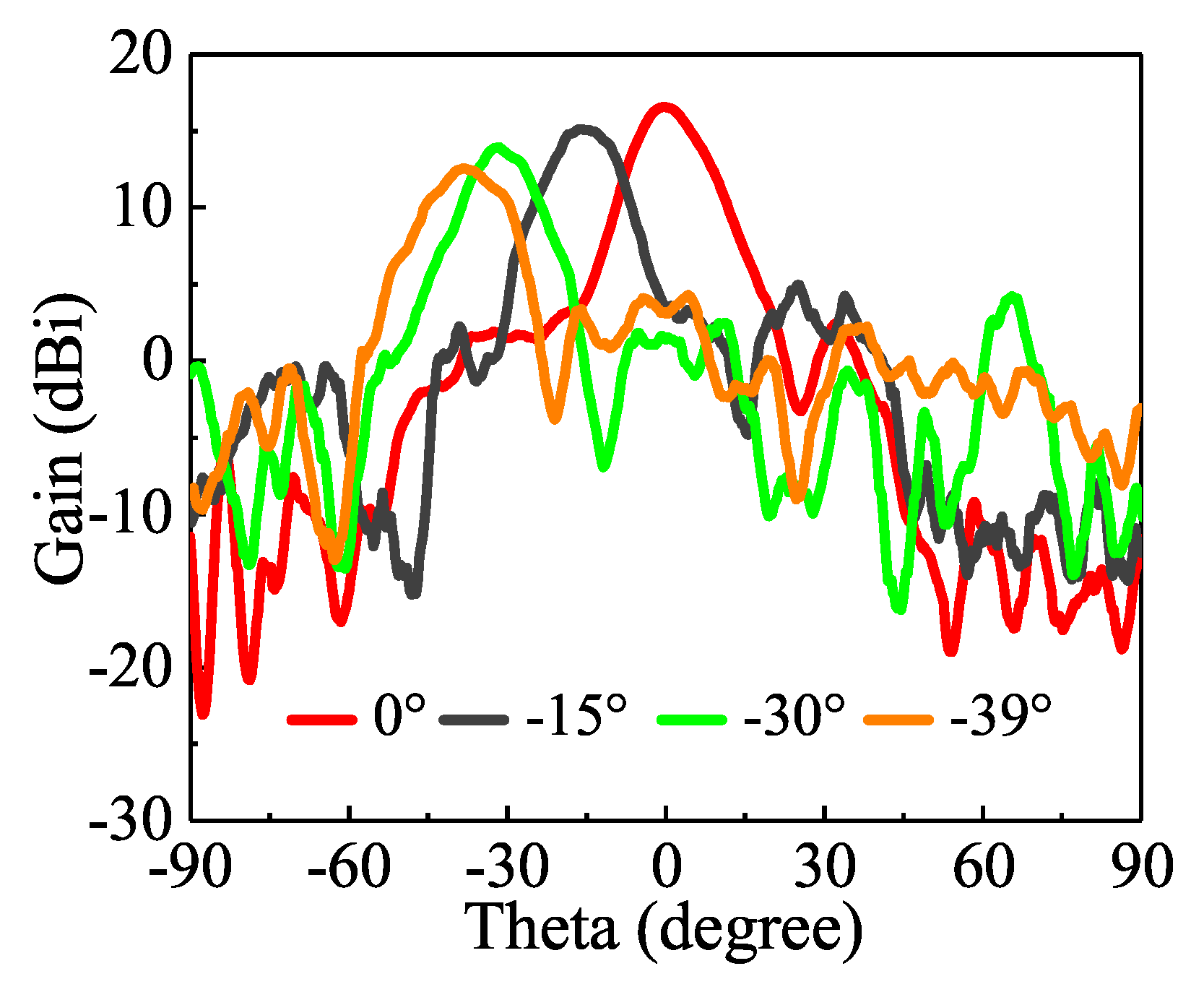
The measured H-plane scanned beams working at 4.6 GHz are illustrated in Figure 11. Owing to the symmetric array structure, scanned beams in the opposite direction can be achieved through reverse encoding. Therefore, Figure 9 only shows the scanned beams in one direction. As indicated by the results, the main pointing direction of the scanned beam is capable of reaching −39°. As expected, the scanned beam gain is decreasing with the scanned angle increasing. When the angle of scanned beam is −30°, the scanned gain loss is 2.4 dB. Furthermore, the measured sidelobe levels are under −7.2 dB. Consequently, the proposed RTA possesses good beamscanning performance.
Table 1 shows the proposed 1-bit RTA and previous works. In Table 1, the results in all references are obtained from measurements. It is evident that the 3 dB gain bandwidth of the proposed 1-bit RTA is wider than that of other 1-bit RTAs. The element bandwidth reported in other references only reaches 18.4%, while the element bandwidth proposed in this paper reaches 33.6%. This demonstrates that the SIW-based structural design of the element substantially contributes to the bandwidth expansion of 1-bit RTA elements. Furthermore, the proposed array offers a novel and innovative approach for the design of wideband array antennas. It is worth noting that the dielectric loss of the substrate rises concomitantly as its thickness increases. Additionally, there exists a certain degree of impedance mismatch in the RTA element. Both the thickness of the dielectric substrate and impedance mismatch contribute to the degradation of the array antenna’s gain and aperture efficiency. In future work, the gain and aperture efficiency can be enhanced by optimizing the impedance matching of the RTA elements and employing low-loss dielectric substrates. By replacing traditional metallic cavities with an SIW to suppress surface waves between elements, the proposed array offers distinct advantages, such as easy simple structure, low cost, light weight, and facile fabrication. Consequently, the proposed RTA possesses considerable potential for future application in next-generation wireless communication systems and advanced radar systems.

4. Conclusions

This study presents an innovative wideband 1-bit RTA based on the 1-bit reconfigurable substrate-integrated cavity-backed patch element. The proposed RTA element adopts an SIW structure to represent the metal wall of the 1-bit reconfigurable cavity-backed patch antenna. This leads to the RTA element offering several key benefits: wideband, low-cost, easy fabrication, and light weight. Its 3 dB transmission amplitude bandwidth is 1.55 GHz, corresponding to a relative bandwidth of 33.6% at 4.6 GHz. Within the working bandwidth, switching the p-i-n diodes states allows for the realization of a stable 180° reconfigurable phase shift. A prototype of the proposed RTA is designed, fabricated, and measured, with the results demonstrating that the RTA achieves a wide 3 dB gain bandwidth and good beamscanning performance. Since its features include wideband operation, lightweight design, low cost, simple structure, and easy fabrication, the proposed RTA is promising for application as a high-gain beamscanning antenna in intelligent communication systems and radar systems.

Author Contributions

Conceptualization, C.D.; Methodology, X.T.; Software, H.M.; Validation, H.M. and Y.S.; Formal analvsis, C.G.; Investiqation, C.G. and L.S.; Resources, L.S.; Data curation, Y.S.; Writing-original draf, X.T.; Writing-review and editing, X.T.; Visualization, B.S.; Funding acquisition, H.M. All authors have read and agreed to the published version of the manuscript.

Funding

This work is sponsored by the National Natural Science Foundation of China under Grant Nos. 62401615, 62201612, and 62201587.

Data Availability Statement

This research includes the original contributions offered in the article. Additional queries may be sent to the corresponding authors.

Conflicts of Interest

The authors declare no conflict of interest.

References

  1. Singh, A.; Dubey, R.; Srivastava, S.K.; Meshram, M.K. Circular polarization-agile and beam switching enabled reconfigurable cavity-backed antenna. AEU-Int. J. Electron. Commun. 2023, 165, 154664. [Google Scholar] [CrossRef]
  2. Wang, S.R.; Chen, M.Z.; Ke, J.C.; Cheng, Q.; Cui, T.J. Asynchronous Space-Time-Coding Digital Metasurface. Adv. Sci. 2022, 9, 2200106. [Google Scholar] [CrossRef]
  3. Clemente, A.; Dussopt, L.; Sauleau, R.; Potier, P.; Pouliguen, P. Wideband 400-element electronically reconfigurable transmitarray in X band. IEEE Trans. Antennas Propag. 2013, 61, 5017–5027. [Google Scholar] [CrossRef]
  4. Chen, K.; Feng, Y.; Monticone, F.; Zhao, J.; Zhu, B.; Jiang, T.; Zhang, L.; Kim, Y.; Ding, X.; Zhang, S.; et al. A Reconfgurable Active Huygens’ Metalens. Adv. Mater. 2017, 29, 1606422. [Google Scholar] [CrossRef]
  5. Reis, J.R.; Caldeirinha, R.F.S.; Hammoudeh, A.; Copner, N. Electronically Reconfgurable FSS Inspired Transmitarray for 2-D Beamsteering. IEEE Trans. Antennas Propag. 2017, 65, 4880–4885. [Google Scholar] [CrossRef]
  6. Huang, C.; Pan, W.; Luo, X. Low-Loss Circularly Polarized Transmitarray for Beam Steering Application. IEEE Trans. Antennas Propag. 2016, 64, 4471–4476. [Google Scholar] [CrossRef]
  7. Wang, Y.; Xu, S.; Yang, F.; Li, M. A Novel 1 Bit Wide Angle Beam Scanning Reconfigurable Transmitarray Antenna Using an Equivalent Magnetic Dipole Element. IEEE Trans. Antennas Propag. 2020, 68, 5691–5695. [Google Scholar] [CrossRef]
  8. Li, P.; Yu, H.; Su, J.; Song, L.; Guo, Q.; Li, Z. A Low-RCS Multifunctional Shared Aperture with Wideband Reconfigurable Reflectarray Antenna and Tunable Scattering Characteristic. IEEE Trans. Antennas Propag. 2022, 71, 621–630. [Google Scholar] [CrossRef]
  9. Pan, X.; Yang, F.; Xu, S.; Li, M. A 10240-Element Reconfigurable Reflectarray with Fast Steerable Monopulse Patterns. IEEE Trans. Antennas Propag. 2021, 69, 173–181. [Google Scholar] [CrossRef]
  10. Han, J.; Li, L.; Liu, G.; Wu, Z.; Shi, Y. A Wideband 1 bit 12 × 12 Reconfigurable Beam-Scanning Reflectarray: Design, Fabrication, and Measurement. IEEE Antennas Wirel. Propag. Lett. 2019, 18, 1268–1272. [Google Scholar] [CrossRef]
  11. Cao, X.; Chen, Q.; Tanaka, T.; Kozai, M.; Minami, H. A 1-bit Time-Modulated Reflectarray for Reconfigurable-Intelligent-Surface Applications. IEEE Trans. Antennas Propag. 2022, 71, 2396–2408. [Google Scholar] [CrossRef]
  12. Zhang, H.; Chen, X.; Wang, Z.; Ge, Y.; Pu, J. A 1-Bit Electronically Reconfigurable Reflectarray Antenna in X Band. IEEE Access 2019, 7, 66567–66575. [Google Scholar] [CrossRef]
  13. Mu, H.; Ding, C.; Meng, F.; Zhang, Y.; Wang, J. Cosinusoidal Phase Modulation Jamming Using Tunable Metasurface Against SAR–GMTI. IEEE Trans. Antennas Propag. 2025, 73, 9429–9444. [Google Scholar] [CrossRef]
  14. Ding, C.; Mu, H.; Shi, Y.; Wu, Z.; Fu, X.; Zhu, R.; Cai, T.; Meng, F.; Wang, J. Dual-Polarized and Conformal Time-Modulated Metasurface-Based 2-D Jamming Against SAR Imaging Systems. IEEE Trans. Antennas Propag. 2025, 73, 7752–7764. [Google Scholar] [CrossRef]
  15. Ding, C.; Mu, H.; Meng, Y.; Zhao, M.; Zhang, Y.; Cai, T.; Meng, F.; Wang, J. Time-Modulated Metasurface-Assisted Moving Target Jamming for Synthetic Aperture Radar. IEEE Trans. Microw. Theory Tech. 2025, 73, 4191–4203. [Google Scholar] [CrossRef]
  16. Huang, C.; Pan, W.; Ma, X.; Luo, X. 1-Bit Reconfigurable Circularly Polarized Transmitarray in X-Band. IEEE Antennas Wirel. Propag. Lett. 2016, 15, 448–451. [Google Scholar] [CrossRef]
  17. Palma, L.D.; Clemente, A.; Dussopt, L.; Sauleau, R.; Potier, P.; Pouliguen, P. Radiation pattern synthesis for monopulse radar applications with a reconfigurable transmitarray antenna. IEEE Trans. Antennas Propag. 2016, 64, 4148–4154. [Google Scholar] [CrossRef]
  18. Liu, B.; Wong, S.-W.; Tam, K.-W.; Zhang, X.; Li, Y. Multifunctional Orbital Angular Momentum Generator with High-Gain Low-Profile Broadband and Programmable Characteristics. IEEE Trans. Antennas Propag. 2022, 70, 1068–1076. [Google Scholar] [CrossRef]
  19. Jabbar, A.; Elsayed, M.; Kazim, J.U.R.; Pang, Z.; Le Kernec, J.; Imran, M.A.; Abbasi, Q.H.; Ur-Rehman, M. 60 GHz Programmable Dynamic Metasurface Antenna (DMA) for Next-Generation Communication, Sensing, and Imaging Applications: From Concept to Prototype. IEEE Open J. Antennas Propag. 2024, 5, 705–726. [Google Scholar] [CrossRef]
  20. Bashir, G.; Singh, A.K.; Dubey, A. Beam-Switching Digital Metasurface Reflectarray Antenna with Extreme Offset Illumination for Satellite Communications. IEEE J. Miniaturization Air Space Syst. 2024, 5, 221–227. [Google Scholar] [CrossRef]
  21. Li, T.-J.; Wang, G.-M.; Guo, W.-L.; Xin, K.-W.; Han, J.-Q.; Li, H.-P. Reconfigurable Folded Transmitarray Antenna with Low-Profile Based on Metasurfaces. IEEE Antennas Wirel. Propag. Lett. 2023, 22, 611–615. [Google Scholar] [CrossRef]
  22. Wang, X.; Qin, P.-Y.; Le, A.T.; Zhang, H.; Jin, R.; Guo, Y.J. Beam Scanning Transmitarray Employing Reconfigurable Dual-Layer Huygens Element. IEEE Trans. Antennas Propag. 2022, 70, 7491–7500. [Google Scholar] [CrossRef]
  23. Yu, H.; Su, J.; Li, Z.; Yang, F. A Novel Wideband and High-Efficiency Electronically Scanning Transmitarray Using Transmission Metasurface Polarizer. IEEE Trans. Antennas Propag. 2022, 70, 3088–3093. [Google Scholar] [CrossRef]
  24. Wang, M.; Xu, S.; Yang, F.; Li, M. Design and Measurement of a 1-bit Reconfigurable Transmitarray with Subwavelength H-Shaped Coupling Slot Elements. IEEE Trans. Antennas Propag. 2019, 67, 3500–3504. [Google Scholar] [CrossRef]
  25. Wang, M.; Xu, S.; Yang, F.; Hu, N.; Xie, W.; Chen, Z. A Novel 1-Bit Reconfigurable Transmitarray Antenna Using a C-Shaped Probe-Fed Patch Element with Broadened Bandwidth and Enhanced Efficiency. IEEE Access 2020, 8, 120124–120133. [Google Scholar] [CrossRef]
  26. Wang, Y.; Xu, S.; Yang, F.; Werner, D.H. 1 Bit Dual-Linear Polarized Reconfigurable Transmitarray Antenna Using Asymmetric Dipole Elements with Parasitic Bypass Dipoles. IEEE Trans. Antennas Propag. 2021, 69, 1188–1192. [Google Scholar] [CrossRef]
  27. Gao, W.H.; Chen, M.; Cheng, Q.; Shao, R.W.; Liang, J.C.; Gao, Y.; Cui, T.J. 1-bit reconfigurable transmitarray with low loss and wide bandwidth. New J. Phys. 2021, 23, 065006. [Google Scholar] [CrossRef]
  28. Tian, J.; Yang, H.; Li, T.; Zhang, Z.; Han, J.; Cao, X. Realization and Analysis of Low-Loss Reconfigurable Quasi-Periodic Coding Metasurfaces for Low-Cost Single-Beam Scanning. IEEE Trans. Microw. Theory Tech. 2024, 72, 5071–5081. [Google Scholar] [CrossRef]
  29. Shi, H.; Liu, R.; Zhang, Z.; Chen, X.; Wang, L.; Yi, J.; Liu, H.; Zhang, A. A Dual-Polarized Reflective Reconfigurable Metasurface with Stable Amplitude Based on Guided-Wave-Driven Structure. IEEE Antennas Wirel. Propag. Lett. 2024, 23, 1720–1724. [Google Scholar] [CrossRef]
  30. Zeng, Y.; Wang, W.; Yi, Z.; Mei, Z.; Niu, T. A Multifunctional 60 GHz Band Reconfigurable Reflective Metasurface with Z-Shaped Bias Line. IEEE Antennas Wirel. Propag. Lett. 2025, 24, 3405–3409. [Google Scholar] [CrossRef]
  31. Yin, S.-Y.; Li, J.-L. Reconfigurable Antenna with Uni- and Bi-directional Radiation Patterns Based on Metasurface and Fresnel Zone Plate Lens. IEEE Antennas Wirel. Propag. Lett. 2024, 23, 2291–2295. [Google Scholar] [CrossRef]
  32. Baena-Molina, M.; Palomares-Caballero, Á.; Martínez-García, G.; Galeote-Cazorla, J.E.; Ramírez-Arroyo, A.; Valenzuela-Valdés, J.F. 1-Bit Mechanically Reconfigurable Metasurface as a Beam Splitter for Indoor Environments at 28 GHz. IEEE Antennas Wirel. Propag. Lett. 2025, 24, 4313–4317. [Google Scholar] [CrossRef]
  33. Córcoles, J.; González, M.; Rubio, J.; Zapata, J. Performance Characterization of Wideband, Wide-Angle Scan Arrays of Cavity-Backed U-Slot Microstrip Patch Antennas. Int. J. Rf Microw. Comput. Eng. 2009, 19, 389–396. [Google Scholar] [CrossRef]
  34. Awida, M.H.; Kamel, A.H.; Fathy, A.E. Analysis and Design of Wide-Scan Angle Wide-Band Phased Arrays of Substrate-Integrated Cavity-Backed Patches. IEEE Trans. Antennas Propag. 2013, 61, 3034–3041. [Google Scholar] [CrossRef]
  35. Li, H.; Ma, C.; Zhou, T.; Wang, J.; Ye, D.; Sun, Y.; Zhu, W.; Denidni, T.A.; Ran, L. Reconfigurable Fresnel Lens Based on an Active Second-Order Bandpass Frequency-Selective Surface. IEEE Trans. Antennas Propag. 2020, 68, 4054–4059. [Google Scholar] [CrossRef]
  36. Xiao, S.; Zheng, C.; Li, M.; Xiong, J.; Wang, B.-Z. Varactor-Loaded Pattern Reconfigurable Array for Wide-Angle Scanning with Low Gain Fluctuation. IEEE Trans. Antennas Propag. 2015, 63, 2364–2369. [Google Scholar] [CrossRef]
  37. Jiang, T.; Wang, Z.; Li, D.; Pan, J.; Zhang, B.; Huangfu, J.; Salamin, Y.; Li, C.; Ran, L. Low-DC Voltage-Controlled Steering-Antenna Radome Utilizing Tunable Active Metamaterial. IEEE Trans. Microw. Theory Tech. 2012, 60, 170–178. [Google Scholar] [CrossRef]
Figure 1. Structure of the RTA element. (a) 3D view. (b) Receiver view. (c) Transmitter view. (d) Side view of receiver. (e) Side view of transmitter.
Electronics 15 00200 g001
Figure 2. Surface current distribution. (a) State 1. (b) State 0.
Electronics 15 00200 g002
Figure 3. Simulation results of transmission magnitude and phase. (a) Magnitude. (b) Phase shift.
Electronics 15 00200 g003
Figure 4. Simulated transmission magnitude of the SIW and without SIW.
Electronics 15 00200 g004
Figure 5. Radiation pattern simulation of the proposed RTA element. (a) E-plane. (b) H-plane.
Electronics 15 00200 g005
Figure 6. Transmission magnitude and phase under oblique incidences. (a) Magnitude. (b) Phase.
Electronics 15 00200 g006
Figure 7. Simulated transmission amplitude curves under the various lengths of the bias circuit.
Electronics 15 00200 g007
Figure 8. Fabricated RTA prototype. (a) Assembled view. (b) Transmitter. (c) Receiver.
Electronics 15 00200 g008
Figure 9. Simulated and measured gain and efficiency.
Electronics 15 00200 g009
Figure 10. Simulated and measured radiation patterns in the H-plane. (a) 4.3 GHz. (b) 4.6 GHz. (c) 5.1 GHz.
Electronics 15 00200 g010
Figure 11. Measured scanned beam radiation patterns in the H-plane.
Electronics 15 00200 g011
Table 1. Comparison between this work and previous studies.
Ref. No.Freq. (GHz)Array Size ( λ  ×  λ )Gain (dBi)Transmission BWAperture eff.3 dB Gain BW
[21]5.83.48 × 3.4813.43 dB IL:12%14.4%13.8%
[23]10.05.0 × 5.019.11 dB IL:16%25.8%15.9%
[24]12.55.3 × 5.317.03 dB IL:10.3%14.0%9.6%
[25]12.216 × 1622.13 dB IL:16%21.2%12.3%
[26]12.24.88 × 4.8818.33 dB IL:18.4%22.6%11.5%
This paper4.65 × 516.63 dB IL:33.6%17.2%18.9%
Disclaimer/Publisher’s Note: The statements, opinions and data contained in all publications are solely those of the individual author(s) and contributor(s) and not of MDPI and/or the editor(s). MDPI and/or the editor(s) disclaim responsibility for any injury to people or property resulting from any ideas, methods, instructions or products referred to in the content.