1. Introduction
With the proliferation and increasing complexity of digital technologies, cybersecurity has become a crucial field, evolving to meet the need to protect the assets of individuals, institutions, and governments. The International Telecommunication Union defines the concept of cybersecurity as an integrated structure of tools, policies, security concepts, measures, actions, risk management strategies, training, methods, and technologies that can be used to protect information and systems [
1]. Cybersecurity generally aims to protect information systems and data from illegal access, attacks, and misuse [
2]. Critical infrastructures have become increasingly essential targets, especially for attackers seeking to exploit vulnerabilities for their own benefit through various attack methods. Critical infrastructure encompasses the systems that provide essential services such as water, energy, communication, transportation, finance, healthcare, and security, which are necessary for a country or institution to maintain its existence and functioning. SCADA systems in these infrastructures are widely used for monitoring and controlling components in local and remote sites [
3].
Physical and cyberattacks on SCADA systems can lead to unauthorized control of the systems, disruption of their operation, or service interruptions [
4]. The impact of these attacks is not limited to operational disruptions; it can reach dimensions that threaten economic, social, and national security [
5]. Cyberattacks, especially those targeting energy production, transmission, and distribution infrastructure, can create an atmosphere of social chaos by causing service disruptions. In 2010, a nuclear power plant in Iran was attacked through the Stuxnet malware, which was leaked onto the local network via a USB drive. As a result of this attack, the control systems of the uranium enrichment facility were infected [
6,
7]. In 2015, a false data injection attack targeting the breakers of three different distribution companies in Ukraine resulted in approximately 225,000 customers being without electricity service for several hours [
8]. In countries experiencing these types of disruptions, it has become clear how critical disruptions to critical infrastructure systems are. Ensuring the cybersecurity of critical infrastructure in countries is of crucial importance, as SCADA systems, which enable the automatic control and remote management of essential services (such as water, electricity, and natural gas), are involved [
9]. Investigating and addressing the security vulnerabilities of these systems is a necessary prerequisite for ensuring the cybersecurity of critical infrastructure. Additionally, cyberattack detection and prevention are cornerstones of cybersecurity strategies for critical infrastructure. The development of cyberattack detection and prevention systems will enhance the resilience of countries’ critical infrastructure against cyber threats and significantly contribute to the continuity of critical systems. Machine learning, deep learning, and artificial intelligence-based algorithms can be integrated into SCADA systems to enhance cyberattack detection capabilities. However, since the detection models used by these algorithms are structurally different, the analysis results can also vary from model to model. Due to varying performance across different datasets and models, it is necessary to develop an intrusion detection model that achieves high accuracy, specifically tailored to a particular dataset.
In this study, a physical test environment similar to the SCADA communication architecture of a hydroelectric power plant was established; the network traffic resulting from various cyberattacks (MITM, DoS, Command Injection) performed in this environment was analyzed. The recorded traffic was evaluated using supervised machine learning algorithms, and both attack detection and classification of attack types were performed. The primary objective of this study is to develop machine learning models that can effectively detect cyberattacks on SCADA systems, thereby contributing to advanced research in this field. The contributions of this study can be summarized as follows:
A realistic test environment was created using the physical components of SCADA systems used in critical infrastructure. The literature primarily features simulation-based studies, with fewer applications found in cyber-physical environments.
Based on the SCADA communication structure of hydroelectric power plants, a system model with a ring-to-ring topology specific to the PROFINET protocol has been developed.
Three different attack scenarios, such as MITM, DoS, and Command Injection, were applied to the established test environment; network traffic was analyzed under both normal operating conditions and under attack.
Unlike the commonly used ready-made datasets in the literature, a protocol and hardware-based, original, and labeled dataset was created in this study.
Not only was the detection of attacks targeted, but also their classification; within this scope, seven different machine learning models (KNN, NB, DT, LR, KNN-NB, DT-LR, KNN-NB-DT) were evaluated. The performances of singular and hybrid modeling approaches have been compared.
As a result of the study, machine learning-based methods that could be effective in distinguishing between different types of attacks on SCADA systems were identified. The study consists of five main sections. In the first chapter, the importance of cybersecurity within the framework of SCADA systems and critical infrastructures is discussed, and the purpose and scope of the study are explained. In the second section, the structure and vulnerabilities of SCADA systems, the importance of cyber threats against these systems, and current studies on artificial intelligence (AI) and machine learning-based cyberattack detection are highlighted. In the third chapter, the setup of the physical test environment, scenario-based cyberattacks, the structure of the generated dataset, and the applied classification models are presented in detail. In the fourth section, performance metrics are presented, and experimental data obtained from the applications are evaluated. In the fifth section, general conclusions and recommendations are presented based on this data.
2. Related Works
SCADA systems are used for the safe and efficient management of industrial processes, as well as for increasing operational efficiency. These systems contribute to reducing failure and maintenance costs by enabling real-time monitoring of processes and rapid intervention. However, SCADA systems can be vulnerable to cyberattacks due to their architectural structure. This situation poses serious risks, especially to critical infrastructure, making it imperative to protect these systems against security threats. The main components of SCADA systems, including the communication protocols used in these systems, are among the key elements that need to be considered from a cybersecurity perspective.
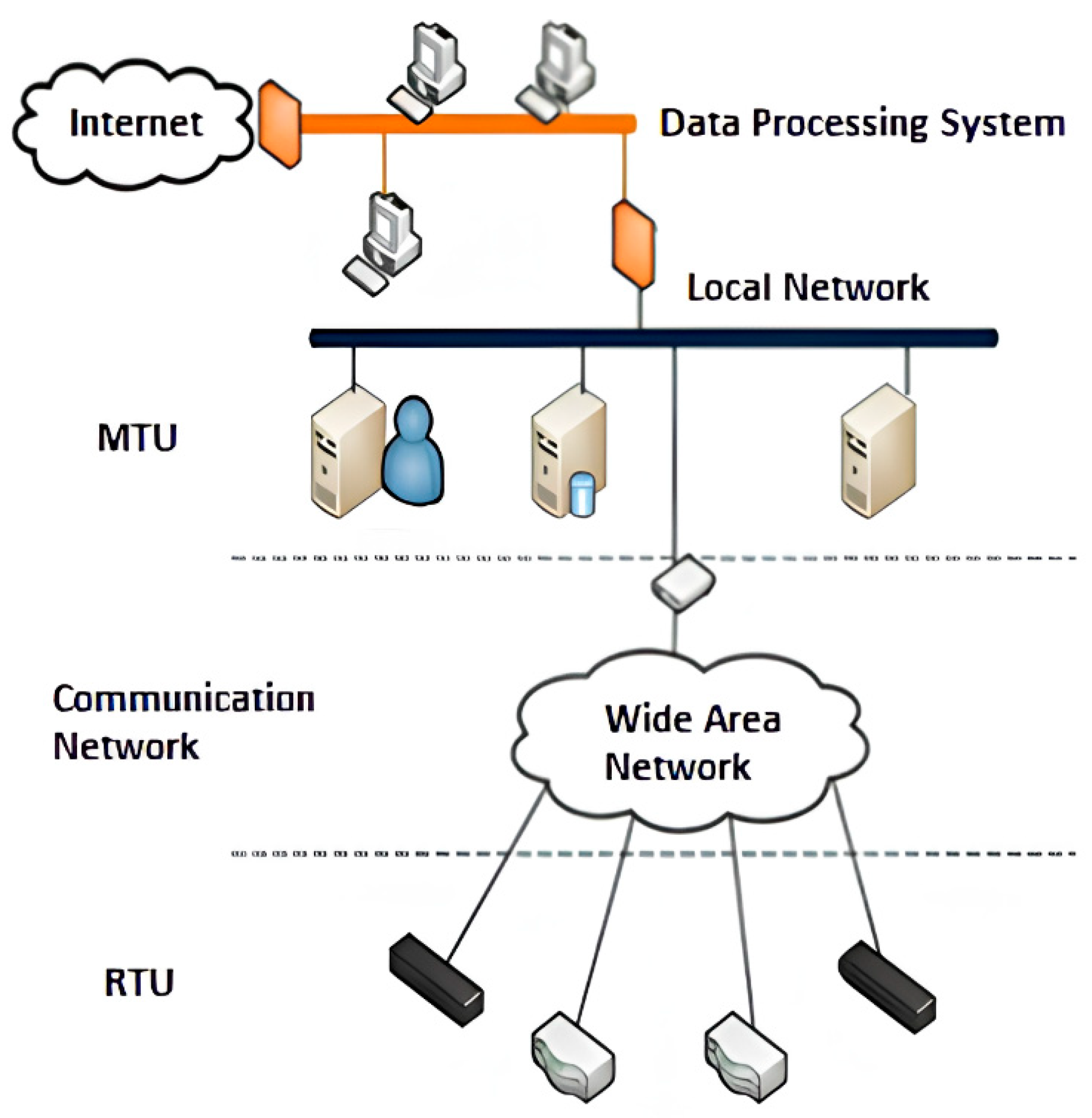
SCADA systems comprise three basic components: The Master Terminal Unit (MTU), Remote Terminal Units (RTUs), and the communication network, as illustrated in
Figure 1. Additionally, the business information technology (IT) network, which serves as the data processing system, can also be incorporated into this structure. The MTU serves as the primary control point, where all field-end units are monitored, and data is collected and processed. Data communication between devices is provided through this unit, which is considered the most critical component of the system. A cyberattack on the MTU could have consequences that affect the entire network [
9]. RTUs are endpoint units that collect, analyze, and transmit data from the field to the MTU, and also relay incoming commands to devices in the field [
9]. Programmable Logic Controllers (PLCs) are located within this unit. The communication network, on the other hand, includes communication protocols specifically designed to ensure secure data transmission between SCADA components [
10]. Most structures that use SCADA systems are not directly connected to the internet and operate independently of external networks. However, even in critical infrastructures that are not directly connected to the internet or have extremely limited connections to external networks, cyberattacks can be carried out over the local network. Among the most well-known examples of such scenarios are malware like Stuxnet, Duqu, and Flame. These software programs have caused serious damage by infiltrating systems without an external network connection through portable media [
11]. Many cyberattacks have been carried out against SCADA systems to date. In the Dragonfly 2.0 attack that occurred in 2017, the attackers targeted the SCADA systems of organizations in the energy sector, attempting to disrupt the production processes of industrial facilities. First detected in Hungary in 2011, targeting European-based systems, the Duqu malware is an information theft attack against Microsoft Windows-based control systems. Similarly to Stuxnet, it operated within a local network environment but did not cause physical damage. It performed functions such as keylogging, taking screenshots, and archiving configuration files on the infected systems [
12].
Based on the characteristics of the PROFINET protocol, which is widely used in SCADA systems, various cyberattacks, such as network device access, man-in-the-middle attacks, replay attacks, and DoS attacks, can be carried out [
13]. The PROFINET protocol provides integration and operational ease by sharing the same physical network infrastructure with devices supporting different protocols, but it also carries security risks in terms of unauthorized access and program-based attacks. When analyzing the cybersecurity of communication protocols, it is known that a number of security vulnerabilities exist. Given the wide range of applications for the PROFINET protocol, it is likely that cyberattacks could be carried out by exploiting these security vulnerabilities [
14]. Based on the characteristics of the PROFINET protocol, attacks such as accessing devices on the network, man-in-the-middle attacks, replay attacks, and DoS attacks can be carried out [
15]. Paul and his colleagues examined attacks that could be carried out against the PROFINET protocol, such as DoS and MITM, in their studies [
16]. By exploiting vulnerabilities in the Profinet protocol, various cyber attacks can be carried out on systems [
17]. PROFINET, an Ethernet-based protocol that supports real-time communication, is sensitive to the security risks inherent in Ethernet infrastructure [
18]. In a study conducted by Akerberg and Bjorkman, it was demonstrated that a man-in-the-middle attack could be carried out against the PROFINET protocol [
19]. The database of the National Institute of Standards and Technology (NIST), which publishes globally recognized standards and security guidelines, contains identified security vulnerabilities related to the PROFINET protocol, including denial-of-service (DoS) attacks, command injection, and other types of attacks [
20]. For example, it has been reported that a security vulnerability identified in the PROFINET protocol in 2024 allows attackers to carry out a denial-of-service (DoS) attack that causes the device to become unresponsive, and that this vulnerability has been recorded in the security database with the identifier CVE-2024-48989 [
20].
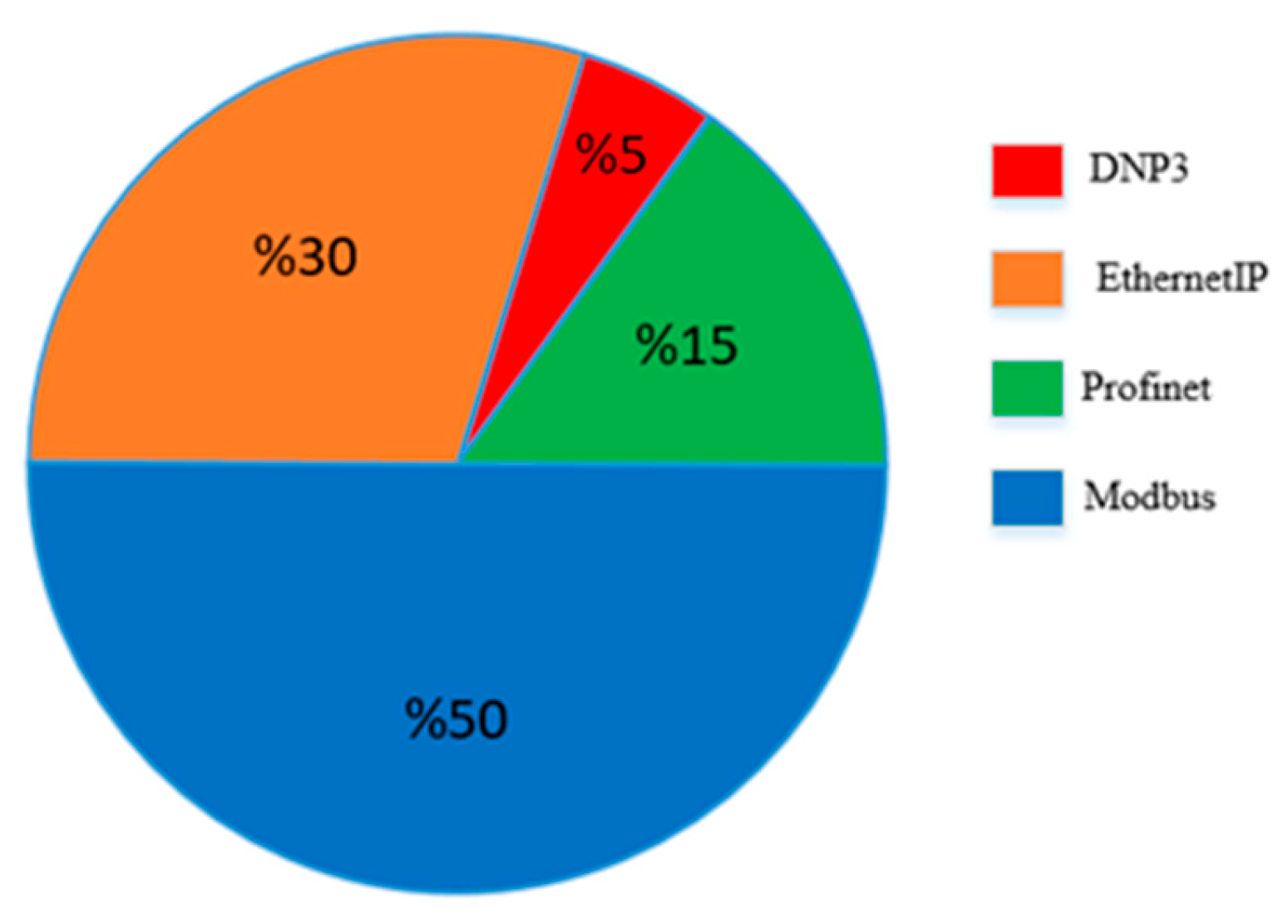
The usage rates of SCADA communication protocols are presented in
Figure 2 [
21]. Cyber threat actors aware of the security vulnerabilities in commonly used communication protocols in SCADA systems view the sectors where these systems are deployed as favorable and valuable targets for carrying out attacks. Thus, assets in SCADA systems become vulnerable to cyber threats and face various risks of attack.
All of these types of attacks can compromise the efficiency, reliability, and security of industrial systems. Therefore, necessary measures should be taken, and cyberattack detection systems should be developed to enhance the security of these systems. On the other hand, obtaining precise data on the frequency of cyberattacks and the number of individuals economically harmed by these attacks is challenging due to factors such as the concealment of attacks and the difficulty in apprehending the perpetrators [
22]. In this context, software development should be prioritized to ensure security and supported by strong legal regulations. Today, the increasing complexity of cyberattacks makes them challenging to detect. Therefore, there has been a significant shift toward artificial intelligence-based methods that can identify anomalies by analyzing large datasets, rather than traditional methods. Artificial intelligence is defined as the ability of computers or digital systems to perform specific tasks by mimicking human-like behaviors [
23]. Artificial intelligence algorithms enable the real-time detection of cyberattacks and provide flexibility in identifying various types of attacks, thereby minimizing human error and enhancing security. In this respect, artificial intelligence systems have become a vital tool in detecting and preventing cyberattacks. There are studies in the literature on the detection of cyberattacks using artificial intelligence methods. Kalech proposed two algorithms based on cyberattack detection techniques that rely on temporal pattern recognition, specifically Hidden Markov Models (HMMs) and Artificial Neural Networks (ANNs), to ensure the security of SCADA systems in critical infrastructures. The research was conducted using data obtained from a comprehensive training SCADA laboratory established by CyberGym, as well as from a real SCADA system located at Ben-Gurion University of the Negev. According to the findings, it has been stated that temporal pattern recognition methods can detect cyberattacks, including legitimate functions known to be challenging to identify in the literature [
24].
Kravchik and Shabtai [
25] presented a study using convolutional neural networks to detect cyberattacks against industrial control systems. The study was conducted on the Secure Water testbed (SWaT) dataset, which represents a scaled-down model of a real-world industrial water treatment plant. The proposed method outperformed previous studies on this dataset, detecting 31 cyberattacks with only three false positives. Researchers focused on the working time and performance of the model they presented, stating that it shows great promise for EKS cyberattack detection. Alhaidari and AL-Dahasi [
26] attempted to develop a framework using three different machine learning algorithms to protect SCADA systems against DDoS attacks. They used the J48, NB, and Random Forest (RF) algorithms. These algorithms were trained and evaluated on the KDD Cup ′99 dataset. The results obtained showed that the best classification was achieved using RF with an accuracy rate of 99.99%, while the NB algorithm had the lowest accuracy rate at 97.74%.
Teixeira and his colleagues conducted five exploratory attacks specific to the EKS on the testbed, which represents the control system of a water storage tank, a stage in the water treatment and distribution process [
27]. During these attacks, they intercepted network traffic containing information about the devices (valves, pumps, sensors). They applied five different traditional machine learning algorithms to the dataset they created from this network traffic to detect cyberattacks: “Random Forest, Decision Tree, Logistic Regression, Naive Bayes, and KNN.” The results they obtained demonstrated the efficiency of machine learning models in detecting attacks in real-time. Hindy and his colleagues developed a new model for anomaly detection in water networks controlled by SCADA systems in their study [
28]. The Modbus protocol was used. While creating the model, they used six different machine learning algorithms: LR, Gaussian Naive Bayes (GNB), SVM, KNN, DT, and RF. The model, developed using a pre-existing dataset, is designed to classify various types of anomalies, including sabotage, hardware errors, and cyberattacks. Unlike existing detection systems, the proposed model is designed to inform the operator about the probability of an event occurring and to reduce the effects of attacks. In another study, Benisha and Ratna proposed a new methodology for identifying and classifying cyberattacks in SCADA networks [
29]. The dataset they used in the study includes network attacks on the water storage system. In the proposed approach, the researchers used clustering and an STS-based Enhanced Cuckoo Search Optimization algorithm to select the most suitable features. In the classification stage, they opted for a genetic machine learning-based neural network algorithm. With the new methodology, accuracy has been increased in the shortest possible time. The results of the performance analysis demonstrated that better clustering, optimization, and classification outcomes were achieved compared to traditional algorithms. Perez and his colleagues [
30] applied machine learning techniques for intrusion detection in SCADA systems using a real dataset provided by Mississippi State University (MSU) and collected from a gas pipeline system, successfully detecting network attacks. In their studies, they chose to use SVM and RF algorithms. The results obtained demonstrate that RF effectively detects unauthorized entries, and using the F1 score enables an accurate evaluation of performance.
Grammatikis and his colleagues have proposed an intrusion detection and prevention system for SCADA systems using the DNP3 protocol [
31]. This system is based on supervised and unsupervised machine learning detection models and can distinguish whether network traffic is associated with a specific DNP3 cyberattack or anomaly. Data obtained from a real substation was used, and the effectiveness of the proposed system was demonstrated. Söğüt and Erdem utilized a dataset from a gas pipeline control system, which is part of the critical infrastructure, in their study. The various attacks targeted the Modbus protocol for the gas pipeline control system, encompassing command injection, reconnaissance, and denial-of-service categories. Data mining methods were applied to the dataset using various algorithms. Using this dataset, attacks on EKS or SCADA systems and non-attacks were evaluated and analyzed based on different characteristics. According to the analysis results, it was observed that the Random Tree algorithm achieved the most accurate classification rate [
10]. Rajesh and Satyanarayana [
32] employed machine learning algorithms in conjunction with filtering and sampling techniques for detecting attacks in Industrial Process Control Systems (SCADA) networks. In their study, researchers created their own datasets using network traffic containing both normal and attack data, generated from a real-time SCADA testbed. When creating the dataset, they applied the Chi-Square, Analysis of Variance (ANOVA), Least Absolute Shrinkage and Selection Operator (LASSO), and Support Vector Machine Synthetic Minority Over-sampling Technique (SVMSMOTE) techniques. After creating the dataset, they utilized machine learning algorithms, including SVM, KNN, RF, and NB, to detect the attacks.
In this study, MITM, unauthorized command injection, and DoS attacks, which are potential cyberattacks that can be carried out against the SCADA network of a hydroelectric power plant within the energy sector, a critical infrastructure, are discussed. Artificial intelligence-based models are proposed for detecting these attacks. In this direction, an original dataset was created based on the communications carried out in the system, and various machine learning algorithms were applied to this data. In the study, in addition to basic algorithms such as KNN, NB, DT, and LR, hybrid models, including KNN-NB, DT-LR, and KNN-NB-DT, were also evaluated. This method presents different approaches to detecting cyberattacks on SCADA systems, and the resulting attack detection accuracy rates and other performance metrics have been calculated. Thus, the outputs obtained within the scope of the study were compared within a methodological framework to provide a holistic evaluation.
3. Materials and Methods
This section introduces the test environment, discusses the cyberattack scenarios implemented, the dataset and its attributes, and the metrics used in the analysis.
3.1. The Physical Test Environment
A test environment is a simulation that models the industrial control systems of a real facility or factory as closely as possible without exactly replicating them [
33]. This section outlines the structural design, architecture, and functional processes of the test environment created. The setup and use of the test environment provide a suitable environment for conducting real cyberattacks and observing the results of the attacks. The test environments created within this scope enable the evaluation of the impact of cyber threats on systems, the identification of vulnerabilities, and the development of solutions to address these vulnerabilities. By simulating real-world attack scenarios in a controlled environment, the effectiveness of attack detection mechanisms can be measured, and new defense strategies can be developed.
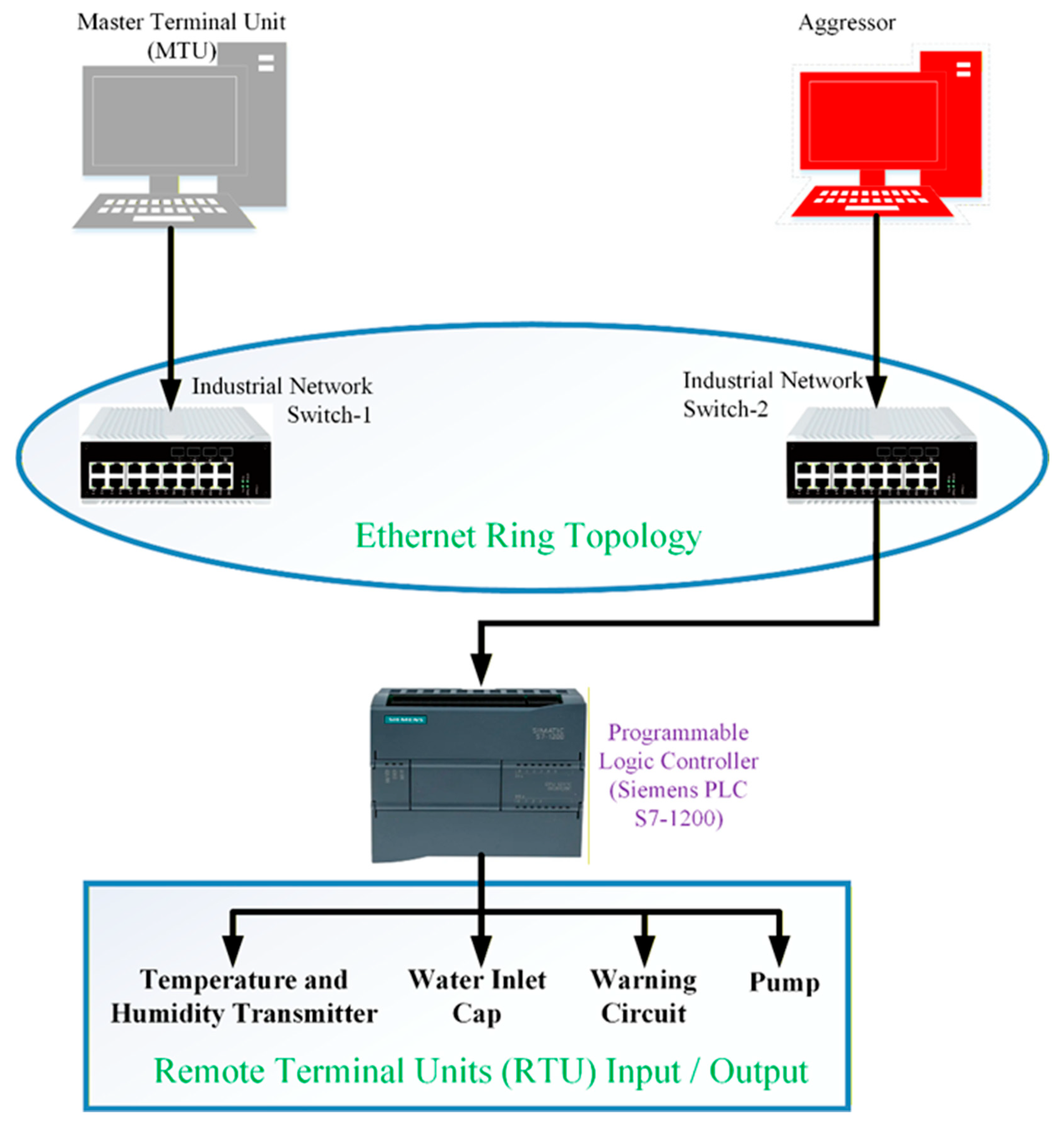
In this study, a test environment simulating the SCADA communication architecture of a hydroelectric power plant was created to contribute to research in the field of cybersecurity. The test environment is designed with a two-layer SCADA communication network architecture. In this environment, Profinet communication, which is widely used in industrial systems, is employed, and various operations are performed to represent the plant’s operation. This test environment represents a simplified simulation of the SCADA communication architecture of a real hydroelectric power plant. The operational status of the hydroelectric power plant is controlled and monitored through the SCADA system. The equipment used in the test environment was selected from components commonly preferred in the SCADA systems of a typical hydroelectric power plant. The architectural structure of the test environment is shown in
Figure 3. Commands given through the computer communicate with the physical PLC via the Profinet protocol, controlling the system’s hardware components (intake cover motor, warning breaker circuit, cooling water pump, etc.). In this way, real-time data flow and the modeling of the control mechanism are ensured. Thanks to this structure, both command sending and status monitoring operations were performed simultaneously.
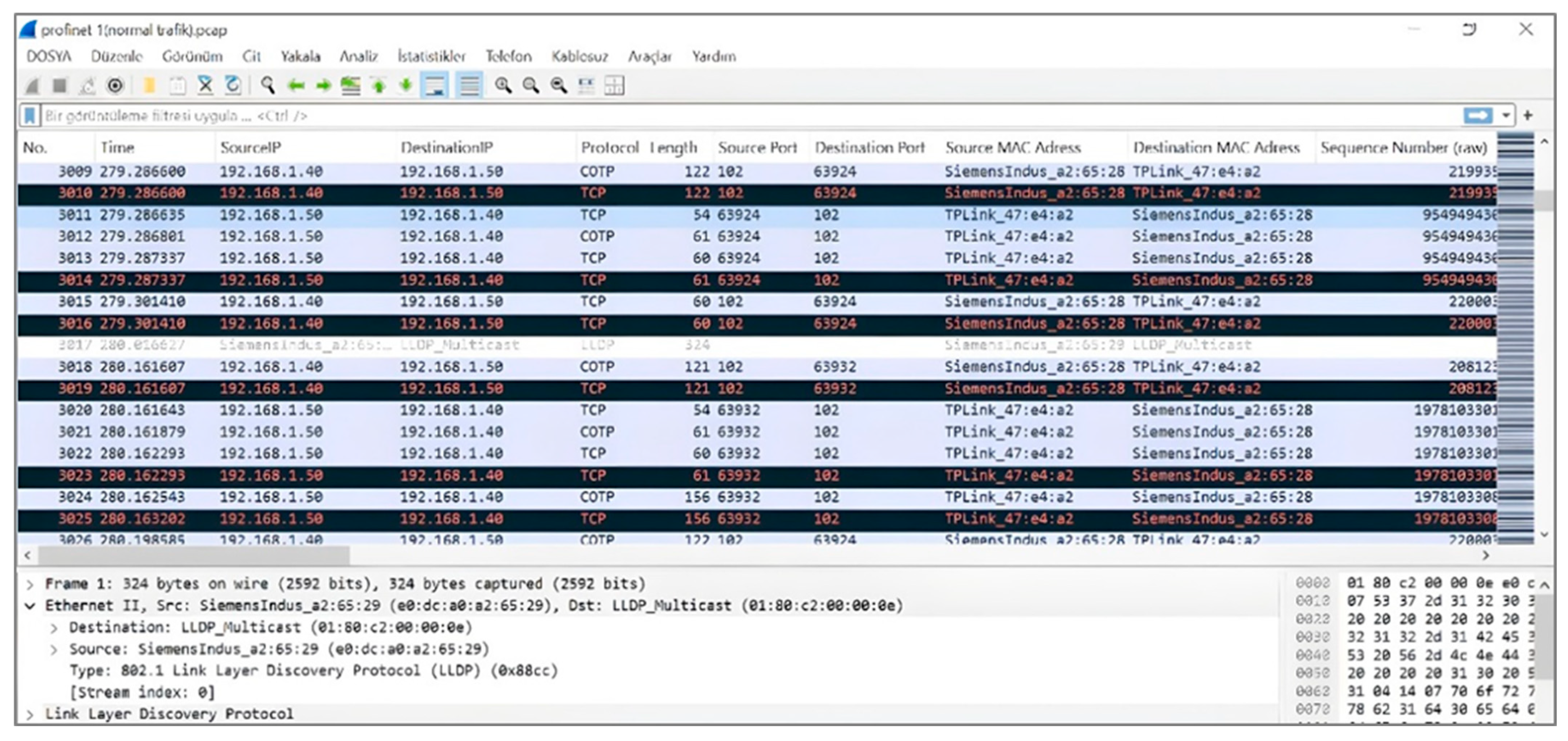
In the test environment, scanning operations were performed on the local network using an attacker device, and various cyberattack scenarios were applied to the physical PLC on the industrial network switch. In the study, three different types of cyberattacks were conducted against the physical PLC, which was selected as the target. These attacks are: ARP Spoofing, which falls under the MITM category, TCP SYN Flood, and command injection attacks, which are types of DoS attacks. Within the scope of these scenarios, the operating status of the physical system and the controlled processes were monitored. For each attack scenario, network traffic was individually monitored, and relevant packets were recorded using Wireshark 1.8 software. Additionally, network traffic from a normal operating state without any attacks was similarly monitored and recorded for comparison purposes. Whether there was any attack activity in the system was checked on the main computer by analyzing network traffic. The attack scenarios were carried out through the attacker environment, which was configured as a virtual machine on the same computer and had the Kali Linux operating system installed. A sample image of the network traffic monitoring process, performed using Wireshark, is shown in
Figure 4.
In the analysis of the datasets obtained in this study, the MATLAB-2024a programming environment was chosen for statistical evaluation and machine learning applications. Various preprocessing steps were applied to make the data suitable for the analysis process. After completing the preprocessing steps, different machine learning algorithms were employed for attack detection, and performance analyses were conducted on these models.
3.2. Implementing Cyberattack Scenarios in a Test Environment
This section discusses the normal operating state of the created test environment and the cyberattack scenarios performed against this environment. Common types of attacks that threaten the security of SCADA systems were analyzed and applied to the test environment. In this context, in addition to attacks aimed at disrupting communication between PLCs and HMIs, targeted attacks against specific RTUs have also been carried out.
The impact on the system’s integrity and stability from the carried-out attacks was observed; network traffic before and after the attacks was recorded in detail using Wireshark software. The scenarios implemented are summarized as follows:
Normal situation scenario.
ARP spoofing attack scenario.
SYN flood attack scenario.
Unauthorized command injection scenario.
The attacker used both passive and active scanning tools to identify target devices, and custom packets were created for use in attack scenarios. Based on the information obtained, information gathering operations were performed on the target devices, and this data was used in planning the subsequent attack stages. Based on this data, attack operations were carried out, and each attack scenario was implemented for an average of 4 min. The purpose of determining this duration is to enable the observation of the system’s effects and to create a broader dataset of attack traffic. Thus, the necessary data traffic diversity has been provided for machine learning models to be trained more effectively. Following the attacks, system operation in some cases did not recover and was unable to return to its regular working order. In some types of attacks, user interaction through the virtual computer interface was blocked, making it impossible to interact with the system. This situation highlights the sensitivity of SCADA systems and the potential for attacks to have not only temporary but also permanent consequences for the system. Therefore, detailed monitoring and analysis of the effects of such attacks are crucial for identifying vulnerabilities and taking appropriate measures.
As a result of these attack scenarios, network parameters such as system behavior, packet sizes, timing differences, and connection density were analyzed. The obtained data was labeled and made usable in machine learning-based anomaly detection systems.
3.3. Data Set Creation Process
This section provides information on the total dataset created using network traffic data obtained from each scenario performed in the test environment. For each scenario, network traffic was recorded and analyzed separately using the Wireshark tool. The obtained records were combined under a single dataset to create a holistic structure. During the stage of determining the attributes to be used in the dataset, attributes specific to the Profinet protocol, which is widely preferred in the literature and one of the most commonly used industrial communication protocols, were examined [
34]. A total of 39 suitable attributes were identified for the dataset created within the scope of this study, and their definitions and explanations are presented in
Table 1.
A new and comprehensive dataset was created, consisting of 38 attribute columns and one label column, with a total of 171,786 samples within the scope of this study. During the data set preparation process, different cyberattack scenarios were implemented in a real-time SCADA test environment, and the system’s responses were directly observed. The attacks led to systemic anomalies, which directly contributed to the data set labeling process. This dataset is suitable for both classification problems related to attack detection and for training and testing different machine learning methods. Additionally, the dataset allows us to determine not only whether an attack has occurred, but also the type of attack that was carried out (e.g., ARP spoofing, TCP SYN flood, unauthorized command injection, etc.). In this respect, it contributes to the existing literature on cybersecurity and SCADA systems.
3.4. Machine Learning Performance Metrics Used in Cyberattack Detection
The primary goal of machine learning is to develop models that can generalize from training data. Therefore, it is essential to perform performance comparisons to determine the most suitable model. For these comparisons to be healthy, appropriate evaluation methods and metrics must be selected. One of the commonly used methods in performance evaluations is the confusion matrix. This matrix is created by comparing the model’s predictions with the actual labels, allowing for the analysis of not only accuracy but also the types of errors that occur. A sample confusion matrix for binary datasets is shown in
Table 2.
Cases where the actual class is positive (Class 1) and the model prediction is also positive (Class 1) are called True Positives (TP). In this case, the model has made a correct prediction. Samples that are incorrectly predicted as positive (Class 1) by the model, while the actual class is negative (Class 2), are defined as False Positives (FP). Cases where the actual class is positive (Class 1) but the model predicts these examples as negative (Class 2) are called False Negatives (FN); the model has missed these examples. Finally, examples where the actual class is negative (Class 2) and the model’s prediction is also negative (Class 2) are referred to as True Negatives (TN). In this case, the model has classified correctly.
Various metrics are used to evaluate the performance of machine learning models. These metrics enable a quantitative analysis of the model’s accuracy, error rates, and generalization capabilities. Among the most commonly used performance metrics in the literature are accuracy, sensitivity/recall, specificity, precision, the F1 score, the Receiver Operating Characteristic (ROC) curve, and the area under the curve (AUC) [
35].
Accuracy indicates the proportion of all samples, including both positive and negative classes, that a classification model correctly predicts. This metric is calculated as the ratio of the number of samples the model correctly classified to the total number of samples.
Sensitivity (or Recall) is a performance metric that measures a classification model’s ability to predict examples belonging to the positive class correctly. It is expressed as the proportion of examples correctly classified as positive by the model among the actual positive examples. In other words, it demonstrates the model’s ability to predict the positive class accurately.
Specificity is a performance metric that measures a classification model’s ability to predict examples belonging to the negative class correctly. It represents the proportion of actual negative examples that the model correctly classifies as negative. In other words, it demonstrates the model’s ability to identify the negative class accurately.
Precision refers to the proportion of samples that the model classifies as positive that are actually positive. In other words, it demonstrates the model’s accuracy in predicting the positive class.
The F1 score is defined as the harmonic mean of a classification model’s precision and recall metrics. This metric aims to optimize the model’s overall performance by balancing sensitivity and precision metrics.
The ROC curve is an essential graphical tool used to evaluate the performance of classification models. AUC indicates how successfully the model can distinguish between classes. The predictive performance of the model is assessed by considering the value ranges for AUC given below [
36].
AUC = 0.5 → The model is not capable of distinguishing between classes.
0.5 < AUC < 0.7 → The model’s prediction performance is poor.
0.7 ≤ AUC < 0.8 → The model has acceptable classification success.
0.8 ≤ AUC < 0.9 → The interclass separation of the model is at an excellent level.
0.9 ≤ AUC ≤ 1 → The model has a superior classification ability.
In this study, commonly used performance metrics, including accuracy, precision, recall, specificity, F1 score, and ROC-AUC, were utilized to evaluate the success of classification models. Additionally, the prediction times of the models in cyberattack detection were also analyzed.
3.5. Machine Learning Models Used for Cyberattack Detection
Cyberattack detection was performed on a dataset generated in a physical SCADA test environment in this study. In this context, different machine learning algorithms were prepared and applied to a dataset divided into three parts (training, validation, and testing). Data preprocessing steps were used, and experimental analyses were conducted to ensure higher success rates for the developed models. Within the scope of the study, a test environment was established to enhance the cybersecurity of the SCADA system, a unique dataset was created, and a novel approach was presented.
3.5.1. Analyze the Appropriate Dataset Configuration
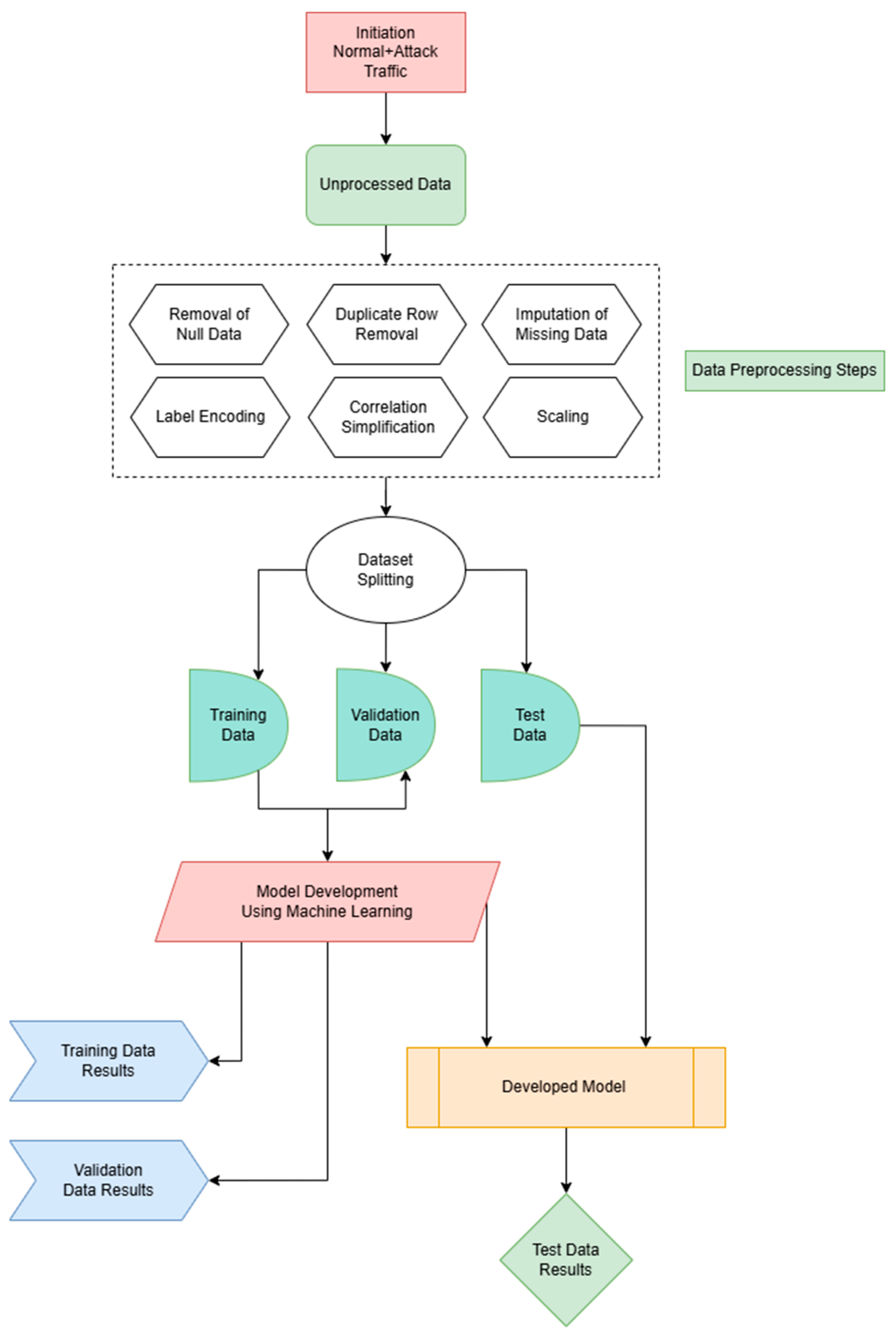
This section discusses the steps involved in creating a data set structure suitable for the analysis process and designing the most appropriate machine learning models for this data set.
Figure 5 presents a summary flow of the process described in this section. Various preprocessing techniques were applied to make the dataset suitable for analysis and modeling. The dataset was transformed into a 26-attribute dataset by applying six commonly used basic preprocessing steps from the literature: removing highly missing attributes [
37,
38,
39], removing duplicate records [
40,
41], filling in missing data [
42,
43], converting labels to numerical form [
44], correlation simplification [
45], and Min-Max scaling [
46]. During the preprocessing stage, attributes with a high proportion of missing values (e.g., Byte Address (PLC), Profinet DCP ServiceID, StandardGateway, etc.) and attributes with high correlation were removed from the dataset to improve data quality.
During the process of filling in data with a low percentage of missing values, attributes containing missing values but requiring preservation (e.g., Source Port, Destination Port, and Sequence Number) were identified. Due to the presence of extreme values in these attributes, the missing values were filled using the median method, which more accurately reflects the center of the distribution.
Normalization was applied to all attributes in the dataset. The cleaned dataset obtained after the data preprocessing steps applied was divided into three subsets with a 70% training, 15% validation, and 15% testing ratio, in accordance with a widely adopted approach in the literature [
47]. Care was taken to ensure a balanced distribution of all attack types and standard traffic samples in each subset, thus preserving class representation and allowing the model to be trained, validated, and finally tested on a dataset of 116,043 lines. This study adopted a packet-based IDS approach and aimed to have the model learn statistical patterns based on packet characteristics.
3.5.2. Applied Classification Models
This section discusses machine learning-based classification algorithms and hybrid models that combine these algorithms. Information on the basic architecture and parameters of the models used is also provided.
KNN Model
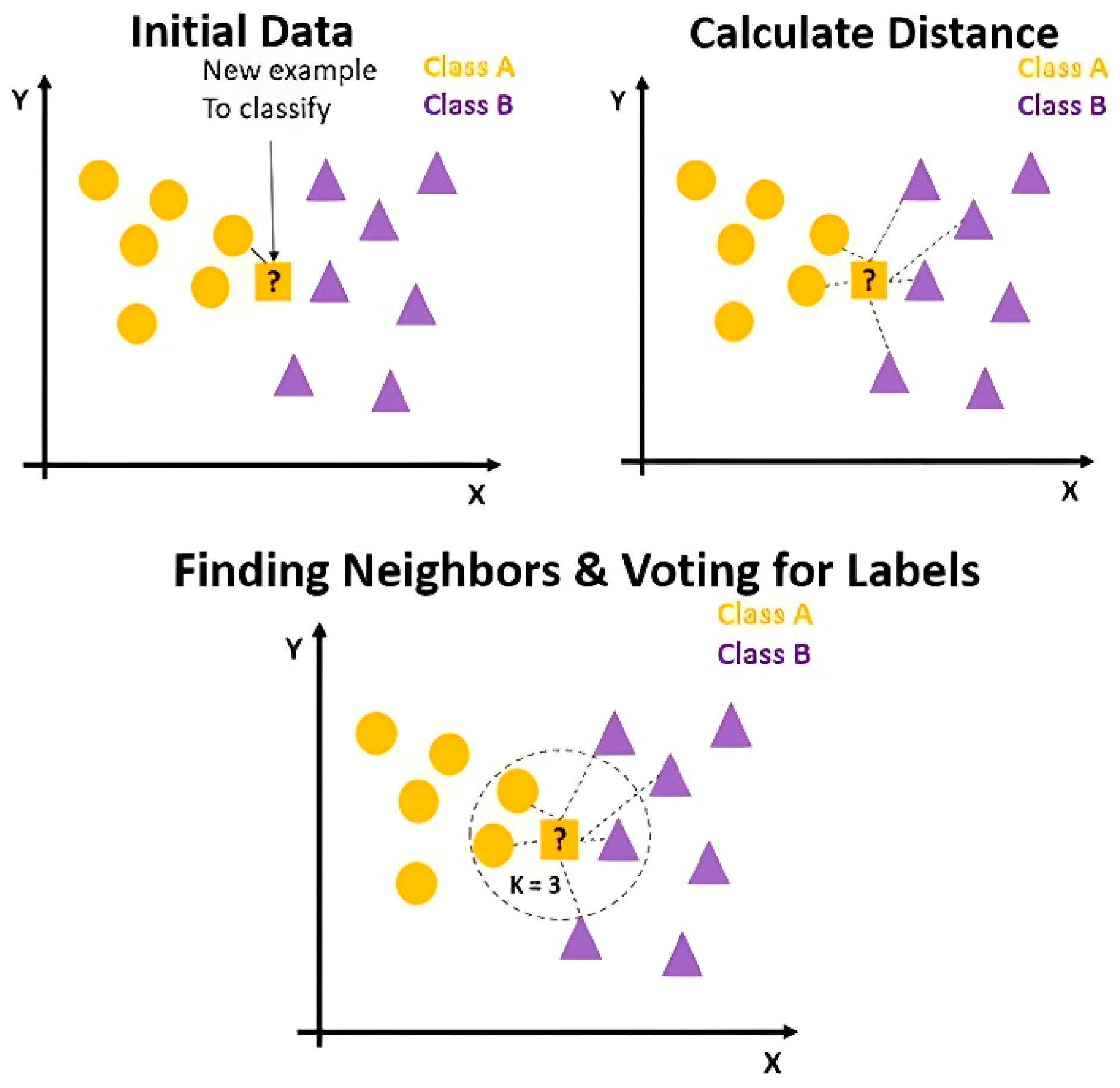
This model is a supervised and non-parametric learning method used in both classification and regression problems. This algorithm is based on the “k” nearest neighbors in the training dataset to classify or predict a new instance. In classification, neighbors are assigned classes based on majority vote, while in regression, predictions are made based on the average value of the neighbors [
48].
Figure 6 shows the basic working principle of the KNN model.
In the model, NumNeighbors (k) was tested from 1 to 21, and the optimal value and Euclidean distance hyperparameters were used. The KNN model was trained on the training data with these parameters, and class-based accuracy, precision, recall, specificity, and F1-score metrics were calculated on the training, validation, and test datasets. Additionally, the model performance was validated using 10-fold stratified cross-validation.
NB Model
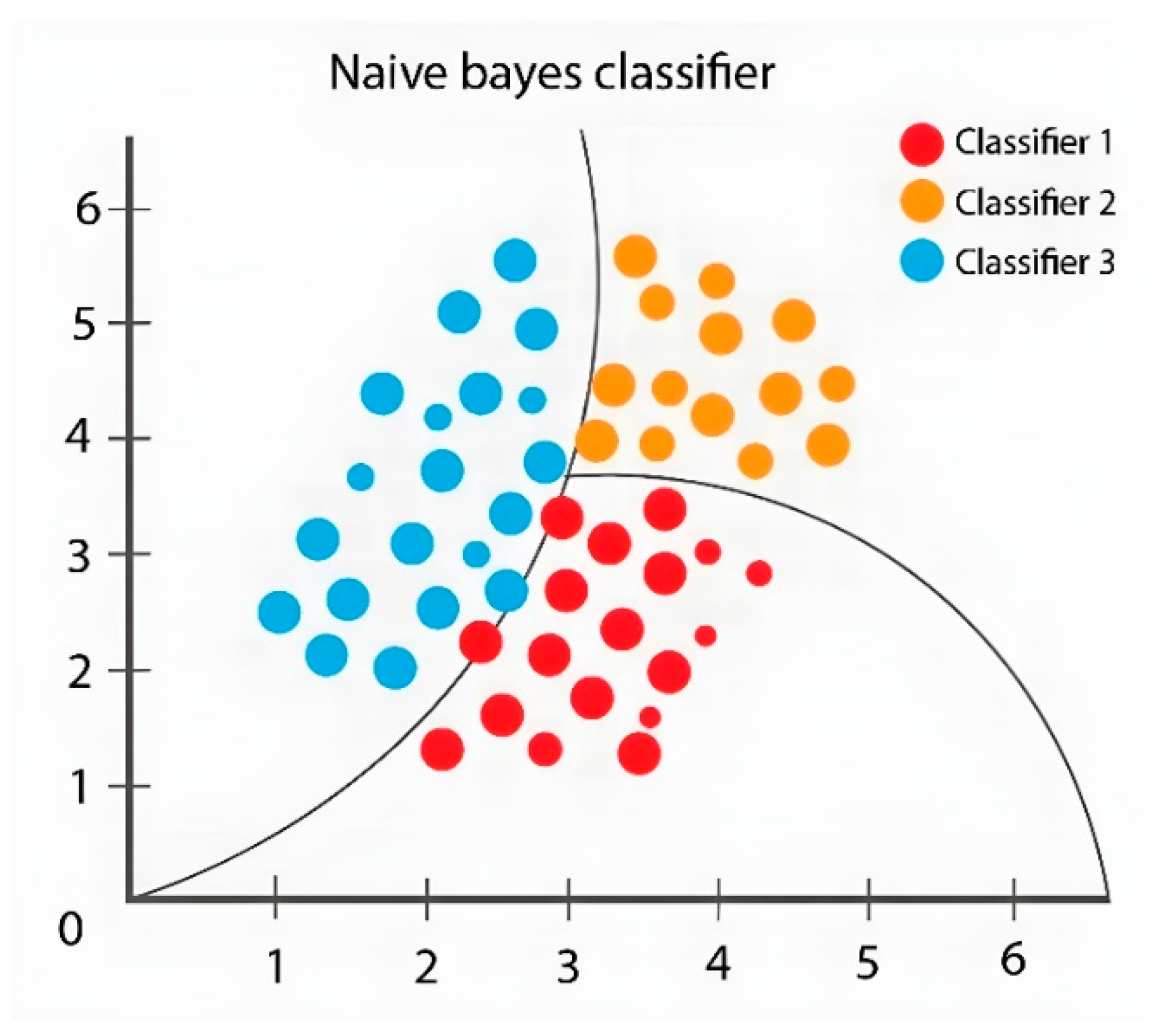
Naive Bayes models are classification algorithms based on a probabilistic approach, rooted in Bayes’ theorem. This method calculates various probabilities by considering the frequencies and value combinations of features in the dataset. The likelihood of observations occurring is evaluated for each class, and the classification process is performed by assuming that the observation belongs to the class with the highest probability [
50].
Figure 7 illustrates the data points for each class clustered together, with the curved decision boundaries indicating which class is probabilistically dominant in the relevant region.
The model was implemented using the Gaussian Naive Bayes hyperparameter. The NB model was trained on the training data using this parameter, and class-based accuracy, precision, recall, specificity, and F1-score metrics were calculated on the training, validation, and test datasets.
DT Model
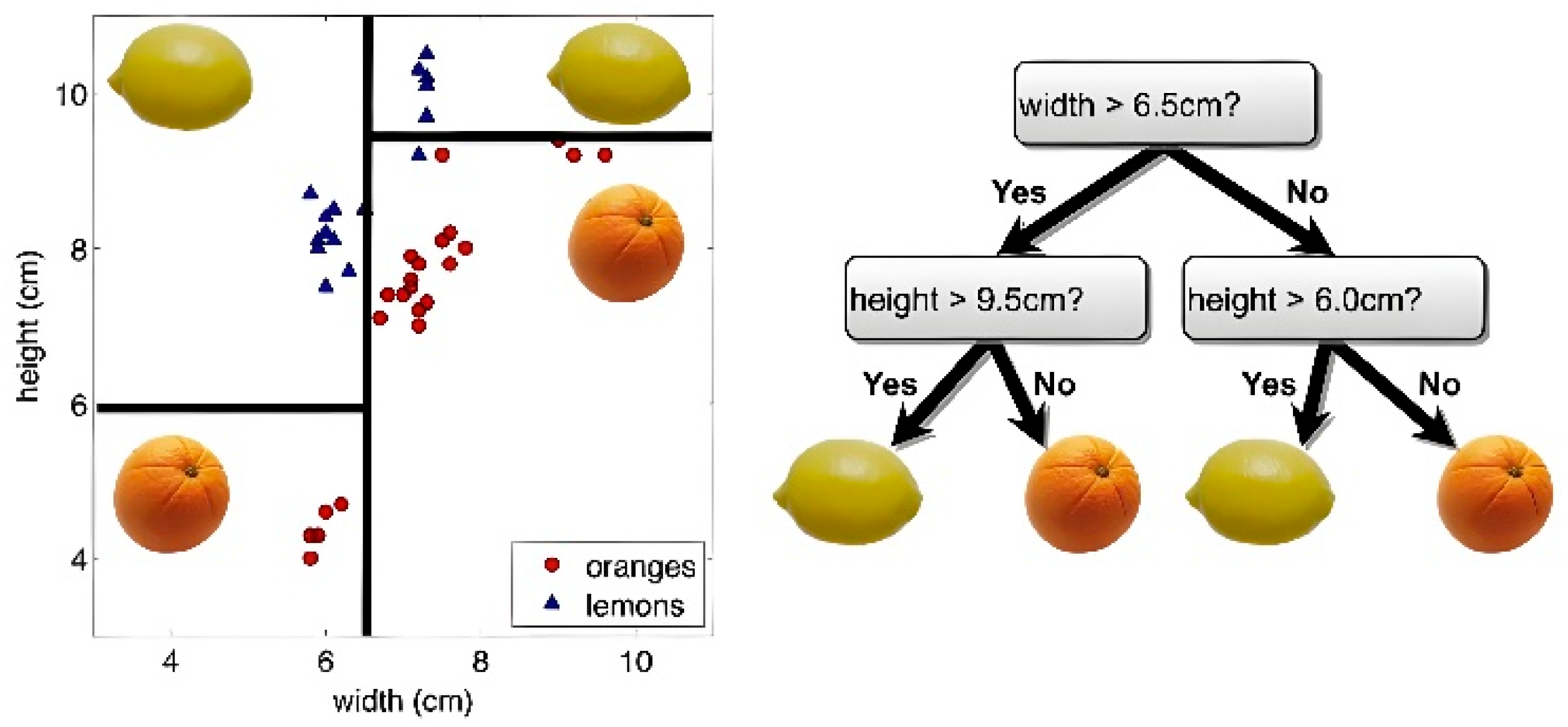
A decision tree is a model in the form of a tree structure that branches out from a starting point called the root node and establishes a hierarchical relationship between variables [
51]. As seen in
Figure 8, a decision tree asks a question and divides the tree into sub-branches based on the answer (“Yes”/“No”).
The model was implemented using the Gini Index criterion. The DT model was trained on the training data using this parameter, and metrics such as class-based accuracy, precision, recall, specificity, and F1-score were calculated on the training, validation, and test datasets.
LR Model
The maximum likelihood method is commonly used for estimation in logistic regression models. This method aims to determine the parameter values that maximize the likelihood of the observed data occurring. For this, the likelihood function is defined, and the parameters are estimated as the values that maximize this function [
53].
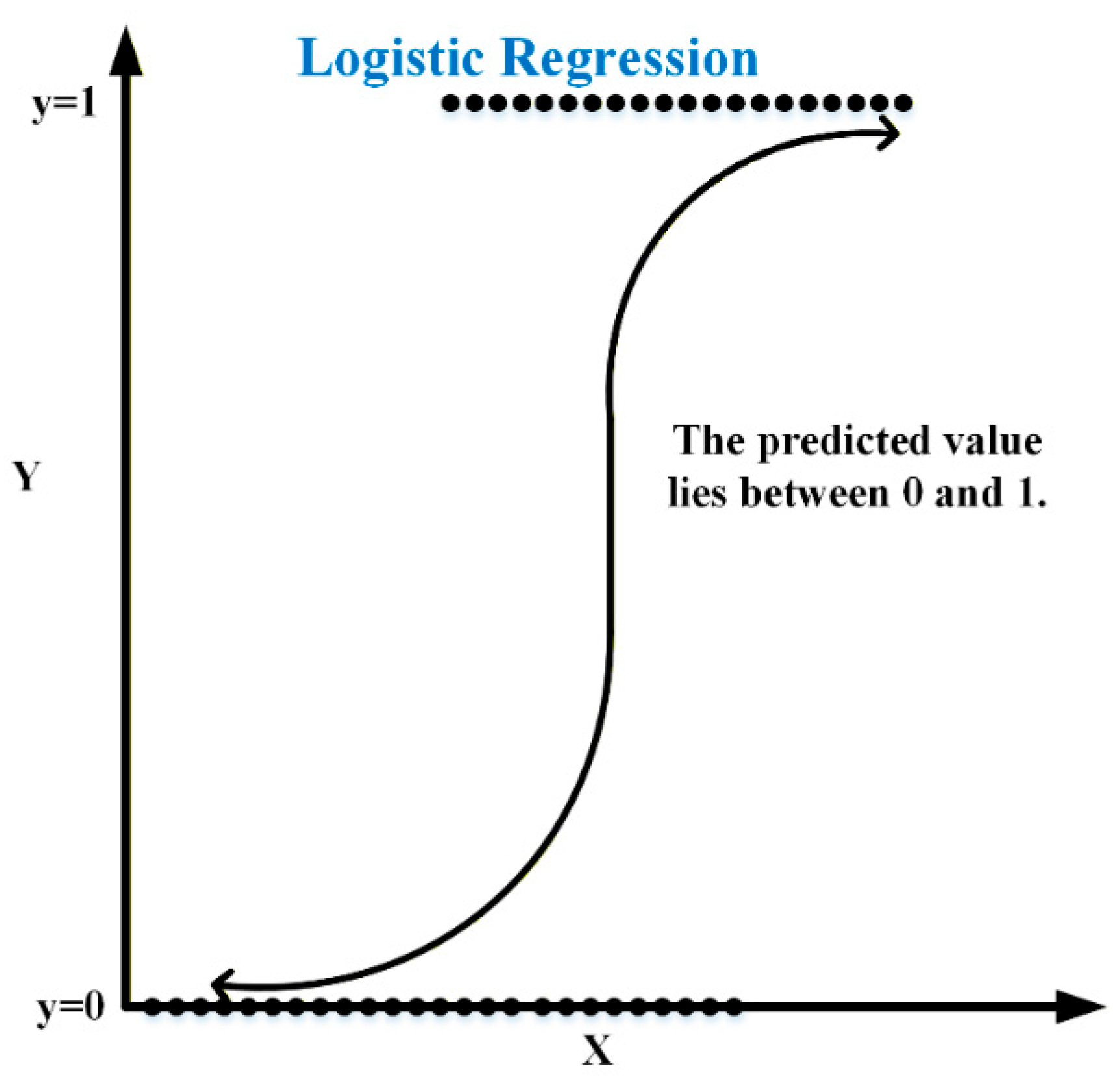
Figure 9 illustrates the sigmoid (S-curve) function, which describes the classification process of the logistic regression model.
The Logistic Regression model was implemented using the Maximum Likelihood Estimate (MLE) method for parameter estimation, and the One-vs-Rest (OvR) strategy was used for multiclass data. The model was trained using these methods on the training data, and class-based accuracy, precision, recall, specificity, and F1-score metrics were calculated on the training, validation, and test datasets.
KNN-NB Hybrid Model
The hybrid combination of the Naive Bayes and K-Nearest Neighbor algorithms provides a balanced and complementary classification approach by combining the high speed and generalization capabilities of Naive Bayes with the instance-based, strong local classification abilities of the KNN algorithm. NB and KNN algorithms exhibit complementary characteristics due to their respective properties of low and high variance. In the literature, the most commonly preferred methods for the hybrid use of NB and KNN algorithms are voting and stacking-based approaches [
54,
55]. In this study, a hybrid classification model was designed that combines both algorithms, and the resulting prediction outcomes were integrated using a voting-based ensemble method.
In this study, a Naive Bayes model was implemented with a kernel distribution, and a KNN model was implemented with a hyperparameter of the number of neighbors (NumNeighbors). The predictions of both models were combined using a voting-based hybrid method, and the model was evaluated using class-based accuracy, precision, recall, specificity, and F1-score metrics on training, validation, and test datasets.
DT-LR Hybrid Model
In this hybrid model, the DT and LR algorithms are combined as a stacking-based hybrid model for a dataset with class imbalance and complex patterns. Decision trees strongly separate classes by dividing data according to rules, while logistic regression performs more precise and generalizable classifications on these separated structures. The aim is to increase the recognition rate of minority classes, reduce the risk of overfitting, and improve the model’s generalization performance with this hybrid model.
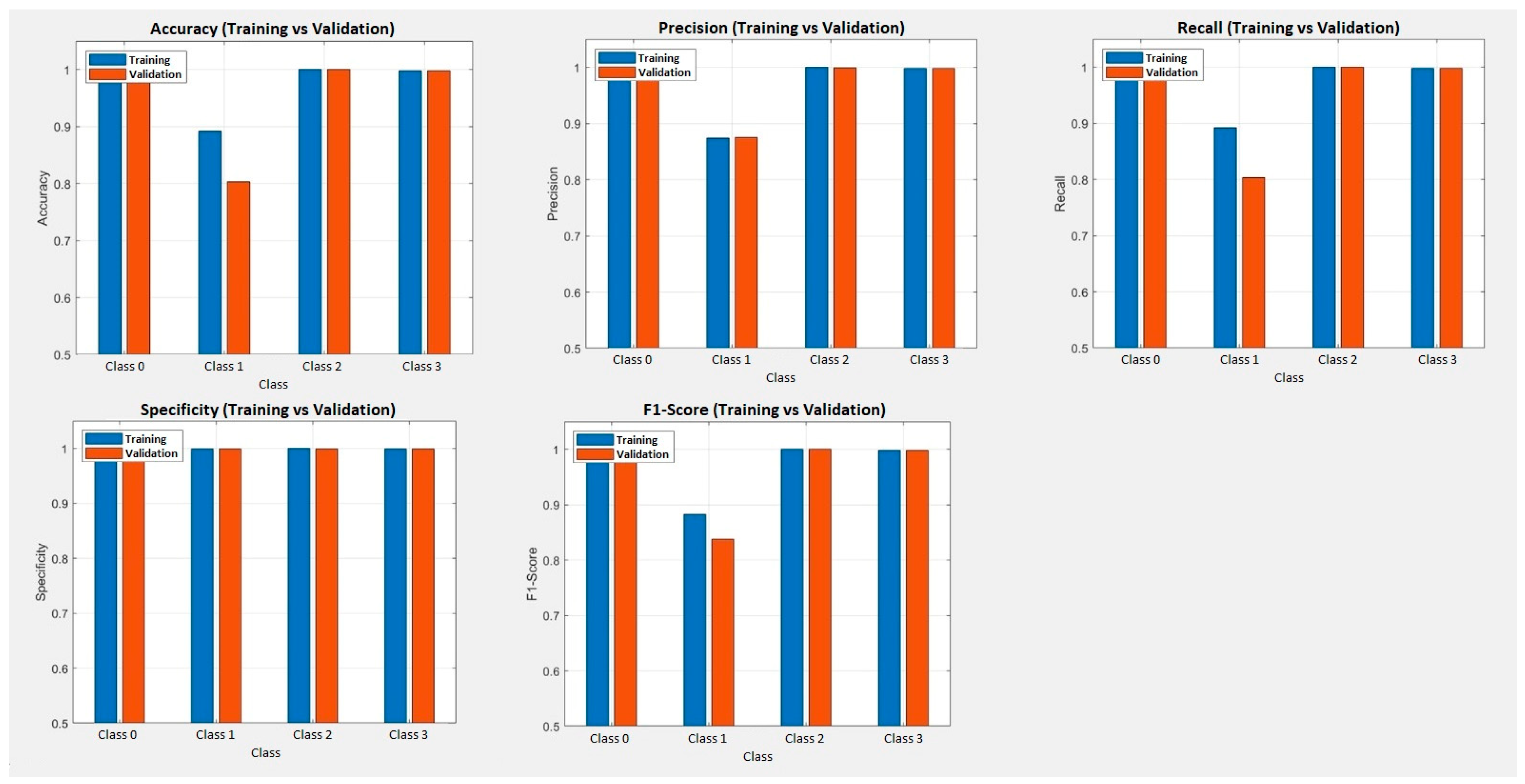
In the model, DT was used as the base learner, and its predictions were added to the training, validation, and test datasets to produce final predictions on the LR meta learner. The DT model uses the Gini criterion to separate classes and is trained with hyperparameters such as leaf size and maximum number of splits. The LR model is implemented with L2 regularization (ridge) and trained with an appropriate regularization coefficient. The model was trained on the training data using these methods, and metrics such as class-based accuracy, precision, recall, specificity, and F1-score were calculated on the training, validation, and test datasets. Additionally, performance was validated using 10-fold stratified cross-validation.
KNN-NB-DT Hybrid Model
The KNN-NB-DT hybrid model used in this study benefits from the complementary features of these algorithms. While DT performs preliminary analysis by categorizing data, NB estimates overall probabilities, and KNN makes sample-based local decisions. Through this combination, the aim is to improve classification performance by capturing both general trends and detailed patterns.
In this hybrid model, Decision Tree (DT), K-Nearest Neighbor (KNN), and Naive Bayes (NB) algorithms are combined, and the predictions of each algorithm are integrated using a majority voting method. The number of neighbors for KNN and the kernel for NB are the basic hyperparameters. The model is trained on training data, and class-based accuracy, precision, recall, specificity, and F1-score metrics are calculated on validation and test datasets.
5. Conclusions and Suggestions
The safe and uninterrupted operation of critical infrastructure depends heavily on the stable and sustainable functioning of SCADA systems. Cyberattacks on these systems can cause disruptions in control and monitoring functions, leading to serious operational interruptions and economic losses. The various attack scenarios conducted within the scope of the study have revealed the vulnerability of SCADA systems to such threats. Thanks to the proposed detection methods, it is possible to identify attacks at an early stage, aiming to prevent potential systemic disruptions and strengthen infrastructure security.
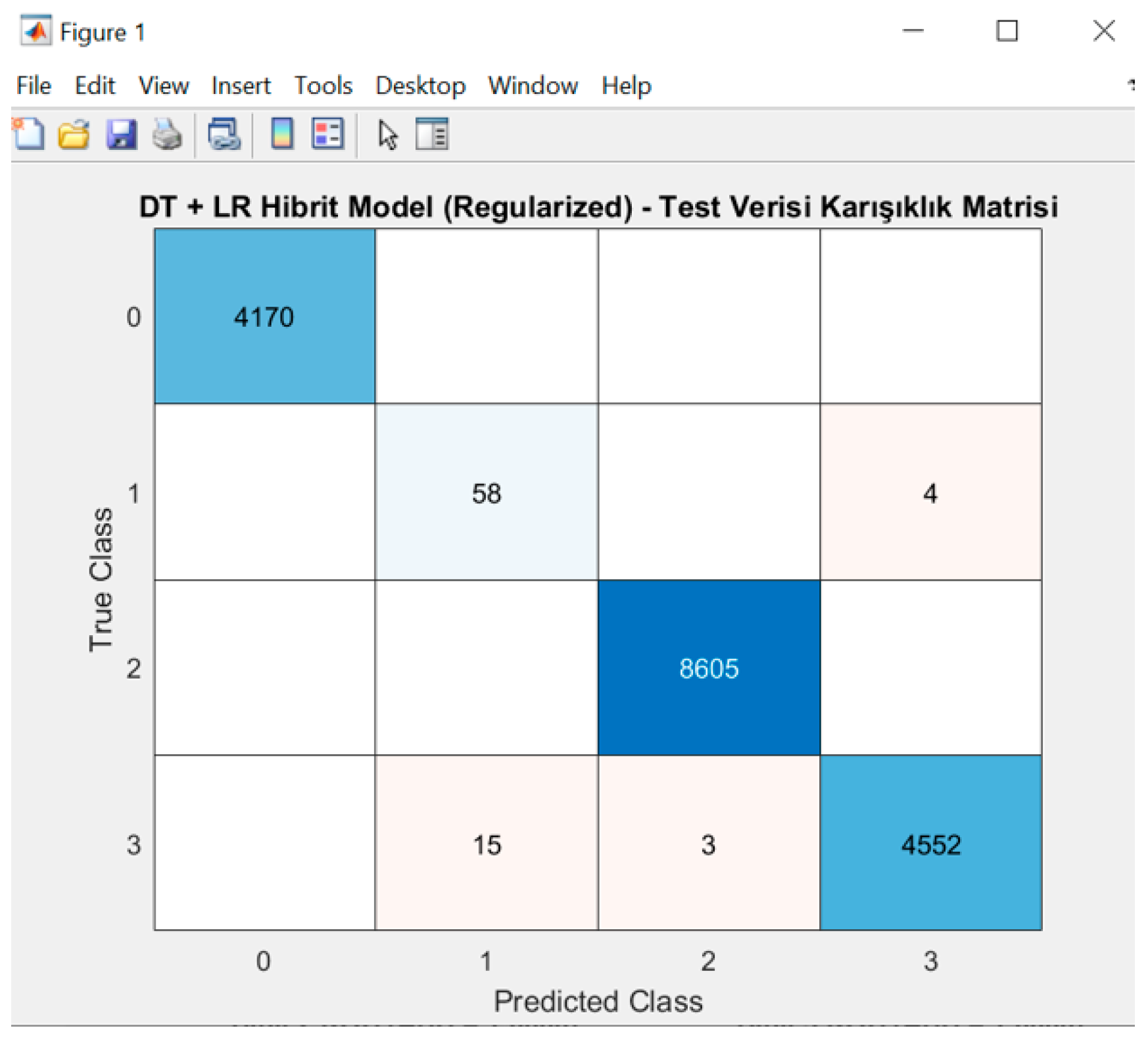
In this study, various cyberattack scenarios were implemented on a test environment structured similarly to a SCADA system, with network traffic data from both attack moments and normal operating conditions being systematically recorded. The obtained data were made suitable for analysis by undergoing the necessary preprocessing steps. The performance of seven different machine learning algorithms was compared on the generated dataset. Based on the evaluations, the DT-LR hybrid model, created by combining the Decision Tree (DT) and Logistic Regression (LR) algorithms, showed the highest success with an accuracy rate of 98.29%. This result demonstrates that the proposed method offers a practical and reliable approach to detecting cyberattacks against SCADA systems.
The impact of cybersecurity threats on industrial control systems is escalating daily, underscoring the need to develop effective attack detection and prevention methods for SCADA systems. This study, conducted in this direction, serves as a guide for future research. In future studies, it is recommended that the SCADA test environment be made more comprehensive and multi-protocol. Although only the Profinet protocol was used in the current study, the performance of intrusion detection systems against different communication structures can be evaluated by integrating various industrial protocols, such as DNP3 and Modbus TCP, into the environment.
Additionally, by incorporating analog signals into the test environment, studies on attack and anomaly detection based on continuously changing physical quantities, such as temperature, pressure, and level, can be conducted more comprehensively. In future studies, the integration of analog data alongside digital data, along with control elements such as timers and counters, will enhance the comprehensiveness of intrusion detection systems. Increasing the diversity of attacks is another critical area of development. Within the scope of this study, DoS, MITM, and command injection attacks were performed; however, a more comprehensive security assessment will be possible in future studies with the addition of different attack scenarios. Finally, in addition to the machine learning algorithms used in this study, deep learning approaches, artificial neural networks, and the diversification of detection systems with different hybrid model structures can be targeted. Future goals include achieving higher performance than studies in the literature by applying different protocols, attack scenarios, and detection models to a more comprehensive test environment, and making unique contributions to the security of SCADA systems.