1. Introduction
Current transformer errors are determined by directly measuring the components of the difference between the high value primary current and the secondary current [
1,
2,
3] where the rated output is 5 A or 1 A (RMS) [
4]. If the transformation ratio is not equal to one, it is necessary to precisely convert high primary currents [
5,
6].
Standard current transformers (CTs) or magnetic current comparators with transformation ratios conforming to the transformation ratio of the tested current transformer are needed for this purpose [
7,
8].
Most of differential measurement systems to test current instrument transformers are also electronic constructions [
9] which need to use the reference current transformers [
1,
10] and are sometimes associated with the PC-controlled digitizers [
11]. In analog measurement systems to test CTs, the output signal from the transformer is converted into a level that can be used by this system (usually 1 V). The same signals can be used in the low-level inputs of a sampling-based two-channel measurement system [
10]. When the ratio of the CT equals 1, it is not necessary to have a reference CT for testing new solutions of CTs.
But no high magnetizing currents are needed to measure the characteristics of electrical sheet samples in a range of high permeabilities. Hence, it is of importance to explore the possibility of determining current transformer errors on the basis of core material characteristics.
The described problem of measurement errors is current, because newly designed one-core current instrument transformers, especially those with built-in class S [
12], have a magnetic core which consists of new materials and it is necessary to properly test the cores.
In most of the applied systems for checking errors of current or voltage transformers, the differential method [
1,
3] is used. Systems with a differential–compensation method, which have higher accuracy but a complicated structure [
8], are also used. The systems implementing the differential method are used to check commercial transformers with different ratios and require the use of a standard transformer. In the model of the transformer presented in the article, the ratio is equal 1, thanks to which there is no need to use a standard transformer. The reference signal is the primary current. A novelty of the research work in relation to other authors is the ability to determine current transformer errors based on the specific characteristics of the core’s material at 50 Hz.
Elements of artificial intelligence (AI) are currently applied to different types of tasks in various aspects of engineering. Various applications in motor control [
13,
14], signal processing [
15] and mechanics [
16,
17] have been examined and meticulously presented in the modern literature. Among the mentioned AI elements, metaheuristic algorithms inspired with swarm intelligence of natural creatures should be emphasized. In most cases, those nature-inspired optimization algorithms (NiOAs) mimic hunting and propagation behavior of different species—animals, plants, fungus, bacteria and viruses [
18,
19,
20]. There are well-known algorithms, such as Grey Wolf Optimizer (GWO) or Flower Pollina-tion Algorithm (FPA), which have been applied to optimization problems from different disciplines. However, the portfolio of NiOAs is constantly evolving, both by enhancement of existing algorithms and introduction of new inspirations. One of the most recently presented NiOAs is inspired with succession of a birch—a common tree known for its pioneering abilities and robustness to various environments. Similarly to other NiOAs, BiOA is population-based, every specimen in every iteration describes a single solution, among which the best can be found. In subsequent iterations, the specimens evolve toward the fittest one by adapting their position with an improvement factor. Despite its novelty, the Birch-inspired Optimization Algorithm (BiOA) has already been successfully applied to various electrical engineering tasks [
21,
22]. Thus, it was decided to examine implementation of the BiOA to determine parameters of discussed current transformers.
In this paper the current transformer’s properties and errors are analyzed on the basis of instantaneous primary and secondary current values. The specifications of the current transformer built for the investigations are given. The errors determined on the basis of core characteristics are compared with the ones determined using the conventional method. Then, the smart approach for parameter determination with an application of the BiOA is thoroughly described. The paper includes comparison of the obtained results and brief discussion on the presented methods. The final section presents conclusions and indicates potential activities for further research.
2. Current Transformer
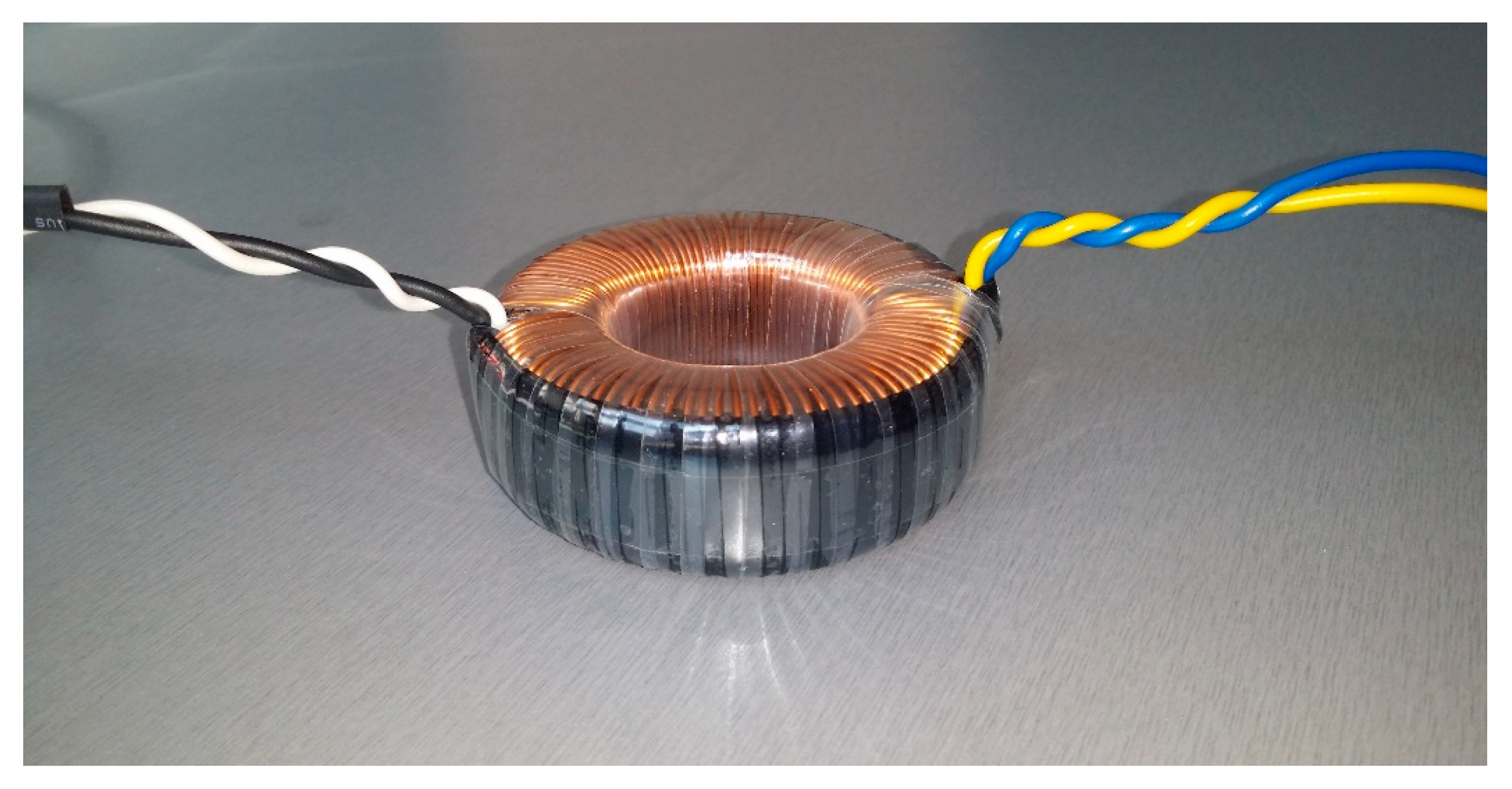
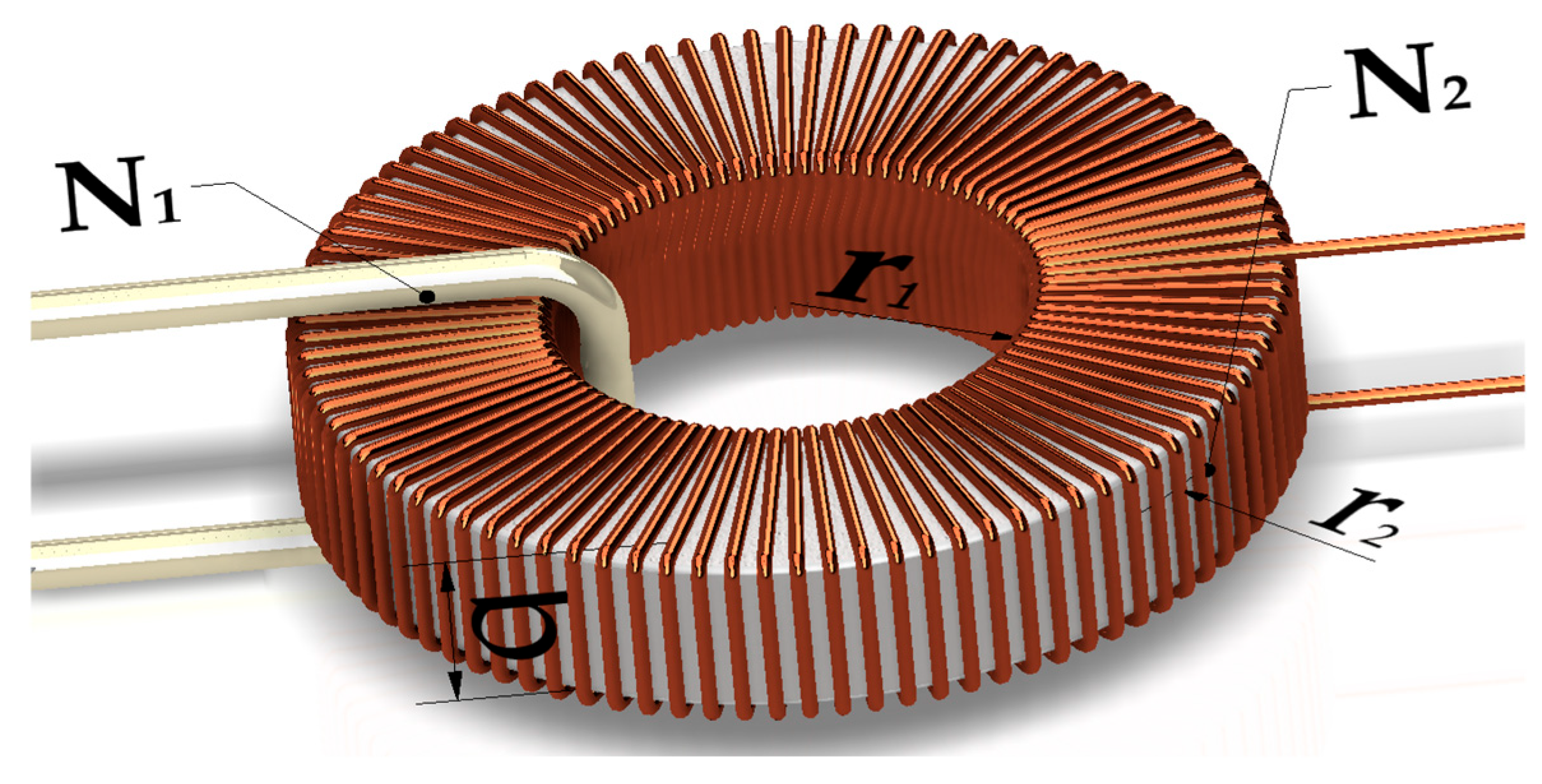
A current transformer model (
Figure 1) was made by winding two windings round a toroidal core with inside diameter 2
r1 = 40 mm, outside diameter 2
r2 = 65 mm and width
b = 20 mm. The windings have an identical number of turns:
N1 =
N2 = 100. The winding wire is 1 mm in diameter. The turns of each of the windings are uniformly distributed along the whole length of the core. Magnetic permeability of the core material: initial 10
4, maximum 3.8 × 10
4.
The high magnetic permeability of the core material (anisotropic Fe-Si sheet 0.3 mm thick) ensures that each cross section of the toroidal core has the same magnetic flux. Evenly distributed windings of the primary winding additionally cause a constant value of the produced tangential component of the magnetic field strength at each core length within a given radius.
The electric field intensity on the core surface is perpendicular to the magnetic field intensity. Also, the uniformly distributed turns of the secondary winding are approximately perpendicular to the magnetic field intensity. Thus, the electric field intensity is directed practically along the turns, whereby the perpendicular component can be omitted. Hence when the turns are uniformly distributed, the current flowing through the inter-turn capacitance can be omitted.
3. Phase Error
Field intensity
H2, produced by the secondary current, is directed oppositely to field intensity
H1. The difference between the primary field and the secondary field is not equal to zero. The remainder is magnetizing intensity.
If the field intensity
H1 and
H2 have constant values along the core, then
where
iμ—magnetizing current.
According to Equation (2), secondary current
i2 is not exactly proportional to primary current
i1.
Nevertheless, the following proportional dependence is assumed:
This results in an instantaneous current conversion error whose absolute value amount to
Multiplied by transformation ratio
ϑ, secondary current
i2 differs from primary current
i1 not only in value. Also, the traces of the currents are shifted in phase. If current
i2 passes through zero, then
where
i0—the current
iμ value when the current
i2 passes through zero.
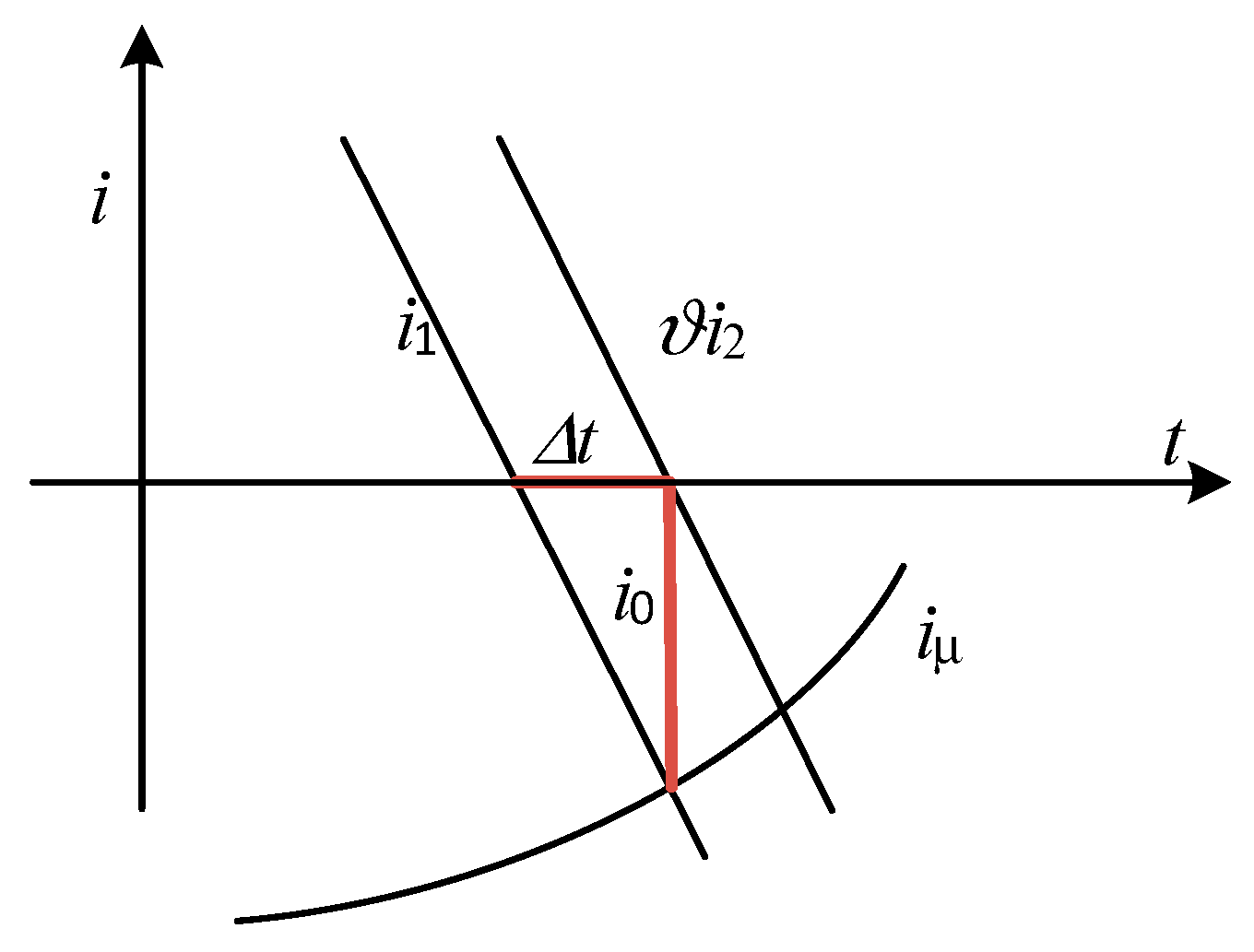
Figure 2 shows a sketch of the primary current and the secondary current near the place where they pass through zero, and of the magnetizing current. It is apparent that the derivative of sinusoidal primary current
i1 =
I1msin(
wt − a) at the point where it passes through zero is equal to
Hence, the phase shift (phase error) is
The current i0 values cannot be measured on a working transformer or designated on a projected instrument transformer.
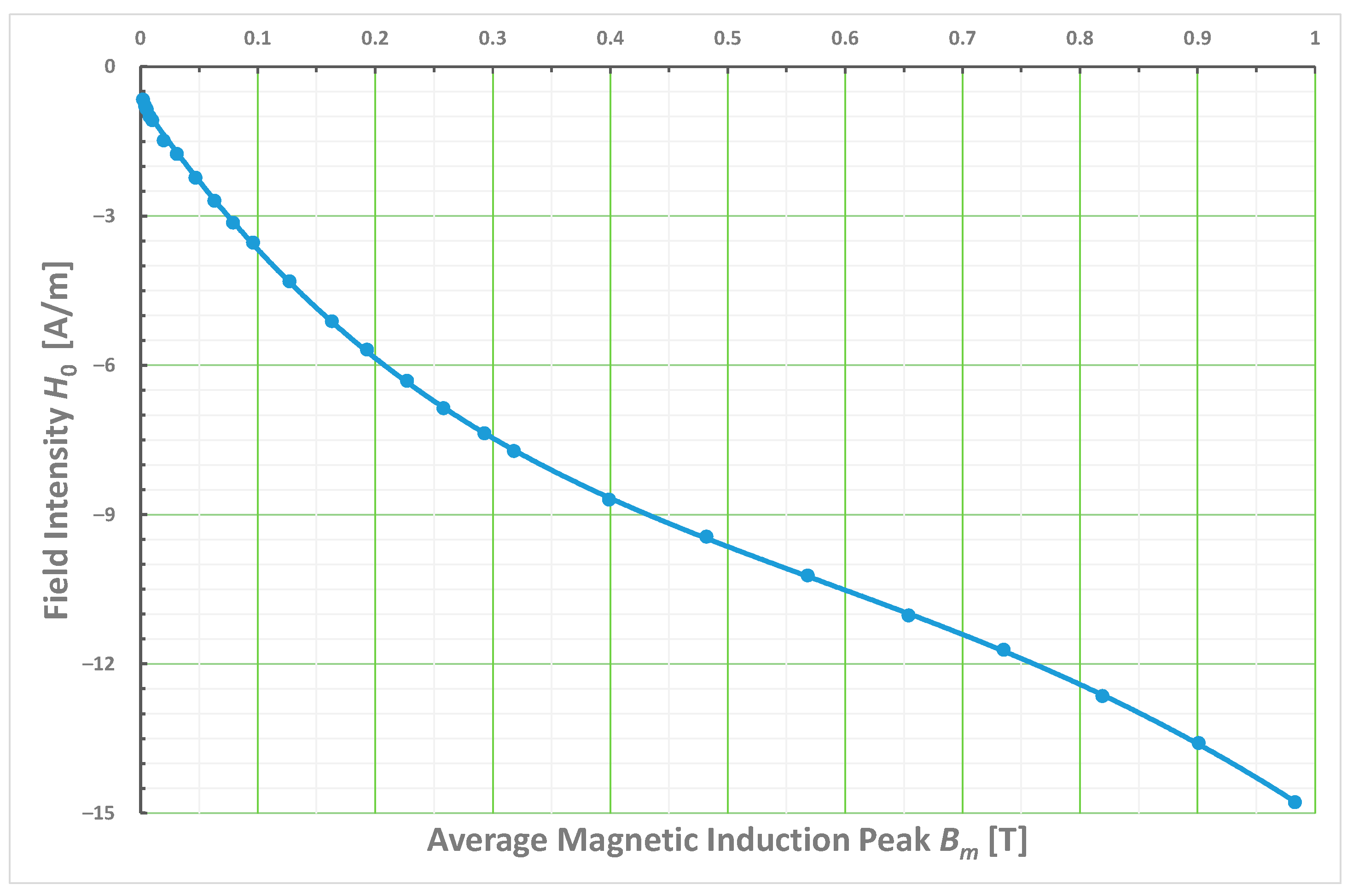
The secondary current circuit is resistive when the secondary winding is uniformly distributed along the core and when it is closed by a resistance. The material characteristic shown in
Figure 3 was obtained by measuring the instantaneous current values across a standard resistor with a value of 1 Ω. Thus, current
i2 will be equal to zero when induced voltage in the secondary winding is equal to zero. Then the magnetic flux in the current transformer core reaches its peak.
The dependence between the average magnetic induction peak values in the core cross section and the magnetic field intensity peak values along the average core length is the magnetization characteristic of the sheet of which the core is made.
where
imμ—the peak value of the magnetizing current, <
r>—average radius of the toroidal core.
However, the magnetization characteristic is arbitrary (formally defined). In reality, the induction peak value does not correspond to the peak value of field intensity. If the induction is at its peak, then induced voltage
e2 is equal to zero. The current in the resistive secondary circuit is also equal to zero and the instantaneous value of field intensity amounts to
The characteristic
depends on the shape of the induction curve. Therefore, it must be determined for a sinusoidal curve.
Figure 3 shows characteristic (13) for the sheet of which the core of the investigated current transformer is made.
If the secondary circuit is resistive, the secondary current peak value depends on the peak value of the sinusoidal induction curve consistently with the following equation:
where
R2—the secondary winding resistance,
R—the resistance closing the secondary winding,
S—the cross-sectional area of the core. Substituting relations (12) and (14) into Formula (8) one obtains
The peak value of induction
Bm can be determined from Equation (14). For a given peak induction value, the instantaneous value of the field intensity
H0 can be read from the material characteristics of the core (
Figure 3).
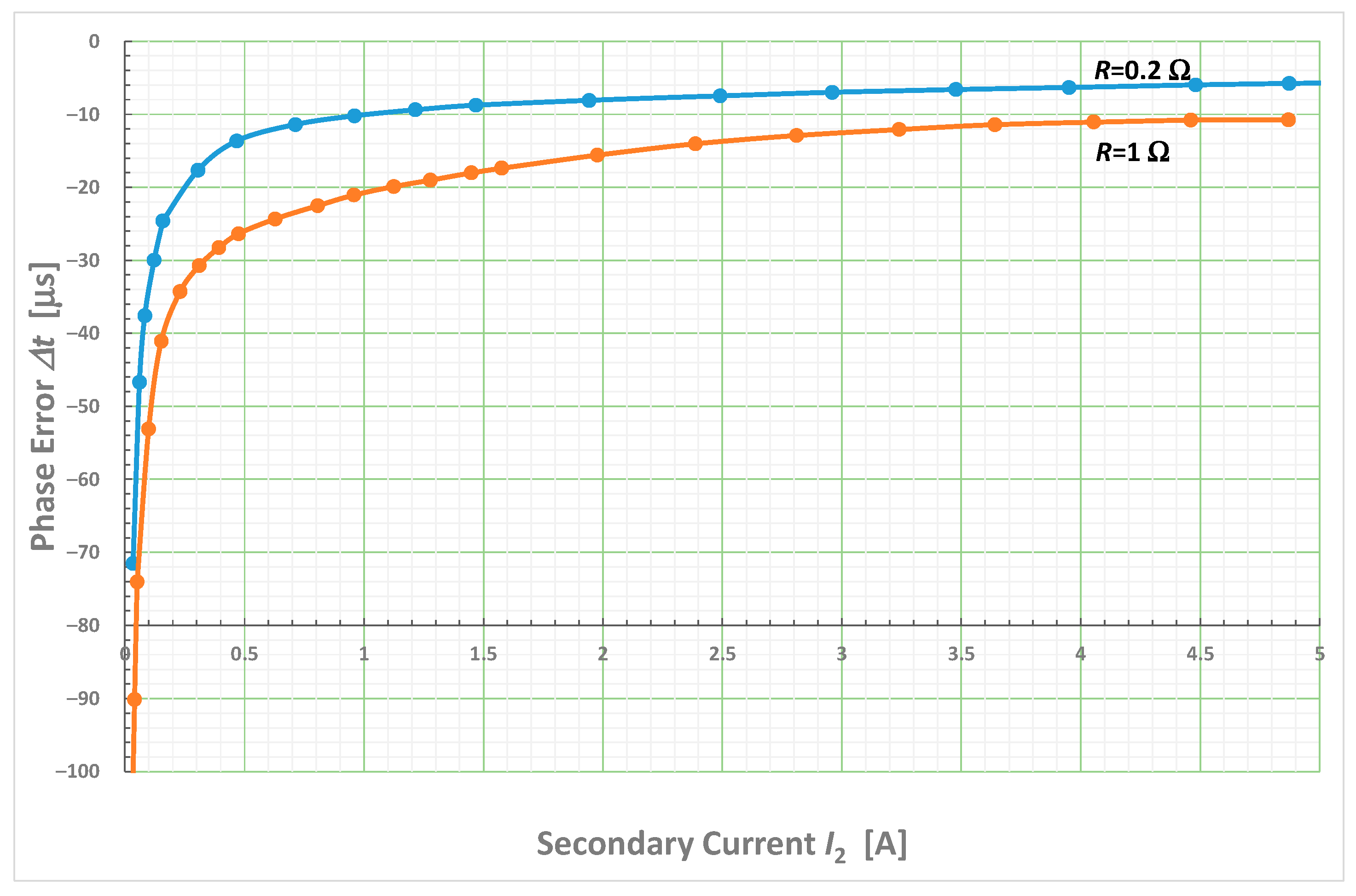
It follows from Formula (15) that a large number of secondary turns ought to be used in order to reduce the error. But then the length of the core and the cross section also need to be reduced. In addition, resistance R2 may increase. The changes will contribute to greater error Δt. The absolute value of error Δt always increases with the resistance of the secondary circuit. The phase error was calculated from Formula (15) on the basis of the following: the characteristic presented in
Figure 3, the parameters of the current transformer model made for the investigations, and assumed resistance R = 0.2 Ω and
R = 1 Ω which is shown in
Figure 4 depending on the RMS value of the secondary current. For a sinusoidal induction curve, secondary current RMS value is
.
4. Ratio Error
The current transformer’s primary current and secondary current reach their peak values practically simultaneously. The relative difference due to the phase shift is defined by the following relation:
For a phase shift of 50 μs the difference amounts to merely 0.012%. The absolute value of this error is given by the following formula:
Current
ic represents the magnetizing current value at the instant when the induced voltage reaches its peak. Then the instantaneous value of induction passes through zero, where its increase is the largest. If the instantaneous value of induction amounts to zero, the field intensity is equal to core coercivity
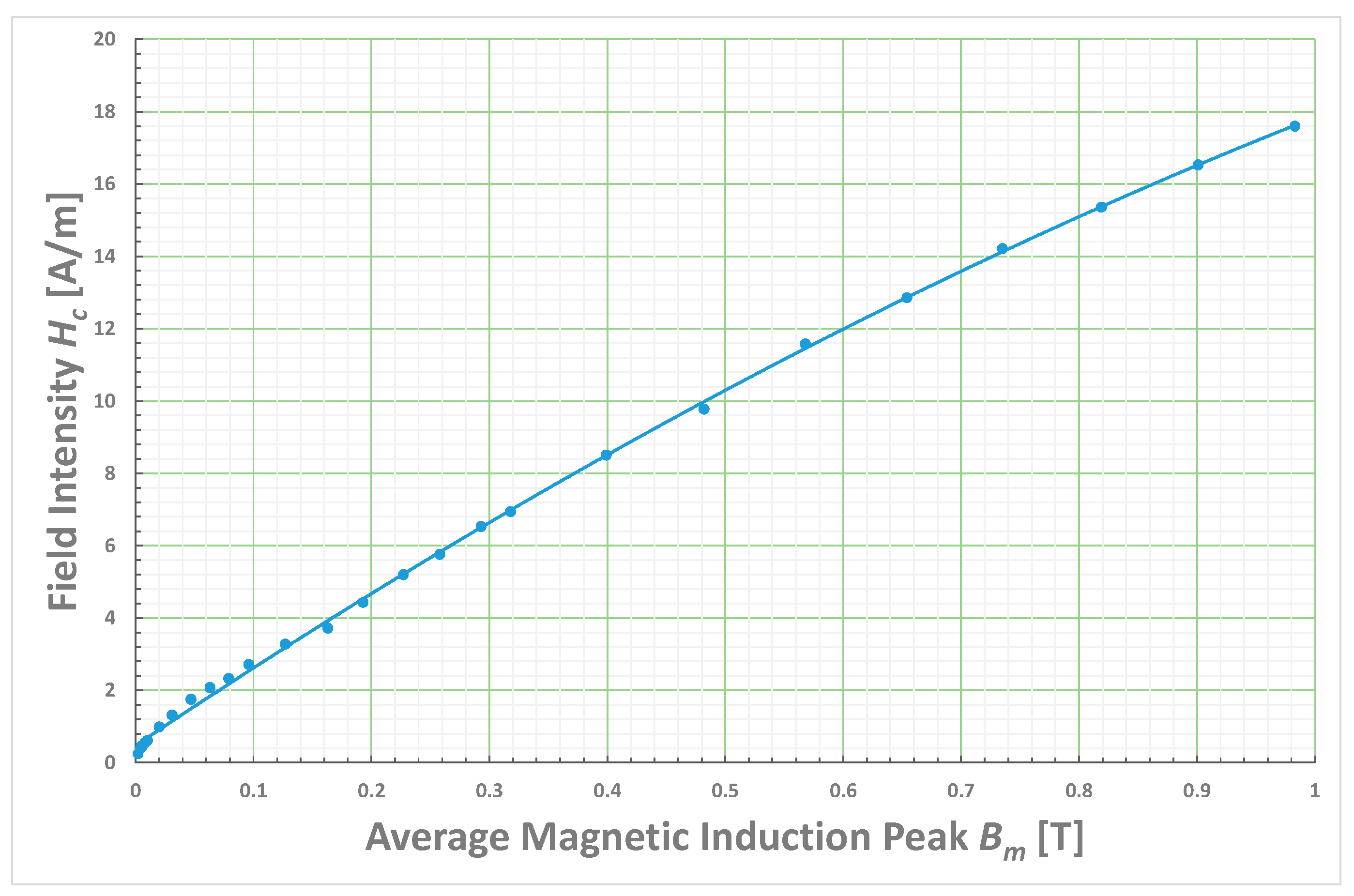
Hc (
Figure 5). Hence current
ic is defined by the following equation:
In order to determine the current error, one needs the characteristic of the core material.
Figure 5 shows characteristic (19) of the current transformer model core sheet.
The peak value of the secondary current can be determined on the basis of the peak value of the induced voltage when the secondary circuit is resistive (19). The formula for the relative current error for a given core material characteristic and assigned or assumed current transformer parameters is obtained by substituting relations (14) and (18) into Formula (17).
In Formula (19), the instantaneous value
Hc must be read from the characteristic curve (
Figure 5) for a given induction peak
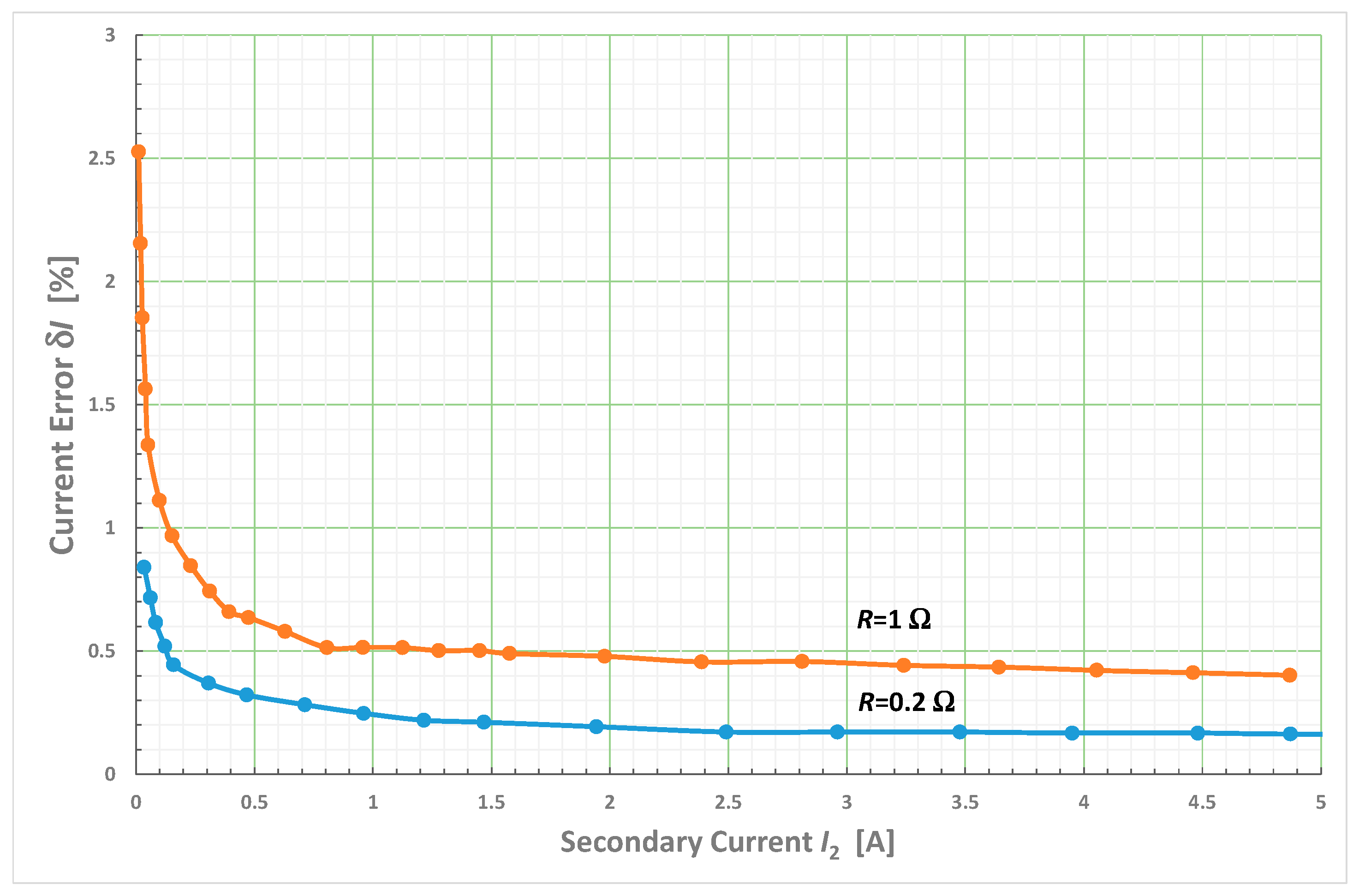
Bm. The current error of the investigated current transformer loaded with resistance
R = 0.2 Ω and
R = 1 Ω, calculated from Formula (20), is shown in
Figure 6.
5. Smart Geometry Optimization
The approach presented in the paper and the compiled relations (15) and (20) are undoubtedly useful tools for identification of existing current instrument transformers. It is especially crucial to determine the error values to adapt the process for the optimal working point of the CT. However, it could be noted that both Equations (15) and (20) rely on material properties of the magnetic steel sheet and geometry of the transformer. Thus, the designer may estimate errors of the CT before assembly and adapt the number of turns and size of the core to minimize the errors. Examples of similar design problems can be found in the literature [
23,
24]. As minimizing the value is a common optimization process, authors have developed a script that can calculate optimal size of the core within given constraints. For this purpose, the Birch-inspired Optimization Algorithm (BiOA) was implemented. The BiOA is a metaheuristic optimization algorithm that is inspired with a swarm intelligence of the organisms; thus, it is often referred to as a smart algorithm, an element of artificial intelligence [
25,
26,
27]. The efficiency and ease of implementation of the BiOA has already been confirmed in various automation and control applications [
21,
28]. It can be characterized by high accuracy of finding global minimum and resilience to local extrema. Its high efficiency and repeatability do not result from reduced optimization speed, as the convergence speed is comparable to well-known algorithms such as GWO or FPA [
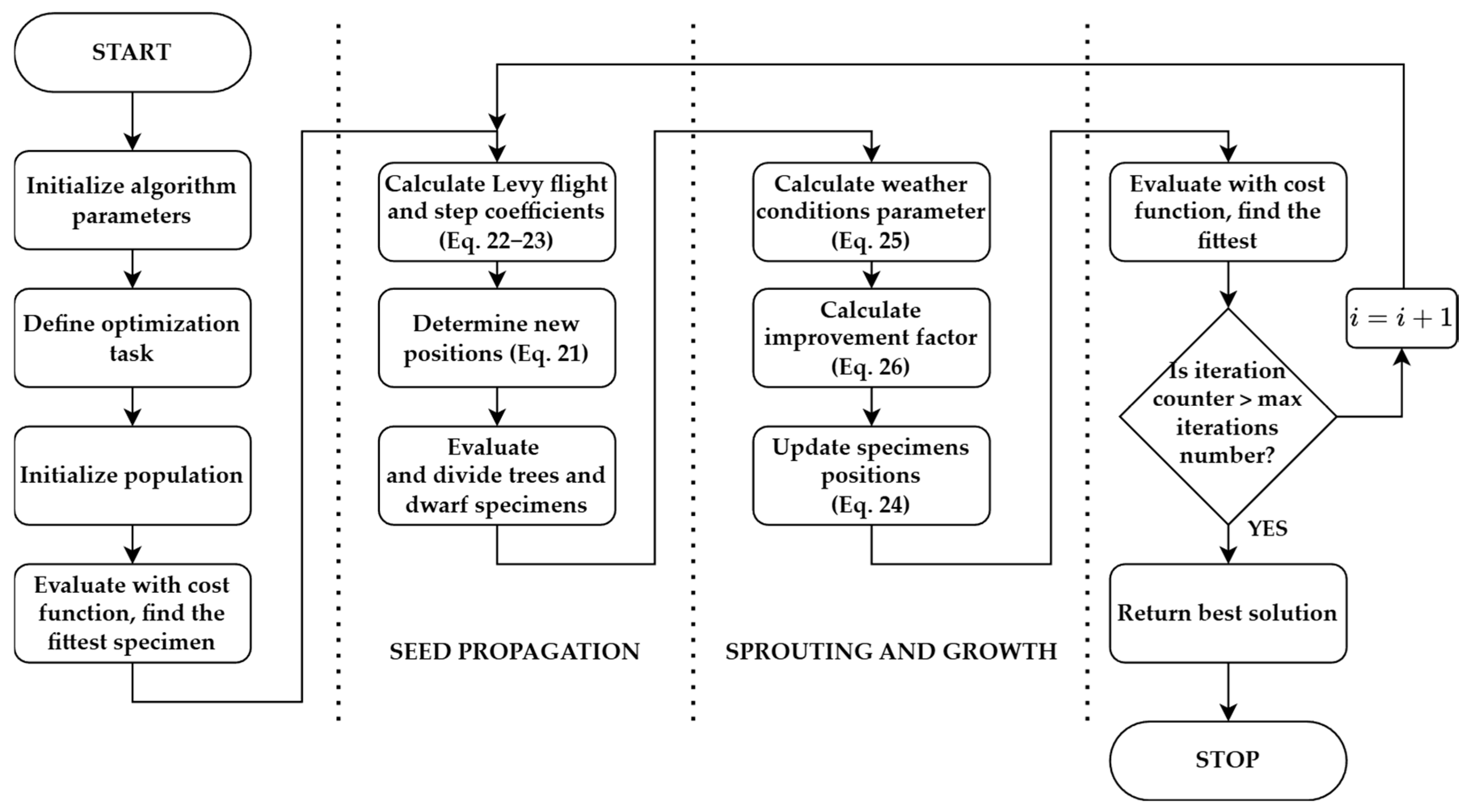
28]. While Grey Wolf Optimizer (GWO) is an algorithm inspired by swarm intelligence of hunting wolves and Flower Pollination Algorithm (FPA) is considered as an evolutionary algorithm, the BiOA is in fact a hybrid solution which incorporates both optimization mechanisms. The FPA was first presented in 2012 by Xin-She Yang and the GWO only two years later by Seyedali Mirjalili, it has been enough time to establish their popularity and confirm optimization efficiency. The natural inspiration of the BiOA comes from pioneer and succession abilities of birch trees, a native species of European forests and groves. Similarly to other nature-inspired optimization algorithms (NIOAs), it is an iterative process of adapting solutions among developing populations. Each iteration of the BiOA is two-step optimization—the first stage represents seed propagation and is described with Levy flight-based [
29] relation (21). Subsequently, transfer of seeds results in exploration of the optimization area around the most prolific specimen—the best solution so far. It is apparent that limited area results in dense vegetation and reduces the potential of long flights—this phenomenon is modeled with a declining step coefficient described with relation (22). Additionally, the probability of landing in an exact position depends on various parameters—seed production rate, wind speed and seed weight. This mechanism resembles global optimization in the FPA, which is known for its exploration efficiency and resilience to local minima.
where
—new and current solution,
—best solution in the i-th iteration,
—max number of iterations,
—parametrized Levy flight function (23), and
—step coefficient (22)
where
—seed weight coefficient,
—random value (0,1].
where
—random value [0,1],
—random value [0,σ],
—seed production rate.
The second part of each iteration simulates sprouting of distributed seeds (
Figure 7). The inspiration comes from observation of birch growth—distant, single specimens grow faster and are generally stronger, while dense groups of specimens result in dwarf bush-like trees. Thus, this step is an exploitation of the search area. Equations and approach in this stage are similar to Grey Wolf Optimizer (GWO) [
30,
31]—the master tree and dwarf specimens are differentiated. Their positions are then updated according to relation (24), which is parametrized appropriately to bush or master tree.
where
—weather conditions parameter defined with Formula (25) and
—positive improvement factor proportional to an Euclidean distance
between considered specimen and nearest previous solution (26).
where
—randomly generated coefficient.
Figure 8 presents the 3D model of a current transformer and indicates its basic parameters: an external radius (
), an internal radius (
), width (b), number of turns of primary (
) and secondary (
) windings. Obvious relations describe further geometrical features of the toroidal core: the average radius
, and the height (
h); they are given with Formulas (11) and (27).
The relationship between the number of turns and winding resistance (
R2) placed around the defined magnetic core can be determined with Formula (28). The relation assumes that AWG18 (an equivalent of ⌀1 mm) copper wire is evenly distributed and adjacent to the external wall of the core. All dimensions are given in millimeters, and the result is expressed in Ohms.
The geometry of the core must ensure that winding fits in the internal opening of the torus. Based on above assumptions, a task was defined—optimal dimensions of the core manufactured with the known material should ensure the lowest mean value of both phase and current errors at the same time. Thus, the cost function defined with relation (29) was applied.
where
—number of considered samples. The optimization was conducted within a defined range of possible dimensions. The constraints and parameters of the optimization are gathered in
Table 1. It should be noted that population size, maximum iteration number and algorithm parameters—seed production rate and seed weight coefficient were defined similarly to prime presentation of the BiOA [
28]. This should have ensured high reproduction of results and accurate convergence speed.
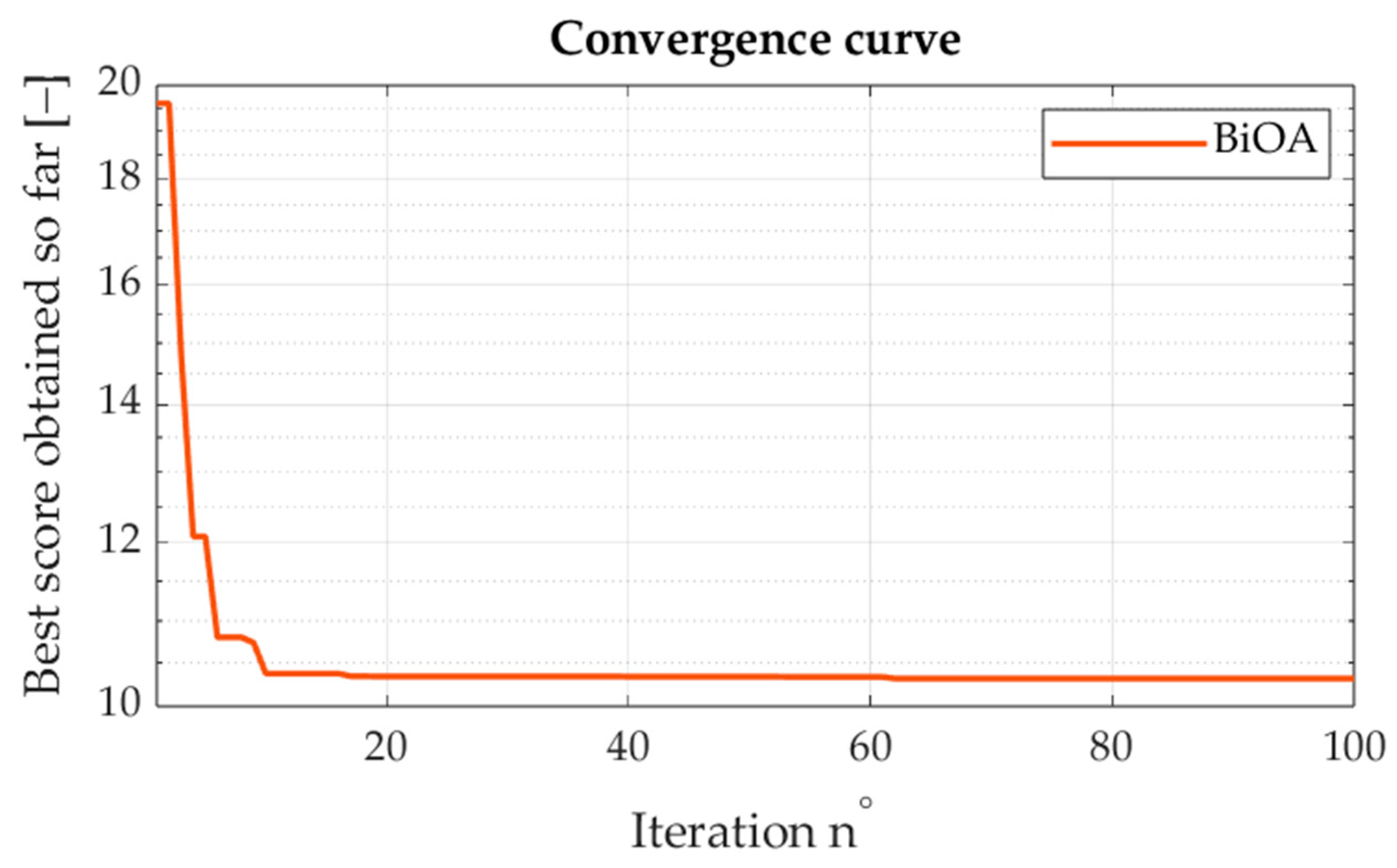
Figure 9 presents the average convergence curve for 10 subsequent runs. The core material characteristics used in optimization were presented in the previous section of the paper.
The presented results confirm that the design of a current transformer can be estimated automatically to minimize mean value of both current and phase errors with only knowledge of material characteristics.
6. Results and Discussion
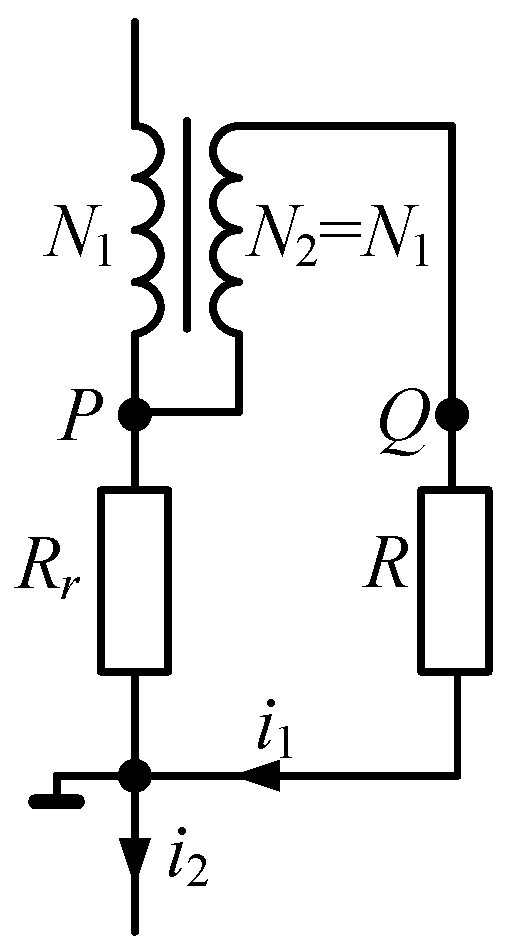
The current transformer model errors determined on the basis of the core material characteristics were compared with the errors measured by the conventional method. The finite difference method was used for this purpose. Since the current transformer transformation ratio is equal to one, the secondary current can be subtracted from the primary current on the same resistor
Rr (
Figure 10). The difference between the primary current and the secondary current is small. Hence resistor
Rr can be of low power. Its value must be so matched that the voltage measured in point
P is considerably lower than the voltage on load resistor
R. Resistor
Rr = 1 Ω was used in the system (
Figure 10).
An autotransformer and an isolation transformer with an
L-filter were used as the power source to obtain a sinusoidal induction waveform. The experiments were carried out under standard laboratory conditions, with the ambient temperature maintained at
Ta = 21 °C. A measuring card with a sampling frequency of 2 MS/s was used to measure voltage at point
P and at point
Q. At point
Q the effective value of voltage
U2 was measured and the instants at which voltage passes through zero and the instants at which it reaches peak values were determined. At point
P voltage values at the instant when the voltage at point
Q passes through zero and when it reaches its peak were measured. The voltage at point
P is low. In order to reduce the influence of noise, the averages of 20 successive samples were measured to reduce the influence of current fluctuations. The RMS value of voltage measured at point
Q (
Figure 10) and the voltage value measured at point
P at the moment when voltage at point
Q passes through zero determines the phase error according to Formula (8). The voltage value measured at point
Q and the voltage value measured at point
P at the moment when the voltage at point Q reaches the peak value determines the current error according to Formula (17).
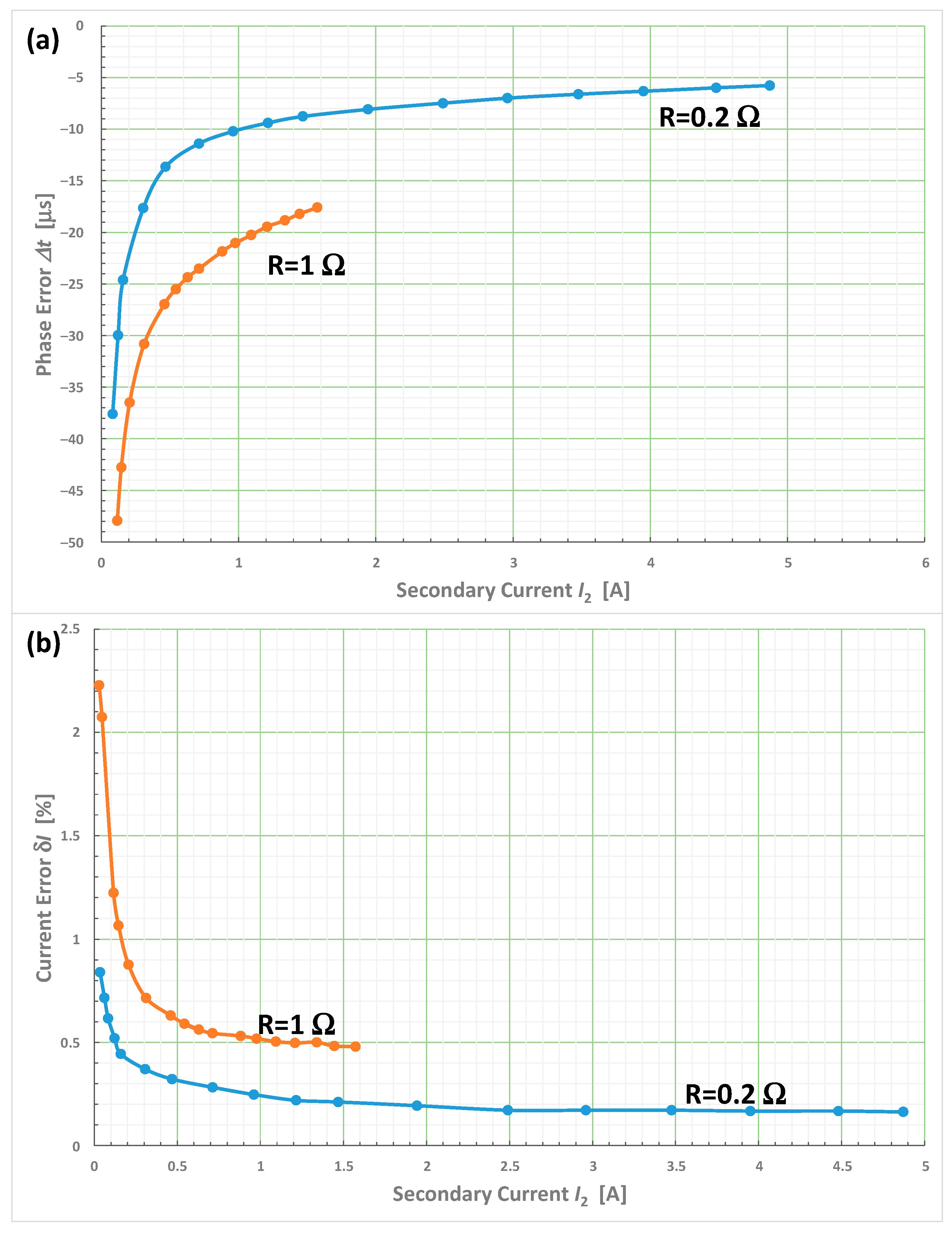
Figure 11a,b show phase errors and current errors determined on the basis of the core material characteristics (solid lines) for two load resistance values, and the corresponding errors measured by the finite difference method (points and circles). It is evident that the two sets of results are in agreement. To reduce the impact of noise, the average values of consecutive samples were measured. Furthermore, each average value was measured 15 times and also averaged to minimize the effect of current fluctuations.
7. Conclusions
It follows from the equations describing the operation of the current transformer that if the secondary circuit is resistive, the phase error and the current error can be determined on the basis of the core material characteristics. Two special characteristics of the sheet rolled up to make the core are needed for this purpose. One of the characteristics represents the dependence between the magnetic field intensity on the sheet surface, measured at the instant when induction is at its peak, and the mean peak induction in the cross section of the sheet. The other characteristic represents the dependence between the field intensity value measured at the instant when induction passes through zero and the peak induction value.
Modern measuring instruments and systems require a voltage signal. Therefore, the secondary current of the current transformer should be converted into voltage by means of a resistor. If the special characteristics of the core material are known, one can determine the conversion errors for the currently used load resistance.
Not only the errors of an existing current transformer, but also of a current transformer being designed for the assumed parameters and the load resistance can be determined on the basis of the special characteristics of the core material.
Geometrical parameters of the toroidal core can be easily determined at the design stage to minimize both current and phase errors of the current transformer. It was proven that material characteristics are sufficient knowledge for obtaining satisfactory results by adjusting the geometry of the transformer.
The presented method allows for the statistical assessment of the magnetic parameters and the corresponding predicted errors for a given production batch of cores even before their final assembly. This capability enables the early detection of material non-conformities, significantly reducing costs and shortening the verification time required in later stages of production.
The presented smart approach of determining parameters of current transformer with an application of the BiOA confirms versatility of metaheuristic optimizers. Thus, it can be stated that elements of artificial intelligence can be successfully applied to engineering and design tasks.
Further research may include application of different optimization techniques and inclusion of a more complex model of the transformer. For instance, non-ideal material and heat transfer can be taken into account.