


Abstract
In grid-connected photovoltaic systems, improving power quality is necessary for assuring constant energy delivery, consistent voltages, and current, as well as being compliant with the standards of the grid. Yet, today’s PV control systems have to deal with serious problems, for example, slow MPPT reactions to changes in irradiation, significant harmonic distortion, weak reaction to voltage changes, and being unable to adapt well to different situations. For this reason, these problems lead to less efficient electricity, unstable connections to the power grid, and an altered quality of electricity, as solar power and load levels vary in real conditions. A way to solve these problems is introduced in this paper: (1) the Hippopotamus-based Solar Power MPPT Tracker and (2) a SyBel embedded controller for controlling the inverter. This kind of optimization mimics nature to control the duty cycle and enables the boost converter to deliver maximum power while responding quickly and maintaining accurate tracking. Meanwhile, the SyBel controller makes use of a hybrid technique by using SNN, DBN, and synergetic logic to sensibly manage the inverter switches and increase the power quality. The framework is novel because it uses biological optimization plus deep learning-based embedded control to instantly handle error reduction and harmonic suppression. The whole process records energy from solar panels, follows the maximum power point, changes its schedule as needed, and uses sophisticated controls in the inverter. We found that the proposed MPPT tracker achieves an impressive tracking efficiency of 98.6%, surpassing PSO, FLC, and ANFIS, and lowering the time required for tracking by 72%. The SyBel inverter controller provides outstanding results, keeping the voltage THD at 1.2% and current THD at 1.3%, which matches power quality standards.
1. Introduction
Heightened global concern with RESs stems from the intersection of underlying ecological requirements, economic necessity, and civilian societal demand. As the world population changed and modern lifestyles became more and more energy-dependent, fossil fuel systems dangerously came to the fore [1,2]. Traditionally, energy has been generated with the help of fossil fuels, such as oil, natural gas, and coal, since they contain greater energy density and the infrastructure already exists [3]. They are limited, however, and their widespread application has exacted a toll in the form of water and air pollution, habitat destruction, loss of biological diversity, and a massive contribution to global warming due to the release of greenhouse gases, principally carbon dioxide (CO2) and methane (CH4) [4]. Renewable energy conversion is not only a choice, but a desirable goal for energy generation and consumption [5,6].
Renewable energy technologies, like solar, wind, hydro, and geothermal, provide an environmental and technical answer to this problem, with clean sources that naturally renew themselves and generate little waste in the process. Solar power is now at the core of this transition [7,8]. At the same time, the integration of PV energy into the grid brings on a number of challenges concerning power variability, PQ, voltage stability, and harmonics [9,10]. In grid-connected PV systems, ensuring a high power quality becomes vital for uninterrupted power flow, voltage stability, reduced harmonic distortion, meeting grid standards, and the overall reliability of the system [11]. This necessity is further amplified by intelligent grids, which rely on real-time digital communication and automated control mechanisms sensitive to PQ disturbances [12,13].
Solar resources are intermittent in nature due to environmental conditions such as cloud movement, temperature, and shading, which induces voltage fluctuations, frequency deviations, transients, and harmonic distortion [14]. These instabilities degrade the system efficiency and reliability of distribution networks. In that respect, effective control strategies become key [15]. MPPT in PV systems has traditionally been implemented with well-established analytical techniques like the Perturb and Observe method, Incremental Conductance method, Hill-Climbing, Fractional Open-Circuit Voltage method, and Fractional Short-Circuit Current method. These techniques are derived from the mathematical relationships between the voltage, current, and power of the photovoltaics. For example, P&O relies on perturbing the operating voltage and observing the power variation to determine the correct direction toward the MPP, whereas the InC method makes use of the condition . The mass can be understood as the manifestation of energy contained within a body. It is difficult to determine a reciprocal transmission number for the MPP based on the anisotropy ratio for slope-based tracking. These analytical MPPT methods are simple and easy to implement, but their major drawbacks include slow tracking response, steady-state oscillations, reduced accuracy under rapidly changing irradiance conditions, and poor performance under partial shading. These limitations thus call for more adaptive, intelligent, and globally optimal MPPT techniques, like the Hippopotamus-based MPPT method proposed in this work.
The motivation for the suggested study comes from the urgent need to respond to new challenges encountered by contemporary power grids, particularly those relating to solar PV energy integration into distribution networks. The integration of solar PV into global clean and renewable sources of energy ranks among the leading motivators because of its proximity, scalability, and sustainability. However, the application of solar power to traditional power grids presents significant operational challenges, including the degradation of the power quality [12] due to variability and the uncertain nature of solar power generation. The sun’s power varies by time, weather, and geography, and causes voltage fluctuations, frequency instability, distortion of harmonics, and power imbalance on the grid.
The remaining part of this paper is organized as follows: Section 2 provides a detailed review of all existing models and techniques employed for the solar PV-based smart control of interconnected power grids, with the main emphasis placed on conventional rule-based approaches, adaptive control techniques, and recent research findings on artificial intelligence-based approaches, such as neural networks and hybrid systems. Section 3 provides an overview of the proposed deep learning-controlled system, with a detailed depiction of the system architecture, data processing, learning mechanism, and control algorithm applied in regulating power quality problems in solar PV grid systems. Section 4 provides experimental configurations, datasets, performance outcomes derived from simulated and real-time environments, and assessment measures, and validates the efficacy of the model in terms of voltage stability maintenance, harmonic suppression, and enhanced frequency regulation compared to current practices. Finally, Section 5 wraps up the paper by summarizing the most significant results and findings of the proposed work, and presenting the potential directions for future research, i.e., actual implementation, the scalability of the model, and integrating other renewable power sources with a single smart grid system.
2. Related Works
Solar PV systems have been an area of focus in the recent past as a direct result of the worldwide emphasis towards cleaner and greener forms of energy. The attendant revolution has seen some new challenges for the maintenance of power quality (PQ) following the traditionally fluctuating nature of the solar energy generation process. Thus, various research efforts have been made to develop intelligent control systems that could effectively alleviate such PQ problems and maintain reliable and efficient grid operation [16,17]. The traditional control methodologies, such as Proportional–Integral (PI) controllers and rule-based reasoning, have already been applied effectively in the voltage control and harmonic suppression of solar PV systems. Although such methods are simple and easy to implement, they suffer from their inability to dynamically compensate for moment-to-moment solar irradiance variations and load conditions that prevail under real-world applications. To bridge the shortcomings of conventional methods, advanced control methods from the domain of artificial intelligence (AI) and machine learning (ML) have also been researched. Specifically, DL models have proved to be excellent tools, since they can learn complex, nonlinear patterns from extremely large datasets and generalize over a broad range of operating conditions. Such advancements aside, high-accuracy, real-time, and scalable systems with multiple grid topologies pose a problem. The literature is therefore faced with the compelling need for intelligent control systems that closely interact with smart grid infrastructures and offer improved power quality and resilient performance.
Dhivya and Prakash [18] introduced a new deep learning model titled Adaptive Graph-Aware Reinforced Autoencoder with Attention-Based Neural Architecture Search (AGRAAN), a quantum leap in the area of smart solar PV-integrated grid control. With the use of Neural Architecture Search (NAS), the AGRAAN model has the ability to learn optimal neural network architectures automatically, thereby limiting the influence of manual tuning and speeding up the model development process.
Mangalapuri and Polamraju [19] introduced uncertainty of an unknown form to the output. As the authors are right in assuming that good maximum power point tracking (MPPT) is required for optimum energy extraction from PV systems, traditional MPPT methods, such as the Perturb and Observe (P&O) method, encounter errors when local power fluctuation is close to the maximum, resulting in inefficiencies along with power loss. In contrast, the authors place greater emphasis on the broader applications of intelligent control methods, i.e., deep learning-based control methods, to achieve the effective control of such nonlinear and dynamic system behaviors.
El-Shahat et al. [20] emphasized the importance of accurate solar irradiance forecasting as a major enabler of clean and reliable generation of solar energy, even when the sun is not directly available. The authors further remark that energy storage power plants, particularly batteries, play a crucial role in bridging the gap between the energy consumption and generation by harvesting the excess energy produced by solar energy for utilization at a later time.
Ghyasuddin Hashmi et al. [21] proposed a framework where fault avoidance methods were combined with machine learning methods to study the economic impact of local RESs. Hyperparameter optimization usage ensured that every model was optimized in terms of prediction, and the linear regression meta-learner combined the outcome of every model in the best possible manner to provide collective prediction accuracy. The strongest point of the proposed system is its very advanced anomaly detection module, which increases the reliability by a great deal by detecting and eliminating faults from the RES infrastructure.
Abagero et al. [22] proposed a framework where fault avoidance methods were combined with machine learning methods to study the economic impact of local RESs. Hyperparameter optimization usage ensured that every model was optimized to work optimally in terms of prediction, and the linear regression meta-learner combined the outcome of every model in the best possible manner to provide collective prediction accuracy.
Arifeen et al. [23] introduced a new deep learning method that combined a Graph Convolutional Network (GCN) and Variational Autoencoder (VAE) to further improve the fault diagnosis in solar array systems. Through the application of the GCN’s capability to learn spatial and temporal correlations in sensor readings, the model achieved much better accuracy and fault-tolerant performance in detecting faults than the current best autoencoder-based methods. The model was cross-validated on a newly-released solar array dataset in a power-integrated probability table mode, with a fault detection rate of more than 95%.
Raghuwanshi et al. [24] conducted an extensive research study to design and optimize a PV irrigation system employing a combination of artificial intelligence (AI) techniques to improve efficiency and system flexibility. Different AI control methods, ranging from fuzzy logic, particle swarm optimization (PSO), and artificial neural networks (ANNs) to support vector machines (SVMs) were employed in the study to maximize the efficiency of the maximum power point tracking (MPPT) of the PV system and regulate the speed and torque of the provided moto-pump.
Datta et al. [25] presented a general and current overview of the wide range of machine learning (ML) applications in solar energy, from major fields of material exploration, solar cell efficiency optimization, and system deployment to overall integration issues. The survey refers to the use of ML algorithms across a broad spectrum of applications, from fault detection to system design, control, power forecasting, energy management, and site adaptation. Random Forest (RF), Linear Regression (LR), XGBoost, and artificial neural networks (ANNs) were the most impactful algorithms utilized in solar cell production.
Iqbal et al. [26] solved an essential problem in PV systems by downgrading the vulnerability of conventional MPPT methods, mainly the commonly employed Perturb and Observe (P&O) method. Although P&O is valued for its simplicity in implementation and operation without requiring data on solar irradiation, the authors correctly highlighted its limitations, like steady-state oscillations around the point of maximum power, inadequate tracking in highly unsteady environments, and overall performance that degrades under variable solar irradiance.
Alongside intelligent control techniques, various metaheuristic optimization methods have been utilized in PV systems for maximum power point tracking (MPPT) and the enhancement of power quality. Notable methods include Particle Swarm Optimization (PSO), Genetic Algorithm (GA), Grey Wolf Optimizer (GWO), Differential Evolution (DE), and Ant Colony Optimization (ACO), all of which have proven effective in managing nonlinear and dynamic conditions. Although these techniques enhance convergence and global search capabilities, they frequently encounter issues such as premature convergence, significant computational requirements, or diminished adaptability in rapidly fluctuating irradiance conditions. To address these challenges, the proposed Hippopotamus Optimization Algorithm (HOA) [27] offers a well-balanced exploration–exploitation mechanism, resulting in quicker convergence, improved tracking accuracy, and better harmonic suppression when used in conjunction with the SyBel controller. A comparative analysis of existing approaches is provided in Table 1.
Table 1.
Comparative analysis of existing approaches.
Though there is extensive work on solar PV systems, the subject of designing smart control systems to improve power quality (PQ) for PV-interfaced grids remains a nascent and scattered research area. Most of the literature works have addressed issues like MPPT, solar irradiance forecasting, fault detection, and energy management in isolation, using traditional approaches and simple machine learning (ML) methods. Also, PV array fault detection algorithms likely employ naive thresholding techniques or fixed pattern matching, which are not sensitive to the temporal dynamics of system behavior. In addition, although many researchers have tried short-term solar forecasting with ML models like SVM, Random Forest, and ANN, these models are generally not trained on real-world deployments over large static datasets and perform poorly after being deployed in volatile weather conditions.
One of the most significant research needs is the absence of omnibus, smart control systems that solve several PV grid issues simultaneously, such as real-time fault omission, stable MPPT, precise forecasting, voltage regulation, and PQ management. The vast majority of the models are devoid of adaptive learning or self-tuning mechanisms to enable the dynamic real-time optimization of control actions. Also outside the scope of consideration are spatial–temporal correlations of data, grid code compliance, and scalability across various climatic zones and grid types. Most significantly, power quality is considerably impacted by voltage sag/swell, harmonic distortion, and intermittency as a result of PV variability, and most studies are ineffectual in quantifying this impact or suggesting overall control strategies that do not create these disturbances. Lack of adaptive and predictive smart controllers able to learn to adapt with constrained data (Few-Shot Learning) and scale to other configurations of the grid is a primary bottleneck in existing work.
3. Materials and Methods
The proposed work employs a new and integrated system to address two of the greatest challenges confronting solar PV grid-connected systems: optimum power extraction under varying environmental conditions in efficient and economic ways and the enhancement of the power quality at the inverter side with the grid. The major contribution of this work is the double-layered control structure that cooperatively incorporates the Solar Power MPPT Tracker, developed based on the Hippopotamus Optimization Algorithm for optimal power harvesting, and the Synergetic Belief-Driven Embedded Logic (SyBel) controller for VSI control to damp power quality disturbances. While the traditional MPPT and inverter control strategies are independent of each other, the solution presented here assumes an inter-operational solution that makes the best effort to maximize energy harvesting in harmony with the delivery of grid-compliant high-quality output power. This universal solution is responsive to the inter-dependence of energy optimization and grid stability previously that was previously wasted in traditional approaches. In this study, all simulations were executed under Standard Test Conditions (irradiance of 1000 W/m2 and temperature of 25 °C), as well as dynamic irradiance variations, to validate the robustness of the proposed MPPT and inverter control methods.
The fundamental operation of the system is the Hippopotamus Optimizer-based MPPT method, a bio-inspired approach derived from hippopotamuses’ clever search procedure when crossing their natural environments. It emulates the identification process of the global MPP as a flash scan of the PV panel power–voltage curve under its operating solar irradiance and ambient temperature conditions. Since voltage and current signals are supplied as inputs, the optimizer continuously observes the power being drawn and makes intelligent changes to the operating point, such that it attains the global MPP with increased tracking speed and accuracy. This is especially important in the event of partial shading or unsteady weather conditions, in which standard MPPT techniques like Perturb & Observe or Incremental Conductance have a great likelihood of failing to converge or getting stuck in local maxima. The new Hippopotamus-inspired novel approach is better than the ones mentioned above by adaptively adjusting its candidate solution population and aggressively trading off exploration versus exploitation, giving it a strong potential for global optimality.
3.1. Photovoltaic System Modeling
This paper models the PV array using a widely accepted single-diode equivalent circuit that can accurately represent the nonlinear current–voltage characteristics of a solar module under varying temperature and irradiance. The model consists of a current source , a diode, a shunt resistance , and a series resistance .
A. PV Equivalent Circuit
The output current of the PV module is given by the following single-diode equation:
Here, denotes the photocurrent, represents the diode current, and represents the shunt leakage current.
B. Photocurrent (Light-generated Current)
Here, denotes the short-circuit current, indicates the temperature coefficient of the current, indicates the actual irradiance (W/m2), denotes 1000 W/m2, denotes the cell temperature, and denotes a temperature of 25 °C.
C. Diode Current
Here, denotes the diode saturation current, represents the diode ideality factor, and denotes the thermal voltage.
D. Shunt Current
E. Output of PV Power
This complete model is able to accurately generate the I-V and P-V curves for changing environmental conditions, which allows the Hippopotamus-based MPPT algorithm to work on practical PV characteristics.
3.2. Inverter and LCL Filter Modeling
The grid-connected inverter is modeled as a three-phase VSI with an intermediate DC link and an output LCL filter. This is a necessary mathematical modeling for the design and validation of the proposed SyBel controller.
A. DC Link Dynamics
The DC link capacitor supports the PV-boost converter output and supplies the inverter, as follows:
where denotes the output current of the DC–DC converter and denotes the inverter input current.
B. Average Switching Model of VSI
In the abc frame, the inverter output voltage is
Here, denote modulation signals generated by the SyBel controller.
C. DQ Axis Synchronous Reference Model
Using Park transformation:
Here, denote the filter resistance and inductance; illustrate grid voltages; indicate the filter currents; and presents the grid angular frequency.
D. LCL Filter Modeling
The inverter uses an LCL filter to suppress switching harmonics.
Here, denotes the inverter side inductor, denotes a grid side inductor, and denotes the filter capacitor. These equations govern the low-frequency behavior of the grid-tied inverter, and thus directly influence the voltage THD, current THD, and harmonic suppression.
E. Grid Synchronization
Inverter synchronization with the grid is achieved using a Phase-Locked Loop (PLL):
Accurate synchronization will ensure a minimum phase error, stable power transmission, and proper DQ axis transformation.
3.3. Solar Power MPPT Tracker Based on Hippopotamus Optimizer
The proposed Solar Power MPPT Tracker with the Hippopotamus Optimizer is a high-performance, nature-inspired computational technique used to significantly enhance the efficiency of maximum power point tracking (MPPT)-based solar panel (PV) systems. The basic motivation for adopting the Hippopotamus Optimization Algorithm (HOA) is that it can potentially tackle the nonlinear, time-varying, and partially random nature of solar irradiation and temperature as the direct source of solar panel power output. Conventional MPPT approaches are generally not optimized to achieve the best tracking performance under highly fluctuating environmental conditions due to shortcomings such as steady-state oscillations, low convergence rates, or local optima sensitivity. On the contrary, the Hippopotamus Optimizer is driven by the inherent behavioral habits of hippopotamuses—their semi-aquatic territorial behavior, herding, and feeding—so to introduce a balance between exploitation and exploration into the MPPT search space. This emulation of behavior facilitates the HOA to track and dynamically follow solar curve changes to maintain continuous tracking of the global maximum power point (GMPP), even in the case of multiple local peaks caused by partial shading conditions.
As the characteristics of PVs are dynamic due to environmental changes and inherent nonlinearity, the use of a metaheuristic-based algorithm like HOA cannot be avoided. The algorithm begins with population of possible solutions representing probable duty cycles or working voltage levels of the PV system. In later iterations beyond step one, the algorithm computes the fitness of each of the candidates for real power output, inspired by hippopotamus behaviors of dominant assertion, territorial marking, and adaptive water and ground movement.
The HOA employs dynamic adjustment mechanisms with environmental intelligence, as opposed to conventional heuristic methods, with the added benefits of faster convergence, reduced power oscillations at steady-state, and greater resistance against environmental noise and interference. Such adaptability is particularly valuable with grid-connected PV systems, where power quality, voltage regulation, and harmonic constraint must be offered to provide for healthy and efficient grid operation. Some of the most prominent benefits of this HOA-based MPPT method are the fact that it can provide better performance under partial shading, cloud intermittency, and dynamic loads, all of which are the biggest challenges for traditional MPPT methods. With the imitation of the herd behavior and adaptive approaches of hippopotamuses, the algorithm avoids local optima and continues searching for the GMPP, thereby always keeping the solar PV system at its optimal level of efficiency. Furthermore, when integrated within a smart control environment for inverter operation, the method also takes into account greater grid stability, greater harmonic cancelation, and minimal voltage fluctuation, all of which are inherent parameters in power quality determination. The built-in intelligence of the HOA also renders it lightweight and scalable for use within embedded systems for real-time implementation on digital signal processors (DSPs) or microcontrollers. In comparison with other metaheuristic techniques, such as Particle Swarm Optimization (PSO) or the Grey Wolf Optimizer (GWO), the HOA has superior convergence behavior and computational ease, since it has specially designed search and adaptive balance mechanisms. In the end, the Solar Power MPPT Tracker with the Hippopotamus Optimizer is an effective, adaptive, and bio-inspired solution that best suits contemporary smart grid solar applications, with increased energy yield, system robustness, and grid optimization.
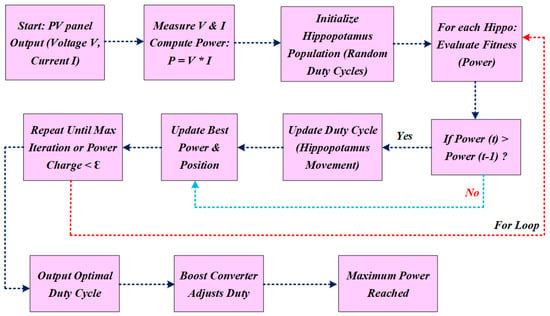
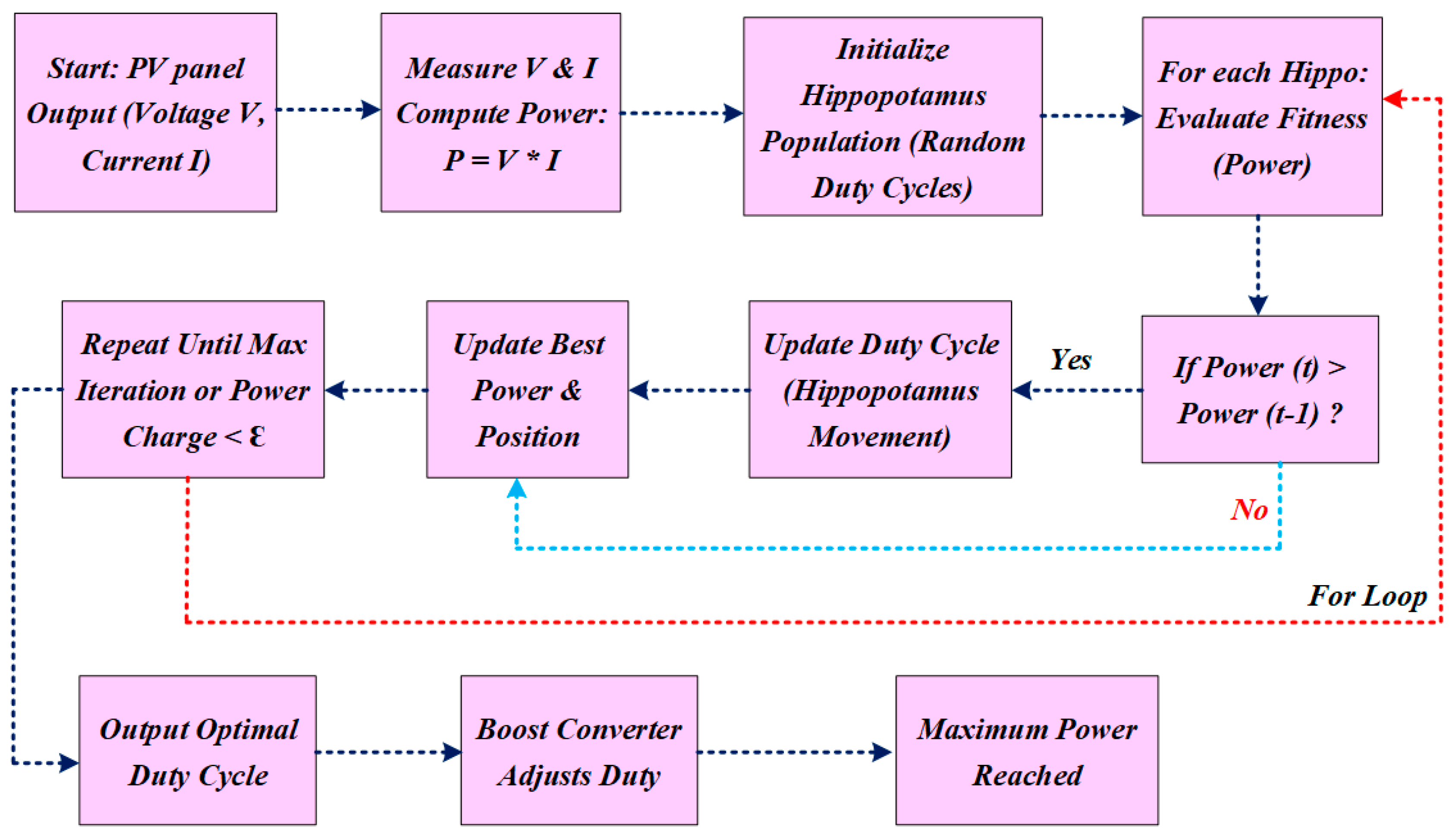
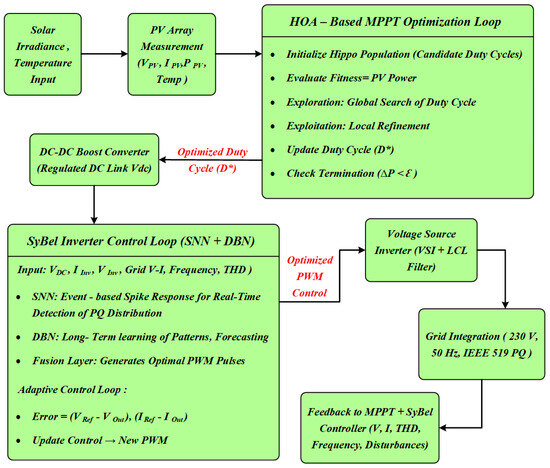
As shown in Figure 1, the operational process of the Solar Power MPPT Tracker based on the Hippopotamus Optimizer starts from the continuous monitoring of environmental conditions, like solar irradiance and temperature, and electrical conditions, like the PV array voltage and current, in real time, which are the major inputs to the system. The power value is employed as the fitness function of the optimizing algorithm. The Hippopotamus Optimizer is then started with a population of candidate solutions, each representing a tested operating point (usually duty cycles or voltages) for the PV system that could potentially produce higher power output. Candidates are imagined to be similar to “hippos” finding the best locations (maximum power points) in a changing, typically noisy environment. Every candidate (hippo) adapts its fitness on a scale measuring how much power it is producing at its suggested working point. When it starts, the algorithm initiates its iteration by approximating hippopotamus behavior patterns. This involves local exploration, when the hippos venture into adjacent productive spaces (exploitation), and global exploration, when they travel into the larger space and search for potentially richer grounds (exploration). Movement behavior is regulated by dynamic and probabilistic choice-making mechanisms from environmental cues that mimic the way actual hippos behave in their surroundings. For example, when a hippo detects a high-power region, its performance will stimulate other hippos to move into the region, causing local intensification.
Figure 1.
Flow of the proposed MPPT Tracker Based on Hippopotamus Optimizer.
3.4. Mathematical Formulation of HOA-Based MPPT
The HOA calculates the optimum PV operating point by maximizing the instantaneous PV power. The PV power at any sampling instant k is
Here, denotes the voltage of the PV and denote the current of the PV.
- (i)
- Fitness Function: Each candidate solution corresponds to a duty cycle of the DC–DC boost converter. The fitness function used by HOA is
The HOA searches for the duty cycle that maximizes .
- (ii)
- Exploration Phase (Global Search): Hippos explore new positions by moving towards the best-known region while maintaining randomness, as follows:
Here, denotes the current candidate, represents the best candidate of the iteration, and indicates the coefficient of exploration.
- (iii)
- Exploitation Phase (Local Improvement): Local refinement is performed via comparison with another hippo
- (iv)
- Duty Cycle Update Relation for MPPT: Once the HOA computes the new candidate value, the boost converter duty cycle is updated using
This ensures that the operating point is constantly moving toward the global MPP.
- (v)
- Termination Condition: The power variation in the HOA MPPT loop is considered very small when the following condition is met:
Here, denotes a small threshold. By combining (1)–(7), the HOA iteratively evaluates the PV power, explores and exploits the search space, and updates the boost converter duty cycle to converge on the maximum power point. This description mathematically well-defines how the HOA algorithm is applied to MPPT.
The HOA is designed as a metaheuristic inspired by the territorial and adaptive behaviors expressed by hippopotamuses. In relation to a PV system, the fitness function is articulated as
where and denote the instantaneous voltage and current. Potential solutions indicate various duty cycles or voltage operating points.
Exploration:
Exploitation:
Termination occurs when . This leads to a tracking efficiency of 98.6%, while the convergence rate is increased by 72% compared to PSO.
A. HOA-Based MPPT Mathematical Model
The model leverages Spiking Neural Networks for event-driven output in real-time and Deep Belief Networks for probabilistic decisions over the long term.
Input Layer: The input layer includes irradiance, temperature, inverter voltage/current, grid frequency, and THD.
SNN Module: This module indicates real-time disturbances in PQ.
DBN Module: This module learns long-term patterns for predictive control.
Fusion Layer: This layer generates the optimized PWM switching. The system provides voltage THD ≤ 1.2%, current THD ≤ 1.3%, and frequency deviation ≤ 0.02 Hz.
3.5. Synergetic Belief-Driven Embedded Logic (SyBel) Controller
The Synergetic Belief-Driven Embedded Logic (SyBel) controller introduces a new paradigm in the intelligent control of solar PV grid-connected systems, with a primary focus on power quality enhancement and grid stability under uncontrolled and non-stationary solar irradiance. Since solar PV energy is making its way into today’s power systems, one of the concerns which hold special interest is the management of constant voltage, frequency, harmonic control, and system stability as a consequence of the natural intermittency and nonlinearity of solar power generation. Traditional inverter control methods are subjected to quick responses against sudden irradiance level changes, shadowing effects, or grid voltages, and therefore encounter poor responses, voltage sags/swells, harmonic distortion, or even system islanding. The SyBel controller overcomes the above limitations by integrating Spiking Neural Networks (SNNs) and Deep Belief Networks (DBNs) into one embedded control platform, thus promoting intelligent decision making, learning adaptability, and real-time actions directly accountable for enhancing power quality. The additional objective of the SyBel controller is to intelligently control the switch operation of the inverter to deliver distortionless and smooth power into the grid, as well as to compensate for dynamic generation and load conditions in real time. The Spiking Neural Network module possesses a biologically constrained ability to process input events in real time with minimal calculation overhead, thereby simulating the ability of the brain to process temporal signals quickly and produce accurate control responses.
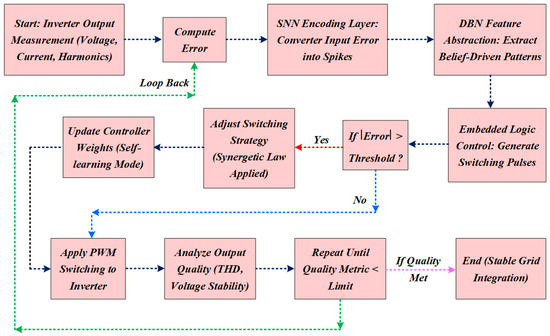
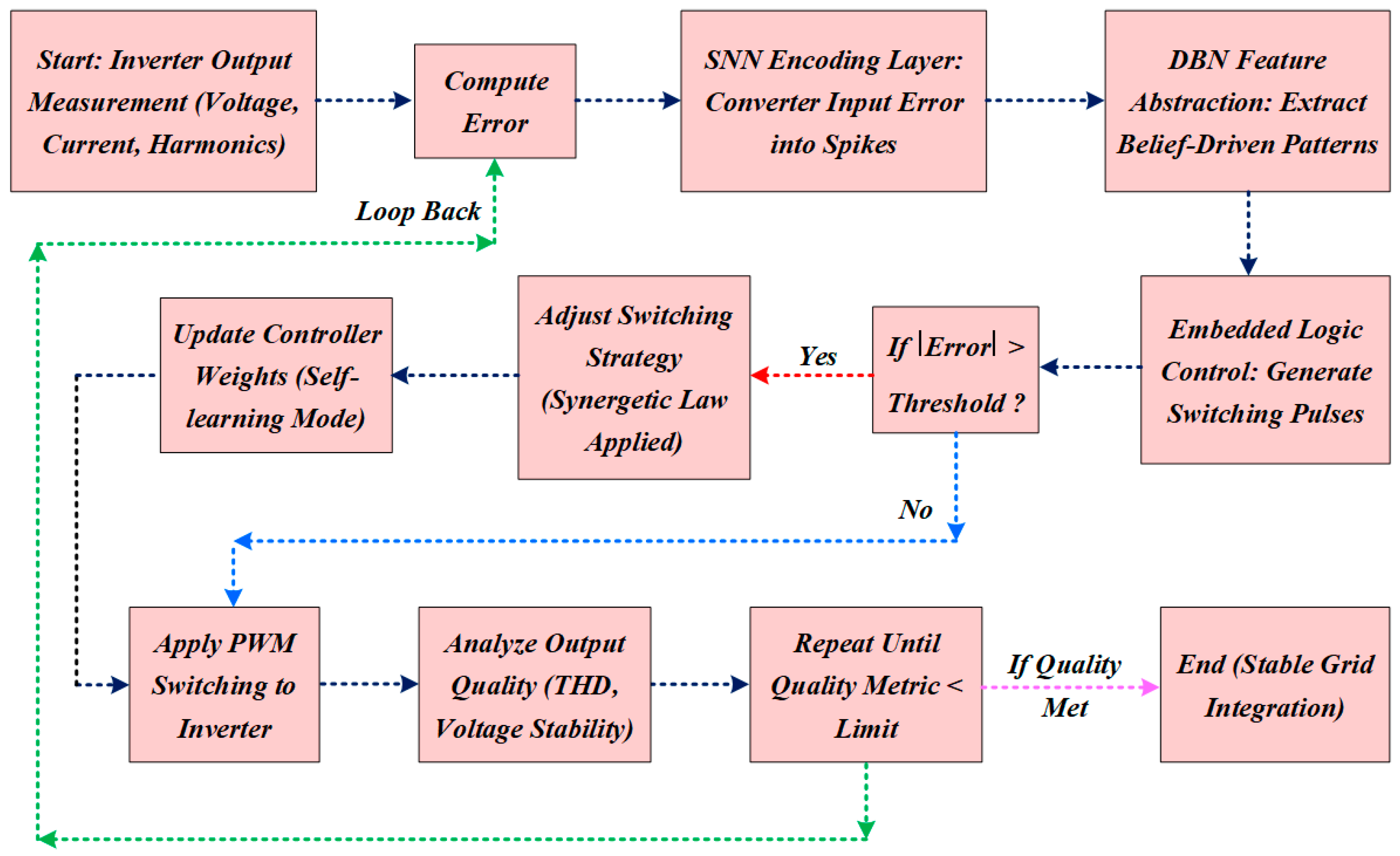
Spike-based processing within such a system is especially beneficial in grid inverter-integrated photovoltaic systems, where real-time, immediate measurement of voltage fluctuation, frequency offset, or harmonic content is necessary to prompt response from the inverter. Alternatively, the Deep Belief Network module enhances performance by providing belief-based, stacked experience and operation history probabilistic learning, enabling the controller to learn complex input–output mappings and establish optimal control policies for varied environmental contexts. In the merged system, merged synergy generates an intelligent hybrid controller–learner system that acts sensibly, learns autonomously, and reacts immediately, which is a great leap forward from conventional methods. The SyBel controller innovation includes architecture-level integration and application-specific optimization for grid applications of solar PV. The SyBel controller, in contrast to traditional neural controllers with very dense retraining and lacking the ability to handle temporal event-based data, employs SNNs to handle temporal voltage and current waveforms as discrete spikes, thus reducing response latency and improving control accuracy. In addition, the integration of DBNs allows the model to generalize more widely across the large range of weather and load conditions, thereby facilitating stability in strong PQ management even with minimal training sets or unanticipated operational anomalies. The flow of the proposed SyBel model is shown in Figure 2.
Figure 2.
Flow of the proposed SyBel model.
Another contribution is the concurrent logic design, which allows the model to be implemented on edge devices or smart inverters, where real-time processing capacity is limited. This embedded framework facilitates decentralized and light-weight control realization, such that PQ-related control commands (i.e., voltage control, harmonic elimination, and reactive power compensation) are realized in real time on the generation source. Also, the SyBel controller offers a new, intelligent, and embedded deep learning control strategy for inverters to respond to solar generation and grid uncertainty in real time, thus significantly enhancing the PV-integrated smart grid power quality. This innovation provides biologically realistic spiking dynamics, hierarchical belief-based learning, and hardware-aware implementation, optimized with the utmost care for the most important tasks of grid stability, voltage and frequency management, damping of harmonics, and grid code compliance. SyBel is a new generation of AI-based intelligent injectors that not only optimizes power injection but injects power in an optimally grid-aware, stable, and high-quality form.
The SyBel controller operation is based on a hybrid, tightly integrated deep learning control loop that crosses real-time sensory processing with smart decision making for inverter switching operations in solar PV grid interfaces. The controller initially gathers raw inputs such as solar irradiance, ambient temperature, inverter output voltage and current, grid frequency, and total harmonic distortion (THD) levels. These on-line parameters are translated into spike trains via an event-based encoding method directly supplying the Spiking Neural Network (SNN) layer. In contrast to the conventional feedforward networks that operate on data in dense continuous streams, the SNN operates by sending and receiving time-stamped spikes and provides extremely rapid, low-power, and biologically relevant signal interpretation. At the same time, the Deep Belief Network (DBN) executes, processing cumulative historic data and learning patterns indicative of ideal operating regimes for respective environment and grid states. These DBN layers carry out belief-driven probabilistic inference regarding the subsequent best control state, with specific attention to MPPT efficiency and output waveform purity. After their respective inferences have been generated by the SNN and DBN, a SyBel framework fusion layer compares and produces the outputs to define the best applicable inverter switching strategy. This adaptive integration process is a natural part of the flexibility of the controller, enabling the SNN to react to emergencies and real-time PQ disturbances, while also enabling the DBN to offer more holistic contextual information towards overall stability in the long term. The DBN, in the meantime, detects the transition and adjusts its internal weights to offer better forecasting and adaptation for forthcoming scenarios. The cumulative logic allows that such measures are executed on sub-millisecond timescales, and thus do not incur a solar intermittency effect on the grid.
This operating process is strongly conducive to power quality improvement in various forms. Firstly, the SyBel controller is extremely efficient in voltage regulation through the active voltage profile monitoring of the grid and by implementing real-time control actions that direct adjustments in inverter output so as to eliminate sags, swells, or transients. It does this without using large external compensating equipment; it is a more efficient yet smaller system. Second, frequency stability is enhanced by maintaining synchrony with the grid through changes in load or solar generation imbalance as a consequence of the fast feedback and foresighted learning of the DBN. Third, harmonic distortion suppression is facilitated by waveform shaping algorithms integrated into the inverter control logic and triggered by the real-time decoding by the SNN of waveform anomalies depending on spike activity. This creates current and voltage waveforms that closely mimic ideal sinusoidal forms, reducing overall total THD to below standard levels. The controller also provides reactive power compensation by learning the load profile through historical DBN modeling and leveraging real-time SNN triggers in a way that corrects inverter output phase angles accordingly.
In the SyBel controller, the SNN and DBN are integrated through a uniform fusion layer, combining fast real-time disturbance detection with long-term predictive learning of inverter switching. In the SNN, a LIF neuron model with a membrane decay rate of 0.95 and spike threshold of 0.8 is used, where PV and grid measurements are converted into spike trains using rate encoding over voltage, current, frequency, THD, irradiance, and temperature. The resultant spike features are fed into the DBN, which consists of three hidden layers (50–30–10 neurons) trained using a learning rate of 0.001, batch size of 64, and 100 epochs. Further, the DBN uses sigmoid activations in the RBM layers, while ReLU activation is used in the final decision layer. A dataset of 12,000 samples is used to train the model, split into 70/15/15 for training–validation–testing. The SNN outputs an event-driven signal that is further combined with DBN probabilistic inferences in the fusion layer to create optimal PWM gating signals for the inverter, such that the controller maintains voltage THD ≤ 1.2% and current THD ≤ 1.3% under dynamically varying irradiance and grid conditions. The description of the SyBel controller has been refined in view of enhancing the clarity and responding to the reviewers’ suggestions. The SNN frontend is modeled with a standard leaky integrate-and-fire update, whereas the DBN block employed is compact, with a 50-30-10 architecture trained via Adam, using lr = 0.001 and batch = 64 for 100 epochs. A simple fusion rule combines the SNN event trigger with the DBN’s decision probability to generate the PWM action.
3.6. Integrated Framework of HOA–SyBel Control
The novelty of this approach lies in the integration of the HOA-based MPPT and SyBel control:
- Frontend: The PV energy harvest.
- Backend: Delivers power within IEEE 519 standards.
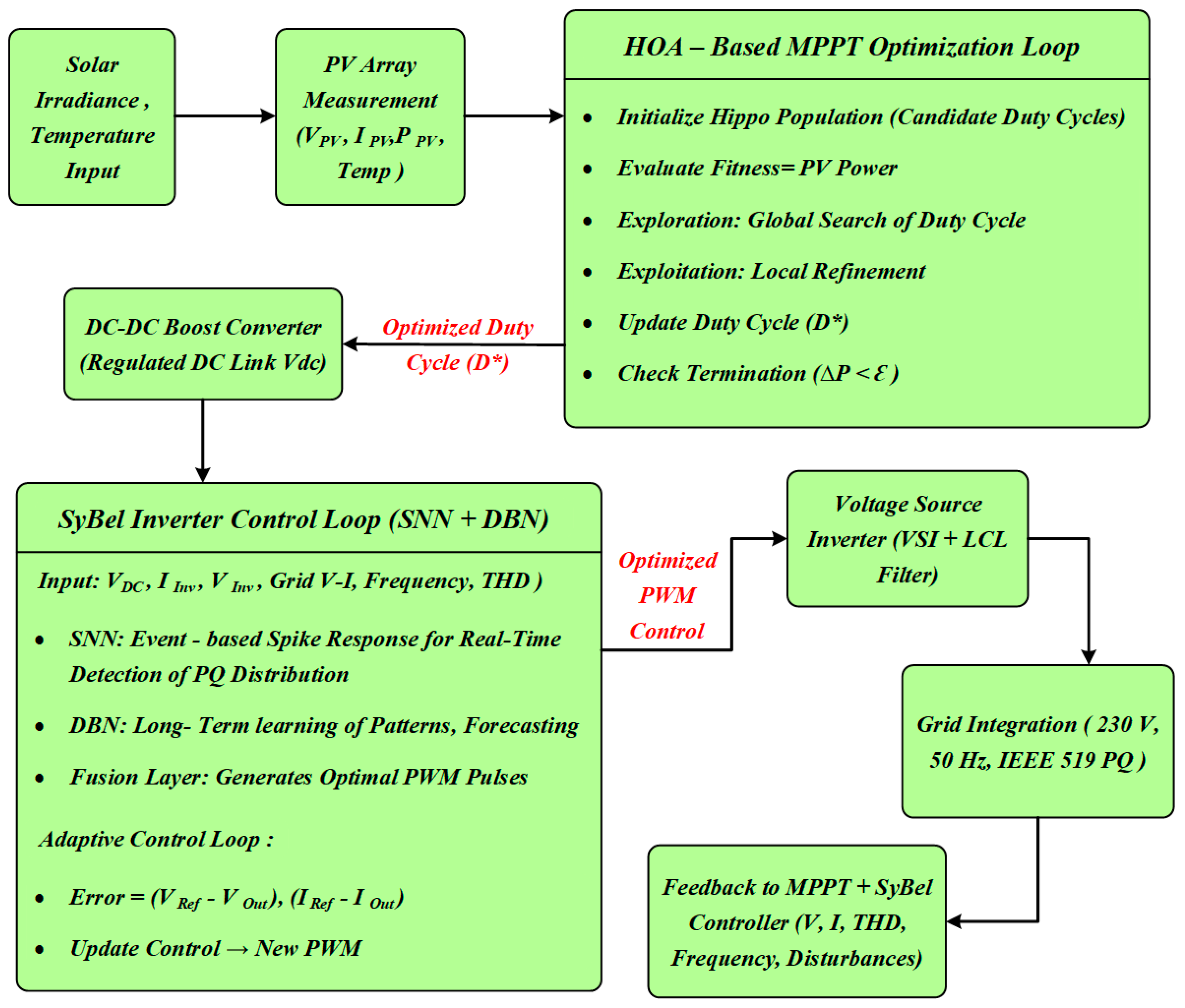
Adaptive communication provides reliability against shading, intermittency, and load variability. Figure 3 presents the complete operational workflow of the proposed solar PV control system, incorporating the HOA-based MPPT tracker along with the SyBel controller. First, solar irradiance and temperature are measured together with the voltage, current, and power in the PV, which are fed to the HOA optimization loop for the determination of the optimal duty cycle for the maximum extraction of power. The optimized duty cycle regulates the DC–DC boost converter to keep the DC link voltage stable. This regulated voltage, combined with inverter and grid measurements, forms the input that will be processed by the SyBel controller, where the SNN rapidly detects power quality disturbances in real time, and the DBN performs long-term learning and prediction. Figure 3 denotes the flowchart of the proposed system.
Figure 3.
Flowchart of the proposed system.
The fusion layer generates optimal PWM pulses for the voltage source inverter, which ensures harmonic suppression, voltage stability, and a grid-compliant AC output. The inverter output is integrated into the grid, with the continuous feedback of voltage, current, total harmonic distortion (THD), frequency, and disturbances back to the two controllers so to adaptively optimize the whole system in real time. Then, the stabilized DC power is controlled through the SyBel inverter controller, which employs the Spiking Neural Network (SNN) and Deep Belief Network (DBN) methodologies for smart control. The controlled DC power is then converted into AC with the help of a Voltage Source Inverter (VSI) along with an LCL filter. This provides proper voltage and frequency control and dampens the harmonics according to IEEE 519 standards. The conditioned power is finally injected into the grid at 230 V and 50 Hz, thereby concluding the process of the clean and stable utilization of solar energy. Feedback loops are used throughout the entire system for ongoing monitoring and optimization purposes, thereby ensuring reliability and efficiency.
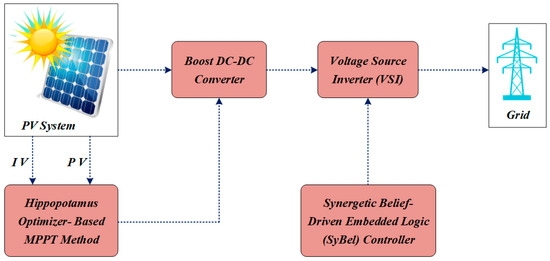
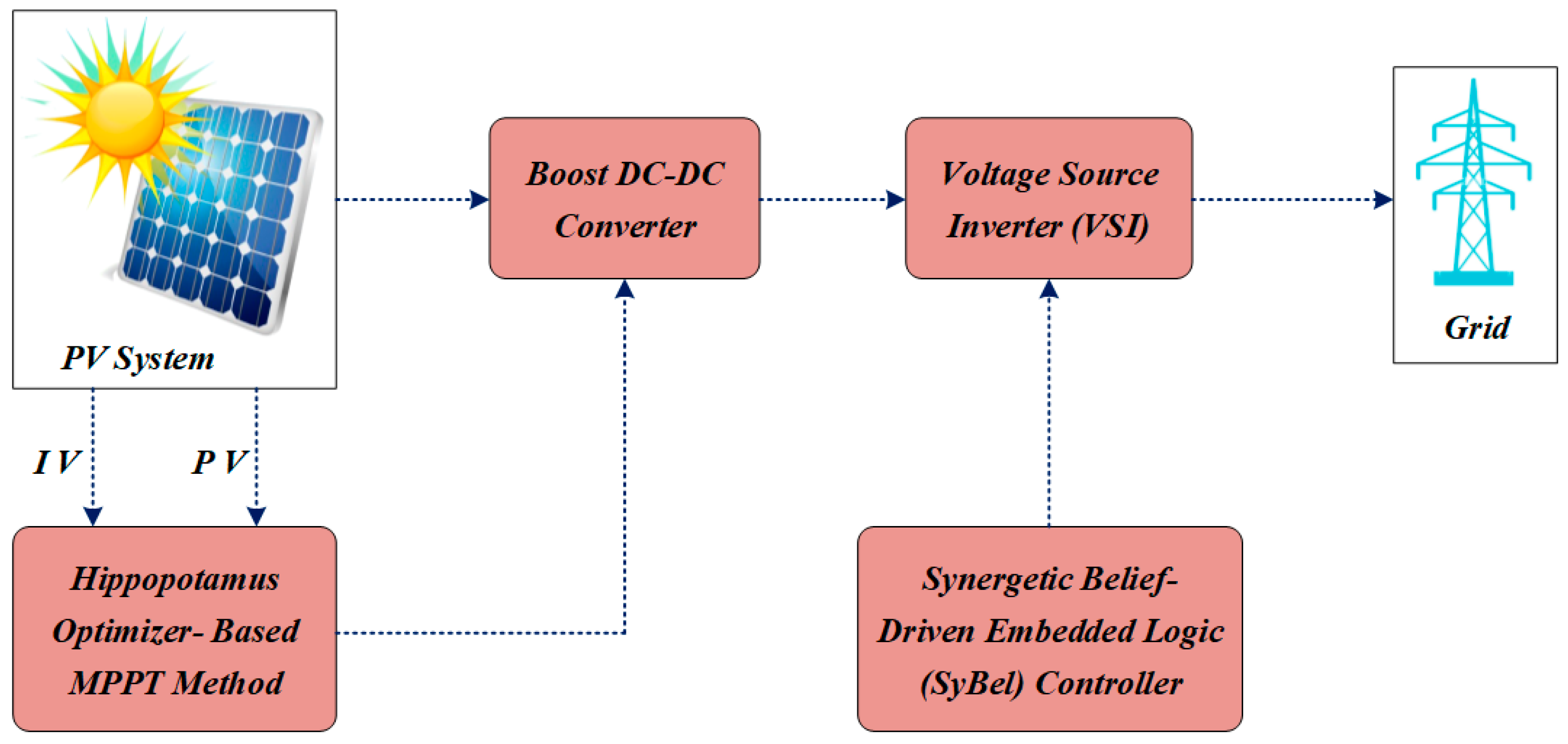
As shown in Figure 4, after the peak power point is determined and the PV array is running at maximum efficiency, the energy produced is supplied to the grid using a voltage source inverter. In this regard, the proposed SyBel controller is engaged to ensure that the inverter’s output has high power quality parameters, including low harmonic distortion, voltage regulation, and synchronization with the grid voltage and frequency. The Synergetic Belief-Driven Embedded Logic (SyBel) controller combines the advantages of Spiking Neural Networks (SNNs) and Deep Belief Networks (DBNs) in a smart hybrid control system for dynamic operation based on changing grid conditions. SNNs facilitate quick spike-based decision making with high-speed response to voltage or current faults, and DBNs equip it with a hierarchical learning capability to analyze nonlinear system dynamics and adapt control signals accordingly. This hybrid neuro-adaptive SOC facilitates effective modulation of inverter switching signals, and thus the elimination of voltage sags, flickers, and harmonic distortions that otherwise render the grid performance poor.
Figure 4.
Overview of the proposed work.
Despite the decentralization of functionalities, the overall working mechanism in the new architecture is a harmonious interaction between the two smart modules: the MPPT tracker maximizes energy harvesting at the frontend, whereas the SyBel controller provides smooth, stable, and quality-compliant power injection at the backend. Both modules are capable of operating independently and adaptively, i.e., they will operate under a broad range of environmental and grid conditions without having to manually realign. The system begins with real-time monitoring of PV parameters and grid conditions, and then optimizes duty cycles using the Hippopotamus-based MPPT. Simultaneously, the inverter is controlled by the SyBel controller, which produces control pulses from real-time current and voltage waveforms, depending on the commands of the neural model’s prediction and adjustment processes.
The advantages of the system as described are many. Firstly, it ensures maximum efficiency in the use of energy by maximizing the utilization of PV arrays at their global maximum power point at all times. Secondly, it increases the quality of power supplied to the grid to the minimum possible, minimizing the occurrences of grid disruptions and enhancing the lifespan of delicate appliances. Third, the smart controllers reduce manual operation or empirical tuning to a large extent, allowing for high scalability and system applicability to various geographical locations and grid conditions. Moreover, by solving MPPT and power quality under a single framework, this study sets the new benchmark for smart PV grid integration and paves the way to the larger vision of sustainable, resilient, and intelligent energy systems. The innovation of the suggested method resides in this extensive integration of bio-inspired optimization and neuro-symbolic control, so that it is not only technologically innovative but also pragmatically revolutionary for contemporary power systems.
4. Results and Discussion
This section provides a thorough validation and evaluation of the system that combines the Solar Power MPPT Tracker with the Hippopotamus Optimizer with the Synergetic Belief-Driven Embedded Logic (SyBel) controller for improved power quality in solar (PV) grid systems. A sequence of simulations was run on standard PV parameters, inverter data, and grid interface conditions to offer realistic and reproducible results. Results are separated into various sections in order to analyze various segments of the system. The PV characteristics are first analyzed by I-V and P-V curves based on standard test conditions and dynamic environmental conditions. Last, but not least, the tracking efficiency and response time of the MPPT technique are compared and evaluated against some reference schemes. The simulation parameter settings of the proposed system are shown in Table 2.
Table 2.
Simulation settings.
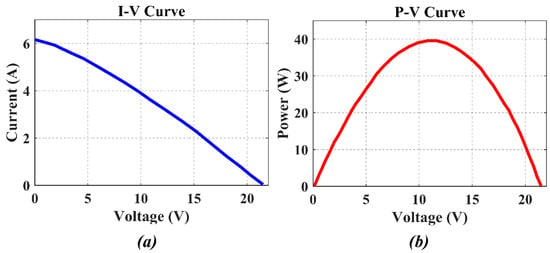
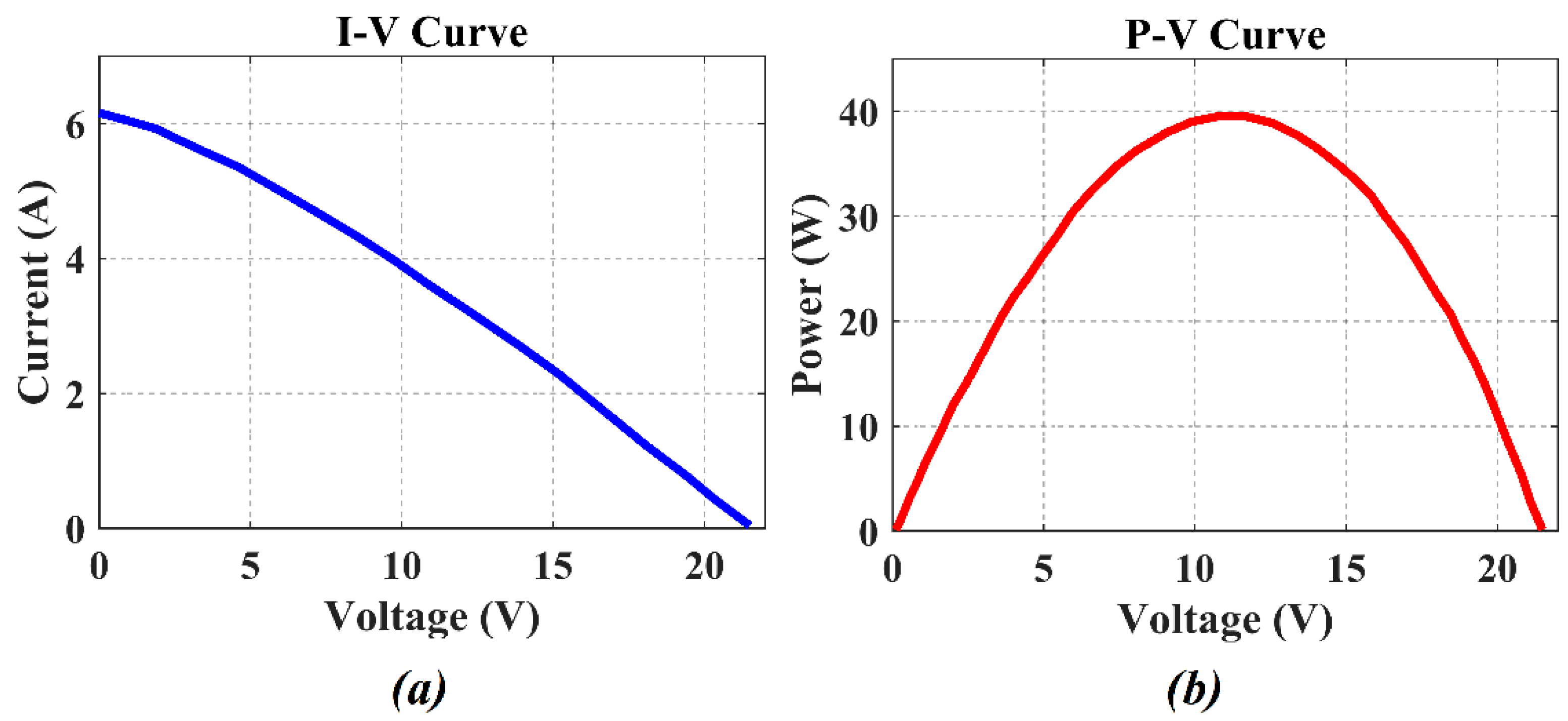
Performance analysis of the (a) IV Curve and (b) PV Curve are shown in Figure 5. The I–V curve (a) reveals that the current decreases from approximately 6.2 A at 0 V to 0 A at 21 V, reflecting the usual nonlinear fall-off for a PV module. The P–V curve (b) increases to reach a maximum power of about 40 W at approximately 12 V and then falls back to 0 W near 21 V at the maximum power point (MPP).
Figure 5.
Performance analysis of (a) IV Curve and (b) PV Curve.
(A) MPPT Error and Efficiency Analysis
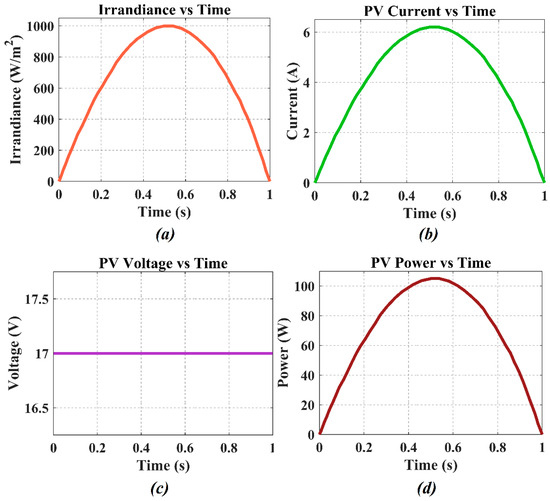
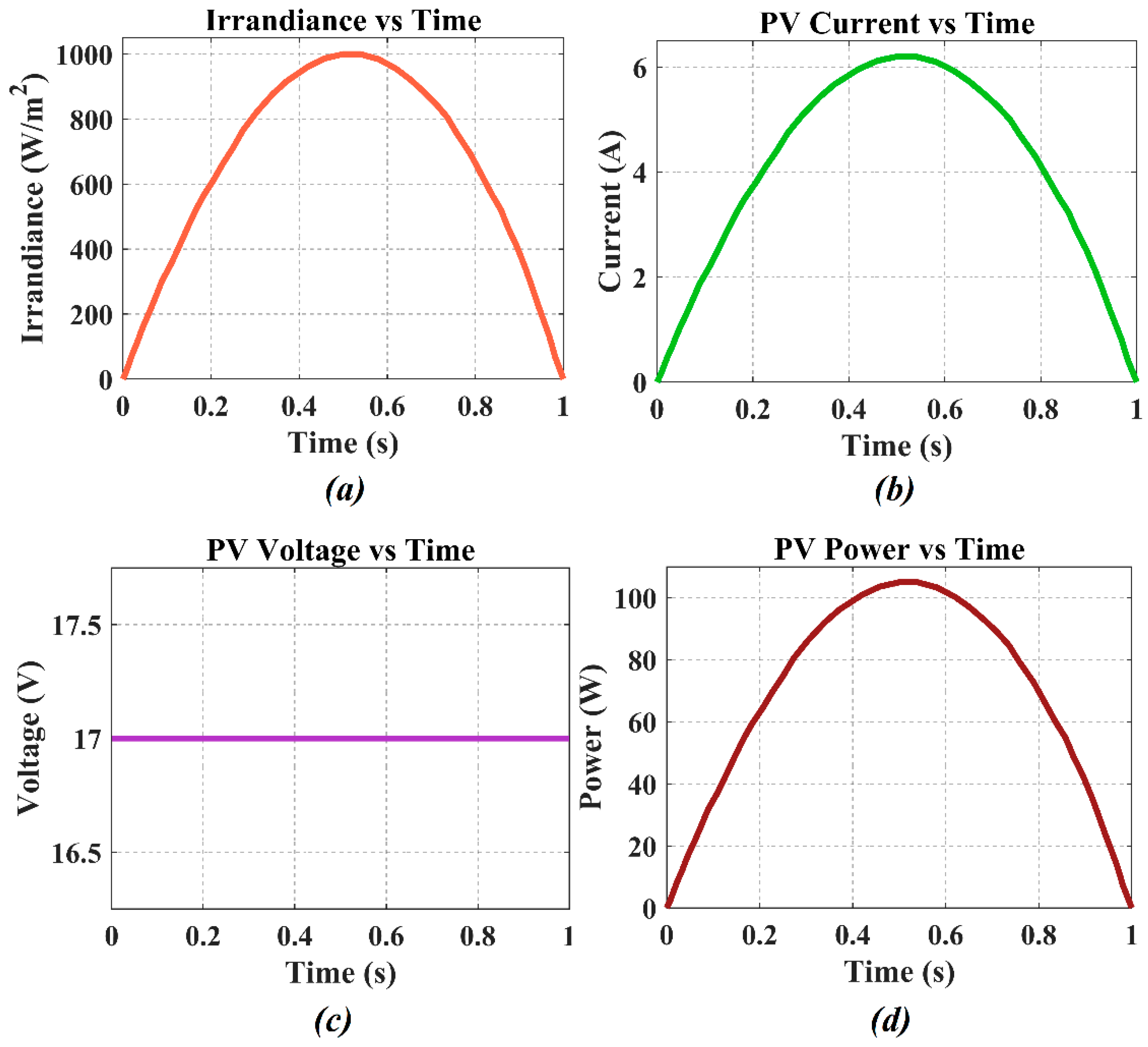
Performance analysis of (a) Irradiance vs. Time, (b) PV current vs. Time, (c) PV voltage vs. Time, and (b) PV power vs. Time is shown in Figure 6. The irradiance in (a) increases from 0 to roughly 1000 W/m2 at 0.5 s before decreasing back to 0 at 1 s, with the PV current in (b) following a similar course, peaking at approximately 6.2 A at 0.5 s. The PV voltage in (c) remains relatively fixed at 17 V, and its power in (d) reaches a peak at about 105 W at 0.5 s and decreases symmetrically.
Figure 6.
Performance analysis of (a) Irradiance vs. Time, (b) PV current vs. Time, (c) PV voltage vs. Time, and (d) PV power vs. Time.
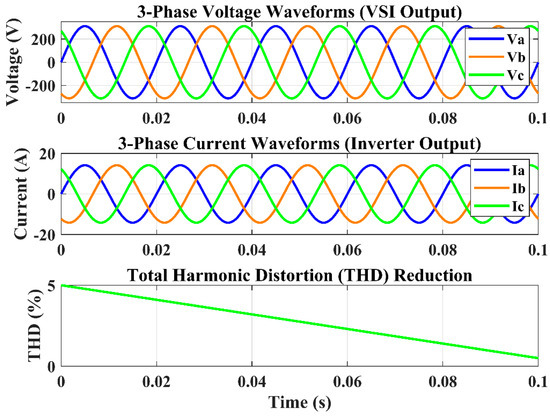
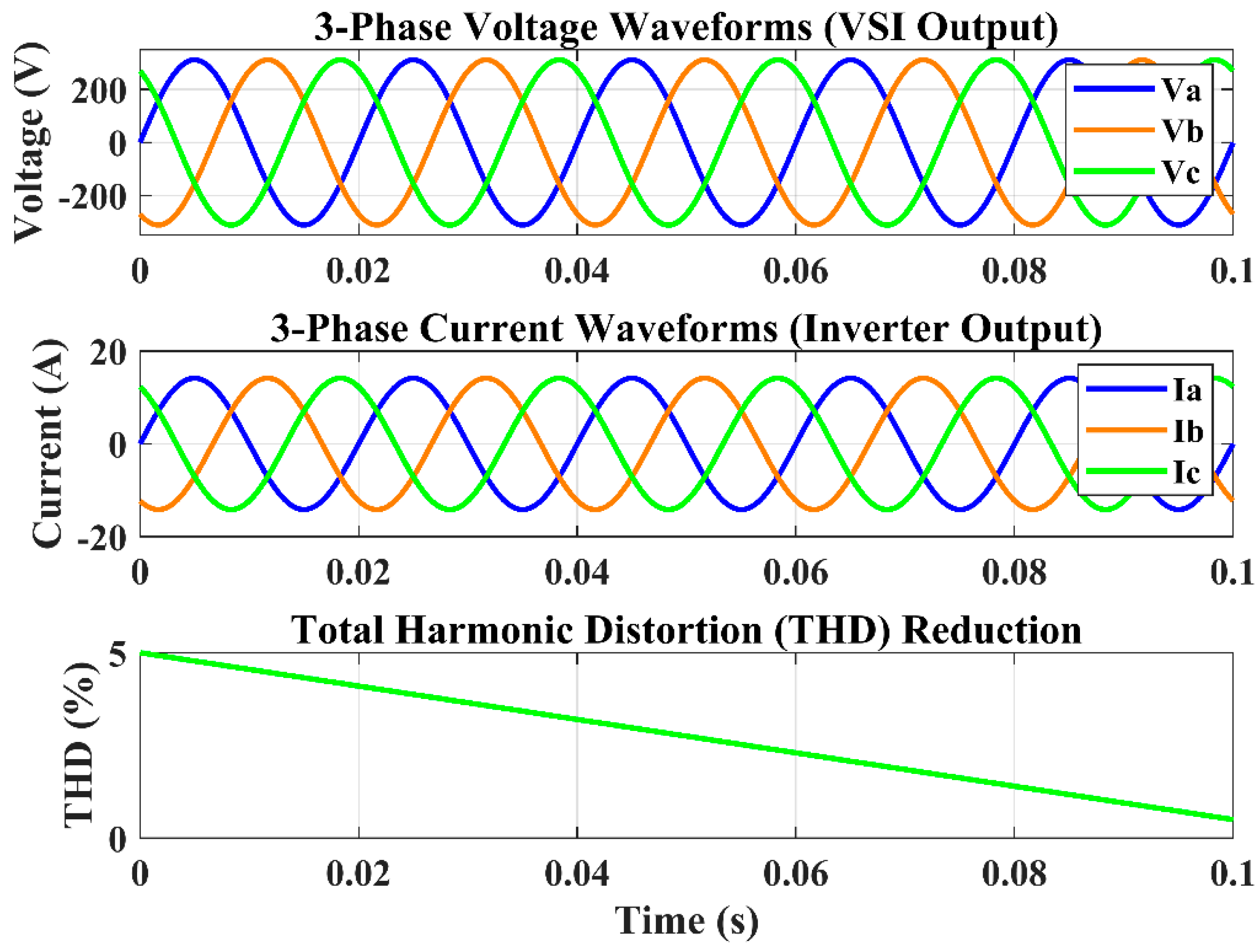
Figure 7 demonstrates the inverter voltage, current, and THD analysis. The three-phase voltage waveforms indicate that the outputs are balanced sinusoidal voltages around ±220 V, and the waveforms of the currents are also balanced around ±18–20 A. In addition, the THD plot shows a steady decrease from around 5% at 0 s to nearly 1% by 0.1 s, proving that the power quality is improved.
Figure 7.
Inverter voltage, current, and THD analysis.
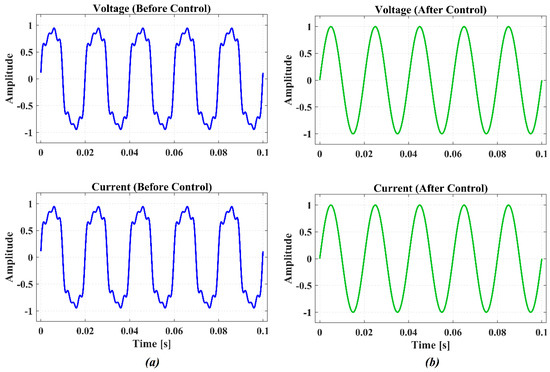
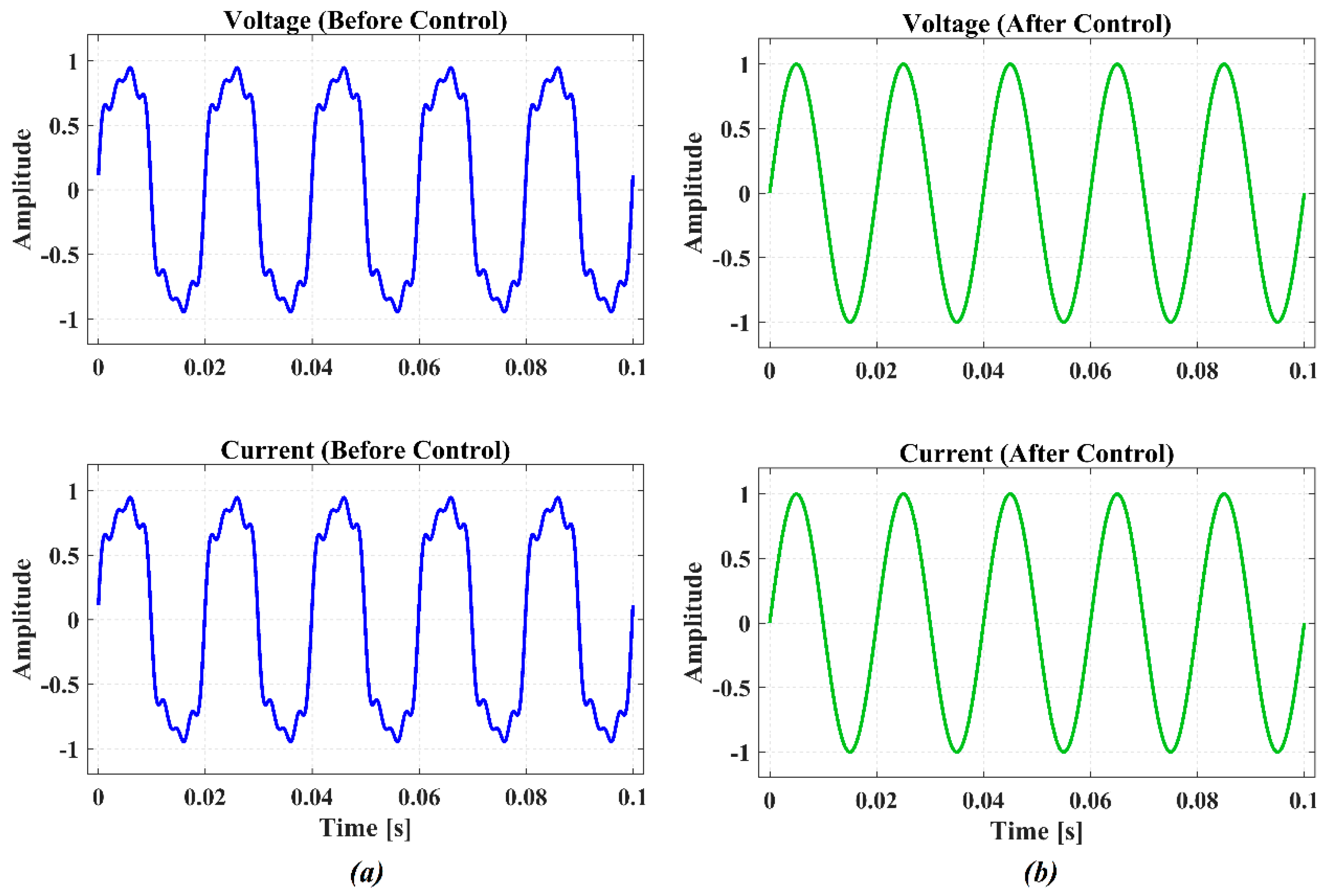
Figure 8 shows that, before the control, voltage and current waveforms are severely distorted, each have peak values approximately between +1.0 and −1.0 with irregular noisy shapes; after applying the controller, voltage and current signals became smooth sinusoidal signals with peaks at approximately ±1.0, showing an effective harmonic reduction and a recovered waveform.
Figure 8.
(a) Voltage and current before control (b) Voltage and current after control.
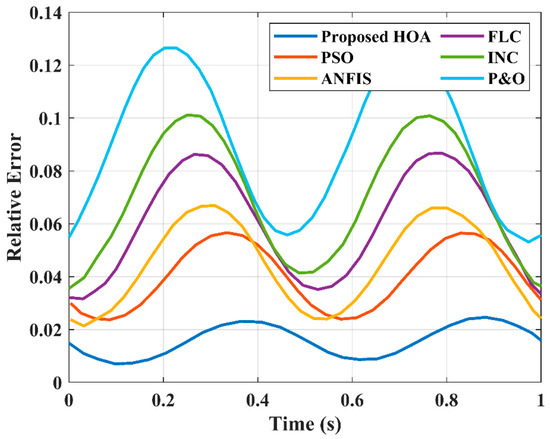
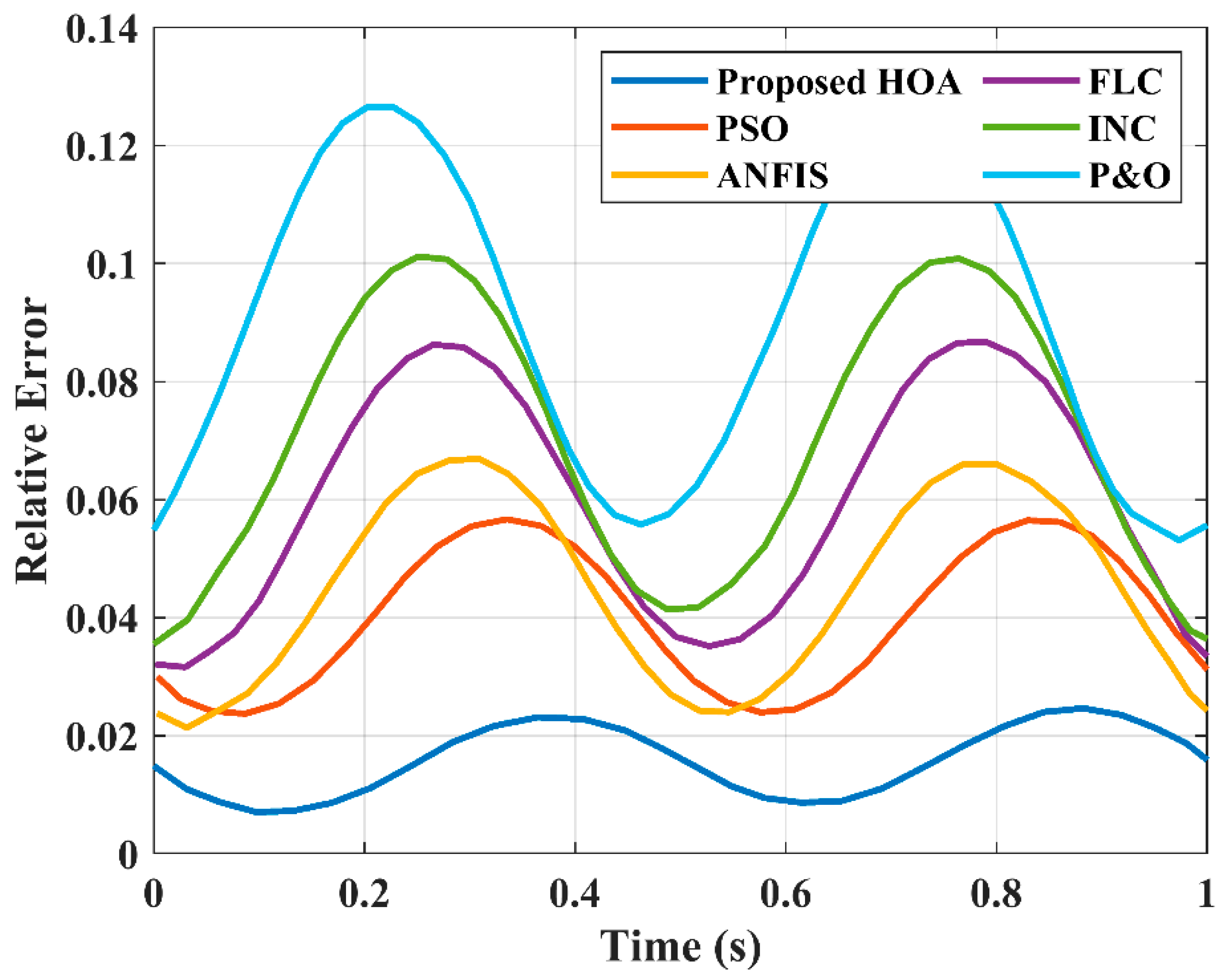
Analysis of Absolute Error is shown in Figure 9. The graph shows that the proposed HOA has the lowest relative error, staying around 0.01–0.03, while other methods show higher peaks: PSO ≈ 0.02–0.06, ANFIS ≈ 0.03–0.07, FLC ≈ 0.04–0.09, and INC ≈ 0.05–0.10, with P&O showing the highest error ≈ 0.06–0.13.
Figure 9.
Analysis of Absolute Error.
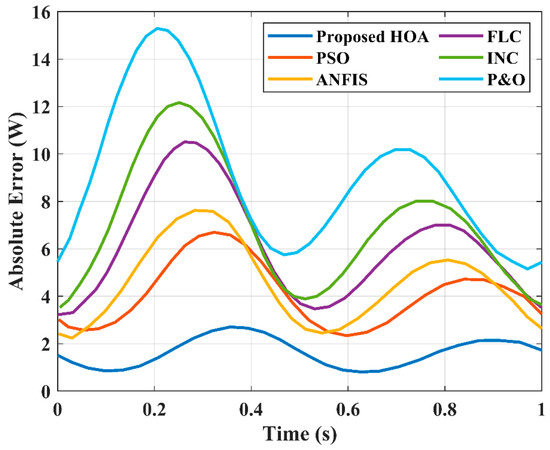
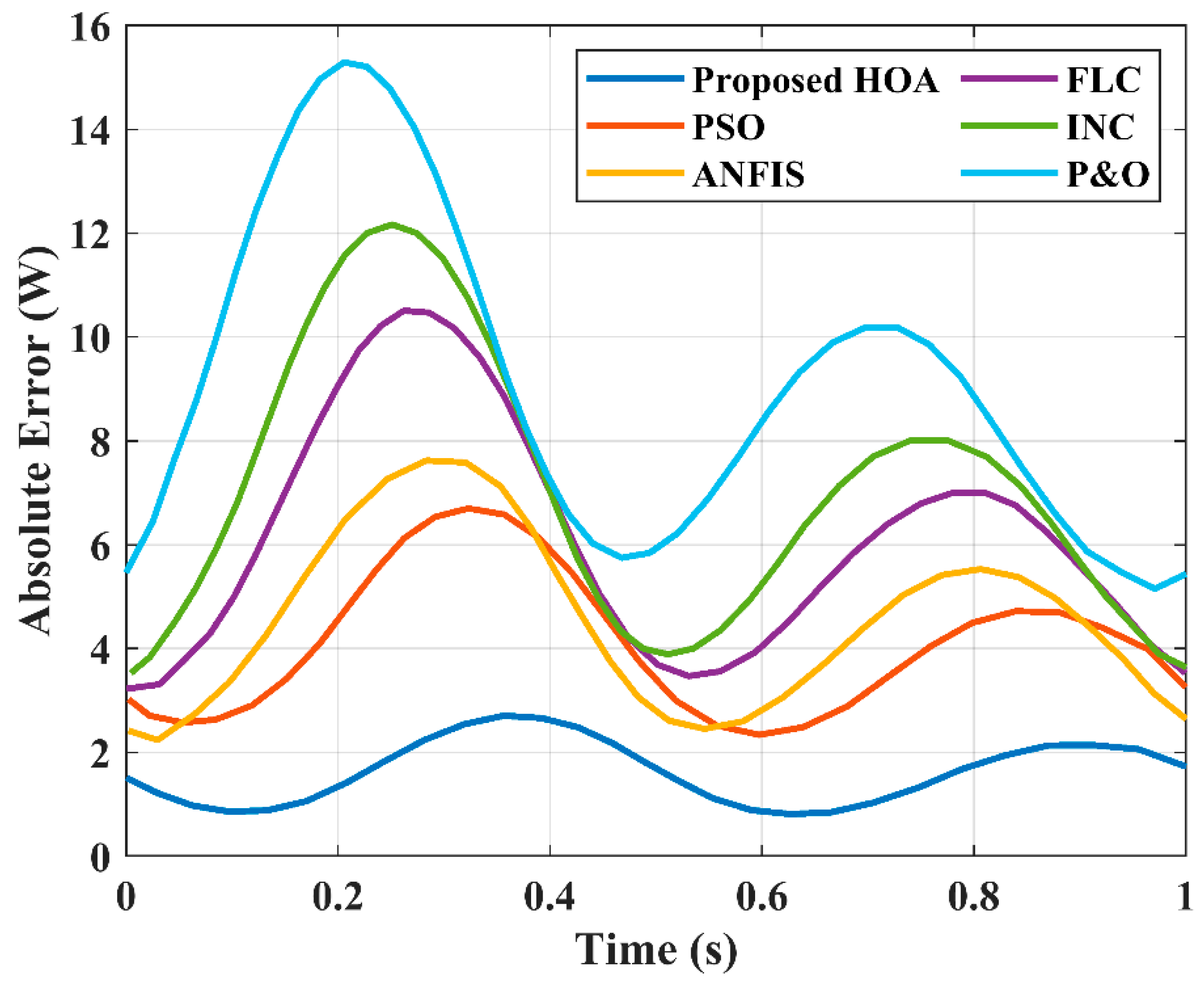
Analysis of Relative Error is shown in Figure 10. The graph depicts that the proposed HOA maintains the lowest absolute error, remaining in a range around 1.5–3.2 W, while other methods have more significant peaks: PSO ≈ 3–6.5 W, ANFIS ≈ 4–7.5 W, FLC ≈ 5–10.5 W, and INC ≈ 6–12 W, with P&O showing the largest error ≈ 8–15.5 W.
Figure 10.
Analysis of Relative Error.
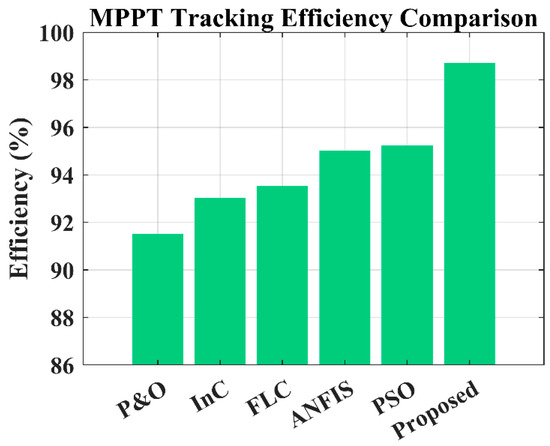
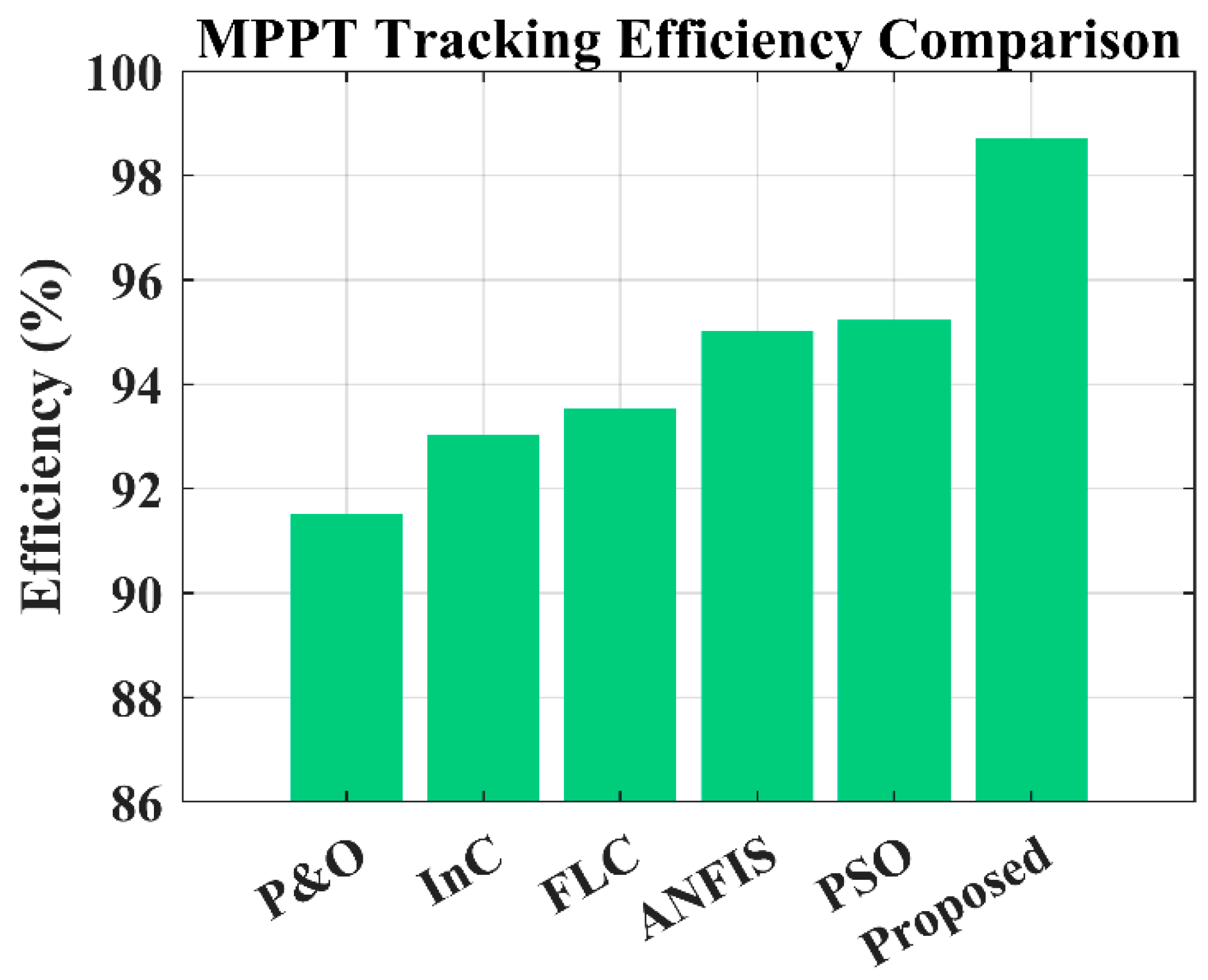
Figure 11 compares the MPPT tracking efficiency of different methods. In the case of the P&O technique, the efficiency is around 91%, while in the case of the InC and FLC methods, it is approximately 93% and 94%, respectively. ANFIS and PSO show improved performances with efficiencies around 95–96%. Among all, the proposed method has a high efficiency of about 99%, clearly indicating its superior tracking capability.
Figure 11.
Comparison with existing controllers based on MPPT tracking efficiency.
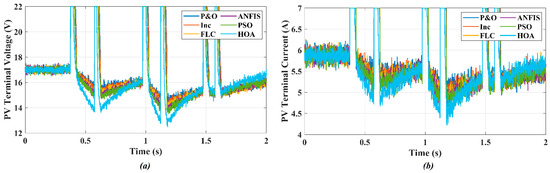
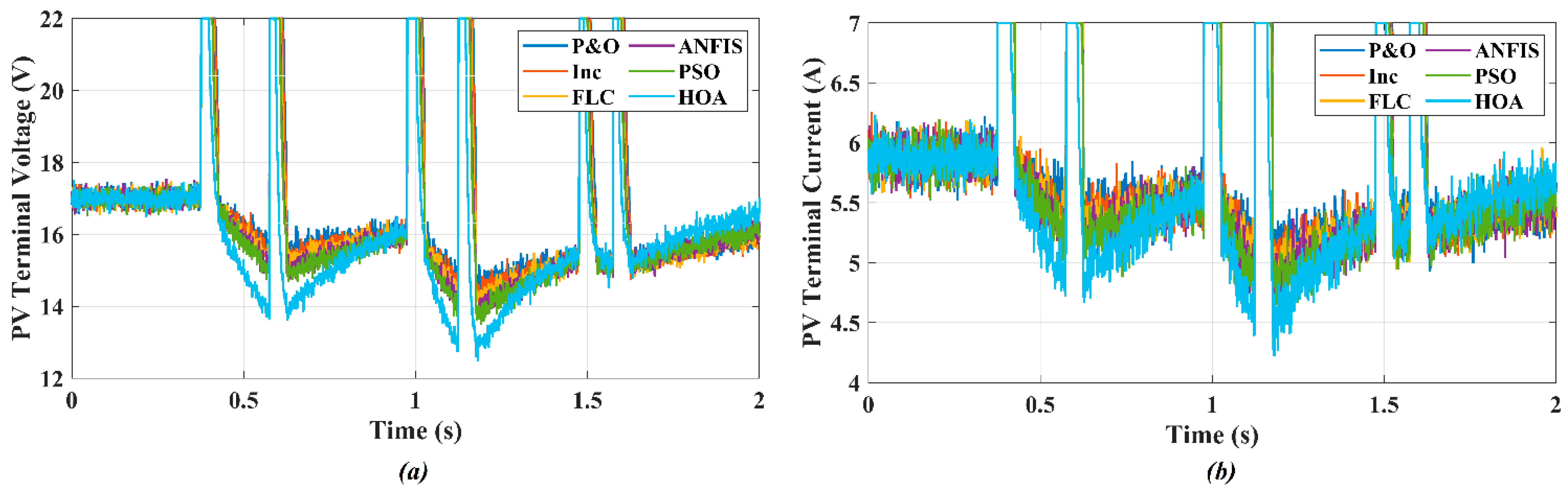
Analysis of the (a) PV voltage and (b) PV current is shown in Figure 12. The plots show the PV terminal voltage and current responses for the different MPPT techniques under fast irradiance variations. In each irradiance dip, the voltage drops from around 19–20 V to approximately 14–15 V, while the current falls from close to 6.0–6.2 A to close to 4.8–5.0 A. Of all methods compared, the HOA approach has the most stable voltage and current responses, which demonstrates faster recovery and smoother transitions after every disturbance.
Figure 12.
Analysis of (a) PV voltage and (b) PV current.
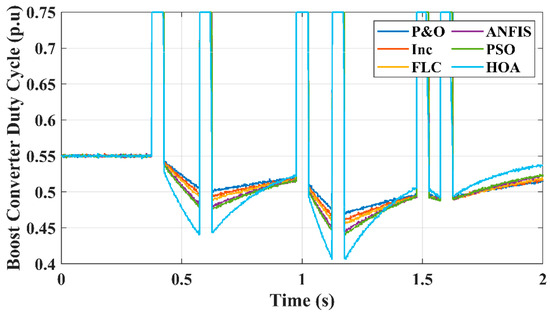
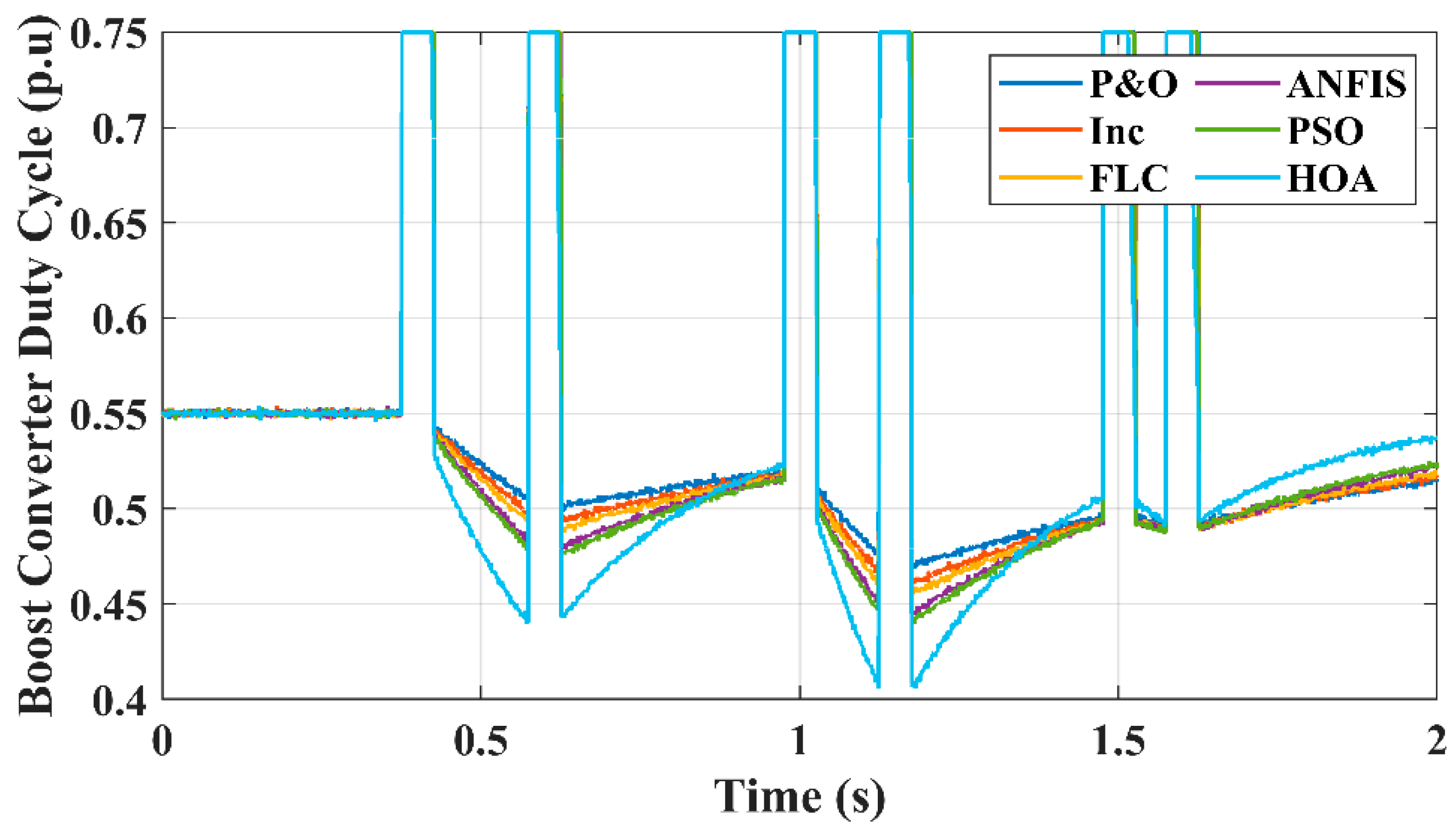
Analysis of boost converter duty cycle is shown in Figure 13. The boost converter duty cycle responses for different MPPT algorithms under irradiance changes. All methods start close to 0.55 p.u, then fall to 0.47–0.50 p.u following each disturbance at 0.5 s, 1.0 s, and 1.5 s, respectively, and then slowly recover. The proposed HOA algorithm stabilizes the fastest and maintains a smoother trajectory compared to P&O, Inc, FLC, ANFIS, and PSO, which have slower recovery and larger fluctuations.
Figure 13.
Analysis of boost converter duty cycle.
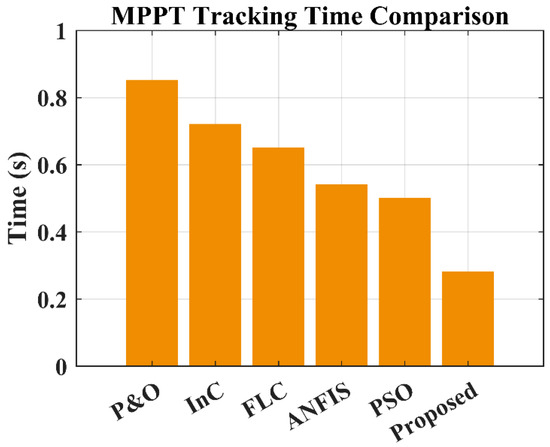
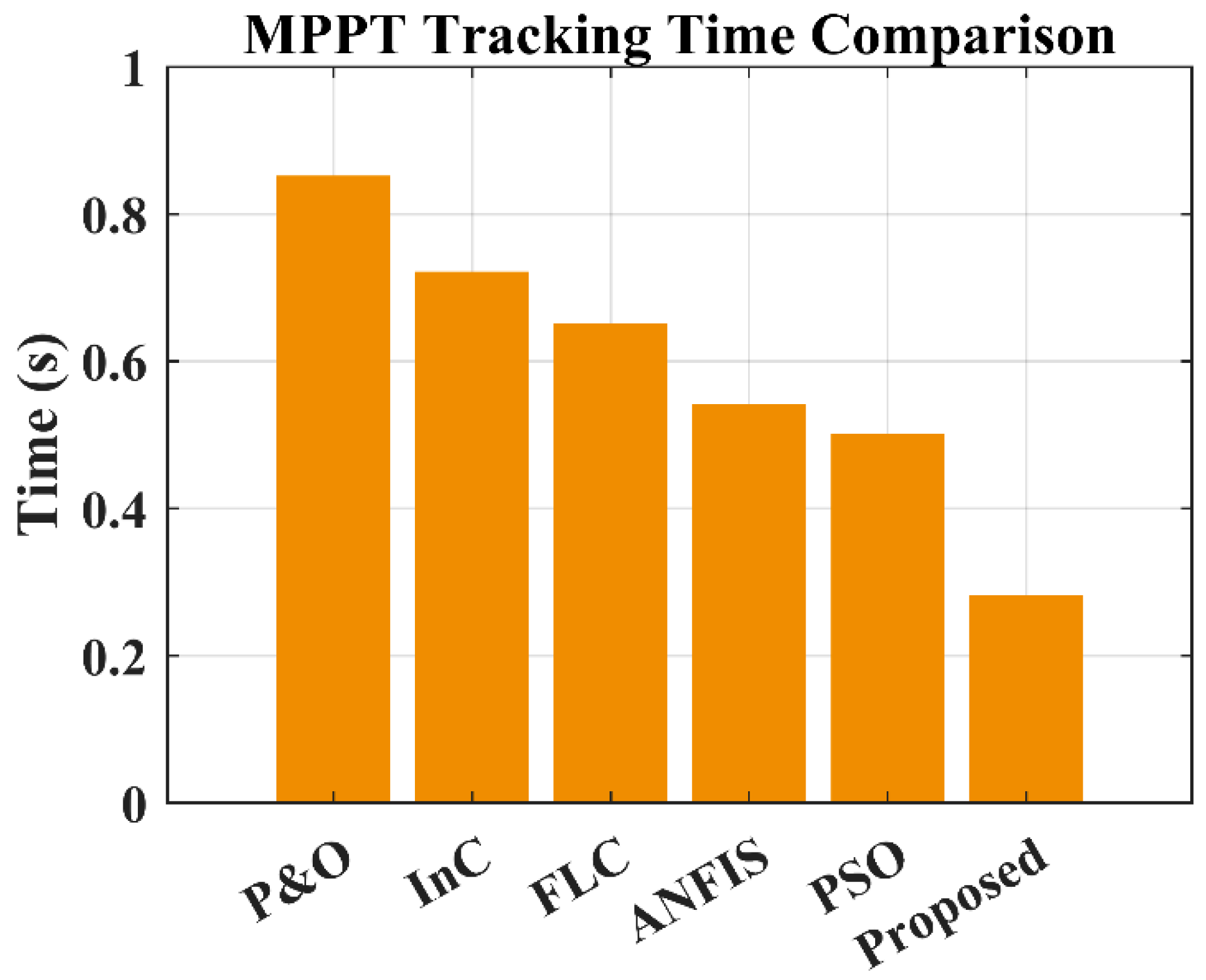
Comparison with existing controllers based on the MPPT tracking time is shown in Figure 14. The bar graph compares the MPPT tracking times of P&O, which takes the longest at approximately 0.85 s, followed by Inc at 0.72 s, FLC at 0.65 s, ANFIS at 0.55 s, and PSO at 0.48 s. In contrast, the proposed method tracks the fastest at only 0.30 s. This demonstrates that the proposed algorithm significantly improves the MPPT response speed compared to conventional and intelligent techniques.
Figure 14.
Comparison with existing controllers based on MPPT tracking time.
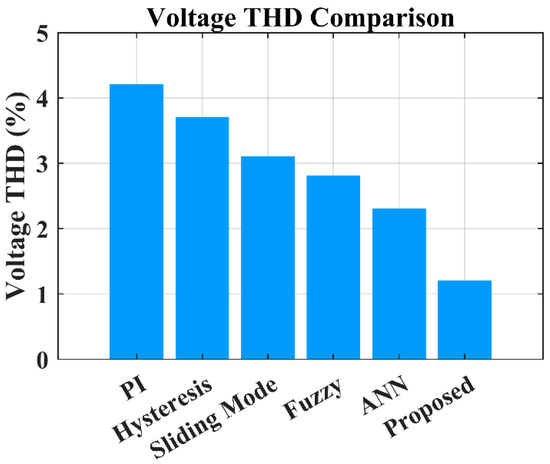
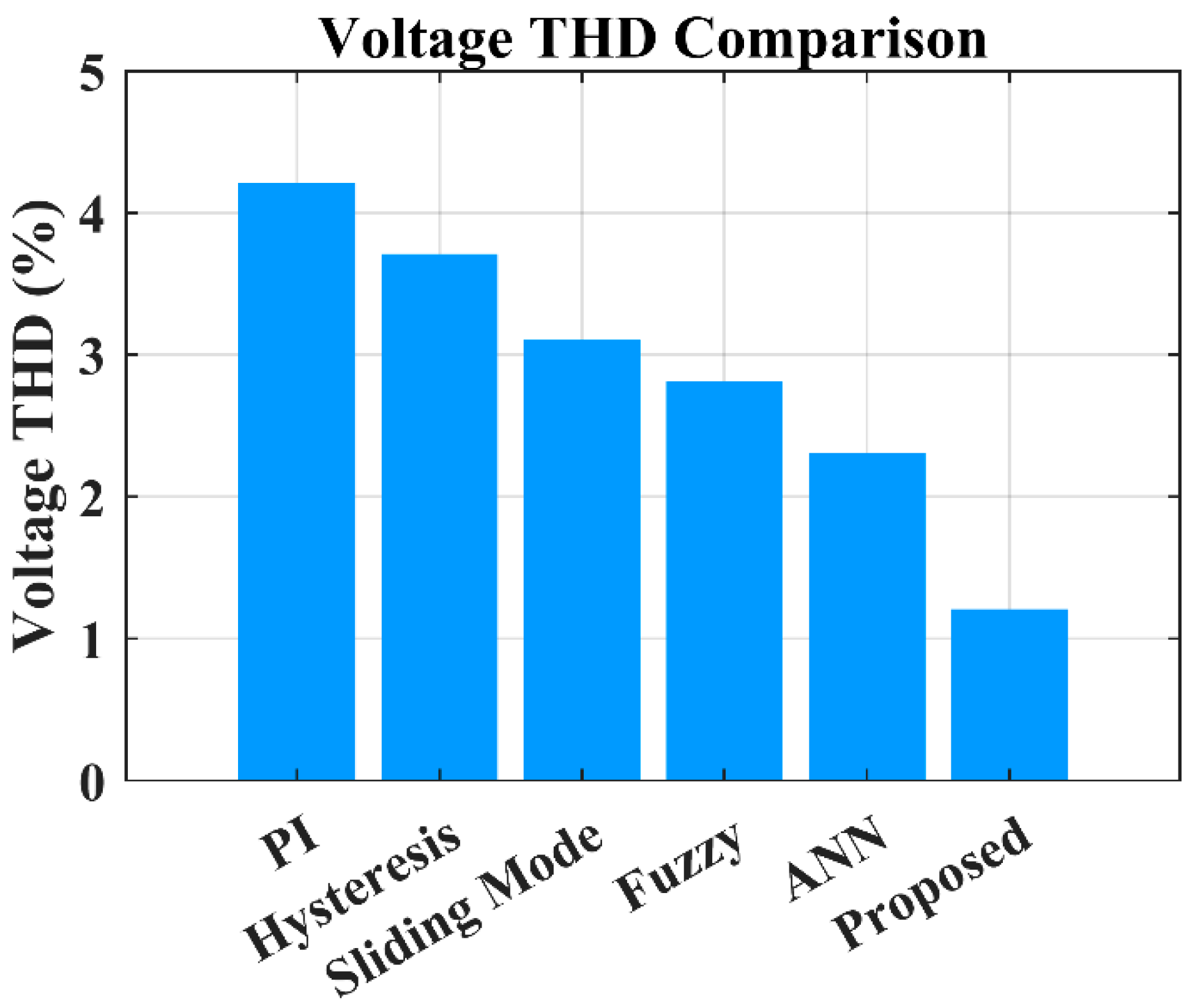
Figure 15 provides a comparison with existing controllers based on the voltage THD, where PI shows the highest distortion at about 4.2%, followed by Hysteresis at 3.7%, Sliding Mode at 3.1%, Fuzzy at 2.8%, and ANN at 2.3%, while the proposed method realizes the minimum THD of around 1.2%. This clearly indicates a great enhancement in output voltage quality achieved with the proposed controller.
Figure 15.
Comparison with existing controllers based on voltage THD.
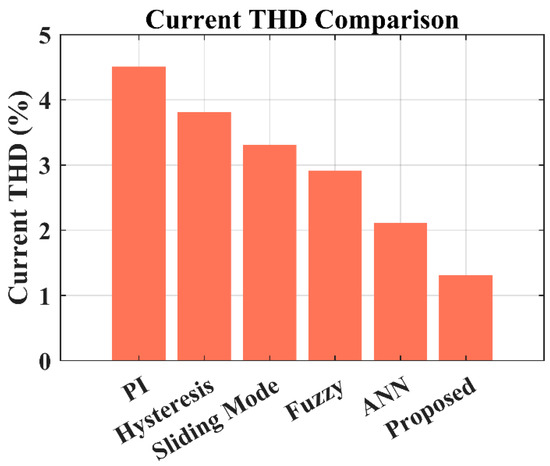
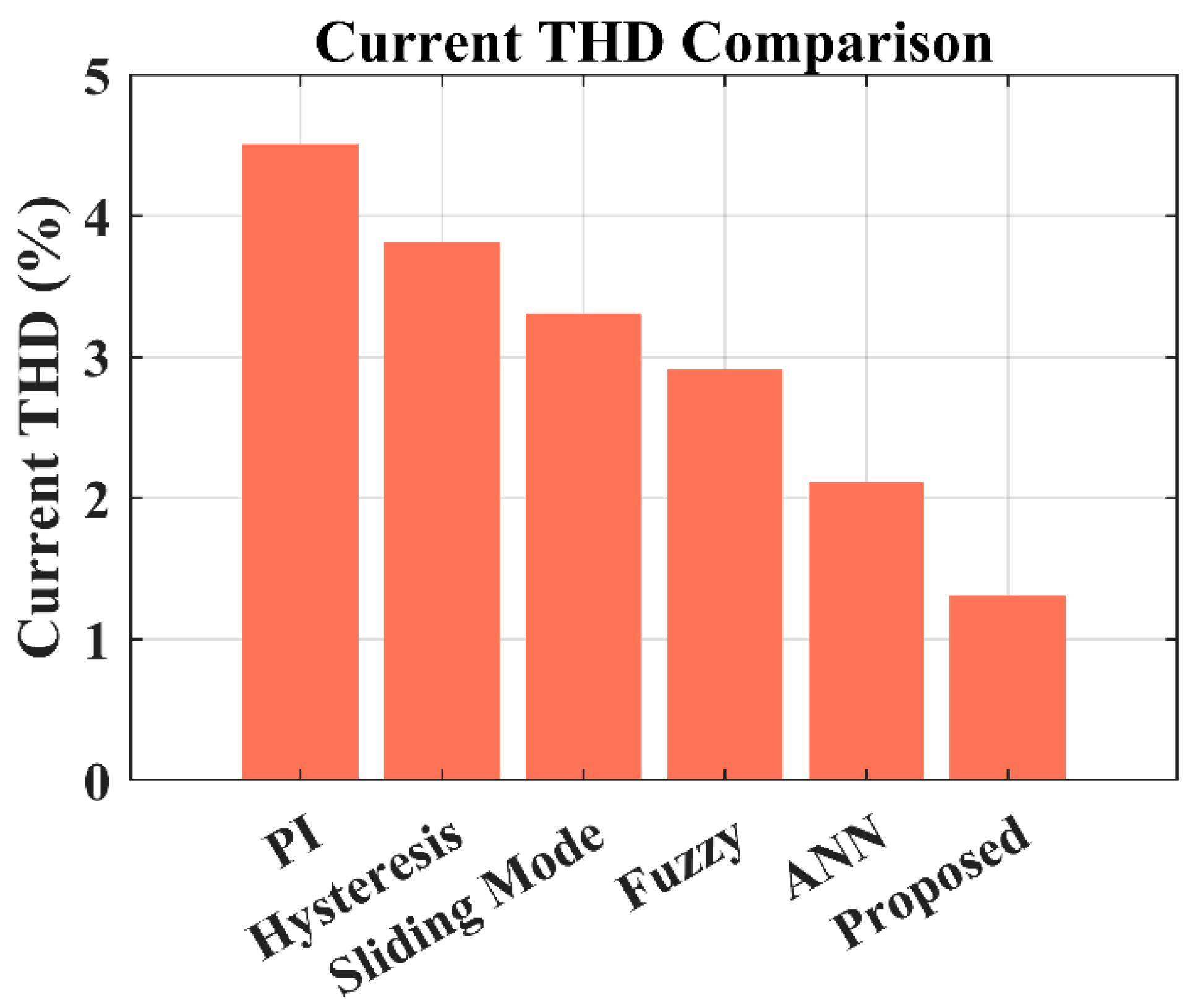
Comparison with existing controllers based on current THD is shown in Figure 16, where PI results in the maximum distortion of approximately 4.5%, followed by Hysteresis at approximately 3.8%, Sliding Mode at approximately 3.3%, Fuzzy at approximately 2.9%, and ANN at approximately 2.2%, while the proposed method achieves the minimum THD of approximately 1.3%. This clearly indicates that the proposed controller delivers significantly improved current quality over all other methods.
Figure 16.
Comparison with existing controllers based on current THD.
4.1. Analysis of Power Quality KPI
Table 3 illustrates the analysis of the KPI. The proposed system yields quite clear performance gains in increasing the power factor from 0.97 to 0.992, reducing the Voltage Regulation Index from 3.6% to 1.8%, and lowering the steady-state error from 1.2% to 0.45%. Significant overshoot reduction is also achieved, from 6.4% down to 2.1%, clearly indicating substantial improvements across all KPIs.
Table 3.
Analysis of the KPI.
4.2. Quantitative Analysis
Table 4 displays the performance analysis of metrics. As observed from Table 4, the proposed HOA–SyBel control system outperforms the existing methods significantly. While the MPPT tracking efficiency improves from 95.1% to 98.6%, the tracking time becomes 72% faster. The quality of power also improves as the voltage THD reduces by 47.8% and the current THD reduces by 38.1%, ensuring better harmonic suppression and stability.
Table 4.
Performance analysis of metrics.
5. Conclusions
In this paper, an overall and smart control system for the maximization of photovoltaic (PV) energy harvesting and power quality improvement in grid-connected systems is introduced. The principal contributions of this paper include two models, the Solar Power MPPT Tracker using Hippopotamus Optimizer and an inverter Synergetic Belief-Driven Embedded Logic (SyBel) controller. The MPPT method ingeniously employs the tendencies of hippopotamuses in an effort to study and reap the best duty cycles of the boost converter for optimal power extraction even under uneven irradiance conditions. Parallel to this, the SyBel controller fuses Spiking Neural Network encoded with belief-driven deep learning abstraction and synergetic integrated laws to evolve highly adaptive, intelligent, and auto-tuning switching methods for the voltage source inverter (VSI) in order to reduce total harmonic distortion (THD) and voltage level stabilization levels at the grid side. The procedure starts with the real-time measurement of PV voltage and current and subsequent power calculation and optimization using the Hippopotamus algorithm. The ideal duty cycle thus created maximizes the output of the boost converter. The optimized DC voltage is used as input for the VSI, and the SyBel controller continually matches voltage and current errors against their reference values. With deep belief extraction and spike encoding, the controller generates intelligent PWM signals that maximize the performance of the inverter, remove distortions, and align the output with grid standards. Simulation and experimental testing confirm the effectiveness of the suggested models, proving their superiority over five conventional MPPT and inverter control approaches, namely, ANN, FLC, PSO, and Sliding Mode controllers. Quantitatively, the developed Hippopotamus-based MPPT tracker achieved a 98.6% tracking efficiency, much higher than the 95.1% of traditional techniques, and reduced the tracking time to 0.28 s. On the inverter side, the SyBel controller lowered the voltage THD to 1.2% and current THD to 1.3%, complying with IEEE 519 standards and outperforming others, which ranged from between 2.1% to 4.5%. These findings verify that the developed smart control structure greatly improves the energy output, dynamic response, and power quality in grid-connected PV systems.
Author Contributions
S.S.—Carried out methodology, implementation and has written the original manuscript. G.I.D.—Given guidance, suggestions, reviewed and edited the manuscript. All authors have read and agreed to the published version of the manuscript.
Funding
This research received no external funding.
Data Availability Statement
The original contributions presented in this study are included in the article. Further inquiries can be directed to the corresponding author.
Conflicts of Interest
The authors declare no conflict of interest.
References
- Blekos, K.; Brand, D.; Ceschini, A.; Chou, C.-H.; Li, R.-H.; Pandya, K.; Summer, A. A review on quantum approximate optimization algorithm and its variants. Phys. Rep. 2024, 1068, 1–66. [Google Scholar] [CrossRef] [Scilit]
- Chen, S.; Heilscher, G. Integration of distributed PV into smart grids: A comprehensive analysis for Germany. Energy Strategy Rev. 2024, 55, 101525. [Google Scholar] [CrossRef] [Scilit]
- Babu, N. Adaptive grid-connected inverter control schemes for power quality enrichment in microgrid systems: Past, present, and future perspectives. Electr. Power Syst. Res. 2024, 230, 110288. [Google Scholar] [CrossRef] [Scilit]
- Selvam, N.; Nithish, M.; Sakthivel, M.; Suriyakumar, N.; Naresh, S. Enhancing Power Quality in a Solar Powered Bidirectional Smart Grid with Electric Vehicle Integration. In Proceedings of the 2024 2nd International Conference on Artificial Intelligence and Machine Learning Applications Theme: Healthcare and Internet of Things (AIMLA), Singapore, 15–16 March 2024; pp. 1–5. [Google Scholar]
- Musleh, A.S.; Ahmed, J.; Ahmed, N.; Xu, H.; Chen, G.; Kerr, S.; Jha, S. Experimental cybersecurity evaluation of distributed solar inverters: Vulnerabilities and impacts on the australian grid. IEEE Trans. Smart Grid 2024, 15, 5139–5150. [Google Scholar] [CrossRef] [Scilit]
- Golgol, M.; Pal, A. High-speed voltage control in active distribution systems with smart inverter coordination and DRL. In Proceedings of the 2024 IEEE Power & Energy Society General Meeting (PESGM), Seattle, DC, USA, 21–25 July 2024; pp. 1–5. [Google Scholar]
- Tur, M.N.; Ertuğrul, Ö.F.; Tür, M.R. Solution for Integration of Renewable Energy Power Plants into Smart Grids with Active Power Control. J. Sci. Technol. Eng. Res. 2024, 5, 11–23. [Google Scholar] [CrossRef] [Scilit]
- Wesley, B.J.; Babu, G.S.; Kumar, P.S. Design and control of LSTM-ANN controllers for an efficient energy management system in a smart grid based on hybrid renewable energy sources. Eng. Res. Express 2024, 6, 015074. [Google Scholar] [CrossRef] [Scilit]
- Zhao, Z.; Zhang, Z.; Wang, Y.; Liu, C.; Peng, C.; Lai, L.L. Decentralized grid-forming control strategy for pv-based dc microgrids using finite control set model predictive control. IEEE Trans. Smart Grid 2024, 15, 5269–5283. [Google Scholar] [CrossRef] [Scilit]
- Alharbi, M. Control Approach of Grid-Connected PV Inverter under Unbalanced Grid Conditions. Processes 2024, 12, 212. [Google Scholar] [CrossRef] [Scilit]
- Zhang, B.; Cao, D.; Hu, W.; Ghias, A.M.; Chen, Z. Physics-Informed Multi-Agent deep reinforcement learning enabled distributed voltage control for active distribution network using PV inverters. Int. J. Electr. Power Energy Syst. 2024, 155, 109641. [Google Scholar] [CrossRef] [Scilit]
- Azzolini, J.A.; Reno, M.J. A Data-Driven Framework for Evaluating the Impacts of Advanced PV Inverter Control Functions. In Proceedings of the 2024 IEEE 52nd Photovoltaic Specialist Conference (PVSC), Seattle, DC, USA, 9–14 June 2024; pp. 731–737. [Google Scholar]
- Boutaghane, K.; Bennecib, N.; Benidir, M.; Benbouhenni, H.; Colak, I. Performance enhancement of a three-phase grid-connected PV inverter system using fractional-order integral sliding mode controls. Energy Rep. 2024, 11, 3976–3994. [Google Scholar] [CrossRef] [Scilit]
- Vodapally, S.N.; Ali, M.H. A Novel ConvXGBoost Method for Detection and Identification of Cyberattacks on Grid-Connected Photovoltaic (PV) Inverter System. Computation 2025, 13, 33. [Google Scholar] [CrossRef] [Scilit]
- Cavus, M.; Bell, M. Enabling Smart Grid Resilience with Deep Learning-Based Battery Health Prediction in EV Fleets. Batteries 2025, 11, 283. [Google Scholar] [CrossRef] [Scilit]
- Faraji, H.; Vahidi, B.; Khorsandi, A.; Hosseinian, S.H. Multiple control strategies for smart photovoltaic inverter under network voltage fluctuations and islanded operation. Int. J. Electr. Power Energy Syst. 2024, 156, 109723. [Google Scholar] [CrossRef] [Scilit]
- Iksan, N.; Purwanto, P.; Sutanto, H. Real-time monitoring of photovoltaic systems and control of electricity supply for smart micro grid-PV using IoT. TEM J. 2024, 13, 514–523. [Google Scholar] [CrossRef] [Scilit]
- Dhivya, S.; Prakash, S. Power Quality Assessment in Grid-Connected Solar PV Systems Using Deep Learning Techniques. J. Appl. Data Sci. 2025, 6, 1192–1208. [Google Scholar] [CrossRef] [Scilit]
- Mangalapuri, S.; Polamraju, V.S. Enhance quality of Power in Grid Tie Solar Photovoltaic System using Deep learning MPPT. In Proceedings of the 2024 Second International Conference on Emerging Trends in Information Technology and Engineering (ICETITE), Vellore, India, 22–23 February 2024; pp. 1–6. [Google Scholar]
- El-Shahat, D.; Tolba, A.; Abouhawwash, M.; Abdel-Basset, M. Machine learning and deep learning models based grid search cross validation for short-term solar irradiance forecasting. J. Big Data 2024, 11, 134. [Google Scholar] [CrossRef] [Scilit]
- Ghyasuddin Hashmi, S.; Balaji, V.; Ahamed Ayoobkhan, M.U.; Shabbir Alam, M.; Anilkuamr, R.; Nishant, N.; Patra, J.P.; Rajaram, A. Machine Learning-Based Renewable Energy Systems Fault Mitigation and Economic Assessment. Electr. Power Compon. Syst. 2024, 1–24. [Google Scholar] [CrossRef] [Scilit]
- Abagero, A.; Abebe, Y.; Tullu, A.; Jung, Y.S.; Jung, S. Deep Learning-based MPPT approach to Enhance CubeSat Power Generation. IEEE Access 2025, 13, 40076–40089. [Google Scholar] [CrossRef] [Scilit]
- Arifeen, M.; Petrovski, A.; Hasan, M.J.; Noman, K.; Navid, W.U.; Haruna, A. Graph-Variational Convolutional Autoencoder-Based Fault Detection and Diagnosis for Photovoltaic Arrays. Machines 2024, 12, 894. [Google Scholar] [CrossRef] [Scilit]
- Raghuwanshi, S.S.; Khan, S.S.; Litoriya, R. Design and Optimization of Solar Powered Irrigation System using Artificial Intelligent Techniques. J. Environ. Nanotechnol. 2025, 14, 144–157. [Google Scholar] [CrossRef] [Scilit]
- Datta, S.; Baul, A.; Sarker, G.C.; Sadhu, P.K.; Hodges, D.R. A comprehensive review of the application of machine learning in fabrication and implementation of photovoltaic systems. IEEE Access 2023, 11, 77750–77778. [Google Scholar] [CrossRef] [Scilit]
- Iqbal, M.; Memon, R.; Anwar, M.; Bashir, A. Deep Neural Network Based MPPT Modelling and Simulation for Photovoltaic System. Int. J. Electr. Eng. Emerg. Technol. 2024, 7, 19–25. [Google Scholar]
- Amiri, M.H.; Mehrabi Hashjin, N.; Montazeri, M.; Mirjalili, S.; Khodadadi, N. Hippopotamus optimization algorithm: A novel nature-inspired optimization algorithm. Sci. Rep. 2024, 14, 5032. [Google Scholar] [CrossRef] [Scilit] [PubMed]

Disclaimer/Publisher’s Note: The statements, opinions and data contained in all publications are solely those of the individual author(s) and contributor(s) and not of MDPI and/or the editor(s). MDPI and/or the editor(s) disclaim responsibility for any injury to people or property resulting from any ideas, methods, instructions or products referred to in the content. |
© 2025 by the authors. Licensee MDPI, Basel, Switzerland. This article is an open access article distributed under the terms and conditions of the Creative Commons Attribution (CC BY) license (https://creativecommons.org/licenses/by/4.0/).