


Abstract
Complex distortion cancellation methods are often used at the radio frequency (RF) front end of multiantenna full-duplex transceivers to mitigate signal distortion; however, these methods have high computational complexity and limited practicality. To address these problems, the present study explored the complexities associated with such transceivers to develop a practical multistep approach for suppressing distortions arising from in-phase and quadrature (I/Q) imbalance, nonlinear power amplifier (PA) responses, and multipath self-interference caused by simultaneous transmissions on the same frequency. In this approach, the I/Q imbalance is estimated and then compensated for, following which nonlinear PA distortion is estimated and pre-compensated for. Subsequently, an auxiliary RF transmitter is combined with linearly regenerating self-interference signals to achieve full-duplex self-interference cancellation. The proposed method was implemented on a software-defined radio platform, with the distortion factor calibration specifically optimized for multiantenna full-duplex transceivers. The experimental results indicate that the image signal caused by I/Q imbalance can be suppressed by up to 60 dB through iterative computation. By combining IQI and DPD preprocessing, the nonlinear distortion spectrum can be reduced by 25 dB. Furthermore, integrating IQI, DPD, and self-interference preprocessing achieves up to 180 dB suppression of self-interference signals. Experimental results also demonstrate that the proposed method achieves approximately 20 dB suppression of self-interference. Thus, the method has high potential for enhancing the performance of multiantenna RF full-duplex systems.
1. Introduction
Wireless communication systems primarily operate in half-duplex mode because of the substantial self-interference that arises from simultaneous transmission and reception on the same frequency band. Despite the potential for higher spectrum efficiency in wireless full-duplex transmission, effectively mitigating self-interference for full-duplex wireless receivers remains a critical challenge [1]. To address this problem, the present study developed an innovative approach for suppressing distortions that arise from in-phase and quadrature (IQ) imbalance, nonlinear power amplifier (PA) responses, and self-interference caused by simultaneous transmissions on the same frequency in radio frequency (RF) communication systems.
Existing methods for mitigating RF signal distortion, such as antenna separation and self-interference cancellation, are limited by their demands on computational capacity and by the physical size of the hardware used to run them [2,3,4]. To overcome these limitations, active RF cancellation architecture and compensation rules are used in the proposed method [5], with direct RF cancellation of self-interference signals conducted at the receiver. This method differs from the receiver-side interference suppression technique proposed in [6] and ensures that subsequent components, such as the low-noise amplifier, do not exacerbate the nonlinear distortion induced by self-interference.
In the proposed method, an auxiliary transmission path is employed to actively cancel self-interference by combining channel response parameters with an active RF cancellation filter. In contrast to complex distortion cancellation methods, the proposed method involves using the least mean square (LMS) approach [7,8] to estimate channel response parameters, thus facilitating the estimation of generalized linear filter parameters for the auxiliary path [9]. The progressive compensation for individual distortion factors, including IQ imbalance (IQI) [6,10] and nonlinear PA response [11,12] in the proposed method, enables sequential suppression of all types of distortion, ultimately facilitating successful full-duplex communication.
Traditional digital predistortion (DPD) techniques require the acquisition of all nonlinear growths in signal bandwidth for algorithm processing. More information is required to characterize the bandwidth growth of a larger-bandwidth signal. A technique for slow-speed DPD compensation is employed to reduce the sampling speeds required by the digital-to-analogue controller and analogue-to-digital controller (ADC) used in an RF communication system and to limit the bandwidth information required to achieve a decrease in the sampling speed [13,14,15,16,17]. The method proposed in [13] involves constraining the bandwidth of DPD and linearizing the PA response within a limited bandwidth. This method allows the feedback signal to be filtered before sampling without affecting the system performance. In [14], a modified band-limited DPD technique was proposed for wideband systems. This technique achieved a higher adjacent channel power ratio than the conventional band-limited DPD method. In [15], a hybrid RF DPD linearization technique was proposed to reduce the power consumption of ADCs with slow sampling speeds. This method substantially improved the linearity of the response of an RF PA. The authors of [16] identified the main reason for the overfitting problem in the constrained-bandwidth technique and proposed a novel memory-grouped method to address this problem. They analyzed the adjacent channel leakage ratio and EVM of different constrained-bandwidth methods under different low-pass filter passbands. In [17], an analogue predistortion method based on band-limited DPD (BL-DPD) was developed to linearize the response of a PA transmitting 64-quadrature amplitude modulation (QAM) orthogonal frequency-division multiplexing signals. This method reduced the maximum normalized mean square errors of the PA by 21 and 18 dB under bandwidths of 20 and 100 MHz, respectively. However, only a few experimental analysis graphs are provided in [1], with no measurement results presented. Therefore, we can only know about measurement results with this proposed structure. Nevertheless, the aforementioned studies [13,14,15,16,17] confirm that DPD techniques are feasible for PA nonlinear compensation. Therefore, in this study, we combined distortion factors into a DPD technique to develop a practical distortion cancellation approach for full-duplex communication systems. Ref. [18] also presents a canceller algorithm based on an augmented Hammerstein model, with a nonlinear part modelling the transmitter non-idealities, followed by a linear filter to model the self-interference (SI) channel. The nonlinear part includes a spline-based model for the nonlinear power amplifier, a polynomial model for baseband nonlinearities, and models for I/Q mismatch and LO leakage. Unlike our proposed system structure, the method in [18] adds the cancellation parameters at the receiver, whereas our approach incorporates them at the transmitter. Furthermore, refs. [19,20] are recent studies on novel interference cancellation techniques and computational complexity reduction, which may provide valuable references for exploring the integration of such methods in this work.
The contributions of this study are summarized as follows:
- (1)
- This study developed a method that simultaneously compensates for IQ imbalance, nonlinear PA distortion, and self-interference, thus comprehensively suppressing signal distortion in RF communication.
- (2)
- The developed method involves three steps for achieving progressive distortion suppression.
- (3)
- BL-DPD processing is conducted in the proposed method to reduce the sampling speed required by the DAC and ADC used in the overall system.
- (4)
- This study experimentally validated the proposed method by using a software-defined radio platform, with distortion factor calibration specifically optimized for multiantenna full-duplex transceivers. The experimental results confirm that the proposed method can suppress the three aforementioned types of distortion, highlighting its practical viability in advancing full-duplex communication systems.
Finally, we provide a comparison table to summarize the state of the art in mitigating RF signal distortion methods to highlight the possible future research issues related to this work (Table 1). The symbol “V” indicates that the corresponding reference adopts the specified technique.
Table 1.
Comparison of the problem scope between this work and others.
The remainder of this paper is organized as follows. Section 2 describes the proposed RF distortion model and the occurrence of self-interference in multiantenna systems. Section 3 introduces the proposed method. Section 4 presents the experimental results obtained with the proposed method. Finally, Section 5 concludes this study.
The following conventions are used throughout the paper. Uppercase boldface letters represent matrices and lowercase boldface letters denote vectors. For any general matrix A, the symbols and represent the transpose and conjugate transpose, respectively, and is the absolute value of the vector s.
2. Proposed RF Distortion Model and Self-Interference in Multiantenna Systems
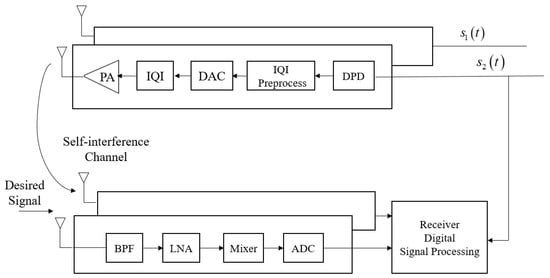
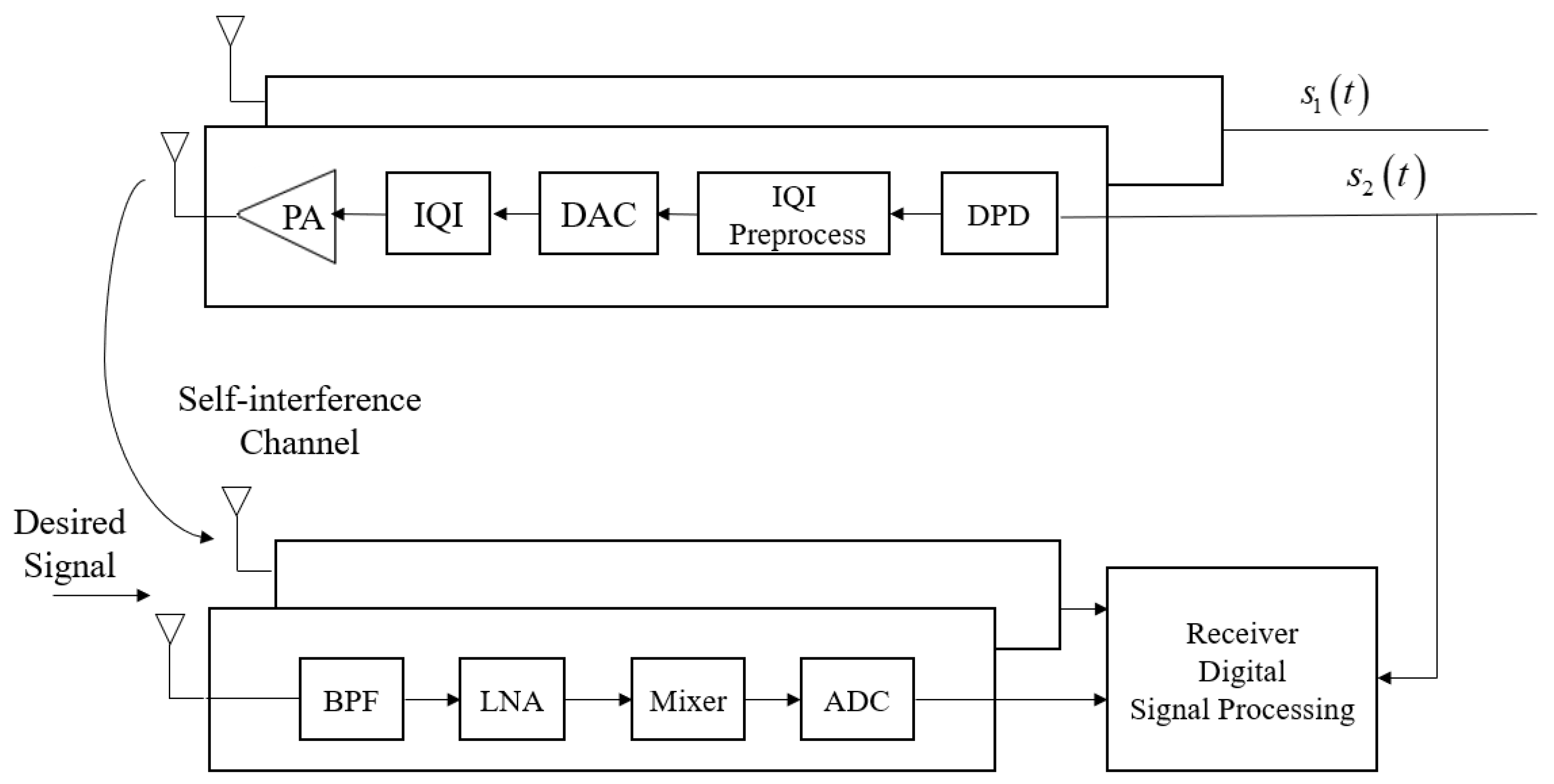
RF distortions at the transmitter are caused by the following factors: IQ imbalance; nonlinearity in PA responses; self-interference in multiple-input, multiple-output (MIMO) operation; and RF cancellation. The block diagram of the proposed multiantenna full-duplex transceiver system is displayed in Figure 1. This system contains a predistortion compensation system for the transmitter, which is essential for realizing robust, multiantenna full-duplex communication.
Figure 1.
Block diagram of the proposed multiantenna full-duplex communication system with distortion compensation.
The transceiver of the proposed system comprises distinct transmission and reception units, each of which uses similar signal-processing methodologies. The subsequent sections describe units with a parallel design. At the transmitter end, the following RF distortion factors are sequentially processed: IQ imbalance, nonlinear PA distortion, and MIMO self-interference.
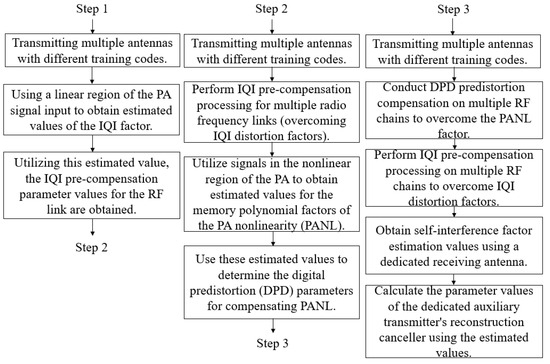
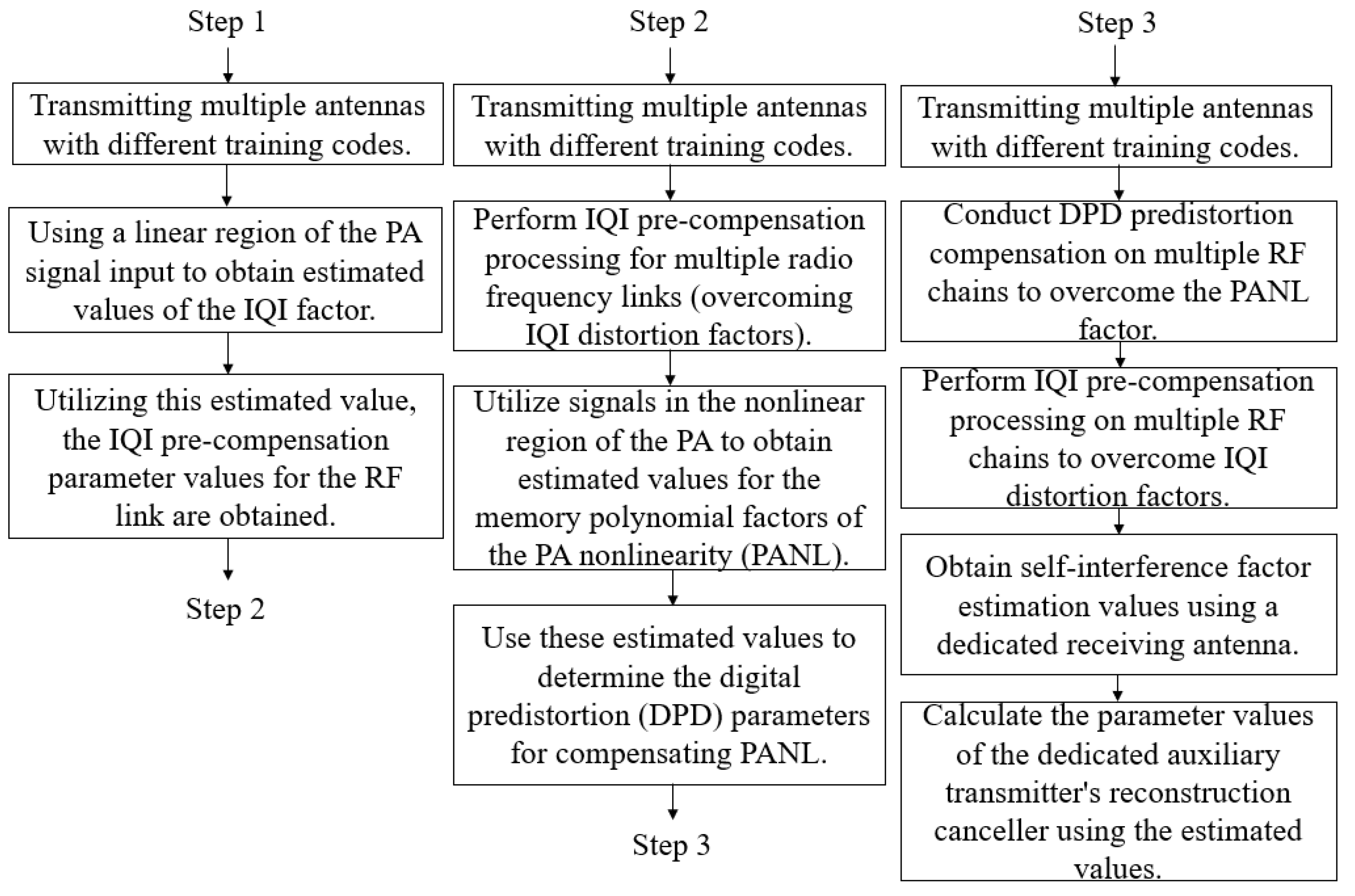
This study developed a method to address the limitations of existing methods for distortion estimation, pre-compensation, and self-interference cancellation. The steps involved in the proposed method are displayed in Figure 2.
Figure 2.
Steps involved in the proposed method.
Step 1 of the proposed method involves estimation of the IQ imbalance, Step 2 involves the estimation of the nonlinear PA distortion, and Step 3 involves using an RF canceller to mitigate self-interference. Initially, algorithms were employed from theoretical study and simulation analysis. Subsequently, the developed method was experimentally validated by implementing it on a software-defined radio platform. The ultimate objective was to create a platform that seamlessly integrates RF modules with field-programmable gate arrays (FPGAs) and suppresses all types of RF distortion.
3. DPD Techniques for Addressing IQ Imbalance, MIMO Self-Interference, and PA Distortion
Steps 1–3 of the proposed method are explained in detail in Section 3.1, Section 3.2 and Section 3.3, respectively.
3.1. Compensation for IQ Imbalance
When a baseband signal is modulated using an in-phase and quadrature (I/Q) modulator during high-frequency transmission, IQ imbalance arises from errors in the RF components and oscillator circuits. The present section focuses on multiantenna wireless transmission characterized by RF IQ imbalance. The channel response in the main and auxiliary signal transmission paths is affected by both IQ imbalance and self-interference phenomena; therefore, these distortions must be estimated simultaneously.
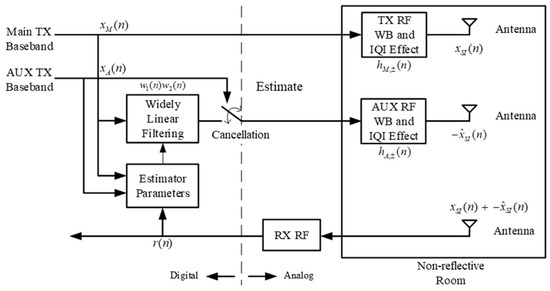
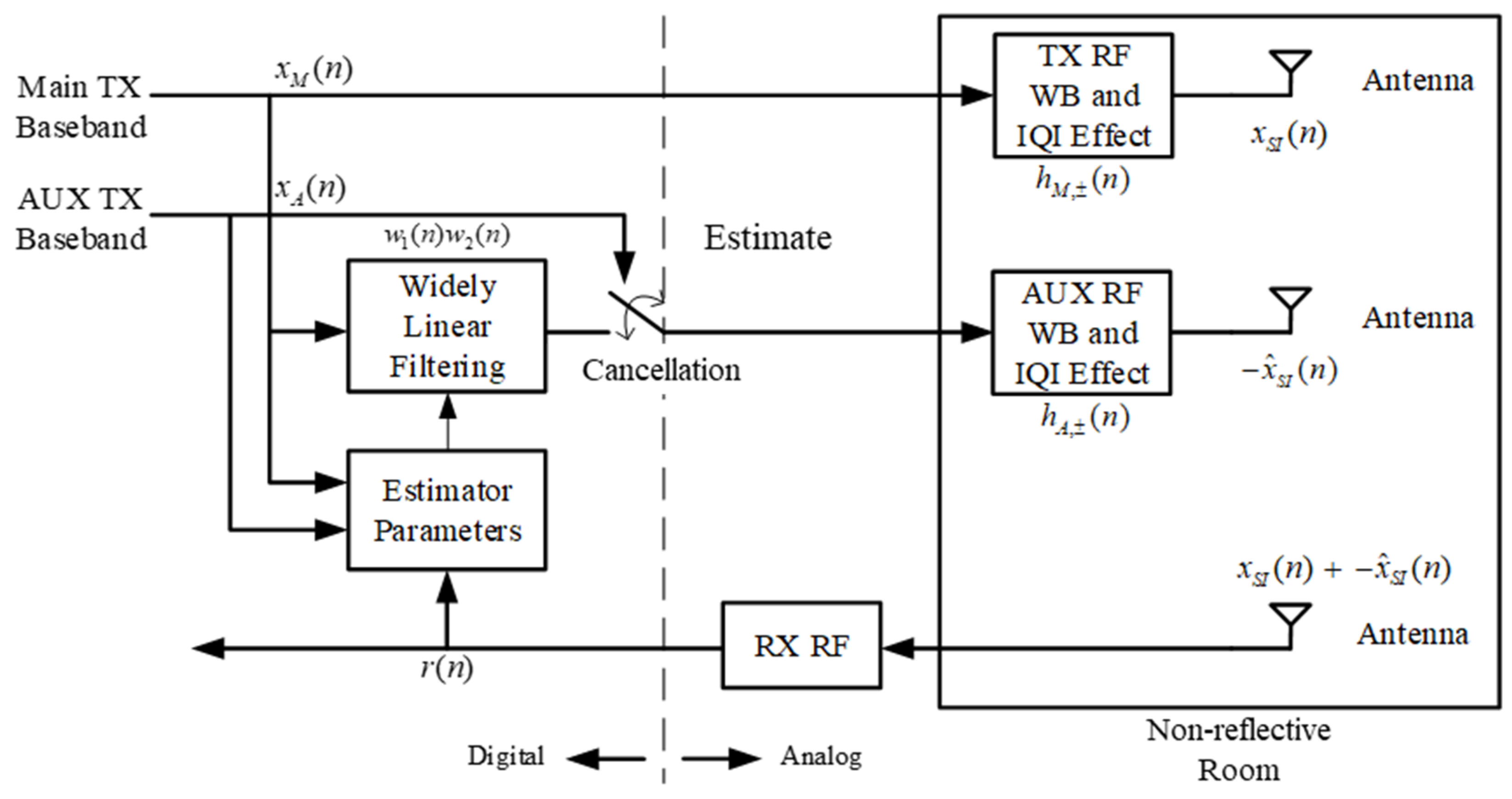
The estimated channel response, which includes the IQ imbalance, is used to calculate pre-compensation parameters for the auxiliary path. This process enables the design of an active RF generalized linear filter for distortion cancellation. Figure 3 shows the architecture developed for the active cancellation of RF self-interference signals in the main signal transmission path.
Figure 3.
Architecture for the active cancellation of RF self-interference signals in the main transmission path.
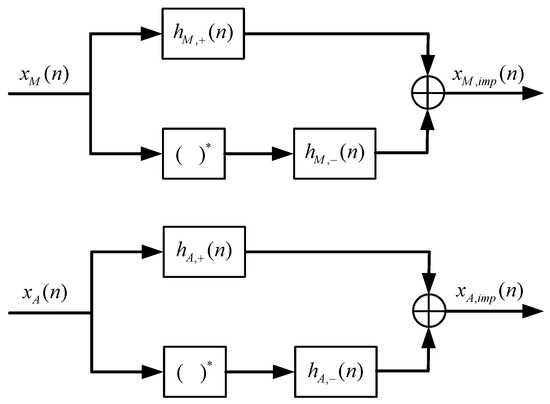
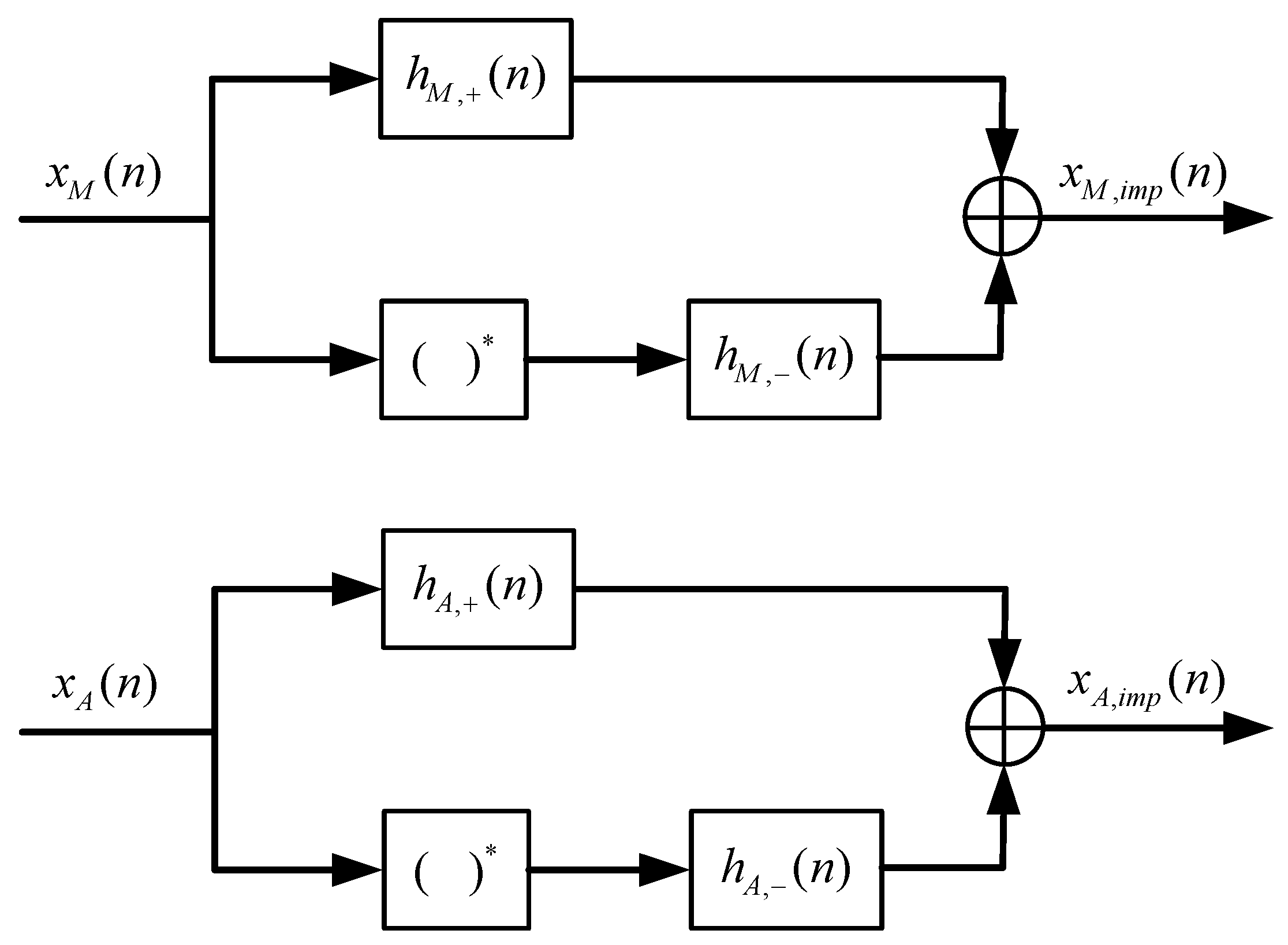
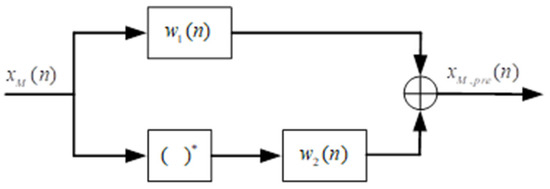
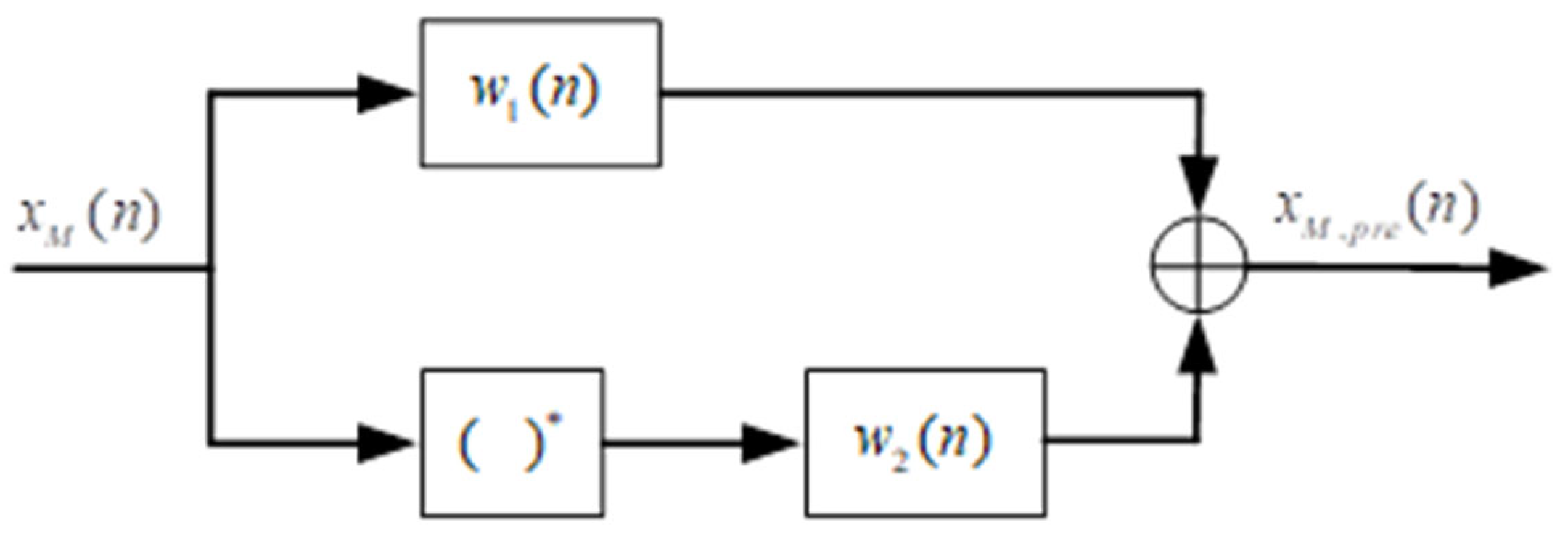
Figure 3 and Figure 4 indicate that the transmission signals in the main path and auxiliary path are affected by IQ imbalance. This imbalance must be estimated with the channel response. A general linear filter is used on the received signal to estimate the pre-compensation values and , which are used to cancel the real and image signals, respectively. The parameters and are substituted into the aforementioned filter to obtain the reconstructed reverse signal, where . Moreover, is set to approach 0 to improve the system performance. The IQ imbalance and channel estimation parameters (Figure 3) are determined using the signal . This signal comprises two known training code I/Q signals, namely, and , which are transmitted on the main and auxiliary paths, respectively, and are affected by IQ imbalance. After these signals are transmitted into the air through the antenna, the demodulated received signals with IQ imbalance for the main and auxiliary paths are generated ( and , respectively). Therefore, can be expressed as follows:
where represents the known quadrature phase-shift keying (QPSK)-modulated signal emitted by the main path with IQ imbalance, denotes the known QPSK-modulated signal emitted by the auxiliary path with IQ imbalance, and refers to the RF filter channel response for the main path with IQ imbalance. This response is expressed as follows:
where and represent the combined impulse response of the I/Q filters in the main path, and and represent the amplitude and phase imbalances, respectively, of the I/Q components in the main path. Moreover, represents the RF filter channel response of the auxiliary path affected by the IQ imbalance. This response is expressed as follows:
where and represent the combined impulse response of the I/Q filters in the auxiliary path, and and denote the amplitude and phase imbalances, respectively, of the I/Q components in the auxiliary path. The unknown channel response values and can be estimated using the LMS method, the cost function of which is given as follows:
Figure 4.
Block diagram of the channel responses and IQ imbalance in the main and auxiliary paths.
The error term of the cost function is defined as follows:
The recursive relationships for , , , and are expressed as follows:
After each cost function is differentiated, the adaptive channel response values for the main path [] and auxiliary path [] are simplified as follows:
The * means complex conjugate. And the block diagram of the channel responses is shown in Figure 4.
3.2. Compensation for Nonlinear PA Response
After compensation for the IQ imbalance is achieved, nonlinear PA responses must be addressed. This section describes two compensation methods for nonlinear PA responses: DPD and BL-DPD.
3.2.1. Digital Predistortion
A PA is a crucial component of a transmitter, and it must achieve high efficiency and linearity. Nonlinearity in the PA response can cause spectral regrowth, leading to interference in neighbouring channels. Such nonlinearity can be represented using a memory polynomial (MP) model [21], which is expressed as follows:
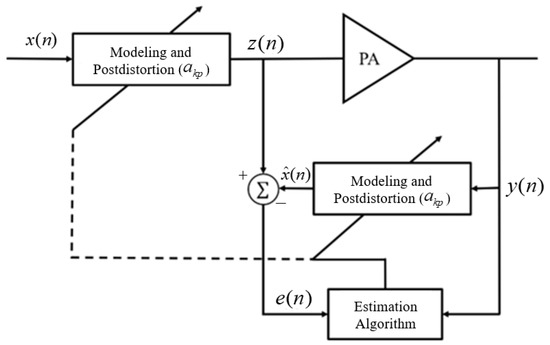
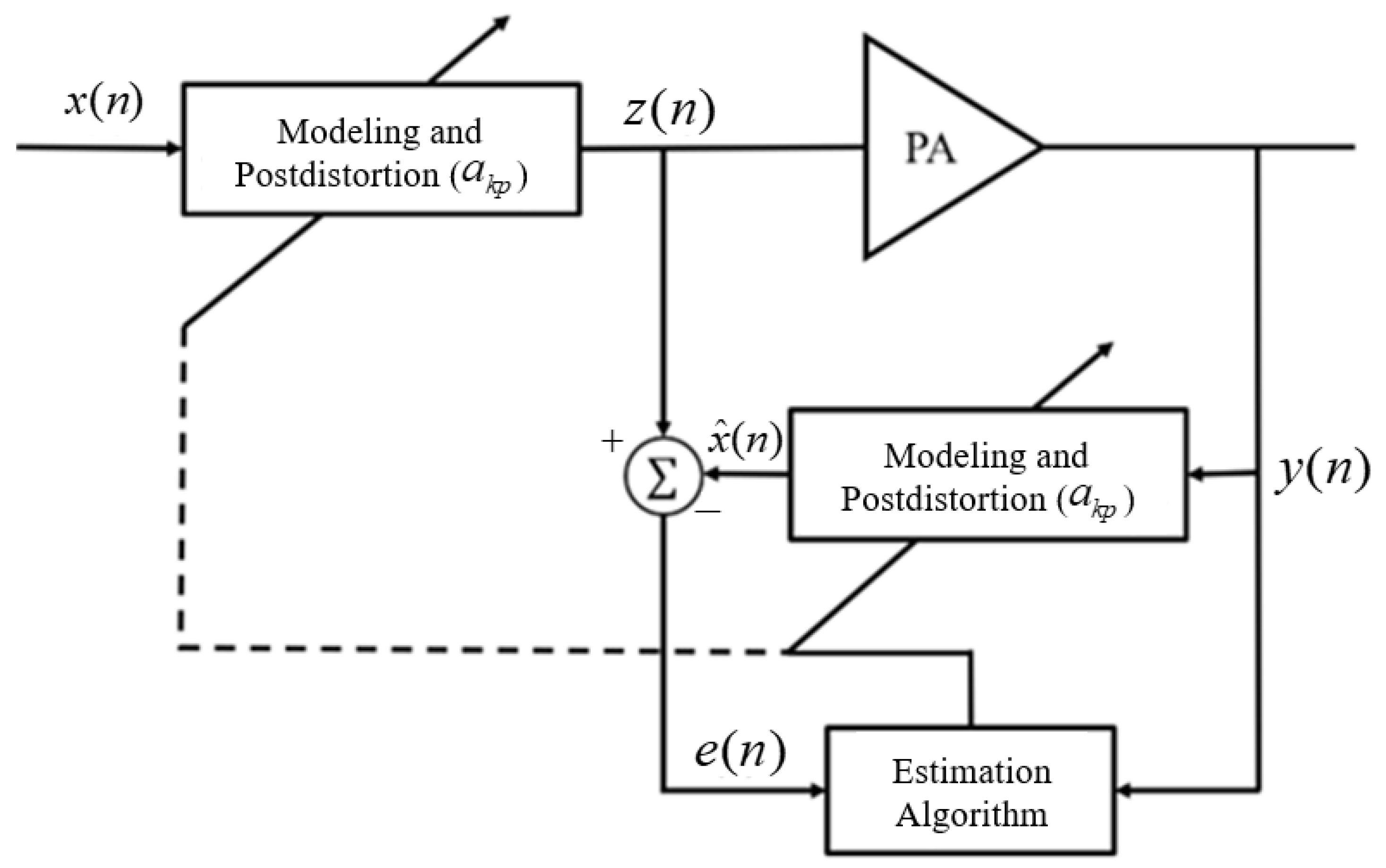
where k is the polynomial order, m denotes the memory depth, represents the parameters of the MP model (nonlinear channel), denotes the original signal source, and is the nonlinear output signal of the PA. The MP model described in Equation (8) and an indirect learning architecture (ILA) are employed for DPD. An ILA-based framework for DPD is illustrated in Figure 5.
Figure 5.
Block diagram of an ILA-based framework for DPD.
In Figure 5, represents the signal estimated by the algorithm, denotes the signal obtained after the original signal was subjected to DPD, and is the error signal. In the framework shown in Figure 5, the original signal is passed through the PA, generating the received signal . At this point, . Subsequently, is input into the estimation algorithm block, where and are processed simultaneously. Next, the MP model is used to generate the DPD parameters (), which are then used to produce . After is iteratively adjusted to refine the final DPD parameters, the generated DPD parameters () can be applied to compute . The MP model is subsequently used to generate the required new signal , which serves as the compensation signal for completing the DPD process. In an ideal situation, , where G represents the linearized gain of the PA; thus, , and the error term . Given and , the algorithm converges when the error energy is minimized.
According to the ILA in Figure 5, Equation (8) can be reformulated as follows:
where is a DPD parameter. This parameter can be derived using the least squares method as follows:
where is the matrix of basic functions for the received signal [y(n)] computed using the MP model and is the vector of [y(n)]. This matrix is defined as follows:
The dimensions of are , where N is the signal length and L represents the number of DPD parameters. a and x in Equation (10) are expressed as follows:
A distinctive feature of the proposed DPD technique is that it requires prior compensation of the IQ imbalance.
3.2.2. Band-Limited DPD
To enhance the performance of DPD, a band-limiting factor [13] is incorporated into the following equation:
where represents the original signal after bandwidth limitation, denotes the parameters of BL-DPD, is the band-limiting function, w is generated by the FIR filter, and W represents the length of the band-limiting function.
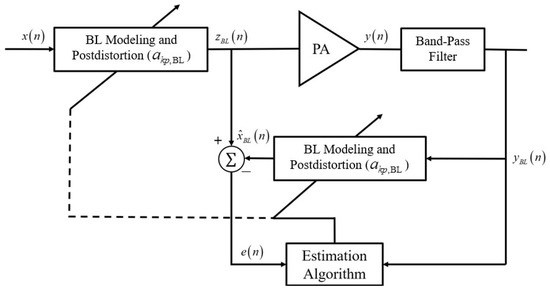
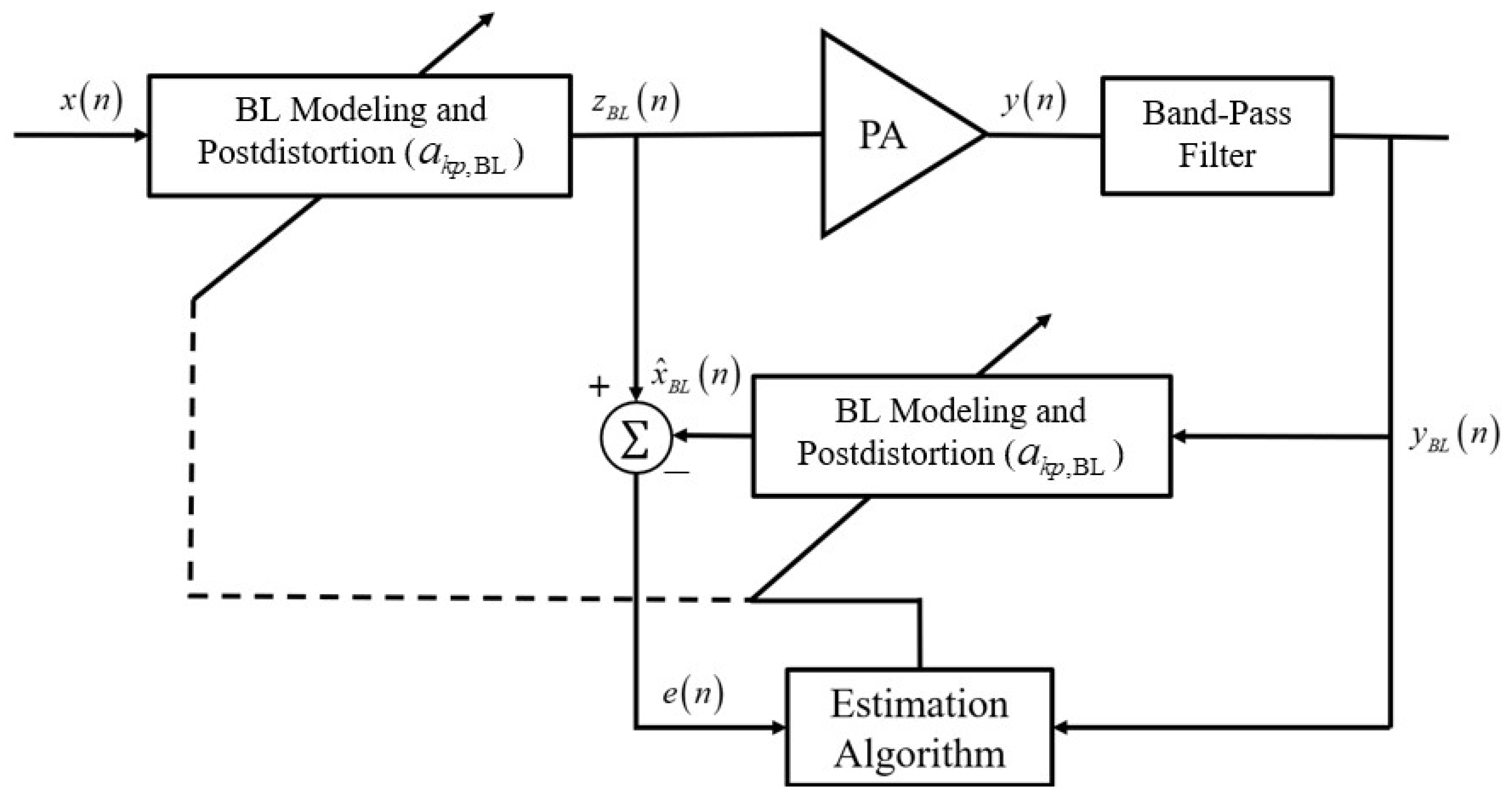
This band-limiting function can be regarded as a type of linear filter that limits the effective bandwidth processed in DPD. Traditional DPD requires the consideration of a wide nonlinear bandwidth, resulting in a large amount of data being needed for computation. By comparison, band-limited DPD is conducted within a narrower bandwidth, thereby reducing the quantity of data required for computation. The cutoff bandwidth in BL-DPD is based on bandwidth requirements for the system output. An ILA-based framework for BL-DPD is shown in Figure 6.
Figure 6.
ILA-based framework for BL-DPD.
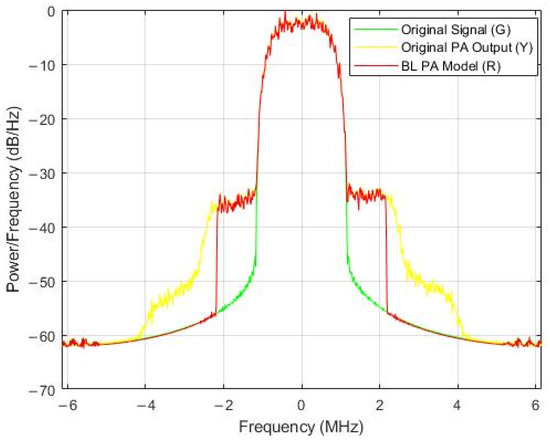
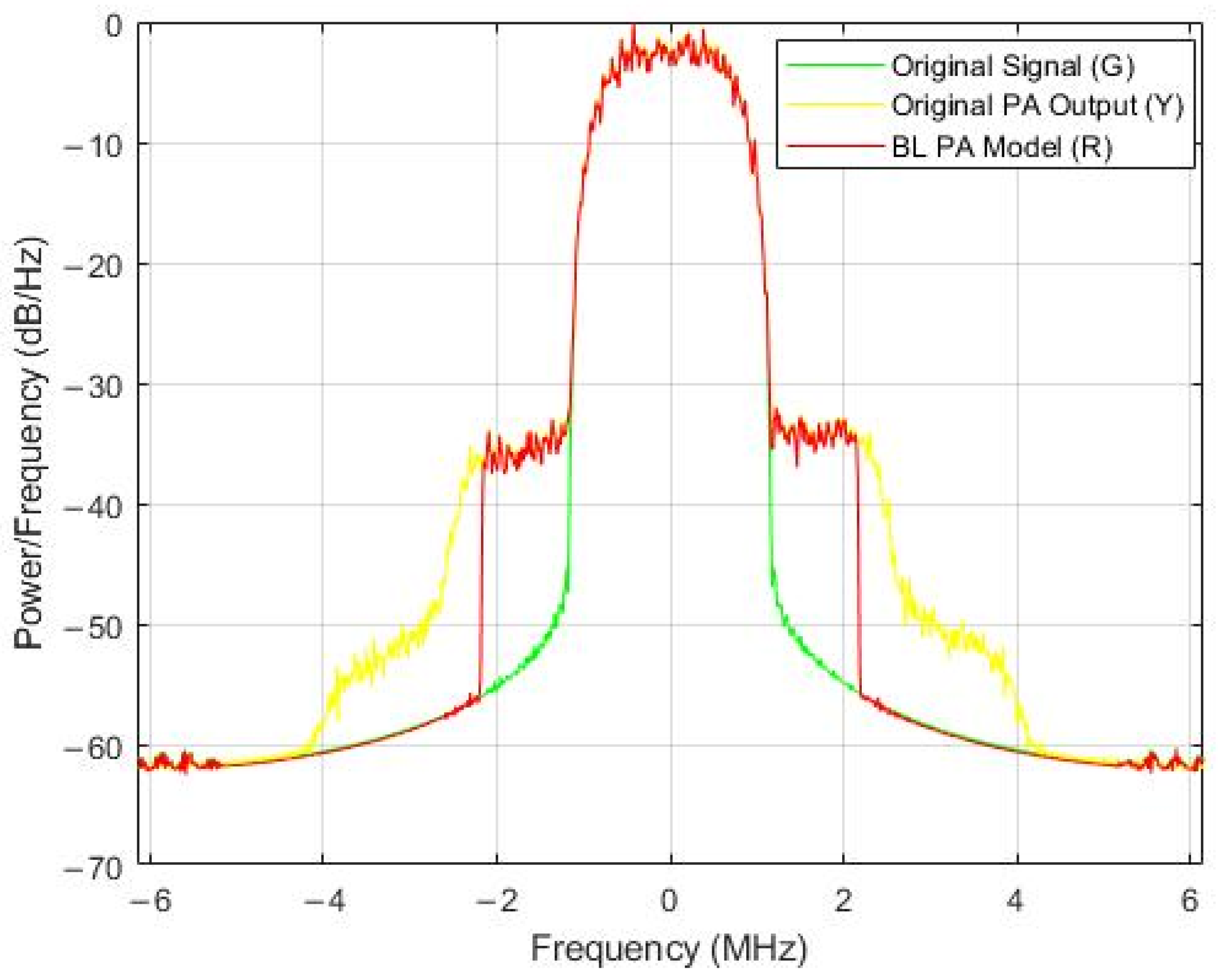
In Figure 6, represents the band-limited signal estimated by the estimation algorithm, denotes the signal obtained after the original signal was subjected to BL-DPD, and represents the band-limited nonlinear output signal. The framework shown in Figure 6 is used to simulate the limitations when an ADC operates with a relatively low sampling rate and is therefore unable to accommodate signals of excessively high bandwidth. The bandwidth of the nonlinear output is limited because of the use of a bandpass filter block, which allows BL-DPD processing to be conducted based on the received limited bandwidth. The resulting spectral growth is depicted in Figure 7.
Figure 7.
The original signal (green), the signal obtained after the original signal is passed through a PA nonlinear model (yellow), and the signal acquired after the original signal is passed through a band-limited nonlinear model (red).
The signal obtained after the original signal is passed through a band-limited nonlinear model (red line in Figure 7) is considered the final signal received at the receiver. The bandwidth of this signal can be flexibly adjusted by modifying the linear filter within the band-limited nonlinear model. The bandwidth of the linear filter must be greater than the original signal bandwidth; otherwise, the in-band original signal will be truncated, preventing the DPD block from receiving complete signal information, and thus, affecting its performance.
The basic algorithmic flow remains the same as DPD in Equation (10), and all parameters of the damped Newton algorithm must be band-limited. The mathematical formulation of this algorithm is given as follows:
where is the basis function matrix of the band-limited received signal. This matrix is based on the band-limited MP model, and the definition of is similar to that of Y in Equation (11), but with replaced by . and in Equation (14) are expressed as follows:
where is the basis function matrix of the band-limited original signal. This matrix is based on the band-limited MP model, with dimensions of , where N represents the signal length, L represents the number of DPD parameters. represents the BL-DPD parameter matrix, which has dimensions of . The BL-DPD parameter estimation algorithm is expressed as follows:
where
In Equation (17), represents the band-limited signal output after the separation of DPD parameters; is the signal matrix obtained after BL-DPD processing, with dimensions of , which are the same as those of the original signal; and is the band-limited original signal matrix, also with dimensions of . denotes the basis function matrix of the band-limited original signal. This matrix is based on the band-limited MP model and has dimensions of , where N is the length of the original signal.
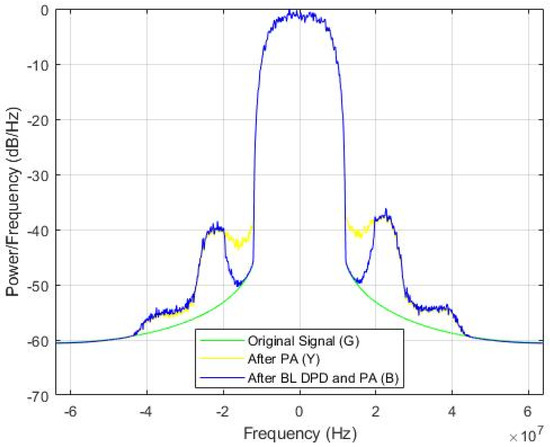
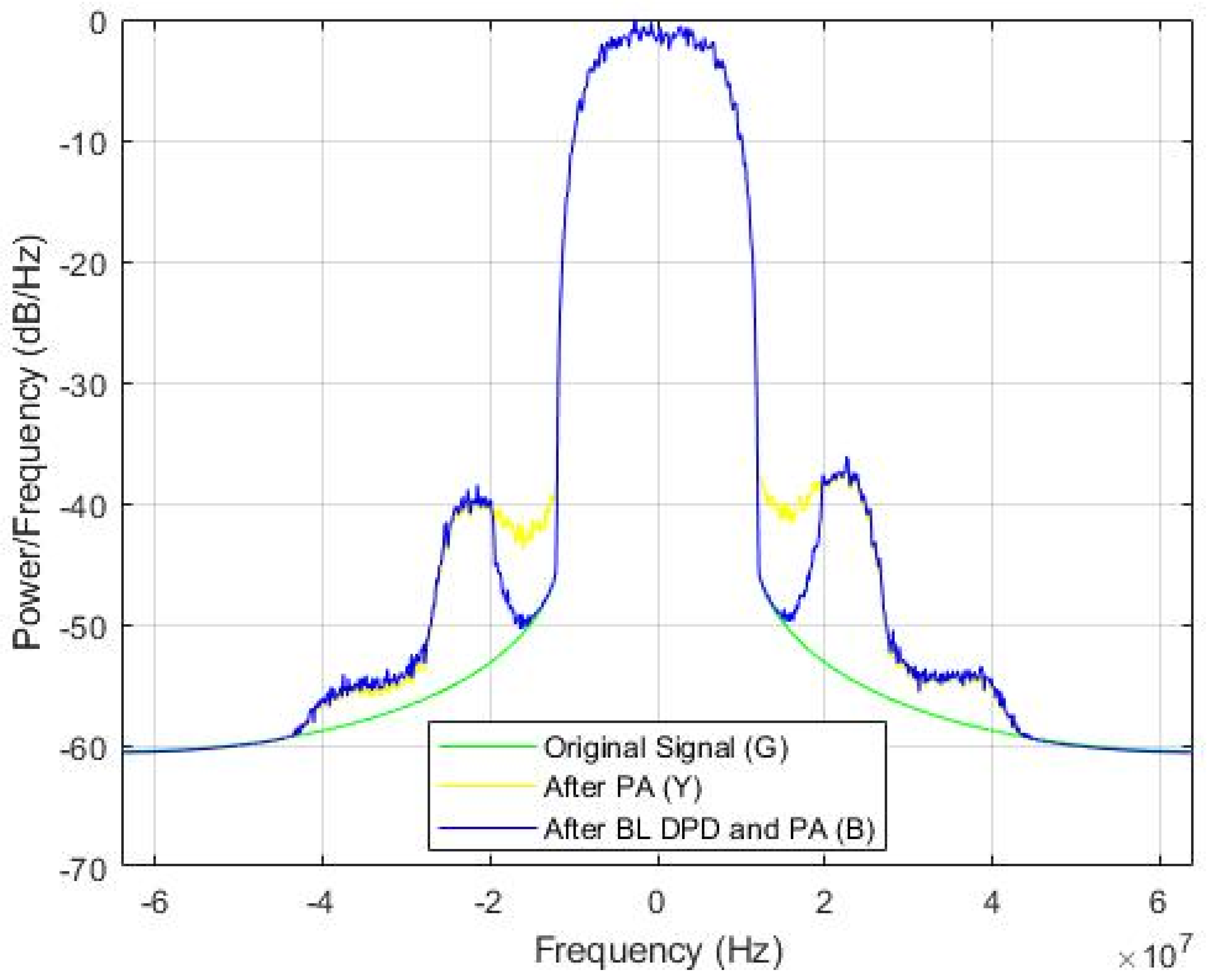
The aforementioned mathematical formula can be used to convert the original signal into a band-limited predistorted signal (Figure 8).
Figure 8.
The original signal (green), the signal obtained after the original signal is passed through a nonlinear model (yellow), and the signal acquired after the original signal is subjected to BL-DPD and then passed through a nonlinear model (blue).
Figure 8 shows that BL-DPD processing allows the original DPD to be confined within a specific bandwidth, which enhances the overall system’s design flexibility and enables it to handle excessively wide spectra.
3.3. Active RF Preprocessing Techniques for Addressing Multiantenna Self-Interference
This section focuses on the self-interference encountered in multiantenna systems by describing advanced compensation techniques for improving the overall transmission performance of multiantenna communication systems.
Figure 9 displays the architecture of a generalized linear cancellation filter for the pre-compensation parameters, i.e., and in the auxiliary path.
Figure 9.
Block diagram of a generalized linear cancellation filter for the pre-compensation parameters, i.e., and in the auxiliary path.
The main and auxiliary paths contain the same signal , the * means complex conjugate; however, the pre-compensation parameters and must be determined for the signal transmitted through the auxiliary path to generate the reconstructed inverse signal . Note that at the receiver, the training sequences are employed to correlate with the received signal and to synchronize the main and auxiliary paths’ received signal [22]. To achieve self-interference cancellation, the received signal must approach 0 [6,23,24]. This signal can be expressed as follows:
Equation (18) can be revised as follows:
This equation must satisfy the following expressions:
The matrix form of Equation (20) is given as follows:
The parameters and are determined through the least squares method by using a pseudoinverse matrix as follows:
where . Moreover, and are the Toeplitz matrix forms of and , respectively.
4. Simulation and Experimental Verification of the Proposed Method
The proposed distortion cancellation method was implemented using the software and hardware shown in Figure 2. The experimental validation of the proposed method involved two parts. First, MATLAB R2021b was used to simulate signals affected by different types of distortion. Second, the M3force C1056B transceiver module, which is produced by Industrial Technology Research Institute(ITRI), Taiwan, was deployed in full-duplex mode to compute compensation parameters for the suppression of interference factors.
4.1. Software Simlation Verification
First, this section aims to verify the algorithm proposed in Section 3 regarding overcoming factors such as IQ imbalance, nonlinear PA distortion, and MIMO self-interference. Therefore, multiple simulations were conducted to validate the feasibility of the proposed method using a software-based platform. The subsequent Section 4.2 further discusses the practical software platform experiments performed to experimentally verify the effectiveness of the proposed techniques.
Subsequently, the simulation parameters are listed in Table 2, and multiple simulation scenarios were conducted under different conditions.
Table 2.
Imbalance simulation parameters.
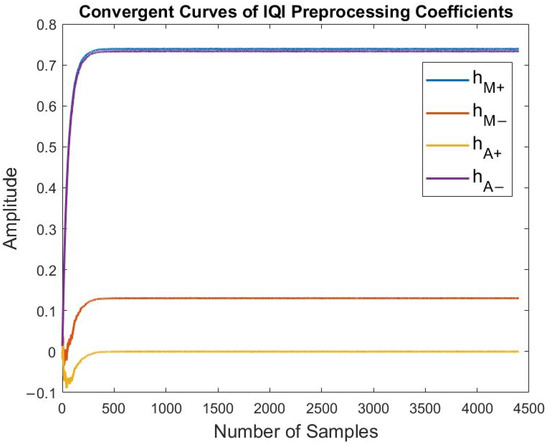
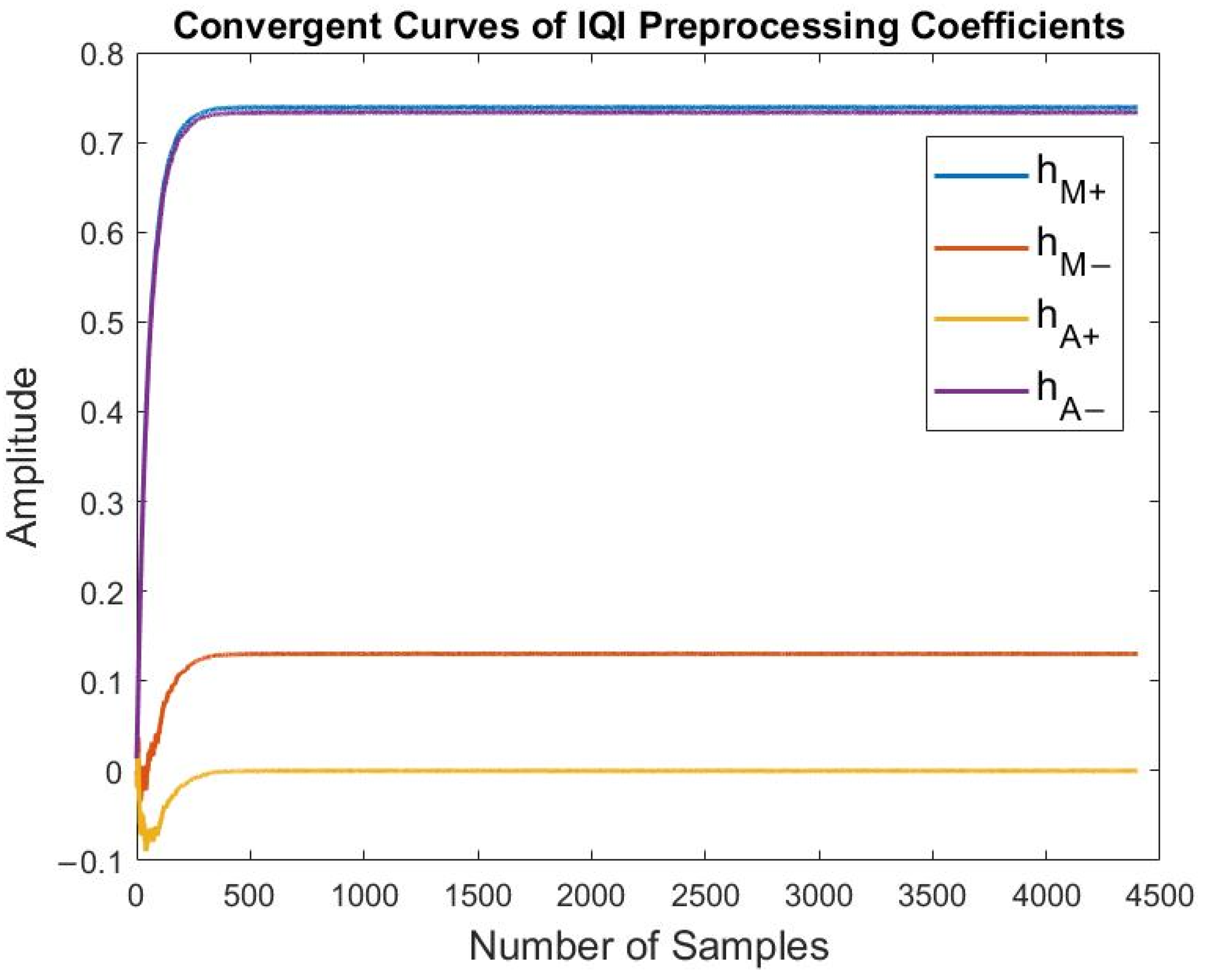
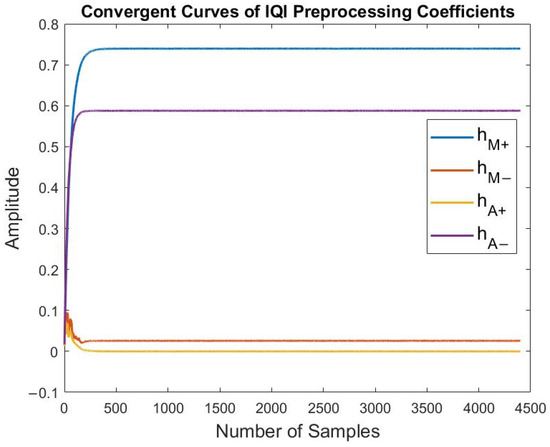
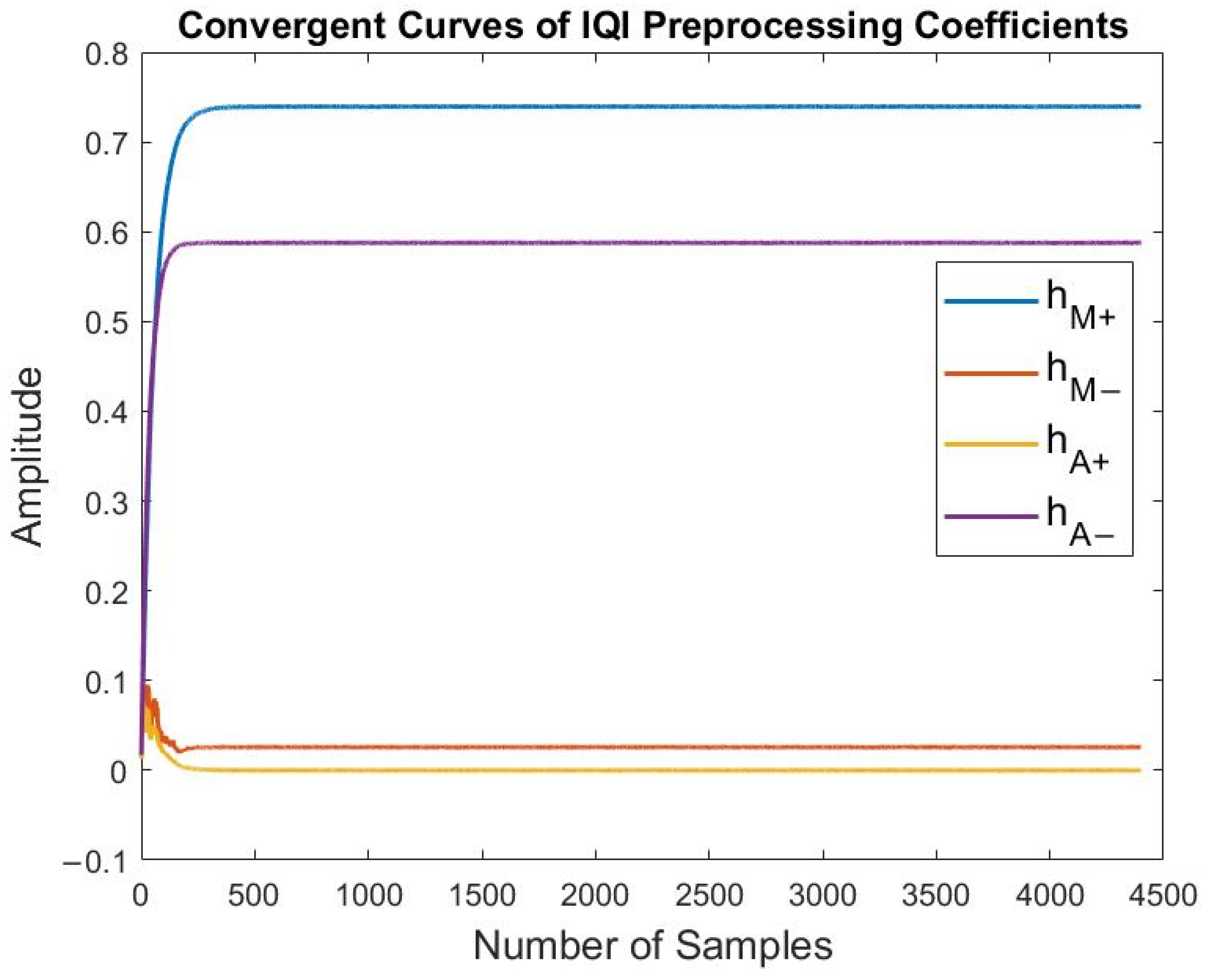
The first simulation scenario addressing the IQ imbalance issue corresponds to the process shown in Figure 2. In the first stage, the PA operates in its linear region, where the IQ imbalance parameter estimation and pre-compensation are performed. In this simulation, two different conditions were considered for the performance comparison. The first condition assumed a phase imbalance of 10° and an amplitude imbalance of 0.2 dB. The simulation results for the four IQ imbalance parameters (as defined in Equation (7)) are shown in Figure 10.
Figure 10.
Convergent curve of IQ imbalance preprocessing coefficients.
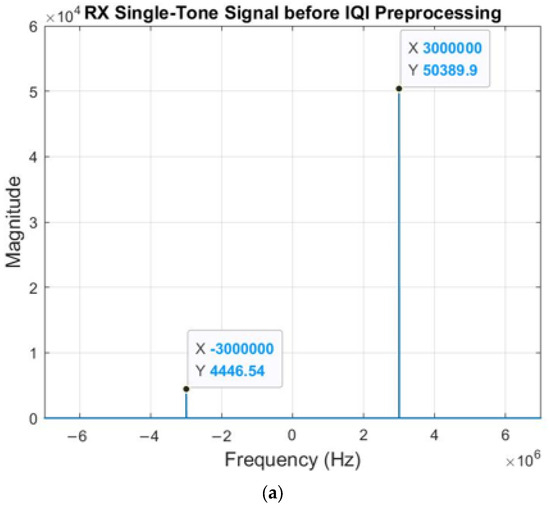
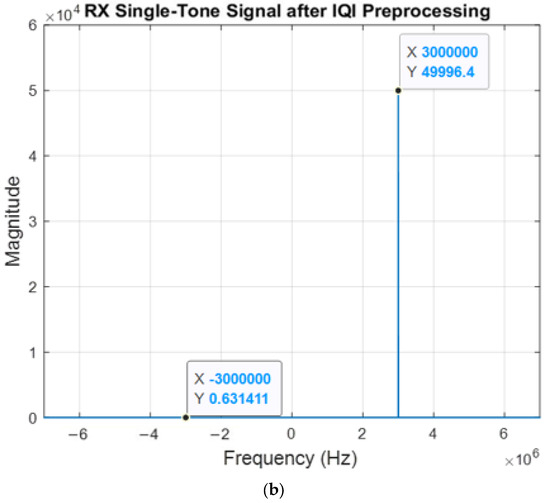
The convergence curve of the estimated parameters shows that convergence was achieved after approximately 300 samples. As illustrated in the single-tone test spectrum in Figure 11, the original single-tone signal was located at 3 MHz, while the IQ imbalance induced image tone appeared at –3 MHz. After applying the proposed IQ imbalance pre-compensation, the image tone was suppressed by approximately –76 dB (with its amplitude reduced from 4446.4 to 0.63), demonstrating excellent performance.
Figure 11.
(a) RX single-tone signal before IQ imbalance preprocessing. (b) RX single-tone signal after IQ imbalance preprocessing.
The second simulation scenario considered an IQ imbalance condition with a phase imbalance of 2° and an amplitude imbalance of 2 dB. The corresponding results are shown in Figure 12.
Figure 12.
Convergent curves of IQ imbalance preprocessing coefficients.
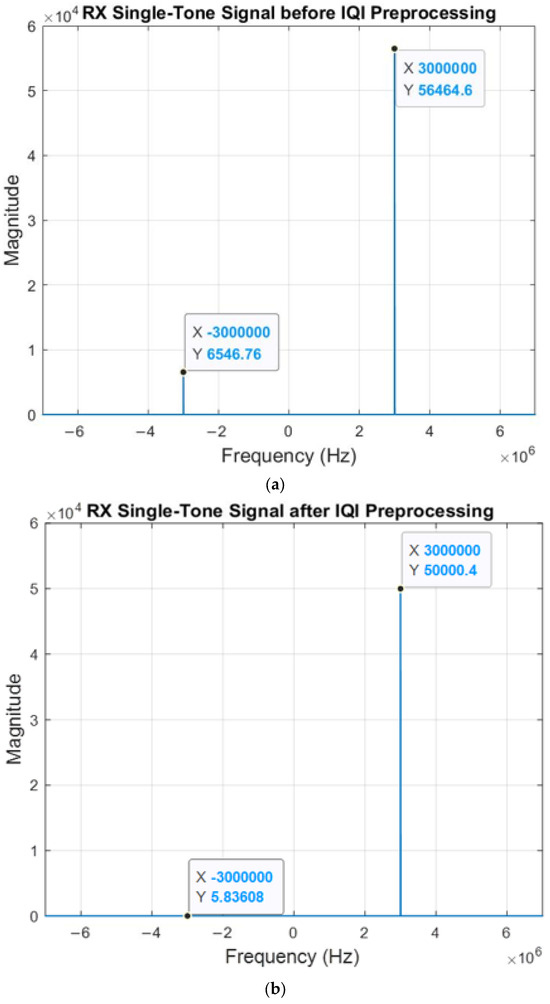
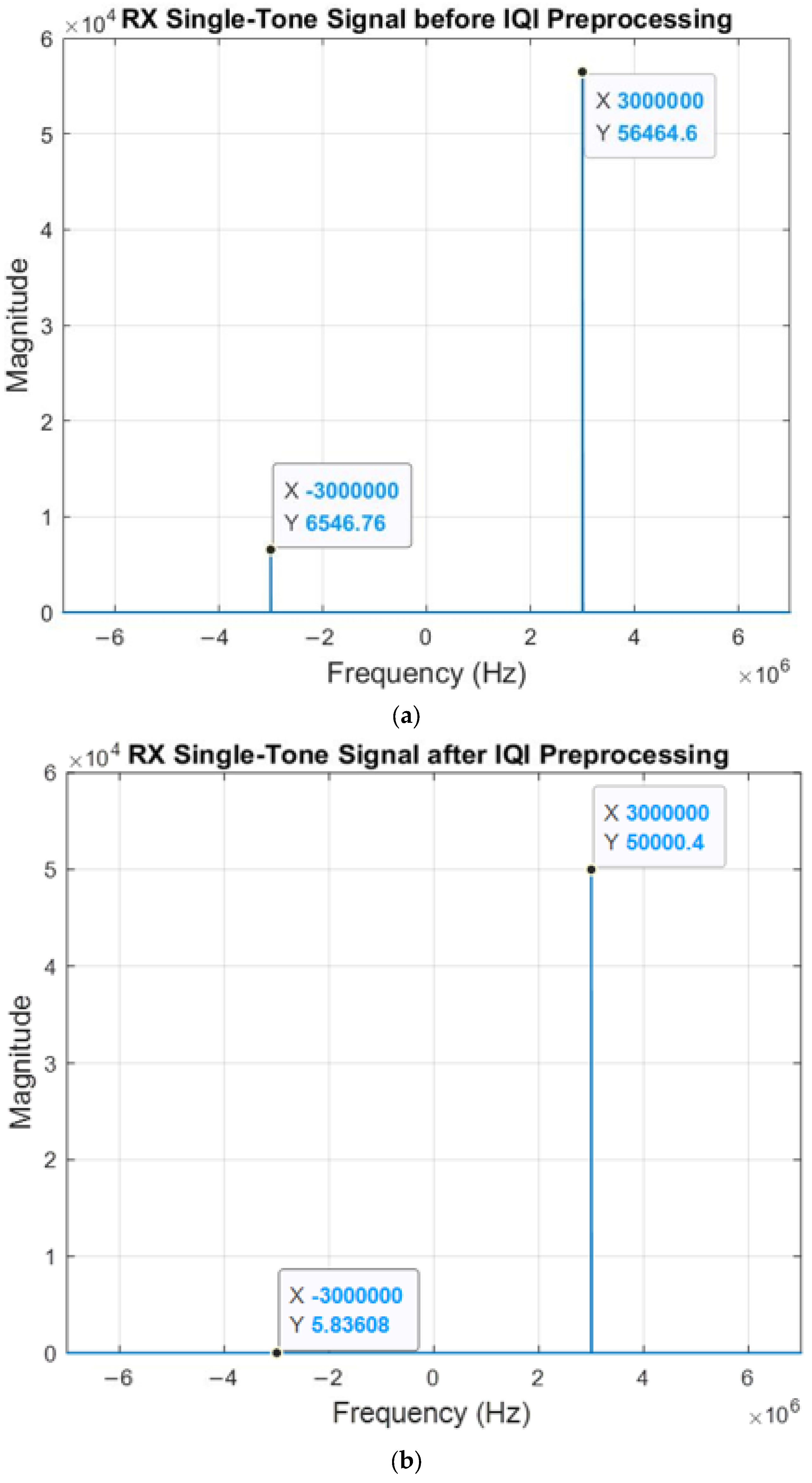
The four IQ imbalance parameters converged after approximately 300 samples. As shown in Figure 13, after applying IQ imbalance pre-compensation, the image tone of the single-tone signal was suppressed by about –61 dB, with its amplitude reduced from 6546.76 to 5.83. The above simulations confirm the excellent IQ imbalance suppression performance achieved in Step 1 of Figure 2.
Figure 13.
With phase imbalance of 2°, (a) RX single-tone signal before IQ imbalance preprocessing. (b) RX single-tone signal after IQ imbalance preprocessing.
The second simulation investigated the combined effects of IQ imbalance and nonlinear PA distortion, with the corresponding parameter settings listed in the following table. This scenario corresponded to the integrated process of Step 1 and Step 2 in Figure 2, where IQ imbalance pre-compensation was first applied, followed by nonlinear PA pre-compensation. In this simulation, two different QAM schemes (64-QAM and 256-QAM) were adopted for the performance comparison. The first case considered an IQ imbalance condition with a phase imbalance of 10° and an amplitude imbalance of 0.2 dB, while the PA nonlinearity was applied to the transmitted 64-QAM signal. The simulation results are shown in Figure 14.
Figure 14.
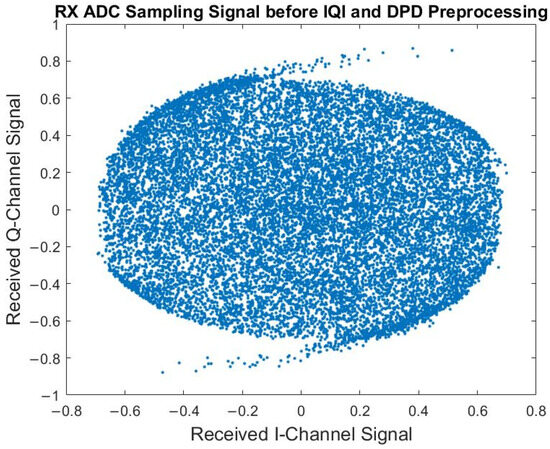
64-QAM RX ADC sampling signal before IQ imbalance and DPD preprocessing.
First, the I/Q signal captured at the receiver’s ADC is shown in the figure, where the I/Q constellation exhibits an elliptical shape, indicating the presence of both IQ imbalance distortion and PA nonlinearity. Subsequently, the received I/Q data were synchronized by applying time synchronization using a fixed training sequence to locate the peak correlation point. Afterward, oversampled signals were downsampled to the symbol rate, and the resulting constellation diagram is shown in Figure 15.
Figure 15.
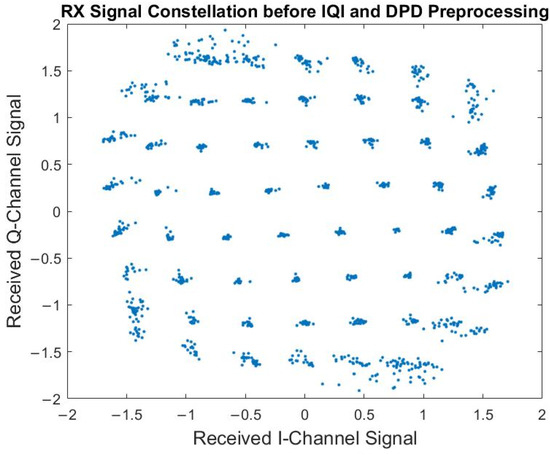
64-QAM RX signal constellation before IQ imbalance and DPD preprocessing.
The constellation diagram exhibits significant outer-ring compression and noticeable phase and amplitude distortions before the IQ imbalance pre-compensation and DPD preprocessing were applied.
Subsequently, after applying the IQ imbalance and DPD preprocessing, a well-restored 64-QAM constellation diagram was obtained, as shown in Figure 16.
Figure 16.
64-QAM RX signal constellation after IQ imbalance and DPD preprocessing.
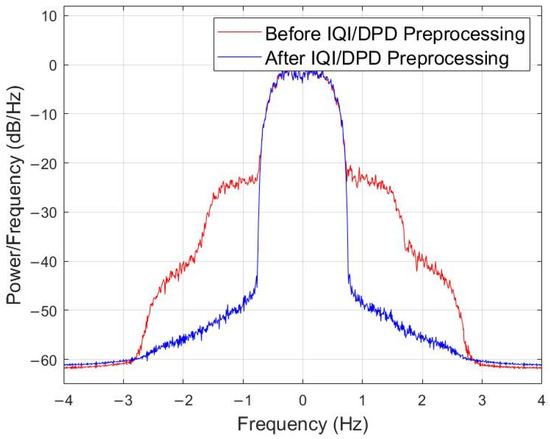
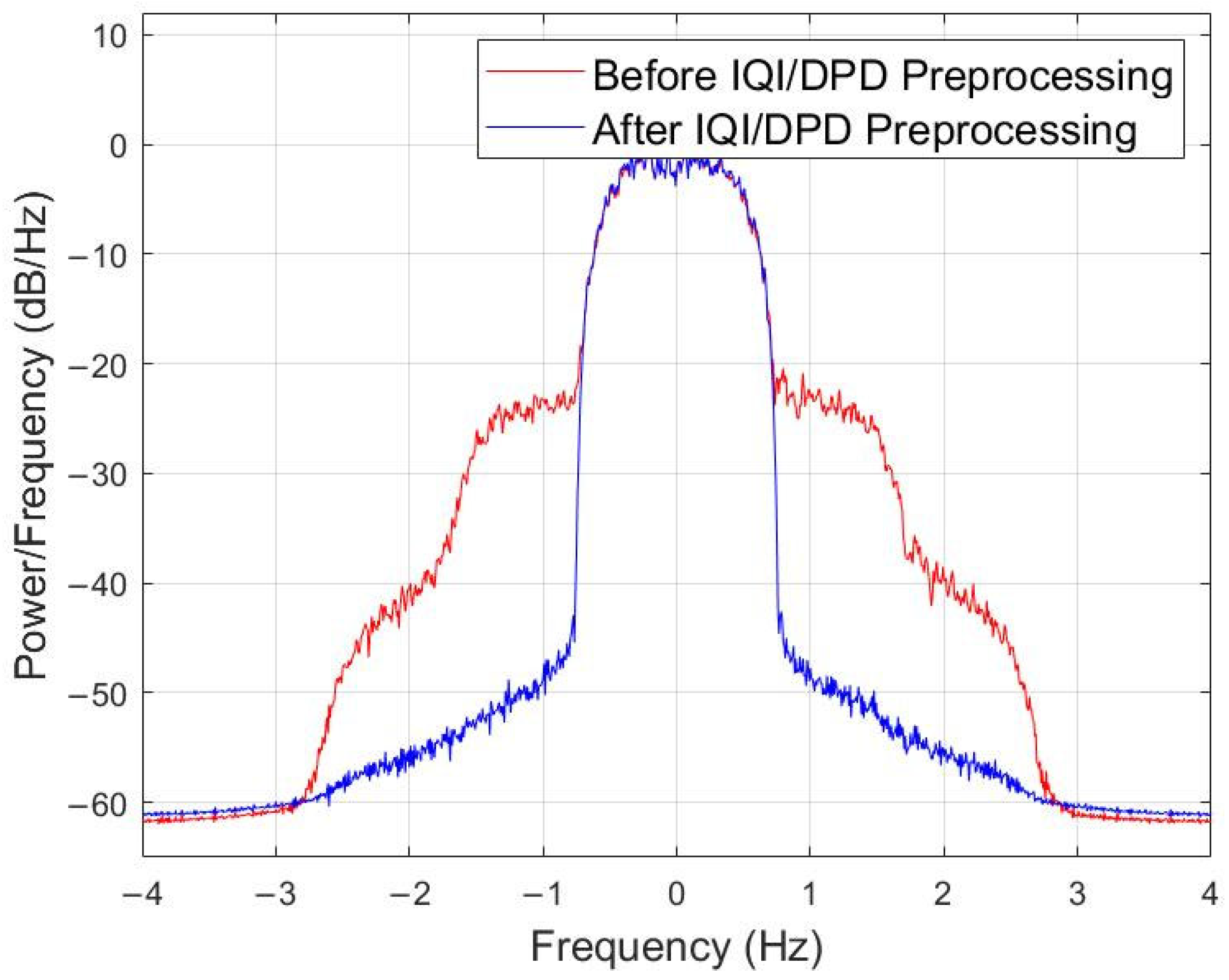
The spectra before and after IQ imbalance/DPD preprocessing are presented in Figure 17.
Figure 17.
IQ imbalance/DPD preprocessing simulation comparison.
It is evident that the nonlinear distortion was effectively compensated by the preprocessing, resulting in a linearized spectrum. Next, to illustrate the impact of omitting the IQ imbalance pre-compensation, the comparison is shown in Figure 18.
Figure 18.
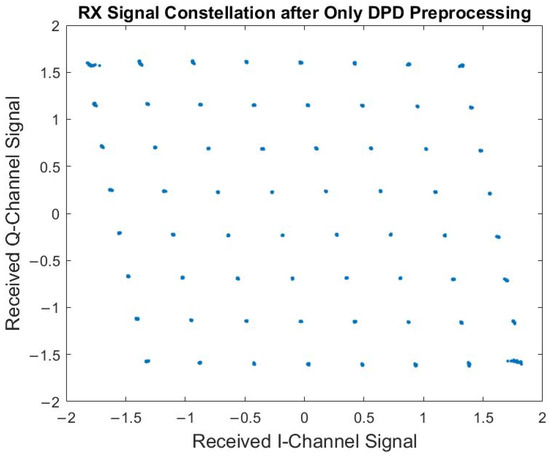
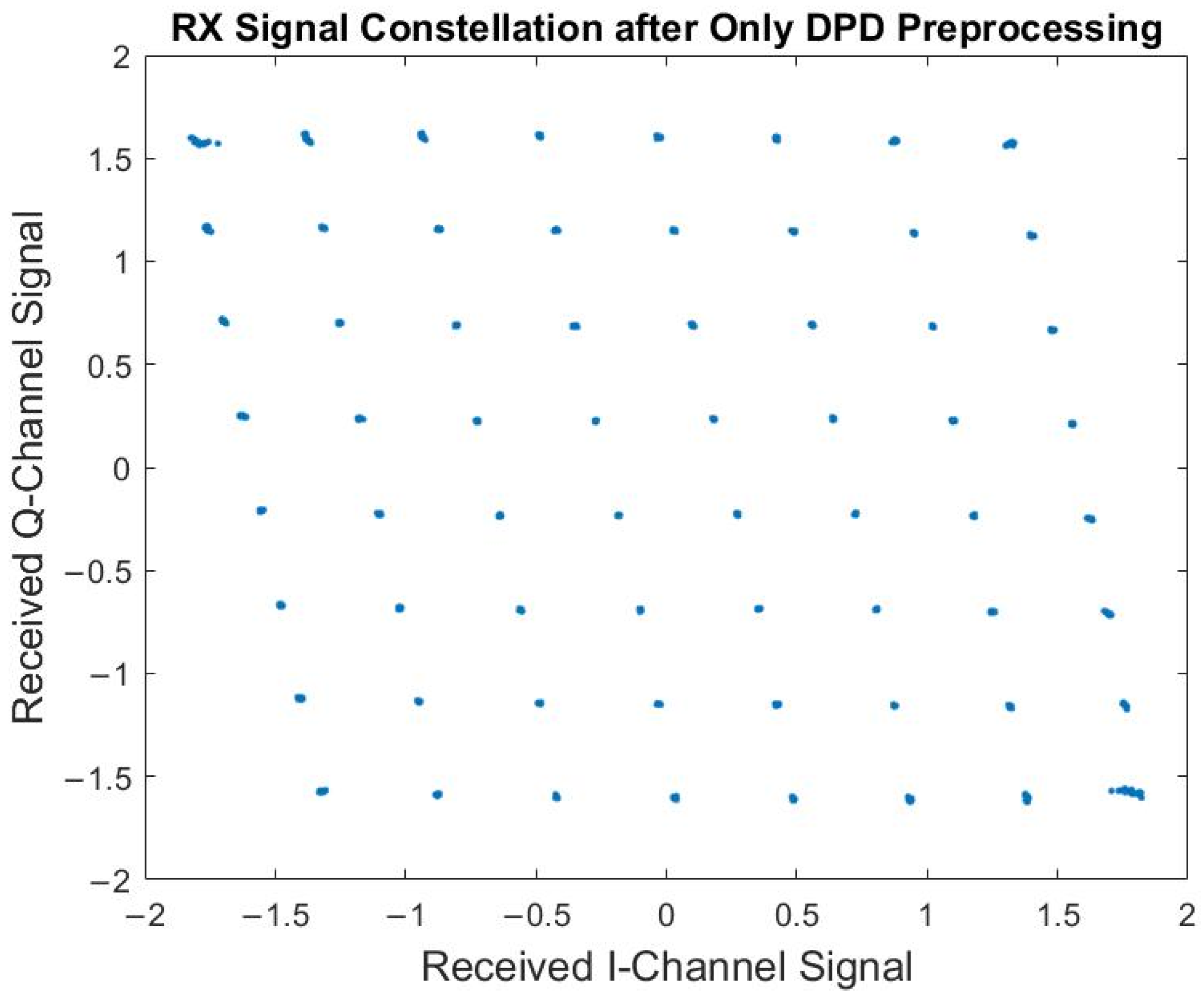
64-QAM RX signal constellation after only DPD preprocessing.
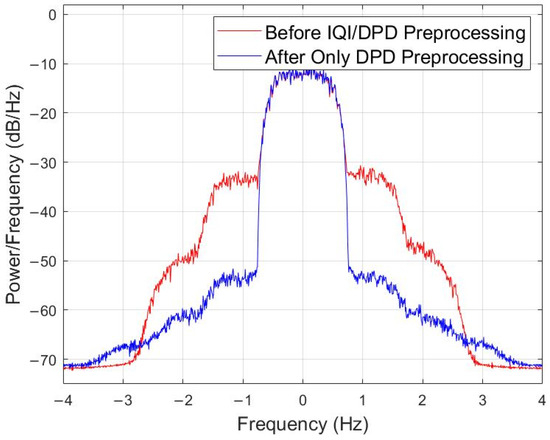
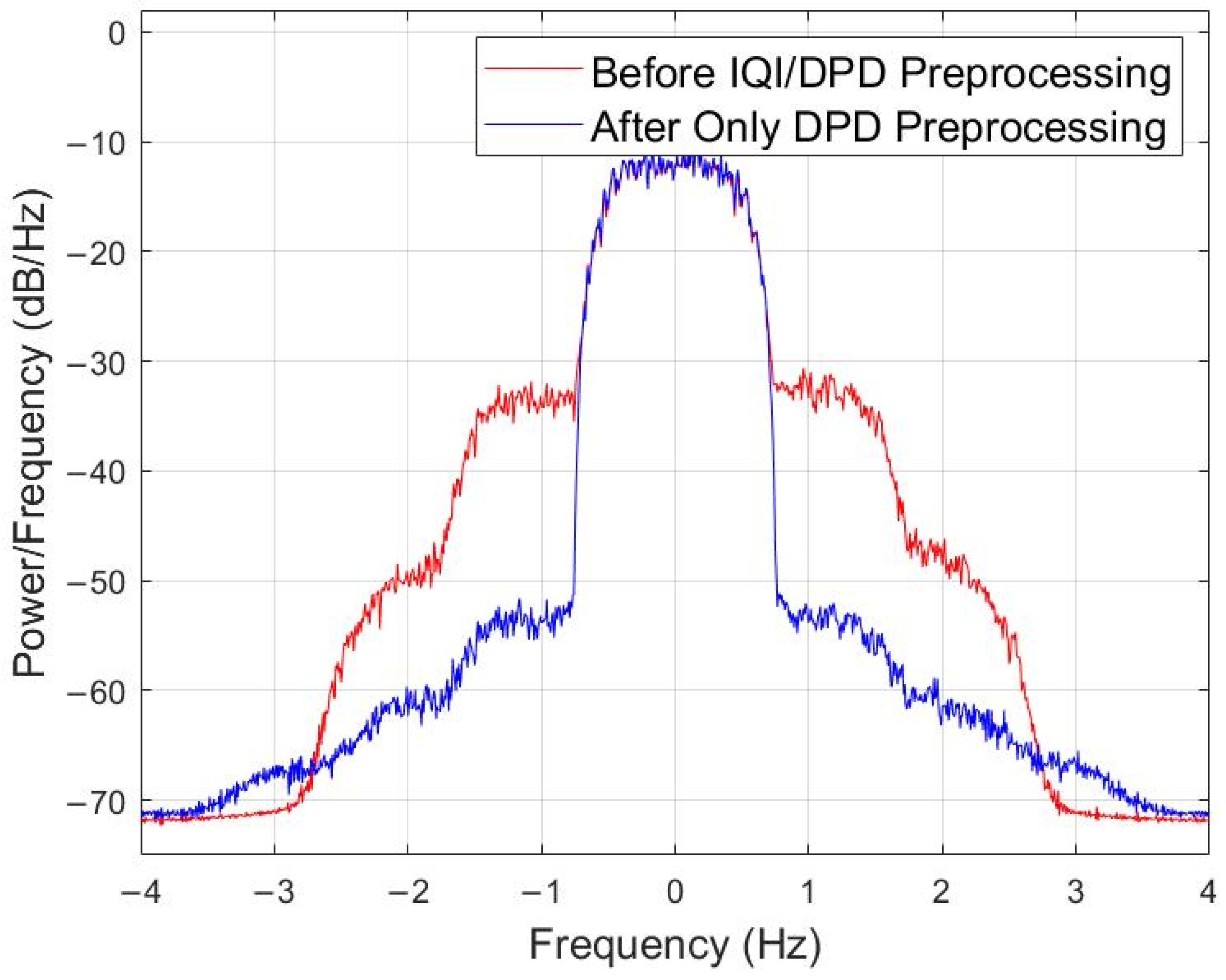
With DPD processing alone, the 64-QAM constellation appears skewed, clearly demonstrating the impact of not performing the IQ imbalance pre-compensation. The corresponding spectrum for DPD-only processing is shown in Figure 19. The linear (blue) curve is slightly higher than the curve obtained with IQ imbalance/DPD joint processing, indicating the impact caused by the lack of IQ imbalance pre-compensation.
Figure 19.
Only DPD preprocessing simulation comparison.
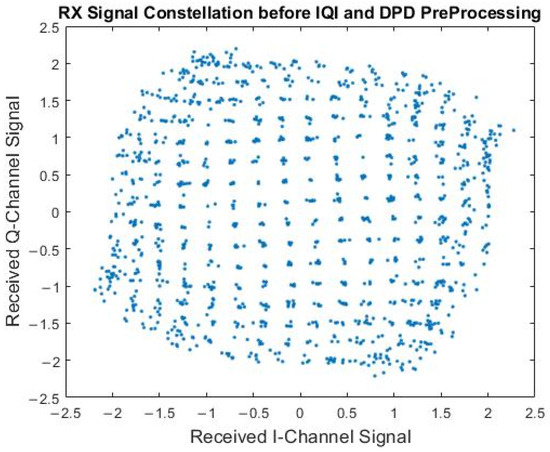
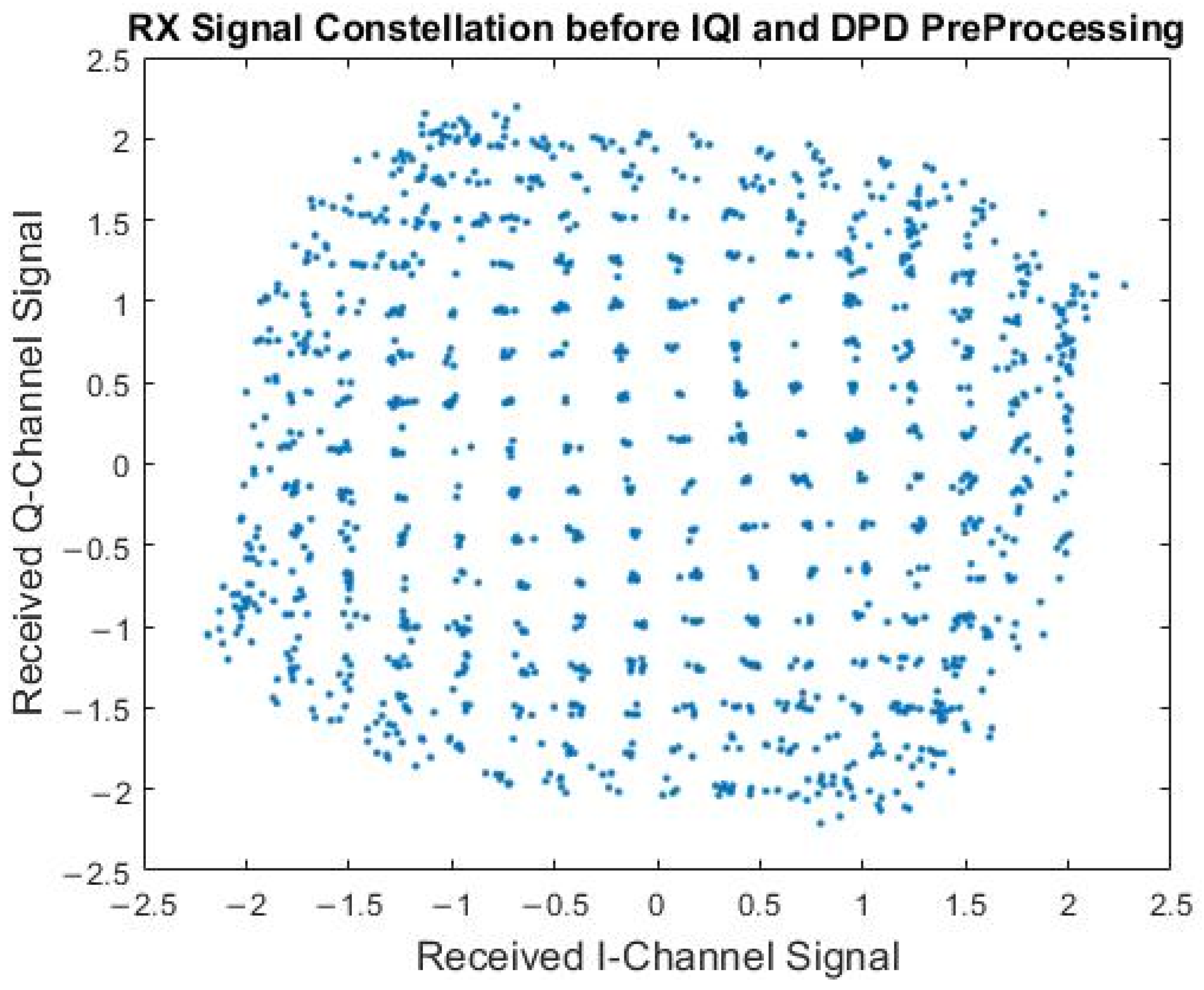
The second scenario considered an IQ imbalance condition with a phase imbalance of 10° and an amplitude imbalance of 0.2 dB, with PA nonlinearity applied to a 256-QAM transmitted signal. In this simulation, before applying the IQ imbalance/DPD compensation, the received constellation diagram is shown in Figure 20.
Figure 20.
256-QAM RX signal constellation before IQ imbalance and DPD preprocessing.
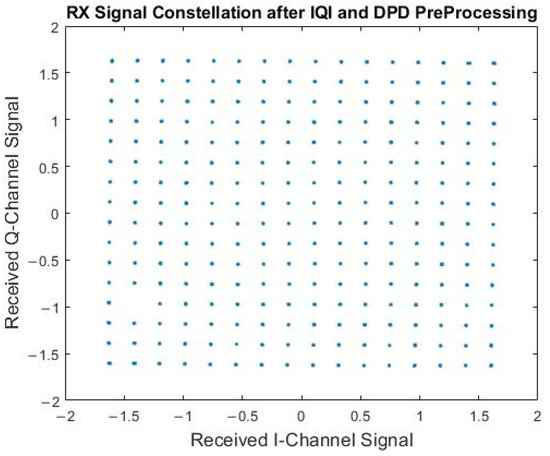
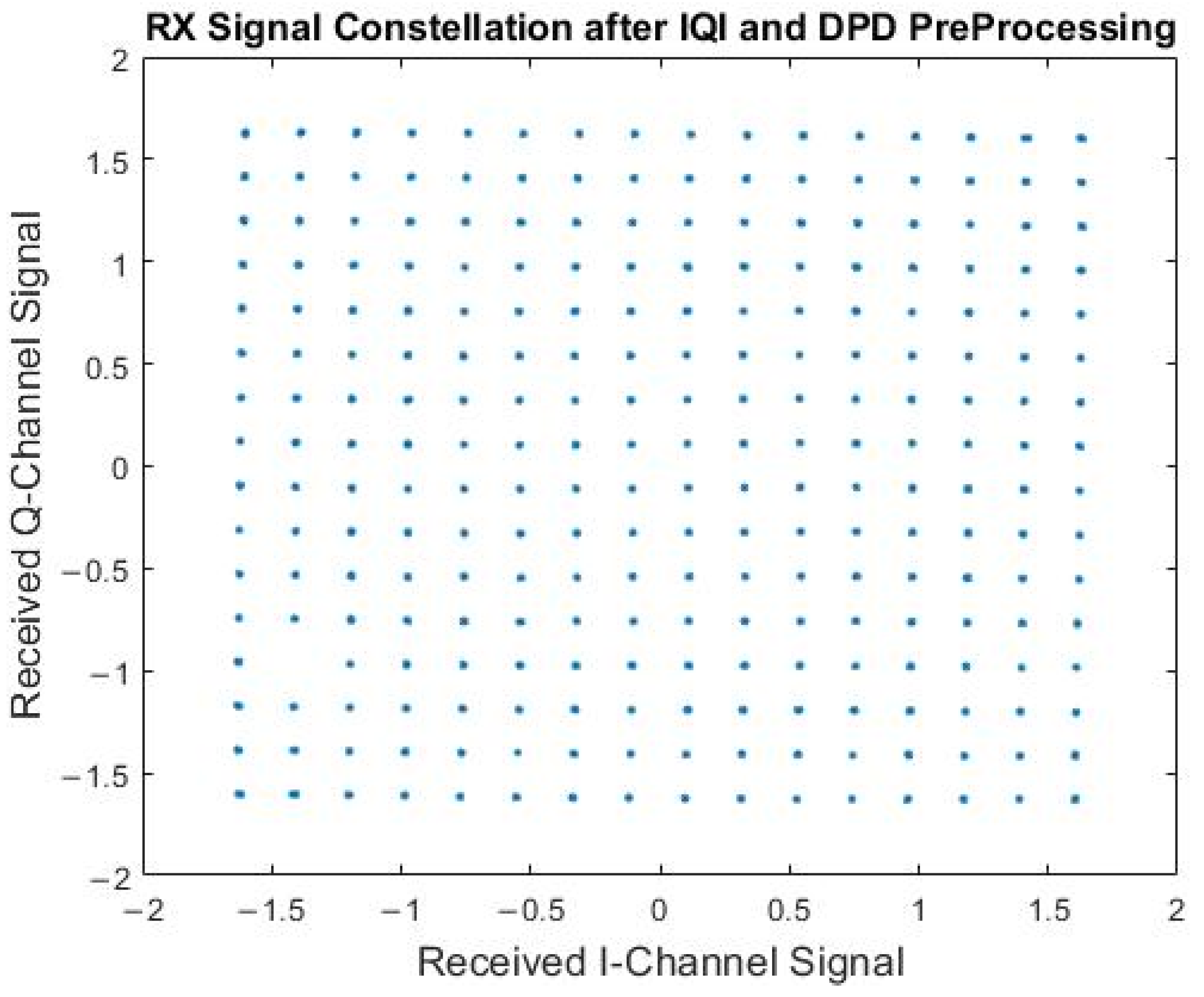
More outer-ring signals were compressed due to PA nonlinearity, and the constellation diagram exhibits a pronounced skewed shape. After applying IQ imbalance and DPD preprocessing, a well-restored 256-QAM constellation diagram is obtained (Figure 21).
Figure 21.
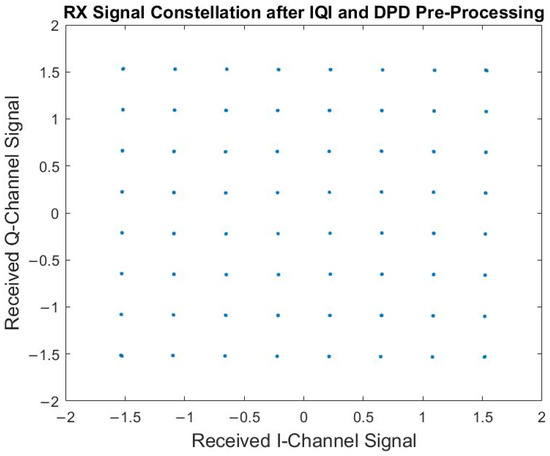
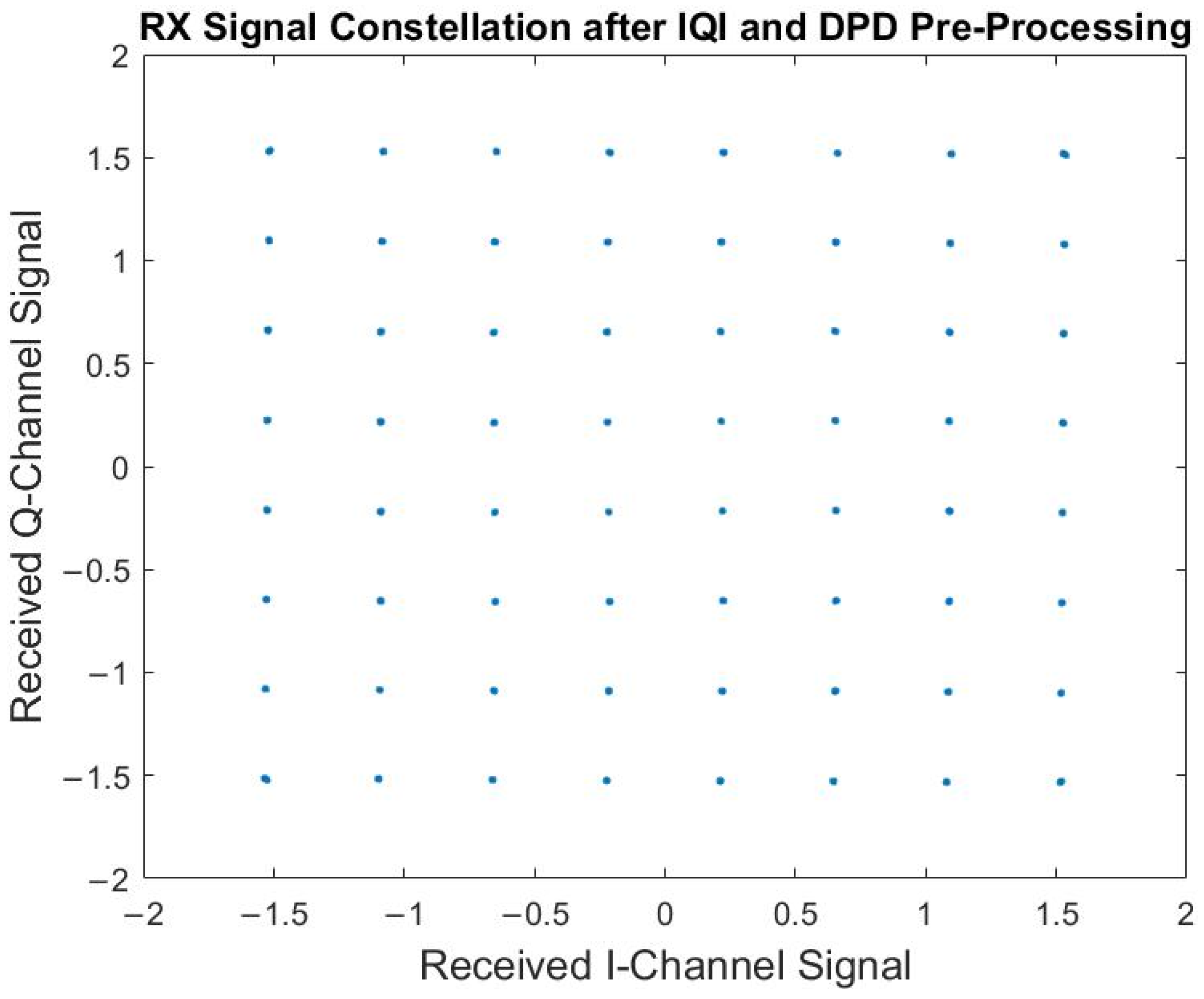
256-QAM RX signal constellation after IQ imbalance and DPD preprocessing.
These results thus confirm that the techniques proposed in this paper are effective for mitigating distortion in high-order QAM.
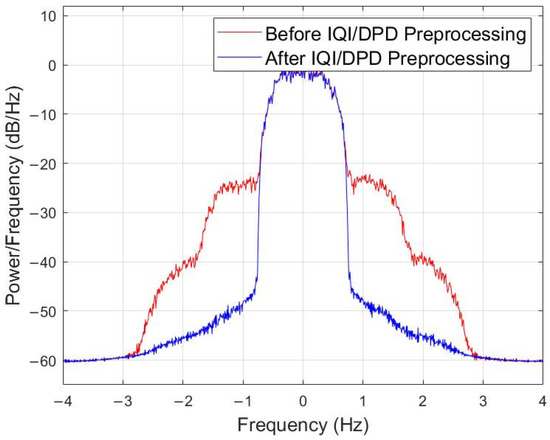
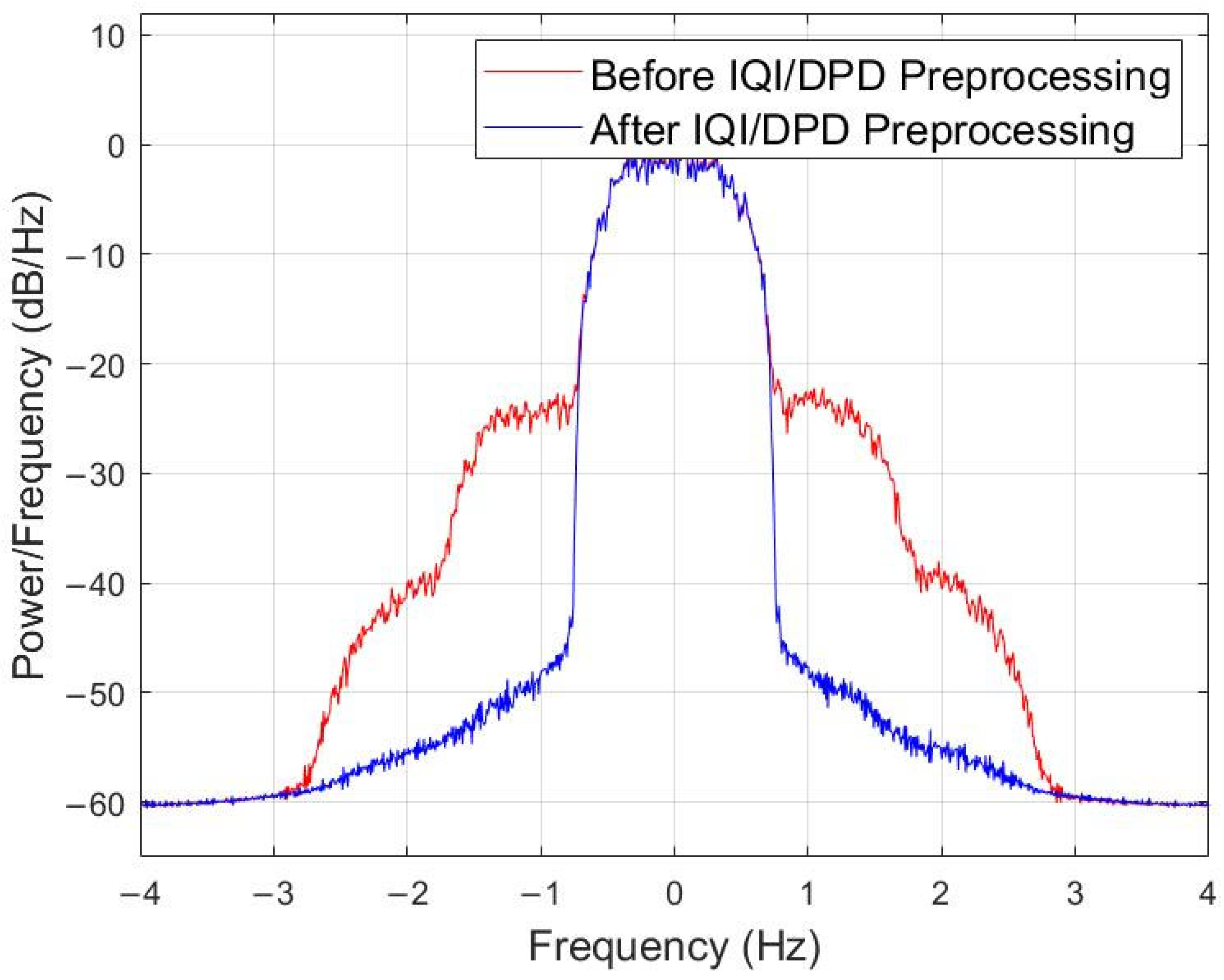
At this stage, the spectra before and after the IQ imbalance/DPD preprocessing can be observed in Figure 22.
Figure 22.
256-QAM signal with IQ imbalance/DPD preprocessing simulation comparison.
It is evident that the nonlinear distortion (red curve) was compensated for by the preprocessing, resulting in a linearized spectrum (blue curve). This figure can also be compared with the post-IQ imbalance/DPD spectrum for 64-QAM, showing similar results. The blue curve for 256-QAM is slightly higher, yet it still confirms that the proposed technique effectively mitigates IQ imbalance/DPD-induced nonlinear distortion for 64-QAM and 256-QAM signals.
The third simulation considers the combined effects of IQ imbalance, nonlinear PA distortion, and MIMO self-interference. The corresponding parameter settings are listed in Table 3.
Table 3.
IQ imbalance, nonlinear PA distortion, and MIMO self-interference simulation parameters.
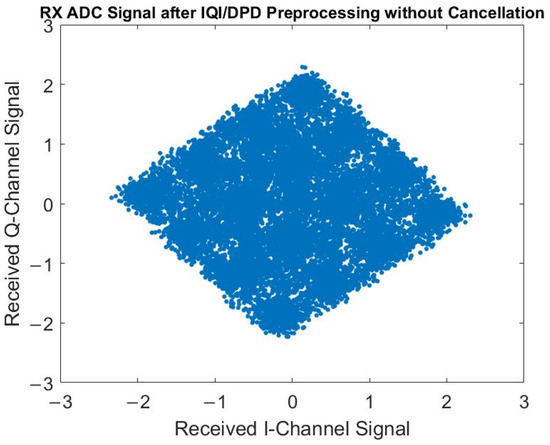
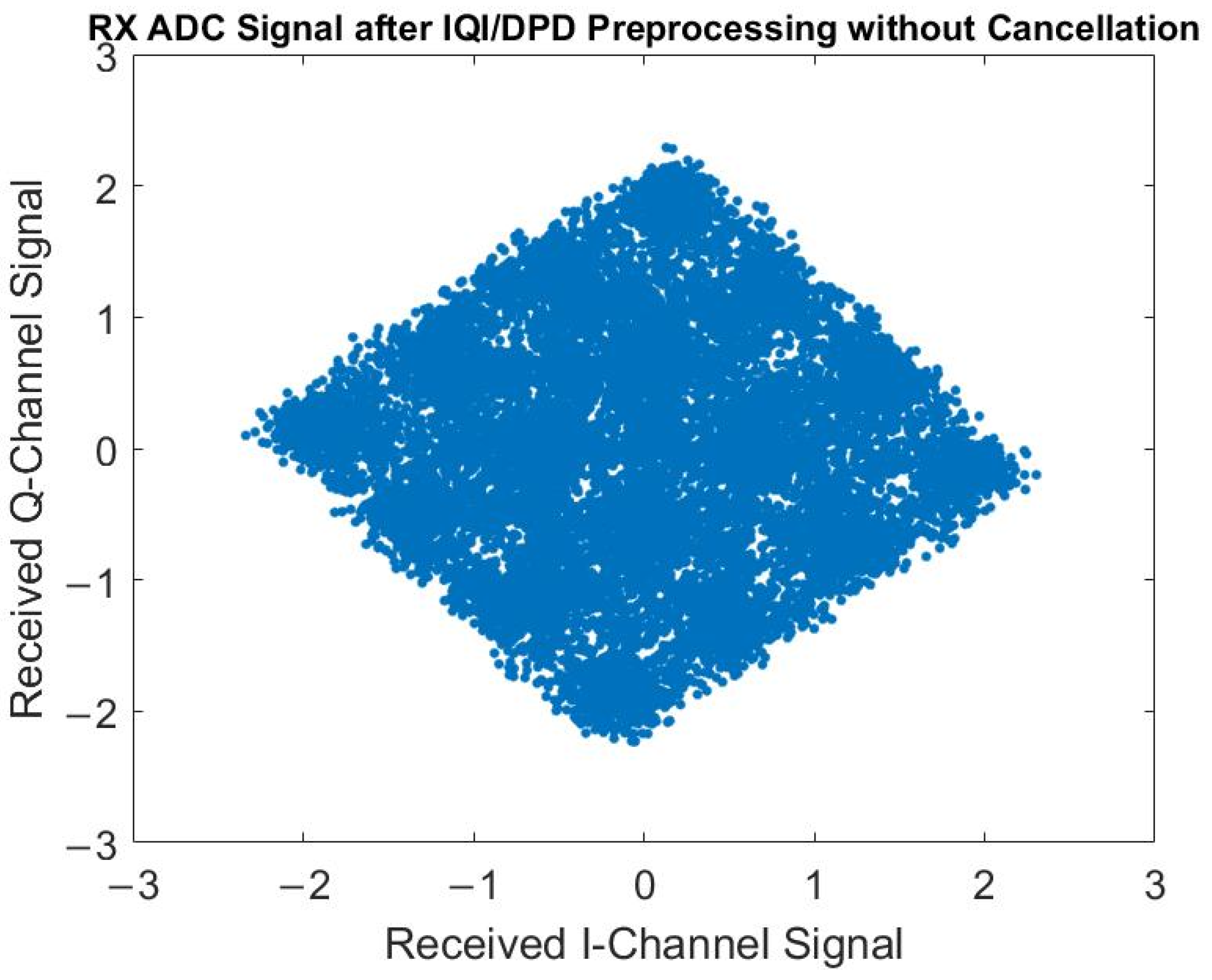
This simulation scenario corresponds to the integrated process of Steps 1, 2, and 3 in Figure 2 that is, IQ imbalance pre-compensation is first applied; followed by nonlinear PA pre-compensation; and finally, self-interference cancellation to eliminate residual interference. In this simulation, a QPSK modulation scheme with a wideband signal (twice the bandwidth used in the second simulation) is employed to evaluate the system performance. The simulation results are shown in Figure 23.
Figure 23.
RX ADC signal after IQI/DPD preprocessing without cancellation.
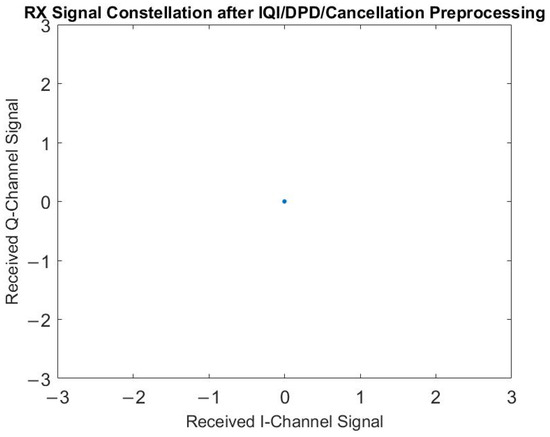
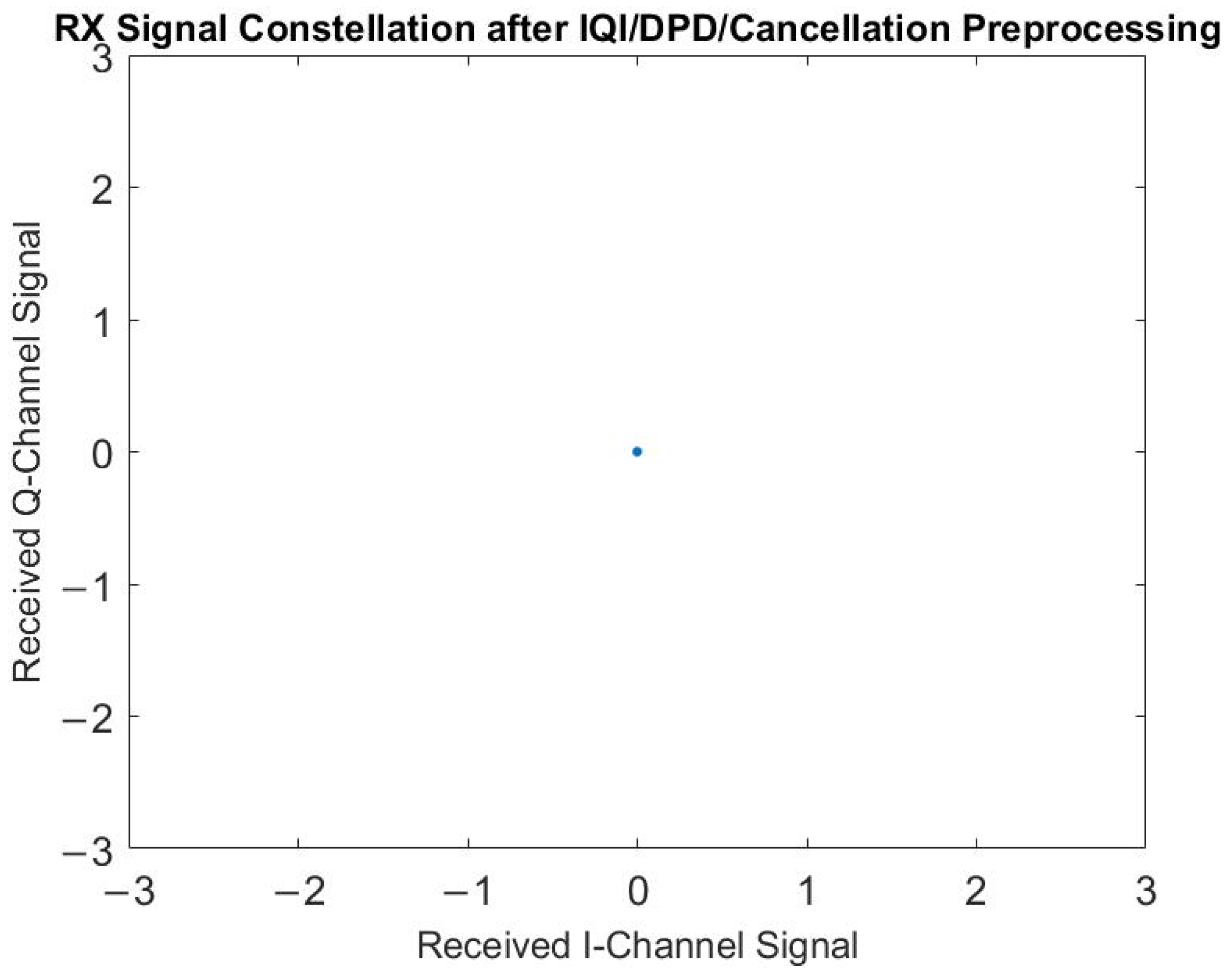
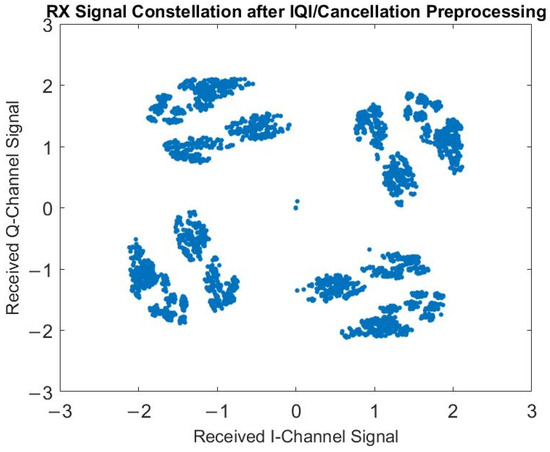
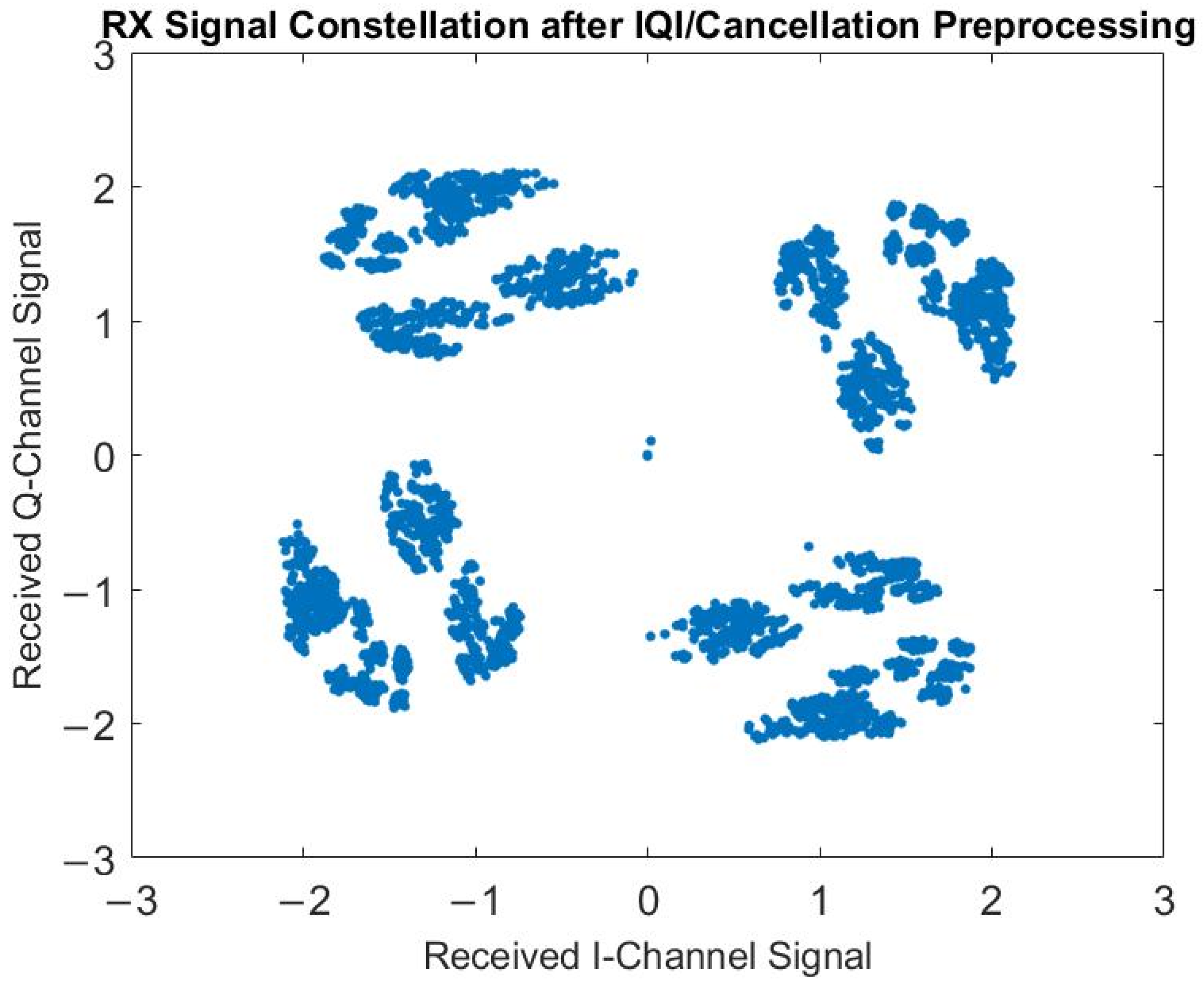
After the IQ imbalance and DPD preprocessing were completed, the I/Q signal captured by the receiver’s ADC exhibits a square-shaped QPSK constellation, indicating that the IQ imbalance and nonlinear PA distortions were successfully compensated. The remaining received signal thus corresponds to the self-interference component. At this stage, the third-step algorithm proposed in this paper (as described in Section 3.3) generates a pre-cancellation inverse signal, which is transmitted through the auxiliary path. As observed in Figure 24, after this process, the interference signal was effectively cancelled, leaving only minimal residual I/Q values.
Figure 24.
RX signal constellation after IQ imbalance/DPD/cancellation preprocessing.
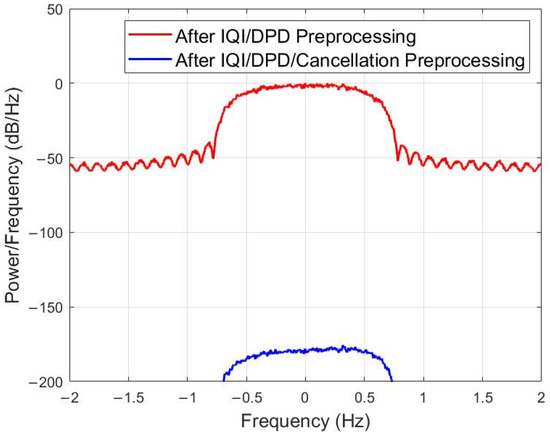
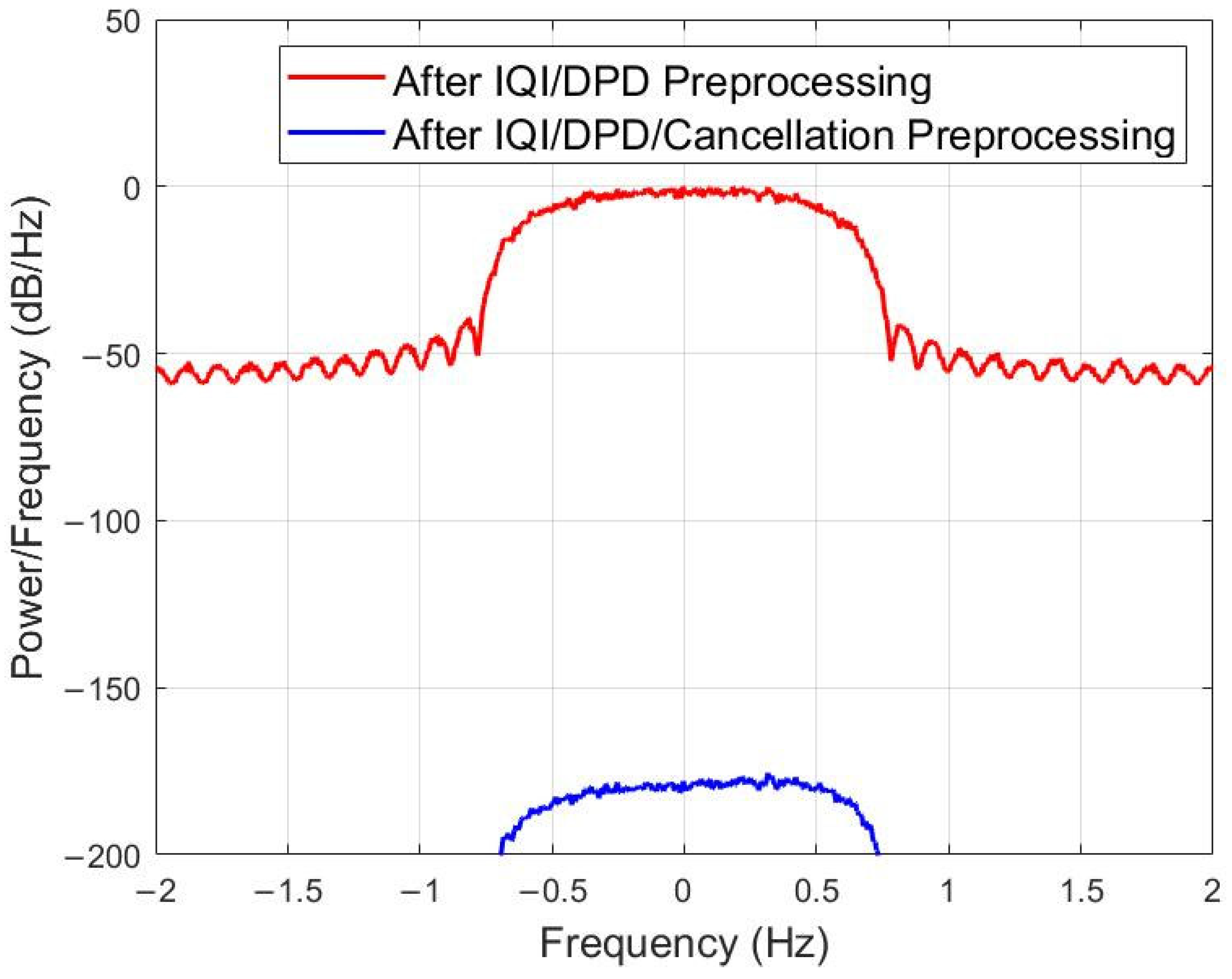
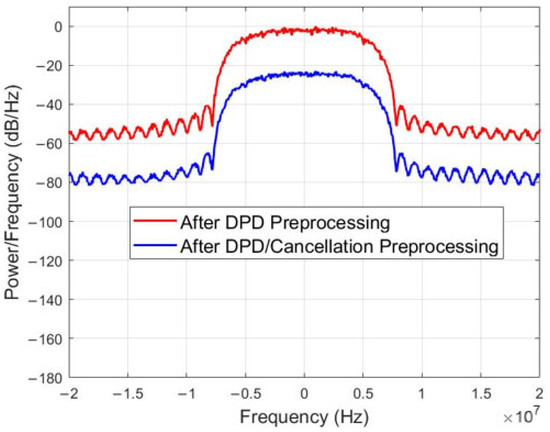
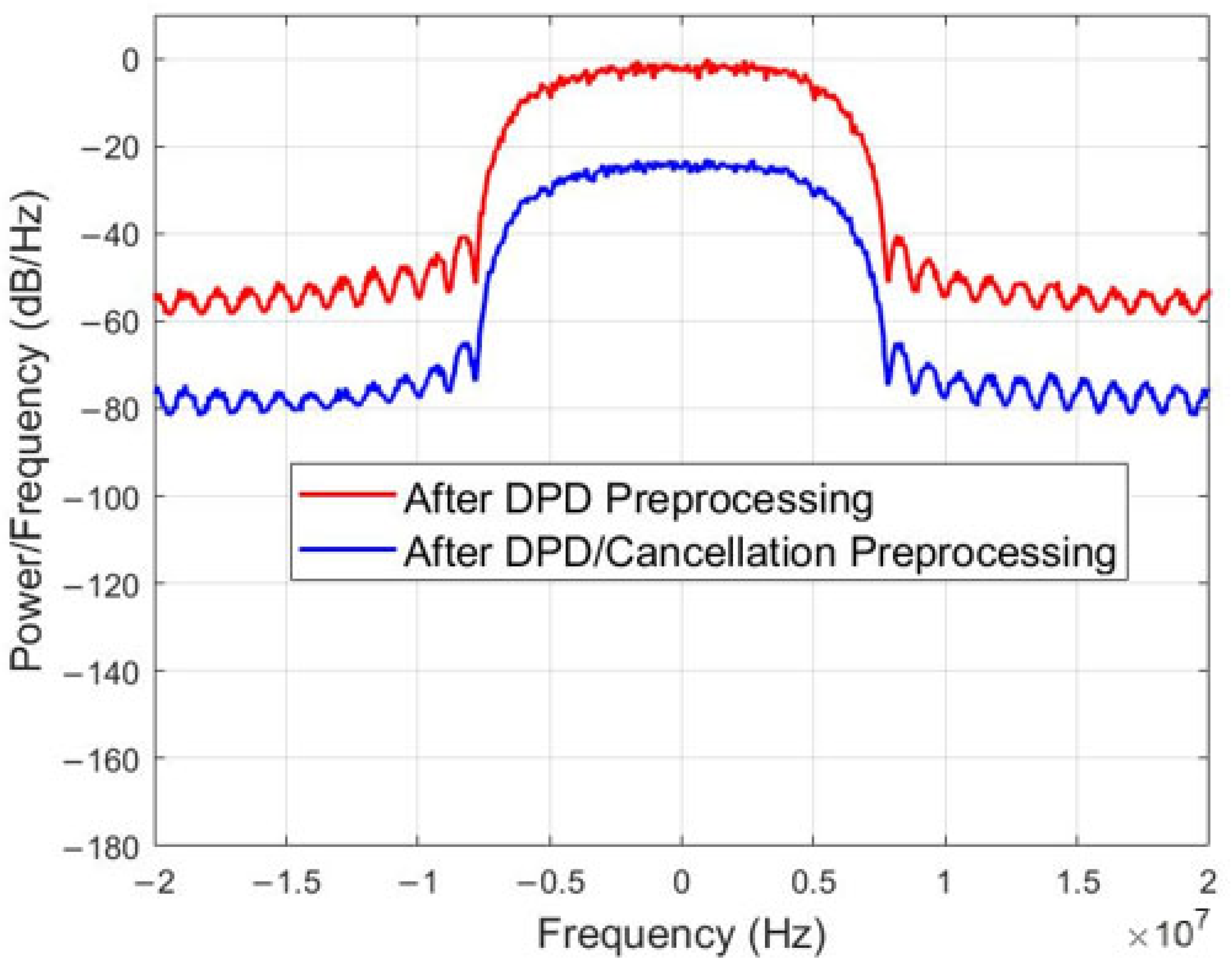
Furthermore, as shown in the spectrum diagram in Figure 25, the red curve represents the interference signal after IQ imbalance/DPD preprocessing, while the blue curve shows the spectrum at the receiver after applying self-interference cancellation. It is evident that the interference was suppressed down to –180 dB, confirming the feasibility and effectiveness of the three-step method proposed in this paper.
Figure 25.
The spectrum with IQ imbalance/DPD and cancellation preprocessing comparison.
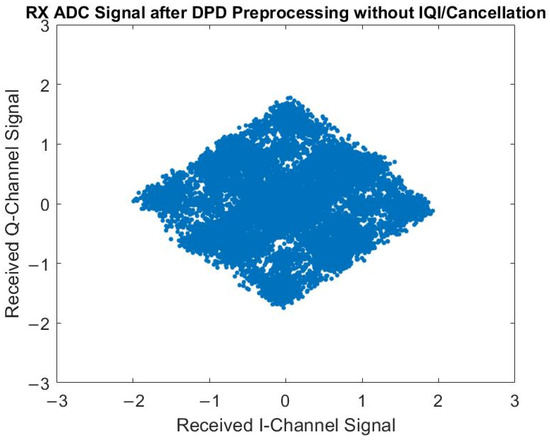
Subsequently, an ablation study was conducted to evaluate the impact of disabling different preprocessing stages. When only DPD preprocessing was applied (with IQ imbalance preprocessing disabled), the I/Q signal captured by the receiver’s ADC appears in Figure 26.
Figure 26.
RX ADC signal after DPD preprocessing without IQ imbalance/cancellation.
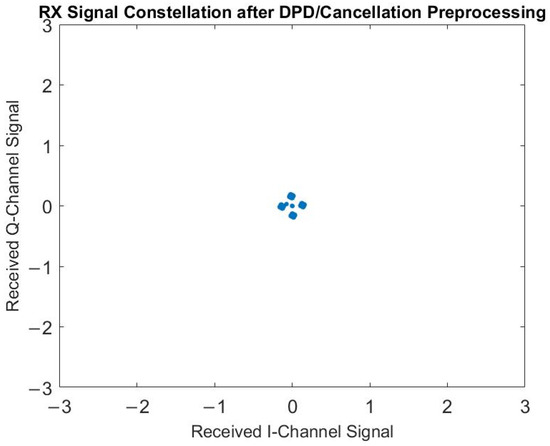
The resulting constellation exhibits slight deformation, indicating the presence of residual IQ imbalance distortion. Subsequently, the self-interference cancellation technique was applied to eliminate this interference (Figure 27).
Figure 27.
RX signal constellation after DPD/cancellation preprocessing.
The results clearly show that the residual QPSK constellation points remain unremoved, which is attributed to the presence of IQ imbalance. Furthermore, from the spectrum diagram in Figure 28, the blue curve—representing the interference after cancellation—shows only about a 13 dB reduction, indicating that significant residual interference still existed.
Figure 28.
The spectrum with DPD and cancellation preprocessing comparison.
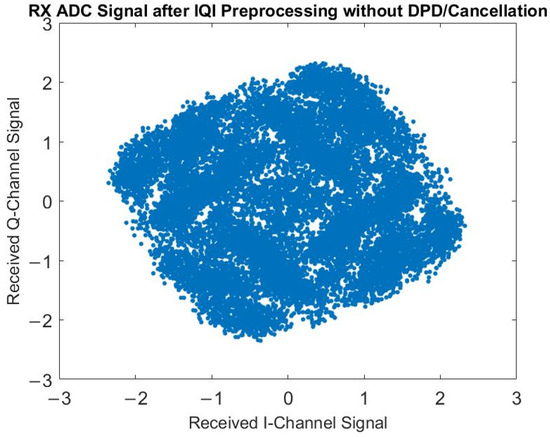
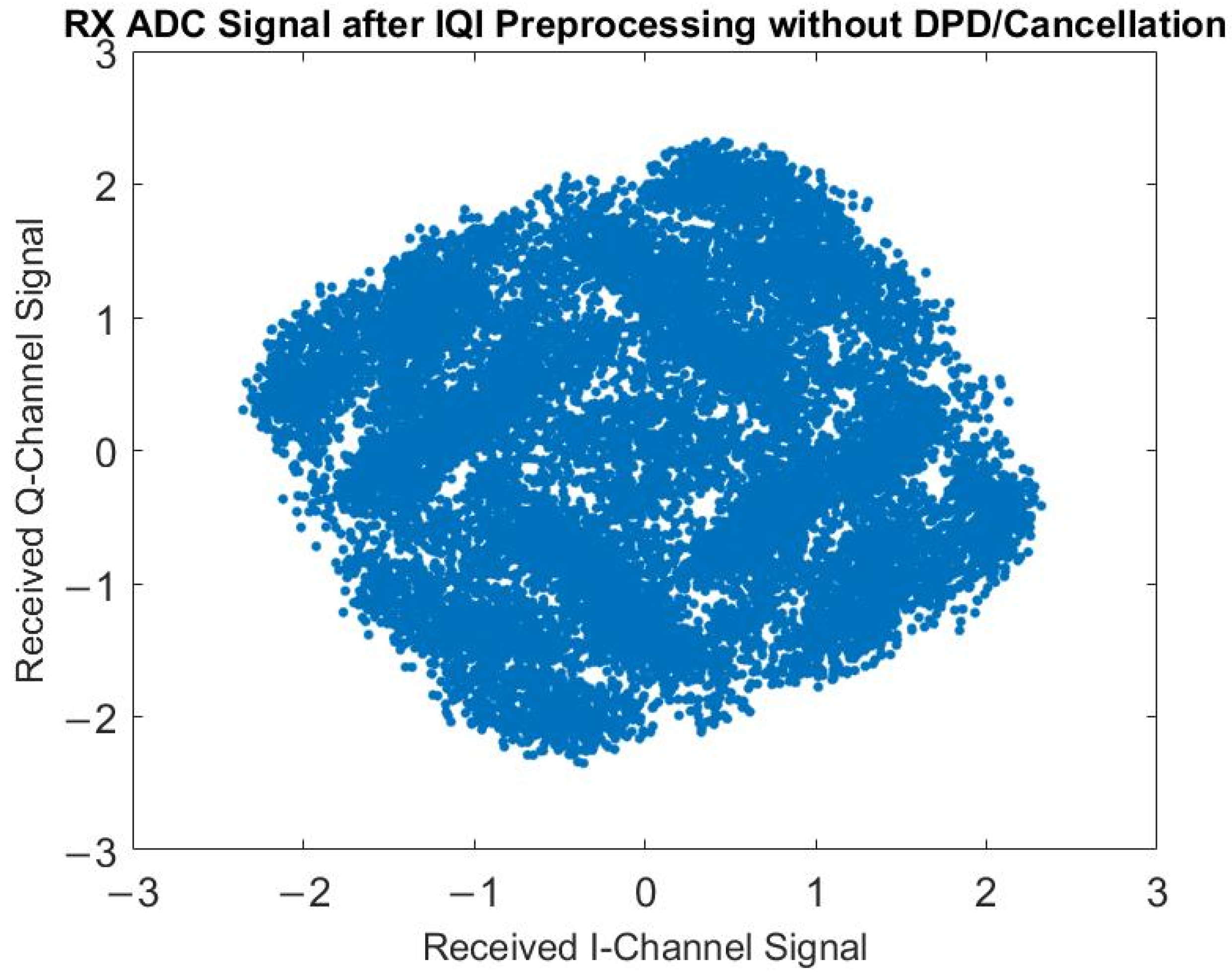
Furthermore, when only IQ imbalance preprocessing was applied (without DPD preprocessing), the I/Q signal captured by the receiver’s ADC was obtained (Figure 29).
Figure 29.
RX ADC signal after IQ imbalance preprocessing without DPD/cancellation.
The resulting constellation exhibits outer-ring compression and deformation, indicating the presence of nonlinear PA. Subsequently, the self-interference cancellation technique was applied to suppress this interference (Figure 30).
Figure 30.
RX signal constellation after IQ imbalance/cancellation preprocessing.
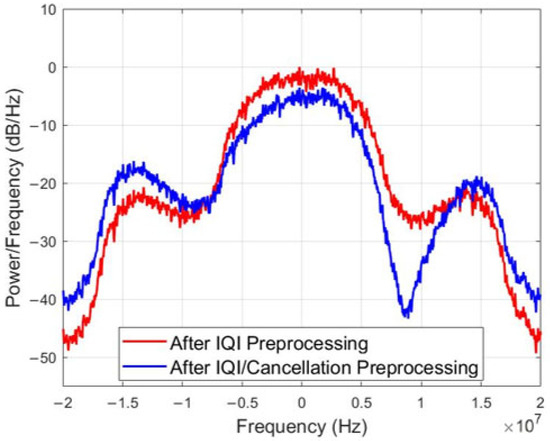
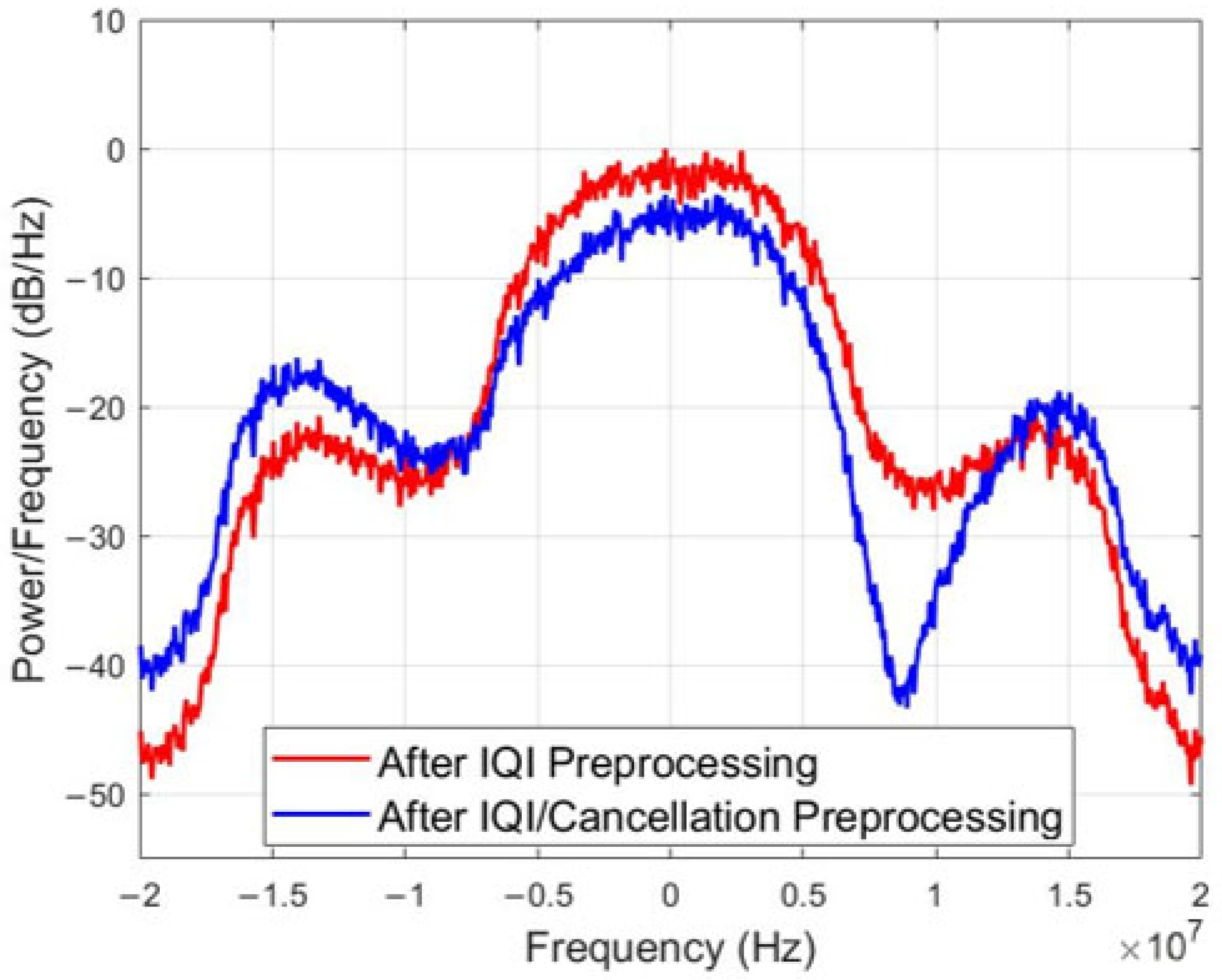
The results clearly show that strong residual QPSK constellation points remained, which were caused by the presence of the nonlinear PA. Furthermore, from the spectrum diagram in Figure 31, the red curve represents the spectrum exhibiting nonlinear PA-induced nonlinearity, while the blue curve corresponding to the interference after cancellation closely follows the red curve, clearly indicating that strong residual interference remained.
Figure 31.
The spectrum with IQ imbalance and cancellation preprocessing comparison.
In summary, the simulations demonstrate that DPD preprocessing is the critical factor affecting the effectiveness of self-interference cancellation, and the proposed method in this paper successfully overcomes this issue.
4.2. Hardware Experimental Verification
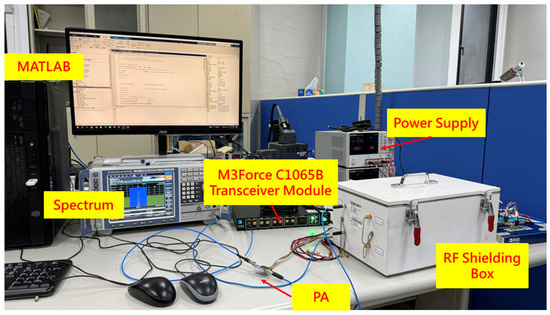
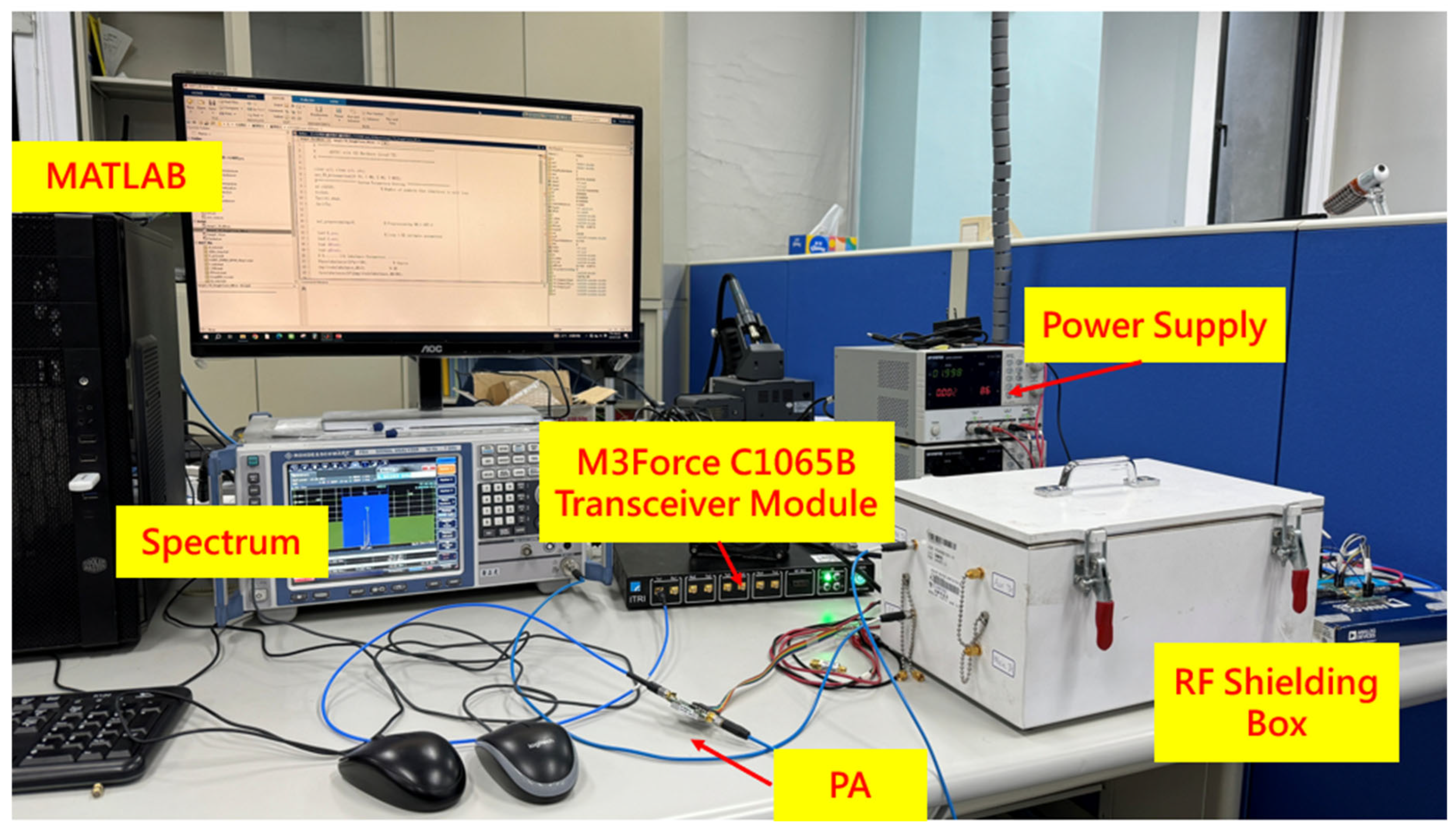
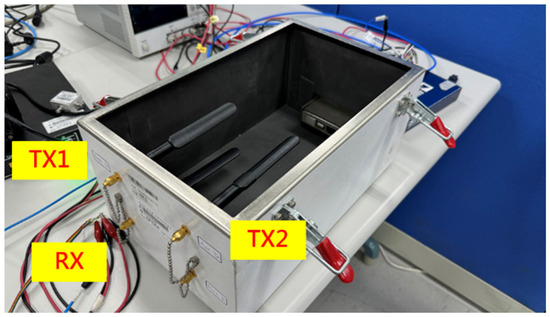
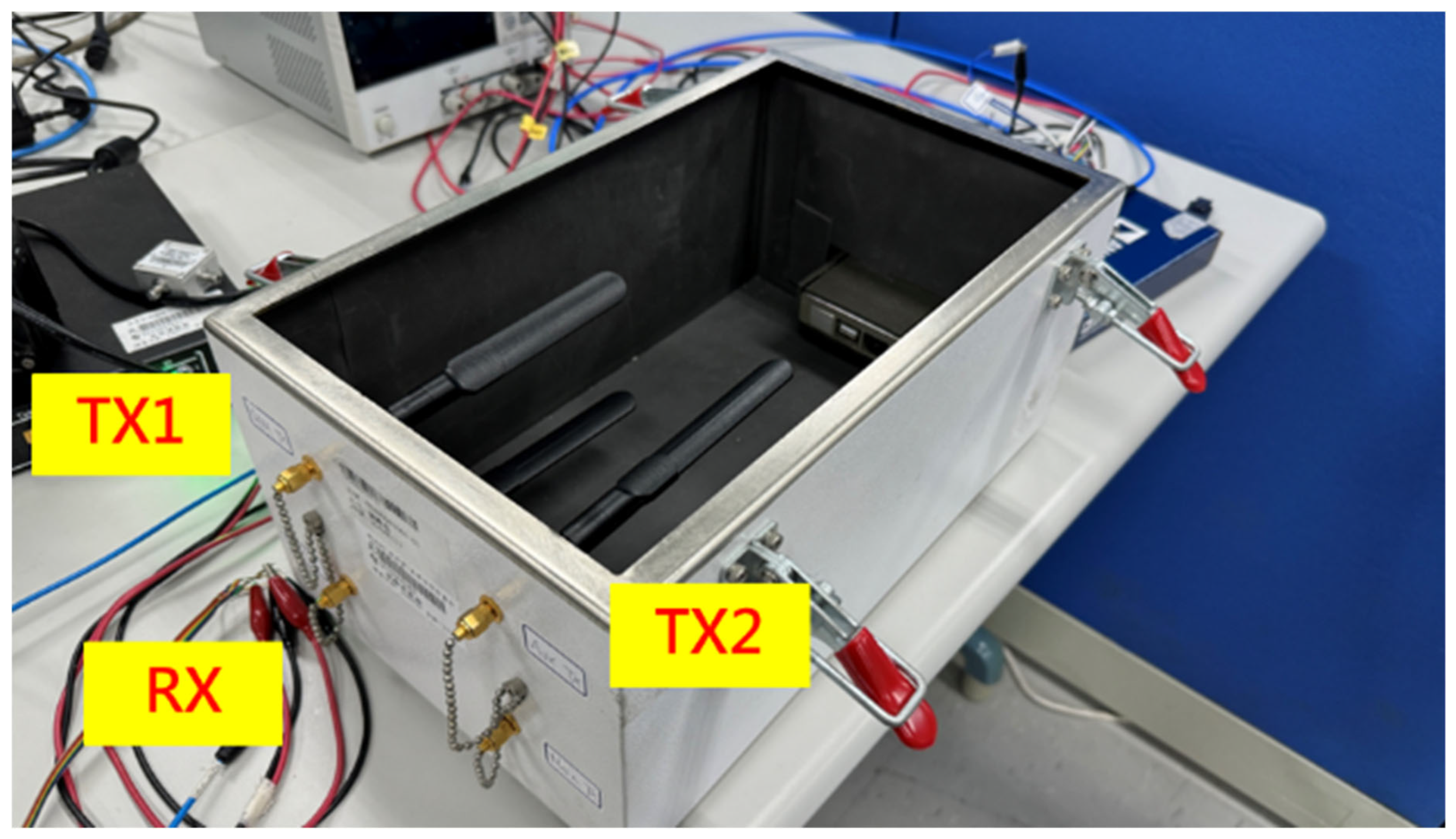
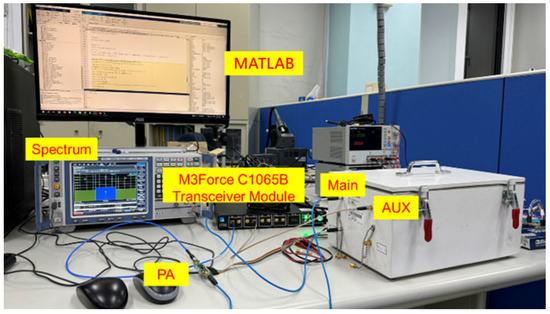
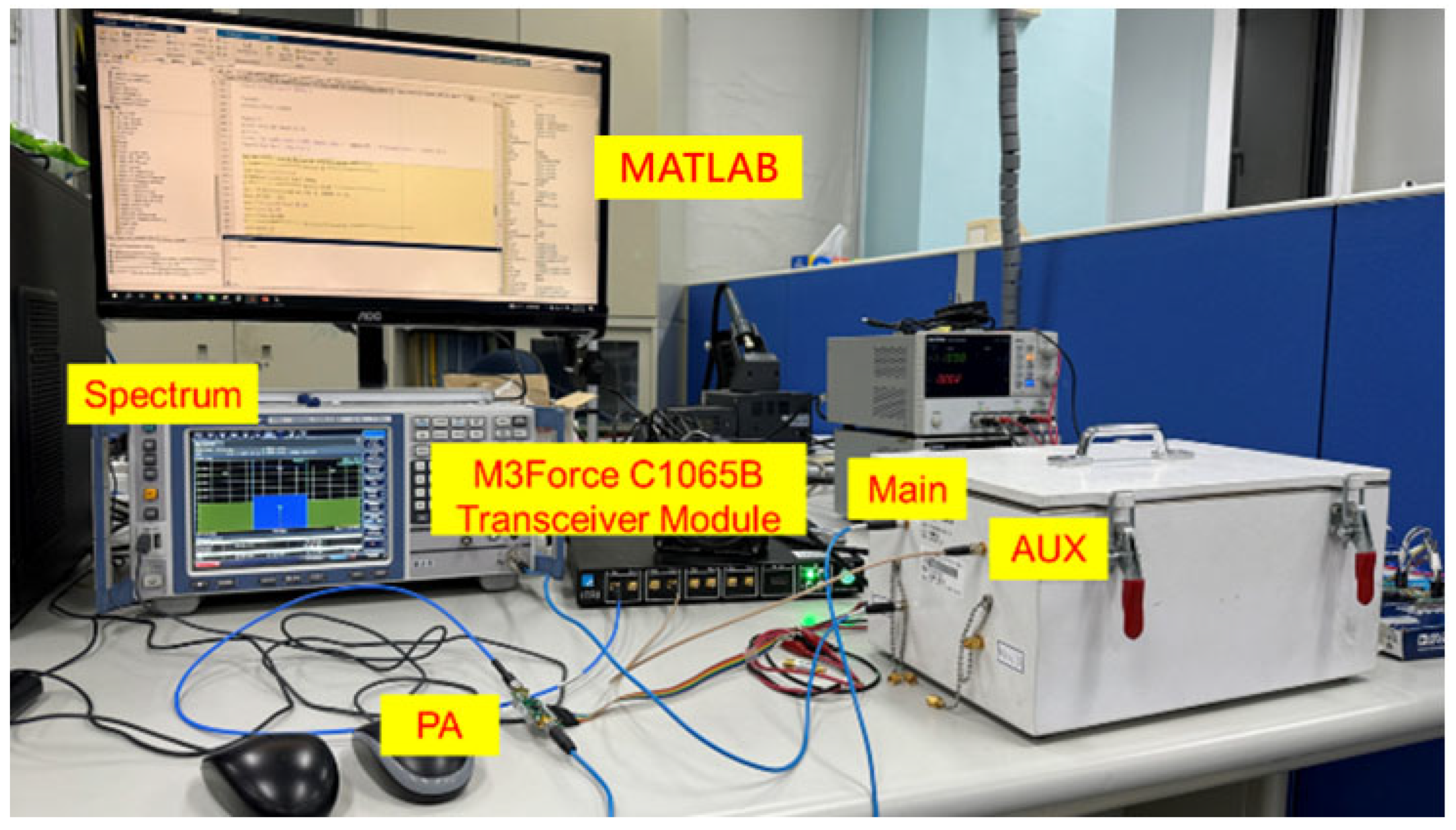
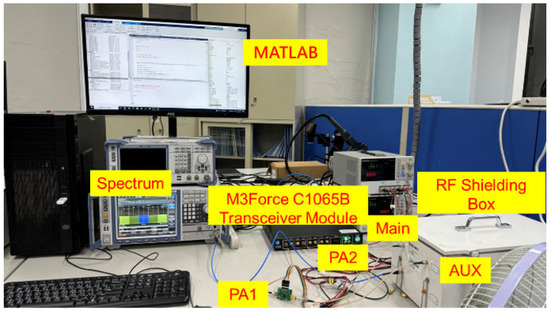
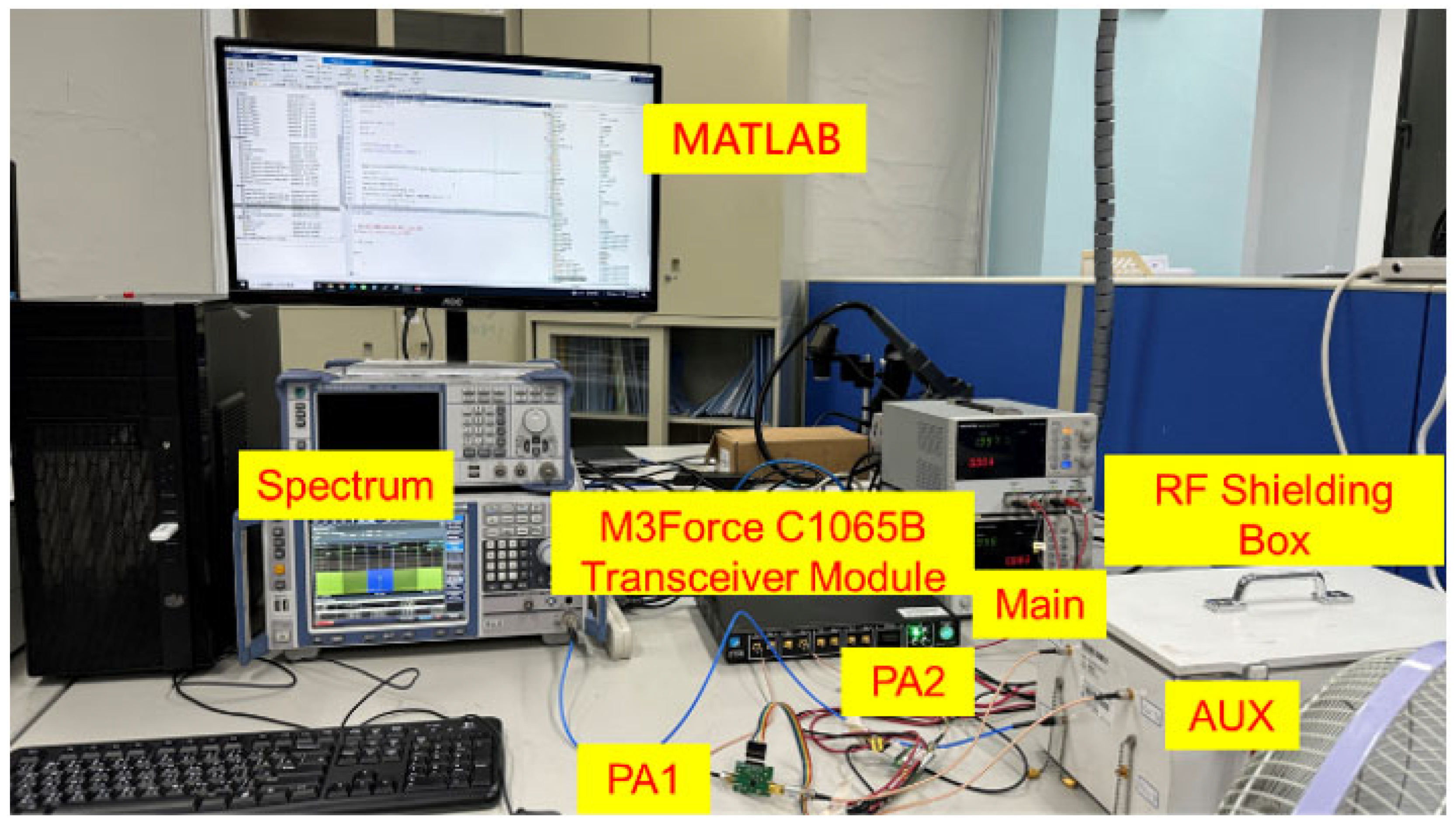
The signal modified based on the compensation parameters was transmitted through the transceiver module to the spectrum. The experimental setup is depicted in Figure 32, and the internal view of the adopted RF shielding box is shown in Figure 33.
Figure 32.
Experimental setup for validating the proposed method.
Figure 33.
Internal view of the adopted RF shielding box.
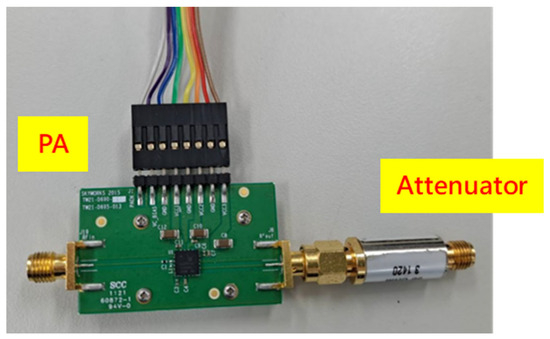
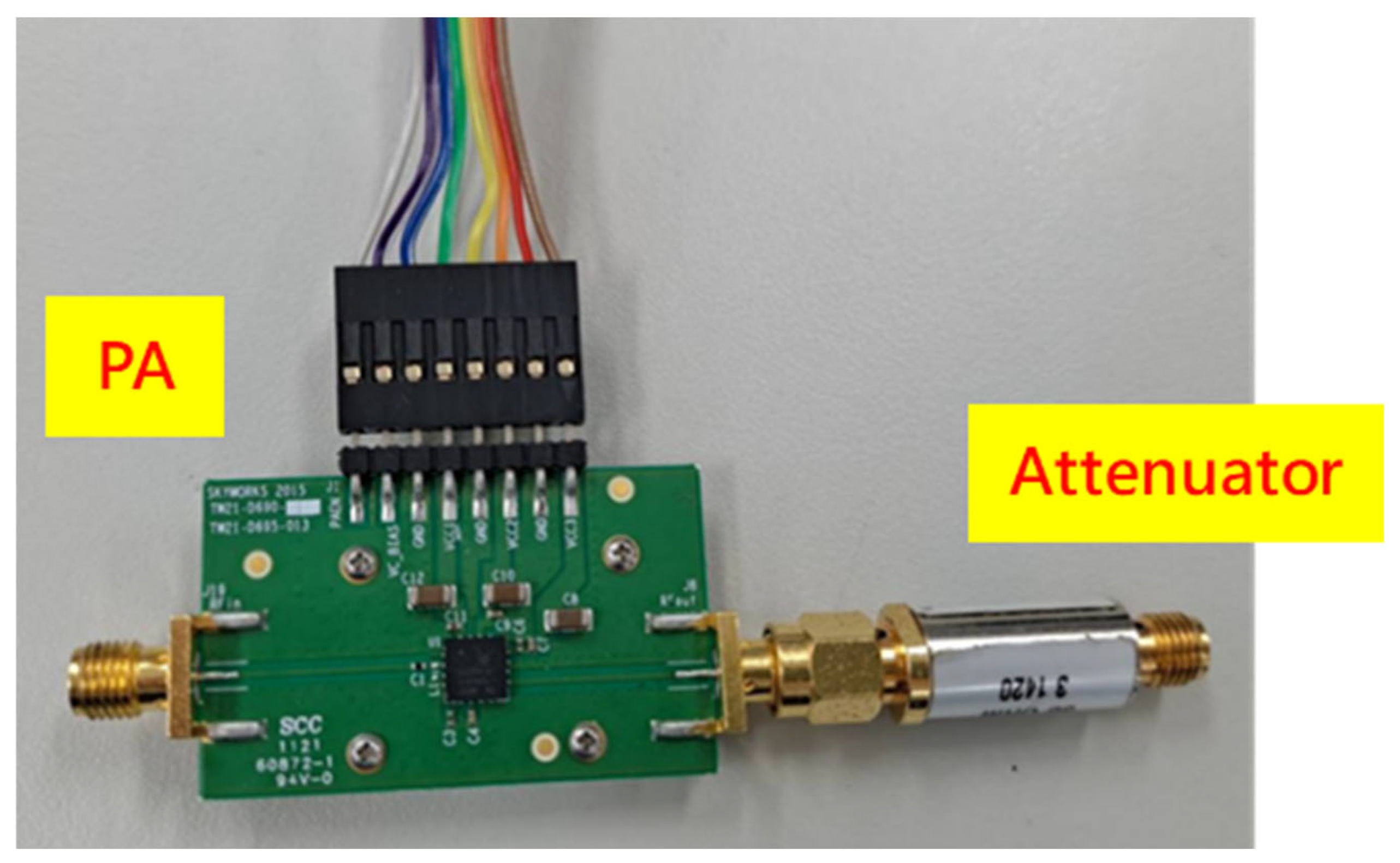
During the experiments, the SKY66293-21-EVB PA produced by Skyworks, Irvine, CA, USA, was used for performance observation. The evaluation board of this PA is displayed in Figure 34.
Figure 34.
Evaluation board of the SKY66293-21 PA.
The adopted PA has an operating frequency range of 3.4–3.8 GHz, requires a supply voltage of 5.5 V, and exhibits an enable voltage of 2 V. It has a maximum gain of approximately 35 dB, with the P3dB point located around 35 dBm. The gain of the PA typically fluctuates between 30 and 35 dB, depending on the testing environment. The operating temperature range of PA is −40 to 100 °C, with a junction temperature of up to 155 °C and a power consumption of approximately 2.2 W. Despite operating at relatively low input power levels, the aforementioned PA still exhibited noticeable nonlinear behaviour. A 30 dB attenuator from Mini-Circuits was used to analyze the nonlinear output behaviour of the PA. A consolidated specification table for the PA and attenuator is provided in Table 4.
Table 4.
PA and attenuator specifications.
4.2.1. Experimental Verification of the Elimination of RF IQ Imbalance
In Step 1 of the proposed method (Figure 2), Equation (7) was used to extract the signal response parameters related to the IQ imbalance. Table 5 summarizes the signal parameters used in the IQ imbalance testing.
Table 5.
Signal parameters used in the testing of IQ imbalance.
These compensation parameters for correcting the IQ imbalance were obtained from [25]. Subsequently, MATLAB R2021b was used to generate a single-tone signal that was corrected based on the acquired pre-compensation parameters to eliminate the IQ imbalance.
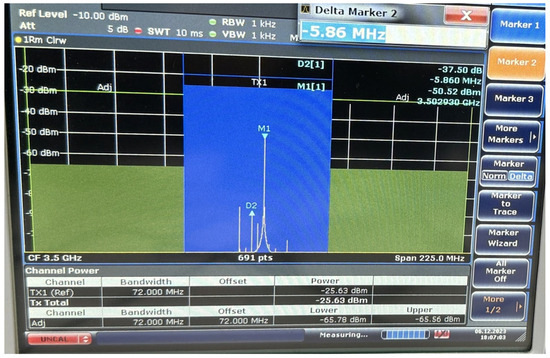
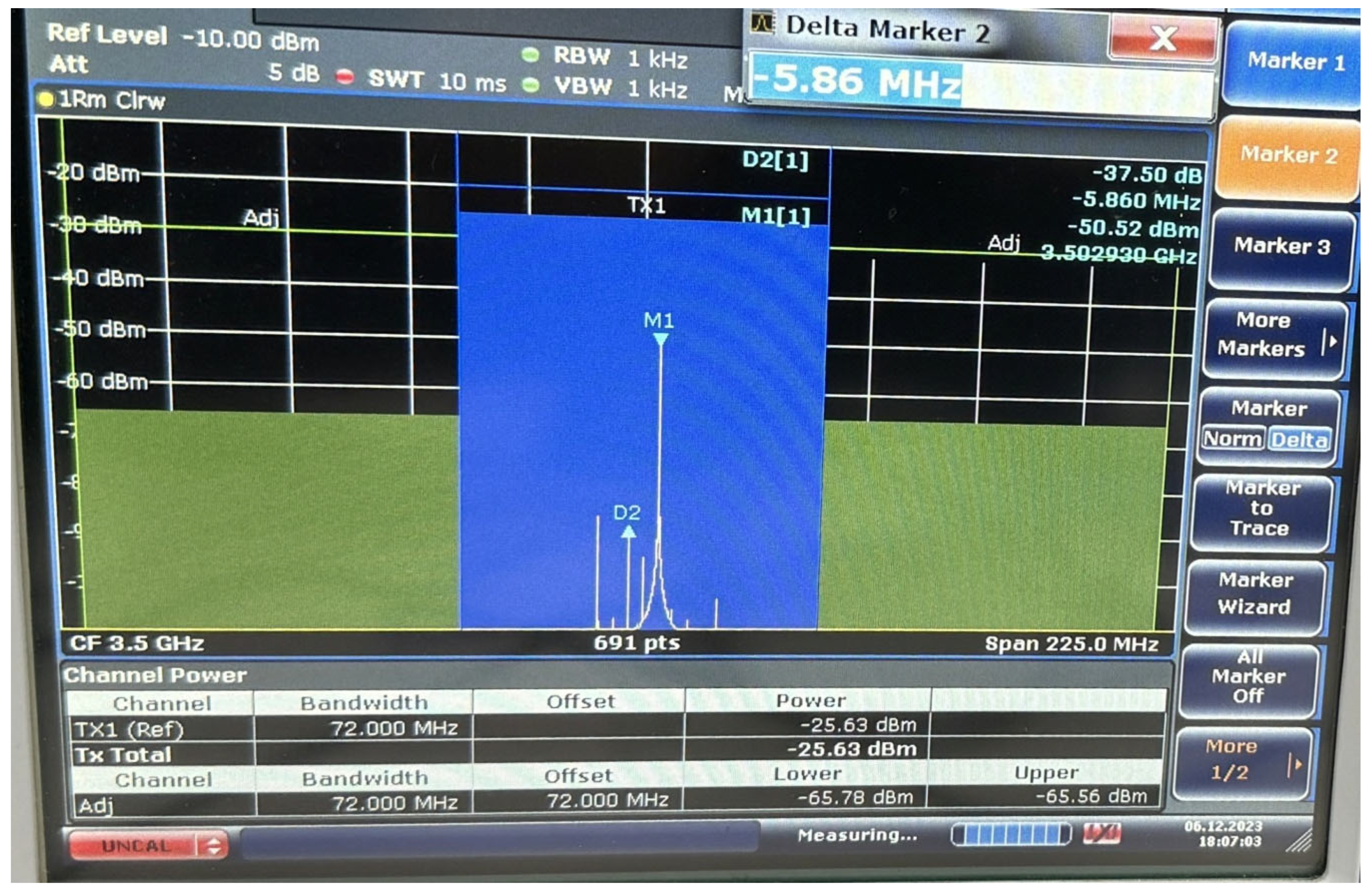
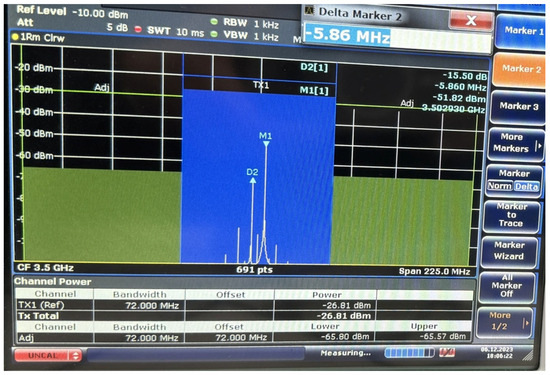
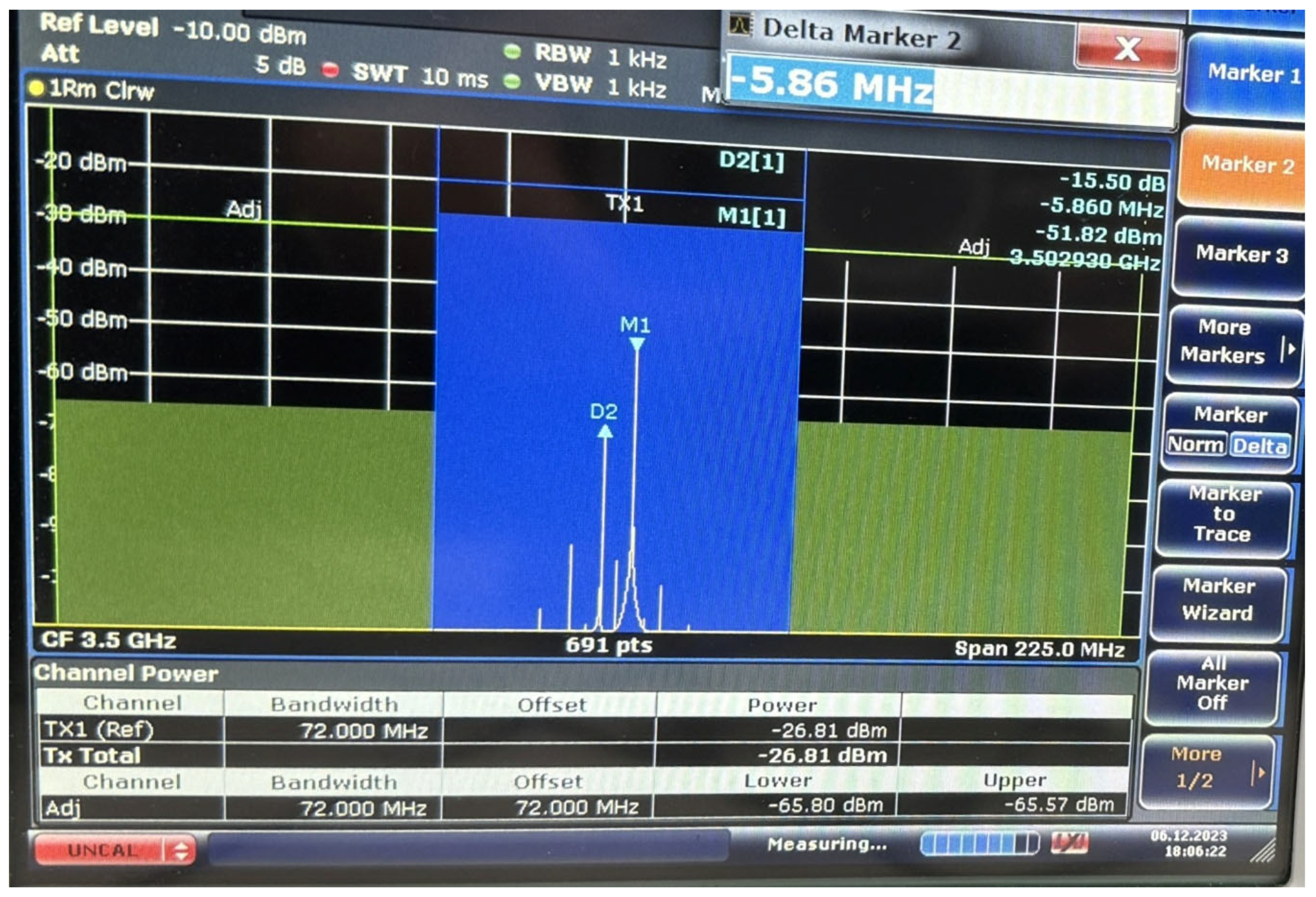
The pre-compensated signal was transmitted through the M3force C1056B transceiver module, which is produced by Industrial Technology Research Institute(ITRI), Taiwan, to acquire the IQ imbalance pre-compensation values [1, 0.0917; 0, 0.7669]. This signal was then analyzed using a spectrum analyzer. Figure 35 shows the original single-tone signal and reveals that the IQ imbalance introduced an image signal with an amplitude (M1 in Figure 35) that exceeded that of the main signal (D2 in Figure 35) by approximately 37.5 dB. After this signal was corrected for IQ imbalance, the amplitude difference between the image signal (M1 in Figure 36) and the main signal (D2 in Figure 36) decreased to approximately 15.5 dB.
Figure 35.
Original single−tone signal.
Figure 36.
Single−tone signal corrected for IQ imbalance.
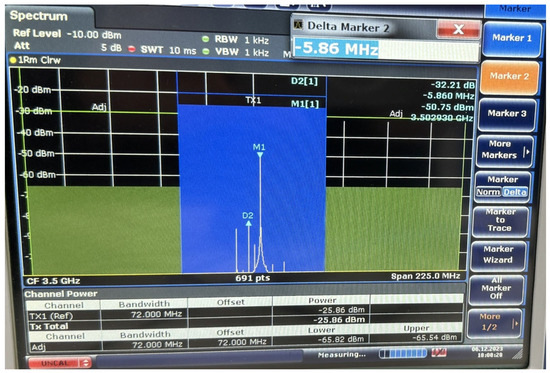
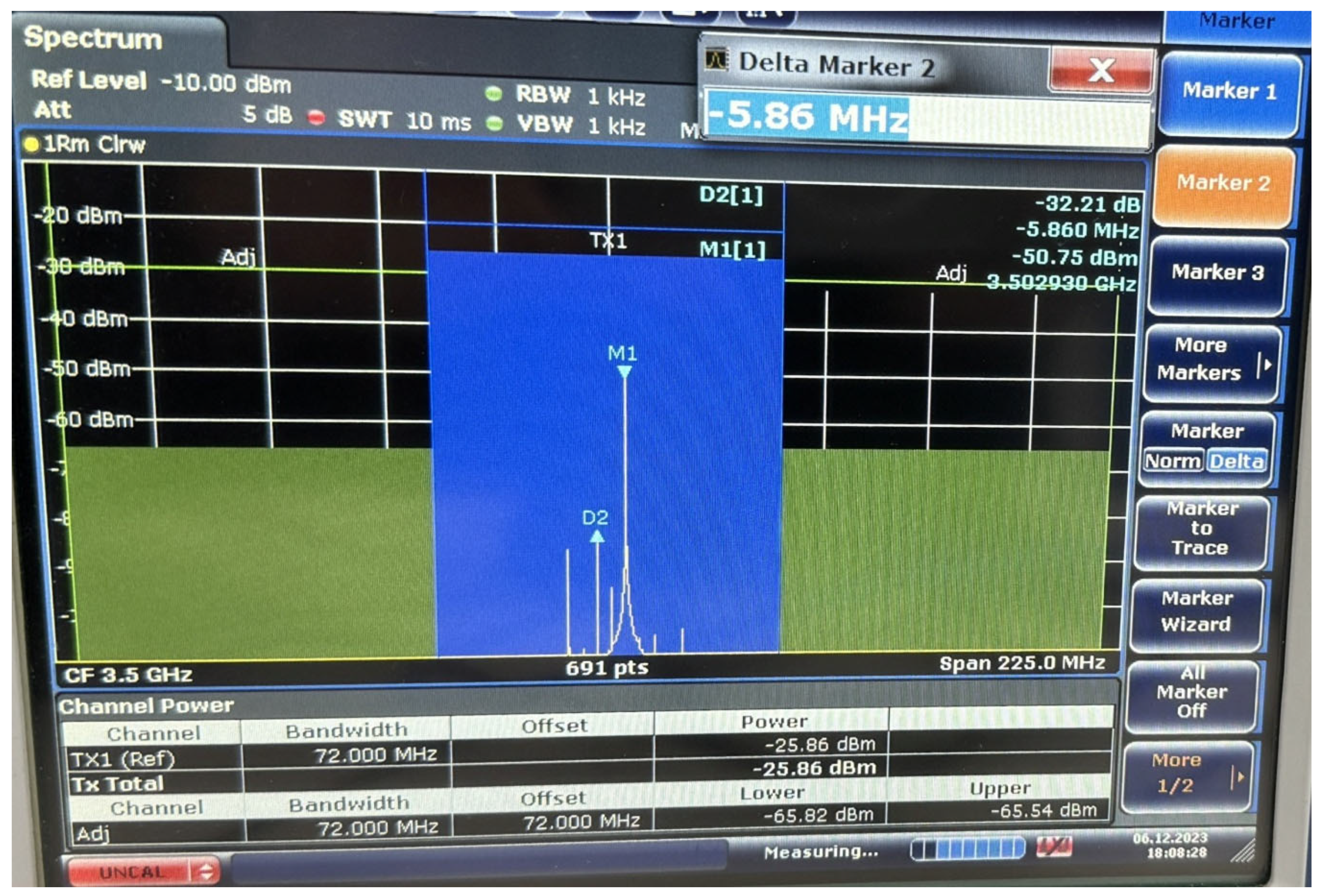
When the IQ imbalance was added to the corrected single-tone signal, the difference between the amplitudes of the image signal (M1 in Figure 37) and the main signal (D2 in Figure 37) was approximately 32 dB. This difference value was still smaller than that for the original signal, which confirmed the effectiveness of the adopted pre-compensation parameters in reducing the IQ imbalance.
Figure 37.
Corrected a single−tone signal with IQ imbalance added to it.
4.2.2. Experimental Validation of the Compensation for Nonlinear PA Response
The ability of the proposed method to compensate for the nonlinear PA response was experimentally analyzed. Table 6 summarizes the signal parameters used during this experimental analysis.
Table 6.
Signal parameters used in the testing of the proposed method’s ability to compensate for the nonlinear PA response.
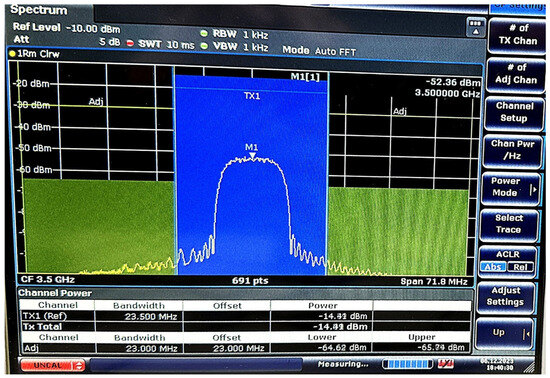
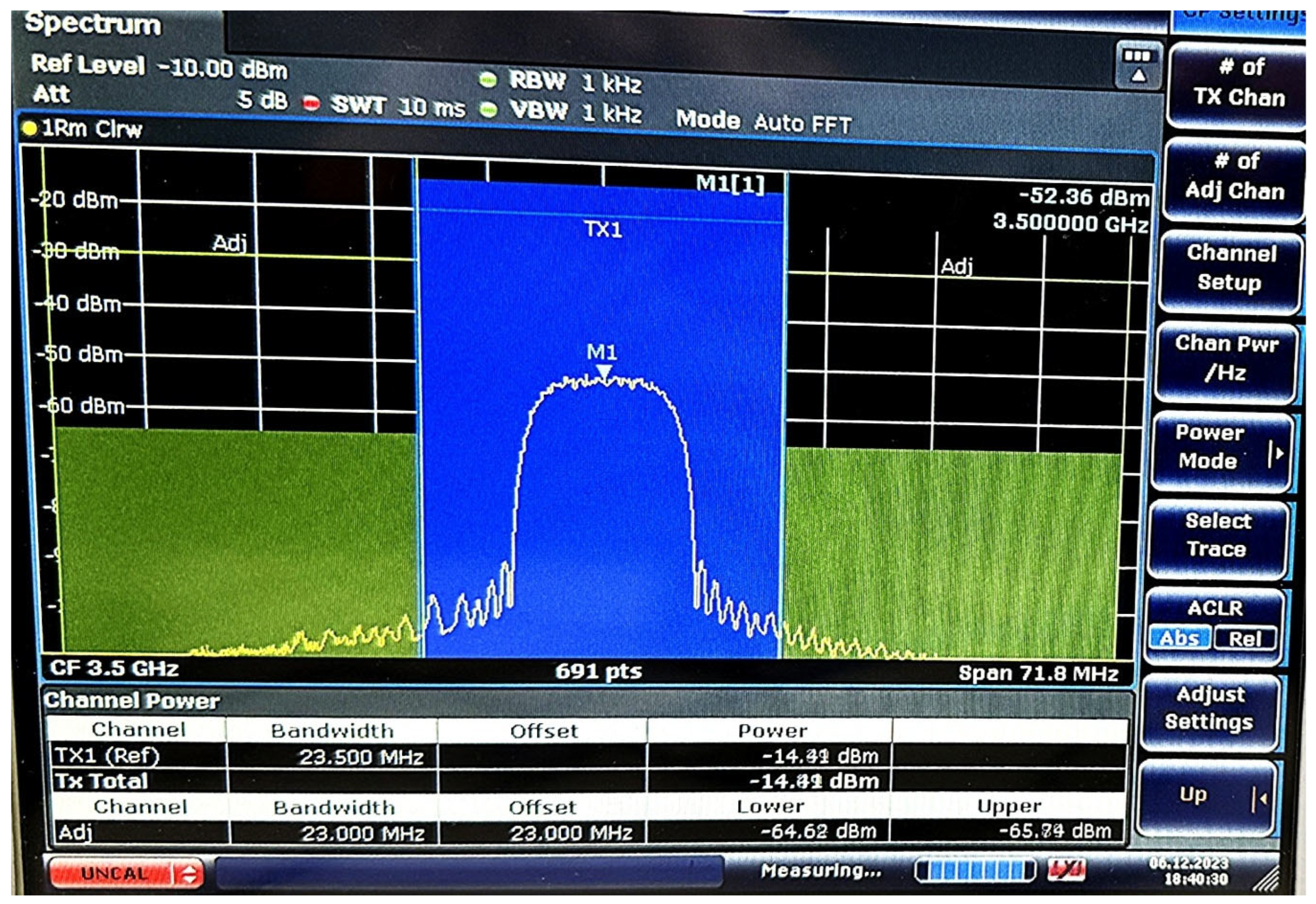
Step 2 (Figure 2) of the proposed method was conducted using Equations (9) and (10) to compute the DPD response parameters. First, an original 16-QAM signal with an IQ imbalance was generated using MATLAB. This signal was transmitted through the M3force C1065B transceiver module, including the PA, to introduce a nonlinear PA response into it (Figure 38).
Figure 38.
Spectrum plot of a 16-QAM signal with a nonlinear PA response.
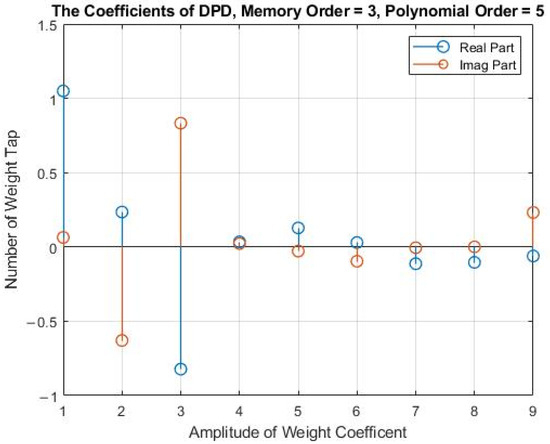
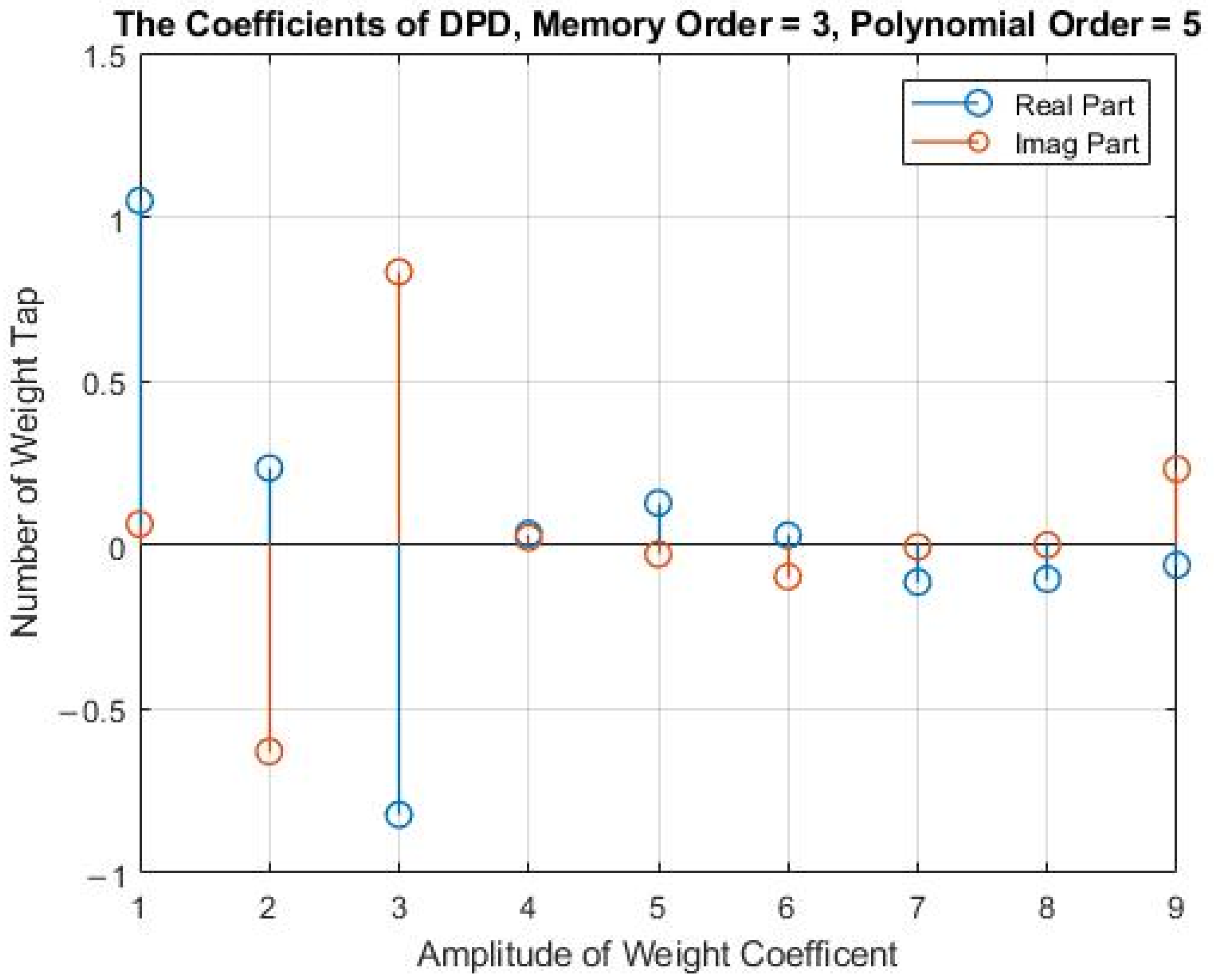
Second, a 16-QAM signal that was pre-compensated for IQ imbalance was generated. This signal was then passed through the DPD block of the PA DPD to obtain DPD coefficients (Figure 39).
Figure 39.
Coefficients of DPD.
Third, the signal with DPD coefficients was transmitted through the M3force C1065B transceiver module, including the PA, to add a nonlinear PA response to it. The compensation effects were then analyzed using a spectrum analyzer. The results (Figure 40) reveal a reduction of approximately 4 dB in adjacent channel power (compared with Figure 38). This finding demonstrates the effectiveness of the proposed method in addressing a nonlinear PA response.
Figure 40.
Spectrum analysis results obtained after adding a nonlinear PA response to the signal with DPD coefficients.
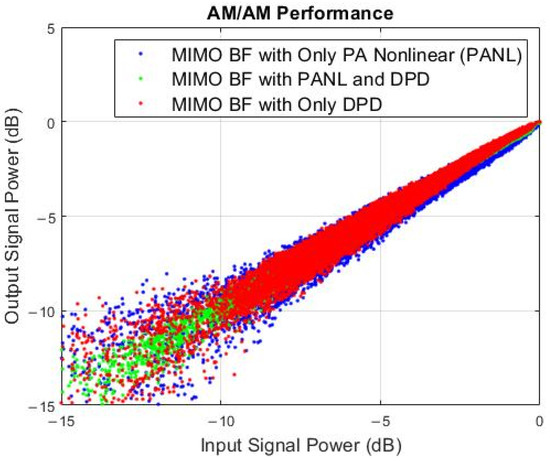
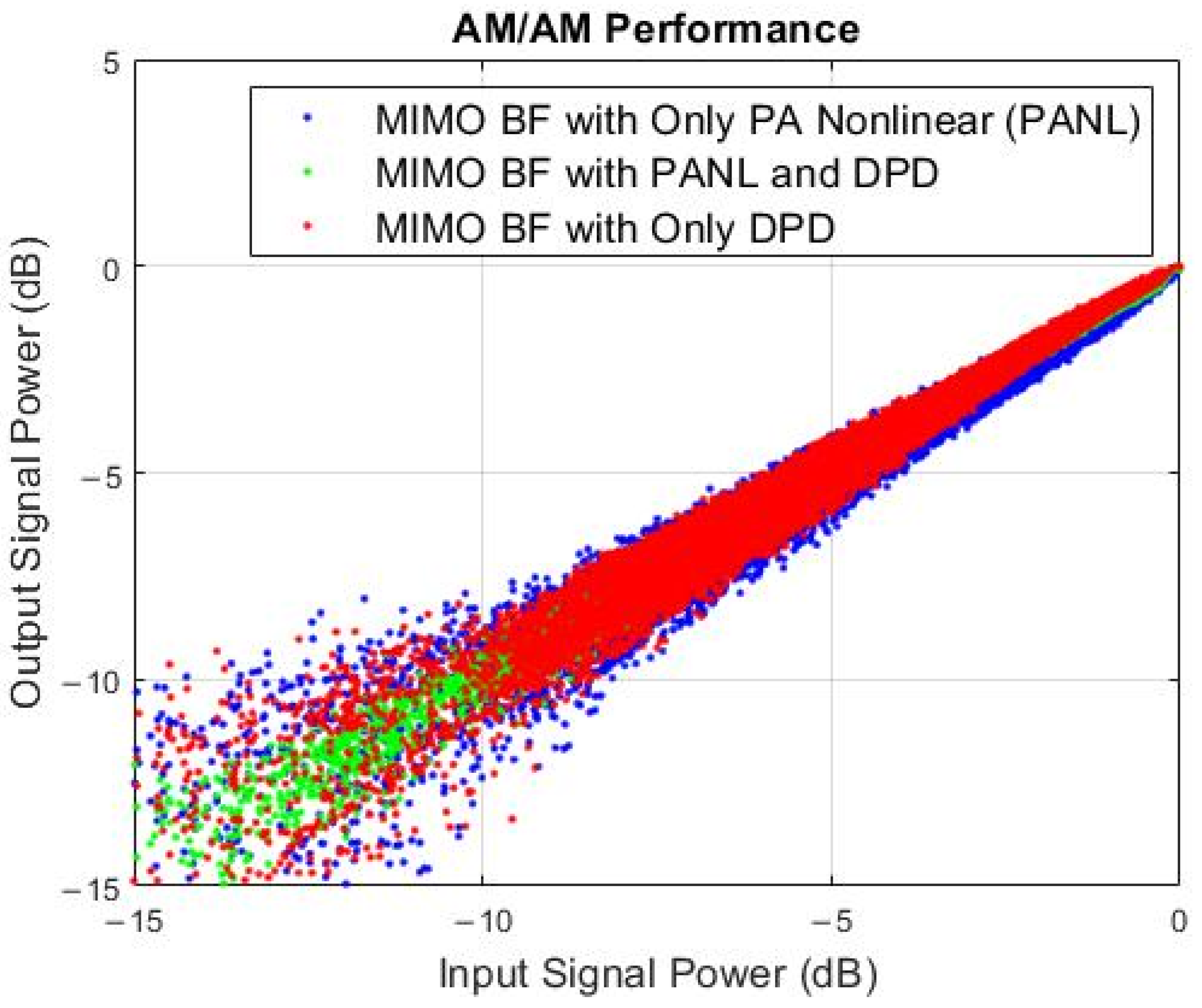
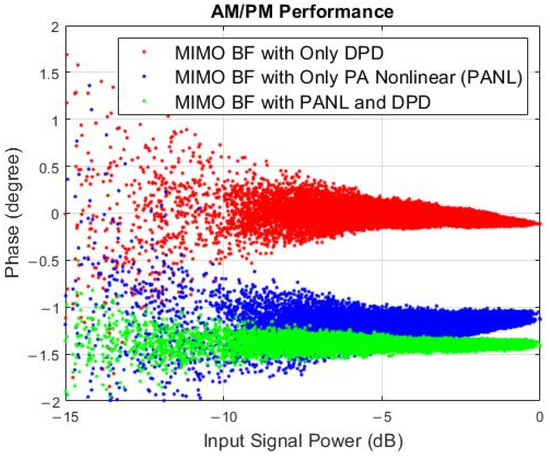
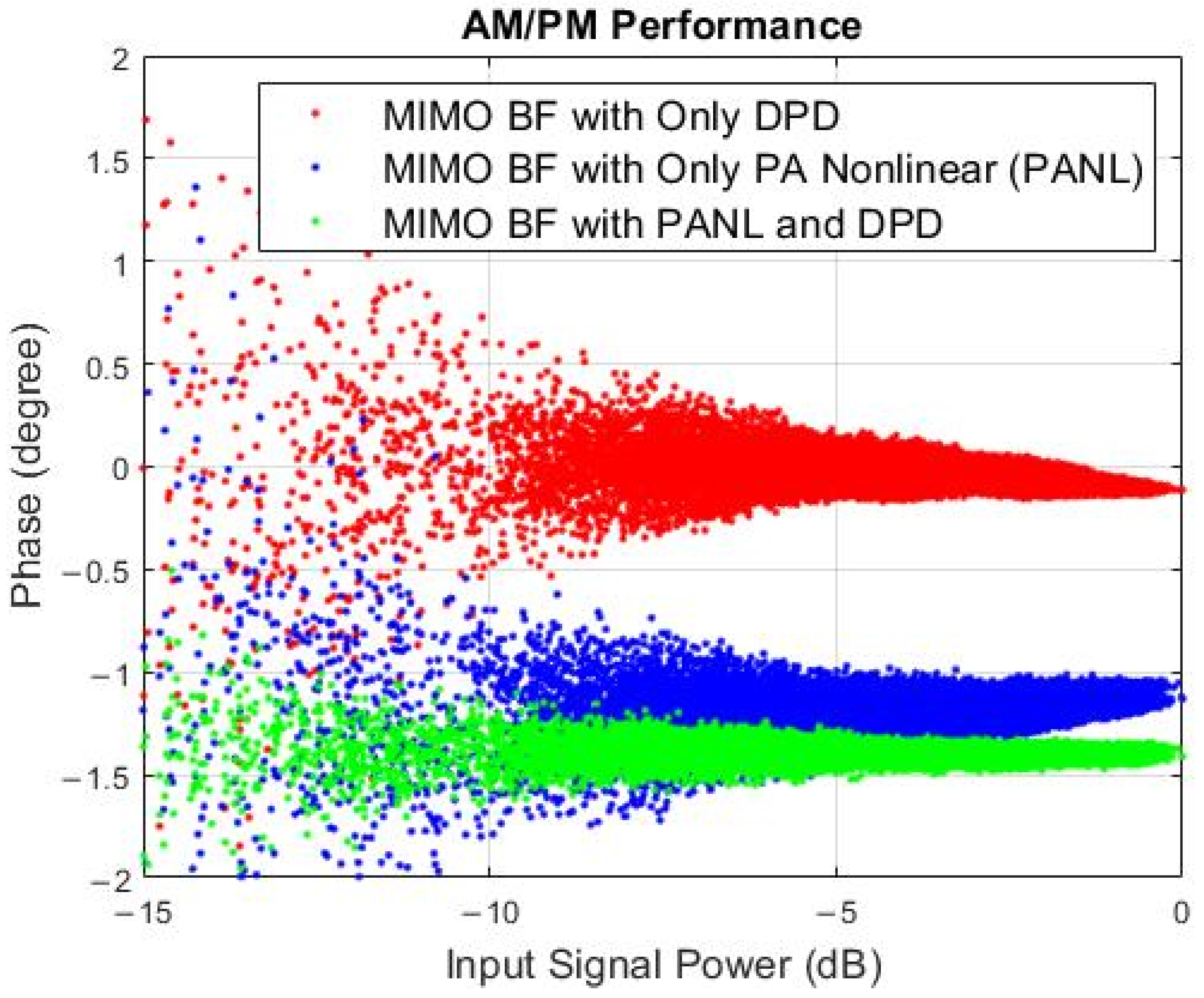
The PA amplitude-to-amplitude (AM/AM) and amplitude-to-phase (AM/PM) analyses were then conducted on three signals: a PA output signal with nonlinear distortion (Figure 38), a DPD-compensated output with PA distortion (Figure 40), and a standalone DPD-compensated signal without PA distortion. The results of these analyses are displayed in Figure 41 and Figure 42, respectively.
Figure 41.
Results of AM/AM analysis.
Figure 42.
Results of AM/PM analysis.
As shown in Figure 41, the DPD-compensated output with PA distortion was corrected to approach linear behaviour in the AM/AM plot (green line) because the amplitude nonlinearity of the PA response (blue) was compensated by the DPD parameters (red).
As displayed in Figure 42, the DPD-compensated output with PA distortion was corrected to achieve phase alignment in the AM/PM plot (green line) because the phase distortion caused by the nonlinearity of the PA response (blue) was compensated by the phase correction provided by the DPD parameters (red).
4.2.3. Experimental Verification of the Compensation for MIMO Linear Self-Interference
Step 3 of the proposed method (Figure 2) was performed using Equation (22) to acquire the channel response parameters for the main and auxiliary transmission paths. Compensation values for the widely linear filter were then derived, given that the IQ imbalance had already been compensated. The experimental setup for conducting Step 3 is shown in Figure 43.
Figure 43.
Experimental setup for Step 3 of the proposed method.
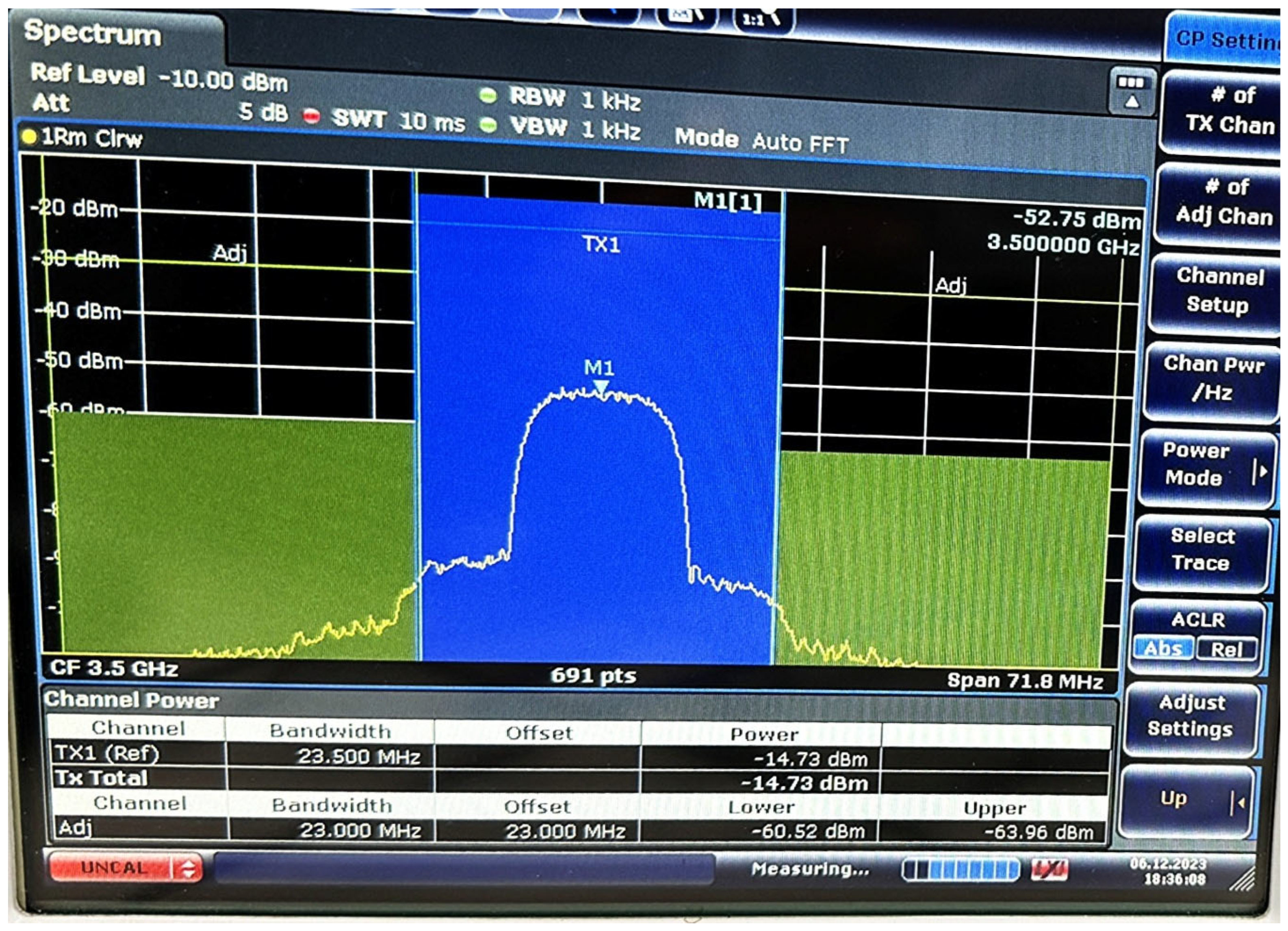
MATLAB was used to generate two output signals, one each for the main and auxiliary paths. The main path contained a 16-QAM signal with an IQ imbalance that was corrected for the IQ imbalance and pre-compensated for a nonlinear PA response. A nonlinear PA was then introduced into this signal by transmitting it through the adopted PA. The auxiliary path contained the 16-QAM signal with a different training code. Both signals were simultaneously transmitted through the M3force C1065B transceiver module, and they were combined using a coupler (Figure 44), with the coupled signal affected by self-interference.
Figure 44.
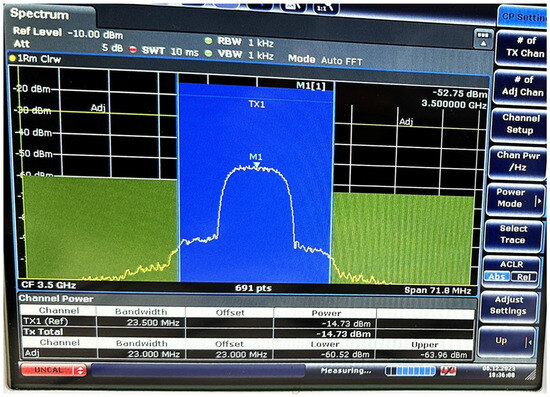
Spectrum analysis results for a receiver signal affected by self-interference.
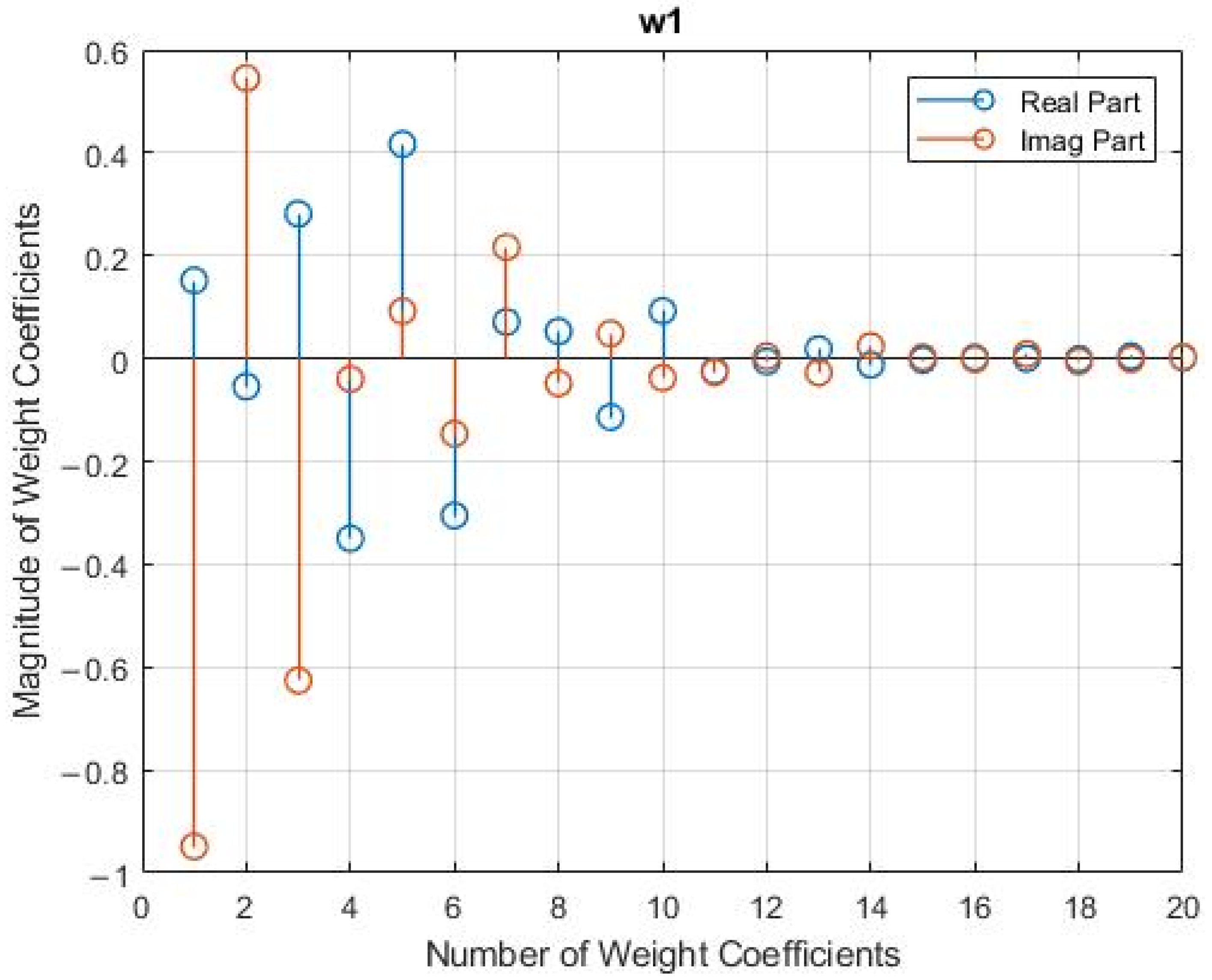
The coupled signal was received by the M3force C1065B transceiver module at the receiver end, and MATLAB was used to calculate the preprocessing parameters for self-interference compensation (Figure 45).
Figure 45.
Values of the preprocessing parameter for self-interference compensation ().
Figure 45 shows the values calculated using the widely linear filter (Figure 3) for the processing parameter for self-interference compensation (). The x- and y-axes in this figure denote the filter length and parameter value, respectively. The aforementioned filter began computation after the switch was activated to enable the cancellation function. Moreover, the switch function “clear” in Figure 3 was changed to “cancellation.”
MATLAB was employed again to generate two signals, one each for the main and auxiliary paths. The main path contained a 16-QAM signal with IQ imbalance, compensation parameters for the IQ imbalance, and pre-compensation parameters for the nonlinear PA response. This signal was passed through the PA to introduce a nonlinear PA response into it. The auxiliary path contained the 16-QAM signal with a preprocessing parameter for self-interference compensation. The signals from both paths were combined using the coupler, and the combined signal was examined using the spectrum analyzer (Figure 46).
Figure 46.
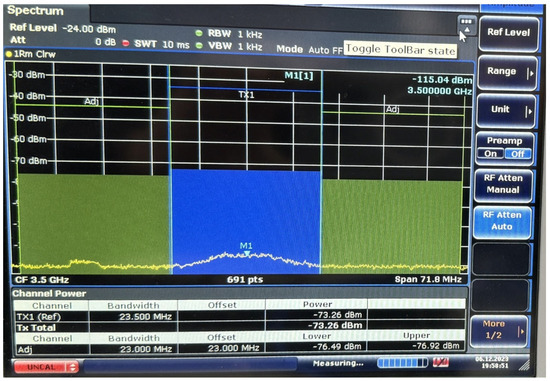
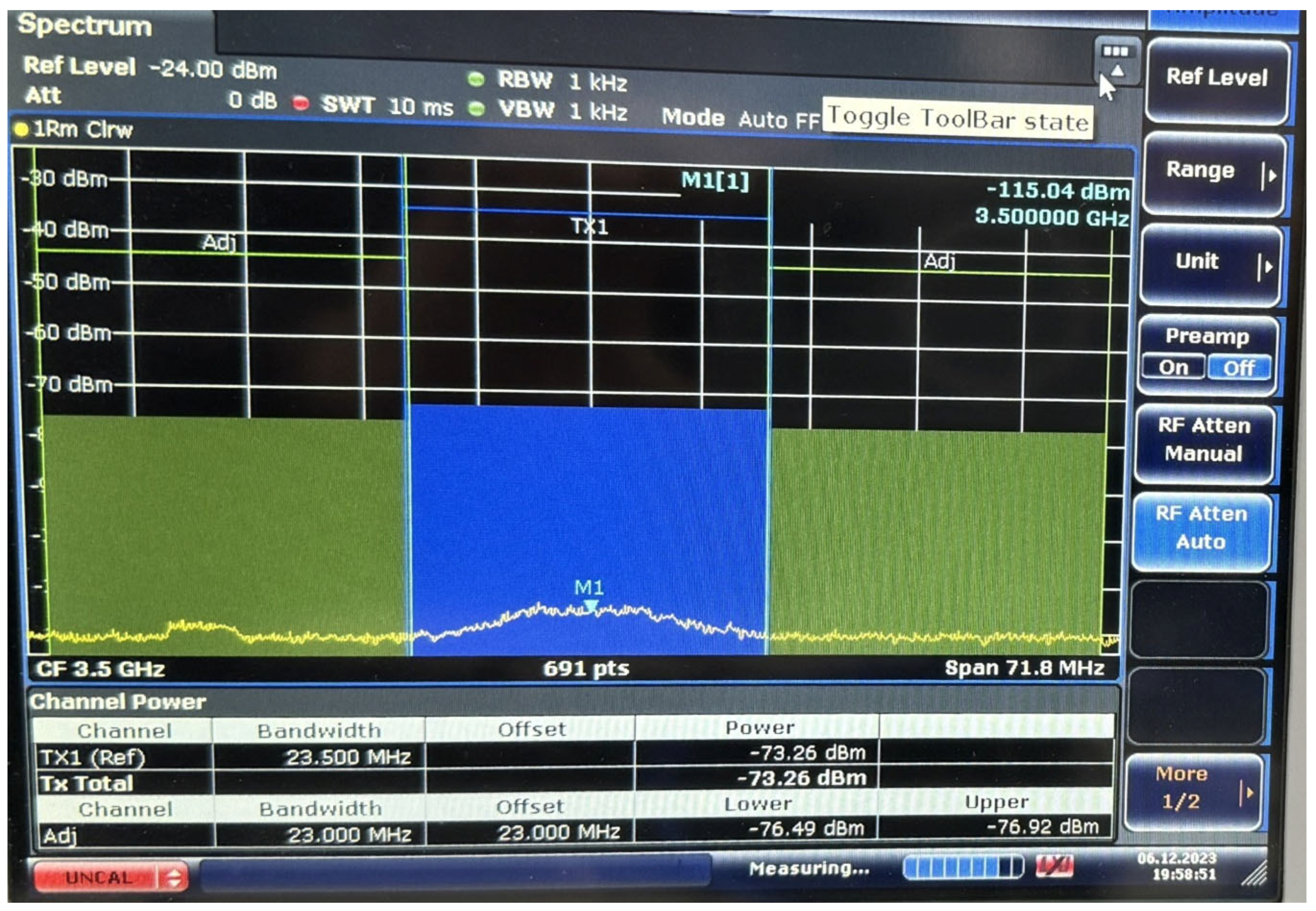
Suppression of the power of the coupled signal by the preprocessing parameters for self-interference compensation. Direct RF reception after the transmission eliminated the self-interference signals.
The preprocessing parameters for the self-interference compensation reduced the power of the coupled signal by 34 dBm, that is, from −149.04 to −115.04 dBm. This result confirms that self-interference can be eliminated through direct RF reception after transmission.
4.2.4. Verification of the BL-DPD Processing Performance of the Proposed Method Under the Use of Two PAs with Nonlinear Responses
Figure 47 displays the measurement setup used to investigate the BL-DPD processing performance of the proposed method under the use of an additional PA signal as an auxiliary signal.
Figure 47.
Measurement setup used to investigate the BL-DPD processing performance of the proposed method under the use of an additional PA signal as an auxiliary signal.
MATLAB was used to generate two output signals, one each for the main and auxiliary paths. The main path comprised a 16-QAM signal with an IQ imbalance, compensation parameters for the IQ imbalance, and pre-compensation parameters for the nonlinear PA response. This signal was transmitted through a PA to introduce a nonlinear PA response into it and conduct BL-DPD. The auxiliary path consisted of a 16-QAM signal with a different training code, which was processed by a pre-equalizer and subjected to band limiting. This signal was transmitted through a PA to introduce a nonlinear PA response into it. Both signals were simultaneously transmitted through the M3force C1065B transceiver module, and they were combined in the RF shielding box (Figure 47). Figure 48 indicates that after the BL-DPD processing, the spectral growth in the band-limited portion substantially improved. However, severe nonlinearity still existed outside the band-limited portion. Moreover, the power of the main frequency band was unaffected by Bl-DPD, which is consistent with the simulation results obtained through MATLAB.
Figure 48.
Results of spectrum analysis for the receiver when BL-DPD processing was conducted.
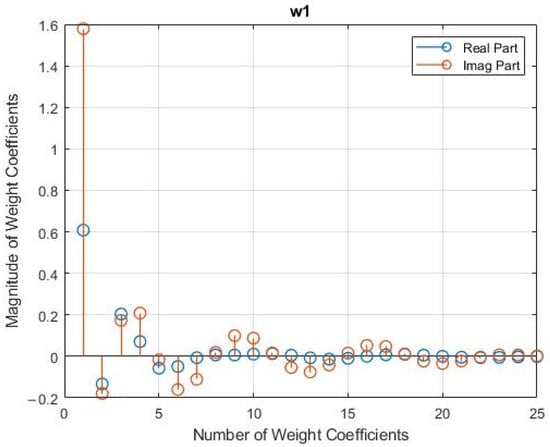
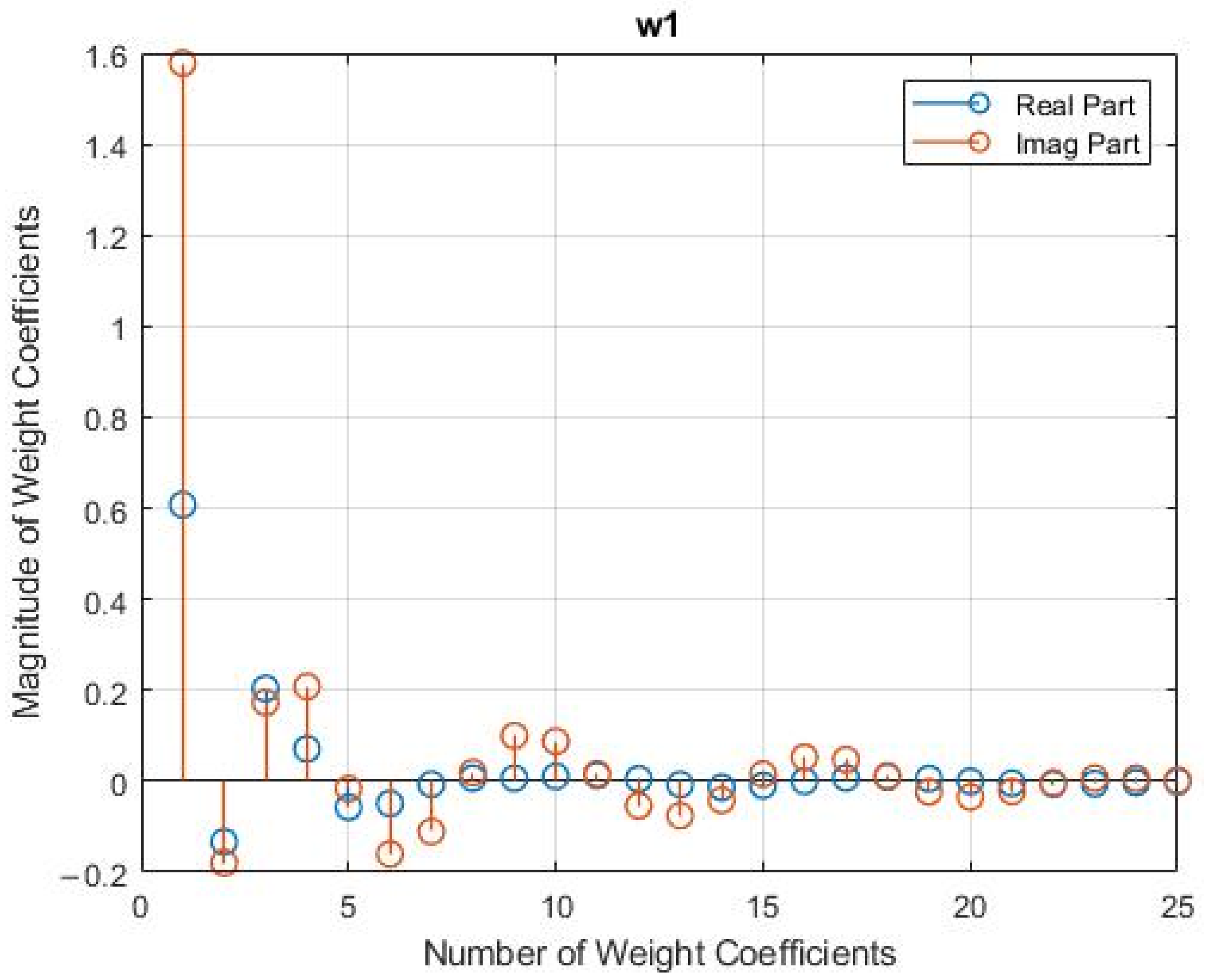
The mixed signal was received by the M3force C1065B transceiver module at the receiver end, and MATLAB was employed to calculate the preprocessing parameter for self-interference compensation (Figure 49).
Figure 49.
Values of the preprocessing parameter for self-interference compensation () using BL-DPD.
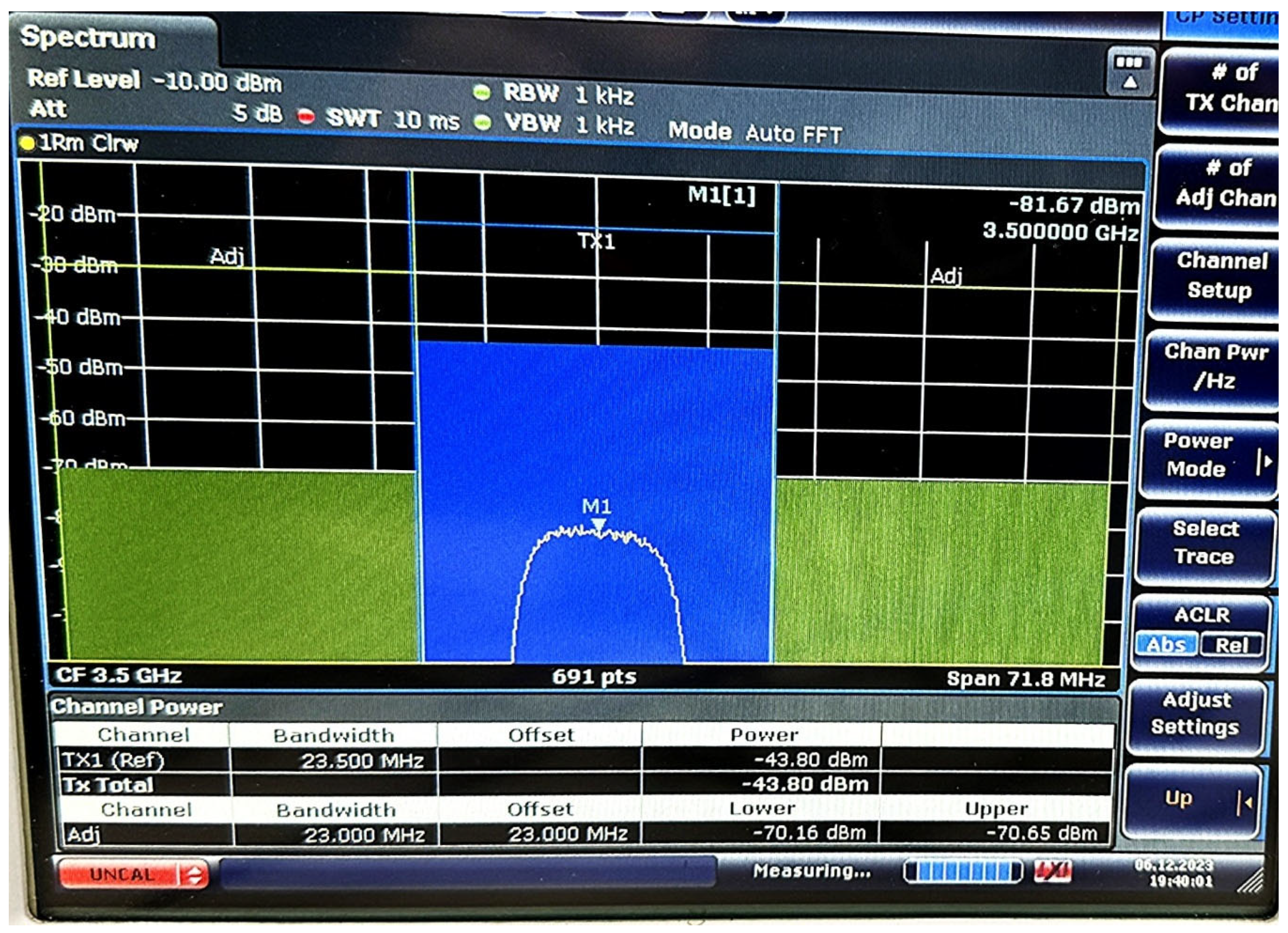
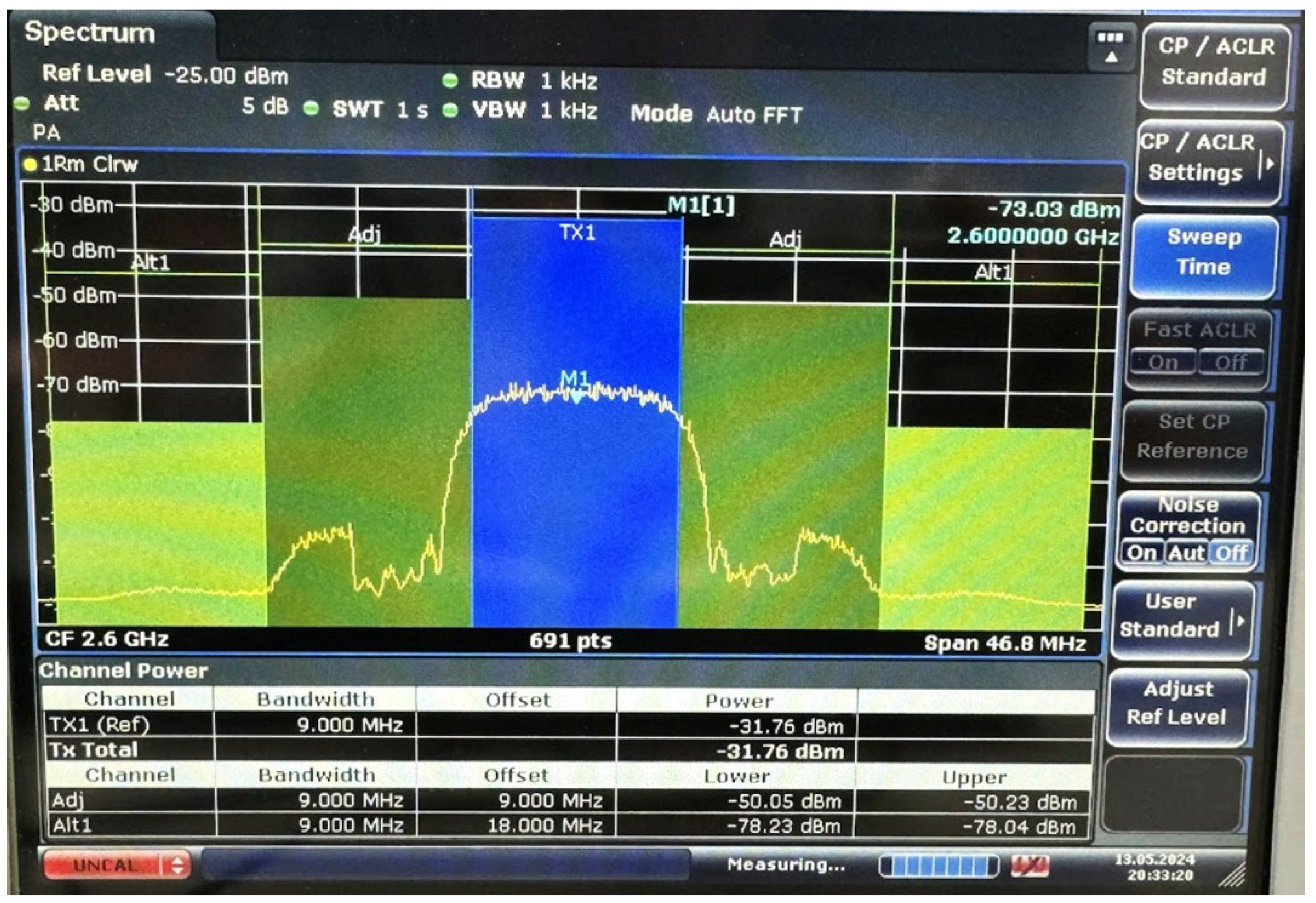
MATLAB was used again to generate two signals. In this case, the auxiliary path contained the 16-QAM signal with a preprocessing parameter for self-interference compensation. The signal obtained by combining the signals of the main and auxiliary paths was examined using the spectrum analyzer (Figure 50).
Figure 50.
Suppression of the power of a combined signal subjected to BL-DPD processing and including preprocessing parameters for self-interference compensation.
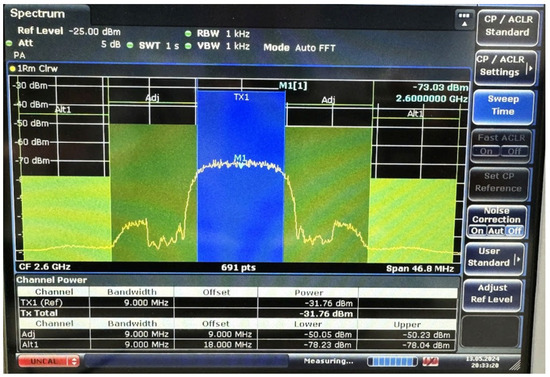
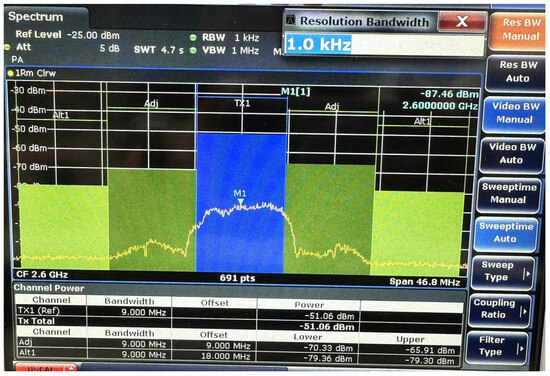
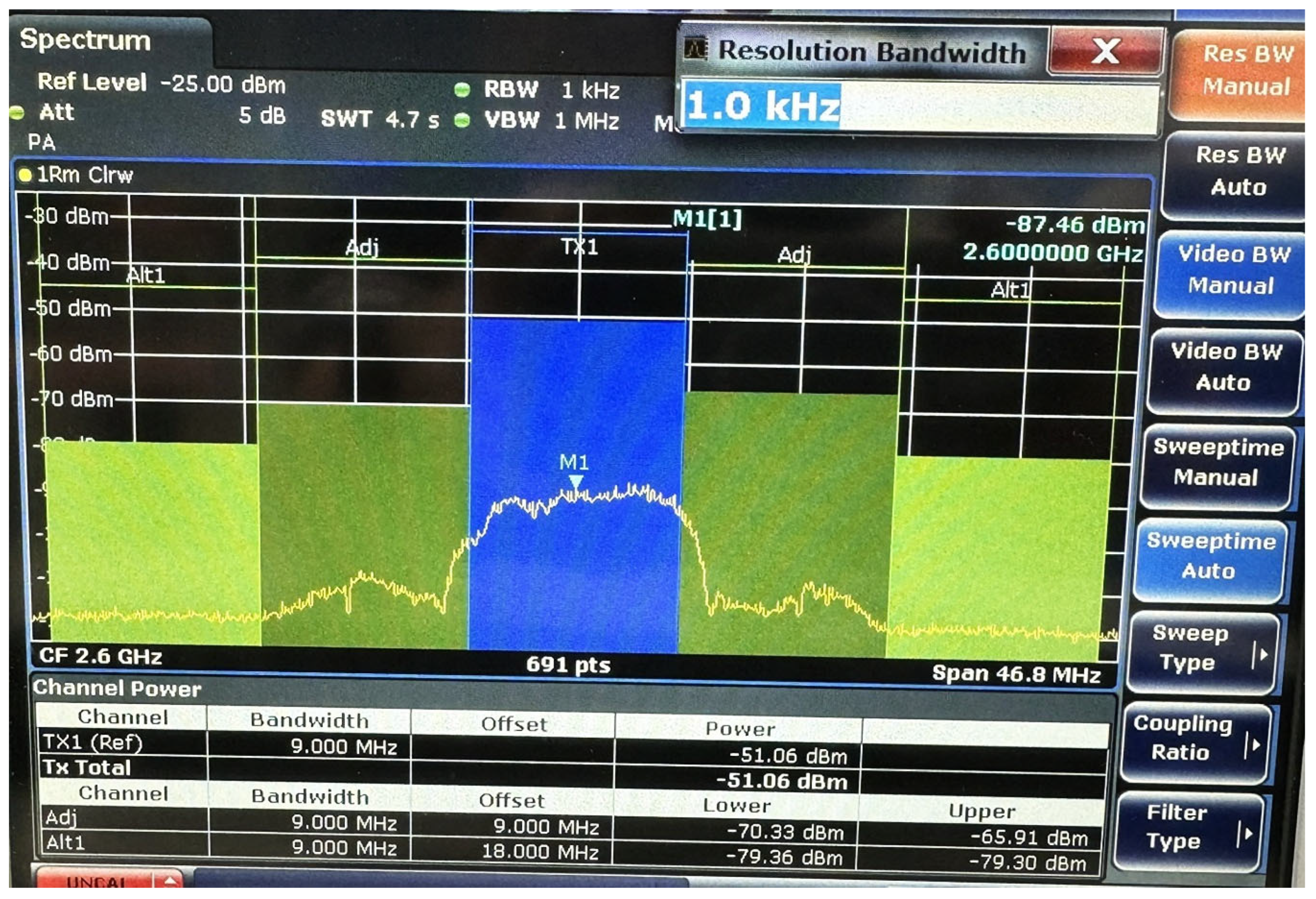
The preprocessing parameters for self-interference compensation effectively reduced the power of the coupled signal by approximately 20 dBm (to −51.04 dBm). Note that the hardware implementation utilizes a 12-bit fixed-point ADC/DAC system (unlike the floating-point operations used in MATLAB simulations), which limits the achievable suppression performance to approximately 20 dB. However, if a more advanced SDR platform were employed, specifically replacing the M3Force C1065B platform shown in Figure 32 with a system featuring 16-bit ADC/DAC resolution, the experimental performance is expected to achieve significantly higher suppression capability. This result confirms that BL-DPD and a pre-equalizer can effectively eliminate self-interference from RF signals after their wireless transmission. The experimental results from Section 4.2.1, Section 4.2.2, Section 4.2.3 and Section 4.2.4 indicate that the proposed method can systematically eliminate distortion arising from IQ imbalance, a nonlinear PA response, and MIMO self-interference in transmitted RF signals.
5. Conclusions
This study developed a method for eliminating distortion arising from IQ imbalance, a nonlinear PA response, and MIMO self-interference in wireless RF signal transmission. In this method, a precoding signal is generated through digital signal-processing techniques and then transmitted through an auxiliary signal transmission path. This signal is designed to be the inverse of the main path signal; thus, the auxiliary path signal suppresses the self-interference at the analogue front end. The proposed method involves three steps, with each step sequentially addressing the aforementioned distortion factors without requiring complex mathematical modelling of distortion components. The proposed method also ensures that signal saturation does not occur, thereby preventing the generation of nonlinear components. This study developed an integrated full-duplex communication technology to effectively suppress various distortion interferences, encompassing IQ imbalance calibration, PA nonlinearity compensation, and self-interference elimination. The proposed distortion cancellation method was experimentally validated on a software-defined radio platform. The experimental results suggested that the proposed method reduced the distortion by approximately 20 dBm, thus demonstrating excellent performance. The proposed method can be employed in full-duplex communication technology to effectively suppress the distortion caused by IQ imbalance, nonlinear PA responses, and self-interference in multiple channels.
Author Contributions
Conceptualization, J.-H.D.; Methodology, K.-H.L. and J.-H.D.; Software, M.-S.Y.; Validation, M.-S.Y.; Writing—original draft, K.-H.L. All authors have read and agreed to the published version of the manuscript.
Funding
This work was funded by the National Science and Technology Council (NSTC), R.O.C., under Contracts NSTC 113-2221-E-155-022 and NSTC 114-2221-E-155-015.
Data Availability Statement
The original contributions presented in this study are included in the article. Further inquiries can be directed to the corresponding author.
Acknowledgments
The authors thank the editor and anonymous reviewers for their helpful comments and suggestions, which contributed substantially to improving the quality of this paper. The authors appreciate Wallace academic and MDPI author services editing for his editorial assistance.
Conflicts of Interest
The authors declare no conflicts of interest.
References
- Bharadia, D.; McMilin, E.; Katti, S. Full Duplex Radios. In Proceedings of the ACM SIGCOMM, Hong Kong, China, 12–16 August 2013. [Google Scholar]
- Duarte, M.; Sabharwal, A. Full Duplex Wireless Communication Using Off-the-Shelf Radios: Feasibility and First Results. In Proceedings of the 2010 Asilomar Conference on Signals, Systems, and Computers, Pacific Grove, CA, USA, 7–10 November 2010. [Google Scholar]
- Choi, J.I.; Jain, M.; Srinivasan, K.; Levis, P.; Katti, S. Achieving Single Channel, Full Duplex Wireless Communication. In Proceedings of the ACM MOBICOM, Chicago, IL, USA, 20–24 September 2010. [Google Scholar]
- Zhang, Z.; Ma, Z.; Xiao, M.; Ding, Z.; Fan, P. Full-Duplex Device-to-Device-Aided Cooperative Nonorthogonal Multiple Access. IEEE Trans. Veh. Technol. 2017, 66, 4467–4471. [Google Scholar]
- Kiayani, A.; Abdelaziz, M.; Korpi, D.; Anttila, L.; Valkama, M. Active RF Cancellation with Closed-Loop Adaptation for Improved Isolation in Full-Duplex Radios. In Proceedings of the 2018 IEEE Globecom Workshops, Abu Dhabi, United Arab Emirates, 9–13 December 2018; pp. 1–6. [Google Scholar]
- Sakai, M.; Lin, H.; Yamashita, K. Adaptive Cancellation of Self-Interference in Full-Duplex Wireless with Transmitter IQ Imbalance. In Proceedings of the 2014 IEEE Globecom Workshops, Austin, TX, USA, 8–12 December 2014; pp. 3220–3224. [Google Scholar]
- Fukui, T.; Komatsu, K.; Miyaji, Y.; Uehara, H. Analog Self-Interference Cancellation Using Auxiliary Transmitter Considering IQ Imbalance and Amplifier Nonlinearity. IEEE Trans. Wirel. Commun. 2020, 19, 7439–7452. [Google Scholar] [CrossRef] [Scilit]
- Mohammadian, A.; Tellambura, C. RF Impairments in Wireless Transceivers: Phase noise, CFO, and IQ imbalance—A Survey. IEEE Access 2021, 9, 111718–111791. [Google Scholar] [CrossRef] [Scilit]
- Korpi, D.; Anttila, L.; Syrjälä, V.; Valkama, M. Widely Linear Digital Self-Interference Cancellation in Direct-Conversion Full-Duplex Transceiver. IEEE J. Sel. Areas Commun. 2014, 32, 1674–1687. [Google Scholar] [CrossRef] [Scilit]
- Komatsu, K.; Miyaji, Y.; Uehara, H. Iterative Nonlinear Self-Interference Cancellation for In-Band Full-Duplex Wireless Communications Under Mixer Imbalance and Amplifier Nonlinearity. IEEE Trans. Wireless Commun. 2020, 19, 4424–4438. [Google Scholar] [CrossRef] [Scilit]
- Benesty, J.; Paleologu, C.; Ciochina, S. Proportionate Adaptive Filters from a Basis Pursuit Perspective. IEEE Signal Process. Lett. 2010, 17, 985–988. [Google Scholar] [CrossRef] [Scilit]
- Liu, J.; Grant, S.L. Proportionate Adaptive Filtering for Block-Sparse System Identification. IEEE/ACM Trans. Audio Speech Lang. Process. 2016, 24, 623–630. [Google Scholar] [CrossRef] [Scilit]
- Yu, C.; Guan, L.; Zhu, E.; Zhu, A. Band-Limited Volterra Series-Based Digital Predistortion for Wideband RF Power Amplifiers. IEEE Trans. Microw. Theory Techn. 2012, 60, 4198–4208. [Google Scholar] [CrossRef] [Scilit]
- Zhao, J.; Liu, Y.; Yu, C.; Yu, J.; Li, S. A Modified Band-Limited Digital Predistortion Technique for Broadband Power Amplifiers. IEEE Commun. Lett. 2016, 20, 1800–1803. [Google Scholar] [CrossRef] [Scilit]
- Gumber, K.; Rawat, M. A Modified Hybrid RF Predistorter Linearizer for Ultra Wideband 5G systems. IEEE J. Emerg. Sel. Topics Circuits Syst. 2017, 7, 547–557. [Google Scholar] [CrossRef] [Scilit]
- Tang, K.; Yu, C.; Li, S.; Su, M.; Liu, Y. A Low Sampling Rate Memory Grouped Method for Digital Predistortion with Constrained Acquisition Bandwidth. IEEE Trans. Microw. Theory Techn. 2022, 70, 476–489. [Google Scholar] [CrossRef] [Scilit]
- Kumar, A.; Shipra; Rawat, M. Bandlimited DPD Adapted APD for 5G Communication. IEEE Trans. Circuits Syst. II Express Briefs 2023, 70, 496–500. [Google Scholar] [CrossRef] [Scilit]
- Anttila, L.; Lampu, V.; Hassani, S.A.; Campo, P.P.; Korpi, D.; Turunen, M.; Pollin, S.; Valkama, M. Full-duplexing with SDR devices: Algorithms, FPGA implementation, and real-time results. IEEE Trans. Wirel. Commun. 2020, 20, 2205–2220. [Google Scholar] [CrossRef] [Scilit]
- Tarafdar, A.; Majumder, A.; Debbarma, B.; Bhattacharyya, B.K. An Approach of ISI Elimination and High-Speed Data Reconstruction in Lossy On-Chip Serial Link. Circuits Syst. Signal Process. 2025. [Google Scholar] [CrossRef] [Scilit]
- Nair, L.R.; Pillai, S.S. A low complexity CFO reduction technique for LFDMA systems. In Proceedings of the International Conference on Information, Communication and Computing Technology, New Delhi, India, 16 July 2022; Springer: Cham, Switzerland, 2022; pp. 30–41. [Google Scholar]
- Ding, L.; Zhou, G.T.; Morgan, D.R.; Ma, Z.; Kenney, J.S.; Kim, J.; Giardina, C.R. A Robust Digital Baseband Predistorter Constructed Using Memory Polynomials. IEEE Trans. Commun. 2004, 52, 159–165. [Google Scholar] [CrossRef] [Scilit]
- Deng, J.H.; Liu, K.H.; Xiao, Y.Z.; Pan, W.Y.; Ku, M.L.; Lim, S.Y. Spatial Nulling and MIMO Pre-Processing Design for Dual mmWave Active Array SDR Platform with OTA Effects. IEEE Access 2025, 13, 159582–159596. [Google Scholar] [CrossRef] [Scilit]
- Tuyen, L.A.; Huang, X.; Guo, Y.J. Beam-based Analog Self-interference Cancellation Infull-Duplex MIMO Systems. IEEE Trans. Wirel. Commun. 2020, 19, 2460–2471. [Google Scholar]
- Soriano-Irigaray, F.J.; Fernandez-Prat, J.S.; Lopez-Martinez, F.J.; Martos-Naya, E.; Cobos-Morales, O.; Entrambasaguas, J.T. Adaptive Self-Interference Cancellation for Full Duplex Radio: Analytical Model and Experimental Validation. IEEE Access 2018, 6, 65018–65026. [Google Scholar] [CrossRef] [Scilit]
- Deng, J.H.; Lee, C.F.; Ku, M.L.; Hwang, J.K. Self-Calibration of Joint RF Impairments in a Loopback Wideband Transceiver. IEEE Access 2020, 8, 45607–45617. [Google Scholar] [CrossRef] [Scilit]

Disclaimer/Publisher’s Note: The statements, opinions and data contained in all publications are solely those of the individual author(s) and contributor(s) and not of MDPI and/or the editor(s). MDPI and/or the editor(s) disclaim responsibility for any injury to people or property resulting from any ideas, methods, instructions or products referred to in the content. |
© 2025 by the authors. Licensee MDPI, Basel, Switzerland. This article is an open access article distributed under the terms and conditions of the Creative Commons Attribution (CC BY) license (https://creativecommons.org/licenses/by/4.0/).