Article

Combining wav2vec 2.0 Fine-Tuning and ConLearnNet for Speech Emotion Recognition

1
School of Electronics and Information Engineering, South China Normal University, Foshan 528234, China
2
Department of Electrical and Computer Engineering, National University of Singapore, Singapore 117583, Singapore
3
School of Cyber Security, Guangdong Polytechnic Normal University, Guangzhou 510640, China
*
Authors to whom correspondence should be addressed.
Electronics 2024, 13(6), 1103; https://doi.org/10.3390/electronics13061103

Submission received: 26 January 2024 / Revised: 11 March 2024 / Accepted: 15 March 2024 / Published: 17 March 2024
(This article belongs to the Special Issue New Advances in Affective Computing)

Abstract

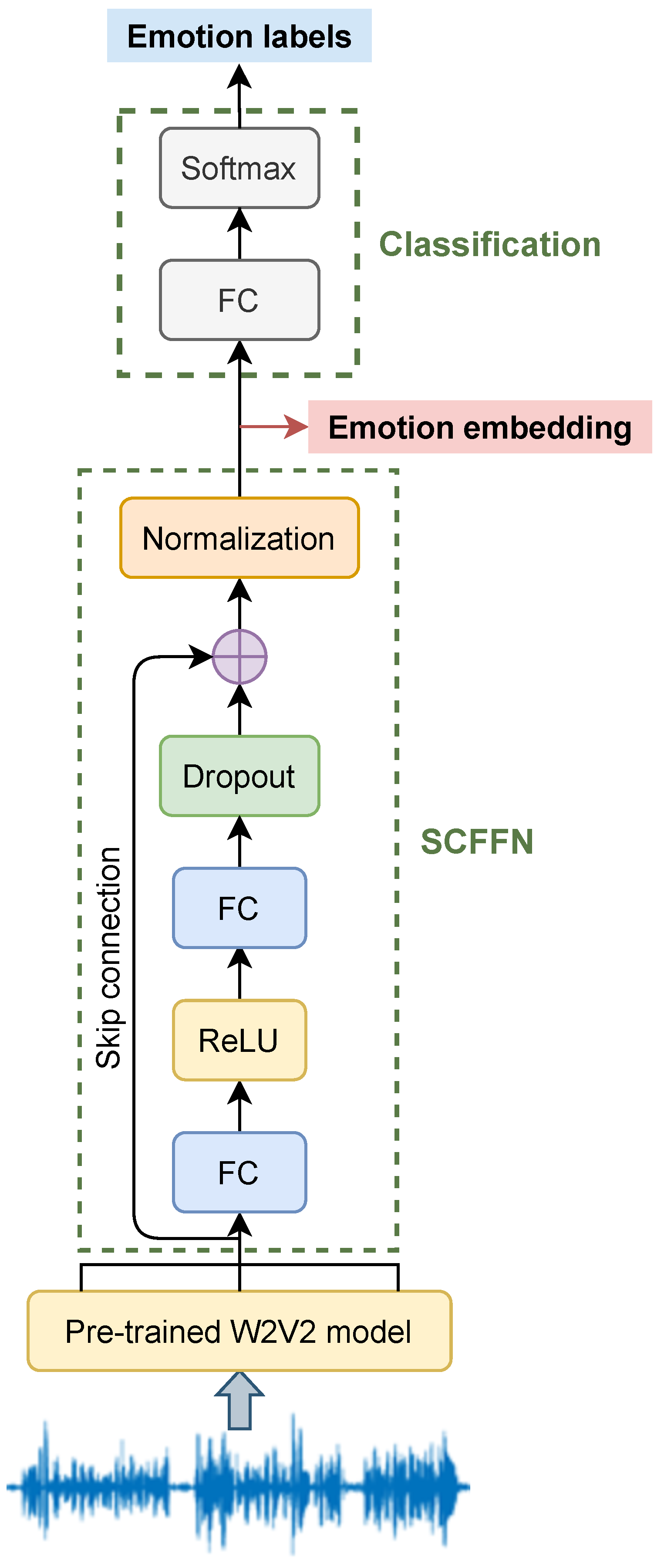
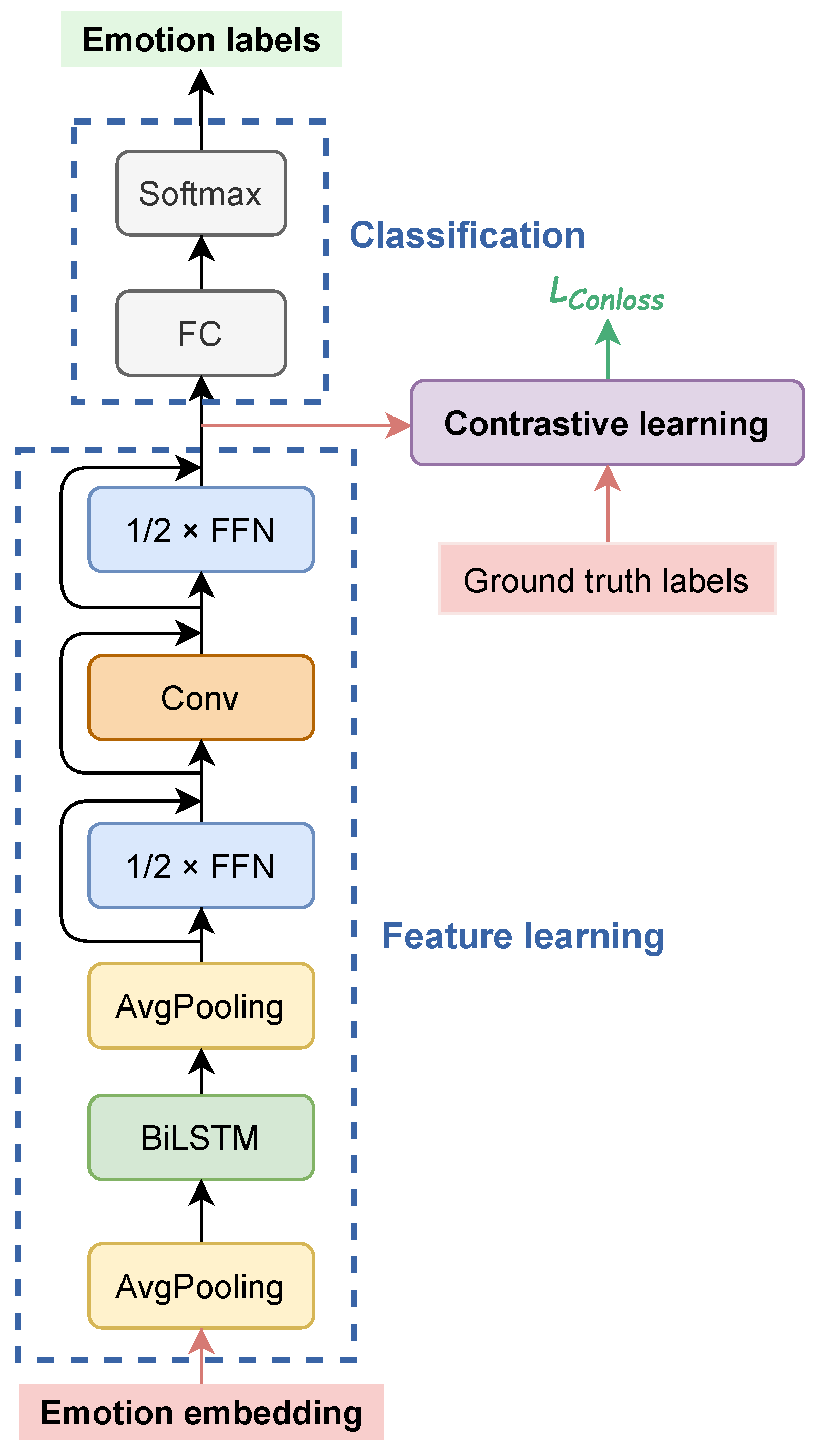
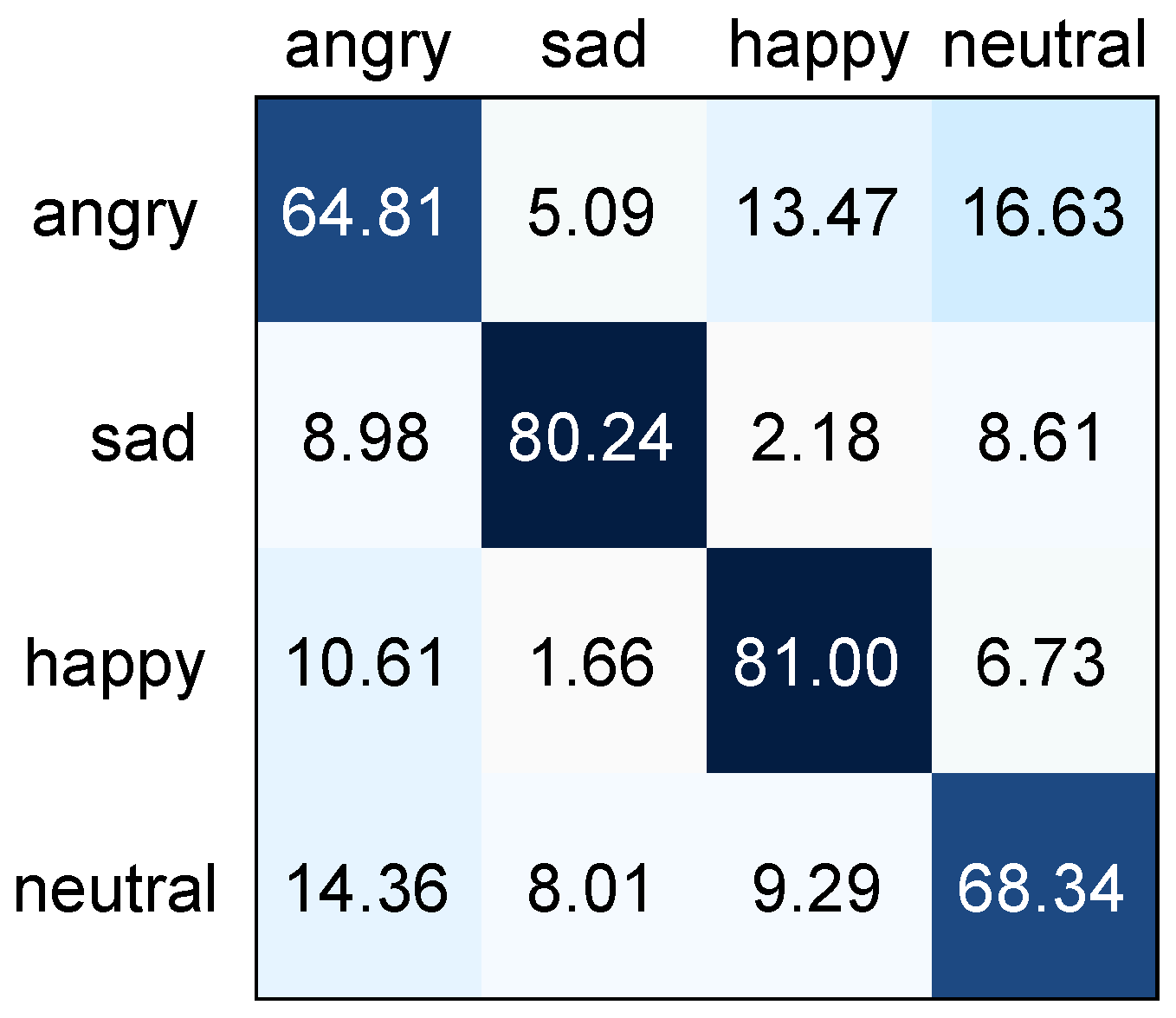
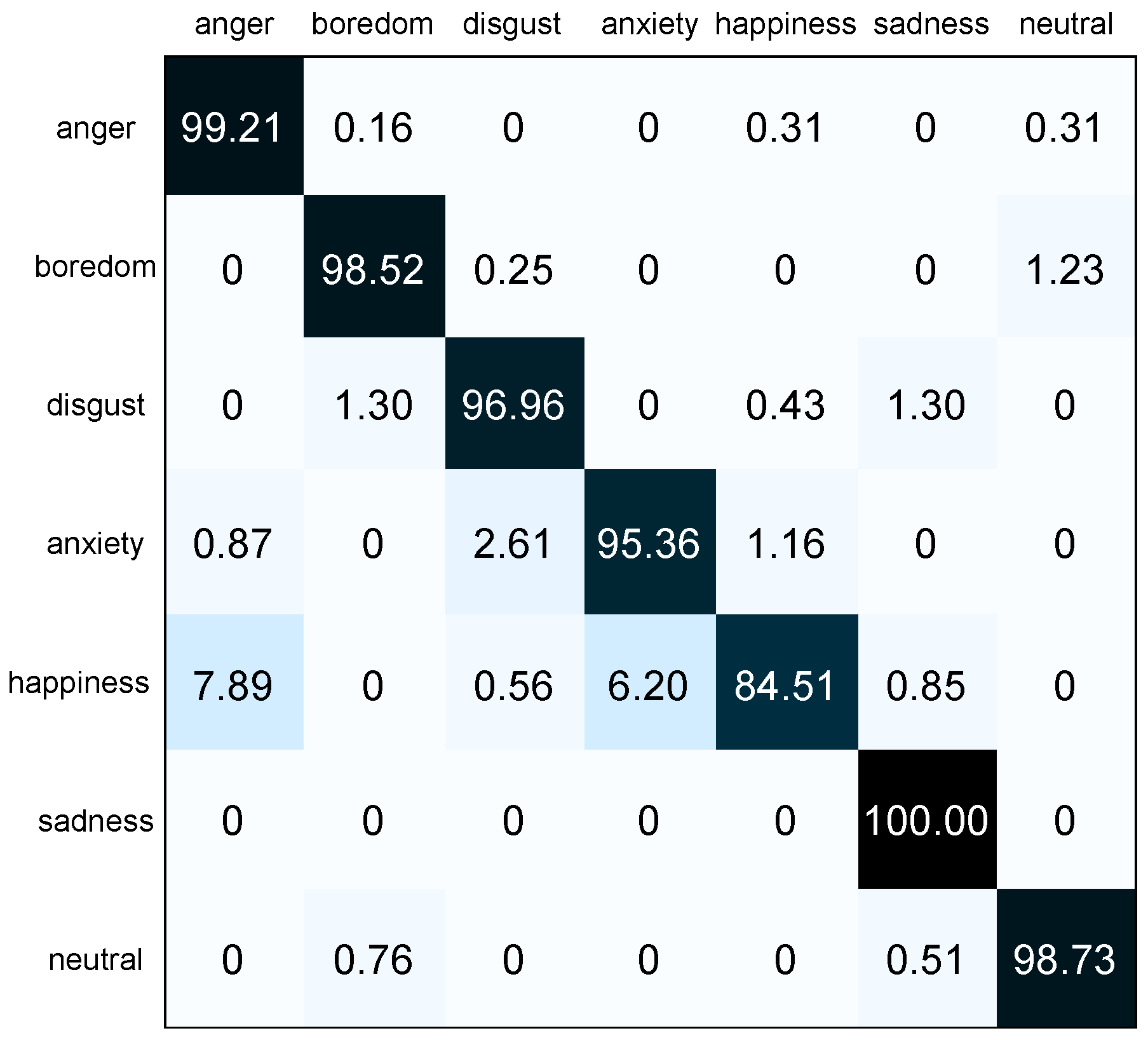
Speech emotion recognition poses challenges due to the varied expression of emotions through intonation and speech rate. In order to reduce the loss of emotional information during the recognition process and to enhance the extraction and classification of speech emotions and thus improve the ability of speech emotion recognition, we propose a novel approach in two folds. Firstly, a feed-forward network with skip connections (SCFFN) is introduced to fine-tune wav2vec 2.0 and extract emotion embeddings. Subsequently, ConLearnNet is employed for emotion classification. ConLearnNet comprises three steps: feature learning, contrastive learning, and classification. Feature learning transforms the input, while contrastive learning encourages similar representations for samples from the same category and discriminative representations for different categories. Experimental results on the IEMOCAP and the EMO-DB datasets demonstrate the superiority of our proposed method compared to state-of-the-art systems. We achieve a WA and UAR of 72.86% and 72.85% on IEMOCAP, and 97.20% and 96.41% on the EMO-DB, respectively.
Keywords: speech emotion recognition (SER); wav2vec 2.0; contrastive learning speech emotion recognition (SER); wav2vec 2.0; contrastive learning