


Abstract
Reducing and managing emissions of mine waters and the minerals dissolved in them, and above all, using these wastes as resources, is an important element of sustainable development in regions undergoing a gradual phase-out of fossil fuel extraction. This article examines selected aspects of mine water management and the mineral substances contained therein, using the Polish hard coal mining industry as a case study, providing valuable insights for both Poland and other mining regions reducing raw material extraction regarding the sustainability of social water demand, mining sector restructuring, and Sustainable Development Goals (SDGs). In Poland, underground hard coal mining remains a significant source of mine water and mineral salt emissions. Mine waters, discharged into the catchments of major rivers (approximately 200 million m3 per year) along with their dissolved mineral compounds (approximately 1.5 million Mg per year), have repeatedly contributed to serious environmental disruptions, e.g., the phenomena of so-called “fish kill”. This study analyzes both the scale of emissions and the economic utilization of mineralized mine waters discharged to the surface by underground hard coal mining in Poland. Key processes and potential causes for the observed increase in environmental burdens are discussed. Furthermore, the paper presents a current statistical assessment of the trends and scale of emission changes, which can serve as a basis for environmental management decision-making amidst the decarbonization of the economy. Utilizing potential water resources and mineral compounds from mine waters for internal use or within circular economy applications can reduce environmental pressure, support compliance with sustainable development policies, and mitigate long-term impacts on post-mining regions.
1. Introduction
The global economy is fundamentally based on the extraction of useful minerals; therefore, the mining of mineral raw materials will remain a significant element of human industrial activity for a long time to come [1]. Meanwhile, mining and industrial activities are among the primary sources of environmental pollutant emissions, contributing, among other things, to climate change [2,3]. Open-pit mining alters the landscape of mining areas by generating post-extraction voids on the surface, while underground mining, by creating voids deep within the rock mass, affects surface morphology through deformations resulting from land subsidence [4,5]. Both open-pit and underground extraction disrupt the natural system of groundwater and aquifers. This allows for the mixing of shallow groundwater with mineralized waters trapped within the rock mass. The removal of portions of the rock mass causes surface and groundwaters to constantly flow into mining excavations, threatening the safety of miners. Commonly used extraction technologies require the continuous drainage of this inflowing water [6,7]. In the face of intensifying adverse climate changes, the world’s largest economies are undergoing restructuring processes aimed at decarbonization and a gradual phase-out of energy production from fossil fuels [8,9].
Such processes are also occurring within the Polish economy [10,11]. The Polish energy sector possesses generation and transmission infrastructure tailored to coal-based energy, which complicates and extends the restructuring processes. A transition period is required to smoothly implement the necessary investments and to carry out a restructuring that is safe in terms of ensuring continuity of supply [12,13]. During this transitional phase, Polish hard coal mining will continue to provide the necessary fuel for the power industry, and at least during this time, the environment will be exposed to a continuous influx of mineralized mine waters [14,15]. Hard coal is a sedimentary rock of plant origin, containing 75–97% carbon and a calorific value of 25.1 to 35.6 MJ/kg. Hard coal was formed primarily in the Carboniferous period and is a compact, hard, and brittle solid, black or dark brown in color with a dull sheen.
The planned termination of thermal coal extraction will limit the emission of mine waters into the environment, but it will not eliminate it [16,17]. Due to the necessity of protecting other mines or subsided mining areas from flooding by mineralized waters, the discharge of mine water will remain a permanent, adverse environmental impact in areas where mineral resource exploitation was or is still being conducted [18,19]. Unfortunately, the emission of mineralized mine waters also affects distant areas through which surface watercourses, carrying water pumped from mines, merely flow. In recent years, even in areas far from mining areas, local governments have had to prevent environmental disasters in Poland’s main rivers on several occasions.
2. Research Objectives
This article provides a detailed analysis of selected aspects of mine water and dissolved mineral substance emissions into the environment related to hard coal extraction for the period from 2017 to 2025. The values for 2025 were estimated based on the results achieved during the first nine months of that year. The paper presents the key factors determining the scale of mine water emissions and their mineral content into the environment. Based on this, the objective of this study is to present the extent of mine water emissions and the mineral substances dissolved within them, resulting from both ongoing and concluded underground hard coal mining in Poland. A significant challenge for the boards of mining companies will be to align their operations with the requirements of decarbonization policies and existing legal regulations [20,21]. Determining the scale of emissions and identifying the factors influencing their variability can provide a basis for the ongoing adaptation of hard coal mining operations to increasing environmental requirements and shifting political and economic conditions [22,23].
The collected data and the conclusions drawn from the analysis can provide support for the restructuring process of hard coal mining and the gradual phase-out of fossil fuel use in the economy [24,25]. The conducted analysis is relevant to the situation in Poland; however, with minor modifications, it can also be applied to other countries undergoing the phase-out of hard coal mining [26,27]. One of the primary strengths of this analysis is the use of the most up-to-date data set reported by mining enterprises.
3. Materials and Methods
Statistical obligations require Polish hard coal mining enterprises to cyclically report the results of their extraction activities. One of the tasks of the Katowice branch of the Industrial Development Agency (ARP) is to collect data characterizing hard coal mining operations. In accordance with this entrusted statistical duty, the ARP Katowice branch aggregates the reported information and presents the collected data to central administration units, as well as publishing it on the website: https://polskirynekwegla.pl/statystyka-publiczna (accessed on 15 January 2026) [28]. The authors chose the “Polski Rynek Węgla” (Polish Coal Market) database because it is a publicly available database with information reported directly by mining companies. Compared to other databases, the “ Polski Rynek Węgla “ is the “primary” database used by all other services.
The assessment of mine water emissions and dissolved mineral substances presented in this study was developed based on these mandatory statistical reports from mining enterprises. During the research, the necessary data reported by mining companies were obtained from the aforementioned website [28]. The presented data were derived from a nearly complete database of Polish mining enterprises. One small, private mining enterprise does not report its data; therefore, the results theoretically do not represent the sector in its entirety. However, since the scope of this enterprise’s mining activities is small, its impact on the aggregated picture of the sector is statistically insignificant. Therefore, it can be assumed that the presented picture of the Polish hard coal sector, generated based on data reported by other state-owned and private producers, is sufficiently objective for the entire sector [29,30]. Due to the protection of sensitive mining company data, analysis at the mine or mining company level was not possible. Given the data for individual mining units, the analysis determined aggregated values of the analyzed parameters for the entire sector, preventing the assignment of detailed data to specific companies. In the presented article, analysis at the mine or mining company level was not necessary, as the authors intended to present the phenomena occurring not for specific mining units, but for the sector as a whole. A sectoral approach facilitates the application of the presented conclusions regionally in Poland, but also in other mining regions embarking on the decarbonization of their economies. Furthermore, this approach allows for the avoidance of potential conflicts of interest.
Indicating trends in the management of mineralized mine waters, including for the year 2025, required forecasting emission volumes for the end of the year. Approximate values for individual indicators at the end of 2025 were estimated based on values recorded at the conclusion of the first three quarters of 2025. To account for the impact of seasonal fluctuations in the fourth quarter in a way that is both simple and as accurate as possible, conversion factors were determined to project values from the third quarter to the year-end total. In determining these factors, the proportion of the annual value represented by the three-quarter value for each indicator was examined. These coefficients were calculated based on data from the last 20 years, and the average value of these annual coefficients was adopted for the final calculations.
4. Literature Review
The rapid global economic development is accelerating adverse climate changes [31,32]. To at least slow the progression of the greenhouse effect while simultaneously ensuring economic growth and minimizing natural resource consumption, the European Union (EU) is implementing the European Green Deal [3,8]. According to the Green Deal provisions, any potential extraction of mineral resources must be both economically and environmentally efficient. The legal basis for mining operations in Poland is provided by acts, the most important of which are: the Act of 9 June 2011-Geological and Mining Law (Journal of Laws of 2023, item 633) and the Act of 7 September 2007 on the Operation of the Hard Coal Mining Industry (Journal of Laws of 2022, item 241). The presented acts and other legal documents concerning hard coal mining have been repeatedly adapted to European Union legislation, making them consistent with it. The decarbonization of economies and technological shifts in industry are reducing the demand for fossil fuels. Consequently, hard coal is losing its significance in global and local energy markets [33,34]. In Poland, the problem of intensifying climate change is exacerbated by the fact that the aging generation capacities of the Polish energy sector, based on coal combustion, require urgent action [35,36]. An immediate transition of the power industry to renewable sources, which remain unstable, could undermine energy security [11,24,37]. A transformation of the energy sector in Poland that is technically, economically, socially, and environmentally safe requires a transitional period during which coal-derived energy will temporarily serve as a stabilizer for the power system.
For many years, all domestic producers have been limiting their extraction volumes to adapt to new market conditions and increasingly stringent environmental restrictions [13,38]. Polish hard coal mines operate under complex geological and mining conditions, further complicated by the presence of numerous mining hazards [5,39]. Increasing the depth of extraction raises the risk and severity of these hazards. The reduction in investment for accessing new parts of deposits, resulting from the decarbonization of the economy, forces the extraction of less attractive areas, which generate increasing volumes of waste [40,41]. All these factors increase extraction costs. In 2021, a “Social Contract” was signed [42], outlining a schedule for reducing thermal hard coal production capacity in Poland until 2049 [11,15]. Until the specific closure date of each mine, domestic mining is expected to provide the necessary fuel [43,44]. The agreement [42] established that the safe and efficient extraction of hard coal is to be supported by public funds.
Mining activities disrupt the integrity of the rock mass, leading, among other things, to hydrological changes [45,46]. In this context, the extraction of a deposit can alter the direction and/or intensity of surface and/or groundwater flow [47,48]. To ensure the safety of hard coal extraction processes, as well as those of other useful minerals, significant volumes of mineralized mine waters have been, are, and most likely will continue to be pumped to the surface [49,50]. According to current water law permits, hard coal mining companies report that Poland’s surface watercourses receive approximately 0.6 million $m^3/d$ of unmanaged mineralized mine water [28]. A crucial aspect of preventing hazards resulting from changes in hydrogeological conditions caused by current or past mining operations is the effectiveness of drainage systems [51,52]. For safety reasons and depending on local hydrological conditions, mine pumping stations must discharge inflowing mine water to the surface for at least several hours a day. Mine water pumping stations have a certain retention capacity, and a short-term interruption in pumping would not significantly threaten the safety of the mine or public safety on the surface [19,53]. However, a long-term cessation of pumping can trigger a catastrophe that could prove difficult, time-consuming, and costly to remediate [54,55]. A long-term halt, specifically the cessation of drainage, can initially lead to the flooding of the mine, followed by neighboring mines, and finally the flooding of lower-situated surface areas and the contamination of near-surface aquifers used as sources of drinking water [10,18].
The management of mineralized mine water emissions depends on the type of mineral extracted, as well as the size, location, and technical condition of the mine [26,48]. The degree of mineralization usually depends on the depth of the aquifers disturbed by extraction. As the depth of disturbed aquifers increases, an increase in the mineralization of the extracted waters is usually observed, and when the isolation layers are not disturbed, a reduction in the amount of mine water inflow is usually noticeable [16,29]. According to this relationship, mine waters pumped to the surface are a mixture of natural inflows from the surface and the deposit, as well as technological water inflows. To a large extent, the pumped mineralized waters are discharged into local watercourses, leading to the emission of salt loads into the environment. Depending on local conditions, these waters may consist of Miocene sedimentary brines, paleo-infiltration brines from deeper Carboniferous layers and older geological formations, Tertiary brines (following the last marine transgression), Holocene/glacial waters, or mixtures thereof [35,47].
Significant volumes of saline mine water are discharged daily into the Vistula and Oder catchments [7,28]. These waters pose a real threat to the natural environment and the health of communities using the watercourses that carry these mixed waters to the sea. Economic losses resulting from excessive river salinity are estimated in the billions of euros [56]. Increased salt emissions can disrupt biodiversity by destroying microorganisms responsible for water self-purification [9,55]. Excessive mineralization can lead to the extinction of species, organic pollution, and phenomena such as “fish kills.” In extreme cases, biological life in freshwater environments may vanish entirely [17,26].
A threat to the health of local communities may arise from exceeding permissible sulfate concentrations, even in water not intended for human consumption [23,47]. Concentrations of magnesium and sodium sulfates around 1000 mg/dm3 alter the taste of water (to bitter) and adversely affect the digestive tract even when used for non-potable purposes.
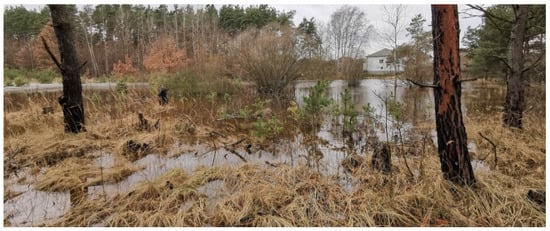
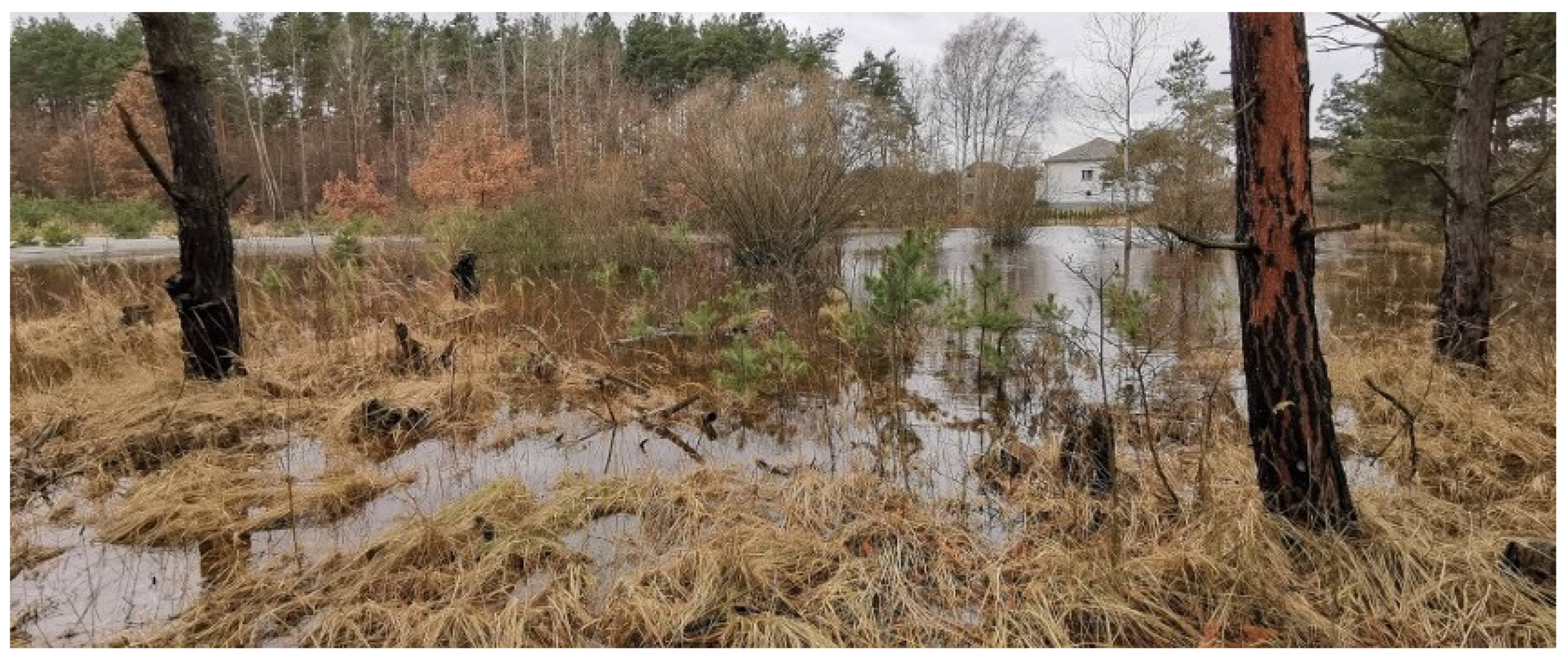
Beyond the aforementioned contamination, hard coal mining significantly impacts water relations on the surface and within the rock mass [31,50]. Creating an underground void directly induces a caving zone (where rock layers lose continuity), followed by a fracture zone, and a bending zone extending to the surface [46,57]. Deep underground mining typically creates surface depressions in the form of continuous deformations, which usually do not break the continuity of the rock layers. These may appear from the moment the void is created until approximately five years after mining ceases [27,56]. They are most commonly observed as subsidence troughs, tilts, and deformations (Figure 1). Land subsidence can result in undrained depressions; as groundwater levels recover, this can lead to flooding in the deepest areas and desiccation in higher areas [10,18]. The disturbance of the rock mass may allow groundwater to mix with mineralized mine waters, causing saline water to appear on the surface and exacerbating the environmental disaster [14,25].
Figure 1.
Accumulation of mine and groundwater in a terrain depression (author’s archive).
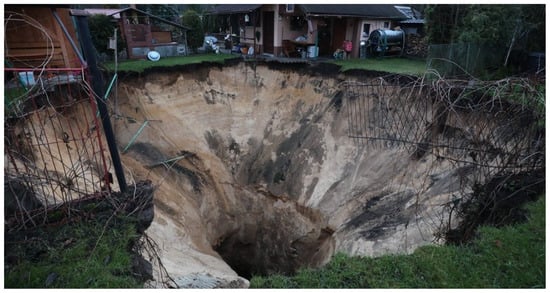
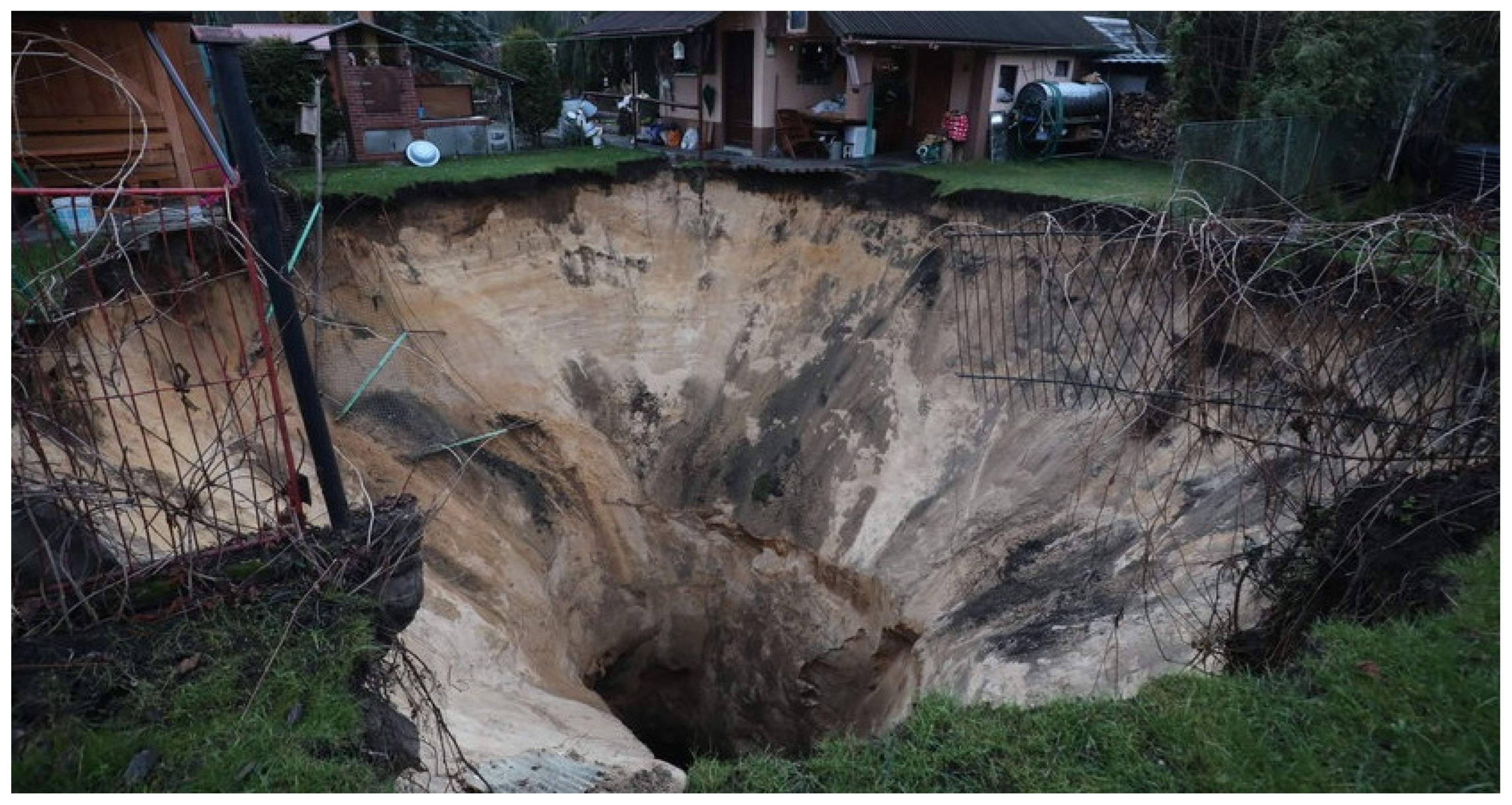
So-called shallow mining is conducted at such low depths that the caving zone may be located dangerously close to the ground surface [5,54]. When the rock mass is dry, the layers overlying the post-extraction voids can remain stable for a very long time [5,41]. However, a rising groundwater level can compromise the stability of these layers, causing the caving zone to propagate all the way to the surface. In such cases, discontinuous deformations may occur, caused by the breach of rock layer continuity. These deformations can be of a surface nature (sinkholes or pits) or linear (steps, fissures) (Figure 2) [21,36]. Discontinuous deformations may manifest immediately, but they typically occur several decades or even centuries after the mining activity that generated them has ceased [34,49].
Figure 2.
Discontinuous ground deformation (sinkhole) occurring in a recreational area (author’s archive).
The liquidation of a specific hard coal mine in Poland serves as a stark example of surface discontinuous deformation generation [19,57]. This mine was closed at the turn of the 21st century. Due to the lack of hydrological connections with neighboring mines, the liquidation plan called for the cessation of mine water drainage and the flooding of the goafs with natural inflows. Approximately 20 years later, the mine water level reached the depth of the former shallow extraction. The saturation and erosion of these old goafs resulted in numerous sinkholes affecting the local community (Figure 2). At the peak of this phenomenon, up to seven sinkholes were occurring per month. In parallel with the formation of sinkholes and other discontinuous deformations, the abandonment of rock mass drainage in this area also led to local flooding in lower-situated undrained depressions (Figure 1).
The resumption of rock mass drainage, alongside the identification and filling of underground voids, has practically eliminated the occurrence of discontinuous deformations (sinkholes) in this area. Since then, the continuous discharge of mine water and the maintenance of a designated safe groundwater level have protected the surface from flooding and discontinuous deformations (primarily sinkholes), while also safeguarding near-surface aquifers from contamination [27,52].
The European Commission (EC), through its legislation, places great emphasis on controlling environmental pollution levels, particularly water pollution of a regional and international nature [2,43]. In accordance with EC requirements, one of the main priorities of current Polish environmental policy is to counteract the pollution of major Polish river catchments, including their salinization. Unfortunately, in recent times, local communities have repeatedly been affected by disasters resulting from excessive levels of mineral substances dissolved in water [16,18].
Under the requirements of European Union (EU) law, current environmental policy, and the principles of the promoted Circular Economy (CE), Polish enterprises involved in useful mineral extraction are obliged to manage their mining waste, including mine water, in an environmentally safe manner [20,53]. Specifically, the provisions of the Geological and Mining Law extensively address environmental protection, obliging the operator or its legal successor to repair all damages caused by the activities of the mining plant. Additionally, the legislator requires mining enterprises or their successors to continuously report all environmental hazards related to both current and historical mining activities [10,11].
Recent trends show a shift away from discharging water into local watercourses. When discharge into the environment is necessary, it is managed, for example, through retention, to adjust the emission volume to the current water levels in the receiving streams. Increasing the scope of the economic utilization of mine waters is being promoted. Furthermore, the potential utilization of mine waters and their dissolved minerals encompasses a wide range of possible actions [6,57]. To minimize the negative impact of mineralized mine waters on the environment and the economy, mines implement both technical-organizational measures (limiting the discharge volume after pumping to the surface) and technological solutions for water treatment and utilization [21,40]. A portion of mine water, especially the most highly mineralized, is managed on-site, for instance, to cool heating goafs as part of fire hazard prevention [6,50]. In some mine pumping stations, it is possible to selectively pump water from different aquifers to isolate low-mineralization water for potential reuse. Within the mining community and scientific institutions associated with coal extraction, research is continuously conducted to improve existing methods and develop new ones to address the problem of mineralized mine water emissions [10,18].
In the economy, mineralized mine waters and the substances dissolved within them can be utilized for medicinal, recreational, and energetic (geothermal) purposes, as well as for the production of health products, salt, and chemical elements [7,40]. The utilization of mine waters as mineral and medicinal brines involves their use in balneotherapy, spa treatments, and the production of medicinal health products [22,45]. Mineralized mine waters, particularly those rich in minerals, are a valuable source for producing salt, medicinal lyes, and other chemical substances. In certain mining plants, treated mine waters are bottled for drinking or used as raw materials in saltworks and the food industry. Some mining facilities utilize the thermal energy of underground waters to produce heat or cooling [21,30].
5. Results and Discussion
By the end of the third quarter of 2025, the Polish hard coal mining industry extracted approximately 30.8 million Mg of hard coal (saleable coal). Based on this value, it is estimated that by the end of 2025, the total production will reach approximately 41.1 million Mg. According to data reported by the sector for the first three quarters of 2025, it is estimated that by the end of the year, domestic hard coal extraction will meet approximately 89% of the demand from Polish consumers. The remaining volumes are planned to be covered by imports [28]. Polish mines are reducing their extraction annually [28,39], and further successive reductions or even the complete cessation of thermal hard coal mining after 2049 should be expected. However, there will remain a continued demand for coking coal for industry and metallurgy [38,43]. In this perspective, mining waste, including mine waters and their dissolved mineral substances, will continue to be emitted into the natural environment.
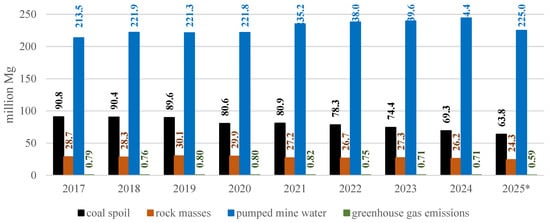
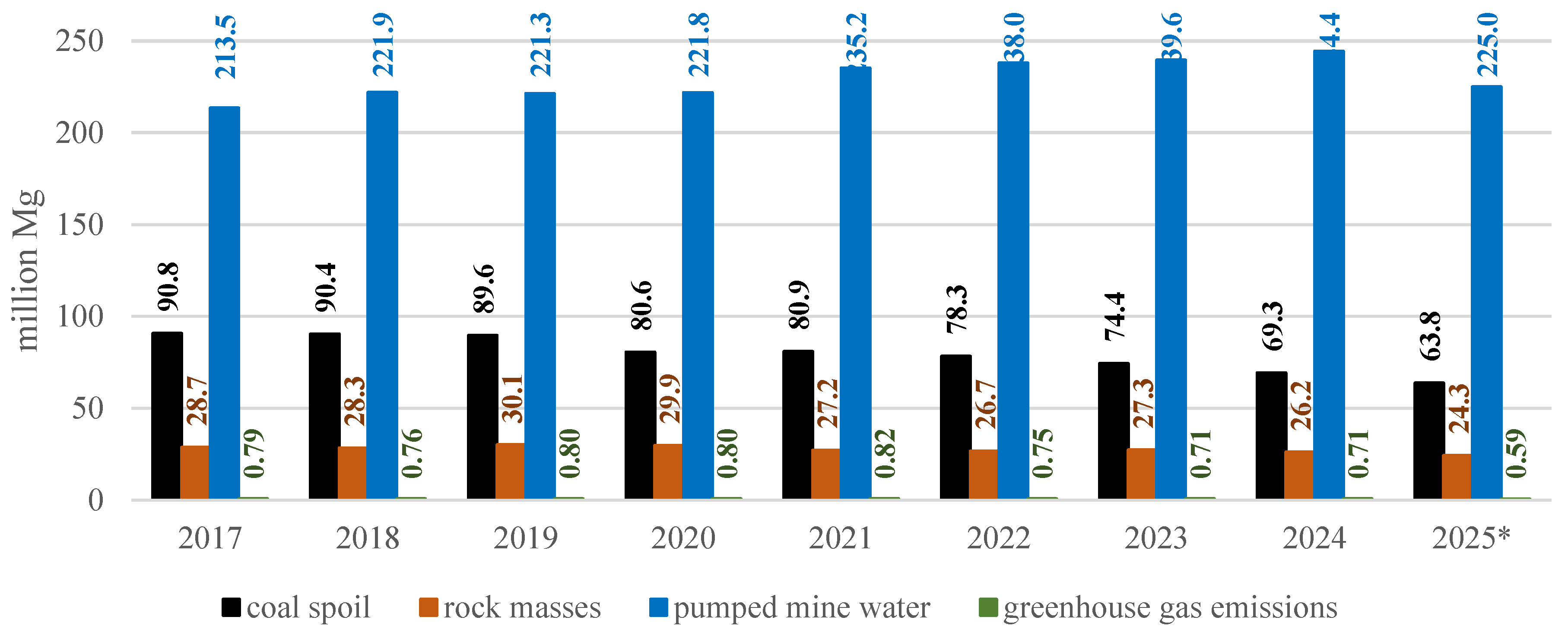
By the end of September 2025, approximately 47.9 million Mg of coal gross run-of-mine was extracted, from which processing plants separated 24.3 million Mg of waste rock (gangue). To gain a more comprehensive view of the scale of the mining industry’s environmental emissions, one must add 1.7 million m3 of mine water pumped to the surface and 0.44 million Mg of greenhouse gases discharged by the mines to this volume of rock mass emissions. It is forecasted that by the end of 2025, hard coal mining will emit approximately 24.3 million Mg of rock mass (Figure 3), 225 million m3 of mine water, and approximately 0.59 million Mg of greenhouse gases. From 2017 to the end of 2025 (based on the forecast after nine months of 2025), it is estimated that coal extraction will have decreased by approximately 27 million Mg, a drop of about 30% (Figure 3). Consequently, there will be a reduction in the volume of separated rock mass by approximately 4.4 million Mg (a 15% decrease) and a reduction in greenhouse gas emissions by approximately 0.2 million Mg (a 25% decrease).
Figure 3.
Emission volume of rock masses, mine waters and mine gases against the background of hard coal mining in Poland (coal spoil) [million Mg]. 2025*—forecast after 9 months of 2025.
The situation is different regarding the emission of mine water pumped to the surface. Despite a predicted decrease in the volume of mine water pumped to the surface by approximately 19 million m3 at the end of 2025 compared to 2024 (a year-on-year decrease of approx. 7.7%), there will be an increase of approximately 30.9 million m3 compared to 2017, a rise of approximately 14.4% [28]. The actual increase in the volume of mine water pumped to the surface compared to the forecast may rise, as the first three quarters saw low rainfall, which could be offset by potential precipitation in the fourth quarter of 2025.
Extraction processes in mining plants, by disturbing the stability of the rock mass, lead to hydrological changes. For the safety of the crew and the stability of the operations of both the mine and neighboring mines, constant drainage of incoming mine water is necessary [23,58]. The discharge of incoming water is required both during active exploitation and after the cessation of mining, even in liquidated mines [39,44]. According to data reported by mining companies, there was a reduction in the amount of mine water pumped to the surface until 2017. Unfortunately, since 2018, this amount has been systematically increasing [28]. As we descend to greater depths, a decrease in the inflow of water from the rock mass is observed. This, combined with the reduction in coal mining production, should result in a decrease in the total volume of water pumped from the mines to the surface. Analysis of Figure 3 and Figure 4 indicates a different phenomenon. Mining operations disrupt the aquifers overlying the deposit. To ensure the safety of the mine, neighboring mines, and the ground, water flowing into the mine workings is continuously discharged to the surface. Cessation of mining does not eliminate the need to pump water to the surface. Opening new mining fields opens up further sections of the rock mass for drainage. Despite the aforementioned drying of the rock mass with increasing depth, the global volume of water pumped by mining increases. The water flowing naturally into the mine should be supplemented with the process water supplied from the surface to the air-conditioning systems, as described in the analysis of Figure 5. On this basis, it can be assumed that the possible cessation of hard coal mining can only stop the increase in the volume of mine water discharged to the surface, and pumping itself will forever accompany post-mining areas. It is forecasted that in 2025 (forecast after nine months of 2025), mine water pumping stations will discharge approximately 223 million m3 of water to the surface. While part of the water pumped to the surface is utilized, the scope of the economic use of mine water is declining (Figure 3). Likely, in 2025 (forecast after nine months of 2025), only about 33.8 million m3 of mine water will be utilized, which is 9.1 million m3 less than in 2017 [28].
Figure 4.
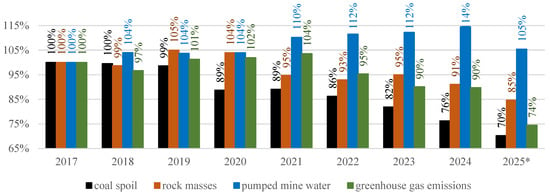
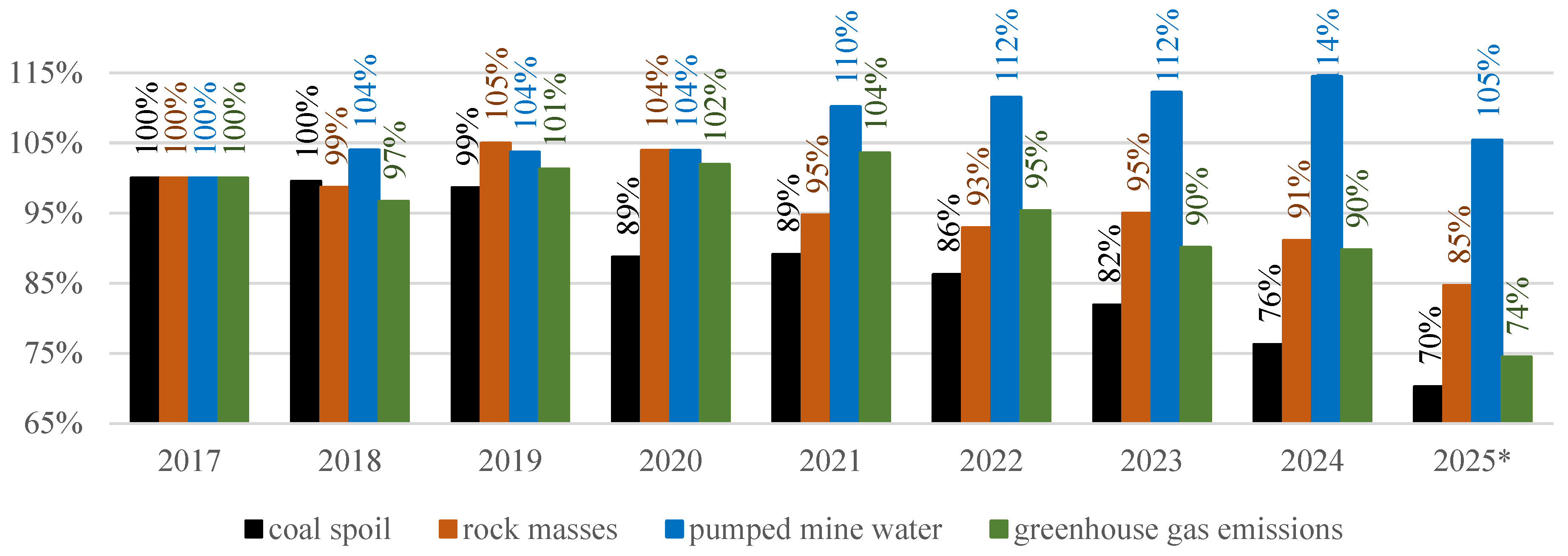
Trends in the changes in emissions of rock masses, water and mine gases as well as the volume of extraction. 2025*—forecast after 9 months of 2025.
Figure 5.
Process water intake from surface and underground intakes. 2025*—forecast after 9 months of 2025.
Figure 4 presents the differences in trends regarding coal extraction volumes and the primary components of environmental emissions in hard coal mining. For comparison purposes, the values of the analyzed parameters at the end of 2017 were set as the 100% baseline. Subsequent data are expressed as a percentage of the 2017 values. Since 2017, coal extraction has decreased by 27.7% (forecast based on the first nine months of 2025). The decrease in greenhouse gas emissions is smaller than the decline in extraction volume, though these values remain comparable. Unfortunately, the reduction in rock mass emissions to the surface is not as dynamic. Since 2017, waste rock (gangue) emissions have dropped by only 15.3% (forecast after nine months of 2025) [28]. The most concerning situation involves the increasing volume of mine water pumped to the surface. Given that geological studies indicate a decrease in natural water inflow with increasing mining depth, the accelerated growth in the volume of water discharged to the surface may indirectly suggest an increasing use of external technological water in mining-related processes (Figure 4).
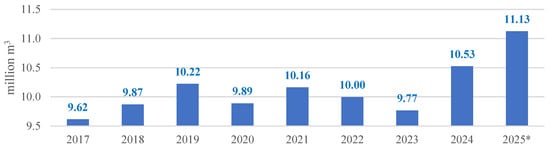
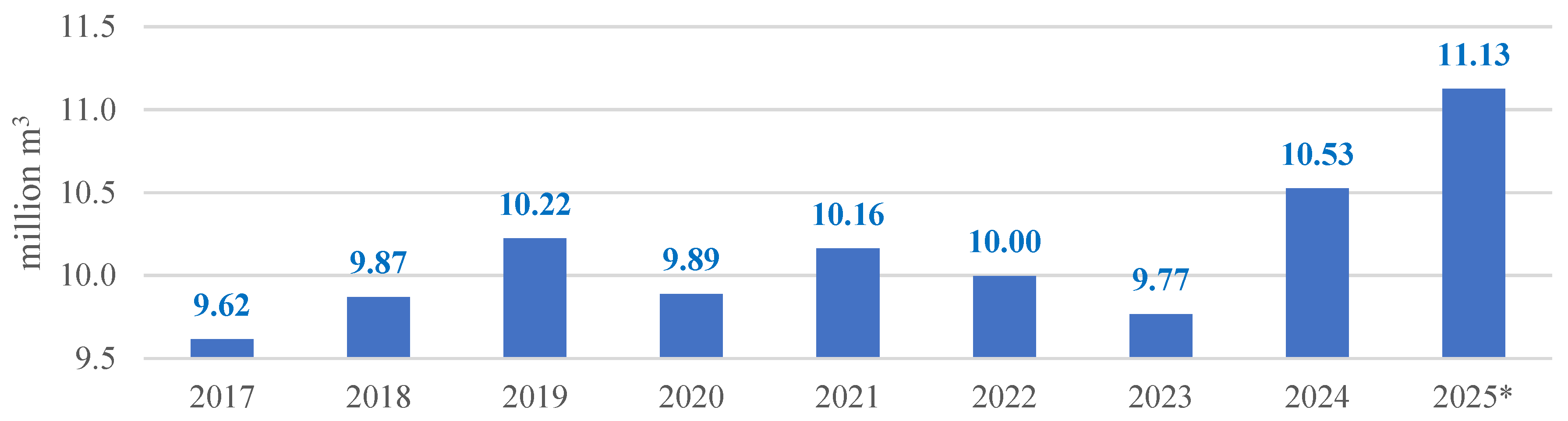
For certain tasks, it is technologically impossible to use internal mine water. In such cases, mines are forced to purchase water with specific parameters from external sources [35,51]. This includes potable water and fresh technological water used by personnel, but primarily technological water essential for extraction processes. During the analyzed nine-year period, the volume of potable and technological water purchased from external sources fluctuated around 10 million m3 annually until 2023 (Figure 5). From 2024, these volumes began to rise significantly, reaching approximately 11.1 million m3 in 2025 (forecast after nine months of 2025). It is projected that over these two years, the purchase of water from external sources will increase by approximately 1.3 million m3, corresponding to a growth rate of about 7% per year [28]. The likely reason for the increasing demand for clean technological water is the intensification of the use of air conditioning systems. Mining at increasingly greater depths is associated with an increase in the virgin rock temperature and a rise in the temperature of the miners’ working environment. In Poland’s largest coal basin, the virgin rock temperature increases by 3 °C for every 100 m of depth. According to Polish law, underground miners can work normally, i.e., for 8 h, at temperatures not exceeding 28 °C. At temperatures between 28.1 and 33 °C, reduced work is permitted, to 6 h. At temperatures exceeding 33 °C, the crew, or rather, mine rescuers, may only perform activities that save the lives of other miners. The necessary air conditioning systems used to improve working conditions must be cooled with clean water. Due to the lack of internal water meeting the necessary technological requirements for cooling, mines purchase technological water from local suppliers.
The unused portion of mine water pumped to the surface is discharged by the mines into local watercourses within the catchments of Poland’s main rivers, the Vistula and the Oder, in accordance with held water-law permits. Although a decrease of approximately 16.7 million m3 (about 8% year-on-year) in the amount of water discharged into the environment is forecasted for 2025, in the longer term, hard coal mining is increasing its water emissions into the environment [28]. According to the forecast after nine months of 2025, pumping stations of both active and liquidated mines will discharge approximately 189.4 million m3 of mineralized mine water into local watercourses and subsequently into Poland’s main rivers. To some extent, the increase in the volumes of mine water pumped to the surface results from initiating extraction in previously unexploited, water-bearing areas of the deposit. However, the increase in the amount of pumped water is primarily caused by thermal hazard prevention measures. For technical and economic reasons, the purchased water, after cooling the air conditioning units, is discharged into the mine’s main drainage system. There, by mixing with the natural inflow of mineralized mine water, it increases the total volume of water discharged to the surface.
As indicated in Figure 4, mines utilize only a small fraction of the pumped mine water. Unfortunately, both the quantitative (Figure 4) and unit-based (Figure 5) scope of mine water management is declining. Over the last nine years, mines have been utilizing their own water resources much less intensively. During the analyzed period, the share of utilized water in the total volume of water discharged to the surface dropped from approximately 20% to about 15%. This value, with minor fluctuations, has persisted since 2021. In a situation of potable water shortages, the diminishing interest of mines in managing the mine water pumped to the surface, especially the less mineralized types, is difficult to justify.
To analyze the environmental issues of mine water emissions in hard coal mining, it is helpful to determine the unit share of utilized water in the total volume of water discharged to the surface (Figure 6). The analyzed values were obtained by dividing the volume of utilized water reported by mining enterprises by the total volume of mine water discharged to the surface, also reported (Figure 7). The forecast after the first three quarters of 2025 indicates that approximately 15.1% of the water pumped from mine excavations will be utilized. Over the past nine years, the level of mine water management has been declining, and compared to 2017, a decrease of approximately 5.1 percentage points is projected [28]. This phenomenon may partly result from the increase in water treatment costs and a decrease in salt prices on the market.
Figure 6.
Volume of mine water emissions in Polish hard coal mining [million m3]. 2025*—forecast after 9 months of 2025.
Figure 7.
Share of utilized water in the total water pumped to the surface. 2025*—forecast after 9 months of 2025.
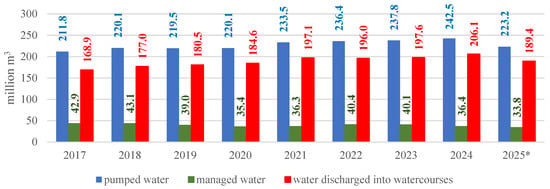
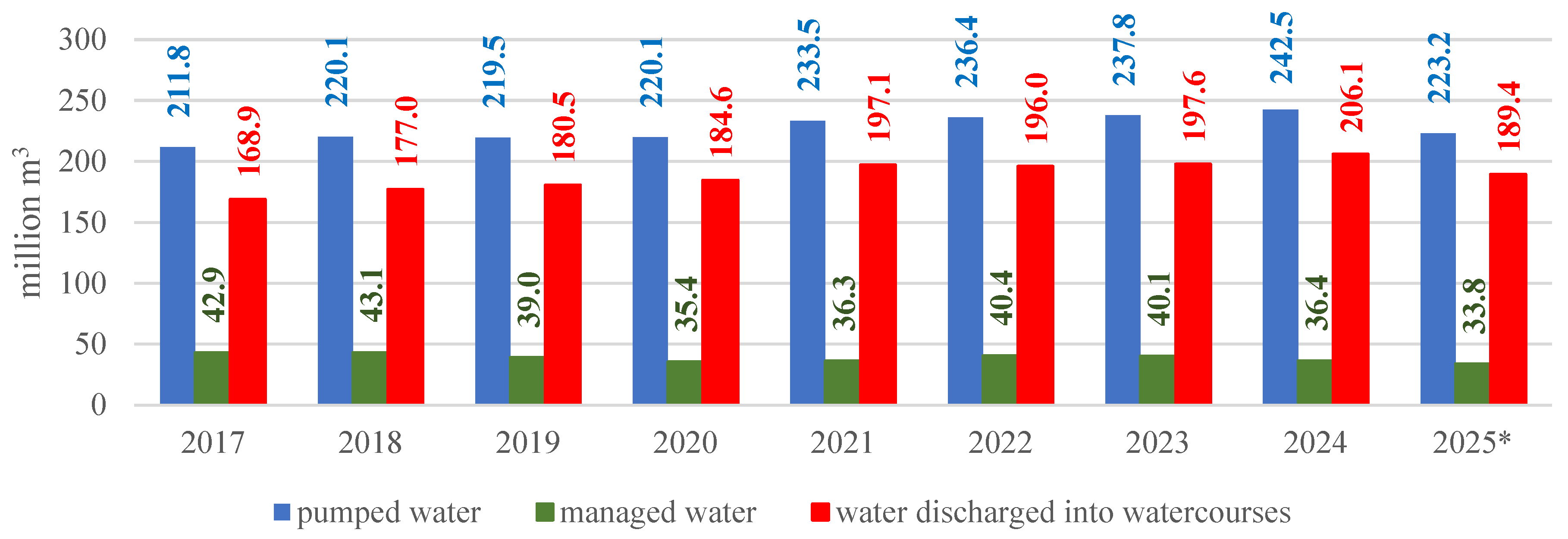
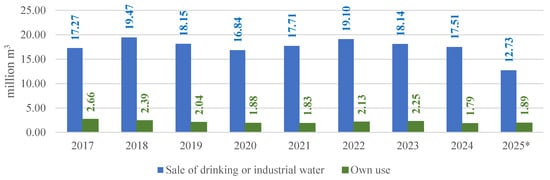
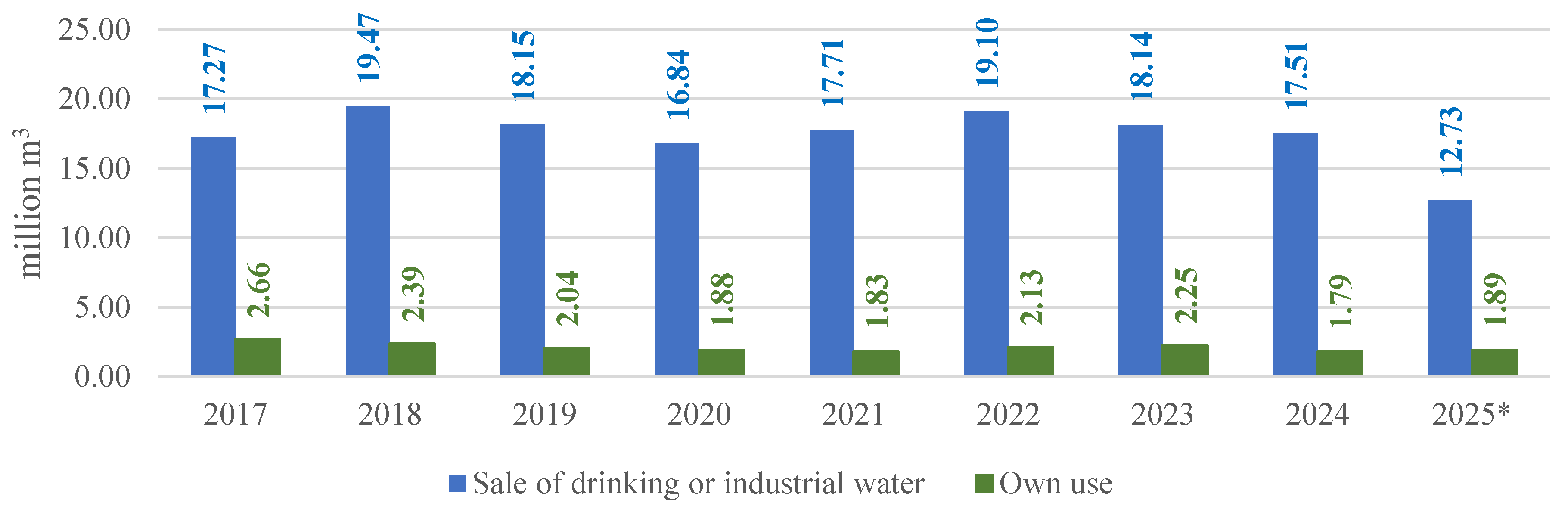
Mines utilize only a portion of the pumped mine water. When water management is practiced, the water is utilized for internal purposes or for sale (Figure 8). Over the last nine years, utilization for internal purposes has fallen from 2.66 million m3 in 2017 to 1.89 million m3 in 2025 (forecast after nine months of 2025). This represents a decrease of 0.77 million m3, or 29% [28]. The reduction in the internal use of mine water may result from a decrease in the scope of fire prevention activities and the earlier cessation of mining with hydraulic stowing. In the case of utilizing mine water for other purposes, mines used approximately 18 million m3 for this aspect until 2024. The forecast after nine months of 2025 suggests that by the end of 2025, hard coal mines will utilize only 12.73 million m3 of the mine water discharged to the surface for other purposes (a 27% year-on-year decrease) [28].
Figure 8.
Managed mine waters. 2025*—forecast after 9 months of 2025.
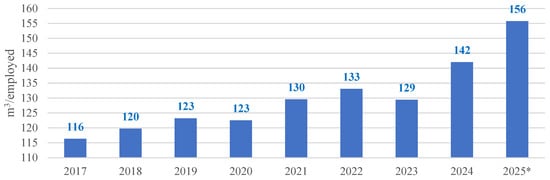
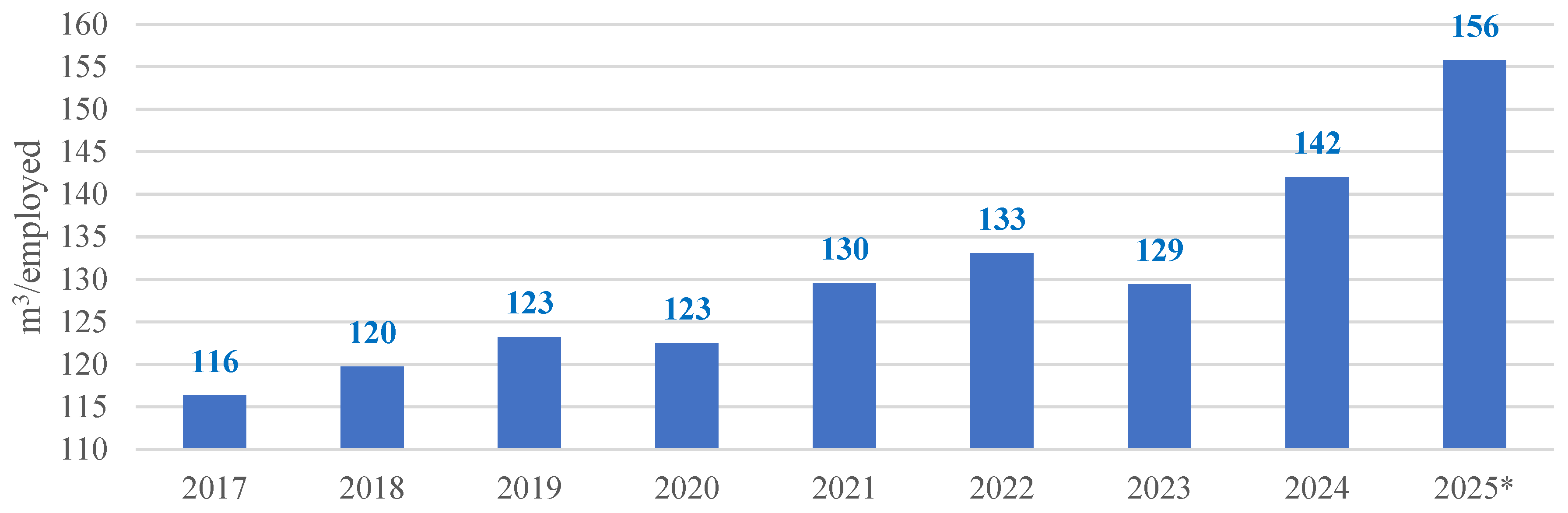
Interesting conclusions can be drawn from the analysis of water utilization for internal purposes per employee (Figure 9). This value was obtained by dividing the volume of water utilized for internal purposes by the number of people employed in the sector. Both parameters are reported by coal companies [28]. While the total amount of water managed for internal use per employee remains relatively constant, the steady increase in the volume of utilized water per worker most likely results from the mines’ increased demand for clean technological water. The expanding use of air conditioning systems in mine excavations explains this process. However, the particularly rapid growth of this indicator in 2024 and 2025 appears to stem from other factors as well.
Figure 9.
Use of managed water per employee. 2025*—forecast after 9 months of 2025. Source: Own work based on [28].
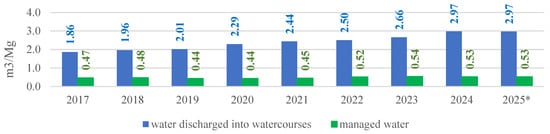
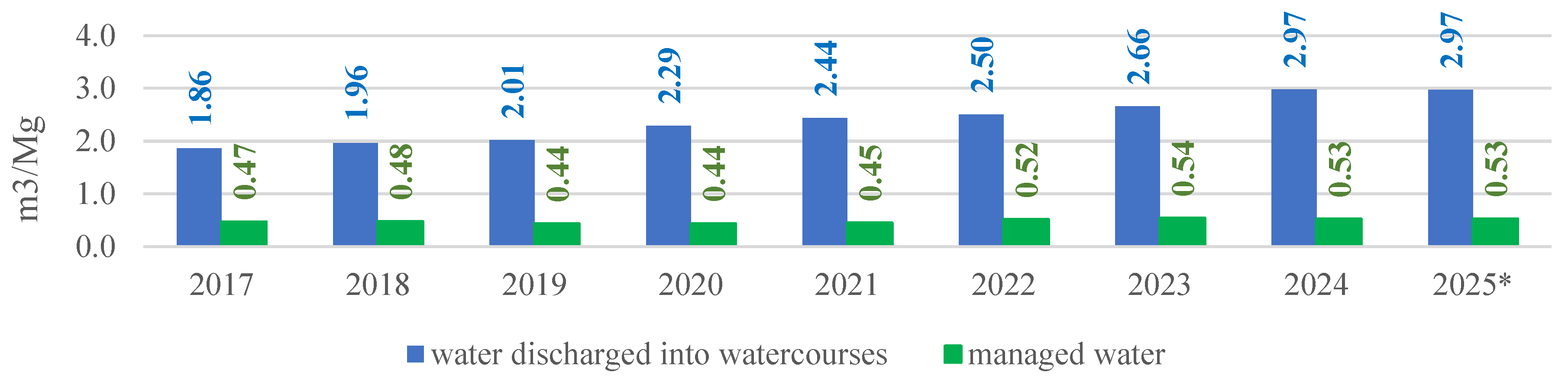
The absolute emission and management of mine water expressed solely in units of volume may not fully describe the complexity of managing water pumped to the surface. For a more comprehensive presentation of the issues related to mine water emission management, the unit water emission per volume of coal extraction was analyzed. To determine this parameter, the volumes of utilized mine water and the volumes of water discharged into local watercourses (Figure 6), as reported by the sector, were divided by the coal extraction volumes also reported by mining enterprises (Figure 3). Over the last nine years, the unit emission of mine water per volume of coal extracted has been steadily increasing (Figure 10).
Figure 10.
Unit emission and management of mine water per volume of coal extraction [m3/Mg]. 2025*—forecast after 9 months of 2025.
Based on data from the first three quarters of 2025, it is forecasted that the unit emission will increase from 1.86 m3/Mg in 2017 to 2.97 m3/Mg in 2025. This represents an increase of 1.1 m3 for every Mg of coal extracted, a rise of approximately 59% compared to 2017 [28].
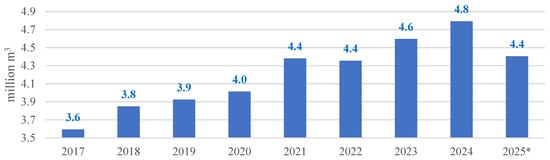
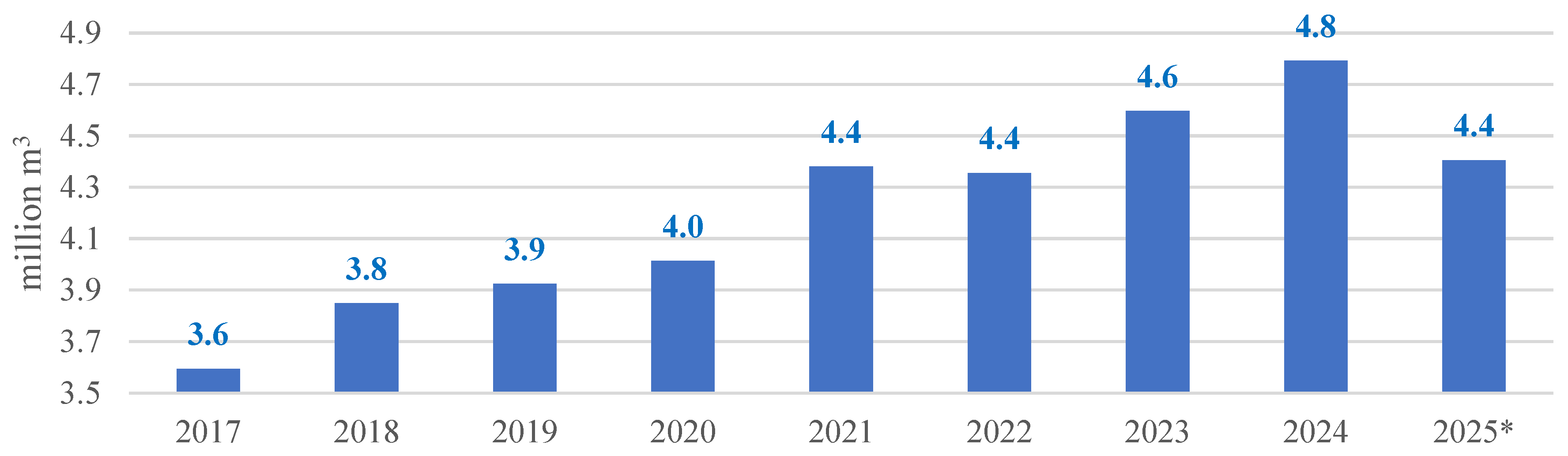
The emission of mine water into the environment is carried out by mine pumping stations, which discharge water into the nearest watercourses in accordance with held water-law permits [10,18]. For local residents, information regarding the scale of mine water emissions they can expect from their local pumping station is of significant importance. Unfortunately, some of the collectors discharging water from the mines are located near residential areas [20,41]. The average annual mine water emission per pumping station resulting from mining operations had been steadily increasing until 2024, reaching a level of approximately 4.8 million m3 (Figure 11). Based on data from the first nine months of 2025, it is forecasted that by the end of 2025, the unit emission of mine water per pumping station will decrease to approximately 4.4 million m3 of water annually [28]. This projected unit decrease in emissions of 0.4 million m3 compared to 2024 (8% y/y) may, however, turn out to be smaller due to relatively low rainfall in the first three quarters of 2025 and the resulting lower inflow of atmospheric water into underground mine excavations. Potential heavier precipitation in Q4 2025 could alter this forecast.
Figure 11.
Mine water emissions per mine water pumping station. 2025*—forecast after 9 months of 2025.
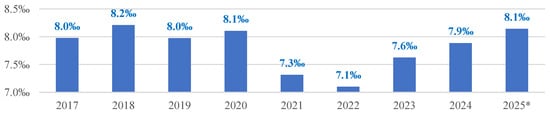
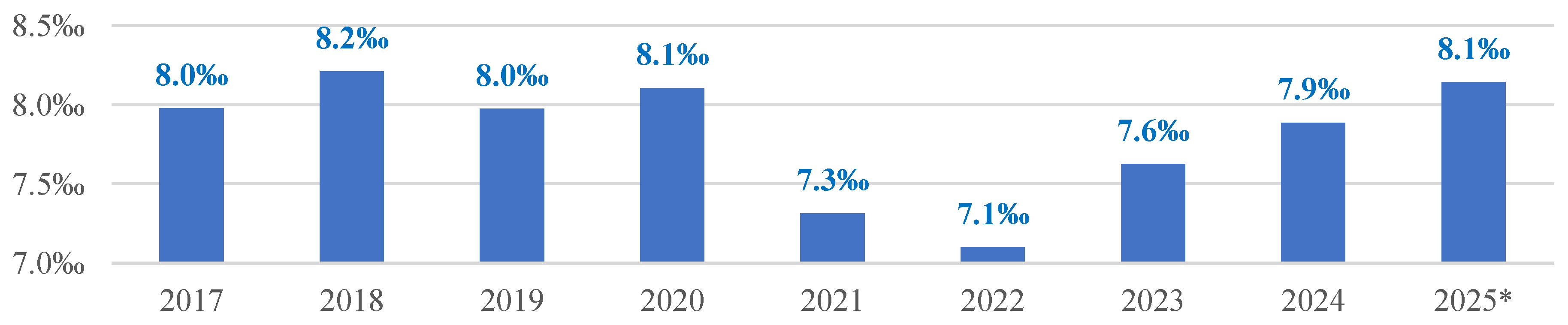
Mine drainage systems pump water with varying degrees of mineralization. The average mineralization of mine water in Poland fluctuates around 8‰ [28]. Only in 2021 and 2022 was a slightly lower level of mineralization recorded. This temporary phenomenon can be linked to structural changes in some of the mine water pumping stations in liquidated mines. When transitioning to simpler and, meantime, cheaper operational models for the pumping stations, it was possible to raise the elevation of the pumped water levels, which temporarily limited the discharge of more highly mineralized waters. After reaching the intended elevation of the new mine water level, the situation returned to its previous state. Analyzing the total content of mineral compounds and the volume of the water carrying them, on average, mine waters can be classified as brackish (moderately saline) (Figure 12).
Figure 12.
Share of dissolved mineral substances in mine water. 2025*—forecast after 9 months of 2025.
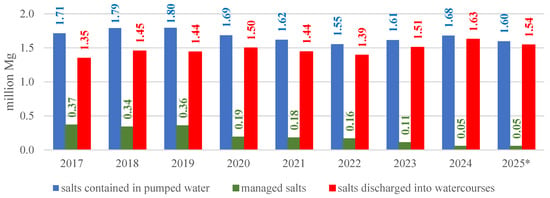
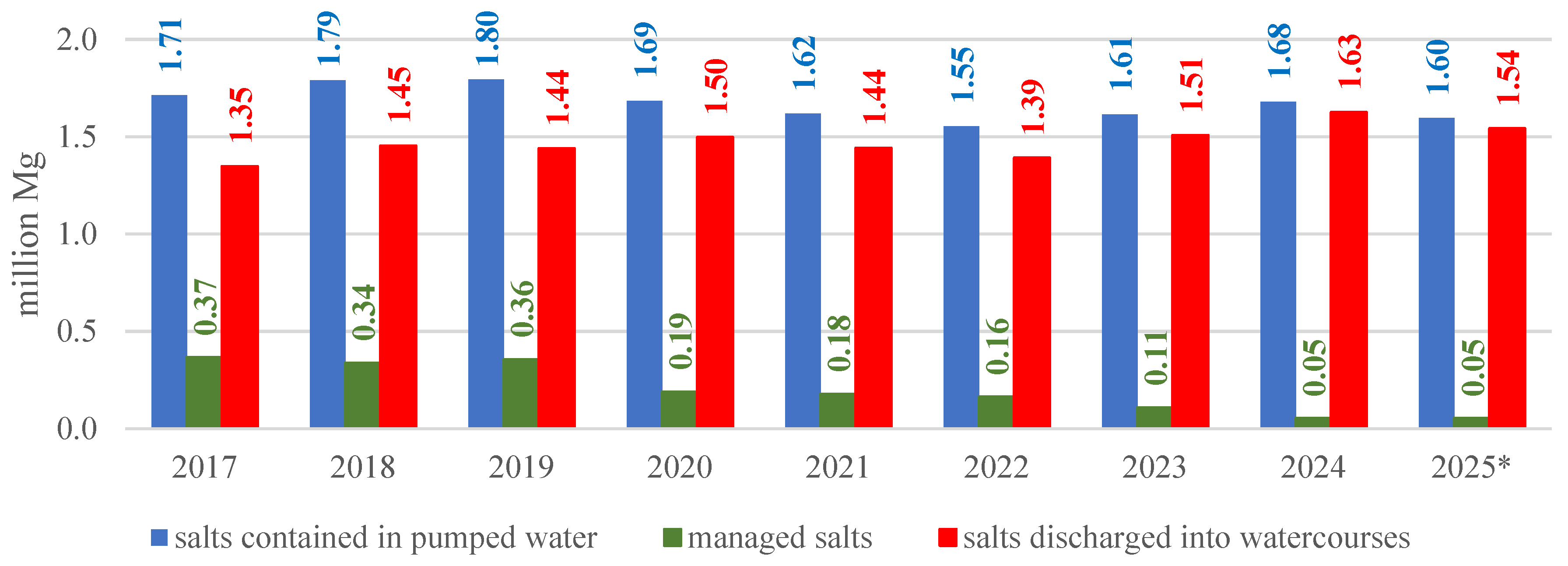
During the first three quarters of 2025, hard coal mining discharged approximately 148.9 million m3 of mine water, containing about 1.2 million Mg of dissolved mineral substances, into the watercourses feeding the Vistula and Oder rivers [28]. Based on data from the first three quarters of 2025 (Figure 13), it is projected that by the end of 2025, this volume will increase to 189.4 million m3 of water, and the salt load (Cl− and SO42−) discharged with mine water into the upper catchments of the Vistula and Oder will reach 1.5 million Mg [28]. The excessive load of dissolved substances in mine water discharged indirectly into Poland’s main rivers has already led to ecological disasters on several occasions. A solution to the problem of dissolved salt emissions into the environment would be the desalination and management of the resulting mineral substances. Unfortunately, despite the increasing volumes of mine water emitted into watercourses, the Polish hard coal mining sector annually reduces the scope of utilization of these substances. The management of mineral substances dissolved in mine water consists of internal consumption and use for other purposes. It is forecasted that in 2025 (forecast based on three quarters of 2025), the utilization of salt from mine water will drop to 0.05 million Mg (Figure 13). Compared to 2017, this represents a decrease of approximately 0.32 million Mg, or 86% [28]. In this regard, to protect Polish waters, enterprises discharging mine water into the environment should intensify their efforts.
Figure 13.
Emission of mineral salts in hard coal mining [million Mg]. 2025*—forecast after 9 months of 2025.
To determine the data for the analysis of the percentage share of mineral salt utilization in the total volume of mineral substances dissolved in mine water (Figure 14), the volume of mineral substance management reported by coal companies was divided by the reported salt load carried by the total volume of water pumped to the surface during the drainage of mine excavations (Figure 13).
Figure 14.
Participation in the management of mineral substances dissolved in mine water. 2025*—forecast after 9 months of 2025.
According to the forecast at the end of September 2025, hard coal mining will utilize only about 3.5% of the mineral substances at the disposal of mining enterprises. Over the last nine years, the percentage share of mineral salt utilization has been systematically decreasing. As of the end of September 2025, this share is projected to drop by approximately 23.6 percentage points compared to 2017 [28]. Combined with the increasing volume of water emitted into Poland’s main rivers, this will have a very negative impact on water quality.
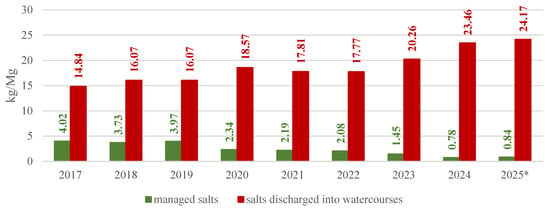
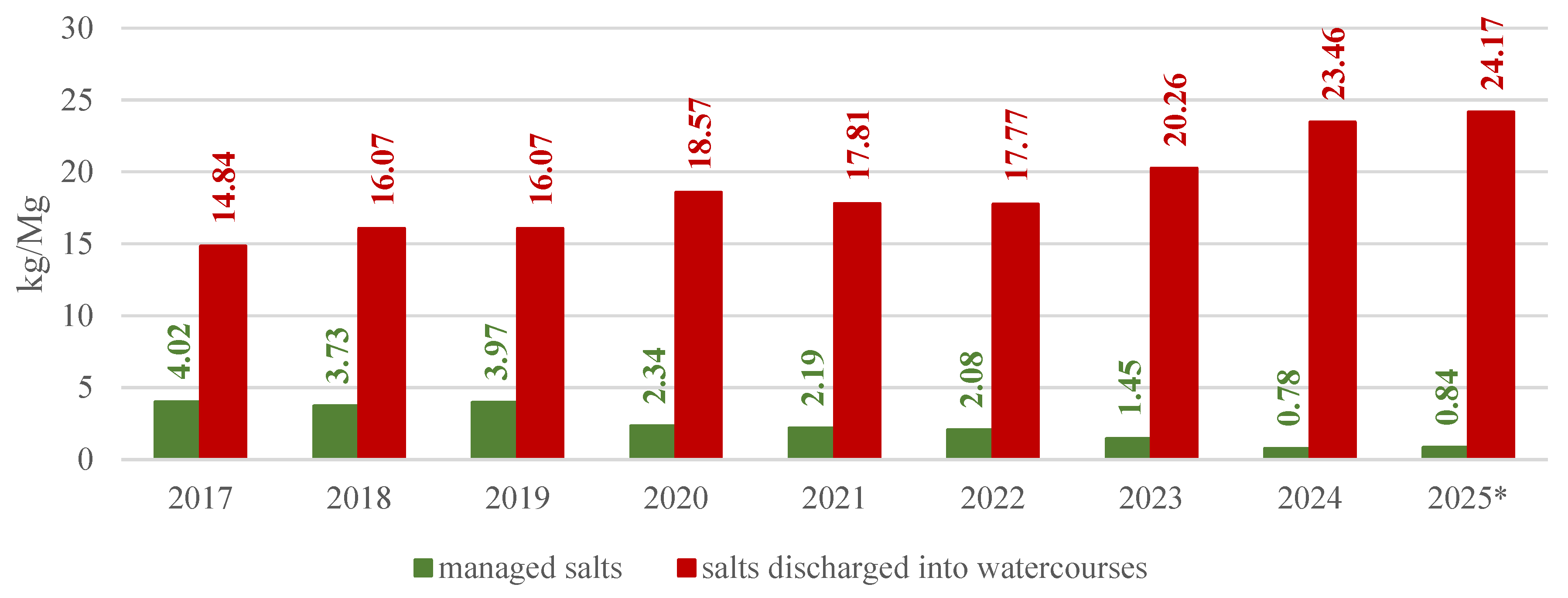
To better illustrate the scope of utilization and emission of mineral salts, their unit emission per volume of coal extraction was calculated (Figure 15). The calculations involved dividing the sector-reported volumes of mineral substances utilized and discharged into the environment with mine water (Figure 13) by the annual coal extraction reported by mining companies (Figure 3). Between 2017 and 2025, the unit emission of mine water per volume of coal extracted has been steadily rising, while the unit management of these substances has been systematically falling (Figure 15).
Figure 15.
Unit amount of mineral salts utilization and emission per amount of coal output [kg/Mg]. 2025*—forecast after 9 months of 2025.
Based on the forecast following September 2025, it is projected that by the end of 2025, the unit emission of mineral substances per volume of coal extracted will reach 24.17 kg/Mg, which is nearly a two-fold increase compared to 2017 [28]. The increase in mineral salt emissions discharged with water per volume of coal extracted primarily results from reaching new, increasingly deeper deposits. However, such a significant unit increase in salinity since 2023 is difficult to explain. It is possible that fresh water discharged from air conditioning systems, while flowing along the floor of the mining excavations, additionally leaches mineral salts and carries them into the main drainage systems. The projected value for the unit utilization of mineral salts from mine water at the end of 2025 will drop to 0.84 kg/Mg. Compared to the 2017 value, this represents a nearly five-fold decrease [28].
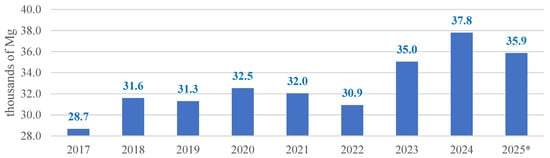
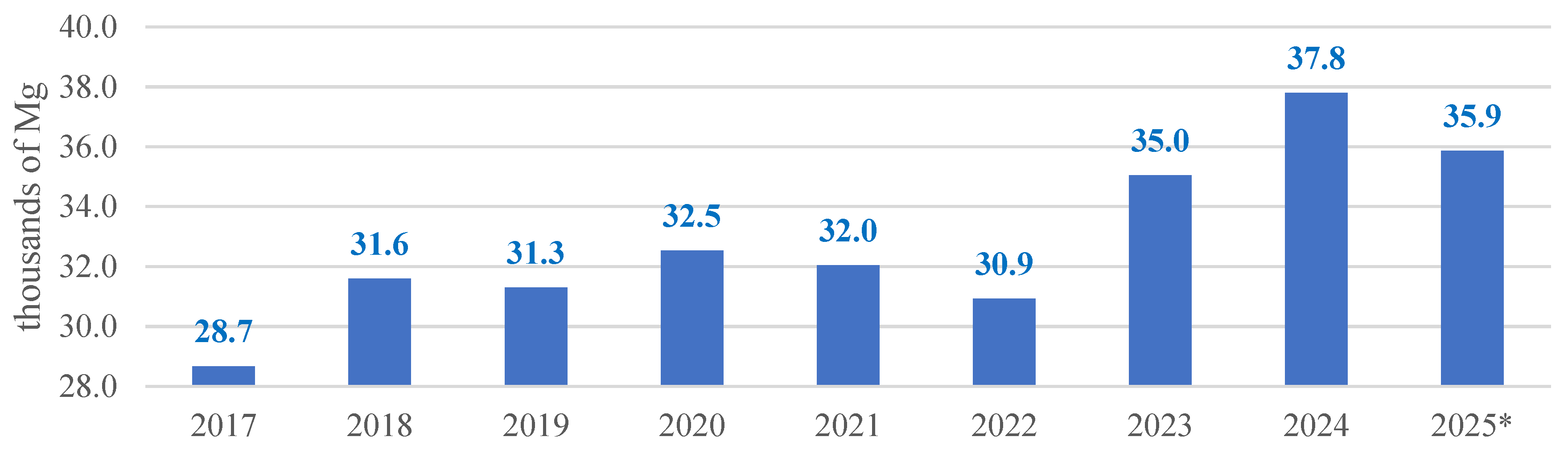
The emission of mineral substances dissolved in mine water into the environment occurs alongside the mine water discharged by mine drainage systems [24,25]. For local communities, information specifying the amount of mineral substances emitted with mine water by the mine’s main drainage pumping stations is of significant importance. The average annual emission of mineral salts per pumping station, despite a slight decrease according to the status at the end of September 2025, has been steadily increasing [28]. It is forecasted that by the end of 2025, a value of approximately 35.9 thousand Mg of mineral salts per pumping station annually will be reached (Figure 16). The forecast indicates that this will represent an increase of approximately 25% compared to 2017.
Figure 16.
Emission of mineral substances dissolved in mine water per mine water pumping station. 2025*—forecast after 9 months of 2025.
The changes in the emission of mine water and dissolved mineral substances into the environment by the hard coal mining sector, analyzed from 2017 to the end of September 2025, indicate that they are only partially dependent on the scale of deposit exploitation [28]. To some extent, the rapid, unfavorable changes in certain parameters, particularly over the last three years, remain unexplained. It appears critically important for the management boards of mining companies to take urgent steps to limit or prevent the escalation of these adverse trends. Such actions could positively impact the state of the environment affected by past and current mining activities. Another vital consequence of these actions could be an improvement in extraction efficiency [25,37]. Furthermore, as a non-financial result of pro-ecological activities, improving the state of the environment may counteract the aversion of local communities toward the coal sector and at least partially dispel stereotypes associated with hard coal mining activities [1,36].
The study statistically analyzed the entire hard coal mining sector in Poland, with the exception of one small mining company. The omission of this company from the study’s statistical perspective did not, in practice, change the aggregated data for the entire sector. The study analyzed the last 10 years, and the analysis period was selected to account for all the most important regional and global factors influencing the fossil fuel market. Due to the lack of data at the time of writing, the second limitation was the reliance on data for the year 2025 only for the first three quarters of that year. The main goal of the study was to identify the most important phenomena related to mine water management in Poland, occurring amidst the ongoing decarbonization of the economy. This was identified despite the lack of data for Q4 2025 and the use of estimates for the entire year. Similar analyses will be conducted in the future to continuously monitor and potentially influence the mining operations of Polish coal companies. Future studies are planned to critically assess the potential limitations, costs, and trade-offs associated with implementing strategies for managing mine water and the mineral salts dissolved therein, with a focus on assessing the costs and benefits of mine water utilization, market feasibility, and economic viability of resource recovery methods. Analyses conducted for Polish conditions can be used by other countries, helping them implement successful Polish solutions and potentially avoiding the mistakes of the Polish hard coal mining sector.
6. Conclusions
The Polish economy is based on the use of coal. To safely conduct the transformation of the economy and the energy sector, a transition period is necessary, during which energy obtained from coal will stabilize the power system. During this period, Polish mines, supplemented by potential imports, will ensure sufficient volumes of hard coal. This entails the constant emission of post-mining waste into the environment, including mine water and mineral salts.
Mining exploitation, by disturbing the rock mass, alters hydrological conditions and increases water inflow into mine excavations. To protect the mine, neighboring mines, and the land surface, it is necessary to constantly pump incoming mine water to the surface. Most mineralized mine water is discharged into watercourses feeding Poland’s main rivers. Discharged into the Vistula and Oder catchments, mine water and the mineral compounds they carry have already contributed to environmental disasters on several occasions. For this reason, the management of mine water or at least its partial treatment should be considered.
Due to the significant volume of pumped mine water and the mineral substances contained within it, their management must always be conducted in consultation with and with the acceptance of local communities. Reducing environmental impact by limiting mine water emissions is not only a sound pro-ecological practice; the need to manage internal water resources and dissolved mineral salts is also confirmed by rising environmental fees, which can translate into financial savings for mining companies.
Limiting or even ceasing extraction will, at most, reduce the emission of mine water and dissolved mineral substances into local watercourses, but post-mining areas will be affected by their emission indefinitely. If drainage of the rock mass is abandoned, the rising level of mine water could compromise the stability of excavations from former shallow mining operations, leading to local deformations that disrupt the continuity of the rock mass (e.g., sinkholes or subsidence basins) and eventually manifesting in lower-lying areas as flooded zones (inundated depressions). Even if mineralized mine water does not appear on the surface, an excessively raised water table could contaminate shallow aquifers from which local communities across the entire Silesian Agglomeration source their drinking water.
Both economic and technical aspects, as well as the often irreversible degradation of the environment, compel the mining community to intensify efforts to counteract the growing scale of mine water and mineral substance emissions into the environment.
Author Contributions
Conceptualization, A.C., M.M. and B.B.; methodology, A.C., B.B., O.T. and A.S.; software, S.C.; validation, B.B., S.C. and A.S.; formal analysis, B.B., O.T. and S.C.; investigation, A.C.; resources, A.C., M.M., A.S. and B.B.; data curation, A.C., O.T. and B.B.; writing—original draft preparation, A.C.; writing—review and editing, A.C., B.B., M.M. and O.T.; visualization, A.C., O.T. and S.C.; supervision, M.M. and A.S.; project administration, M.M. and A.S. All authors have read and agreed to the published version of the manuscript.
Funding
This research received no external funding.
Data Availability Statement
Research Data Policies at [https://polskirynekwegla.pl/statystyka-publiczna] (access on 5 January 2026).
Conflicts of Interest
Author Andrzej Chmiela is employed by the Industrial Development Agency JSC. The remaining author declare that the research was conducted in the absence of any commercial or financial relationships that could be construed as a potential conflict of interest.
References
- Bluszcz, A. Decoupling economic growth from emissions in Poland on the background of EU countries. IOP Conf. Ser. Earth Environ. Sci. 2019, 221, 012119. [Google Scholar] [CrossRef] [Scilit]
- Bluszcz, A.; Kijewska, A. Selected global indicators for the assessment of sustainable development. In 16th International Multidisciplinary Scientific GeoConference: SGEM 2016, 28 June–6 July, 2016, Albena, Bulgaria; International Multidisciplinary Scientific GeoConference & EXPO SGEM; STEF92 Technology: Sofia, Bulgaria, 2016; pp. 523–530. [Google Scholar]
- Sajnóg, A.; Gawęda, A. The Impact Of ESG Performanceon Firm Value: A Comparative Studyof Eu Markets from a Countryand Sector Perspective. Ruch Praw. Ekon. I Socjol. 2025, 87, 195–217. [Google Scholar] [CrossRef] [Scilit]
- Shnorhokian, S.; Mitri, H. Quantifying the Influence of Variations in Rock Mass Properties on Stope Stability. J. Sustain. Mining. 2022, 21, 331–345. [Google Scholar] [CrossRef] [Scilit]
- Strzałkowski, P.; Strzałkowska, E. Impact of geological and mining conditions on surface risk of linear discontinuous deformations on a selected example. Arab. J. Geosci. 2023, 16, 156. [Google Scholar] [CrossRef] [Scilit]
- Bukowski, P. Zagrożenia wodne w kopalniach węgla kamiennego w Górnośląskim Zagłębiu Węglowym w dobie restrukturyzacji górnictwa. Górnictwo I Geoinżynieria 2007, 31, 81–91. [Google Scholar]
- Czerwiński, S.; Czerwińska-Lubszczyk, A.; Grebski, M. Economic aspects relating to machine operations on a mine main drainage system. Min. Mach. 2022, 40, 71–80. [Google Scholar]
- Gawęda, A. Does the Sustainability of the Country Differentiate the ESG of Companies and How It Affects the Relationship between ESG and Firm Value? Evidence from the European Union. Ann. Univ. Mariae Curie-Skłodowska Sect. H—Oeconomia 2024, 58, 7–23. [Google Scholar] [CrossRef] [Scilit]
- Samaniego, J.; Gibaga, C.R.; Tanciongco, A.; Rastrullo, R.; Mendoza, N.; Charles, D.R. Comprehensive Assessment on the Environmental Conditions of Abandoned and Inactive Mines in the Philippines. ASEAN J. Sci. Technol. Dev. 2020, 37, 8. [Google Scholar] [CrossRef] [Scilit]
- Chmiela, A.; Smoliło, J.; Smoliński, A.; Magdziarczyk, M. Zarządzanie wyborem wariantu samowystarczalności energetycznej pompowni wód kopalnianych. Manag. Qual.—Zarządzanie I Jakość 2023, 5, 14–38. [Google Scholar]
- Kielerz, A.; Porzerzyńska-Antonik, M. Wyzwania dla sektora górnictwa węgla kamiennego wynikające z transformacji energetycznej. Zesz. Nauk. Inst. Gospod. Surowcami Miner. I Energią Pol. Akad. Nauk 2025, 1, 145–156. [Google Scholar] [CrossRef] [Scilit]
- Schuchová, K.; Lenart, J.; Stacke, V. Geomorphology of Abandoned Underground Slate Mines in Czechia. Geoheritage 2023, 15, 96. [Google Scholar] [CrossRef] [Scilit]
- Strzałkowski, P.; Maruszczyk, M. Hard Coal as a Necessary Energy Resource in Poland. Arch. Min. Sci. 2024, 69, 67–76. [Google Scholar] [CrossRef] [Scilit]
- Ranosz, R.; Bluszcz, A.; Kowal, D. Conditions for the innovation activities of energy sector enterprises shown on the example of mining companies. Inżynieria Miner. 2020, 1, 249–256. [Google Scholar] [CrossRef] [Scilit]
- Siciński, J. Assessment of Financial Risk and Remedial Perspectives for the Polish Hard Coal Mining Sector in the Era of Dynamic Geopolitical Changes 2020–2023. Ekonomista 2024, 4, 483–502. [Google Scholar] [CrossRef] [Scilit]
- Bondaruk, J.; Janson, E.; Wysocka, M.; Chałupnik, S. Identification of hazards for water environment in the Upper Silesian Coal Basin caused by the discharge of salt mine water containing particularly harmful substances and radionuclides. J. Sustain. Mining. 2015, 14, 179–187. [Google Scholar] [CrossRef] [Scilit]
- Li, W.; Xie, H.; Sun, W.; Han, Y.; Jiang, X.; Huang, G.; Tao, P. Mine Water Production, Treatment, and Utilization in the Yellow River Basin: Spatial Patterns and Sustainable Transformation Pathways. Appl. Sci. 2025, 15, 12353. [Google Scholar] [CrossRef] [Scilit]
- Chmiela, A.; Wysocka, M.; Smoliński, A. Multi-criteria analysis of the possibility of retrofitting the system of rainwater drainage from subsidence basins in a liquidated mine. J. Sustain. Min. 2023, 22, 2. [Google Scholar] [CrossRef] [Scilit]
- Magdziarczyk, M.; Chmiela, A.; Smolinski, A. Pilot project to increase the economic efficiency of surface water pumping stations. Sci. Pap. Silesian Univ. Technol.–Organ. Manag. 2024, 200, 253–268. [Google Scholar] [CrossRef] [Scilit]
- Gasidło, K.; Wyrzykowska, A. Tereny pogórnicze w dokumentach strategicznych miast górnośląsko-zagłębiowskiej metropolii. Builder 2022, 305, 40–43. [Google Scholar] [CrossRef] [Scilit]
- Sobczyk, E.J.; Kaczmarek, J.; Fijorek, K.; Kopacz, M. Efficiency and financial standing of coal mining enterprises in Poland in terms of restructuring course and effects. Gospod. Surowcami Miner.—Miner. Resour. Manag. 2020, 36, 127–152. [Google Scholar] [CrossRef] [Scilit]
- Dong, S.N.; Wang, H.; Guo, X.M.; Zhou, Z.F. Characteristics of water hazards in China’s coal mines: A review. Mine Water Environ. 2021, 40, 325–333. [Google Scholar] [CrossRef] [Scilit]
- Zevani Putri, N. The Impact of Mining Activities on River Water Pollution: A Case Study in the Mahakam Watershed. Aquapolis 2025, 2, 17–24. [Google Scholar] [CrossRef] [Scilit]
- Jewell, J.; Cherp, A.; Riahi, K. Energy Security under De-carbonization Scenarios: An Assessment Framework and Evaluation under Different Technology and Policy Choices. Energy Policy 2014, 65, 743–760. [Google Scholar] [CrossRef] [Scilit]
- Onifade, M.; Said, K.O.; Shivute, A.P. Safe mining operations through technological advancement. Process Saf. Environ. Prot. 2023, 175, 251–258. [Google Scholar] [CrossRef] [Scilit]
- Gui, H.; Lin, M. Types of water hazards in China coal mines and regional characteristics. Nat. Hazards 2016, 84, 1501–1512. [Google Scholar] [CrossRef] [Scilit]
- Li, J.; Shi, Z.; Liu, M.; Wang, G.; Liu, F.; Wang, Y. Identifying anthropogenic sources of groundwater contamination by natural background levels and stable isotope application in Pinggu basin, China. J. Hydrol. 2021, 596, 126092. [Google Scholar] [CrossRef] [Scilit]
- IDA. 2025. Available online: www.polskirynekwegla.pl/statystyka-publiczna (accessed on 15 January 2026).
- Bluszcz, A.; Kijewska, A.; Sojda, A. Economic value added in metallurgy and mining sector in Poland. Metalurgija 2015, 54, 437–440. [Google Scholar]
- Manowska, A.; Bluszcz, A.; Chomiak-Orsa, I.; Wowra, R. Towards Energy Transformation: A Case Study of EU Countries. Energies 2024, 17, 1778. [Google Scholar] [CrossRef] [Scilit]
- Nazir, M.; Roy, K.; Saha, A.; Das, U.; Saha, D. Sustainable solutions for water scarcity: Rehabilitating abandoned coal mine pit lakes through limnological analysis of freshwater resources in mining-affected regions. Environ. Geochem. Health 2025, 47, 223. [Google Scholar] [CrossRef] [Scilit]
- Prakash Pandey, B.; Prasad Mishra, D. Improved Methodology for Monitoring the Impact of Mining Activities on Socio-Economic Conditions of Local Communities. J. Sustain. Min. 2022, 21, 65–79. [Google Scholar] [CrossRef] [Scilit]
- Shekhunova, S.B.; Stadnichenko, S.M.; Siumar, N.P. Assessment of environmental risks and economic losses to geological environment and mineral resources caused by Russia’s military aggression against Ukraine. Updated data. Collect. Sci. Work. Inst. Geol. Sci. NAS Ukr. 2023, 16, 3–23. [Google Scholar] [CrossRef] [Scilit]
- Wyrzykowska, A.; Janiszek, M. Models of Post-Mining Land Reuse in Poland. Sustainability 2025, 17, 9069. [Google Scholar] [CrossRef] [Scilit]
- Woszczyński, M.; Jasiulek, D.; Jagoda, J.; Kaczmarczyk, K.; Matusiak, P.; Kowol, D.; Marciniak, B. Monitoring of the mining waste neutralization facility of LW Bogdanka. Acta Montan. Slovaca 2023, 28, 236–249. [Google Scholar] [CrossRef] [Scilit]
- Wyrzykowska, A. Sustainable Redevelopment—From Coal Mine to Self-Sufficient Energy Transformation Center. Archit. Civ. Eng. Environ. 2025, 18, 15–34. [Google Scholar] [CrossRef] [Scilit]
- Mozharovskyi, V.; Hodz, S.; Kolesnyk, O. Economic security of the state under martial law. Balt. J. Econ. Stud. 2025, 11, 147–154. [Google Scholar] [CrossRef] [Scilit]
- Bluszcz, A.; Kijewska, A. Factors creating economic value added of mining company. Arch. Min. Sci. 2016, 61, 109–123. [Google Scholar] [CrossRef] [Scilit]
- Dong, D.; Zhang, J. Discrimination Methods of Mine Inrush Water Source. Water 2023, 15, 3237. [Google Scholar] [CrossRef] [Scilit]
- Wang, N.; Tan, D. Research on Ecological Restoration Strategies for Abandoned Mines Based on Ecology-Oriented Development. Decis. Anal. 2024, 22, 44–69. [Google Scholar] [CrossRef] [Scilit]
- Wyrzykowska, A. The Land Use of Decommissioned Coal Mines Areas in the Upper Silesian Agglomeration (Poland). Archit. Civ. Eng. Environ. 2022, 15, 57–70. [Google Scholar] [CrossRef] [Scilit]
- Agreement. Social Agreement Regarding the Transformation of the Hard Coal Mining Sector and Selected Transformation Processes in the Silesian Voivodeship. 2021. Available online: https://solidarnosckatowice.pl/wp-content/uploads/2021/04/Umowa-Spoleczna.pdf (accessed on 15 January 2026).
- Lewicka, E.; Burkowicz, A.; Babii, K.; Riumina, D.; Szlugaj, J.; Kamyk, J.; Gałaś, A. The impact of the war in Ukraine on the supply of selected raw materials to Poland and to the European Union. Gospod. Surowcami Miner.—Miner. Resour. Manag. 2025, 41, 5–43. [Google Scholar] [CrossRef] [Scilit]
- Mittelstädt, P.; Pollmann, N.; Karimzadeh, L.; Kories, H.; Klinger, C. Wastes in Underground Coal Mines and Their Behavior during Mine Water Level Rebound—A Review. Minerals 2023, 13, 1496. [Google Scholar] [CrossRef] [Scilit]
- Schuchová, K.; Lenart, J.; Miklín, J.; Horáček, M. Abandoned underground mines in Nízký Jeseník Upland (Czechia). J. Maps 2023, 19, 2175733. [Google Scholar] [CrossRef] [Scilit]
- Vlasov, S.; Moldavanov, Y.; Vlasov, V. Impact of Proposed Measures Regarding Monitoring, Warning, and Elimination of Emergency States of Mechanized Fastening on the Economic Sustainability of Coal Mining Enterprises. J. Donetsk Min. Inst. 2025, 56, 47–56. [Google Scholar] [CrossRef] [Scilit]
- Łabaj, P.; Wysocka, M.; Janson, E.; Deska, M. Application of the Unified Stream Assessment Method to Determine the Direction of Revitalization of Heavily Transformed Urban Rivers. Water Resour. 2020, 47, 521–529. [Google Scholar] [CrossRef] [Scilit]
- Wysocka, M.; Chałupnik, S.; Chmielewska, I.; Janson, E.; Radziejowski, W.; Samolej, K. Natural Radioactivity in Polish Coal Mines: An Attempt to Assess the Trend of Radium Release into the Environment. Int. J. Mine Water 2019, 38, 581–589. [Google Scholar] [CrossRef] [Scilit]
- Li, L.; Li, W.; Wang, Q. Prediction and zoning of the impact of underground coal mining on groundwater resources. Process Saf. Environ. Prot. 2022, 168, 454–462. [Google Scholar] [CrossRef] [Scilit]
- Wang, C.; Zhang, Z.; Xu, F.; Zhang, S.; Qu, S.; Liang, X.; Wang, Y. Quantifying spatial variability in mine water sources using hydrochemistry, stable isotopes, geophysical exploration and machine learning: Implications for mine water security. Env. Earth Sci. 2025, 84, 651. [Google Scholar] [CrossRef] [Scilit]
- Sadovenko, I.; Tymoshchuk, V.; Zahrytsenko, A.; Rodríguez, F.; Sherstiuk, Y.; Vlasov, V.; Chushkina, I. Hydrotechnical and ecological principles of water resources management for a mined-out mine field. IOP Conf. Ser. Earth Environ. Sci. 2024, 1348, 012069. [Google Scholar] [CrossRef] [Scilit]
- Tu, K.; Pan, X.; Zhang, H.; Li, X.; Zhao, H. An Analytical Solution for Characterizing Mine Water Recharge of Water Source Heat Pump in Abandoned Coal Mines. Water 2024, 16, 2781. [Google Scholar] [CrossRef] [Scilit]
- Wyrzykowska, A. Spatial Transformation of Decommissioned Coal Mines Areas—Case Study of Coal Mine “Katowice”. Archit. Civ. Eng. Environ. 2025, 17, 21–41. [Google Scholar] [CrossRef] [Scilit]
- Al Heib, M.; Franck, C. A methodology for multi-hazard interaction assessment of abandoned mines. J. Ind. Saf. Eng. 2024, 1, 100018. [Google Scholar] [CrossRef] [Scilit]
- Zhang, H.; Xing, H.F.; Yao, D.X.; Liu, L.L.; Xue, D.R.; Guo, F. The multiple logistic regression recognition model for mine water inrush source based on cluster analysis. Environ. Earth Sci. 2019, 78, 612. [Google Scholar] [CrossRef] [Scilit]
- Du, K.; Xie, J.; Xi, W.; Wang, L.; Zhou, J. Construction Practices of Green Mines in China. Sustainability 2024, 16, 461. [Google Scholar] [CrossRef] [Scilit]
- Bazaluk, O.; Sadovenko, I.; Zahrytsenko, A.; Saik, P.; Lozynskyi, V.; Dychkovskyi, R. Forecasting Underground Water Dynamics within the Technogenic Environment of a Mine Field. Case Study. Sustainability 2021, 13, 7161. [Google Scholar] [CrossRef] [Scilit]
- Ding, J.; Dong, S.; Guo, X.; Liu, B. Comparative Study on Prediction Methods for Water Inflow in Regional High-Intensity Water Inrush Mine Clusters: A Case Study of Xiaozhuang Coal Mine. Appl. Sci. 2025, 15, 9472. [Google Scholar] [CrossRef] [Scilit]




Disclaimer/Publisher’s Note: The statements, opinions and data contained in all publications are solely those of the individual author(s) and contributor(s) and not of MDPI and/or the editor(s). MDPI and/or the editor(s) disclaim responsibility for any injury to people or property resulting from any ideas, methods, instructions or products referred to in the content. |
© 2026 by the authors. Licensee MDPI, Basel, Switzerland. This article is an open access article distributed under the terms and conditions of the Creative Commons Attribution (CC BY) license.