1. Introduction
Short food supply chains (SFSCs) have gained attention for their potential to strengthen local food systems, enhance producer value, and preserve agri-food heritage [
1]. By reducing intermediaries, they enable effective communication of product origin, production practices, and cultural identity [
2]. These features support differentiation based on provenance, authenticity, and quality while building closer relationships with consumers. Thus, SFSCs contribute to rural development, strengthen local economies, and reinforce social trust in food systems [
3,
4].
Recent research has further highlighted their role in sustainability transitions and persistent challenges related to coordination, organisational structure, and scalability [
5,
6]. In competitive agri-food markets dominated by industrial supply chains, traditional artisanal products face pressures from lower-cost, standardised alternatives. At the same time, SFSCs often rely on fragmented and informal coordination, which, while supporting local embeddedness, constrains innovation, quality assurance, and market development [
7].
These tensions are evident in traditional artisan dairy systems, where strong cultural and sensory value coexist with limited technological validation, affecting stability, safety, and market positioning [
8,
9]. The case of
queso tenate, a traditional cheese from central Mexico, reflects these challenges, as its supply chain is weakly coordinated and lacks strategies to communicate its sensory and cultural value to broader markets [
10].
From a value chain perspective, competitiveness in artisan food systems relies on efficient production and value differentiation [
11]. Value is generated through sourcing, production, distribution, and marketing, but traditional foods also draw from cultural, symbolic, and sensory attributes tied to place and heritage, enabling differentiation [
12,
13]. Technological and scientific validation, through food technology and sensory analysis, plays a key role in stabilising production and supporting product differentiation while preserving traditional practices [
14,
15].
Although value chain approaches explain value creation, they offer limited insights into maintaining supply chain coherence in complex environments [
16]. Organisational cybernetics addresses this gap by focusing on the conditions for system viability over time. The Viable System Model (VSM), developed by Stafford Beer, provides a framework for analysing the systemic functions required for survival and adaptation, including operations, coordination, control, intelligence, and governance [
17,
18].
In this context, the research problem concerns the organisational viability of traditional artisan cheese SFSCs in competitive markets. Despite their cultural and gastronomic value, many lack coordination, technological validation, and market positioning for long-term competitiveness. While recent supply chain literature introduces viability in terms of resilience, adaptability, and system performance, the organisational mechanisms that sustain these outcomes remain underexplored [
16]. Subsequent developments have further emphasised the role of system design, coordination, and adaptability in enabling viable supply chains to operate under uncertainty, but do not fully address these underlying organisational mechanisms [
19].
This study addresses this gap by examining how organisational structures shape viability in SFSCs. The central research question is: How can the organisational viability of the Short Food Supply Chain for queso tenate be analysed in relation to value chain activities, food technology support infrastructure, and cybernetic governance mechanisms?
To address this question, the study applies the VSM to diagnose the organisational structure of the queso tenate supply chain. It adopts an interpretive approach, examining how organisational structures and systemic functions shape the conditions for viability, rather than directly testing interventions or performance outcomes. The examination is guided by the analytical proposition that the viability of SFSCs depends on how organisational structures integrate systemic functions with value chain activities and food-technology support infrastructure.
By integrating insights from artisan food value chain analysis and management cybernetics, this study develops a framework to analyse and strengthen traditional artisan food supply chains. The queso tenate case illustrates how technological validation, sensory characterisation, and coordinated market strategies support the viability of heritage dairy SFSCs in contemporary markets.
The remainder of this manuscript is organised into five sections.
Section 2 covers the theoretical background.
Section 3 describes the case study methodology.
Section 4 presents the results of a case study on the SFSC of
queso tenate in central Mexico.
Section 5 discusses findings, limitations, and future work.
Section 6 presents the conclusions.
3. Methodology
3.1. Research Design
This study adopts a single-case exploratory design to apply the VSM to an artisan dairy SFSC in Mexico [
40,
41]. The case provides an analytically rich context for examining organisational structure, value creation, and viability through the VSM and integrative framework [
19,
36]. Consistent with its diagnostic purpose, the analysis focuses on organisational structures and systemic functions rather than on quantitative performance measurement or statistical generalisation.
The case is a microscale, women-led dairy enterprise in Tizayuca, Hidalgo, Mexico, that specialises in queso tenate and traditional cheeses. The enterprise operates an integrated SFSC encompassing sourcing, processing, distribution, and retail activities, with sales occurring at the production site, through retailers, and at an organic market in Mexico City.
This enterprise-centred perspective reflects the selected recursion level of analysis, which acts as the primary coordination and integration point for supply chain activities. While the broader supply chain includes interactions with suppliers, retail clients, and regulatory entities, these are treated as elements of the system environment and interactional context rather than as independently modelled systems.
Although not statistically representative, the case is used to illustrate the application of the integrative framework and to enable the observation of VSM systemic functions within a bounded, small-scale context [
41]. The findings are therefore interpreted in terms of analytical transferability rather than generalisation across all SFSCs.
3.2. Data Collection
Data were collected between October 2025 and February 2026 through non-participant observation and a semi-structured group interview informed by the VSM. The data focused on organisational practices, coordination mechanisms, and quality-related activities.
Non-participant observation involved two visits to production facilities and four visits to a retail point at an organic market in Mexico City. Observations covered production, product handling, distribution, and producer–consumer interactions without researcher intervention.
A 40-question questionnaire was developed based on the five systemic functions of the VSM [
14,
15] addressing product characteristics, production processes, and activities linked to the core infrastructure and market engine. The VSM was used as a conversational tool rather than a graphical modelling instrument. The questionnaire was administered during a three-hour group interview in Spanish with four organisational members: the owner-manager, one administrator, and two operational staff involved in production, distribution, and sales. Participants were selected purposively based on their direct involvement in sourcing, production, distribution, administration, and sales activities within the SFSC. The four participants represent all the enterprise’s staff members. The full interview questionnaire and application guide are provided as
Supplementary Materials.
The questionnaire focused on the five systemic functions of the VSM and was organised into thematic blocks covering operational activities, coordination mechanisms, control practices, adaptive processes, and organisational identity. Questions included descriptive and reflective prompts to facilitate discussion of practices, interactions, and decision-making within the SFSC. In the Viplan tradition, the instrument serves as a conversational and interpretive tool for diagnosing systemic relationships rather than as a standardised measurement tool. The questionnaire structure is summarised further in
Section 3.3 through the operationalisation of Systems 1–5.
Responses were role-specific but discussed collectively, enabling immediate clarification and cross-validation. For example, participants described coordination practices such as managing orders through multiple communication channels, noting that “sometimes we forget orders or have to confirm again because messages come from different places.” These statements informed the interpretation of coordination practices (System 2).
Additional information was obtained on quality control practices, including microbiological and physicochemical checks. However, no formal records or laboratory analyses were available; therefore, data collection relied on self-reported and observational data.
All participants provided verbal informed consent in accordance with GDPR principles. Data collection focused on organisational practices, with enterprises and participants anonymised and no personal data recorded.
Although the group interview enabled cross-validation, it may have limited divergent perspectives. Group settings can introduce consensus bias and reduce the expression of disagreement, particularly in small organisations with hierarchical or informal authority structures. In this case, the presence of the owner-manager may have influenced how organisational practices were described, potentially reinforcing a dominant interpretation of the system. These limitations were mitigated through role-specific questioning and direct observation, but remain a constraint on the diversity of perspectives captured.
3.3. Operationalisation of the VSM and Viplan Method
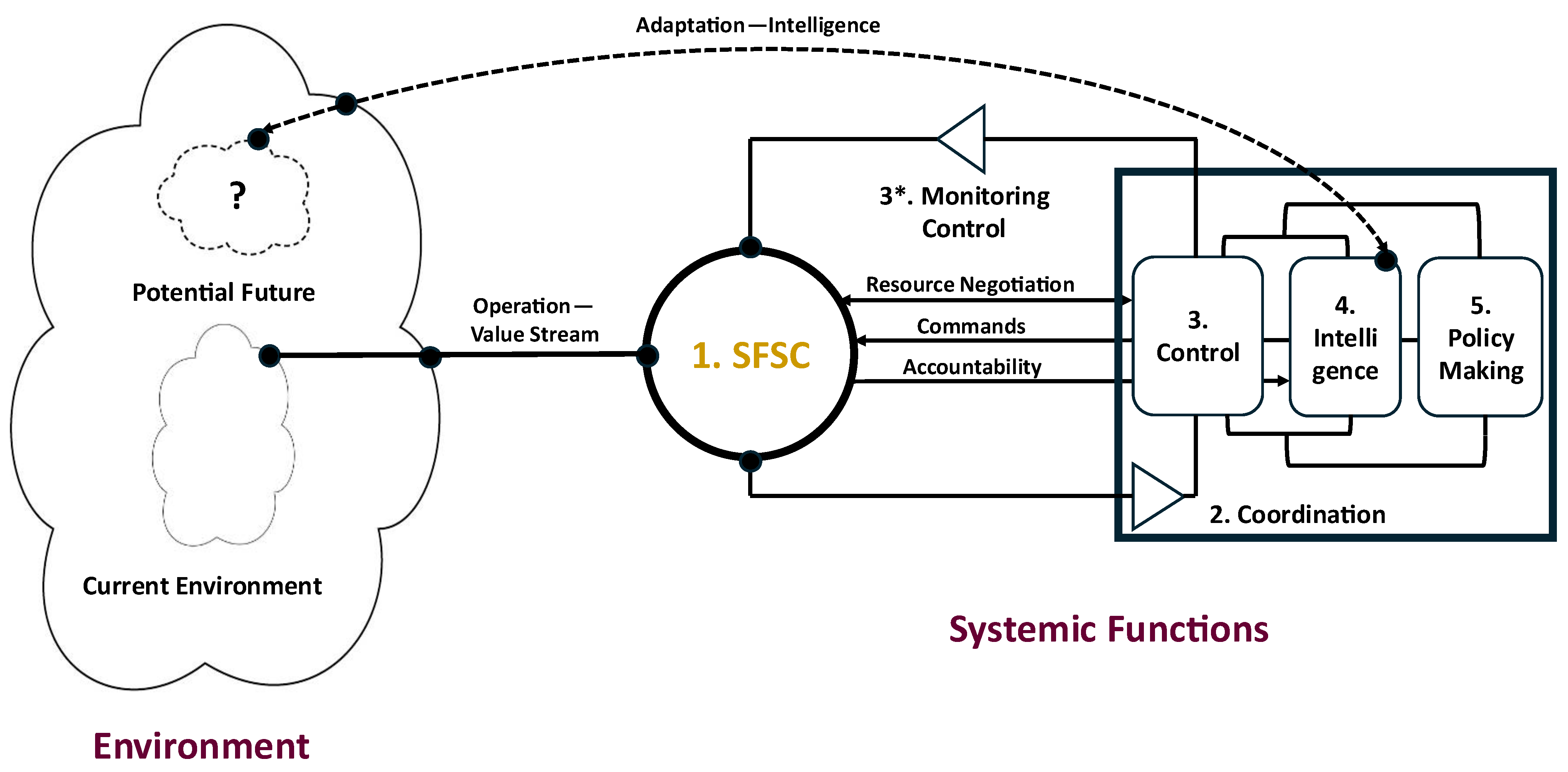
The VSM was operationalised as a diagnostic framework in which each systemic function was translated into questions and analytical categories. The interview protocol addressed:
System 1 (Operations): sourcing, production, distribution, and sales activities.
System 2 (Coordination): mechanisms for synchronising activities and managing variability.
System 3 (Control): internal regulation, resource allocation, and quality control.
System 4 (Intelligence): adaptation, innovation, and market sensing.
System 5 (Policy): identity, values, and strategic direction.
Although the VSM’s recursive nature was considered, the analysis was conducted at a single recursion level, corresponding to the focal enterprise. This decision reflects the case’s empirical characteristics. The SFSC operates in a relatively homogeneous local market, with most demand concentrated in a single retail context (Mercado El 100). Internal operations are similarly integrated, focusing on dairy production, with product variations but without distinct organisational units exhibiting differentiated structures, markets, or management practices.
Thus, the selection of the recursion level reflects the analytical focus of the study rather than the absence of other organisational actors. Although multiple actors are involved in the SFSC, the analysis focuses on a single recursion level corresponding to the focal enterprise, as it is the main coordination and integration point for supply chain activities. Other actors are seen as part of the system environment and interactions, not as independently modelled viable systems.
The Viplan method [
28,
37] supported the diagnostic process through the following:
Definition of system identity using the X-Y-Z statement (to do X, by means of Y, with purpose Z) and TASCOI (transformation, actors, suppliers, clients, owner, and interveners).
Examination of organisational complexity through the identification of viable units within the SFSC.
Mapping value chain activities (market engine and core infrastructure) to VSM functions.
The VSM was also used as a conversational device, facilitating participants’ reflections on organisational practices and systemic relationships. Hence, within the Viplan methodological tradition, the VSM is applied as an interpretive cybernetic framework for organisational diagnosis.
Each systemic function was operationalised through specific questions and subsequently linked to observed practices, enabling the mapping of empirical data onto the VSM functions presented in
Section 4.
3.4. Data Analysis
The data were analysed using a qualitative deductive interpretive approach guided by the VSM and integrative framework (
Section 2.6) [
42]. Interview responses were mapped onto systemic functions (Systems 1–5) and value chain dimensions (market engine and core infrastructure).
The study does not employ quantitative statistical analysis because systematic quantitative records and performance indicators were not available in the empirical setting. The analysis, therefore, focuses on the interpretive examination of organisational structures and systemic functions.
Interview data were segmented into discrete statements and assigned to systemic functions based on their organisational role. Statements were classified according to whether they referred to operational activities, coordination, control, monitoring, adaptation, or identity. Where responses reflected multiple functions, classification prioritised the primary regulatory role within the organisational context. For example, statements describing order coordination through multiple communication channels were interpreted in relation to System 2 (coordination), whereas references to quality testing and process verification were assigned to Systems 3 (control) and 3* (audit and monitoring). This process required analytical judgement, in which the researcher’s subjectivity was managed through iterative comparison of interview transcripts and observational notes, cross-validation during the group interview, and follow-up clarification with participants regarding ambiguous interpretations.
To preserve the empirical grounding of the analysis, statements were first organised into thematic groupings (e.g., operations, coordination, control, monitoring, adaptation, identity) before alignment with VSM functions. This intermediate step ensured that coding reflected observed practices rather than predefined categories. It also helped maintain interpretive consistency and traceability between empirical observations and analytical classification.
To enhance methodological transparency, selected empirical statements were explicitly linked to VSM functions.
Coding decisions were iteratively reviewed and refined. Ambiguous cases were resolved based on their primary regulatory role within the organisational context. Although formal inter-coder metrics were not applied, consistency was supported through contrasting interview data and observations, cross-validation during the group interview, and follow-up clarification with participants. The analysis resulted in the following:
Identification of operational structures and activity flows;
Mapping of coordination and control mechanisms;
Assessment of adaptive and strategic capabilities;
Detection of functional gaps that affect system viability.
The VSM was applied as an analytical lens rather than a rigid coding structure, allowing empirical observations to inform the interpretation of systemic functions. This approach aimed to balance theoretical guidance with empirical grounding while maintaining conceptual coherence.
In addition, market engine and core infrastructure processes were analysed from an organisational perspective, focusing on how producers enact technical conditions and market interactions rather than on independently measured compliance or quantitative market outcomes.
The analysis also identified practices that did not align fully with predefined systemic functions (e.g., hybrid practices combining coordination and control functions), highlighting aspects of the case that extend beyond the model’s initial framing and reinforcing its interpretive use.
To provide a structured overview of the analytical process,
Table 1 summarises the data sources, coding stages, and validation procedures used to transform empirical observations into the final VSM-based interpretation. Examples of how empirical observations were mapped onto systemic functions are presented in
Section 4.9.
3.5. Validity, Scope, and Limitations
Construct validity was ensured by directly operationalising the VSM into interview questions. Internal validity was supported through triangulation of observations and interview data, cross-validation among participants during the group interview, and follow-up clarifications to confirm interpretations [
41].
Reliability was strengthened by clearly defining system boundaries, documenting analytical procedures, and maintaining consistency in applying the VSM and Viplan frameworks [
43,
44].
The study is based on self-reported data and observations without independent verification through formal records or quantitative measurements. As a qualitative single-case study, the findings are analytically transferable rather than statistically generalisable, providing a conceptual basis for examining how organisational structures and systemic functions relate to viability in other SFSC contexts [
40,
45].
The analysis is diagnostic in nature, identifying structural characteristics and potential constraints rather than measuring performance outcomes directly.
Finally, the researchers acted as non-participant observers and interviewers and were the primary instruments of interpretation [
46,
47]. Although cross-validation and participant feedback supported consistency, the analysis remains interpretive and may reflect the researcher’s judgement in mapping activities to systemic functions.
4. Results: Cybernetic Structure of the SFSC
This section presents empirical findings organised by the VSM’s systemic functions. The exploratory nature and reliance on qualitative, self-reported, and observational data require textual mapping to maintain the link between evidence and organisational processes. This prevents imposing an objective or fixed structure that may not reflect the system’s informal, emergent, or context-dependent nature. The study uses an analytical VSM approach, aligning with modern management cybernetics, viewing the model as an analytical framework rather than a literal organisational representation. Thus, systemic functions are considered interpretive constructs that aid diagnosis without structural determinism.
Following a deductive analytical approach, empirical evidence collected through interviews and observations was interpreted in relation to Systems 1–5 of the VSM, using the operationalisation described in
Section 3.3. Additionally, activities are signposted in relation to the market engine (primary value activities) and core infrastructure (support activities) defined in
Section 2. This section reports the observed practices and participant descriptions, without interpretation.
The cybernetic structure of the SFSC is represented by mapping empirical observations onto the VSM’s systemic functions, as detailed in the following subsections.
4.1. Viplan Representation of the SFSC
The SFSC was represented using the Viplan method to define system identity, boundary, and organisational structure. Thus, the Viplan representation is presented textually through the X-Y-Z statement and the TASCOI framework (rather than as a standalone diagram).
The in-use identity of the system is defined as follows: (X) a women-led and operated SFSC that transforms locally sourced milk into organic, additive-free traditional artisan dairy products; (Y) by means of integrated production, quality control, distribution, and direct market interaction activities; and (Z) to deliver culturally authentic, safe, and high-quality products to consumers through short food supply chains.
This identity is reflected in the organisation of activities, the selection of raw materials, and the emphasis on direct market interaction and product consistency. The TASCOI definition is as follows:
Transformation (T): Conversion of raw milk into artisan dairy products, including queso tenate and related cheeses.
Actors (A): Production staff, administrators, owner-managers, and family members involved in milk production and commercial activities.
Suppliers (S): Family-operated dairy supplying cow milk, complemented by external suppliers of goat milk and other inputs.
Customers (C): Retail consumers, speciality store owners, and market clients in Mexico City.
Owners (O): Owner-manager responsible for strategic and operational decisions.
Interveners (I): Regulatory requirements, certification processes, logistics constraints, and market conditions that influence operations.
The system boundary includes sourcing, production, distribution, and retail activities coordinated by the enterprise. Although external actors, such as suppliers, customers, and market intermediaries, interact with the system, the analysis focuses on how these interactions are managed and perceived by the actors of the focal enterprise. These external stakeholders, such as suppliers, customers, and regulatory entities, interact with the system but are not part of its internal organisational structure.
4.2. Unfolding of Complexity
The SFSC was analysed at a single level of recursion, corresponding to the focal enterprise as the primary organisational unit. At this level, complexity arises from the interactions among multiple activities and actors across sourcing, production, distribution, and sales.
Operational complexity arises from managing multiple product types, variable raw material conditions, and diverse distribution channels. Coordination complexity emerges from the use of multiple communication channels and the need to synchronise production with customer demand.
Additional complexity arises from the interactions between internal activities and external entities, such as suppliers, retail clients, and consumers. These interactions require continuous adjustments to production volumes, delivery schedules, and product characteristics in response to demand and input availability.
The enterprise manages this complexity within a single organisational structure in which activities are distributed among a small number of actors who perform multiple roles across production, logistics, and sales.
4.3. System 1—Operations (Market Engine)
System 1 comprises the SFSC’s core operational activities and corresponds to the market engine. The enterprise integrates sourcing, production, packaging, storage, distribution, and retail within a single organisational structure.
Milk is primarily sourced from a family-operated dairy and supplemented with goat milk from an external supplier (market engine). Upon receipt, milk undergoes quality testing, including measurements of acidity, fat, protein, solids, and temperature (core infrastructure) before entering production.
Production includes a range of dairy products, such as queso tenate, Oaxaca, and morral (market engine). Processing involves controlling temperature and timing (a core infrastructure element), followed by vacuum packaging and refrigerated storage. Samples were retained in cold storage for shelf-life observation (as part of core infrastructure). Participants reported that cheese quality control involves regular sensory checks (taste, smell, colour, texture, and appearance) and random microbiological tests every four months (as part of core infrastructure). However, formal microbiological records, laboratory protocols, or compliance criteria were unavailable for verification. Therefore, these practices are described based on participant reports and were not independently verified, as no formal microbiological records, laboratory protocols, or compliance criteria were available.
Distribution is carried out through direct sales at the production site, deliveries to retail clients, and participation in Mercado El 100 in Mexico City (market engine). Participants reported that most sales occur through this market.
Demand is assessed using historical sales patterns, seasonal variations, and confirmed customer orders. Retail clients place orders weekly or biweekly, whereas direct consumers submit preorders through messaging platforms. Production planning is based on combining the available inventory with the expected demand, and additional units (two to five pieces) were produced as a buffer.
The participants reported operational challenges, including fluctuations in milk availability, variations in milk quality, packaging shortages, delays in replenishing inputs, seasonal changes in demand, and increased working hours during peak periods.
4.4. System 2—Coordination
System 2 involves coordination mechanisms that regulate the interactions among operational activities. In this case, coordination is primarily achieved through digital communication and direct interactions.
Multiple WhatsApp groups are used to manage production, orders, and client communication (as part of the market engine coordination mechanism). This is complemented by phone calls and face-to-face communication during the daily operations.
Orders are received through various channels, including WhatsApp, Instagram, and direct client communication. Staff consolidate these inputs to organise production and deliveries. Orders for the weekly market are typically confirmed by midweek, whereas retail clients place orders on a regular cycle.
Coordination within the production team is based on continuous communication and a shared understanding of the tasks. Activities are distributed dynamically depending on operational needs, and decisions are made through ongoing dialogue among the staff.
Participants reported coordination challenges, including unrecorded or forgotten orders, client confusion, and the need to confirm orders received across multiple channels. As one participant noted, “Sometimes we forget orders or have to confirm again because messages come from different places,” illustrating the fragmentation of coordination across multiple communication channels. Customer complaints are managed through messaging platforms and addressed through subsequent deliveries or replacements.
4.5. System 3—Control and Core Infrastructure
System 3 relates to internal regulation, resource allocation, and operational cohesion, and primarily corresponds to core infrastructure.
Quality control practices focus on both inputs and production processes (core infrastructure elements). Milk is tested upon arrival, and production follows hygiene standards and controlled processing conditions intended to support product consistency. Packaging procedures and cold-chain management are applied during storage, transport, and retail operations.
Production and inventory records are maintained in notebooks (bitácoras in Spanish), in which quantities, inputs, and stock levels are recorded. As participants described, “we write everything down in notebooks, but sometimes we don’t review it later”, suggesting limited integration of recorded data into decision-making. These records are reviewed by administrative staff and partially transferred to digital systems (core infrastructure elements). Production decisions are based on inventory levels, demand, and input availability.
Roles are defined but are flexible. Production staff manages processing, packaging, logistics preparation, and sales (market engine activities), whereas administrative staff handles procurement, invoicing, and financial records. The owner-manager oversees the quality, product development, and commercial activities.
Participants reported control-related situations, such as reliance on manual records, delayed availability of consolidated data, prioritisation of certain clients due to a limited supply, and adjustments to production based on input constraints.
4.6. System 3*—Audit and Monitoring
System 3* involves monitoring and verification activities. In this case, they are conducted through routine checks of the production, inventory, and quality conditions.
Production data are recorded daily in notebooks, including the quantities produced, inputs used, and batch-related information (core infrastructure elements). Administrative staff reviews these records and compares them with sales and inventory data.
Quality verification begins with milk reception through physicochemical testing. During production, adherence to hygiene and processing conditions was observed. The finished products were stored under controlled conditions, and the samples were retained for shelf-life observation.
At the retail level, the product condition is visually inspected, and customer feedback is collected directly or via messaging platforms (market engine feedback loop). Complaints are often accompanied by photographs and addressed by replacing products in subsequent deliveries.
Participants reported monitoring situations, such as milk quality discrepancies upon arrival, mismatches between recorded and actual inventory, and unrecorded or unfulfilled orders. Production records are primarily used for operational tracking rather than for analytical purposes.
4.7. System 4—Intelligence and Adaptation
System 4 encompasses activities related to adaptation, innovation, and environmental interaction. In this case, information about market conditions is obtained through direct customer interactions and the observation of sales patterns (market engine–intelligence interface).
Participants reported that product development is influenced by customer feedback and demand. As one participant explained, “we create new products based on what customers ask us at the market,” reflecting an adaptive process driven by direct interaction rather than formal market analysis. New products and variations are introduced based on these inputs (core infrastructure element—product development), including seasonal products and customised formats.
Market information is gathered through participation in retail environments and communication with customers. Feedback is shared internally and considered in production planning.
Strategic activities are led by the owner-manager and include planning processes across production, marketing, commercial activities, and administration. Meetings are conducted periodically to review objectives and progress.
Participants reported situations related to adaptation, such as logistical constraints, input supply constraints, and the need to align production capacity with market demand.
4.8. System 5—Policy and Identity
System 5 defines the organisational identity, values, and strategic direction. Participants described values such as quality, honesty, trust, transparency, and commitment to traditional production methods.
The enterprise aims to produce artisan dairy products while maintaining consistency and communicating information about their origin and production processes. Practices such as direct customer interaction and traceability mechanisms support these objectives (market engine–identity links).
The owner-manager defines the strategic direction, which includes product development, market positioning, and brand transition. Planning activities are structured across functional areas and are periodically reviewed.
Participants also described how operational conditions, such as milk availability and sales performance, influence short-term decisions and longer-term brand development objectives.
4.9. Summary of Systemic Structure
The SFSC is described as a set of interconnected activities organised across the five systemic functions of the VSM. Operational activities (System 1) encompass the market engine and include sourcing, production, distribution, and sales. Support activities associated with quality control, process validation, and product development are reflected in Systems 3 and 3*, which are part of the core infrastructure.
Coordination (System 2) is achieved through communication mechanisms, whereas adaptive activities (System 4) involve product development and market interactions. Identity and strategic direction (System 5) are reflected in the organisational values and planning practices.
These elements describe the structure and functioning of the SFSC as observed in the case. The distribution of market engine and core infrastructure activities across the VSM’s systemic functions, with illustrative empirical statements, is summarised in
Table 2.
Although quantitative performance indicators were not systematically available, the observed practices reflect constraints in record keeping, inventory management, and decision-making that limit the system’s capacity to deliver consistent operational outcomes.
These interactions indicate that the SFSC operates through continuous flows of materials, information, and feedback among production, market, and governance functions rather than as a linear supply chain.
The empirical evidence captures the operational dynamics and variability of the SFSC, highlighting coordination challenges, informal processes, and decision-making constraints prior to their analytical mapping onto the VSM systemic functions.
To support the transition from empirical observations to the cybernetic interpretation in
Section 5,
Table 3 shows the distribution of market engine and core infrastructure activities across VSM systemic functions. This matrix reveals how organisational activities are distributed across coordination, control, monitoring, intelligence, and policy functions, highlighting overlaps and absences. It provides a basis for diagnosing the alignment and uneven development of the SFSC’s systemic functions.
Table 3 shows that market engine and core infrastructure activities are broadly represented across the VSM systemic functions, but their distribution is uneven and incomplete. While core operational activities such as sourcing, production, distribution, and sales appear across multiple functions, this presence does not imply full integration. In particular, System 4 (intelligence) is weakly developed across activities, reflecting the limited use of formal market analysis and structured adaptation processes. Similarly, Systems 2 (coordination) and 3 (control) are only partially distributed, as coordination relies on informal communication and control practices are not systematically integrated into decision-making. Activities related to sales communication and customer service (e.g., WhatsApp-based communication) are especially limited in their distribution, being primarily confined to coordination functions and weakly connected to control, monitoring, and intelligence processes. Moreover, although some activities span systemic functions, they are often weakly formalised or informally executed. In particular, sensory analysis, quality control, product development, and market feedback remain only partially integrated into coordination, control, monitoring, and intelligence processes. Overall, this distribution highlights variations in how organisational activities are integrated across systemic functions, providing a basis for the analysis in the next section.
5. Discussion
This discussion advances understanding of supply chain viability by proposing a viability framework for SFSCs grounded in management cybernetics and linked to the market engine and core infrastructure. While existing approaches, particularly Ivanov’s viable supply chain model [
16], conceptualise viability as resulting from resilience, agility, and sustainability, organisational viability can be analysed in relation to systemic functions, as originally proposed by Beer [
18]. This understanding shifts the analytical focus from supply chain outcomes to organisation, thereby reconnecting the concept of viability with its cybernetic foundations. This is particularly relevant for SFSCs, where organisational coherence, not structural resource redundancy, shapes system functioning [
18,
19,
32].
5.1. Diagnostic Findings: A Cybernetic Interpretation of the SFSC
The results show that the SFSC, as observed through the focal enterprise, operates as an integrated organisational system with uneven development across the three interrelated dimensions of the framework.
The discussion distinguishes between (i) empirical observations derived from the case study, (ii) cybernetic interpretations developed through the VSM and Viplan analytical lens, and (iii) transferable implications proposed for similar artisan SFSC contexts.
From a market engine perspective [
11], the system is structured around operational activities (sourcing, production, distribution, and direct sales) that are closely linked to demand through direct consumer interaction. This enables responsiveness and supports the communication of product attributes related to origin and quality. However, the market engine remains centred on transactional activities. Elements associated with market development, such as gastronomic leverage and structured product adoption processes, are not systematically implemented. Consequently, value creation remains centred on direct market interaction rather than on broader market development mechanisms [
5,
22,
23].
The core infrastructure, including food technology, sensory analysis, and product development, is present but only partially developed. Basic quality control practices are implemented, such as physicochemical testing, hygienic production, packaging, and cold-chain management [
33,
35]. However, these practices are not systematically formalised or integrated into decision-making processes. Food technology and sensory evaluation practices remain only partially formalised, while production records have limited analytical integration into decision-making.
From a cybernetic governance perspective [
17,
28], the system shows uneven development across VSM functions. Systems 1 (operations) and 5 (identity) are well established, whereas Systems 2, 3, and 3* are only partially formalised. Coordination relies on informal communication, control practices are weakly integrated, and monitoring activities are not systematically linked to decision-making. System 4 (intelligence) remains largely experience-based, with limited formal market analysis or structured adaptation processes.
Overall, the SFSC operates with strong operational integration and identity, but with limited development of technical support and governance functions. These observations should be interpreted in relation to the focal enterprise coordinating the SFSC activities rather than as a direct representation of all actors and relationships within the broader supply chain. This configuration enables flexibility in day-to-day operations while constraining systematic coordination and long-term development. Limitations in coordination, control, and intelligence may reduce system coherence despite strong product identity and market potential.
The uneven distribution of activities across systemic functions in
Table 3 underlies the alignment patterns in
Table 4. Observed activities are mapped onto the VSM systemic functions, integrating operational and technical functions and highlighting the resulting structural gaps. The coordination, control, and monitoring functions are only partially developed, reinforcing the interpretation that viability depends on the coherence and interaction among systemic functions rather than on their isolated presence.
Notably, activities such as sales communication and customer service, which rely on informal communication channels, are weakly distributed across systemic functions, despite the presence of operational activities, limiting their integration into coordination, control, monitoring, and intelligence processes.
Building on the VSM mapping,
Table 5 summarises the alignment of the SFSC with the three dimensions of the integrative framework.
Based on this interpretation, the findings emphasise organisational regulation as central to supply chain viability [
18]. The results should therefore be interpreted as part of a diagnostic and interpretive analysis of structural conditions shaping system functioning, rather than as evidence of demonstrated performance outcomes.
5.2. Discussion in Relation to the Research Problem, Question, and Aim
The findings support the integrative framework by showing uneven development across market engine, core infrastructure, and cybernetic governance dimensions, with operational functions more established than technical support and regulatory functions.
Regarding the analytical proposition, the VSM enabled the identification of structural gaps and misalignments across systemic functions, particularly in Systems 2, 3, and 3*. The model also facilitates the mapping of value chain activities onto systemic functions, making visible where coordination, control, and feedback mechanisms are limited. These insights highlight the organisational configuration shaping system functioning rather than providing direct evidence of performance outcomes.
The findings suggest that viability depends less on full formalisation than on maintaining coherence among systemic functions. In this case, informal mechanisms support operational flexibility, but also constrain coordination and information integration as organisational complexity increases.
This points to a tension between informality and organisational viability. Informal practices support flexibility and rapid decision-making in low-complexity contexts, but become constraints as coordination demands increase, leading to errors and limited integration of information. Viability, therefore, depends on developing a requisite organisational structure to manage increasing complexity.
Although based on a single case, the study focuses on analytical transferability rather than statistical generalisation [
40,
41]. The observed configuration, with strong operational integration combined with partially developed infrastructure and governance, aligns with patterns reported in small-scale, artisan SFSCs [
3,
12,
21], particularly in contexts characterised by informal coordination and limited technological integration.
Overall, the findings address the research question by demonstrating that SFSC viability can be analysed in relation to the degree of systemic coherence across organisational functions. The integrative framework provides a structured basis for identifying where this alignment is incomplete and where improvements can be directed.
These results align with recent supply chain research emphasising organisational design, coordination, and adaptability as key to system viability [
16,
19]. Other studies have shown that agility and flexibility mediate the link between organisational practices and performance [
46]. However, these notions require further investigation, particularly in relation to small-scale and informally organised systems.
The findings should be interpreted as a diagnostic and theory-informed analysis of a single case rather than as evidence of generalisable causal relationships across SFSCs.
5.3. Theoretical Contributions
5.3.1. Contributions to Cybernetics and the Viable System Model
This research contributes to the management cybernetics literature by applying the VSM within a micro-scale, artisan SFSC context, where its use remains limited [
7,
19,
26]. The findings demonstrate that the VSM can be operationalised as a diagnostic framework for analysing production, coordination, control, and adaptation in informally organised and territorially embedded systems.
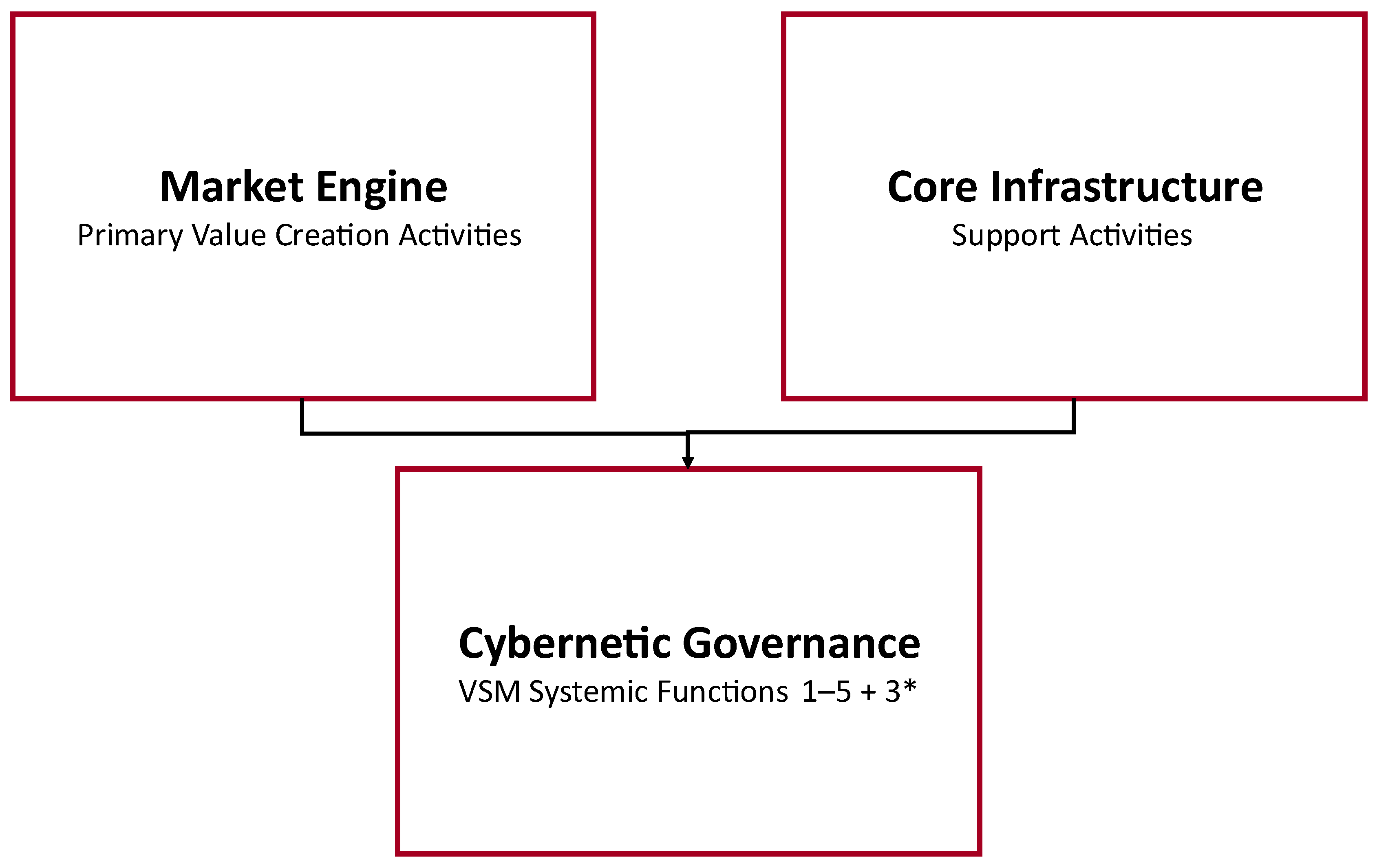
The primary contribution lies in extending the application of the VSM and the Viplan Method by integrating them with value chain analysis (
Figure 2) [
18]. This integration links systemic functions with value creation and support activities, showing how System 1 corresponds to operational value creation, Systems 3 and 3* to stabilisation and validation, and Systems 2, 4, and 5 to coordination, adaptation, and identity.
The findings also highlight that viable systems may exhibit uneven development across systemic functions. In the case studied, operational integration (System 1) and identity (System 5) are well developed, whereas coordination, control, and monitoring remain informal or only partially structured. This suggests that viability depends on maintaining coherence across asymmetrically developed functions rather than on full formalisation.
Furthermore, the analysis shows that organisational practices do not always align neatly with predefined systemic functions, underscoring the interpretive flexibility required when applying the VSM in empirical contexts. For instance, hybrid practices of quality control mapping simultaneously onto coordination and control. This supports its use as an analytical lens rather than as a rigid classification framework.
The incorporation of the Viplan Method strengthens this contribution by linking system identity, boundary definition, and organisational complexity with VSM diagnosis [
18,
28,
37], enabling a more integrated analysis of organisational functioning.
Finally, this study extends prior work on dairy SFSCs [
19] by explicitly linking value chain activities and core infrastructure to systemic functions, providing a more comprehensive understanding of how value creation, process stabilisation, and cybernetic governance interact to shape organisational viability. The present study uses the same general empirical context but introduces a different analytical integration and interpretive framework.
5.3.2. Contributions to SFSC and Food Systems Literature
This study contributes to the SFSC literature by reframing these systems as organisational and cybernetic systems, rather than solely as alternative market arrangements or socioeconomic configurations [
7]. While existing research has emphasised local development, sustainability, and producer–consumer proximity [
2,
3], comparatively less attention has been given to the organisational mechanisms supporting coordination and coherence within SFSCs.
From a cybernetic perspective, SFSCs can be understood as sociotechnical systems [
47] in which value creation, technical validation, and governance must be aligned. The distinction between the market engine and core infrastructure extends traditional value chain approaches by separating operational activities from the technical systems required to stabilise and validate them.
A key contribution is the identification of underdeveloped elements within SFSCs, particularly in core infrastructure and governance. The findings show that, while operational activities are often well-established, elements such as systematic food-technology integration, structured sensory validation, formal coordination mechanisms, and data-driven decision-making are only partially implemented. This highlights structural gaps that constrain SFSC viability.
More broadly, the study bridges food systems research and cybernetics by applying concepts such as feedback, regulation, and adaptation to the analysis of traditional and small-scale production systems. The integrative framework provides a structured basis for examining how value is created, stabilised, and governed within SFSCs, supporting future research on their design, improvement, and scaling as viable organisational systems.
5.4. Managerial and Practical Implications
The findings highlight the importance of strengthening coordination and coherence across organisational functions in SFSCs, particularly in traditional artisan dairy systems. Rather than requiring complex organisational restructuring, improvements can be achieved by systematising existing practices and strengthening interactions among systemic functions.
For artisan producers, strengthening the core infrastructure is essential to support consistent product quality and operational stability. Although basic quality practices are present, they are not systematically integrated into formal processes. Improvements may be supported by formalising quality control procedures, incorporating structured sensory evaluations, and linking production records with routine decision-making. These measures enable feedback-driven adjustments to production planning and inventory management, enhancing consistency and traceability without requiring significant technological investment.
Improving coordination mechanisms may also reduce variability and operational inefficiencies. While informal communication supports flexibility, reliance on multiple unstructured channels can lead to errors and inconsistencies. Introducing simple coordination tools, such as centralised order tracking and standardised communication protocols, can enhance synchronisation across activities and reduce uncertainty.
From a market perspective, value creation is primarily driven by direct sales and existing customer relationships, with limited development of broader market-positioning strategies. Strengthening market development may involve engaging with higher-value culinary contexts and improving communication of product origin and use. These actions support a shift from transactional exchange to the creation of symbolic and experiential value and reinforce System 4 (intelligence) through the structured use of market information.
At the cybernetic governance level, strengthening coordination, control, and monitoring functions is critical. Improvements may be achieved by integrating monitoring processes with decision-making and developing feedback loops that connect operational data and customer input with production planning and product development. These changes enhance organisational coherence by linking Systems 2, 3, 3*, and 4 without requiring formal hierarchical structures.
At a broader level, the findings suggest that policies and support programmes for SFSCs should adopt a systemic perspective. Rather than focusing solely on market access or production capacity, interventions should also strengthen technical infrastructure, organisational coordination, and governance capabilities to improve overall system viability.
Finally, the integrative framework provides a practical tool for diagnosing and improving SFSCs. By distinguishing among operational, technical, and governance functions, the framework provides a structured basis for identifying organisational gaps and prioritising interventions within artisan SFSCs.
5.5. Limitations
Limitations are acknowledged regarding the proposed framework, the methodological approach, and the empirical scope of this study. These limitations contextualise the findings and inform directions for future research.
5.5.1. Theoretical Limitations
From a theoretical perspective, the integration of the VSM with a value-chain-based framework introduces conceptual abstractions [
11,
17]. The mapping of value chain activities onto systemic functions is inherently interpretive, as activities may correspond to multiple systemic roles depending on context [
28]. Although classification was guided by the primary organisational role of each activity, this process simplifies complex organisational dynamics. Viability is therefore not inferred from conformity to the VSM, but from the interpretation of empirical observations through the framework.
In addition, the framework focuses on internal organisational structure and does not explicitly incorporate broader institutional, cultural, or political–economic factors [
37]. External influences are therefore considered in terms of their effects on the focal system rather than as independent analytical dimensions.
Finally, viability is not measured directly but interpreted through the VSM as an analytical lens. The analysis examines how organisational practices align with systemic functions rather than determining whether the system is definitively viable.
5.5.2. Methodological Limitations
The qualitative single-case design limits statistical generalisation, with findings intended for analytical transferability [
40,
41]. Data collection relied on non-participant observation and group interviews, which may introduce biases associated with self-reported data and group dynamics.
The use of a VSM-based questionnaire structured both data collection and analysis, which may have constrained the emergence of themes beyond the framework. This research may have introduced a degree of confirmation bias. Efforts to mitigate this included iterative interpretation, cross-validation, and openness to multiple functional interpretations.
The lack of a formal coding scheme or inter-coder comparison may limit methodological auditability; however, documented coding decisions and mapping examples supported transparency.
5.5.3. Empirical Limitations
The empirical scope is limited by the availability and nature of the data. The analysis is based on observed practices and participant descriptions without access to formal records, quantitative indicators, or independently verified measurements. Consequently, the findings should be interpreted as a diagnosis of the SFSC as coordinated through the focal enterprise rather than as a full recursive analysis of all supply chain actors.
Although quality control practices such as physicochemical and microbiological testing were reported, no laboratory protocols or formal analyses were available for validation. Similarly, production, sales, and inventory data were not systematically available. As a result, the study focuses on organisational processes rather than measurable performance outcomes.
The analysis is conducted at a single level of recursion, centred on the focal enterprise, and does not capture the full complexity of the broader SFSC as a network of independently governed actors. As such, the study analyses an enterprise-centred system coordinating supply chain functions.
Finally, the study reflects the producer’s perspective, relying on no direct data from consumers or other actors. Interpretations related to market behaviour and value co-creation are therefore inferred rather than independently validated. Although customer interactions were observed through enterprise activities, consumers’ perceptions or preferences were not directly captured here. These limitations affect process assessments central to the market engine dimension, implying that these aspects were interpreted from the producer’s (and researchers’) perspective rather than being independently validated.
Accordingly, the findings should be interpreted as indicative of organisational patterns and potential constraints, rather than as direct evidence of system performance or outcomes.
5.5.4. Scope of Diagnostic Findings
This study is diagnostic in nature and did not evaluate the implementation or impact of proposed improvements. The findings identify structural characteristics and potential areas for development but do not assess how changes would affect system performance over time.
5.6. Future Research
The limitations and findings of this study open several avenues for future research on SFSCs from a cybernetic perspective.
First, the empirical scope can be extended through comparative and multi-case studies across different regions, product types, and organisational structures. Such studies would enable the identification of recurring patterns in the development of the market engine, core infrastructure, and governance functions, and support the refinement and validation of the integrative framework.
Second, further research is needed to explore the recursive application of the VSM across multiple levels of SFSCs. Examining how suppliers, distributors, and market networks operate as interconnected viable systems would provide a more comprehensive understanding of how viability is distributed and coordinated across supply chains.
Third, quantitative and mixed-method approaches could complement qualitative diagnostics. Incorporating production data, sales records, and quality measurements would allow for the assessment of relationships between organisational structure and performance indicators, such as product consistency, delivery reliability, and market development.
Fourth, future studies should investigate further the development of core infrastructure elements, particularly in food technology, sensory analysis, and data-driven quality systems. Experimental or intervention-based research could evaluate how structured quality and monitoring practices affect system stability and performance in artisan food systems.
Fifth, there is scope to examine the mechanisms of market development within SFSCs, including gastronomic leverage and product adoption processes. This includes analysing how these elements contribute to value creation, consumer engagement, and market positioning, particularly in contexts where traditional products seek access to higher-value markets.
Overall, these research directions would advance the understanding of SFSCs as viable systems and further integrate cybernetics into food systems research.
6. Conclusions
This study examined the organisational conditions associated with the viability of a short food supply chain (SFSC) for traditional artisan cheese through a cybernetic perspective based on the Viable System Model (VSM). It addressed the research problem of limited understanding of the organisational mechanisms that sustain viability in SFSCs, moving beyond outcome-based interpretations towards a structural analysis of organisational functions.
The findings show that the SFSC, as observed through the focal enterprise, operates as an integrated but unevenly developed system in which strong operational capabilities and a clearly defined identity coexist with partially implemented technical and governance functions. While sourcing, production, distribution, and direct sales are effectively integrated, elements of the core infrastructure, such as systematic food technology, structured sensory validation, and data-driven quality management, remain underdeveloped. Similarly, coordination, control, and monitoring rely largely on informal practices, limiting the system’s capacity for systematic regulation and organisational learning.
In relation to the research question, the study demonstrates that SFSC viability can be analysed in terms of the coherence between value-creation activities, technical support functions, and cybernetic governance mechanisms. The application of the VSM enabled the identification of how systemic functions manifest in the organisation and how their uneven development shapes system functioning. These findings support the analytical proposition that viability emerges from the configuration and integration of organisational structures and systemic functions rather than from performance outcomes alone.
The primary contribution of this work lies in the development and application of an integrative framework that combines the functions of value creation, stabilisation, and governance. This framework provides a structured basis for analysing how value is created, stabilised, and regulated in artisan food systems, extending cybernetic approaches by linking systemic functions with value chain activities. It also contributes to SFSC literature by reframing these systems as organisational and cybernetic systems and by identifying structural gaps in infrastructure and governance that constrain their viability.
From a practical perspective, the findings suggest that enhancing SFSC viability does not necessarily require complex restructuring, but rather improved coherence among existing practices. Strengthening feedback loops, coordination mechanisms, and technical infrastructure may contribute to more coherent organisational coordination and development.
The findings should be interpreted as a diagnostic and theory-informed analysis of a single case. As such, they are analytically transferable but not statistically generalisable. The study is limited by its reliance on qualitative, self-reported data and by the absence of quantitative performance measures and independent validation.
Future research may extend this work through comparative and multi-case studies, the incorporation of quantitative and mixed methods, and the inclusion of multiple actor perspectives. Further investigation is also needed into the development of core infrastructure and market mechanisms, as well as the application of cybernetic frameworks across multiple levels of SFSCs.
Overall, this study contributes to understanding SFSC viability as an organisational capability emerging from the configuration of systemic functions that regulate value creation, coordination, and adaptation, providing a foundation for further research and practical interventions in traditional artisan food systems.




 ,
,