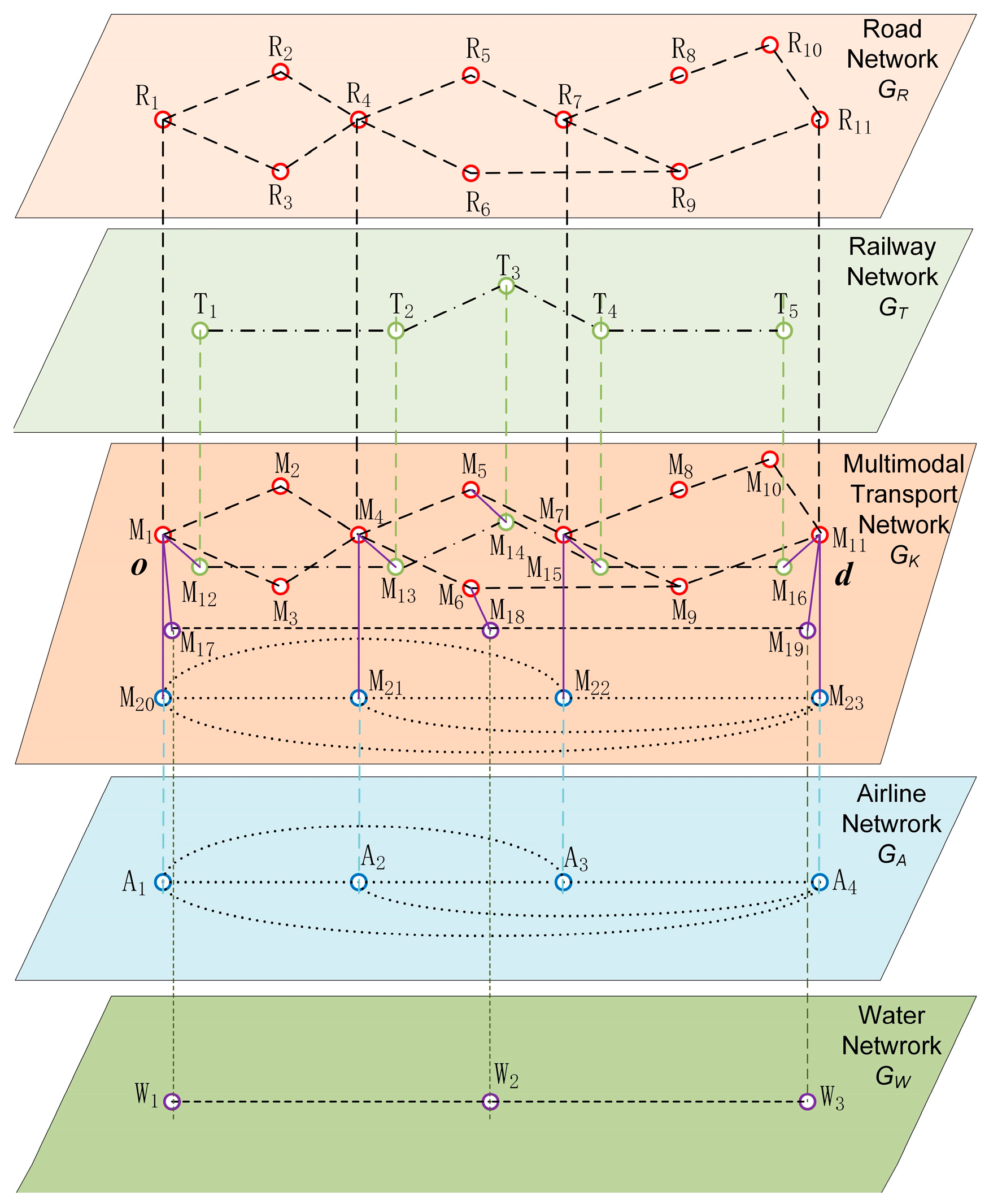
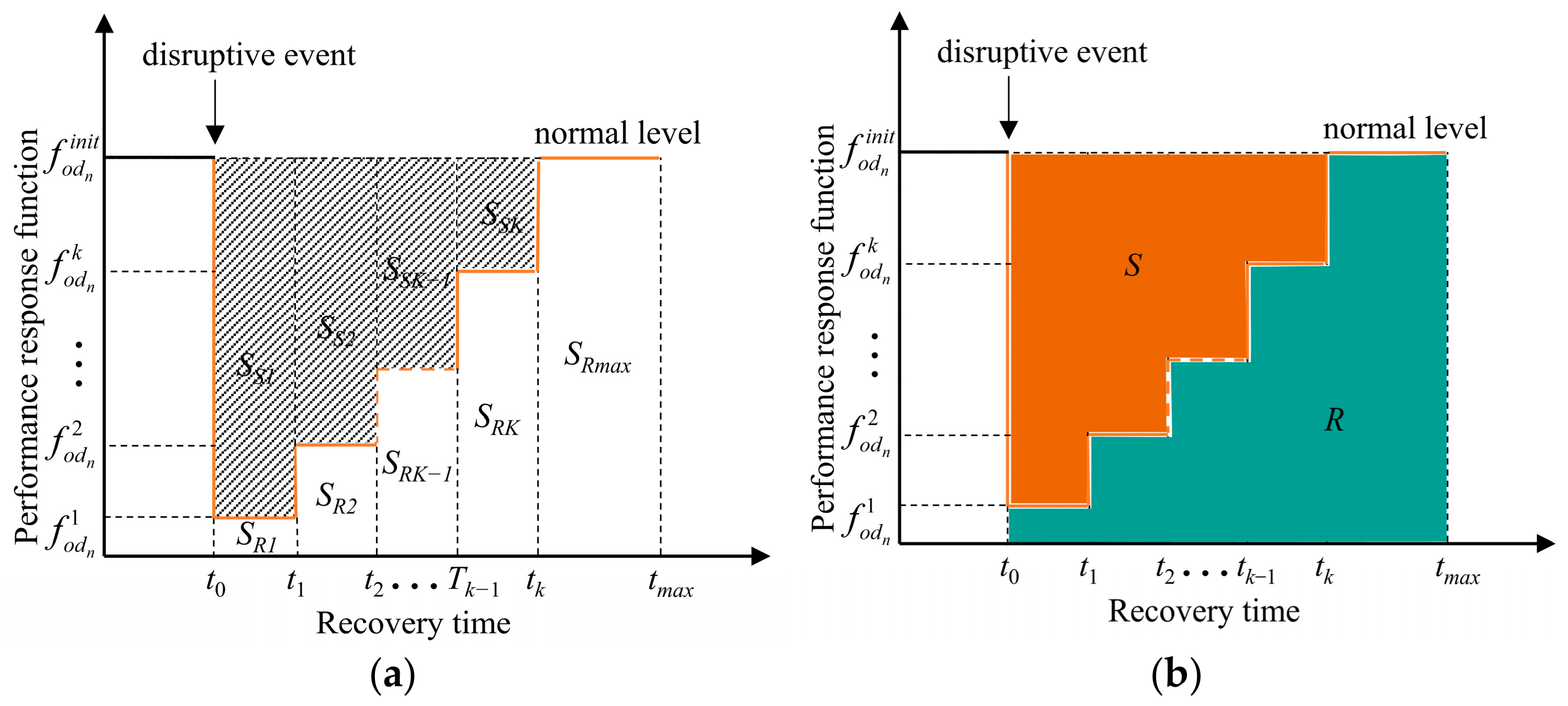
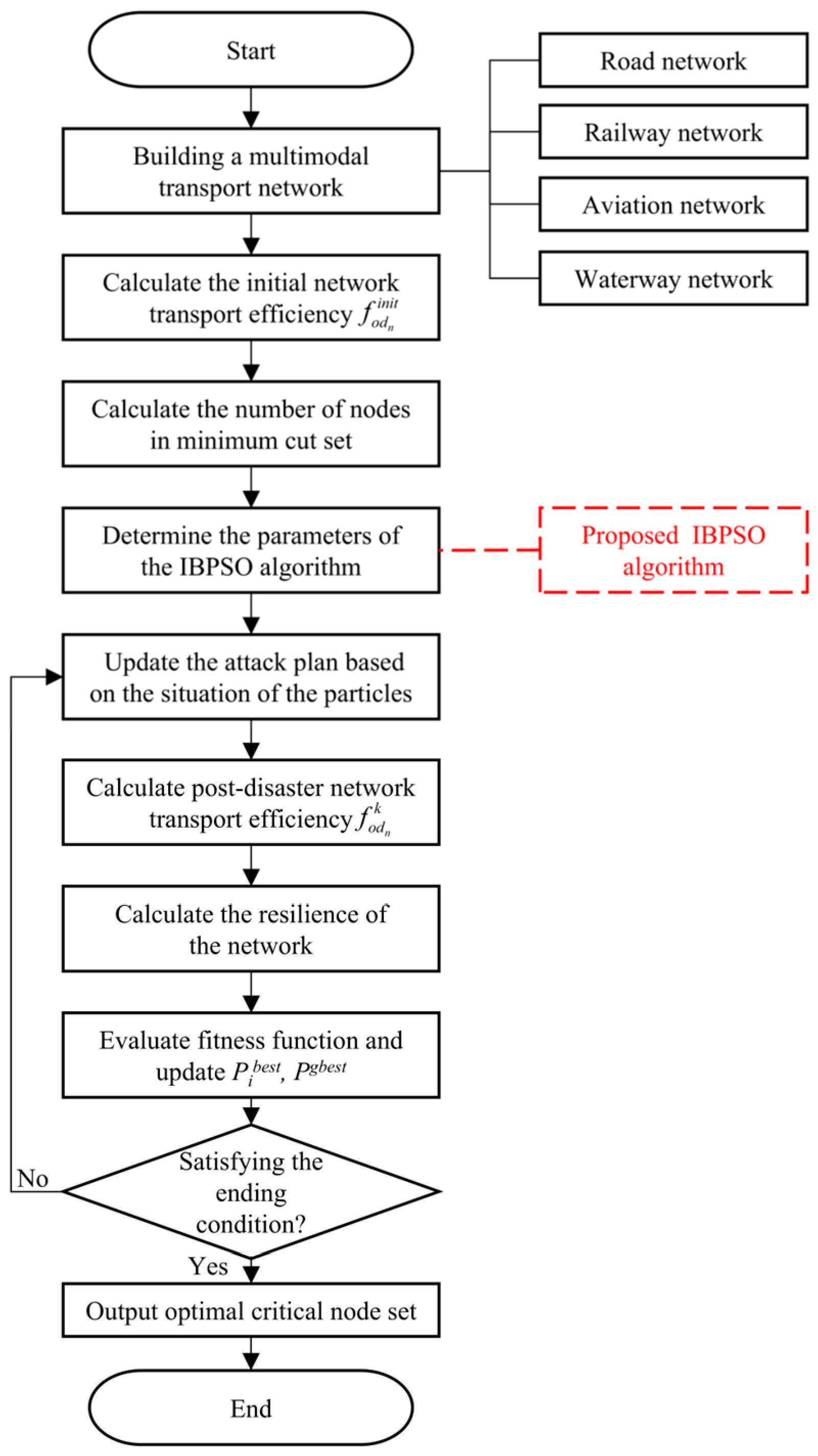
To verify the effectiveness of the proposed method, a typical multimodal transport network was selected as an example. The research results were compared with the five baseline methods for identifying critical nodes in complex networks. Meanwhile, the network resilience was compared under the failure of critical nodes identified by the six methods.
3.2. Analysis of Critical Nodes
The analysis of critical nodes consists of two parts: a SOD pair scenario and a MOD pair scenario. Based on the proposed IBPSO algorithm, the critical nodes in the multimodal transport network are calculated. Key parameter settings of the two algorithms are presented in
Table 1.
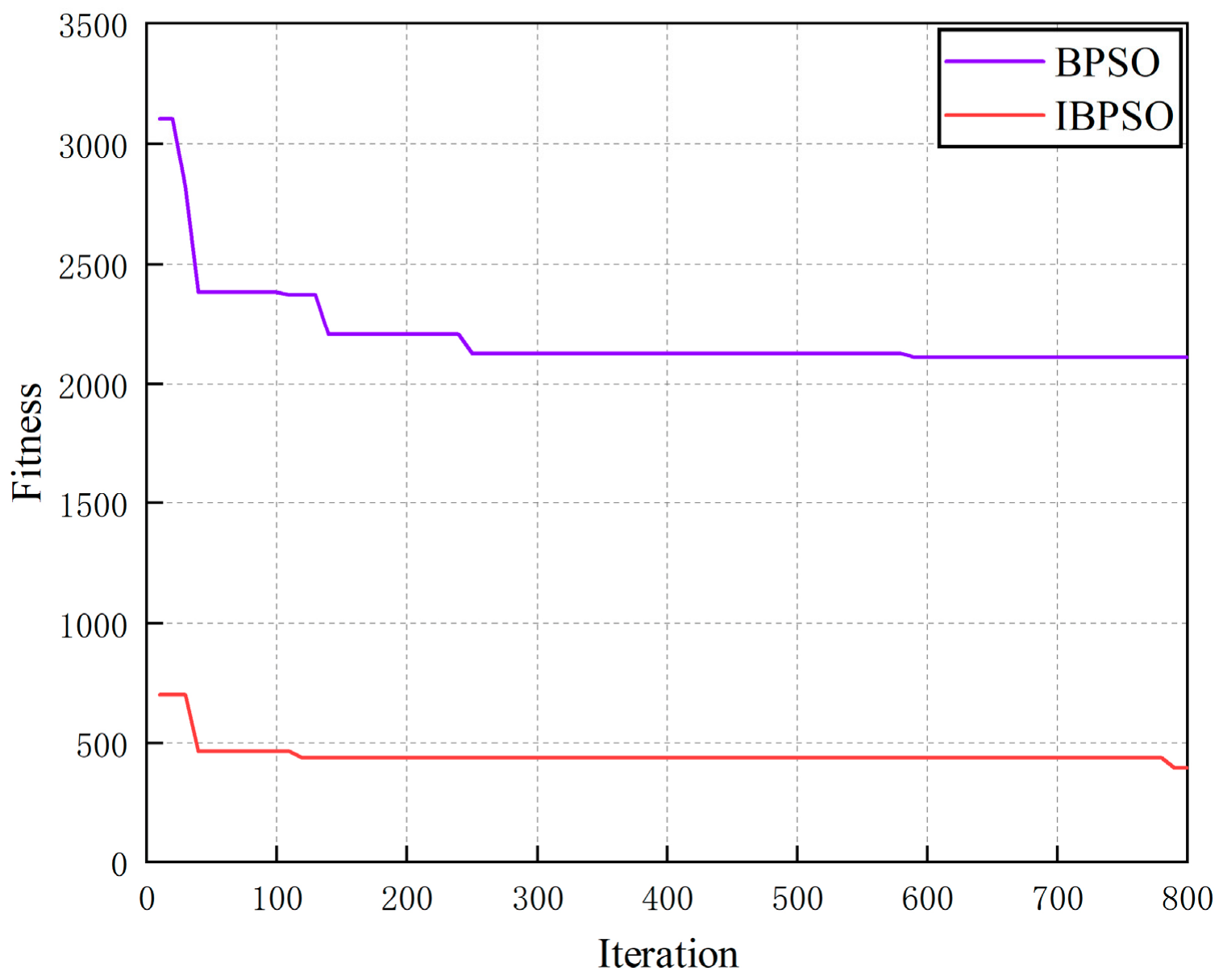
To verify the effectiveness of the proposed algorithm, the fitness function curves of the two algorithms are shown in
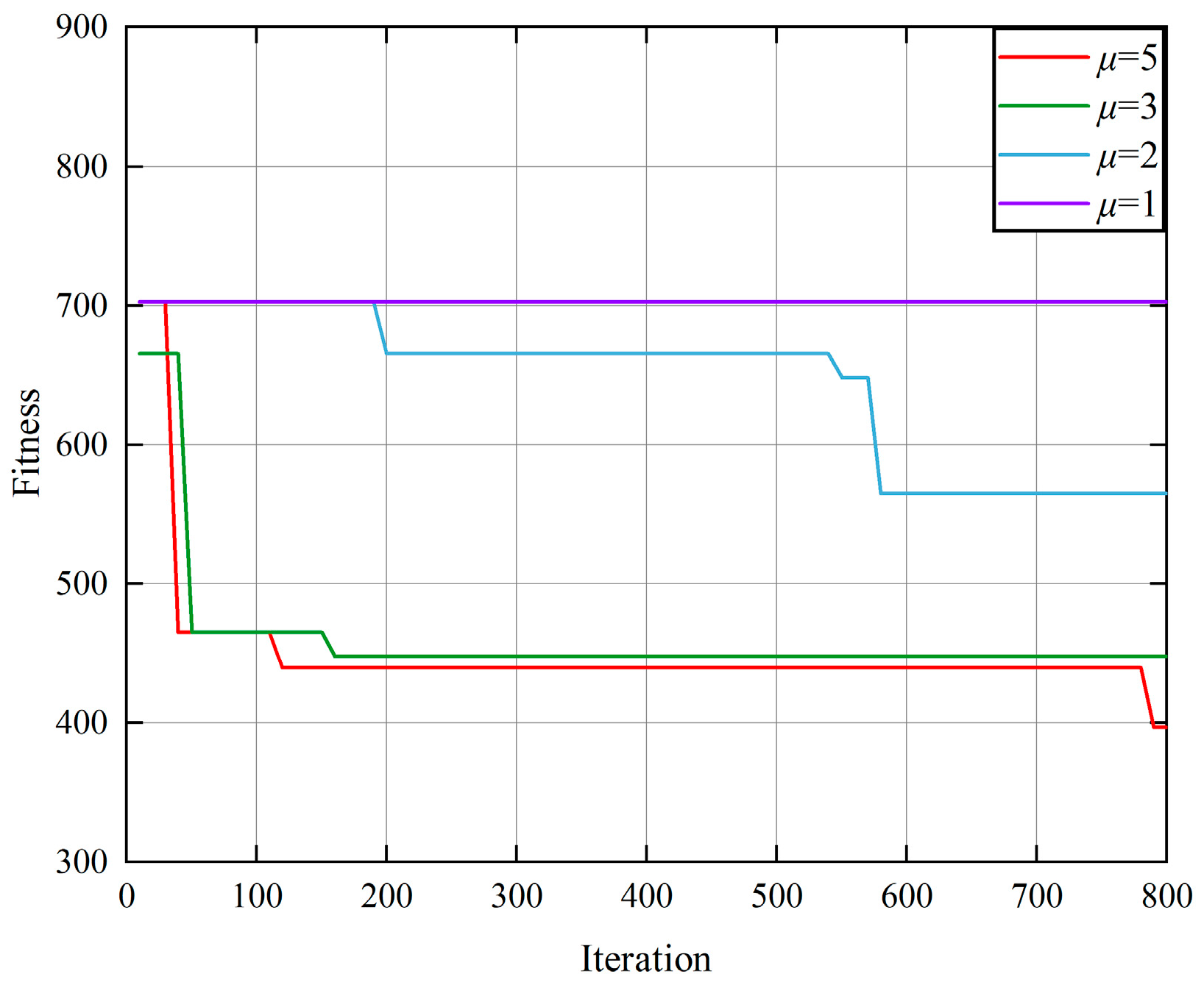
Figure 6. The traditional BPSO algorithm demonstrates a slow convergence rate, making it challenging to identify critical nodes rapidly and accurately within a limited number of iterations. When the iteration number reaches 800, the fitness function value of the traditional BPSO algorithm is 2108.18, indicating that 19 nodes are still regarded as critical nodes. In contrast, the IBPSO algorithm achieves a fitness function value of 396.49, successfully identifying only three critical nodes, which verifies the effectiveness and advantages of the proposed improvement strategy. Furthermore, to illustrate that the newly introduced parameter significantly improves convergence performance and calculation stability in complex network scenarios, we further analyze the fitness convergence of the IBPSO algorithm under different values of the parameter
μ to verify the rationality and necessity of the algorithmic improvement, as shown in
Figure 7.
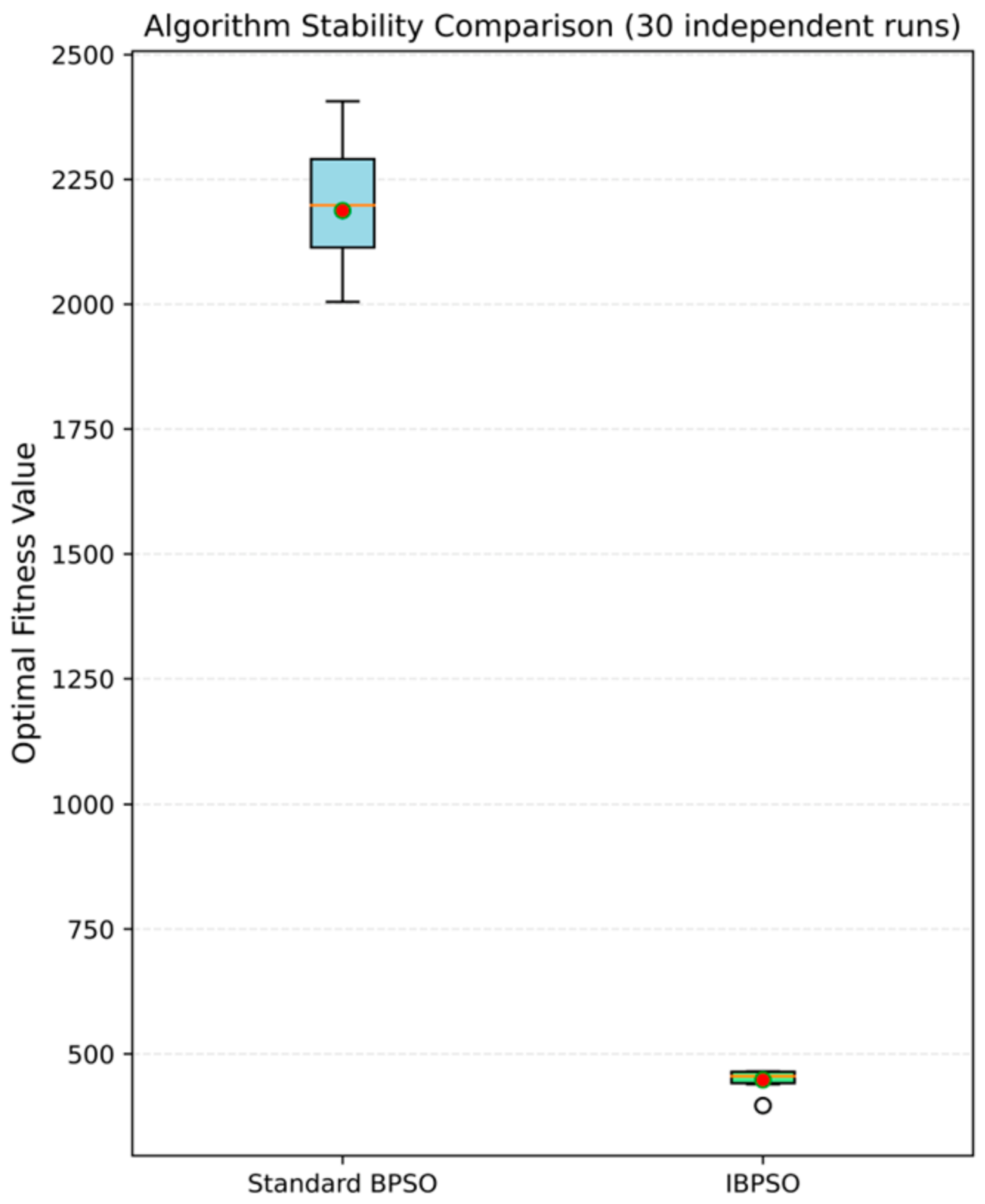
To assess the stability of the improved algorithm, box plots of the optimal fitness values obtained from 30 independent runs are presented in
Figure 8. Compared with the standard BPSO algorithm, the IBPSO algorithm exhibits a narrower box range and shorter whiskers, indicating that the optimal fitness results of IBPSO have much smaller fluctuations during 30 independent runs. The IBPSO algorithm shows a significantly lower median fitness value. All the above results demonstrate that the IBPSO algorithm has outstanding operational stability and better optimization performance than the traditional BPSO algorithm. Furthermore, the computational complexity of the improved BPSO remains
O (
m ×
D ×
rmax), which is consistent with the standard BPSO. The introduction of the bias parameter in the sigmoid function only adds a little extra computation and does not increase the computational complexity level of the algorithm.
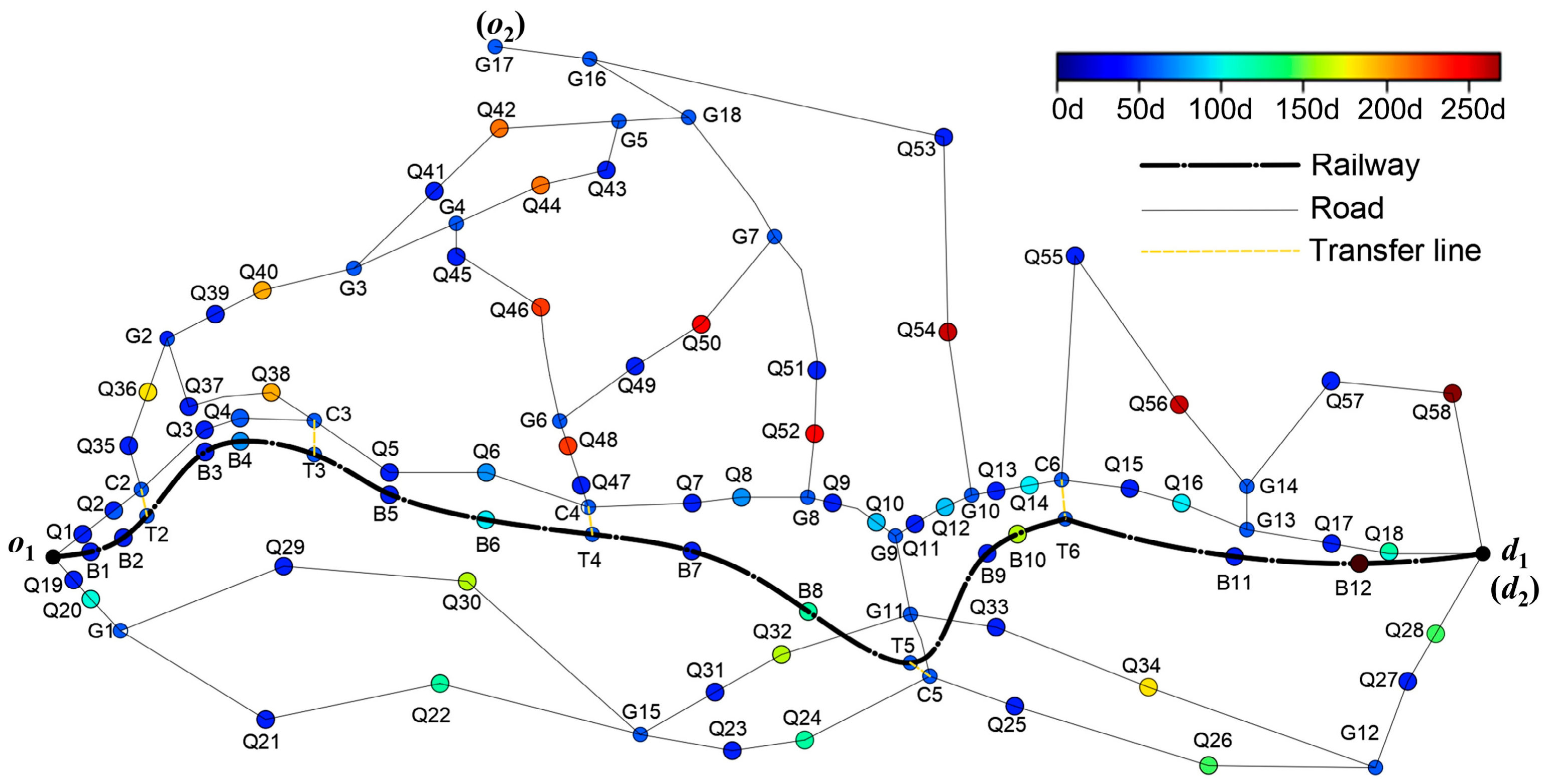
In the SOD pair scenario, the primary objective of critical node identification is to protect the critical nodes in the network to ensure the stable operation of a specific single transport channel. This case study utilizes the
o1–
d1 pair as an example. As shown in
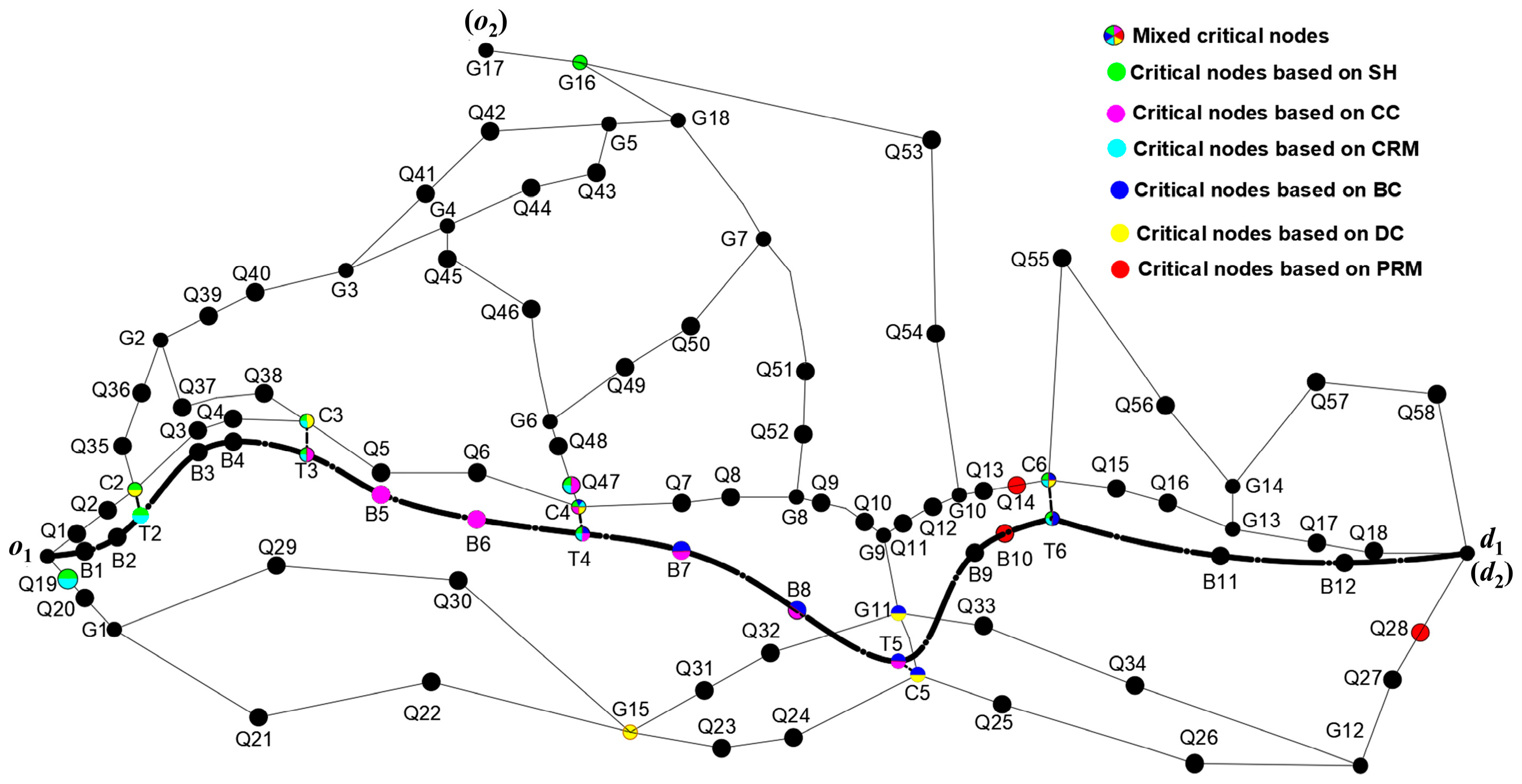
Figure 4, based on the simulation process, the PRF curves and resilience value
R of the multimodal transport network under different attack scenarios are calculated. The results demonstrate that nodes Q14, B10, and Q28 are identified as the critical nodes in the multimodal transport network by the proposed method. All three bridges are situated at key strategic chokepoints, and their repair durations are relatively long. Obviously, the simultaneous failure of these three critical nodes would completely disrupt the transport route from the origin node
o1 to the destination node
d1. Therefore, targeted protection should be carried out for these critical nodes to strengthen the resilience of the network. Importantly, if only nodes Q14 and Q28 are damaged, the optimal route from
o1 to
d1 can still be established via the railway network, indicating that damage to the road bridges alone will not lead to a decline in the network transport efficiency.
In MOD pair scenarios, the primary objective of critical node identification is to protect the critical nodes in the network to ensure the stable operation of multiple specific transport channels. In this case study, two typical OD pairs, o1–d1 and o2–d2, are selected for the case analysis. However, consistent with the SOD pair scenario, nodes Q14, B10, and Q28 are identified as critical nodes of the multimodal transport network by the proposed algorithm. The simultaneous failure of the critical nodes would completely disrupt the transport route of the two typical OD pairs. Therefore, the proposed method can effectively identify critical nodes for both SOD pair and MOD pair scenarios.
3.3. Comparison of Critical Nodes with Other Methods
To verify the advantages of the critical node identification method based on resilience theory, a comparison is conducted between it and traditional measures including DC, BC, CC and SH. Moreover, this study also systematically compares the proposed resilience-based method (PRM) with the conventional resilience-based method (CRM) that adopts network efficiency as the evaluation indicator. Critical nodes are defined as those whose failure would lead to a significant decrease in network efficiency. The critical nodes identified by the five methods are summarized as follows.
3.3.1. Degree-Based Method
When identifying critical nodes in complex networks, one of the classic approaches is to identify critical nodes based on degree centrality [
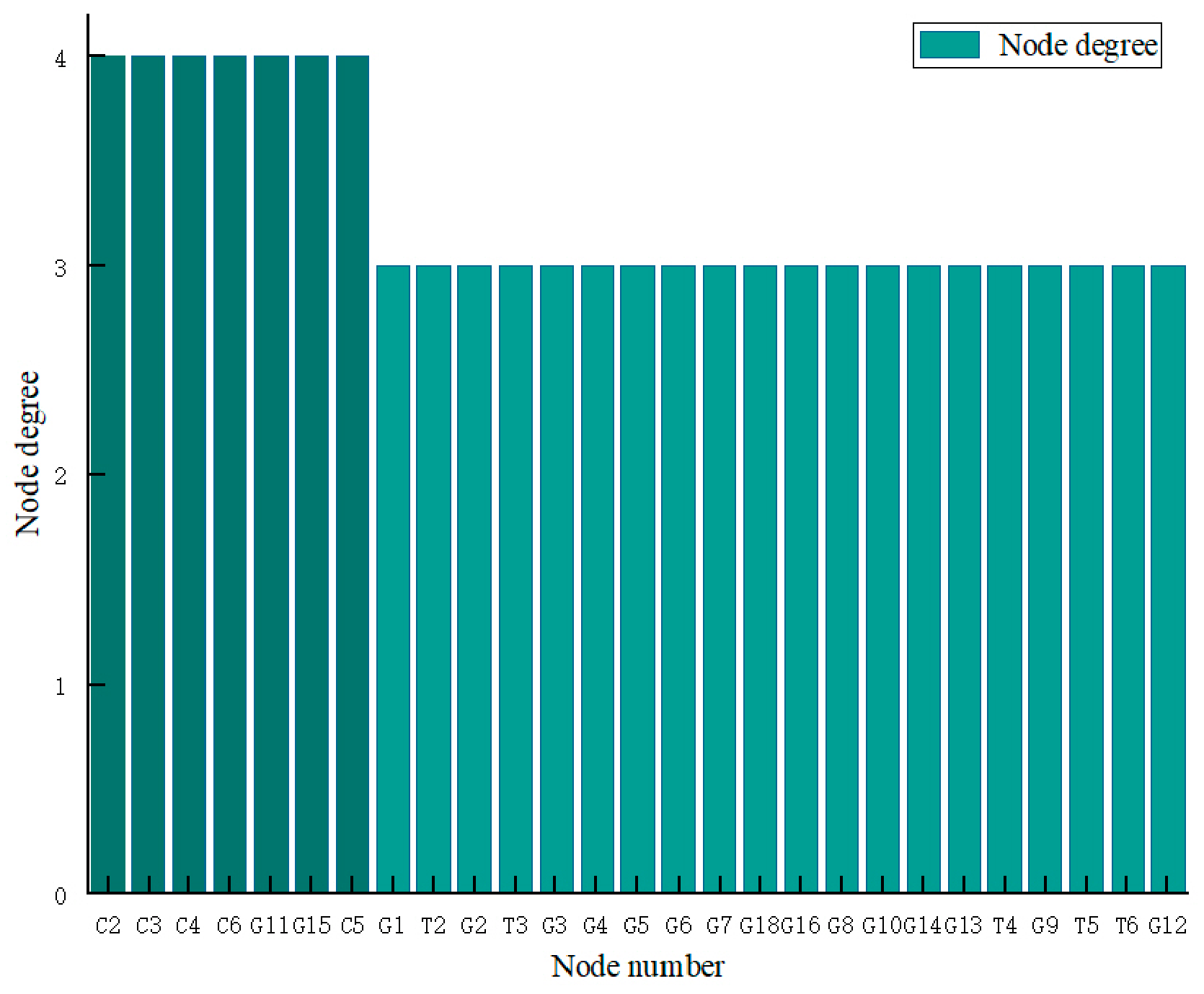
33]. Node degree offers a simple, efficient, and intuitive metric for critical node identification. It demonstrates significant advantages in topological networks, particularly in large-scale networks and rapid response scenarios. It provides a common standard for evaluating node importance across complex networks and directly reflects the number of connections of nodes within the network. The more connections a node has, the greater its local influence within the network. Therefore, in this case, the top 27 critical nodes sorted by node degree are shown in
Figure 9. The maximum node degree in the network is 4 and these highly connected nodes primarily include C2, C3, C4, C5, C6, G11 and G15.
3.3.2. Betweenness-Based Method
Betweenness centrality evaluates the structural importance of a node by quantifying its intermediary control capacity in the global logistics transport process, and it reflects the number of shortest path connections of a node in the network [
34]. Furthermore, it quantifies both the ability and the importance of a specific node acting as a “bridge” in the network.
Betweenness centrality serves as a global metric that offers a more comprehensive assessment of node importance within networks, particularly suitable for scenarios where the overall structure and connectivity of the network need to be considered. In contrast to node degree, which merely counts the number of direct connections a node possesses, betweenness centrality emphasizes a node’s position and role within the entire network.
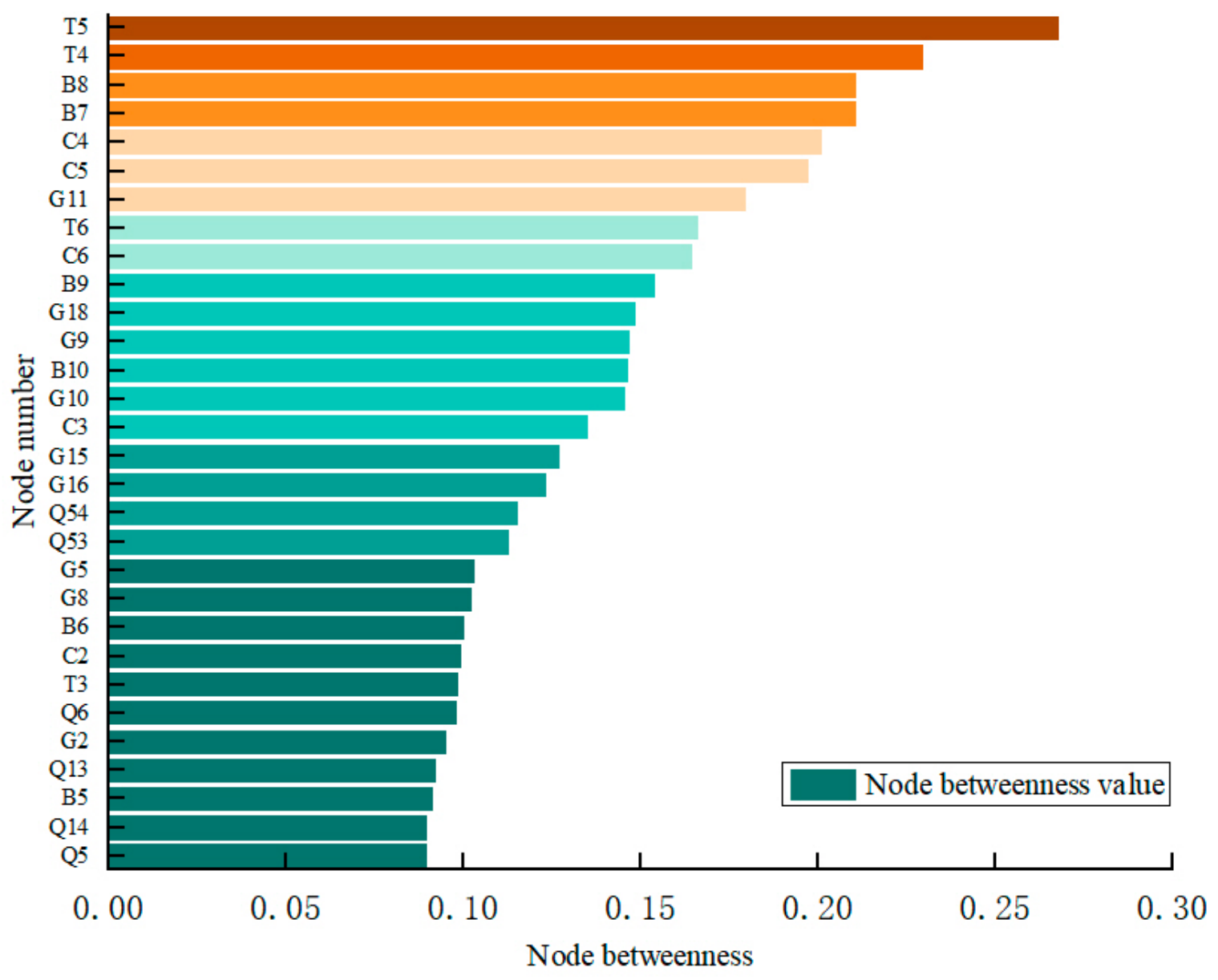
A node with higher betweenness centrality has greater across-region significance within the network and can more effectively control coordination between different domains. Consequently, the top 30 critical nodes are identified, ranked by descending betweenness centrality values, as shown in
Figure 10. Notably, nodes with higher betweenness include T5, T4, B8, B7, C4, C5, G11, T6 and C6. Once the critical nodes with high betweenness in the multimodal transport network are damaged, the connectivity of the network will be significantly reduced.
3.3.3. Conventional Resilience-Based Method
Conventional resilience-based methods assess node importance by evaluating the reduction in network efficiency following the removal of a node [
16]. When a critical node in the multimodal transport network fails, the global connectivity of the system will be weakened, directly leading to a decrease in network efficiency. The greater the network efficiency loss caused by one node failure, the more critical this node is to the multimodal transport network.
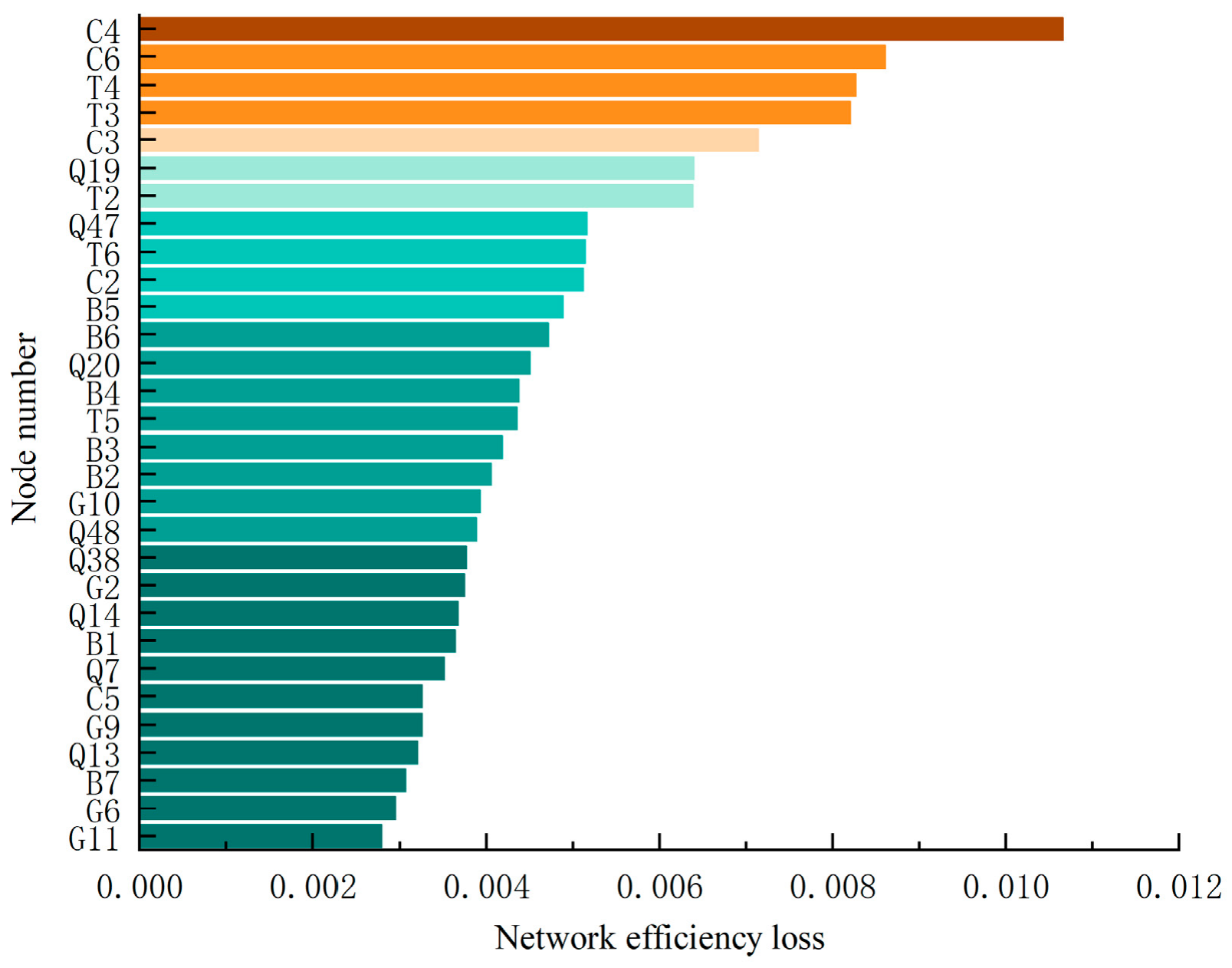
As a typical standard network performance metric, network efficiency effectively reflects the overall connectivity of the multimodal transport network. This study identifies the top 30 critical nodes according to the descending order of network efficiency loss following node deletion, as shown in
Figure 11. These critical nodes include C4, C6, T4, T3, C3, Q19, T2, Q47, T6 and C3, which are mainly located in the central region of the network. The failure of these critical nodes will diminish the overall network efficiency, but it fails to fully disconnect the paths of OD pairs. Furthermore, this resilience-based method does not take into account the impact of recovery time on network resilience.
3.3.4. Closeness-Based Method
Closeness centrality evaluates the importance of nodes by calculating the average shortest path distance from one node to all other nodes across the entire network. Nodes with higher closeness centrality hold shorter path distances to other network units, which means they can achieve faster freight transmission throughout the multimodal transport network.
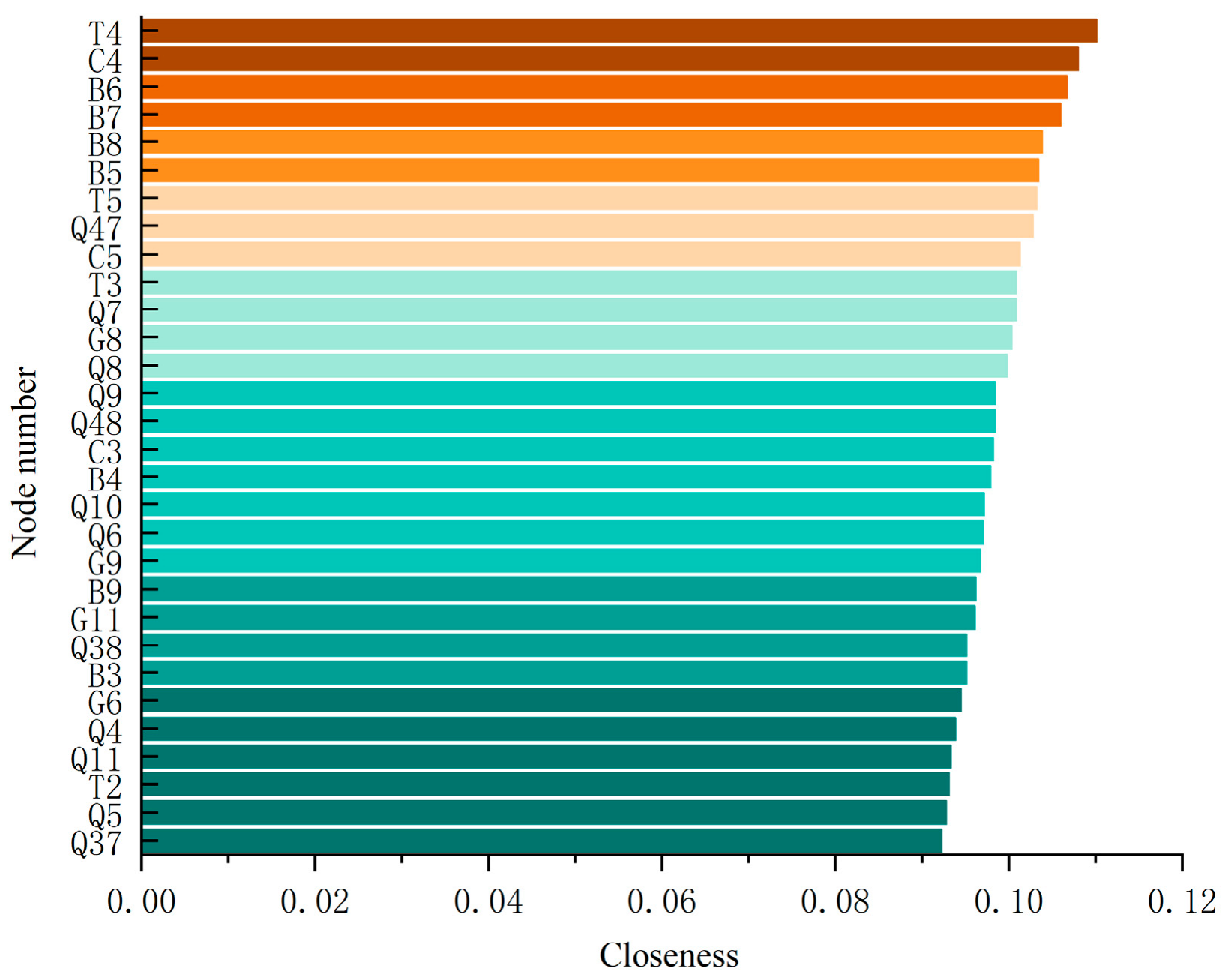
As a representative global topological indicator, closeness centrality fully depicts how conveniently a node can reach all other locations across the entire multimodal transport network. This study identifies the top 30 critical nodes in descending order of closeness centrality values, as shown in
Figure 12. These critical nodes mainly consist of T4, C4, B6, B7, B8, B5, T5, Q47 and T6, which are mainly concentrated in the central part of the network. The failure of these critical nodes will make the average travel distance between all network nodes rise markedly, but such node failures cannot fully disconnect the fixed paths between OD pairs. Meanwhile, this indicator only reflects static geometric advantages of node positions and fails to consider the dynamic operational resilience and post-failure recovery characteristics of actual multimodal transport networks.
3.3.5. Structural Holes-Based Method
Structural hole theory evaluates the importance of nodes by measuring gaps in the connection between separate node groups in the network. Nodes that occupy key structural holes act as the only bridge between isolated parts of the system. This means they occupy key positions in the connection between different regions across the entire multimodal transport network.
As a typical topological indicator, structural hole metrics reflect the unique controlling ability of nodes for connections among different network regions. Even if only node G16 holds prominent structural hole characteristics in the network, the structural hole algorithm can calculate the corresponding index value for all nodes. Each node is quantified separately based on its connection relationships with adjacent nodes. In this way, all nodes can be sorted in descending order, which helps distinguish nodes with different importance degrees. The results show that the critical nodes include G16, T4, C4, B6, B7, B8, B5, T5, Q47 and T6. Among them, G16 is located at the junction of two independent transport subnetworks.
3.3.6. Visualization of Critical Nodes
To better compare the critical nodes identified by different methods,
Figure 13 presents the results of all six approaches using distinct color markers for intuitive comparison.
In this figure, cyan, green, magenta, blue, yellow, and red nodes denote critical nodes identified by CRM, SH, CC, BC, DC, and PRM, respectively. The six methods exhibit both consistency and differences in identification results: The critical nodes identified by the six methods are mainly located at the nodes along the railway lines and cities. Mixed critical nodes refer to locations that are classified as critical by more than one method. However, apart from these nodes, different identification methods have their own unique characteristics. The PRM focuses specifically on choke points with long repair durations. These nodes are fewer in number but directly determine the overall connectivity and recovery capacity of the network, making them the most critical for post-disaster resilience. For example, nodes marked in red, which are identified by the PRM, are all located on the main transport corridor serving both the SOD pair scenario and the MOD pair scenarios. When these nodes fail, the transport connection between the OD pair will completely break down.
3.4. Comparison of Deliberate Attacks on Critical Nodes
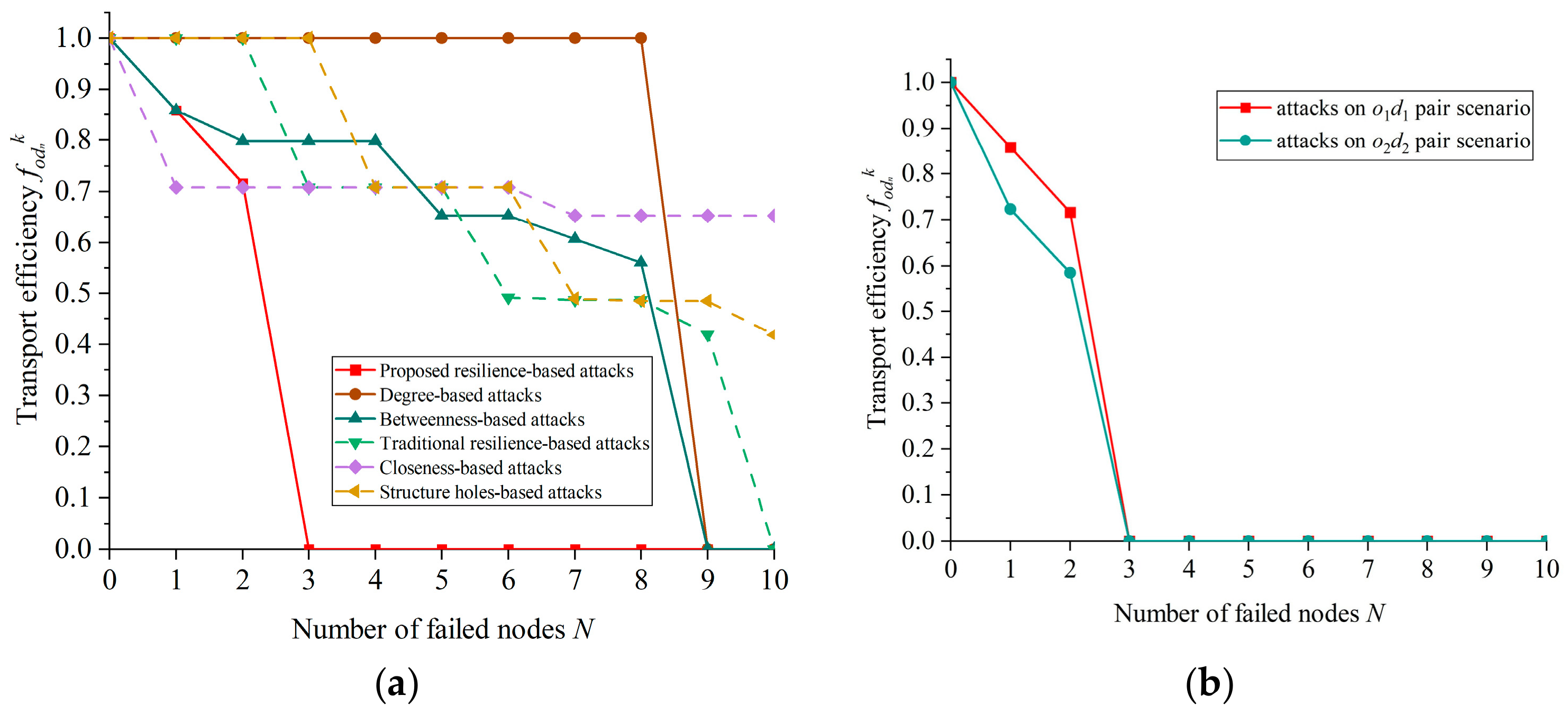
To compare the effectiveness of the six critical node identification methods, this study removes the top-ranked nodes identified by each method from the multimodal transport network, respectively. We quantify the decline in transport efficiency according to the increase in the number of failed nodes. This trend is shown in
Figure 14.
As illustrated in
Figure 14a, deliberate attacks on critical nodes identified by the PRM lead to the fastest decline in transport efficiency with only a small number of failed nodes, demonstrating the advantages of the PRM over other methods.
In the initial state, the optimal transport paths for the multimodal transport network are generated with the objective of minimizing total travel time based on its transport characteristics. When disasters damage critical nodes along the optimal paths of the network, the transport efficiency declines rapidly. This phenomenon occurs because the disruption of critical nodes forces operators to find new optimal paths within the remaining network. However, due to the inherent characteristics of the multimodal transport network, such rerouting certainly results in prolonged travel times and reduced transport efficiency. The decline in transport efficiency depends on the robustness of the infrastructure surrounding the failed critical node. When the adjacent network exhibits high robustness, alternative routes can be quickly identified once a node fails, effectively reducing the impact on transport efficiency of the multimodal transport network. Conversely, if the local robustness is insufficient, the newly generated optimal paths require extensive detours, resulting in significantly reduced transport efficiency.
Under the resilience-based attack strategy, in the SOD pair scenario, as the number of failed nodes increases from 0 to 3, network transport efficiency drops rapidly to 0, and no accessible connected paths remain in the multimodal transport network. The results show that only 3 critical nodes are needed to disrupt the network, far fewer than the 9 nodes required by the other methods. For the MOD pair scenarios, as shown in
Figure 14b, three critical nodes are still sufficient to disconnect the
o2-
d2 pair. These nodes remain consistent with those obtained in the SOD pair scenario, but the decline in transport efficiency is more abrupt than that observed for the
o1-
d1 pair scenario. Under the objective of disabling the multimodal transport network with the minimum number of node failures, multiple plans can achieve network disruption. However, the PRM can solve the optimal attack plan, which maximizes the comprehensive impact on both recovery time and transport efficiency of the network.
Under the degree-based node attack strategy, as the number of failed nodes with high-degree increases from 0 to 8, network transport efficiency maintains a stable level without obvious decline. The reason is that these high-degree nodes are not located on the optimal OD paths in the current network. Therefore, the failure of such nodes with a high degree has no significant influence on network transport efficiency. However, once the ninth high-degree node fails, the transport efficiency drops rapidly to 0. This phenomenon results from the cumulative impact of previous node failures, which significantly weakens the network’s ability to reconfigure its transport routes. Consequently, upon the failure of the ninth node, the remaining transport network can no longer generate new transport routes, leading to a sharp decline in transport efficiency. In fact, degree centrality only considers the direct connectivity of nodes while neglecting their positional significance and global structural importance within the network. Therefore, nodes with the same degree may have completely different impacts on the network transport efficiency.
Under the betweenness-based node attack strategy, as the number of failed nodes increases from 0 to 9, network transport efficiency decreases gradually in stages, falling from 100% to 56% and then dropping sharply to 0. When the third and fourth nodes fail, the transport efficiency remains unchanged. The reason is that these two nodes do not lie on the newly generated optimal path of the network after the failure of high-betweenness nodes such as T4 and T5. Hence, their removal has no direct effect on the overall transport efficiency of the network.
Under the conventional resilience-based attack strategy, the transport efficiency remains stable at 100% until two nodes fail. After that, the transport efficiency drops to 70%, 49%, 41%, respectively. It then gradually falls to 0 as the number of failed nodes reaches 10. This shows that this method can identify critical nodes, but its ability to cause a sharp efficiency decline is weaker than the resilience-based attack strategy.
Under the closeness-based node attack strategy, the transport efficiency drops rapidly to 70% upon the failure of the first node. It then stays at this level until the seventh node is removed. After that, the transport efficiency drops to 65%, even when 10 nodes have failed. This means that the closeness-based method only causes a partial efficiency drop. It cannot fully disrupt the transport network, even after multiple critical nodes fail.
Under the structural hole-based node attack strategy, the transport efficiency remains at 100% until three nodes fail. After the third node failure, the transport efficiency falls to 70%. After that, the transport efficiency drops to 48%. It then gradually drops to 42% when 10 nodes have failed. This method can identify some nodes with high structural importance, but these nodes do not control the main transport paths. As a result, the network can still maintain partial operation even after several structural hole nodes are removed.
In summary, the PRM needs only three critical nodes to paralyze the entire network, significantly fewer than the nine nodes required by both the degree-based and betweenness-based methods, and the 10 nodes needed by the CRM. Furthermore, even after targeting the top 10 nodes identified by the structural holes-based and closeness-based methods, the network continues to function. The markedly lower number of critical nodes required by the PRM confirms the advantages of our approach.
3.5. Comparison of Resilience Under Different Attack Strategies
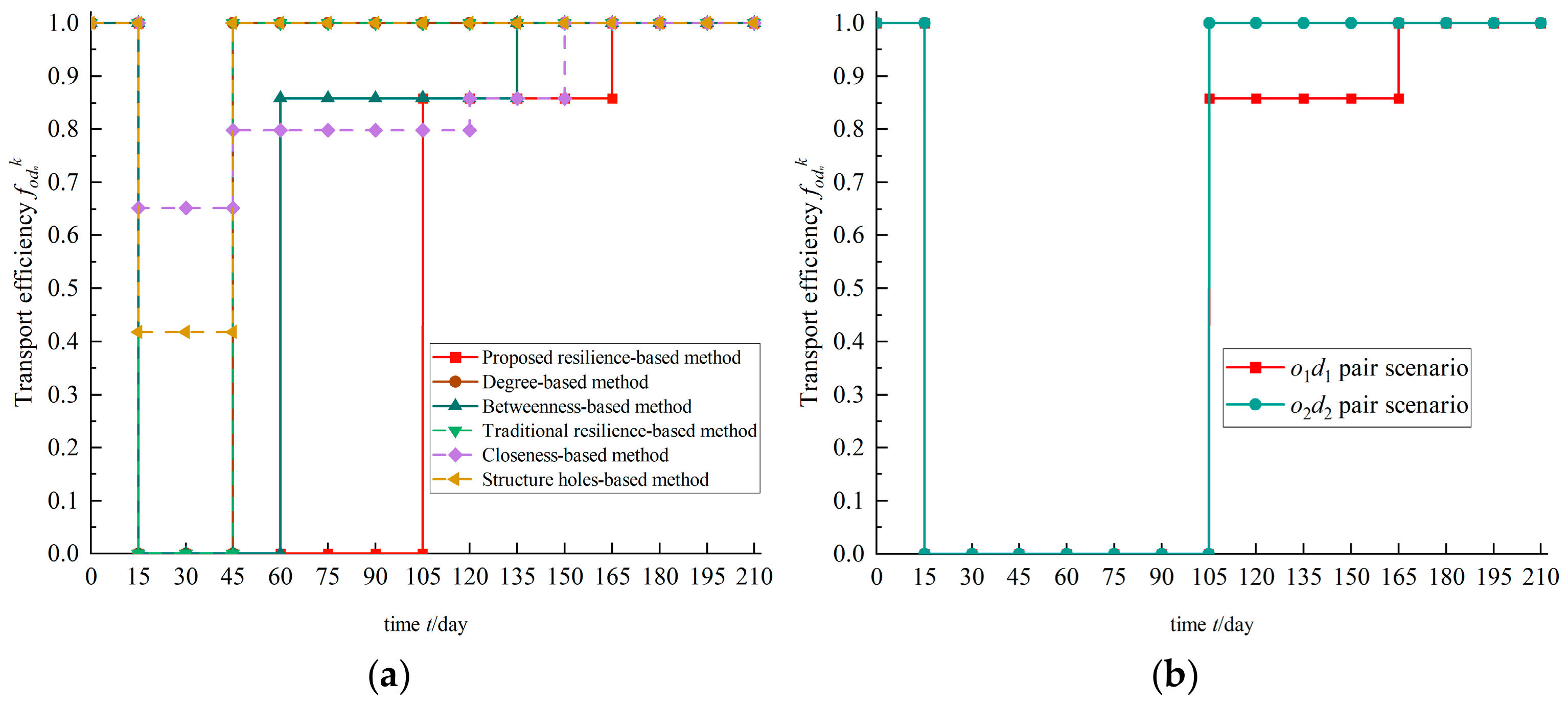
The identification results reveal minor differences in the sets of critical nodes obtained from the six different methods. This is mainly because each method focuses on different topological or functional characteristics of the network. When the multimodal transport network faces deliberate attacks under extreme conditions, the six methods may be considered. To further compare the recovery curves of the network across the six attack scenarios, the PRF curve of the multimodal transport network is plotted under a sufficient recovery budget, as shown in
Figure 15.
As illustrated in
Figure 15a, the critical nodes identified by the PRM require the longest time to restore the transport system to normal operation after damage, demonstrating a significantly greater impact than other methods.
Under the proposed resilience-based attack strategy for the SOD pair scenario, the simultaneous failure of three critical bridge nodes (Q14, B10, and Q28) identified by the PRM leads to an abrupt collapse of the entire network. The network transport efficiency drops sharply to 0%, resulting in network collapse. Topological analysis shows that no connected paths exist between SOD pairs in the network. Subsequently, the multimodal transport network enters the recovery phase. The repair operations are carried out simultaneously at multiple locations. Among the damaged bridges, the Q14 bridge has the shortest repair duration and is the first to be fully restored. When it is fully restored at
t = 105 days, network transport efficiency recovers to 85.82% of its baseline level. Subsequently, the Q28 node, with the second shortest repair duration, is also restored. However, network transport efficiency remains unchanged. The reason is that although the Q28 node has been restored, the optimal path of the network after recovery does not pass through this node. Afterward, the B10 bridge is restored at
t = 165 days. With all damaged nodes fully restored, network transport efficiency is fully recovered to its initial level. For the MOD pair scenario, as shown in
Figure 15b, with the Q14 bridge fully restored at
t = 105 days, transport efficiency quickly recovers toward its baseline level. This demonstrates that the Q14 bridge plays an important role in the
o2-
d2 pair scenario.
Under the degree-based node attack strategy, the simultaneous failure of nine critical nodes identified by this method at t = 15 days results in an immediate drop of network transport efficiency to 0%. As emergency repair operations begin, the T2 node is fully restored at t = 45 days, and network transport efficiency rebounds rapidly to its baseline level.
Under the betweenness-based node attack strategy, at t = 15 days, the simultaneous failure of nine critical nodes identified by this method leads to a drop in network transport efficiency immediately to 0%. At t = 60 days, the first group of failed nodes with a repair duration of 45 days is restored. Correspondingly, network transport efficiency recovers to 85.82% of its baseline level. Subsequently, when the second group of failed nodes is fully restored at t = 135 days, the network returns to normal operation.
Under a conventional resilience-based node attack strategy, the simultaneous failure of the top 10 critical nodes identified by this method leads to an immediate drop in network transport efficiency to 0%. The transport efficiency remains at 0% for the following 30 days. After that, once all 10 critical nodes are fully restored simultaneously, the transport efficiency immediately recovers to its initial level.
Under the closeness-based node attack strategy, the simultaneous failure of the top 10 critical nodes identified by this method causes an immediate drop in the network transport efficiency to 65.23%. The transport efficiency remains at this level for the following 30 days. After that, once 8 critical nodes with a repair duration of 30 days are fully restored simultaneously, the efficiency immediately rises to 79.80%. Later, when the B6 bridge is restored at t = 105 days, the transport efficiency further increases to 85.82%. Finally, as all damaged nodes are fully restored at t = 135 days, the network transport efficiency recovers to its initial level.
Under the structural holes-based node attack strategy, the simultaneous failure of the top 10 critical nodes identified by this method causes an immediate drop in the network transport efficiency to 41.79%. The transport efficiency remains at this level for the following 30 days. After that, as all 10 critical nodes with a repair duration of 30 days are fully restored simultaneously, the transport efficiency immediately recovers to its initial level.
In conclusion, from the resilience perspective, the recovery time for the transport function of a multimodal transport network is longest when the system is paralyzed. Different attack strategies lead to different recovery curves. To facilitate a clearer comparison of this cumulative effect, resilience assessments can be conducted under various attack strategies against the network.
When the resilience is calculated over the period from 15 to 210 days, the resilience value
R and attack benefit
S under six different attack strategies can be obtained using Equations (2)–(5). The resilience value
R and attack benefit
S for MOD pair scenarios are also presented in the same figure. Among the six strategies, the resilience values of the network follow an ascending order for PRM, BC, CC, DC, CRM, and SH. The corresponding resilience values
R are 96.49, 139.37, 162.14, 165, 165 and 177.54, respectively, while the corresponding attack benefits
S are 98.51, 55.63, 32.86, 30, 30 and 17.46, respectively. For MOD pair scenarios, the overall resilience value can be calculated as the average value across all OD pairs. Therefore, the integrated resilience value
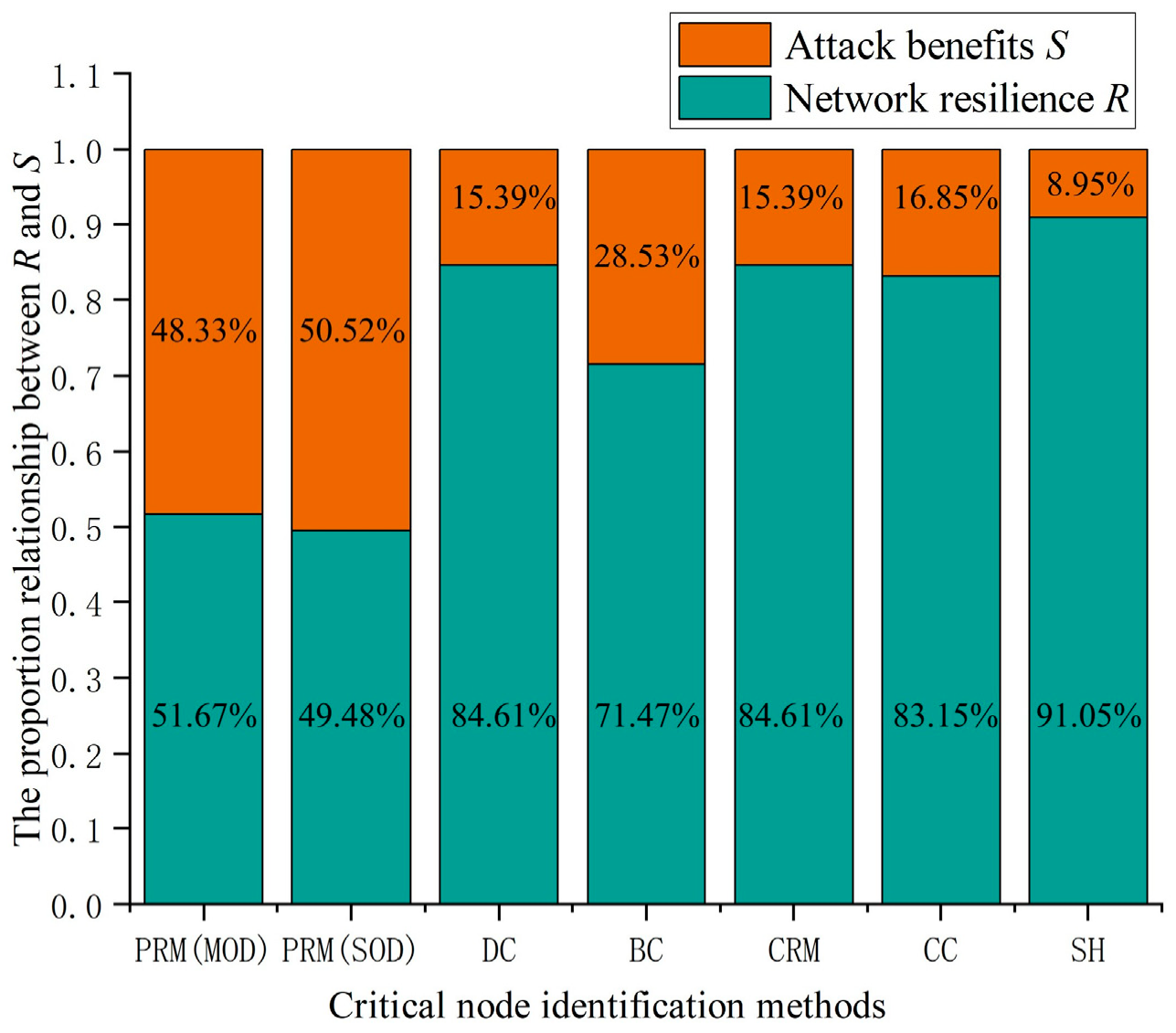
R for the MOD pair scenarios in this case is 100.75. The proportional relationship between
R and
S is shown in
Figure 16. PRM(SOD) and PRM(MOD) represent the PRM corresponding to the SOD and MOD pair scenarios, respectively.
In summary, the results of this case study show that the critical nodes identified by the PRM outperform those identified by BC, DC, CC, SH, and CRM, with attack benefits of 50.52%, 28.53%, 15.39%, 16.85%, 8.95% and 15.39%, respectively. The corresponding efficiency improvements are 21.99%, 35.13%, 33.66%, 41.56%, and 35.13%, respectively. The calculation method is presented in
Appendix A. For MOD pair scenarios, the efficiency fluctuation is only 2.19%, which proves the applicability of the algorithm. These results effectively validate the advantages of the critical node identification method based on resilience theory.