Article

How Open Government Data Enhances Public Service Delivery: A Quasi-Natural Experiment from Government Data Platforms

School of Public Administration, University of Electronic Science and Technology of China, Chengdu 611731, China
*
Author to whom correspondence should be addressed.
Systems 2026, 14(4), 408; https://doi.org/10.3390/systems14040408
Submission received: 2 March 2026 / Revised: 28 March 2026 / Accepted: 4 April 2026 / Published: 7 April 2026

Abstract

Enhancing the level of public service delivery constitutes a core objective for governments worldwide in their efforts to optimize governance effectiveness. With the advancement of the digital revolution, government data has emerged as a critical factor of production, and its open utilization is increasingly regarded as a strategic resource for addressing public service challenges. This study employs panel data from 285 Chinese cities spanning the period 2010 to 2022. By leveraging the staggered rollout of data openness platforms by local governments as a quasi-natural experiment, it evaluates the impact mechanism of government data openness on public service delivery using a staggered difference-in-differences approach. The findings indicate that open government data significantly enhances regional public service delivery, an effect that operates primarily through data utilization and urban technological innovation capacity, both of which collectively empower public service improvements. Moderation analysis further reveals that fiscal transparency exerts a significant positive moderating effect within this pathway, thereby amplifying the influence of government data openness on public service provision levels.

1. Introduction

Improving the quality and accessibility of public services is now a widely accepted consensus in global public governance. Governments worldwide are increasingly focused on optimizing public service delivery, with the primary aim of enhancing public satisfaction. As public demand grows for more diverse, high-quality, and efficient services, identifying effective ways to improve service provision has become a critical task in modern governance. Existing research highlights the key factors influencing public service quality as organizational management [1], institutional governance [2], and public perceptions and evaluations [3]. Meanwhile, the ongoing digital revolution and widespread adoption of digital government have elevated data to a central role in public service delivery, drawing global attention to its value in public governance.
In recent years, governments—custodians of massive public data resources—have introduced strategic plans and policy frameworks to promote cross-level, cross-regional, and cross-departmental data sharing and openness [4,5]. In this context, open government data (OGD) has emerged as a key strategy to unlock data’s value as a production factor, stimulate social innovation, and enhance public service quality [6]. Notably, the European Union, Estonia, Canada, and other regions and countries have developed relatively consistent institutional approaches to advance OGD. At the institutional level, standardized rules and policy frameworks provide a legal basis and operational guidelines for data sharing and reuse [7]. Technically, unified data platforms and exchange systems have reduced data circulation costs and improved interoperability across departments and administrative levels [8]. In practice, data openness has been integrated into specific public service scenarios, where process optimization and inter-organizational coordination translate data elements into practical governance capacity [9]. Together, these form a coordinated mechanism of institutional constraints, platform support, and application orientation—moving data openness beyond mere resource release to enable sustained value transformation in public service delivery. Against this global backdrop, China has also embraced public data openness as a key means to enhance governance capacity and optimize public services. Particularly in the face of persistent challenges—including insufficient service capacity, uneven regional and group distribution, and misalignment between service structures and actual needs—seeking new breakthroughs in public service development through data governance has become imperative.
However, building OGD platforms does not guarantee the desired governance outcomes. In some countries, despite completing platform construction and data release, significant challenges remain: low data utilization, limited platform activity, and barriers to cross-departmental coordination. Some initiatives even fail to achieve their policy goals [10,11]. This suggests that the transformation of data openness—from platform construction to public value realization—is constrained by multiple factors, such as institutional contexts, governance capacity, and application scenarios [12,13].
While the potential of OGD to optimize public service delivery is widely recognized, rigorous empirical evidence remains scarce, and the specific mechanisms through which OGD improves public service levels are not fully understood. Existing studies have focused primarily on transparency, accountability, participation, or specific application contexts [14,15], but lack a systematic explanation of whether and how data openness effectively enhances public service capacity. To address this gap, this study uses China’s local government data platform pilot program as a quasi-natural experiment and employs a staggered difference-in-differences method to empirically test OGD’s impact on regional public service delivery. By systematically analyzing the relationship between public data openness and public service levels, this study enriches the research framework for optimizing public service delivery and provides new perspectives and empirical evidence for understanding OGD’s governance effects. From a practical standpoint, this study not only confirms OGD’s role in promoting public service delivery but also reveals the key mediating roles of data element utilization and urban technological innovation in this process. These findings clarify how government data openness—an institutional arrangement—translates into tangible improvements in public service outcomes. Although this study is based on local government data platforms in China, the core mechanisms identified are not limited to China’s institutional context, making its conclusions potentially relevant to broader digital government development worldwide.

2. Literature Review

Open government data refers to government data that can be freely accessed, obtained, used, and shared by anyone at no cost [16]. This contrasts with government information disclosure, which is often conditional, targeted, and limited in scope. Most scholars concur that open government data enables the public to access, use, and share relevant government data, emphasizing that data openness can, to some extent, meet public demand for data while simultaneously promoting the sharing and utilization of data resources [17,18]. Previous studies have characterized data quality across multiple dimensions, including completeness, uniqueness, accuracy, timeliness, consistency, validity, and reasonableness, and have noted that insufficient data quality tends to reduce the utilization rate of open government data [19,20].
The advancement of data openness strategies is reshaping both the logic and capacity of government public service delivery [21,22]. Academia has characterized the digital and data-driven transformation of governance as a systematic effort to enhance the effectiveness and efficiency of the public sector through data and digital technologies [23]. As Giest have observed that this transformation has given rise to emerging governance paradigms, including the information state and the data-driven state, whose core normative aspirations center on achieving transparency, accountability, and public participation through data [24]. Within the framework of e-government development, OGD primarily focuses on how digital technologies enhance governance capacity and public service performance, while the Whole-of-Government approach provides an organizational-level explanation for the cross-departmental and cross-level coordination, as well as the integration of information resources, inherent in OGD [25,26]. Public service data governance is regarded as a foundational pillar of digital strategies, underscoring the pressing need to systematically explore its theoretical foundations and institutional architecture [27]. In this framework, OGD functions as a critical interface linking digital governance with public service delivery, serving as a policy instrument aimed at improving the accessibility and responsiveness of public services. The significance of open government data lies not merely in expanding data accessibility, but in supporting governmental coordination, service integration, and governance innovation. In this process, cross-agency data sharing, system interoperability, and process coordination constitute the essential foundations for achieving integrated public service delivery through resource consolidation [28].
Within the theoretical framework of public data openness, the centrality of data in public service delivery has become an established premise [29,30]. The primary mechanism through which open data empowers public services lies in its inherent informational value. On one hand, enterprises can access public data resources at a relatively low cost and extract valuable insights to accurately comprehend both internal and external environments, thereby reducing uncertainty in innovation-related decisions [31]. On the other hand, the expansion of public data resources not only meets the demand for such data in technological innovation but also, by creating new data application scenarios, drives technological innovation in return [20,32]. A sustainable data openness strategy requires not only appropriate institutional arrangements but also the construction of digital platforms, through which data openness can be effectively transformed into public service capacity. European countries have taken an early lead in advancing such institutional development and have gradually established relatively stable linkages among public data openness, data reuse, and service improvement [5,33]. Digital government development aims to improve public service quality by enhancing efficiency, fostering collaboration, and increasing transparency—a proposition that has received empirical support in selected studies [34,35]. Despite these advancements, the potential of government data in this process remains largely untapped, owing to the absence of well-established data linkages between the government and citizens. And the digital and data-driven governance transformations are giving rise to new governance models centered on public participation and collective intelligence [36]. In this context, citizens are no longer passive recipients of public services; instead, they become co-creators of public value through data contributions, application development, and issue feedback [37,38]. The underlying logic of this transformation is that data openness dismantles the government’s monopoly over information resources in the public service domain. This enables diverse stakeholders to access and utilize public data on an equal footing, thereby reshaping the power dynamics and production models underlying public service delivery [39].
Current research has extensively examined the relationship between government data openness strategies and public services, with particular attention devoted to service enhancements driven by digitalization and informatization initiatives. Nevertheless, the tangible implications on public service delivery of OGD remain insufficiently explored. To investigate the pathways through which OGD platforms influence the level of public service delivery within the context of digital government, this study employs a staggered difference-in-differences approach.

3. Institutional Context and Research Hypotheses

3.1. China’s OGD Practices

Against the backdrop of the rapidly expanding digital economy, OGD has become a vital component of government digitalization efforts and an inevitable choice for advancing the modernization of China’s national governance system and governance capacity. As early as 2012, pioneering cities such as Beijing and Shanghai took the lead in establishing open data platforms. In 2015, the Chinese government formally incorporated government data disclosure into national policy frameworks. In the same year, the Action Plan for Promoting Big Data Development was issued, proposing the construction of a nationally unified government data open platform. Subsequently, local governments across the country launched their own public data open platforms in succession. Later policy initiatives placed greater emphasis on building a unified, standardized, and interconnected national data openness system, marking a strategic shift from fragmented pilot projects to systematic development. These policies underscored the critical role of aggregating and utilizing public data in facilitating the large-scale circulation of data resources, thereby advancing the system toward deeper stages of application—wherein data evolves from being merely administrative information to becoming a core driver of socioeconomic development. In 2024, the State Council of China issued the Opinions on Accelerating the Development and Utilization of Public Data Resources, which clarified the entire process from public data opening to utilization and established development and utilization models such as authorized operation. This milestone policy signifies that China has entered a new phase of systematically deploying public data development and utilization at the institutional level.
Under the guidance of national policies, local governments across China have successively established OGD platforms. According to data from the National Bureau of Statistics of China, as of July 2025, 231 cities in China had launched OGD platforms, offering access to over 480,000 downloadable datasets [40]. The open data primarily cover infrastructure construction, public transportation, medical institutions, housing information, and other key areas. Taking Chengdu’s public data open platform as an example, it has released 30.7 million data entries, 11,065 datasets, and 35,826 data files [41]. This platform provides data support for various applications and service models, including “Rongyizhu,” “Culture Tianfu,” and the “Micro-Network Real-Grid”.

3.2. Research Hypotheses

Public data, as a fundamental factor of production in the delivery of public services, necessitates the establishment of robust open-sharing mechanisms to dismantle governmental data silos and eliminate information monopolies [42]. Such mechanisms serve to address the salient deficiencies inherent in traditional service delivery models, including inefficiency, inequity, and limited collaborative capacity. Public services are fundamentally oriented toward the core values of universality, equity, and efficiency [43]. Public data are primarily generated through government operations in the exercise of public service functions, encompassing critical domains such as education, healthcare, social security, and administrative services, thereby embedding a broad range of essential service information [29].
The openness of public data fundamentally reduces the costs associated with information access and utilization, while simultaneously restructuring the logic underpinning public service delivery [44,45]. This transformation drives a paradigm shift—from a government-dominated model characterized by reactive responses to demand, toward a meta-collaborative approach that proactively aligns with societal needs [46]. Specifically, public data openness yields multidimensional improvements. First, it effectively mitigates information asymmetry between the government and citizens, enabling the public to access critical service information—such as school district boundaries, healthcare resource distribution, and social security reimbursement policies—in a convenient and efficient manner [47,48]. This significantly enhances the accessibility and transparency of basic public services. Second, open and shared public data provide comprehensive, precise, and real-time informational support for governmental decision-making, enabling authorities to accurately identify service gaps and optimize the allocation of public resources [49,50]. Third, OGD stimulates the participation of diverse actors, including social organizations and market entities, guiding them to leverage available data to innovate service models and develop value-added service products [37,51]. This participatory dynamic compensates for the limitations inherent in a single-provider government framework. Based on the foregoing analysis, this study proposes the following hypothesis:
H1. 
OGD significantly improves the level of public services delivery.
Government data constitutes the core vehicle of governance-related elements and serves as a foundational prerequisite for the effective functioning of data as a factor of production. It plays an indispensable role in enhancing the quality of public services and enabling precision in government decision-making. Its core value lies in facilitating data-driven governance transformation. The act of opening government data does not, in itself, generate value; rather, its significance resides in guiding societal actors to recognize the elemental value of data, thereby promoting its efficient utilization [52,53]. This process contributes to optimizing resource allocation, advancing scientific decision-making, and continuously improving the efficacy of government functions, thereby establishing a robust foundation for the enhancement of public service delivery [14,54].
From the perspective of digital governance, data—as a critical factor of production—derives its transformative potential from openness and circulation, which are essential enablers of the transition from a traditional management-oriented governance model to a modern, service-oriented paradigm [55]. Fundamentally, such openness constitutes the principal mechanism through which society comes to recognize the latent value of data, mobilizing its application and unlocking its developmental potential. While the mere disclosure of government data does not directly yield value, it dismantles informational barriers and establishes pathways for data flow, thereby effectively guiding diverse sectors of society to recognize the potential inherent in data elements [56,57]. This stimulates their active engagement in data development and utilization, ultimately fostering a multi-stakeholder governance framework for the delivery of public services. Only through openness can public data catalyze societal recognition of data as a productive element, drive its circulation and in-depth exploitation, and realize both its use value and exchange value—transforming data from a static resource into tangible socioeconomic outcomes. Specifically, government data openness enhances societal recognition of the value of data elements and stimulates their efficient utilization [58]. It encourages innovation in data-driven products and services while optimizing decision support systems, thereby effectively channeling the value of data into essential public service domains such as education, healthcare, and transportation. This facilitates a precise alignment between public service supply and demand, mitigates structural imbalances in provision, and ultimately raises the overall standard of public services while advancing equitable access [50,59]. Based on this analysis, the following hypothesis is proposed:
H2. 
OGD enhances the level of public service delivery by promoting the utilization of data elements.
The innovation ecosystem perspective posits that the openness of public data, as a novel production factor, dismantles traditional resource barriers among innovation actors [60]. By lowering research and development thresholds and fostering synergistic dynamics, it substantially enhances a city’s overall technological innovation vitality. Government data openness can significantly elevate a city’s level of technological innovation [61]. It directly promotes innovation by expanding the pool of innovation factors and incentivizing inventive activities—enabling enterprises and other innovation entities to access vast public data resources conveniently, extract value, and reduce R&D costs [62]. Simultaneously, OGD indirectly propels technological innovation: on one hand, it drives the digital economy by providing innovation actors with spaces for exchange and collaboration, alongside support for digital transformation; on the other hand, it improves the business environment, thereby enhancing the efficiency of innovation resource allocation [63,64]. Moreover, it boosts entrepreneurial activity, generating additional opportunities and vitality for innovation.
Knowledge spillover theory reveals that the liquidity of public data is essential for knowledge restructuring and diffusion. Open data accelerates the transformation of tacit knowledge into explicit technological assets, optimizes the spatial allocation of innovation factors, and consequently builds a technological foundation for application-oriented innovation in public services [65]. Urban technological innovation enables governments to gain a precise understanding of residents’ needs, optimize resource allocation, and expand service delivery channels [66]. Automated and intelligent processes enhance service efficiency, while information sharing and collaborative office mechanisms dismantle departmental silos, improving overall operational performance. Technological innovation further drives service model innovation, stimulating collaborative efforts among diverse stakeholders [67]. This comprehensively elevates the quality and accessibility of public services, meeting the varied demands of residents. Accordingly, public data openness, urban technological innovation, and public service levels form a logically coherent progression with clearly delineated mechanisms. Based on the foregoing, this study proposes the following hypothesis:
H3. 
OGD enhances the level of public service delivery by driving urban technological innovation.

4. Research Design

4.1. Sample Selection and Data Sources

Following the State Council’s issuance of the Action Plan for Promoting Big Data Development in 2015, numerous Chinese cities progressively established OGD platforms. However, due to the heterogeneous timing and geographic distribution of platform implementation, the policy’s impact on public service delivery exhibits temporal variation. To rigorously identify the causal effect of platform establishment, this study adopts a difference-in-differences (DID) framework. Municipalities are classified into treatment and control groups based on whether—and when—they launched an official government open data platform, enabling identification of dynamic policy effects across distinct implementation periods:
P S i , t = α 0 + β 1 D I D i , t + δ C o n t r o l s i , t + α i + γ t + ε i , t  
Among these variables, P S i , t denotes the level of public services delivery in city i during year t; D I D i , t represents the interaction term between Policyi and Postt. Policyi is a binary indicator variable equal to 1 if city i is designated as a pilot city for the government data open platform, and 0 otherwise. Postt is a time-based binary variable equal to 1 for all years beginning with the year of policy implementation (inclusive) and 0 for all preceding years. C o n t r o l s i , t denotes a vector of time-varying city-level control variables. α i and γ t represent city-fixed and year-fixed effects, respectively, which jointly control for unobserved time-invariant city-specific heterogeneity and common temporal shocks. ε i , t is the idiosyncratic error term.

4.2. Variable Selection and Data Description

Dependent variable: Level of Public Service Delivery (PS). Given that the level of public service is jointly determined by multiple factors, this study employs the entropy method to construct a comprehensive measurement index. Specifically, the public service level is evaluated across six dimensions: education, medical resources, social security, infrastructure, public cultural services, and ecological greening [68]. These six dimensions are further decomposed into 22 tertiary indicators, and the detailed composition of this indicator system is presented in Table 1.
Core Explanatory Variable: DID. This variable is a policy dummy variable constructed based on the establishment of municipal government data open platforms. Cities that have officially launched such platforms are assigned to the treatment group, while those without an active platform serve as the control group. Specifically, for city i that launched its government data open platform in year t, the dummy variable takes a value of 1 for year t and all subsequent years, and 0 otherwise.
Mediating variables: (1) Utilization of data elements (Data dimension). Whether OGD can be translated into improvements in public service delivery depends critically on whether data resources effectively enter the processes of circulation, development, and application. Accordingly, this study employs the entropy weighting method to construct a composite indicator based on multiple dimensions, including the utilization rate of data elements, the distribution of data trading platforms, the number of broadband internet subscribers, and the total volume of telecommunications services. Specifically, the utilization rate of data elements captures the extent to which data resources are developed and applied; the distribution of data trading platforms reflects the institutional foundation underpinning data circulation; and the number of broadband internet users serves as a proxy for data access conditions and application capacity, indicating the level of digital communication activity and the provision of basic information infrastructure within a city. Taken together, these indicators provide a comprehensive characterization of the realization level of data element value. (2) Urban technological innovation (Innovation dimension). Technological innovation constitutes a key transmission pathway through which OGD affects public service delivery. Following the methodology adopted in prior research [56], this study measures urban technological innovation using an entropy-based index constructed from standardized indicators, including the number of patent grants and the number of invention patents. Specifically, the number of patent grants reflects overall innovation output, while the number of invention patents captures the capacity for high-quality technological innovation. The combination of these indicators enables a comprehensive assessment of the level of urban technological innovation.
Control variables: (1) Industrial structure (Ind), measured as the ratio of the value added of the tertiary industry to regional GDP. (2) Economy standards (GDP), proxied by real GDP per capita. (3) Government intervention (GI), defined as the share of local general public fiscal budget expenditure in regional GDP. (4) Fiscal Pressure (Fis), calculated as the ratio of the fiscal deficit (the difference between general public budget expenditure and revenue) to general public budget revenue. (5) Technological Environment (Tech), captured by the annual number of patent applications filed in each city. (6) Public Expenditure structure (PE), measured by the proportion of total general public budget expenditure allocated to education and healthcare.
The regional economic and patent data employed in this study are obtained from publicly available statistical sources, including the China Local Government Data Openness Report, the China City Statistical Yearbook, and the China Statistical Yearbook. Based on these data, this study takes Chinese cities as the primary unit of analysis. Under the combined influence of local exploratory practices and national institutional supply, government data openness has gradually evolved from isolated pilot initiatives in individual cities into a systematic and institutionalized process, which has been further embedded into the broader framework of digital government development. Driven by policy incentives, cities have progressively advanced the construction of OGD platforms. Notably, Beijing and Shanghai took the lead in launching open data platforms in 2012, followed by a continuous expansion in the number of such platforms nationwide. Accordingly, in the process of sample construction, this study ensures that key variables—including the timing of OGD platform establishment, public service indicators, and control variables—remain continuously observable over the study period. Cities for which the establishment time of OGD platforms cannot be accurately identified, those with substantial missing values in core variables, and those experiencing frequent administrative boundary adjustments during the observation period are excluded. The final sample consists of a balanced panel dataset covering 285 cities over the period from 2010 to 2022, accounting for approximately 93% of all cities in China.
Table 2 reports the descriptive statistics for both the treatment and control groups. The mean level of public service delivery in the treatment group (0.1612) is higher than that in the control group (0.1549), providing preliminary evidence that the launch of government data open platforms may be associated with improvements in public service levels. However, whether this difference is statistically significant requires further empirical verification.

5. Empirical Analysis

5.1. Analysis of Baseline Regression Results

Table 3 presents the baseline regression results estimating the impact of government data open platforms on public service delivery levels. Column (1) reports the results without control variables or fixed effects, showing that the coefficient of the interaction term is positive and statistically significant at the 1% level. Column (2) incorporates both city and year fixed effects, and the core explanatory variable remains significantly positive at the 1% level. Column (3) introduces a set of control variables—including industrial structure, living standards, government intervention, fiscal pressure, technological innovation, and fiscal expenditure structure—that may influence public service provision. The results remain consistent. Column (4) presents the full specification, including both control variables and two-way fixed effects, and the findings continue to hold. Collectively, these results indicate that the launch of government data open platforms has a statistically significant and positive effect on public service levels. This has effectively verified Hypothesis 1.

5.2. Robustness Test

(1) Parallel Trend Test
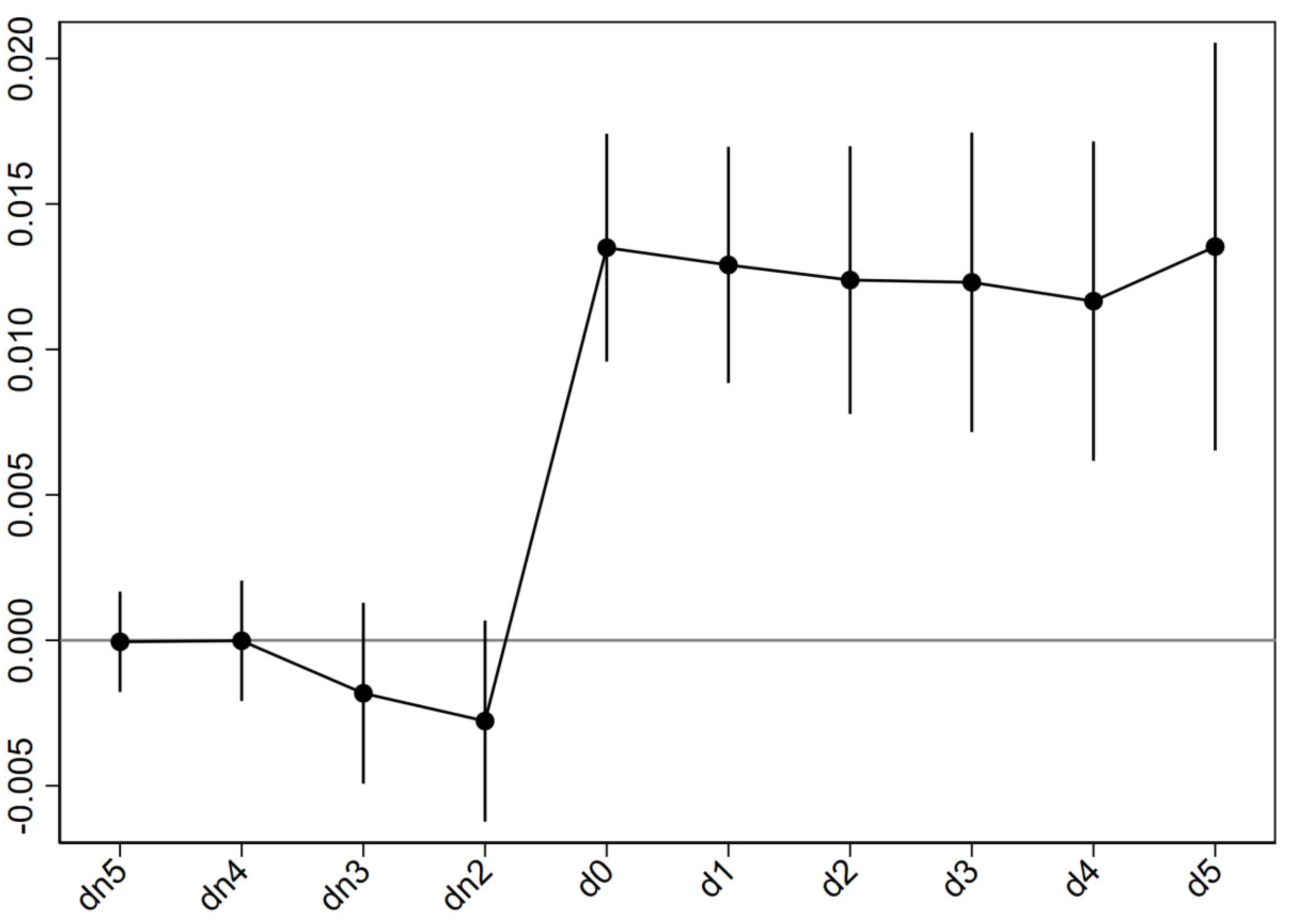
To examine the parallel trend test, this study employs an event study approach with a time window of five years before and after the policy implementation, using the period immediately preceding the establishment of the government data open platform as the baseline. As illustrated in Figure 1, the coefficient estimates for the pre-treatment periods are not statistically distinguishable from zero, suggesting that there were no systematic differences in public service levels between the treatment and control groups prior to the platform launch. In contrast, the post-treatment coefficients are positive and statistically significant, indicating that the launch of the public data platform led to a significant improvement in public service levels in the treatment group relative to the control group. By confirming the absence of pretreatment differences, specifically that the treatment and control groups were comparable prior to the intervention, the parallel trends test enhances the credibility of causal inference and provides strong evidence against selection bias arising from unobserved time varying confounders.
(2) Placebo Test
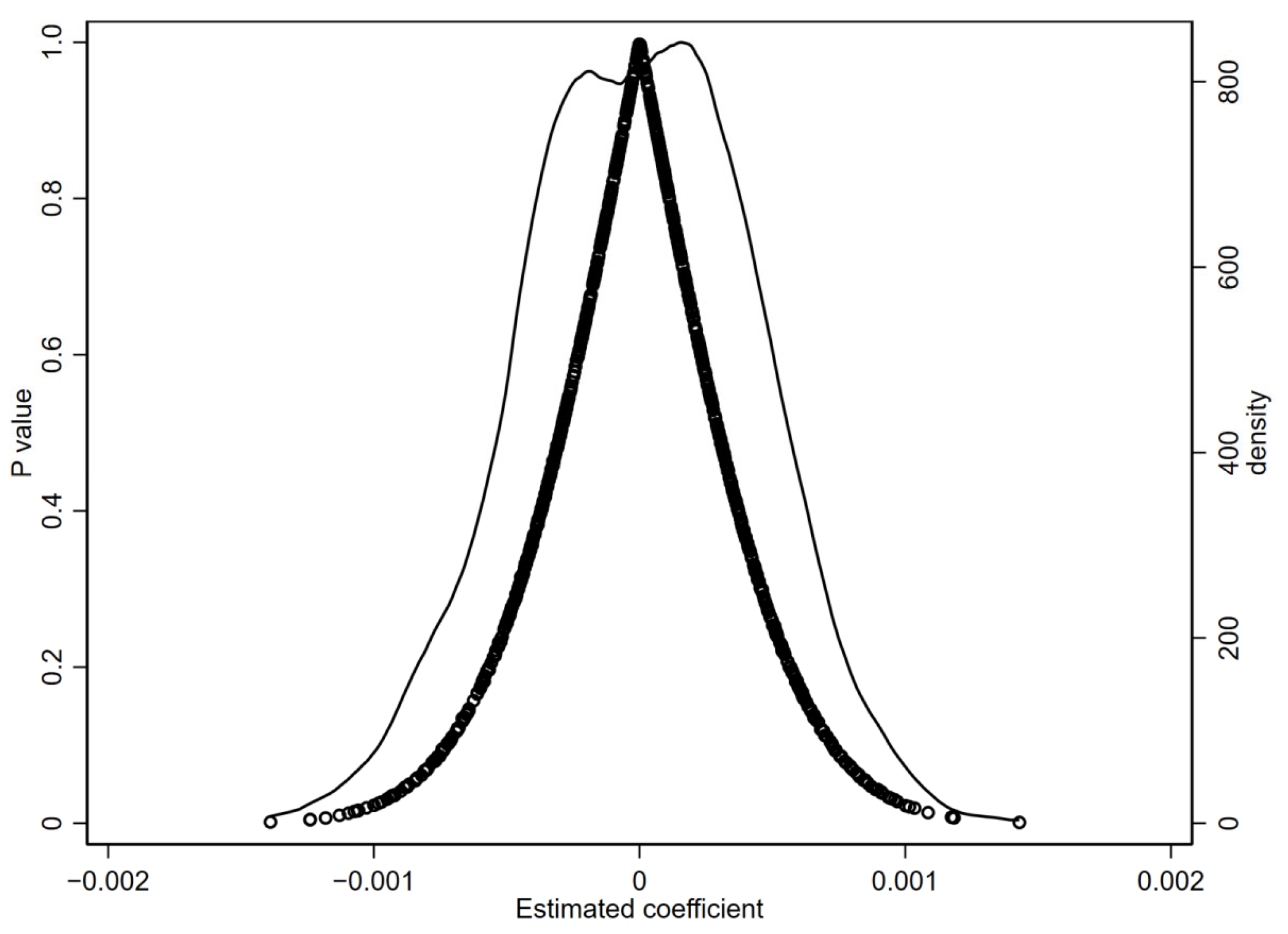
To rule out the influence of unobservable confounding factors and further validate the robustness of the difference-in-differences estimates, this study conducts a placebo test by randomly assigning the timing of government data open platform launches using Monte Carlo simulations. Specifically, the policy dummy is randomly generated 1000 times, and the model is re-estimated for each random sample. Figure 2 presents the distribution of the estimated coefficients from these 1000 placebo regressions. The results show that the placebo coefficients are centered around zero and approximately follow a normal distribution, and are distinctly different from the true estimate (0.0161). This suggests that the estimated policy effect is unlikely to be driven by unobservable factors, confirming the robustness of the main findings.
(3) Other Robustness Tests
To further verify the robustness of the baseline findings, this study conducts a series of additional tests, with the results reported in Table 4. Column (1) excludes municipalities directly under the central government, as these regions possess distinct policy and institutional advantages that may confound the estimates. The coefficient of the core explanatory variable remains positive and statistically significant at the 1% level. Column (2) employs a one-period lag of the policy variable to mitigate concerns about reverse causality. The lagged coefficient (DID.L) is not statistically significant, suggesting that the policy effect materializes immediately rather than with a delay. Column (3) performs a counterfactual test by artificially assuming that the policy was implemented two years earlier than its actual timing. The coefficient on this placebo policy (Fake.DID) is not reported in the table, but the results indicate that the observed effects are indeed attributable to the platform launch. Column (4) re-estimates the baseline specification with standard errors clustered at the city level to account for potential within-group correlation. The coefficient remains significant at the 1% level, confirming the robustness of the main findings. Across all specifications, the results remain consistent.

5.3. Mechanism Analysis

5.3.1. Effect of Data Elements

The value of data elements can only be realized when public data are opened, circulated, and effectively utilized. To further explore the underlying mechanism through which government data openness affects public service levels, this study employs the realization of data element value as a mediating variable. Following the standard procedure for testing mediation effects, the results are presented in Column (4) of Table 5. The findings indicate that the realization of data element value plays a significant mediating role in the relationship between government data openness and public service levels. Specifically, government data openness promotes the equalization of public service levels by facilitating the realization of data element value, thereby supporting Hypothesis 2.
The fundamental value of OGD lies in promoting the high-quality supply and market-oriented allocation of data as a key production factor, while enhancing public service provision through a mechanism of value transformation. Existing research indicates that open government data can reduce data acquisition costs and information asymmetries, thereby facilitating the reuse and value extraction of data resources, which in turn improves resource allocation efficiency and public service delivery capacity [69]. For instance, the Zhejiang Province Integrated Financial Services Platform integrates public data resources from multiple government departments, including taxation, social security, and market regulation, and legally provides access to designated financial institutions. This platform effectively transforms data from isolated assets into service-driven production factors. In practice, financial institutions can leverage these raw datasets to develop customized financial products and service tools, enhancing both the timeliness and precision of service delivery. This process aligns with mechanisms identified in prior studies, whereby data resources, through cross-departmental integration and embedding into application scenarios, are transformed from mere assets into actionable service capabilities.
Through this process, the economic value of data resources is fully realized, while the coverage and quality of inclusive financial services within the public service domain are simultaneously expanded. This observation is consistent with research demonstrating that data-driven financial services can enhance both accessibility and efficiency, ultimately contributing to an overall improvement in public service levels [70].

5.3.2. Effect of Technological Innovation

Theoretical analysis suggests that government data openness can stimulate urban technological innovation by enhancing firms’ innovation incentives and capabilities, which in turn enables firms to better participate in the provision of public services. This study measures urban technological innovation using patent data and employs a mediation analysis framework to examine its role in transmitting the effects of government data openness to public service levels. The results are presented in Column (5) of Table 5. The findings indicate that Urban technological innovation (Inno) partially mediates the relationship between government data openness (DID) and Level of Public Service Delivery (PS), thereby supporting Hypothesis 3.
The establishment of OGD platforms demonstrates the government’s strong commitment to the utilization of data resources, reflecting not only the breadth and depth of data openness but also its strategic value in stimulating innovation potential. OGD is not merely a tool for transparency, but a strategic asset capable of generating economic and social value; its potential is fully realized only when such data are integrated into broader innovation ecosystems [14]. As foundational digital infrastructure, OGD platforms enable collaborative innovation among government agencies, enterprises, and the public at the data level. From an ecosystem perspective, the value of data resources can be realized only when they are transformed into actionable information and embedded into digital products and decision-support tools [71]. In this process, urban technological innovation serves as a critical bridge, converting raw data into service-oriented tools through cross-institutional collaborative development. These technological breakthroughs not only enhance the precision of professional services but also enable continuous service optimization through user feedback mechanisms. Ultimately, the application of technological innovation directly drives the systemic upgrading of public service delivery, providing strong evidence that open government data positively impacts public services through innovation-driven mechanisms.

5.4. Analysis of the Moderating Role of Fiscal Transparency

On the process through which government data openness affects the level of public service delivery, fiscal transparency serves as a critical institutional context variable. Drawing on principal-agent theory, high fiscal transparency can effectively mitigate information asymmetry between citizens and the government, strengthening oversight of public resource allocation and ensuring that the innovative benefits unleashed by data openness are effectively and compliantly channeled into the public service sector, thereby preventing a disconnect between government data openness and improvements in people’s livelihoods [72,73]. Moreover, as a formal institutional arrangement, fiscal transparency provides a standardized incentive and accountability framework for the realization of data element value, thereby optimizing the transmission pathway from technological innovation to service delivery [74]. In doing so, fiscal transparency significantly amplifies the positive impact of government data openness on public service levels. Therefore, in the current context of deepening integration between the digital transformation of governance and the enhancement of public services, any analysis of the impact of government data openness on public service delivery must fully account for the crucial moderating role of fiscal transparency.
Table 6 presents the results of the moderating effect of fiscal transparency. The findings indicate that fiscal transparency exerts a positive moderating effect on the relationship between government data openness (DID) and Level of Public Service Delivery (PS). Specifically, when fiscal transparency is high, government data openness more effectively promotes public service levels. Under conditions of high fiscal transparency, the public and higher-level government authorities are able to clearly observe the budget allocation, fund flows, and output performance of public data projects. As a result, data openness evolves from passive responsiveness to active supply. This not only enhances the visibility and credibility of policy implementation but also ensures that the allocation of data resources is more closely aligned with the actual needs of the public, thereby improving the responsiveness of data openness and the targeting of service delivery.

5.5. Heterogeneity Analysis

OGD enhances the level of public service delivery through the value transformation of data elements and the catalytic role of urban technological innovation. However, against the backdrop of uneven regional development in China, the realization of policy effects is often contingent upon initial regional conditions and the institutional context. Ignoring such structural heterogeneity may lead to average treatment effect estimates that obscure differentiated transmission pathways across varying contexts, thereby limiting the accurate identification of underlying mechanisms. Accordingly, this study conducts group-based analyses centered on key regional characteristics to identify the context-dependent features and boundary conditions of the effects of government data openness on public service delivery.

5.5.1. Regional Heterogeneity

Given China’s vast territory, substantial regional differences exist in terms of economic openness, the maturity of digital governance, governmental coordination capacity, and the organization of public service delivery. The eastern region exhibits a relatively high level of development in digital infrastructure, data integration capacity, and cross-departmental platform coordination. The central region is characterized by its intermediary role in regional connectivity, factor mobility, and the transfer of industrial and public service functions. In contrast, the western region is distinguished by diverse topographical conditions, broader spatial coverage, and more complex governance contexts. These differences are primarily manifested in institutional environments and governance capacities, which in turn shape both the implementation modes and transmission pathways of OGD. To account for such variation, this study partitions the full sample of 285 cities into three sub-samples, namely the eastern, central, and western regions, based on geographic classification. This stratification allows for an examination of the heterogeneous effects of OGD across distinct institutional and governance contexts.
As shown in Table 7, the results indicate that OGD exerts a statistically significant positive effect across all regional subsamples, with coefficients significant at the 1% level. This suggests that the establishment of public data platforms consistently contributes to the improvement of public service delivery across different regions. However, the magnitude of this effect varies considerably, declining progressively from the eastern to the central and then to the western regions. The eastern region, benefiting from a relatively robust socioeconomic foundation and serving as the pioneering area for the pilot and initial construction of government data open platforms in China, exhibits the most pronounced data-driven empowerment effect. This outcome is closely associated with the region’s highly developed digital economic infrastructure. Moreover, local governments in the eastern region possess stronger digital governance capacities, enabling more efficient utilization of public data to optimize service delivery models. In contrast, the western region faces constraints such as relatively underdeveloped digital infrastructure, a shortage of digital professionals in the public service sector, and limited local fiscal capacity. As a result, the empowering effect of public data on public service levels has not yet been fully realized, leading to comparatively lagging policy outcomes.

5.5.2. Population Density Heterogeneity

Cities with different population densities exhibit structural differences in spatial organization, modes of public service delivery, and governance radius. Specifically, cities with low population density tend to have more dispersed service distribution, often characterized by cross-regional coverage. Cities with medium population density display a relatively balanced relationship between the scale of service provision and the governance radius. In contrast, cities with high population density are marked by concentrated service demand and faster operational dynamics, which place greater pressure on public service delivery systems. Population density thus reflects not only the intensity of demand for public services but also the accessibility of such services within the spatial structure and the organizational modes through which services are delivered. Accordingly, it is necessary to conduct heterogeneity analysis based on population density groupings. In terms of classification criteria, this study follows the commonly adopted population density classification standards in China. Cities with a population density below 200 persons per square kilometer are defined as low-density cities, those with densities between 200 and 1000 persons per square kilometer are classified as medium-density cities, and those exceeding 1000 persons per square kilometer are categorized as high-density cities. Based on this classification, the full sample is divided into three subgroups, specifically low-density, medium-density, and high-density cities, to examine how the impact of government data openness on public service delivery varies across different population density gradients.
As shown in Table 8, the estimated coefficients for DID are statistically significant across all population density subgroups. Notably, the coefficient estimates exhibit a monotonically increasing pattern, indicating that the positive impact of government data open platforms strengthens progressively with higher population density. This effect is particularly pronounced in densely populated areas. From the perspective of agglomeration economies in spatial economics, highly populated areas are characterized by the spatial concentration of economic activities, talent, knowledge, and information [75]. This concentration essentially generates agglomeration benefits, providing a natural foundation for the effective implementation of government data openness. In such contexts, policy interventions—including industrial support, innovation incentives, and infrastructure investment—are more likely to generate synergies and scale effects, thereby accelerating knowledge spillovers and technological externalities, and ultimately amplifying the policy impact of government data openness. Moreover, densely populated areas exhibit concentrated, large-scale, and diverse public service demands. Whether in education, healthcare, elderly care, or services supporting enterprise development, these demands are characterized by high frequency and intensity. Such robust demand compels governments to increase investment in digital governance, thereby creating extensive application scenarios for the collection, storage, sharing, and utilization of public data. In contrast, cities with lower population density face constraints such as larger service radii, insufficient infrastructure coverage, and limited data application scenarios, resulting in relatively weaker marginal effects of public data on public service levels.

6. Conclusions and Recommendations

Leveraging the quasi-natural experiment constituted by the staggered implementation of OGD platforms by local governments in China, this study employs a staggered difference-in-differences model to empirically evaluate the causal effects of government data openness on the level of public service delivery. The findings indicate that OGD significantly enhances regional public service delivery levels. The core mechanisms operate through unlocking the value of data elements and bolstering urban technological innovation capacity, thereby empowering improvements in public services. Further analysis reveals that fiscal transparency exerts a significant positive moderating effect within this pathway, suggesting that robust fiscal oversight and transparent information mechanisms are critical institutional safeguards for realizing the data dividend. Heterogeneity analysis demonstrates that the public service effects of data openness exhibit pronounced regional gradients, with the intensity of the impact decreasing in the pattern “Eastern > Central > Western” regions; moreover, the effect is more salient in densely populated areas. Despite being grounded in China’s urban context, its findings offer broad universal implications for cities worldwide. In particular, the discovery that open government data enhances public service delivery by unlocking data value and driving technological innovation reflects a general mechanism of digital governance. The positive moderation of fiscal transparency also underscores a globally applicable institutional principle: data dividends depend on transparent and accountable governance. Regional heterogeneity within China further illustrates a common global pattern that policy effects vary with local development conditions, while the core logic of data-enabled public service improvement holds for cities worldwide. Based on these empirical findings, the following policy recommendations are proposed.
First, it is essential to refine the institutional frameworks and sharing mechanisms governing public data openness to enhance the practical utility of data in public service delivery. The empirical results indicate that while public data openness significantly improves service quality, this effect operates through the pathway of data value realization—implying that platform construction alone is insufficient. Public data are primarily generated through government operations and the entire public service delivery process; their value realization depends critically on cross-departmental data integration and continuous updating mechanisms. Many countries commonly face shared challenges during implementation, such as inter-departmental data silos and the lack of standardized data formats, constraining the effective deployment of data resources in the allocation of public services. Accordingly, within the existing institutional framework, efforts should prioritize the refinement of data classification management and sharing protocols, strengthen cross-departmental coordination mechanisms, and enhance data structuring and openness quality.
Second, promoting the synergistic development of data elements utilization and urban technological innovation is imperative for enhancing public service delivery capacity. This indicates that openness must be complemented by technological innovation and improved resource allocation efficiency to translate into enhanced delivery capacity. The positive feedback loop between data-driven innovation and innovation enhancing service delivery is a common feature in digital governance practices across countries. Therefore, in the process of advancing data openness across countries, it is necessary to refine the mechanisms governing data utilization and resource allocation, reduce the costs associated with data circulation, and strengthen the capacity of innovation actors to leverage public data. Concurrently, reinforcing digital infrastructure and technological innovation capacity will establish stable transmission pathways for data elements within public services, thereby elevating both efficiency and quality.
Third, optimize the implementation pathways and advancement strategies for public data openness by integrating regional development disparities and institutional heterogeneity. Heterogeneity analysis and moderation effect analysis further confirm that fiscal transparency can significantly amplify the policy implementation effects of public data openness. In any country, enhancing fiscal transparency can strengthen the governance effectiveness of open data initiatives, as transparent fiscal mechanisms reduce agency costs and ensure that the benefits of data are accurately directed toward the public service sector. Furthermore, the influence of public data openness does not exist in isolation but is deeply rooted in specific institutional contexts and regional development foundations. Based on this, while advancing public data openness, it is essential to simultaneously improve fiscal information disclosure mechanisms and oversight systems, strengthen rigid constraints on resource allocation, and continuously enhance the efficiency and standardization of public fund utilization. For the areas with low population density, prioritizing the development of digital infrastructure and the improvement of digital governance capabilities should be regarded as key tasks. By addressing developmental shortcomings and narrowing regional digital divides, balanced public service provision can be realized across broader regions, ensuring that the dividends of public data openness benefit more groups.
Although this study systematically examines the impact of OGD on public service delivery and its underlying mechanisms, several limitations remain. First, this study operationalizes OGD implementation through the establishment of government data open platforms. While this approach facilitates the identification of policy initiation effects, it is less capable of capturing cross-city variations in data openness quality, depth of openness, and the actual level of data utilization. Second, the analysis primarily focuses on the supply-side effects of public service improvement, with limited attention to individual-level perceptions and behavioral responses. As a result, it is difficult to fully identify the micro-level transmission mechanisms through which OGD influences public service performance, particularly those operating via information access, cognitive updating, and behavioral adjustment. Finally, although multiple empirical strategies are employed to mitigate potential endogeneity concerns, the influence of omitted variables cannot be entirely ruled out. Future research may benefit from incorporating more fine-grained data and more specific application scenarios to further examine the mechanisms through which OGD affects public service delivery, as well as the boundary conditions under which these effects operate.

Author Contributions

Conceptualization, Y.G.; data curation, Z.Z.; writing—original draft preparation, Z.Z.; writing—review and editing, Y.G.; supervision, Y.G. All authors have read and agreed to the published version of the manuscript.

Funding

This research was funded by “Youth Project of the Humanities and Social Science Fund of the Ministry of Education of China”, grant number 23YJCZH066, “Project of Sichuan Science and Technology”, grant number SCJJ25RKX074, and “Project of China Postdoctoral Foundation General Program”, grant number 2023M730498.

Data Availability Statement

Data will be made available upon request.

Conflicts of Interest

The authors declare no conflicts of interest.

References

  1. Holzer, M.; Charbonneau, E.; Kim, Y. Mapping the terrain of public service quality improvement: Twenty-five years of trends and practices in the United States. Int. Rev. Adm. Sci. 2009, 75, 403–418. [Google Scholar] [CrossRef]
  2. Carvalho Filho, J.G.V.d.; Sepulcri, L.M.C.B.; Azzari, V. Determinants of Public Service Quality: An Exploratory Factor Analysis. Adm. Soc. 2025, 57, 487–512. [Google Scholar] [CrossRef]
  3. Baser, E.T.; Tan, E. Citizen expectations, agency reputation and public service quality. Public Manag. Rev. 2023, 1–27. [Google Scholar] [CrossRef]
  4. Qian, J.; Xia, Y. Comparative analysis of public data utilization policies for research needs: A text-based quantitative study across the USA, UK and China. Aslib J. Inf. Manag. 2026, 1–26. [Google Scholar] [CrossRef]
  5. Roy, J. Open data and open governance in Canada: A critical examination of new opportunities and old tensions. Future Internet 2014, 6, 414–432. [Google Scholar] [CrossRef]
  6. Zeleti, F.A.; Ojo, A.; Curry, E. Exploring the economic value of open government data. Gov. Inf. Q. 2016, 33, 535–551. [Google Scholar] [CrossRef]
  7. Janssen, K. The influence of the PSI directive on open government data: An overview of recent developments. Gov. Inf. Q. 2011, 28, 446–456. [Google Scholar] [CrossRef]
  8. Broomfield, H. Where is open data in the Open Data Directive? Inf. Polity 2023, 28, 175–188. [Google Scholar] [CrossRef]
  9. De Juana-Espinosa, S.; Luján-Mora, S. Open government data portals in the European Union: Considerations, development, and expectations. Technol. Forecast. Soc. Change 2019, 149, 119769. [Google Scholar] [CrossRef]
  10. Zhu, X. The failure of an early episode in the open government data movement: A historical case study. Gov. Inf. Q. 2017, 34, 256–269. [Google Scholar] [CrossRef]
  11. Wang, V.; Shepherd, D. Exploring the extent of openness of open government data–A critique of open government datasets in the UK. Gov. Inf. Q. 2020, 37, 101405. [Google Scholar] [CrossRef]
  12. Alexopoulos, C.; Saxena, S.; Janssen, M.; Rizun, N.; Lnenicka, M.; Matheus, R. Why do Open Government Data initiatives fail in developing countries? A root cause analysis of the most prevalent barriers and problems. Electron. J. Inf. Syst. Dev. Ctries. 2024, 90, e12297. [Google Scholar] [CrossRef]
  13. Nikiforova, A.; McBride, K. Open government data portal usability: A user-centred usability analysis of 41 open government data portals. Telemat. Inform. 2021, 58, 101539. [Google Scholar] [CrossRef]
  14. Wirtz, B.W.; Weyerer, J.C.; Becker, M.; Müller, W.M. Open government data: A systematic literature review of empirical research. Electron. Mark. 2022, 32, 2381. [Google Scholar] [CrossRef]
  15. Ruijer, E.; Détienne, F.; Baker, M.; Groff, J.; Meijer, A.J. The politics of open government data: Understanding organizational responses to pressure for more transparency. Am. Rev. Public Adm. 2020, 50, 260–274. [Google Scholar] [CrossRef]
  16. Gonzalez-Zapata, F.; Heeks, R. The multiple meanings of open government data: Understanding different stakeholders and their perspectives. Gov. Inf. Q. 2015, 32, 441–452. [Google Scholar] [CrossRef]
  17. Gao, Y.; Janssen, M.; Zhang, C. Understanding the evolution of open government data research: Towards open data sustainability and smartness. Int. Rev. Adm. Sci. 2023, 89, 59–75. [Google Scholar] [CrossRef]
  18. Vetrò, A.; Canova, L.; Torchiano, M.; Minotas, C.O.; Iemma, R.; Morando, F. Open data quality measurement framework: Definition and application to Open Government Data. Gov. Inf. Q. 2016, 33, 325–337. [Google Scholar] [CrossRef]
  19. Zuiderwijk, A.; Janssen, M.; Davis, C. Innovation with open data: Essential elements of open data ecosystems. Inf. Polity 2014, 19, 17–33. [Google Scholar] [CrossRef]
  20. Zuiderwijk, A.; Janssen, M. Open data policies, their implementation and impact: A framework for comparison. Gov. Inf. Q. 2014, 31, 17–29. [Google Scholar] [CrossRef]
  21. Benmohamed, N.; Shen, J.; Vlahu-Gjorgievska, E. Public value creation through the use of open government data in Australian public sector: A quantitative study from employees’ perspective. Gov. Inf. Q. 2024, 41, 101930. [Google Scholar] [CrossRef]
  22. Zhang, J.; Puron-Cid, G.; Gil-Garcia, J.R. Creating public value through Open Government: Perspectives, experiences and applications. Inf. Polity 2015, 20, 97–101. [Google Scholar] [CrossRef]
  23. Pedrosa, G.V.; Kosloski, R.A.; Menezes, V.G.d.; Iwama, G.Y.; Silva, W.C.d.; Figueiredo, R.M.d.C. A systematic review of indicators for evaluating the effectiveness of digital public services. Information 2020, 11, 472. [Google Scholar] [CrossRef]
  24. Giest, S.; McBride, K.; Nikiforova, A.; Sikder, S.K. Digital & data-driven transformations in governance: A landscape review. Data Policy 2025, 7, e21. [Google Scholar] [CrossRef]
  25. Janowski, T. Digital government evolution: From transformation to contextualization. Gov. Inf. Q. 2015, 32, 221–236. [Google Scholar] [CrossRef]
  26. Cairney, P. Policymaking integration, policy coherence, and whole-of-government approaches: A qualitative systematic review of advice for policymakers. Open Res. Eur. 2025, 5, 75. [Google Scholar] [CrossRef]
  27. Osakwe, J. Data governance in the public sector: Enhancing accountability and service delivery. Int. J. Public Adm. Manag. Res. 2025, 10, 45–57. [Google Scholar]
  28. Wang, F. Understanding the dynamic mechanism of interagency government data sharing. Gov. Inf. Q. 2018, 35, 536–546. [Google Scholar] [CrossRef]
  29. Overton, M.; Larson, S.; Carlson, L.J.; Kleinschmit, S. Public data primacy: The changing landscape of public service delivery as big data gets bigger. Glob. Public Policy Gov. 2022, 2, 381–399. [Google Scholar] [CrossRef]
  30. Magalhaes, G.; Roseira, C. Open government data and the private sector: An empirical view on business models and value creation. Gov. Inf. Q. 2020, 37, 101248. [Google Scholar] [CrossRef]
  31. Ruijer, E.; Meijer, A. Open government data as an innovation process: Lessons from a living lab experiment. Public Perform. Manag. Rev. 2020, 43, 613–635. [Google Scholar] [CrossRef]
  32. Zhou, C.; Wu, Y. Public data openness, element allocation, and urban collaborative innovation. Appl. Econ. Lett. 2025, 1–5. [Google Scholar] [CrossRef]
  33. Lnenicka, M.; Nikiforova, A.; Luterek, M.; Milic, P.; Rudmark, D.; Neumaier, S.; Santoro, C.; Flores, C.C.; Janssen, M.; Bolívar, M.P.R. Identifying patterns and recommendations of and for sustainable open data initiatives: A benchmarking-driven analysis of open government data initiatives among European countries. Gov. Inf. Q. 2024, 41, 101898. [Google Scholar] [CrossRef]
  34. Yang, Y. Heterogeneous effects of e-government on urban and rural public services: The perspective of the digital divide. Appl. Econ. 2025, 1–16. [Google Scholar] [CrossRef]
  35. Guo, Y.; Zhao, X.; Dong, Q. How Digital Government Empowers Public Service Delivery in China: Mechanisms from Public Value and Technological Empowerment Perspectives. Systems 2025, 14, 30. [Google Scholar] [CrossRef]
  36. Meijer, A. Co-production in an information age: Individual and community engagement supported by new media. Volunt. Int. J. Volunt. Nonprofit Organ. 2012, 23, 1156–1172. [Google Scholar] [CrossRef]
  37. Wirtz, B.W.; Weyerer, J.C.; Rösch, M. Open government and citizen participation: An empirical analysis of citizen expectancy towards open government data. Int. Rev. Adm. Sci. 2019, 85, 566–586. [Google Scholar] [CrossRef]
  38. Purwanto, A.; Zuiderwijk, A.; Janssen, M. Citizen engagement with open government data: A systematic literature review of drivers and inhibitors. In Research Anthology on Citizen Engagement and Activism for Social Change; IGI Global: Hershey, PA, USA, 2022; pp. 1539–1566. Available online: https://library.bpk.go.id/pathfinder/files/webservices/jkpkbpkpp-dl-20230126093328.pdf (accessed on 21 January 2026).
  39. Toots, M.; McBride, K.; Kalvet, T.; Krimmer, R.; Tambouris, E.; Panopoulou, E.; Kalampokis, E.; Tarabanis, K. A framework for data-driven public service co-production. In Proceedings of the International Conference on Electronic Government, New Delhi, India, 7–9 March 2017; pp. 264–275. [Google Scholar]
  40. Fudan University Digital and Mobile Governance Laboratory, in collaboration with the National Information Center Digital China Research Institute. Report on the Openness and Utilization of Public Data by Local Governments in China. 2025. pp. 11–25. Available online: https://mp.weixin.qq.com/s/XqWz7qFC84TVXOAbrRZ6Uw (accessed on 21 January 2026).
  41. Chengdu’s Public Data Open Platform. Available online: http://www.chengdu.gov.cn/data/oportal/index (accessed on 19 January 2026).
  42. Van der Heijden, M.; Spaai, B.; Douglas, S. From silos to synergy: How the institutional work of local government officials facilitates integrated service delivery. Int. J. Public Sect. Manag. 2025, 39, 208–226. [Google Scholar] [CrossRef]
  43. Tummers, L.L.; Bekkers, V.; Vink, E.; Musheno, M. Coping during public service delivery: A conceptualization and systematic review of the literature. J. Public Adm. Res. Theory 2015, 25, 1099–1126. [Google Scholar] [CrossRef]
  44. Meijer, A.; Bolívar, M.P.R. Governing the smart city: A review of the literature on smart urban governance. Int. Rev. Adm. Sci. 2016, 82, 392–408. [Google Scholar] [CrossRef]
  45. Latupeirissa, J.J.P.; Dewi, N.L.Y.; Prayana, I.K.R.; Srikandi, M.B.; Ramadiansyah, S.A.; Pramana, I.B.G.A.Y. Transforming public service delivery: A comprehensive review of digitization initiatives. Sustainability 2024, 16, 2818. [Google Scholar] [CrossRef]
  46. Van Gestel, N.; Grotenbreg, S. Collaborative governance and innovation in public services settings. Policy Politics 2021, 49, 249–265. [Google Scholar] [CrossRef]
  47. Kosec, K.; Wantchekon, L. Can information improve rural governance and service delivery? World Dev. 2020, 125, 104376. [Google Scholar] [CrossRef]
  48. Sikora-Fernandez, D.; Stawasz, D. Public Information Asymmetry and Its Impact on Urban Governance Efficiency. Eur. Res. Stud. J. 2024, 27, 403–415. [Google Scholar] [CrossRef]
  49. Atobatele, O.K.; Hungbo, A.Q.; Adeyemi, C. Digital health technologies and real-time surveillance systems: Transforming public health emergency preparedness through data-driven decision making. IRE J. 2019, 3, 417–421. [Google Scholar]
  50. Magakwe, J. Advancing governance: Role of data analytics in driving evidence-based decision-making in public administration. In Recent Advances in Public Sector Management; IntechOpen: London, UK, 2025. [Google Scholar]
  51. Bühler, M.M.; Calzada, I.; Cane, I.; Jelinek, T.; Kapoor, A.; Mannan, M.; Mehta, S.; Mookerje, V.; Nübel, K.; Pentland, A. Unlocking the power of digital commons: Data cooperatives as a pathway for data sovereign, innovative and equitable digital communities. Digital 2023, 3, 146–171. [Google Scholar] [CrossRef]
  52. Zuiderwijk, A.; Shinde, R.; Janssen, M. Investigating the attainment of open government data objectives: Is there a mismatch between objectives and results? Int. Rev. Adm. Sci. 2019, 85, 645–672. [Google Scholar] [CrossRef]
  53. Wang, D.; Richards, D.; Chen, C. Connecting users, data and utilization: A demand-side analysis of open government data. In Proceedings of the International Conference on Information, Tokyo, Japan, 16–19 March 2019; pp. 488–500. [Google Scholar]
  54. Callinan, C.; Scott, M.; Ojo, A.; Whelan, E. How to create public value through open data driven co-creation: A survey of the literature. In Proceedings of the 11th International Conference on Theory and Practice of Electronic Governance, Galway, Ireland, 4–6 April 2018; pp. 363–370. [Google Scholar]
  55. Dunleavy, P.; Margetts, H. Data science, artificial intelligence and the third wave of digital era governance. Public Policy Adm. 2025, 40, 185–214. [Google Scholar] [CrossRef]
  56. Gascó-Hernández, M.; Martin, E.G.; Reggi, L.; Pyo, S. Promoting the use of open government data: Cases of training and engagement. Gov. Inf. Q. 2018, 35, 233–242. [Google Scholar] [CrossRef]
  57. Jetzek, T.; Avital, M.; Bjorn-Andersen, N. The sustainable value of open government data. J. Assoc. Inf. Syst. 2019, 20, 6. [Google Scholar] [CrossRef]
  58. Khan, J. Harnessing Data Science as a Strategic Asset for Big Data and AI-Driven Evidence-Based Policymaking and Public Sector Innovation. 2025. Available online: https://www.researchgate.net/publication/398960316_Harnessing_Data_Science_as_a_Strategic_Asset_for_Big_Data_and_AI-_Driven_Evidence-Based_Policymaking_and_Public_Sector_Innovation (accessed on 21 January 2026).
  59. Achanta, S.V. AI in public services: Analysing AI-driven tools in healthcare, education, transportation, and safety. In AI Driven Tools for Sustainable Public Administration; IGI Global Scientific Publishing: Hershey, PA, USA, 2025; pp. 113–152. [Google Scholar]
  60. Costa, J.; Matias, J.C. Open innovation 4.0 as an enhancer of sustainable innovation ecosystems. Sustainability 2020, 12, 8112. [Google Scholar] [CrossRef]
  61. Zheng, G.; Lyu, H. How Does Open Government Data Promote Digital Technology Innovation? Evidence from China. Available online: https://ssrn.com/abstract=5384899 (accessed on 21 January 2026).
  62. Kazantsev, N.; Islam, N.; Zwiegelaar, J.; Brown, A.; Maull, R. Data sharing for business model innovation in platform ecosystems: From private data to public good. Technol. Forecast. Soc. Change 2023, 192, 122515. [Google Scholar] [CrossRef]
  63. Zou, W.; Lei, H. Business environment and resource allocation based on the perspective of the national value chain. J. Syst. Sci. Complex. 2023, 36, 294–327. [Google Scholar] [CrossRef] [PubMed]
  64. Hajli, N.; Baydarova, I.; Nisar, T. Digital entrepreneurial ecosystem: The role of the sharing economy in driving innovation. Entrep. Reg. Dev. 2025, 37, 785–815. [Google Scholar] [CrossRef]
  65. Natalicchio, A.; Ardito, L.; Savino, T.; Albino, V. Managing knowledge assets for open innovation: A systematic literature review. J. Knowl. Manag. 2017, 21, 1362–1383. [Google Scholar] [CrossRef]
  66. Appio, F.P.; Lima, M.; Paroutis, S. Understanding Smart Cities: Innovation ecosystems, technological advancements, and societal challenges. Technol. Forecast. Soc. Change 2019, 142, 1–14. [Google Scholar] [CrossRef]
  67. Martínez-Peláez, R.; Ochoa-Brust, A.; Rivera, S.; Félix, V.G.; Ostos, R.; Brito, H.; Félix, R.A.; Mena, L.J. Role of digital transformation for achieving sustainability: Mediated role of stakeholders, key capabilities, and technology. Sustainability 2023, 15, 11221. [Google Scholar] [CrossRef]
  68. Li, G.; Feng, L.; Zhang, X.; Hu, J.; Liang, Y. Will urban shrinkage affect the level of basic public services supply?—The empirical evidence from 298 prefecture-level cities in China. Cities 2024, 149, 104875. [Google Scholar] [CrossRef]
  69. Janssen, M.; Charalabidis, Y.; Zuiderwijk, A. Benefits, adoption barriers and myths of open data and open government. Inf. Syst. Manag. 2012, 29, 258–268. [Google Scholar] [CrossRef]
  70. Frost, J.; Gambacorta, L.; Huang, Y.; Shin, H.S.; Zbinden, P. BigTech and the changing structure of financial intermediation. Econ. Policy 2019, 34, 761–799. [Google Scholar] [CrossRef]
  71. Fang, J.; Zhao, L.; Li, S. Exploring open government data ecosystems across data, information, and business. Gov. Inf. Q. 2024, 41, 101934. [Google Scholar] [CrossRef]
  72. Yu, J.; Wei, W.; Butler, J. Fiscal transparency and government credit quality: Evidence from the US States. Public Perform. Manag. Rev. 2021, 44, 378–403. [Google Scholar] [CrossRef]
  73. Matheus, R.; Faber, R.; Ismagilova, E.; Janssen, M. Digital transparency and the usefulness for open government. Int. J. Inf. Manag. 2023, 73, 102690. [Google Scholar] [CrossRef]
  74. Han, N.; Liu, P.; Zhong, F.; Zhao, D. Does public data access improve fiscal transparency?--On a quasi-natural experiment from government data platform access. Socio-Econ. Plan. Sci. 2025, 98, 102184. [Google Scholar] [CrossRef]
  75. McCann, P.; Van Oort, F. Theories of agglomeration and regional economic growth: A historical review. In Handbook of Regional Growth and Development Theories; Edward Elgar Publishing: Cheltenham, UK, 2019; pp. 6–23. [Google Scholar]
Figure 1. Parallel Trend Test.
Systems 14 00408 g001
Figure 2. Placebo Test Results.
Systems 14 00408 g002
Table 1. Measurement indicators of the level of public services delivery.
VariablesPrimary IndexCalculation FormulaWeight
Level of Public Service Delivery (PS)EducationStudent-teacher ratio in primary schools (per teacher)0.0450235
Student-teacher ratio in secondary schools (per teacher)0.0461986
Student-teacher ratio in tertiary institutions (per teacher)0.0434949
Share of educational expenditure in total fiscal expenditure0.0471893
Basic medical service
Medical Resources
Number of medical institutions0.0402047
Number of hospitals and health centers0.0479754
Number of hospital and health center beds0.0433942
Number of licensed (assistant) physicians0.0480175
Social security service
Social Security
Number of enrollees in basic urban employee pension insurance0.0482128
Number of enrollees in basic employee medical insurance0.0414103
Number of enrollees in unemployment insurance0.0468708
Number of residential social welfare institutions0.044837
Public cultural serviceTotal mileage of highways (km)0.0449766
Total electricity consumption (kWh)0.0495865
Per capita water resources (m3/capita)0.0445942
InfrastructureNumber of public libraries0.0443535
Number of theaters and cinemas0.044321
Number of museums0.0463491
Number of sports venues0.045763
Public Cultural ServicesDomestic sewage treatment rate (%)0.0446888
Household waste harmless treatment rate (%)0.0461767
Centralized treatment rate of municipal sewage (%)0.0463615
Table 2. Descriptive statistical analysis.
GroupVariablesMean ValueStandard DeviationMinimum ValueMaximum Value
Treatment group
(N = 211)
PS0.16120.04930.0560.5478
DID0.29590.456501
Data0.16230.09020.00040.6261
Inno0.02430.065400.9437
Ind0.41620.10470.09760.8387
GDP5.29463.42680.449122.9372
GI0.18890.09880.05111.0268
Fis1.9372.0074−0.351217.3985
Tech0.81081.96190.000427.9177
PE0.20190.03670.05260.3722
Control group
(N = 74)
PS0.15490.02830.07340.2941
DID0000
Data0.14250.07860.00190.4109
Inno0.01340.031200.3896
Ind0.42930.0940.14360.6867
GDP5.32973.36660.602525.6908
GI0.22450.10940.04390.6754
Fis2.08581.83610.094712.0267
Tech0.49121.1370.000512.252
PE0.16950.05460.04750.8533
Table 3. Baseline Regression Results.
VariableModel 1
PS
Model 2
PS
Model 3
PS
Model 4
PS
DID0.0370 ***
(0.0006)
0.0175 ***
(0.0007)
0.0173 ***
(0.0006)
0.0161 ***
(0.0010)
Ind 0.0725 ***0.0014
(0.0040)(0.0666)
GDP 0.0035 ***−0.0002
(0.0001)(0.0004)
GI 0.0711 ***0.0093
(0.0058)(0.0061)
Fis −0.0025 ***−0.0010 ***
(0.0003)(0.0003)
Tech 0.0048 ***0.0049 ***
(0.0002)(0.0002)
PE 0.0542 ***0.0612 ***
(0.0082)(0.0078)
Constant0.1515 ***0.1332 ***0.0838 ***0.1195 ***
(0.0023)(0.0007)(0.0029)(0.0059)
City FENOYESNOYES
Year FENOYESNOYES
N3990399039903990
R-squared0.48470.70470.70590.7611
Note: * p < 0.1, ** p < 0.05, *** p < 0.01. Parentheses report standard errors.
Table 4. Robustness test results.
VariableModel 1
Excluding Municipalities
Model 2
One-Period Lag
Model 3
Counterfactual Analysis
Model 4
Clustered Standard Errors
DID0.0157 ***0.0163 *** 0.0161 ***
(0.0006)(0.0008) (0.0010)
DID.L 0.0010
(0.0008)
Fake.DID −0.0011
(0.0010)
Ind−0.00400.00510.00140.0014
(0.0048)(0.0088)(0.0087)(0.0090)
GDP−0.0006 **0.0001−0.0003−0.0002
(0.0002)(0.0004)(0.0004)(0.0004)
GI0.01350.00870.00690.0093
(0.0057)(0.0112)(0.0102)(0.0109)
Fis−0.0010 ***0.0009−0.0009−0.0010
(0.0002)(0.0004)(0.0004)(0.0109)
Tech0.0040 ***0.0047 ***0.0038 ***0.0049 ***
(0.0002)(0.0007)(0.0006)(0.0008)
PE0.0704 ***0.0528 **0.0622 **0.0612 **
(0.0074)(0.0184)(0.0183)(0.0194)
Constant0.1184 ***0.1236 ***0.1200 ***0.1195 ***
(0.0027)(0.0058)(0.0056)(0.0059)
City FEYESYESYESYES
Year FEYESYESYESYES
N3934370539903990
R-squared0.77010.75510.65270.7611
Note: * p < 0.1, ** p < 0.05, *** p < 0.01. Parentheses report standard errors.
Table 5. Mechanism results.
VariableModel 1
Data
Model 2
Inno
Model 3
PS
Model 4
PS
Model 5
PS
DID0.0087 ***0.0014 ***0.0161 ***0.0158 ***0.0156 ***
(0.0022)(0.0004)(0.0010)(0.0007)(0.0007)
Data 0.0339 ***
(0.0050)
Inno 0.3064 ***
(0.0259)
Ind0.0416 **0.00400.0014−0.000030.0001
(0.0169)(0.0032)(0.0007)(0.00005)(0.0051)
GDP0.0030 ***0.0005 ***−0.0002−0.0003 *−0.0004 *
(0.0006)(0.0001)(0.00004)(0.0002)(0.0002)
GI−0.03100.00300.00930.0104 *0.0084
(0.0058)(0.0038)(0.0061)(0.0060)(0.0060)
Fis−0.00030.0002−0.0010 ***−0.0009 ***−0.0010 ***
(0.0009)(0.0002)(0.0003)(0.0003)(0.0003)
Tech0.0038 ***0.0298 ***0.0049 ***−0.0048 ***−0.0042 **
(0.0007)(0.0001)(0.0002)(0.0002)(0.0008)
PE−0.0040−0.00310.0612 ***0.0613 ***0.0622 ***
(0.0259)(0.0049)(0.0078)(0.0078)(0.0077)
Constant0.1009 ***−0.00340.1195 ***0.1161 ***0.1205 ***
(0.0094)(0.0018)(0.0059)(0.0029)(0.0027)
City FEYESYESYESYESYES
Year FEYESYESYESYESYES
N39903990399039903990
R-squared0.37160.95430.76110.76410.7698
Note: * p < 0.1, ** p < 0.05, *** p < 0.01. Parentheses report standard errors.
Table 6. Results of the Moderating Effect Analysis.
VariableModel 1
PS
Model 2
PS
DID0.0161 ***0.0716 ***
(0.0010)(0.0209)
Data −0.0002
(0.0003)
Inno 0.0012 **
(0.0005)
Control variablesYESYES
City FEYESYES
Year FEYESYES
N39902837
R-squared0.76110.9705
Note: * p < 0.1, ** p < 0.05, *** p < 0.01. Parentheses report standard errors.
Table 7. Analysis of Regional Heterogeneity.
VariableModel 1
Eastern Regions
Model 2
Central Regions
Model 3
Western Regions
DID0.0194 ***0.0154 ***0.0133 ***
(0.0016)(0.0018)(0.0020)
Control variablesYESYESYES
City FEYESYESYES
Year FEYESYESYES
N140014001190
R-squared0.82130.74150.7801
Note: * p < 0.1, ** p < 0.05, *** p < 0.01. Parentheses report standard errors.
Table 8. Heterogeneity analysis.
VariableModel 1
Low Population Density
Model 2
Medium Population Density
Model 3
High Population Density
DID0.0130 ***0.0161 ***0.0247 ***
(0.0019)(0.0012)(0.0047)
Control variablesYESYESYES
City FEYESYESYES
Year FEYESYESYES
N11622618210
R-squared0.67920.78170.8350
Note: * p < 0.1, ** p < 0.05, *** p < 0.01. Parentheses report standard errors.
Disclaimer/Publisher’s Note: The statements, opinions and data contained in all publications are solely those of the individual author(s) and contributor(s) and not of MDPI and/or the editor(s). MDPI and/or the editor(s) disclaim responsibility for any injury to people or property resulting from any ideas, methods, instructions or products referred to in the content.