1. Introduction
Technological advancements and the clean energy transition have rendered the global supply chain for critical mineral resources (GCMRS) increasingly indispensable [
1,
2]. Effectively managing these resources is vital for international economic stability and national strategic security [
3]. Currently, the emergence of Industry 4.0 defines the essence of GCMRS 4.0, which aims to build a digitally integrated, transparent, and resilient network [
4,
5]. However, a persistent technological disparity significantly obstructs this vision. Although developed countries have accelerated modernization [
6], this progress has inadvertently widened the gap with infrastructure-limited regions. This growing disparity challenges the overall effectiveness and inclusiveness of the global supply system [
7,
8].
This inequality is particularly severe in resource-rich but technologically underdeveloped nations [
9,
10]. While scholars originally defined the digital divide as disparities in internet access [
11], it has evolved into a structural bottleneck across the entire value chain [
12]. A critical manifestation of this issue is the ‘missing middle’ phenomenon. Specifically, while innovative startups embrace digitalization, traditional small and medium-sized enterprises (SMEs) continue to lag due to resource constraints and limited managerial capabilities. This creates a fragmented landscape where the digital transformation efforts of key production partners remain stagnant [
13].
Consequently, digital inequality directly impairs the ability of partners to acquire information and achieve operational efficiency [
14]. It amplifies information asymmetries in governance and weakens the long-term sustainability of the supply chain [
6]. Organizations that fail to implement timely transformation risk obsolescence in shifting market conditions [
4]. Given that this divide results in low overall efficiency and weak coordination, it is imperative to identify the Critical Success Factors (CSFs) that can bridge this gap and foster equitable development [
15].
Despite growing attention to digitalization in the GCMRS, scholars continue to debate its implications. Some studies emphasize the potential of technologies such as blockchain, the Internet of Things (IoT), and digital twins to improve supply chain transparency. These technologies allow stakeholders to trace minerals throughout the entire process—from extraction to transportation—reduce illegal mining, and optimize resource allocation [
16,
17]. However, other studies highlight that poor infrastructure in many regions prevents the widespread implementation of such technologies [
4].
Some scholars also focus on enhancing the operational efficiency of mineral supply chains through digital tools. For instance, demand forecasting and real-time monitoring technologies help allocate resources effectively and adjust mineral transportation dynamically [
17,
18,
19]. However, few explicitly investigate how these technologies can bridge the digital divide. Meanwhile, a growing body of research examines how digital technologies contribute to sustainability and risk management in mineral supply chains [
3,
20]. Although these studies offer valuable insights into building greener and more resilient supply chains, most focus primarily on digitally advanced economies. As a result, the literature gives insufficient attention to the balanced deployment of digital technologies across the GCMRS, especially among diverse international partners. A substantial gap remains in addressing digital inequality in this global context.
To address this gap, this study develops a comprehensive strategic framework to reduce the digital divide in critical mineral supply chains 4.0. It poses the following research questions (RQs):
RQ1: What are the CSFs for reducing the digital divide in the GCMRS?
RQ2: What are the distinctions and interrelationships among these CSFs?
To address these questions and bridge existing research gaps, this study constructs a strategic framework for the GCMRS that is theoretically anchored in three complementary perspectives: Innovation Diffusion Theory, the Resource-Based View (RBV), and Social Network Theory. By integrating these lenses, the study provides a structured approach that explicitly aligns digital transformation goals with organizational capabilities and network dynamics.
Innovation diffusion theory underscores the importance of widespread adoption of accessible and efficient digital technologies within the GCMRS [
21]. RBV posits that firms can gain competitive advantages by acquiring and managing rare, valuable, and inimitable technical resources [
22]. Based on this perspective, companies must prioritize the development of digital technologies and professional competencies—especially in underdeveloped regions—to help partners strengthen their technical capacity and integrate resources across the supply chain 4.0 [
19]. Social network theory highlights the role of network participants and their interactions in shaping collaborative outcomes [
23]. By fostering collaboration through strong and weak ties, organizations can share technical and knowledge resources, thereby enhancing their collective innovation capacity [
20].
Grounded in these theoretical foundations, this study proposes system-oriented strategies from the literature to promote equitable access to and efficient use of digital technologies. Ultimately, these strategies aim to advance digital equality across the GCMRS.
By identifying the key drivers of the digital divide, this study constructs a governance framework for the GCMRS 4.0. The remainder of the paper is structured as follows:
Section 2 reviews the literature on the digital divide and identifies relevant CSFs.
Section 3 outlines the research methodology.
Section 4 presents the results of the data analysis.
Section 5 discusses the research findings in depth.
Section 6 concludes by highlighting the study’s theoretical and managerial contributions and addressing its limitations.
4. Results
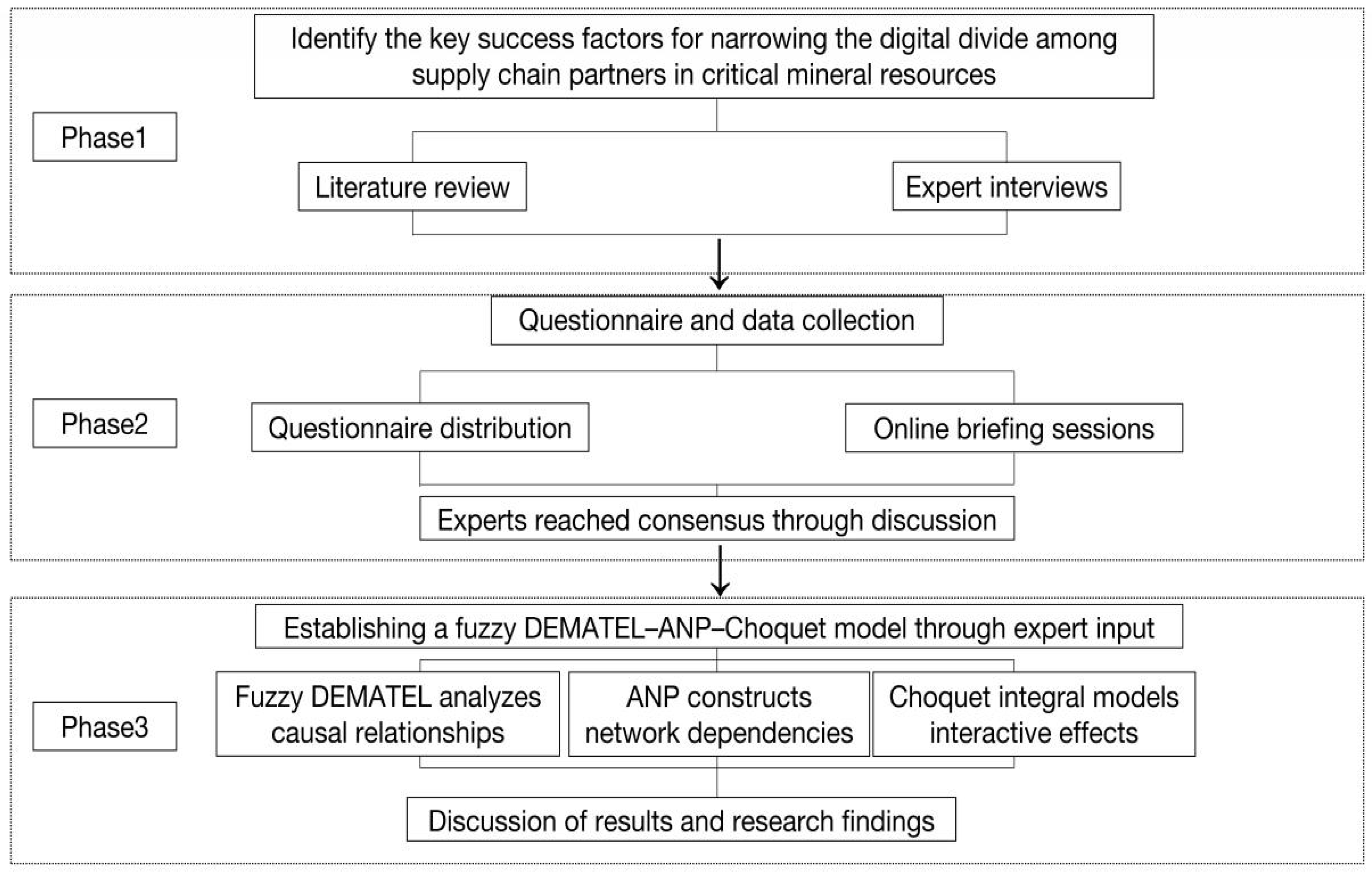
This section applies a three-stage methodology that integrates Fuzzy DEMATEL, ANP, and the Choquet integral to analyze the CSFs for reducing the digital divide in the GCMRS. The step-by-step analytical process clarifies the relative importance of each factor and explains the mechanisms of their interactions.
4.1. Fuzzy DEMATEL Results
Table 1,
Table 2,
Table 3 and
Table 4 present the comprehensive results of the computational steps. First, using Formula (1), we constructed the direct relation matrix among the various factors (see
Table 3). Subsequently, we normalized this matrix using Formula (2) to produce the standardized direct influence matrix (see
Table 4). We then applied Formula (3) to calculate the total influence matrix (see
Table 5). Finally, utilizing Formulas (4)–(7), we computed each factor’s degree of influence, degree of being influenced, centrality, and rationality. These metrics are categorized and summarized in
Table 6.
Navigating the causal structure reveals specific Critical Success Factors (CSFs) that drive the reduction in the digital divide. Specifically, the data identifies Scalable Technical Solutions (C1) and Cloud Computing Access (C2) as the primary ‘Driving CSFs’ (
D −
R > 0.3). Their high causality scores indicate that these technical infrastructures are the foundational triggers for the entire system, a finding consistent with empirical evidence that cloud computing enhances the efficiency of supply chain collaboration [
44]. Conversely, Digital Investment Subsidies (C18) emerged as the ‘Core Intermediary CSF’ with the highest centrality score (
D +
R = 3.72), signaling that financial support is the most active hub for resource exchange. Furthermore, while the Collaborative Work Environment Platform (C20) is identified as a ‘Result CSF’, its strong connection to other factors suggests it acts as the essential testing ground where digital governance effectiveness is ultimately realized, which aligns with evidence supporting its role in enhancing system responsiveness [
63].
Further analysis reveals that C1 and C2 exert a significant positive driving effect on technical and managerial factors such as mobile technology integration (C3), interoperable systems (C5), and resource integration platforms (C14), thereby validating the three-stage theoretical framework of “technology-driven—organizational synergy—institutional safeguards” [
64]. Empowerment-related factors, including digital transformation leadership training (C10) and skill upgrade incentives (C12), primarily function as the “capability-bearing end” of the system, with their effectiveness contingent upon the driving force generated by front-end technology deployment.
Across all configurations, C1 consistently emerges as the most influential driving factor in the system
, while C18 remains the most central and densely connected node. In contrast, factors such as C15 and C8 are often in a passive response state
. The systems’ overall average centrality is
, with a standard deviation of
, reflecting a well-coupled three-stage configuration of “technology leadership—organizational synergy—institutional safeguards.” This structure suggests a high degree of stability and coordination in the digital divide governance framework [
63].
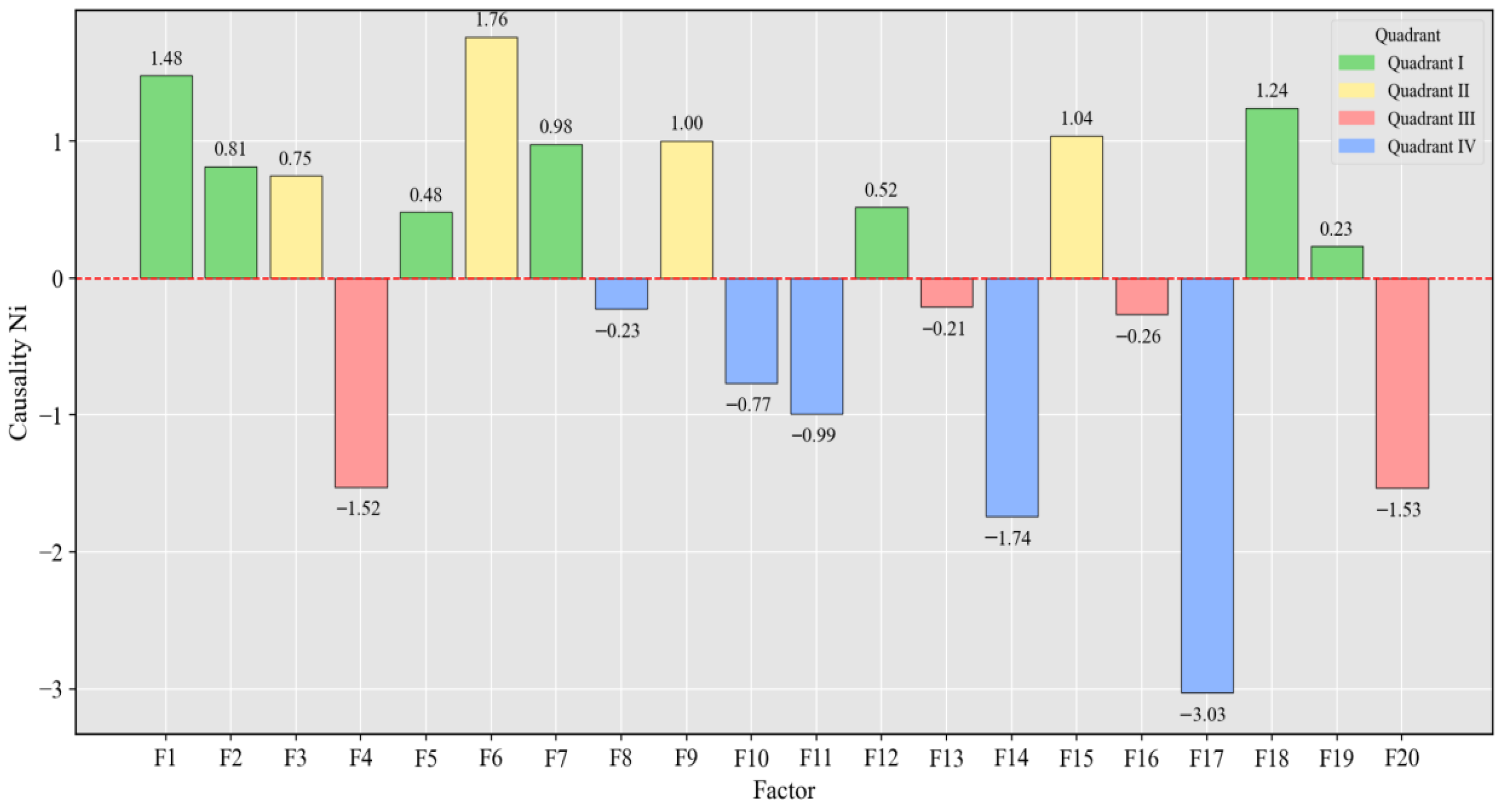
To enhance the visual representation of the causal structure, we present a bar chart based on each key success factor’s causality degree
(see
Figure 2). A positive
value indicates that a factor has a strong driving effect (first and second quadrants), whereas a negative
value suggests that the factor functions primarily as a response variable (third and fourth quadrants). The bar chart provides an intuitive view of each factor’s positioning and behavioral tendencies within the system. For example, factors F6 and F1 exhibit significant driving characteristics, whereas factors F17 and F14, with negative causality degrees, display a strong reactive nature. This illustration complements the two-dimensional causal relationship diagram and supports further importance analysis and strategic decision-making.
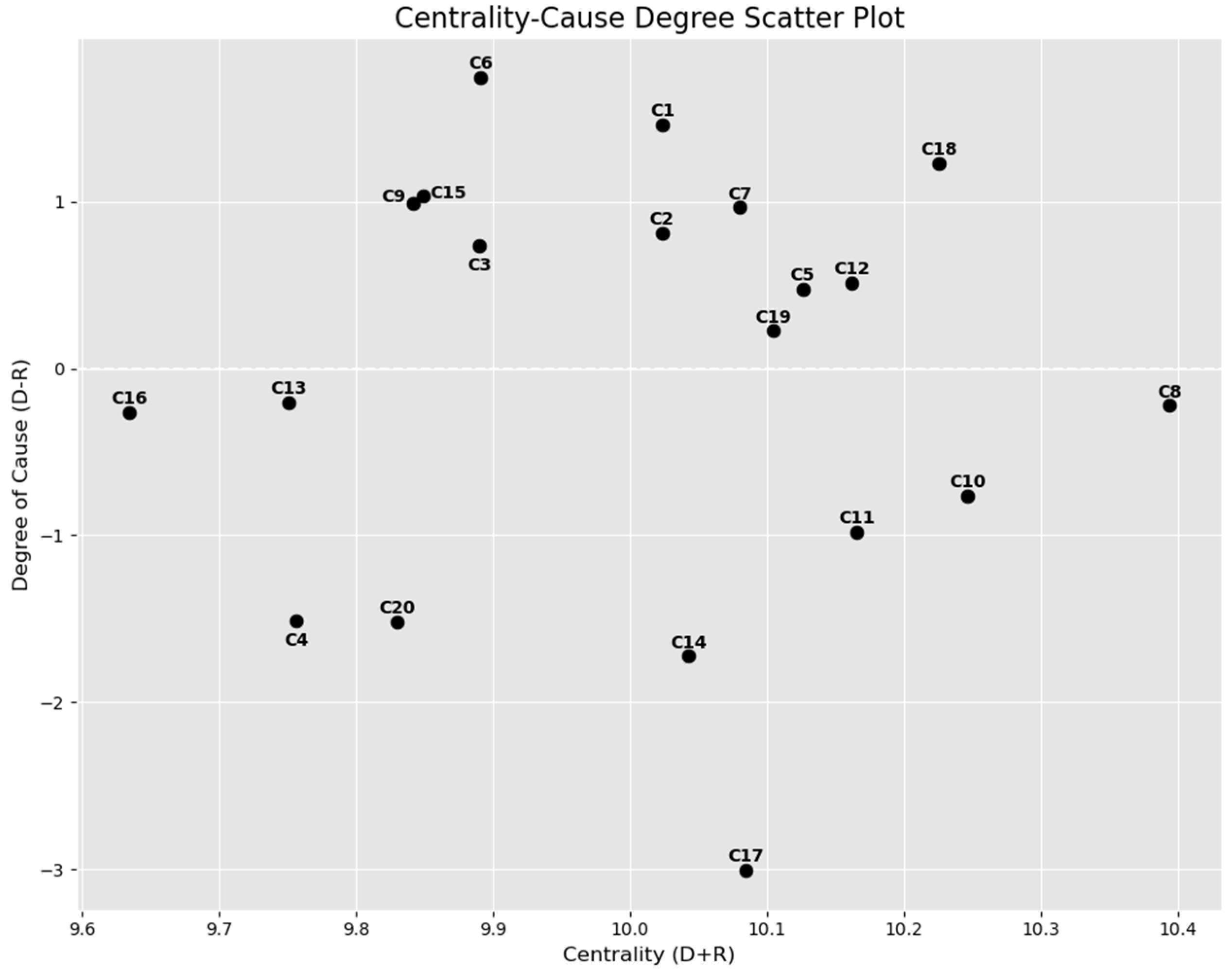
In
Figure 3, each point represents a key success factor, with its causal position
and centrality
determining its role within the causal network. Factors in the upper-right quadrant are core drivers and should receive priority in governance strategies, whereas those in the lower-left quadrant function as response-oriented factors with relatively limited influence.
4.2. Analytic Network Process Results
Table 7 presents the normalized matrix, which integrates the aggregated clarity values reflecting the interdependent effects among dimensions and indicators. Based on this integration, we utilized Formula (8) to generate the converged limit matrix and subsequently ranked the weights of these dimensions and indicators.
From the perspective of the overall research question, the ANP weights provide a quantitative hierarchy of the CSFs. As detailed in the limit supermatrix (see
Table 8), Scalable Technical Solutions (C1) and Cloud Computing Access (C2) secured the highest global weights of 5.68% and 5.47%, respectively. This statistical dominance confirms their status as the ‘Foundational CSFs’ required to bridge the infrastructure gap. The analysis further highlights a tiered structure where technology deployment factors outrank soft governance measures. For instance, Digital Transformation Leadership Training (C10), despite its theoretical importance, ranked 13th (4.76%). This data disparity suggests that in the current stage of the GCMRS, closing the ‘hardware divide’ is a prerequisite for the effectiveness of ‘soft power’ CSFs like leadership and localization.
Regardless of how the ANP network structure evolves, the four core variables—C1 (scalable solutions), C2 (cloud computing), C18 (digital investment subsidies), and C20 (collaborative platforms)—maintain a highly consistent weighting order with minimal fluctuations. This stability highlights a structural feature of GCMRS digital governance in which technological support dominates the decision-making framework, thereby compressing the weights of certain supporting institutional and collaborative factors, such as C10 (leadership training) and C15 (localized content), to below 5%.
As decision-making networks have become more complex, the average weight of front-end technical factors has increased by 11.2%, while management and empowerment-related factors marginally declined, particularly among non-core institutional variables. Although C10 demonstrates high centrality in the fuzzy DEMATEL analysis (D + R = 3.55), it ranks only 13th in the ANP results, further illustrating a “deployment-first, governance-lagging” dynamic.
The average weight of all key factors is W− = 5.26%, and the coefficient of variation is CV = 7.9%, which is significantly lower than the robustness threshold (CV < 15%), confirming the high consistency and stability of the constructed multi-level decision-making network.
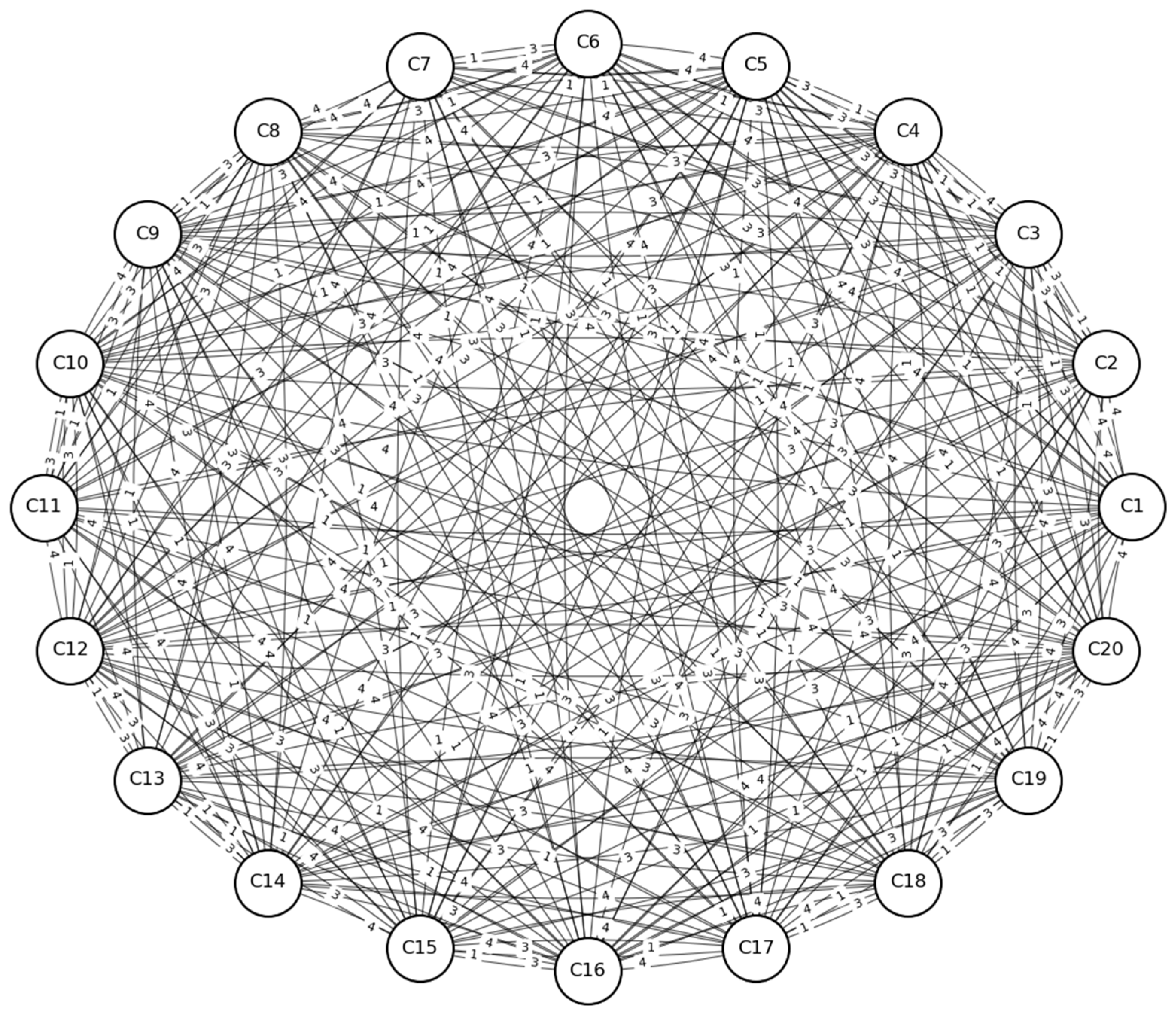
Figure 4 presents the CSF network structure diagram based on the causal pathways identified in the fuzzy DEMATEL analysis. The arrows indicate the direction of influence, illustrating the direct dependencies among factors. This diagram serves as the structural foundation for the ANP supermatrix and final weight extraction and reveals the complex interaction patterns that characterize multi-factor coupling and evolution in the digital governance of critical mineral resource supply chains.
4.3. Choquet Integral Analysis
To identify the CSFs that reduce the digital divide among partners in the GCMRS, we applied the Choquet integral method (Formulas (9)–(10)) to capture the potential non-additive preference relationships among factors and to establish a more realistic preference-based ranking system. Drawing upon the
λ −
additivity principle in Formula (9) and the fuzzy integral formulation in Formula (10), we used the stabilized weights from the finalized ANP supermatrix (see
Table 5), together with the fuzzy measure values (see
Table 9), to conduct Choquet integral-based synthesis and reassess each factor’s relative significance. This process produced a unified prioritization cluster. The final Choquet-adjusted weights (see
Table 8) cover all 20 CSFs and realistically reflect their synergistic significance, thereby supporting preference-enhanced decision-making.
With
ranging between −0.5 and 0.5, the Choquet integral value of the technology deployment-oriented combination (C1 + C2 + C6) increases from 36.814 to 58.209—a 58.1% increase—while the capability–collaboration synergy combination (C18 + C20 + C10) fluctuates by only 1.9% (from 46.217 to 47.103), indicating strong stability and robust synergy. The most effective optimization path occurs at λ = −0.25, where the synergy combination achieves a 24.3% gain. C18 (digital investment subsidies), C20 (collaborative platforms), and C10 (digital transformation leadership training) form its core and removing C20 significantly weakens the path’s effectiveness, underscoring the critical role of collaborative platforms in digital governance. In contrast, localized content (C15) and supply chain environmental data monitoring tools (C8) are absent from any high-efficiency combinations and contribute less than 4.1% at most, confirming their marginal strategic role. The detailed Choquet integral calculation results are shown (see
Table 10).
No matter how λ changes, the performance ranking of the four key combinations remains stable: technology deployment oriented (C1 + C2 + C6), capability and collaboration synergy (C18 + C20 + C10), multi-level standards promotion (C5 + C17 + C14), and governance support enhancement (C10 + C14 + C16). Among these, C18 + C20 + C10 consistently delivers the best performance. As λ increases, the effectiveness of technology-related factors, such as C1 and C2, grows, while for λ < 0, governance and collaboration paths become more dominant. For example, C10’s relative contribution rises significantly when λ = −0.5.
The average integral value across all combinations is = 48.93, and the coefficient of variation is CV = 4.9%, well below the robustness threshold. The proposed three-tier model of deployment, capability, and collaboration demonstrates strong adaptability across regions and stakeholders, offering robust support for digital collaborative governance in the GCMRS.
5. Discussion
5.1. Theoretical Contribution
This study contributes to theory in three key aspects. First, it enriches the theoretical perspective on the governance of critical mineral resource production supply chains 4.0. Second, it expands the research boundaries of digital supply chain management. Third, it deepens the theoretical understanding of collaborative mechanisms among global supply chain partners. Specifically, this study adopts a three-stage approach that integrates fuzzy DEMATEL, ANP, and Choquet integral to identify CSFs with strong causal strengths and high importance. By systematically comparing its results with those of existing studies, the paper highlights its theoretical innovation and academic value.
First, this paper introduces a novel research perspective into critical mineral resource production supply chain management 4.0. While existing studies primarily examine the spatial optimization of resource allocation [
65] and the effects of trade barriers on supply chain stability [
66], few address disparities in digital capabilities among supply chain partners and their impact on collaborative efficiency [
67]. This study identifies key drivers such as “technical infrastructure development” (C6), “digital governance capabilities” (C15), and “information system interoperability” (C10) as central nodes within the causal structure. The findings validate the argument that “insufficient digital interoperability serves as a bottleneck for collaboration” [
68]. Moreover, the study extends the conceptual framework of corporate digital resilience to encompass collaborative governance mechanisms among heterogeneous actors within global critical mineral resource supply networks 4.0 [
17].
Second, this paper broadens the research boundaries of digital supply chain management. While existing literature predominantly focuses on digital transformation in manufacturing and retail sectors [
69,
70], it pays limited attention to cross-border digital collaboration in high-uncertainty industries such as mining. In contrast, this study integrates ANP and Choquet integral analysis to identify “data standardization level” (C2), “establishment of key data sharing platforms” (C7), and “security assurance mechanisms” (C18) as core elements ranking highest in weight-based evaluations. These results underscore their pivotal roles in digital supply chain governance. Unlike Horváth and Szabó’s [
69] assertion that “technology deployment precedes organizational coordination” (p. 8), this study highlights that inter-organizational data sharing and digital infrastructure security serve as fundamental prerequisites for improving collaboration efficiency in critical mineral supply chains. These findings extend the applicability of digital governance models to resource-oriented supply chains and address the research gap on digital collaboration mechanisms between resource-exporting and resource-consuming countries within global value chains.
Third, this paper enriches the theoretical perspective on global supply chain partner management. Existing studies primarily analyze collaborative mechanisms from the viewpoints of governance structures [
71], organizational trust [
72], and knowledge transfer [
73], focusing on power dynamics and institutional arrangements between lead firms and subordinate partners [
74]. However, researchers have yet to conduct quantitative investigations into partner heterogeneity in digital capabilities and resource allocation, along with corresponding strategic responses. This study incorporates the Choquet integral method to model fuzzy preference relationships among factors such as “digital capability training programs” (C8), “leadership digital cognition level” (C14), and “cross-border coordination mechanisms” (C11). The model reveals the interdependent structures and complexity of collaboration among supply chain actors. By capturing the dynamic interactions of digital collaboration behaviors among heterogeneous multinational organizations from a quantitative perspective, this study provides novel modeling insights and explanatory frameworks for advancing the theory of global supply chain 4.0 partnership management.
Finally, this paper extends the applicability of Innovation Diffusion Theory, the Resource-Based View, and Social Network Theory to the governance of the digital divide. By systematically analyzing the causal weights of key factors such as Technical Infrastructure Construction (C6), Cloud Computing Access (C2), and Digital Governance Capacity (C15), the study confirms the theoretical postulates regarding technological accessibility and resource endowment. Specifically, the high centrality of subsidy-related factors validates the RBV perspective on resource orchestration. Simultaneously, the prominence of collaborative platforms supports the connectivity arguments of Social Network Theory. This integration highlights both the validity and the practical boundaries of these frameworks when applied to complex global supply chain contexts.
5.2. Practical Implication
Drawing on the CSFs identified in this study, we propose targeted managerial recommendations for three stakeholder groups: governments of resource-rich and resource-consuming countries, critical mineral resource supply chain enterprises, and industry practitioners. These recommendations move beyond generic digitalization goals to provide a quantifiable basis for decision-making, specifically addressing the technical and operational asymmetries that currently fragment the GCMRS.
At the governmental level, stakeholders should prioritize infrastructure development and institutional guidance to enhance system connectivity and visibility. Governments of resource-rich and resource-consuming countries should strengthen the coordinated construction of cross-border digital infrastructure to facilitate interconnected data transmission channels and platform deployment (C6). They should establish unified interface protocols and data exchange standards to improve platform interoperability and system integration efficiency (C10) [
75]. In addition, they should deploy policy instruments such as fiscal subsidies and tax incentives to encourage enterprises to engage in the joint construction and sharing of data platforms and information disclosure mechanisms, thereby enhancing cross-border collaborative regulatory capacity and overall system transparency.
At the enterprise level, supply chain actors should focus on capacity building and enhancing collaborative mechanisms that serve as core drivers of digital cooperation. Enterprises should build systematic digital governance capabilities (C15) and strengthen organizational adaptability in terms of system compatibility, standards interoperability, and cross-border operations through targeted employee training programs (C8). In cross-border collaborations, they should establish stable information-sharing mechanisms (C7), proactively engage in regional cooperation networks, and participate in industry-level interface standards development to reduce coordination costs across heterogeneous platforms. They should also prioritize cybersecurity safeguards (C18), integrating institutional and technical measures to improve data security and system resilience, thereby minimizing potential digital risks.
At the industry practitioner level, actors should bridge diverse stakeholders and provide tailored support to enterprises exhibiting significant capability gaps. Technical service institutions should advance the modular development of core platforms and tools, offering flexible middleware solutions that lower technical entry barriers for enterprise-level digital system integration (C10). They should also establish a standardized digital capability rating and certification framework to facilitate resource allocation and service alignment, thereby enhancing the overall maturity of digital collaboration across the industry. Practitioners should reinforce knowledge dissemination mechanisms (C13) through cross-regional case studies, targeted seminars, and joint innovation projects to foster experience sharing and capability convergence between resource-rich and consumer countries. These efforts will ultimately improve the adaptability and resilience of the global critical mineral resource supply chain.
In summary, all stakeholders should, according to their respective roles, prioritize system interconnectivity, capacity enhancement, information sharing, and platform standardization. Through coordinated efforts, they can build an inclusive, interoperable, and efficient global digital governance framework for the production of critical mineral resources. Such a framework will play a pivotal role in narrowing digital capability disparities and enhancing cross-border collaboration efficiency in the global supply chain.
6. Conclusions
This study tackles the digital divide among partners in the Global Critical Mineral Supply Chain (GCMRS) by constructing a three-stage analytical framework that integrates fuzzy DEMATEL, the analytic network process (ANP), and Choquet integral methods. Leveraging expert questionnaire data, we systematically identified and evaluated the critical success factors (CSFs) that influence the resolution of digital disparities across supply chain partners. The analysis examines three dimensions—causal structure, weight ranking, and preference coupling—to reveal the underlying logic of key factors.
The findings indicate that Blockchain technology for supply chain transparency (C6), Cloud Computing Access (C2), Digital Investment Subsidy (C18), and a Collaborative Work Environment Platform (C20) are the most influential core variables, distinguished by their strong causal effects and high comprehensive weights. Specifically, the fuzzy DEMATEL analysis highlights the pronounced causal driving effects of Blockchain technology for supply chain transparency (C6) and Cloud Computing Access (C2), while ANP results show that Digital Investment Subsidy (C18) and a Collaborative Work Environment Platform (C20) hold significantly higher weights compared to other variables. Their associated tertiary indicators, including digital literacy training, multi-level digital standardization, and technical support for capacity building, also received notably higher scores. Moreover, the Choquet integral analysis reveals preference-enhancing interactions among these factors, indicating their synergistic influence in practical digital governance scenarios.
Overall, this study addresses the lack of quantitative prioritization in current digital governance models. Its findings are expected to provide a quantifiable basis for decision-making in policy formulation or industry practices. Specifically, it enables managers to optimize platform mechanisms and resource allocation based on the identified ‘technology-first’ causal hierarchy.
Despite its contributions, the study has certain limitations. First, it focuses specifically on the key mineral resource industry, and the unique characteristics and cooperative structures of this sector may constrain the generalizability of findings to other industries. Second, although the expert scoring approach ensures a degree of professional judgment, the assessment of causal relationships and factor weights may still reflect individual knowledge backgrounds and subjective biases. Third, this study primarily addresses the digital representation layer (e.g., digital twins, blockchain) of the supply chain, with less emphasis on the physical characteristics of the critical materials themselves. As highlighted by recent research on the ‘Internet of Materials’ [
76], bridging the gap between digital traceability and physical material properties is essential for achieving true circularity. Future research should therefore aim to incorporate these physical attributes into the proposed model to enhance its robustness. Lastly, the theoretical integration in this study centers primarily on three mainstream perspectives—innovation diffusion, resource-based view, and social network theory—without incorporating complementary frameworks such as institutional evolution or cultural embeddedness. Future studies could broaden the theoretical scope to explore the dynamic mechanisms underlying collaborative factors in cross-institutional and culturally diverse contexts.