Brood-Derived Fat Extracts from Apis mellifera as Sustainable Alternatives to Beeswax in Topical Nanostructured Lipid Carriers

 , , ,
, , ,  , , ,
, , ,  , ,
, ,  and
and 
Simple Summary
Abstract
1. Introduction
2. Materials and Methods
2.1. A. mellifera Broods Materials
2.2. Chemical Materials
2.3. Preparation of Fat Extracts from A. mellifera Broods by Solvent Extraction
2.4. Fatty Acid Profile Determination of A. mellifera Brood Fat Extracts by Gas Chromatography-Flame Ionization Detector (GC-FID)
2.5. Characterization of A. mellifera Brood Fat Extracts
2.5.1. Functional Groups Determination by Fourier Transform Infrared Spectrophotometer (FTIR)
2.5.2. Crystalline Structure Study by X-Ray Diffractometer (XRD)
2.5.3. Thermal Behavior Analysis by Differential Scanning Calorimeter (DSC) and Thermogravimetric Analyzer (TGA)
2.6. Irritation Test by Hen’s Egg Test Chorioallantoic Membrane (HET-CAM) Assay
2.7. Determination Anti-Inflammatory Activities of A. mellifera Brood Fat Extracts
2.7.1. Murine Macrophage Cell Line (RAW 264.7) Culture
2.7.2. Determination of Cytotoxicity
2.7.3. Determination of IL-6 and TNF-α Inhibition by ELISA
2.8. Development of NLC from A. mellifera Brood Fat Extracts
2.9. Characteriztion and Stability of NLC from A. mellifera Brood Fat Extracts
2.9.1. Determination of Particle Size, Zeta Potential, and Polydispersity Index (PDI)
2.9.2. Stability Test
2.9.3. Morphology Determination
2.9.4. Irritation Test by HET-CAM Assay
2.9.5. Determination of Anti-Inflammatory Activity
2.10. Statistical Analysis
3. Results and Discussions
3.1. A. mellifera Brood Fat Extracts
3.2. Fatty Acid Profile of A. mellifera Brood Fat Extracts
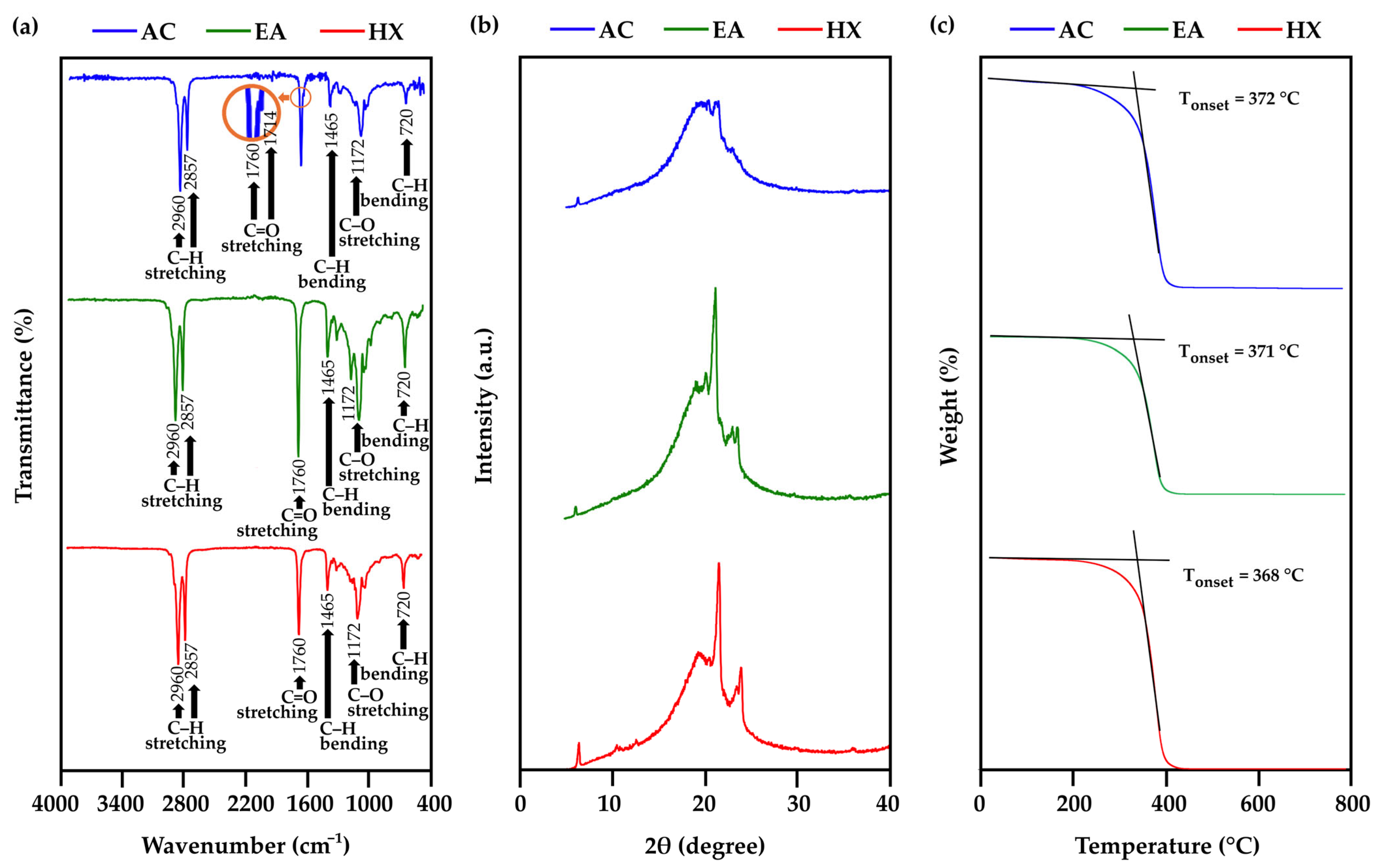
3.3. Physicochemical Properties of A. mellifera Brood Fat Extracts
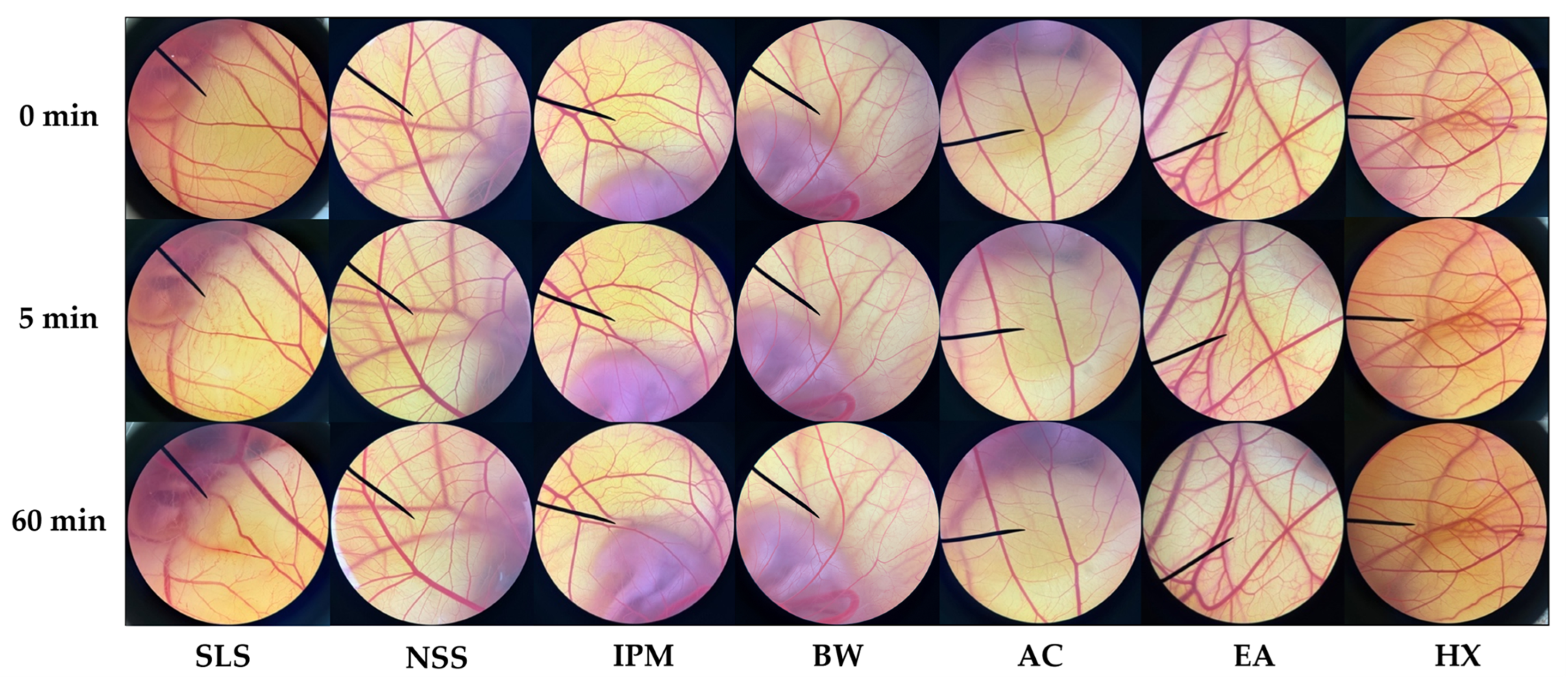
3.4. Irritation Properties of A. mellifera Brood Fat Extracts
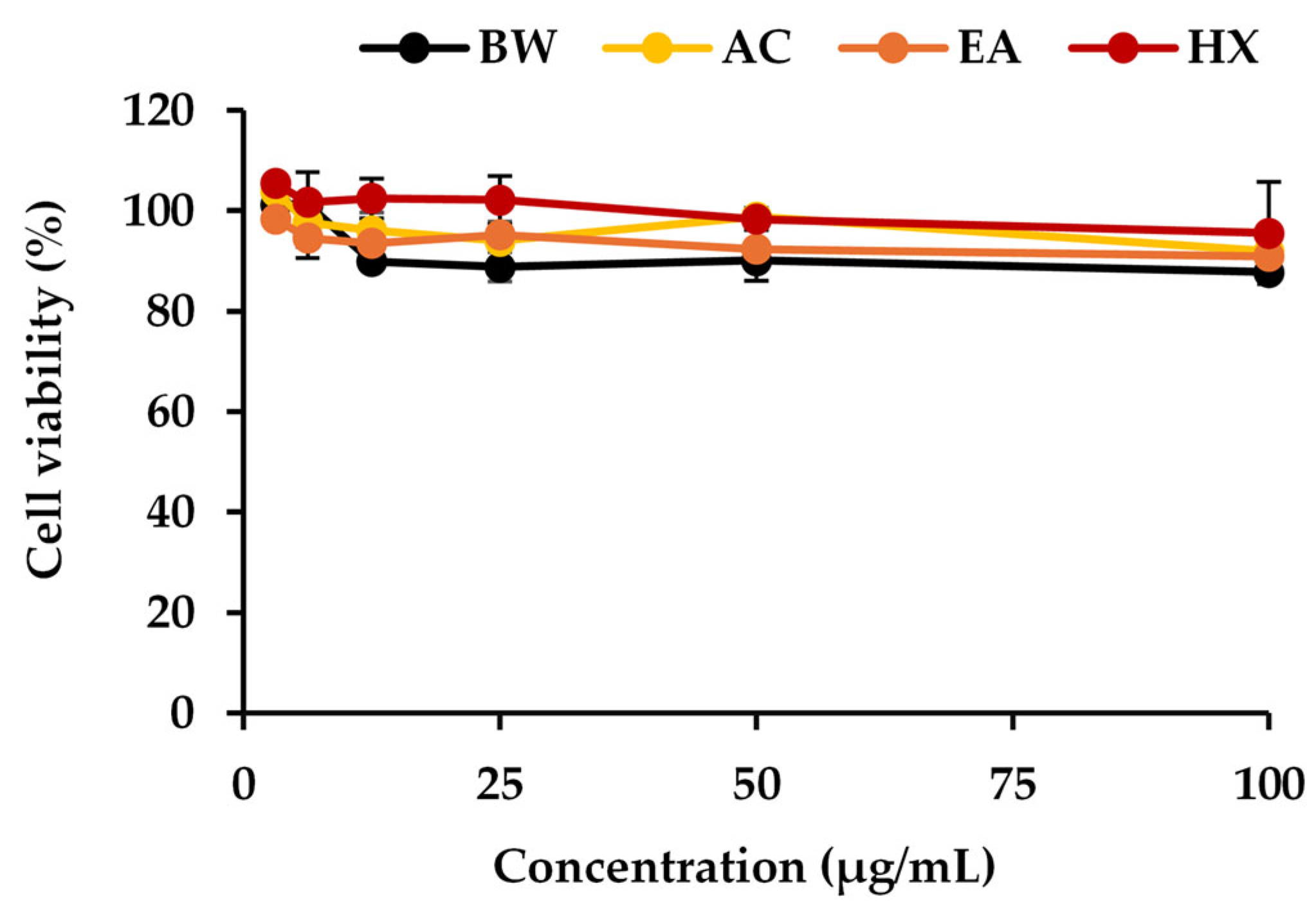
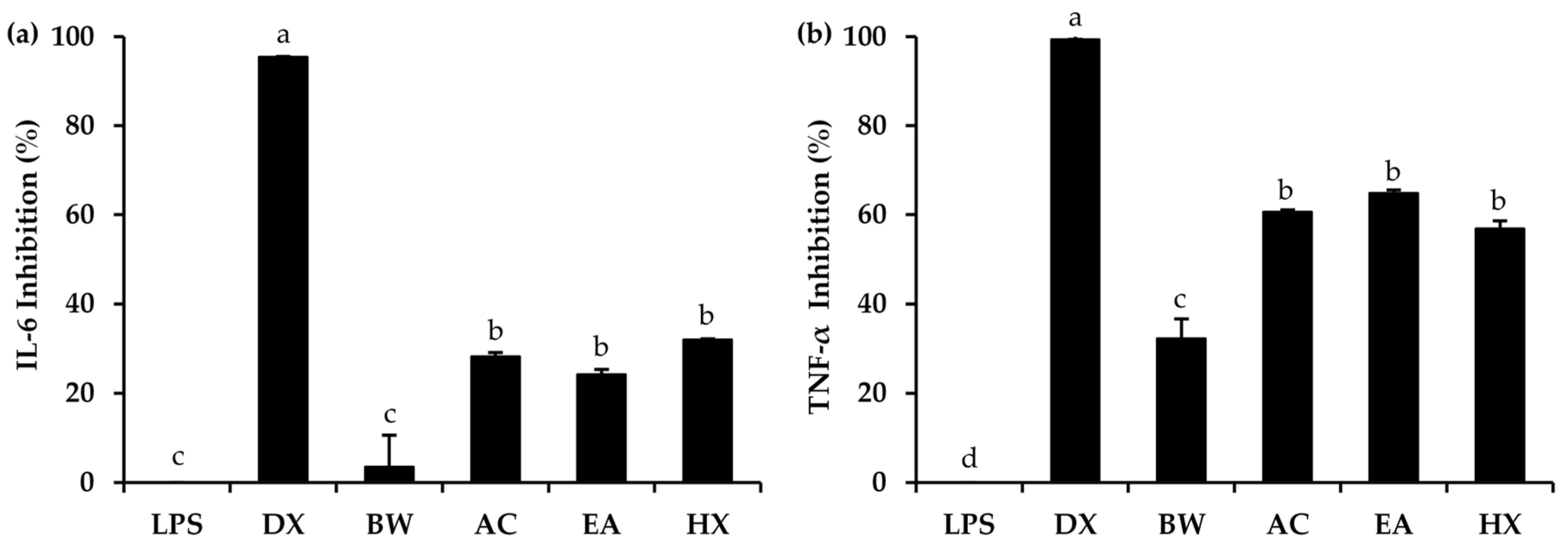
3.5. Anti-Inflammatory Properties of A. mellifera Brood Fat Extracts
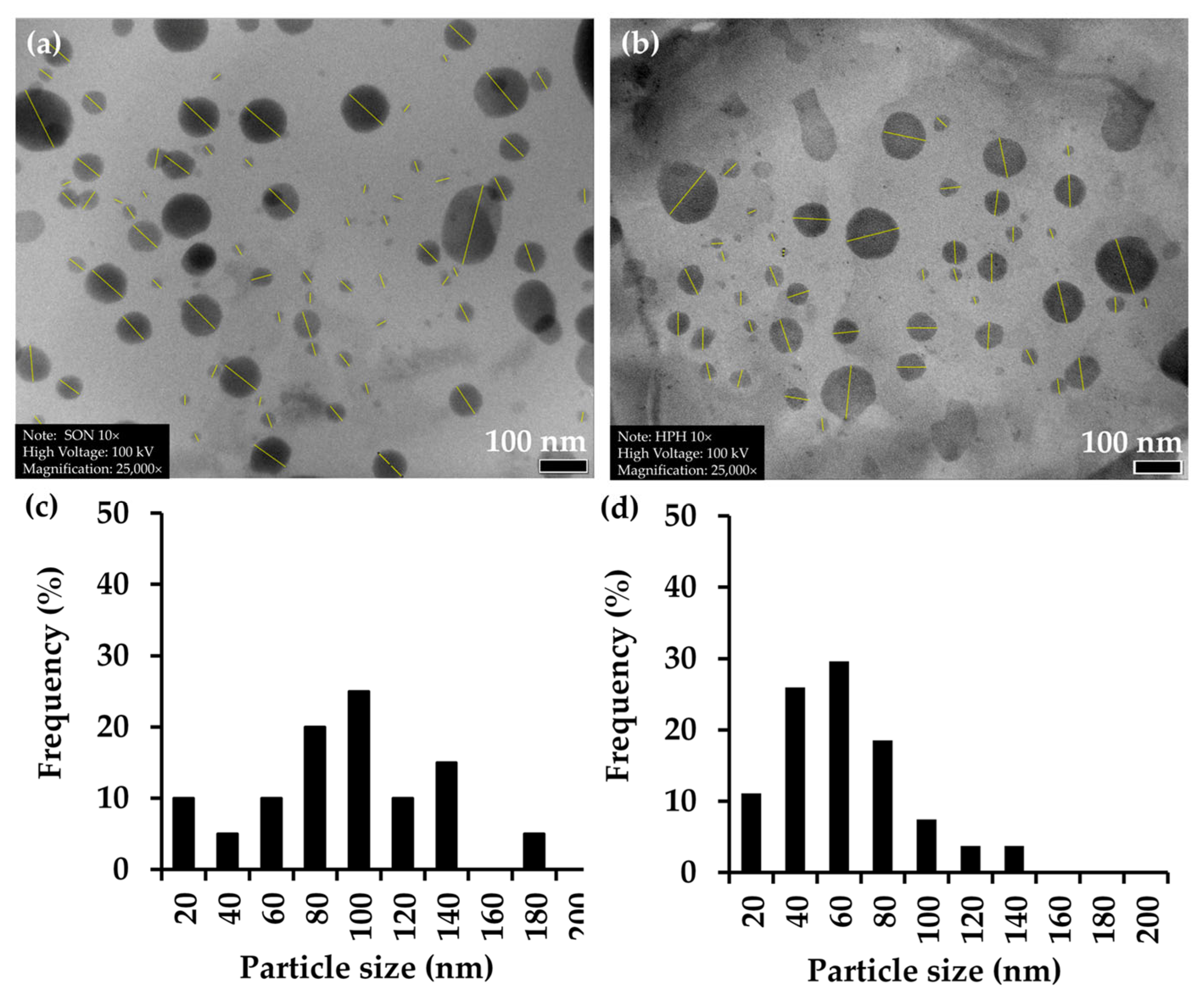
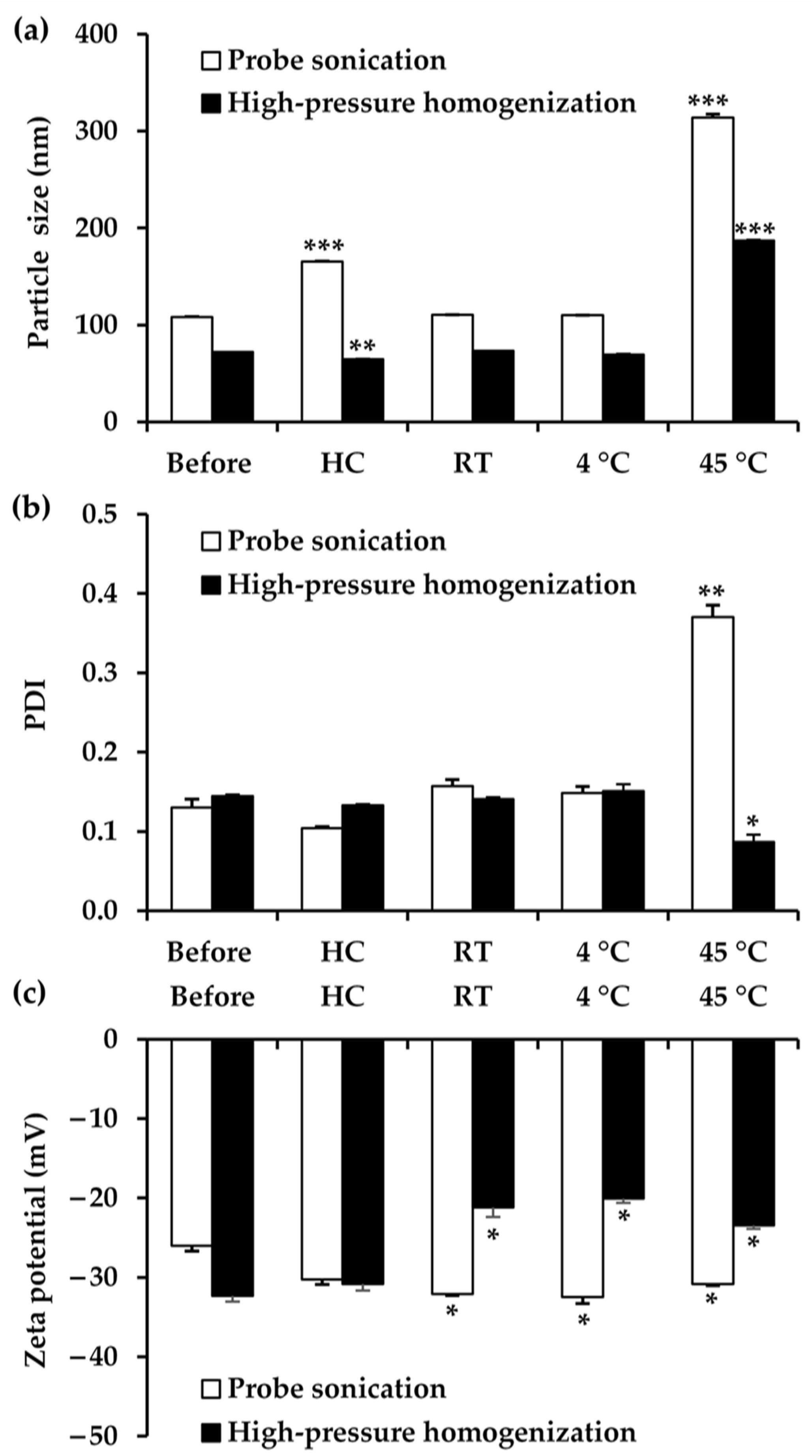
3.6. NLC from A. mellifera Brood Fat Extracts
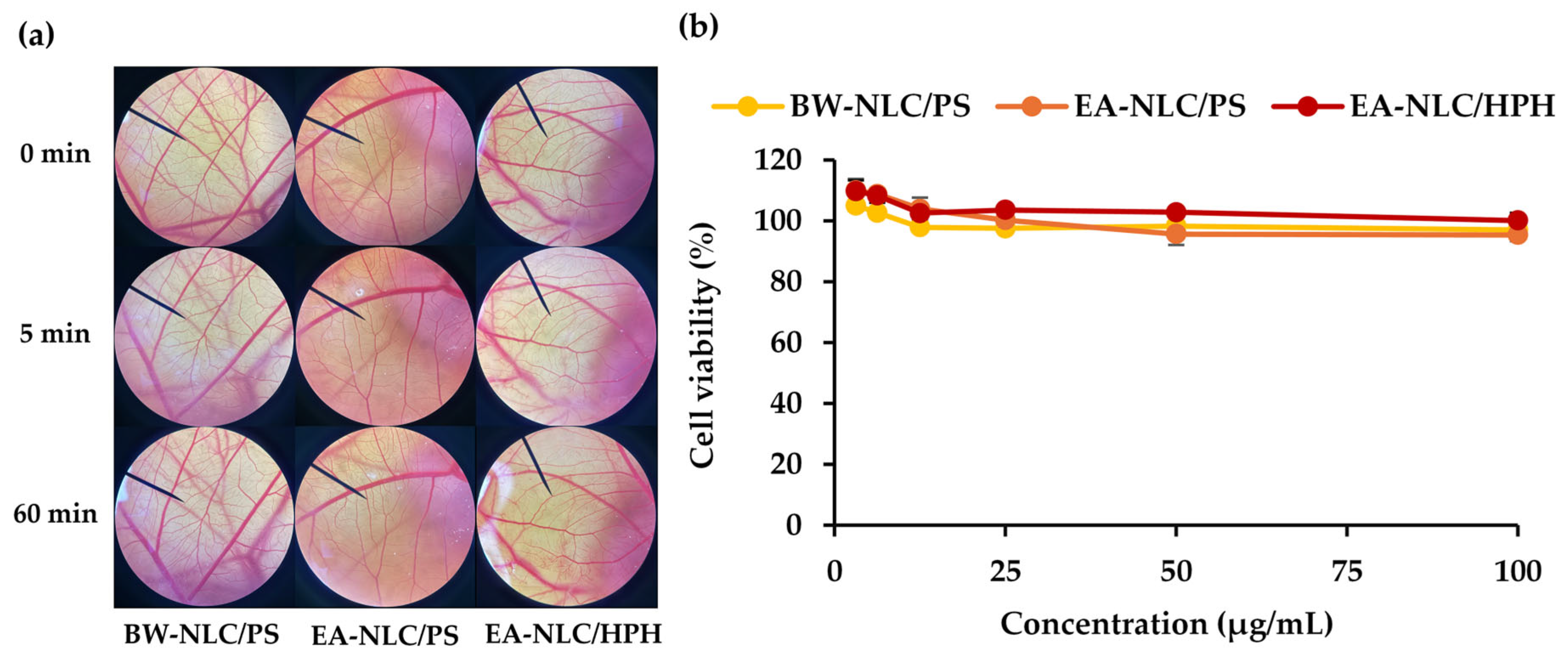
3.7. Irritation Properties and Cytotoxicity of NLC from A. mellifera Brood Fat Extracts
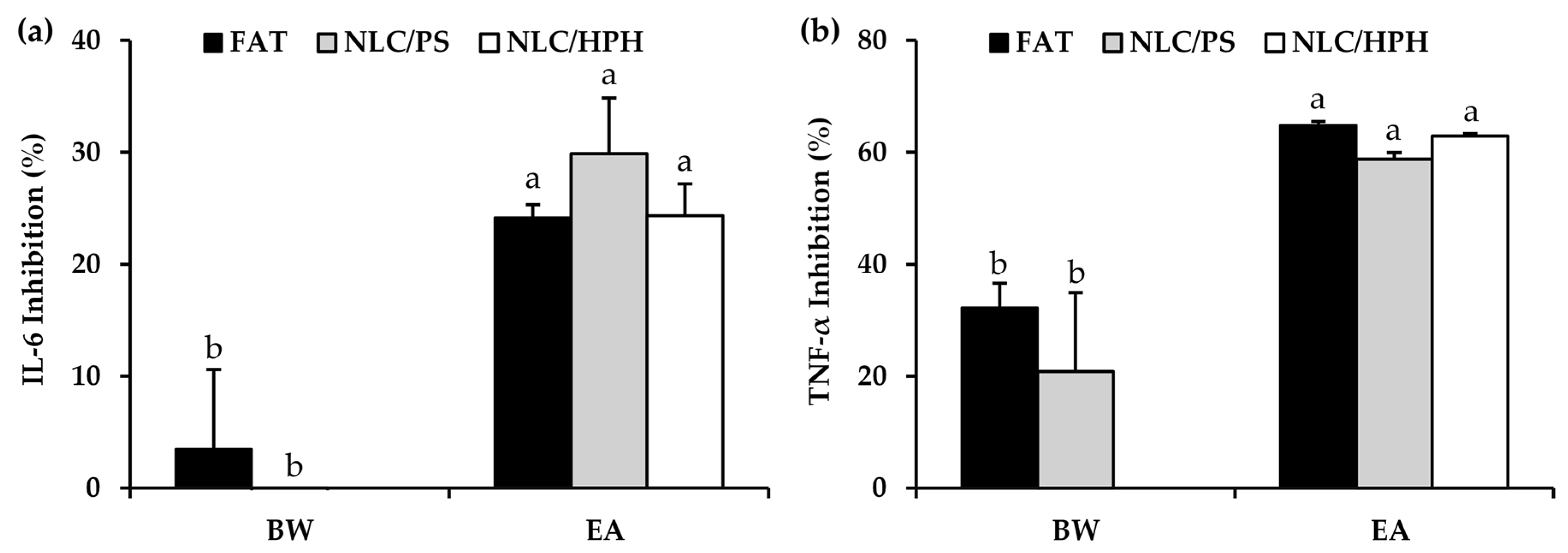
3.8. Anti-Inflammatory Properties of NLC from A. mellifera Brood Fat Extracts
4. Conclusions
Supplementary Materials
Author Contributions
Funding
Data Availability Statement
Acknowledgments
Conflicts of Interest
Abbreviations
| AC | Acetone extract |
| ANOVA | Analysis of variance |
| ATCC | American Type Culture Collection |
| BW | Beeswax |
| CAM | Chorioallantoic membrane |
| COX-2 | Cyclooxygenase-2 |
| DMEM | Dulbecco’s Modified Eagle Medium |
| DLS | Dynamic light scattering |
| DMSO | Dimethyl sulfoxide |
| DSC | Differential scanning calorimetry |
| DX | Dexamethasone |
| EA | Ethyl acetate extract |
| ELISA | Enzyme-linked immunosorbent assay |
| FBS | Fetal bovine serum |
| HC | Heating–cooling cycle |
| HET-CAM | Hen’s egg test–chorioallantoic membrane assay |
| HLB | Hydrophilic–lipophilic balance |
| HX | Hexane extract |
| IL-6 | Interleukin-6 |
| iNOS | Inducible nitric oxide synthase |
| IPM | Isopropyl myristate |
| IS | Irritation score |
| LPS | Lipopolysaccharide |
| MAPK | Mitogen-activated protein kinase |
| MTT | 3-(4,5-Dimethylthiazol-2-yl)-2,5-diphenyltetrazolium bromide assay |
| NF-κB | Nuclear factor kappa B |
| NLC | Nanostructured lipid carrier |
| NLC/HPH | Nanostructured lipid carrier prepared by high-pressure homogenization |
| NLC/PS | Nanostructured lipid carrier prepared by probe sonication |
| NSS | Normal saline solution |
| PDI | Polydispersity index |
| PPARs | Peroxisome proliferator-activated receptors |
| RAW 264.7 | Murine macrophage cell line |
| RT | Room temperature |
| SFA | Saturated fatty acids |
| SLN | Solid lipid nanoparticle |
| SLS | Sodium lauryl sulfate |
| TEM | Transmission electron microscopy |
| TGA | Thermogravimetric analysis |
| TNF-α | Tumor necrosis factor alpha |
| USFA | Unsaturated fatty acids |
References
- Hosseini, S.F.; Mousavi, Z.; McClements, D.J. Beeswax: A review on the recent progress in the development of superhydrophobic films/coatings and their applications in fruits preservation. Food Chem. 2023, 424, 136404. [Google Scholar] [CrossRef]
- Sahithi-Reddy, P.; Kaur, S.; Gill, P.S.; Jawandha, S.K.; Bajaj, K. Unravelling the potential of beeswax: A comprehensive investigation into its compositional insights, functional attributes, and fuit quality preservation. J. Food Meas. Charact. 2025, 19, 6193–6206. [Google Scholar] [CrossRef]
- Dobreva, M.; Stefanov, S.; Andonova, V. Natural lipids as structural components of solid lipid nanoparticles and nanostructured lipid carriers for topical delivery. Curr. Pharm. Des. 2020, 26, 4524–4535. [Google Scholar] [CrossRef]
- Fonseca-Santos, B.; Corrêa, M.A.; Chorilli, M. Sustainability, natural and organic cosmetics: Consumer, products, efficacy, toxicological and regulatory considerations. Braz. J. Pharm. Sci. 2015, 51, 17–26. [Google Scholar] [CrossRef]
- Dini, I.; Laneri, S. The new challenge of green cosmetics: Natural food ingredients for cosmetic formulations. Molecules 2021, 26, 3921. [Google Scholar] [CrossRef] [PubMed]
- Garrison, M.; Dayan, N. Formulating cosmetics with natural oils, fats, butters, and waxes. In Formulating, Packaging, and Marketing of Natural Cosmetic Products; Dayan, N., Kromidas, L., Eds.; John Wiley & Sons, Inc.: Hoboken, NJ, USA, 2011; pp. 213–238. [Google Scholar] [CrossRef]
- Aregawi, G.; Tilahun, M.; Gangwar, S.K.; Gebresamuel, G.; Tesfay, G. Performance of Apis mellifera spp. on honey and beeswax production in different type of beehives in Enda Mekoni Woreda, Tigray region, Ethiopia. GJ Biosci. Biotech. 2014, 3, 324–329. [Google Scholar]
- Taranov, G.F. The production of wax in the honeybee colony. Bee World 1959, 40, 113–121. [Google Scholar] [CrossRef]
- Wakgari, M.; Yigezu, G. Honeybee keeping constraints and future prospects. Cogent Food Agric. 2021, 7, 1872192. [Google Scholar] [CrossRef]
- Li, J. Threats to honeybee populations: Pathogens, pesticides, and environmental changes. Mol. Pathog. 2024, 15, 129–141. [Google Scholar] [CrossRef]
- Špaldoňová, A.; Havelcová, M.; Lapčák, L.; Machovič, V.; Titěra, D. Analysis of beeswax adulteration with paraffin using GC/MS, FTIR-ATR and Raman spectroscopy. J. Apic. Res. 2021, 60, 73–83. [Google Scholar] [CrossRef]
- Bucio, A.; Moreno-Tovar, R.; Bucio, L.; Espinosa-Dávila, J.; Anguebes-Franceschi, F. Characterization of beeswax, candelilla wax and paraffin wax for coating cheeses. Coatings 2021, 11, 261. [Google Scholar] [CrossRef]
- Shirodkar, R.K.; Kumar, L.; Mutalik, S.; Lewis, S. Solid lipid nanoparticles and nanostructured lipid carriers: Emerging lipid based drug delivery systems. Pharm. Chem. J. 2019, 53, 440–453. [Google Scholar] [CrossRef]
- Salvi, V.R.; Pawar, P. Nanostructured lipid carriers (NLC) system: A novel drug targeting carrier. J. Drug Deliv. Sci. Technol. 2019, 51, 255–267. [Google Scholar] [CrossRef]
- Kaul, S.; Gulati, N.; Verma, D.; Mukherjee, S.; Nagaich, U. Role of nanotechnology in cosmeceuticals: A review of recent advances. J. Pharm. 2018, 2018, 3420204. [Google Scholar] [CrossRef]
- Bilal, M.; Iqbal, H.M.N. New insights on unique features and role of nanostructured materials in cosmetics. Cosmetics 2020, 7, 24. [Google Scholar] [CrossRef]
- Joseph, T.M.; Kar Mahapatra, D.; Esmaeili, A.; Piszczyk, Ł.; Hasanin, M.S.; Kattali, M.; Haponiuk, J.; Thomas, S. Nanoparticles: Taking a unique position in medicine. Nanomaterials 2023, 13, 574. [Google Scholar] [CrossRef] [PubMed]
- Aondoakaa, I.P.; Akoh, C.C. Microbial and insect oils: A sustainable approach to functional lipid. J. Am. Oil Chem. Soc. 2024, 102, 5–33. [Google Scholar] [CrossRef]
- Hamam, M.; D’Amico, M.; Di Vita, G. Advances in the insect industry within a circular bioeconomy context: A research agenda. Environ. Sci. Eur. 2024, 36, 29. [Google Scholar] [CrossRef]
- Trujillo-Cayado, L.A.; Sánchez-García, R.M.; García-Domínguez, I.; Rodríguez-Luna, A.; Hurtado-Fernández, E.; Santos, J. Emerging trends in sustainable biological resources and bioeconomy for food production. Appl. Sci. 2025, 15, 6555. [Google Scholar] [CrossRef]
- Safavi, A.; Thrastardottir, R.; Thorarinsdottir, R.I.; Unnthorsson, R. Insect production: A circular economy strategy in Iceland. Sustainability 2024, 16, 9063. [Google Scholar] [CrossRef]
- Jensen, A.B.; Evans, J.; Jonas-Levi, A.; Benjamin, O.; Martinez, I.; Dahle, B.; Roos, N.; Lecocq, A.; Foley, K. Standard methods for Apis mellifera brood as human food. J. Apic. Res. 2019, 58, 1–28. [Google Scholar] [CrossRef]
- Xu, X.; Gao, Y. Isolation and characterization of proteins and lipids from honeybee (Apis mellifera L.) queen larvae and royal jelly. Food Res. Int. 2013, 54, 330–337. [Google Scholar] [CrossRef]
- Haber, M.; Mishyna, M.; Itzhak Martinez, J.J.; Benjamin, O. Edible larvae and pupae of honey bee (Apis mellifera): Odor and nutritional characterization as a function of diet. Food Chem. 2019, 292, 197–203. [Google Scholar] [CrossRef] [PubMed]
- Thuraphan, P.; Suang, S.; Bunrod, A.; Kanjanakawinkul, W.; Chaiyana, W. Potential of bioactive protein and protein hydrolysate from Apis mellifera larvae as cosmeceutical active ingredients for anti-skin aging. Pharmaceuticals 2024, 17, 679. [Google Scholar] [CrossRef]
- Luo, Y.; Guo, Y.; Zhao, W.; Khalifa, S.A.M.; El-Seedi, H.R.; Su, X.; Wu, L. Total lipid extracts of honeybee drone larvae are modulated by extraction temperature and display consistent anti-Inflammatory potential. Foods 2023, 12, 4058. [Google Scholar] [CrossRef]
- Mohiuddin, A.K. Skin care creams: Formulation and use. Dermatol. Clin. Res. 2019, 5, 238–271. [Google Scholar]
- Ahmad, A.; Ahsan, H. Lipid-based formulations in cosmeceuticals and biopharmaceuticals. Biomed. Dermatol. 2020, 4, 12. [Google Scholar] [CrossRef]
- Gupta, V.; Mohapatra, S.; Mishra, H.; Farooq, U.; Kumar, K.; Ansari, M.J.; Aldawsari, M.F.; Alalaiwe, A.S.; Mirza, M.A.; Iqbal, Z. Nanotechnology in cosmetics and cosmeceuticals—A review of latest advancements. Gels 2022, 8, 173. [Google Scholar] [CrossRef]
- Anantaworasakul, P.; Chaiyana, W.; Michniak-Kohn, B.B.; Rungseevijitprapa, W.; Ampasavate, C. Enhanced transdermal delivery of concentrated capsaicin from chili extract-loaded lipid nanoparticles with reduced skin irritation. Pharmaceutics 2020, 12, 463. [Google Scholar] [CrossRef]
- Müller, R.H.; Radtke, M.; Wissing, S.A. Nanostructured lipid matrices for improved microencapsulation of drugs. Int. J. Pharm. 2002, 242, 121–128. [Google Scholar] [CrossRef]
- Huang, Z.R.; Lin, Y.K.; Fang, J.Y. Biological and pharmacological activities of squalene and related compounds: Potential uses in cosmetic dermatology. Molecules 2009, 14, 540–554. [Google Scholar] [CrossRef]
- Joshi, M.; Patravale, V. Nanostructured lipid carrier (NLC) based gel of celecoxib. Int. J. Pharm. 2008, 346, 124–132. [Google Scholar] [CrossRef] [PubMed]
- Abdel-Mottaleb, M.M.A.; Neumann, D.; Lamprecht, A. In vitro drug release mechanism from lipid nanocapsules (LNC). Int. J. Pharm. 2010, 390, 208–213. [Google Scholar] [CrossRef] [PubMed]
- Khan, S.; Sharma, A.; Jain, V. An overview of nanostructured lipid carriers and its application in drug delivery through different routes. Adv. Pharm. Bull. 2023, 13, 446–460. [Google Scholar] [CrossRef]
- Stoyanova, A.; Marinova, V.; Stoilov, D.; Kirechev, D. Food safety management system (FSMS) model with application of the PDCA cycle and risk assessment as requirements of the ISO 22000:2018 standard. Standards 2022, 2, 329–351. [Google Scholar] [CrossRef]
- Mahama, S.; Waloh, N.; Chayutsatid, C.; Sirikwanpong, S.; Ayukhen, A.; Marnpae, M.; Nungarlee, U.; Petchareon, P.; Munaowaroh, W.; Khemtham, M.; et al. Postmarket laboratory surveillance for forbidden substances in halal-certified foods in Thailand. J. Food Prot. 2020, 83, 147–154. [Google Scholar] [CrossRef]
- Thewanjutiwong, S.; Phokasem, P.; Disayathanoowat, T.; Juntrapirom, S.; Kanjanakawinkul, W.; Chaiyana, W. Development of film-forming gel formulations containing royal jelly and honey aromatic water for cosmetic applications. Gels 2023, 9, 816. [Google Scholar] [CrossRef]
- Chaiyana, W.; Anuchapreeda, S.; Somwongin, S.; Marsup, P.; Lee, K.H.; Lin, W.C.; Lue, S.C. Dermal delivery enhancement of natural anti-ageing compounds from Ocimum sanctum Linn. extract by nanostructured lipid carriers. Pharmaceutics 2020, 12, 309. [Google Scholar] [CrossRef] [PubMed]
- Mueller, M.; Hobiger, S.; Jungbauer, A. Anti-inflammatory activity of extracts from fruits, herbs and spices. Food Chem. 2010, 122, 987–996. [Google Scholar] [CrossRef]
- Chaiyana, W.; Inthorn, J.; Somwongin, S.; Anantaworasakul, P.; Sopharadee, S.; Yanpanya, P.; Konaka, M.; Wongwilai, W.; Dhumtanom, P.; Juntrapirom, S.; et al. The fatty acid compositions, irritation properties, and potential applications of Teleogryllus mitratus oil in nanoemulsion development. Nanomaterials 2024, 14, 184. [Google Scholar] [CrossRef]
- Yeerong, K.; Czyrski, G.S.; Heinz, A.; Müllertz, A.; Rades, T.; Chaiyana, W. Transdermal delivery of Acheta domesticus protein hydrolysate using nanostructured lipid carriers and Derma Stamp―Does the combination of lipid-based formulation and a physical technique add value for permeation and retention? J. Drug Deliv. Sci. Technol. 2025, 104, 106470. [Google Scholar] [CrossRef]
- Soleimanian, Y.; Goli, S.A.H.; Varshosaz, J.; Sahafi, S.M. Formulation and characterization of novel nanostructured lipid carriers made from beeswax, propolis wax and pomegranate seed oil. Food Chem. 2018, 244, 83–92. [Google Scholar] [CrossRef]
- Ghosh, S.; Sohn, H.Y.; Pyo, S.J.; Jensen, A.B.; Meyer-Rochow, V.B.; Jung, C. Nutritional composition of Apis mellifera drones from Korea and Denmark as a potential sustainable alternative food source: Comparison between developmental stages. Foods 2020, 9, 389. [Google Scholar] [CrossRef] [PubMed]
- Frleta Matas, R.; Čagalj, M.; Jelušić, K.; Radman, S.; Šimat, V. The effect of solvent choice on antioxidant potential and chemical composition of extracts from microalgae Chaetocerus costatus. Phycology 2025, 5, 8. [Google Scholar] [CrossRef]
- Xie, D.; Jin, J.; Sun, J.; Liang, L.; Wang, X.; Zhang, W.; Wang, X.; Jin, Q. Comparison of solvents for extraction of krill oil from krill meal: Lipid yield, phospholipids content, fatty acids composition and minor components. Food Chem. 2017, 233, 434–441. [Google Scholar] [CrossRef]
- Horne, I.; Haritos, V.S.; Oakeshott, J.G. Comparative and functional genomics of lipases in holometabolous insects. Insect Biochem. Mol. Biol. 2009, 39, 547–567. [Google Scholar] [CrossRef]
- Lohani, U.C.; Fallahi, P.; Muthukumarappan, K. Comparison of ethyl acetate with hexane for oil extraction from various oilseeds. J. Am. Oil Chem. Soc. 2015, 92, 743–754. [Google Scholar] [CrossRef]
- Cascant, M.M.; Breil, C.; Garrigues, S.; de la Guardia, M.; Fabiano-Tixier, A.S.; Chemat, F.A. Green analytical chemistry approach for lipid extraction: Computation methods in the selection of green solvents as alternative to hexane. Anal. Bioanal. Chem. 2017, 409, 3527–3539. [Google Scholar] [CrossRef]
- Nong, Y.; Maloh, J.; Natarelli, N.; Gunt, H.B.; Tristani, E.; Sivamani, R.K. A review of the use of beeswax in skincare. J. Cosmet. Dermatol. 2023, 22, 2166–2173. [Google Scholar] [CrossRef] [PubMed]
- Peron, G.; Carmo dos Santos, N.A.; Ferrarese, I.; Rizzo, F.; Bernabè, G.; Paccagnella, M.; Panozzo, M.; Francescato, S.; Castagliuolo, I.; Dall’Acqua, S.; et al. The beeswax processing by-product: A potential antibacterial ingredient for food and nutraceutical applications. Int. J. Food Sci. Technol. 2023, 58, 5549–5556. [Google Scholar] [CrossRef]
- Tulloch, A.P. The composition of beeswax and other waxes secreted by insects. Lipids 1970, 5, 247–258. [Google Scholar] [CrossRef]
- Jiménez, J.J.; Bernal, J.L.; del Nozal, M.J.; Martín, M.T.; Bernal, J. Sample preparation methods for beeswax characterization by gas chromatography with flame ionization detection. J. Chromatog. A 2006, 1129, 262–272. [Google Scholar] [CrossRef]
- Navarro-Hortal, M.D.; Orantes-Bermejo, F.J.; Sánchez-González, C.; Varela-López, A.; Giampieri, F.; Torres Fernández-Piñar, C.; Serra-Bonvehí, J.; Forbes-Hernández, T.Y.; Reboredo-Rodríguez, P.; Llopis, J.; et al. Industrial-scale decontamination procedure effects on the content of acaricides, heavy metals and antioxidant capacity of beeswax. Molecules 2019, 24, 1518. [Google Scholar] [CrossRef]
- Anand, A.; Shukla, A.; Kumar, A.; Sharma, A. Development and characterization of ternary mixture series of medium- and long-chain saturated fatty acids for energy applications. Energy Storage 2020, 2, e112. [Google Scholar] [CrossRef]
- Ramadan, F.M.; El–Sayed, E.M.; Zayan, A.F.; Abdul Alim, T.S.; Pandiselvam, R.R.; Abdelmaksod, A.A. Application of buffalo butter oil fractions for the preparation of modified spread butter. Egypt. J. Chem. 2023, 66, 317–330. [Google Scholar] [CrossRef]
- Finke, M.D. Nutrient composition of bee brood and its potential as human food. Ecol. Food Nutr. 2005, 44, 257–270. [Google Scholar] [CrossRef]
- Ghosh, S.; Jung, C.; Meyer-Rochow, V.B. Nutritional value and chemical composition of larvae, pupae, and adults of worker honey bee, Apis mellifera ligustica as a sustainable food source. J. Asia Pac. Entomol. 2016, 19, 487–495. [Google Scholar] [CrossRef]
- Zarrinmehr, M.J.; Daneshvar, E.; Nigam, S.; Gopinath, K.P.; Biswas, J.K.; Kwon, E.E.; Wang, H.; Farhadian, O.; Bhatnagar, A. The effect of solvents polarity and extraction conditions on the microalgal lipids yield, fatty acids profile, and biodiesel properties. Bioresour. Technol. 2022, 344, 126303. [Google Scholar] [CrossRef] [PubMed]
- Méndez, L.; Rodríguez, A.; Aubourg, S.P.; Medina, I. Low-toxicity solvents for the extraction of valuable lipid compounds from octopus (Octopus vulgaris) waste. Foods 2023, 12, 3631. [Google Scholar] [CrossRef] [PubMed]
- Mekonnen, K.D. Fourier transform infrared spectroscopy as a tool for identifying the unique characteristic bands of lipid in oilseed components: Confirmed via Ethiopian indigenous desert date fruit. Heliyon 2023, 9, e14699. [Google Scholar] [CrossRef]
- Zozo, B.; Wicht, M.M.; Mshayisa, V.V.; Van Wyk, J. The nutritional quality and structural analysis of black soldier fly larvae flour before and after defatting. Insects 2022, 13, 168. [Google Scholar] [CrossRef]
- Bergamonti, L.; Cirlini, M.; Graiff, C.; Lottici, P.P.; Palla, G.; Casoli, A.A. Characterization of waxes in the Roman wall paintings of the Herculaneum Site (Italy). Appl. Sci. 2022, 12, 11264. [Google Scholar] [CrossRef]
- Tanner, N.; Lichtenberg-Kraag, B. Identification and quantification of single and multi-adulteration of beeswax by FTIR-ATR spectroscopy. Eur. J. Lipid Sci. Technol. 2019, 121, 1900245. [Google Scholar] [CrossRef]
- Starkweather, H.W., Jr. Melting and internal motion in highly alternating copolymers of ethylene and carbon monoxide. J. Polym. Sci. Polym. Phys. Ed. 1977, 15, 247–253. [Google Scholar] [CrossRef]
- Thennakoon, C.A.; Rajapakshe, R.D.; Malikaramage, A.U.; Rajapakse, R.M.G. Factors affecting the hydrophobic property of stearic acid self-assembled on the TiO2 substrate. ACS Omega 2022, 7, 48184–48191. [Google Scholar] [CrossRef]
- Mopsik, F.I. Dielectric constant of n-hexane as a function of temperature, pressure, and density. J. Res. Natl. Bur. Stand. A Phys. Chem. 1967, 71, 287–292. [Google Scholar] [CrossRef]
- Sakhi, F.M.; Santoso, A.; Sumari, S. Optimization of palm bunch ash-based catalysts for the transesterification of waste cooking oil into biodiesel. J. Akad. Kim. 2025, 14, 40–50. [Google Scholar]
- Siddique, I.M. Exploring functional groups and molecular structures: A comprehensive analysis using FTIR spectroscopy. Chem. Res. J. 2024, 9, 70–76. [Google Scholar] [CrossRef]
- Pornputtapitak, W.; Thiangjit, Y.; Tantirungrotechai, Y. Effect of functional groups in lipid molecules on the stability of nanostructured lipid carriers: Experimental and computational investigations. ACS Omega 2024, 9, 11012–11024. [Google Scholar] [CrossRef] [PubMed]
- Zacharis, H.M.; Mitcham, D.; Lovegren, N.; Gray, M. An X-ray diffraction study of triglyceride polymorphism. Adv. X-Ray Anal. 1974, 18, 535–544. [Google Scholar] [CrossRef]
- Toro-Vazquez, J.F.; Rangel-Vargas, E.; Dibildox-Alvarado, E.; Charó-Alonso, M.A. Crystallization of cocoa butter with and without polar lipids evaluated by rheometry, calorimetry and polarized light microscopy. Eur. J. Lipid Sci. Technol. 2005, 107, 641–655. [Google Scholar] [CrossRef]
- Ambrosi, M.; Raudino, M.; Pieraccini, G.; Corti, C.; Tenorio-Alfonso, A.; Martínez, I. Understanding the formation of efflorescence on beeswax models housed at the natural history museum of florence. J. Cult. Herit. 2023, 62, 143–150. [Google Scholar] [CrossRef]
- Palanisamy, S.; Gevert, B.S. Study of non-catalytic thermal decomposition of triglyceride at hydroprocessing condition. Appl. Therm. Eng. 2016, 107, 301–310. [Google Scholar] [CrossRef]
- Alves, C.T.; Peters, M.A.; Onwudili, J.A. Application of thermogravimetric analysis method for the characterisation of products from triglycerides during biodiesel production. J. Anal. Appl. Pyrolysis 2022, 168, 105766. [Google Scholar] [CrossRef]
- Barman, R.; Saikia, J.; Gayen, F.R.; Saha, B.; Manna, P.; Haldar, S.; Pahari, P.; Saikia, S.P.; Banik, D. Valorization and physicochemical characterization of crude plant kernel wax obtained from Endocomia macrocoma (Miq.) W.J. de Wilde subsp. prainii (King) W.J. de Wilde. Waste Biomass Valor. 2022, 13, 3359–3370. [Google Scholar] [CrossRef]
- Barnes, T.M.; Mijaljica, D.; Townley, J.P.; Spada, F.; Harrison, I.P. Vehicles for drug delivery and cosmetic moisturizers: Review and comparison. Pharmaceutics 2021, 13, 2012. [Google Scholar] [CrossRef] [PubMed]
- McKenzie, B.; Kay, G.; Matthews, K.H.; Knott, R.M.; Cairns, D. The hen’s egg chorioallantoic membrane (HET-CAM) test to predict the ophthalmic irritation potential of a cysteamine-containing gel: Quantification using Photoshop® and ImageJ. Int. J. Pharm. 2015, 490, 1–8. [Google Scholar] [CrossRef]
- Abdelkader, H.; Pierscionek, B.; Carew, M.; Wu, Z.; Alany, R.G. Critical appraisal of alternative irritation models: Three decades of testing ophthalmic pharmaceuticals. Br. Med. Bull. 2015, 113, 59–71. [Google Scholar] [CrossRef]
- Winter, G.; Koch, A.B.F.; Löffler, J.; Lindén, M.; Solbach, C.; Abaei, A.; Li, H.; Glatting, G.; Beer, A.J.; Rasche, V. Multi-modal PET and MR imaging in the hen’s egg test-chorioallantoic membrane (HET-CAM) model for initial in vivo testing of target-specific radioligands. Cancers 2020, 12, 1248. [Google Scholar] [CrossRef]
- Nishanth, R.P.; Jyotsna, R.G.; Schlager, J.J.; Hussain, S.M.; Reddanna, P. Inflammatory responses of raw 264.7 macrophages upon exposure to nanoparticles: Role of ROS-NFκB signaling pathway. Nanotoxicology 2011, 5, 502–516. [Google Scholar] [CrossRef]
- Facchin, B.M.; dos Reis, G.O.; Vieira, G.N.; Mohr, E.T.B.; da Rosa, J.S.; Kretzer, I.F.; Demarchi, I.G.; Dalmarco, E.M. Inflammatory biomarkers on an LPS-induced RAW 264.7 cell model: A systematic review and meta-analysis. Inflamm. Res. 2022, 71, 741–758. [Google Scholar] [CrossRef]
- Santamarina, A.B.; Pisani, L.P.; Baker, E.J.; Marat, A.D.; Valenzuela, C.A.; Miles, E.A.; Calder, P.C. Anti-inflammatory effects of oleic acid and the anthocyanin keracyanin alone and in combination: Effects on monocyte and macrophage responses and the NF-κB pathway. Food Funct. 2021, 12, 7909–7922. [Google Scholar] [CrossRef]
- Müller, A.K.; Albrecht, F.; Rohrer, C.; Koeberle, A.; Werz, O.; Schlörmann, W.; Glei, M.; Lorkowski, S.; Wallert, M. Olive oil extracts and oleic acid attenuate the LPS-induced inflammatory response in murine RAW264.7 macrophages but induce the release of prostaglandin E2. Nutrients 2021, 13, 4437. [Google Scholar] [CrossRef]
- Howe, A.M.; Burke, S.; O’Reilly, M.E.; McGillicuddy, F.C.; Costello, D.A. Palmitic acid and oleic acid differently modulate TLR2-mediated inflammatory responses in microglia and macrophages. Mol. Neurobiol. 2022, 59, 2348–2362. [Google Scholar] [CrossRef]
- Magdalon, J.; Vinolo, M.A.R.; Rodrigues, H.G.; Paschoal, V.A.; Torres, R.P.; Mancini-Filho, J.; Calder, P.C.; Hatanaka, E.; Curi, R. Oral administration of oleic or linoleic acids modulates the production of inflammatory mediators by rat macrophages. Lipids 2012, 47, 803–812. [Google Scholar] [CrossRef]
- Lee, S.Y.; Le, D.D.; Bae, C.S.; Park, J.W.; Lee, M.; Cho, S.S.; Park, D.H. Oleic acid attenuates asthma pathogenesis via Th1/Th2 immune cell modulation, TLR3/4-NF-κB-related inflammation suppression, and intrinsic apoptotic pathway induction. Front. Immunol. 2024, 15, 1429591. [Google Scholar] [CrossRef]
- Zhang, B.; Zeng, M.; Wang, Y.; Li, M.; Wu, Y.; Xu, R.; Zhang, Q.; Jia, J.; Huang, Y.; Zheng, X.; et al. Oleic acid alleviates LPS-induced acute kidney injury by restraining inflammation and oxidative stress via the Ras/MAPKs/PPAR-γ signaling pathway. Phytomedicine 2022, 94, 153818. [Google Scholar] [CrossRef] [PubMed]
- Jagannathan, L.; Socks, E.; Balasubramanian, P.; McGowan, R.; Herdt, T.M.; Kianian, R.; MohanKumar, S.M.J.; MohanKumar, P.S. Oleic acid stimulates monoamine efflux through PPAR-α: Differential effects in diet-induced obesity. Life Sci. 2020, 255, 117867. [Google Scholar] [CrossRef] [PubMed]
- Santa-María, C.; López-Enríquez, S.; Montserrat-de la Paz, S.; Geniz, I.; Reyes-Quiroz, M.E.; Moreno, M.; Palomares, F.; Sobrino, F.; Alba, G. Update on anti-inflammatory molecular mechanisms induced by oleic acid. Nutrients 2023, 15, 224. [Google Scholar] [CrossRef]
- Ramanan, S.; Kooshki, M.; Zhao, W.; Hsu, F.C.; Robbins, M.E. PPARα ligands inhibit radiation-induced microglial inflammatory responses by negatively regulating NF-κB and AP-1 pathways. Free Radic. Biol. Med. 2008, 45, 1695–1704. [Google Scholar] [CrossRef] [PubMed]
- Kim, S.K.; Karadeniz, F. Biological importance and applications of squalene and squalane. Adv. Food Nutr. Res. 2012, 65, 223–233. [Google Scholar] [CrossRef] [PubMed]
- Severino, P.; Andreani, T.; Macedo, A.S.; Fangueiro, J.F.; Santana, M.H.A.; Silva, A.M.; Souto, E.B. Current state-of-art and new trends on lipid nanoparticles (SLN and NLC) for oral drug delivery. J. Drug Deliv. 2012, 2012, 750891. [Google Scholar] [CrossRef] [PubMed]
- Xie, S.; Zhu, L.; Dong, Z.; Wang, X.; Wang, Y.; Li, X.; Zhou, W. Preparation, characterization and pharmacokinetics of enrofloxacin-loaded solid lipid nanoparticles: Influences of fatty acids. Colloids Surf. B Biointerfaces 2011, 83, 382–387. [Google Scholar] [CrossRef] [PubMed]
- Garcês, A.; Amaral, M.H.; Sousa Lobo, J.M.; Silva, A.C. Formulations based on solid lipid nanoparticles (SLN) and nanostructured lipid carriers (NLC) for cutaneous use: A review. Eur. J. Pharm. Sci. 2018, 112, 159–167. [Google Scholar] [CrossRef]
- Latifah, L.; Hendradi, E.; Isadiartuti, D. Effect ratio of stearic acid and oleic acid on characteristics of diclofenac sodium nanostructured lipid carrier. Pharm. Educ. 2024, 24, 336–342. [Google Scholar] [CrossRef]
- Andalib, S.; Varshosaz, J.; Hassanzadeh, F.; Sadeghi, H. Optimization of LDL targeted nanostructured lipid carriers of 5-FU by a full factorial design. Adv. Biomed. Res. 2012, 1, 45. [Google Scholar] [CrossRef]
- Hu, F.Q.; Jiang, S.P.; Du, Y.Z.; Yuan, H.; Ye, Y.Q.; Zeng, S. Preparation and characterization of stearic acid nanostructured lipid carriers by solvent diffusion method in an aqueous system. Colloids Surf. B Biointerfaces 2005, 45, 167–173. [Google Scholar] [CrossRef]
- Safta, D.A.; Bogdan, C.; Moldovan, M.L. SLNs and NLCs for skin applications: Enhancing the bioavailability of natural bioactives. Pharmaceutics 2024, 16, 1270. [Google Scholar] [CrossRef]
- Ranch, K.; Patel, Y.; Acharya, E.; Gupta, P.; Singh, A.K.; Singh, S. Enhanced ocular delivery of Epalrestat using nanostructured lipid carrier laden soft contact lens. Pharmaceutics 2025, 17, 1515. [Google Scholar] [CrossRef]
- Wang, C.; Tian, W.; Song, Z.; Wang, Q.; Cao, Y.; Xiao, J. Effects of solid lipid ratio in curcumin loaded emulsions on its gastrointestinal fate: Colloidal stability and mucus absorption efficiency. Food Res. Int. 2024, 175, 113631. [Google Scholar] [CrossRef]
- Luisa Lüdtke, F.; Aparecida Stahl, M.; Grimaldi, R.; Bruno Soares Forte, M.; Lúcia Gigante, M.; Paula Badan Ribeiro, A. Optimization of high pressure homogenization conditions to produce nanostructured lipid carriers using natural and synthetic emulsifiers. Food Res. Int. 2022, 160, 111746. [Google Scholar] [CrossRef]
- Eid, A.M.M.; Elmarzugi, N.A.; El-Enshasy, H.A. Preparation and evaluation of olive oil nanoemulsion using sucrose monoester. Int. J. Pharm. Pharm. Sci. 2013, 5, 434–440. [Google Scholar]
- Niculae, G.; Lacatusu, I.; Badea, N.; Meghea, A.; Stan, R. Influence of vegetable oil on the synthesis of bioactive nanocarriers with broad spectrum photoprotection. Cent. Eur. J. Chem. 2014, 12, 837–850. [Google Scholar] [CrossRef]
- How, C.W.; Rasedee, A.; Manickam, S.; Rosli, R. Tamoxifen-loaded nanostructured lipid carrier as a drug delivery system: Characterization, stability assessment and cytotoxicity. Colloids Surf. B Biointerfaces 2013, 112, 393–399. [Google Scholar] [CrossRef] [PubMed]
- Obeidat, W.M.; Schwabe, K.; Müller, R.H.; Keck, C.M. Preservation of nanostructured lipid carriers (NLC). Eur. J. Pharm. Biopharm. 2010, 76, 56–67. [Google Scholar] [CrossRef] [PubMed]
- Soleimanian, Y.; Goli, S.A.H.; Varshosaz, J.; Maestrelli, F. Propolis wax nanostructured lipid carrier for delivery of β sitosterol: Effect of formulation variables on physicochemical properties. Food Chem. 2018, 260, 97–105. [Google Scholar] [CrossRef] [PubMed]



| A. mellifera Brood Fat Extracts | AC | EA | HX |
|---|---|---|---|
| External appearance |  |  |  |
| Yield (% w/w) | 22.8 ± 0.0 b | 29.0 ± 1.0 a | 27.8 ± 0.4 a |
| Fatty Acid Composition | Concentration (% w/w) | |||
|---|---|---|---|---|
| BW | AC | EA | HX | |
| Lauric acid (C12:0) | 0.2 ± 0.0 | 0.2 ± 0.0 | 0.2 ± 0.0 | 0.2 ± 0.0 |
| Myristic acid (C14:0) | 0.4 ± 0.0 b | 3.0 ± 0.0 a | 3.0 ± 0.0 a | 3.0 ± 0.1 a |
| Palmitic acid (C16:0) | 47.9 ± 0.4 a | 42.6 ± 0.1 c | 43.8 ± 0.1 b | 43.9 ± 0.3 b |
| Stearic acid (C18:0) | 2.7 ± 0.0 c | 9.8 ± 0.1 b | 9.9 ± 0.1 ab | 10.1 ± 0.1 a |
| Arachidic acid (C20:0) | 0.3 ± 0.0 | 0.3 ± 0.0 | 0.3 ± 0.0 | 0.3 ± 0.0 |
| Behenic acid (C22:0) | 2.2 ± 0.0 a | 0.2 ± 0.0 b | 0.2 ± 0.0 b | 0.1 ± 0.0 c |
| Lignoceric acid (C24:0) | 19.8 ± 0.1 a | 1.9 ± 0.2 b | 1.9 ± 0.2 b | 1.0 ± 0.0 c |
| Saturated fatty acids (SFA) | 73.6 ± 0.3 a | 57.9 ± 0.2 c | 59.3 ± 0.1 b | 58.6 ± 0.4 bc |
| Palmitoleic acid (C16:1) | 3.9 ± 0.1 a | 0.7 ± 0.0 b | 0.7 ± 0.0 b | 0.7 ± 0.0 b |
| Oleic acid (C18:1) | 21.4 ± 0.2 c | 40.3 ± 0.2 a | 38.9 ± 0.1 b | 39.6 ± 0.4 ab |
| cis-11-Eicosenoic acid (C20:1) | 0.4 ± 0.0 a | 0.1 ± 0.0 b | 0.1 ± 0.0 b | 0.1 ± 0.0 b |
| Erucic acid (C22:1) | 0.0 ± 0.0 b | 0.2 ± 0.0 a | 0.2 ± 0.0 a | 0.2 ± 0.0 a |
| Monounsaturated fatty acids (MUFA) | 25.8 ± 0.3 c | 41.2 ± 0.2 a | 39.8 ± 0.1 b | 40.5 ± 0.4 ab |
| Linoleic acid (C18:2) | 0.5 ± 0.0 a | 0.3 ± 0.0 b | 0.3 ± 0.0 b | 0.3 ± 0.0 b |
| Linolenic acid (C18:3) | 0.1 ± 0.0 b | 0.6 ± 0.0 a | 0.6 ± 0.0 a | 0.6 ± 0.0 a |
| Polyunsaturated fatty acids (PUFA) | 0.6 ± 0.0 b | 0.9 ± 0.0 a | 0.9 ± 0.0 a | 0.9 ± 0.0 a |
| Unsaturated fatty acid (USFA) | 26.4 ± 0.3 c | 42.1 ± 0.2 a | 40.7 ± 0.1 b | 41.4 ± 0.4 ab |
| FTIR Spectral Features | A. mellifera Brood Fat Extracts | Beeswax [67] |
|---|---|---|
| CH3 asymmetric stretching | 2960–2957 cm−1 (broad) | 2957 cm−1 |
| CH2 asymmetric & symmetric stretching | Asymmetric 2920 cm−1 Symmetric 2850 cm−1 | Asymmetric 2922 cm−1 Symmetric 2852 cm−1 |
| C=O stretching (ester) | 1760 cm−1 | 1739 cm−1 (monoester) |
| CH2 bending | 1465 cm−1 (scissor) 720 cm−1 (rocking) | 1465 cm−1 (scissor) 720 cm−1 (rocking) |
| C=O stretching (free fatty acids) | 1714 cm−1 | 1714 cm−1 |
| C–O stretching/ ester vibrations | 1172 cm−1 | 1172 cm−1 |
| Fingerprint region | 1500–1000 cm−1 | 1500–800 cm−1 |
| Samples | Irritation Score | Irritation Potency |
|---|---|---|
| Positive control | 17.7 ± 1.0 a | Severe irritation |
| Negative control | 0.0 ± 0.0 b | No irritation |
| Vehicle control | 0.0 ± 0.0 b | No irritation |
| BW | 0.0 ± 0.0 b | No irritation |
| AC | 0.0 ± 0.0 b | No irritation |
| EA | 0.0 ± 0.0 b | No irritation |
| HX | 0.0 ± 0.0 b | No irritation |
| Solid-to-Liquid Lipid Ratio | BW | AC | EA | HX |
|---|---|---|---|---|
| Particle size (nm) | ||||
| 5:0 | 355.1 ± 2.0 b | 1642.7 ± 25.9 a | 178.5 ± 0.5 e | 282.3 ± 1.5 c |
| 3.5:1.5 | 299.3 ± 0.3 c | 154.2 ± 0.8 g | 108.0 ± 0.6 h | 171.0 ± 0.9 f |
| 2.5:2.5 | 227.1 ± 2.5 d | 83.9 ± 0.4 j | 82.1 ± 0.2 j | 96.0 ± 0.2 i |
| 1.5:3.5 | 93.7 ± 0.6 i | 72.3 ± 0.2 k | 76.9 ± 1.2 jk | 82.2 ± 0.2 j |
| PDI | ||||
| 5:0 | 0.21 ± 0.02 d | 1.00 ± 0.00 a | 0.19 ± 0.01 de | 0.49 ± 0.01 b |
| 3.5:1.5 | 0.34 ± 0.02 c | 0.15 ± 0.01 eh | 0.13 ± 0.01 gh | 0.18 ± 0.00 def |
| 2.5:2.5 | 0.31 ± 0.03 c | 0.13 ± 0.00 gh | 0.15 ± 0.01 fh | 0.15 ± 0.00 fh |
| 1.5:3.5 | 0.14 ± 0.02 fh | 0.11 ± 0.01 h | 0.16 ± 0.02 efg | 0.16 ± 0.01 efg |
| Zeta potential (mV) | ||||
| 5:0 | −31.0 ± 0.8 ef | −32.1 ± 0.6 fg | −29.8 ± 0.4 de | −28.9 ± 0.2 ce |
| 3.5:1.5 | −28.2 ± 0.4 cd | −27.9 ± 0.3 bcd | −26.0 ± 0.7 ab | −30.7 ± 0.4 ef |
| 2.5:2.5 | −25.8 ± 0.3 a | −36.7 ± 1.0 h | −34.0 ± 1.4 g | −32.8 ± 0.3 fg |
| 1.5:3.5 | −25.2 ± 0.6 a | −25.5 ± 0.8 a | −27.2 ± 0.8 ac | −30.7 ± 0.9 ef |
| Methods | Particle Size (nm) | PDI | Zeta Potential (mV) |
|---|---|---|---|
| Probe sonication | 108.0 ± 0.6 b | 0.13 ± 0.01 a | −26.0 ± 0.7 b |
| High-pressure homogenizer | 72.1 ± 0.3 a | 0.14 ± 0.00 b | −32.3 ± 0.7 a |
Disclaimer/Publisher’s Note: The statements, opinions and data contained in all publications are solely those of the individual author(s) and contributor(s) and not of MDPI and/or the editor(s). MDPI and/or the editor(s) disclaim responsibility for any injury to people or property resulting from any ideas, methods, instructions or products referred to in the content. |
© 2026 by the authors. Licensee MDPI, Basel, Switzerland. This article is an open access article distributed under the terms and conditions of the Creative Commons Attribution (CC BY) license.
Share and Cite
Samianpet, P.; Somwongin, S.; Phongphisutthinant, R.; Chaipoot, S.; Wiriyacharee, P.; Tima, S.; Anuchapreeda, S.; Juntrapirom, S.; Kanjanakawinkul, W.; Rades, T.; et al. Brood-Derived Fat Extracts from Apis mellifera as Sustainable Alternatives to Beeswax in Topical Nanostructured Lipid Carriers. Biology 2026, 15, 472. https://doi.org/10.3390/biology15060472
Samianpet P, Somwongin S, Phongphisutthinant R, Chaipoot S, Wiriyacharee P, Tima S, Anuchapreeda S, Juntrapirom S, Kanjanakawinkul W, Rades T, et al. Brood-Derived Fat Extracts from Apis mellifera as Sustainable Alternatives to Beeswax in Topical Nanostructured Lipid Carriers. Biology. 2026; 15(6):472. https://doi.org/10.3390/biology15060472
Chicago/Turabian StyleSamianpet, Piyathida, Suvimol Somwongin, Rewat Phongphisutthinant, Supakit Chaipoot, Pairote Wiriyacharee, Singkome Tima, Songyot Anuchapreeda, Saranya Juntrapirom, Watchara Kanjanakawinkul, Thomas Rades, and et al. 2026. "Brood-Derived Fat Extracts from Apis mellifera as Sustainable Alternatives to Beeswax in Topical Nanostructured Lipid Carriers" Biology 15, no. 6: 472. https://doi.org/10.3390/biology15060472
APA StyleSamianpet, P., Somwongin, S., Phongphisutthinant, R., Chaipoot, S., Wiriyacharee, P., Tima, S., Anuchapreeda, S., Juntrapirom, S., Kanjanakawinkul, W., Rades, T., & Chaiyana, W. (2026). Brood-Derived Fat Extracts from Apis mellifera as Sustainable Alternatives to Beeswax in Topical Nanostructured Lipid Carriers. Biology, 15(6), 472. https://doi.org/10.3390/biology15060472