Zoning of Integrated Quality Regions for Alpinia officinarum Hance Based on a Multi-Model Evaluation System
 , , and
Simple Summary
Abstract
1. Introduction
2. Materials and Methods
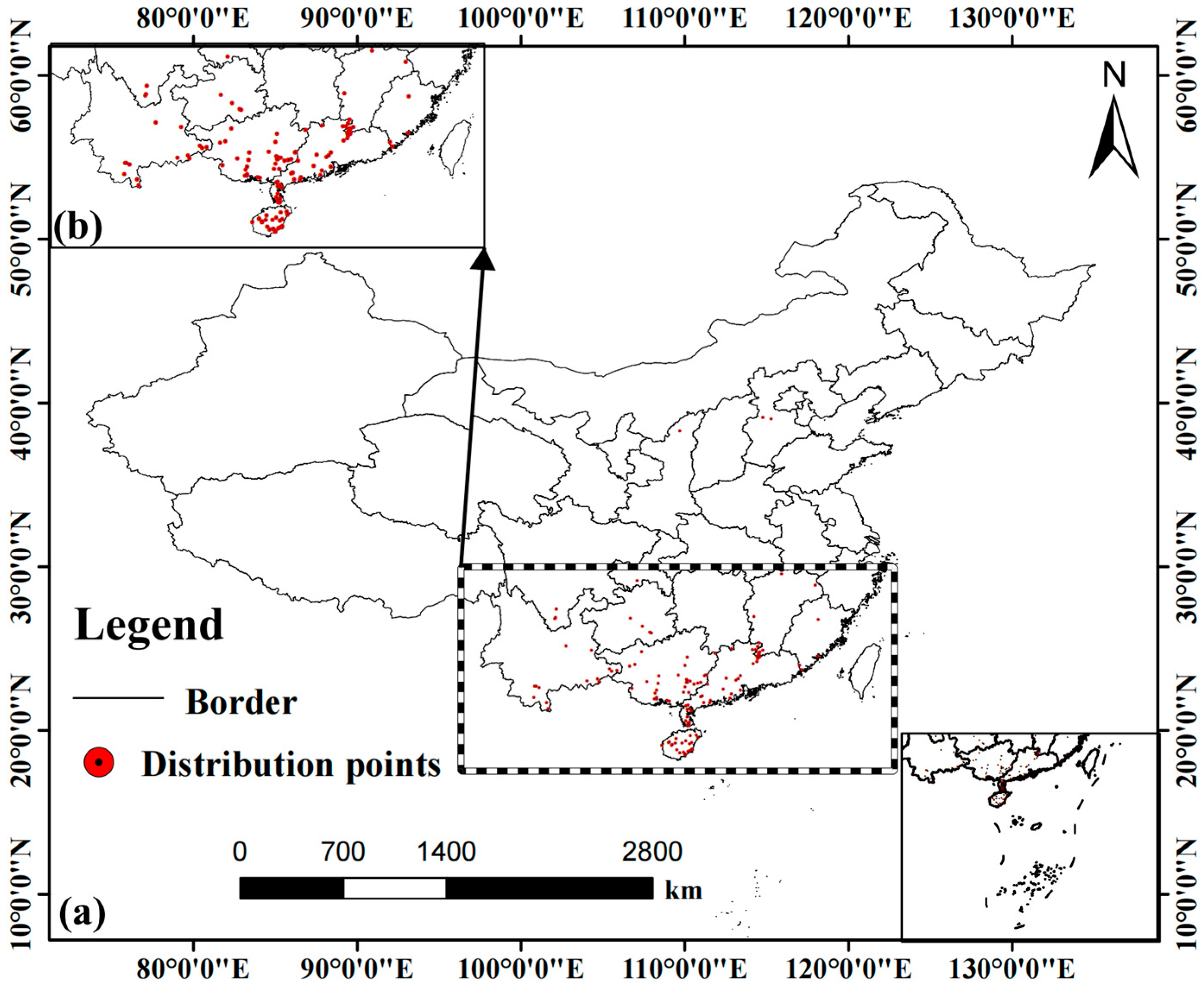
2.1. Species Data Collection and Processing
2.2. Environmental Variable Selection and Climate Scenario Configuration
2.3. Model Construction, Optimization and Evaluation
2.4. Spatial Interpolation Analysis of Galangin Content
2.5. Delineation of Integrated Quality Regions
2.6. Centroid Migration Analysis
3. Results
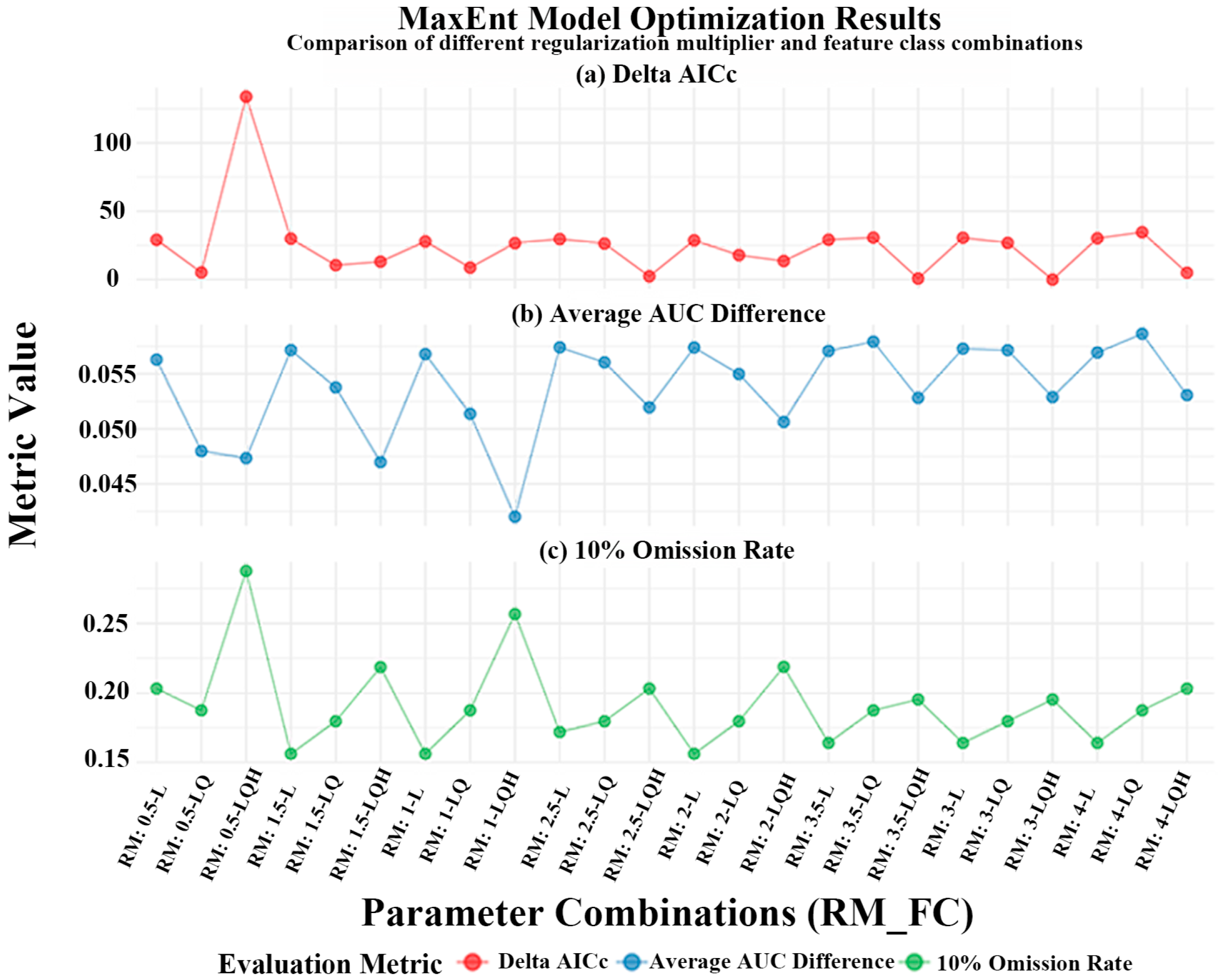
3.1. Model Parameter Optimization and Performance Evaluation
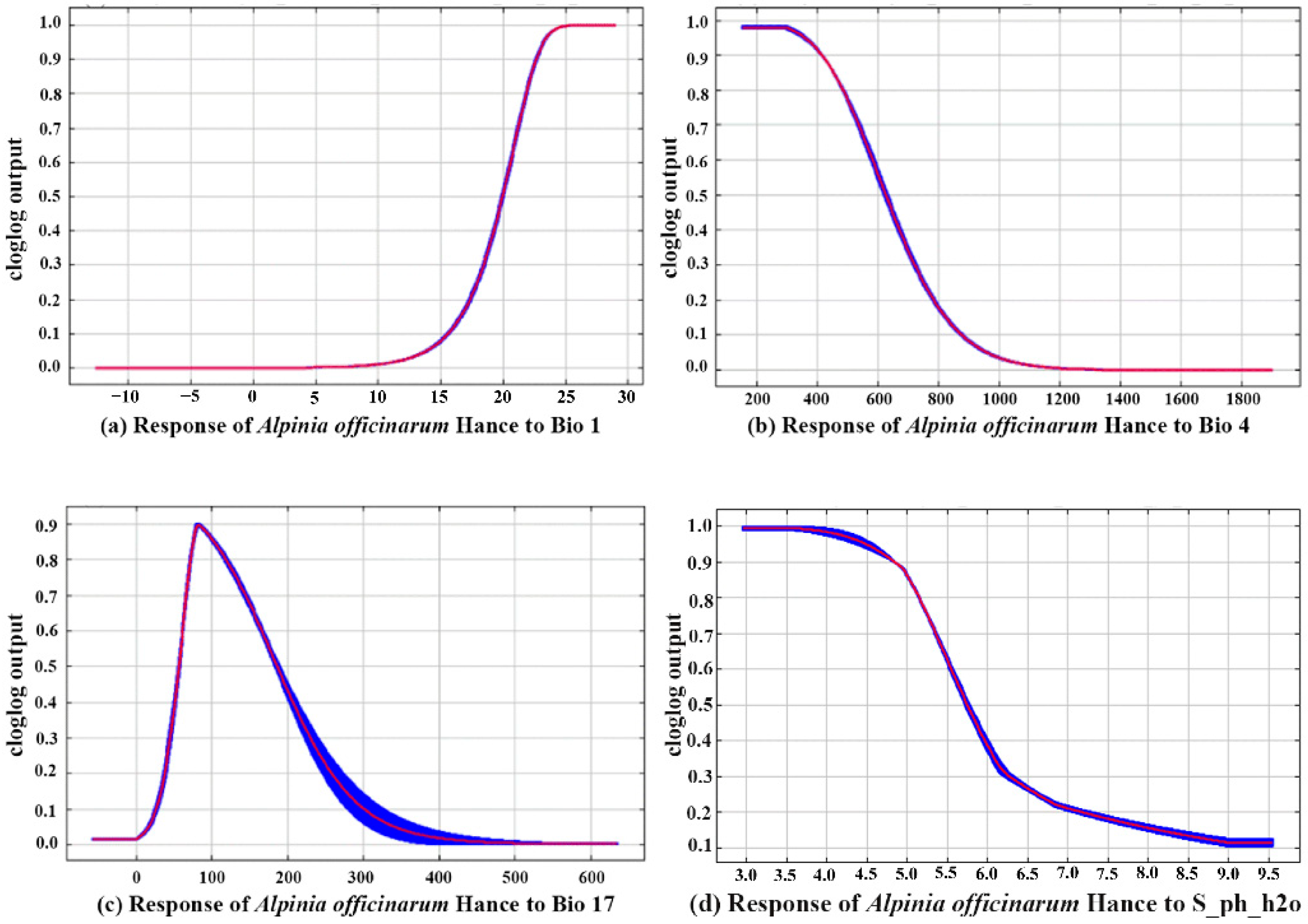
3.2. Identification of Dominant Environmental Factors and Analysis of Suitable Thresholds
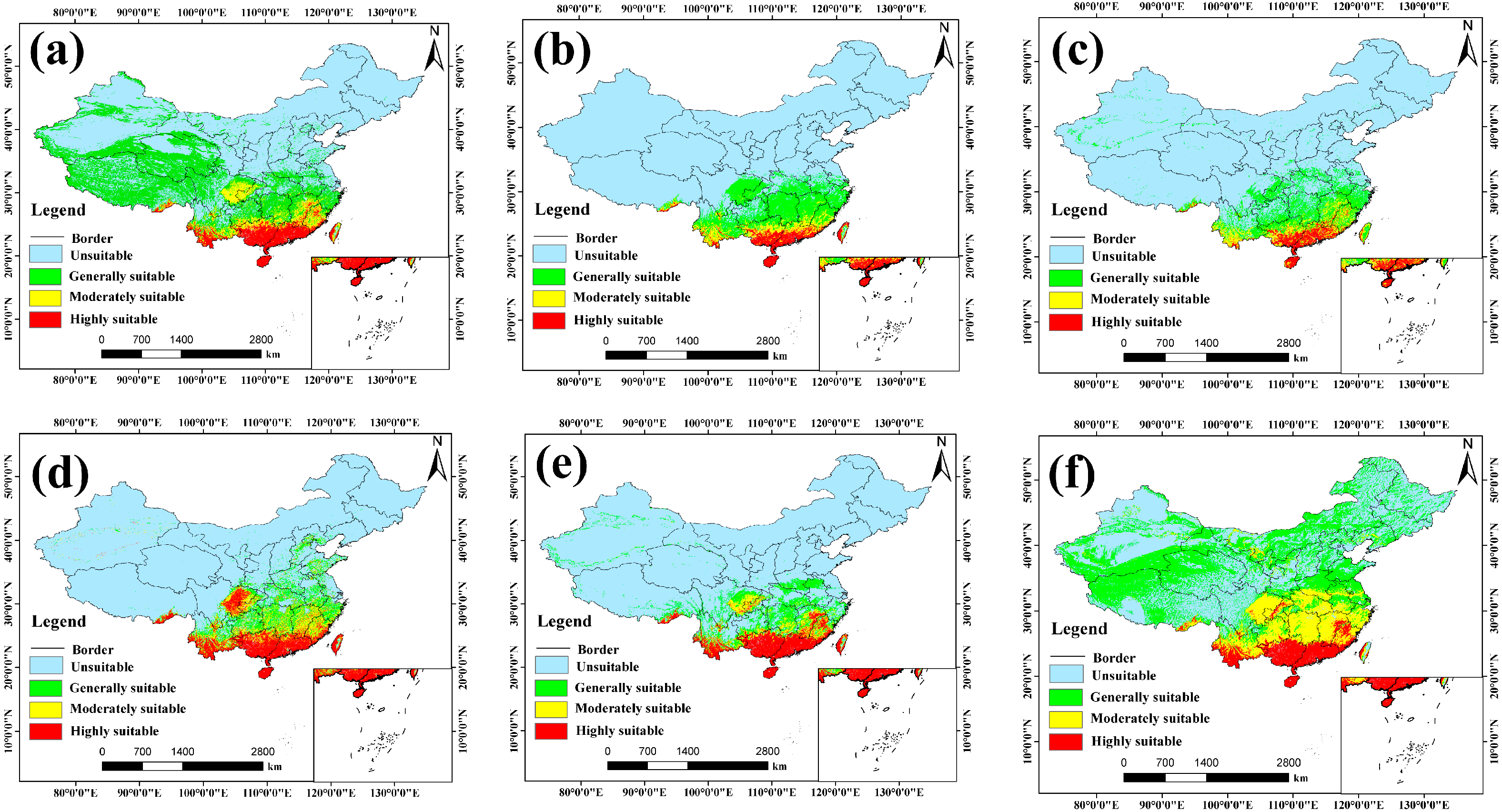
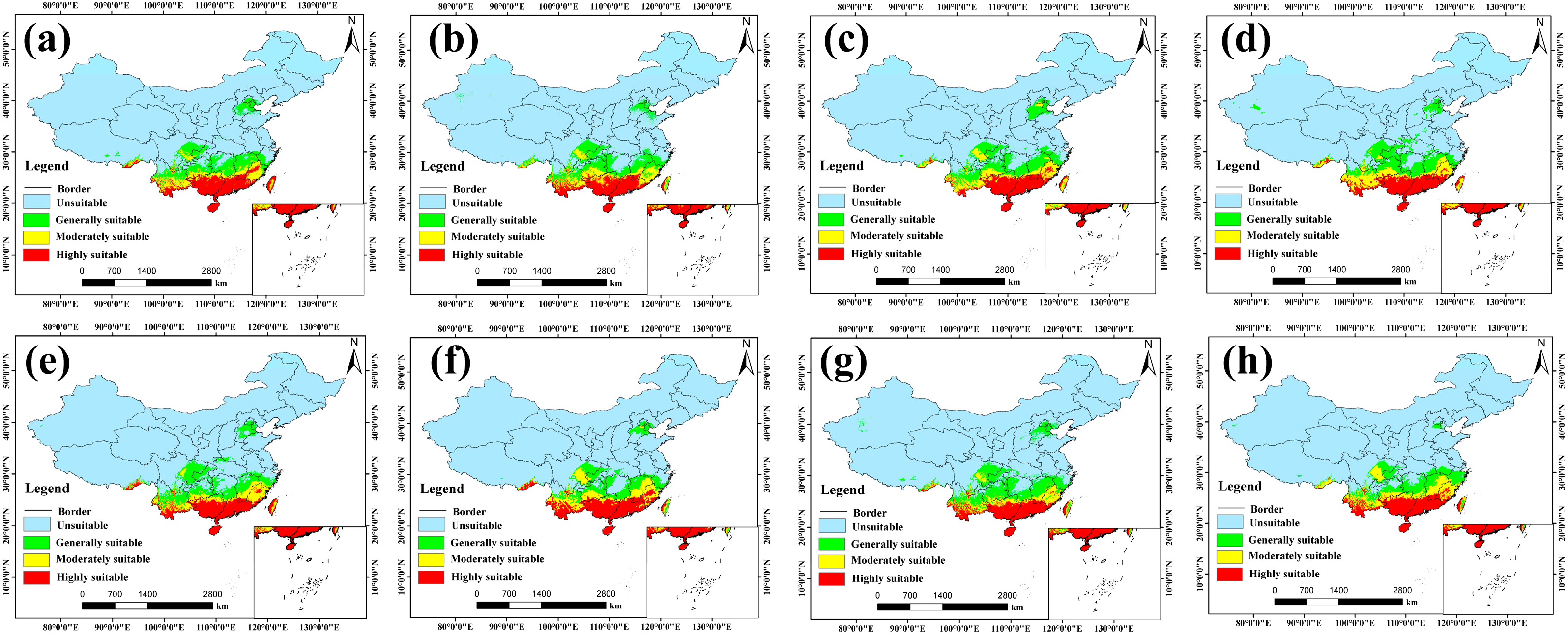
3.3. Potential Distribution Pattern Under Current Climatic Conditions
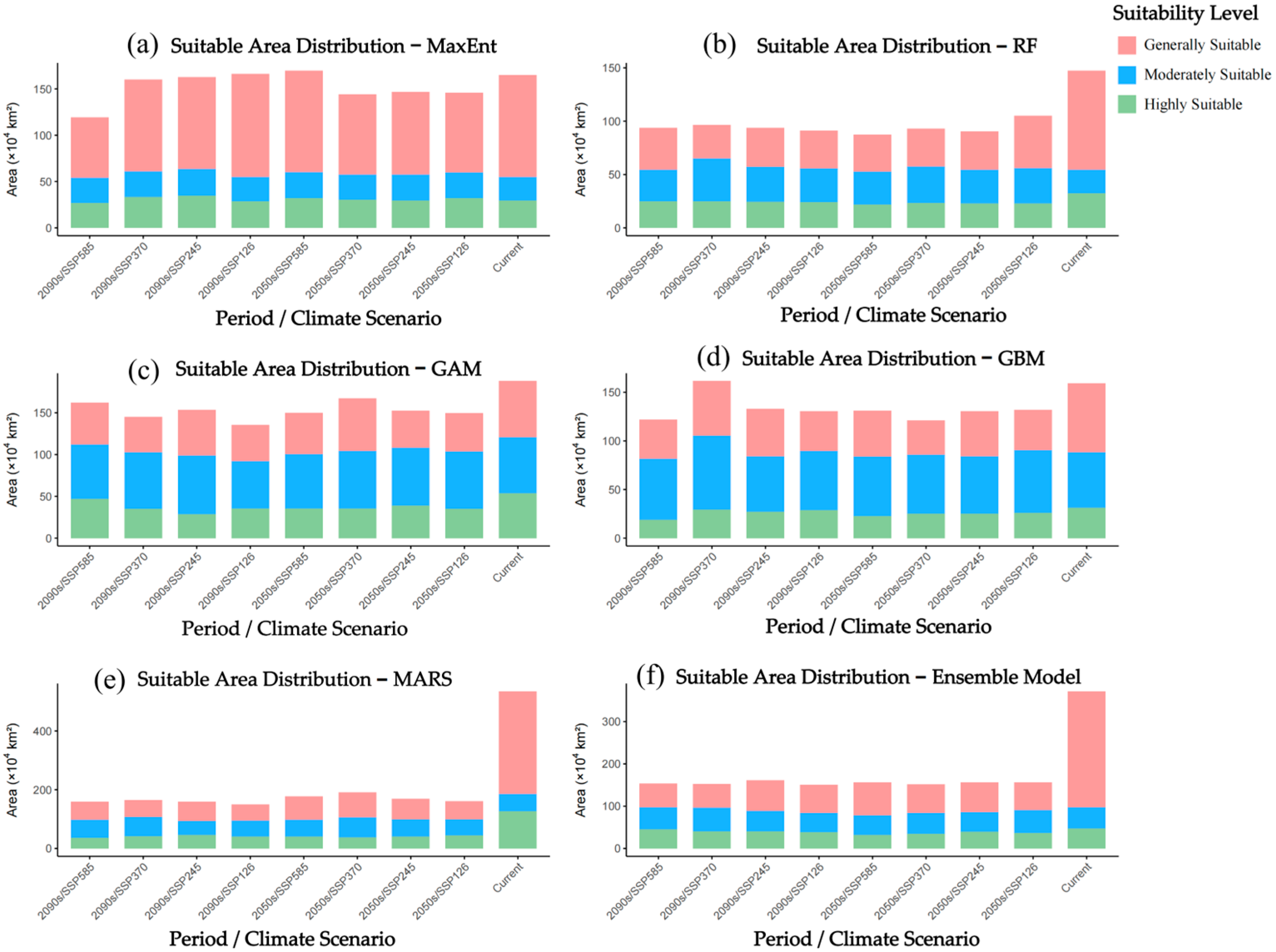
3.4. Projected Potential Distribution Under Future Climate Scenarios
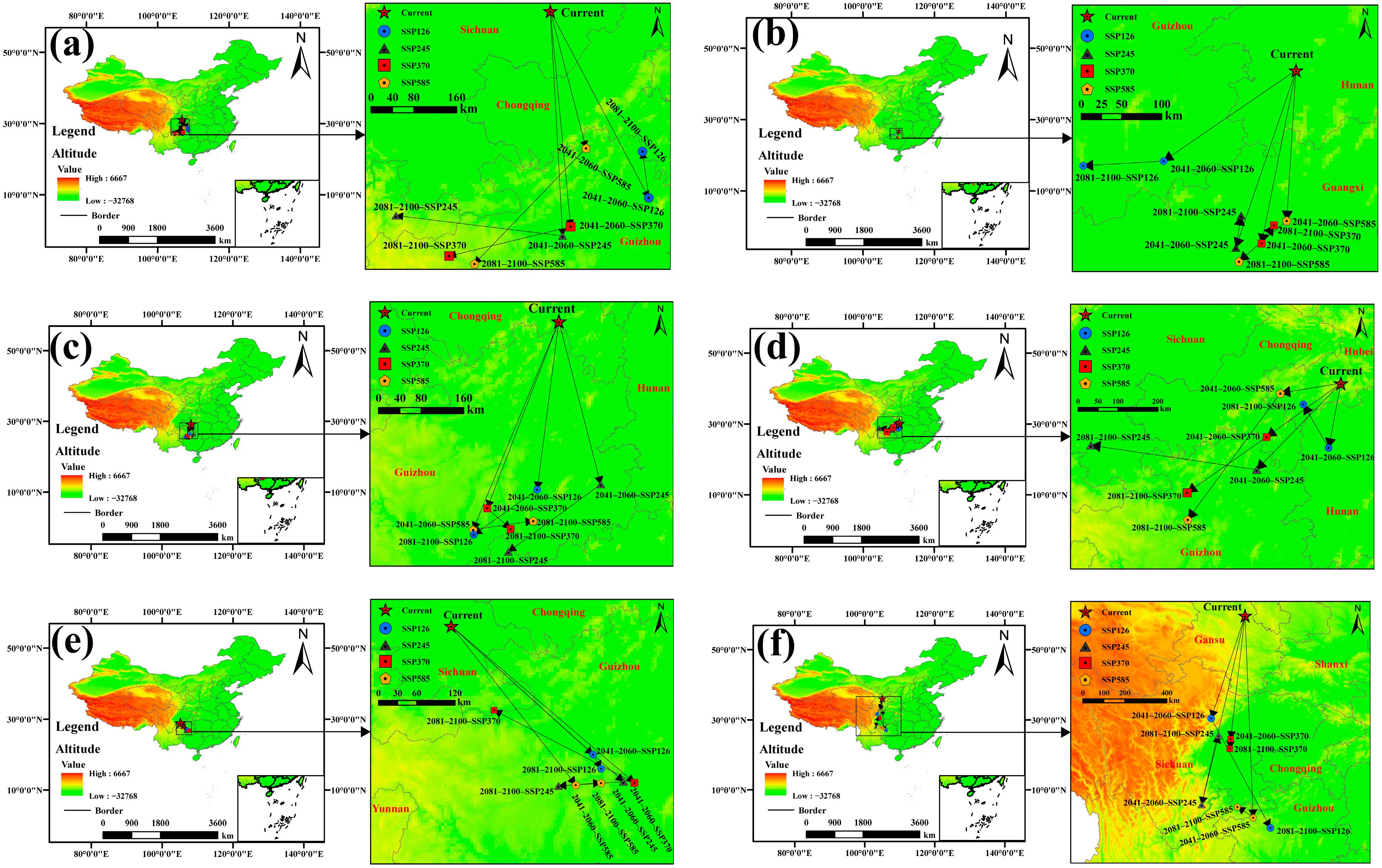
3.5. Spatiotemporal Dynamics of Centroid Shift in Suitable Habitats
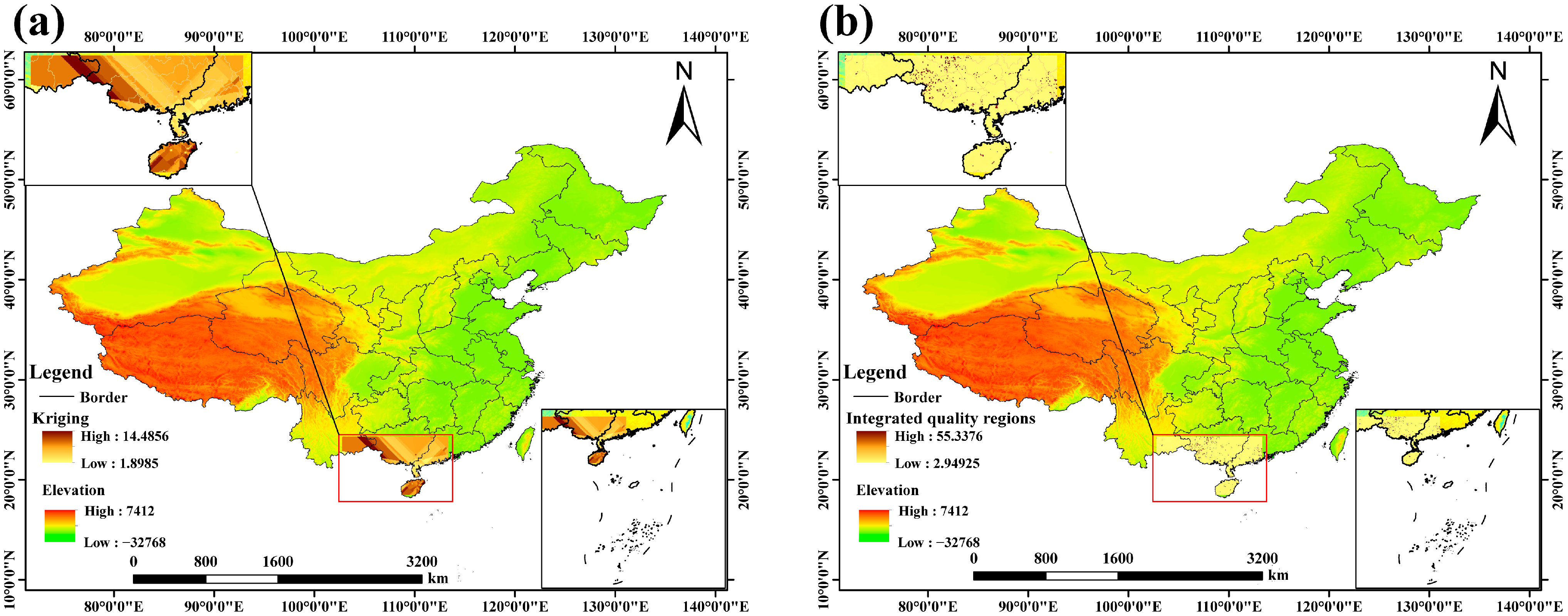
3.6. Delineation of Integrated Quality Regions
4. Discussion
5. Conclusions
Supplementary Materials
Author Contributions
Funding
Institutional Review Board Statement
Informed Consent Statement
Data Availability Statement
Conflicts of Interest
References
- Wu, M.; Guo, P.; Tsui, S.W.; Chen, H.; Zhao, Z. An ethnobotanical survey of medicinal spices used in Chinese hotpot. Food Res. Int. 2012, 48, 226–232. [Google Scholar] [CrossRef]
- Editorial Committee of Flora of China, Chinese Academy of Sciences. Flora of China; Science Press: Beijing, China, 1981; Volume 16. [Google Scholar]
- Shang, Z.J.; Shang, Y.S. (Eds.) Liang-Tao Hongjing. Collected Notes on the Classic of Materia Medica; People’s Health Publishing House: Beijing, China, 1994; p. 313. [Google Scholar]
- Feng, P.; Tang, X.M.; Pan, L.M.; Yang, Q. Research progress on molecular pharmacognosy of Alpinia officinarum Hance. South. Agric. 2023, 17, 215–218+226. [Google Scholar]
- Ding, P.; Yang, L.; Feng, C.; Xian, J.C. Research and application of Alpinia officinarum Hance in medicinal field. Chin. Herb. Med. 2019, 11, 132–140. [Google Scholar]
- Pillai, M.K.; Young, D.J.; Bin Hj Abdul Majid, H.M. Therapeutic potential of Alpinia officinarum Hance. Chin. Herb. Med. 2018, 18, 1220–1232. [Google Scholar]
- Liu, H.Q. Trend Analysis of Alpinia officinarum Hance. Mod. Chin. Med. 2011, 13, 63. [Google Scholar]
- Hu, J.H.; Yan, M. Research Progress on Alpinia officinarum Hance. Lishizhen Med. Mater. Med. Res. 2009, 20, 2544–2546. [Google Scholar]
- Chinese Pharmacopoeia Commission. Pharmacopoeia of the People’s Republic of China: 2015 Edition 1; China Medical Science and Technology Press: Beijing, China, 2015; p. 475. [Google Scholar]
- Li, J.; Zhang, X.F.; Wang, X.K.; Wang, W.Y. Antioxidant and enzyme inhibitory activities and their correlation with active ingredients of alcoholic extracts of Alpinia officinarum Hance. Food Mach. 2019, 35, 140–144, 184. [Google Scholar]
- Zeng, P.H.; Guo, J.J.; Pu, J.; Cai, J.F.; Hou, A.G.; Ma, Y.S. Historical evolution of Alpinia officinarum Hance processing and advances in modern chemistry and pharmacology. J. Liaoning Univ. Tradit. Chin. Med. 2022, 24, 101–105. [Google Scholar]
- Madduma Hewage, S.R.; Piao, M.J.; Kim, K.C.; Cha, J.W.; Han, X.; Choi, Y.H.; Chae, S.; Hyun, C.L.; Park, D.S.; Hyun, J.W.; et al. Galangin (3,5,7-Trihydroxyflavone) Shields Human Keratinocytes from Ultraviolet B-Induced Oxidative Stress. Biomol. Ther. 2015, 23, 165–173. [Google Scholar] [CrossRef] [PubMed]
- Wang, X.Q.; Sun, Y.H.; Zhao, F.S.; Yin, Y.M.; Ni, W.T.; Li, B.H.; Hou, L. Advances in pharmacological effects and mechanisms of Alpinia officinarum Hance. Pharmacol. Clin. Tradit. Chin. Med. 2023, 39, 115–120. [Google Scholar]
- Echeverría, J.; Ortiz, J.; Mendoza, L.; Urzúa, A.; Wilkens, M. Structure-Activity and Lipophilicity Relationships of Selected Antibacterial Natural Flavones and Flavanones of Chilean Flora. Molecules 2017, 22, 608. [Google Scholar] [CrossRef] [PubMed]
- Ouyang, J.; Sun, F.; Feng, W.; Xie, Y.; Ren, L.; Chen, Y. Antimicrobial Activity of Galangin and Its Effects on Murein Hydrolases of Vancomycin-Intermediate Staphylococcus aureus (VISA) Strain Mu50. Chemotherapy 2018, 63, 20–28. [Google Scholar] [CrossRef]
- Thuiller, W. BIOMOD–optimizing predictions of species distributions and projecting potential future shifts under global change. Glob. Change Biol. 2003, 9, 1353–1362. [Google Scholar] [CrossRef]
- Wang, J.; Zhao, J.; Jiang, L.; Han, X.; Zhu, Y. Predicting the Potential Suitable Habitat of Solanum rostratum in China Using the Biomod2 Ensemble Modeling Framework. Plants 2025, 14, 2779. [Google Scholar] [CrossRef] [PubMed]
- Du, L.X.; Jiang, Z.T.; Li, R. Research progress on natural spice, essential oil of Alpinia officinarum Hance. Sci. Technol. Food Ind. 2012, 33, 393–397. [Google Scholar]
- Gao, Z.H.; Chen, Y.F.; Yang, Q.; Jiang, M.W. Research Progress of the Southern Medicinal Drug Alpinia officinarum Hance. J. Guangdong Pharm. Univ. 2016, 32, 817–820. [Google Scholar]
- Tan, Y.H.; Chen, Z. Production investigation, problem analysis and development countermeasures of Alpinia officinarum Hance. J. Hainan Norm. Univ. (Nat. Sci.) 2014, 27, 263–266. [Google Scholar]
- Tungmunnithum, D.; Tanaka, N.; Uehara, A.; Iwashina, T. Flavonoids profile, taxonomic data, history of cosmetic uses, anti-oxidant and anti-aging potential of Alpinia galanga (L.) Willd. Cosmetics 2020, 7, 89. [Google Scholar] [CrossRef]
- He, Y.Z.; Huang, W.D.; Zhao, X.; Lyu, P.; Wang, H.H. A Review on the Impacts of Climate Change on Plant Biodiversity. J. Desert Res. 2021, 41, 59–66. [Google Scholar]
- Liu, Y.S.; Liu, Y.; Guo, L.Y. Impacts of Climate Change on Agricultural Production in China and Coping Strategies. Chin. J. Eco-Agric. 2010, 18, 905–910. [Google Scholar] [CrossRef]
- Huang, D.; An, Q.; Huang, S.; Tan, G.; Quan, H.; Chen, Y.; Du, J.; Wang, X. Biomod2 modeling for predicting the potential ecological distribution of three Fritillaria species under climate change. Sci. Rep. 2023, 13, 18801. [Google Scholar] [CrossRef]
- Bao, R.; Li, X.; Zheng, J. Feature tuning improves MAXENT predictions of the potential distribution of Pedicularis longiflora Rudolph and its variant. PeerJ 2022, 10, e13337. [Google Scholar] [CrossRef]
- Zhang, J.; Li, X.; Li, S.; Yang, Q.; Li, Y.; Xiang, Y.; Yao, B. MaxEnt Modeling of Future Habitat Shifts of Itea yunnanensis in China Under Climate Change Scenarios. Biology 2025, 14, 899. [Google Scholar] [CrossRef]
- Hirzel, A.H.; Le Lay, G. Habitat suitability modelling and niche theory. J. Appl. Ecol. 2008, 45, 1372–1381. [Google Scholar] [CrossRef]
- Rode, E.J.; Stengel, C.J.; Nekaris, K.A.I. Habitat assessment and species niche modelling. In Primate Ecology and Conservation; Oxford University Press: Oxford, UK, 2013; pp. 79–102. [Google Scholar]
- Wu, J.; Luo, J.; Zhang, H.; Qin, S.; Yu, M. Projections of land use change and habitat quality assessment by coupling climate change and development patterns. Sci. Total Environ. 2022, 847, 157491. [Google Scholar] [CrossRef] [PubMed]
- Phillips, S.J.; Dudík, M. Modeling of species distributions with Maxent: New extensions and a comprehensive evaluation. Ecography 2008, 31, 161–175. [Google Scholar] [CrossRef]
- Shi, X.; Zhao, J.; Wang, Y.; Wu, G.; Hou, Y.; Yu, C. Optimized MaxEnt Modeling of Catalpa bungei Habitat for Sustainable Management Under Climate Change in China. Forests 2025, 16, 1150. [Google Scholar] [CrossRef]
- Tebaldi, C.; Knutti, R. The use of the multi-model ensemble in probabilistic climate projections. Philos. Trans. R. Soc. A 2007, 365, 2053–2075. [Google Scholar] [CrossRef]
- Braunisch, V.; Coppes, J.; Arlettaz, R.; Suchant, R.; Schmid, H.; Bollmann, K. Selecting from correlated climate variables: A major source of uncertainty for predicting species distributions under climate change. Ecography 2013, 36, 971–983. [Google Scholar] [CrossRef]
- Pearson, R.G.; Dawson, T.P. Predicting the impacts of climate change on the distribution of species: Are bioclimate envelope models useful? Glob. Ecol. Biogeogr. 2003, 12, 361–371. [Google Scholar] [CrossRef]
- Hallgren, W.; Santana, F.; Low-Choy, S.; Zhao, Y.; Mackey, B. Species distribution models can be highly sensitive to algorithm configuration. Ecol. Model. 2019, 408, 108719. [Google Scholar] [CrossRef]
- Leathwick, J.R.; Elith, J.; Hastie, T. Comparative performance of generalized additive models and multivariate adaptive regression splines for statistical modelling of species distributions. Ecol. Model. 2006, 199, 188–196. [Google Scholar] [CrossRef]
- Muscarella, R.; Galante, P.J.; Soley-Guardia, M.; Boria, R.A.; Kass, J.M.; Uriarte, M.; Anderson, R.P. ENM eval: An R package for conducting spatially independent evaluations and estimating optimal model complexity for Maxent ecological niche models. Methods Ecol. Evol. 2014, 5, 1198–1205. [Google Scholar] [CrossRef]
- Jiang, H.; Chen, H.; Wang, H.; Huang, B.; Chen, T. Establishment of Integrated Quality Regions for the Rare Medicine Food Homology Plant Cyclocarya paliurus (Batal.) Iljinsk in China. Biology 2025, 14, 1639. [Google Scholar] [CrossRef]
- Cortez-Núñez, J.A.; Gutiérrez-Castillo, M.E.; Mena-Cervantes, V.Y.; Terán-Cuevas, Á.R.; Tovar-Gálvez, L.R.; Velasco, J. A GIS approach land suitability and availability analysis of Jatropha curcas L. growth in Mexico as a potential source for biodiesel production. Energies 2020, 13, 5888. [Google Scholar] [CrossRef]
- Dobesch, H.; Dumolard, P.; Dyras, I. (Eds.) Spatial Interpolation for Climate Data: The Use of GIS in Climatology and Meteorology; John Wiley & Sons: Hoboken, NJ, USA, 2013. [Google Scholar]
- Huang, B.; Chen, S.; Xu, L.; Jiang, H.; Chen, X.; He, H.; Chen, T. Predicting the potential geographical distribution of Zingiber striolatum Diels (Zingiberaceae), a medicine food homology plant in China. Sci. Rep. 2024, 14, 22206. [Google Scholar] [CrossRef]
- Li, P.; Tedersoo, L.; Crowther, T.W.; Dumbrell, A.J.; Dini-Andreote, F.; Bahram, M.; Chen, L.; Soudzilovskaia, N.A.; Teste, F.P.; Lilleskov, E.A.; et al. Fossil-fuel-dependent scenarios could lead to a significant decline of global plant-beneficial bacteria abundance in soils by 2100. Nat. Food 2023, 4, 996–1006. [Google Scholar] [CrossRef]
- Zhang, Y.; Li, J.; Lin, W.; Qiang, S. Predicting Potential Distribution of the Invasive Weed Erigeron philadelphicus in China Based on a Maximum Entropy (MaxEnt) Ecological Niche Model. Chin. J. Appl. Ecol. 2011, 22, 2970–2976. [Google Scholar]
- Pradhan, P. Strengthening MaxEnt modelling through screening of redundant explanatory bioclimatic variables with variance inflation factor analysis. Researcher 2016, 8, 29–34. [Google Scholar]
- Li, Y.; Li, M.; Li, C.; Liu, Z. Optimized maxent model predictions of climate change impacts on the suitable distribution of Cunninghamia lanceolata in China. Forests 2020, 11, 302. [Google Scholar] [CrossRef]
- Zhao, Y.; Deng, X.; Xiang, W.; Chen, L.; Ouyang, S. Predicting potential suitable habitats of Chinese fir under current and future climatic scenarios based on Maxent model. Ecol. Inform. 2021, 64, 101393. [Google Scholar] [CrossRef]
- Huang, J.; Ling, C.X. Using AUC and accuracy in evaluating learning algorithms. IEEE Trans. Knowl. Data Eng. 2005, 17, 299–310. [Google Scholar] [CrossRef]
- Harrigan, E. Integrating GIS and Multi-Criteria Decision Analysis for Conservation Modeling in the Southern Appalachians. Ph.D. Thesis, Duke University, Durham, NC, USA, 2025. [Google Scholar]
- Wan, G.Z.; Wang, B.Q.; Jin, L.; Chen, J. Prediction of potential geographical distribution of Tibetan medicine Lamiophlomis rotata on the Qinghai–Tibet Plateau based on an ensemble model. Chin. J. Inf. Tradit. Chin. Med. 2025, 32, 12–16. [Google Scholar]
- Allouche, O.; Tsoar, A.; Kadmon, R. Assessing the accuracy of species distribution models: Prevalence, kappa and the true skill statistic (TSS). J. Appl. Ecol. 2006, 43, 1223–1232. [Google Scholar] [CrossRef]
- Swets, J.A. Measuring the accuracy of diagnostic systems. Science 1988, 240, 1285–1293. [Google Scholar] [CrossRef]
- Jiao, H.; Xu, S.; Fan, C.; Zhang, Q.; Wang, Y. Chromatographic fingerprint analysis and quantitative evaluate the rhizomes of Alpinia officinarum Hance (lesser galangal). J. Chin. Pharm. Sci. 2019, 28, 728–736. [Google Scholar] [CrossRef]
- Upadhye, A.S.; Rajopadhye, A.; Dias, L. Development and validation of HPTLC fingerprints of three species of Alpinia with biomarker Galangin. BMC Complement. Altern. Med. 2018, 18, 16. [Google Scholar] [CrossRef]
- Zhang, P.; Wei, S.; Xiang, H.; Lang, Y.; Jian, Y.; Wang, Z.; Yan, F. Study on the ecological suitability and Medicinal component zoning of Ardisia crenata (Myrsinaceae) Based on ArcGIS and MaxEnt Model. Forests 2025, 16, 1641634. [Google Scholar]
- Zhang, X.; Zhou, J.; Xu, H.; Peng, C.; Meng, F. Using ecological niche modelling to identify the high-quality ecological areas of Houttuynia cordata Thunb. based on secondary metabolites content. Front. Plant Sci. 2025, 16, 1641634. [Google Scholar] [CrossRef]
- Regos, A.; Gagne, L.; Alcaraz-Segura, D.; Honrado, J.P.; Domínguez, J. Effects of species traits and environmental predictors on performance and transferability of ecological niche models. Sci. Rep. 2019, 9, 4221. [Google Scholar] [CrossRef]
- Ying, L.X.; Liu, Y.; Chen, S.T.; Shen, Z.H. Simulation of the Potential Range of Pistacia weinmannifolia in Southwest China with Climate Change Based on the Maximum-Entropy (Maxent) Model. Biodivers. Sci. 2016, 24, 453–461. [Google Scholar] [CrossRef]
- Kang, Y.; Lin, F.; Yin, J.; Han, Y.; Zhu, M.; Guo, Y.; Chen, P.; Wu, B.; Zhang, H.; Zhao, L.; et al. Projected distribution patterns of Alpinia officinarum in China under future climate scenarios: Insights from optimized Maxent and Biomod2 models. Front. Plant Sci. 2025, 16, 1517060. [Google Scholar] [CrossRef]
- Xiang, Y.; Yang, Q.; Li, S.; Liu, Y.; Li, Y.; Ren, J.; Wang, H.; Chen, X.; Zhang, L.; Yao, B.; et al. Climate Change Drives Northwestward Migration of Betula alnoides: A Multi-Scenario MaxEnt Modeling Approach. Plants 2025, 14, 2539. [Google Scholar] [CrossRef]
- Meng, X.; Dong, G.; Fenetahun, Y. Forecasting sub-pixel vegetation potential shifts to guide restoration planning for the African Great Green Wall. GISci. Remote Sens. 2025, 62, 2574730. [Google Scholar] [CrossRef]
- Liu, X.C.; Wu, Y.L.; Tian, Y.; Yang, T.Q.; Guo, Z.H.; Sun, C.; Liu, Y.Q.; Zhu, Y.X. Effects of drought stress on seedling growth and development of different ginger varieties. J. Nanjing Agric. Univ. 2024, 47, 843–853. [Google Scholar]
- Wang, H.; Huang, B.; Xu, L.; Chen, T. Prediction Analysis of Integrative Quality Zones for Corydalis yanhusuo WT Wang Under Climate Change: A Rare Medicinal Plant Endemic to China. Biology 2025, 14, 972. [Google Scholar] [CrossRef]
- Heuvelink, G.B.M.; Webster, R. Modelling soil variation: Past, present, and future. Geoderma 2001, 100, 269–301. [Google Scholar] [CrossRef]
- Lin, H. Three principles of soil change and pedogenesis in time and space. Soil Sci. Soc. Am. J. 2011, 75, 2049–2070. [Google Scholar] [CrossRef]
- Zhao, M.; Peng, C.; Xiang, W.; Deng, X.; Tian, D.; Zhou, X.; Yu, G.; He, H.; Zhao, S.; Xu, Z.; et al. Plant phenological modeling and its application in global climate change research: Overview and future challenges. Environ. Rev. 2013, 21, 1–14. [Google Scholar] [CrossRef]
- Záveská, E.; Šída, O.; Leong-Škorničková, J.; Chumová, Z.; Trávníček, P.; Newman, M.F.; Lamxay, V.; Thomas, S.; Tran, H.D.; Fér, T. Testing the large genome constraint hypothesis in tropical rhizomatous herbs: Life strategies, plant traits and habitat preferences in gingers. Plant J. 2024, 117, 1223–1238. [Google Scholar] [CrossRef]
- Hansen, A.J.; Neilson, R.P.; Dale, V.H.; Flather, C.H.; Iverson, L.R.; Currie, D.J.; Shafer, S.; Cook, R.; Bartlein, P.J. Global change in forests: Responses of species, communities, and biomes: Interactions between climate change and land use are projected to cause large shifts in biodiversity. BioScience 2001, 51, 765–779. [Google Scholar] [CrossRef]



| Variables | Name | Unit |
|---|---|---|
| Bio1 | Annual mean temperature | °C |
| Bio2 | Mean diurnal temperature range | °C |
| Bio3 | Isothermality | / |
| Bio4 | Temperature seasonality | / |
| Bio5 | Maximum temperature of the warmest month | °C |
| Bio6 | Minimum temperature of the coldest month | °C |
| Bio7 | Temperature annual range | °C |
| Bio8 | Mean temperature of the wettest quarter | °C |
| Bio9 | Mean temperature of the driest quarter | °C |
| Bio10 | Mean temperature of the warmest quarter | °C |
| Bio11 | Mean temperature of the coldest quarter | °C |
| Bio12 | Annual precipitation | mm |
| Bio13 | Precipitation of the wettest month | mm |
| Bio14 | Precipitation of the driest month | mm |
| Bio15 | Precipitation seasonality | / |
| Bio16 | Precipitation of the wettest quarter | mm |
| Bio17 | Precipitation of the driest quarter | mm |
| Bio18 | Precipitation of the warmest quarter | mm |
| Bio19 | Precipitation of the coldest quarter | mm |
| Awc_class | Soil available water content | % |
| Slope | Slope | ◦ |
| Elev | Elevation | m |
| Aspect | Aspect | / |
| T_ph_h2o | Topsoil pH | -log(H+) |
| S_ph_h2o | Subsoil pH | -log(H+) |
| T_oc | Topsoil organic carbon content | %weight |
| S_oc | Subsoil organic carbon content | %weight |
| T_clay | Topsoil clay content | %weight |
| S_clay | Subsoil clay content | %weight |
| T_sand | Topsoil sand content | %weight |
| S_sand | Subsoil sand content | %weight |
| T_silt | Topsoil silt content | %weight |
| S_silt | Subsoil silt content | %weight |
| T_ece | Topsoil electrical conductivity | ds/m |
| S_ece | Subsoil electrical conductivity | ds/m |
| T_caco3 | Topsoil carbonate or lime content | %weight |
| S_caco3 | Subsoil carbonate or lime content | %weight |
| Indicator | Algorithm | |||||||
|---|---|---|---|---|---|---|---|---|
| RF | GAM | GBM | MARS | CTA | GLM | ANN | SRE | |
| AUC | 0.954 | 0.94 | 0.939 | 0.93 | 0.887 | 0.854 | 0.783 | 0.65 |
| TSS | 0.615 | 0.737 | 0.787 | 0.761 | 0.78 | 0.659 | 0.564 | 0.3 |
| Kappa | 0.627 | 0.62 | 0.653 | 0.636 | 0.593 | 0.514 | 0.473 | 0.363 |
| Variables | Name | Percent Contribution (%) |
|---|---|---|
| Bio1 | Annual mean temperature | 71.2 |
| Bio4 | Temperature seasonality | 13.8 |
| Bio17 | Precipitation of the driest quarter | 12.1 |
| S_ph_h2o | Subsoil pH | 1.3 |
| T_clay | Topsoil clay content | 0.6 |
| Elev | Elevation | 0.5 |
| T_silt | Topsoil silt content | 0.3 |
| Aspect | Aspect | 0.1 |
| Variable | Suitable Range | Adaptive Threshold |
|---|---|---|
| Bio1 | 19.96~29.05 °C | 25.63~29.05 °C |
| Bio4 | 149.92~622.96 °C | 149.92~295.34 °C |
| Bio17 | 56.64~185.65 mm | 83.69 mm |
| S_ph_h2o | 2.95~5.74 | 2.95~3.49 |
Disclaimer/Publisher’s Note: The statements, opinions and data contained in all publications are solely those of the individual author(s) and contributor(s) and not of MDPI and/or the editor(s). MDPI and/or the editor(s) disclaim responsibility for any injury to people or property resulting from any ideas, methods, instructions or products referred to in the content. |
© 2026 by the authors. Licensee MDPI, Basel, Switzerland. This article is an open access article distributed under the terms and conditions of the Creative Commons Attribution (CC BY) license.
Share and Cite
Jiang, H.; Huang, B.; Li, T.; Liu, Y.; Zhang, S.; Yang, Q.; Wei, K. Zoning of Integrated Quality Regions for Alpinia officinarum Hance Based on a Multi-Model Evaluation System. Biology 2026, 15, 369. https://doi.org/10.3390/biology15040369
Jiang H, Huang B, Li T, Liu Y, Zhang S, Yang Q, Wei K. Zoning of Integrated Quality Regions for Alpinia officinarum Hance Based on a Multi-Model Evaluation System. Biology. 2026; 15(4):369. https://doi.org/10.3390/biology15040369
Chicago/Turabian StyleJiang, Heng, Bin Huang, Tao Li, Ying Liu, Shuang Zhang, Quan Yang, and Kunhua Wei. 2026. "Zoning of Integrated Quality Regions for Alpinia officinarum Hance Based on a Multi-Model Evaluation System" Biology 15, no. 4: 369. https://doi.org/10.3390/biology15040369
APA StyleJiang, H., Huang, B., Li, T., Liu, Y., Zhang, S., Yang, Q., & Wei, K. (2026). Zoning of Integrated Quality Regions for Alpinia officinarum Hance Based on a Multi-Model Evaluation System. Biology, 15(4), 369. https://doi.org/10.3390/biology15040369