In Vitro Effects of Extracellular Vesicles from Adipose Tissue-Derived Stem Cells on the Growth and Metastasis of Cultured Breast Cancer Cells via Downregulation of Interleukin-6 Expression and the Microtubule Network

 , , , , , and
Simple Summary
Abstract
1. Introduction
2. Materials and Methods
2.1. Materials
2.2. Method
2.2.1. Culture of MCF-7 Cells
2.2.2. Culture of ADSCs and Collection of Extracellular Vesicles
2.2.3. ELISA for the Detection of EV Markers CD63, CD81, TSG101, and Negative Marker Calnexin
2.2.4. Evaluation of the Effects of EVs on MCF-7 Breast Cancer Cells
2.2.5. MTT Assay for Cell Viability
2.2.6. Calculation of Cell Viability
- Control sample: Contains only cells and culture medium.
- Test sample: Contains cells cultured with EVs at different concentrations.
- Blank: Contains only the culture medium (without cells).
2.2.7. Scratch Wound Assay
2.2.8. Evaluation of the Effects of EVs on Gene Expression Related to the Cytoskeleton and Signaling Pathways
- : the Ct value of the target gene sample.
- : the Ct value of the reference gene sample.
- : ∆Ct of the test sample.
- : ∆Ct of the reference sample.
2.2.9. ELISA for Determination of IL-6 Content
2.2.10. Analysis of Microtubule Alterations in MCF-7 Cells Following EVs Treatment
2.2.11. Fixation and Blocking
2.2.12. Fluorescent Immunostaining
2.2.13. Statistical Analysis
3. Results
3.1. Isolation and Characterization of Extracellular Vesicles (EVs) from Adipose-Derived Stem Cells (ADSCs)
Dentification of EV Markers by ELISA
3.2. Effect of ADSC-Derived Evs on the Viability of MCF-7 Cells
3.3. Inhibition of MCF-7 Cell Migration by ADSC-Evs
3.4. Expression of TubA1 and CALR Genes Following ADSC-EV Treatment
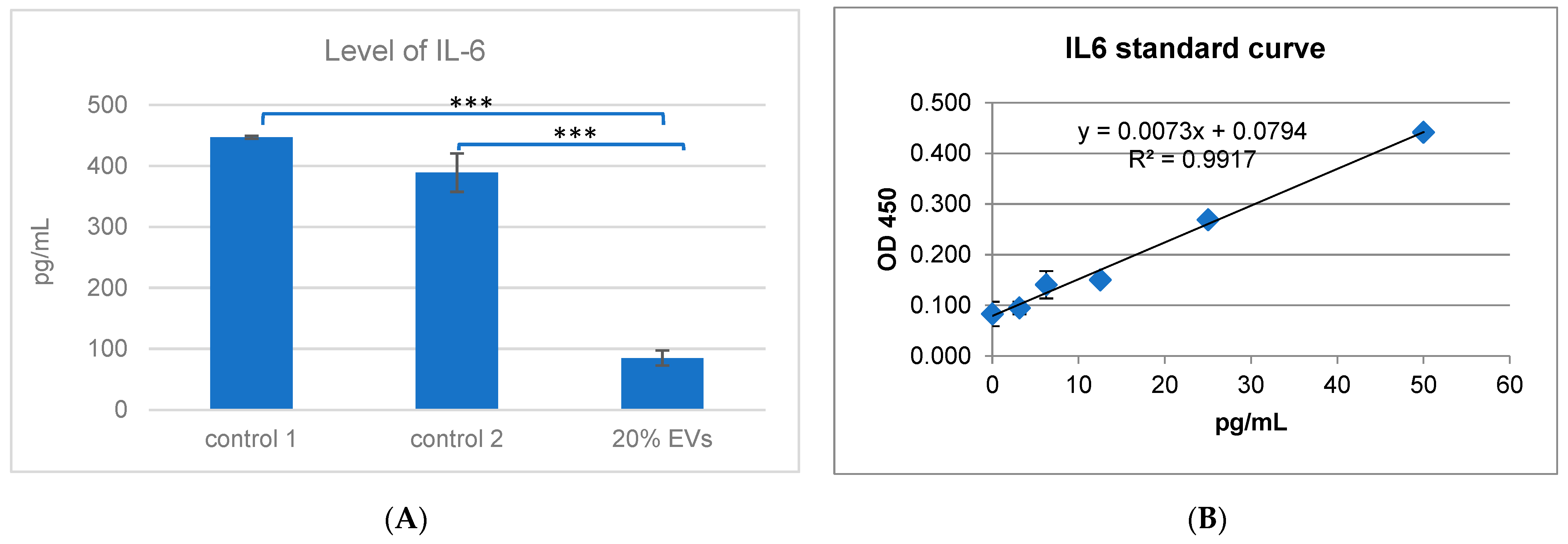
3.5. Quantification of IL-6 Secretion by MCF-7 Cells Following ADSC-EV Treatment
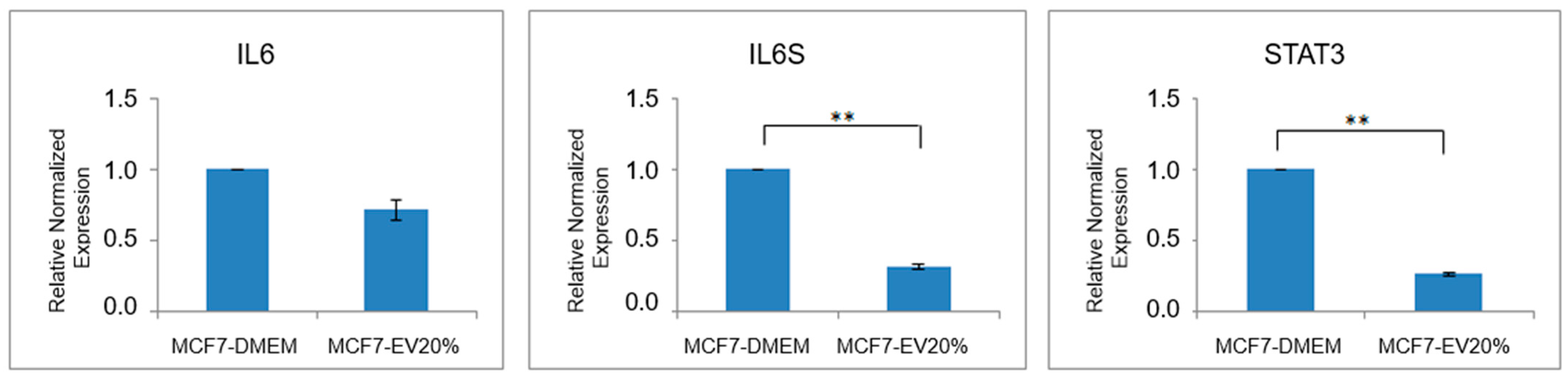
3.6. Gene Expression in the IL-6 Signaling Pathway Following EVs Treatment
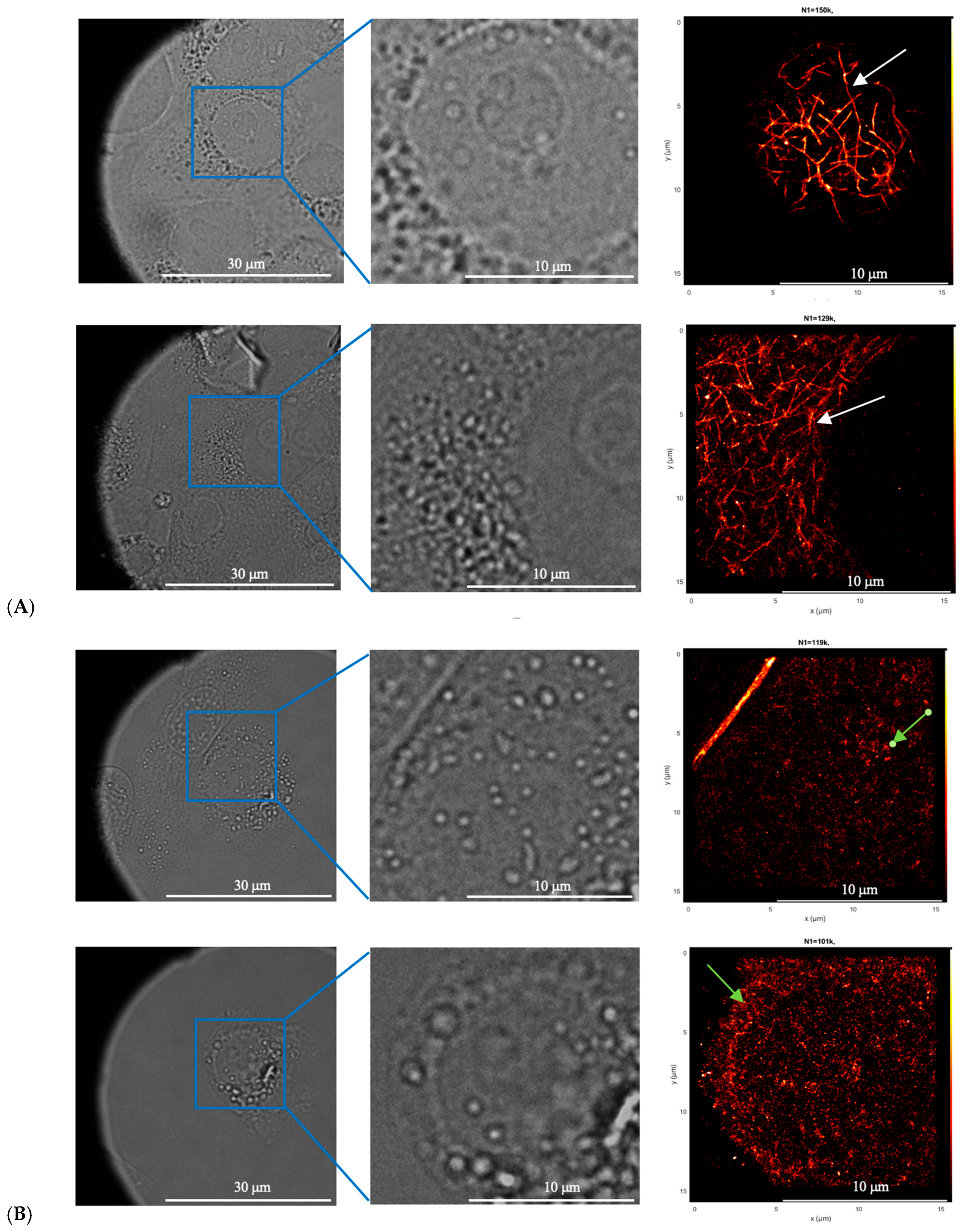
3.7. Effects of ADSC-EVs on Microtubule Stability
4. Discussion
5. Conclusions
Author Contributions
Funding
Institutional Review Board Statement
Informed Consent Statement
Data Availability Statement
Acknowledgments
Conflicts of Interest
References
- Sung, H.; Ferlay, J.; Siegel, R.L.; Laversanne, M.; Soerjomataram, I.; Jemal, A.; Bray, F. Global Cancer Statistics 2020: GLOBOCAN Estimates of Incidence and Mortality Worldwide for 36 Cancers in 185 Countries. CA Cancer J. Clin. 2021, 71, 209–249. [Google Scholar] [CrossRef]
- Canelo-Aybar, C.; Ferreira, D.S.; Ballesteros, M.; Posso, M.; Montero, N.; Solà, I.; Saz-Parkinson, Z.; Lerda, D.; Rossi, P.G.; Duffy, S.W.; et al. Benefits and Harms of Breast Cancer Mammography Screening for Women at Average Risk of Breast Cancer: A Systematic Review for the European Commission Initiative on Breast Cancer. J. Med. Screen. 2021, 28, 389–404. [Google Scholar] [CrossRef]
- Jonczyk, M.M.; Jean, J.; Graham, R.; Chatterjee, A. Surgical Trends in Breast Cancer: A Rise in Novel Operative Treatment Options over a 12 Year Analysis. Breast Cancer Res. Treat. 2019, 173, 267–274. [Google Scholar] [CrossRef] [PubMed]
- Zhu, H.; Doğan, B.E. American Joint Committee on Cancer’s Staging System for Breast Cancer, Eighth Edition: Summary for Clinicians. Eur. J. Breast Health 2021, 17, 234–238. [Google Scholar] [CrossRef]
- Burguin, A.; Diorio, C.; Durocher, F. Breast Cancer Treatments: Updates and New Challenges. J. Pers. Med. 2021, 11, 808. [Google Scholar] [CrossRef]
- Vieira, R.A.d.C.; Bailão-Junior, A.; de Oliveira-Junior, I. Does Breast Oncoplastic Surgery Improve Quality of Life? Front. Oncol. 2022, 12, 1099125. [Google Scholar] [CrossRef]
- Zuk, P.A.; Zhu, M.; Ashjian, P.; De Ugarte, D.A.; Huang, J.I.; Mizuno, H.; Alfonso, Z.C.; Fraser, J.K.; Benhaim, P.; Hedrick, M.H. Human Adipose Tissue Is a Source of Multipotent Stem Cells. Mol. Biol. Cell 2002, 13, 4279–4295. [Google Scholar] [CrossRef]
- Kern, S.; Eichler, H.; Stoeve, J.; Klüter, H.; Bieback, K. Comparative Analysis of Mesenchymal Stem Cells from Bone Marrow, Umbilical Cord Blood, or Adipose Tissue. Stem Cells 2006, 24, 1294–1301. [Google Scholar] [CrossRef]
- Bunnell, B.A. Adipose Tissue-Derived Mesenchymal Stem Cells. Cells 2021, 10, 3433. [Google Scholar] [CrossRef] [PubMed]
- Bacakova, L.; Zarubova, J.; Travnickova, M.; Musilkova, J.; Pajorova, J.; Slepicka, P.; Kasalkova, N.S.; Svorcik, V.; Kolska, Z.; Motarjemi, H.; et al. Stem Cells: Their Source, Potency and Use in Regenerative Therapies with Focus on Adipose-Derived Stem Cells-a Review. Biotechnol. Adv. 2018, 36, 1111–1126. [Google Scholar] [CrossRef] [PubMed]
- Argentati, C.; Morena, F.; Bazzucchi, M.; Armentano, I.; Emiliani, C.; Martino, S. Adipose Stem Cell Translational Applications: From Bench-to-Bedside. Int. J. Mol. Sci. 2018, 19, 3475. [Google Scholar] [CrossRef]
- Stark, R.Y.; Mirzabeigi, M.N.; Vonderhaar, R.J.; Bucky, L.P. Utilizing Large Volume Fat Grafting in Breast Reconstruction after Nipple Sparing Mastectomies. Gland Surg. 2018, 7, 337–346. [Google Scholar] [CrossRef]
- Weinzierl, A.; Schmauss, D.; Brucato, D.; Harder, Y. Implant-Based Breast Reconstruction after Mastectomy, from the Subpectoral to the Prepectoral Approach: An Evidence-Based Change of Mind? J. Clin. Med. 2022, 11, 3079. [Google Scholar] [CrossRef]
- Piccotti, F.; Rybinska, I.; Scoccia, E.; Morasso, C.; Ricciardi, A.; Signati, L.; Triulzi, T.; Corsi, F.; Truffi, M. Lipofilling in Breast Oncological Surgery: A Safe Opportunity or Risk for Cancer Recurrence? Int. J. Mol. Sci. 2021, 22, 3737. [Google Scholar] [CrossRef] [PubMed]
- Ohno, S.; Takanashi, M.; Sudo, K.; Ueda, S.; Ishikawa, A.; Matsuyama, N.; Fujita, K.; Mizutani, T.; Ohgi, T.; Ochiya, T.; et al. Systemically Injected Exosomes Targeted to EGFR Deliver Antitumor microRNA to Breast Cancer Cells. Mol. Ther. J. Am. Soc. Gene Ther. 2013, 21, 185–191. [Google Scholar] [CrossRef]
- Rezaie, Z.; Ardeshirylajimi, A.; Ashkezari, M.D.; Seifati, S.M. Antitumoral Potential of Microvesicles Extracted from Human Adipose-Derived Mesenchymal Stem Cells on Human Breast Cancer Cells. J. Cancer Res. Ther. 2019, 15, 1114–1119. [Google Scholar] [CrossRef]
- Trzyna, A.; Banaś-Ząbczyk, A. Adipose-Derived Stem Cells Secretome and Its Potential Application in “Stem Cell-Free Therapy”. Biomolecules 2021, 11, 878. [Google Scholar] [CrossRef]
- Alonso-Alonso, M.L.; García-Posadas, L.; Diebold, Y. Extracellular Vesicles from Human Adipose-Derived Mesenchymal Stem Cells: A Review of Common Cargos. Stem Cell Rev. Rep. 2022, 18, 854–901. [Google Scholar] [CrossRef] [PubMed]
- Li, X.-B.; Zhang, Z.-R.; Schluesener, H.J.; Xu, S.-Q. Role of Exosomes in Immune Regulation. J. Cell. Mol. Med. 2006, 10, 364–375. [Google Scholar] [CrossRef] [PubMed]
- Xiong, M.; Zhang, Q.; Hu, W.; Zhao, C.; Lv, W.; Yi, Y.; Wu, Y.; Wu, M. Exosomes From Adipose-Derived Stem Cells: The Emerging Roles and Applications in Tissue Regeneration of Plastic and Cosmetic Surgery. Front. Cell Dev. Biol. 2020, 8, 574223. [Google Scholar] [CrossRef]
- Jia, Q.; Zhao, H.; Wang, Y.; Cen, Y.; Zhang, Z. Mechanisms and Applications of Adipose-Derived Stem Cell-Extracellular Vesicles in the Inflammation of Wound Healing. Front. Immunol. 2023, 14, 1214757. [Google Scholar] [CrossRef]
- Surowiecka, A.; Chrapusta, A.; Klimeczek-Chrapusta, M.; Korzeniowski, T.; Drukała, J.; Strużyna, J. Mesenchymal Stem Cells in Burn Wound Management. Int. J. Mol. Sci. 2022, 23, 15339. [Google Scholar] [CrossRef]
- Zhang, X.; Jiang, Y.; Huang, Q.; Wu, Z.; Pu, H.; Xu, Z.; Li, B.; Lu, X.; Yang, X.; Qin, J.; et al. Exosomes Derived from Adipose-Derived Stem Cells Overexpressing Glyoxalase-1 Protect Endothelial Cells and Enhance Angiogenesis in Type 2 Diabetic Mice with Limb Ischemia. Stem Cell Res. Ther. 2021, 12, 403. [Google Scholar] [CrossRef]
- Zhu, D.; Wang, Y.; Thomas, M.; McLaughlin, K.; Oguljahan, B.; Henderson, J.; Yang, Q.; Chen, Y.E.; Liu, D. Exosomes from Adipose-Derived Stem Cells Alleviate Myocardial Infarction via microRNA-31/FIH1/HIF-1α Pathway. J. Mol. Cell. Cardiol. 2022, 162, 10–19. [Google Scholar] [CrossRef]
- Wang, T.; Li, T.; Niu, X.; Hu, L.; Cheng, J.; Guo, D.; Ren, H.; Zhao, R.; Ji, Z.; Liu, P.; et al. ADSC-Derived Exosomes Attenuate Myocardial Infarction Injury by Promoting miR-205-Mediated Cardiac Angiogenesis. Biol. Direct 2023, 18, 6. [Google Scholar] [CrossRef]
- de Almeida Oliveira, N.C.; Neri, E.A.; Silva, C.M.; Valadão, I.C.; Fonseca-Alaniz, M.H.; Zogbi, C.; Levy, D.; Bydlowski, S.P.; Krieger, J.E. Multicellular Regulation of miR-196a-5p and miR-425-5 from Adipose Stem Cell-Derived Exosomes and Cardiac Repair. Clin. Sci. 2022, 136, 1281–1301. [Google Scholar] [CrossRef] [PubMed]
- Jin, J.; Shi, Y.; Gong, J.; Zhao, L.; Li, Y.; He, Q.; Huang, H. Exosome Secreted from Adipose-Derived Stem Cells Attenuates Diabetic Nephropathy by Promoting Autophagy Flux and Inhibiting Apoptosis in Podocyte. Stem Cell Res. Ther. 2019, 10, 95. [Google Scholar] [CrossRef]
- Duan, Y.; Luo, Q.; Wang, Y.; Ma, Y.; Chen, F.; Zhu, X.; Shi, J. Adipose Mesenchymal Stem Cell-Derived Extracellular Vesicles Containing microRNA-26a-5p Target TLR4 and Protect against Diabetic Nephropathy. J. Biol. Chem. 2020, 295, 12868–12884. [Google Scholar] [CrossRef] [PubMed]
- Ren, P.; Qian, F.; Fu, L.; He, W.; He, Q.; Jin, J.; Zheng, D. Adipose-Derived Stem Cell Exosomes Regulate Nrf2/Keap1 in Diabetic Nephropathy by Targeting FAM129B. Diabetol. Metab. Syndr. 2023, 15, 149. [Google Scholar] [CrossRef] [PubMed]
- Chen, A.; Tang, S.; He, J.; Li, X.; Peng, G.; Zhang, H.; Chen, J.; Chen, L.; Chen, X. Small Extracellular Vesicles from Human Adipose-Derived Mesenchymal Stromal Cells: A Potential Promoter of Fat Graft Survival. Stem Cell Res. Ther. 2021, 12, 263. [Google Scholar] [CrossRef]
- Mou, S.; Zhou, M.; Li, Y.; Wang, J.; Yuan, Q.; Xiao, P.; Sun, J.; Wang, Z. Extracellular Vesicles from Human Adipose-Derived Stem Cells for the Improvement of Angiogenesis and Fat-Grafting Application. Plast. Reconstr. Surg. 2019, 144, 869–880. [Google Scholar] [CrossRef] [PubMed]
- Li, W.; Chen, X.; Zou, F.; He, X. Extracellular Vesicles Derived From Hypoxia-Treated Human Adipose Stem Cells Increase Proliferation and Angiogenic Differentiation in Human Adipose Stem Cells. Aesthet. Surg. J. 2023, 43, NP924–NP933. [Google Scholar] [CrossRef]
- Chen, K.; Xiong, J.; Xu, S.; Wu, M.; Xue, C.; Wu, M.; Lv, C.; Wang, Y. Adipose-Derived Stem Cells Exosomes Improve Fat Graft Survival by Promoting Prolipogenetic Abilities through Wnt/β-Catenin Pathway. Stem Cells Int. 2022, 2022, 5014895. [Google Scholar] [CrossRef]
- Lee, K.S.; Lee, J.; Kim, H.K.; Yeom, S.H.; Woo, C.H.; Jung, Y.J.; Yun, Y.E.; Park, S.Y.; Han, J.; Kim, E.; et al. Extracellular Vesicles from Adipose Tissue-Derived Stem Cells Alleviate Osteoporosis through Osteoprotegerin and miR-21-5p. J. Extracell. Vesicles 2021, 10, e12152. [Google Scholar] [CrossRef] [PubMed]
- Wu, Q.; Fu, X.; Li, X.; Li, J.; Han, W.; Wang, Y. Modification of Adipose Mesenchymal Stem Cells-Derived Small Extracellular Vesicles with Fibrin-Targeting Peptide CREKA for Enhanced Bone Repair. Bioact. Mater. 2023, 20, 208–220. [Google Scholar] [CrossRef] [PubMed]
- Li, Q.; Yu, H.; Sun, M.; Yang, P.; Hu, X.; Ao, Y.; Cheng, J. The Tissue Origin Effect of Extracellular Vesicles on Cartilage and Bone Regeneration. Acta Biomater. 2021, 125, 253–266. [Google Scholar] [CrossRef]
- Zhao, C.; Chen, J.-Y.; Peng, W.-M.; Yuan, B.; Bi, Q.; Xu, Y.-J. Exosomes from Adipose-derived Stem Cells Promote Chondrogenesis and Suppress Inflammation by Upregulating miR-145 and miR-221. Mol. Med. Rep. 2020, 21, 1881–1889. [Google Scholar] [CrossRef]
- Chen, S.-H.; Chen, Z.-Y.; Lin, Y.-H.; Chen, S.-H.; Chou, P.-Y.; Kao, H.-K.; Lin, F.-H. Extracellular Vesicles of Adipose-Derived Stem Cells Promote the Healing of Traumatized Achilles Tendons. Int. J. Mol. Sci. 2021, 22, 12373. [Google Scholar] [CrossRef]
- Xu, T.; Lin, Y.; Yu, X.; Jiang, G.; Wang, J.; Xu, K.; Fang, J.; Wang, S.; Dai, X. Comparative Effects of Exosomes and Ectosomes Isolated From Adipose-Derived Mesenchymal Stem Cells on Achilles Tendinopathy in a Rat Model. Am. J. Sports Med. 2022, 50, 2740–2752. [Google Scholar] [CrossRef]
- Shen, H.; Lane, R.A. Extracellular Vesicles From Primed Adipose-Derived Stem Cells Enhance Achilles Tendon Repair by Reducing Inflammation and Promoting Intrinsic Healing. Stem Cells 2023, 41, 617–627. [Google Scholar] [CrossRef]
- Wu, G.; Su, Q.; Li, J.; Xue, C.; Zhu, J.; Cai, Q.; Huang, J.; Ji, S.; Cheng, B.; Ge, H. NAMPT Encapsulated by Extracellular Vesicles from Young Adipose-Derived Mesenchymal Stem Cells Treated Tendinopathy in a “One-Stone-Two-Birds” Manner. J. Nanobiotechnol. 2023, 21, 7. [Google Scholar] [CrossRef]
- Liu, H.; Zhang, M.; Shi, M.; Zhang, T.; Lu, W.; Yang, S.; Cui, Q.; Li, Z. Adipose-Derived Mesenchymal Stromal Cell-Derived Exosomes Promote Tendon Healing by Activating Both SMAD1/5/9 and SMAD2/3. Stem Cell Res. Ther. 2021, 12, 338. [Google Scholar] [CrossRef]
- Zhang, X.; Cai, Z.; Wu, M.; Huangfu, X.; Li, J.; Liu, X. Adipose Stem Cell-Derived Exosomes Recover Impaired Matrix Metabolism of Torn Human Rotator Cuff Tendons by Maintaining Tissue Homeostasis. Am. J. Sports Med. 2021, 49, 899–908. [Google Scholar] [CrossRef]
- Wang, C.; Hu, Q.; Song, W.; Yu, W.; He, Y. Adipose Stem Cell-Derived Exosomes Decrease Fatty Infiltration and Enhance Rotator Cuff Healing in a Rabbit Model of Chronic Tears. Am. J. Sports Med. 2020, 48, 1456–1464. [Google Scholar] [CrossRef]
- Wang, C.; Song, W.; Chen, B.; Liu, X.; He, Y. Exosomes Isolated From Adipose-Derived Stem Cells: A New Cell-Free Approach to Prevent the Muscle Degeneration Associated With Torn Rotator Cuffs. Am. J. Sports Med. 2019, 47, 3247–3255. [Google Scholar] [CrossRef]
- Wang, C.; Zhang, Y.; Zhang, G.; Yu, W.; He, Y. Adipose Stem Cell-Derived Exosomes Ameliorate Chronic Rotator Cuff Tendinopathy by Regulating Macrophage Polarization: From a Mouse Model to a Study in Human Tissue. Am. J. Sports Med. 2021, 49, 2321–2331. [Google Scholar] [CrossRef] [PubMed]
- Yin, G.; Yu, B.; Liu, C.; Lin, Y.; Xie, Z.; Hu, Y.; Lin, H. Exosomes Produced by Adipose-Derived Stem Cells Inhibit Schwann Cells Autophagy and Promote the Regeneration of the Myelin Sheath. Int. J. Biochem. Cell Biol. 2021, 132, 105921. [Google Scholar] [CrossRef]
- Haertinger, M.; Weiss, T.; Mann, A.; Tabi, A.; Brandel, V.; Radtke, C. Adipose Stem Cell-Derived Extracellular Vesicles Induce Proliferation of Schwann Cells via Internalization. Cells 2020, 9, 163. [Google Scholar] [CrossRef] [PubMed]
- Chen, J.; Ren, S.; Duscher, D.; Kang, Y.; Liu, Y.; Wang, C.; Yuan, M.; Guo, G.; Xiong, H.; Zhan, P.; et al. Exosomes from Human Adipose-Derived Stem Cells Promote Sciatic Nerve Regeneration via Optimizing Schwann Cell Function. J. Cell. Physiol. 2019, 234, 23097–23110. [Google Scholar] [CrossRef] [PubMed]
- Bucan, V.; Vaslaitis, D.; Peck, C.-T.; Strauß, S.; Vogt, P.M.; Radtke, C. Effect of Exosomes from Rat Adipose-Derived Mesenchymal Stem Cells on Neurite Outgrowth and Sciatic Nerve Regeneration After Crush Injury. Mol. Neurobiol. 2019, 56, 1812–1824. [Google Scholar] [CrossRef]
- Xia, L.; Zhang, C.; Lv, N.; Liang, Z.; Ma, T.; Cheng, H.; Xia, Y.; Shi, L. AdMSC-Derived Exosomes Alleviate Acute Lung Injury via Transferring Mitochondrial Component to Improve Homeostasis of Alveolar Macrophages. Theranostics 2022, 12, 2928–2947. [Google Scholar] [CrossRef] [PubMed]
- Wang, X.; Liu, D.; Zhang, X.; Yang, L.; Xia, Z.; Zhang, Q. Exosomes from Adipose-Derived Mesenchymal Stem Cells Alleviate Sepsis-Induced Lung Injury in Mice by Inhibiting the Secretion of IL-27 in Macrophages. Cell Death Discov. 2022, 8, 18. [Google Scholar] [CrossRef]
- Piao, C.; Sang, J.; Kou, Z.; Wang, Y.; Liu, T.; Lu, X.; Jiao, Z.; Wang, H. Effects of Exosomes Derived from Adipose-Derived Mesenchymal Stem Cells on Pyroptosis and Regeneration of Injured Liver. Int. J. Mol. Sci. 2022, 23, 12065. [Google Scholar] [CrossRef] [PubMed]
- Figliolini, F.; Ranghino, A.; Grange, C.; Cedrino, M.; Tapparo, M.; Cavallari, C.; Rossi, A.; Togliatto, G.; Femminò, S.; Gugliuzza, M.V.; et al. Extracellular Vesicles From Adipose Stem Cells Prevent Muscle Damage and Inflammation in a Mouse Model of Hind Limb Ischemia: Role of Neuregulin-1. Arterioscler. Thromb. Vasc. Biol. 2020, 40, 239–254. [Google Scholar] [CrossRef]
- Byun, S.-E.; Sim, C.; Chung, Y.; Kim, H.K.; Park, S.; Kim, D.K.; Cho, S.; Lee, S. Skeletal Muscle Regeneration by the Exosomes of Adipose Tissue-Derived Mesenchymal Stem Cells. Curr. Issues Mol. Biol. 2021, 43, 1473–1488. [Google Scholar] [CrossRef] [PubMed]
- Lin, J.; Wang, Z.; Huang, J.; Tang, S.; Saiding, Q.; Zhu, Q.; Cui, W. Microenvironment-Protected Exosome-Hydrogel for Facilitating Endometrial Regeneration, Fertility Restoration, and Live Birth of Offspring. Small Weinh. Bergstr. Ger. 2021, 17, e2007235. [Google Scholar] [CrossRef]
- Burgess, J.L.; Wyant, W.A.; Abdo Abujamra, B.; Kirsner, R.S.; Jozic, I. Diabetic Wound-Healing Science. Med. Kaunas Lith. 2021, 57, 1072. [Google Scholar] [CrossRef]
- Li, T.; Zhou, X.; Wang, J.; Liu, Z.; Han, S.; Wan, L.; Sun, X.; Chen, H. Adipose-Derived Mesenchymal Stem Cells and Extracellular Vesicles Confer Antitumor Activity in Preclinical Treatment of Breast Cancer. Pharmacol. Res. 2020, 157, 104843. [Google Scholar] [CrossRef]
- Pagani, A.; Duscher, D.; Geis, S.; Klein, S.; Knoedler, L.; Panayi, A.C.; Oliinyk, D.; Felthaus, O.; Prantl, L. The Triple Adipose-Derived Stem Cell Exosome Technology as a Potential Tool for Treating Triple-Negative Breast Cancer. Cells 2024, 13, 614. [Google Scholar] [CrossRef]
- Simpson, R.J.; Hammacher, A.; Smith, D.K.; Matthews, J.M.; Ward, L.D. Interleukin-6: Structure-Function Relationships. Protein Sci. 1997, 6, 929–955. [Google Scholar] [CrossRef]
- Jiang, X.-P.; Yang, D.C.; Elliott, R.L.; Head, J.F. Down-Regulation of Expression of Interleukin-6 and Its Receptor Results in Growth Inhibition of MCF-7 Breast Cancer Cells. Anticancer Res. 2011, 31, 2899–2906. [Google Scholar]
- Wareham, L.K.; Echevarria, F.D.; Sousa, J.L.; Konlian, D.O.; Dallas, G.; Formichella, C.R.; Sankaran, P.; Goralski, P.J.; Gustafson, J.R.; Sappington, R.M. Interleukin-6 Promotes Microtubule Stability in Axons via Stat3 Protein-Protein Interactions. iScience 2021, 24, 103141. [Google Scholar] [CrossRef]
- Tran, T.T.; Tran, K.T.; Kim, D.; Nguyen, N.T. Bioactive Peptides SL-13R and KS-13 Enhance Human Adipose-Derived Mesenchymal Stem Cell Proliferation In Vitro. Bangladesh J. Pharmacol. 2024, 19, 69–71. [Google Scholar] [CrossRef]
- Théry, C.; Witwer, K.W.; Aikawa, E.; Alcaraz, M.J.; Anderson, J.D.; Andriantsitohaina, R.; Antoniou, A.; Arab, T.; Archer, F.; Atkin-Smith, G.K.; et al. Minimal Information for Studies of Extracellular Vesicles 2018 (MISEV2018): A Position Statement of the International Society for Extracellular Vesicles and Update of the MISEV2014 Guidelines. J. Extracell. Vesicles 2018, 7, 1535750. [Google Scholar] [CrossRef] [PubMed]
- Kauanova, S.; Urazbayev, A.; Vorobjev, I. The Frequent Sampling of Wound Scratch Assay Reveals the “Opportunity” Window for Quantitative Evaluation of Cell Motility-Impeding Drugs. Front. Cell Dev. Biol. 2021, 9, 640972. [Google Scholar] [CrossRef]
- Azmi, A.S.; Bao, B.; Sarkar, F.H. Exosomes in Cancer Development, Metastasis, and Drug Resistance: A Comprehensive Review. Cancer Metastasis Rev. 2013, 32, 623–642. [Google Scholar] [CrossRef]
- Nafie, E.; Lolarga, J.; Lam, B.; Guo, J.; Abdollahzadeh, E.; Rodriguez, S.; Glackin, C.; Liu, J. Harmine Inhibits Breast Cancer Cell Migration and Invasion by Inducing the Degradation of Twist1. PLoS ONE 2021, 16, e0247652. [Google Scholar] [CrossRef] [PubMed]
- Coperchini, F.; Greco, A.; Croce, L.; Pignatti, P.; Muzza, M.; Petrosino, E.; Teliti, M.; Magri, F.; Rotondi, M. Canagliflozin Reduces Thyroid Cancer Cells Migration In Vitro by Inhibiting CXCL8 and CCL2: An Additional Anti-Tumor Effect of the Drug. Biomed. Pharmacother. 2024, 170, 115974. [Google Scholar] [CrossRef]
- Chen, K.-B.; Yang, W.; Xuan, Y.; Lin, A.-J. miR-526b-3p Inhibits Lung Cancer Cisplatin-Resistance and Metastasis by Inhibiting STAT3-Promoted PD-L1. Cell Death Dis. 2021, 12, 748. [Google Scholar] [CrossRef]
- Deng, S.; Wang, C.; Wang, Y.; Xu, Y.; Li, X.; Johnson, N.A.; Mukherji, A.; Lo, U.-G.; Xu, L.; Gonzalez, J.; et al. Ectopic JAK–STAT Activation Enables the Transition to a Stem-like and Multilineage State Conferring AR-Targeted Therapy Resistance. Nat. Cancer 2022, 3, 1071–1087. [Google Scholar] [CrossRef]
- La, H.T.; Tran, D.B.T.; Tran, H.M.; Nguyen, L.T. Third-Generation Anti-CD47-Specific CAR-T Cells Effectively Kill Cancer Cells and Reduce the Genes Expression in Lung Cancer Cell Metastasis. J. Immunol. Res. 2021, 2021, 5575260. [Google Scholar] [CrossRef]
- Livak, K.J.; Schmittgen, T.D. Analysis of Relative Gene Expression Data Using Real-Time Quantitative PCR and the 2(-Delta Delta C(T)) Method. Methods 2001, 25, 402–408. [Google Scholar] [CrossRef] [PubMed]
- Yang, S.; Sun, Y.; Yan, C. Recent Advances in the Use of Extracellular Vesicles from Adipose-Derived Stem Cells for Regenerative Medical Therapeutics. J. Nanobiotechnol. 2024, 22, 316. [Google Scholar] [CrossRef]
- Zhang, X.; Yao, L.; Meng, Y.; Li, B.; Yang, Y.; Gao, F. Migrasome: A New Functional Extracellular Vesicle. Cell Death Discov. 2023, 9, 1–7. [Google Scholar] [CrossRef]
- Xu, X.; Lai, Y.; Hua, Z.-C. Apoptosis and Apoptotic Body: Disease Message and Therapeutic Target Potentials. Biosci. Rep. 2019, 39, BSR20180992. [Google Scholar] [CrossRef] [PubMed]
- Kalluri, R.; LeBleu, V.S. The Biology, Function, and Biomedical Applications of Exosomes. Science 2020, 367, eaau6977. [Google Scholar] [CrossRef]
- Welsh, J.A.; Goberdhan, D.C.I.; O’Driscoll, L.; Buzas, E.I.; Blenkiron, C.; Bussolati, B.; Cai, H.; Di Vizio, D.; Driedonks, T.A.P.; Erdbrügger, U.; et al. Minimal Information for Studies of Extracellular Vesicles (MISEV2023): From Basic to Advanced Approaches. J. Extracell. Vesicles 2024, 13, e12404. [Google Scholar] [CrossRef]
- Pegtel, D.M.; Gould, S.J. Exosomes. Annu. Rev. Biochem. 2019, 88, 487–514. [Google Scholar] [CrossRef] [PubMed]
- Gebremeskel, S.; Gencarelli, J.; Gareau, A.J.; Levatte, T.; Dugandzic, A.; Johnston, B.; Bezuhly, M. Promotion of Primary Murine Breast Cancer Growth and Metastasis by Adipose-Derived Stem Cells Is Reduced in the Presence of Autologous Fat Graft. Plast. Reconstr. Surg. 2019, 143, 137–147. [Google Scholar] [CrossRef]
- Felthaus, O.; Vedlin, S.; Eigenberger, A.; Klein, S.M.; Prantl, L. Exosomes from Adipose-Tissue-Derived Stem Cells Induce Proapoptotic Gene Expression in Breast Tumor Cell Line. Int. J. Mol. Sci. 2024, 25, 2190. [Google Scholar] [CrossRef]
- Danforth, D.N.; Sgagias, M.K. Interleukin-1 Alpha and Interleukin-6 Act Additively to Inhibit Growth of MCF-7 Breast Cancer Cells In Vitro. Cancer Res. 1993, 53, 1538–1545. [Google Scholar] [PubMed]
- Badache, A.; Hynes, N.E. Interleukin 6 Inhibits Proliferation and, in Cooperation with an Epidermal Growth Factor Receptor Autocrine Loop, Increases Migration of T47D Breast Cancer Cells. Cancer Res. 2001, 61, 383–391. [Google Scholar] [PubMed]
- Honma, S.; Shimodaira, K.; Shimizu, Y.; Tsuchiya, N.; Saito, H.; Yanaihara, T.; Okai, T. The Influence of Inflammatory Cytokines on Estrogen Production and Cell Proliferation in Human Breast Cancer Cells. Endocr. J. 2002, 49, 371–377. [Google Scholar] [CrossRef] [PubMed]
- Moghassemi, S.; Dadashzadeh, A.; Sousa, M.J.; Vlieghe, H.; Yang, J.; León-Félix, C.M.; Amorim, C.A. Extracellular Vesicles in Nanomedicine and Regenerative Medicine: A Review over the Last Decade. Bioact. Mater. 2024, 36, 126–156. [Google Scholar] [CrossRef]
- Subedi, P.; Schneider, M.; Philipp, J.; Azimzadeh, O.; Metzger, F.; Moertl, S.; Atkinson, M.J.; Tapio, S. Comparison of Methods to Isolate Proteins from Extracellular Vesicles for Mass Spectrometry-Based Proteomic Analyses. Anal. Biochem. 2019, 584, 113390. [Google Scholar] [CrossRef]



| Primer | Sequence (5′–3′) | Size (bp) |
|---|---|---|
| TubA1 | F: CGGGCAGTGTTTGTAGACTTGG R: CTCCTTGCCAATGGTGTAGTGC | 102 bp [67] |
| IL-6 | F: AGACAGCCACTCACCTCTTCAG R: TTCTGCCAGTGCCTCTTTGCTG | 132 bp [68] |
| STAT3 | F: CTTTGAGACCGAGGTGTATCACC R: GGTCAGCATGTTGTACCACAGG | 133 bp [69] |
| IL-6ST | F: CACCCTGTATCACAGACTGGCA R: TTCAGGGCTTCCTGGTCCATCA | 134 bp [70] |
| GAPDH | F: TTGTCTCACTTGTTCTCT R: ATGGGAGTTGTTTTCTTG | 87 bp [71] |
| Marker | OD450 | SEM | p-Value |
|---|---|---|---|
| CD63 | 1.28 | 0.12 | p < 0.001 |
| CD81 | 0.96 | 0.1 | p < 0.001 |
| TSG101 | 0.54 | 0.08 | p < 0.01 |
| Calnexin | 0.05 | 0.02 |
| Gene | ΔΔCt | Fold Change | SEM | p-Value |
|---|---|---|---|---|
| TubA1 | 7.56 | 0.0053 | 0.0002 | 0.019 |
| CALR | 1.12 | 0.4605 | 0.0022 | 0.0237 |
Disclaimer/Publisher’s Note: The statements, opinions and data contained in all publications are solely those of the individual author(s) and contributor(s) and not of MDPI and/or the editor(s). MDPI and/or the editor(s) disclaim responsibility for any injury to people or property resulting from any ideas, methods, instructions or products referred to in the content. |
© 2025 by the authors. Licensee MDPI, Basel, Switzerland. This article is an open access article distributed under the terms and conditions of the Creative Commons Attribution (CC BY) license.
Share and Cite
La, H.T.; Tran, H.M.; Le, P.M.T.; Ngo, H.T.; Hoang, H.H.; Nguyen, D.T.; Nguyen, L.T.; Nguyen, N.T.; Nghiem, L.H.T.; Nguyen, V.H.; et al. In Vitro Effects of Extracellular Vesicles from Adipose Tissue-Derived Stem Cells on the Growth and Metastasis of Cultured Breast Cancer Cells via Downregulation of Interleukin-6 Expression and the Microtubule Network. Biology 2026, 15, 52. https://doi.org/10.3390/biology15010052
La HT, Tran HM, Le PMT, Ngo HT, Hoang HH, Nguyen DT, Nguyen LT, Nguyen NT, Nghiem LHT, Nguyen VH, et al. In Vitro Effects of Extracellular Vesicles from Adipose Tissue-Derived Stem Cells on the Growth and Metastasis of Cultured Breast Cancer Cells via Downregulation of Interleukin-6 Expression and the Microtubule Network. Biology. 2026; 15(1):52. https://doi.org/10.3390/biology15010052
Chicago/Turabian StyleLa, Huyen Thi, Hai Manh Tran, Phuc Minh Thi Le, Huyen Thi Ngo, Hanh Hong Hoang, Da Thi Nguyen, Linh Thuy Nguyen, Nghia Trong Nguyen, Lien Ha Thi Nghiem, Van Hanh Nguyen, and et al. 2026. "In Vitro Effects of Extracellular Vesicles from Adipose Tissue-Derived Stem Cells on the Growth and Metastasis of Cultured Breast Cancer Cells via Downregulation of Interleukin-6 Expression and the Microtubule Network" Biology 15, no. 1: 52. https://doi.org/10.3390/biology15010052
APA StyleLa, H. T., Tran, H. M., Le, P. M. T., Ngo, H. T., Hoang, H. H., Nguyen, D. T., Nguyen, L. T., Nguyen, N. T., Nghiem, L. H. T., Nguyen, V. H., Nguyen, L. H., Bui, V. N., Nguyen, N. T., & Chu, H. H. (2026). In Vitro Effects of Extracellular Vesicles from Adipose Tissue-Derived Stem Cells on the Growth and Metastasis of Cultured Breast Cancer Cells via Downregulation of Interleukin-6 Expression and the Microtubule Network. Biology, 15(1), 52. https://doi.org/10.3390/biology15010052