Article

Antimicrobial and Antifungal Activities of Terpene-Derived Palladium Complexes


1
Institute of Chemistry, FRC “Komi Scientific Centre”, Ural Branch of the Russian Academy of Sciences, ul. Pervomaiskaya 48, 167000 Syktyvkar, Russia
2
Community for Open Antimicrobial Drug Discovery (CO-ADD), Centre for Superbug Solutions, Institute for Molecular Bioscience, The University of Queensland, Brisbane, QLD 4072, Australia
*
Author to whom correspondence should be addressed.
Antibiotics 2020, 9(5), 277; https://doi.org/10.3390/antibiotics9050277

Submission received: 24 April 2020 / Revised: 16 May 2020 / Accepted: 20 May 2020 / Published: 25 May 2020
(This article belongs to the Special Issue Nontraditional Antibiotics—Challenges and Triumphs)

Abstract

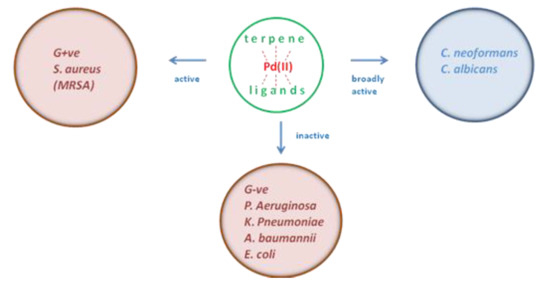
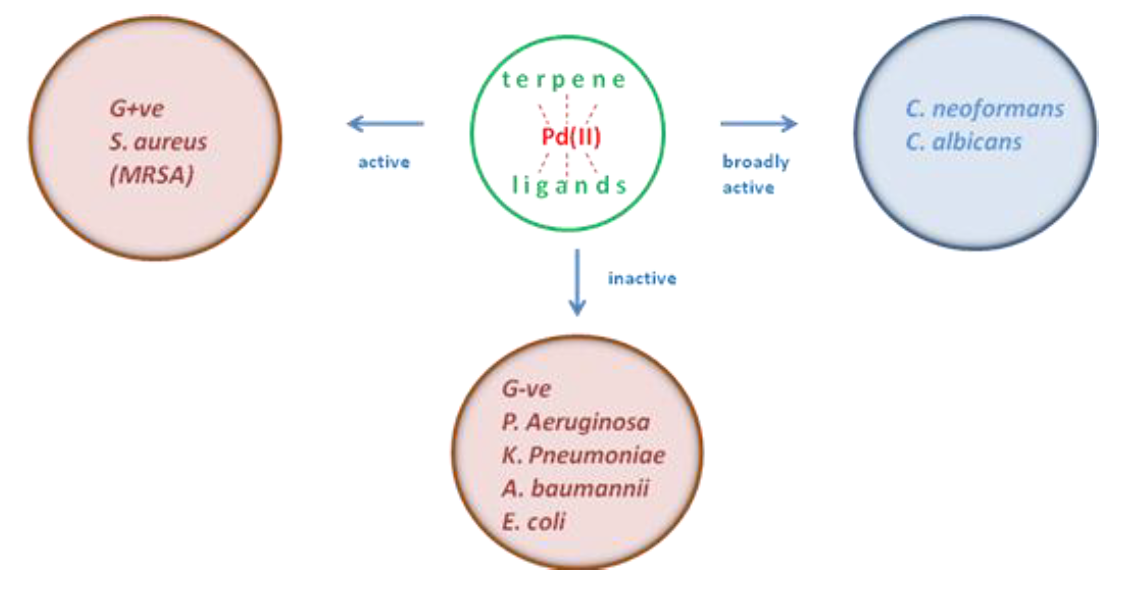
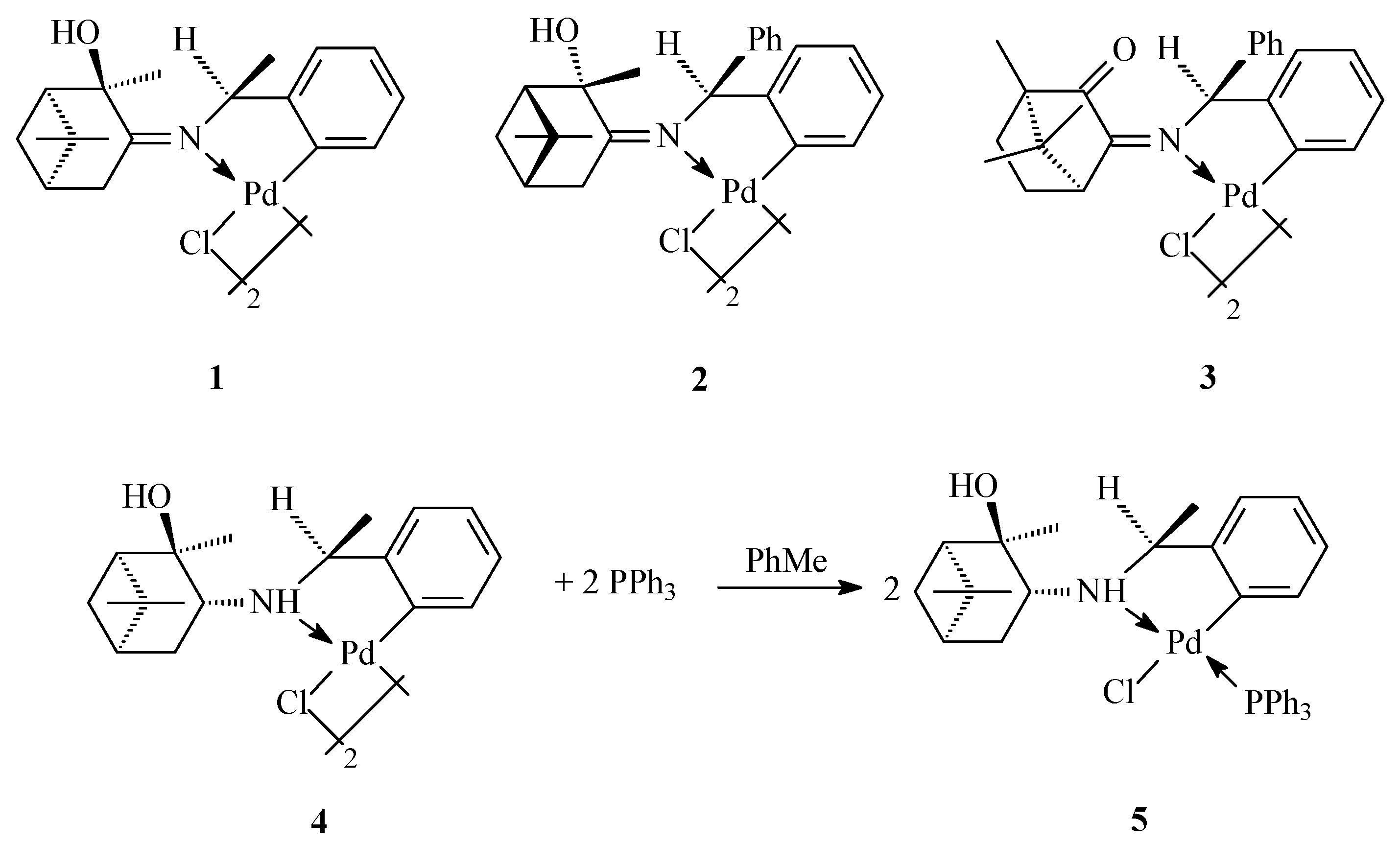
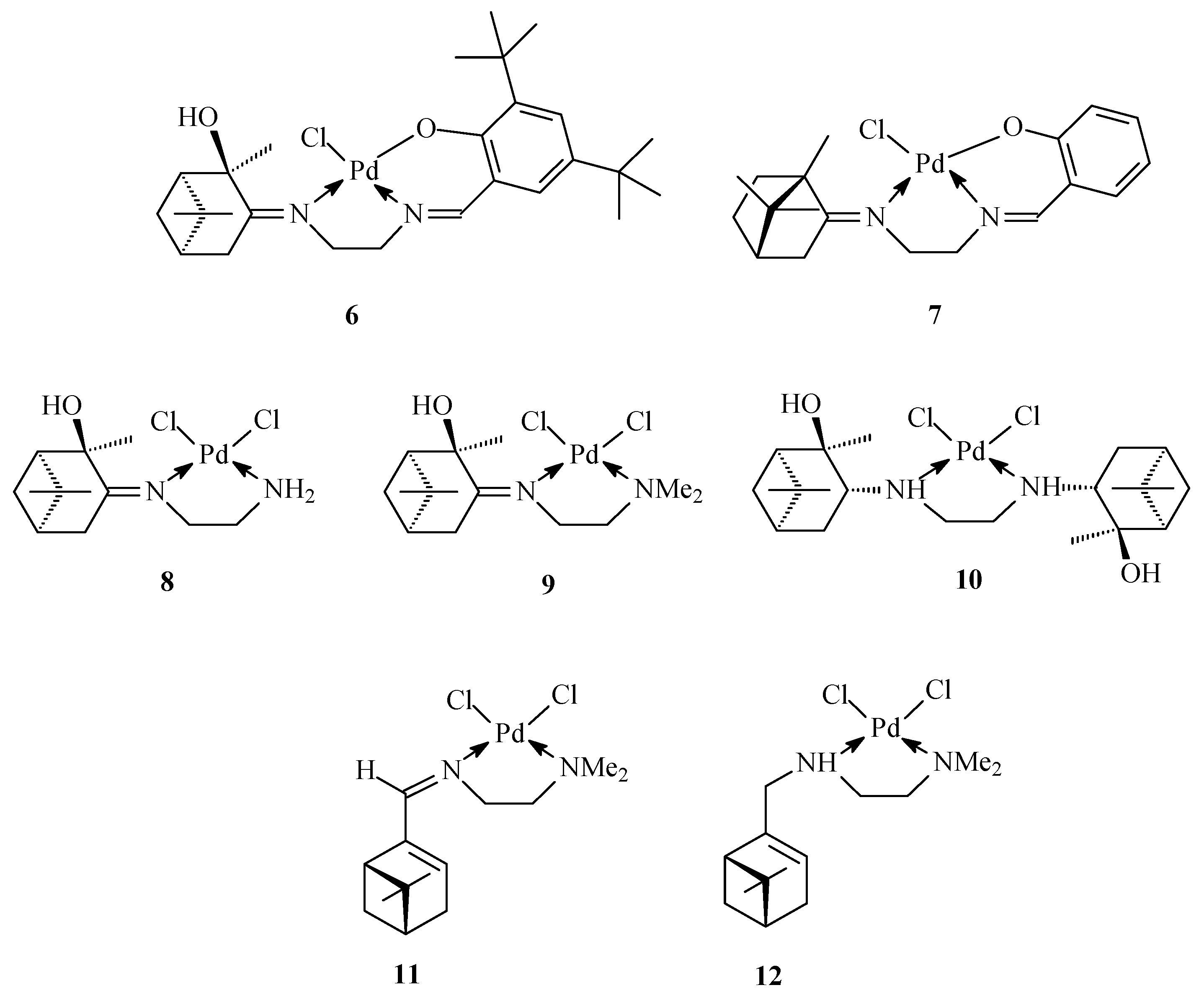
In an era of multidrug-resistant bacterial infections overshadowed by a lack of innovation in the antimicrobial drug development pipeline, there has been a resurgence in multidisciplinary approaches aimed at tackling this global health problem. One such approach is to use metal complexes as a framework for new antimicrobials. Indeed, in this context, bismuth-, silver- and gold-derived compounds in particular have displayed demonstrable antimicrobial activity. In this work, we discuss the antimicrobial and antifungal activities of terpene-derived chiral palladium complexes against Staphylococcus aureus, Pseudomonas aeruginosa, Klebsiella pneumoniae, Acinetobacter baumannii, Escherichia coli, Candida albicans, and Cryptococcus neoformans. It was established that all studied coordination compounds of palladium were highly active antifungal drugs. In contrast, the subset of palladacycles possessing a palladium–carbon bond were only active against the Gram-positive bacterium Staphylococcus aureus. All compounds were inactive against the Gram-negative bacteria tested.
Keywords: Pd(II) complexes; terpene ligands; antimicrobial; antifungal activities Pd(II) complexes; terpene ligands; antimicrobial; antifungal activities
Graphical Abstract