Article

Genomic Insights into Antimicrobial Resistance and Plasmid-Mediated Dissemination in Escherichia coli and Klebsiella pneumoniae from Pediatric Outpatients with Acute Diarrhea


by
Linda Erlina
1,2,3,
Fadilah Fadilah
2,4,*,
Omnia Amir Osman Abdelrazig
3,
Rafika Indah Paramita
2,4,
Aisyah Fitriannisa Prawiningrum
4,
Wahyu Dian Utari
2,
Asmarinah
5,
Yulia Rosa Saharman
6,7,
Muzal Kadim
7,8 and
Badriul Hegar
7,8
1
Doctoral Program in Biomedical Science, Faculty of Medicine, Universitas Indonesia, Jakarta 10430, Indonesia
2
Department of Medical Chemistry, Faculty of Medicine, Universitas Indonesia, Jakarta 10430, Indonesia
3
Master Program in Biomedical Science, Faculty of Medicine, Universitas Indonesia, Jakarta 10430, Indonesia
4
Bioinformatics Core Facilities, Indonesian Medical Education and Research Institute (IMERI), Faculty of Medicine, Universitas Indonesia, Jakarta 10430, Indonesia
5
Department of Medical Biology, Faculty of Medicine, Universitas Indonesia, Jakarta 10430, Indonesia
6
Department of Clinical Microbiology, Faculty of Medicine, Universitas Indonesia, Jakarta 10430, Indonesia
7
Dr. Cipto Mangunkusumo Hospital, Jakarta 10430, Indonesia
8
Department of Child Health, Faculty of Medicine, Universitas Indonesia, Jakarta 10430, Indonesia
*
Author to whom correspondence should be addressed.
Antibiotics 2026, 15(4), 331; https://doi.org/10.3390/antibiotics15040331 (registering DOI)
Submission received: 11 January 2026 / Revised: 9 March 2026 / Accepted: 10 March 2026 / Published: 25 March 2026

Abstract

Background: Antimicrobial-resistant Escherichia coli and Klebsiella pneumoniae represent an increasing challenge in community-acquired pediatric diarrheal infections. Understanding the genomic basis and dissemination of resistance in outpatient settings is essential for guiding antimicrobial use. Methods: Eighteen Gram-negative isolates obtained from pediatric outpatients with acute diarrhea were analyzed using selective culture methods, antimicrobial susceptibility testing, and whole-genome sequencing. Multilocus sequence typing, serotyping, virulence profiling, antimicrobial resistance gene detection, plasmid replicon typing, mobile genetic element analysis, and core genome-based phylogenetic analysis were performed. Phenotypic resistance profiles were correlated with genomic resistance determinants. Results: Klebsiella pneumoniae (55.56%) and Escherichia coli (44.44%) were identified, with all isolates exhibiting putative multidrug resistance-associated genomic profiles. Extended-spectrum β-lactamase genes, particularly blaCTX-M variants, were strongly associated with resistance to third-generation cephalosporins. In contrast, fluoroquinolone resistance correlated with gyrA and parC mutations and plasmid-mediated qnr genes. Phylogenetic analysis revealed diverse lineages harboring resistance determinants. In silico plasmid analysis revealed that key resistance genes co-occurred with IncF-type plasmids and mobile genetic elements, including ISEcp1, IS26, and class 1 integrons, suggesting putative plasmid association rather than confirmed localization. Conclusions: These findings highlight the small scale of plasmid-mediated antimicrobial resistance among E. coli and K. pneumoniae causing pediatric community-acquired diarrhea. The integration of phenotypic and genomic analyses underscores the need for continuous resistance surveillance to support rational antibiotic use in outpatient settings.

1. Introduction

Diarrhea continues to be a critical public health issue in Indonesia, particularly among children under the age of five, where it ranks as a leading cause of morbidity and mortality. The burden of this illness is substantial, with an estimated 2.5 million cases annually in this age group and a national prevalence rate of 12.3% in 2022 [1]. Diarrhea in children can often lead to severe dehydration due to significant fluid and electrolyte loss, which can be life-threatening if not properly managed. The primary causative agents of diarrhea are diverse, including viruses, protozoa, and bacteria. Among these, Gram-negative bacteria such as Escherichia coli, Shigella, Klebsiella pneumoniae, Salmonella, and Vibrio cholerae are particularly notable [2]. These pathogens are often spread through contaminated food and water, as well as through contact with infected individuals or animals. Escherichia coli, a member of the Enterobacteriaceae family, is a common commensal in the human gut but can also cause severe, sometimes bloody diarrhea. Some strains of E. coli, along with other Gram-negative bacteria, have acquired mechanisms that enable them to resist multiple antibiotics, making infections difficult to treat and control [3].
In recent years, attention has increased toward antimicrobial resistance among community-acquired enteric pathogens, particularly Escherichia coli and Klebsiella pneumoniae. These organisms are not only frequent causes of pediatric diarrhea but also recognized reservoirs of antimicrobial resistance genes, including extended-spectrum β-lactamases (ESBLs) and plasmid-mediated quinolone resistance determinants. The dissemination of resistance via mobile genetic elements, such as plasmids, insertion sequences, and integrons, has facilitated the rapid spread of multidrug-resistant (MDR) phenotypes beyond hospital settings and into outpatient and community environments [4].
The particular concern is the growing evidence that resistance to commonly prescribed empirical antibiotics, including β-lactams, fluoroquinolones, and aminoglycosides, has become increasingly prevalent in pediatric populations. Resistance to these antibiotic classes compromises first-line treatment options for diarrheal infections and may lead to prolonged illness, increased healthcare utilization, and a greater risk of complications. In Gram-negative bacteria, resistance is often mediated by a combination of acquired resistance genes and chromosomal mutations affecting antibiotic targets, efflux regulation, and membrane permeability, underscoring the complexity of antimicrobial resistance mechanisms [5].
Whole genome sequencing offers a powerful framework for dissecting these resistance mechanisms at high resolution by simultaneously identifying resistance genes, mobile genetic elements, and phylogenetic relationships among isolates. Integrating WGS with phenotypic antimicrobial susceptibility testing enables a more comprehensive understanding of genotype–phenotype correlations and resistance dissemination pathways [6,7]. Such integrative approaches are particularly relevant in low- and middle-income countries, including Indonesia, where empirical antibiotic use remains common and genomic surveillance data for pediatric diarrheal pathogens are limited.
Therefore, in line with the global priority to combat antimicrobial resistance, this study focuses on the genomic characterization of antimicrobial-resistant E. coli and K. pneumoniae isolated from pediatric outpatients with acute diarrhea. By combining phenotypic susceptibility testing with whole-genome-based analysis of resistance determinants and mobile genetic elements, this work aims to provide evidence relevant to antimicrobial stewardship and resistance surveillance in community settings.

2. Materials and Methods

2.1. Fecal Sample Collection

Children aged 2–5 years with clinical acute diarrhea were recruited using consecutive sampling. Inclusion criteria were: (1) children with clinical acute diarrhea aged 2–5 years, and (2) parental consent. The exclusion criterion was an insufficient fecal sample (<3 g). Primary data were collected through parent interviews and physical examinations. Fecal samples were collected and transported to the FKUI Microbiology Laboratory within 24 h.
A total of 18 subjects who met the inclusion criteria and agreed to sign the informed consent form (ICF) were enrolled as subjects, with a sample size calculation formula [8]:
n   =   Z a 2 × P × ( 1 P ) d 2 =   1.96 2   ×   0.0123   ×   ( 1 0.123 )   ( 0.15 ) 2 =   18   samples
n = sample size
Za = Z statistic for a level of confidence (1.96 for 95% confidence level)
P = proportion of cases based on literature (12.3%)
(According to the Indonesian Ministry of Health, 2022) [1]
d = Precision 0.15 (15%)
Research was approved by the Ethics Committee of the Faculty of Medicine, University of Indonesia, and by the Ethics Committee of Dr. Cipto Mangunkusumo National General Hospital. The approval number for this study was ND-53/UN2.F1/ETIK/PPM.00.02/2024 (approved on 19 January 2024).

2.2. Gram-Negative Bacteria Culture, DNA Isolation, and Whole Genome Sequencing

Samples were inoculated onto selective agar plates (XLD, EMB, Salmonella-Shigella, MacConkey, and TCBS) using the semiquantitative streak plate method and incubated for 24 h. After incubation, colonies showing morphology consistent with Gram-negative enteric bacteria were selected for further identification. For each sample, the dominant colony morphology was subcultured to obtain a pure isolate, which was subsequently identified using the VITEK® 2 Compact system (bioMérieux, Marcy-l’Étoile, France). This method was used to obtain a representative, clinically relevant isolate from each specimen, consistent with routine clinical microbiology practice, in which the predominant colony recovered from a culture is selected for downstream phenotypic or genomic analysis.
DNA was extracted using a QiAmp DNA Mini Kit (Qiagen, Hilden, Germany) following the manufacturer’s protocol [9]. DNA purity and concentration were assessed using a Nanodrop spectrophotometer and Qubit 4.0 fluorometer (Thermo Fisher Scientific, Waltham, MA, USA). All samples passed quality control, with DNA purity ratios (A260/280) ranging from 1.8 to 2.00 and DNA concentrations above 10 ng/L. The DNA purity ratio (OD260/280) ranges from 1.77 to 2.00, and DNA concentration from 18.18 to 84.007 ng/μL. Library preparation was performed using the Nextera Illumina tagmentation kit (Illumina, San Diego, CA, USA). Sequencing was performed using paired-end reads on the Illumina MiSeq platform (Illumina, San Diego, CA, USA) [10].

2.3. Antimicrobial Susceptibility Testing

Antimicrobial susceptibility testing was performed using the VITEK® 2 automated system (bioMérieux, Marcy-l’Étoile, France) according to the manufacturer’s instructions. The representative isolates obtained from each sample were subcultured on non-selective agar, and standardized suspensions were prepared in sterile saline to a turbidity equivalent to 0.5 McFarland, as required by the VITEK® 2 system. Susceptibility testing was conducted using VITEK® 2 AST cards appropriate for Enterobacterales. The system automatically measured bacterial growth kinetics and assigned minimum inhibitory concentration (MIC) values. MIC interpretations (susceptible, intermediate, or resistant) were determined using Clinical and Laboratory Standards Institute (CLSI) breakpoints embedded in the VITEK® 2 software version 10 (CLSI M100) [11], edition current at the time of testing). Quality control procedures were performed in accordance with CLSI recommendations using Escherichia coli ATCC 25922 and Klebsiella pneumoniae ATCC 700603. All quality control results were within acceptable ranges.

2.4. Whole Genome Analysis (Serotype, Resistance Gene, and Virulence Factor)

The quality of paired-end reads from each Gram-negative bacterial isolate was assessed using FastQC version 0.11.4 [12]. Before assembly, low-quality reads (below Q20) were filtered using Trimmomatic, and high-quality reads were further processed (Table S1) [13]. The analyses carried out for this research included Multilocus Sequence Typing (MLST) using version 2.0.4, with the database updated to version 2.0.1 on 1 July 2022 [14]. Serotyping was performed with SeroTypeFinder version 2.0.1, utilizing the database version 2.0.0 from 1 January 2023 [15]. Virulence genes were identified using VirulenceFinder version 2.0, which had a database version from 31 May 2022 [16,17]. Antimicrobial resistance (AMR) genes were detected using ResFinder version 3.2, with the database updated to version from 1 June 2022 [18]. VirulenceFinder identified 29 virulence genes, of which 12 are ExPEC-associated, 16 are EAEC-associated, and 1 is EPEC-associated, irrespective of pathotype. For the detection standard parameters were set as follows: VirulenceFinder and SerotypeFinder, 85% sequence identity and 60% sequence coverage; ResFinder, 90% sequence identity and 60% sequence coverage; MLST, using the seven loci (gyrB, adk, icd, purA, recA, fumC, and mdh) scheme [15].

2.5. Core Genome Phylogenetic Analysis

Core genome-based phylogenetic analysis was performed to assess the genetic relatedness and population structure of Escherichia coli and Klebsiella pneumoniae isolates. Whole-genome sequences were analyzed using a single-nucleotide polymorphism (SNP) based or core genome multilocus sequence typing (cgMLST) approach. Core genome alignment using Roary 3.13.0 generated.aln files, and phylogenetic inference was performed using the phangorn 2.12.1 package in R version 4.5.0 [19,20]. Maximum-likelihood trees were reconstructed under the GTR+Γ+I model, with 1,000 bootstrap replicates. The trees were mid-rooted and visualized using ggtree [21]. Phylogenetic trees were constructed from core genome alignments and visualized to assess clustering patterns. Annotation layers were applied to indicate bacterial species, sequence types (STs), virulence pathotypes, and multidrug resistance (MDR) status.

2.6. Plasmid Replicon Typing and Mobile Genetic Element Analysis

Major plasmid groups, including IncF, IncHI, IncX, and IncR, were screened in all isolates. Mobile genetic elements (MGEs), including class 1 integrons and insertion sequences such as ISEcp1 and IS26. The co-occurrence of plasmid replicons, MGEs, and antimicrobial resistance genes was assessed to evaluate potential mechanisms of horizontal gene transfer. Determination of plasmid replicon type was performed using PlasmidFinder v2.1 [22]. Analysis was performed using default CGE parameters, with a minimum sequence identity threshold of ≥95% and minimum coverage of ≥60%. Mobile genetic elements (MGEs) were identified using complementary in silico tools and databases. Insertion sequences were detected by sequence similarity searches against the ISfinder database using ISEScan v1.7.3 [23]. Integron-associated elements were determined using IntegronFinder v2.0 to detect the integrase gene (intI), the attC recombination site, and conserved segments characteristic of class 1 integrons [24]. Putative predictions of co-localization of antimicrobial resistance genes (ARGs) with plasmid replicons or MGEs were assessed at the contig level. Relatedness is inferred when ARGs and replicon markers or MGEs are present on the same or adjacent assembled contigs, providing supporting but not definitive evidence of plasmid-mediated spread.

3. Results

3.1. Gram-Negative Bacteria Culture

To ensure and validate the colony’s identity, growth, and purity, colony morphology (macroscopic) phenotypic characterization from various media such as Xylose Lysine Deoxycholate (XLD), Eosin Methylene Blue (EMB), Selenite broth, Thiosulfate Citrate Bile Salts Sucrose (TCBS), and MacConkey media were evaluated with semiquantitative interpretation (+1 until +4) (Table 1).
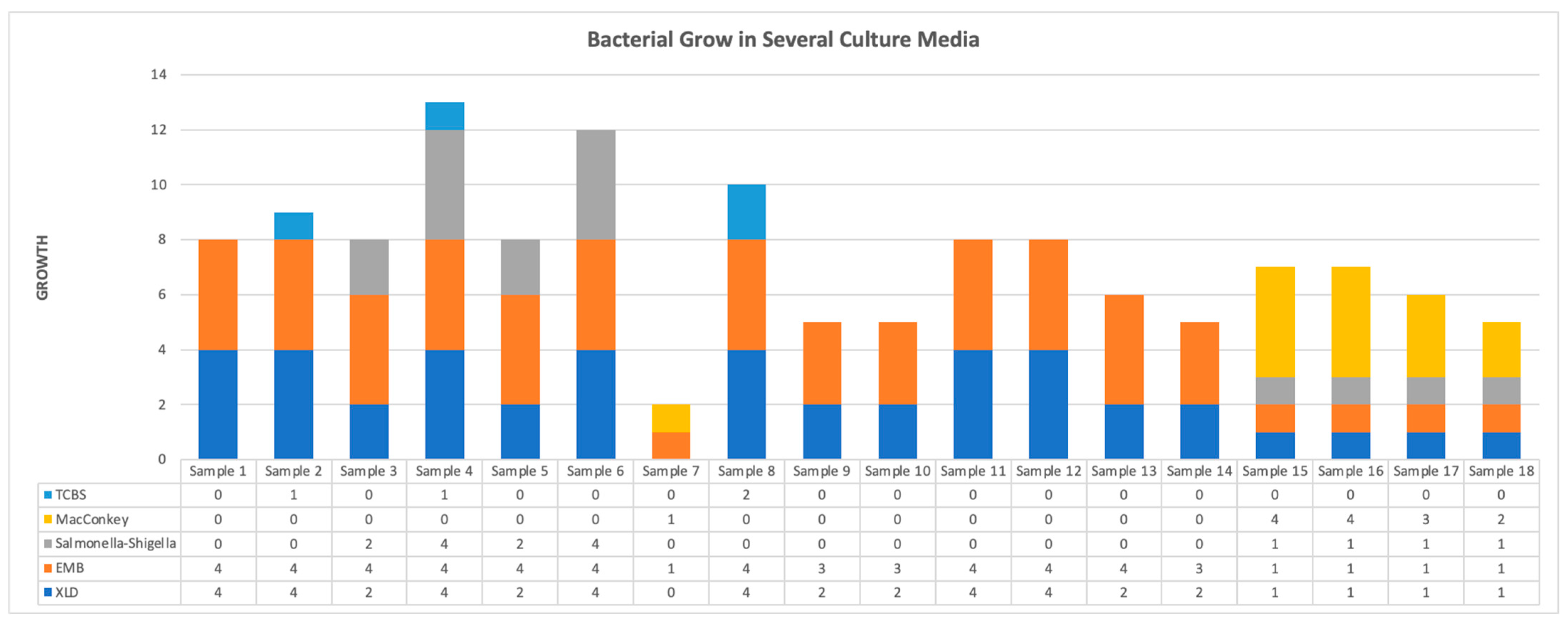
Analysis of fecal samples using various culture media revealed distinct microbial growth patterns and semiquantitative results. On Xylose Lysine Deoxycholate (XLD) media, the predominant observation was yellowish colonies, suggesting xylose fermentation, which accounted for 88.88% of the samples and was interpreted as +1 (samples 15, 16, 17, and 18). A minority of samples displayed more substantial growth, with interpretations of +2 and +4 distributed among samples 3, 5, 9, 10, 13, and 14 for +2, and samples 1, 2, 6, 8, 11, and 12 for +4. Eosin Methylene Blue (EMB) media consistently showed brownish colonies with a +4 interpretation across samples 1, 2, 5, 6, 12, and 13. Additionally, variations in colony appearance were noted, including metallic green colonies representing lactose-fermenting coliforms for the presence of Escherichia coli, with a +4 interpretation, and a single sample (16) exhibiting black colonies with a +1 interpretation. Samples showed varying growth intensities, including +3 in samples 9, 10, and 14, and a single instance of metallic brownish with a +4 interpretation in sample 11. One sample (15) displayed smooth colonies with a +1 interpretation. All other samples (3–18) showed turbidity. On Salmonella-Shigella media, pink colonies with a +1 interpretation were observed in samples 16, 17, and 18, representing 38.89% of the samples. Other samples showed varied growth with interpretations of +2 and +4. Thiosulfate Citrate Bile Salts Sucrose (TCBS) media showed yellowish colonies with a +1 interpretation in 16.67% of samples (2 and 4), while sample 8 displayed greenish colonies with a +2 interpretation. Lastly, MacConkey media revealed pinkish colonies with interpretations ranging from +1 to +4 across different samples (Figure 1).
As shown in Figure 1, seven samples (1, 9, 10, 11, 12, 13, and 14) have at least 2 isolates per sample identified in the cultured results using XLD and EMB media. Four samples (samples 3, 5, and 6) have at least 3 isolates per sample identified in cultured results using XLD, EMB, Salmonella, and Shigella media. Four samples (15–18) have at least 4 isolates per sample identified in cultured results using XLD, EMB, Salmonella, Shigella, and MacConkey media. Samples 2 and 8 have at least 3 isolates per sample identified in cultured results with XLD, EMB, and TCBS media. Sample 4 has at least 4 isolates per sample identified in cultured results on XLD, EMB, Salmonella, Shigella, and TCBS media. Sample 7 has at least 2 isolates per sample identified in cultured results with EMB and MacConkey media. Further details on culture results for all samples in different media are shown in Supplementary Materials Figures S1–S5.
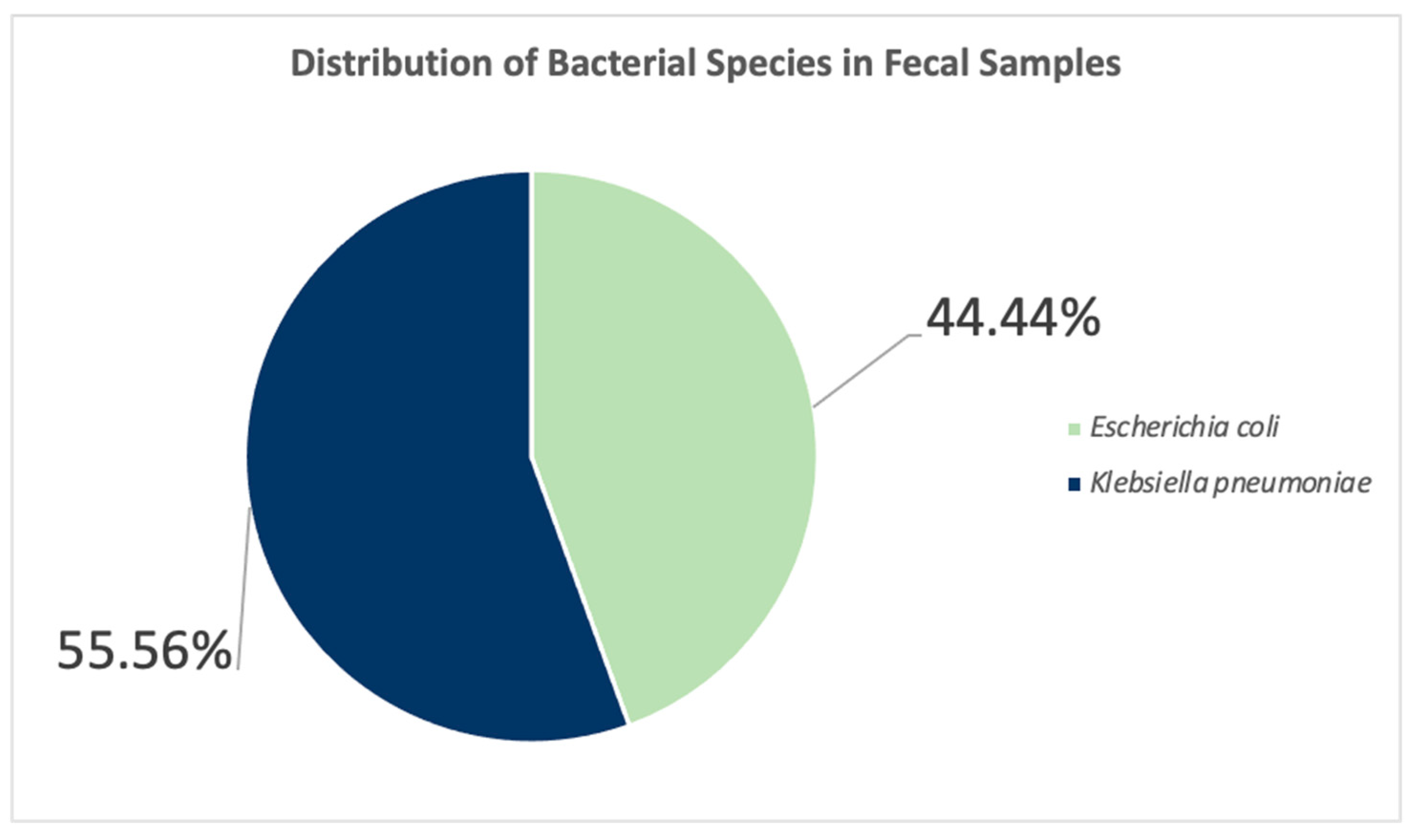
In the analysis of 18 distinct samples, two bacterial strains were identified: Klebsiella pneumoniae and Escherichia coli. Klebsiella pneumoniae was the predominant bacterium, being present in 55.56% of the samples (specifically samples 1, 2, 4, 5, 6, 10, 11, 12, 13, and 17). On the other hand, Escherichia coli was found in 44.44% of the samples, represented by samples 3, 7, 8, 9, 14, 15, 16, and 18. Notably, Vibrio culture was negative for all samples tested (Figure 2).

3.2. Multilocus Sequence Typing and Serotyping

After trimming, all FASTQ samples have high-quality reads (above Q30) with a percentage of 85–94% (Table S1). This high-quality read set will indicate high confidence in MLST results. From the total of 18 bacterial samples, two types of bacteria were identified: Klebsiella pneumoniae and E.coli (refer to Table 2). Ten samples (55.56%) belonged to Klebsiella pneumoniae, featuring a diverse range of Sequence Types (STs), serotypes, and capsular types, with multiple samples exhibiting phylotypes such as K1, K2, K17, K24, and K5. For example, both Sample 1 and Sample 13 were of the K2 phylotype, despite having different STs and serotypes: ST-231 with serotype KL51/O1 for Sample 1 and ST-65 with serotype KL2/O1 for Sample 13. Similarly, Sample 2 and Sample 6 shared the K17 phylotype, both being ST-101 but with different serotypes: KL17/O1 for Sample 2 and KL2/O1 for Sample 6. In contrast, 8 samples (44.44%) were identified as E. coli. These samples also demonstrated variability in their Sequence Types, serotypes, and capsular types, with notable phylotypes including A, B2, D, and B1. For instance, both Sample 3 and Sample 9 had the ST-10 sequence type and belonged to phylotype A, but differed in serotype: O153 for Sample 3 and O169 for Sample 9. Additionally, Samples 7 and 15, despite having different STs, both belonged to phylotype D with serotypes O7 and O15, respectively.

3.3. Virulence Genes

A total of eight E. coli isolates were analyzed (Table S2), all of which harbored a diverse array of virulence genes associated with various pathogenic mechanisms. The most prevalent gene was fimH, found in 6 isolates (75%), underscoring its significant role within the Adhesins group. Additionally, five isolates (62.5%) carried genes for the Iron Binding Protein group, indicating the importance of this group in the overall virulence profile. Notably, irp1 and irp2 were detected in 4 samples (50%), highlighting their co-occurrence and significance within the Siderophores and Iron Transport Protein groups. In the Miscellaneous group, all eight isolates (100%) contained virulence genes, reflecting the diversity of this category. Other prevalent genes, such as irp1, irp2, yehD, iutA, fyuA, traT, nlpI, csgA, AslA, clbA, clbB, hlyE, and AstA, had occurrence rates ranging from 25% to 62.5%. Genes with moderate prevalence (12.5% to 37.5%) included Aap, afaA, afaB, air, capU, eilA, mrkA, fdeC, gad, terC, yehA, yehB, yehC, hlyA, hlyB, hlyC, hlyD, sat, iucC, and uge.
The virulence gene distribution in E. coli revealed that Extraintestinal pathogenic E. coli (ExPEC) was the most prevalent, accounting for 79.59% of strains. ExPEC harbored numerous virulence-associated genes, including iron acquisition systems (irp1, irp2, ybtSXQPA, fyuA, iutA, ybt), serum resistance factors (traT, iss), heme receptors (chuA), tellurite resistance (terC), and various toxins, adhesins, and regulators. Uropathogenic E. coli (UPEC), comprising 16.33% of strains, possessed eight virulence genes overlapping with the ExPEC repertoire. Enteroaggregative E. coli (EAEC) and enterotoxigenic E. coli (ETEC) accounted for 4.08% of strains each, with specific virulence genes associated with their pathogenicity. Diffusely adherent E. coli (DAEC) accounted for 6.12% of strains, while Avian pathogenic E. coli (APEC) was the least prevalent at 4.08%.
In Klebsiella pneumoniae, all ten isolates examined exhibited a diverse array of virulence genes, illustrating the complexity of Klebsiella virulence factors. The Adhesins group was particularly prominent, with seven isolates (70%) carrying one or more genes from this category. FimH-1 was notably prevalent, found in five isolates (50%), signifying its dominant role within the Adhesins group. Regarding iron acquisition, which is critical for bacterial survival and virulence, genes related to the Iron Uptake System, such as fyuA, were highlighted. fyuA, a gene encoding yersiniabactin, was detected in 4 isolates (40%). The genes irp1 and irp2, involved in siderophore production, were present in three isolates (30%), underscoring their importance in the Siderophores and Iron Transport Protein groups. Capsule Synthesis Regulator genes, such as RmpA and RmpA2, were detected in 5 isolates (50%), suggesting their role in evading host immune responses. The Miscellaneous group, encompassing a broader range of virulence factors, was represented in 8 isolates (80%), with genes such as magA, hlyA, and uge contributing to their virulence. Moderately prevalent genes included mrkD, present in four isolates (40%), and clbA and clbB, each found in three samples (30%).
Analysis of 34 virulence genes in Klebsiella pneumoniae highlighted differences between hypervirulent K. pneumoniae (hvKp) and classic K. pneumoniae (cKp) pathotypes. Genes associated with hvKp, comprising 61.76% of the total genes studied, included those involved in siderophore biosynthesis and transport (fyuA, iutA, iucA, iroB, ybtS), capsule biosynthesis (capU, kpsS, kpsE, kpsF), and mucoid phenotype regulation (RmpA2, RmpA, rmpC). These genes enhance hvKp strains’ ability to evade host immune responses and cause severe infections. Conversely, genes more frequently associated with cKp included those involved in type 1 fimbrial protein production (fimH-1, fimA, fimE), outer membrane proteins (ompA, pilA), and various fimbrial assembly proteins (mrkD, mrkB, mrkE, mrkA).

3.4. Antimicrobial Resistance

The occurrence of antibiotic resistance genes among K. pneumoniae isolates is substantial. Fluoroquinolone resistance was highly prevalent, with 90% of the isolates carrying the OqxA gene and 60% harboring OqxB. Among fosfomycin-resistant isolates, 80% carried fosA. All K. pneumoniae isolates exhibited genes encoding aminoglycoside resistance enzymes, with aac(3)-IId, aadA1, and aph(3″)-Ib each found in 30% of the isolates. Anti-beta-lactam resistance genes were present in all K. pneumoniae isolates, with blaCTX-M-15 and blaTEM-209 each found in 40% of the isolates, followed by blaOXA-232 and blaTEM-1B each in 30%. Chloramphenicol resistance genes, OqxA and OqxB, were each found in 70% of the isolates. Trimethoprim resistance genes were detected in 40% of the isolates, with dfrA14 being the most common (20%). Sulfonamide resistance genes sul2 and sul1 were found in 40% and 20% of the isolates, respectively. Tetracycline resistance was moderate, with 20% of the isolates carrying tet(A). Notably, none of the K. pneumoniae isolates carried macrolide resistance genes.
In E. coli isolates, all carried genes encoding aminoglycoside resistance, including aac(3)-IId, aac(6′)-Ib-cr, aadA2, aadA5, and aph(3”)-Ib, with varying prevalences. All E. coli isolates also showed anti-beta-lactam resistance genes, including blaCTX-M-27, blaCTX-M-10, blaOXA-15, blaOXA-1, and blaTEM-1B. Trimethoprim resistance genes were present in 37.5% of the isolates, with dfrA14, dfrA17, and dfrA12 each detected in 12.5%. Chloramphenicol resistance gene catB3 was present in 25% of the isolates. Fluoroquinolone resistance genes were also prevalent, with 75% of the isolates carrying OqxA, 37.5% carrying OqxB, and 12.5% carrying qnrS1. Fosfomycin resistance was noted in 25% of the isolates with fosA6. Sulfonamide resistance genes sul1 and sul2 were found in 25% and 12.5% of the isolates, respectively. Macrolide resistance gene mph(A) was present in 37.5% of the isolates. Tetracycline resistance genes were found in 50% of the isolates, with 37.5% carrying tet(A) and 12.5% carrying tet(B).
Comparing susceptibility test results and genomic profiles provides detailed insights into antibiotic resistance patterns in bacterial samples. This analysis is particularly useful for correlating specific genetic markers with observed phenotypic resistance to various antibiotics. Below is an elaboration of the findings from Table S3, which examines samples of Klebsiella pneumoniae (KP) and Escherichia coli (E. coli). For Klebsiella pneumoniae (KP), Sample 1 demonstrated resistance to Ampicillin, Ceftazidime, Ciprofloxacin, and Piperacillin-Tazobactam, while it was sensitive to Trimethoprim. The genomic profile revealed resistance genes corresponding to these antibiotics: blaCTX-M-15 for Ampicillin and Ceftazidime, and OqxA for Ciprofloxacin. The resistance to Piperacillin-Tazobactam was also attributed to blaCTX-M-15. Sample 2 showed resistance to all tested antibiotics, with genomic markers such as blaSHV-5 for Ampicillin, OqxAB for Trimethoprim, and blaCTX-M-15 for Ceftazidime and Ciprofloxacin, confirming the phenotypic resistance.
Sample 4 exhibited resistance to Ampicillin but was sensitive to the other antibiotics tested. Its genomic profile indicated the presence of blaOXA-232 for Ampicillin resistance and OqxAB for Trimethoprim, which aligns with the phenotypic resistance. Sample 5 was resistant to Ampicillin, Trimethoprim, and Ciprofloxacin, with resistance genes blaSHV62 for Ampicillin, OqxAB for Trimethoprim, and OqxA for Ciprofloxacin, confirming the phenotypic results. Sample 6 showed resistance to Ampicillin but was sensitive to the other antibiotics. The genomic data indicated resistance genes, such as blaCTX-M-15 for Ampicillin and OqxAB for Trimethoprim, which correlated well with the susceptibility results. Sample 10 was sensitive to all antibiotics except Trimethoprim, where the presence of OqxAB was noted in the genomic profile. Sample 11 was resistant to Ampicillin but sensitive to other antibiotics. Its genomic profile showed the dfrA14 gene for Trimethoprim resistance and OqxB for Ciprofloxacin, indicating potential resistance mechanisms. Sample 12 was resistant to Ampicillin, harboring blaOXA-232 and OqxAB, while remaining sensitive to other antibiotics. For Escherichia coli (E. coli), Sample 3 showed resistance to Ampicillin and Trimethoprim, with corresponding resistance genes blaCTX-M-27 for Ampicillin and OqxAB for Trimethoprim.
Sample 7 demonstrated resistance to Ampicillin and Ciprofloxacin, with genomic markers blaOXA-10 and qnrS1, respectively, matching the phenotypic resistance. Sample 8 was resistant to Ampicillin, Trimethoprim, and Ciprofloxacin. The genomic profile indicated the presence of blaCTX-M-15 and OqxAB genes for these antibiotics, confirming the phenotypic results. Sample 9 was sensitive to all antibiotics, except for those carrying blaCTX-M-15 and OqxAB, suggesting potential resistance not detected phenotypically. Sample 14 was resistant to Trimethoprim, with the dfrA14 gene noted in the genomic profile, aligning with the susceptibility test. Sample 15 showed resistance to Ampicillin and Trimethoprim, with corresponding resistance genes OqxAB. Sample 16 was resistant to Ampicillin, with the OqxAB gene detected in its genomic profile, consistent with the phenotypic resistance. Lastly, Sample 18 was resistant to Ampicillin, with the dfrA12 gene identified in the genomic data, confirming the observed phenotypic resistance.

3.5. Amino Acid Mutations Related to Antimicrobial Resistance Genes

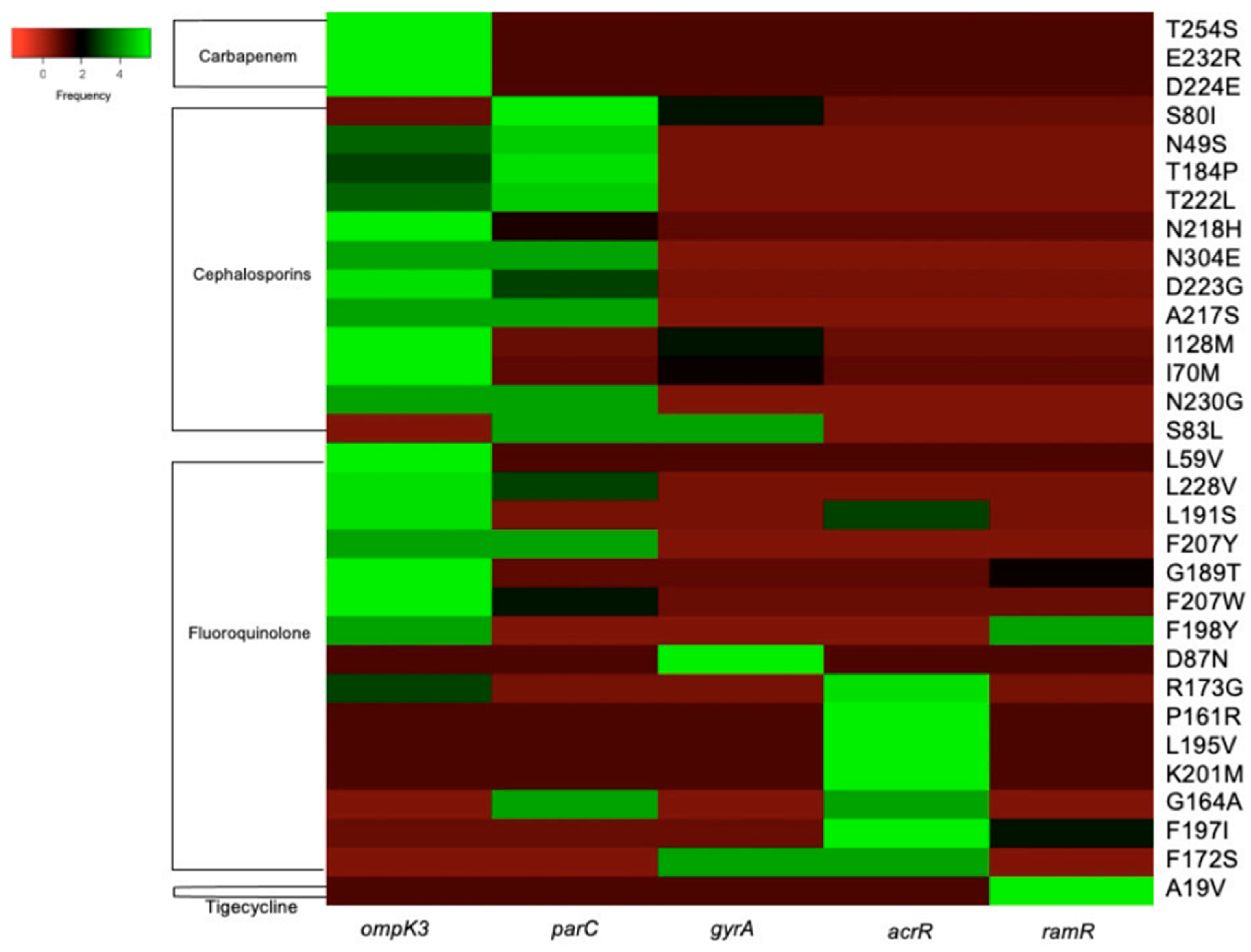
The heatmap showing resistance profiles of bacterial mutations to antibiotics such as carbapenems, cephalosporins, fluoroquinolones, and tigecycline is shown in Figure 3.
The heatmap (Figure 3) shows the distribution of amino acid substitutions across several key genes associated with different antimicrobial resistances. The associated genes, such as ompK3, parC, gyrA, acrR, and ramR, encode several antimicrobial resistance mechanisms, including membrane permeability, target modification, and efflux regulation. Mutations in the ompK3 gene, which modulate β-lactam entry, are associated with carbapenem and cephalosporin resistance by disrupting an outer membrane porin mechanism. Some high-frequency substitutions at several amino acid positions, such as T254S, E232R, and D224E, were reported to decrease membrane permeability, a major contributor to reduced susceptibility.
Recurrent mutations in gyrA and parC, particularly substitutions in the canonical quinolone resistance-determining region (QRDR), include S83L and D87N in gyrA and several changes in parC. This mutation is known to disrupt the binding of fluoroquinolones to DNA gyrase and topoisomerase IV. High-frequency mutations in the acrR and ramR genes, which encode negative regulators of the AcrAB-TolC efflux system, have been detected in various classes of antibiotics, particularly fluoroquinolones and tigecycline. High-frequency substitutions (R173G, P161R, L195V, K201M) derepressed efflux pump expression, conferring a multidrug resistance phenotype rather than class-specific resistance.
Mutations in the porin-encoding gene (ompK3), target site mutations (gyrA/parC), and changes in the efflux regulator (acrR/ramR) suggest multidrug resistance in children’s diarrhea samples. Overall, analyzing the frequency of mutations in key associated genes and antimicrobial types will help understand that a single mutation does not drive antimicrobial resistance; instead, it requires the accumulation of mutations across several key associated genes.

3.6. Correlation Between Phenotypic Antimicrobial Susceptibility and Genomic Resistance Determinants

To assess the association between phenotypic antimicrobial resistance and underlying genomic determinants, antimicrobial susceptibility testing (AST) results were correlated with the presence or absence of antimicrobial resistance genes (ARGs) and resistance-associated chromosomal mutations. The analysis compared resistant and non-resistant isolates across major antibiotic classes to determine genotype–phenotype concordance, as shown in Table 3.
Table 3 summarizes the small-scale association between antimicrobial resistance phenotypes and the presence of resistance genes or amino acid substitutions. Resistance rates are expressed as percentages of resistant isolates among gene or mutation-positive strains. Statistical significance was assessed using Fisher’s exact test, with p-values indicating the strength of the association between genotype and phenotype.

3.7. Phylogenetic Analysis and Population Structure

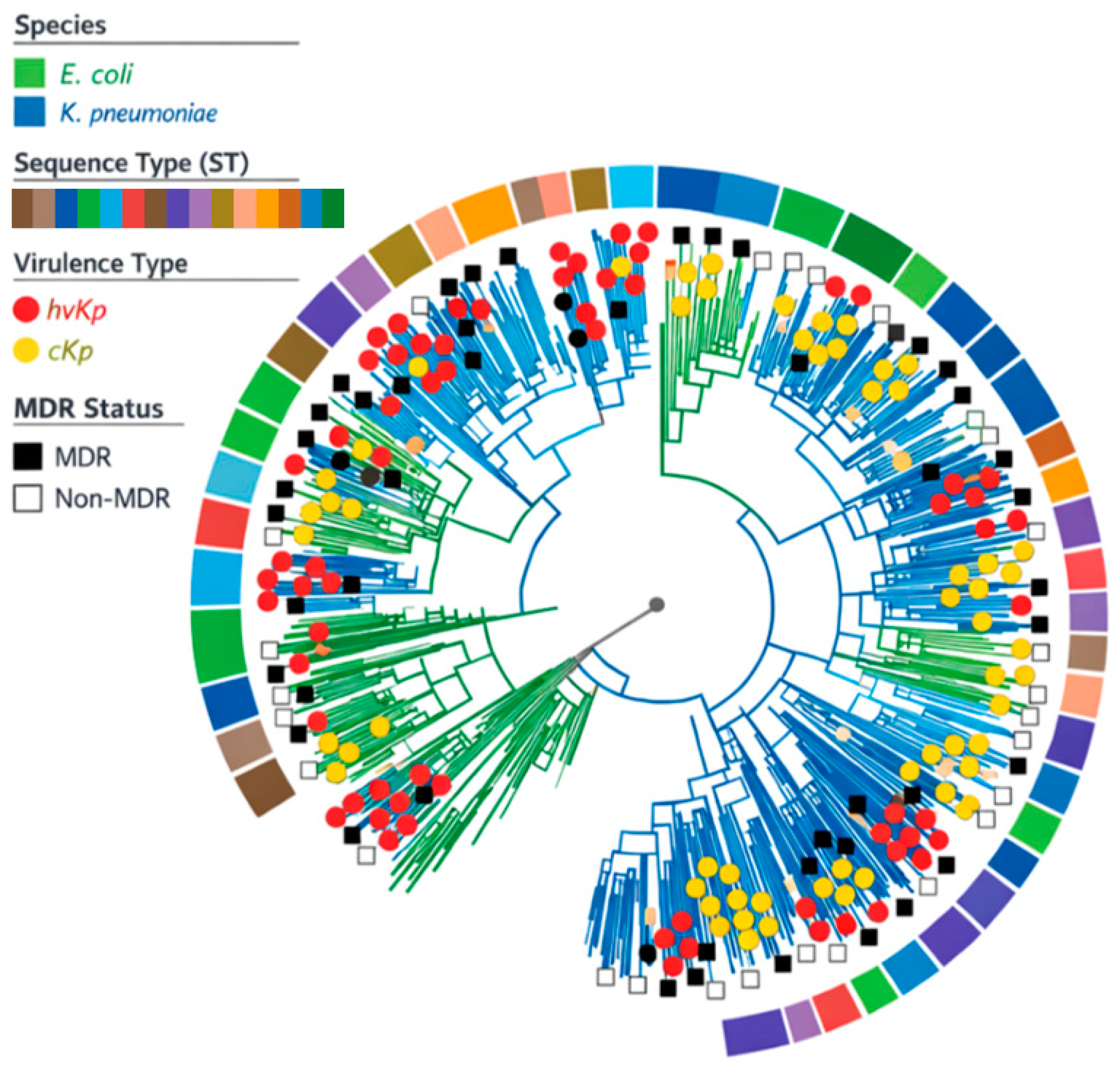
Core genome–based phylogenetic analysis was performed to investigate the population structure and genetic relatedness of Escherichia coli and Klebsiella pneumoniae isolates. Phylogenetic clustering revealed distinct lineages corresponding to bacterial species and sequence types. Several clusters were enriched with hypervirulent K. pneumoniae (hvKp) isolates, while others predominantly comprised classical K. pneumoniae (cKp) or E. coli. Multidrug-resistant isolates were distributed across multiple lineages, with certain clusters showing co-occurrence of hypervirulence and MDR profiles. Figure 3 was constructed based on core genome SNP/cgMLST analysis. Branch colors indicate bacterial species (E. coli and K. pneumoniae), while annotation layers denote sequence type (ST), virulence classification (hvKp vs. cKp), and multidrug resistance (MDR) status. The phylogeny illustrates lineage-specific clustering and the distribution of virulence and resistance traits among isolates (Figure 4).

3.8. Plasmid Replicon Types and Mobile Genetic Elements

Plasmid replicon typing and analysis of mobile genetic elements (MGEs) were performed to characterize the genetic platforms associated with antimicrobial resistance genes (ARGs) in Escherichia coli and Klebsiella pneumoniae isolates. The distribution of plasmid incompatibility groups and MGEs was examined to assess their association with key resistance determinants, as shown in Table 4.
Plasmid replicon analysis revealed that resistance genes were predominantly associated with IncF-type plasmids, followed by IncHI, IncX, and IncR replicons. Extended-spectrum β-lactamase (ESBL) genes, particularly blaCTX-M variants, were most frequently detected on IncF plasmids. Carbapenemase genes and fosfomycin resistance genes were also identified on IncHI and IncR plasmids in several isolates. Mobile genetic element analysis demonstrated the widespread presence of class 1 integrons among multidrug-resistant isolates. Insertion sequences, particularly ISEcp1 and IS26, were frequently detected in the vicinity of ESBL genes, suggesting a role in gene mobilization and dissemination. The co-occurrence of ARGs, plasmid replicons, and MGEs suggests active horizontal gene transfer contributing to the spread of antimicrobial resistance.

4. Discussion

In this study, various selective and differential media were employed to isolate and identify Gram-negative bacteria from fecal samples. Xylose Lysine Deoxycholate (XLD) agar predominantly yielded yellowish colonies, indicating lactose-fermenting Enterobacterales, including K. pneumoniae. Eosin Methylene Blue (EMB) agar effectively differentiated lactose fermenters such as Escherichia coli, characterized by metallic green colonies, from non-lactose fermenters, including K. pneumoniae, which appeared as brownish colonies. These findings are consistent with standard microbiological identification approaches for enteric pathogens [25]. The semiquantitative variation in colony density across media reflects heterogeneous bacterial loads, a common feature of pediatric diarrheal samples with mixed microbiota. In cases of diarrhea, these two bacterial strains overgrow, contributing to dysbiosis. The selective and differential media for culturing bacteria targeted Gram-negative enteric pathogens; other pathogens, such as viruses, obligate anaerobes, and toxin-mediated agents, were not covered under aerobic culture conditions [26].
Our genomic characterization of K. pneumoniae revealed substantial concordance with previous reports on high-risk and hypervirulent lineages. The identification of ST-15, KL38/O1, K24 (capsular type) aligns with studies describing this clone as a globally disseminated lineage frequently associated with virulence determinants and multidrug resistance [27]. Prior investigations have demonstrated that ST-15 isolates often harbor genes such as rmpA, magA, entB, ybtS, and iutA, contributing to enhanced capsule production, iron acquisition, and immune evasion, while simultaneously exhibiting resistance to multiple antimicrobial classes, including carbapenems in some regions [27]. The presence of ST-101 and ST-4004 in this study further supports their role as genetically diverse and clinically relevant clones, frequently associated with hospital and community-acquired infections and high-risk resistance profiles [28,29].
Among E. coli isolates, ST-10 O153:H10 has been reported in previous studies and is described as a hybrid EPEC/ExPEC strain capable of causing both intestinal and extraintestinal infections [30]. ST-10 is widely distributed across hosts and ecological niches. It is often associated with a broad virulence gene repertoire, including eae variants and iron acquisition systems, underscoring its adaptive potential and public health relevance [31].
The predominance of hypervirulent K. pneumoniae (hvKP) in this cohort is noteworthy, with 61.76% of virulence genes corresponding to hvKP-associated determinants. Genes involved in siderophore biosynthesis (fyuA, iutA) and capsule formation (kpsS, kpsE) were frequently detected, reinforcing the established role of these factors in enhancing bacterial fitness and pathogenicity [32]. Consistent with global epidemiological trends, capsular types K1 and K2 were prevalent, serotypes known for their enhanced resistance to phagocytosis and serum killing [33]. In contrast, ExPEC-associated E. coli strains accounted for the majority of virulence profiles, characterized by diverse adhesins, iron uptake systems, serum resistance factors, and toxins, reflecting their capacity to cause invasive disease beyond the gastrointestinal tract [34]. The lower prevalence of EAEC, ETEC, DAEC, and APEC pathotypes aligns with previous pediatric diarrheal studies that found ExPEC and EPEC predominate in small-scale community settings [35].
Importantly, integrating phenotypic antimicrobial susceptibility testing with genomic resistance profiling revealed strong genotype–phenotype concordance. The widespread presence of blaCTX-M-15 was significantly associated with resistance to third-generation cephalosporins, reinforcing its central role in extended-spectrum β-lactamase (ESBL) mediated resistance [36]. This finding is also supported by several previous studies, for example, J.J. van Aartsen et al. (2019) [37]. In this study, the epidemiology of pediatric gastrointestinal colonization by extended-spectrum cephalosporin-resistant Escherichia coli and Klebsiella pneumoniae isolates in north-west Cambodia was found to be common in Southeast Asia, as evidenced by the blaCTX-M gene marker [37]. Nuru Letara et al. (2021) reported a high prevalence of Extended-Spectrum Beta-Lactamase (ESBL) producing Escherichia coli and Klebsiella pneumoniae carriage and infection among pediatric patients in Tanzania, due to the high use of antibiotics [38].
Fluoroquinolone resistance correlated with both plasmid-mediated determinants (qnrS1) and chromosomal mutations within the quinolone resistance-determining regions of gyrA and parC, consistent with established resistance mechanisms described in Enterobacterales [39]. These findings highlight the multifactorial nature of resistance, driven by the interplay between acquired genes and chromosomal mutations.
Phylogenetic analysis further demonstrated that multidrug resistance and hypervirulence were distributed across multiple genetic lineages rather than confined to a single clonal cluster. This observation suggests ongoing dissemination of resistance and virulence determinants through horizontal gene transfer rather than solely through clonal expansion, a pattern increasingly reported in community-acquired infections [40]. The detection of MDR profiles among outpatient isolates underscores the shifting epidemiology of antimicrobial resistance from hospital to community settings at the pilot scale.
Putative plasmid and mobile genetic element analyses based on in silico prediction provided additional insights into the mechanisms underlying resistance dissemination. The predominance of IncF-type plasmids carrying blaCTX-M genes is consistent with numerous studies that identify IncF plasmids as key vectors in the global spread of ESBL-producing Enterobacterales [41]. The frequent association of ESBL genes with insertion sequences such as ISEcp1 and IS26, as well as class 1 integrons, underscores their role in mobilizing and stabilizing resistance genes within bacterial populations [42]. These mobile elements facilitate rapid adaptation to antimicrobial pressure and contribute to the persistence of resistance in community reservoirs. Since this study uses short-read sequencing, the entire plasmid assembly is frequently reported as “ND” due to fragmented replicon-repetitive elements, shared backbone regions across different incompatibility groups, and the presence of insertion sequences and integrons, which can result in fragmented contigs lacking complete replicon marker genes. Consequently, plasmid replicons may not be confidently assigned, even when resistance genes are plasmid-borne.
The amino acid substitutions identified in K. pneumoniae, particularly within gyrA, parC, and ompK36, further elucidate resistance mechanisms at the protein level. Mutations such as S83L and D87N in gyrA are well-established contributors to high-level fluoroquinolone resistance. At the same time, alterations in parC and porin proteins reduce antibiotic influx and enhance resistance to cephalosporins and carbapenems [43,44]. Regulatory mutations affecting efflux systems, including those involving AcrR and RamR, may further potentiate multidrug resistance, as reported in previous functional studies [45].
Collectively, these findings highlight the convergence of potentially hypervirulent, multidrug-resistant, and plasmid-mediated gene transfer among E. coli and K. pneumoniae isolates recovered from pediatric outpatients with acute diarrhea. The previous review studies by Miran Tang et al. (2020) [46], Gabriele Arcari and Alessandra Carattoli (2023) [47], and Dania Al Ismail et al. (2025) [48] also define hypervirulent clones of K. pneumoniae in Eastern Asia with specific STs, such as ST-23, ST-65, and ST-86. Relevant to this study, ST-23 and ST-65 are predicted as hypervirulent clones from samples 12 and 13, identified as hvKp [46,47,48].
The presence of such high-risk genomic features in small-scale, community-managed cases underscores the need for continuous genomic surveillance and underscores the importance of antimicrobial stewardship strategies to mitigate the spread of resistant pathogens in pediatric populations. These findings underscore the selective pressure exerted by commonly used antibiotics in pediatric outpatient settings and highlight the need for resistance-informed empirical therapy.
Some limitations of this study include the use of short-read whole-genome sequencing, which limits the ability to fully and definitively decipher plasmid structure and to localize antimicrobial resistance and virulence genes. By implementing in silico analysis, putative plasmid replicon assignment and ARG-plasmid association were inferred to identify co-localization and the presence of mobile genetic elements, rather than experimentally confirming plasmid reconstruction. Long-read or hybrid sequencing is necessary to address these associations fully.
Second, the culture-based approach used in this study selectively isolates fast-growing aerobic Gram-negative bacteria and does not cover the full spectrum of enteric pathogens, including viruses, obligate anaerobes, or difficult-to-culture organisms. These findings reflect the genomic characteristics of culturable E. coli and K. pneumoniae isolates; whole shotgun sequencing is strongly recommended to find the representation of the microbial causes of diarrhea.

5. Conclusions

This study demonstrates that Escherichia coli and Klebsiella pneumoniae isolated from pediatric outpatients with acute diarrhea harbor diverse and clinically relevant antimicrobial resistance determinants. The relationship between phenotypic resistance and genomic findings highlights the contribution of extended-spectrum β-lactamases, plasmid-mediated quinolone resistance genes, and resistance-associated chromosomal mutations to multidrug-resistant phenotypes. The predominance of resistance genes located on IncF-type plasmids and their frequent association with mobile genetic elements underscore the role of horizontal gene transfer in the dissemination of antimicrobial resistance in small-scale community settings. These findings emphasize that multidrug-resistant bacteria are not confined to hospitalized patients but are increasingly encountered in outpatient pediatric populations. Integrating genomic resistance profiling with antimicrobial susceptibility testing provides valuable insights for resistance surveillance and supports evidence-based antibiotic selection. Continued monitoring of resistance mechanisms in community-acquired infections is essential to inform antimicrobial stewardship strategies and preserve the effectiveness of currently available antibiotics.

Supplementary Materials

The following supporting information can be downloaded at: https://www.mdpi.com/article/10.3390/antibiotics15040331/s1, Figure S1. Culture Results in XLD Media. Figure S2. Culture Results in EMB Media. Figure S3. Culture Results in Salmonella-Shigella media. Figure S4. Culture Results in TCBS media. Figure S5. Culture Results in MacConkey media. Table S1. Samples FASTQ quality results before and after trimming. Table S2. Virulence genes and Pathotype. Table S3. Susceptibility Test compared to the genomic profile results.

Author Contributions

Conceptualization was performed by L.E., F.F., O.A.O.A., R.I.P., Y.R.S., B.H., A. and M.K.; methodology by F.F., R.I.P., O.A.O.A., A.F.P., W.D.U., and L.E.; formal analysis by O.A.O.A., F.F., R.I.P. and L.E.; software by O.A.O.A., R.I.P. and L.E.; validation by R.I.P., F.F., and O.A.O.A.; resources by B.H., F.F., Y.R.S., O.A.O.A., R.I.P., and L.E.; visualization by O.A.O.A.; supervision by F.F., A., B.H., Y.R.S., R.I.P. and M.K.; funding acquisition by F.F.; writing—original draft preparation by L.E., F.F., O.A.O.A., R.I.P., Y.R.S., B.H., A., M.K., A.F.P., and W.D.U.; and writing—review and editing by L.E., F.F., O.A.O.A., R.I.P., Y.R.S., B.H., A., M.K., A.F.P., and W.D.U. All authors have read and agreed to the published version of the manuscript.

Funding

This research was funded by Riset dan Inovasi untuk Indonesia Maju (RIIM) Gelombang 3 Year 2023 (BRIN Grant), with grant number PKS-574/UN2.INV/HKP.05/2023. Article Processing Charges (APC) is not covered by the RIIM funding.

Institutional Review Board Statement

Research was granted approval by the Ethics Committee of the Faculty of Medicine, University of Indonesia, and Dr. Cipto Mangunkusumo National General Hospital. The approval number for this study was ND-53/UN2.F1/ETIK/PPM.00.02/2024 (approved on 19 January 2024).

Informed Consent Statement

Informed consent was obtained from all subjects involved in the study.

Data Availability Statement

All data were available in this manuscript.

Acknowledgments

Support from Universitas Indonesia for research funding was fully acknowledged. The authors would like to thank all the laboratory staffs in Bioinformatics Core Facilities IMERI, Department of Medical Chemistry and Department of Clinical Microbiology, Faculty of Medicine Universitas Indonesia for support the bacterial culture, DNA extraction, library preparation, and Whole Genome Sequencing in this study. The authors gratefully acknowledge the support from Mahdaleny and Ajeng Megawaty Fajrin for their assistance in patient recruitment and fecal sample collections. We also thank the patients and the primary health centers in Jakarta who generously participated in this study.

Conflicts of Interest

The authors declare no conflicts of interest in this study.

Abbreviations

The following abbreviations are used in this manuscript:
AMRAntimicrobial Resistance;
APECAvian Pathogenic Escherichia coli;
ARGAntimicrobial Resistance Gene;
ASTAntimicrobial Susceptibility Testing;
cgMLSTCore Genome Multilocus Sequence Typing;
CLSIClinical and Laboratory Standards Institute;
cKPClassical Klebsiella pneumoniae;
DAECDiffusely Adherent Escherichia coli;
EAECEnteroaggregative Escherichia coli;
EMBEosin Methylene Blue;
EPECEnteropathogenic Escherichia coli;
ESBLExtended-Spectrum β-Lactamase;
ETECEnterotoxigenic Escherichia coli;
ExPECExtraintestinal Pathogenic Escherichia coli;
hvKPHypervirulent Klebsiella pneumoniae;
ISInsertion Sequence;
MDRMultidrug Resistant;
MGEMobile Genetic Element;
MICMinimum Inhibitory Concentration;
MLSTMultilocus Sequence Typing;
NDNot Detected;
QRDRQuinolone Resistance–Determining Region;
SNPSingle Nucleotide Polymorphism;
SSSalmonella–Shigella;
STSequence Type;
TCBSThiosulfate Citrate Bile Salts Sucrose;
WGSWhole-Genome Sequencing

References

  1. Kementerian Kesehatan RI. Profil Kesehatan Indonesia 2022; Kementerian Kesehatan Republik Indonesia: Jakarta, Indonesia, 2022. Available online: https://kemkes.go.id/id/profil-kesehatan-indonesia-2022 (accessed on 9 March 2026).
  2. Brooks, G.; Morse, S.; Carroll, K.; Mietzner, T.; Butel, J. Jawetz Melnick&Adelbergs Medical Microbiology, 26th ed.; MC Graw Hill Medical: New York, NY, USA, 2013. [Google Scholar]
  3. Kakoullis, L.; Papachristodoulou, E.; Chra, P.; Panos, G. Mechanisms of Antibiotic Resistance in Important Gram-Positive and Gram-Negative Pathogens and Novel Antibiotic Solutions. Antibiotics 2021, 10, 415. [Google Scholar] [CrossRef] [PubMed]
  4. Motlhalamme, T.; Paul, L.; Singh, V. Environmental Reservoirs, Genomic Epidemiology, and Mobile Genetic Elements. In Antimicrobial Resistance: Factors to Findings; Springer International Publishing: Cham, Switzerland, 2024; pp. 239–273. ISBN 978-3-031-65986-7. [Google Scholar]
  5. Jhalora, V.; Bist, R. A Comprehensive Review of Molecular Mechanisms Leading to the Emergence of Multidrug Resistance in Bacteria. Indian J. Microbiol. 2025, 65, 844–865. [Google Scholar] [CrossRef] [PubMed]
  6. Cipriani, G.; Helmersen, K.; Mazzon, R.R.; Wagner, G.; Aamot, H.V.; Ferreira, F.A. Evaluation of whole-genome sequencing protocols for detection of antimicrobial resistance, virulence factors and mobile genetic elements in antimicrobial-resistant bacteria. J. Med. Microbiol. 2025, 74, 001990. [Google Scholar] [CrossRef] [PubMed]
  7. Matsumura, Y.; Yamamoto, M.; Gomi, R.; Tsuchido, Y.; Shinohara, K.; Noguchi, T.; Nagao, M. Integrating whole-genome sequencing into antimicrobial resistance surveillance: Methodologies, challenges, and perspectives. Clin. Microbiol. Rev. 2025, 38, e0014022. [Google Scholar] [CrossRef]
  8. Naing, L.; Nordin, R.B.; Abdul Rahman, H.; Naing, Y.T. Sample size calculation for prevalence studies using Scalex and ScalaR calculators. BMC Med. Res. Methodol. 2022, 22, 209. [Google Scholar] [CrossRef]
  9. Yang, Z. Optimised protocol of QIAamp® DNA mini Kit for bacterial genomic DNA extraction from both pure and mixture sample. Res. Sq. 2019. preprint. [Google Scholar] [CrossRef]
  10. Segerman, B.; Ástvaldsson, Á.; Mustafa, L.; Skarin, J.; Skarin, H. The efficiency of Nextera XT tagmentation depends on G and C bases in the binding motif leading to uneven coverage in bacterial species with low and neutral GC-content. Front. Microbiol. 2022, 13, 944770. [Google Scholar] [CrossRef]
  11. Clinical and Laboratory Standards Institute (CLSI). Performance Standards for Antimicrobial Susceptibility Testing, 34th ed.; CLSI: Wayne, PA, USA, 2024. [Google Scholar]
  12. Andrews, S. A Quality Control Tool for High Throughput Sequence Data. Available online: https://www.bioinformatics.babraham.ac.uk/projects/fastqc/ (accessed on 9 March 2026).
  13. Bolger, A.M.; Lohse, M.; Usadel, B. Trimmomatic: A flexible trimmer for Illumina sequence data. Bioinformatics 2014, 30, 2114–2120. [Google Scholar] [CrossRef]
  14. Larsen, M.V.; Cosentino, S.; Rasmussen, S.; Friis, C.; Hasman, H.; Marvig, R.L.; Jelsbak, L.; Sicheritz-Pontén, T.; Ussery, D.W.; Aarestrup, F.M.; et al. Multilocus Sequence Typing of Total-Genome-Sequenced Bacteria. J. Clin. Microbiol. 2012, 50, 1355–1361. [Google Scholar] [CrossRef]
  15. Joensen, K.G.; Tetzschner, A.M.M.; Iguchi, A.; Aarestrup, F.M.; Scheutz, F. Rapid and Easy In Silico Serotyping of Escherichia coli Isolates by Use of Whole-Genome Sequencing Data. J. Clin. Microbiol. 2015, 53, 2410–2426. [Google Scholar] [CrossRef]
  16. Malberg Tetzschner, A.M.; Johnson, J.R.; Johnston, B.D.; Lund, O.; Scheutz, F. In Silico Genotyping of Escherichia coli Isolates for Extraintestinal Virulence Genes by Use of Whole-Genome Sequencing Data. J. Clin. Microbiol. 2020, 58, e01269-20. [Google Scholar] [CrossRef]
  17. Joensen, K.G.; Scheutz, F.; Lund, O.; Hasman, H.; Kaas, R.S.; Nielsen, E.M.; Aarestrup, F.M. Real-Time Whole-Genome Sequencing for Routine Typing, Surveillance, and Outbreak Detection of Verotoxigenic Escherichia coli. J. Clin. Microbiol. 2014, 52, 1501–1510. [Google Scholar] [CrossRef] [PubMed]
  18. Bortolaia, V.; Kaas, R.S.; Ruppe, E.; Roberts, M.C.; Schwarz, S.; Cattoir, V.; Philippon, A.; Allesoe, R.L.; Rebelo, A.R.; Florensa, A.F.; et al. ResFinder 4.0 for predictions of phenotypes from genotypes. J. Antimicrob. Chemother. 2020, 75, 3491–3500. [Google Scholar] [CrossRef]
  19. Sitto, F.; Battistuzzi, F.U. Estimating Pangenomes with Roary. Mol. Biol. Evol. 2020, 37, 933–939. [Google Scholar] [CrossRef]
  20. Schliep, K.P. phangorn: Phylogenetic analysis in R. Bioinformatics 2011, 27, 592–593. [Google Scholar] [CrossRef] [PubMed]
  21. Jacob Machado, D.; Portella de Luna Marques, F.; Jiménez-Ferbans, L.; Grant, T. An empirical test of the relationship between the bootstrap and likelihood ratio support in maximum likelihood phylogenetic analysis. Cladistics 2022, 38, 392–401. [Google Scholar] [CrossRef]
  22. Carattoli, A.; Zankari, E.; García-Fernández, A.; Voldby Larsen, M.; Lund, O.; Villa, L.; Møller Aarestrup, F.; Hasman, H. In Silico Detection and Typing of Plasmids using PlasmidFinder and Plasmid Multilocus Sequence Typing. Antimicrob. Agents Chemother. 2014, 58, 3895–3903. [Google Scholar] [CrossRef] [PubMed]
  23. Xie, Z.; Tang, H. ISEScan: Automated identification of insertion sequence elements in prokaryotic genomes. Bioinformatics 2017, 33, 3340–3347. [Google Scholar] [CrossRef]
  24. Néron, B.; Littner, E.; Haudiquet, M.; Perrin, A.; Cury, J.; Rocha, E. IntegronFinder 2.0: Identification and Analysis of Integrons across Bacteria, with a Focus on Antibiotic Resistance in Klebsiella. Microorganisms 2022, 10, 700. [Google Scholar] [CrossRef]
  25. Rajapaksha, P.; Elbourne, A.; Gangadoo, S.; Brown, R.; Cozzolino, D.; Chapman, J. A review of methods for the detection of pathogenic microorganisms. Analyst 2019, 144, 396–411. [Google Scholar] [CrossRef]
  26. Sarker, S.A.; Ahmed, T.; Brüssow, H. Persistent diarrhea: A persistent infection with enteropathogens or a gut commensal dysbiosis? Environ. Microbiol. 2017, 19, 3789–3801. [Google Scholar] [CrossRef] [PubMed]
  27. Horváth, M.; Kovács, T.; Kun, J.; Gyenesei, A.; Damjanova, I.; Tigyi, Z.; Schneider, G. Virulence Characteristics and Molecular Typing of Carbapenem-Resistant ST15 Klebsiella pneumoniae Clinical Isolates, Possessing the K24 Capsular Type. Antibiotics 2023, 12, 479. [Google Scholar] [CrossRef]
  28. Palmieri, M.; D’Andrea, M.M.; Pelegrin, A.C.; Mirande, C.; Brkic, S.; Cirkovic, I.; Goossens, H.; Rossolini, G.M.; van Belkum, A. Genomic Epidemiology of Carbapenem- and Colistin-Resistant Klebsiella pneumoniae Isolates from Serbia: Predominance of ST101 Strains Carrying a Novel OXA-48 Plasmid. Front. Microbiol. 2020, 11, 294. [Google Scholar] [CrossRef] [PubMed]
  29. Wang, B.; Pan, F.; Wang, C.; Zhao, W.; Sun, Y.; Zhang, T.; Shi, Y.; Zhang, H. Molecular epidemiology of Carbapenem-resistant Klebsiella pneumoniae in a paediatric hospital in China. Int. J. Infect. Dis. 2020, 93, 311–319. [Google Scholar] [CrossRef] [PubMed]
  30. Xu, T.; Wu, W.; Huang, L.; Liu, B.; Zhang, Q.; Song, J.; Liu, J.; Li, B.; Li, Z.; Zhou, K. Novel plasmid-mediated CMY variant (CMY-192) conferring ceftazidime-avibactam resistance in multidrug-resistant Escherichia coli. Antimicrob. Agents Chemother. 2024, 68, e0090624. [Google Scholar] [CrossRef]
  31. Díaz-Jiménez, D.; García-Meniño, I.; Herrera, A.; García, V.; López-Beceiro, A.M.; Alonso, M.P.; Blanco, J.; Mora, A. Genomic Characterization of Escherichia coli Isolates Belonging to a New Hybrid aEPEC/ExPEC Pathotype O153:H10-A-ST10 eae-beta1 Occurred in Meat, Poultry, Wildlife and Human Diarrheagenic Samples. Antibiotics 2020, 9, 192. [Google Scholar] [CrossRef]
  32. Kuznetsova, M.V.; Mihailovskaya, V.S.; Selivanova, P.A.; Kochergina, D.A.; Remezovskaya, N.B.; Starčič Erjavec, M. Siderophore Production, Diversity of Siderophore Receptors and Associations with Virulence-Associated Genes, Phylogroups and Bacteriocin Production in Escherichia coli Strains Isolated from Humans, Animals and Organic Fertilizers. Microbiol. Res. 2025, 16, 50. [Google Scholar] [CrossRef]
  33. Tsai, C.-C.; Lin, J.-C.; Chen, P.-C.; Liu, E.Y.-M.; Tsai, Y.-K.; Yu, C.-P.; Li, J.-J.; Wang, C.-H.; Fung, C.-P.; Lin, F.-M.; et al. A 20-Year Study of Capsular Polysaccharide Seroepidemiology, Susceptibility Profiles, and Virulence Determinants of Klebsiella pneumoniae from Bacteremia Patients in Taiwan. Microbiol. Spectr. 2023, 11, e0035923. [Google Scholar] [CrossRef]
  34. Manges, A.R.; Geum, H.M.; Guo, A.; Edens, T.J.; Fibke, C.D.; Pitout, J.D.D. Global Extraintestinal Pathogenic Escherichia coli (ExPEC) Lineages. Clin. Microbiol. Rev. 2019, 32, e00135-18. [Google Scholar] [CrossRef]
  35. Riley, L.W. Distinguishing Pathovars from Nonpathovars: Escherichia coli. Microbiol. Spectr. 2020, 8. [Google Scholar] [CrossRef]
  36. Awosile, B.B.; Agbaje, M. Genetic Environments of Plasmid-Mediated blaCTXM-15 Beta-Lactamase Gene in Enterobacteriaceae from Africa. Microbiol. Res. 2021, 12, 383–394. [Google Scholar] [CrossRef]
  37. van Aartsen, J.J.; Moore, C.E.; Parry, C.M.; Turner, P.; Phot, N.; Mao, S.; Suy, K.; Davies, T.; Giess, A.; Sheppard, A.E.; et al. Epidemiology of paediatric gastrointestinal colonisation by extended spectrum cephalosporin-resistant Escherichia coli and Klebsiella pneumoniae isolates in north-west Cambodia. BMC Microbiol. 2019, 19, 59. [Google Scholar] [CrossRef]
  38. Letara, N.; Ngocho, J.S.; Karami, N.; Msuya, S.E.; Nyombi, B.; Kassam, N.A.; Skovbjerg, S.; Åhren, C.; Philemon, R.; Mmbaga, B.T. Prevalence and patient related factors associated with Extended-Spectrum Beta-Lactamase producing Escherichia coli and Klebsiella pneumoniae carriage and infection among pediatric patients in Tanzania. Sci. Rep. 2021, 11, 22759. [Google Scholar] [CrossRef]
  39. Rezaei, S.; Tajbakhsh, S.; Naeimi, B.; Yousefi, F. Investigation of gyrA and parC mutations and the prevalence of plasmid-mediated quinolone resistance genes in Klebsiella pneumoniae clinical isolates. BMC Microbiol. 2024, 24, 265. [Google Scholar] [CrossRef]
  40. Wyres, K.L.; Nguyen, T.N.T.; Lam, M.M.C.; Judd, L.M.; van Vinh Chau, N.; Dance, D.A.B.; Ip, M.; Karkey, A.; Ling, C.L.; Miliya, T.; et al. Genomic surveillance for hypervirulence and multi-drug resistance in invasive Klebsiella pneumoniae from South and Southeast Asia. Genome Med. 2020, 12, 11. [Google Scholar] [CrossRef]
  41. Rocha-Gracia, R.d.C.; Lozano-Zarain, P.; Gutiérrez Cázarez, Z.; Alonso, C.A.; Brambila, E.; Torres, C.; Cortés-Cortés, G. IncFIB plasmids carrying the resistance gene blaCTX-M-15 in ESBL-producing Escherichia coli clones from pediatric patients. J. Infect. Dev. Ctries. 2022, 16, 500–506. [Google Scholar] [CrossRef]
  42. Hamed, S.M.; Mohamed, H.O.; Ashour, H.M.; Fahmy, L.I. Comparative genomic analysis of strong biofilm-forming Klebsiella pneumoniae isolates uncovers novel IS Ecp 1-mediated chromosomal integration of a full plasmid-like sequence. Infect. Dis. 2024, 56, 91–109. [Google Scholar] [CrossRef]
  43. Zdarska, V.; Arcari, G.; Kolar, M.; Mlynarcik, P. Antibiotic Resistance in Klebsiella pneumoniae and Related Enterobacterales: Molecular Mechanisms, Mobile Elements, and Therapeutic Challenges. Antibiotics 2026, 15, 37. [Google Scholar] [CrossRef]
  44. Pitout, J.D.; Peirano, G.; DeVinney, R. The contributions of multidrug resistant clones to the success of pandemic extra-intestinal Pathogenic Escherichia coli. Expert Rev. Anti. Infect. Ther. 2023, 21, 343–353. [Google Scholar] [CrossRef] [PubMed]
  45. De Gaetano, G.V.; Lentini, G.; Famà, A.; Coppolino, F.; Beninati, C. Antimicrobial Resistance: Two-Component Regulatory Systems and Multidrug Efflux Pumps. Antibiotics 2023, 12, 965. [Google Scholar] [CrossRef] [PubMed]
  46. Tang, M.; Kong, X.; Hao, J.; Liu, J. Epidemiological Characteristics and Formation Mechanisms of Multidrug-Resistant Hypervirulent Klebsiella pneumoniae. Front. Microbiol. 2020, 11, 581543. [Google Scholar] [CrossRef]
  47. Arcari, G.; Carattoli, A. Global spread and evolutionary convergence of multidrug-resistant and hypervirulent Klebsiella pneumoniae high-risk clones. Pathog. Glob. Health 2023, 117, 328–341. [Google Scholar] [CrossRef] [PubMed]
  48. Al Ismail, D.; Campos-Madueno, E.I.; Donà, V.; Endimiani, A. Hypervirulent Klebsiella pneumoniae (hvKp): Overview, Epidemiology, and Laboratory Detection. Pathog. Immun. 2025, 10, 80–119. [Google Scholar] [CrossRef] [PubMed]
Figure 1. Bacteria grow in several culture media.
Antibiotics 15 00331 g001
Figure 2. Distribution of Bacterial Species in Fecal Samples.
Antibiotics 15 00331 g002
Figure 3. Heatmap illustrating the resistance profiles associated with various mutations.
Antibiotics 15 00331 g003
Figure 4. Core genome phylogenetic tree of Escherichia coli and Klebsiella pneumoniae isolates.
Antibiotics 15 00331 g004
Table 1. Culture results of the fecal samples.
MediaMacroscopic/Colony MorphologySemiquantitative Interpretation *SamplePercentage
XLD MediaYellowish+115, 16, 17, 1888.88%
+23, 5, 9, 10, 13, 14
+41, 2, 6, 8, 11, 12
EMB MediaBrownish+41, 2, 5, 6, 12, 13100%
+17, 17, 18
Metallic Green+43, 4, 6, 8,
Black+116
+39, 10, 14
Metallic Brownish+411
Smooth+115
Salmonella-ShigellaPink+116, 17, 1838.89%
+23, 5
+44, 6
Smooth+115
TCBSYellowish +12, 416.67%
Greenish +28
MacConkeyPinkish+1727.78%
+218
+317
+415, 16
* Semiquantitative Interpretation +1: Scant growth; +2: Moderate growth; +3: Heavy growth; and +4: Very Heavy growth.
Table 2. Genomic characteristics of Escherichia coli and Klebsiella pneumoniae isolates.
Sample IDSpeciesSequence Type (ST)SerotypePhylogroup/Capsular Type
Sample 3E. coliST-10O153:H10A
Sample 7E. coliST-38O7:H15D
Sample 8E. coliST-31O25:H4B2
Sample 9E. coliST-10O169:H45A
Sample 14E. coliST-167O101:H10A
Sample 15E. coliST-69O15:H18D
Sample 16E. coliST-1193O75:H5B2
Sample 18E. coliST-6491O127:H29B1
Sample 1K. pneumoniaeST-231KL51/O1K2
Sample 2K. pneumoniaeST-101KL17/O1K17
Sample 4K. pneumoniaeST-15KL38/O1K24
Sample 5K. pneumoniaeST-4004KL105/O1K1
Sample 6K. pneumoniaeST-101KL2/O1K17
Sample 10K. pneumoniaeST-200KL58/O3bK1
Sample 11K. pneumoniaeST-45KL24/O1K24
Sample 12K. pneumoniaeST-23KL43/O2aK1
Sample 13K. pneumoniaeST-65KL2/O1K2
Sample 17K. pneumoniaeST-1758KL27/O4K5
Table 3. Correlation between antimicrobial resistance phenotype and genomic determinants.
Antibiotic ClassAntibioticGene/MutationResistant Isolates (%)Non-Resistant Isolates (%)p-Value
β-lactam (3rd gen cephalosporin)CefotaximeblaCTX-M-15High Low <0.05
β-lactamCeftazidimeblaOXA-232Significantly higherLower<0.05
FluoroquinoloneCiprofloxacinGyrA (S83I/D87N)PredominantRare/Absent<0.01
FluoroquinoloneCiprofloxacinParC (S80I)PredominantRare<0.05
FluoroquinoloneCiprofloxacinqnrS1ModerateLow<0.05
TetracyclineDoxycyclinetet(A/B)Significantly higherLower<0.05
SulfonamideTrimethoprim–sulfamethoxazolesul1/sul2HigherLower<0.05
CarbapenemImipenem/MeropenemOmpK36 (T254S/E232R)EnrichedRare<0.05
MultidrugMultiple classesAcrR/RamR mutationsMDR-dominantMinimal<0.01
Table 4. Plasmid replicon types and mobile genetic elements associated with resistance genes.
IsolateSpeciesKey ARG(s)Plasmid Replicon TypeMobile Genetic Elements (MGE)
Sample 1K. pneumoniaeblaCTX-M-15, blaTEM-209, oqxAIncFISEcp1, Class 1 integron
Sample 2K. pneumoniaeblaCTX-M-15, blaOXA-232, fosAIncF, IncRIS26, Class 1 integron
Sample 3E. coliblaCTX-M-27, qnrS1, fosA6IncFISEcp1
Sample 4E. coliblaOXA-1, tet(A), sul2IncXIS26
Sample 5K. pneumoniaeblaCTX-M-15, fosAIncHIClass 1 integron
Sample 6K. pneumoniaeblaCTX-M-15, blaTEM-1BIncFISEcp1, IS26
Sample 7E. coliblaOXA-1, mph(A), tet(B)NDND
Sample 8E. coliblaCTX-M-15, oqxANDND
Sample 9E. coliblaCTX-M-15, tet(A)NDND
Sample 10K. pneumoniaeblaCTX-M-15, oqxAIncFIS26
Sample 11K. pneumoniaeblaTEM-1B, sul1NDND
Sample 12K. pneumoniaeblaTEM-209, fosA6NDND
Sample 13K. pneumoniaeblaCTX-M-15, oqxBIncFISEcp1
Sample 14E. colisul1, mph(A), tet(A)NDND
Sample 15E. colioqxA, oqxBNDND
Sample 16E. colioqxANDND
Sample 17K. pneumoniaeblaCTX-M-15, oqxAIncFIS26
Sample 18E. colitet(A), sul2NDND
ARG, antimicrobial resistance gene; ND, not detected; MGE, mobile genetic element.
Disclaimer/Publisher’s Note: The statements, opinions and data contained in all publications are solely those of the individual author(s) and contributor(s) and not of MDPI and/or the editor(s). MDPI and/or the editor(s) disclaim responsibility for any injury to people or property resulting from any ideas, methods, instructions or products referred to in the content.