


Abstract
Background: Surgical site infections (SSIs) are healthcare-associated infections that can occur following surgical procedures, either at admission or within 30 days post-discharge. This study aimed to assess the incidence and associated risk factors for superficial SSI at a Tertiary Hospital in Ethiopia. Methods: A longitudinal study was conducted among patients undergoing surgery at Jimma University Specialized and Comprehensive Hospital (JUSCH) from 1 June to 30 September 2022. Pus, wound swab, or abscess samples were inoculated on Blood and MacConkey Agar for culture. Bacterial isolates were identified using MALDI-TOF, antimicrobial susceptibility testing was performed using the Kirby–Bauer disc diffusion method, and the results were interpreted according to EUCAST 2022 breakpoints. Incidence rates, Kaplan–Meier analysis, extended Cox regression, and violin plots were utilized to analyze and present the findings. Results: Among 1205 participants, 629 (52.2%) were male, and the median age was 27 years (IQR: 16–40). The incidence of SSI was 9.2 per 1000 person-days. Most SSIs occurred during hospitalization (81.1%), and the remaining primarily developed within the first week post-discharge. The culture positivity rate was 72.7%, yielding 252 isolates comprising 36 bacterial species. The most frequently identified organisms were E. coli (22.2%), Acinetobacter (20.2%), and Klebsiella (14.7%). Over 67% of Gram-negative bacteria were ESBL producers. Age, gender, residence, hospital ward, surgery area, emergency surgery, longer hospitalization, and the number of staff attending the surgery were identified as important risk factors. Conclusions: This study revealed a high incidence of SSI during hospitalization, with significant proportion identified post-discharge. The high rates of multidrug-resistant Gram-negative pathogens underscore the urgent need for comprehensive infection prevention and control measures.
1. Introduction
Surgical site infection (SSI) is a type of healthcare-associated infection (HAI) that occurs at or near the surgical incision site and may disseminate to other organs following a surgical procedure, either during admission or within 30 days post-discharge [1]. SSIs are characterized by signs such as redness, swelling, warmth, pain, discharge, or abscess formation [2]. They can be categorized as superficial (involving the skin and subcutaneous tissue), deep (involving deeper tissues or organs), or organ/space (affecting any part of the body other than the incision site) [3].
SSIs are caused by various microorganisms, including bacteria, viruses, and fungi, which may originate from the patient’s flora or exogenous sources such as the surgical team, medical devices, or the hospital environment [2,4,5,6]. The most common bacterial etiologies include S. aureus, E. coli, K. pneumoniae, P. aeruginosa, A. baumannii, and Enterococcus species [7,8]. Inadequate infection prevention and control practices, limited access to effective antibiotics, and multidrug-resistant (MDR) strains are the major contributing factors to SSI and related complications [1,5,8]. Methicillin-resistant S. aureus and beta-lactam-resistant Gram-negative bacteria are significant causes of SSI and pose substantial challenges in infection management [8,9]. In low-income countries, SSI prevalence ranges from 12% to 31% [6,10,11]. In Ethiopia, reported SSI prevalence varies from 6.8% to 25%, with common isolates being E. coli, S. aureus, P. aeruginosa, and Klebsiella species. Over 80% of these isolates are MDR [8,12,13] and often fail to respond to commonly used antibiotic treatments.
High SSI rates are linked to numerous patient- and procedure-related risk factors [1,14]. Procedure-related factors include emergency surgery, delays in surgical intervention, anesthesia type, wound type, anatomical site of surgery, admission diagnosis, and admission ward [15,16]. Patient-related factors such as gender, compromised immunity, malnutrition, and lack of preoperative screening also increase susceptibility to SSIs [2,5,9]. Health system and environmental conditions such as limited access to clean water, inadequate sanitation, poor infection prevention and control practices, suboptimal sterilization of equipment, and lack of adherence to aseptic measures further contribute to SSI risk [13,17]. High rates of MDR pathogens, overcrowded healthcare facilities, and broader socioeconomic factors such as poverty and limited healthcare resources also increase vulnerability to SSI [2,5].
In resource-limited settings, inconsistent SSI reporting and characterization make it difficult to capture their true burden [2]. Inadequate healthcare infrastructure, limited surveillance systems, and poor data collection practices contribute to this issue [6,10]. Variations in diagnostic practices, inconsistent SSI definitions, and a shortage of trained personnel further compromise data quality and comparability across studies [6]. Together, these factors limit the understanding of SSI epidemiology and impede the development of evidence-based interventions [18]. Although several studies on SSIs have been conducted in Ethiopia, the overall burden is not fully elucidated due to methodological limitations. Most of the studies included only certain procedures (e.g., cesarean section) or certain age groups (e.g., adult patients) and did not include post-discharge follow-up [8,19]. This study aimed to assess the incidence, bacterial profile, and associated risk factors of SSI up to 28-days post-discharge at JUCSH, a tertiary hospital in Ethiopia.
2. Results
2.1. Socio-Demographic and Clinical Patient Characteristics
A total of 1205 participants, 52% (629) of whom were male, underwent surgical procedures at JMC and were recruited for the study. The median age was 27 years (IQR: 16–40), with a range of 20 days to 90 years. Over two-thirds of the patients, 68% (n = 822), were rural residents. Approximately 41% of the surgical procedures were emergency operations. Of all the procedures, 51% (n = 615) were performed on or near the abdominal area. Ceftriaxone was provided as prophylaxis for almost all patients, (98.5%) based on the national guideline and its affordability, with most doses given before the surgical procedure (Table 1). The median length of hospital stay post-procedure varied across wards, ranging from 1 to 86 days. The longest stays were observed in the pediatric ward, with a median of 11 days (IQR: 8–15), and in the gynecology and obstetrics ward, also with a median of 11 days (IQR: 5–20). In contrast, the shortest stays were recorded in the maternity ward, with a median of 4 days (IQR: 3–5) (Supplementary Figure S1).
Table 1.
Sociodemographic characteristics of study participants (n = 1205).
2.2. Follow-Up Information
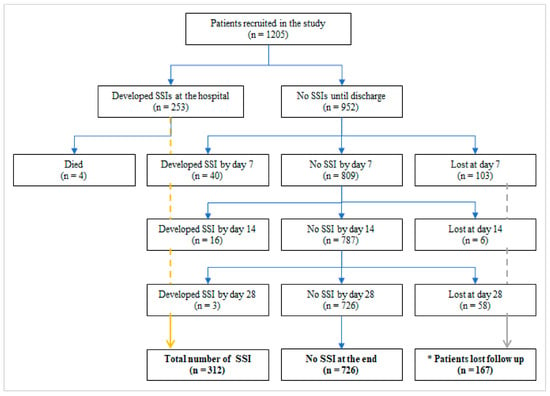
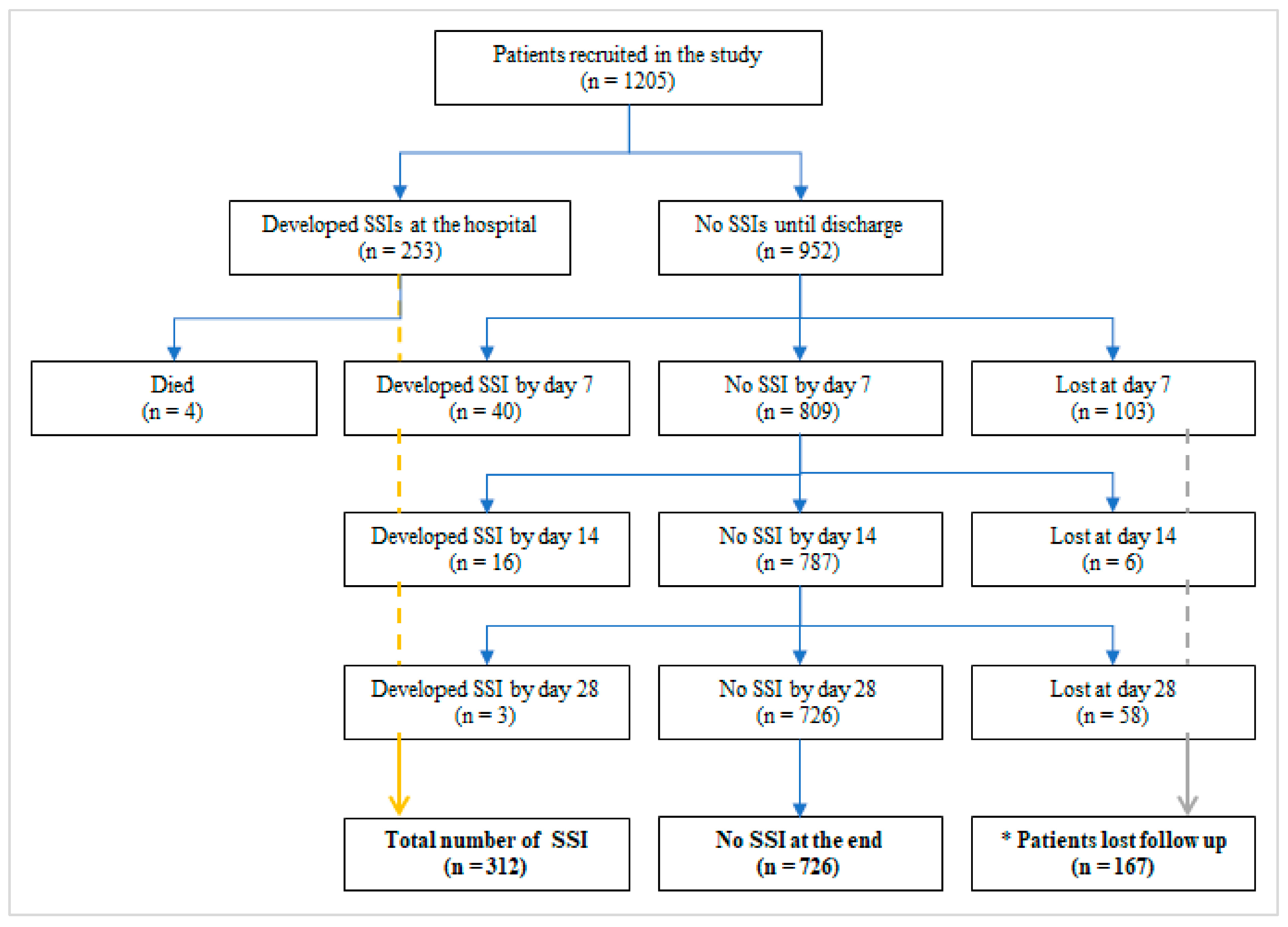
Complete follow-up information, including during the hospital stay and post-discharge, was available for 86.1% (n = 1038) of participants. Post-discharge follow-up was incomplete for the remaining 13.9% (n = 167) of participants. Reasons for loss to follow-up included insufficient or incorrect contact information (n = 44), repeatedly unsuccessful tracing attempts (n = 59), or successful tracing but non-attendance of scheduled follow-up appointments (n = 64) for clinical assessments. The study flow of participants is shown in Figure 1. By the end of the follow-up period, 312 patients were identified as having developed SSI, resulting in a cumulative prevalence of 25.9% (95% CI: 23.5–28.4). Of these, 81.1% (n = 253) developed SSI during hospitalization, while the remaining 18.9% (n = 59) developed the infection post-discharge. Most post-discharge SSIs appeared within the first seven days, with additional cases identified up to day 14, and only a few cases up to day 28 (Figure 1).
Figure 1.
Study flow diagram of study participants. Key: * A total of 167 participants were lost to follow-up for various reasons. Specifically, 44 participants lacked contact phone numbers, 59 could not be reached by the research team, and 64 were not reachable during all scheduled calls for the oral clinical assessment. Consequently, total events were 312 and the total number of censored cases 167 (167 lost to follow-up and 726 who did not experience an event by the end of the follow-up period).
2.3. Incidence of Surgical Site Infection
The study participants were followed for a total of 33,866 person-days. The overall incidence rate of SSI was 9.2 per 1000 person-days (95% CI: 8.3–10.3). Incidence rates varied across inpatient units. The orthopedics ward exhibited the highest incidence at 20.8 per 1000 person-days (95% CI: 17.6–24.5), while the oral and maxillofacial surgery (OMFS) ward had the lowest incidence at 1.5 per 1000 person-days (95% CI: 0.4–6.2). The overall incidence of SSI post-discharge was 2.7 per 1000 person-days. Notably, most of these infections occurred during the first week following discharge, with a particularly high post-discharge incidence observed among maternity and pediatric participants. Additionally, the incidence rate was higher among male patients at 13.4 per 1000 person-days (95% CI: 11.8–15.3), as well as in patients who underwent surgical procedures near the head or neck at 16.9 per 1000 person-days (95% CI: 13.6–20.9), and in those who had surgeries on the abdomen at 11.8 per 1000 person-days (95% CI: 10.3–13.6) (Table 2).
Table 2.
Incidence of surgical site infections at various wards of JMC (n = 1205).
2.4. Survival Estimate Using Kaplan–Meier Curve
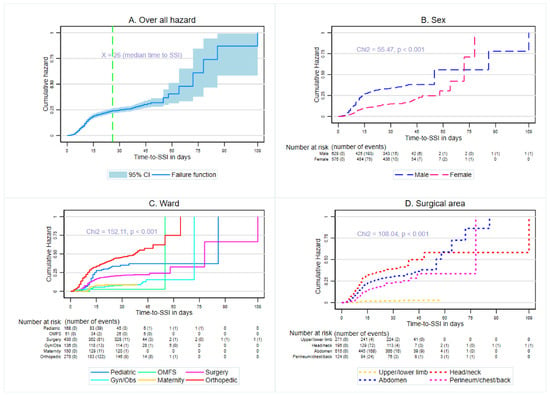
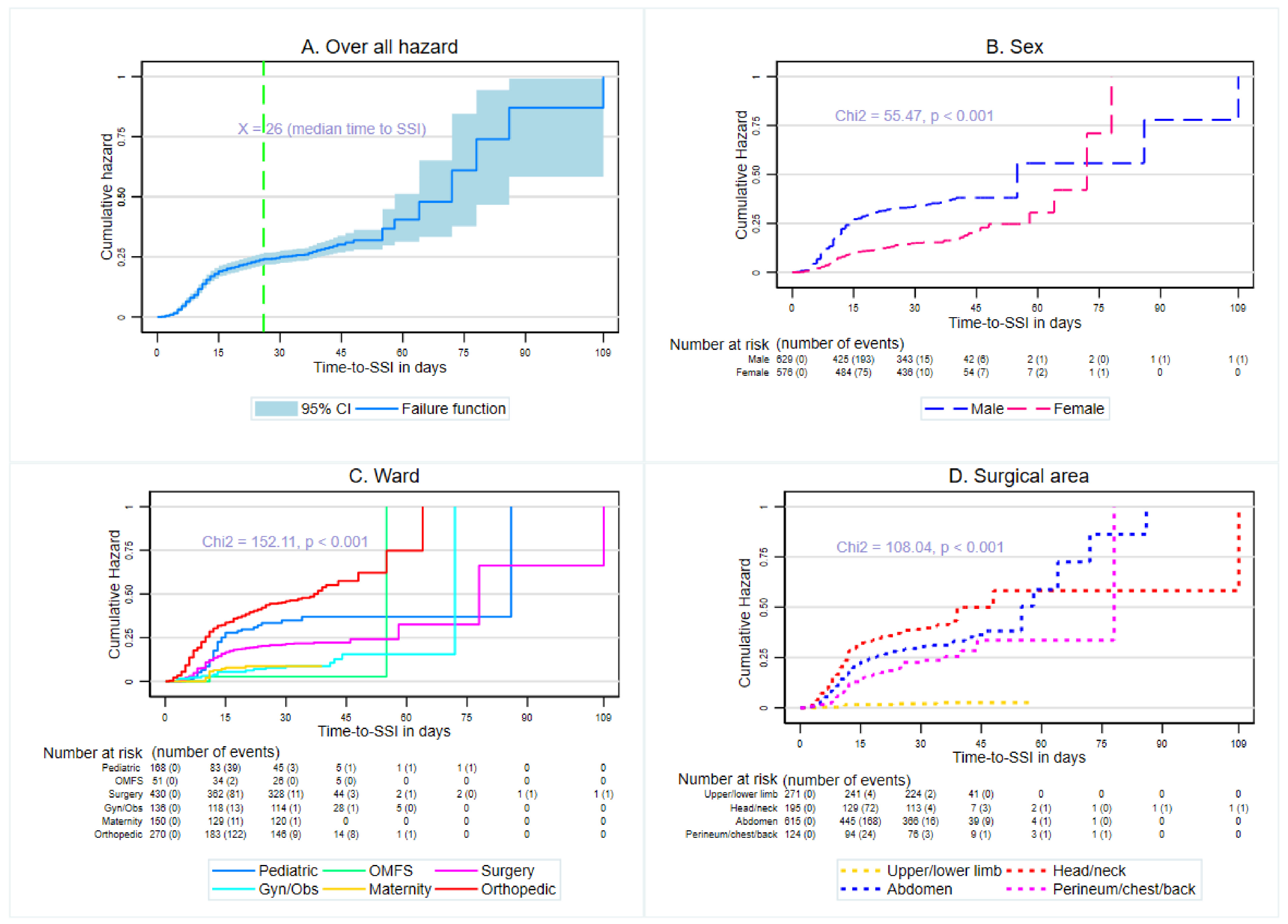
The median time to develop SSI was 26 days (IQR: 12–38) (Figure 2A). Notably, significantly higher infection rates were found among patients admitted to orthopedic wards (Figure 2C), those undergoing head and neck surgeries (Figure 2D), and male patients (Figure 2B) (p < 0.001). This underscores the impact of both the clinical environment and surgical characteristics on the risk of infection.
Figure 2.
Kaplan–Meier analysis of time to SSI in study participants undergoing surgery at JMC.
2.5. Factors Associated with the Development of SSIs
Based on the extended Cox regression analysis, several risk factors were identified as significantly associated with the development of SSI. Patients aged 25–50 years had nearly twice the risk of developing SSI compared to those aged ≤14 years (aHR = 1.8; 95% CI: 1.21–2.71; p = 0.004), while patients aged ≥65 years had more than double the risk (aHR = 2.3; 95% CI: 1.21–4.24; p = 0.010). Furthermore, males were found to have 1.7 times greater risk of developing SSI compared to females (aHR = 1.7; 95% CI: 1.25–2.18; p < 0.001). Surgical patients who came from rural residences were 1.4 times more likely to develop SSI than those from urban residences (aHR = 1.4; 95% CI: 1.00–1.89; p = 0.049).
Hospital ward of admission and anatomical region of the procedure were also associated with increased risk of SSI. Patients admitted to Orthopedic wards had a 5.9 times higher risk of SSI compared to those in the Maternity ward (aHR = 5.9; 95% CI: 2.35–14.55; p < 0.001). Similarly, patients admitted to Surgery wards had 7.3 (aHR = 7.3; 95% CI: 1.82–29.05; p = 0.005) times higher risk of SSI compared to patients admitted to the Maternity ward. Surgery involving the head and neck, as well as abdominal procedures, was associated with significantly higher risks of SSI compared to procedures involving the limbs, with aHRs of 23.4 (95% CI: 10.10–54.34; p < 0.001) and 16.2 (95% CI: 7.10–37.08; p < 0.001), respectively. Procedures involving the perineum, chest, or back also carried a notably higher risk compared to surgeries involving the limbs (aHR = 11.0; 95% CI: 4.52–26.79; p < 0.001).
Patients who underwent emergency surgery had nearly twice the risk of SSI compared to those who had elective surgery (aHR = 1.9; 95% CI: 1.43–2.71; p < 0.001). Furthermore, the survival estimate revealed that each additional surgical staff member involved in the procedure was associated with a 2.2-fold increase in the hazard of developing SSI (aHR = 2.2; 95% CI: 1.29–3.65, p = 0.003). For every one day stay in the hospital, the hazard of SSI increased by 1% (aHR = 1.01; 95% CI: 1.00–1.02; p < 0.001) (Table 3).
Table 3.
Univariate and multivariate extended Cox-regression analysis for risk factors associated with development of SSI up to 28 days post-hospital discharge at JMC (n = 1205).
2.6. Bacterial Profile of Surgical Site Infections
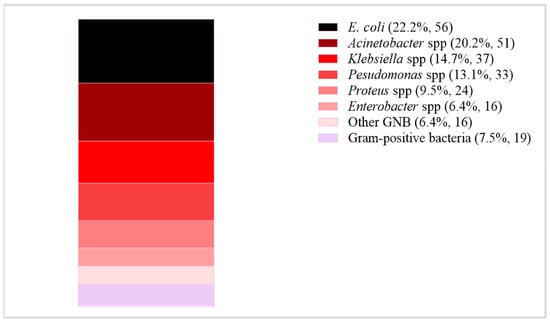
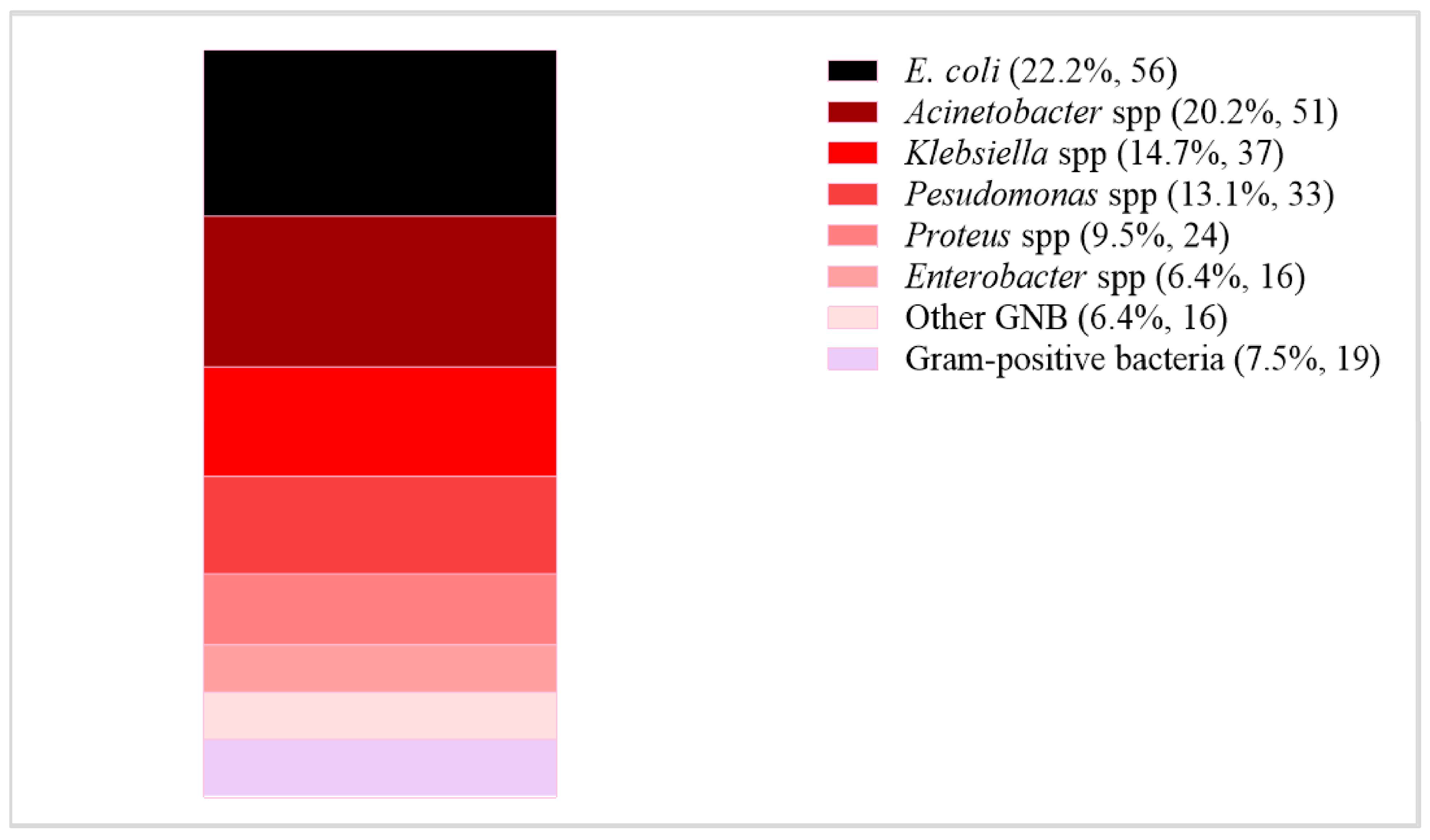
Among the 312 patients who developed SSI, clinical samples such as pus, abscess, or wound swabs were obtained from 260 patients. Of these, 248 samples were collected during the primary hospitalization, while the remaining 12 were obtained during readmissions post-initial discharge. Of all clinical samples, 72.7% (189/260) were culture positive, with 4.2% (8/189) obtained from readmitted patients. In total, 252 isolates of 36 different bacteria species were identified from the culture-positive samples. Polymicrobial growth was observed in 31.2% (59/189) of the samples. The most frequently isolated bacteria were E. coli (56; 22.2%), followed by Acinetobacter (51; 20.2%) and Klebsiella species (37; 14.7%) (Figure 3).
Figure 3.
The frequency of bacteria isolated from samples collected from patients with suspected SSI. Key: Acinetobacter spp.: A. baumannii, A. haemolyticus, A. pittii, and A. ursingii. Klebsiella spp.: K. oxytoca, K. pneumoniae, and K. variicola. Pseudomonas spp.: P. aeruginosa, P. mendocina, P. putida, and other Pseudomonas species. Proteus spp.: P. hauseri, P. mirabilis, and P. vulgaris. Enterobacter spp.: E. asburiae, E. cloacae, and Other Enterobacter species. Other GNB: C. freundii (5), P. rettgeri (3), L. adecarboxylata (2), M. morganii (2), Citrobacter species (1), S. marcescens (1), A. hydrophila (1), and S. maltophilia (1). Gram-positive bacteria: S. aureus (7), Corynebacterium striatum (3), S. cohnii (2), S. epidermidis (2), S. haemolyticus (2), (1), S. hominis (1), S. pasteuri (1), and S. warneri.
2.7. Phenotypic AST Analysis
The analysis of antibiotic resistance patterns among Gram-negative bacterial isolates revealed alarming resistance trends for commonly used antibiotics. For instance, resistance to third-generation cephalosporins like cefotaxime and ceftazidime was observed in 86.7% and 68.7% of the Gram-negative isolates, respectively. Similarly, the resistance rates of fluoroquinolones among Gram-negative isolates ranged from 44% to 77%, which limits the effectiveness of these broad-spectrum antibiotics. Even carbapenems, which are considered last-resort antibiotics, showed resistance rates ranging from 9% in E. coli to 51% in Acinetobacter species. Further analysis indicated that more than 67% of all Gram-negative bacterial isolates were identified as ESBL producers. Furthermore, 78.5% were classified as multidrug-resistant according to the criteria defined by Magiorakos et al. in 2012 (Table 4) [20].
Table 4.
Antibiotic resistance patterns including intrinsic resistances among Gram-negative bacterial pathogens obtained from patients who developed SSI at Jimma Medical Center, Ethiopia.
3. Discussion
The findings of this study underscore the substantial burden of SSI, with an overall prevalence of 25.9% and a cumulative incidence rate of 9.2 cases per 1000 person-days. Notably, we also observed high levels of antibiotic resistance among the bacterial pathogens isolated from these infections. Key risk factors identified included older patient age, male gender, rural residency, emergency procedures, surgery and orthopedic wards, longer hospitalization duration and specific surgical sites such as head, neck, abdomen, and pelvic area. These findings emphasize the need for targeted interventions to address the high burden of SSI and related poor outcomes. Moreover, the alarming prevalence of multidrug-resistant organisms, particularly among Gram-negative bacteria, compared with findings from studies in Western countries involving similar patient populations, underscores the urgent need for improved antibiotic stewardship and strengthened infection control practices to mitigate the growing threat of SSI in the study area and similar healthcare settings.
The incidence rate of SSI in the current study is comparable to previous studies conducted in Ethiopia which reported 11.7 cases per 1000 person-days, as well as a study in Kenya that reported 7.0 cases per 1000 person-days [12,21]. Moreover, the cumulative prevalence of SSI in this study is 25.9%. This is higher than previous studies from Ethiopia which reported 19.1% in Hawassa, 9.4% in Assella, and 6.8% in Lemlem Karl hospital [22,23,24]. Among all SSI cases, over 80% were observed during hospitalization. However, a substantial proportion of SSI cases occurred post-discharge, the majority of which manifested within the first one or two weeks. This highlights that focusing solely on SSI during the hospital stay provides an incomplete picture. Consequently, the findings underscore the critical importance of comprehensive surveillance and follow-up of patients beyond the initial hospital stay to optimize patient outcomes.
The overall culture positivity rate was 72.0% (189/260), which is consistent with previous studies conducted in Jimma (71.7%), Hawassa (71.1%), Mekelle (75%), and Gondar (69.7%) [25,26,27,28]. Unlike many previous studies in Ethiopia, the present study found that Gram-negative rods were the predominant pathogens responsible for SSI, accounting for 92.5% of all culture-confirmed cases. This difference may be attributed to the fact that most of the patients in this study underwent surgical procedures involving the abdominal area, increasing the likelihood of contamination from gastrointestinal contents, as demonstrated by a study from Tanzania [29]. Furthermore, the infections could have originated from the hospital environment, as the identified pathogens are commonly found in healthcare settings and are also frequently found on inanimate objects [30,31,32]. These findings highlight the critical need for rigorous environmental cleaning, disinfection protocols, and proper hand hygiene to reduce the risk of SSI [33].
The resistance profiles of the bacterial pathogens responsible for SSIs in this study revealed the presence of MDR strains. Notably, MDR isolates of A. baumannii, K. pneumoniae, Pseudomonas species, Enterobacter species, and E. coli were identified. These findings underscore the growing threat of AMR, which poses a substantial challenge in managing SSIs [9,34]. The results emphasize the urgent need for antimicrobial stewardship programs, careful and judicious use of antibiotics, and robust surveillance to detect and curb the spread of resistant bacteria. This is particularly critical in low-income countries, where access to alternative antibiotics for treating SSIs caused by these resistant pathogens is often limited [1,15,34].
The Kaplan–Meier and Cox-regression analysis in this study identified several risk factors associated with the development of SSI. These include being older age (>65 years), residing in a rural area, undergoing surgical procedures involving the abdomen, neck, head, or pelvis, admission to orthopedic or surgery wards, undergoing emergency surgery, higher number of surgical staff involved in the procedure, and longer hospital stay. However, these risks may be confounded by several other unmeasured but important factors, such as the complexity of the procedure and the time of the surgery. Nonetheless, targeting these physiological, clinical, personal, and environmental risk factors through targeted interventions could play a crucial role in reducing the incidence of SSI [35,36].
These findings also provide valuable insights for stakeholders to develop and implement effective infection prevention and control measures aimed at mitigating the burden of SSI [3]. For example, strategies such as preoperative patient screening and optimization, tailored perioperative management, meticulous surgical technique, and the appropriate use of antimicrobial prophylaxis can significantly contribute to reducing SSI rates. Implementing these measures is essential, especially in high-risk scenarios, to control and prevent the spread of infection [1,35].
Strength and Limitation of the Study
Conducting a longitudinal study enables us to understand the dynamic nature of SSI over time, including its temporal trends and patterns, which provide a deeper understanding of how various factors influence SSI development over time. This approach is particularly valuable in identifying modifiable risk factors that can be targeted for intervention. Additionally, the study offers valuable insights into the epidemiology of SSIs in low-income countries, which can inform strategies to reduce the incidence.
However, several limitations should be considered. First, since this study was conducted at a single tertiary hospital, the findings may not be generalizable to other healthcare settings within the country or globally. Second, anaerobic bacteria were not investigated due to limited laboratory capability, leaving an important gap in understanding the contribution of these bacteria as etiologies of SSIs. Third, the proportion of post-discharge SSIs may not indicate the actual data, as patients with serious SSI-related symptoms might have been more likely to participate in post-discharge assessments than those with superficial SSIs or without symptoms, potentially leading to selection bias. Lastly, the reliance on clinical documentation to identify SSIs may have introduced information bias, as inconsistencies or omissions in records may have affected the accuracy of the data collected.
4. Methods
4.1. Study Design, Area, and Period
A longitudinal study was conducted between 1 June and 30 September 2022. The study focused on patients who had undergone surgery at JMC and were subsequently admitted to various wards, including orthopedics, general surgery, pediatric surgery, oral and maxillofacial surgery, maternity, and gynecology. JMC is a tertiary hospital which serves as a referral hospital to a total population of 20 million in southwest Ethiopia. Based on data from previous years, the hospital performs 5000 to 10,000 surgeries annually, including both elective and emergency procedures [18].
4.2. Study Population and Clinical Data Collection
A total of 1205 patients who had undergone various surgical procedures during the study period were recruited and included in the study consecutively. These participants were admitted to the specified wards at JMC and were then closely monitored daily throughout their hospital stay. Sociodemographic information was collected using structured questionnaires and clinical data was collected with direct observation or follow-up using standardized checklists adapted from WHO guidelines (Supplementary Table S1). Information about any medications administered to the patients after their surgical procedures, including the duration of administration, was extracted directly from the patients’ medication charts. Post-discharge, trained nurses contacted the study participants by telephone on days 7, 14, and 28 to conduct oral assessments for any signs of SSI. If an infection was suspected, patients were advised to visit the hospital for confirmation and to receive the necessary healthcare services.
Surgical site infection was defined as the occurrence of any superficial infection after surgery in the part of the body where the surgery took place, in the tissues under the skin (subcutaneous tissues) involved in the procedure during hospital stay or within 30 days post-discharge based on the WHO guideline [37]. The primary outcome of interest was the time to development of SSI during the participants’ hospital stay or within the 28-day follow-up period after discharge. The time to SSI was defined as the interval between the date of surgery and the date of SSI diagnosis, irrespective of whether the infection occurred during hospitalization or post-discharge. The duration of hospital stay was calculated as the total number of days the patient remained hospitalized from admission until discharge.
4.3. Specimen Collection and Bacterial Identification
Pus, abscess, or a pair of wound swab samples were collected aseptically from individuals with suspected clinical signs and symptoms of SSI. These samples were immediately transported to the microbiology laboratory using Amies transport media. Upon arrival, the samples were streaked onto 5% Colombia Sheep Blood and MacConkey Agars (Oxoid™, Basingstoke, Hampshire, UK) and then incubated aerobically at 35–37 °C for 24–48 h. If growth was observed, the isolates were subsequently identified using a battery of biochemical tests and then saved using storage media at JMC. Later, all the isolates were transported to Max von Pettenkofer Institute, Hospital Hygiene, and Medical Microbiology Laboratory in Munich, Germany, and re-identified with MALDI-TOF MS (Bruker, Ettlingen, Germany) technology.
4.4. Antimicrobial Susceptibility Testing
Antimicrobial susceptibility testing (AST) was conducted using the Kirby–Bauer disc diffusion technique for 25 antibiotics. To prepare the inoculum, a single colony was picked with a sterile cotton swab and suspended in sterile normal saline. The density of this suspension was then standardized to the 0.5 McFarland turbidity standard using DensiCHEK (Menarini Diagnostics, Florence, Italy). A sterile cotton swab was dipped into the standardized bacterial suspension, the excess fluid was removed by pressing the swab against the side of the tube, and it was then streaked on Muller Hinton Agar (Bio-Rad, Feldkirchen, Germany). Paper-impregnated antibiotic discs were then placed on the agar, and the plates were incubated at 35–37 °C for 16–18 h. The inhibition zone diameters around the antibiotic discs were read automatically using the ADAGIO™ system (Bio-Rad, Feldkirchen, Germany). The results were interpreted as susceptible, susceptible with increased exposure, or resistant according to the criteria set by the European Committee on Antimicrobial Susceptibility Testing (EUCAST, 2022) [38].
4.5. ESBL Screening
The phenotypic detection of ESBL production was performed for all Gram-negative isolates using a double disc synergy test (DDST). Ceftazidime (30 µg) and cefotaxime (30 µg) discs, along with an amoxicillin-clavulanic acid (10 µg) disc, were placed on Mueller–Hinton agar (Bio-Rad, Feldkirchen, Germany). The results were automatically interpreted by the ADAGIO system (Bio-Rad, Feldkirchen, Germany). Furthermore, the ESBL phenotypes were confirmed using Mast discs (Mast Diagnostica GmbH, Reinfeld, Germany) for all resistant isolates. The results were interpreted with the Mast discs combi D68C ESBL/AmpC calculator spreadsheet (Mast Diagnostica GmbH, Reinfeld, Germany) and reported as either negative or positive for ESBL and/or AmpC phenotypes.
4.6. Quality Assurance
To ensure sterility, 5% of each batch of the prepared media was incubated overnight at 35–37 °C aerobically, and any batches that showed evidence of bacterial growth were discarded. The quality of the antibiotic discs used for AST was also monitored weekly using the ATCC control strains including P. aeruginosa (ATCC-27853), S. aureus (ATCC-25923), and E. coli (ATCC-25922) (American Tissue Culture Collection, Manassas, VA, USA).
4.7. Data Processing and Analysis
Data was double-entered into Epi-Data version 4.6 and then exported to STATA version 17 for analysis. Descriptive statistics, including frequencies, proportions, medians and interquartile ranges, were calculated to present the demographic and clinical characteristics of the study participants and the length of hospital stay. Incidence of SSI was calculated per 1000 person-days and was reported at discharge, and days 7, 14, and 28 post-discharge with 95% Confidence Intervals (CIs). The Kaplan–Meier method was used to assess the median time to SSI. Cox-regression methods were used to assess differences associated with the surgical area, ward, and patient’s sex in developing the infection. Participants who were lost to follow-up for various reasons were censored in the analysis. The results of the Schoenfeld residual test indicate significant deviations from the proportional hazards assumption for the variable of hospital stay (p < 0.001). Consequently, the global test confirmed a significant violation of the proportional hazard assumption, leading us to use univariate and multivariate extended Cox-regression for time-varying covariates of hospital stay to identify risk factors associated with SSI. All relevant socio-demographic, clinical, physiological, and environmental variables were included in the multivariable extended Cox regression model to identify predictors of SSI. We then refined the final model by assessing changes in beta coefficients as variables were added or removed, comparing nested models based on the Akaike Information Criterion (AIC), and considering collinear relationships among included variables. The results were reported as crude hazard ratios (cHRs) from the univariate analysis and adjusted hazard ratios (aHRs) from the multivariate analysis, along with their corresponding 95% CIs. A p-value of less than 0.05 was considered statistically significant.
4.8. Ethical Consideration
Ethical clearance was obtained from the Institutional Review Board (IRB) of the Institute of Health, Jimma University (Reference number: IHRPGO/833). Written informed consent was obtained from each study participant. For child participants, assent was also sought in addition to parental/guardian consent. Confidentiality was ensured through anonymization of personal information. The culture and AST results were promptly communicated to the treating clinicians. Patients with culture-confirmed SSIs were then managed according to the hospital treatment protocol. Furthermore, patients who exhibited signs of SSIs during the post-discharge follow-up period based on the oral clinical assessments were advised to visit the medical center to receive appropriate healthcare.
5. Conclusions
This study highlights the substantial burden of SSIs, driven largely by Gram-negative bacteria in contrast to Western countries, with many strains exhibiting multidrug resistance. Key risk factors identified include older age, rural residence, male gender, emergency surgeries, certain anatomical sites, and hospital stay, which point to critical areas for targeted intervention. The findings stress the importance of robust infection prevention strategies, such as effective antimicrobial stewardship, environmental hygiene, and extended post-discharge surveillance. While the study provides valuable insights, its single-site focus and certain methodological limitations suggest that further research is needed to fully generalize the results.
Supplementary Materials
The following supporting information can be downloaded at: https://www.mdpi.com/article/10.3390/antibiotics15020201/s1, Table S1: Standardized checklists used to assess the development of SSIs during follow-up; Figure S1: Median hospital stays of study participants at JMC. Key: OMFS—Oral and Maxillofacial surgery; Gyn/Obs—Gynecology/Obstetrics.
Author Contributions
Conceptualization, M.G., E.K.G., A.K. and A.W.; methodology, M.G., B.A., E.K.G., G.A. (Gemechu Abera), G.A. (Gersam Abera), D.A.S., R.T. and A.W.; software, M.G., A.L.S., K.E. and R.K.; validation, M.G., A.W., K.E., R.K. and A.L.S.; formal analysis, M.G. and A.L.S.; investigation, M.G. and B.A.; resources, A.K., E.K.G., A.W. and M.G.; data curation, M.G. and B.A.; writing—original draft preparation, M.G.; writing—review and editing, all the authors; visualization, M.G.; supervision, M.G., E.K.G., G.A. (Gemechu Abera), G.A. (Gersam Abera), D.A.S. and R.T.; project administration, M.G. and E.K.G.; funding acquisition, A.K. All authors have read and agreed to the published version of the manuscript.
Funding
This study was funded by the German Academic Exchange Service (DAAD) through its Exceed program and by the University & Hospital Partnerships in Africa initiative of the German Gesellschaft für International Zusammenarbeit (GIZ) (grant number 81248133) in cooperation with the German Ministry of Economic Cooperation and Development (BMZ) and the German Federal Ministry of Education and Research (BMBF) (grant number 01KA1921B).
Institutional Review Board Statement
The study was conducted in accordance with the Declaration of Helsinki and received approval from the Institutional Review Board of Jimma University, Institute of Health (protocol code IHRPGO/833, approved on 27 May 2022).
Informed Consent Statement
Written informed consent was obtained from all subjects involved in the study.
Data Availability Statement
Access to the data will be granted in accordance with the policies of Jimma University, Health Institute and applicable ethical guidelines. Specific datasets may include clinical data, etiologies, and antimicrobial resistance patterns. Any additional conditions for accessing the data will be outlined in response to requests.
Conflicts of Interest
The authors have no conflicts of interest or financial disclosures to declare.
References
- Owens, C.D.; Stoessel, K. Surgical site infections: Epidemiology, microbiology and prevention. J. Hosp. Infect. 2008, 70, 3–10. [Google Scholar] [CrossRef] [Scilit]
- Farid Mojtahedi, M.; Sepidarkish, M.; Almukhtar, M.; Eslami, Y.; Mohammadianamiri, F.; Behzad Moghadam, K.; Rouholamin, S.; Razavi, M.; Jafari Tadi, M.; Fazlollahpour-Naghibi, A.; et al. Global incidence of surgical site infections following caesarean section: A systematic review and meta-analysis. J. Hosp. Infect. 2023, 139, 82–92. [Google Scholar] [CrossRef] [Scilit] [PubMed]
- Kolasiński, W. Surgical site infections—Review of current knowledge, methods of prevention. Pol. Przegl. Chir. 2018, 91, 41–47. [Google Scholar] [CrossRef] [Scilit]
- Peisl, S.; Guillen-Ramirez, H.; Sánchez-Taltavull, D.; Widmer, A.; Sommerstein, R.; Beldi, G. Influence of patient characteristics on microbial composition in surgical-site infections: Insights from national surveillance study. Br. J. Surg. 2024, 111, znae138. [Google Scholar] [CrossRef] [Scilit] [PubMed]
- Cheadle, W.G. Risk factors for surgical site infection. Surg. Infect. 2006, 7, S7–S11. [Google Scholar] [CrossRef]
- Rickard, J. Treating Surgical Infections in Low- and Middle-Income Countries: Source Control, Then What? Surg. Infect. 2019, 20, 192–196. [Google Scholar] [CrossRef] [Scilit]
- Seidelman, J.; Anderson, D.J. Surgical Site Infections. Infect. Dis. Clin. N. Am. 2021, 35, 901–929. [Google Scholar] [CrossRef] [Scilit]
- Worku, S.; Abebe, T.; Alemu, A.; Seyoum, B.; Swedberg, G.; Abdissa, A.; Mihret, A.; Beyene, G.T. Bacterial profile of surgical site infection and antimicrobial resistance patterns in Ethiopia: A multicentre prospective cross-sectional study. Ann. Clin. Microbiol. Antimicrob. 2023, 22, 96. [Google Scholar] [CrossRef] [Scilit]
- Gehlen, H.; Klein, K.S.; Merle, R.; Lübke-Becker, A.; Stoeckle, S.D. Does colonization with MRSA, ESBL—Producing Enterobacteriaceae, and/or Acinetobacter baumannii—Increase the risk for postoperative surgical site infection? Vet. Med. Sci. 2023, 9, 729–737. [Google Scholar] [CrossRef] [Scilit]
- Boisson, M.; Abbas, M.; Rouaux, J.; Guenezan, J.; Mimoz, O. Prevention of surgical site infections in low-income and middle-income countries: When more is not better. Anaesth. Crit. Care Pain Med. 2022, 41, 101046. [Google Scholar] [CrossRef] [Scilit]
- Sandberg, C.E.J.; Knight, S.R.; Qureshi, A.U.; Pathak, S. Using Telemedicine to Diagnose Surgical Site Infections in Low- and Middle-Income Countries: Systematic Review. JMIR mHealth uHealth 2019, 7, e13309. [Google Scholar] [CrossRef] [Scilit]
- Ketema, D.B.; Wagnew, F.; Assemie, M.A.; Ferede, A.; Alamneh, A.A.; Leshargie, C.T.; Kibret, G.D.; Petrucka, P.; Telayneh, A.T.; Alebel, A. Incidence and predictors of surgical site infection following cesarean section in North-west Ethiopia: A prospective cohort study. BMC Infect. Dis. 2020, 20, 902. [Google Scholar] [CrossRef] [Scilit] [PubMed]
- Adane, A.; Gedefa, L.; Eyeberu, A.; Tesfa, T.; Arkew, M.; Tsegaye, S.; Getachew, T.; Debella, A.; Yadeta, E.; Abdisa, L.; et al. Predictors of surgical site infection among women following cesarean delivery in eastern Ethiopia: A prospective cohort study. Ann. Med. Surg. 2023, 85, 738–745. [Google Scholar] [CrossRef] [Scilit] [PubMed]
- Delpachitra, M.; Heal, C.; Banks, J.; Charles, D.; Sriharan, S.; Buttner, P. Risk Factors for Surgical Site Infection after Minor Dermatologic Surgery. Adv. Skin Wound Care 2021, 34, 43–48. [Google Scholar] [CrossRef] [Scilit]
- Branch-Elliman, W.; O’Brien, W.; Strymish, J.; Itani, K.; Wyatt, C.; Gupta, K. Association of Duration and Type of Surgical Prophylaxis with Antimicrobial-Associated Adverse Events. JAMA Surg. 2019, 154, 590–598. [Google Scholar] [CrossRef] [Scilit]
- NIHR Global Research Health Unit on Global Surgery. Routine sterile glove and instrument change at the time of abdominal wound closure to prevent surgical site infection (ChEETAh): A pragmatic, cluster-randomised trial in seven low-income and middle-income countries. Lancet 2022, 400, 1767–1776. [Google Scholar] [CrossRef] [Scilit]
- Sekhon, J.K.; Moss, C.; Watts, J. Reducing post-caesarean infection in the Kimberley region of Western Australia: An audit-based observational study. Aust. N. Z. J. Obstet. Gynaecol. 2023, 63, 81–85. [Google Scholar] [CrossRef] [Scilit]
- Jimma University Medical Center. Available online: https://ju.edu.et/jimma-medical-center/ (accessed on 3 April 2024).
- Mezemir, R.; Olayemi, O.; Dessie, Y. Incidence, Bacterial Profile and Predictors of Surgical Site Infection After Cesarean Section in Ethiopia, A Prospective Cohort Study. Int. J. Womens Health 2023, 15, 1547–1560. [Google Scholar] [CrossRef] [Scilit] [PubMed]
- Magiorakos, A.-P.; Srinivasan, A.; Carey, R.B.; Carmeli, Y.; Falagas, M.; Giske, C.; Harbarth, S.; Hindler, J.; Kahlmeter, G.; Olsson-Liljequist, B. Multidrug-resistant, extensively drug-resistant and pandrug-resistant bacteria: An international expert proposal for interim standard definitions for acquired resistance. Clin. Microbiol. Infect. 2012, 18, 268–281. [Google Scholar] [CrossRef] [Scilit]
- Dinda, V.; Gunturu, R.; Kariuki, S.; Hakeem, A.; Raja, A.; Kimang’a, A. Pattern of pathogens and their sensitivity isolated from surgical site infections at the Aga Khan University Hospital, Nairobi, Kenya. Ethiop. J. Health Sci. 2013, 23, 141–149. [Google Scholar]
- Gelaw, K.A.; Aweke, A.M.; Astawesegn, F.H.; Demissie, B.W.; Zeleke, L.B. Surgical site infection and its associated factors following cesarean section: A cross sectional study from a public hospital in Ethiopia. Patient Saf. Surg. 2017, 11, 18. [Google Scholar] [CrossRef] [Scilit] [PubMed]
- Legesse Laloto, T.; Hiko Gemeda, D.; Abdella, S.H. Incidence and predictors of surgical site infection in Ethiopia: Prospective cohort. BMC Infect. Dis. 2017, 17, 119. [Google Scholar] [CrossRef] [Scilit] [PubMed]
- Mamo, T.; Abebe, T.W.; Chichiabellu, T.Y.; Anjulo, A.A. Risk factors for surgical site infections in obstetrics: A retrospective study in an Ethiopian referral hospital. Patient Saf. Surg. 2017, 11, 24. [Google Scholar] [CrossRef] [Scilit]
- Abosse, S.; Genet, C.; Derbie, A. Antimicrobial Resistance Profile of Bacterial Isolates Identified from Surgical Site Infections at a Referral Hospital, Northwest Ethiopia. Ethiop. J. Health Sci. 2021, 31, 635–644. [Google Scholar] [CrossRef] [Scilit]
- Misha, G.; Chelkeba, L.; Melaku, T. Incidence, risk factors and outcomes of surgical site infections among patients admitted to Jimma Medical Center, South West Ethiopia: Prospective cohort study. Ann. Med. Surg. 2021, 65, 102247. [Google Scholar] [CrossRef] [Scilit]
- Dessalegn, L.; Shimelis, T.; Tadesse, E.; Gebre-selassie, S. Aerobic bacterial isolates from post-surgical wound and their antimicrobial susceptibility pattern: A hospital based cross-sectional study. E3 J. Med. Res. 2014, 3, 18–23. [Google Scholar]
- Mengesha, R.E.; Kasa, B.G.; Saravanan, M.; Berhe, D.F.; Wasihun, A.G. Aerobic bacteria in post surgical wound infections and pattern of their antimicrobial susceptibility in Ayder Teaching and Referral Hospital, Mekelle, Ethiopia. BMC Res. Notes 2014, 7, 575. [Google Scholar] [CrossRef] [Scilit]
- Moremi, N.; Claus, H.; Rutta, L.; Frosch, M.; Vogel, U.; Mshana, S.E. High carriage rate of extended-spectrum beta-lactamase-producing Enterobacteriaceae among patients admitted for surgery in Tanzanian hospitals with a low rate of endogenous surgical site infections. J. Hosp. Infect. 2018, 100, 47–53. [Google Scholar] [CrossRef] [Scilit]
- Rickard, J.; Beilman, G.; Forrester, J.; Sawyer, R.; Stephen, A.; Weiser, T.G.; Valenzuela, J. Surgical Infections in Low- and Middle-Income Countries: A Global Assessment of the Burden and Management Needs. Surg. Infect. 2019, 21, 478–494. [Google Scholar] [CrossRef] [Scilit]
- Birhanu, Y.; Endalamaw, A. Surgical site infection and pathogens in Ethiopia: A systematic review and meta-analysis. Patient Saf. Surg. 2020, 14, 7. [Google Scholar] [CrossRef] [Scilit]
- Gashaw, M.; Gudina, E.K.; Tadesse, W.; Froeschl, G.; Ali, S.; Seeholzer, T.; Kroidl, A.; Wieser, A. Hospital Wastes as Potential Sources for Multi-Drug-Resistant ESBL-Producing Bacteria at a Tertiary Hospital in Ethiopia. Antibiotics 2024, 13, 374. [Google Scholar] [CrossRef] [Scilit]
- Allegranzi, B.; Zayed, B.; Bischoff, P.; Kubilay, N.Z.; de Jonge, S.; de Vries, F.; Gomes, S.M.; Gans, S.; Wallert, E.D.; Wu, X.; et al. New WHO recommendations on intraoperative and postoperative measures for surgical site infection prevention: An evidence-based global perspective. Lancet Infect. Dis. 2016, 16, e288–e303. [Google Scholar] [CrossRef] [Scilit]
- Mwita, J.C.; Ogunleye, O.O.; Olalekan, A.; Kalungia, A.C.; Kurdi, A.; Saleem, Z.; Sneddon, J.; Godman, B. Key Issues Surrounding Appropriate Antibiotic Use for Prevention of Surgical Site Infections in Low- and Middle-Income Countries: A Narrative Review and the Implications. Int. J. Gen. Med. 2021, 14, 515–530. [Google Scholar] [CrossRef] [Scilit] [PubMed]
- De Simone, B.; Sartelli, M.; Coccolini, F.; Ball, C.G.; Brambillasca, P.; Chiarugi, M.; Campanile, F.C.; Nita, G.; Corbella, D.; Leppaniemi, A.; et al. Intraoperative surgical site infection control and prevention: A position paper and future addendum to WSES intra-abdominal infections guidelines. World J. Emerg. Surg. 2020, 15, 10. [Google Scholar] [CrossRef] [Scilit] [PubMed]
- Tucci, G.; Romanini, E.; Zanoli, G.; Pavan, L.; Fantoni, M.; Venditti, M. Prevention of surgical site infections in orthopaedic surgery: A synthesis of current recommendations. Eur. Rev. Med. Pharmacol. Sci. 2019, 23, 224–239. [Google Scholar] [CrossRef] [Scilit] [PubMed]
- World Health Organization. Protocol for Surgical Site Infection Surveillance with a Focus on Settings with Limited Resources; WHO Team, Infection Prevention and Control (IPC): Geneva, Switzerland, 2018.
- European Committee on Antimicrobial Susceptibility Testing. Breakpoint Tables for Interpretation of MICs and Zone Diameters Version 12.0, Valid from 2022-01-01. 2022. Available online: https://www.eucast.org/fileadmin/src/media/PDFs/EUCAST_files/Breakpoint_tables/v_12.0_Breakpoint_Tables.pdf (accessed on 3 April 2024).

Disclaimer/Publisher’s Note: The statements, opinions and data contained in all publications are solely those of the individual author(s) and contributor(s) and not of MDPI and/or the editor(s). MDPI and/or the editor(s) disclaim responsibility for any injury to people or property resulting from any ideas, methods, instructions or products referred to in the content. |
© 2026 by the authors. Licensee MDPI, Basel, Switzerland. This article is an open access article distributed under the terms and conditions of the Creative Commons Attribution (CC BY) license.