
Ceftolozane/Tazobactam for Complex and Resistant Infections: Systematic Reviews of Comparative Efficacy Studies

 ,
,  ,
,
Abstract
1. Introduction
2. Results
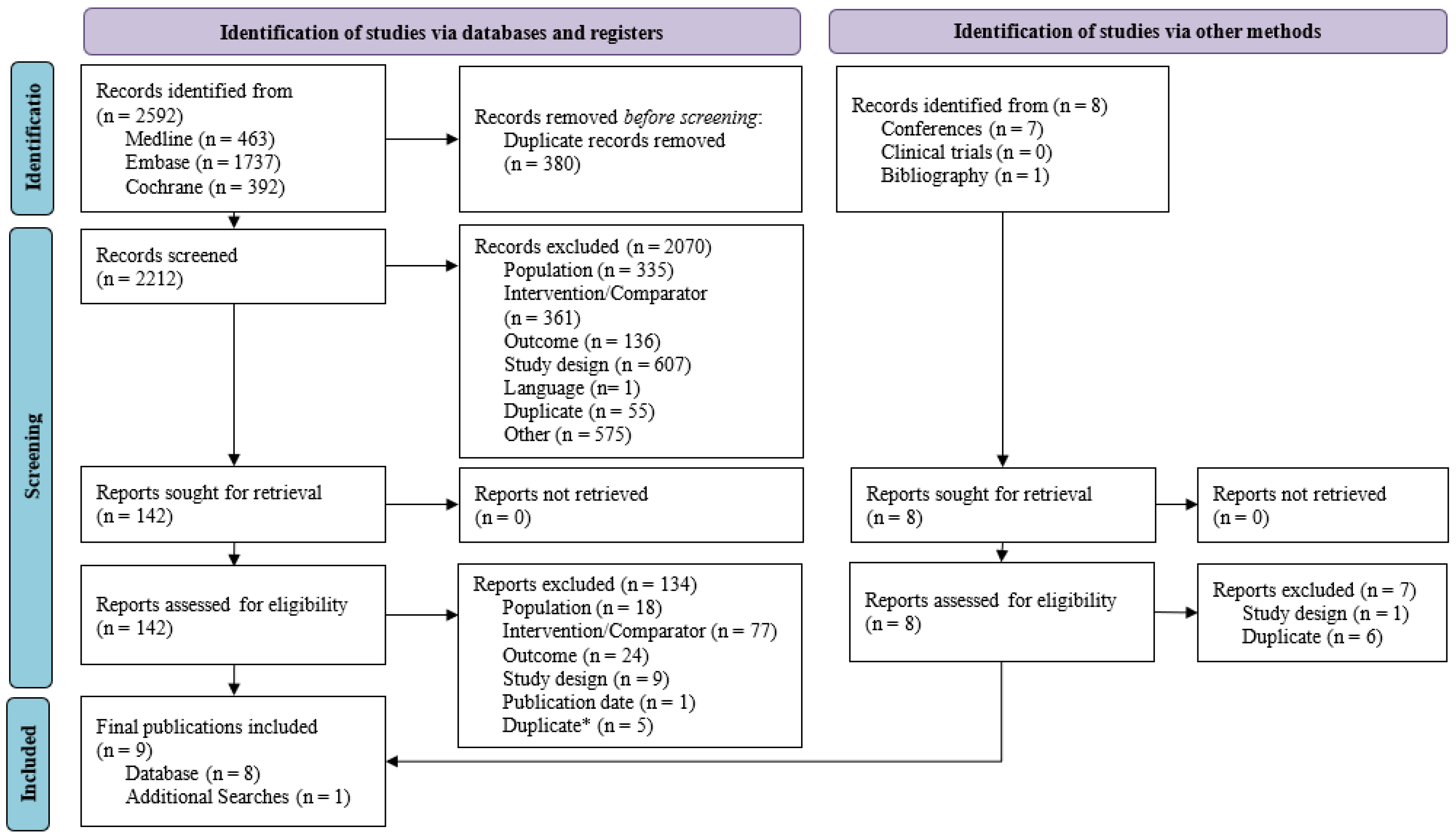
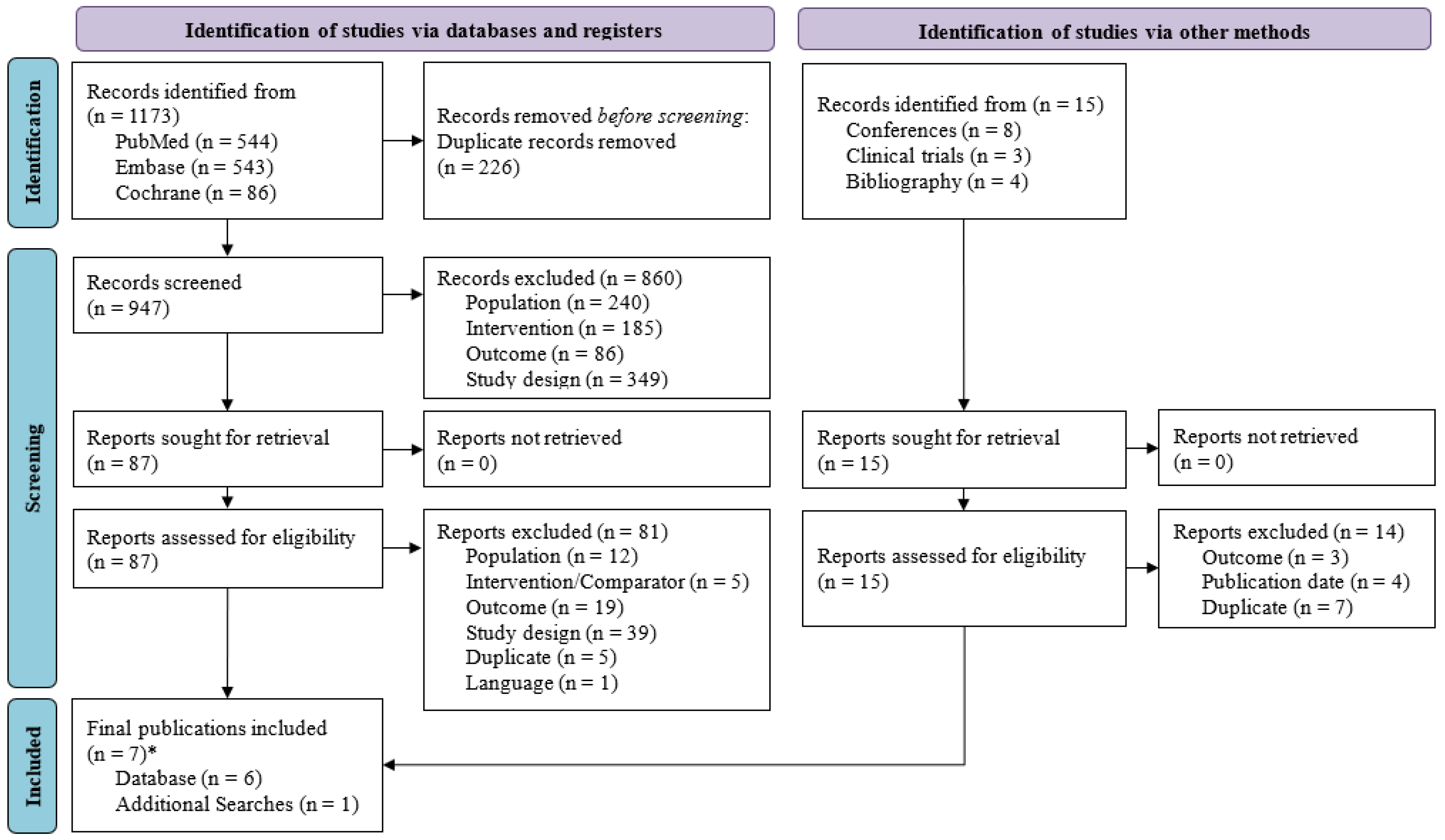
2.1. Overview of Included Studies
2.1.1. Ventilated Hospital-Acquired Bacterial Pneumonia/Ventilator-Associated Bacterial Pneumonia
2.1.2. Complex Intra-Abdominal Infection and Complex Urinary Tract Infection
2.2. All-Cause Mortality
2.2.1. Ventilated Hospital-Acquired Bacterial Pneumonia/Ventilator-Associated Bacterial Pneumonia
2.2.2. Complex Intra-Abdominal Infection and Complex Urinary Tract Infection
2.3. Clinical Cure
2.3.1. Ventilated Hospital-Acquired Bacterial Pneumonia/Ventilator-Associated Bacterial Pneumonia
2.3.2. Complex Intra-Abdominal Infection and Complex Urinary Tract Infection
2.4. Microbiological Eradication
2.4.1. Ventilated Hospital-Acquired Bacterial Pneumonia/Ventilator-Associated Bacterial Pneumonia
2.4.2. Complex Intra-Abdominal Infection and Complex Urinary Tract Infection
2.5. Risk of Bias
2.5.1. Ventilated Hospital-Acquired Bacterial Pneumonia/Ventilator-Associated Bacterial Pneumonia Systematic Literature Review
2.5.2. Complex Intra-Abdominal Infection and Complex Urinary Tract Infection Systematic Literature Review
3. Discussion
4. Materials and Methods
4.1. Study Eligibility and Data Sources
4.2. Literature Search and Screening Process
4.3. Outcomes and Definitions
5. Conclusions
6. Limitations
Supplementary Materials
Author Contributions
Funding
Institutional Review Board Statement
Informed Consent Statement
Data Availability Statement
Conflicts of Interest
References
- WHO. Antimicrobial Resistance. 2023. Available online: https://www.who.int/news-room/fact-sheets/detail/antimicrobial-resistance (accessed on 1 February 2026).
- Weiner-Lastinger, L.M.; Abner, S.; Edwards, J.R.; Kallen, A.J.; Karlsson, M.; Magill, S.S.; Pollock, D.; See, I.; Soe, M.M.; Walters, M.S. Antimicrobial-resistant pathogens associated with adult healthcare-associated infections: Summary of data reported to the National Healthcare Safety Network, 2015–2017. Infect. Control Hosp. Epidemiol. 2020, 41, 1–18. [Google Scholar] [CrossRef]
- Ferrer, R.; Fariñas, M.C.; Maseda, E.; Salavert, M.; Bou, G.; Diaz-Reganon, J.; López, D.; Lozano, V.; Gómez-Ulloa, D.; Fenoll, R. Clinical management of cUTI, cIAI, and HABP/VABP attributable to carbapenem-resistant Gram-negative infections in Spain. Rev. Española Quimioter. 2021, 34, 639. [Google Scholar] [CrossRef]
- European Centre for Disease Prevention and Control. Point Prevalence Survey of Healthcareassociated Infections and Antimicrobial Use in European Acute Care Hospitals, 2022–2023. 2024. Available online: https://www.ecdc.europa.eu/en/publications-data/PPS-HAI-AMR-acute-care-europe-2022-2023 (accessed on 9 January 2026).
- Centers for Disease Control and Prevention (U.S.); National Center for Emerging and Zoonotic Infectious Diseases, Division of Healthcare Quality Promotion, Antibiotic Resistance Coordination and Strategy Unit. Antibiotic Resistance Threats in the United States, 2019; U.S. Department of Health and Human Services, CDC: Atlanta, GA, USA, 2019.
- Naghavi, M.; Vollset, S.E.; Ikuta, K.S.; Swetschinski, L.R.; Gray, A.P.; Wool, E.E.; Aguilar, G.R.; Mestrovic, T.; Smith, G.; Han, C. Global burden of bacterial antimicrobial resistance 1990–2021: A systematic analysis with forecasts to 2050. Lancet 2024, 404, 1199–1226. [Google Scholar] [CrossRef]
- McDonnell, A.; Countryman, A.; Laurence, T.; Gulliver, S.; Drake, T.; Edwards, S.; Kenny, C.; Lamberti, O.; Morton, A.; Shafira, A.; et al. Forecasting the Fallout from AMR: Economic Impacts of Antimicrobial Resistance in Humans; Center for Global Development: Washington, DC, USA, 2024. [Google Scholar]
- López, I.; Montero, M.; Sorlí, L.; Horcajada, J.P. Ceftolozane-tazobactam: When, how and why using it? Rev. Española Quimioter. 2021, 34, 35. [Google Scholar] [CrossRef]
- Sorbera, M.; Chung, E.; Ho, C.W.; Marzella, N. Ceftolozane/Tazobactam: A new option in the treatment of complicated gram-negative infections. Pharm. Ther. 2014, 39, 825. [Google Scholar]
- Kollef, M.H.; Nováček, M.; Kivistik, Ü.; Réa-Neto, Á.; Shime, N.; Martin-Loeches, I.; Timsit, J.-F.; Wunderink, R.G.; Bruno, C.J.; Huntington, J.A. Ceftolozane–tazobactam versus meropenem for treatment of nosocomial pneumonia (ASPECT-NP): A randomised, controlled, double-blind, phase 3, non-inferiority trial. Lancet Infect. Dis. 2019, 19, 1299–1311. [Google Scholar] [CrossRef]
- Martin-Loeches, I.; Timsit, J.-F.; Kollef, M.H.; Wunderink, R.G.; Shime, N.; Nováček, M.; Kivistik, Ü.; Réa-Neto, Á.; Bruno, C.J.; Huntington, J.A. Clinical and microbiological outcomes, by causative pathogen, in the ASPECT-NP randomized, controlled, Phase 3 trial comparing ceftolozane/tazobactam and meropenem for treatment of hospital-acquired/ventilator-associated bacterial pneumonia. J. Antimicrob. Chemother. 2022, 77, 1166–1177. [Google Scholar] [CrossRef]
- Timsit, J.-F.; Huntington, J.A.; Wunderink, R.G.; Shime, N.; Kollef, M.H.; Kivistik, Ü.; Nováček, M.; Réa-Neto, Á.; Martin-Loeches, I.; Yu, B. Ceftolozane/tazobactam versus meropenem in patients with ventilated hospital-acquired bacterial pneumonia: Subset analysis of the ASPECT-NP randomized, controlled phase 3 trial. Crit. Care 2021, 25, 290. [Google Scholar] [CrossRef] [PubMed]
- Martin-Loeches, I.; Shorr, A.F.; Wunderink, R.G.; Kollef, M.H.; Timsit, J.F.; Yu, B.; Huntington, J.A.; Jensen, E.; Bruno, C.J. Outcomes in participants with ventilated nosocomial pneumonia and organ failure treated with ceftolozane/tazobactam versus meropenem: A subset analysis of the phase 3, randomized, controlled ASPECT-NP trial. Ann. Intensive Care 2023, 13, 8. [Google Scholar] [CrossRef] [PubMed]
- Shorr, A.F.; Bruno, C.J.; Zhang, Z.; Jensen, E.; Gao, W.; Feng, H.-P.; Huntington, J.A.; Yu, B.; Rhee, E.G.; De Anda, C. Ceftolozane/tazobactam probability of target attainment and outcomes in participants with augmented renal clearance from the randomized phase 3 ASPECT-NP trial. Crit. Care 2021, 25, 354. [Google Scholar] [CrossRef] [PubMed]
- Huntington, J.A.; Yu, B.; Li, L.; Jensen, E.; Bruno, C.; Boakye, M.; Zhang, Z.; Gao, W.; Feng, H.-P.; Rhee, E. Outcomes in participants with renal impairment from a phase 3 clinical trial for ceftolozane/tazobactam treatment of nosocomial pneumonia (ASPECT-NP). Antimicrob. Agents Chemother. 2020, 64, e00731-20. [Google Scholar] [CrossRef]
- Kollef, M.H.; Timsit, J.-F.; Martin-Loeches, I.; Wunderink, R.G.; Huntington, J.A.; Jensen, E.H.; Yu, B.; Bruno, C.J. Outcomes in participants with failure of initial antibacterial therapy for hospital-acquired/ventilator-associated bacterial pneumonia prior to enrollment in the randomized, controlled phase 3 ASPECT-NP trial of ceftolozane/tazobactam versus meropenem. Crit. Care 2022, 26, 373. [Google Scholar] [CrossRef]
- Paterson, D.L.; Bassetti, M.; Motyl, M.; Johnson, M.G.; Castanheira, M.; Jensen, E.H.; Huntington, J.A.; Yu, B.; Wolf, D.J.; Bruno, C.J. Ceftolozane/tazobactam for hospital-acquired/ventilator-associated bacterial pneumonia due to ESBL-producing Enterobacterales: A subgroup analysis of the ASPECT-NP clinical trial. J. Antimicrob. Chemother. 2022, 77, 2522–2531. [Google Scholar] [CrossRef]
- Martin-Loeches, I.; Kivistik, U.; Novácek, M.; Réa-Neto, A.; Timsit François, J.; Shime, N.; Wunderink, R.G.; Kollef, M.H. Clinical and Microbiologic Outcomes by Causative Pathogen in the ASPECTNP Randomised, Controlled, Phase III Trial Evaluating Ceftolozane/Tazobactam for Treatment of Ventilator-Associated Pneumonia; ESCMID: Basel, Switzerland, 2019. [Google Scholar]
- Solomkin, J.; Hershberger, E.; Miller, B.; Popejoy, M.; Friedland, I.; Steenbergen, J.; Yoon, M.; Collins, S.; Yuan, G.; Barie, P.S.; et al. Ceftolozane/tazobactam plus metronidazole for complicated intra-abdominal infections in an era of multidrug resistance: Results from a randomized, double-blind, phase 3 trial (ASPECT-cIAI). Clin. Infect. Dis. 2015, 60, 1462–1471. [Google Scholar] [CrossRef]
- Miller, B.; Popejoy, M.W.; Hershberger, E.; Steenbergen, J.N.; Alverdy, J. Characteristics and outcomes of complicated intra-abdominal infections involving Pseudomonas aeruginosa from a randomized, double-blind, phase 3 ceftolozane-tazobactam study. Antimicrob. Agents Chemother. 2016, 60, 4387–4390. [Google Scholar] [CrossRef]
- Lucasti, C.; Hershberger, E.; Miller, B.; Yankelev, S.; Steenbergen, J.; Friedland, I.; Solomkin, J. Multicenter, double-blind, randomized, phase II trial to assess the safety and efficacy of ceftolozane-tazobactam plus metronidazole compared with meropenem in adult patients with complicated intra-abdominal infections. Antimicrob. Agents Chemother. 2014, 58, 5350–5357. [Google Scholar] [CrossRef]
- Sun, Y.; Fan, J.; Chen, G.; Chen, X.; Du, X.; Wang, Y.; Wang, H.; Sun, F.; Johnson, M.G.; Bensaci, M.; et al. A phase III, multicenter, double-blind, randomized clinical trial to evaluate the efficacy and safety of ceftolozane/tazobactam plus metronidazole versus meropenem in Chinese participants with complicated intra-abdominal infections. Int. J. Infect. Dis. 2022, 123, 157–165. [Google Scholar] [CrossRef] [PubMed]
- Wagenlehner, F.M.; Umeh, O.; Steenbergen, J.; Yuan, G.; Darouiche, R.O. Ceftolozane-tazobactam compared with levofloxacin in the treatment of complicated urinary-tract infections, including pyelonephritis: A randomised, double-blind, phase 3 trial (ASPECT-cUTI). Lancet 2015, 385, 1949–1956. [Google Scholar] [CrossRef]
- Huntington, J.A.; Sakoulas, G.; Umeh, O.; Cloutier, D.J.; Steenbergen, J.N.; Bliss, C.; Goldstein, E.J. Efficacy of ceftolozane/tazobactam versus levofloxacin in the treatment of complicated urinary tract infections (cUTIs) caused by levofloxacinresistant pathogens: Results from the ASPECT-cUTI trial. J. Antimicrob. Chemother. 2016, 71, 2014–2021. [Google Scholar] [CrossRef] [PubMed]
- Chang, C.-H.; Fan, P.-C.; Kuo, G.; Lin, Y.-S.; Tsai, T.-Y.; Chang, S.-W.; Tian, Y.-C.; Lee, C.-C. Infection in advanced chronic kidney disease and subsequent adverse outcomes after dialysis initiation: A nationwide cohort study. Sci. Rep. 2020, 10, 2938. [Google Scholar] [CrossRef] [PubMed]
- Soriano, A.; Puzniak, L.; Paterson, D.; Thalhalmmer, F.; Kluge, S.; Viale, P.; Kaul, S. 2279. Study of Prescribing patterns and Effectiveness of Ceftolozane–tazobactam (C/T): Real-world Analysis (SPECTRA): A multi-national, multicenter observational study. In Open Forum Infectious Diseases; Oxford University Press: Oxford, UK, 2019. [Google Scholar]
- Lodise, T.P.; Obi, E.N.; Watanabe, A.H.; Yucel, E.; Min, J.; Nathanson, B.H. Comparative evaluation of early treatment with ceftolozane/tazobactam versus ceftazidime/avibactam for non-COVID-19 patients with pneumonia due to multidrug-resistant Pseudomonas aeruginosa. J. Antimicrob. Chemother. 2024, 79, 2954–2964. [Google Scholar] [CrossRef] [PubMed]
- Shields, R.K.; Abbo, L.M.; Ackley, R.; Aitken, S.L.; Albrecht, B.; Babiker, A.; Burgoon, R.; Cifuentes, R.; Claeys, K.C.; Curry, B.N. Effectiveness of ceftazidime–avibactam versus ceftolozane–tazobactam for multidrug-resistant Pseudomonas aeruginosa infections in the USA (CACTUS): A multicentre, retrospective, observational study. Lancet Infect. Dis. 2025, 25, 574–584. [Google Scholar] [CrossRef] [PubMed]
- Lizza, B.D.; Betthauser, K.D.; Ritchie, D.J.; Micek, S.T.; Kollef, M.H. New perspectives on antimicrobial agents: Ceftolozane-tazobactam. Antimicrob. Agents Chemother. 2021, 65, e02318-20. [Google Scholar] [CrossRef]
- Sader, H.S.; Flamm, R.K.; Carvalhaes, C.G.; Castanheira, M. Antimicrobial Susceptibility of Pseudomonas aeruginosa to Ceftazidime-Avibactam, Ceftolozane-Tazobactam, Piperacillin-Tazobactam, and Meropenem Stratified by U.S. Census Divisions: Results from the 2017 INFORM Program. Antimicrob. Agents Chemother. 2018, 62, e01587-18. [Google Scholar] [CrossRef]
- Li, X.-Z.; Plésiat, P.; Nikaido, H. The Challenge of Efflux-Mediated Antibiotic Resistance in Gram-Negative Bacteria. Clin. Microbiol. Rev. 2015, 28, 337–418. [Google Scholar] [CrossRef]
- Tebano, G.; Zaghi, I.; Cricca, M.; Cristini, F. Antibiotic Treatment of Infections Caused by AmpC-Producing Enterobacterales. Pharmacy 2024, 12, 142. [Google Scholar] [CrossRef] [PubMed]
- MacDougall, C.; Polk, R.E. Antimicrobial stewardship programs in health care systems. Clin. Microbiol. Rev. 2005, 18, 638–656. [Google Scholar] [CrossRef]
- Sterne, J.A.C.; Savović, J.; Page, M.J.; Elbers, R.G.; Blencowe, N.S.; Boutron, I.; Cates, C.J.; Cheng, H.-Y.; Corbett, M.S.; Eldridge, S.M.; et al. RoB 2: A revised tool for assessing risk of bias in randomised trials. BMJ 2019, 366, l4898. [Google Scholar] [CrossRef]


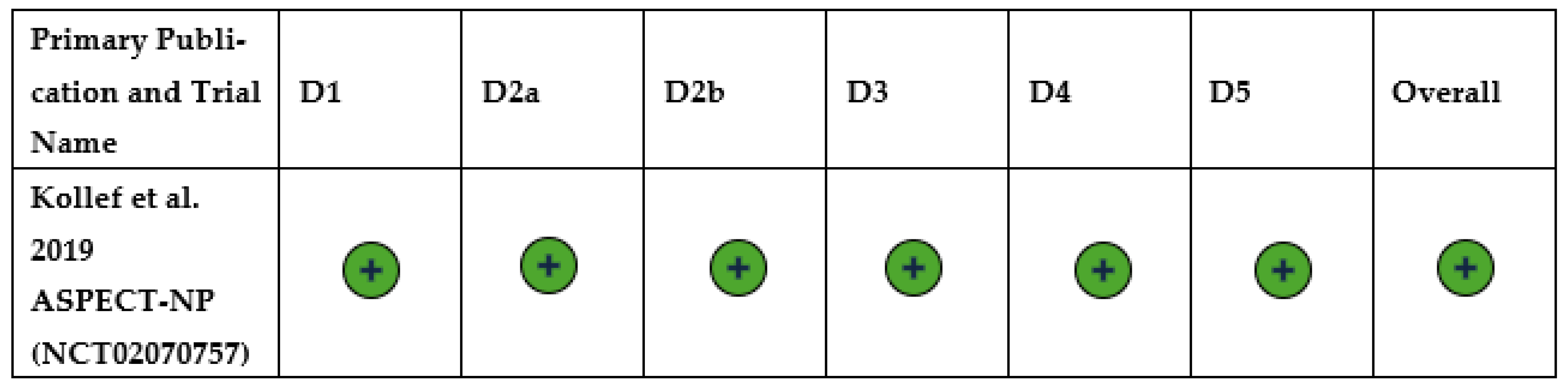
 Low risk of bias. D1: Risk of bias arising from the randomization process. D2a: Risk of bias due to deviations from the intended interventions (effect of assignment to intervention). D2b: Risk of bias due to deviations from the intended interventions (effect of adhering to intervention). D3: Risk of bias due to missing outcome data. D4: Risk of bias in measurement of the outcome. D5: Risk of bias in selection of the reported result.
Low risk of bias. D1: Risk of bias arising from the randomization process. D2a: Risk of bias due to deviations from the intended interventions (effect of assignment to intervention). D2b: Risk of bias due to deviations from the intended interventions (effect of adhering to intervention). D3: Risk of bias due to missing outcome data. D4: Risk of bias in measurement of the outcome. D5: Risk of bias in selection of the reported result.
Low risk of bias. D1: Risk of bias arising from the randomization process. D2a: Risk of bias due to deviations from the intended interventions (effect of assignment to intervention). D2b: Risk of bias due to deviations from the intended interventions (effect of adhering to intervention). D3: Risk of bias due to missing outcome data. D4: Risk of bias in measurement of the outcome. D5: Risk of bias in selection of the reported result. Low risk of bias.
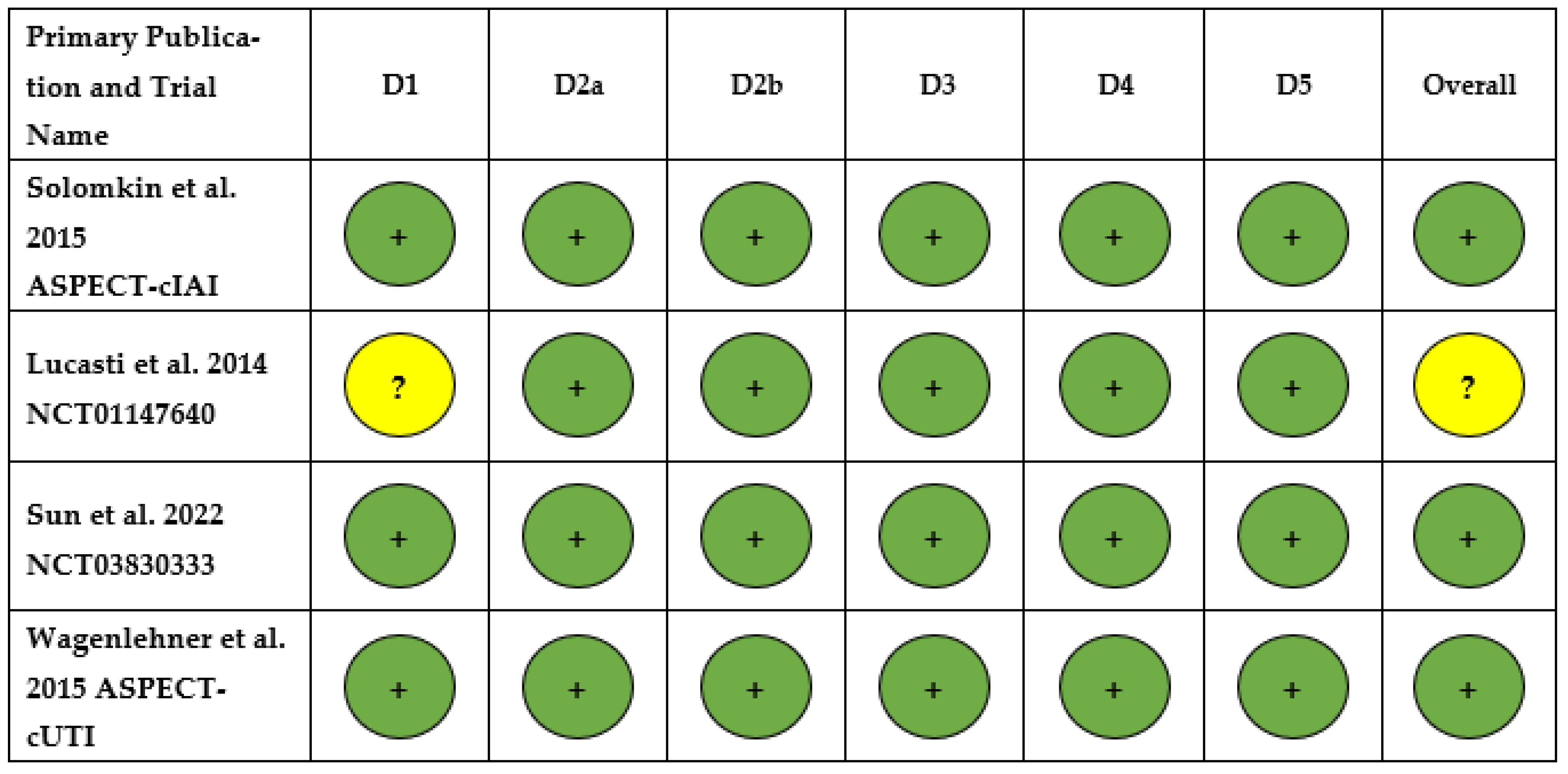
  : Unclear risk of bias. D1: Risk of bias arising from the randomization process. D2a: Risk of bias due to deviations from the intended interventions (effect of assignment to intervention). D2b: Risk of bias due to deviations from the intended interventions (effect of adhering to intervention). D3: Risk of bias due to missing outcome data. D4: Risk of bias in measurement of the outcome. D5: Risk of bias in selection of the reported result.
Low risk of bias. : Unclear risk of bias. D1: Risk of bias arising from the randomization process. D2a: Risk of bias due to deviations from the intended interventions (effect of assignment to intervention). D2b: Risk of bias due to deviations from the intended interventions (effect of adhering to intervention). D3: Risk of bias due to missing outcome data. D4: Risk of bias in measurement of the outcome. D5: Risk of bias in selection of the reported result.
: Unclear risk of bias. D1: Risk of bias arising from the randomization process. D2a: Risk of bias due to deviations from the intended interventions (effect of assignment to intervention). D2b: Risk of bias due to deviations from the intended interventions (effect of adhering to intervention). D3: Risk of bias due to missing outcome data. D4: Risk of bias in measurement of the outcome. D5: Risk of bias in selection of the reported result.
Low risk of bias. : Unclear risk of bias. D1: Risk of bias arising from the randomization process. D2a: Risk of bias due to deviations from the intended interventions (effect of assignment to intervention). D2b: Risk of bias due to deviations from the intended interventions (effect of adhering to intervention). D3: Risk of bias due to missing outcome data. D4: Risk of bias in measurement of the outcome. D5: Risk of bias in selection of the reported result.

| Study (Year) | Primary or Secondary Publication | Patient Enrollment Time | No. of Sites/Centers | Study Design | Selection Criteria for Patients |
|---|---|---|---|---|---|
| Kollef (2019) [10] | Primary | 16 January 2015 and 27 April 2018 | 263 hospitals across 34 countries | RCT, Phase 3, double-blind, non-inferiority, multicenter trial | Patients ≥18 years intubated and mechanically ventilated, and had vHABP/VABP |
| Martin-Loeches (2022) [11] | Secondary | Subgroup analysis of ASPECT-NP trial | Patients with LRT pathogens | ||
| Timsit (2021) [12] | Secondary | Subgroup analysis of ASPECT-NP trial | Patients with vHABP | ||
| Martin-Loeches (2023) [13] | Secondary | Post hoc analysis of ASPECT-NP trial | Patients with respiratory or cardiovascular dysfunction | ||
| Shorr (2021) [14] | Secondary | Post hoc analysis of ASPECT-NP trial | Patients with augmented renal clearance | ||
| Huntington (2020) [15] | Secondary | Subgroup analysis of ASPECT-NP trial | Patients with renal impairment | ||
| Kollef (2022) [16] | Secondary | Post hoc analysis of ASPECT-NP trial | Patients with failure of initial anti-bacterial therapy | ||
| Paterson (2022) [17] | Secondary | Retrospective post hoc analysis of the ASPECT-NP trial | Patients with ESBL-producing Enterobacterales | ||
| Martin-Loeches (2019) [18] | Secondary | Subgroup analysis of ASPECT-NP trial | Patients with confirmed baseline LRT pathogen status |
| Study | Primary or Secondary | Patient Enrollment Time | No. Sites/Centers | Study Design | Selection Criteria for Patients |
|---|---|---|---|---|---|
| ASPECT-cIAI | |||||
| Solomkin (2015) [19] | Primary | December 2011–October 2013 | 15 countries across 61 locations | Phase 3, double-blind, RCT | Adults with clinical evidence of cIAI |
| Miller et al. 2016 [20] | Secondary | 15 countries across 61 locations | Subgroup analysis: Patients with or without P. aeruginosa | ||
| Miller et al. 2015 [19] | Secondary | Europe, number of sites NR | Subgroup analysis: European patients | European adults with cIAI | |
| NCT01147640 | |||||
| Lucasti (2014) [21] | Primary | June 2010–March 2011 | 5 countries across 35 sites | Phase 2, double-blind, RCT | Hospitalized male and female patients with evidence of cIAI requiring surgical intervention |
| NCT03830333 | |||||
| Sun (2022) [22] | Primary | March 2019–October 2020 | China in 21 sites across 14 provinces | Phase 3, double-blind, RCT | Chinese descents with a diagnosis of cIAI |
| ASPECT-cUTI | |||||
| Wagenlehner (2015) [23] | Primary | June 2011–September 2013 | 25 countries across 209 centers | Phase 3, double-blind, double-dummy, non-inferiority, RCT | Hospital inpatients who had pyuria and a diagnosis of a cUTI or pyelonephritis |
| Huntington (2016) [24] | Secondary | 25 countries across 209 centers | Subgroup analysis: cUTIs caused by levofloxacin-resistant pathogens | Hospitalized adults with pyuria and clinical signs and/or symptoms of cUTI or pyelonephritis | |
| Study (Year) | Outcome | C/T (% [n/N]) | Meropenem (% [n/N]) | Percent Difference, % (95% CI) |
|---|---|---|---|---|
| Kollef (2019) [10] | vHABP/VABP (ITT) a | |||
| 28-day ACM | 24.0 (87/362) | 25.3 (92/364) | 1.1 (−5.1 to 7.4) | |
| VABP (ITT) a | ||||
| 28-day ACM | 24.0 (63/263) | 20.3 (52/256) | –3.6 (–10.7 to 3.5) | |
| HABP (ITT) a | ||||
| 28-day ACM | 24.2 (24/99) | 37.0 (40/108) | 12.8 (0.2 to 24.8) | |
| Timsit (2021) [12] | vHABP (mITT) b | |||
| 28-day ACM | 18.2 (10/55) | 36.6 (26/71) | 18.4 (2.5 to 32.5) | |
| Study (Year) | Outcome | C/T + Metronidazole (% [n/N]) | Meropenem (% [n/N]) | Percent Difference, % (95% CI) |
|---|---|---|---|---|
| ASPECT-cIAI | ||||
| Solomkin (2015) [19] | cIAI (ITT) a | |||
| All-cause mortality | 2.3 (11/482) | 1.6 (8/497) | NR | |
| NCT01147640 | ||||
| Lucasti (2014) [21] | cIAI (mITT) b | |||
| All-cause mortality | 3.65 (3/82) | 0 | NR | |
| NCT03830333 | ||||
| Sun (2022) [22] | cIAI (ITT) a | |||
| All-cause mortality | 0 (0/0) | 0.7 (1/134) | −0.7 (−4.1 to 2.1) | |
| Study (Year) | Outcome | C/T (% [n/N]) | Meropenem (% [n/N]) | Percent Difference, % (95% CI) |
|---|---|---|---|---|
| Kollef (2019) [10] | vHABP/VABP (ITT) a | |||
| Clinical cure at TOC | 54.4 (197/362) | 53.3 (194/364) | 1.1 (−6.2 to 8.3) | |
| VABP (ITT) a | ||||
| Clinical cure at TOC | 55.9 (147/263) | 57.0 (146/256) | −1.1 (−9.6 to 7.4) | |
| vHABP (ITT) a | ||||
| Clinical cure at TOC | 50.5 (50/99) | 44.4 (48/108) | 6.1 (−7.4 to 19.3) | |
| Martin-Loeches (2019) [18] | vHABP/VABP (ME) b | |||
| Clinical cure: Overall | 75.2 (85/113) | 66.7 (78/117) | 8.6 (−3.19 to 19.94) | |
| Study (Year) | Efficacy | C/T + Metronidazole (% [n/N]) | Meropenem (% [n/N]) | Percent Difference, % (95% CI) |
|---|---|---|---|---|
| ASPECT-cIAI | ||||
| Solomkin (2015) [19] | cIAI (ITT) a | |||
| Clinical cure at TOC visit | 83.6 (NR) | 86.2 (NR) | −2.6 (−7.08 to 1.87) | |
| NCT01147640 | ||||
| Lucasti. (2014) [21] | cIAI (CE) b | |||
| Clinical cure | 91.4 (64/70) | 94.3 (33/35) | −2.9 (−23.5 to 18.0) | |
| NCT03830333 | ||||
| Sun (2022) [22] | cIAI (CE) b | |||
| Clinical response at the TOC visit | 95.2 (NR) | 93.1 (NR) | 2.1 (−4.7 to 8.8) | |
| Study (Year) | Outcome | C/T (% [n/N]) | Levofloxacin (% [n/N]) | Percent Difference, % (95% CI) |
|---|---|---|---|---|
| Wagenlehner (2015) [23] | cUTI + Pyelonephritis (mMITT) a | |||
| Clinical cure (Overall population) | 92.0 (366/398) | 88.6 (356/402) | 3.4 (−0.7 to 7.6) | |
| cUTI + Pyelonephritis (Per-Protocol) | ||||
| Clinical cure (overall population) | 95.9 (327/341) | 93.2 (329/353) | 2.7 (−0.8 to 6.2) | |
| Huntington (2016) [24] | cUTI + Pyelonephritis caused by levofloxacin-resistant pathogens (mMITT) a | |||
| Clinical response at the TOC visit (Overall population) | 90.0 (90/100) | 76.8 (86/112) | 13.2 (3.1 to 22.9) | |
| Clinical response at the TOC visit (cUTI only) | 82.8 (24/29) | 68.6 (24/35) | 14.2 (−7.4 to 33.3) | |
| Clinical response at the TOC visit (Pyelonephritis only) | 93.0 (66/71) | 80.5 (62/77) | 12.4 (1.3 to 23.4) | |
| Study (Year) | Outcome | C/T (% [n/N]) | Meropenem (% [n/N]) | Percent Difference, % (95% CI) |
|---|---|---|---|---|
| Timsit (2021) [12] | vHABP (mITT) a | |||
| Microbiological eradication at TOC | 78.2 (43/55) | 62.0 (44/71) | 16.2 (−0.1 to 30.8) | |
| vHABP (ME) b | ||||
| Microbiological eradication at TOC | 71.4 (15/21) | 64.0 (16/25) | 7.4 (−19.1 to 31.9) | |
| Study (Year) | Outcome | C/T (% [n/N]) | Levofloxacin (% [n/N]) | Percent Difference, % (95% CI) |
|---|---|---|---|---|
| Wagenlehner (2015) [23] | cUTI + Pyelonephritis (mMITT) a | |||
| Microbiological eradication (Overall population) | 80.4 (320/398) | 72.1 (290/402) | 8.3 (2.4 to 14.1) | |
| cUTI + Pyelonephritis (Per-Protocol) | ||||
| Microbiological eradication (Overall population) | 86.2 (294/341) | 77.6 (274/353) | 8.6 (2.9 to 14.3) | |
| Huntington (2016) [24] | cUTI + Pyelonephritis (mMITT) a | |||
| Microbiological response at the TOC visit (Overall population) | 63.0 (63/100) | 43.8 (49/112) | 19.3 (5.8 to 31.7) | |
| Microbiological response at the TOC visit (cUTI only) | 62.1 (18/29) | 17.1 (6/35) | 44.9 (21.1 to 62.6) | |
| Microbiological response at the TOC visit (Pyelonephritis only) | 63.4 (45/71) | 55.8 (43/77) | 7.5 (−8.2 to 22.6) | |
Disclaimer/Publisher’s Note: The statements, opinions and data contained in all publications are solely those of the individual author(s) and contributor(s) and not of MDPI and/or the editor(s). MDPI and/or the editor(s) disclaim responsibility for any injury to people or property resulting from any ideas, methods, instructions or products referred to in the content. |
© 2026 by the authors. Licensee MDPI, Basel, Switzerland. This article is an open access article distributed under the terms and conditions of the Creative Commons Attribution (CC BY) license.
Share and Cite
Martin-Loeches, I.; Shields, R.K.; Yücel, E.; Bagga, S.; Korei, M.; Esam, H.; Sharma, N.; Cameron, C. Ceftolozane/Tazobactam for Complex and Resistant Infections: Systematic Reviews of Comparative Efficacy Studies. Antibiotics 2026, 15, 190. https://doi.org/10.3390/antibiotics15020190
Martin-Loeches I, Shields RK, Yücel E, Bagga S, Korei M, Esam H, Sharma N, Cameron C. Ceftolozane/Tazobactam for Complex and Resistant Infections: Systematic Reviews of Comparative Efficacy Studies. Antibiotics. 2026; 15(2):190. https://doi.org/10.3390/antibiotics15020190
Chicago/Turabian StyleMartin-Loeches, Ignacio, Ryan K. Shields, Emre Yücel, Shalini Bagga, Maesumeh Korei, Hariprasad Esam, Nidhi Sharma, and Carolyn Cameron. 2026. "Ceftolozane/Tazobactam for Complex and Resistant Infections: Systematic Reviews of Comparative Efficacy Studies" Antibiotics 15, no. 2: 190. https://doi.org/10.3390/antibiotics15020190
APA StyleMartin-Loeches, I., Shields, R. K., Yücel, E., Bagga, S., Korei, M., Esam, H., Sharma, N., & Cameron, C. (2026). Ceftolozane/Tazobactam for Complex and Resistant Infections: Systematic Reviews of Comparative Efficacy Studies. Antibiotics, 15(2), 190. https://doi.org/10.3390/antibiotics15020190